
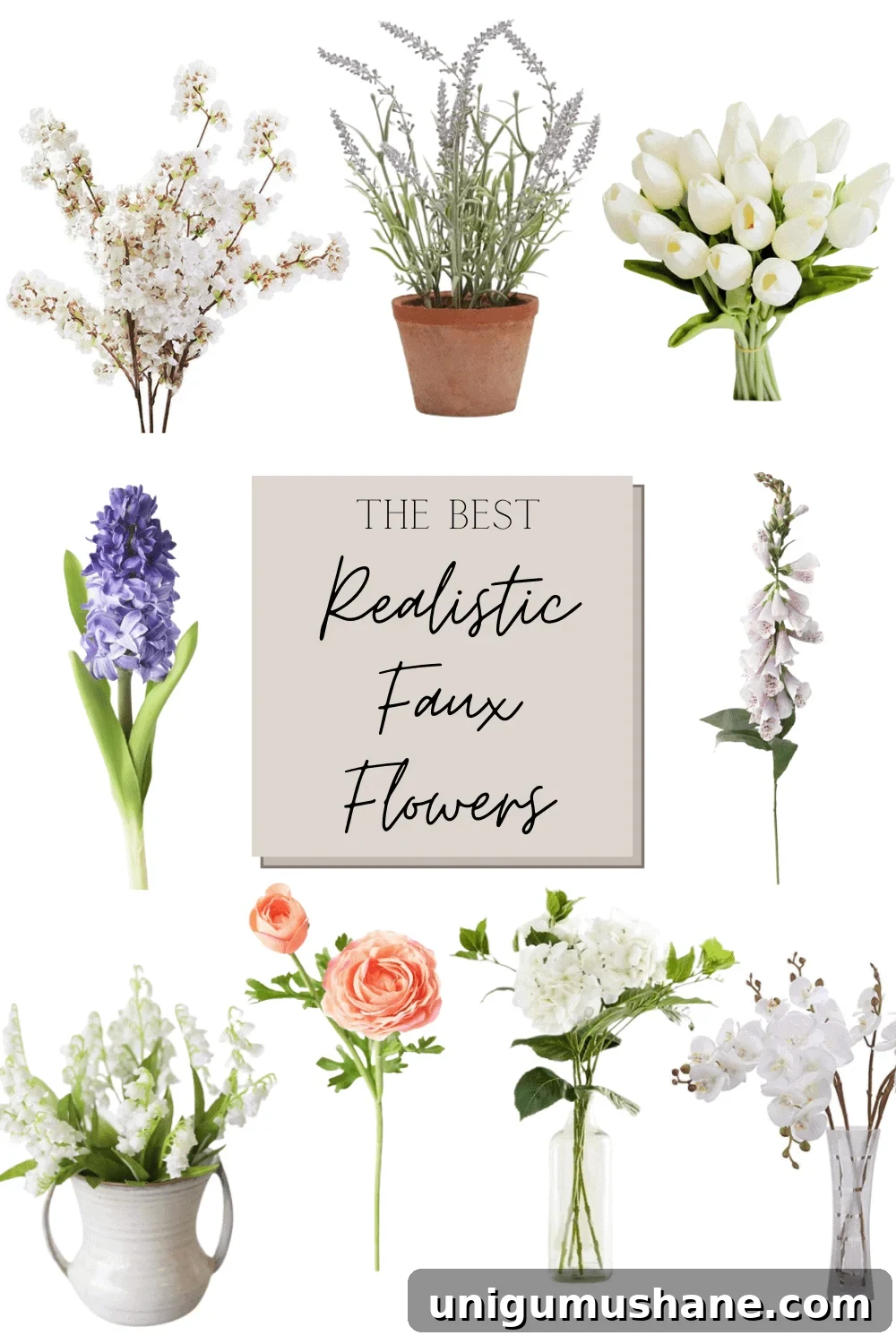
I know it’s still technically winter, but I’m done with it. I need bright, fresh energy, so I’ve started putting faux flowers in every room and hoping nature notices. Somehow that led me down a rabbit hole searching for pretty, realistic artificial blooms—and I discovered there are some convincing options out there if you know what to look for.
Realistic faux flowers can lift a home’s mood without the maintenance of fresh stems. Whether you want a permanent statement arrangement or small seasonal touches, choosing high-quality artificial flowers is about texture, proportion, and placement. Below I share my favorites and practical tips to make faux florals look natural and beautiful for spring and summer decor.
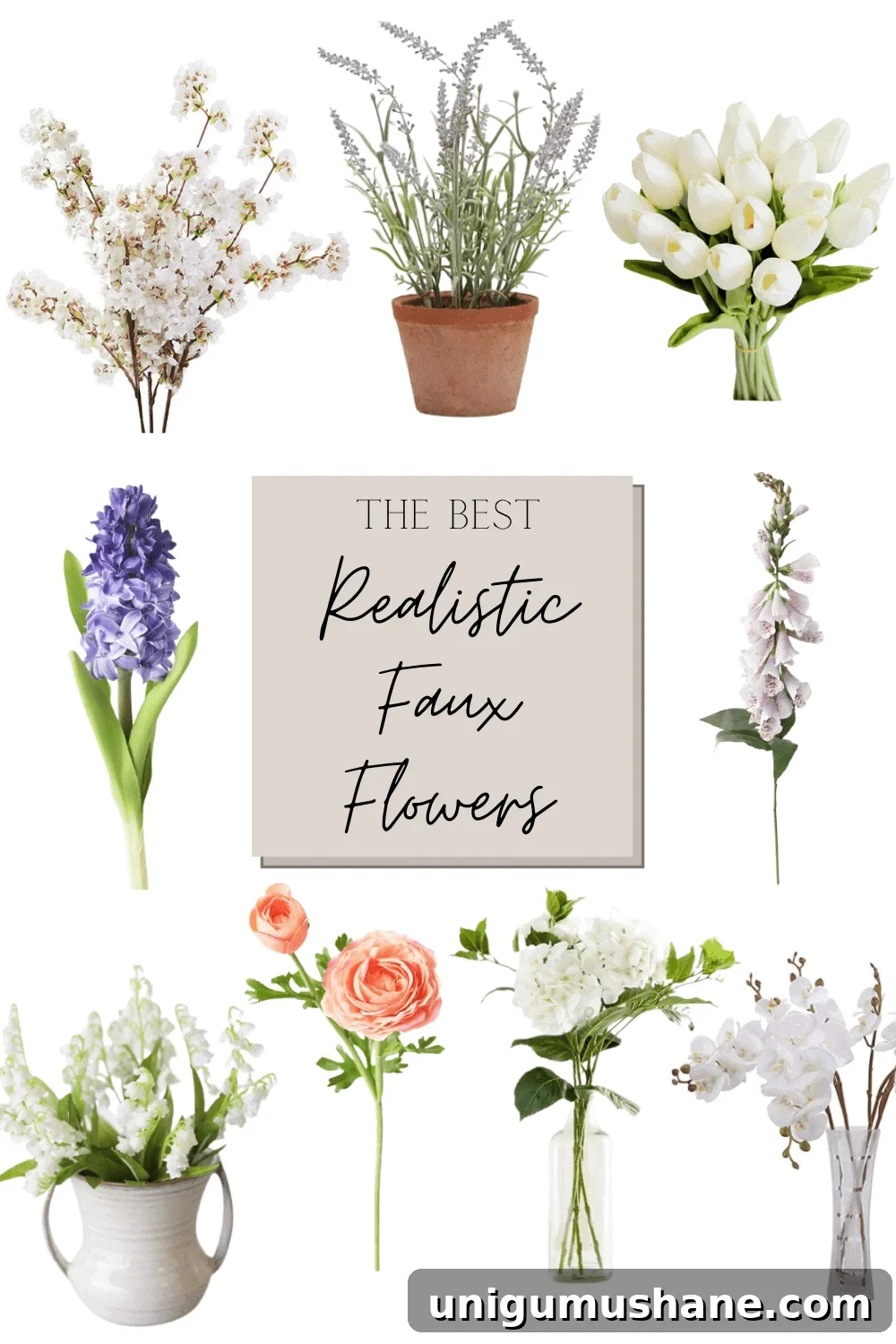
The Best Faux Flowers for Spring and Summer
(Affiliate links are provided below. Full disclosure information is available on the site.)
When shopping for faux flowers, look beyond color. Focus on materials, stem construction, and botanical accuracy. Here are the top types of artificial flowers and foliage that work beautifully for spring and summer styling:
- Peonies and garden roses: Lush, layered petals create instant softness and a luxe feel. High-quality peonies and garden roses with varied petal edges read as natural and photograph beautifully.
- Hydrangeas: Great for volume and texture. A single hydrangea head can fill a vase and make a dramatic centerpiece when mixed with finer stems.
- Ranunculus and anemones: Delicate, multi-petaled blooms add a romantic, lighthearted look—perfect for springtablescapes and smaller arrangements.
- Wildflowers and filler stems: Baby’s breath, waxflower, and small filler foliage lend realism and help blend larger blooms into a cohesive arrangement.
- Greenery and stems: Realistic eucalyptus, olive branches, and variegated leaves anchor arrangements and add movement. Quality faux foliage elevates the overall look more than another flower often could.
To optimize for search and make informed purchases, search terms like “realistic faux flowers,” “best artificial flowers for spring,” and “lifelike silk flowers” will surface the highest-rated options and reviews. Prioritize sellers who provide multiple photos, close-ups of stems and textures, and clear size dimensions so you know what you’re getting.
Styling Tips to Make Faux Flowers Look Natural
Good placement and styling make all the difference. Try these simple techniques to keep arrangements looking fresh and authentic:
- Mix heights and textures: Combine tall stems with low, full blooms. Add delicate filler to break up solid shapes and mimic how real bouquets grow.
- Trim and bend stems: Adjusting stem length and angling the flowers creates natural movement. Many faux stems can be trimmed with wire cutters or bent into lifelike positions.
- Use real containers: A ceramic vase, woven basket, or glass jar will ground the arrangement. Conceal floral foam or wire bases with moss or extra foliage for authenticity.
- Group in odd numbers: Odd-number groupings (three, five, seven) often read more natural and visually pleasing than even arrangements.
- Rotate displays seasonally: Swap in brighter colors and lighter textures for spring and summer, and transition to deeper tones come fall and winter.
Care and Longevity
One major advantage of quality faux flowers is low maintenance. To keep them looking great:
- Dust gently with a soft cloth or use a hairdryer on cool, low to remove dust.
- Spot-clean with a damp cloth for stubborn grime. Avoid harsh chemicals that can damage finishes.
- Store properly in a cool, dry place if you rotate them seasonally—keep stems covered to prevent dust settling.
With the right picks and styling, faux flowers are a smart, long-lasting way to welcome spring and summer into your home without waiting for real blooms. If you’re breaking up with winter like I am, start with one well-styled arrangement and let it set the tone for the rest of your rooms.