
A DIY tutorial on building a realistic oversized faux fireplace using a thrifted mantel
When we moved into our cookie-cutter, builder-grade house seven months ago, we immediately wanted a fireplace. We arrived a week before Christmas with nowhere to hang stockings, so a mantel quickly became a priority.
A professionally installed fireplace would have cost around $5,000, which was outside our budget. Instead, we decided to build a faux fireplace—but not just a mantel nailed to the wall. We wanted something oversized and realistic that would look built-in and feel substantial.
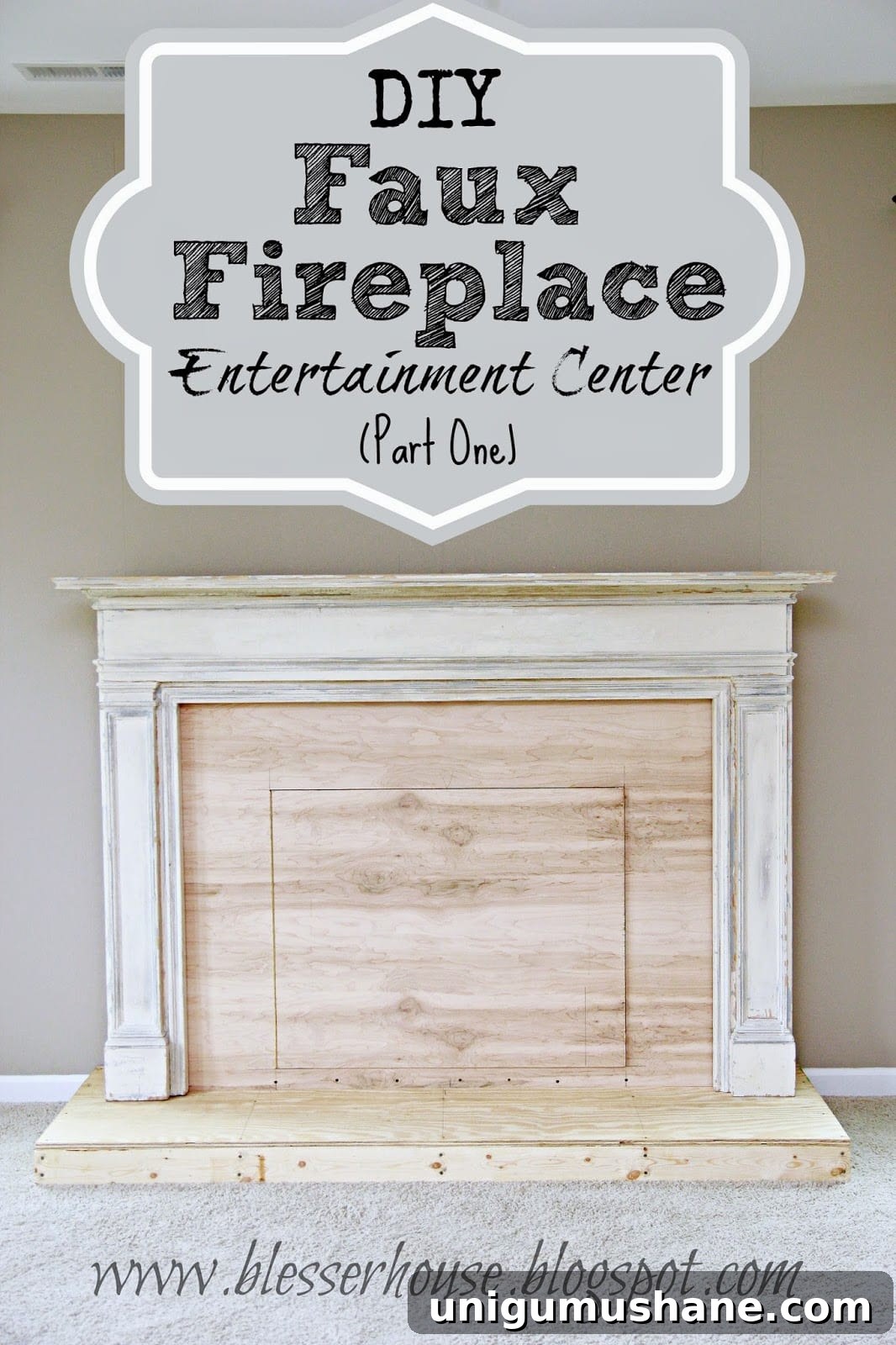
This project was big—so big that I split it into four posts to cover the full process. What you see here is Part One: the framing, hearth base, and initial assembly. We completed everything in stages for under $500, including the thrifted mantel, plywood, and lumber. It’s a fraction of the cost of a professional install and gives the room a dramatic focal point.
Update: Part Two, Part Three, and the Final Reveal are available on the blog for the remaining steps and finishing touches.
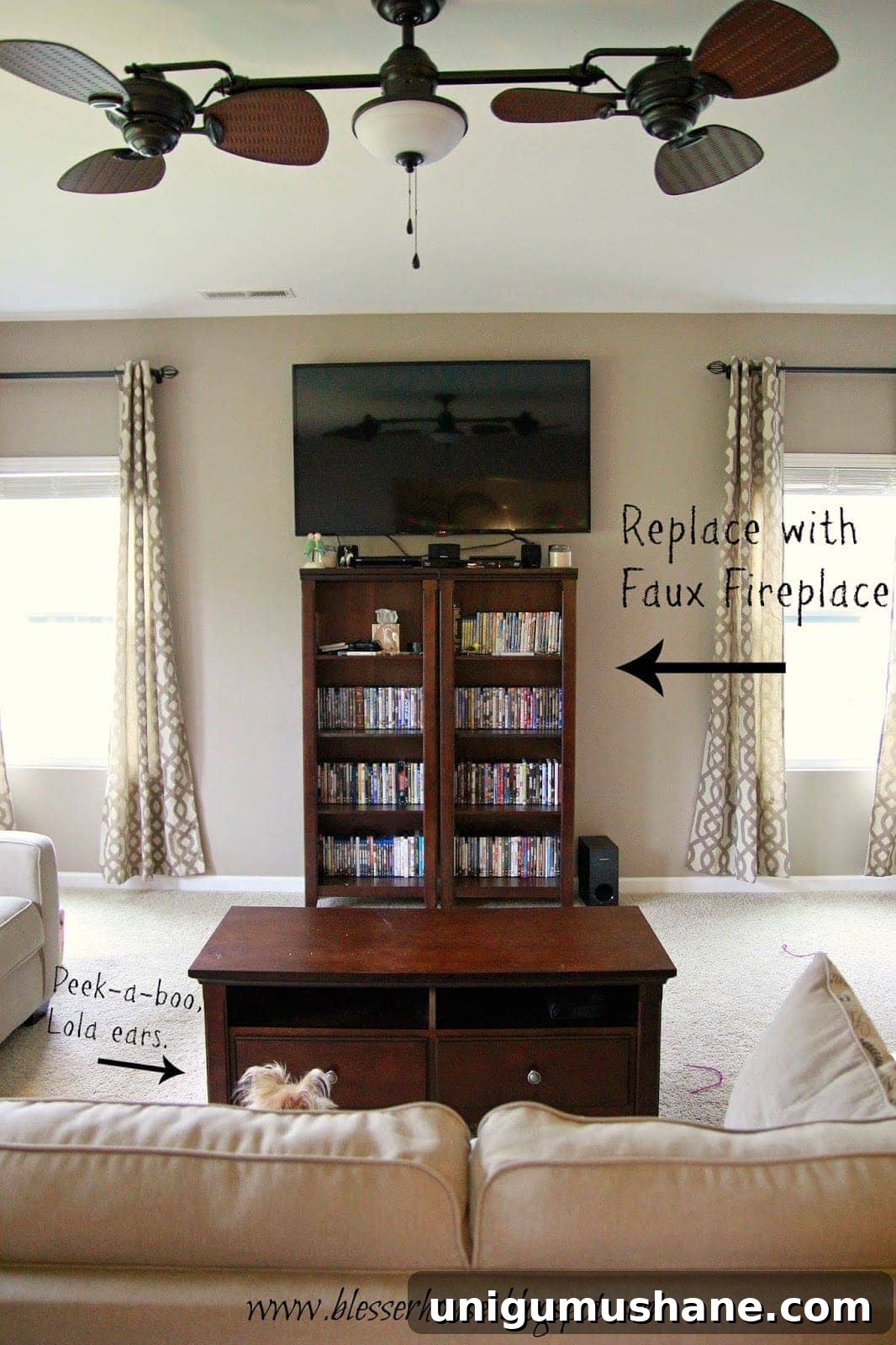
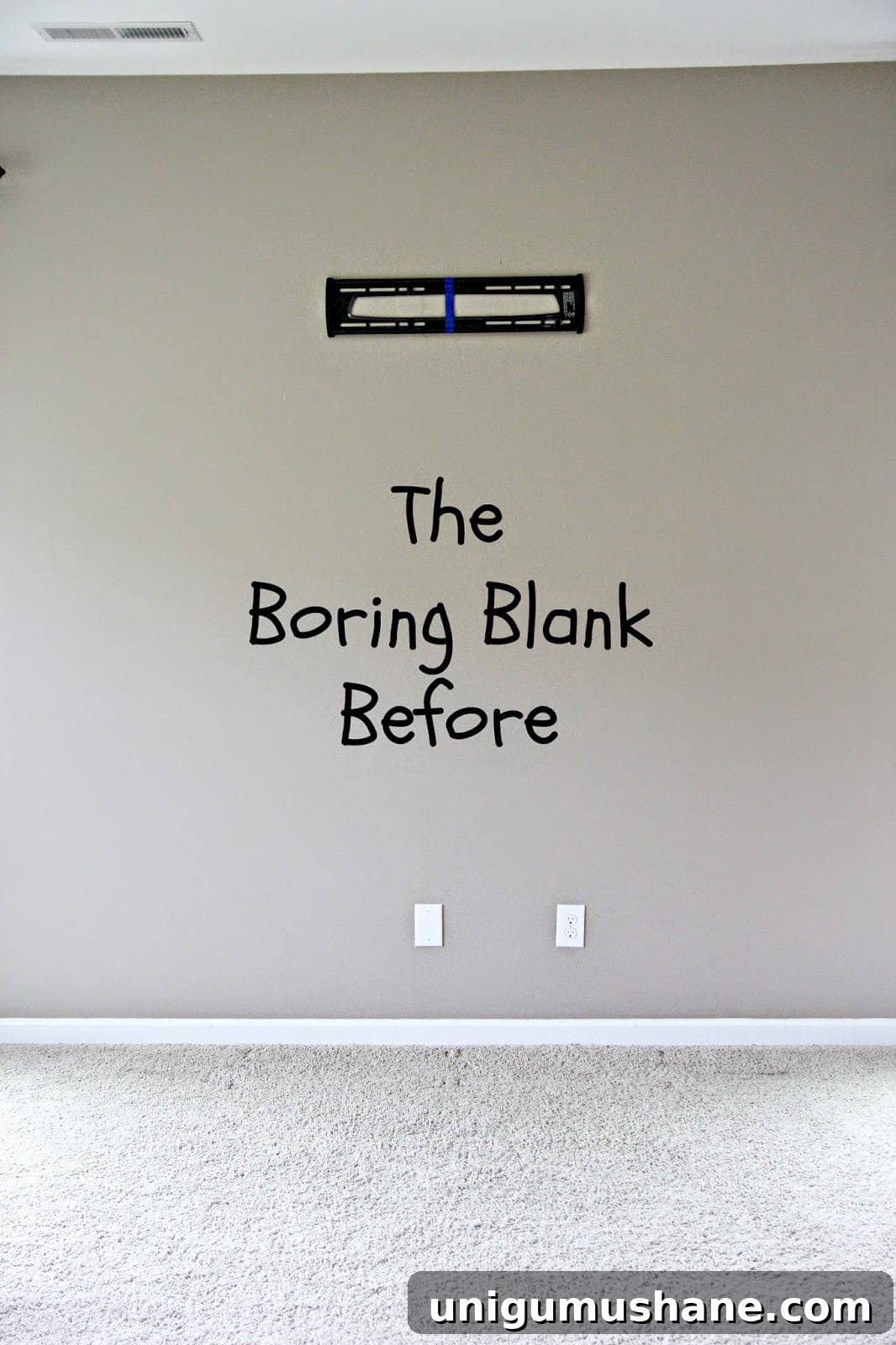
Before we began, our TV stand area was a mess of bookcases and DVDs that our toddler loved to empty daily. We moved the bookcases out and cleared the wall to start fresh.
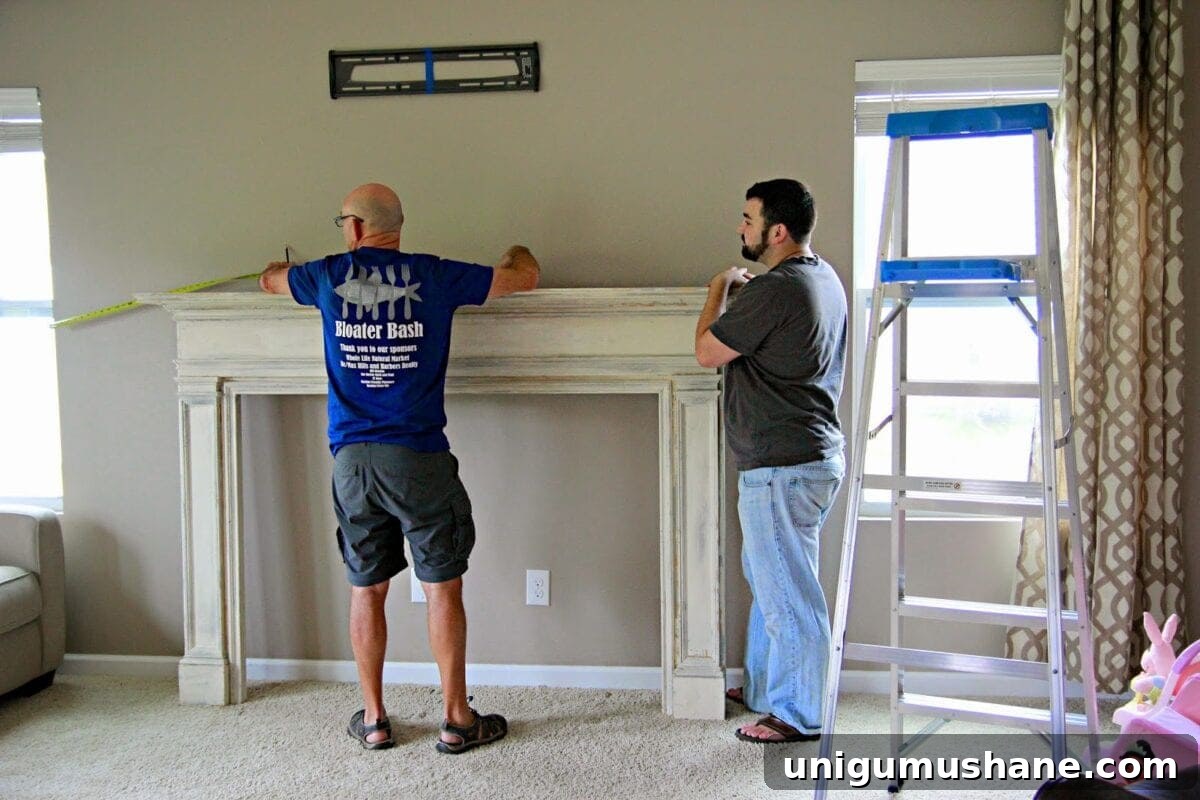
A while back we scored a beautiful salvaged mantel from a home being demolished in Charlotte. It felt vintage—likely early to mid-20th century—and it gave the project an authentic starting point. My father-in-law generously helped for the whole weekend, lending a lot of carpentry experience and elbow grease while I documented the process.
Supplies used for Part One: (adjust quantities and sizes to fit your mantel and room)
- Thrifted or salvaged mantel front (we found ours for $100)
- 3 sheets of plywood
- Nine 2×4 boards
- Carpentry nails and finishing nails
- Drywall screws
- Tape measure, pencil, and straight edge
- Circular saw and jigsaw
- Piano hinge
- Hammer or pneumatic nail gun and power drill
- Hacksaw for trimming metal
*Measurements are not included here because they depend on the mantel you use and the size of your room. In general, choose an oversized, statement-making fireplace for larger rooms rather than one that looks dwarfed by the space.
We began by finding the wall center and sizing the build around the salvaged mantel. The first assembly step was cutting lumber and plywood to frame the hearth base.
We opted not to have the store pre-cut our wood so we could make adjustments on site. Safety first—remember eye protection when cutting lumber.
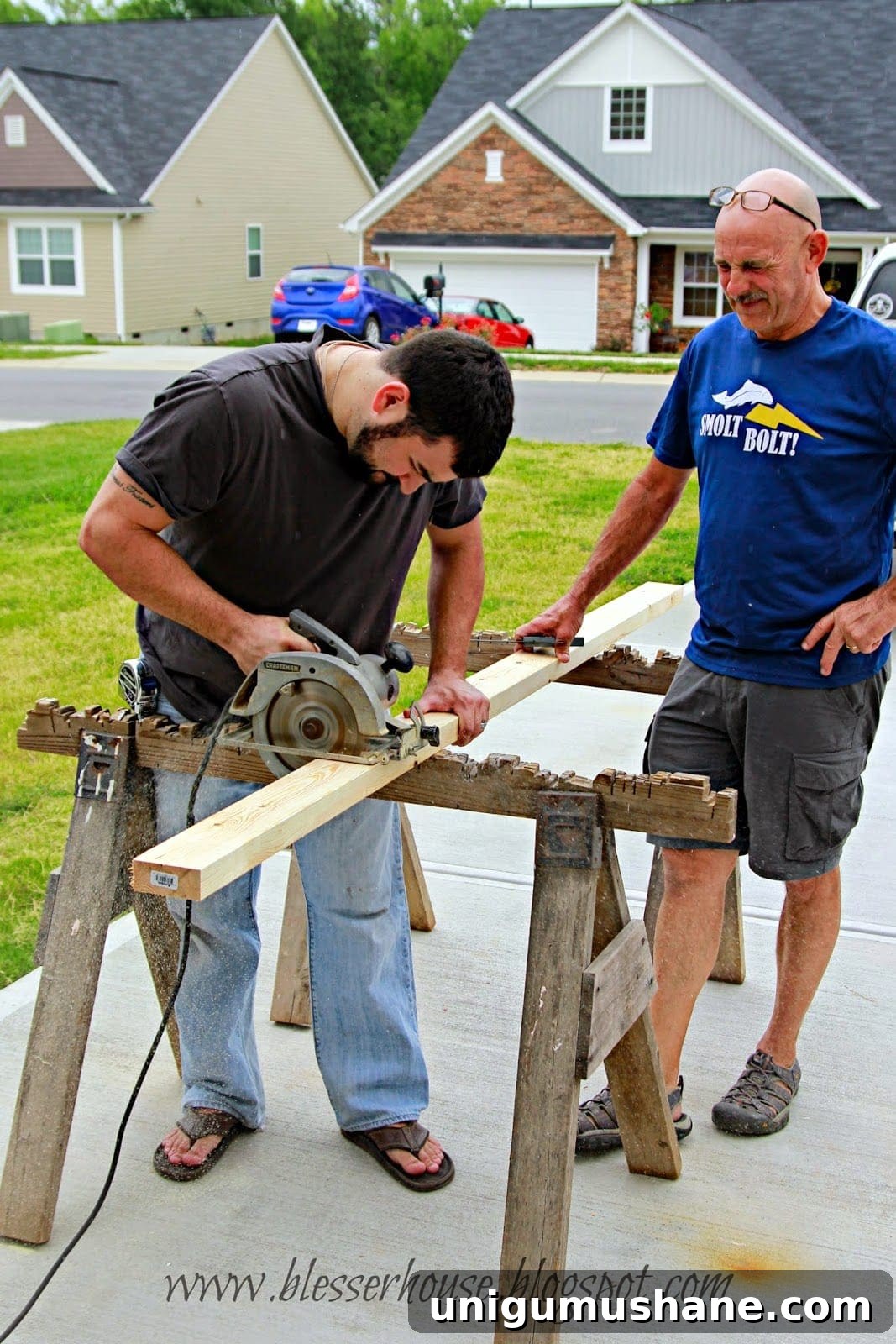
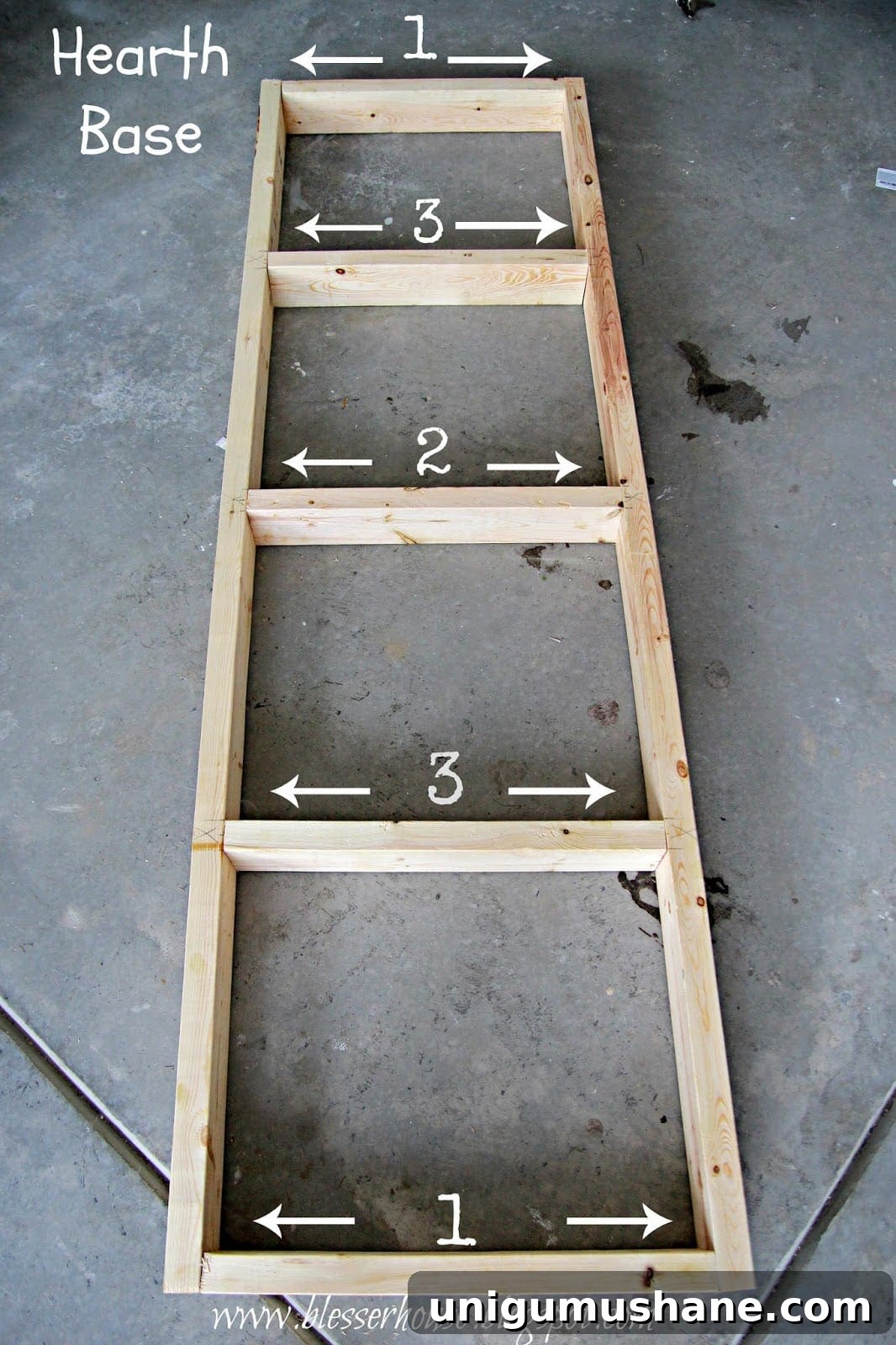
To build the hearth base frame, we cut two long 2×4 rails slightly longer than the mantel and connected them with shorter 2×4 pieces spaced evenly (we used 24″ pieces for a strong, box-like base). Nail the long rails to the end pieces first, then add the center and middle supports for stability.
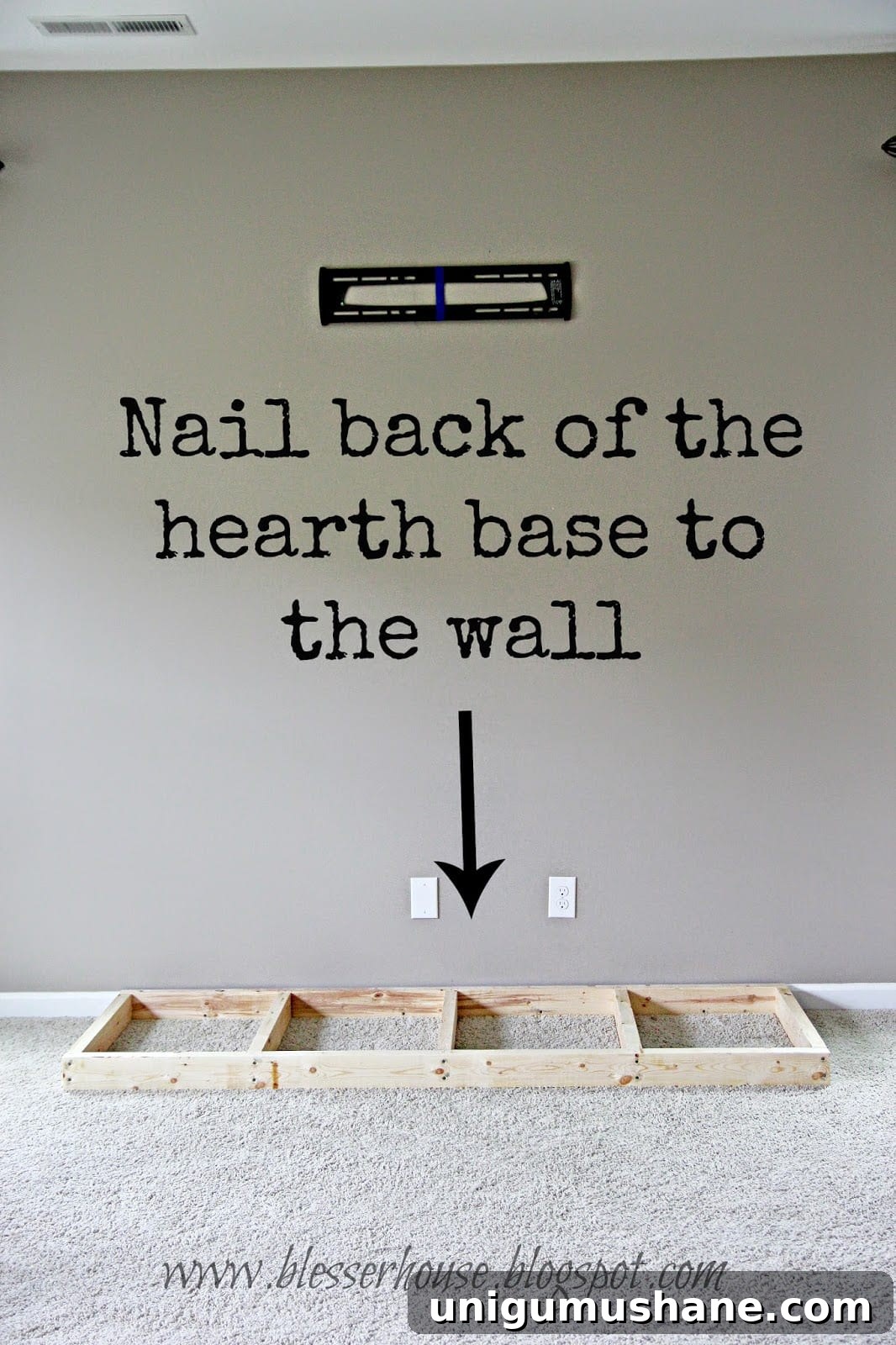
Once the frame was solid, we aligned it with the wall center and attached the back of the frame to the wall studs. We considered anchoring it to the carpeted floor but decided the overall weight of the fireplace would keep it stable without cutting into the carpet. If you later install wood flooring, the base can be adjusted with a utility knife and quarter round trim.
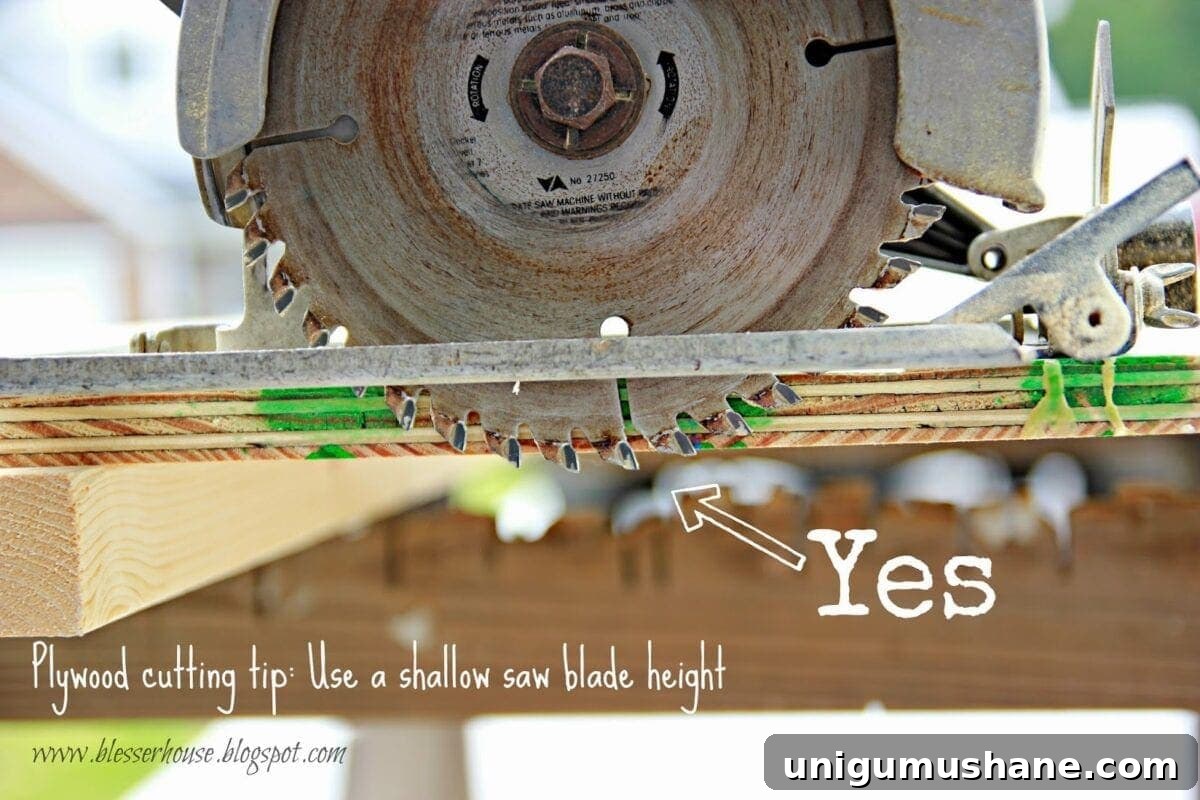
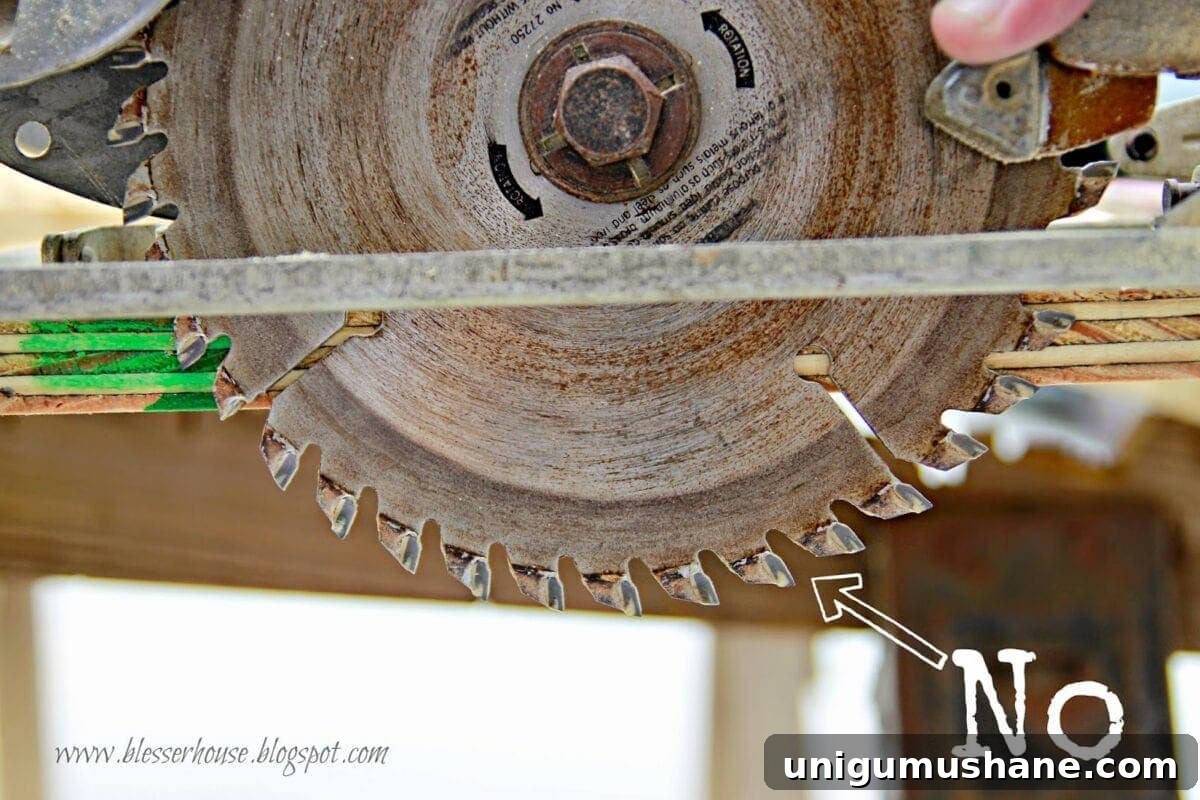
When cutting plywood, a useful tip is to set the circular saw blade to a shallow depth for the initial pass, then finish the cut from the other side if necessary. For precise corner cuts and curves, use a jigsaw.
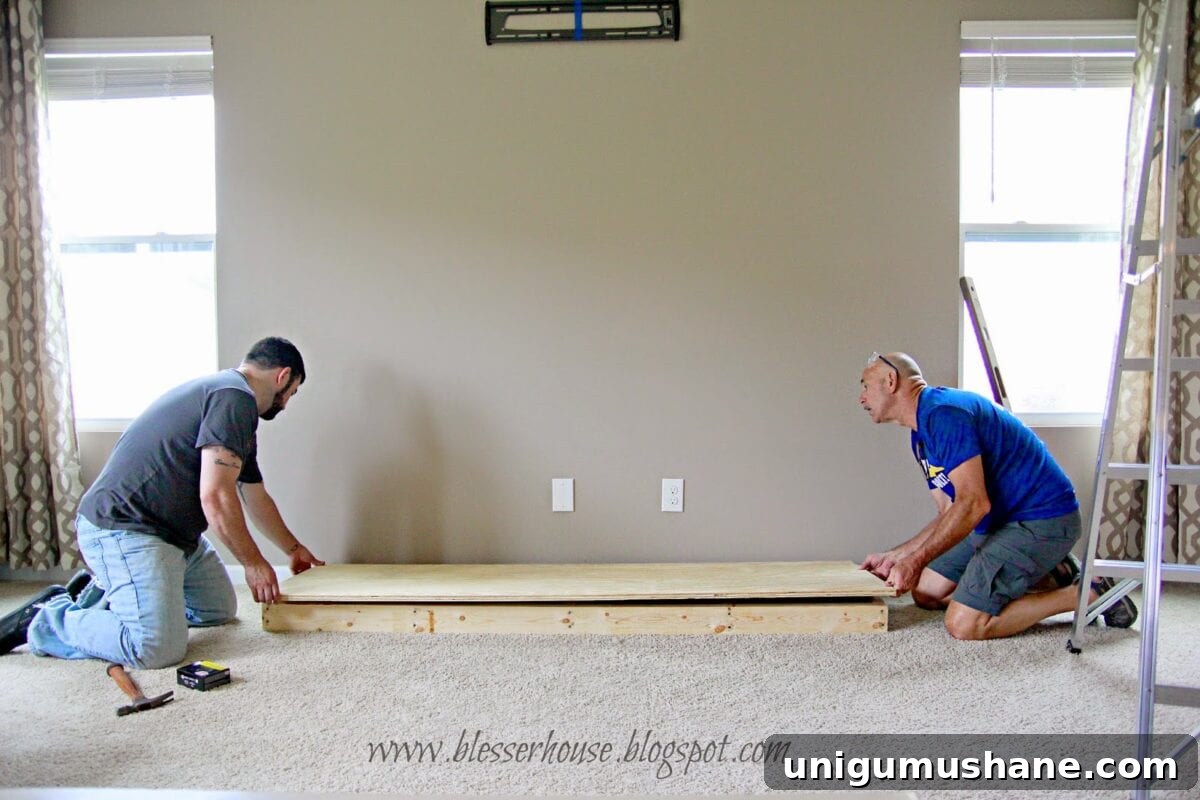
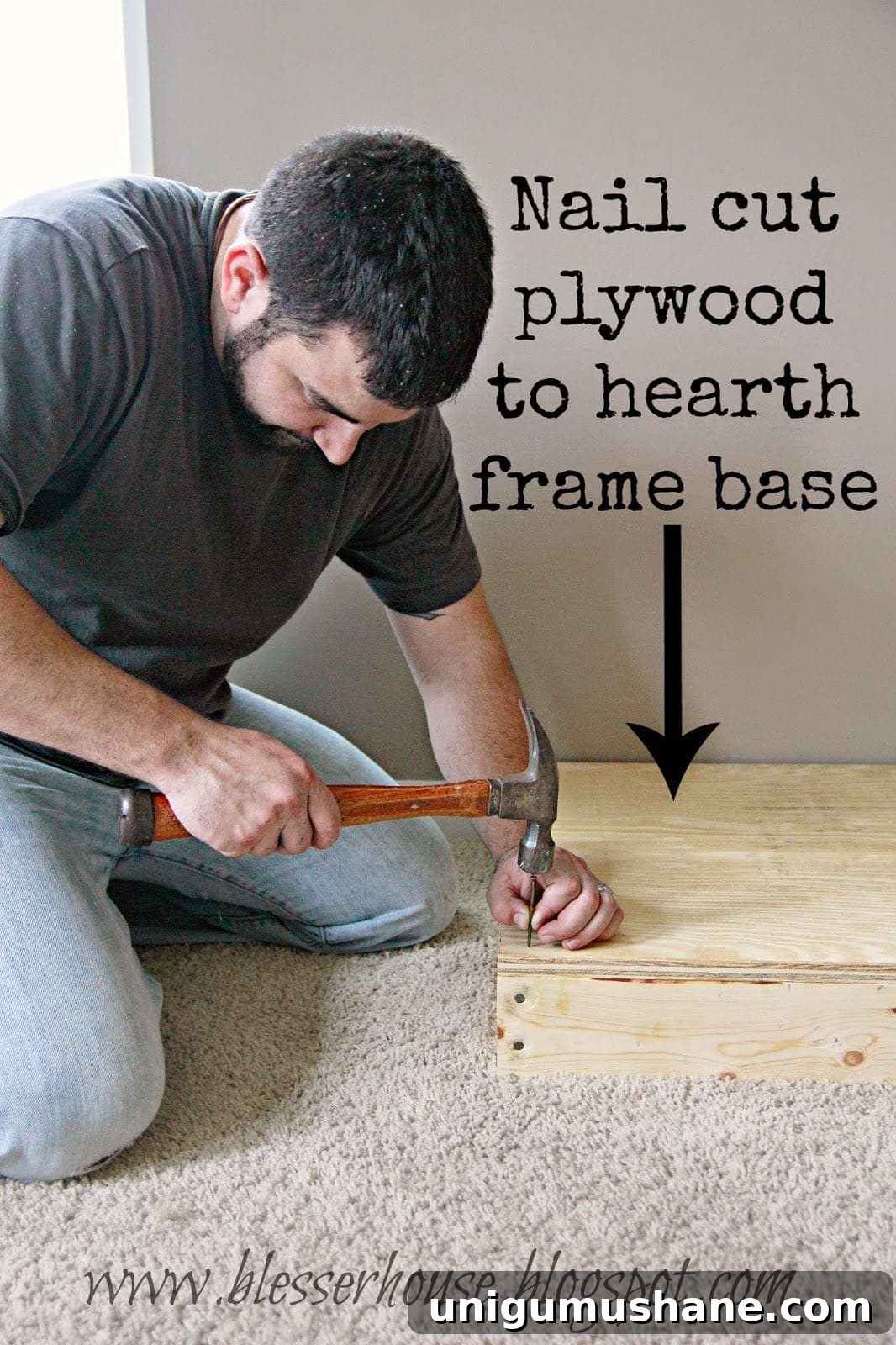
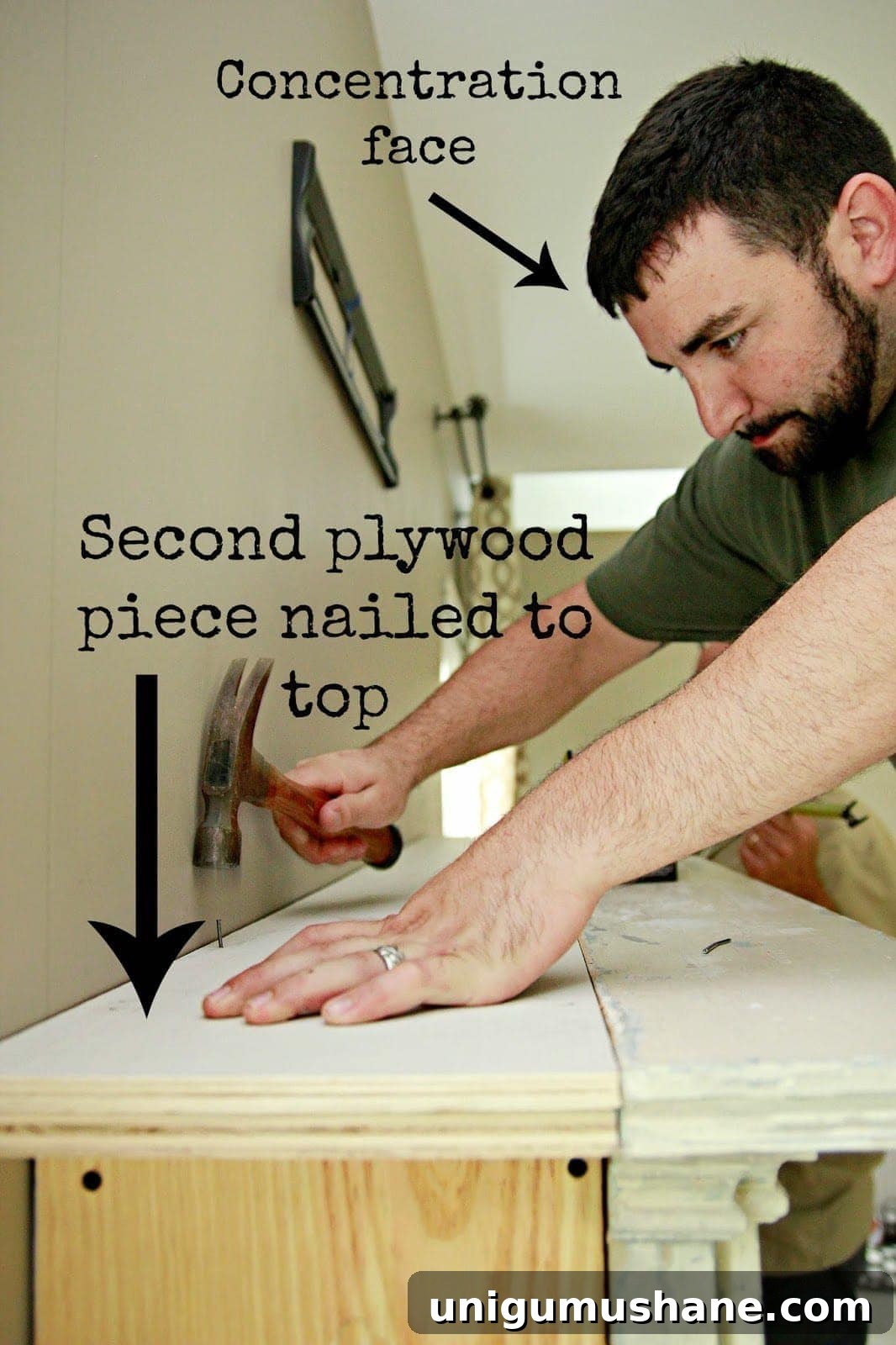
We cut the plywood for the hearth top, laid it on the framed base to check fit, and then secured it with nails. For the mantel anchor, we installed 2×4 supports on the back of the mantel and matched 2×4 anchors on the wall so the mantel would bolt solidly to the framing.
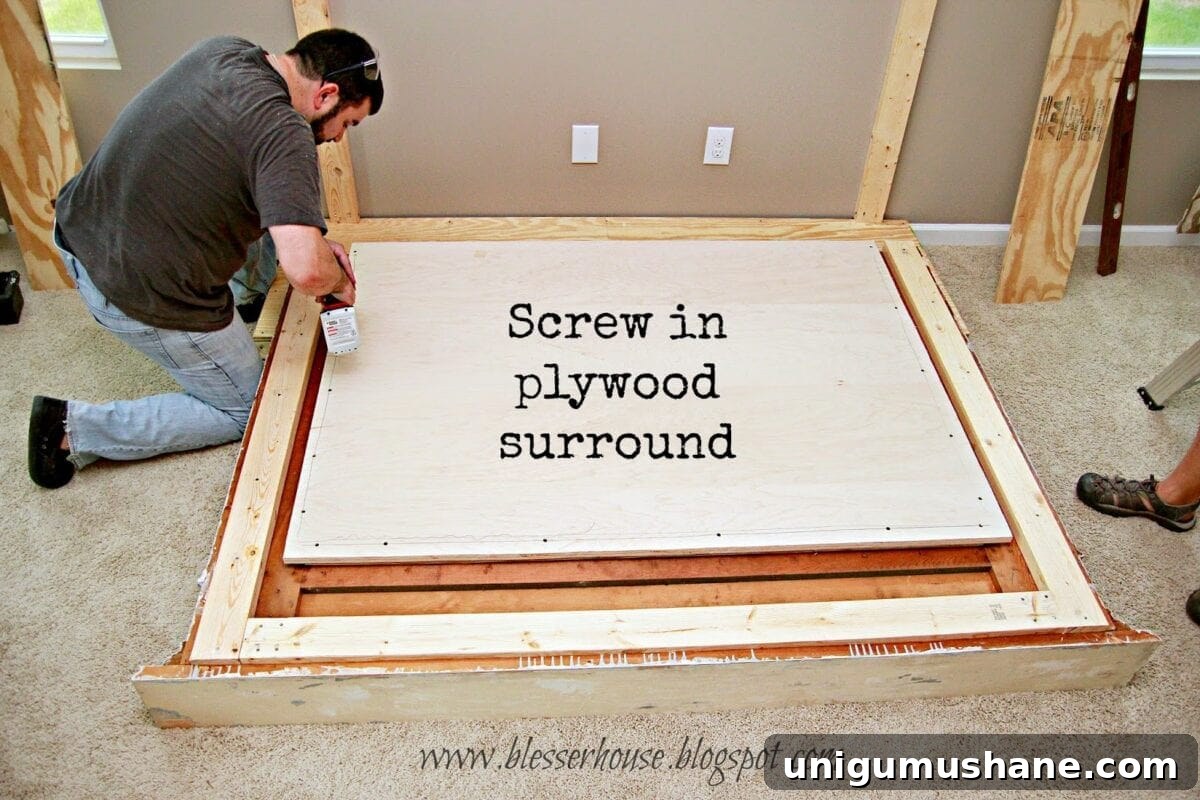
We screwed plywood strips to the back of the mantel to anchor the surround pieces. Then we used a full plywood sheet to create the surround and fastened it to the anchor strips with drywall screws.
Rather than leave the firebox area closed, we added a working door so the interior could remain useful and hide cords or outlets. We left a small bottom gap to form a threshold and prevent the surround from bowing.
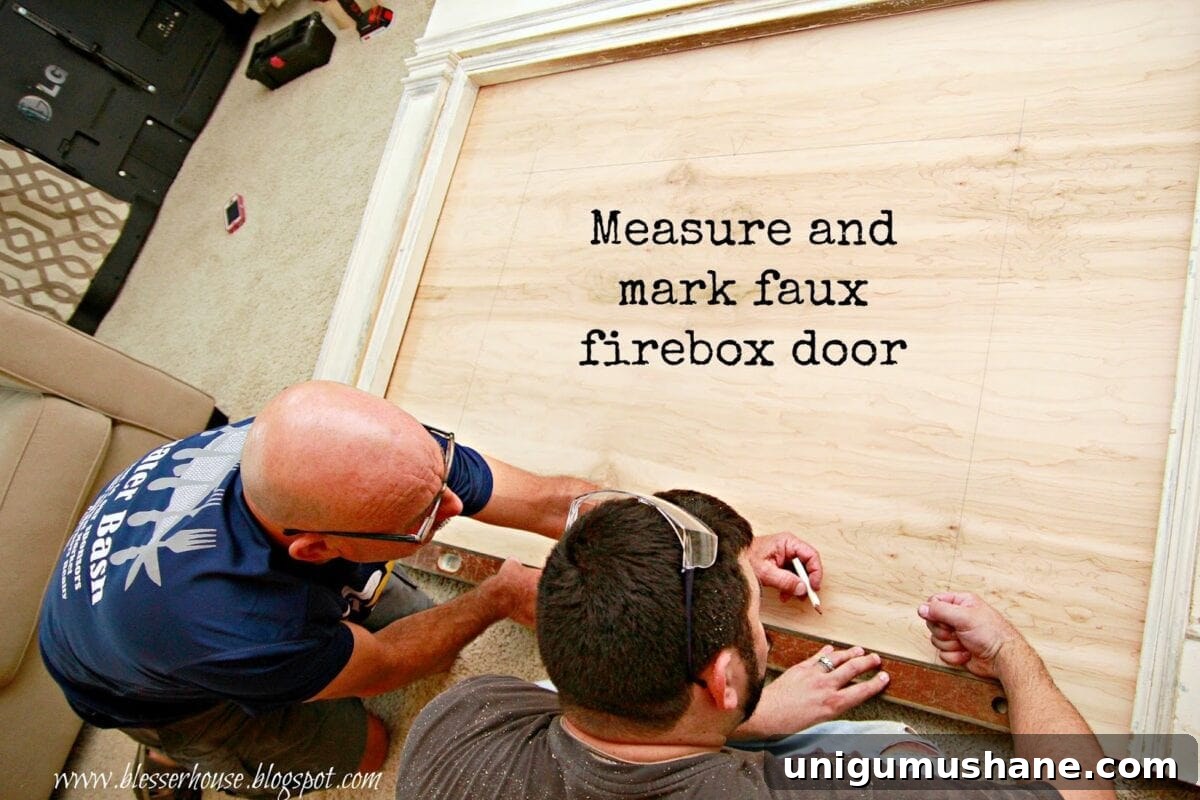
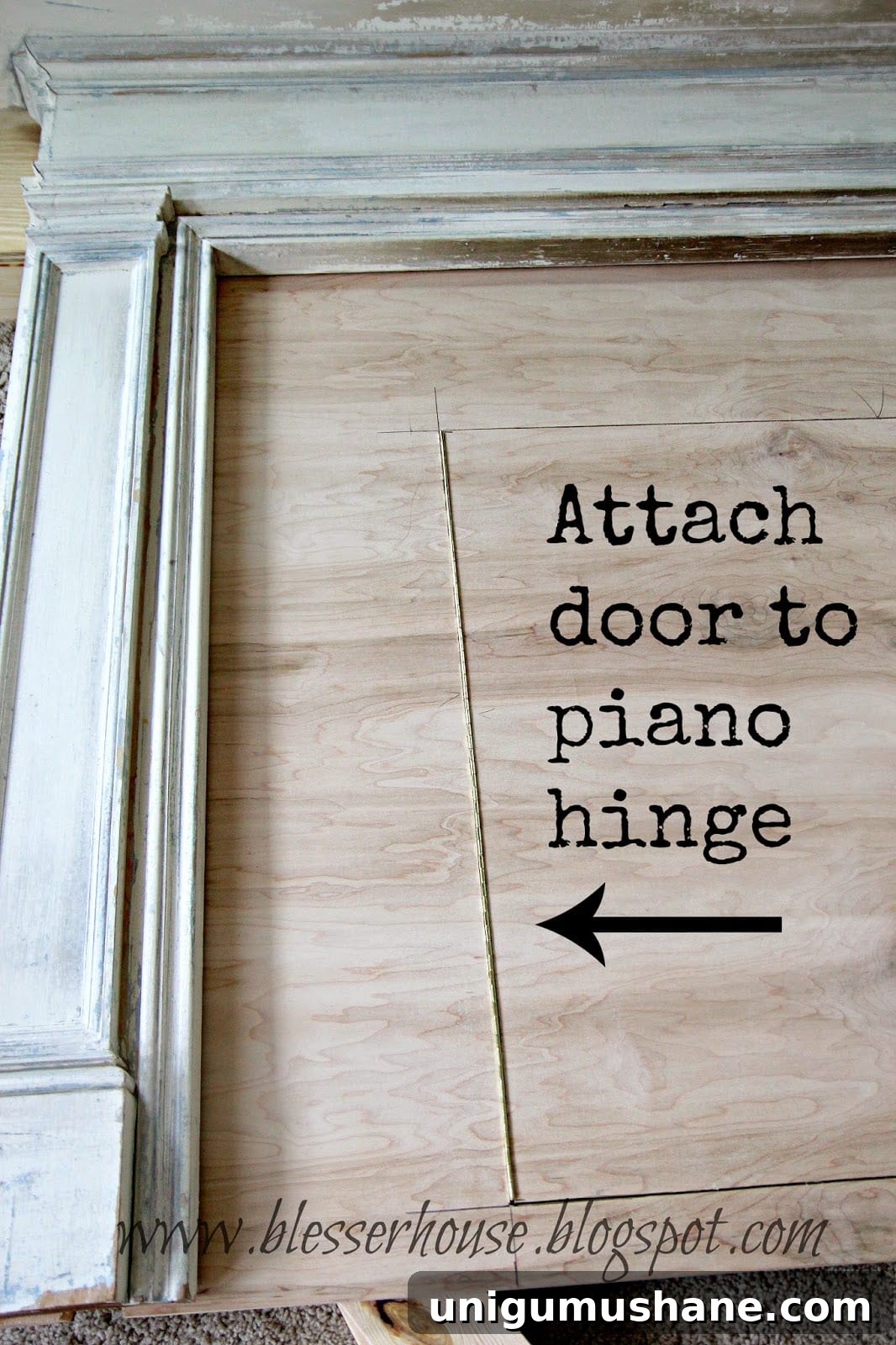
For precise door cuts we switched to a thin, accurate circular saw blade and refined corners with a jigsaw. The piano hinge was cut to size with a hacksaw and attached to the surround to create a clean, functional door.
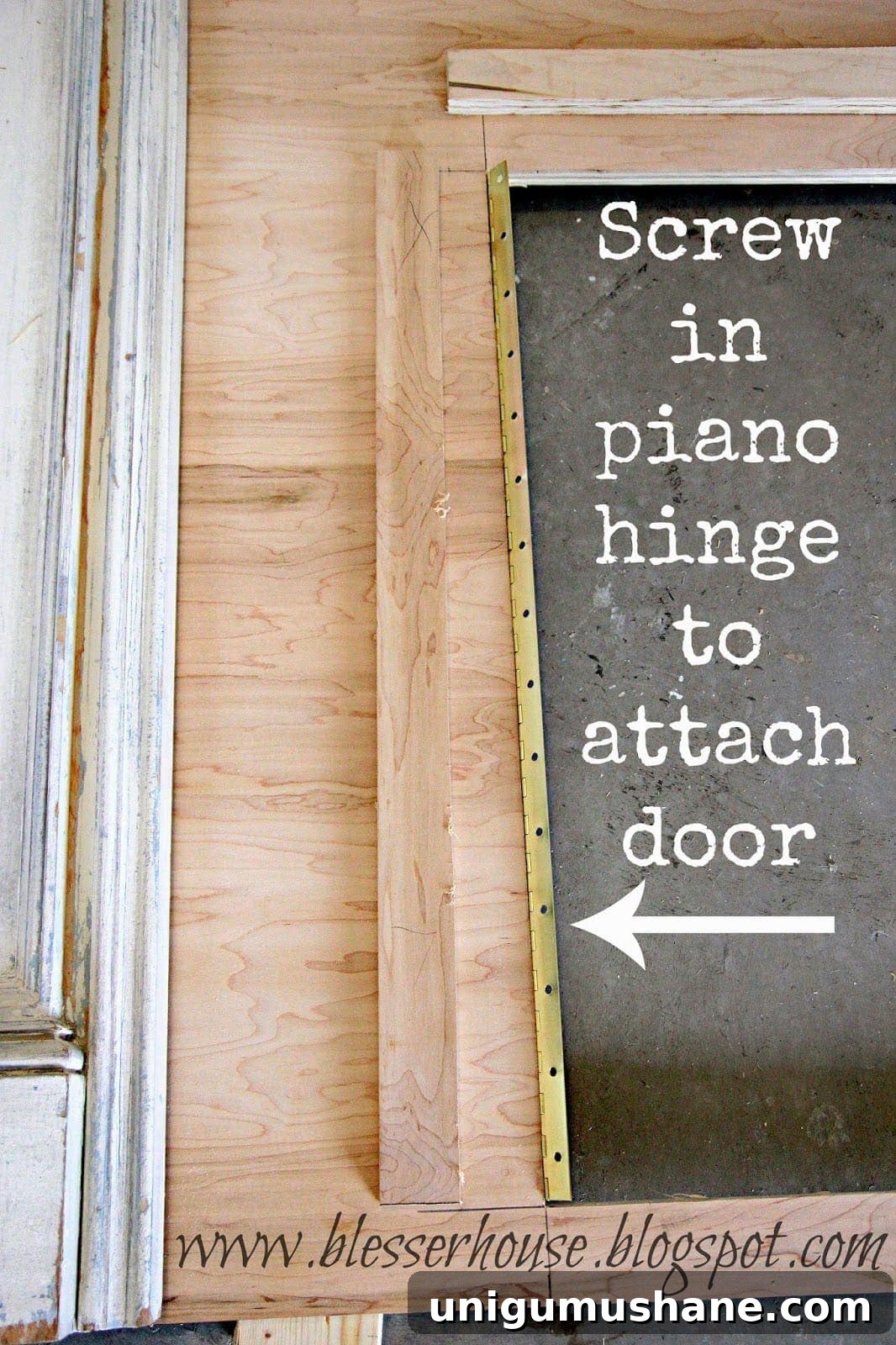
To prevent the door from causing any flex in the surround, we built a strong door frame on the back of the mantel. After a little fine-tuning, the door fit perfectly and swung smoothly on the hinge.
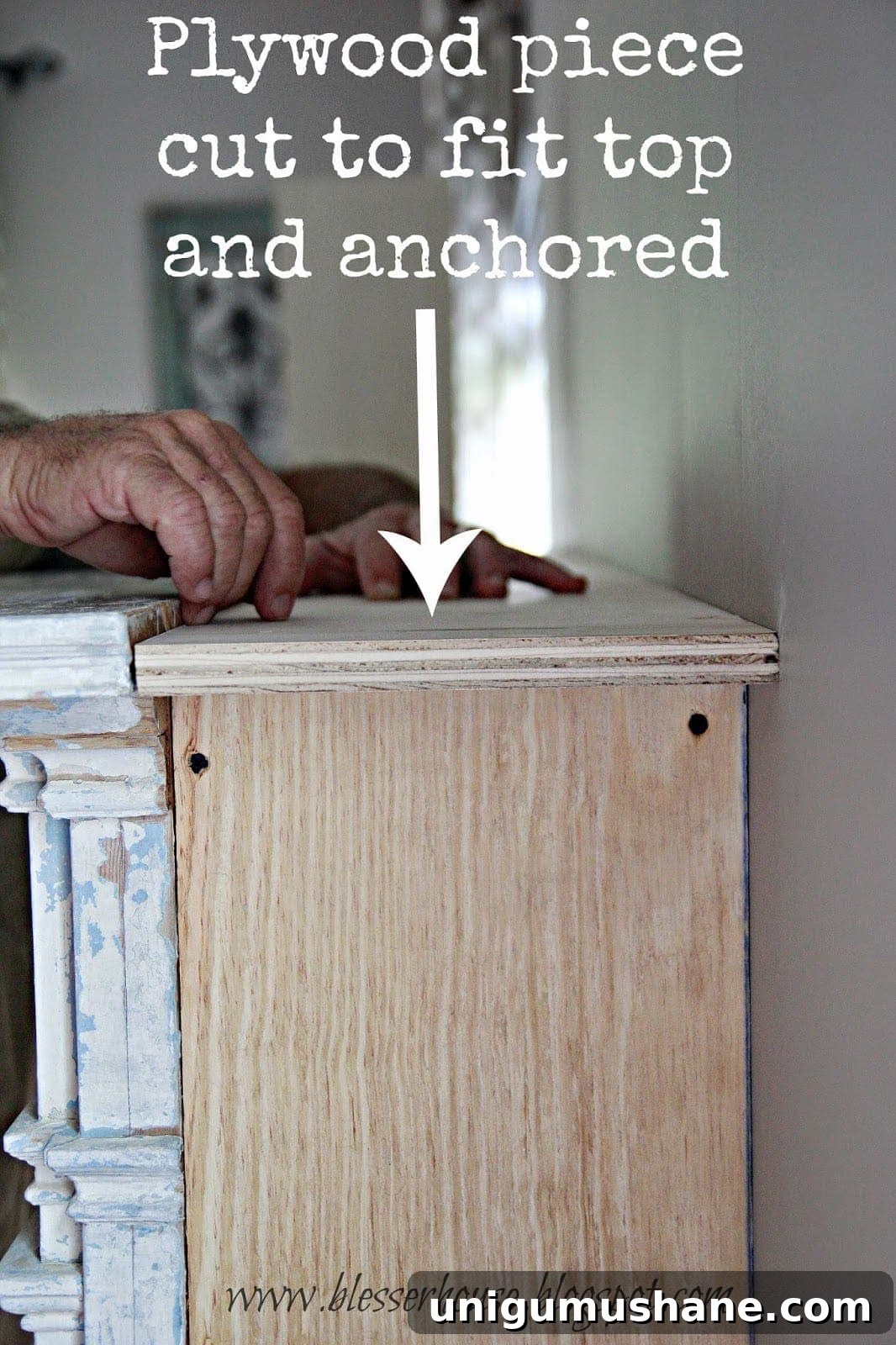
We anchored the mantel to the wall by nailing plywood strips to the 2×4 anchors at the back of the mantel and the wall studs. After installing the plywood side pieces and closing in the top, we added a final plywood cap that mimicked the mantel shelf’s end molding and secured everything with finishing nails.
And just like that, our faux fireplace was in place. It still looked rough at this stage, but the structure was solid and the mantel felt anchored and permanent. We planned subsequent posts to cover trim, priming, paint, faux brick, tile, or a gas insert option should we decide to upgrade later.
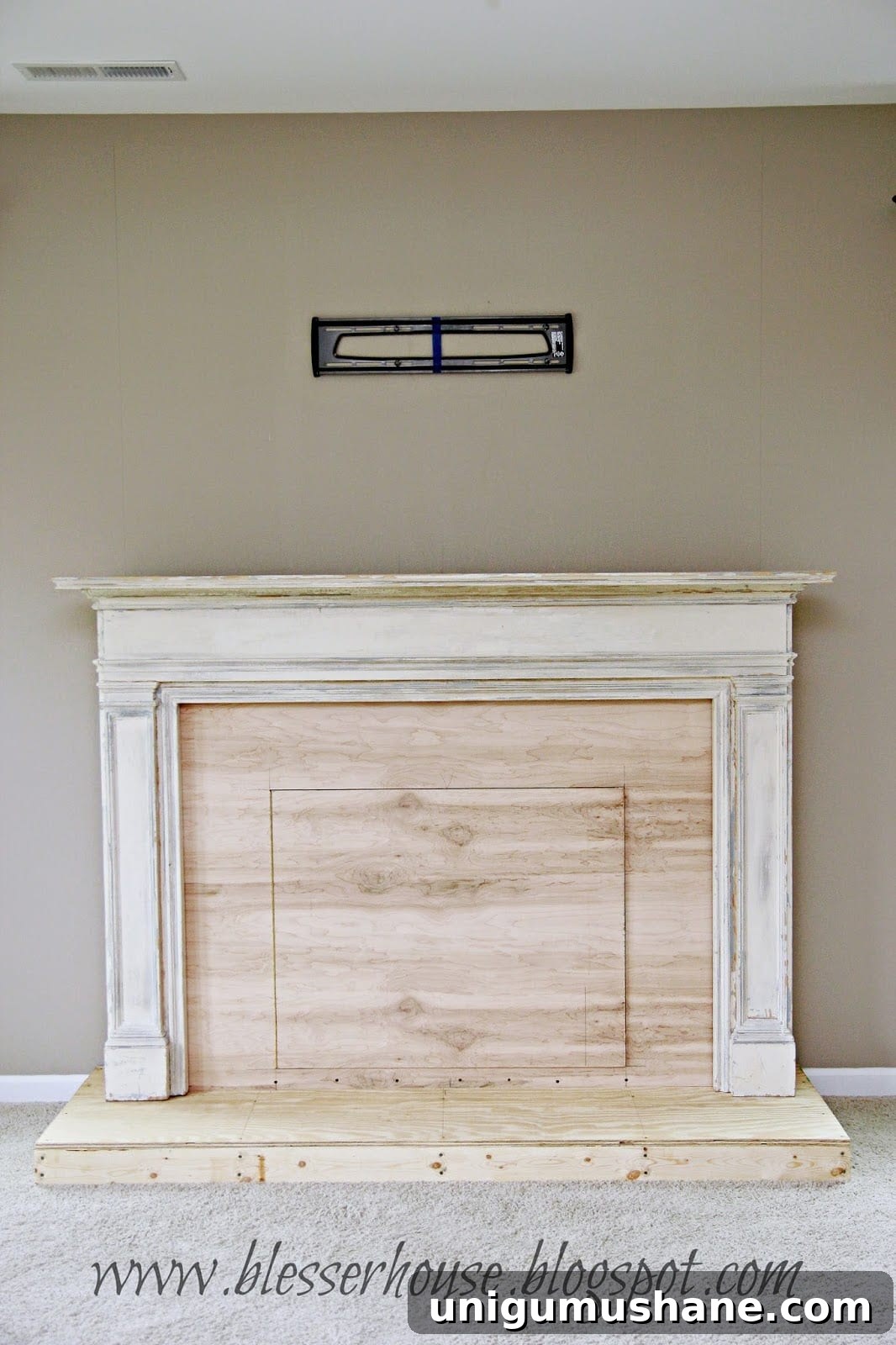
This first phase shows that with a reclaimed mantel, some plywood, and framing lumber, you can create a convincing, oversized faux fireplace for a fraction of the cost of a professional installation. It’s sturdy, functional, and a great foundation for finishing details.
See the follow-up posts on the blog for Part Two and the full reveal with painting, trim work, and styling. One day we may add a gas firebox insert, but for now we love the flexibility and character this faux fireplace adds to our living room.
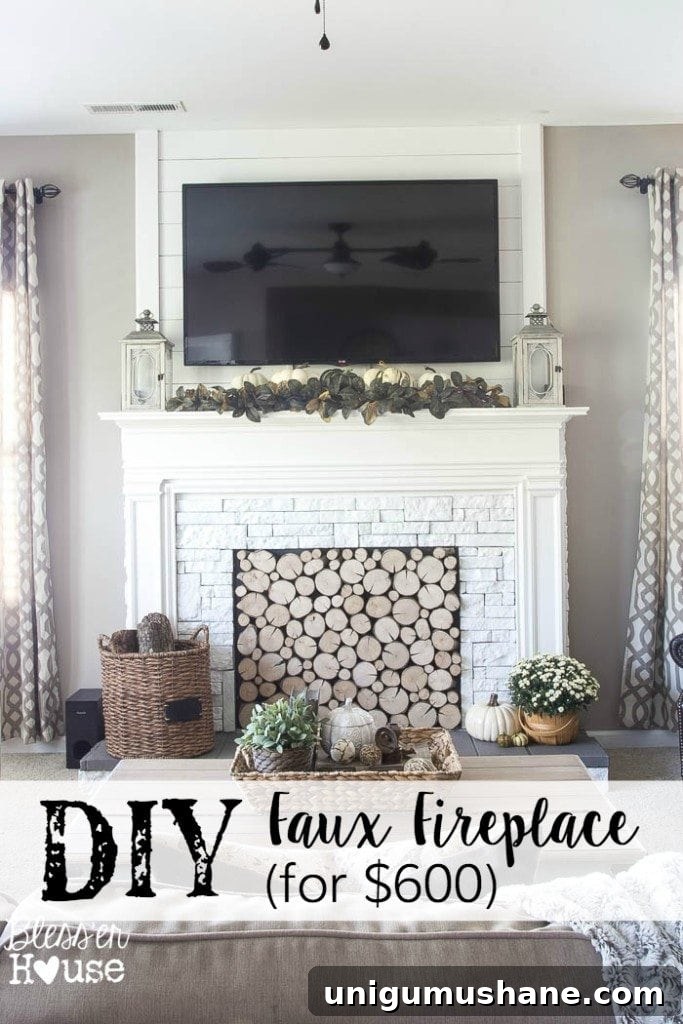
What do you think so far? Have you built a faux fireplace, or are you considering one? This approach works well when you want a bold focal point without the expense of a full installation.