
Change is a beautiful kind of pain.
That’s the lesson I’ve been learning in the first weeks of the New Year. I’ve been pulling myself off the couch more often, tying on my running shoes, and trying to return to healthier habits. In the middle of my millionth jumping jack, it hit me — DIY projects feel a lot like those workouts. They’re tough, sometimes uncomfortable, but the payoff makes every bit of effort worthwhile.
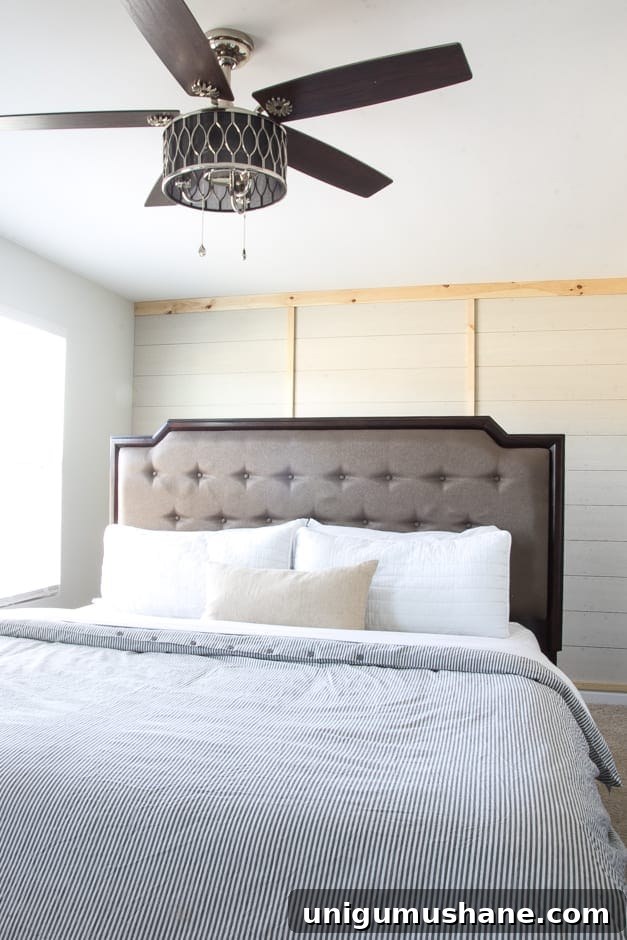
A few months back I sketched out a big plan for our master bedroom and, finally, last week we started bringing that plan to life. Our first major change was a planked board-and-batten accent wall behind the bed — a blend of shiplap, traditional board-and-batten, and a grid-inspired approach that creates architectural interest without breaking the bank.
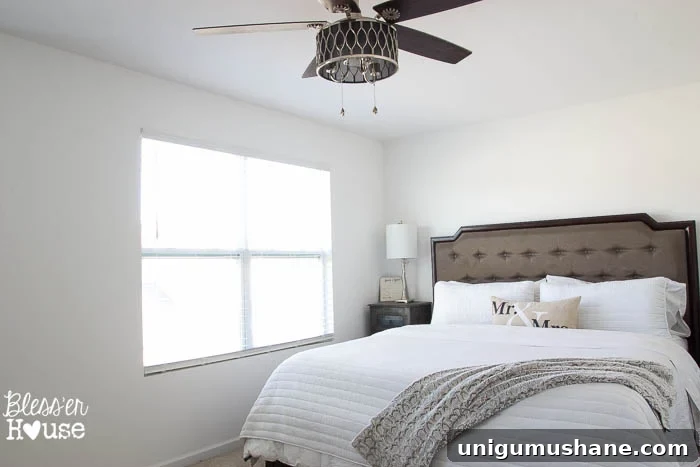
We started by standing back and visualizing the wall. There are plenty of directions to go: faux shiplap, floor-to-ceiling board-and-batten, or a board-and-batten grid. Ultimately I landed on a hybrid of those ideas that gives the room warmth, texture, and a custom feel.
Before any cutting or nailing, we located and marked every stud in the wall. That’s an essential step so the boards and battens have solid anchor points. Next we installed a 1×4 board across the top to form the base for a simple crown moulding later on. That top board also acts as a clean cap for the planks.
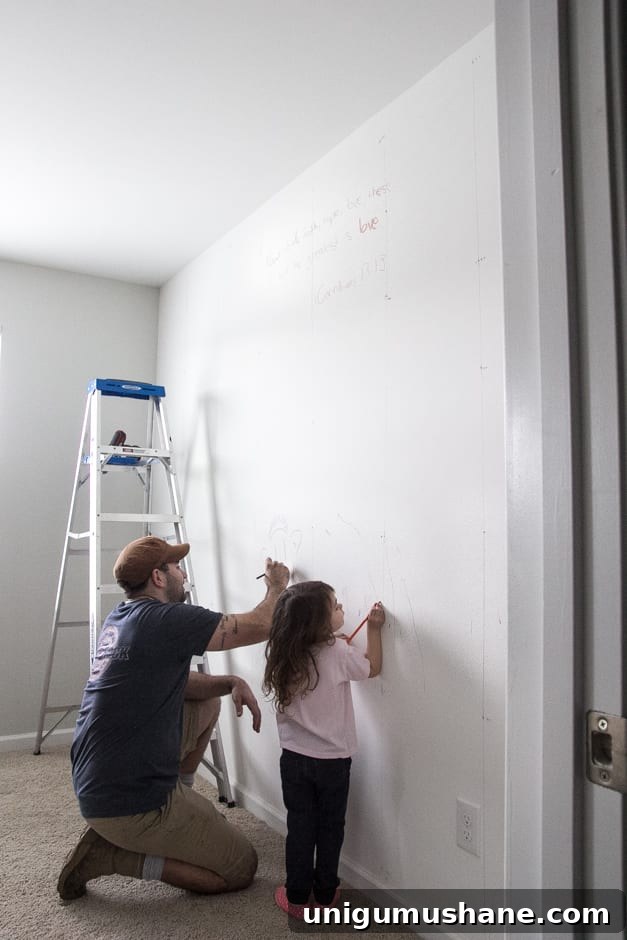
A small, sweet moment: Robert carved “1 Corinthians 13:13” above our bed before the construction really began. It was a quiet, loving gesture amid the chaos of sawdust and tools.
Supplies Used
Here’s what we used to build the planked board-and-batten accent wall. These are general items any DIYer can source at a local lumberyard or hardware store.
- Primed hardwood plywood, about 1/8″ thick (cut into 8″ wide strips on a table saw)
- 1×4 pine board for the top cap
- 1×2 pine boards for battens and base
- Pneumatic nail gun and compressor (or finishing nails and a hammer)
- 2″ finishing nails for trim and battens
- Jigsaw to cut around outlets and obstacles
- Stud finder, level, and spacers (we used quarters as inexpensive spacers)
To keep the planks even and consistent, we divided the wall into three sections and measured each section’s height to cut the plywood strips to length. Using quarters as spacers, we nailed each 8″ plank to the wall with the nail gun, aligning them as we worked from top to bottom. The seams didn’t need to be perfect because the battens would cover them later.
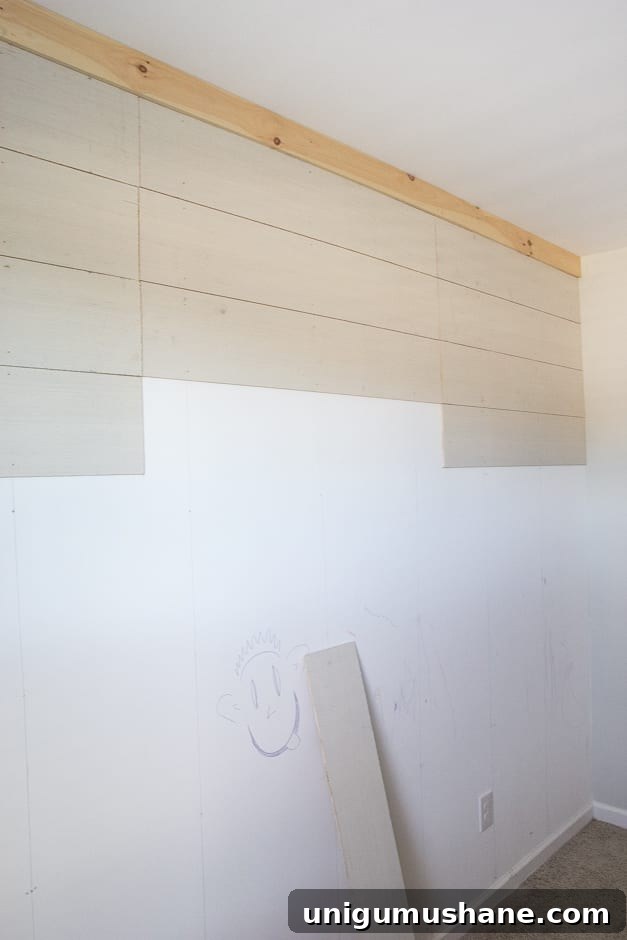
Working around the outlet required a careful cut with the jigsaw so the plank fit snugly. At the bottom of the wall we attached 1×2 boards to form a neat base. After all the planks were installed, we used a level to find the plank seams and then mounted two vertical 1×2 battens over those seams. For a few spots Robert grabbed a hammer instead of the nail gun — old-school methods still work just fine.
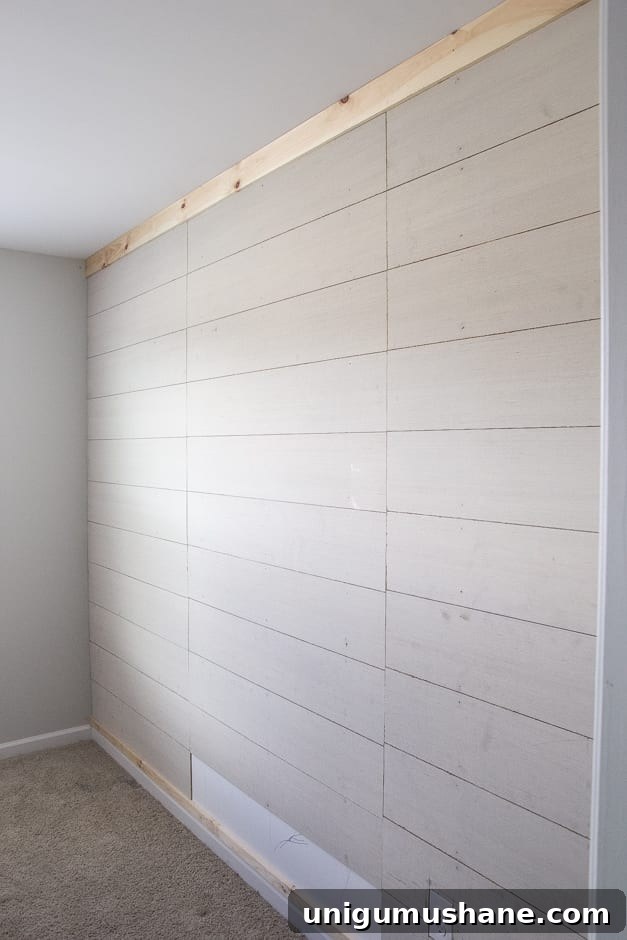
What the Process Looked Like
After the structural work was complete, we stood back and saw the accent wall begin to take shape. It looked cozy and layered, and even unfinished it added a new focal point to the room. There are still finishing steps to do — caulking seams, filling nail holes, and painting — but the heavy lifting was done.
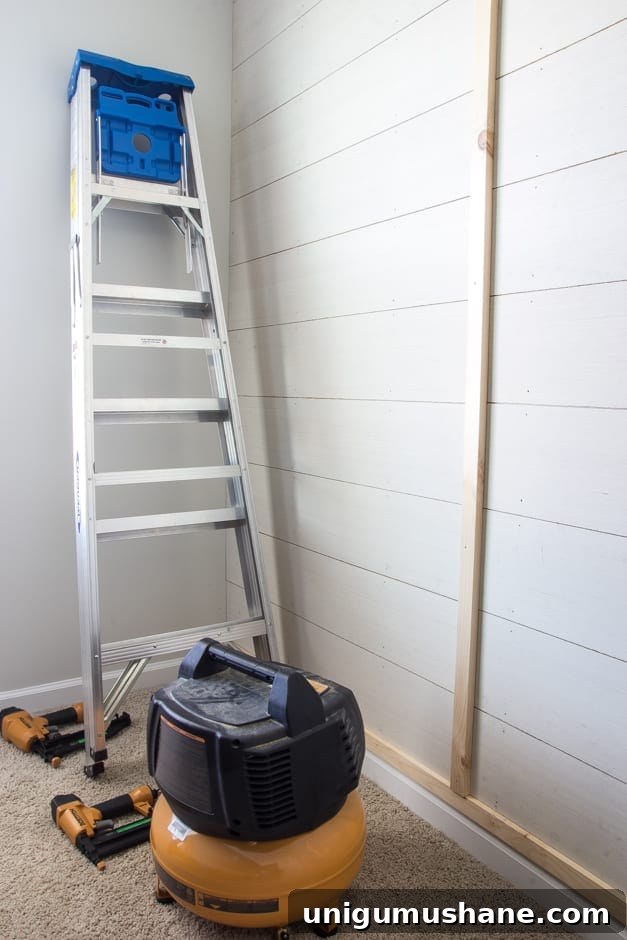
This week I’m completing the final touches, including painting the wall in a color that complements the rest of the master bedroom design. I can already see how much warmer and more finished the room will feel once everything is painted and the furniture is returned to its place.
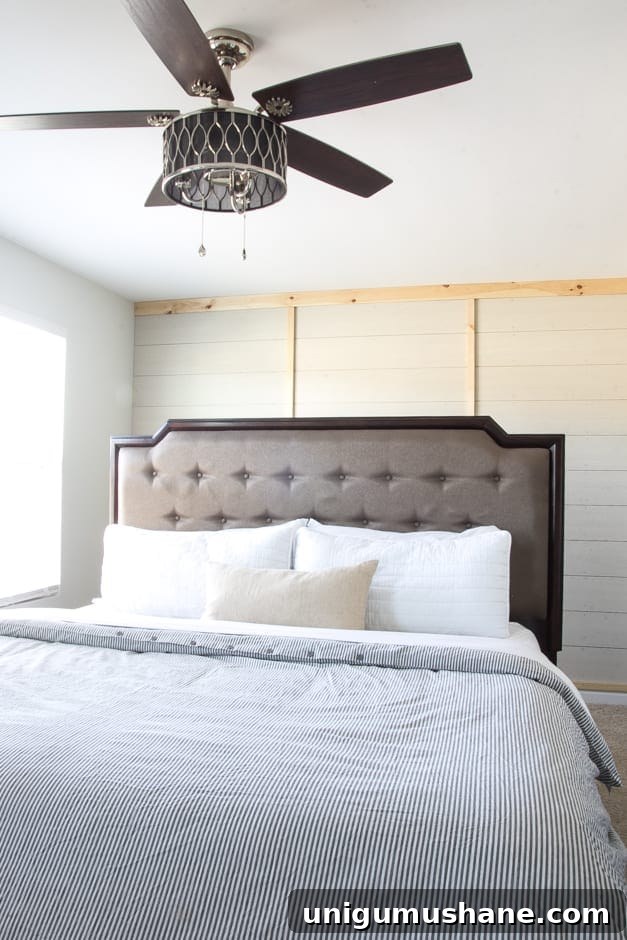
Tips and Takeaways
- Always locate studs before you start nailing — it makes the whole wall much more secure.
- Use consistent spacers between planks to keep lines even; small household items like quarters work well in a pinch.
- Plan for outlets and switches early and cut plank openings with a jigsaw for a clean fit.
- Perfection isn’t required — trim and battens will hide small gaps and imperfect seams.
One practical consequence of this kind of project: the rest of the house tends to get messy. Furniture ends up stacked at the foot of the bed and pathways become obstacle courses. It’s messy while it’s happening, but the end result makes it worthwhile — much like those workouts we started the year with.
If you’re planning your own DIY accent wall, pin this idea for your inspiration. A planked board-and-batten wall can transform the look of a master bedroom, adding texture, depth, and a designer feel without a huge budget.
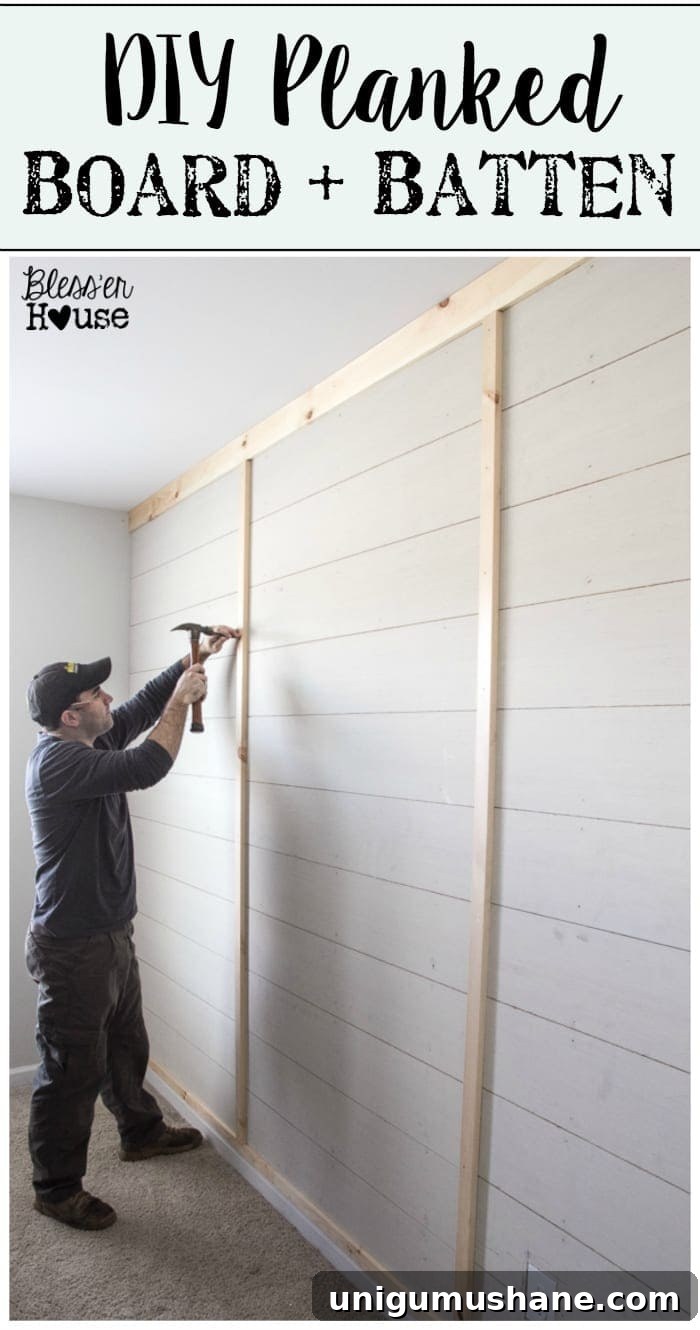
Are you starting any home projects or getting back into a fitness routine this year? I’m excited to keep sharing the bedroom updates as they happen — and I can’t wait to see how this space finishes out.

UPDATE: Our full master bedroom makeover is complete — the accent wall is painted, trim is finished, and the room’s design plan comes together beautifully.
Follow our ongoing projects and find more DIY inspiration on the blog for step-by-step tutorials, paint tips, and simple furniture makeovers that make a big impact.