
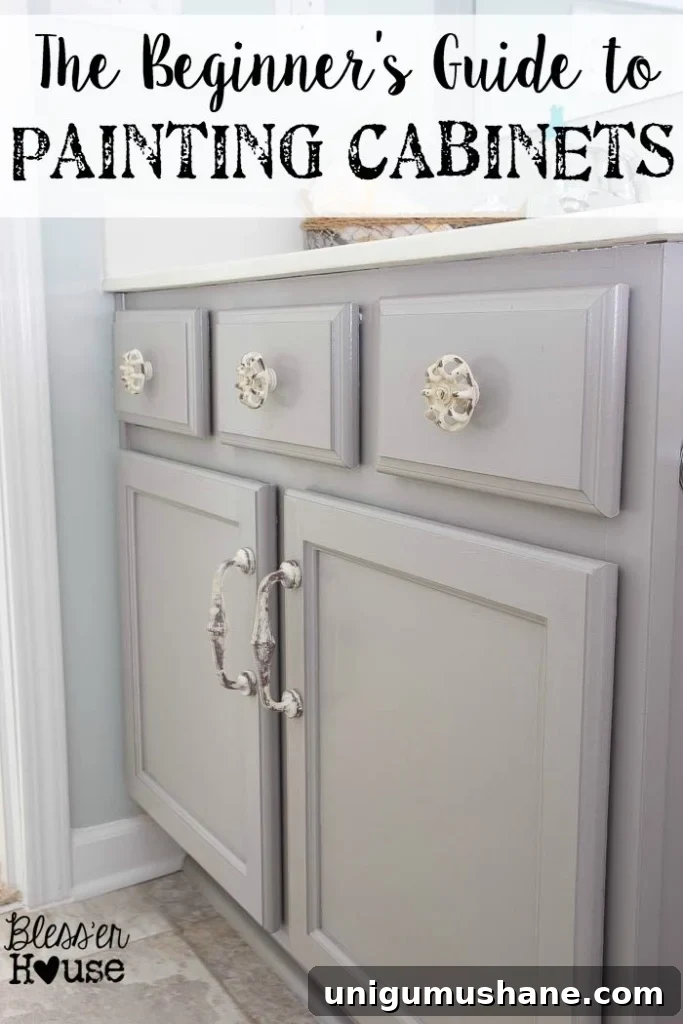
A step-by-step beginner’s guide to painting cabinets including necessary supplies, tips to make the process easier and faster, and how to get a smooth, professional finish.
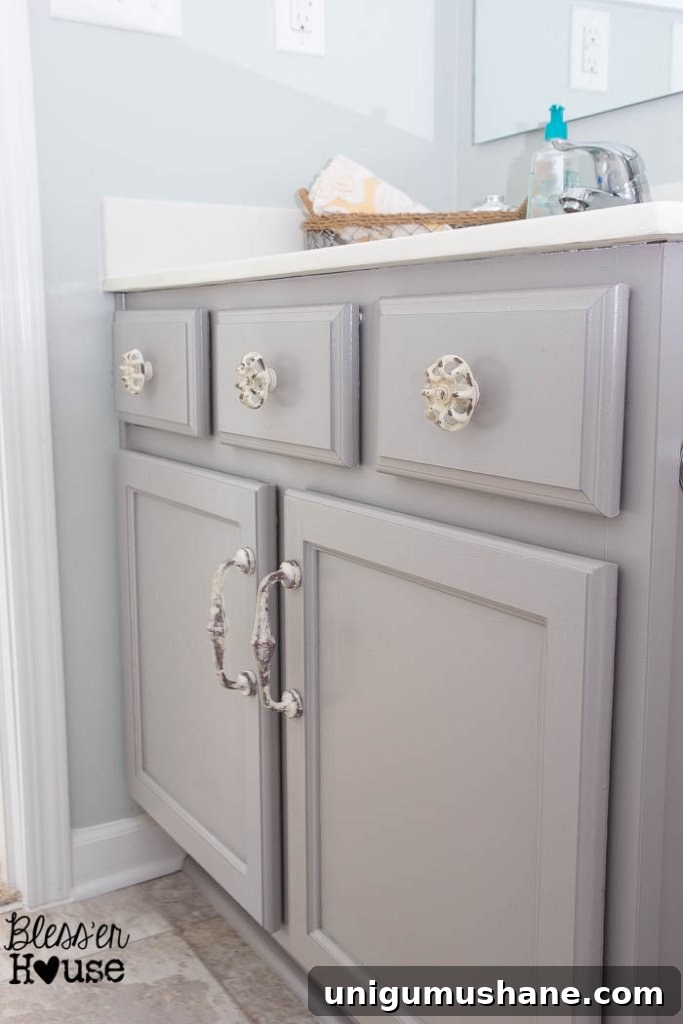
Celebrate — the hallway bathroom cabinets are finally painted! If you’ve been staring at wood cabinets that don’t suit your style, painting them is one of the fastest, most impactful updates you can make. This guide walks through the supplies I used, the exact steps I followed, and a couple of lessons learned to help you get great results even if this is your first time.
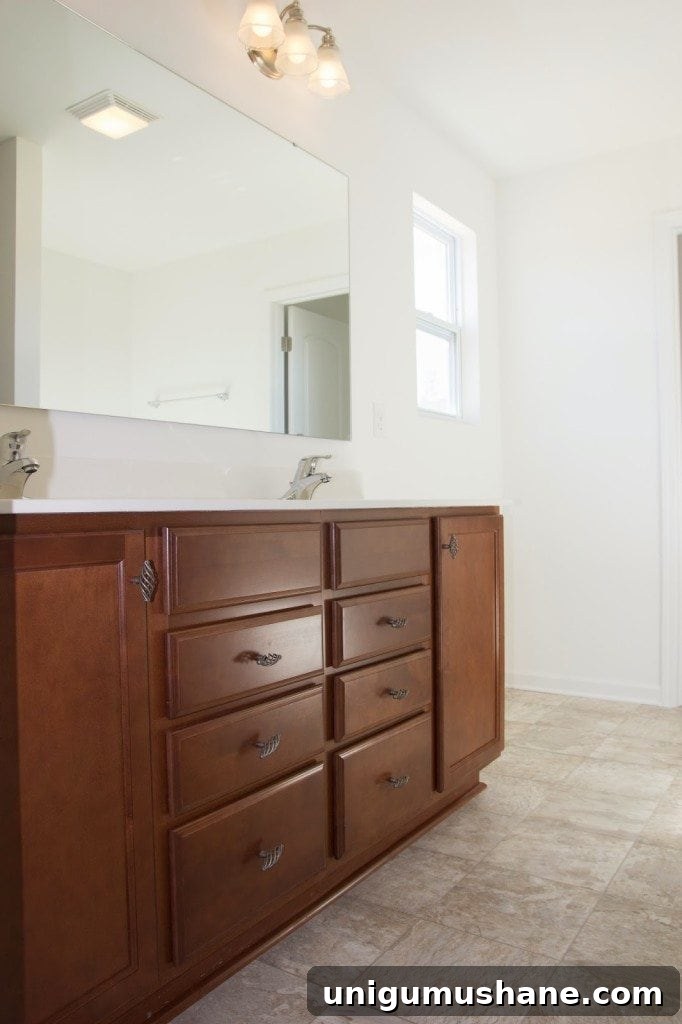
We were lucky that the builder-grade cabinets were well made, but the reddish cherry stain didn’t match the design I wanted for the space. Painting cabinets is a practical way to transform them without replacing the boxes, and you don’t have to be an expert to do it well.
This is a beginner-friendly method — I’ve done it a couple of times and researched different approaches to find a reliable process. If your cabinets are in decent shape but the finish isn’t your style, painting is a cost-effective solution. Don’t live with something you don’t love.
When planning the hallway bathroom refresh, removing the reddish wood tone was top of the list. Below are the supplies I used, followed by a clear, step-by-step process that produced a smooth, durable finish.
Supplies
- Plastic shower curtain liner or drop cloth
- Painter’s tape
- Razor or utility knife
- Sandpaper (medium to fine grits)
- Liquid deglosser
- Chemical-resistant gloves
- Respirator mask
- Wood filler
- Paint roller tray (I line the tray with a grocery bag for easy cleanup)
- 1.5″ economy paint brush
- 1.5″ angled quality brush (for cutting in and detail work)
- Cabinet foam roller (one for primer, one for paint)
- Primer (see notes below)
- Interior enamel semi-gloss paint (see notes below)
Approximate total: $75 (this covered cabinets in two bathrooms).
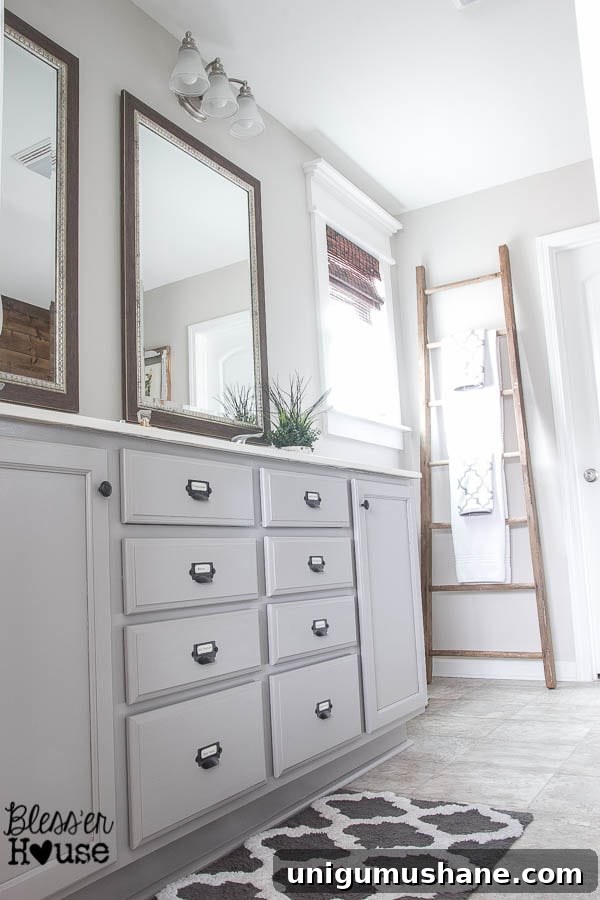
Notes on products I used: I primed with Kilz Original — it covered well, but the fumes were strong. For future projects I’d choose a low-VOC or odorless primer for a more pleasant experience. For the topcoat I used Valspar Reserve semi-gloss, mixed to the Benjamin Moore color “Winter Gates.” The finish looked beautiful but took weeks to fully cure and didn’t self-level as much as I’d hoped. Consider higher-performance cabinet or waterborne alkyd enamel if you want faster curing and smoother leveling.
The Steps
1. Remove doors, drawers, and hardware. Label each door and drawer with its matching hardware so reassembly is quick and accurate. Numbering or taping a small label works well.
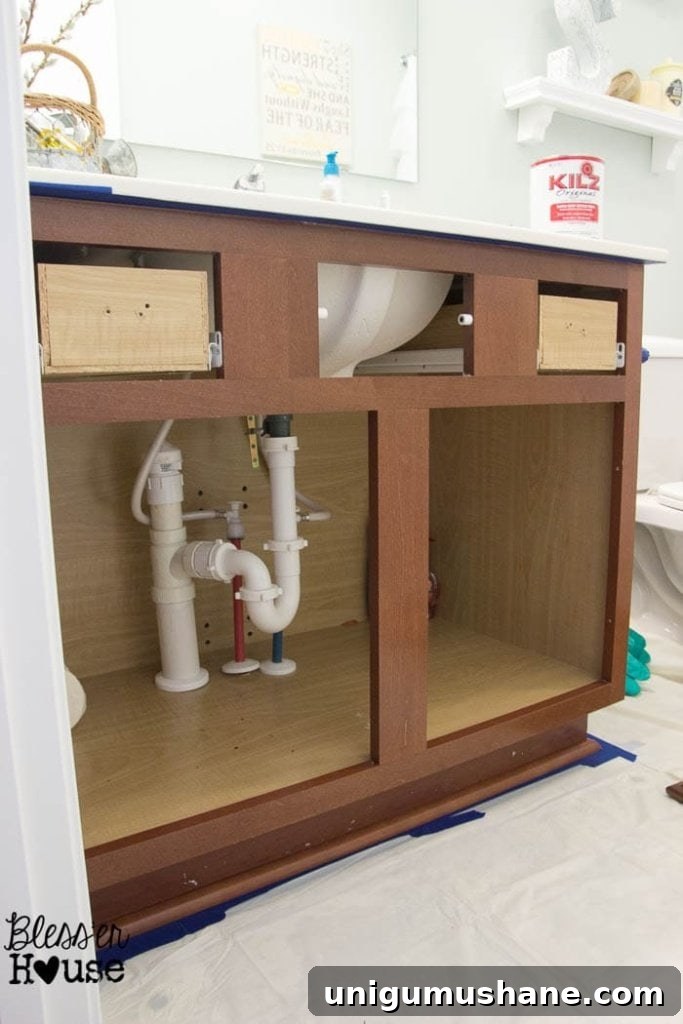
2. Protect the area. Tape down your drop cloth or a plastic shower curtain liner to protect floors and nearby surfaces. If you’re not confident freehanding edges, use painter’s tape for crisp lines.
3. Clean and degloss. Wear chemical-resistant gloves and a respirator as needed. Wipe down every surface with liquid deglosser to remove oils and the glossy finish so primer will adhere. You can sand lightly as an extra precaution, but deglosser often eliminates the need for full sanding.
If you need to fill old hardware holes, apply wood filler after deglossing. Once the filler is dry, sand smooth and remove dust with a tack cloth.
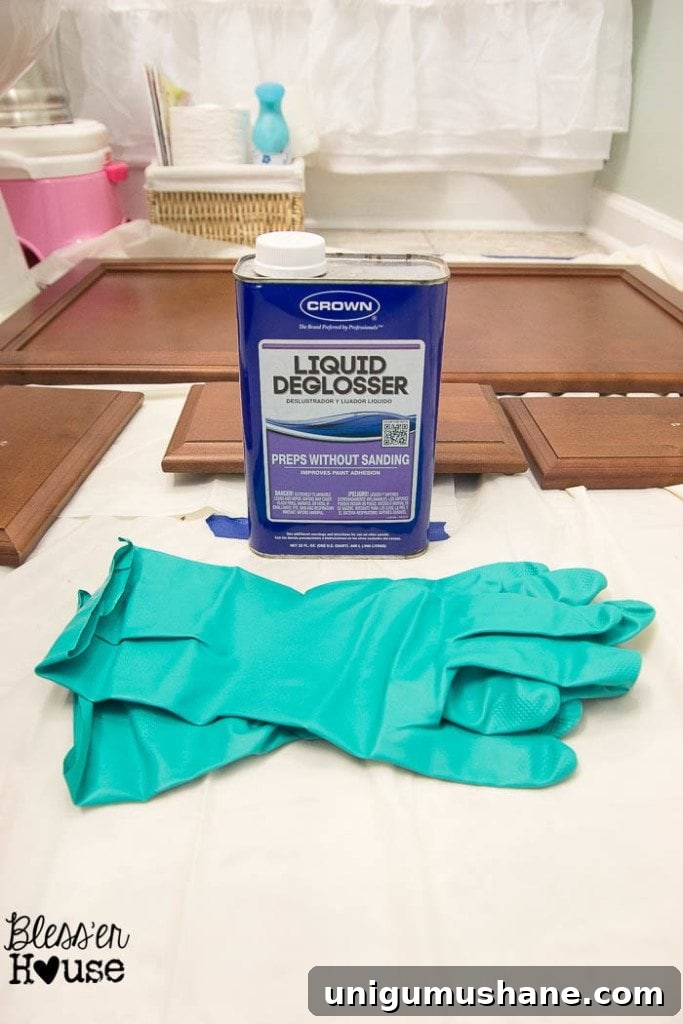
4. Prime. Pour primer into your tray (lined for easy cleanup). Use the small brush to cut in corners and detailed areas, then use a foam cabinet roller for flat surfaces. Start by priming the back of doors and drawer fronts first. Lightly sand between primer coats for an ultra-smooth surface.
5. Paint the topcoat. After primer is fully dry and any sanding dust is removed, apply the semi-gloss enamel using the angled brush for edges and the foam roller for flat panels. I applied two coats for full coverage. Allow proper drying time between coats following the paint manufacturer’s recommendations.
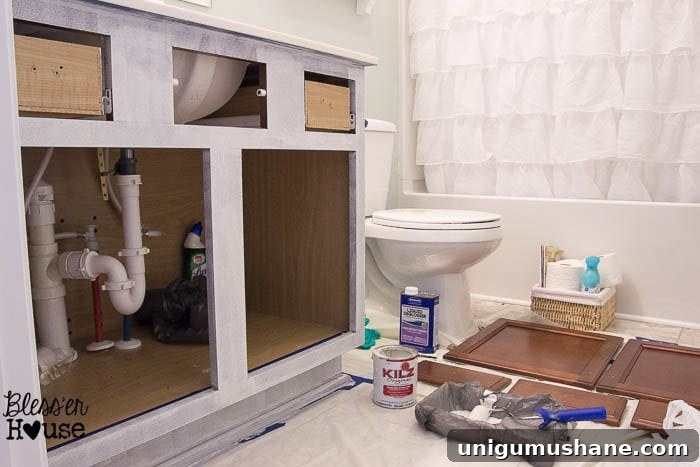
6. Remove tape carefully. When the paint is dry, score the tape edge with a utility knife and slowly peel the tape back to avoid lifting paint.
7. Reattach hardware and reinstall. Attach knobs, pulls, and hinges, then rehang doors and slide drawers back in. Take a step back and enjoy the transformation.
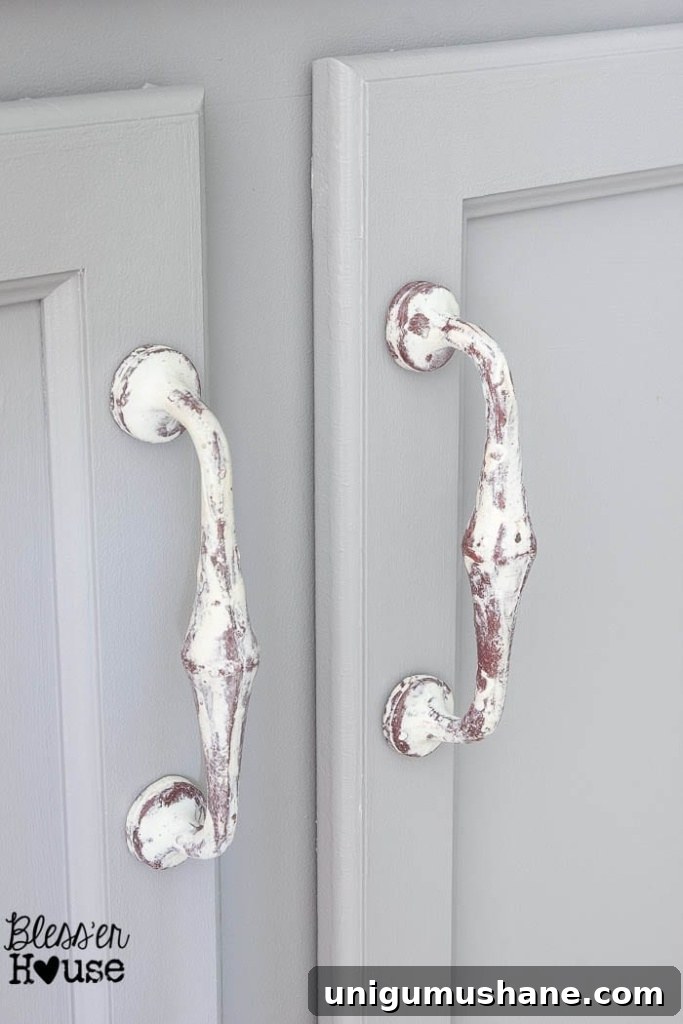
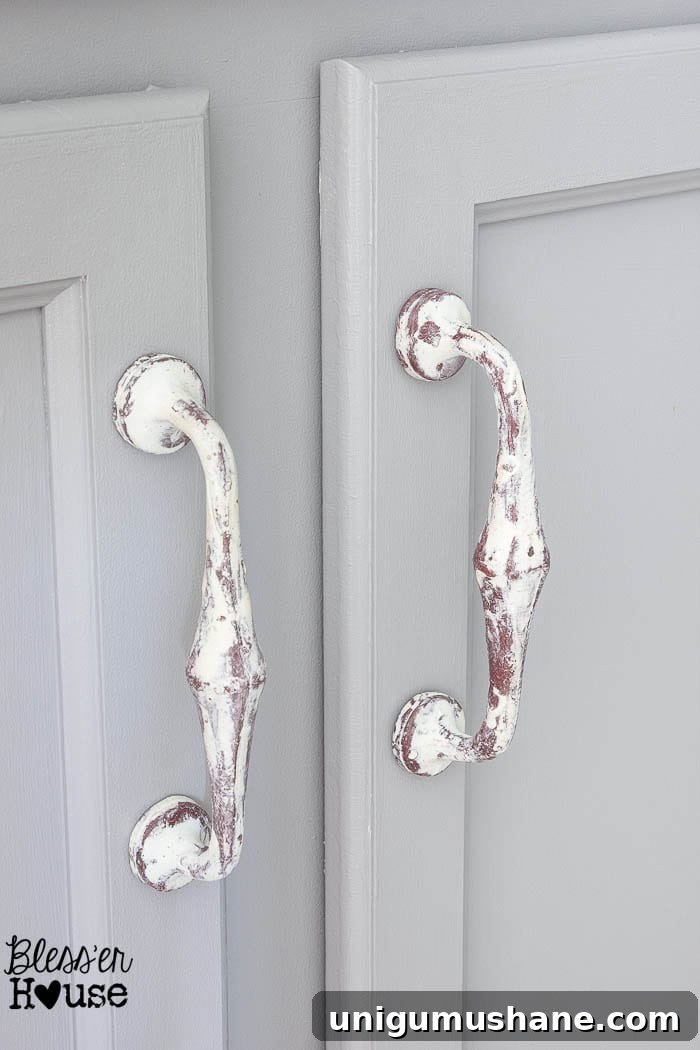
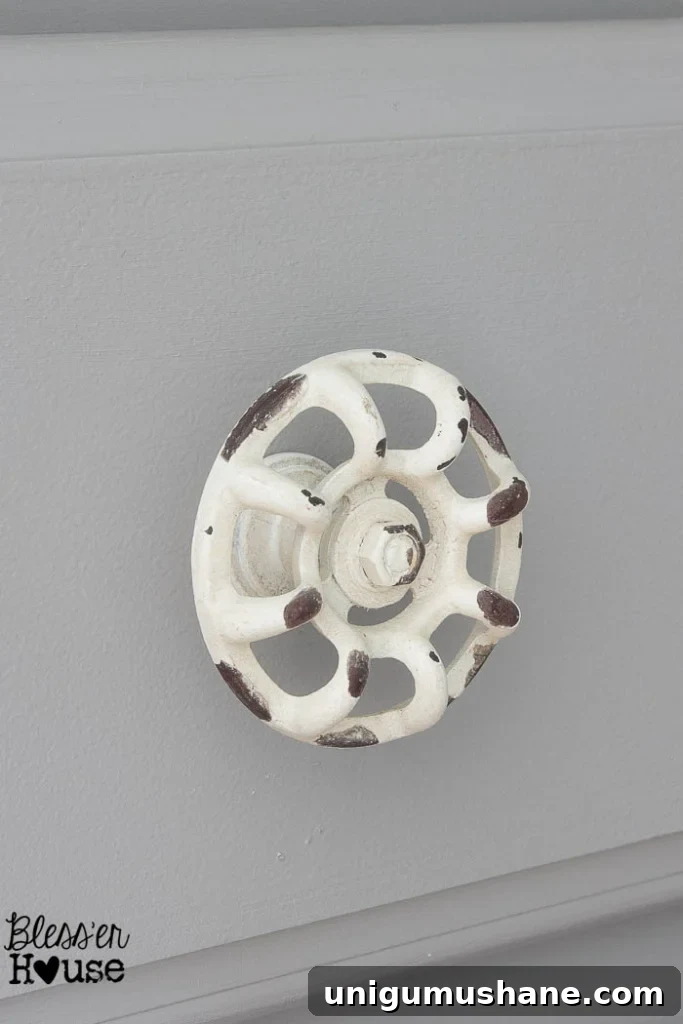
I found new knobs and handles at a craft store and updated the hardware to complement the new paint. Small details like hardware can elevate the overall look.
Two things I would do differently
- Choose a low-VOC or odorless primer to reduce fumes and make the process more comfortable.
- Consider a high-performance cabinet paint or a waterborne alkyd enamel that levels better and cures faster for an even smoother finish.
Have you painted cabinets recently? Share any tips or tricks you learned — it’s always helpful to hear what worked for others. If you’re ready to tackle your kitchen or bath cabinets, this beginner-friendly method will get you a professional-looking result without replacing the cabinetry.

Follow: Facebook | Pinterest | Instagram | Twitter | Google+ | Bloglovin | Hometalk