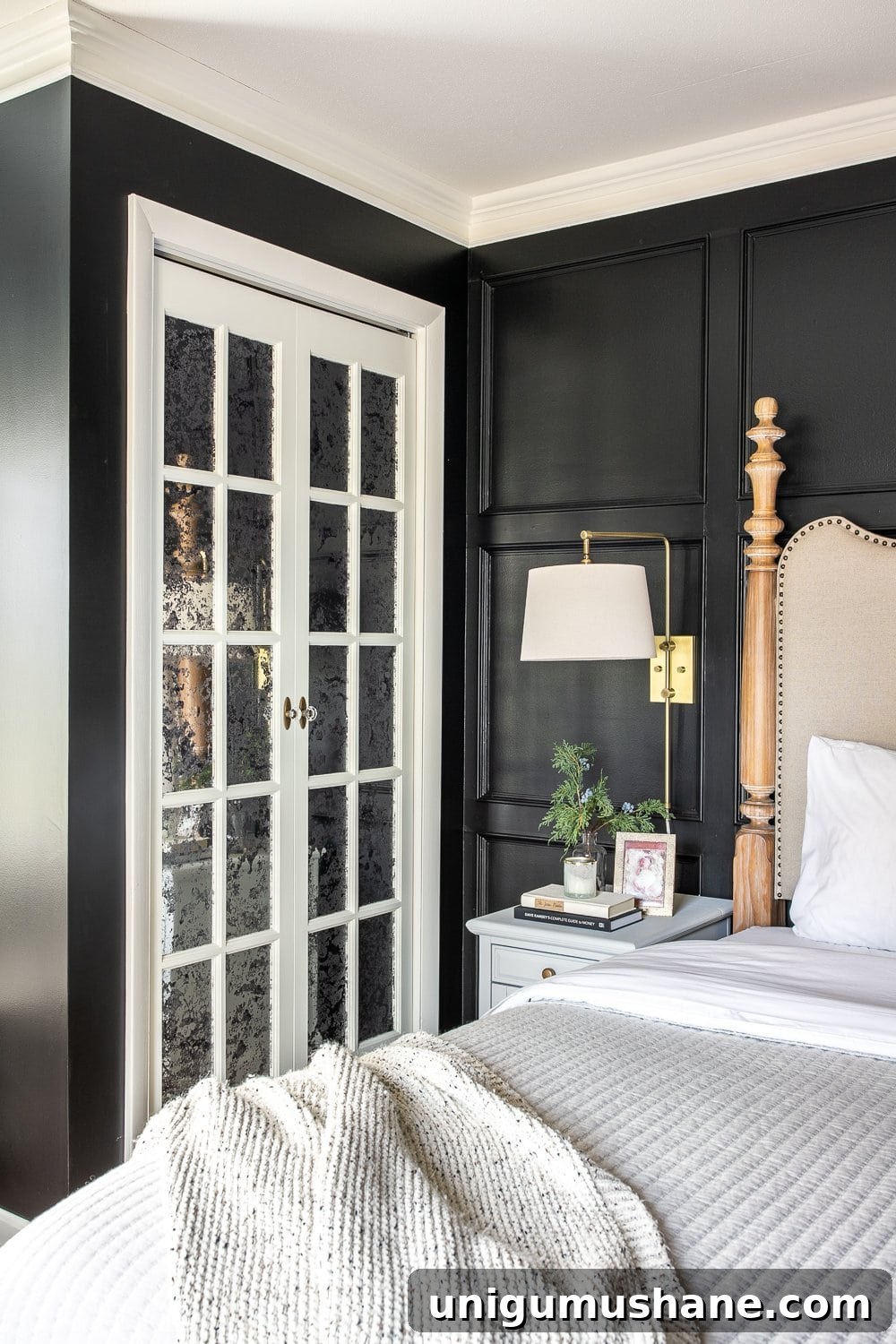
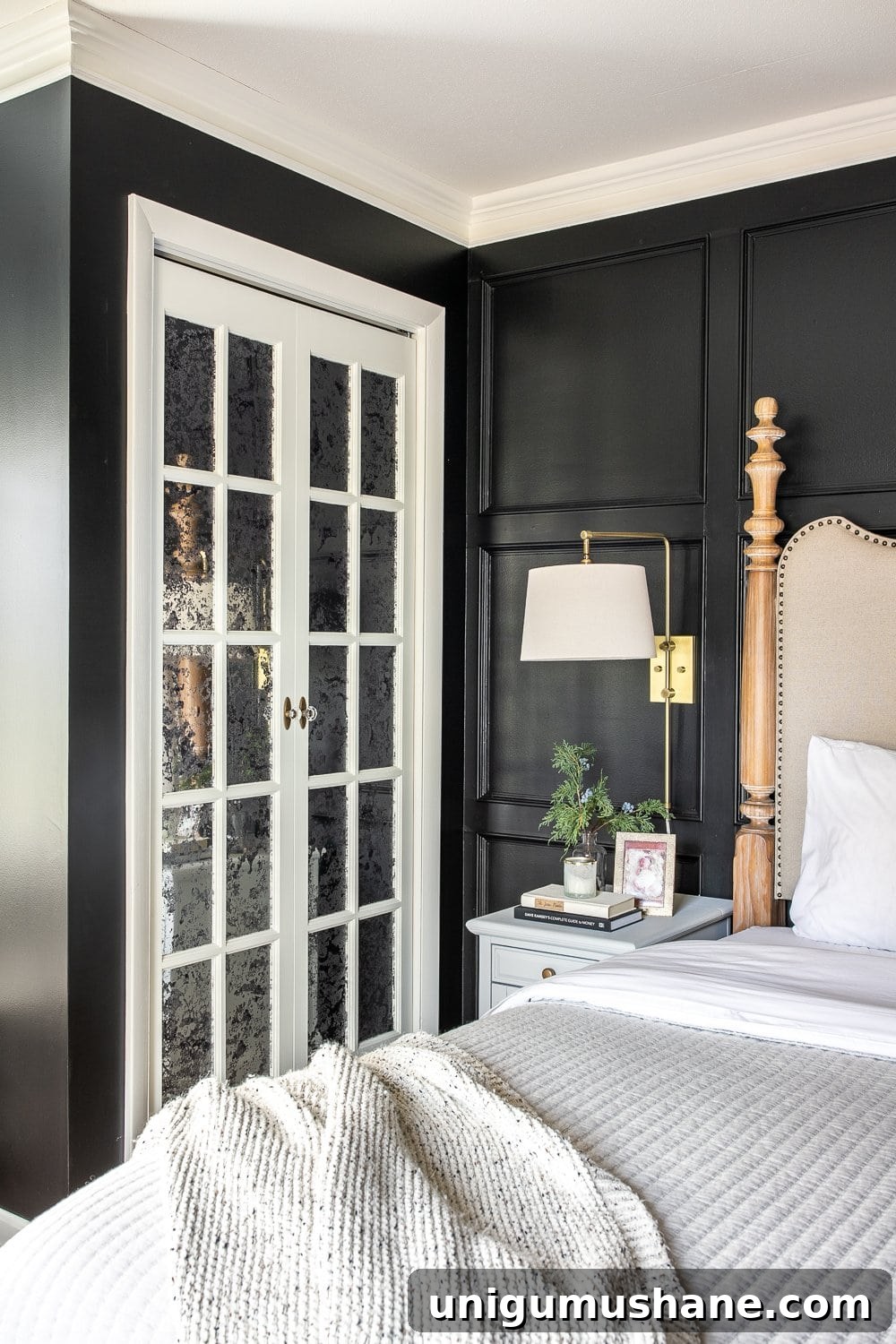
How we created a vintage-inspired, glamorous solution for the bifold French closet doors in our primary bedroom’s his-and-her closets.
Bifold doors aren’t always the most attractive option — at least not to me. I prefer something with a little more character.
This closet-door makeover for our bedroom’s bifold doors quickly became one of my favorite DIY projects.
Beginner-Friendly DIY Closet Door Makeover
I absolutely love how our French closet doors turned out. If you’re new to DIY, this is a very approachable project — you don’t need to build anything from scratch.
We started with pre-made doors that included glass panes, but I wanted the look of mirrors to both conceal clothing and bounce light, making our modest bedroom feel larger and brighter.
Mirrors are one of the most effective tricks for visually expanding a room. One small change can make a big difference.
Here’s a quick summary before the full step-by-step: we replaced plain bifold doors with glass-front French bifolds, painted the frames, added vintage-inspired hardware, and applied an antique mirror film to the glass panes to create reflected light while hiding the closet contents.
UPDATE: See our final primary bedroom reveal!
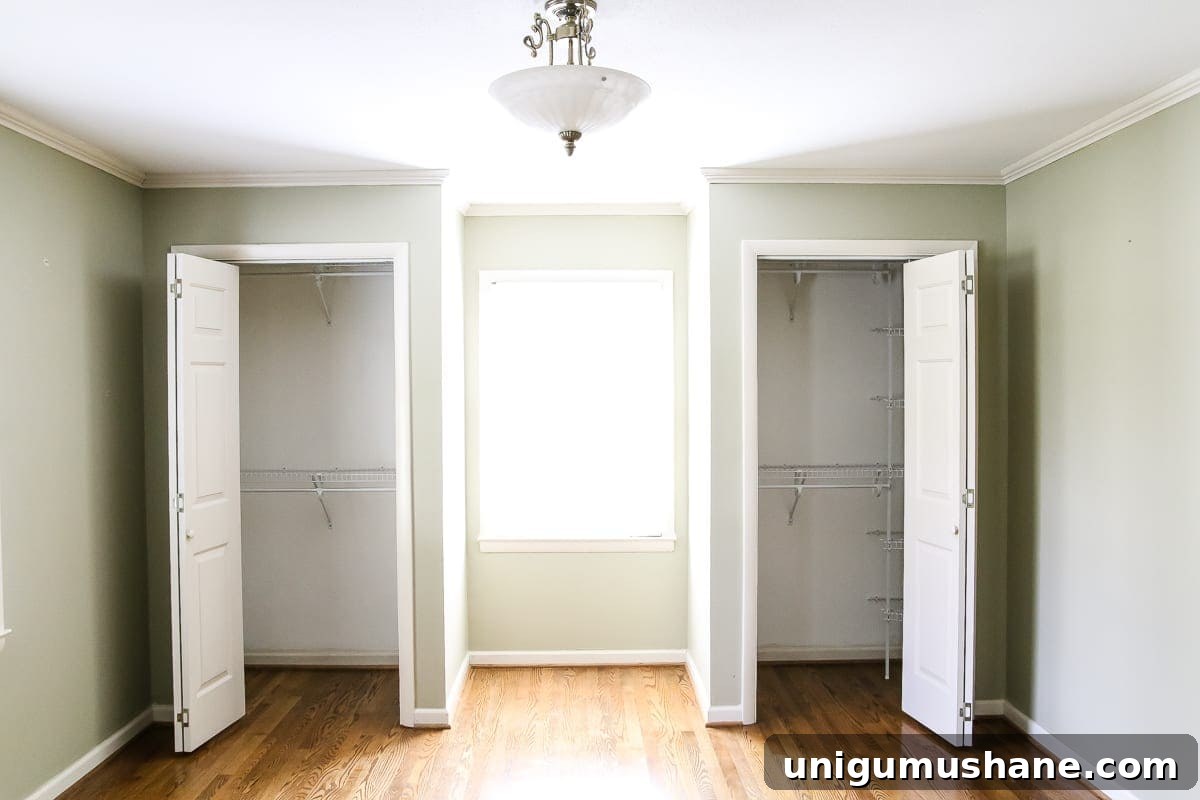
A fresh paint job helped at first, but we still saw more potential. After a second paint update, the room really came together. Although black paint can feel intimidating, it created a dramatic backdrop that allowed the white-framed doors and vintage hardware to pop.
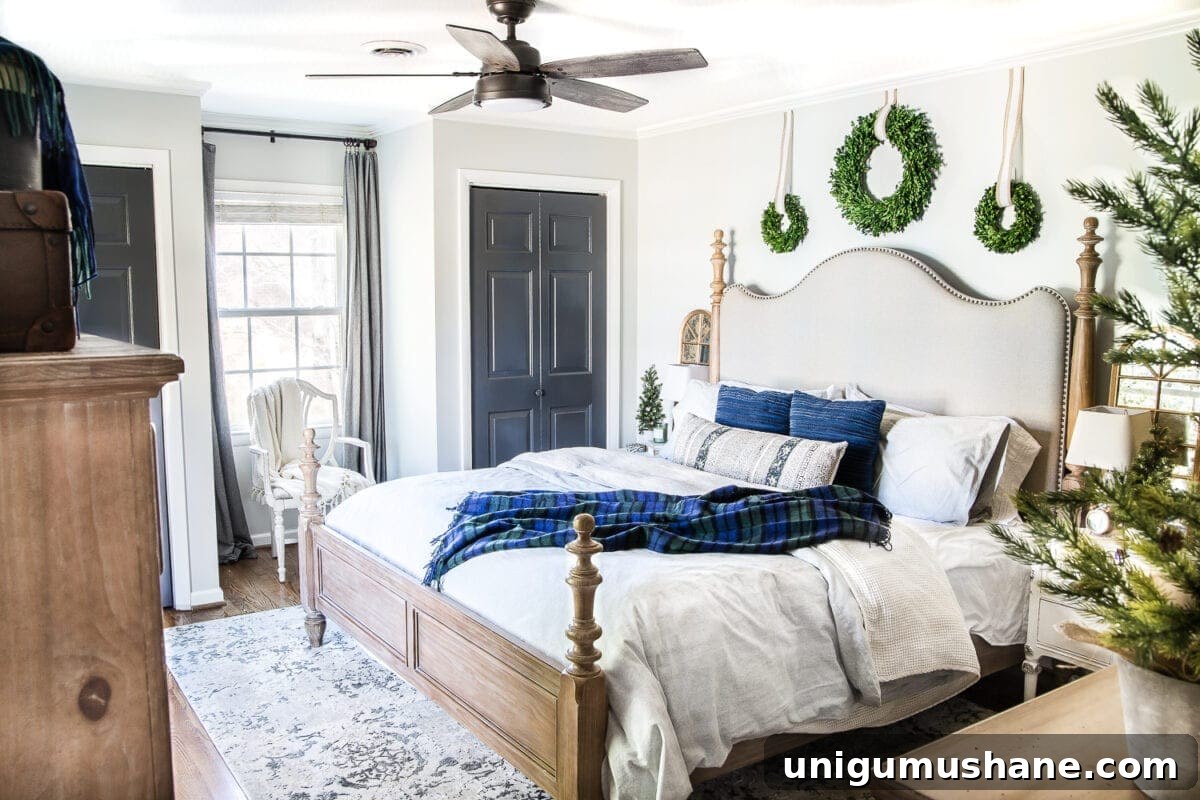
We were ready to move beyond basic hollow-core doors and introduce mirrored French closet doors that feel glamorous and vintage-inspired. The result made the entire room feel more intentional and elegant.
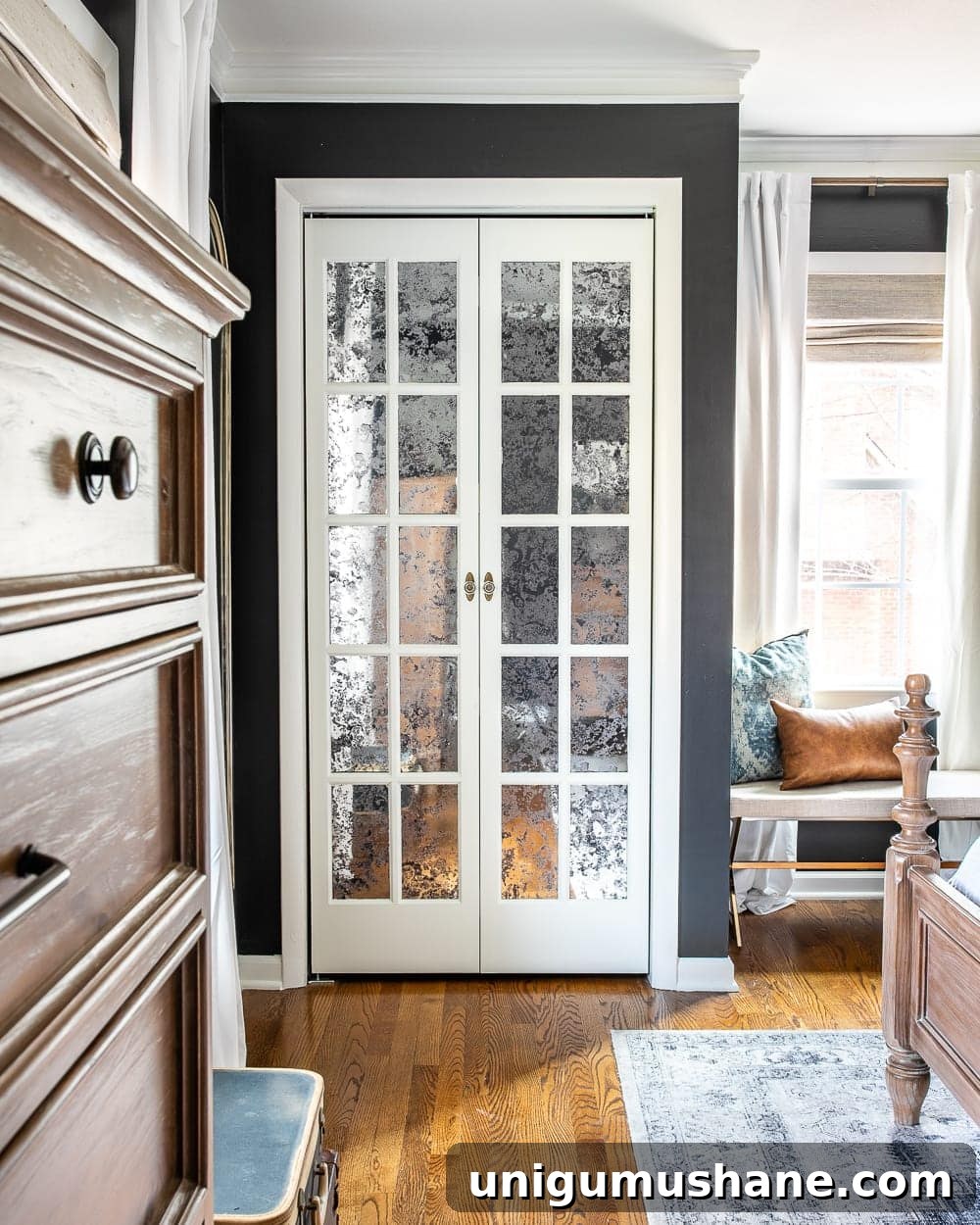
How to Make Mirrored French Closet Doors
Supplies
- Glass-front French bifold doors
- Primer
- Paint (we used Benjamin Moore Simply White in semi-gloss)
- Paint brush (or paint sprayer if preferred)
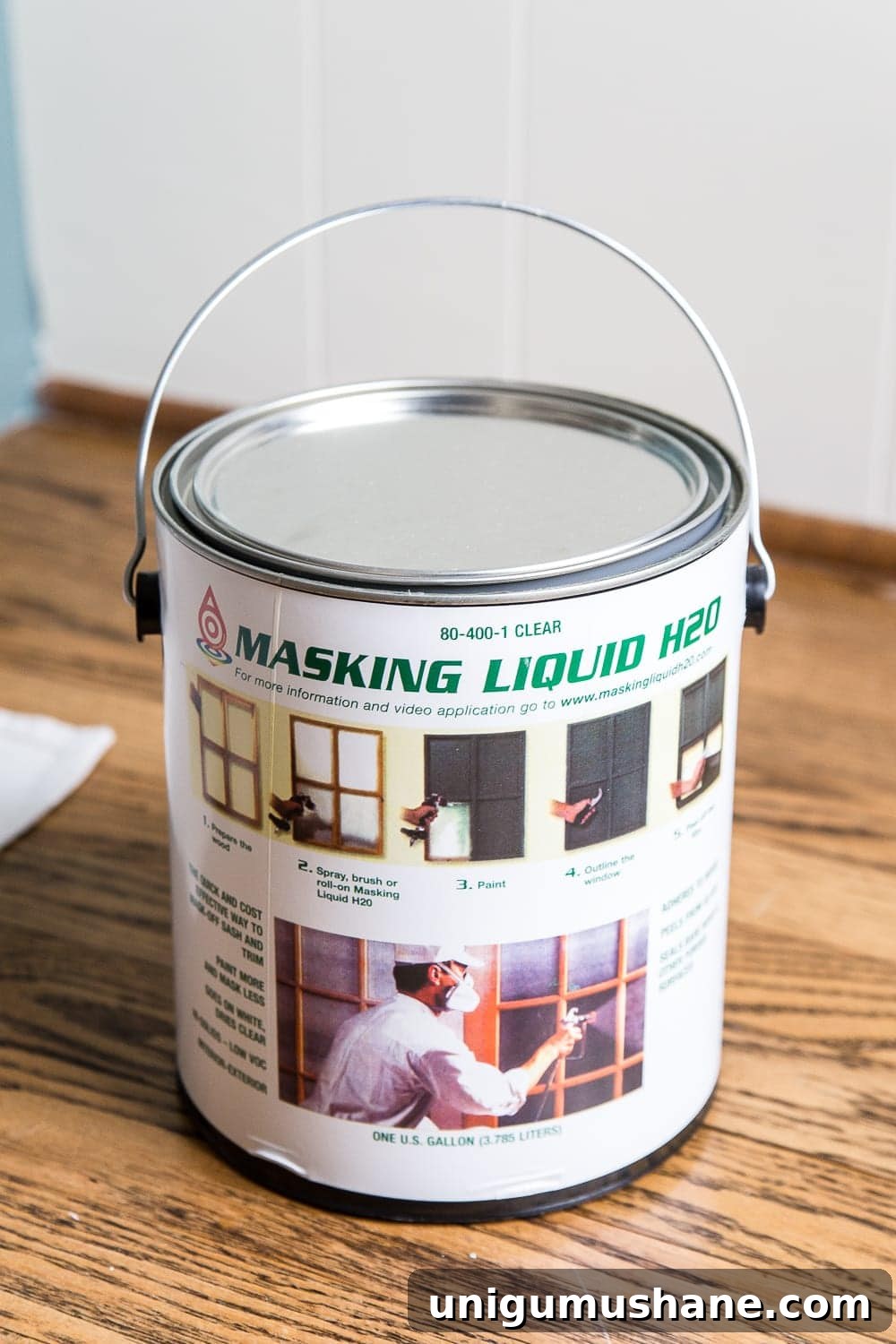
- Masking liquid (to protect the glass while painting)
- Antique mirror window film
- Spray bottle with water
- Sharp X-acto or utility knife
- Squeegee or an old credit card for smoothing
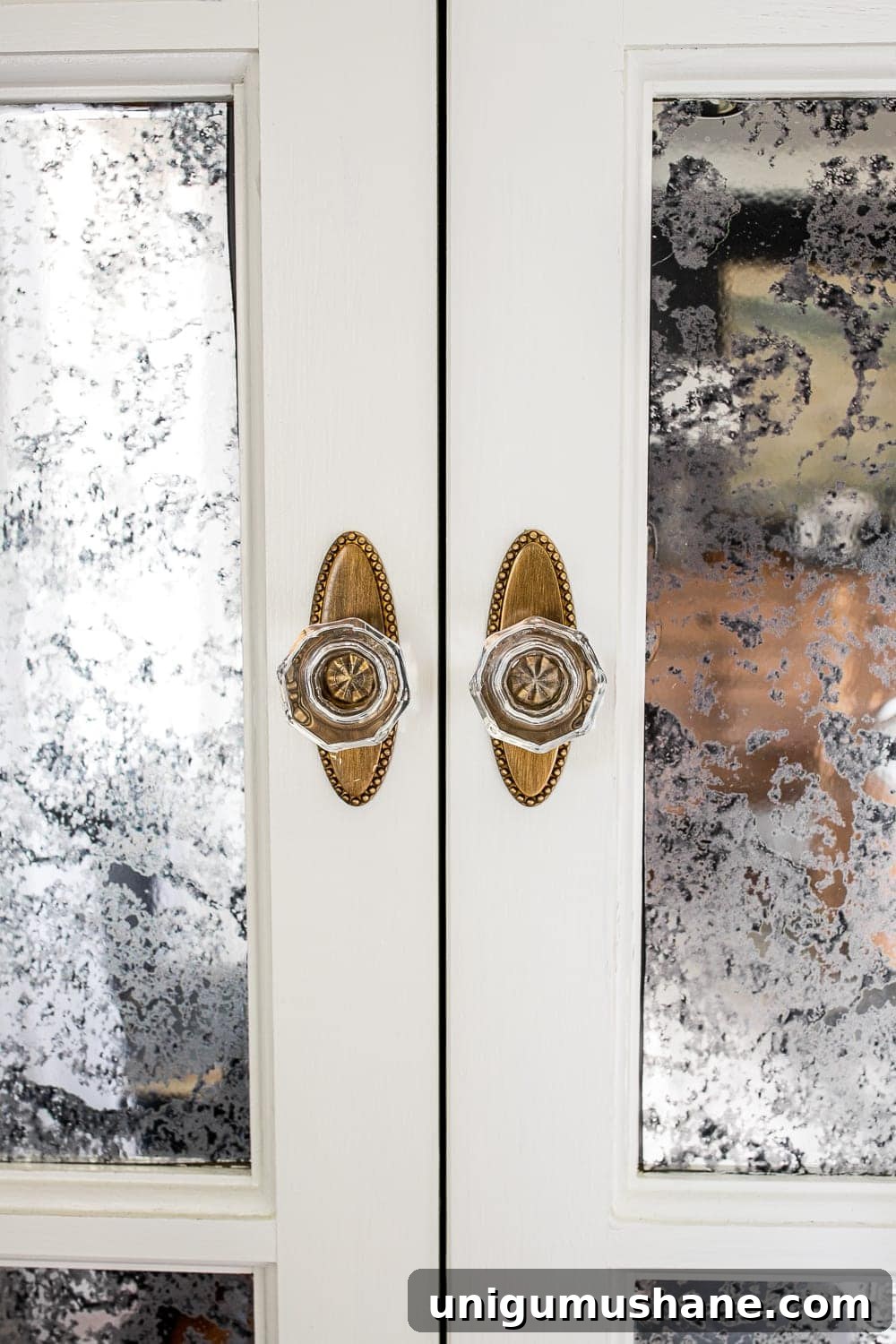
- Glass knobs
- Antique brass backplates or other hardware of your choice
We used the same glass-insert French bifold doors that worked well in other rooms of our house. The antique mirror film is an easy way to add texture and reflected light without creating a full, clear reflection — perfect for hiding closet contents while brightening a room.
Step 1 – Apply Masking Liquid to Prep
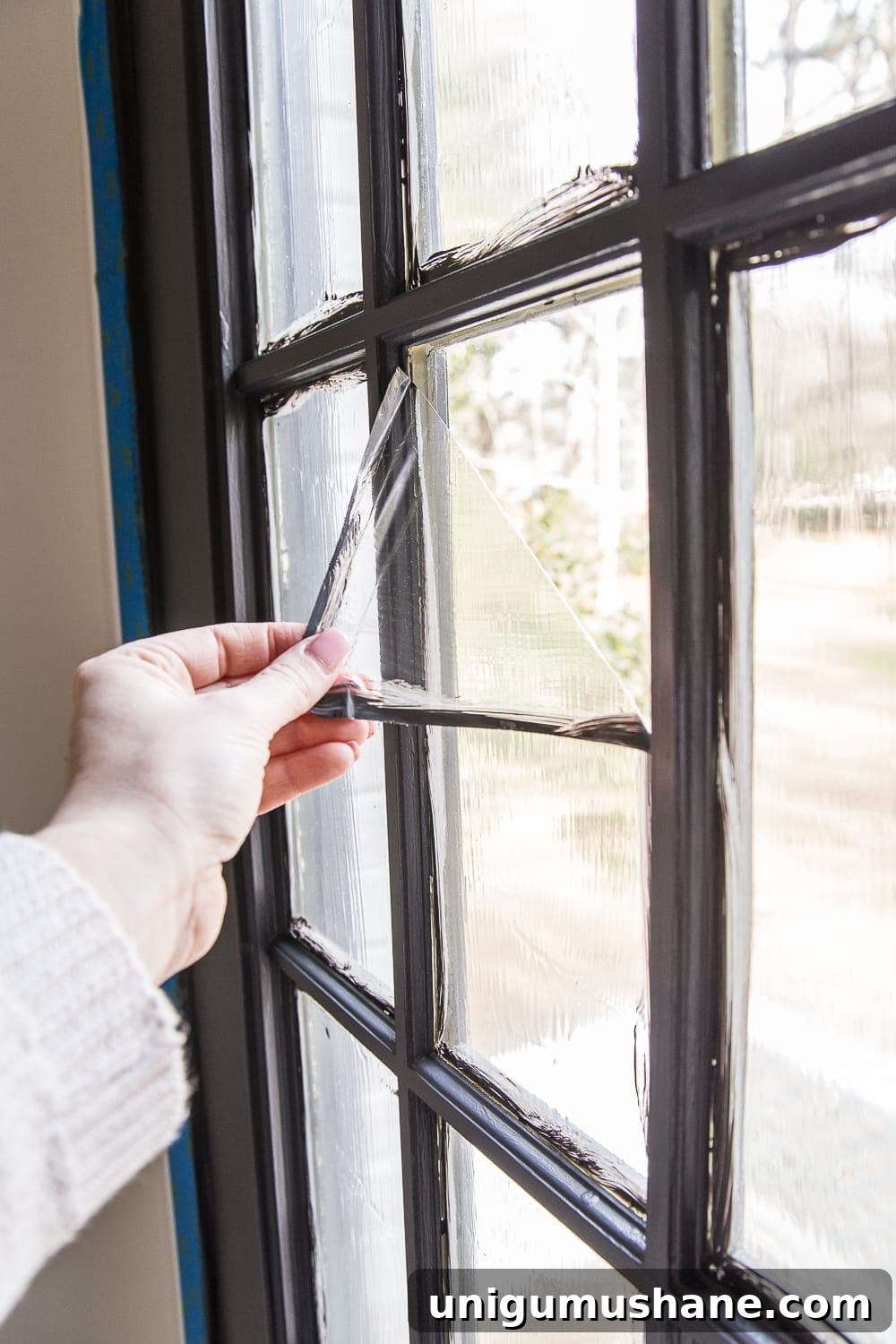
Brush masking liquid across the glass panes before painting the door frames. This method is faster than painstaking painter’s tape and lets you paint up to the glass. Once the paint is dry you can peel the masking liquid away cleanly.
Step 2 – Apply Primer
After the masking liquid is fully dry, apply a coat of primer to the door frames. Because the masking liquid protects the glass, you can prime and paint over the protected area without worrying about getting primer on the glass itself.
Step 3 – Apply Paint
When the primer dries, paint the door frames. We used Benjamin Moore Simply White in semi-gloss and one coat did the job. A brush that helps self-level will reduce brush strokes; a sprayer will deliver an even smoother finish if you prefer.
After the paint dries, score the edges of the masking liquid with a utility knife and peel it off the glass to reveal clean glass edges.
Step 4 – Add Door Handles or Knobs
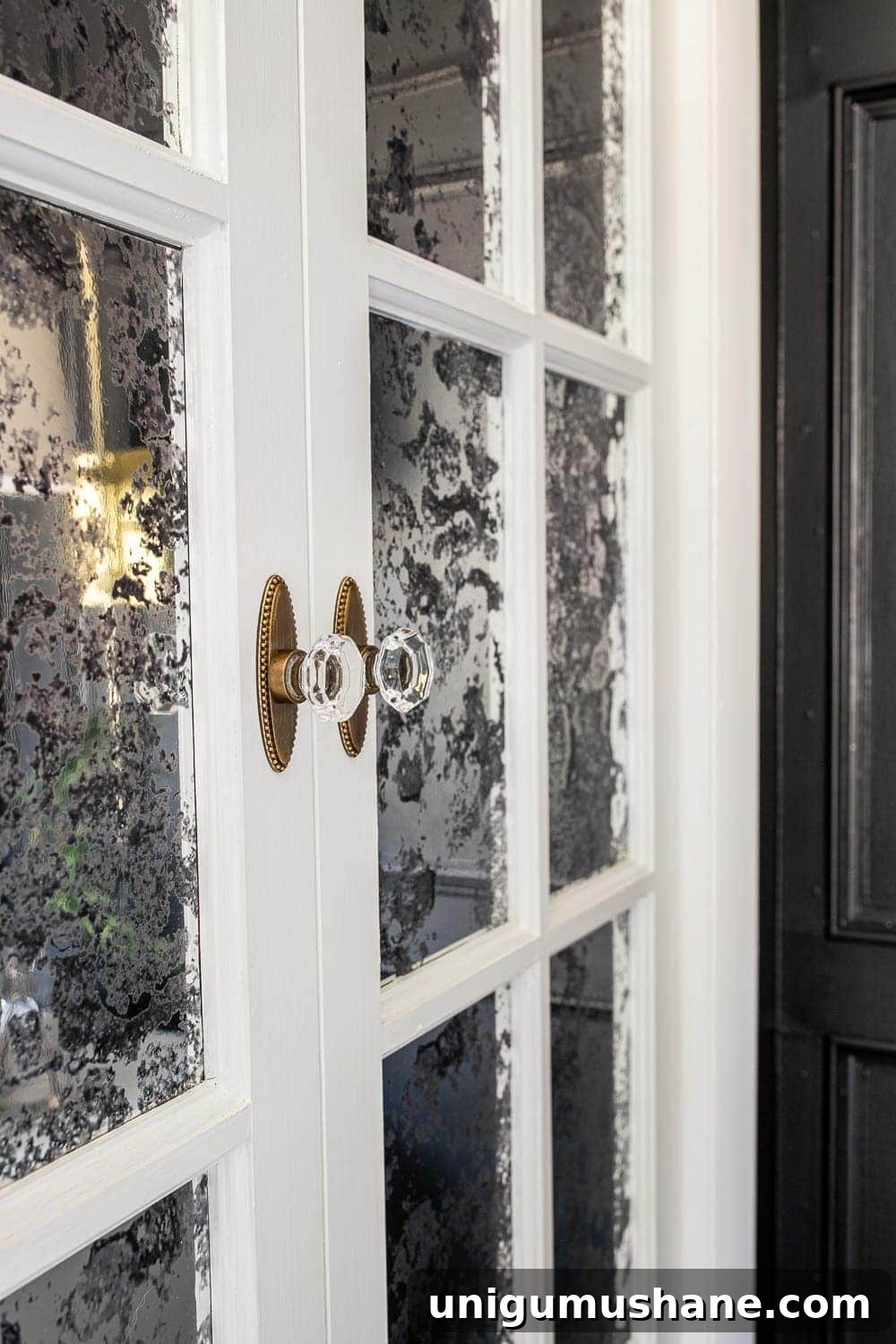
We chose glass knobs paired with antique brass backplates to reinforce the vintage look. Swapping hardware is one of the simplest, most impactful updates you can do — choose a style that fits your room.
Step 5 – Add Mirror Film
To obscure the closet contents while reflecting light, apply the antique mirror film to the glass panes. The film won’t give a sharp, full-length mirror reflection — and that’s the point. It provides just enough reflection to soften and amplify natural light without showing everything behind the doors.
- Measure each glass pane and cut the film slightly larger than needed.
- Lightly mist the glass with water and spray the adhesive side of the film as well.
- Lay the wet film onto the wet glass and smooth from the center outward with a squeegee or a plastic card to remove air bubbles.
- Trim excess film with a sharp X-acto or utility knife for neat edges.
- Press out remaining bubbles and allow the film to set and dry.
That’s the whole process — simple but transformative.
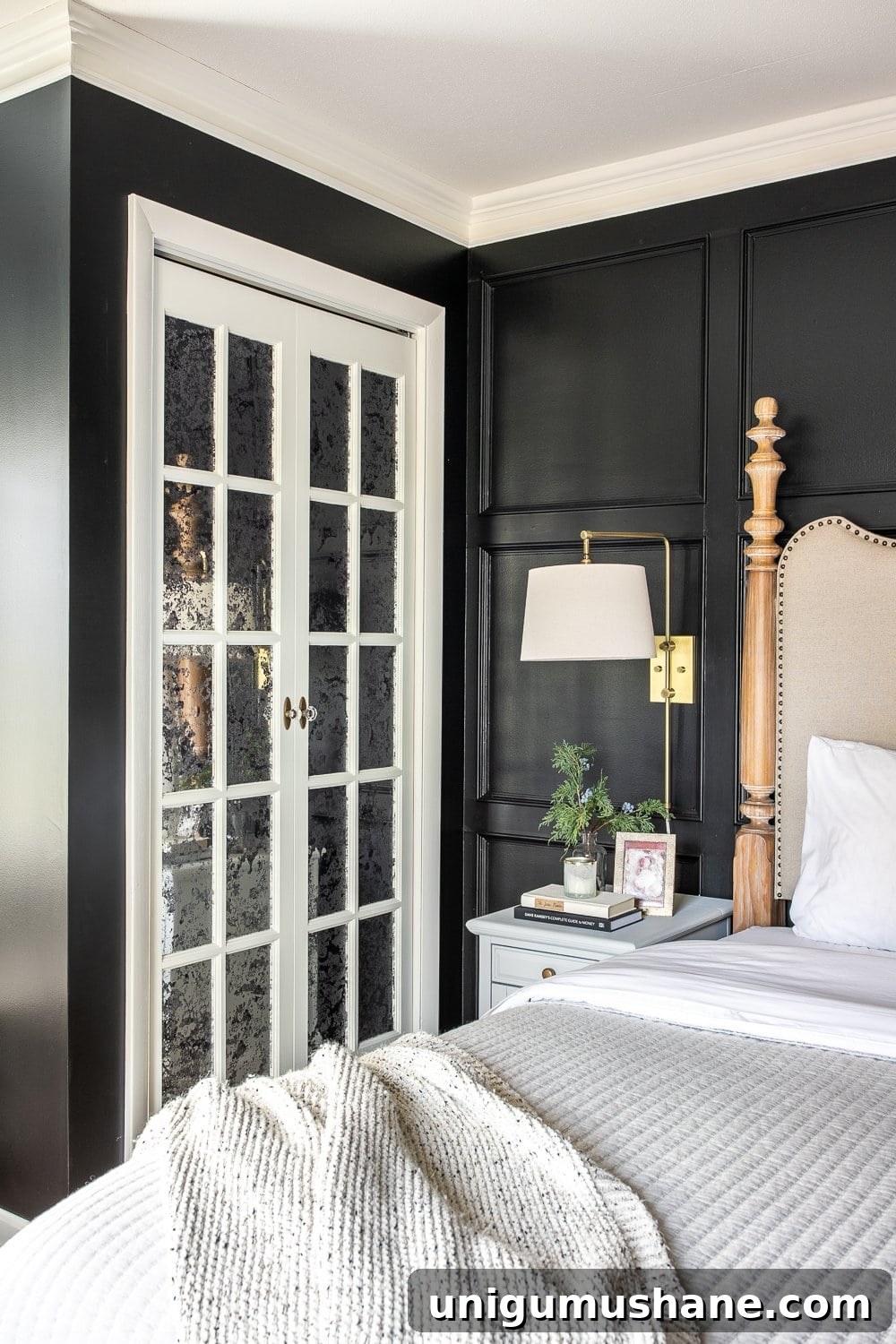
I’m thrilled with how everything came together. This is one of the easiest, most effective ways to upgrade builder-grade bifold doors without power tools and with very little fuss.
If you want, you can even convert a single bifold into two narrow swinging French doors for an additional stylistic change.
UPDATE: See our final primary bedroom reveal!
With the dark walls and the crisp white door frames, the room feels like a cozy, cocooned retreat at night. The two-tone contrast really makes the doors stand out.
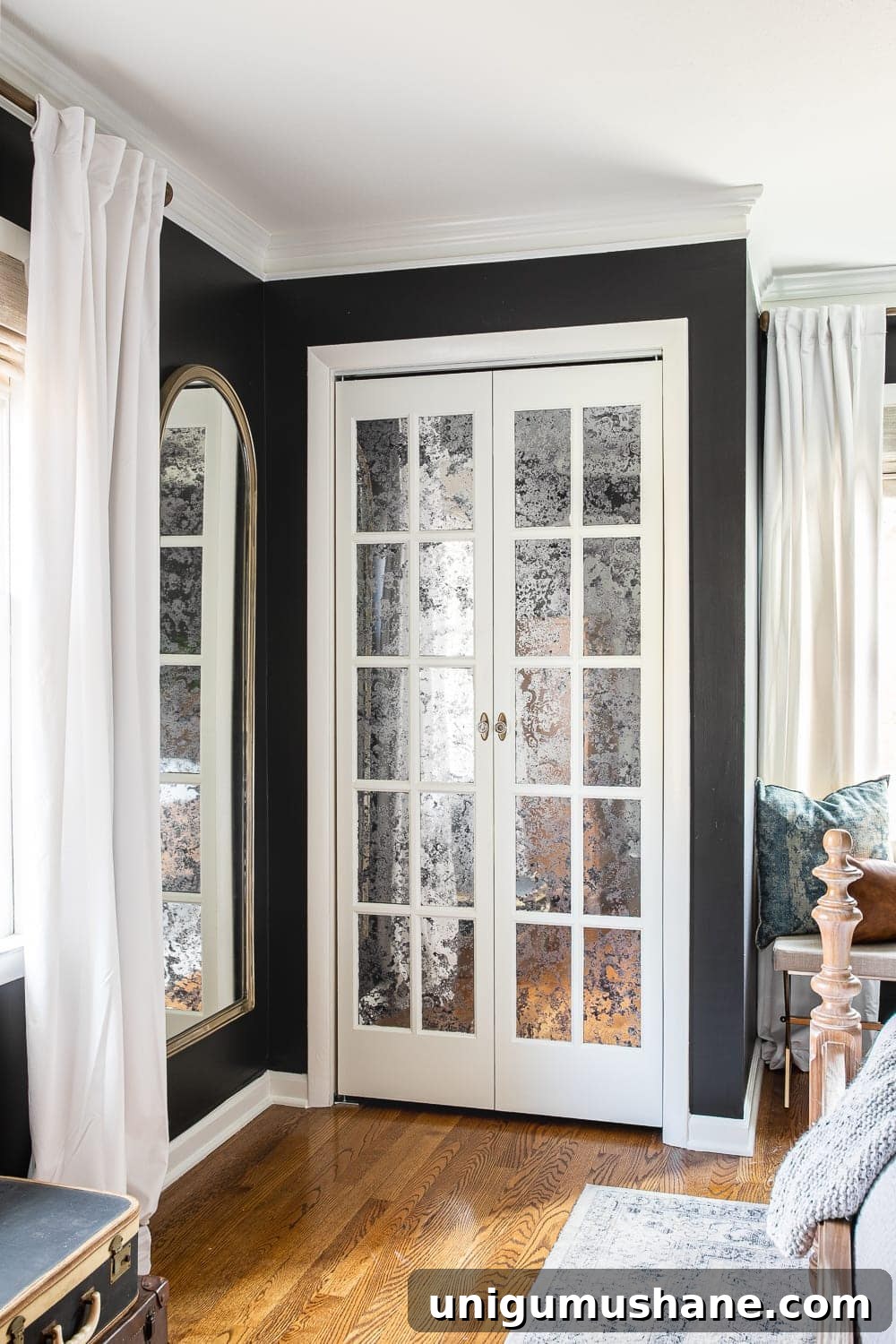
What do you think? These doors feel far more glamorous and vintage-inspired than the plain bifolds they replaced.
UPDATE: We also improved the closet interiors with a custom closet organization solution using modular shelving.
Five years on, we still love this door design. Variations now appear in other rooms around our home, including a home office and the laundry room.
Frequently Asked Questions
Can I turn a bifold door into swinging French doors?
What can I use instead of bifold closet doors?
DIY Door Makeover Ideas
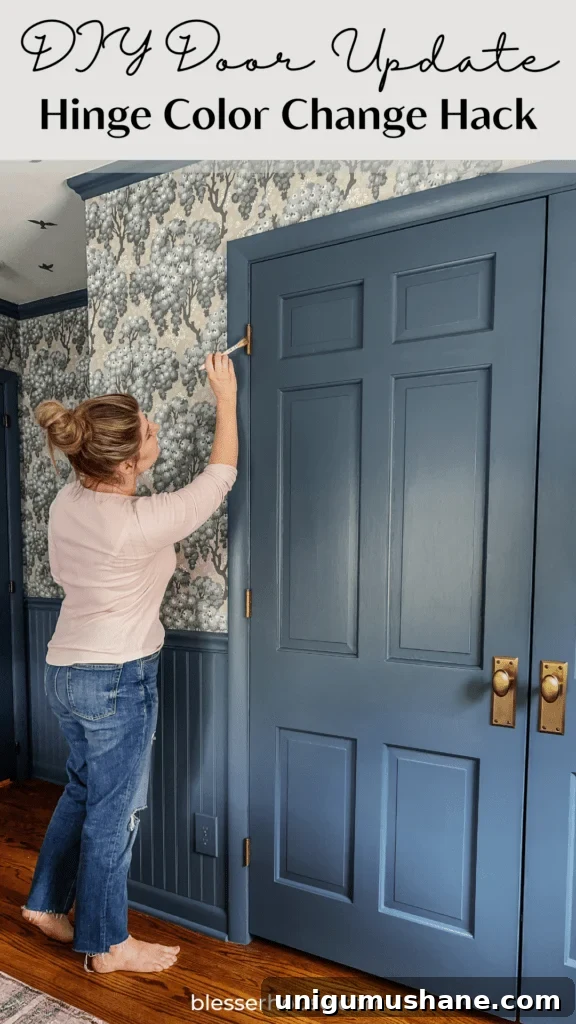
DIY Door Update to Change Hinge Colors Quickly
How to Paint French Doors + DIY Door Replacement Cost
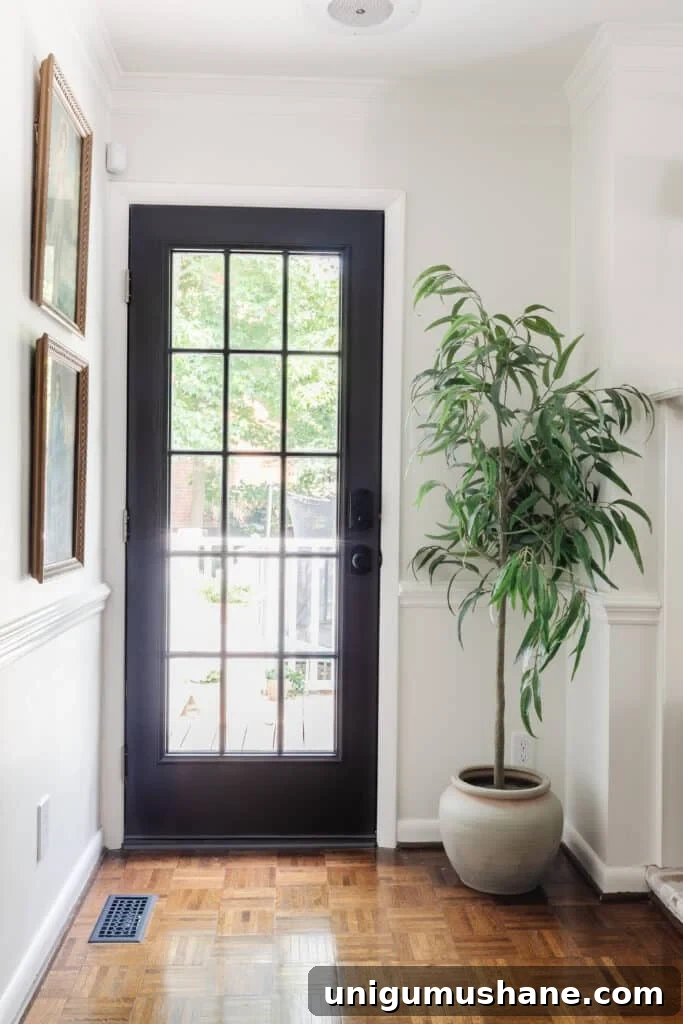
How to Paint Interior Doors