
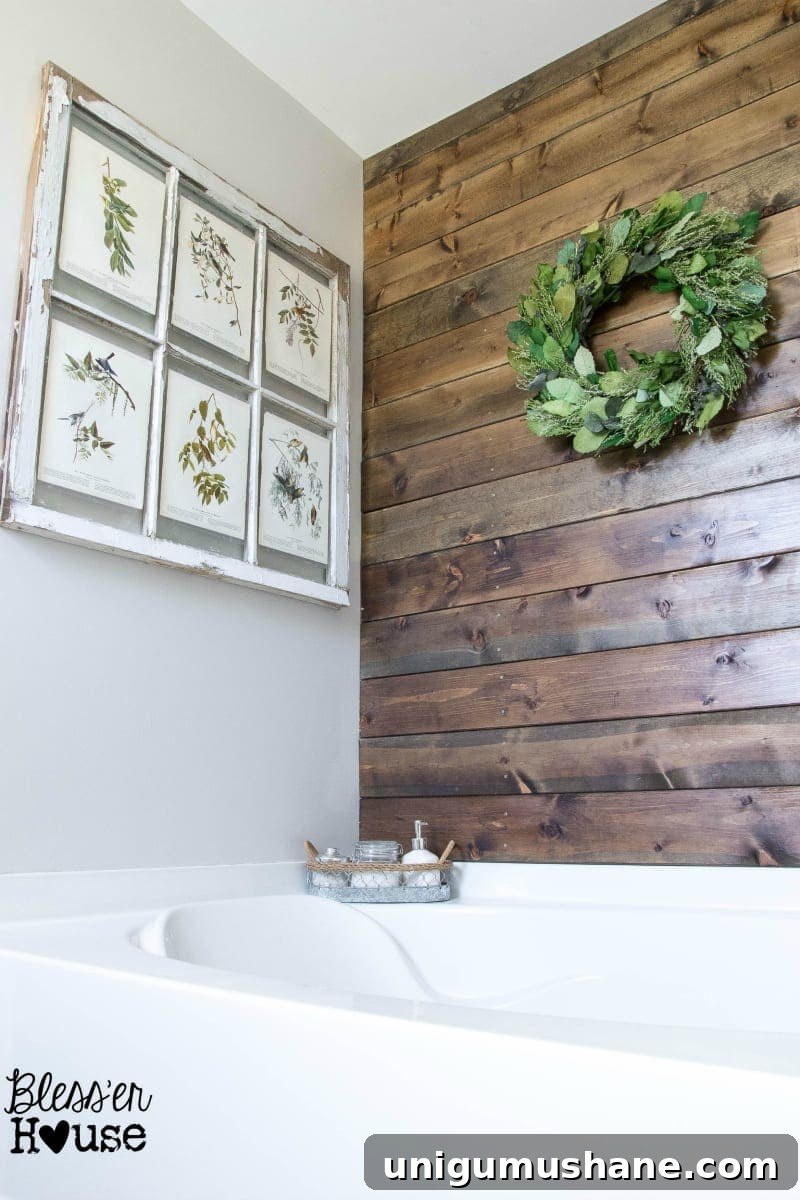
How to achieve a beautiful aged wood finish using simple pantry ingredients — an affordable, natural alternative to store-bought wood stains.
If you want to save money on home improvement supplies or avoid harsh chemicals, this DIY natural wood stain recipe is an excellent option. It creates a convincingly aged, gray-brown finish using only black tea, vinegar, and steel wool — ingredients you can find at any grocery store.
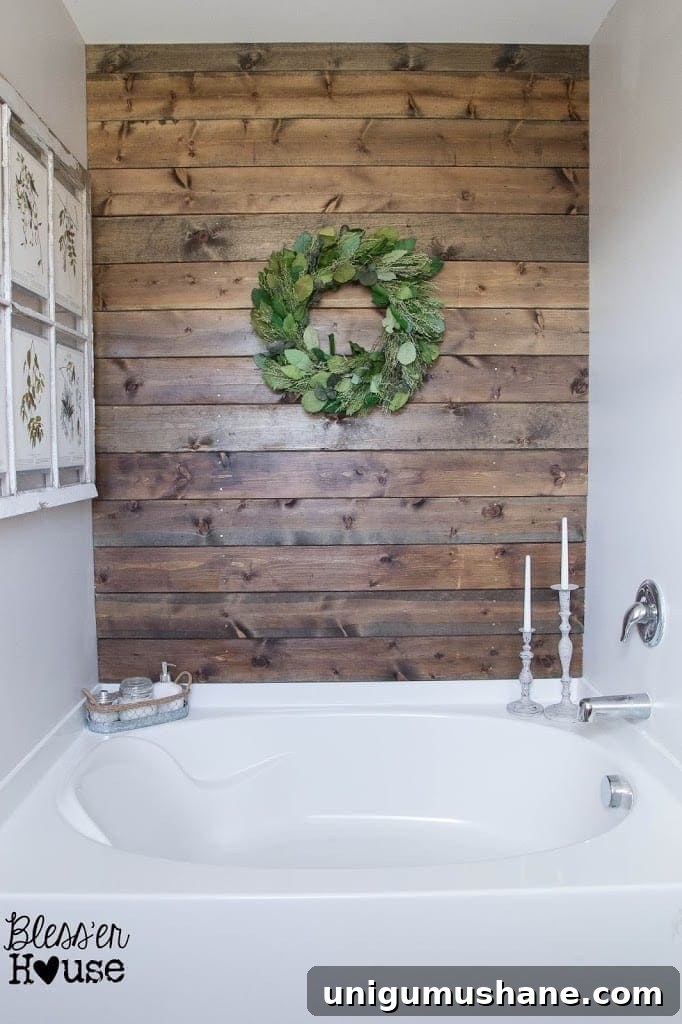
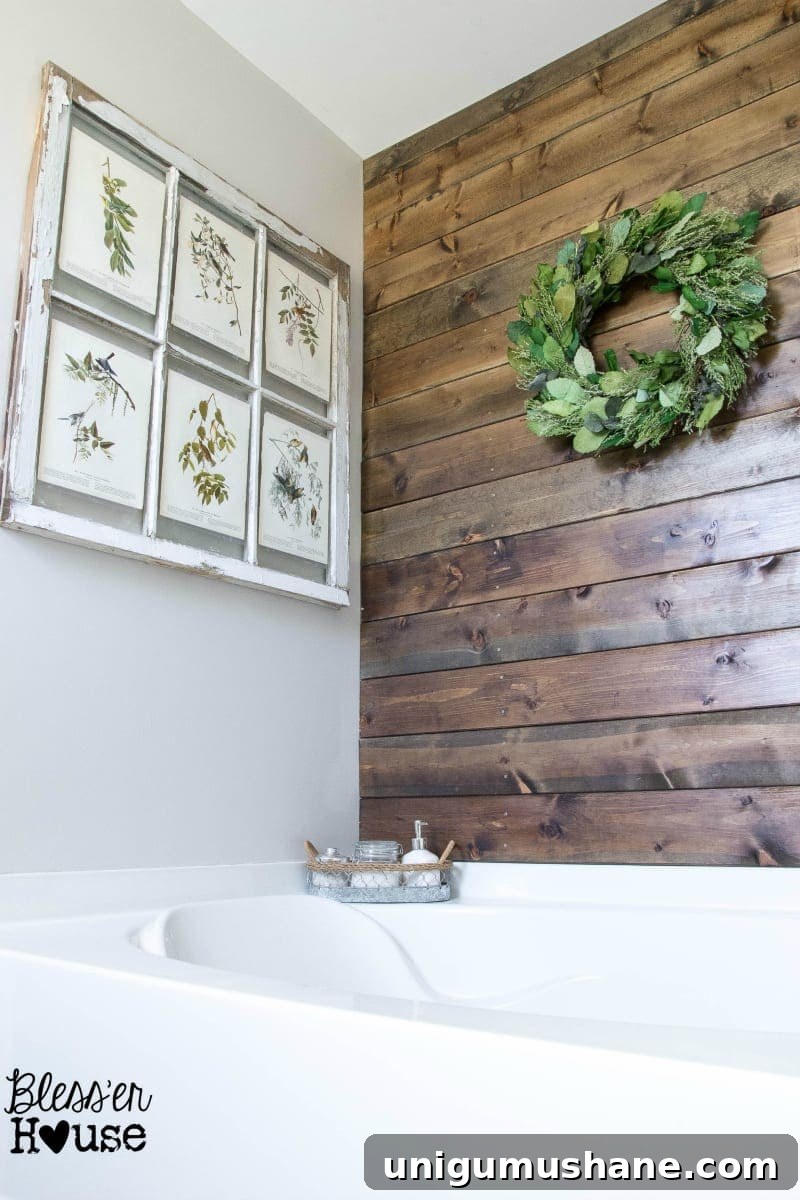
This method uses a chemical reaction between iron and the tannins in the wood to produce that authentic weathered look. I tested it on our bathroom plank wall project and was impressed with how reliably it produced a rich, aged tone with minimal effort.
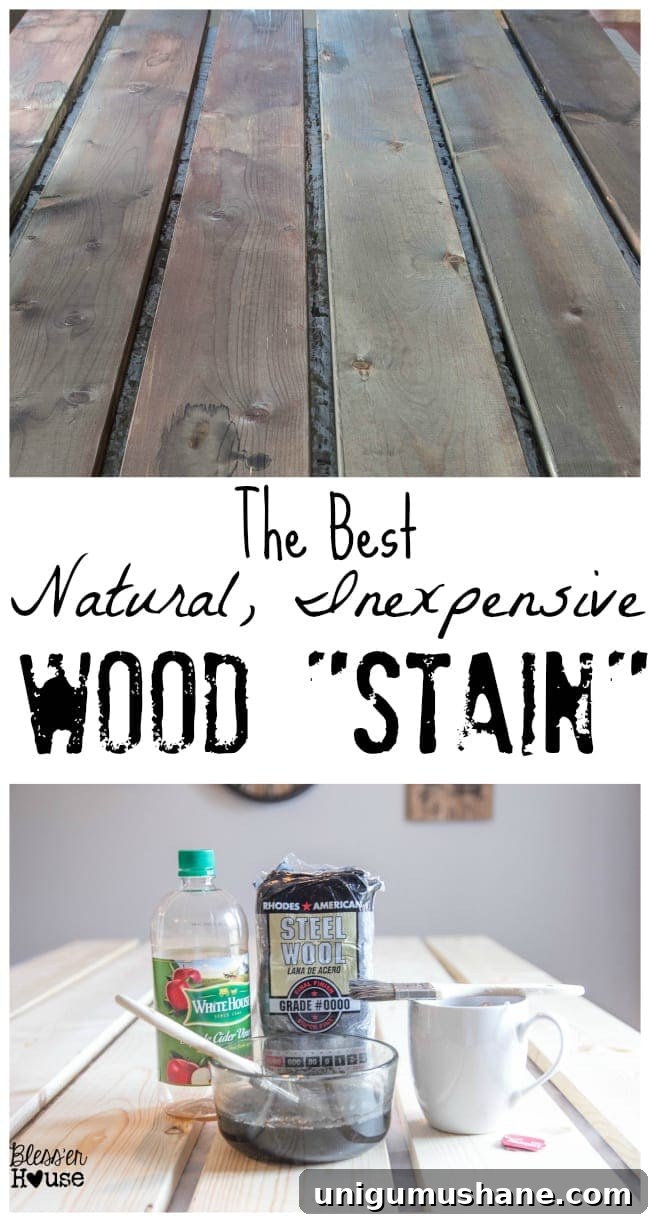
I experimented with several variations of the vinegar-and-steel-wool oxidation method to find the best formula for a barnwood-style finish. The process was quick — about 30 minutes of active work — with easy cleanup and a very small cost when most items were already on hand.
Perfecting the Color
My goal was a rich wood tone with a subtle gray-blue cast that reads like naturally aged wood. Different woods and preparations will produce different results, so testing on scrap wood is important. I found that using ultra-fine 0000 steel wool speeds up the reaction and gives predictable results for impatient DIYers who don’t want to wait weeks for color to develop.
Pre-Stain Conditioners
Brushing the wood with a tannin-rich liquid pulls tannins to the surface and prepares the wood to react with the iron solution. The choice of conditioner affects the final hue:
- Black tea — enhances gray tones
- Coffee — brings out warmer, brown tones
Vinegar and Iron Options
The oxidizing solution can be made with various vinegars. Try them to see which tint you prefer:
- White distilled vinegar
- Apple cider vinegar
- Red wine vinegar
- Balsamic vinegar
In my tests, apple cider vinegar produced a slightly grayer tint than white distilled vinegar. Black tea paired with the vinegar/steel wool solution tended to emphasize cool, weathered gray tones, while coffee leaned warmer and browner.
DIY Natural Wood Stain — Recipe and Steps
Ingredients
- 2 cups boiling water
- 4 family-size black tea bags
- 1 steel wool pad, 0000 (ultra fine)
- 2 cups vinegar (apple cider or white vinegar)
- 2 inexpensive chip brushes or foam brushes
- 1 glass jar (for the vinegar/steel wool solution)
- Medium-grit sandpaper
- Pieces of wood for testing and project work
Work space: Wear gloves and protect the surface with a waterproof drop cloth. Work in a well-ventilated area when preparing the vinegar and steel wool solution.
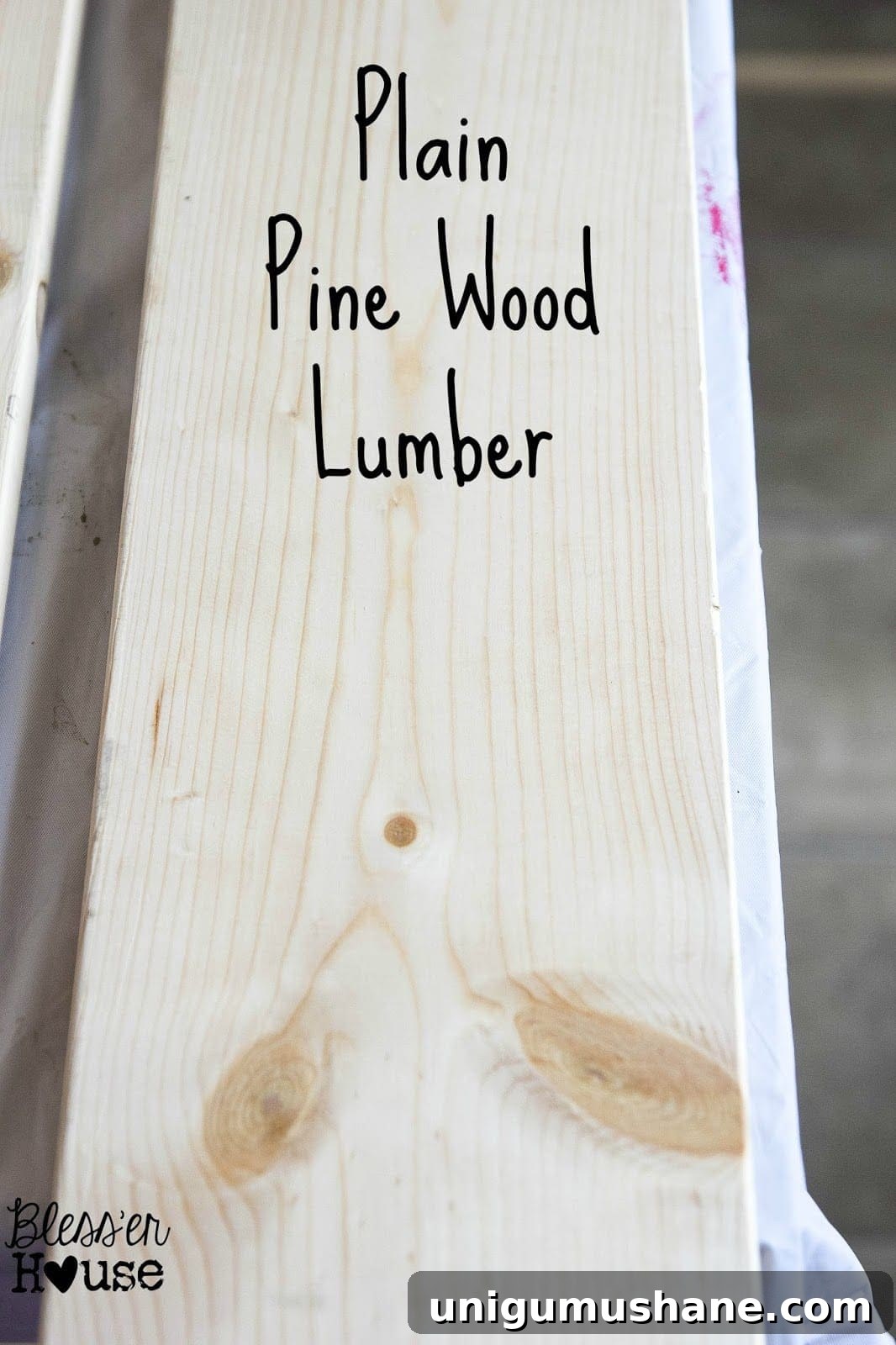
Step 1 — Sand
Lightly sand the wood with medium-grit sandpaper and remove all dust. A smooth, clean surface helps the conditioner and stain penetrate evenly.
Step 2 — Make the Wood Conditioner
Steep the 4 tea bags in 2 cups of boiling water. For a stronger solution, allow the tea to steep and cool for 24 hours with the bags left in the water.
Step 3 — Prepare the Iron Oxidizing Stain
Place the steel wool pad into a glass jar and pour in 2 cups of vinegar. Let the mixture sit uncovered for about 24 hours. The steel wool will partially dissolve and the liquid will darken — this is normal. Do not seal the jar while the reaction is occurring.
Step 4 — Apply the Conditioner
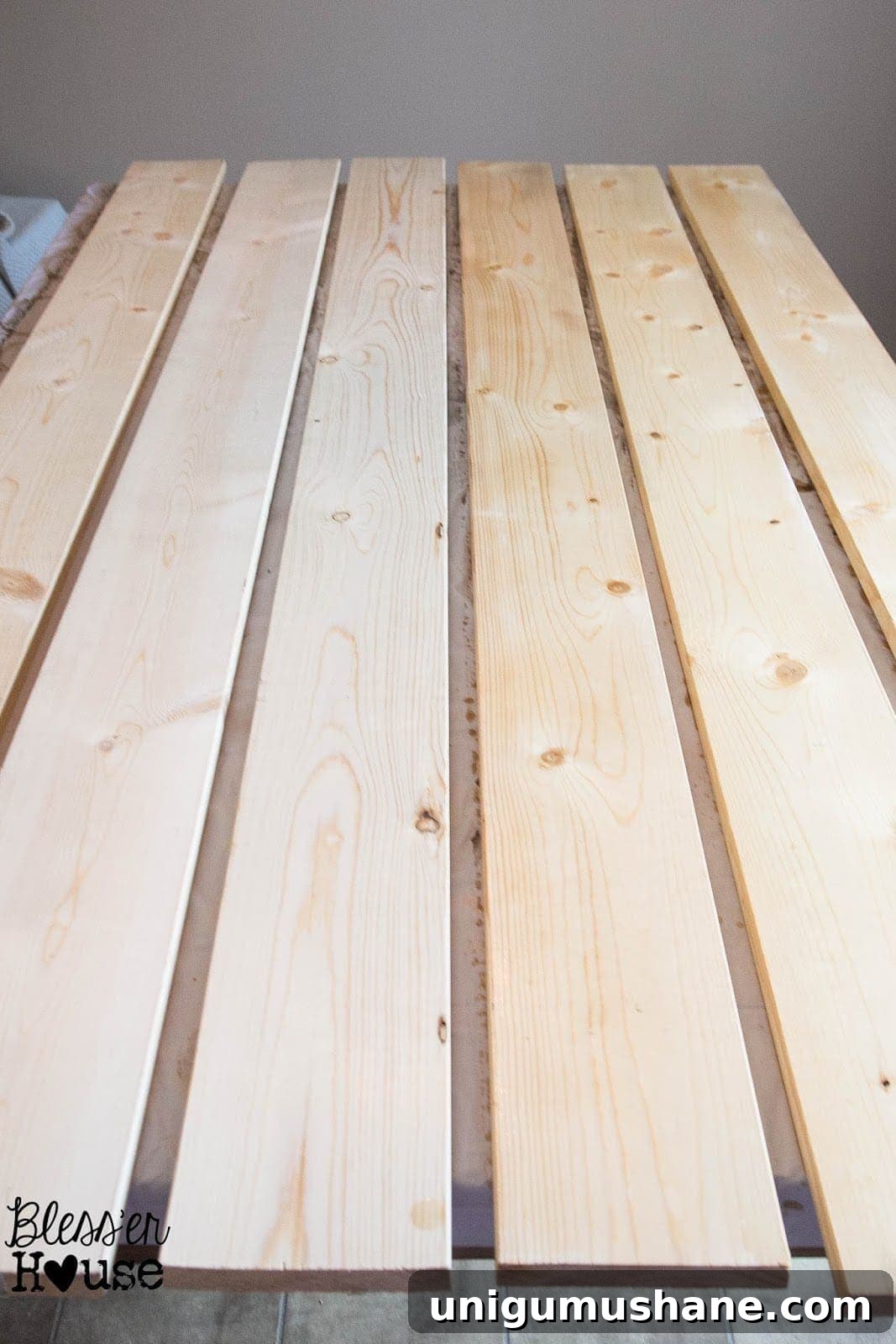
Brush the wood with the cooled tea solution to draw tannins to the surface; allow it to sit for about an hour. This prepares the wood to react quickly and evenly with the oxidizing solution.

(Shown: untreated planks on the left; tea-conditioned planks on the right.)
Step 5 — Apply the Oxidizing Stain
Brush the vinegar/steel wool solution onto the wood after the tea has had time to sit. The reaction begins almost immediately — the wood will darken and develop gray tones over minutes to an hour. The degree of color depends on the wood species and the amount of tannins it contains.
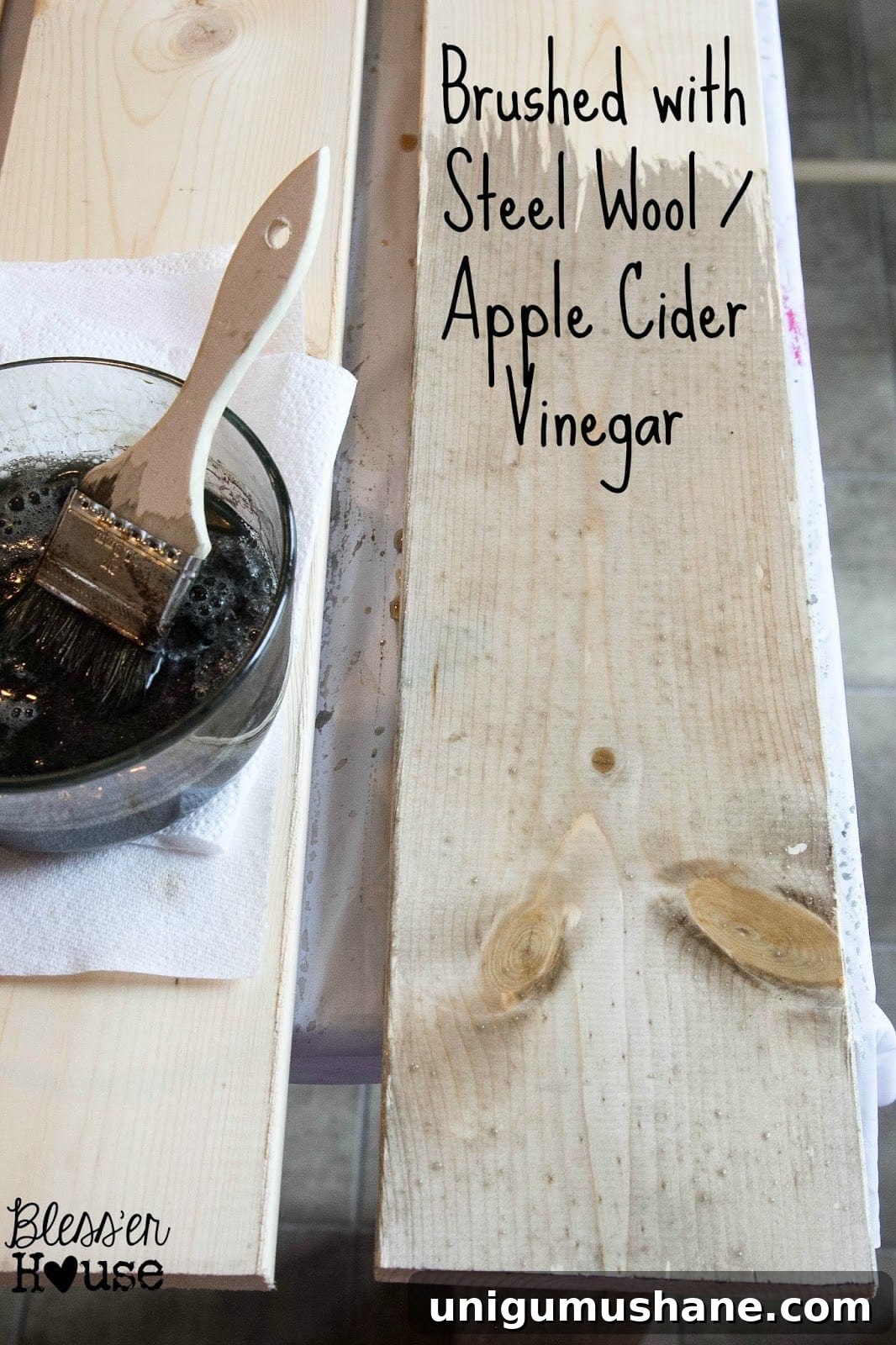
Color progression is rapid: within five to thirty minutes the tone deepens substantially, and by one hour the finish often resembles naturally aged gray wood. You may see slight variation board to board — this natural variation is part of the charm of a reactive finish.
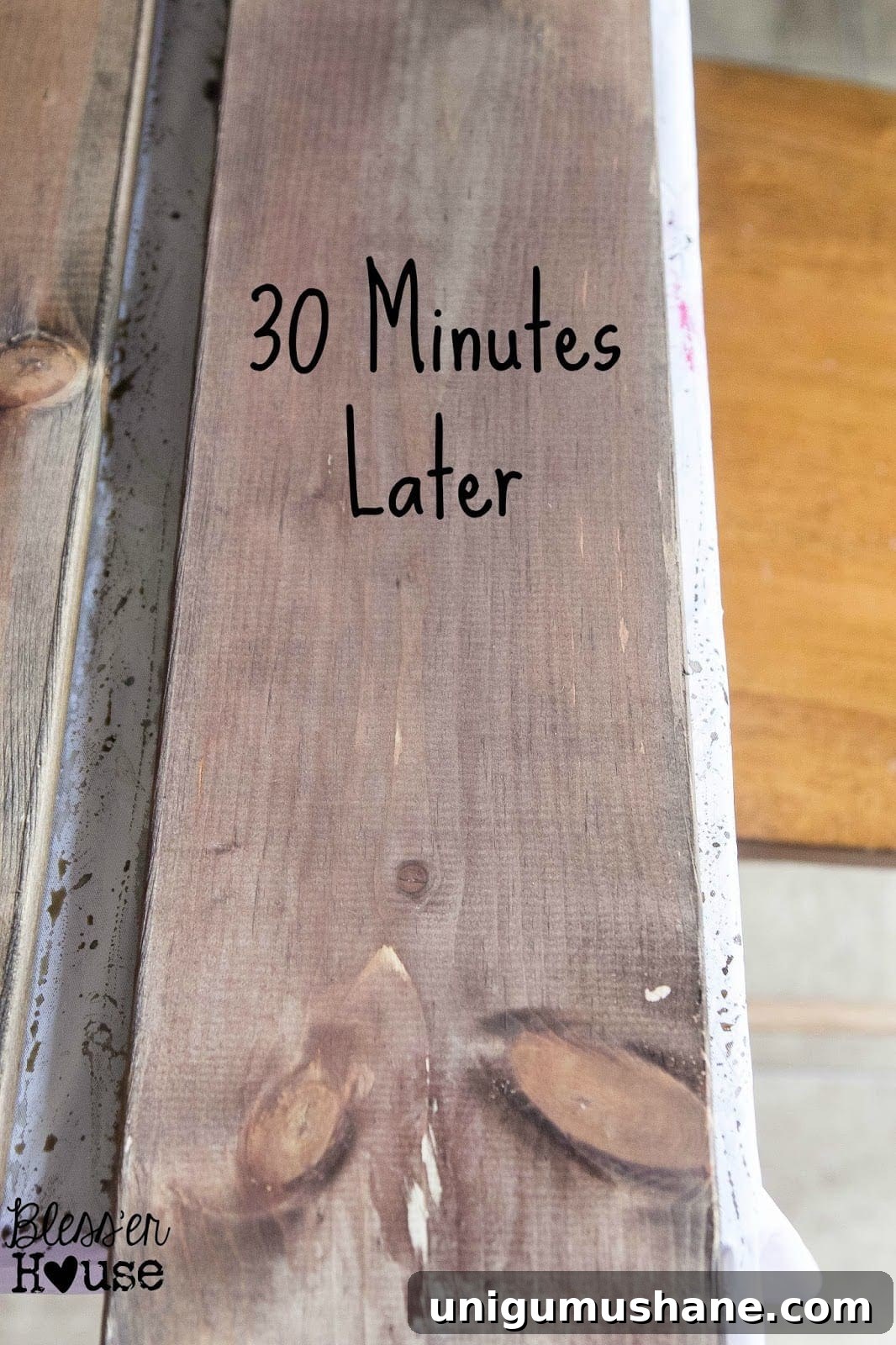
If you want a deeper color, apply a second coat of the vinegar/steel wool solution after the first coat fully dries. Small blotches can be lightly sanded and re-treated to even out the finish, or left for a more weathered appearance.
Step 6 — Seal the Surface
Once the color is to your liking and the wood is dry, seal it with a clear protective top coat. Use paste wax applied with a lint-free cloth for a soft matte finish, or brush on polycrylic or polyurethane for a durable, water-resistant surface — recommended for tabletops, counters, or high-humidity areas like bathrooms.
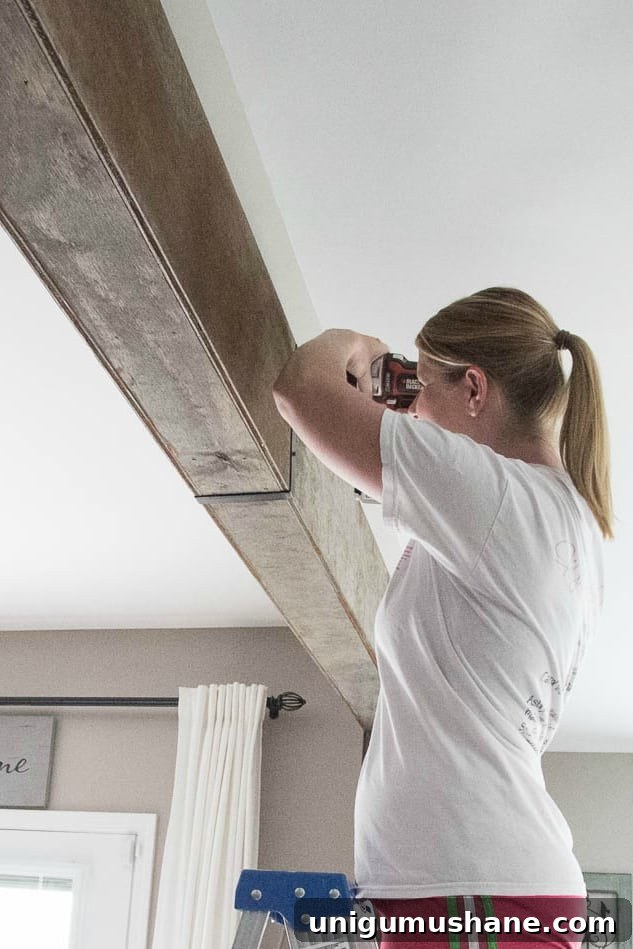
This method produced a plank wall finish I was excited to use in our bathroom; the results read like reclaimed barn wood without the cost or toxic chemicals.
Shelf life: Prepare the vinegar/steel wool solution fresh and use it within 1–2 weeks for best results, as its potency decreases over time.

More Wood Project Ideas
- DIY faux driftwood outdoor table makeover — a weathered look for outdoor furniture
- Best deck stain colors for a neutral driftwood finish
- How to refinish wood furniture without stripping
- How to restore outdoor wood furniture