
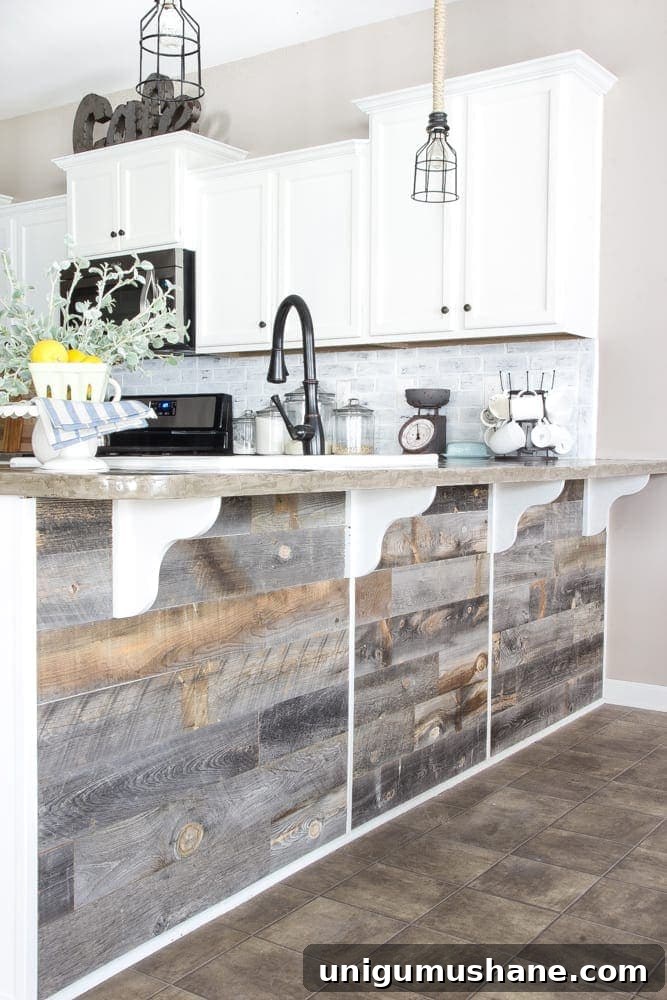
DIY Reclaimed Wood Bar with Stikwood
A huge thanks to Stikwood for providing makeover supplies for this project.
I fell for old barns when I was eight—back when I was the girliest of girly girls. There was one abandoned barn along a backroad near my house that always caught my eye. Every morning on the drive to elementary school I wondered what it once looked like before the roof started to cave in and the weeds crept up around it.
Someone had obviously taken pride building that barn, stepping back to admire their work. I begged my mom to stop and take a peek inside once, but she warned me it was probably full of snakes and spiders, so we kept driving. Still, I loved it from afar.
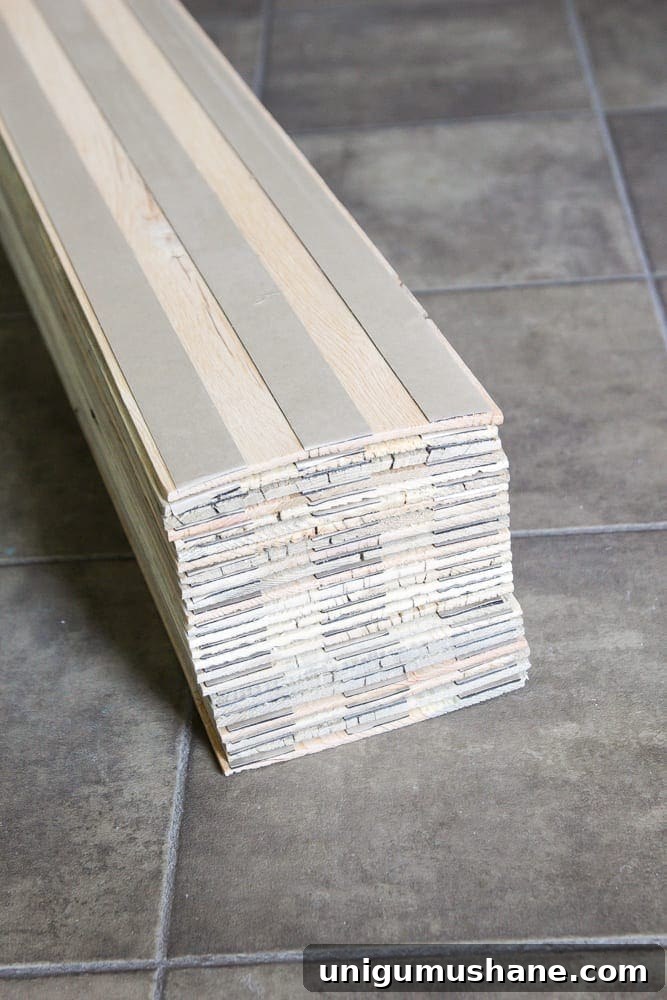
Recently I finally brought a little piece of that barn feel into our home—without the spiders—by using Stikwood. If you haven’t heard of it, Stikwood is real reclaimed wood with a peel-and-stick backing, so you get authentic texture with a quick installation. It arrived in a neat stack, ready to apply.
From the start of our kitchen makeover, I knew I wanted wood on our bar/peninsula. Feet and shoes tend to scuff painted cabinet surfaces, and wood would add texture and warmth while tying into the brown tones of our doorway beam.
Supplies used (tools and materials for a simple peel-and-stick reclaimed wood bar):
- Stikwood in Reclaimed Weathered Wood
- Jigsaw for trimming pieces
- Carpenter’s square for marking straight cuts
- Rubber seam roller (or a paint roller in a pinch)
- Tape measure
- Pencil
- Level
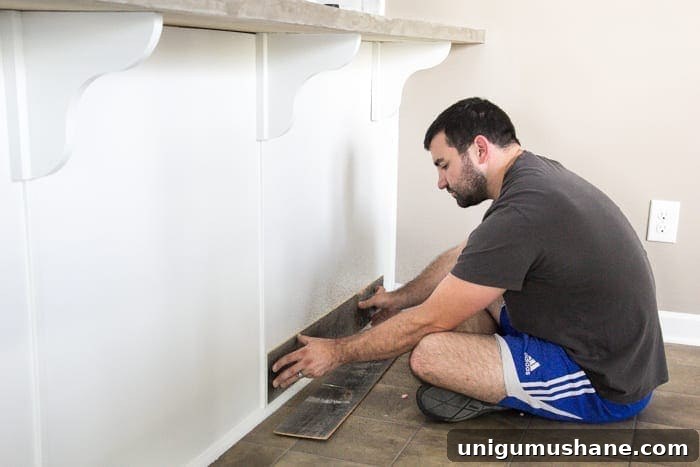
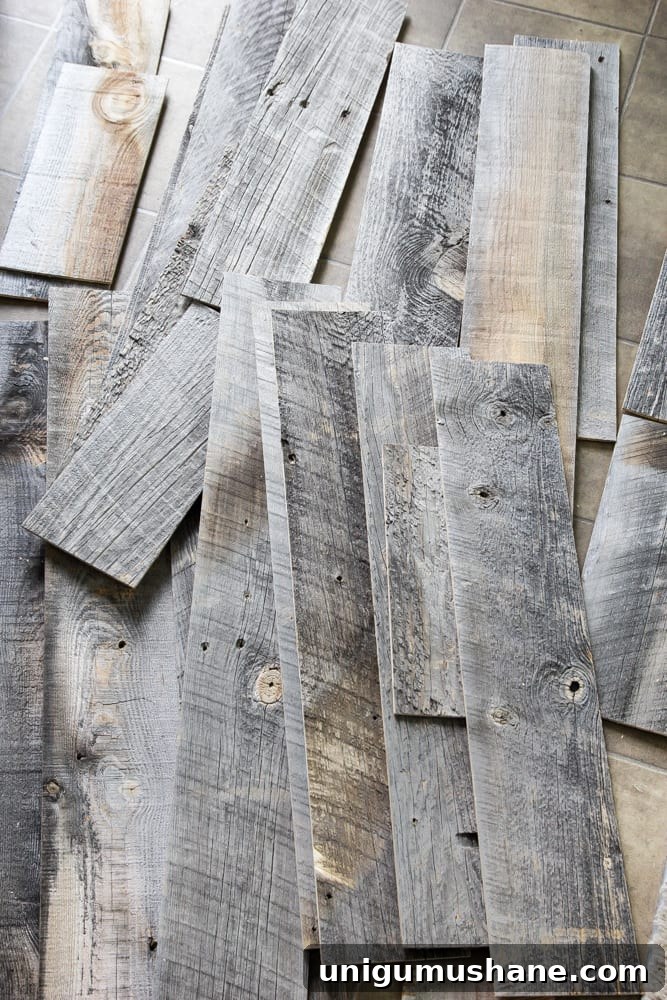
We dove in excitedly—peeling and sticking boards at first without a strict plan. That worked for a bit, but once we settled into a rhythm we found it better to alternate light and dark tones and vary board lengths for a balanced, rustic look. The material is forgiving and very straightforward to work with.
When a plank needed trimming, we measured, marked a straight line with the square, then cut it with the jigsaw. After trimming, peel the paper backing to expose the adhesive and press the plank firmly into place. The adhesive is strong—these are essentially heavy-duty stickers—and will hold up well against everyday knocks and feet.
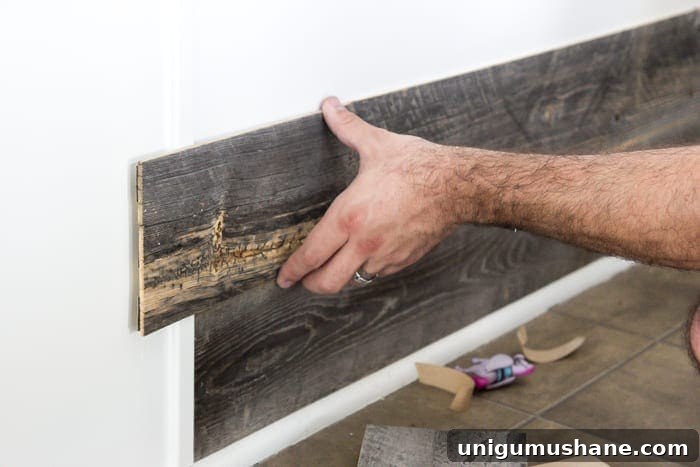
To ensure a secure bond, roll over each piece with a seam roller to press the adhesive down evenly. We didn’t have a rubber seam roller on hand and used a paint roller instead, which worked well enough—though a rubber roller is ideal for the most even pressure and seams.
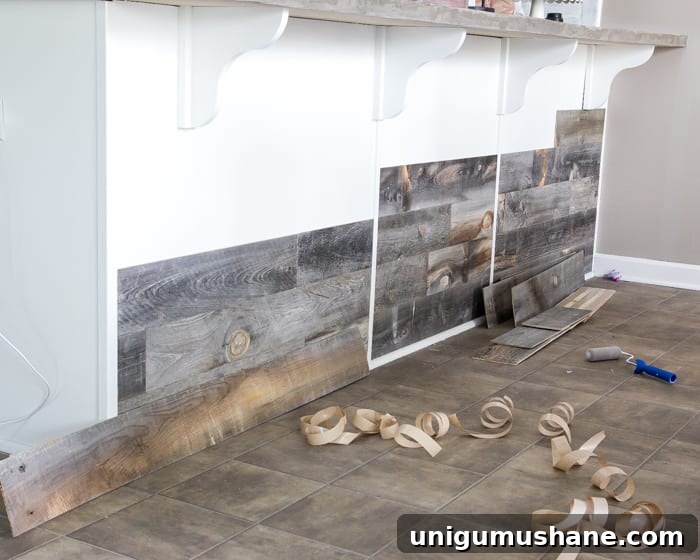
Every new strip we added made us smile. It’s satisfying to see real wood texture up close; the variety of grain and weathering gives the bar character. My partner was pretty proud too—this project was surprisingly quick and rewarding. “I am Handyman. Hear me grunt,” he joked.
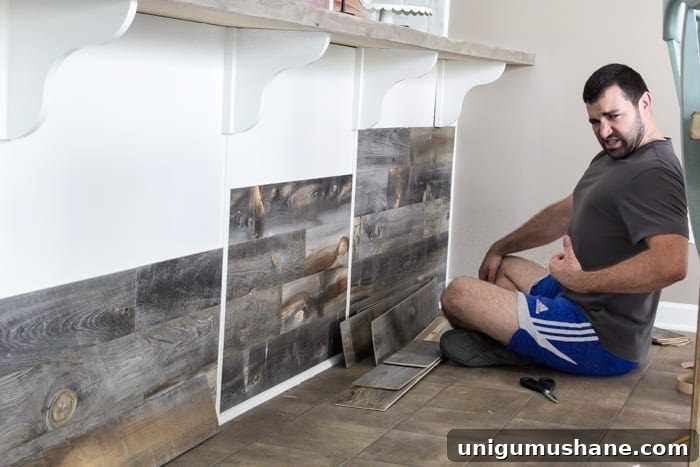
The finished bar now resists scuffs from swinging feet and adds a warm, rustic focal point to the kitchen. Because the boards are adhesive and not nailed on, they can be pried off later if future homeowners want a different look.
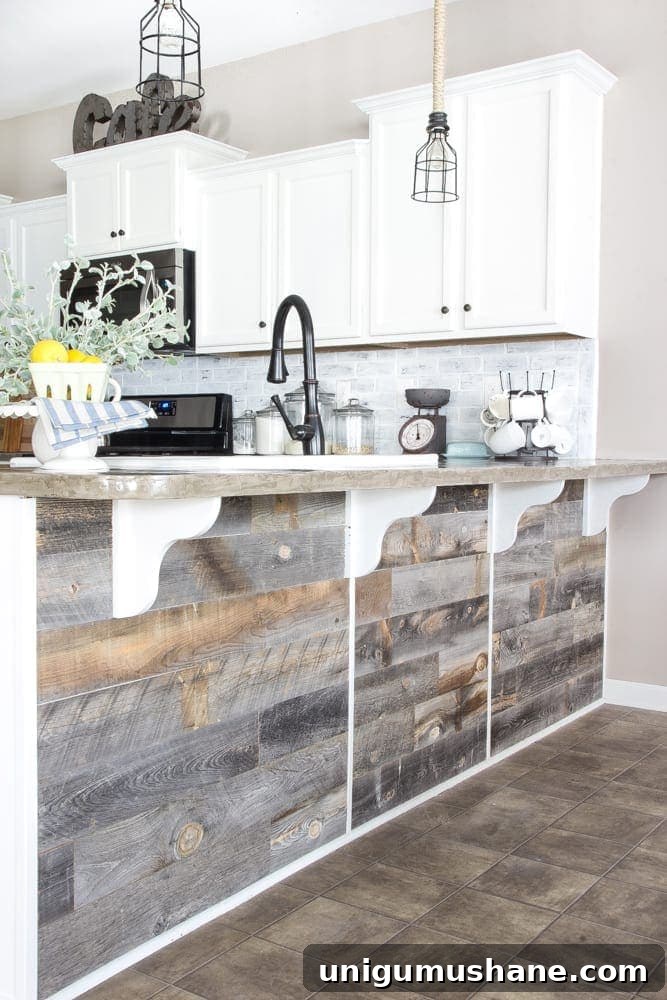
We still plan on upgrading the floors eventually—hardwood is on the wish list—but for now this piece adds the natural warmth we wanted without a major renovation. Next up: choosing bar stools to finish the space. The new stainless steel range just arrived, and everything is feeling much more cohesive.
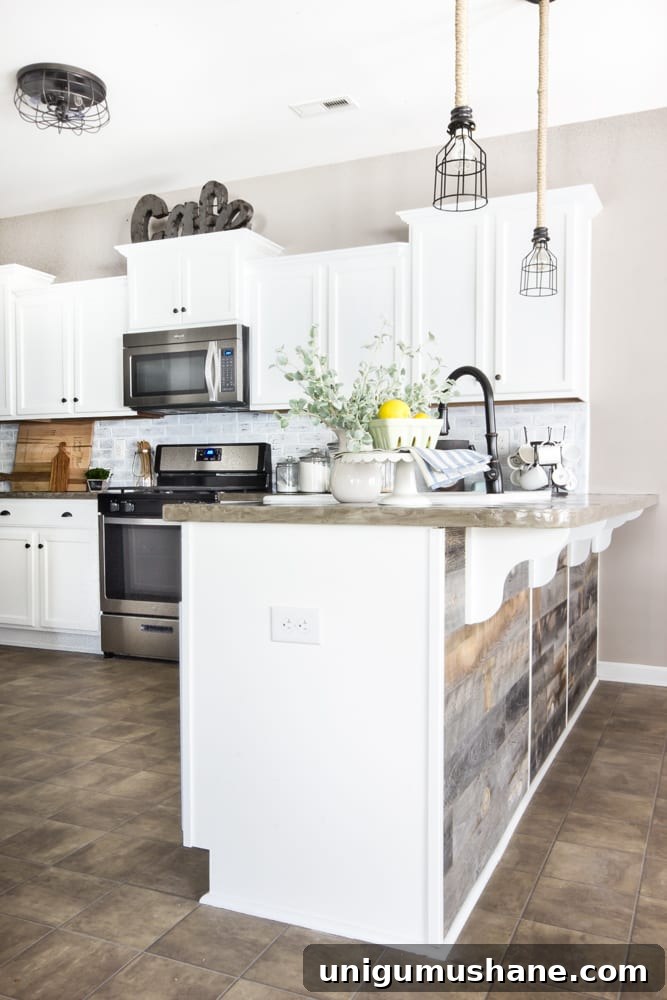
We had a few leftover Stikwood pieces, so I’m already brainstorming other ways to use them—small accents or a feature wall could be great. Reclaimed wood is too pretty to waste.
Related kitchen makeover projects and posts:
- Kitchen Makeover Plans and Mood Board
- DIY Industrial Pendant Lights
- Installing an IKEA Farmhouse Sink
- DIY Feather Finish Concrete Countertops
- How to Paint Kitchen Cabinets Like a Pro
- Faux Rusted Vintage Scale Makeover