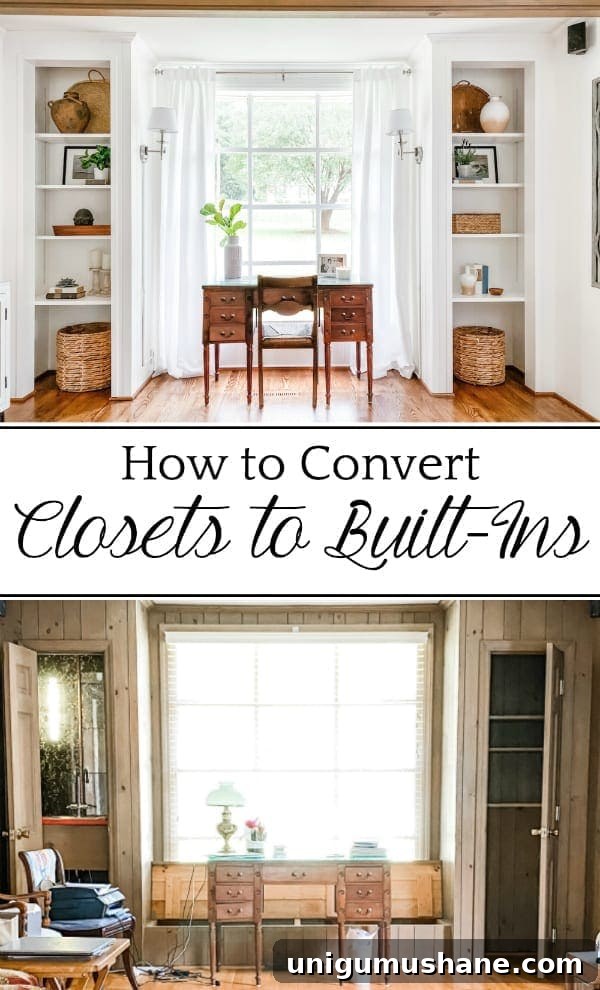
Step-by-step tutorial for converting closets into DIY built-in shelves and transforming a living room into a functional office.
We’re in the final stretch of the McNay project. This wasn’t a quick makeover—most of our projects take time—but the result is worth it. Our DIY built-in shelves turned out beautifully and completely changed this side of the living room into a stylish office space.
UPDATE: See the full living room / office reveal of this space.
The transformation on the office side of the living room is a dramatic improvement.
First, take a look at the “before”:
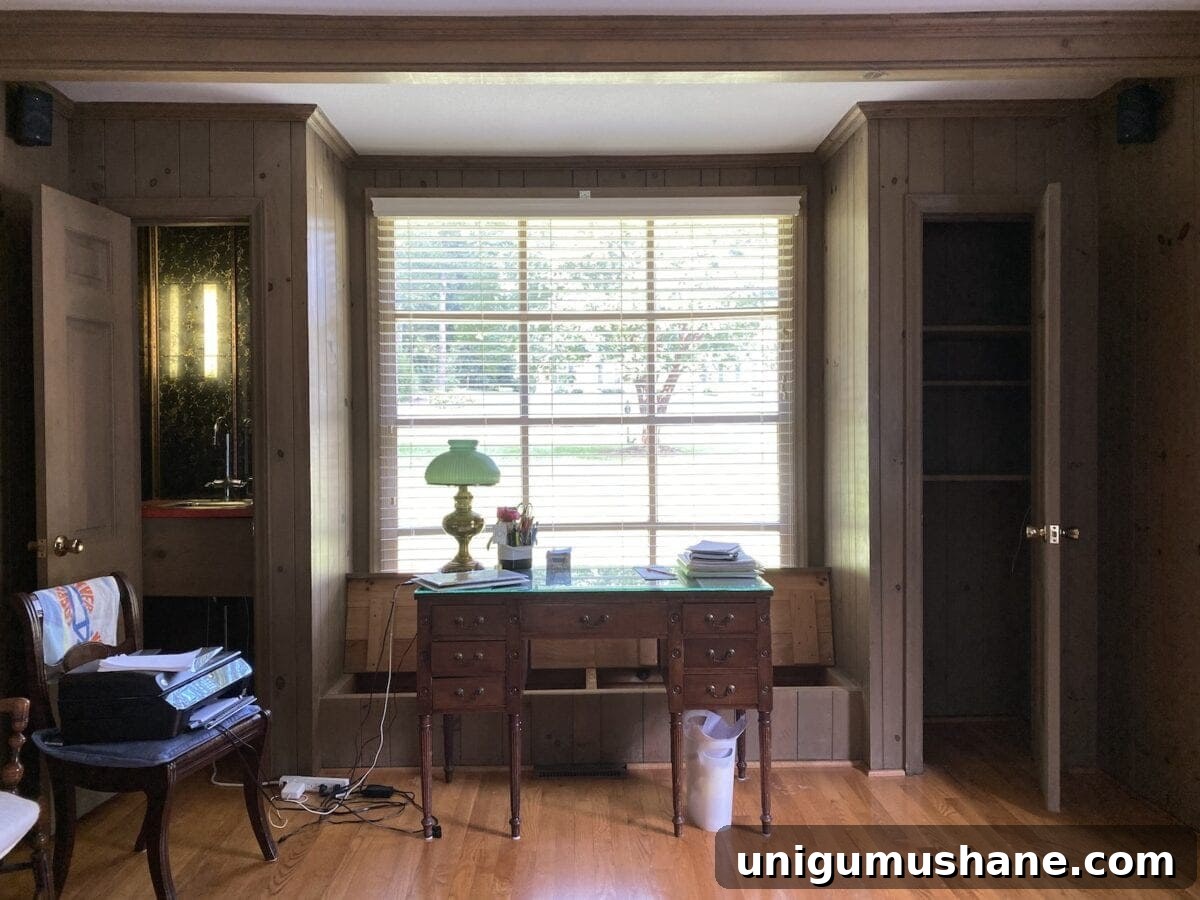
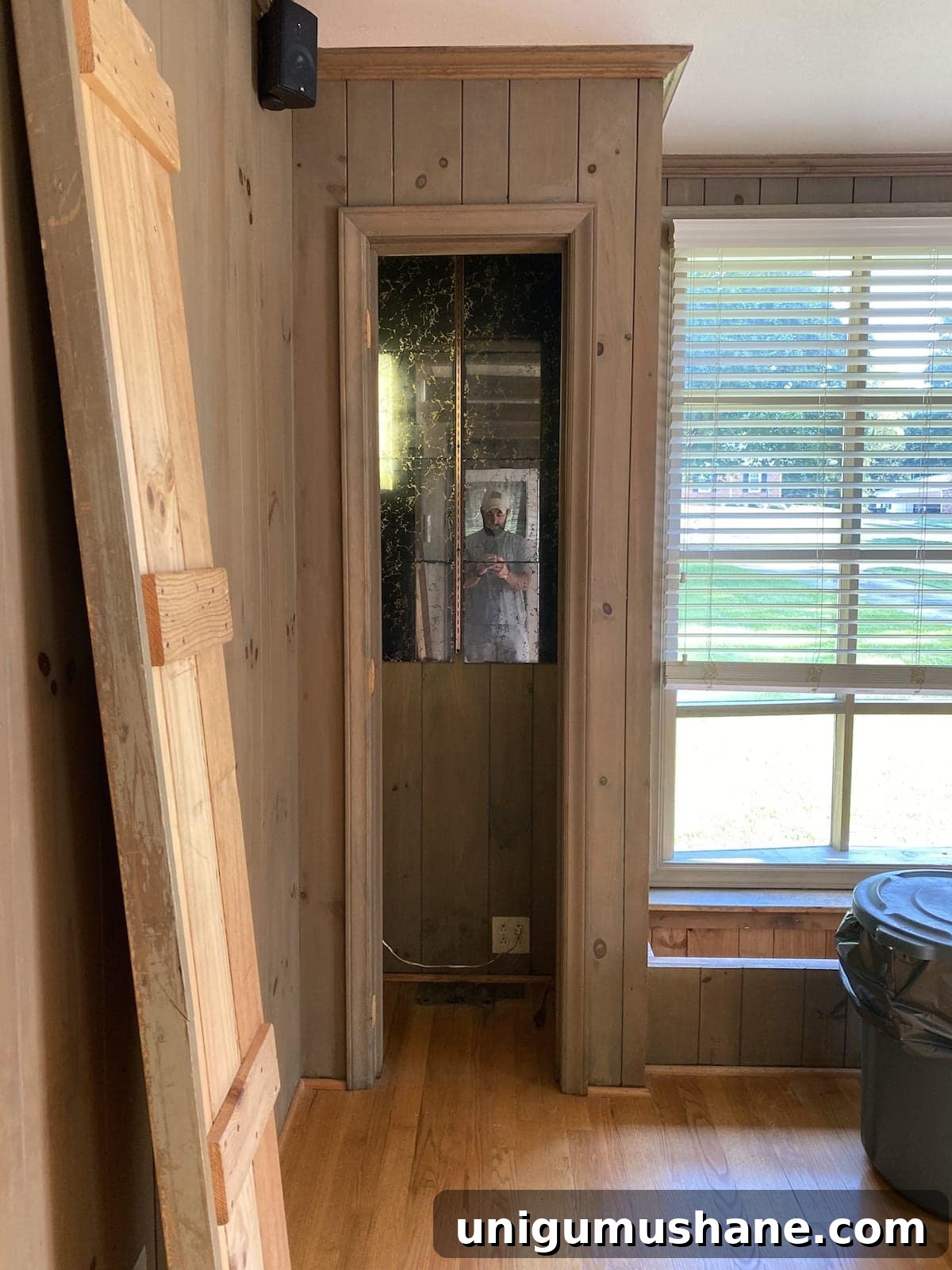
That 1960s wet bar tucked into the left closet was a real throwback. Charming in its own way, but not ideal for this space anymore.
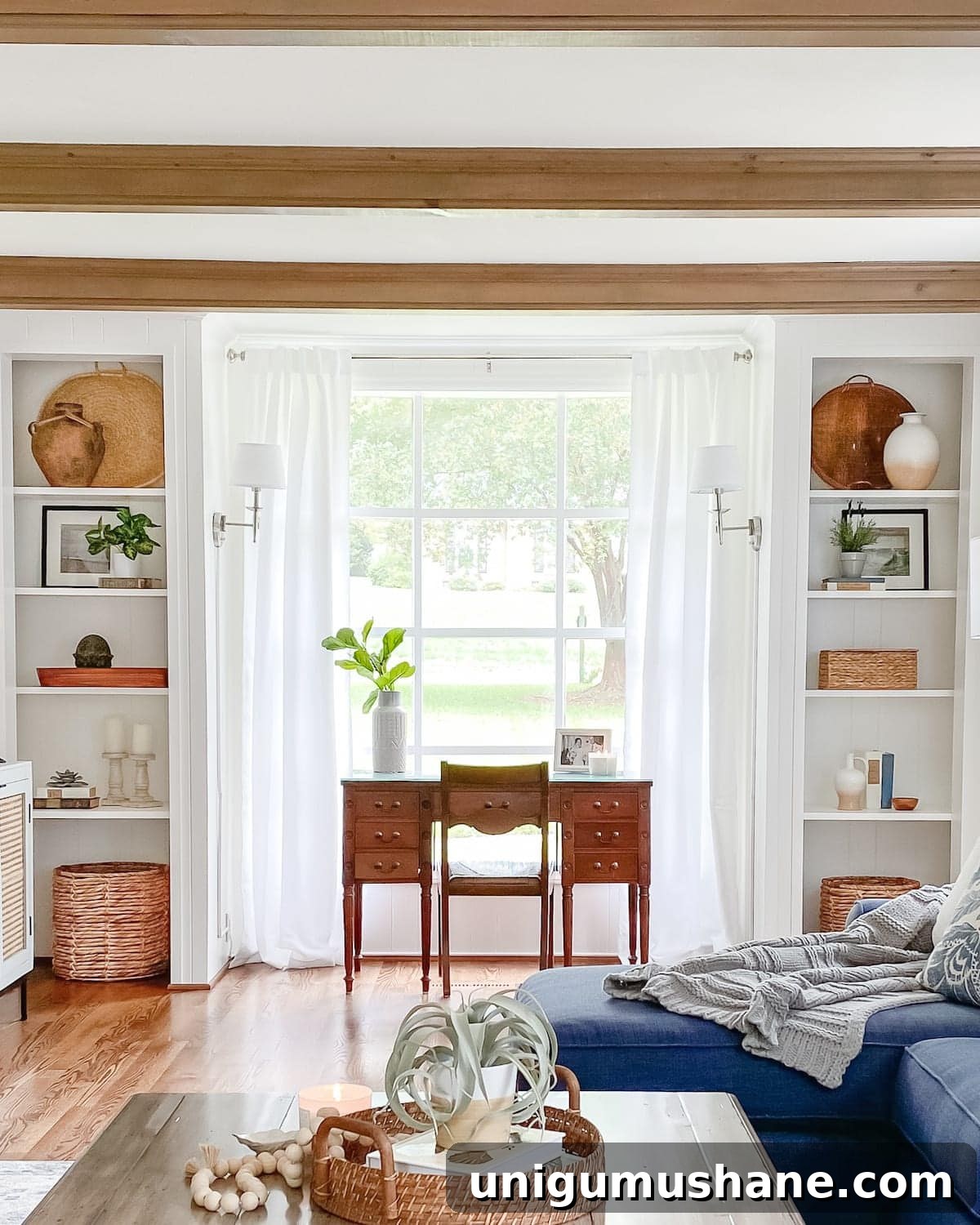
Now check out the after:
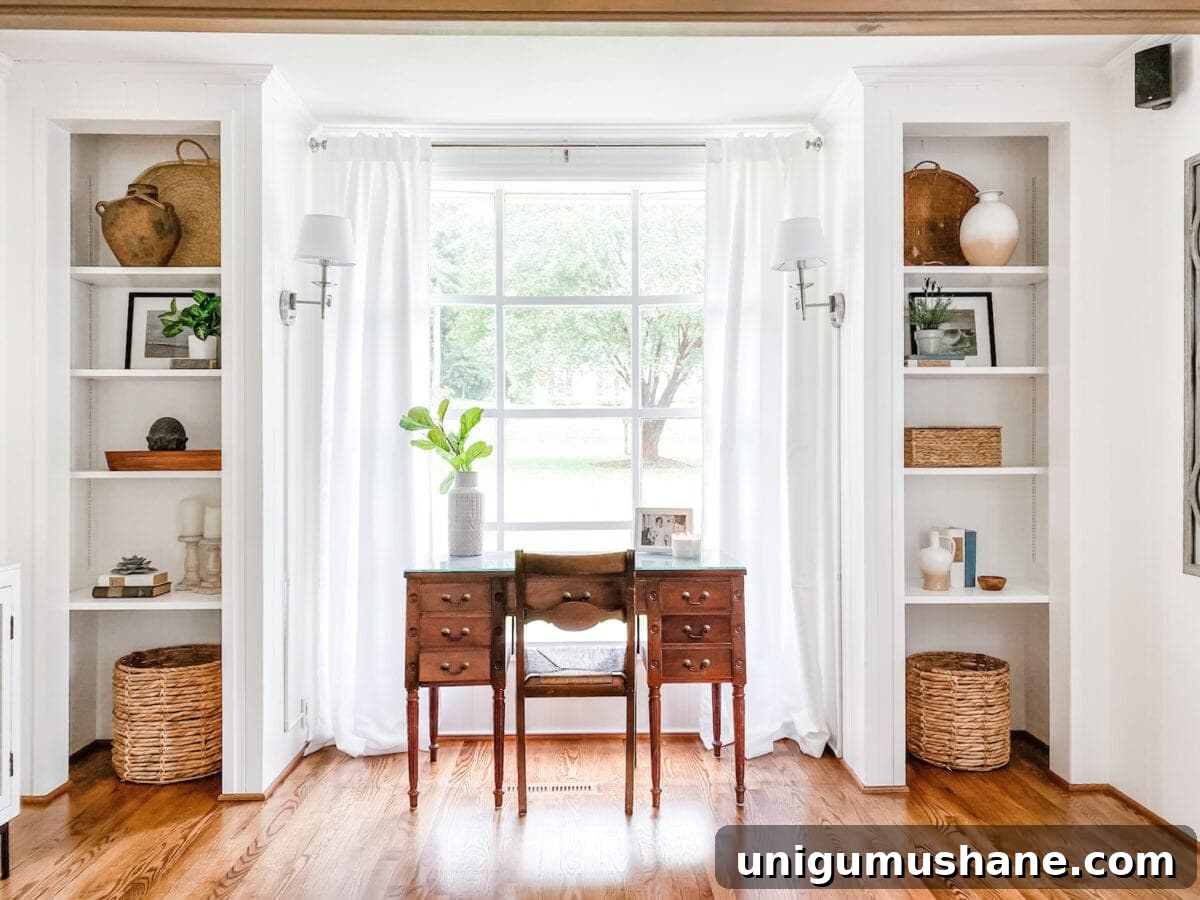
The original closets were narrow and the doors felt out of scale, so the homeowners asked us to remove them and install built-in shelving. Instead of tearing everything out, we adapted the existing structures and converted the closets into built-ins—saving time and materials while achieving a polished, integrated look.
How to Convert Closets into Built-In Shelves
Below is the list of supplies and the step-by-step process we used to transform the closets into custom built-ins.
Supplies
- Circular saw with a clean, fine-cut wood blade
- Oscillating multi-tool
- Cordless finishing nailer
- Mouse sander
- Framing level
- Pencil
- Tape measure
- 2″ finishing nails
- Pre-primed 1″x6″x8′ boards (approx. 3 per closet)
- 2″x4″x8′ (1 per closet)
- 3/4″ MDF panels for shelves
- Wood filler
- Putty knife
- Caulk
- Medium-grit sanding pads
- Shims
- Hammer
- Pry bar
- Pilaster strips
- Saw guide (optional but helpful for straight cuts)
Steps
1. Remove the closet doors, then use a hammer and pry bar to take off the door frame and trim.
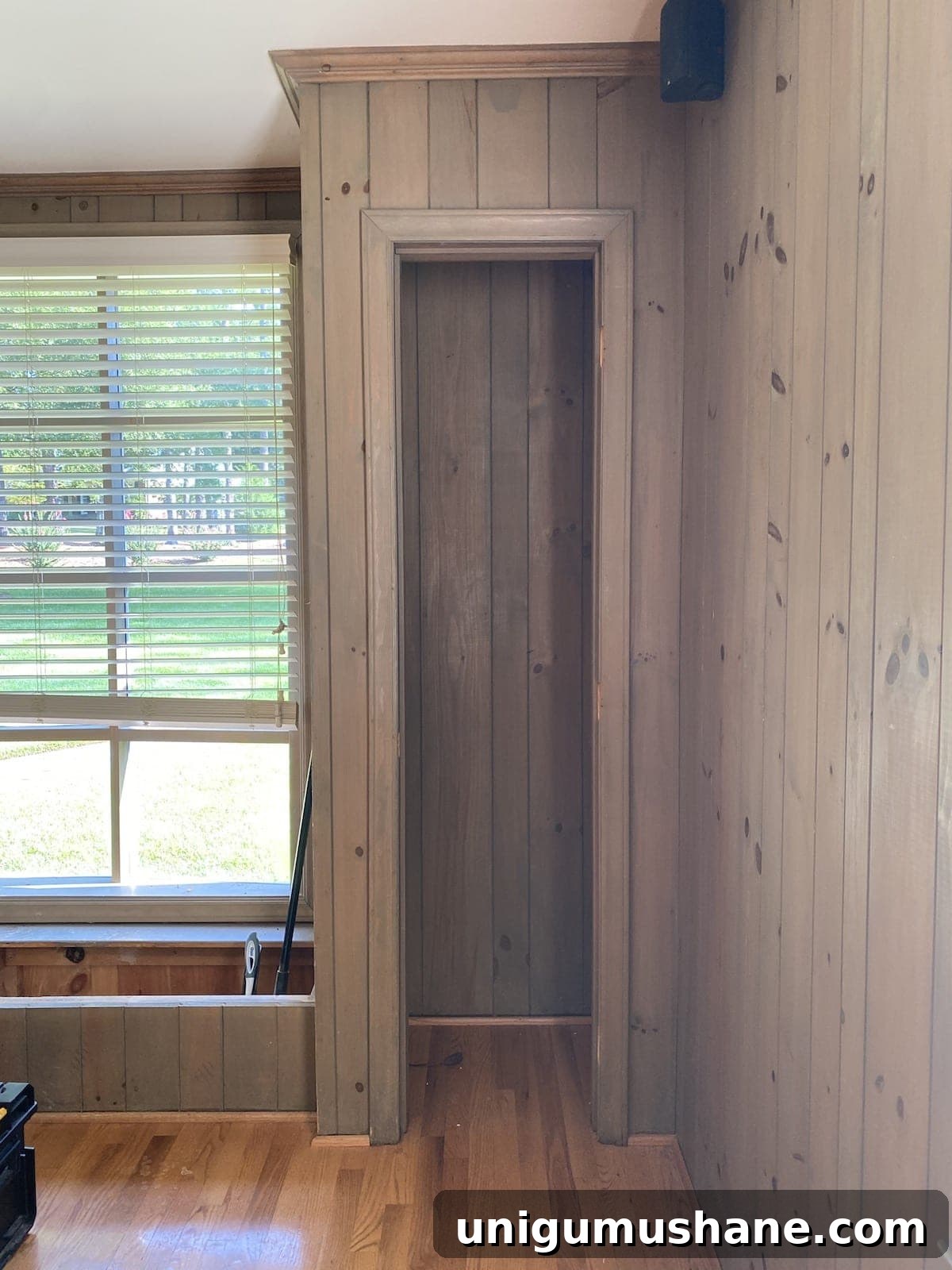
2. Use a framing level and tape measure to mark the new opening size for the built-in shelves. Mark with a pencil so your cut lines are accurate.
3. Cut along your pencil line with the circular saw. Take your time so the cut is straight and clean.
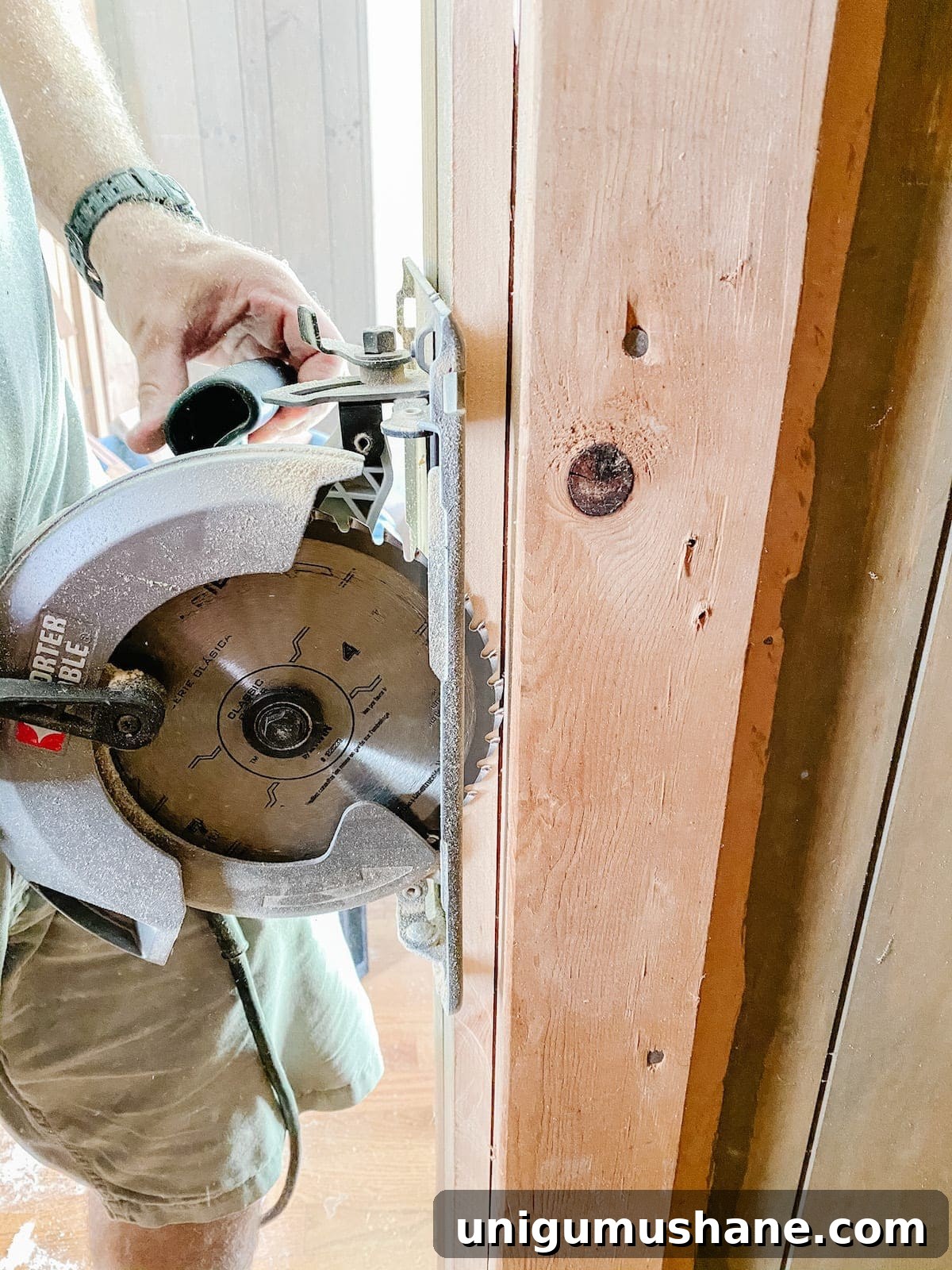
4. Use the oscillating multi-tool to clean up corners and any areas the circular saw couldn’t reach for a neat finish.

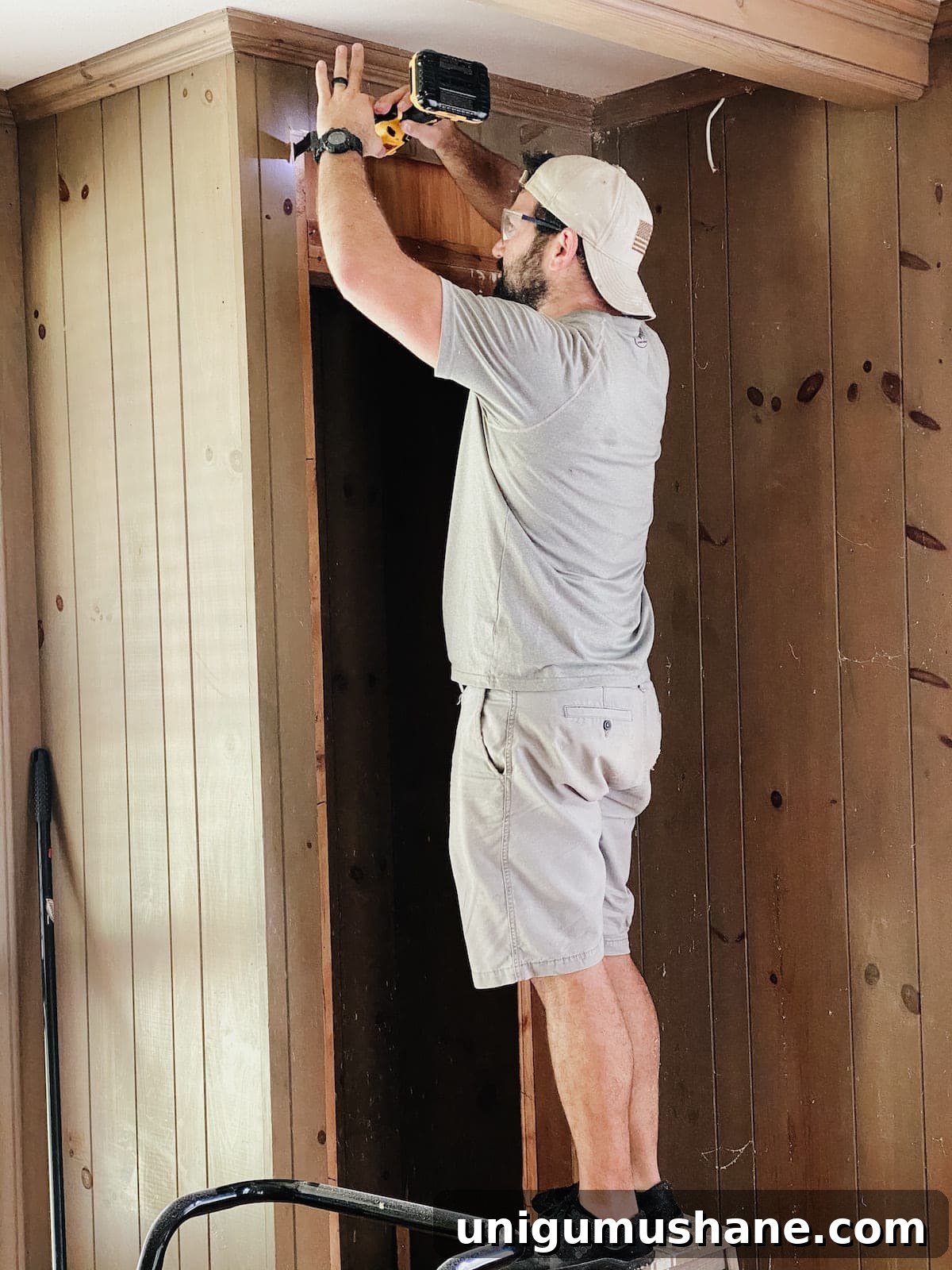
5. Measure the opening and cut a 2×4 to length. This will become the new header for the framed opening.
6. Fit the 2×4 flush to the top of the opening and secure it with nails. This creates a strong top frame for the new built-in.
7. Repeat the process using 1×6 boards to form the visible trim and casing around the new opening.
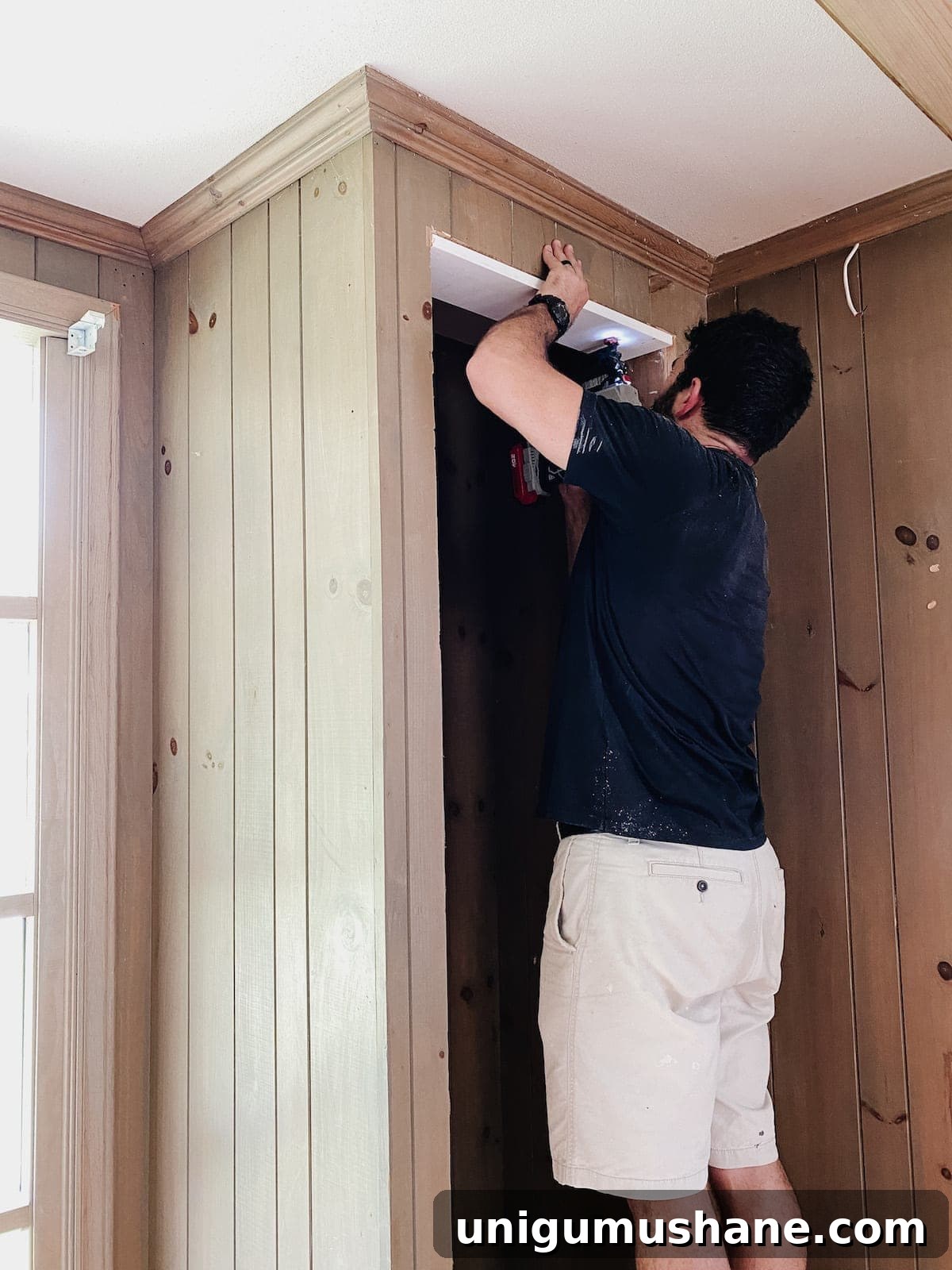
8. Measure the sides, cut 1×6 pieces to length, and nail them in place to create a clean framed opening.
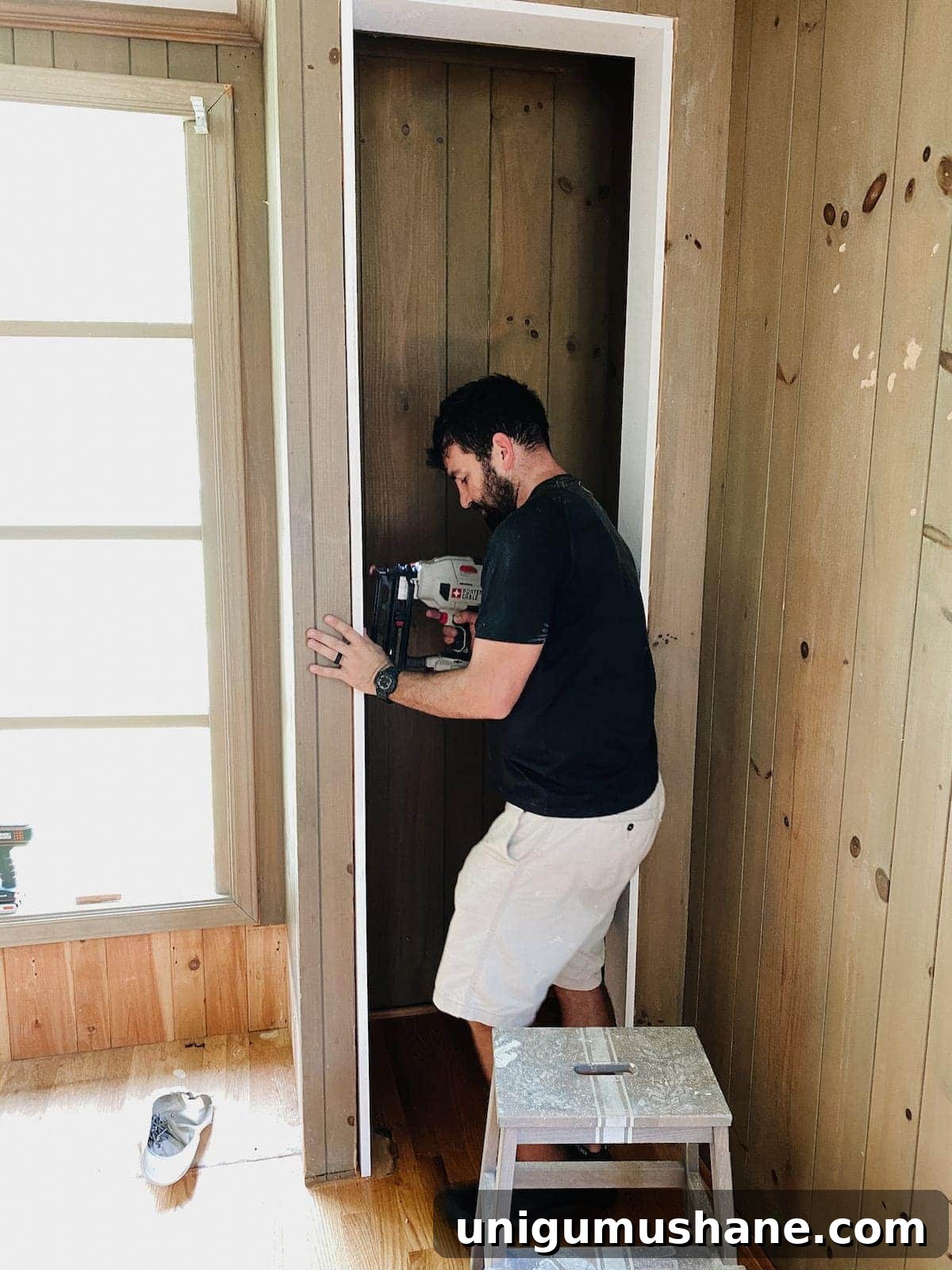
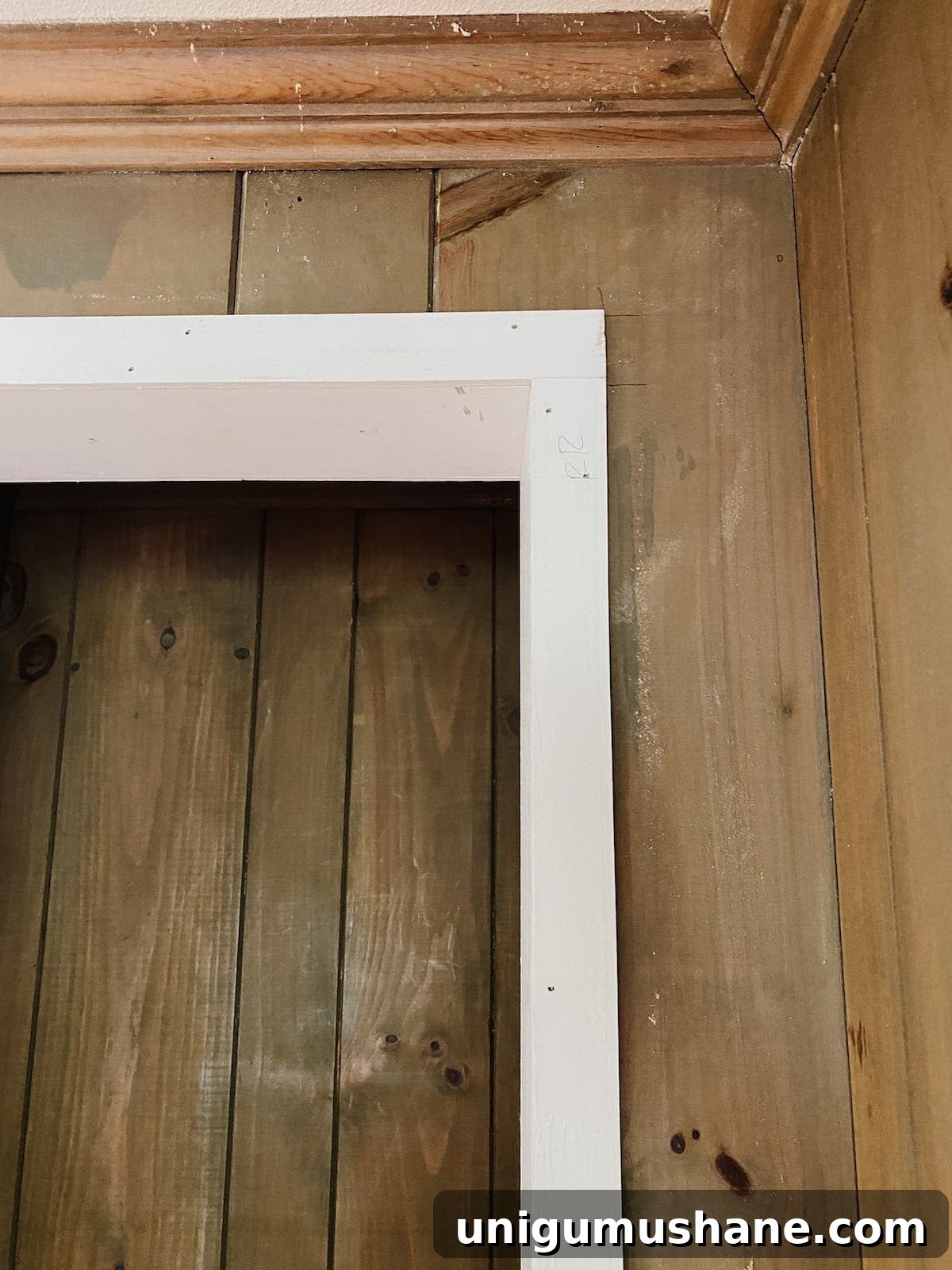
9. Caulk all edges and fill nail holes or knots with wood filler to create a seamless surface.
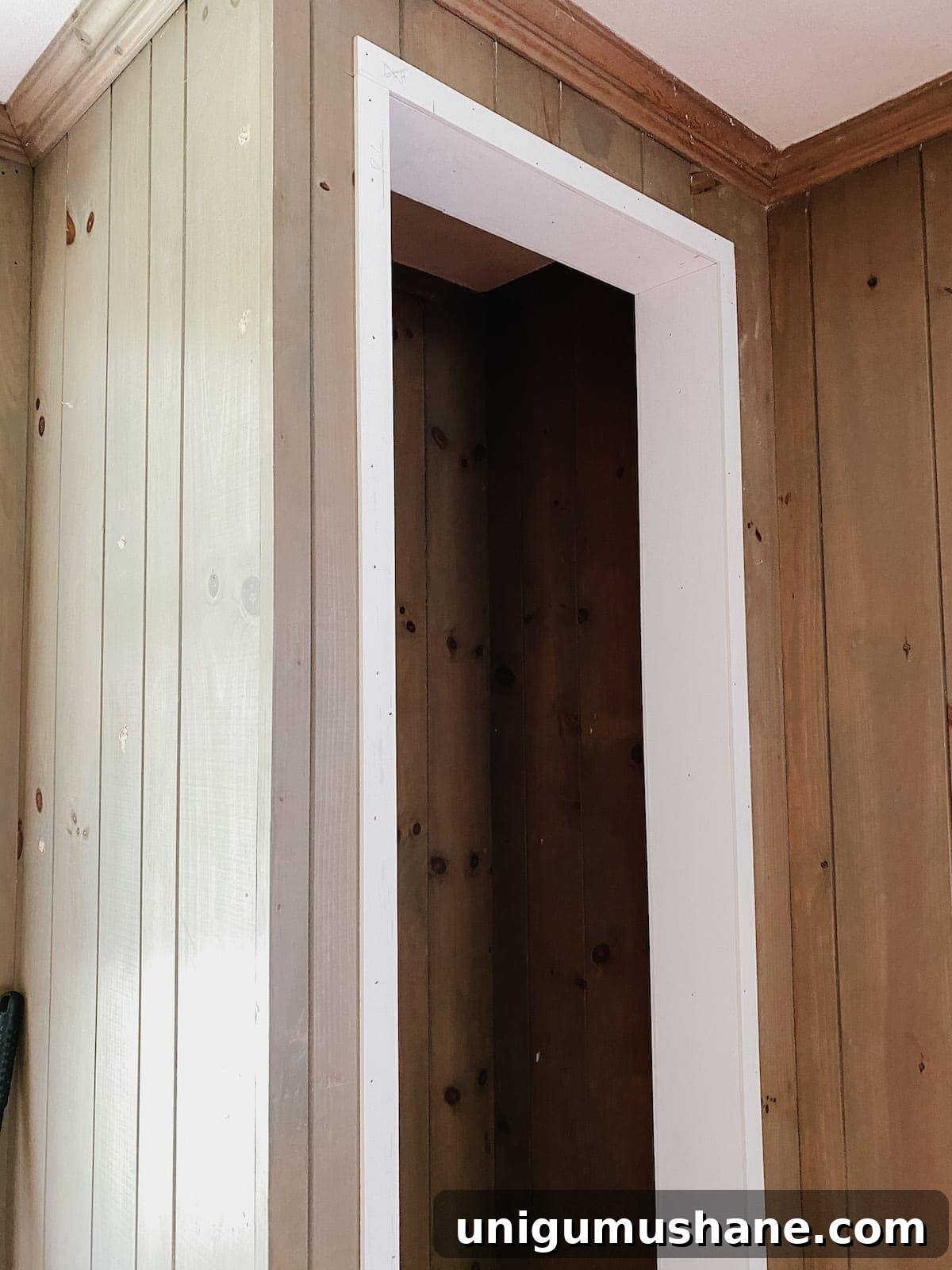
10. Sand the wood filler smooth using a mouse sander and medium-grit sanding pads.
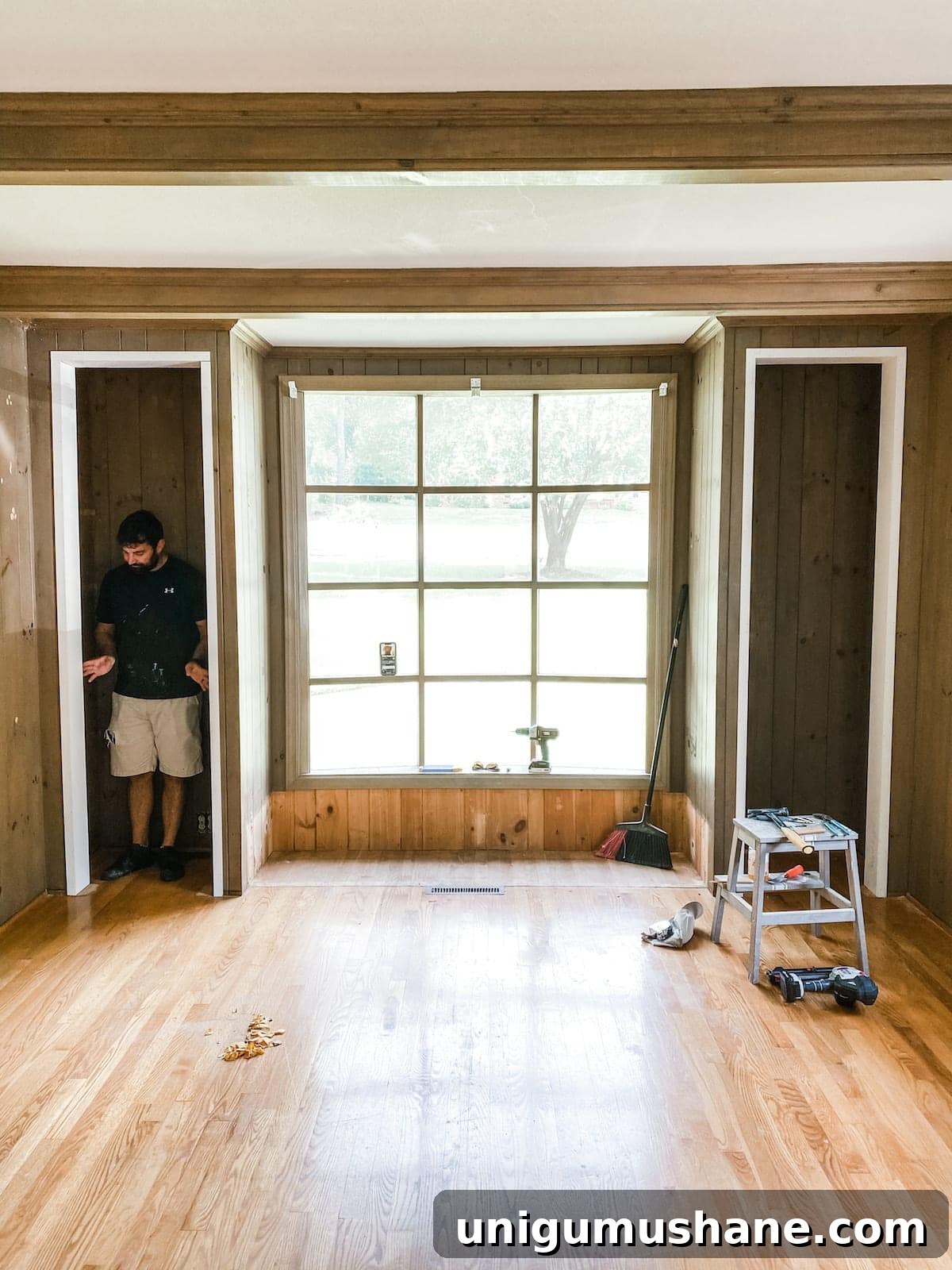
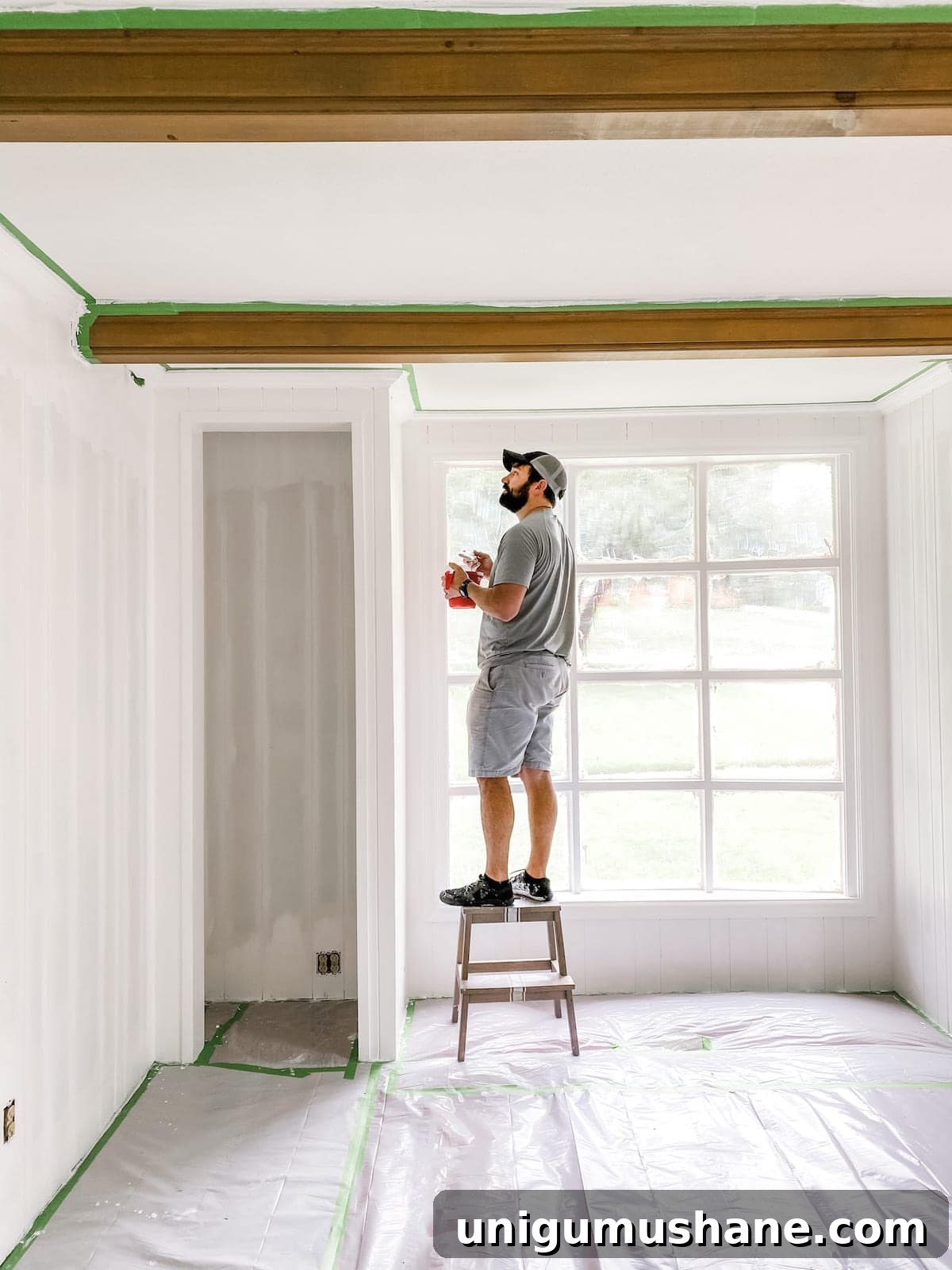
11. Prime and paint the new framing and surrounding woodwork. We used a bright white (Behr Polar Bear in satin) to keep the look crisp and fresh.
12. Attach pilaster strips to the sides of the opening and add shelf brackets at the heights you want.
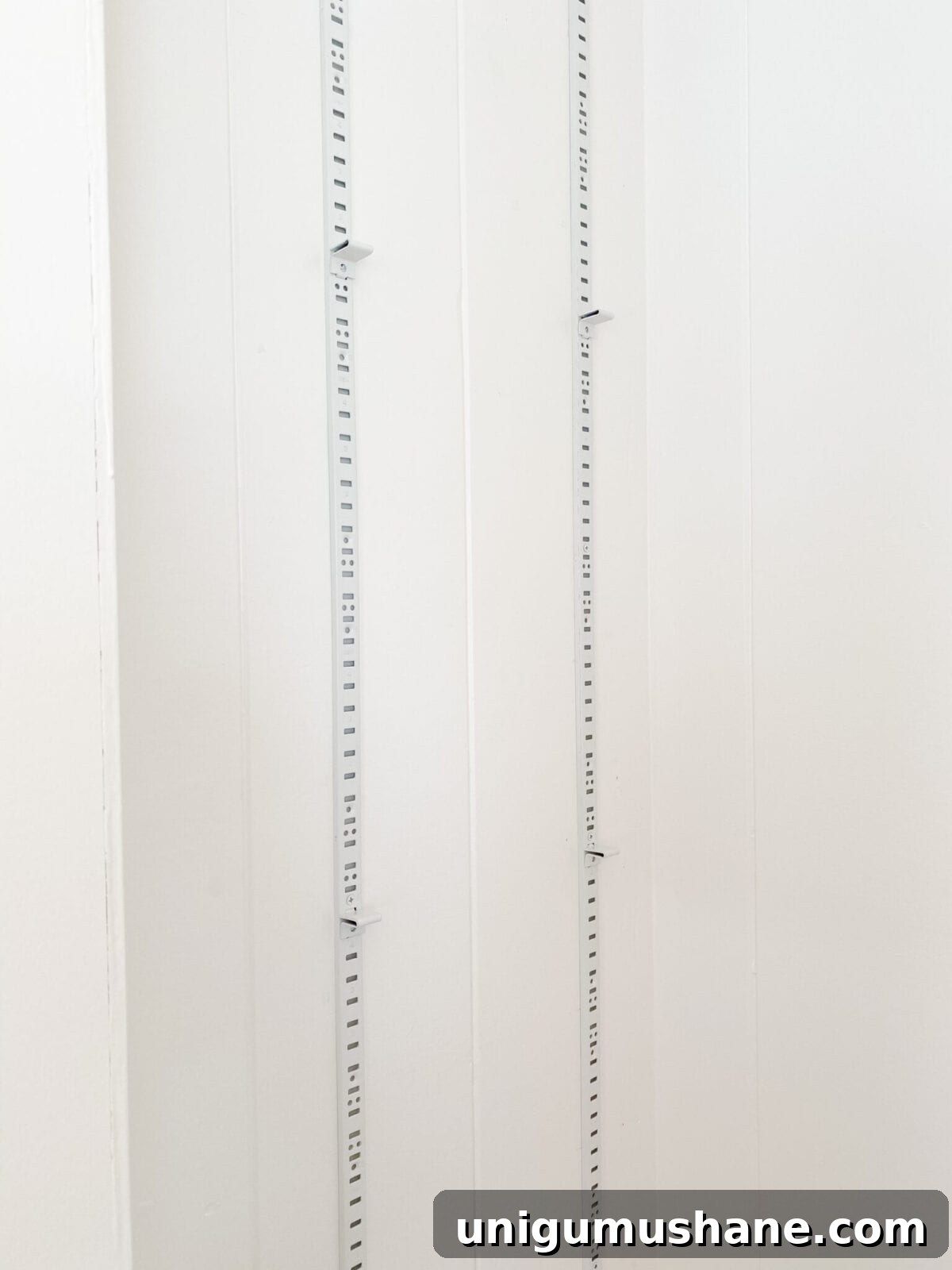
13. Cut MDF panels to size for the shelves, secure them on the brackets, and touch up paint as needed.
14. Style the shelves. We curated thrifted and antique finds, painted a few pieces, and layered decor to create a relaxed coastal, slightly rustic vibe that fits the space.
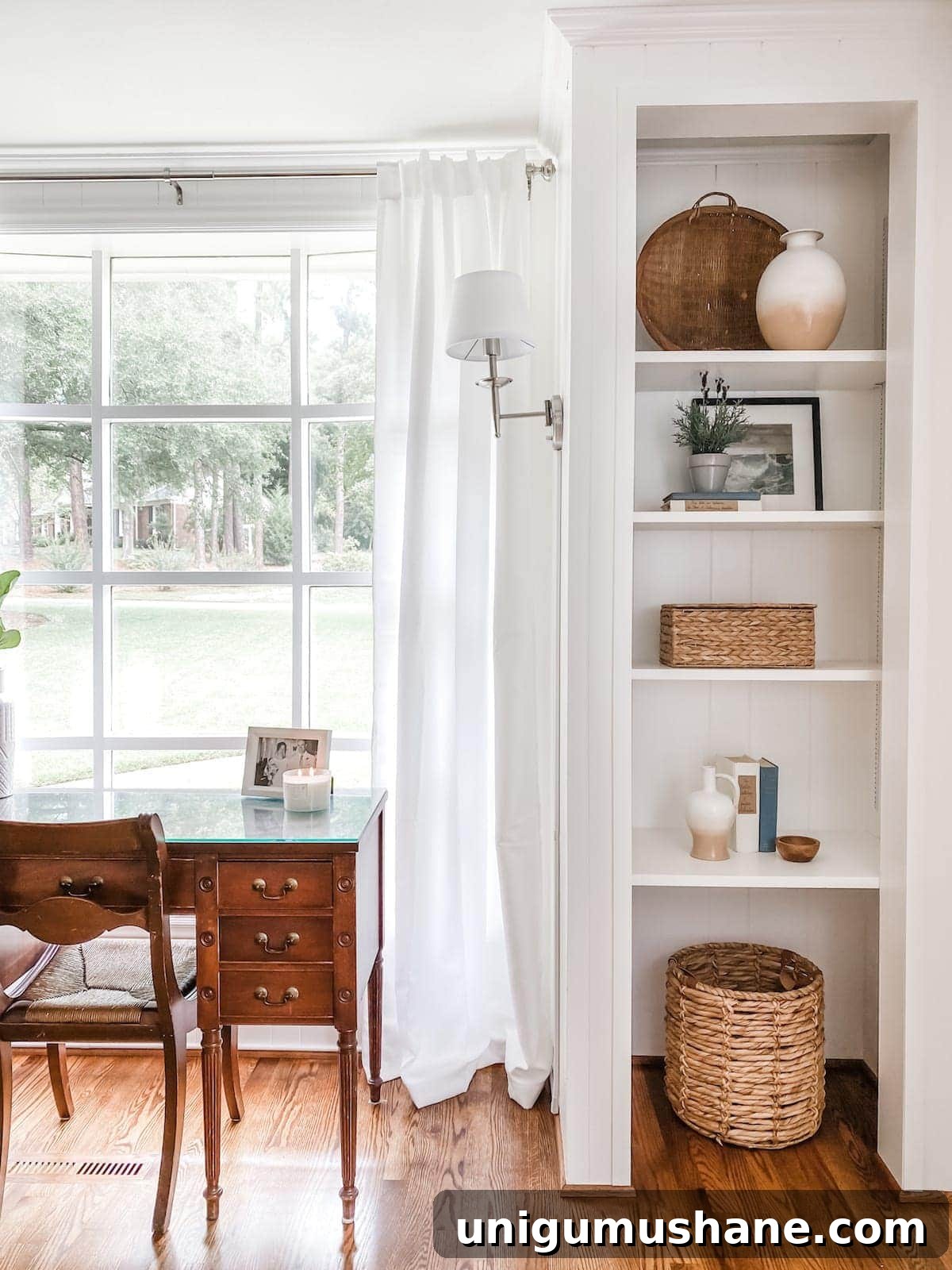
Over the past month, I gathered small antique store pieces and refreshed thrifted items so the shelves would feel collected and lived-in—little details like inexpensive vases and woven baskets help tell a story.
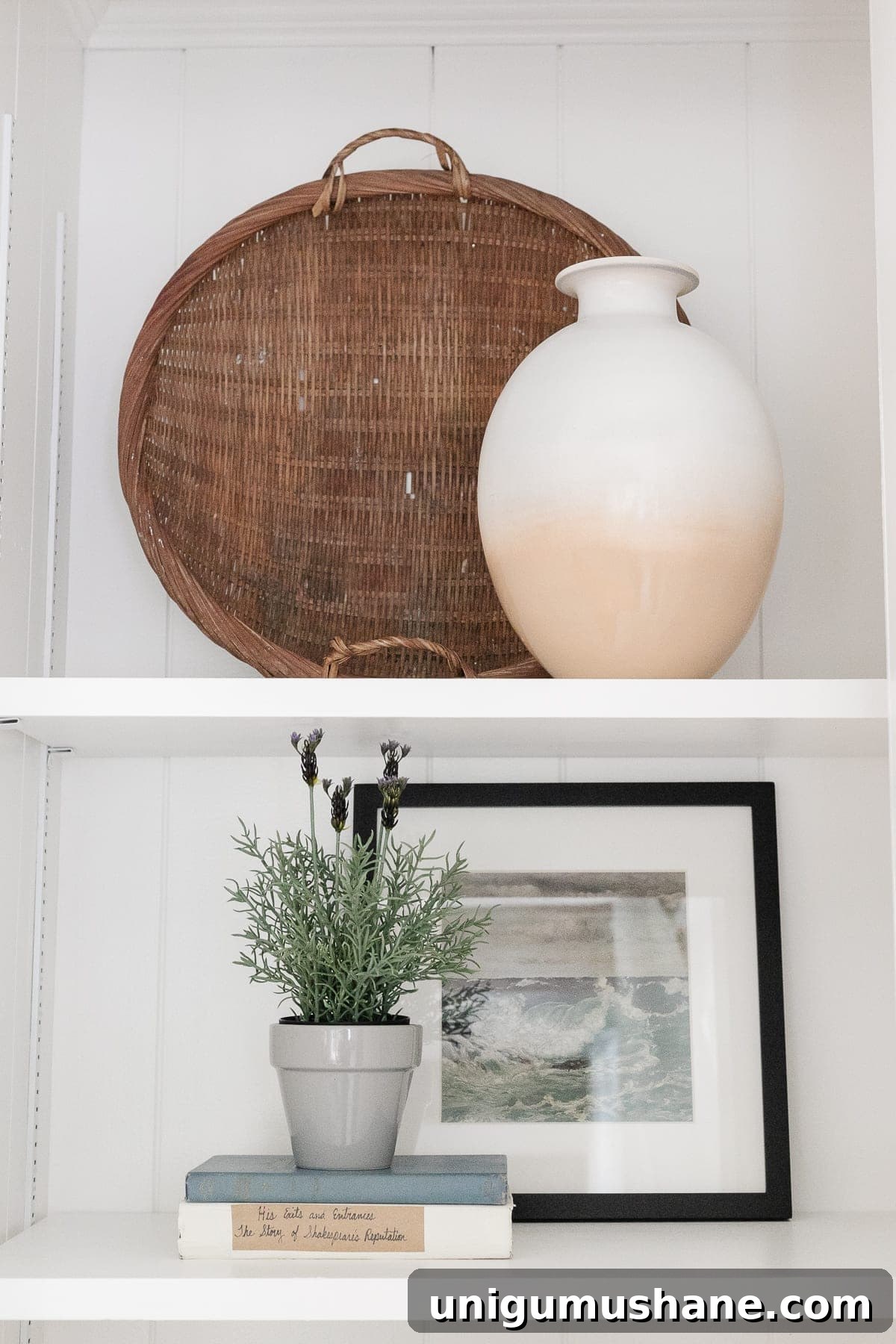

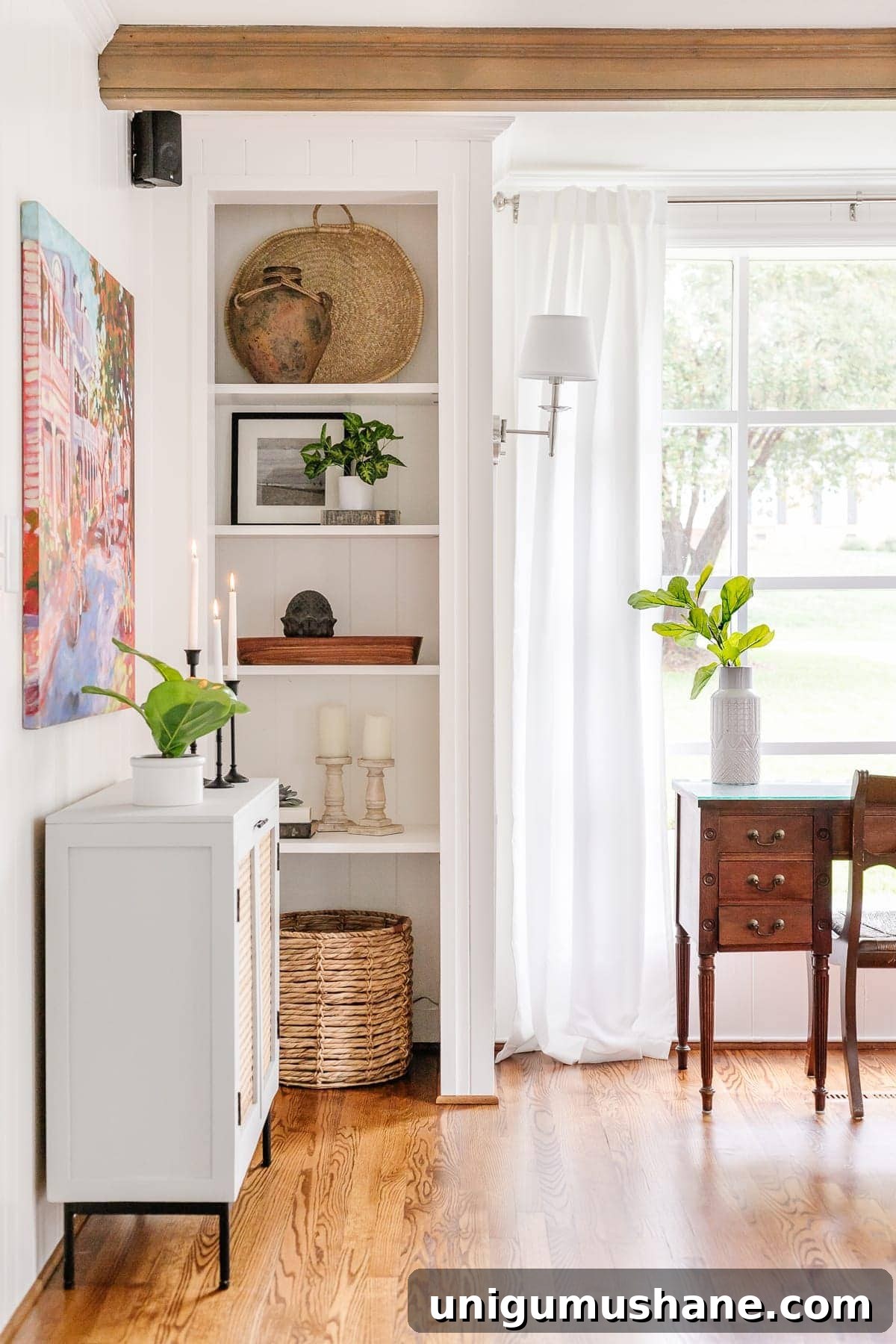
I can’t wait to share the rest of the room after a few final styling touches. For now, here’s one more before-and-after pair—because the change is that satisfying.
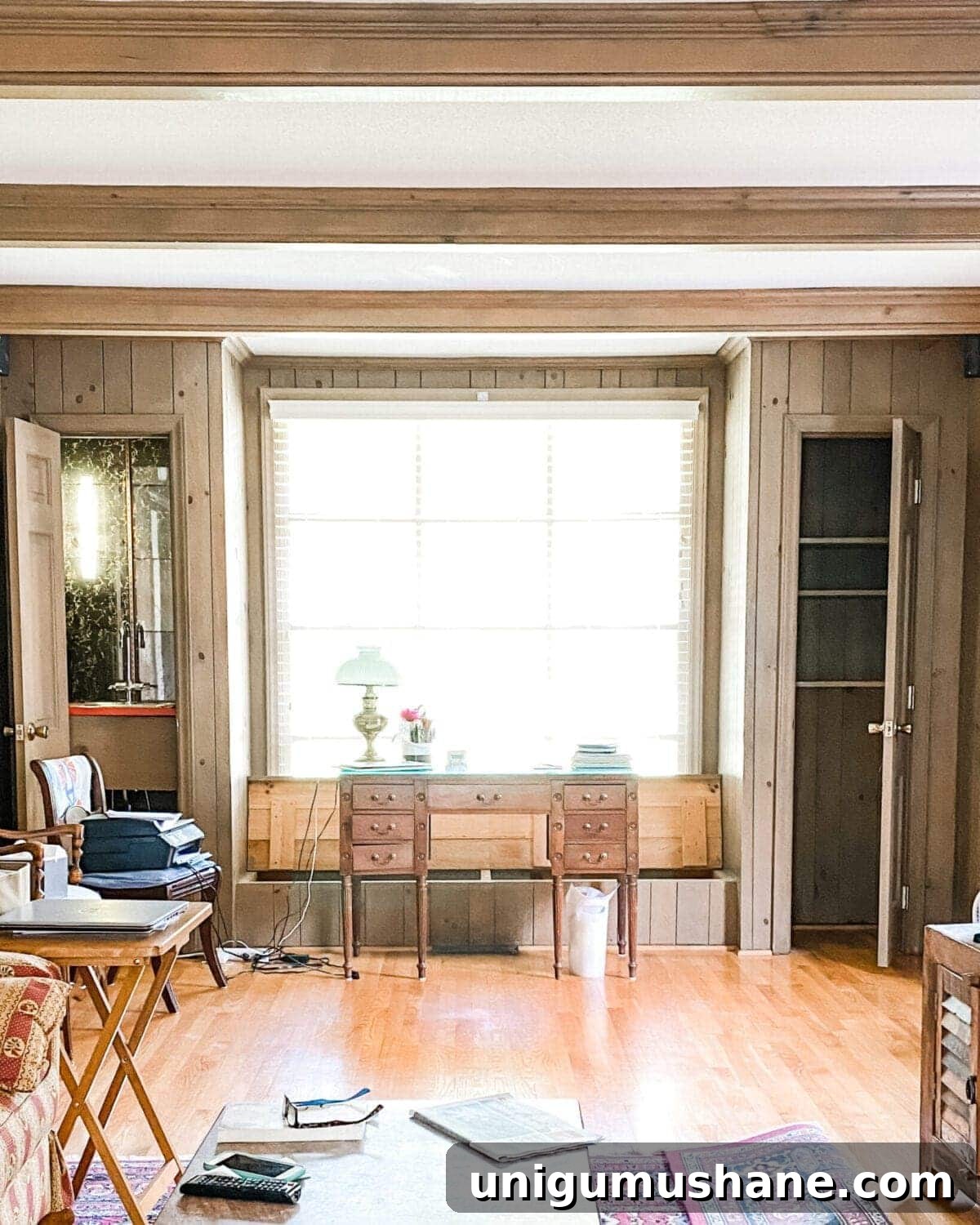
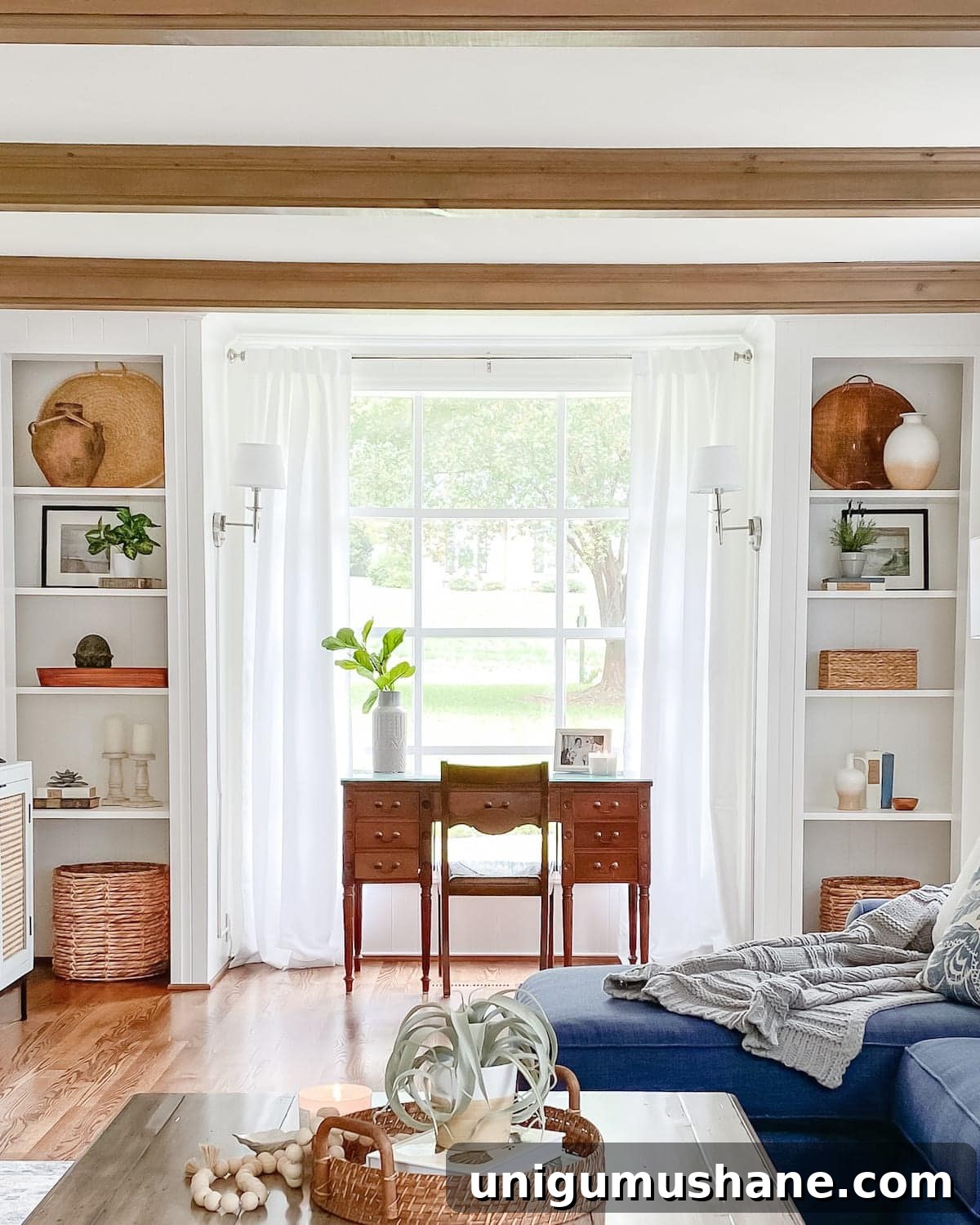
If you want to save this tutorial for later, pin the image below: