
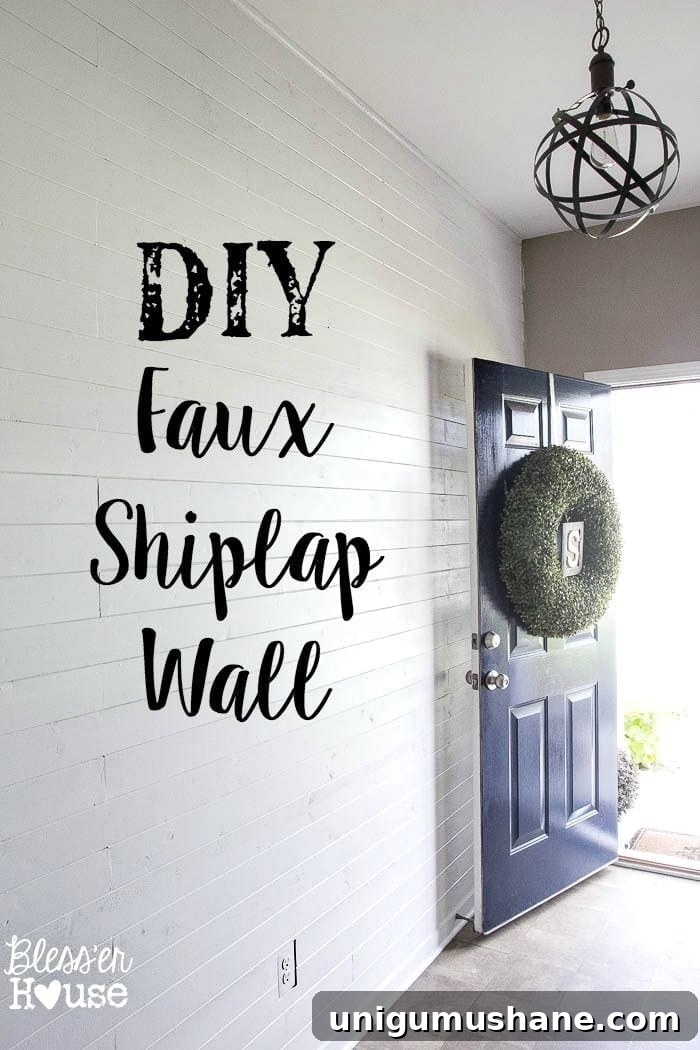
How to build a DIY faux shiplap wall with this full tutorial using tongue-in-groove planks.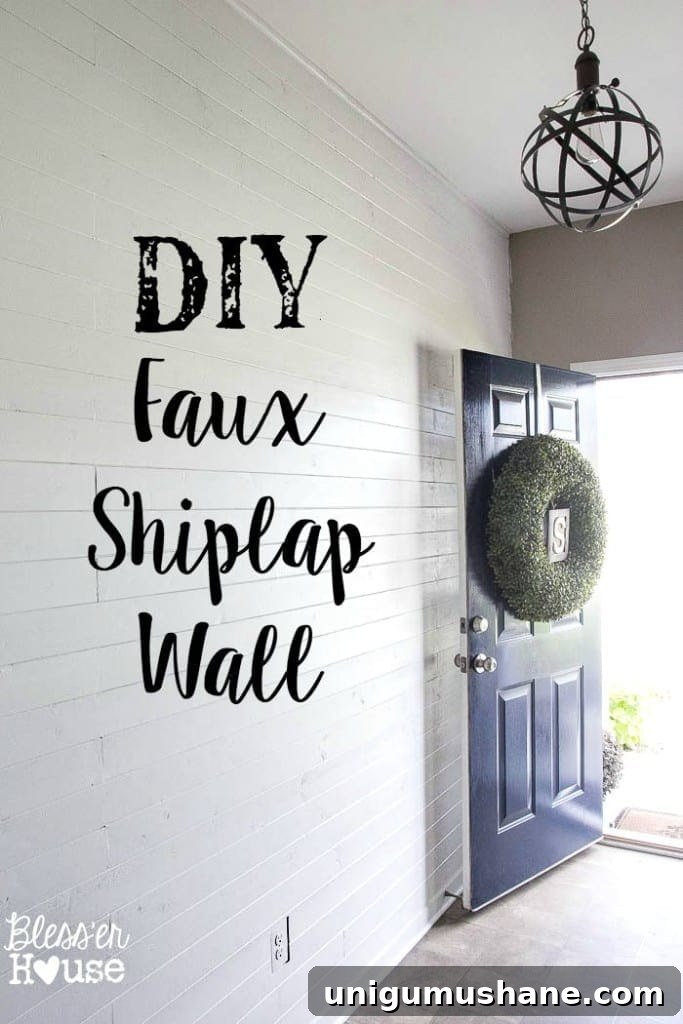
Faux shiplap is one of the quickest, most effective ways to add farmhouse character and brightness to a dim area like a foyer. This tutorial walks through a practical approach for building a DIY faux shiplap wall using tongue-and-groove (v-groove) planks. The method avoids some of the laborious plywood ripping that other tutorials recommend and produces a clean, professional-looking plank wall.
Our foyer lacked natural light, so we chose crisp white shiplap to reflect light and add architectural interest. While this route cost a bit more than cutting plywood yourself, the v-groove planks saved time and eliminated a lot of guesswork.
Materials and tools
- Seven packs of v-groove tongue-and-groove wood planks (typically six planks per pack)
- Pneumatic nail gun and nails
- Table saw or any straight-cut saw
- Spackling compound for filling nail holes
- White trim caulk
- Primer/paint (we used Sherwin-Williams Pure White color mixed into Valspar; less than half a gallon was needed)
- Optional: quarter round molding for the top gap and outlet extender if you want the outlet cover to sit over the planks
Total material cost for the wood, paint, spackling, and caulk was around $140. Buying plywood and ripping it into strips could save roughly $30, but the tongue-and-groove planks reduced time and frustration for this project.
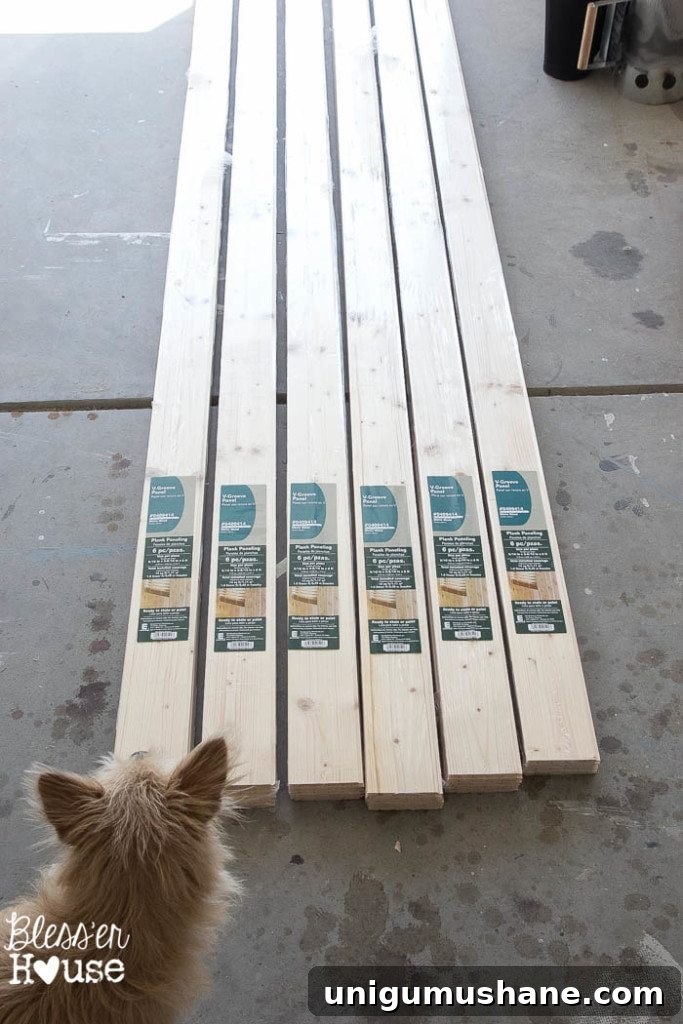
Our process was straightforward, although installing a shiplap wall still takes time. The project can be completed in a day by two people if you plan and prepare materials in advance.
Preparation and layout
Measure the full height and width of the wall you want to cover. Our foyer wall was 10 feet tall and we used 8-foot and 2-foot plank lengths, alternating them to create staggered seams and minimize visible joints. Because walls are rarely perfectly square, leave a small wiggle room in your measurements and dry-fit planks before cutting.
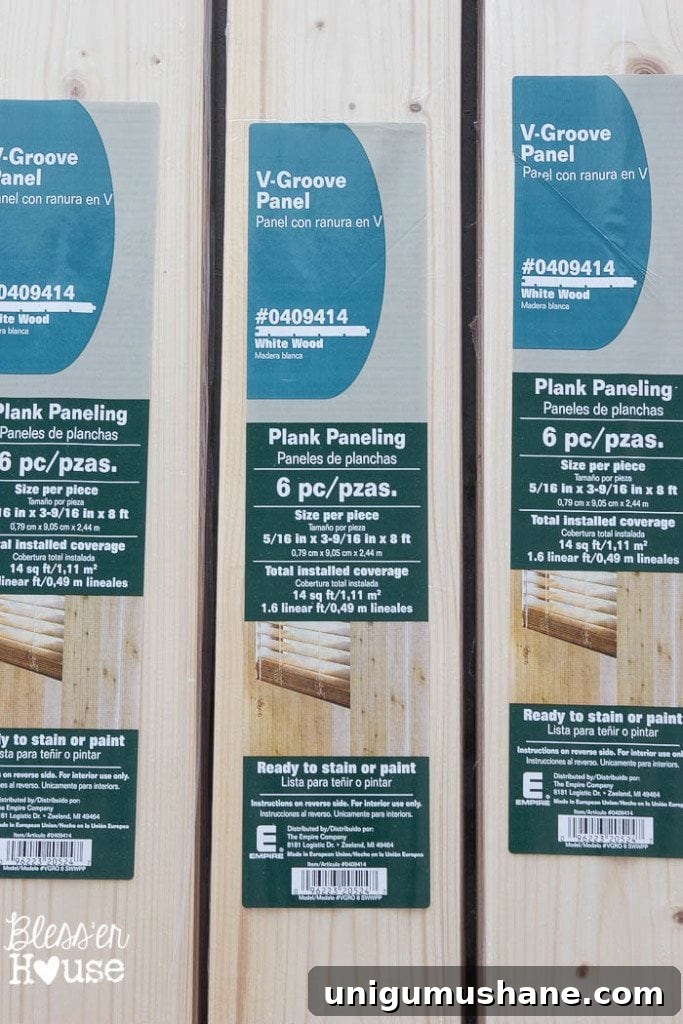
Installation
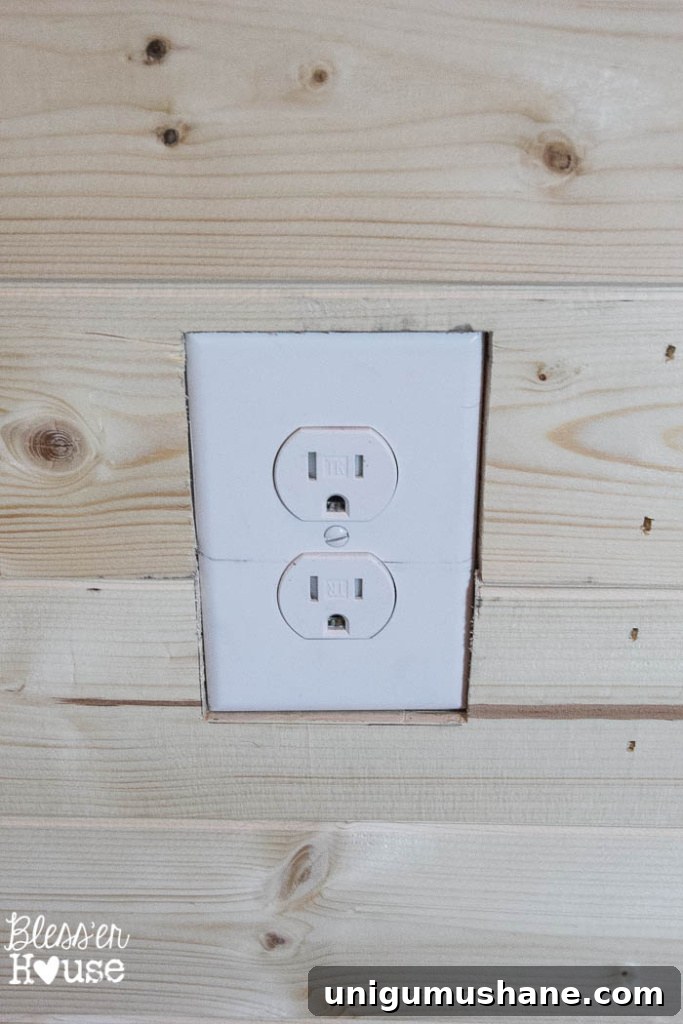
Start at the bottom of the wall above the baseboard and work upward. If your wall contains outlets, mark and cut around them before nailing the plank in place. For tricky outlet placements, one person should hold the plank while another traces and cuts with a jigsaw. If preferred, install an outlet extender to bring the cover forward so it sits over the plank.
Use a pneumatic nail gun to secure each plank to the wall studs. Alternate 8-foot and 2-foot plank lengths as you go to stagger seams. Check that each plank sits level and engages the tongue-and-groove properly. When you approach the top, measure the remaining gap and cut planks to fit. We installed a strip of quarter round molding along the top edge to conceal any uneven gap and to give a finished appearance.
Finishing
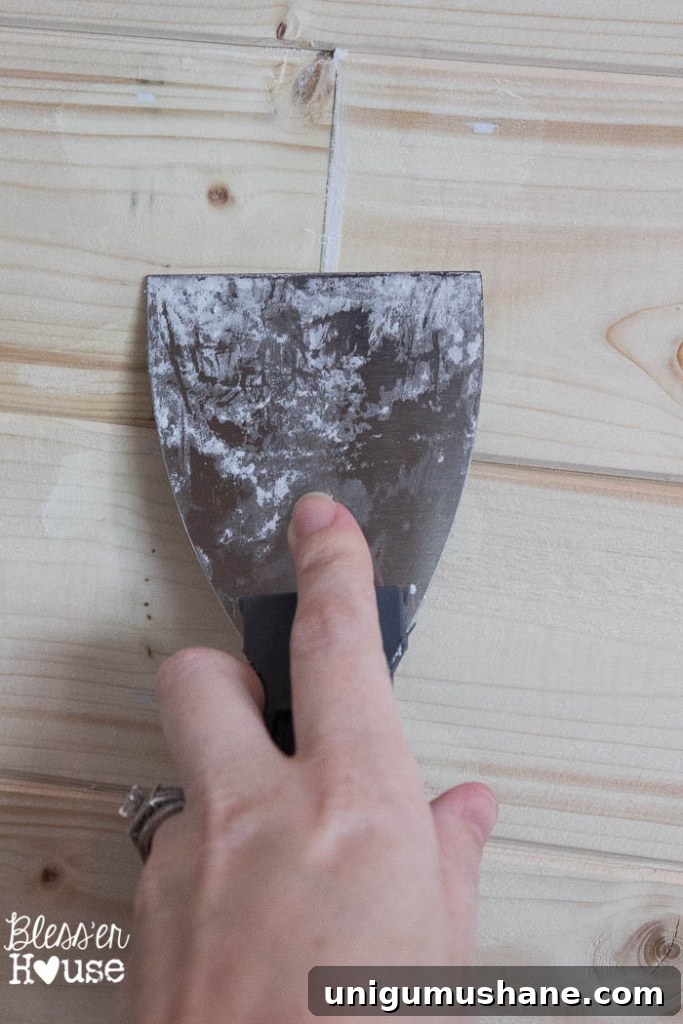
After the planks are installed, apply white trim caulk to all seams along edges and corners for a seamless look. Fill nail holes with spackling and, once dry, sand smooth. Wipe away dust and apply two coats of paint with primer included. We used a paint-and-primer product in the Pure White shade; the finish brightened our foyer significantly and emphasized the horizontal plank lines.
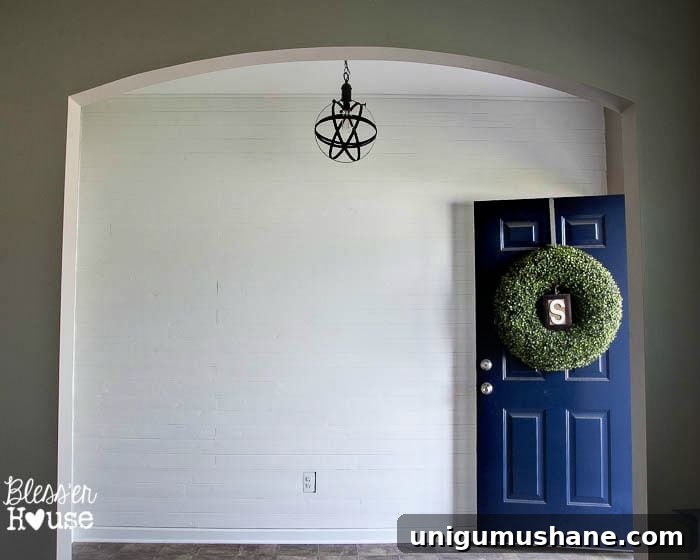
Once painted and dry, replace outlet covers and reinstall any trim. The transformation brightens the space and provides a durable, attractive backdrop for decor. Photographing a narrow, low-light foyer can be challenging, but the visual impact in person is clear: white shiplap amplifies light and adds timeless farmhouse appeal.
This project can be adapted for any room where you want the look of shiplap without the full cost or complexity of board ripping. If you prefer a more weathered or rustic finish, choose a stain or paint technique instead of full opaque white. Overall, faux shiplap with tongue-and-groove planks delivers a high-impact, customizable wall treatment that works well in foyers, living rooms, bedrooms, and dining areas.
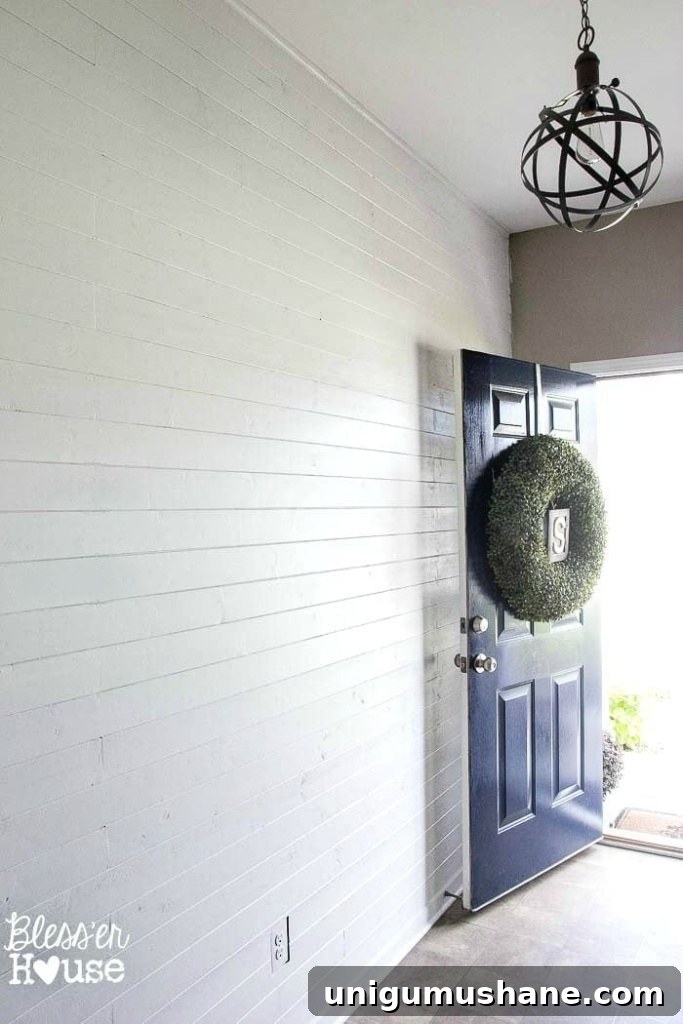
We’ll be finishing the rest of this foyer with decor and finishing touches over the next couple of weeks. If you’re considering shiplap in your home, this approach offers a solid balance between cost, time, and appearance. Whether you install full-height boards or a partial accent wall, faux shiplap is a great way to add personality and brightness to your space.

Follow: Facebook | Pinterest | Instagram | Twitter | Google+ | Bloglovin | Hometalk