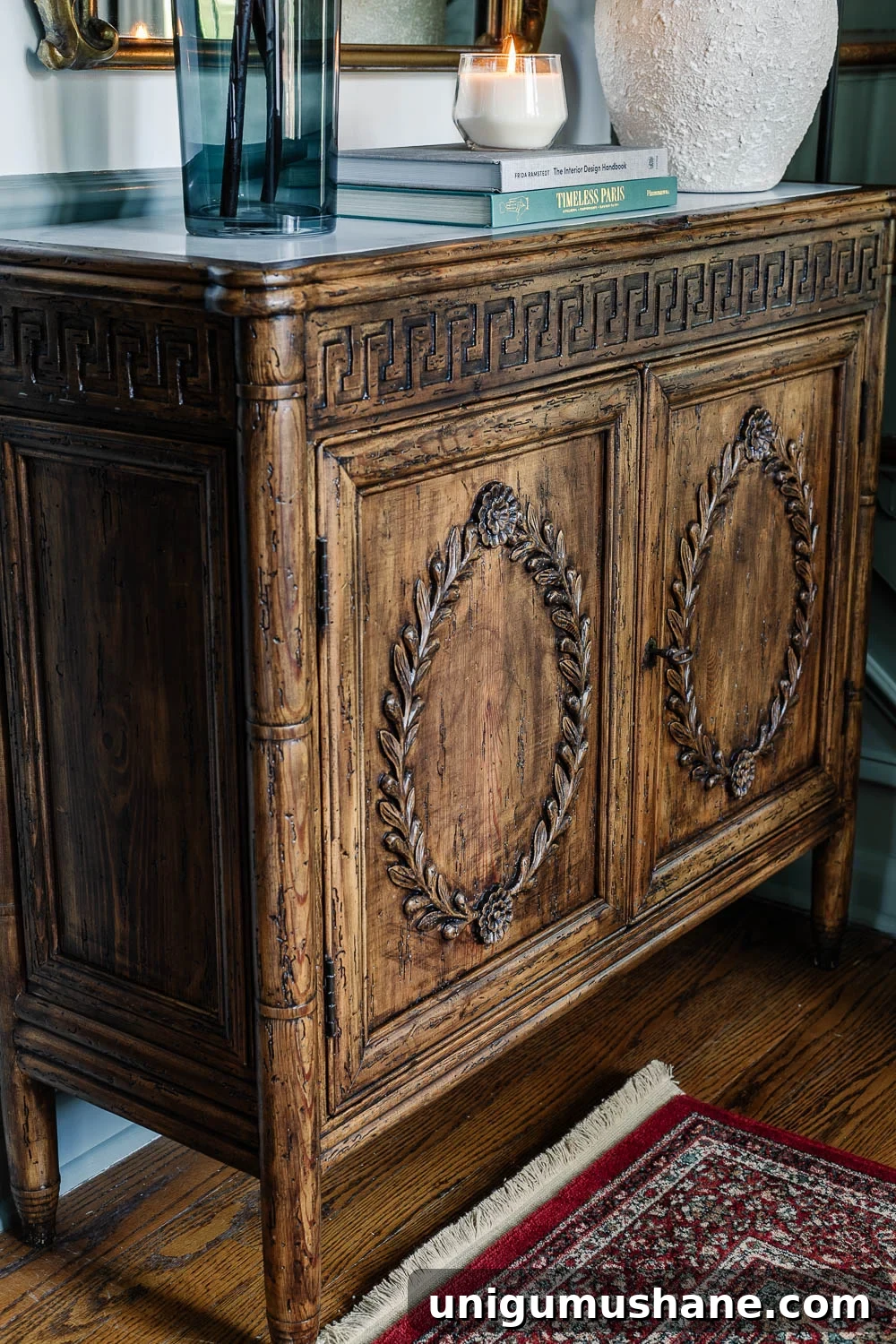
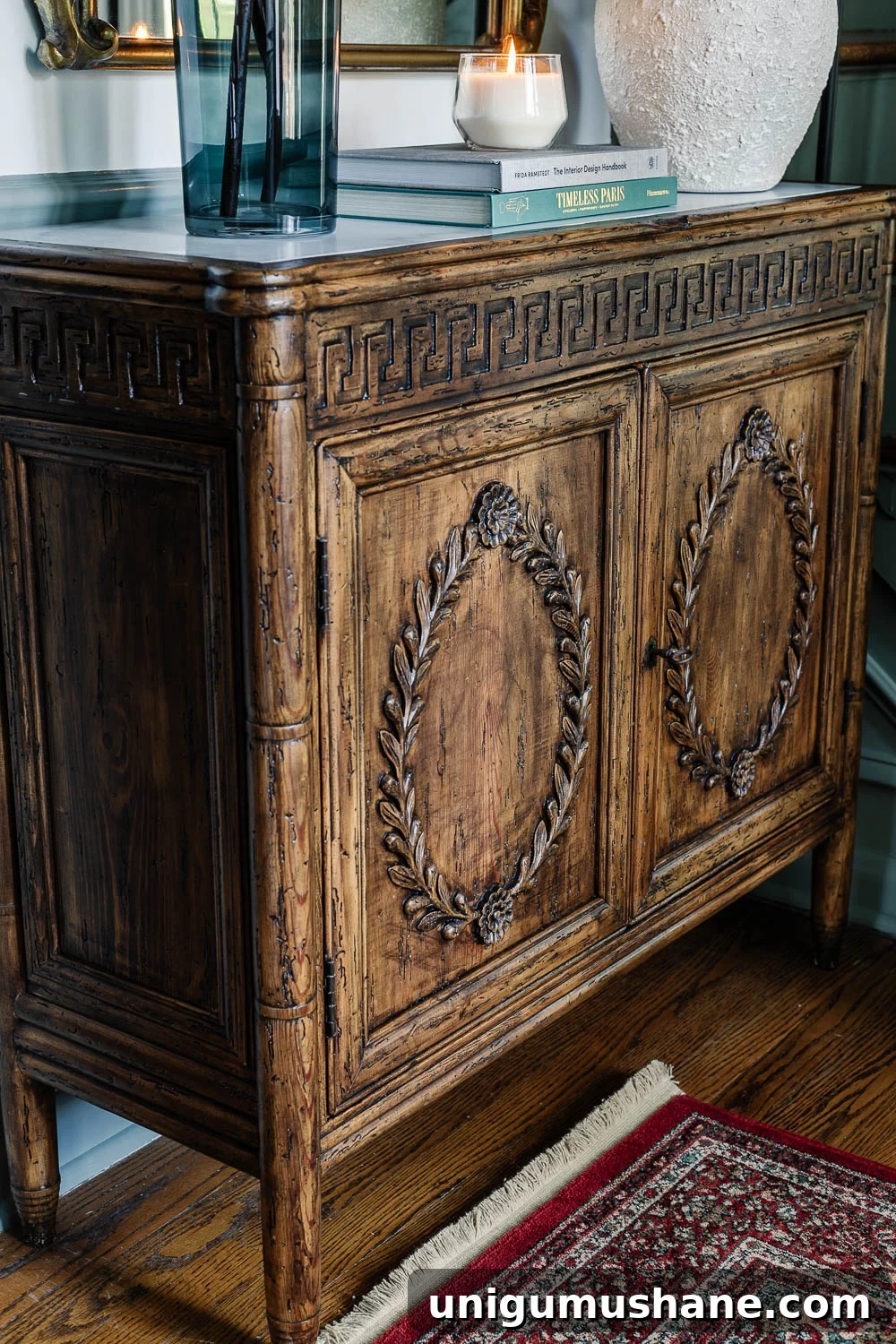
I finally fixed the foyer cabinet. I don’t know why I hadn’t considered this makeover sooner, but once I applied the gel stain, it was obvious the piece was meant to be this deep, rich color all along.
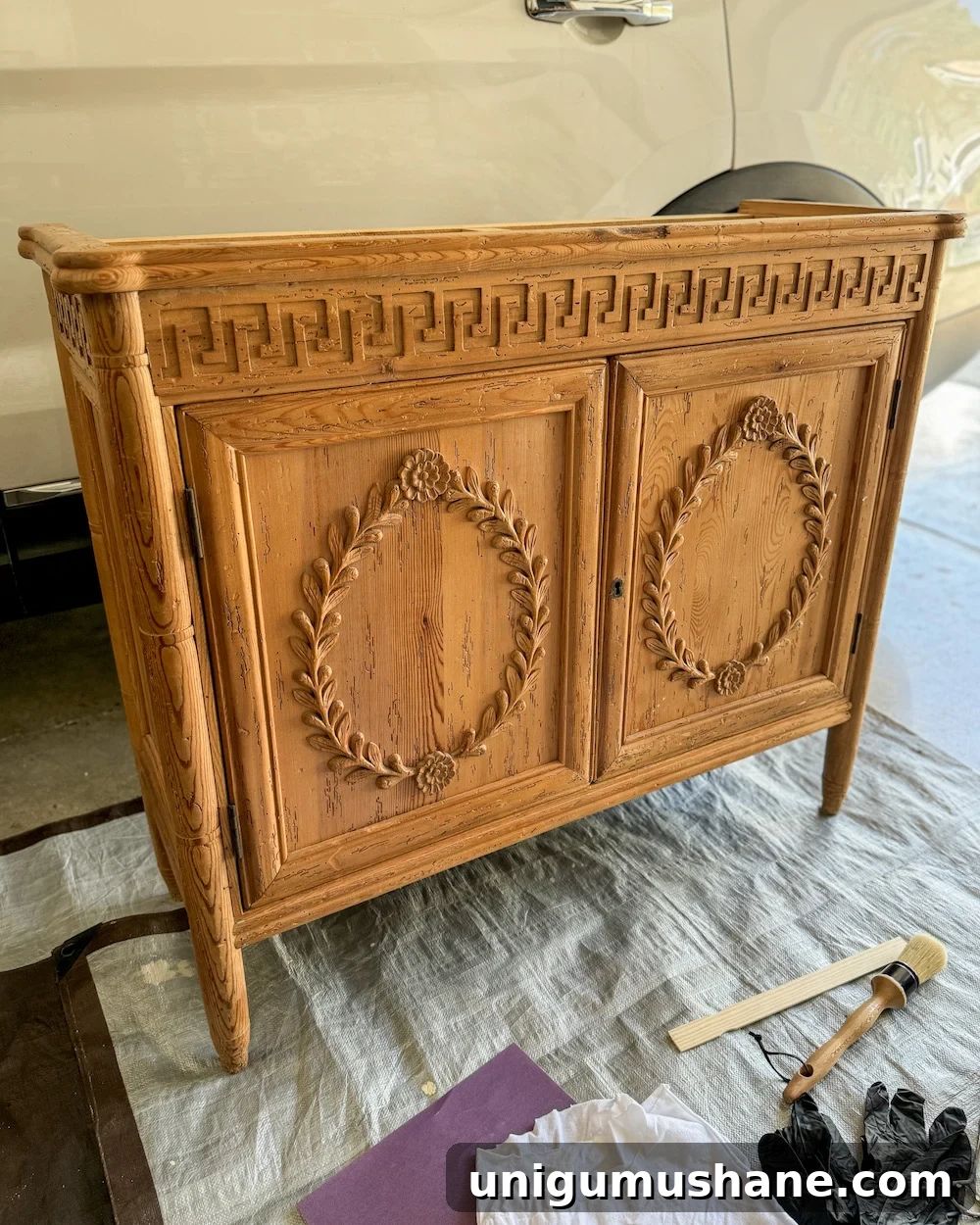
That bright, orange-toned finish it had before simply didn’t suit the cabinet’s carved details or the rest of the entryway.
Related: How to Find the Best Furniture Deals on Facebook Marketplace
I originally found this cabinet a few years ago on Facebook Marketplace for a steal. It was similar to a much more expensive piece I’d admired, and I was nervous to change the stain because refinishing can be time-consuming. In the past I stripped stain and varnish or spent hours sanding to change a finish — both messy and laborious options.
Gel stain changed everything for me. It lets you apply a darker color over an existing finish without fully stripping the old stain. The results are dramatic: this cabinet now has a coffee-toned finish that feels like it was always meant to be this way.
Related: How to Remove Scratches from Wood Furniture in Minutes
How to Gel Stain Over Old Stain on Furniture or Cabinets
Using gel stain is one of the simplest and most effective methods to change the wood tone on furniture or cabinets. You can even use some gel stains over painted surfaces, but the process works best when going darker over an existing wood stain.
Before the step-by-step instructions, here are a few important points to consider so your gel stain project goes smoothly.
What to Know Before You Stain Furniture
- You can reliably apply a darker stain over a lighter stain. If your goal is a lighter color, you will need to strip the existing finish or refinish the wood.
- The piece should be in sound condition. Avoid staining furniture with active water damage, flaking, or structural cracks.
- Match the stain base: if the existing finish is oil-based, use an oil-based gel stain. If it’s water-based, use a water-based product. Mixing bases can lead to adhesion problems.
How to test whether a finish is oil- or water-based: Dampen a cotton ball with rubbing alcohol and rub a small, inconspicuous area. If the finish lightens slightly when the alcohol evaporates, the finish is water-based. If there’s no change, it’s likely oil-based.
Tip: Always test your chosen gel stain color in an out-of-sight spot. Gel stain tends to sit on the surface more than traditional stain, so the final hue will depend on the wood grain and the underlying finish.
Supplies
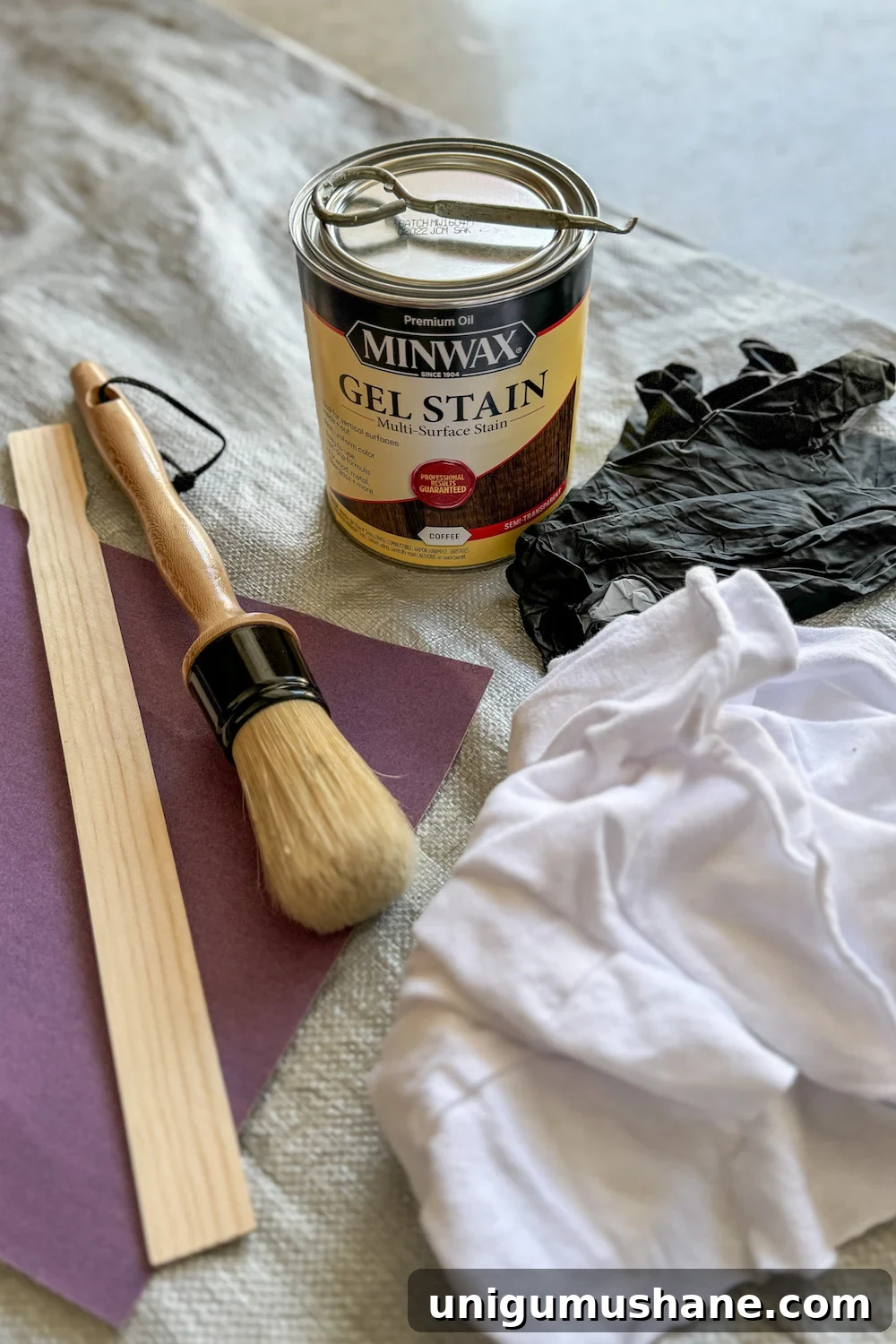
- Minwax Gel Stain (I used the color Coffee)
- All-purpose cleaner or degreaser such as Simple Green or Krud Kutter
- Fine-grit sandpaper or sanding sponge (light scuffing is recommended)
- Clean, lint-free rags
- Quality staining brush, foam brushes, or a staining pad
- Chemical-resistant gloves
- Minwax Clear Matte Polycrylic or similar water-based topcoat
Related: How to Clean Wood Furniture to Make It Look New
Step 1 – Clean the Surface
Begin by removing dirt, grease, and buildup. Use an all-purpose degreaser and a clean rag to thoroughly clean the wood. For kitchen or entryway pieces that collect fingerprints and oils, this step is essential for good adhesion.
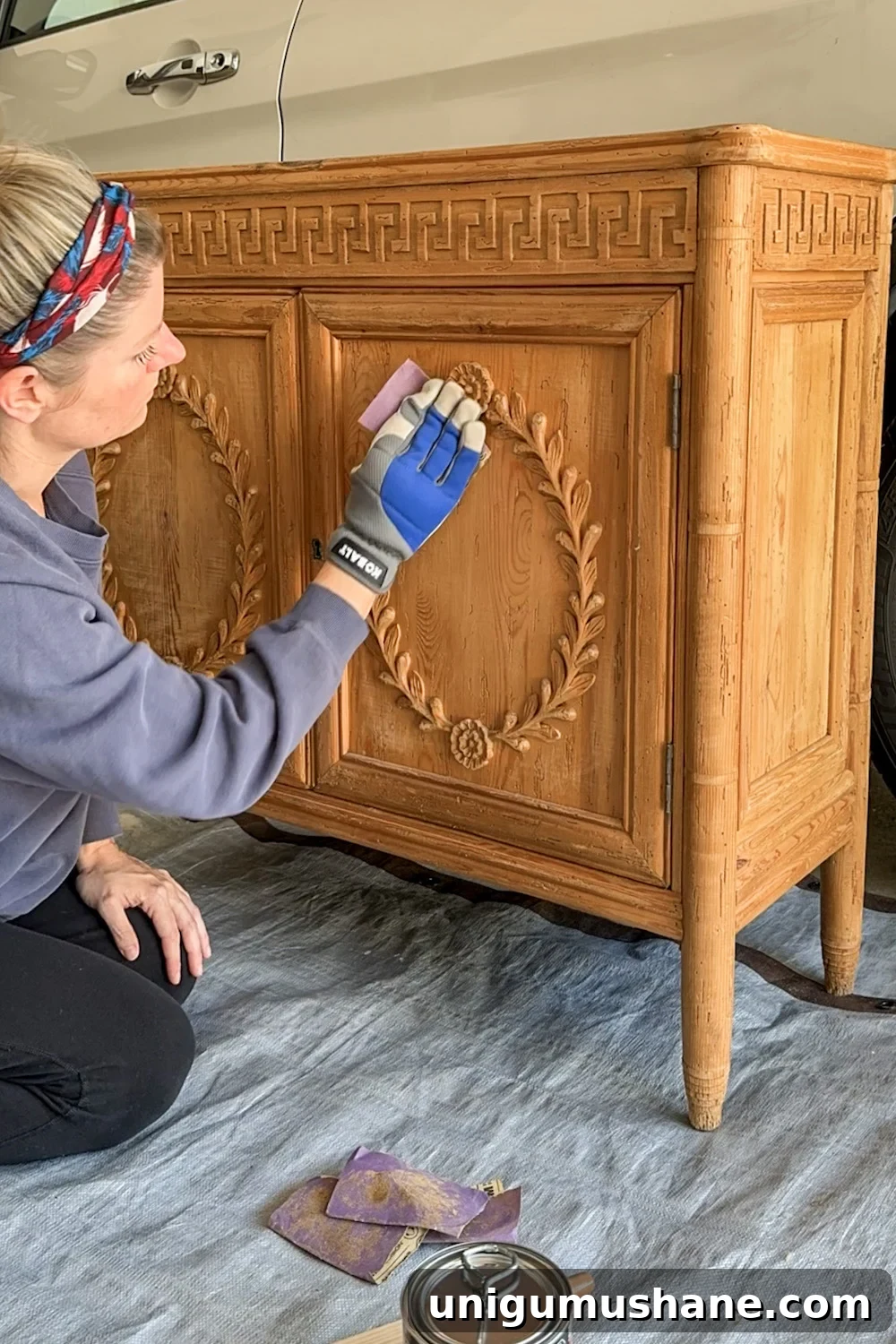
Step 2 – Lightly Sand
You do not need to sand the piece down to bare wood. Instead, use fine-grit sandpaper to lightly scuff the surface. This creates a bit of “tooth” for the gel stain to grip, improving coverage and longevity.
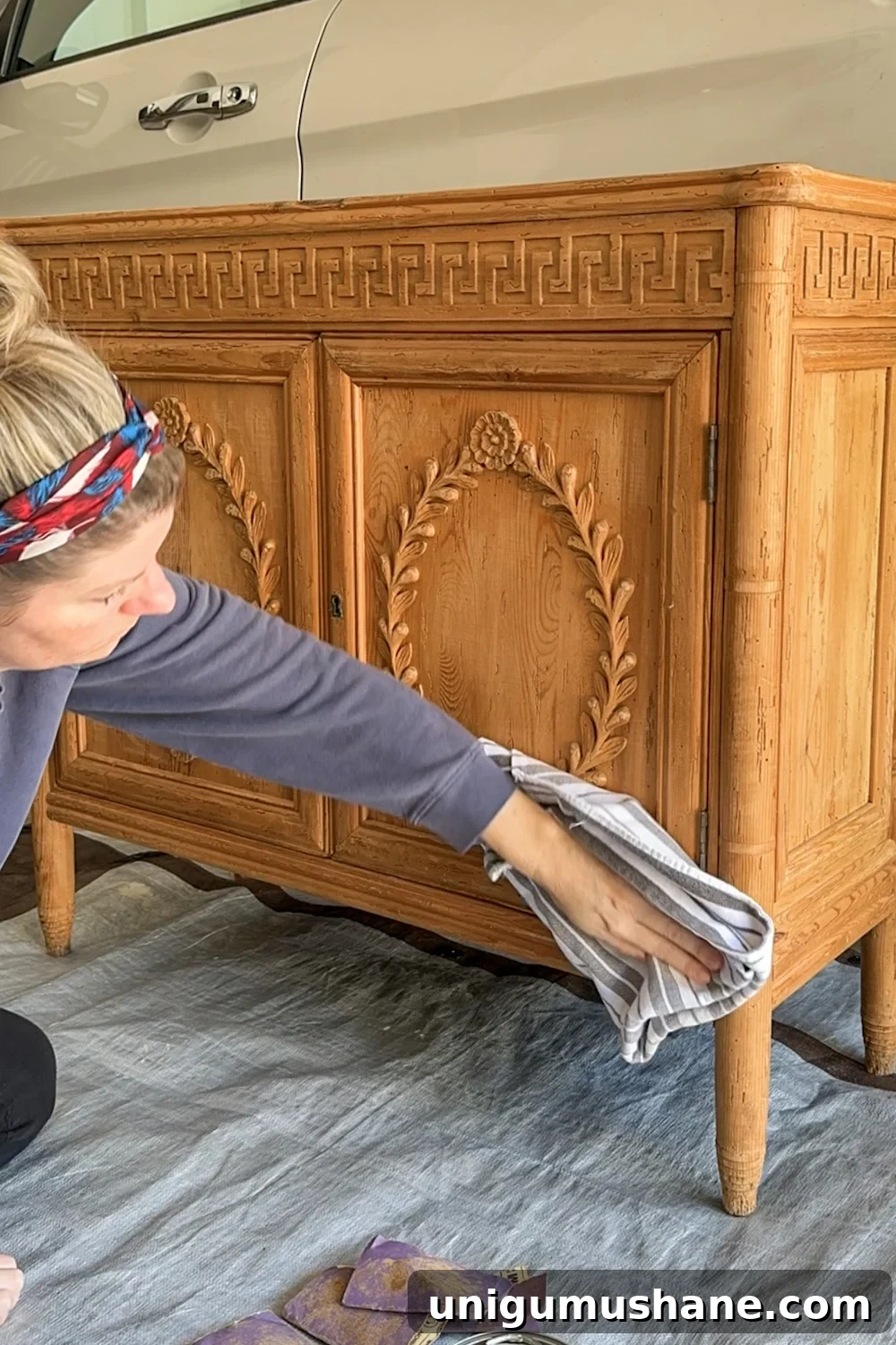
Step 3 – Wipe Away Dust
Remove all sanding dust with a tack cloth or a slightly damp, lint-free rag. A clean surface ensures an even application and prevents imperfections from showing through the gel stain.
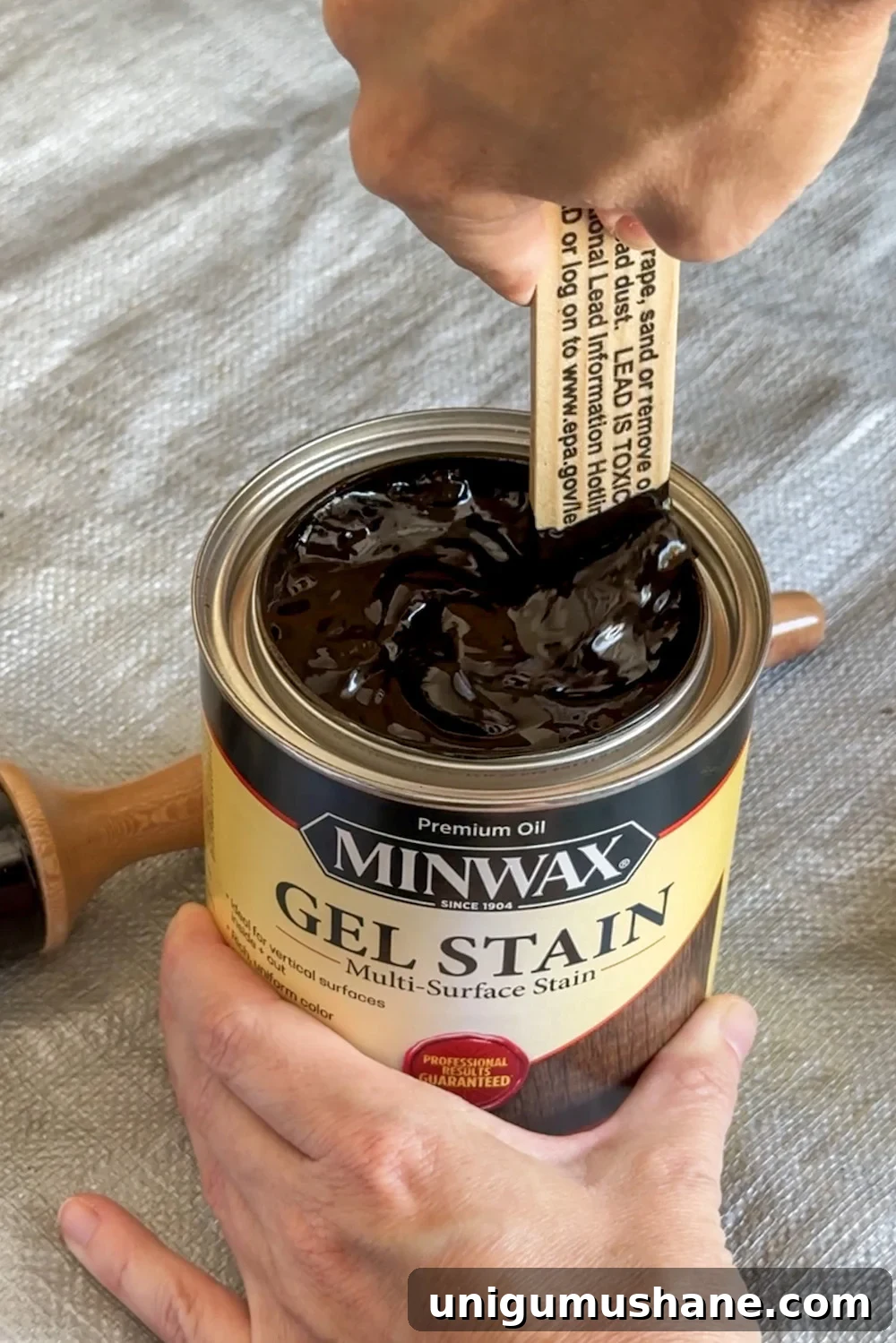
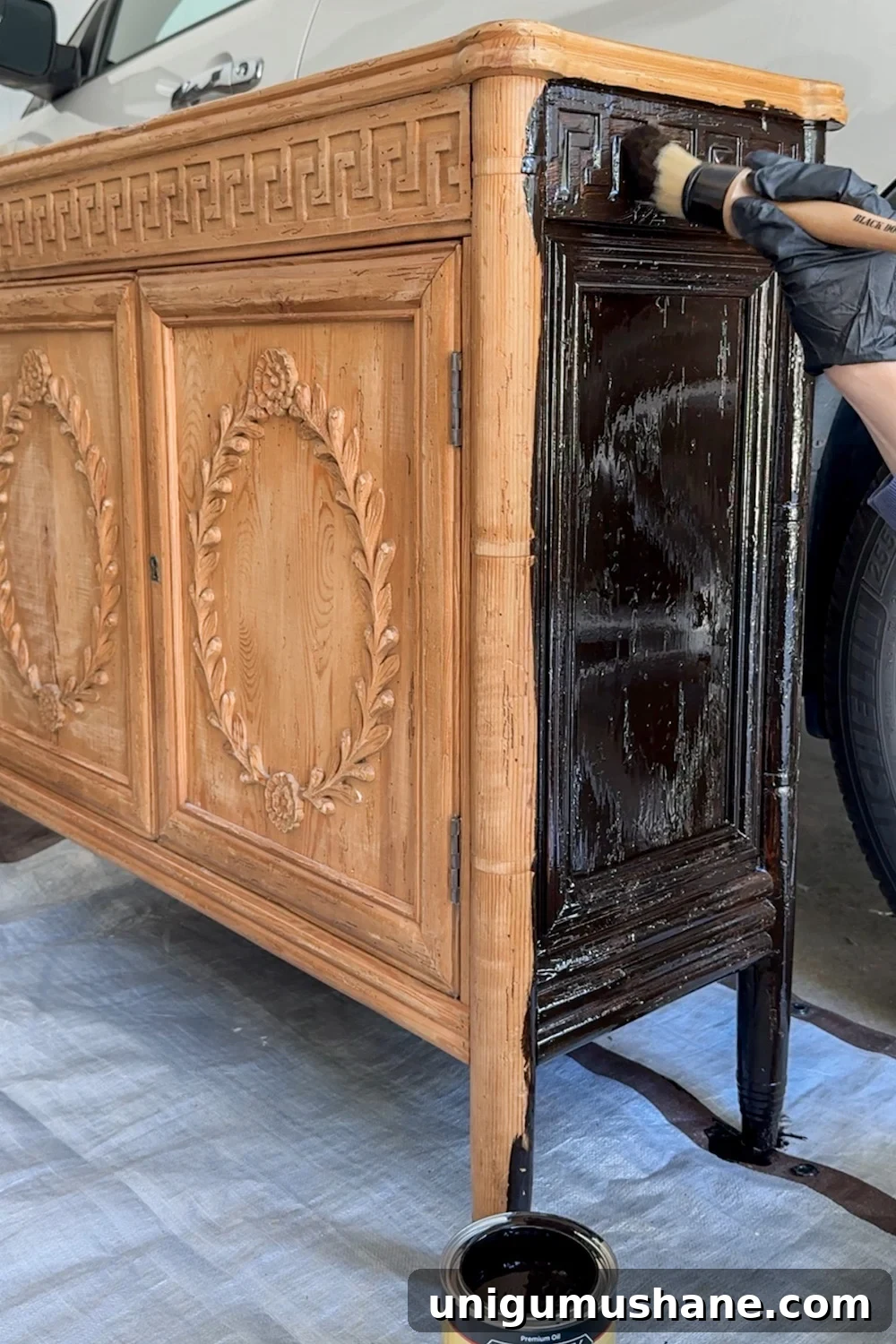
Step 4 – Apply Gel Stain
Stir the gel stain thoroughly; it has a pudding-like consistency and needs to be mixed well. Work in manageable sections so the stain doesn’t dry before you wipe it.
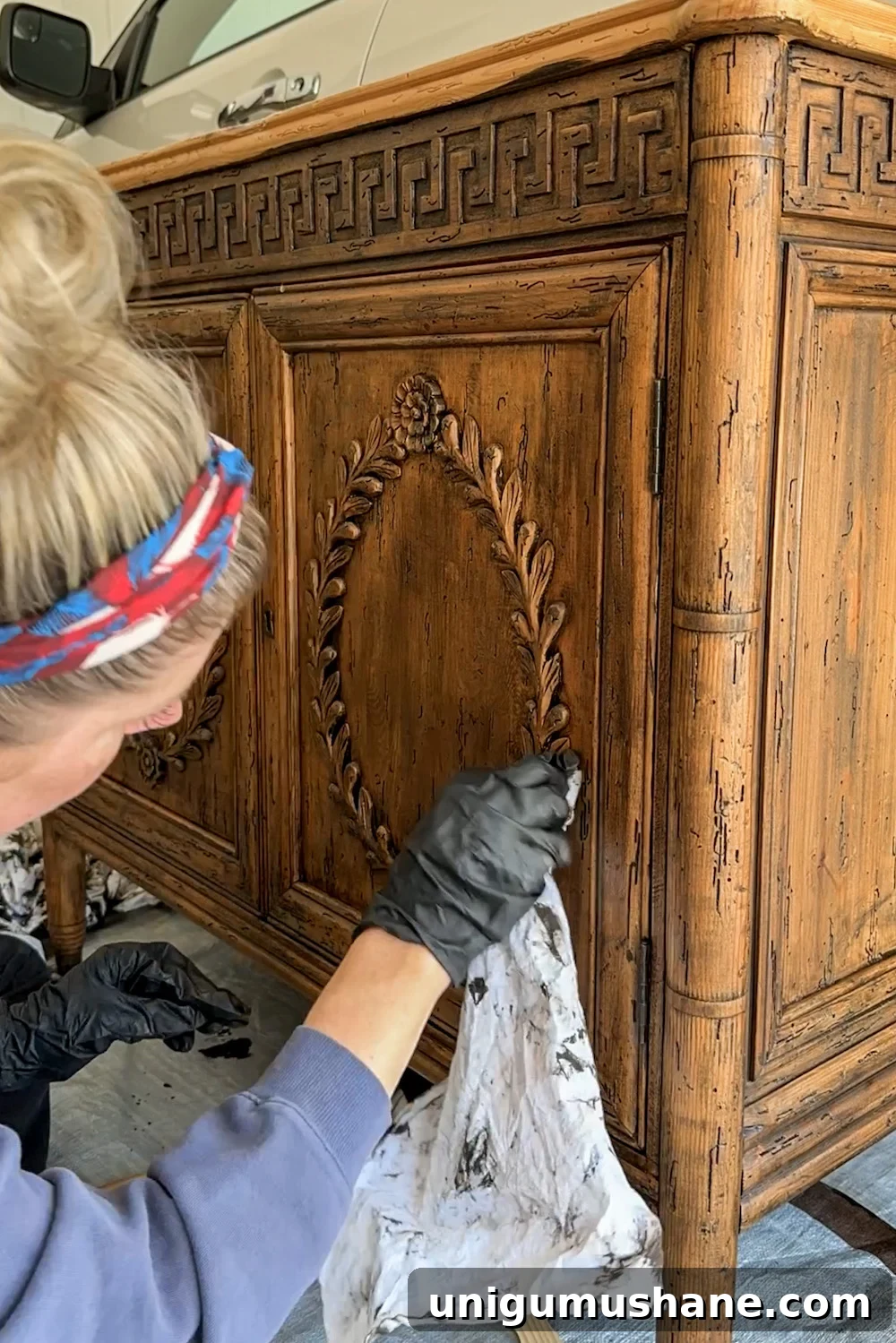
Brush a generous coat onto the section, wait 2–3 minutes to allow the pigment to penetrate the surface, then wipe off the excess with a clean, lint-free rag. Wipe along the grain and buff until you reach the desired look. Repeat section by section until the piece is covered.
Step 5 – Apply a Second Coat (Optional)
If you want a deeper, richer tone, wait 8–10 hours and apply a second coat using the same method. Multiple thin coats build color more evenly than a single heavy coat.
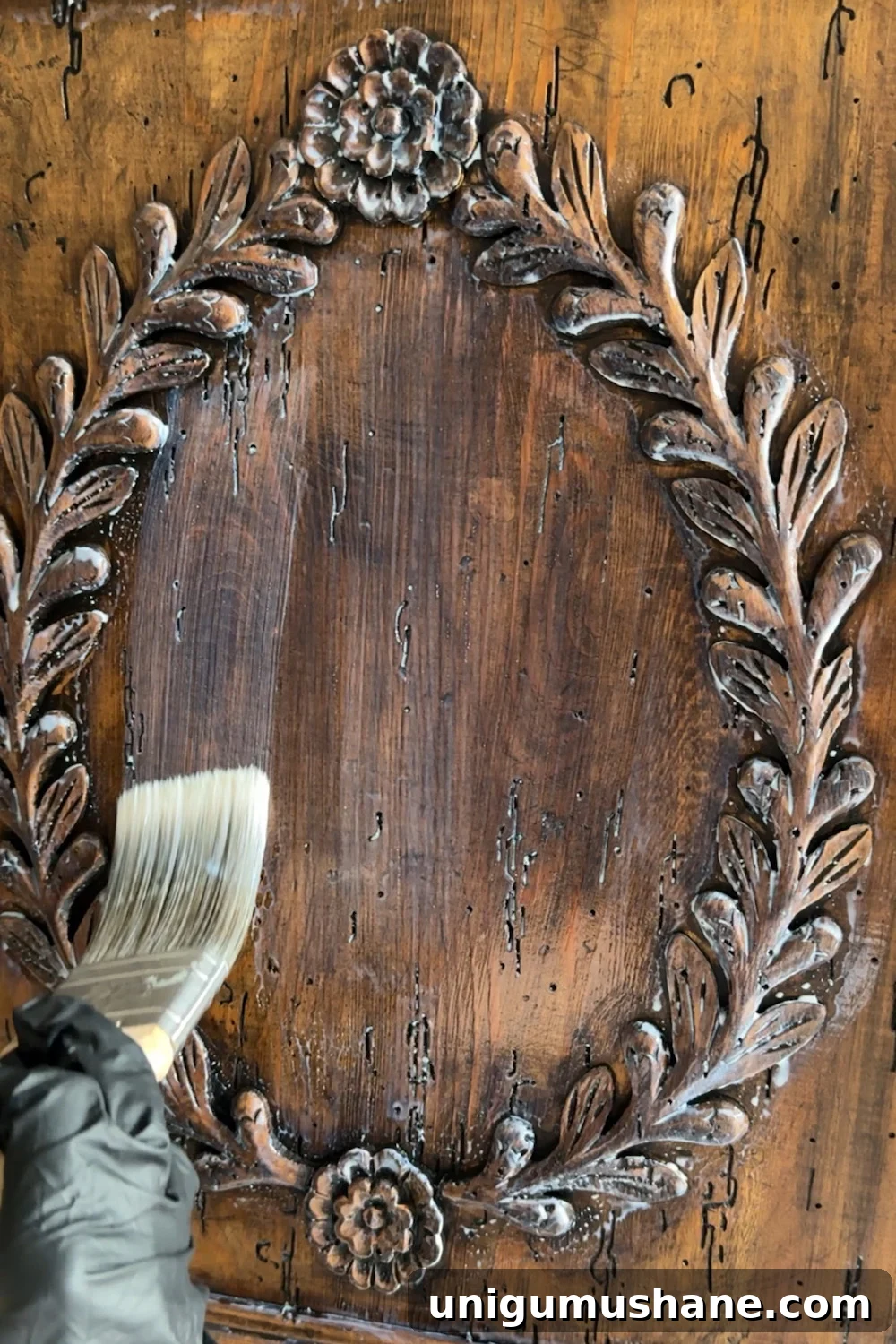
Step 6 – Seal the Finish
Allow the final coat of gel stain to cure for 24 hours, then apply a water-based polycrylic topcoat to seal and protect the surface. Use a high-quality brush and apply thin, even coats. Wait at least two hours between coats if you apply multiple layers.
Related: Burl Wood Furniture for All Budgets + Refinished Burl Dresser
And that’s it. The trickiest part is simply waiting for each coat to dry. The Coffee gel stain I used preserved the natural wood grain while giving the cabinet a luxurious, updated look. The carved details now pop against the darker finish, and the whole piece reads more intentional and layered in our entryway.
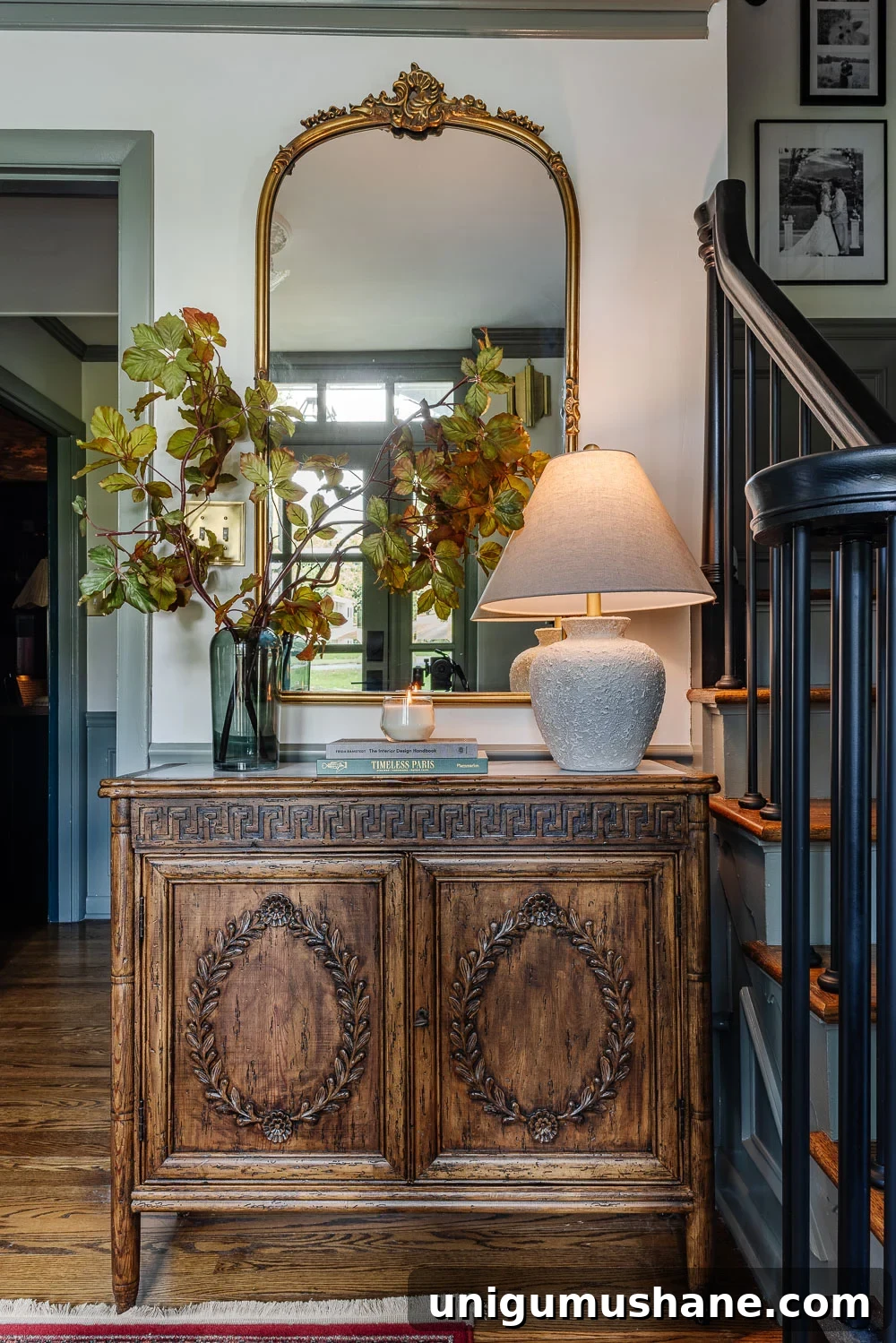
I’ll share how the rest of the foyer comes together in a future update. For now, I’m thrilled with this furniture makeover—gel stain is an easy, effective way to transform wood furniture without full stripping or extensive sanding.
Which do you prefer: the original light stain or the new dark finish? Either way, this approach gives you a reliable path to change the mood of a room by updating the wood tone.
More Wood Furniture Makeover Ideas
How to Clean Wood Furniture to Make It Look New
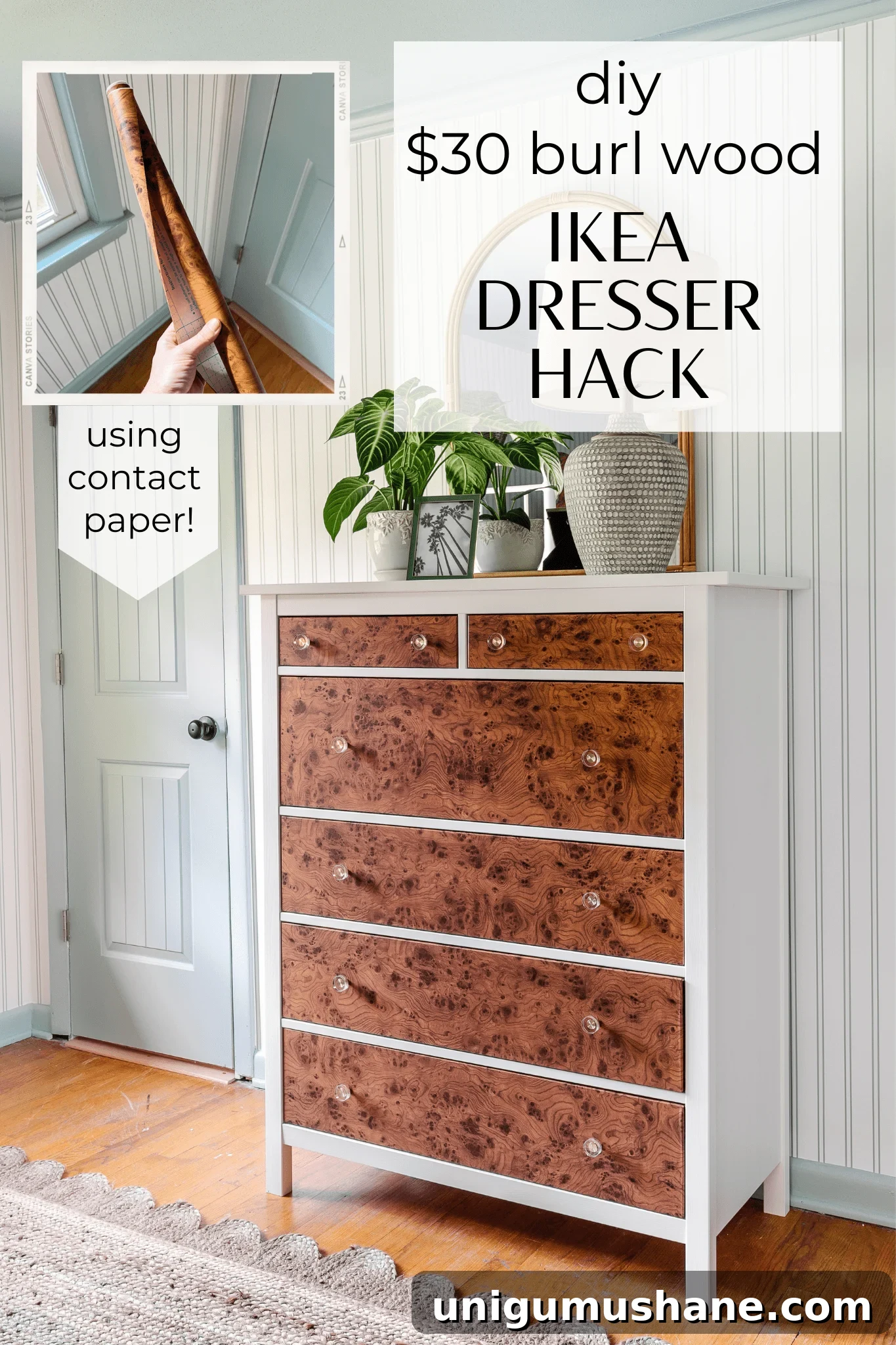
DIY Burl Wood IKEA Dresser Hack Using Contact Paper