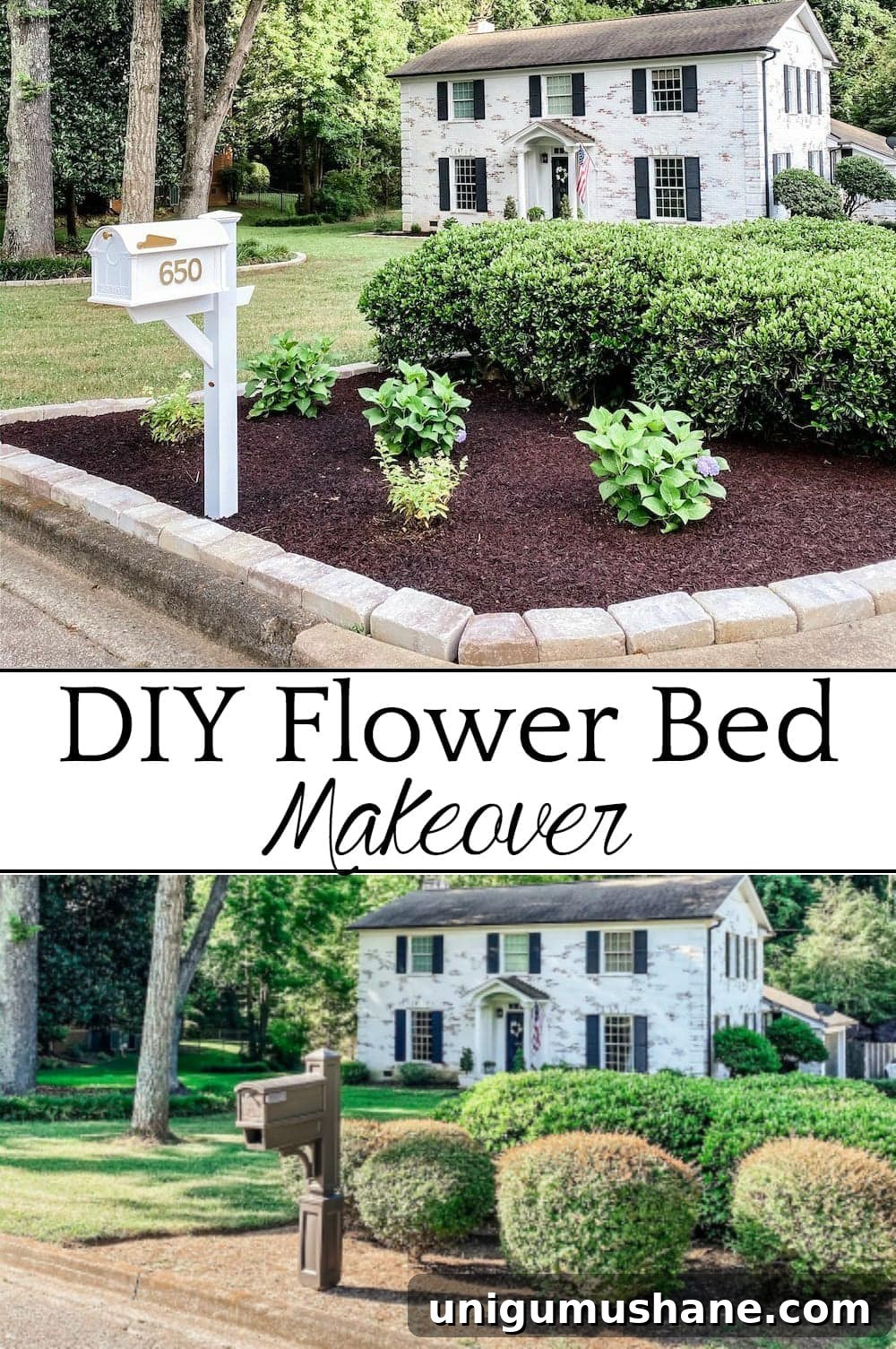
A step-by-step DIY tutorial to transform your flower beds, boost curb appeal, and the best tools to get the job done.
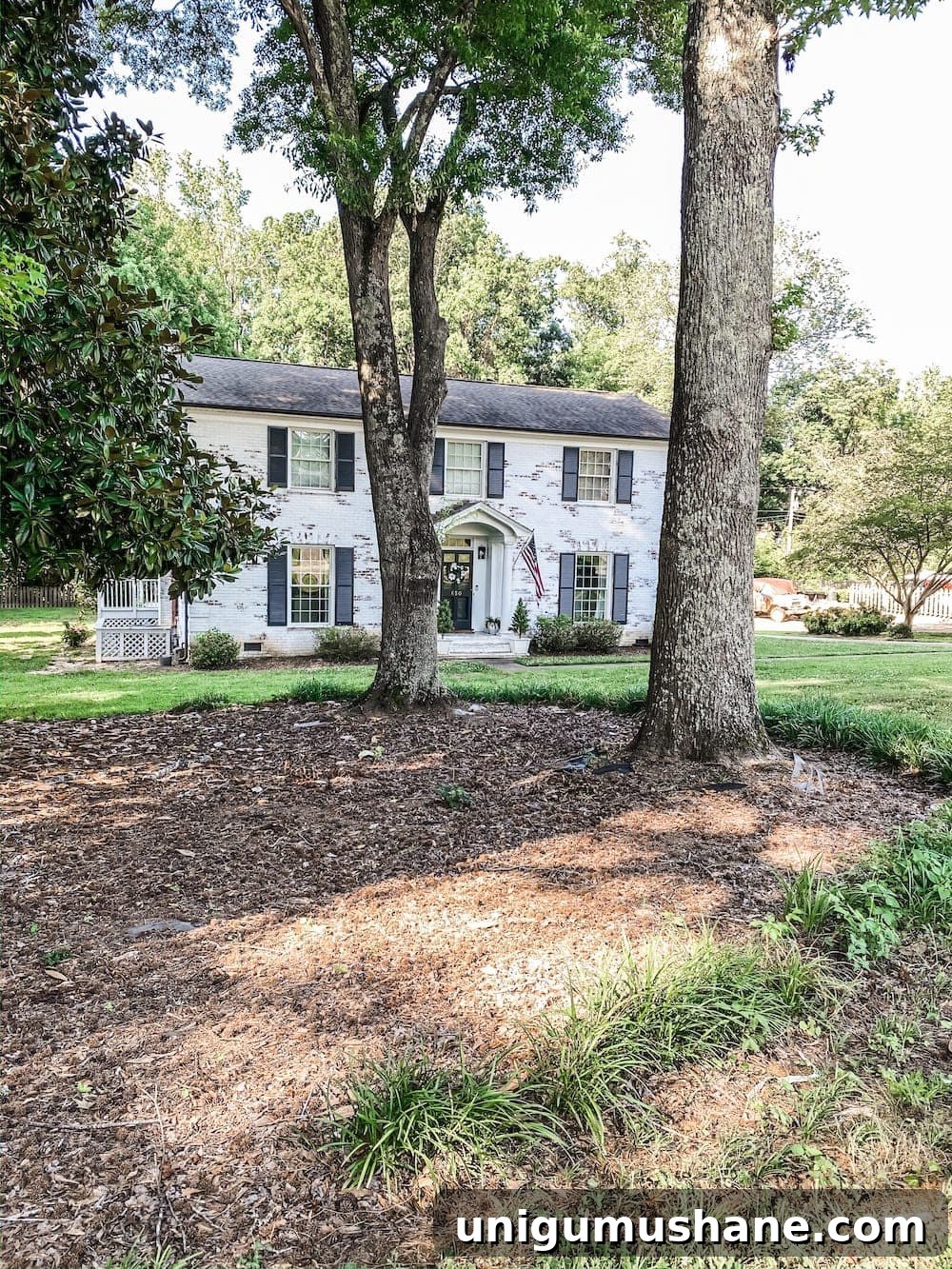
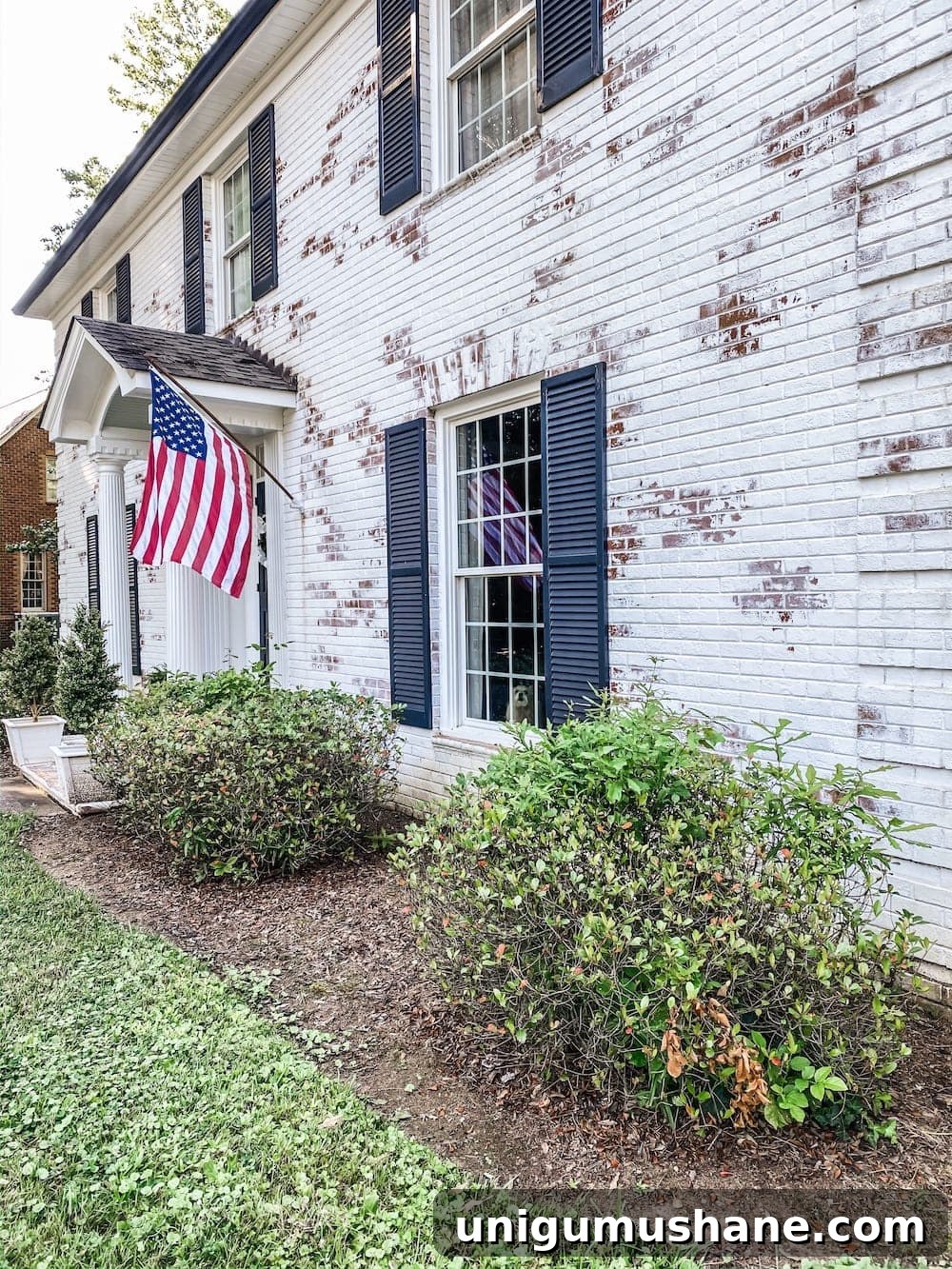
Between focusing on interior makeovers, welcoming a new baby, and working through postpartum struggles, our front yard fell to the bottom of the list. Over the past year, the lawn became overtaken with weeds and the flower beds turned scraggly—so we decided it was time to give the exterior the same attention we’ve given the inside of our home.
Over the years we’ve made a few exterior updates—the limewashed brick, removing dead trees and overgrown brush, and brightening the front porch—but the flower beds were a project we kept putting off. After one particularly frustrating season of fighting weeds, we finally committed to a full refresh.
We tackled the project over a few days and used several helpful tools and techniques that made the work much easier. I’m so pleased with the results—read on for the complete step-by-step process and the supplies we used.
Supplies Used:
- Tape measure
- White spray paint (to mark beds)
- STIHL Yard Boss multi-tool
- STIHL BK-MM Bolo Tines cultivator attachment
- STIHL FC-MM bed edger attachment
- STIHL MM wheel kit
- STIHL MS 171 16 in. gas chainsaw
- Landscape fabric
- Garden staples
- Utility knife
- Brown rubber mulch
- Edger stones
- Woodcutter chaps
- Work gloves, safety glasses, and hearing protection
- Shrubs and plants (we used boxwoods, azaleas, hydrangeas, camellias, and primroses)
- Garden hose
The Steps:
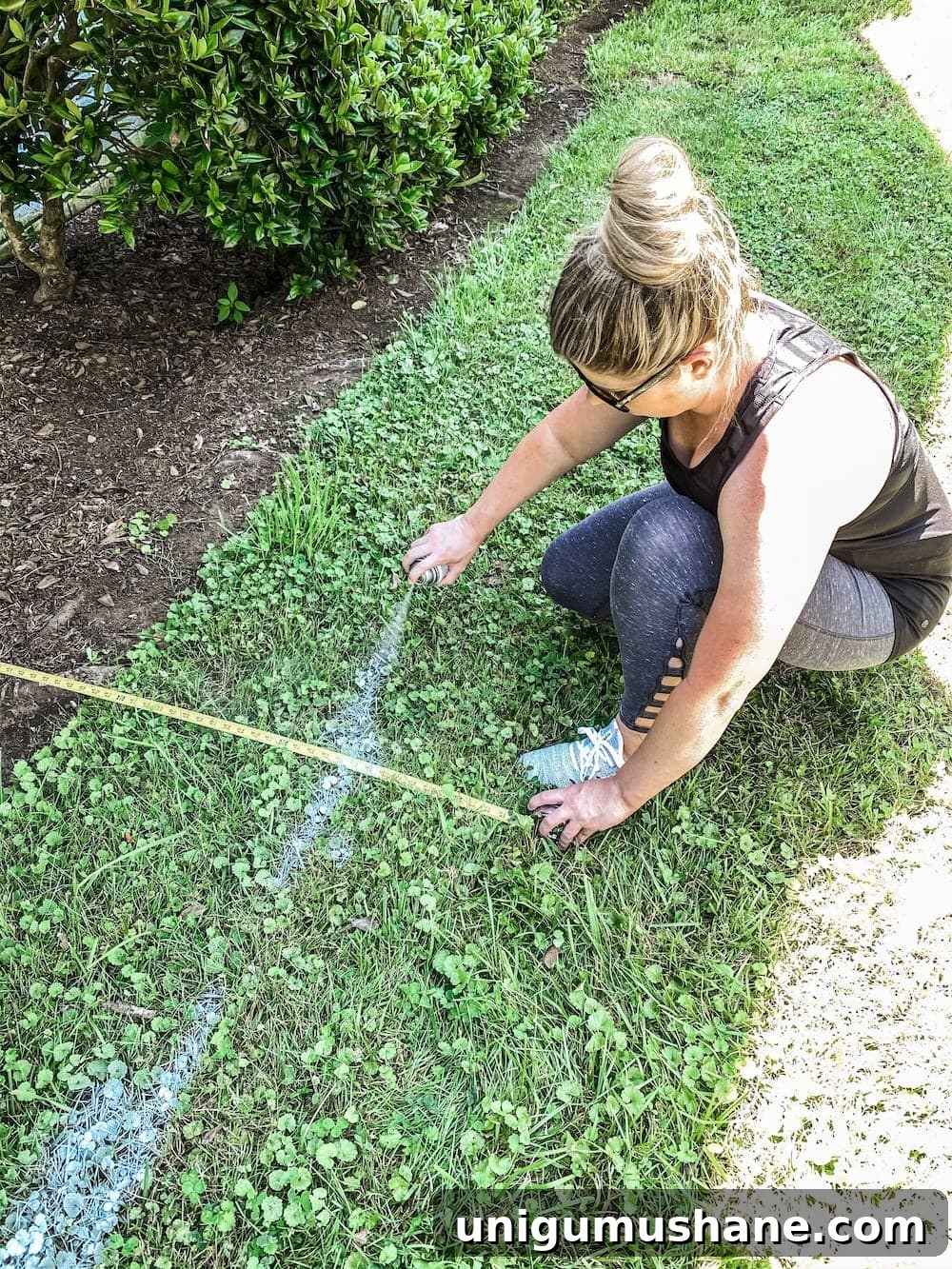
1. Plan, measure, and mark.
Start by deciding the shape and size of each bed. Measure the area and mark the edges with white spray paint so you have a clear guide for removal and edging. Proper planning saves time and keeps the final layout balanced.
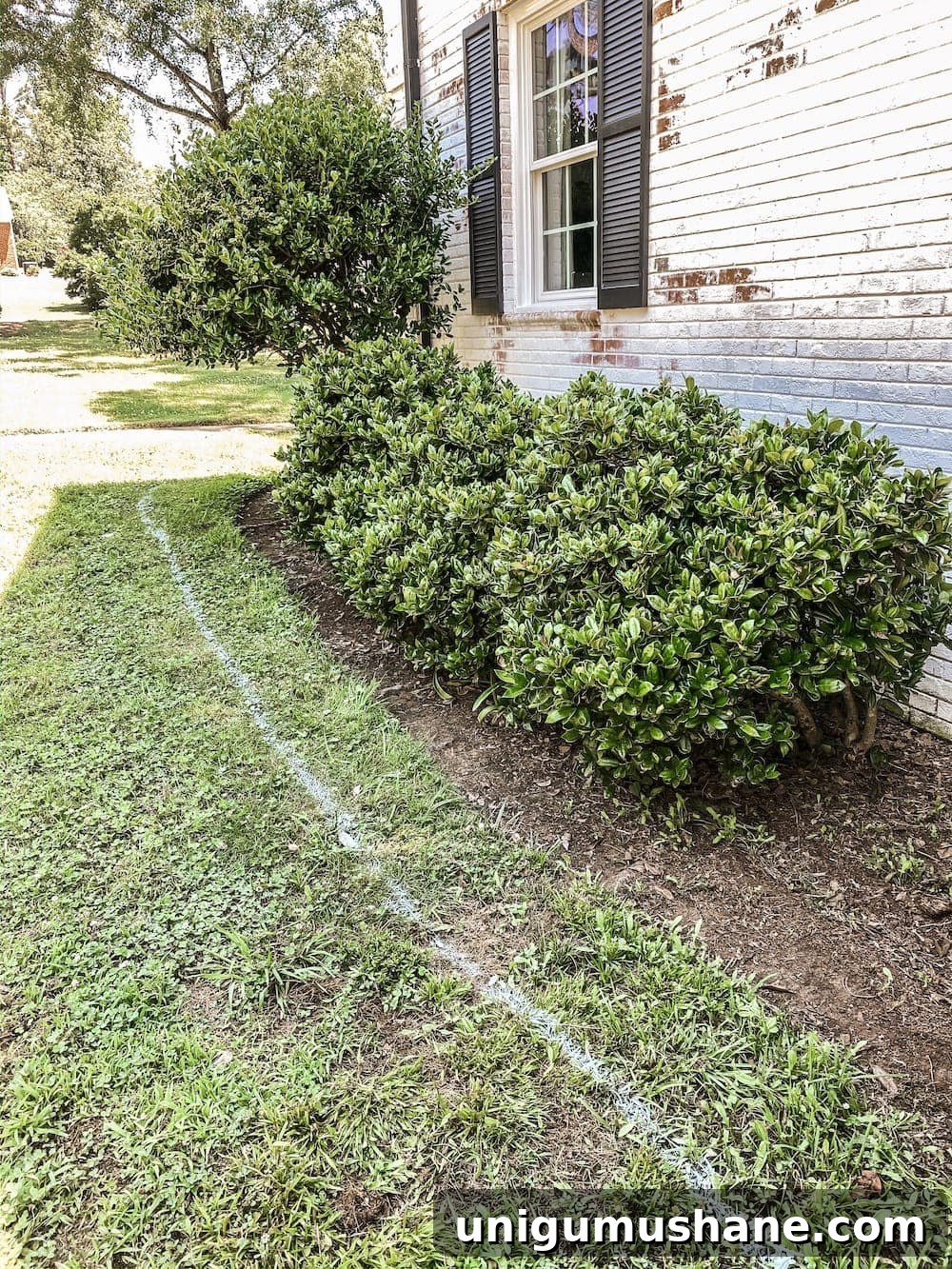
2. Demo and remove old growth.
Use a chainsaw for large shrubs or woody growth that need to be broken down before removal. Dig out as much of the roots as possible with a shovel—any remaining roots can regrow. Trim low branches and tidy the surrounding areas as you go.
3. Edge the beds.
Once the unwanted plants are removed, create crisp edges along your spray-painted lines. We used the STIHL Yard Boss with the FC-MM bed edger attachment and the MM wheel kit to follow the marked outline precisely. Clean, defined edges give flower beds a professional look.
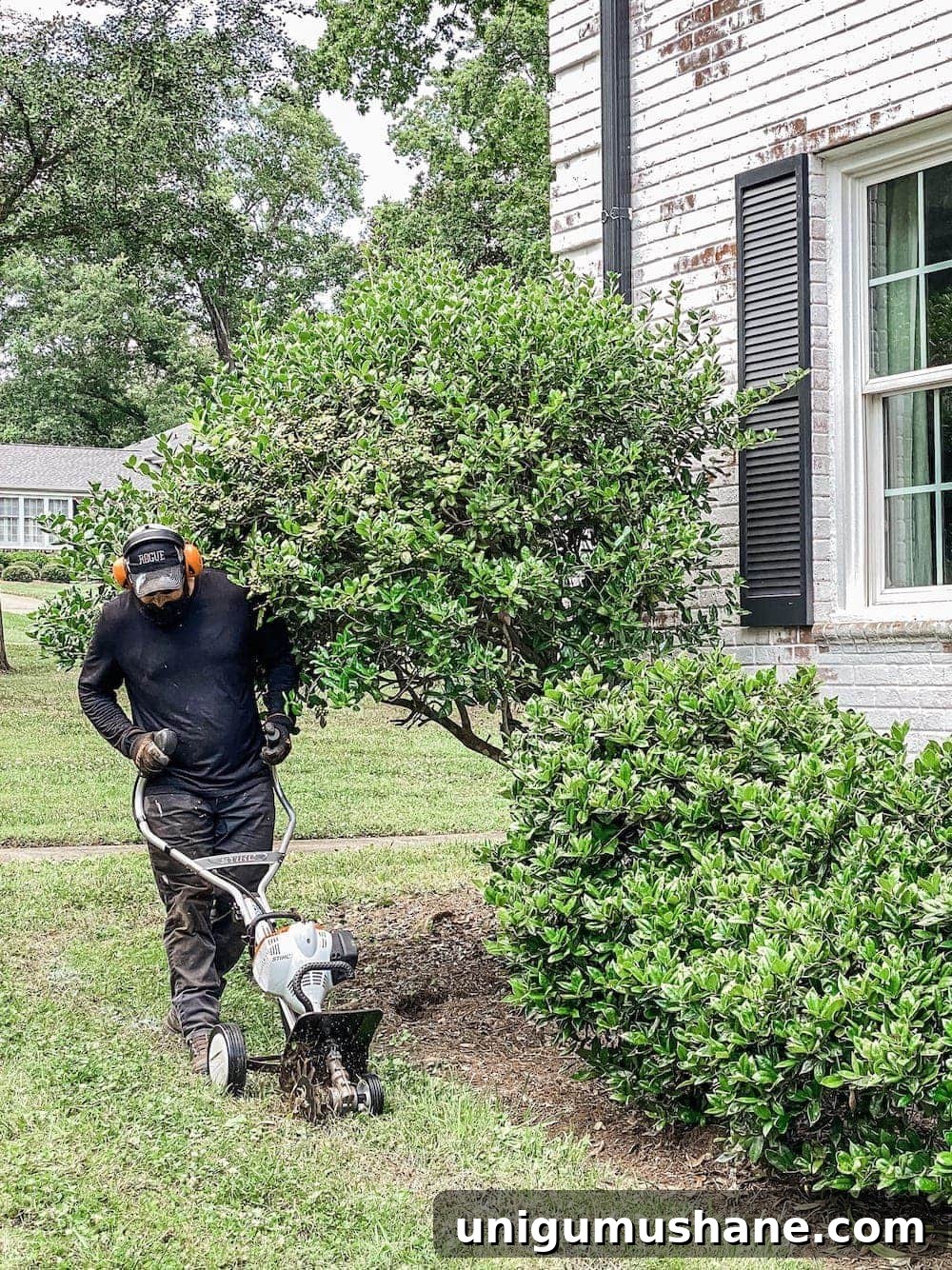
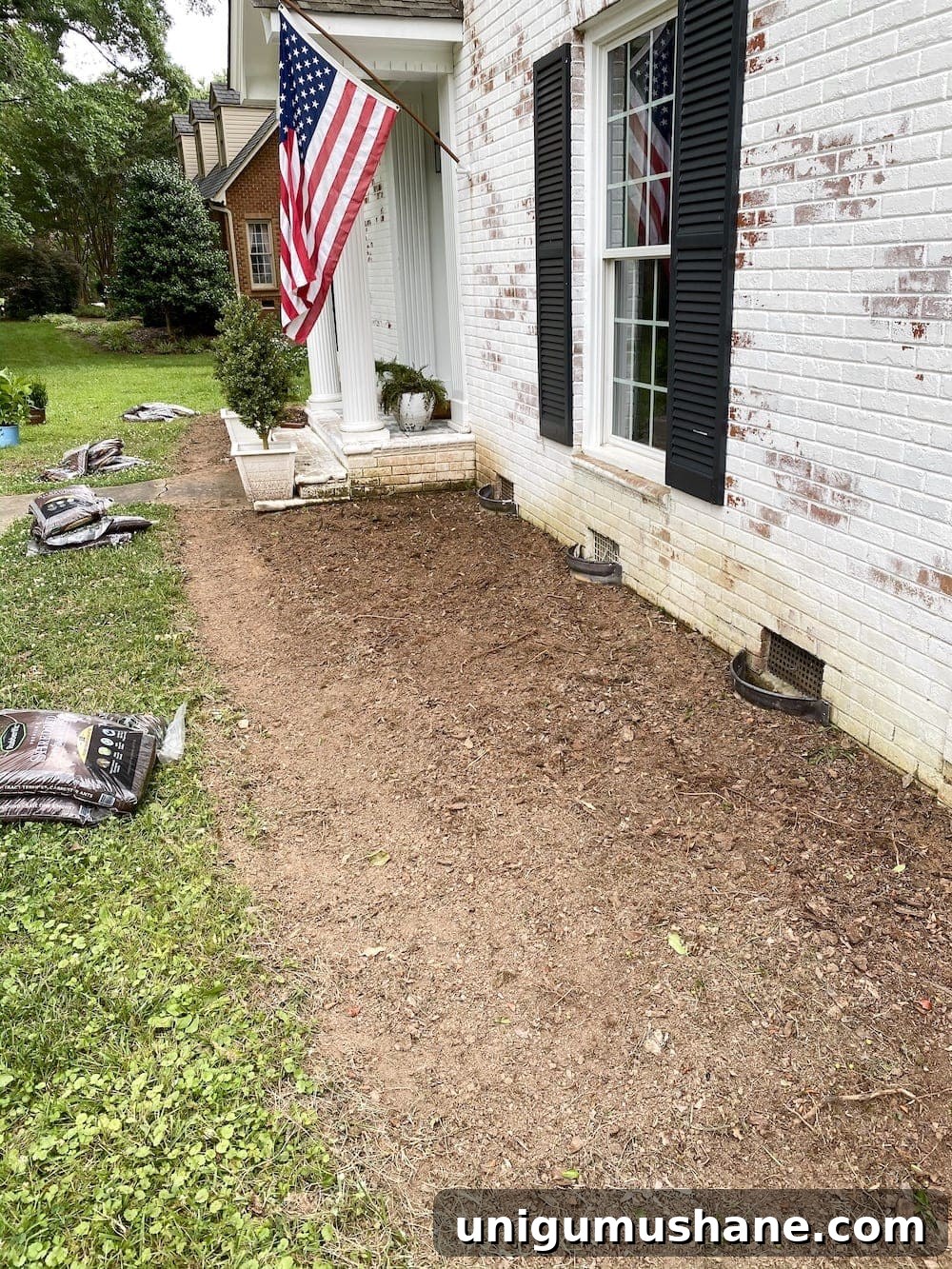
4. Till the soil.
To loosen compacted soil and mix in organic matter if needed, switch to a cultivator attachment (we used the Bolo Tines). Tilling breaks up hardened dirt, improves drainage, and makes planting easier. It’s surprisingly therapeutic too.
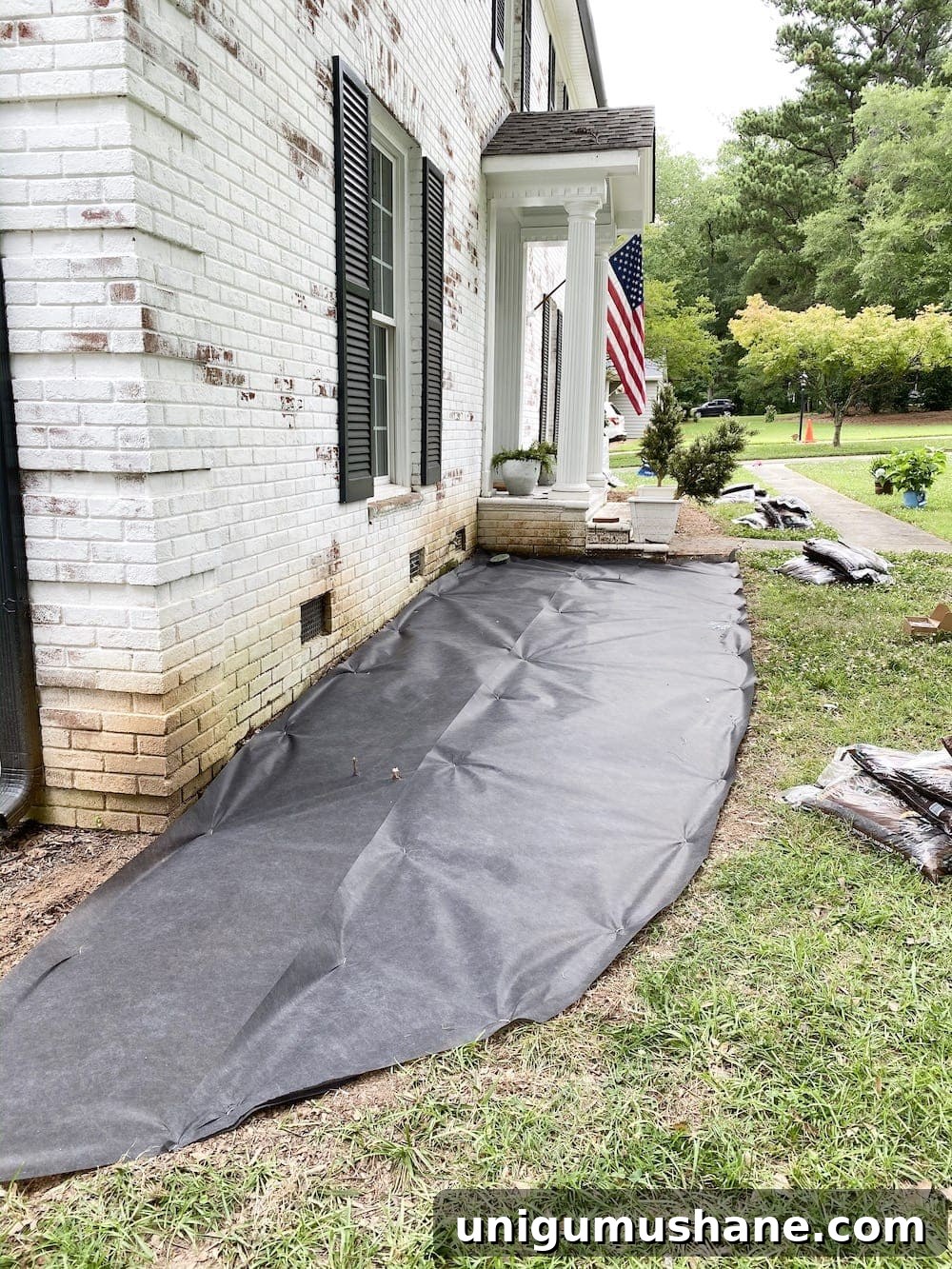
5. Lay landscape fabric.
Roll out landscape fabric across each bed and secure it with garden staples. This step suppresses weeds and prevents soil from mixing with mulch, helping maintain a clean appearance over time.
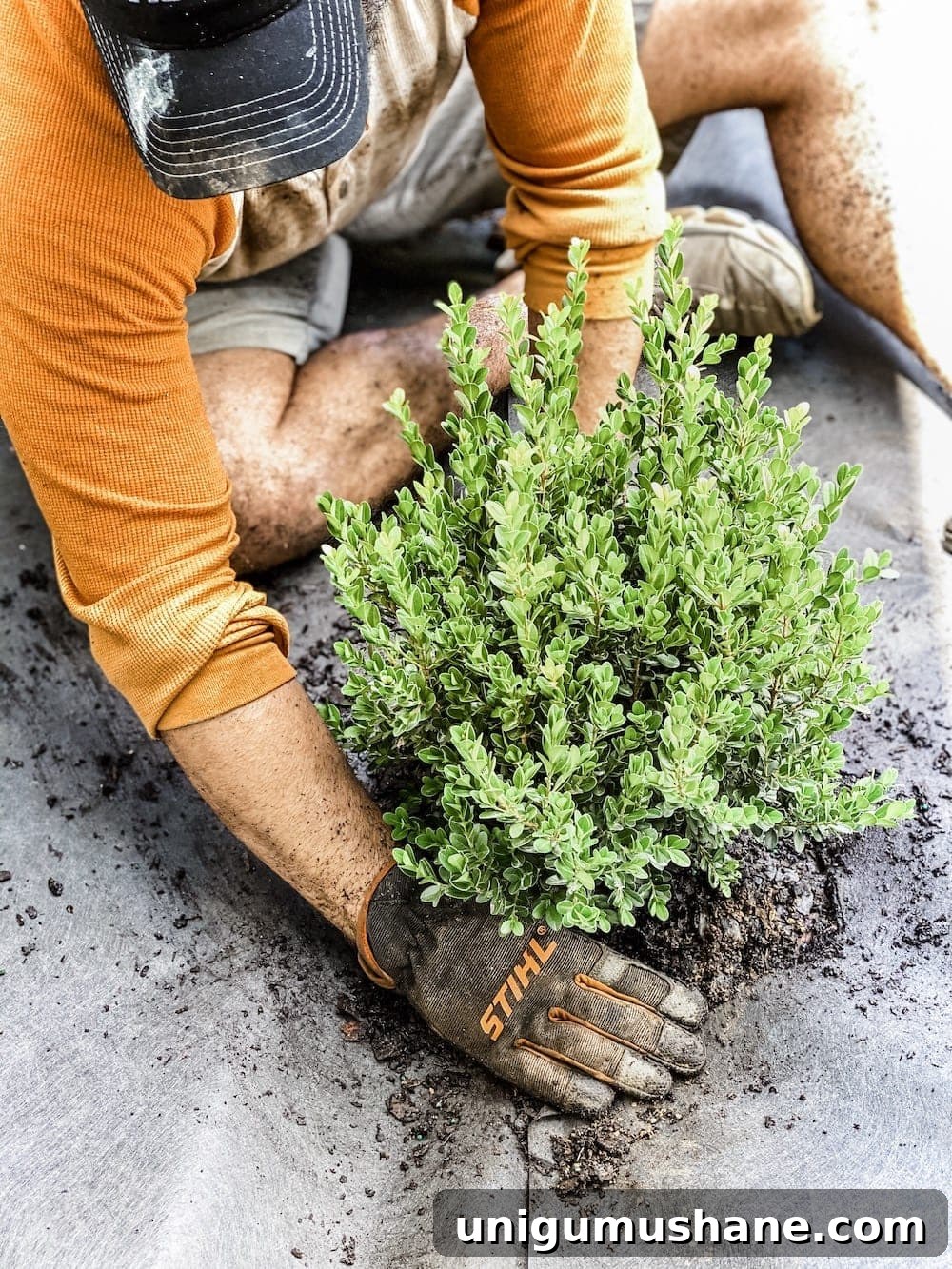
6. Plant thoughtfully.
Cut holes in the fabric with a utility knife and dig planting holes deep enough for each root ball. Research plant choices ahead of time so they match your yard’s sun exposure and soil drainage. Give shrubs ample spacing—most need 2–3 feet to mature properly.
We chose:
- Limelight Hydrangea
- Original Hydrangea
- Baby Light Hydrangea
- Baby Gem Boxwood
- Autumn Moonlight Azalea
- White Camellia
- Primrose
7. Soak the roots after planting.
Water each plant thoroughly right after planting so roots can settle and begin to establish. Spring and fall are ideal planting seasons, but we planted in summer and are monitoring moisture to help the shrubs adapt.
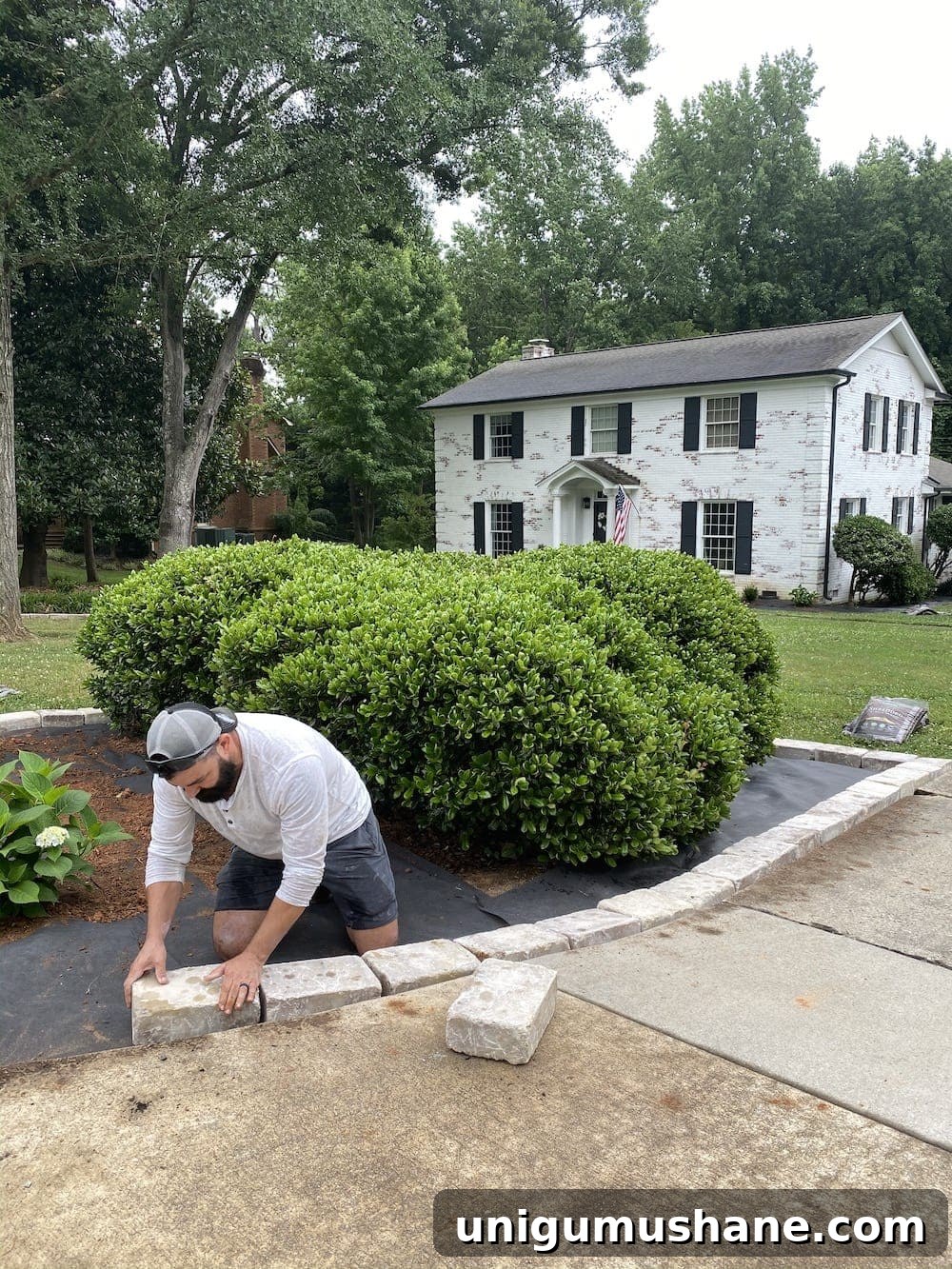
8. Lay the edger stones.
Adding stones or pavers along the edge finishes the bed and complements the house exterior. We used Tremron Munich blocks in Sand Dune to coordinate with our limewashed brick, but simpler edging strips work well too and are more budget-friendly.
9. Mulch for color and protection.
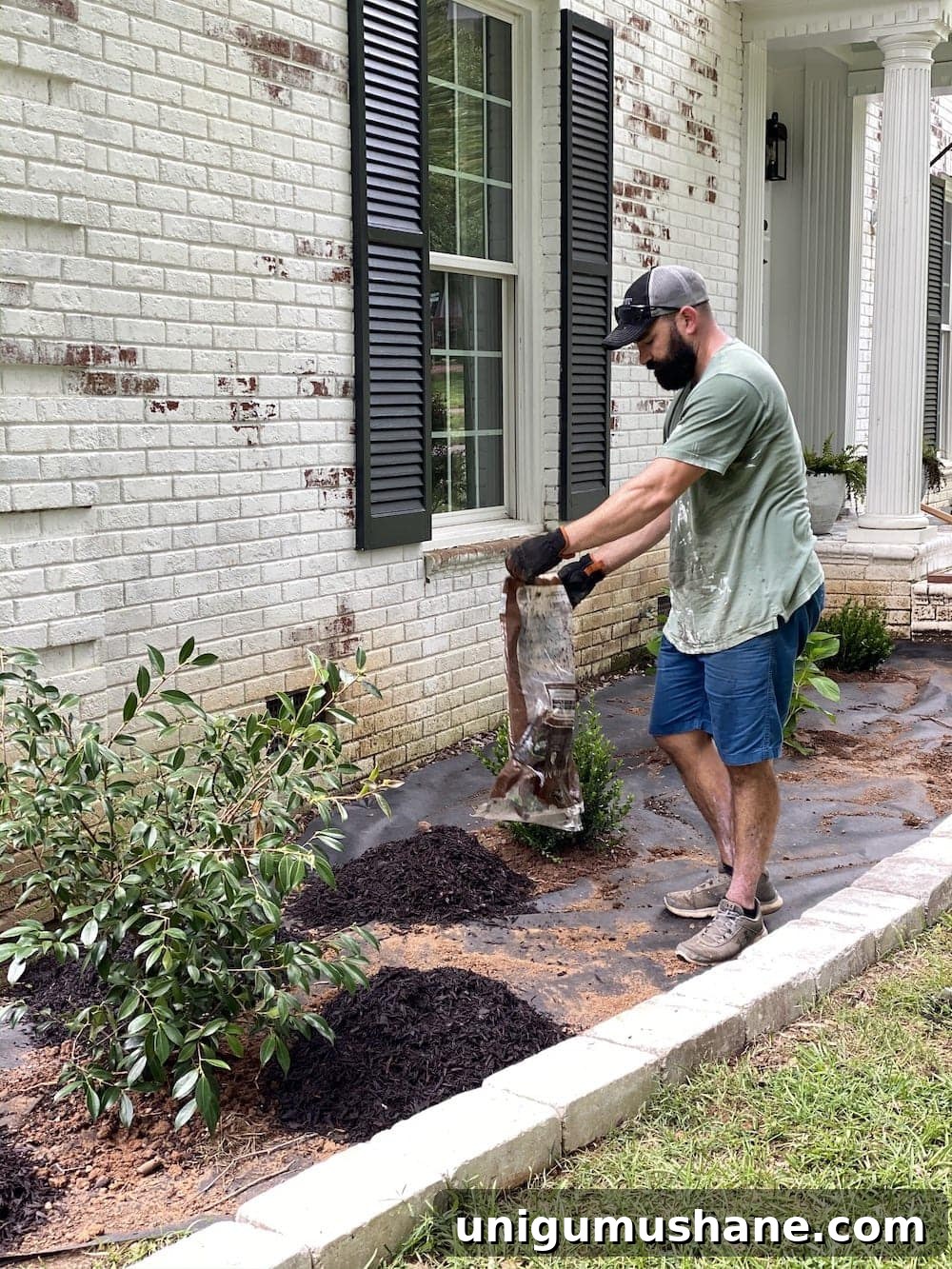
We chose brown rubber mulch because it lasts longer than wood mulch and maintains its color. Mulch helps prevent soil from splashing onto the house, reduces weed growth, and gives beds a clean, finished look.
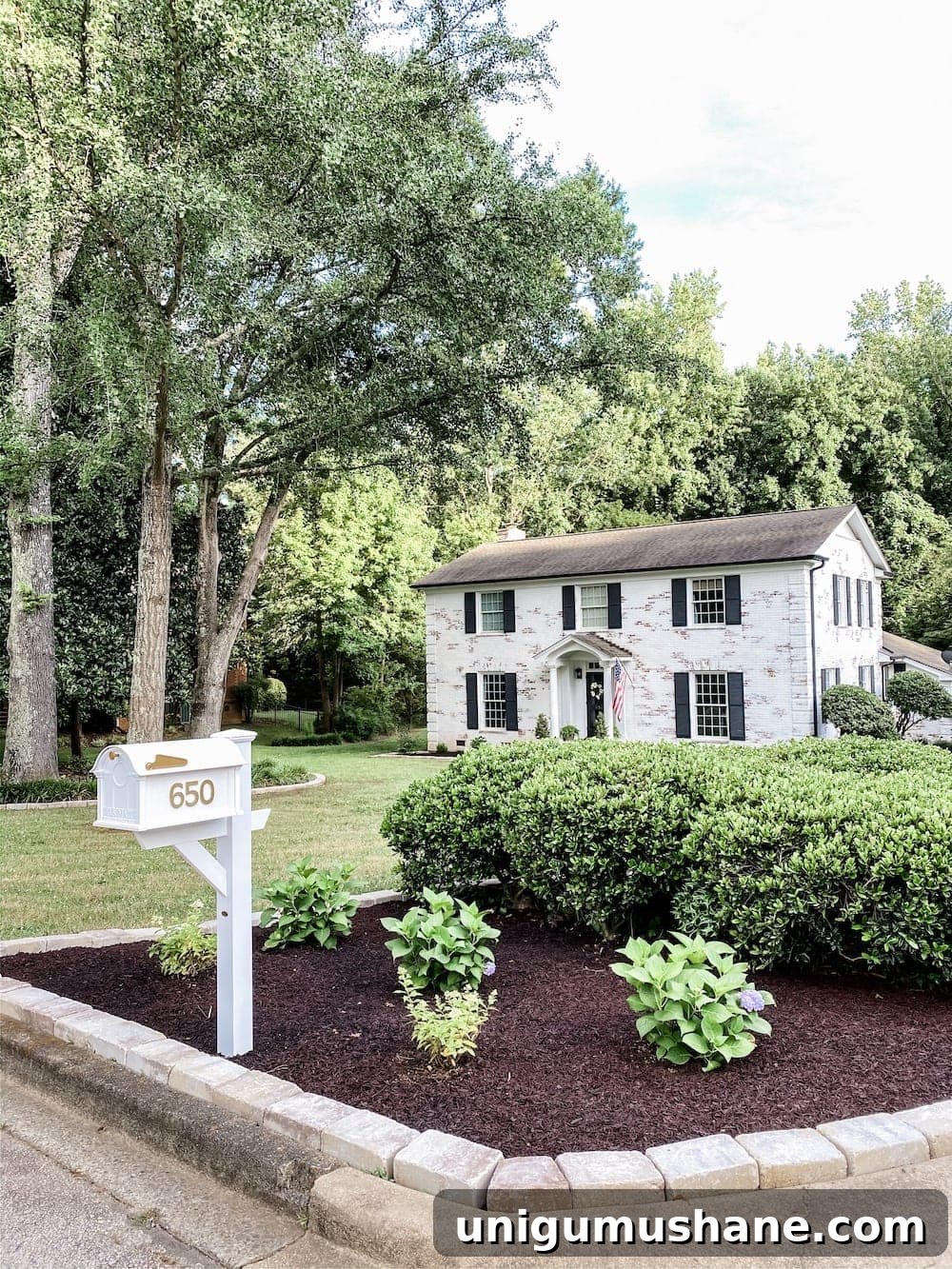
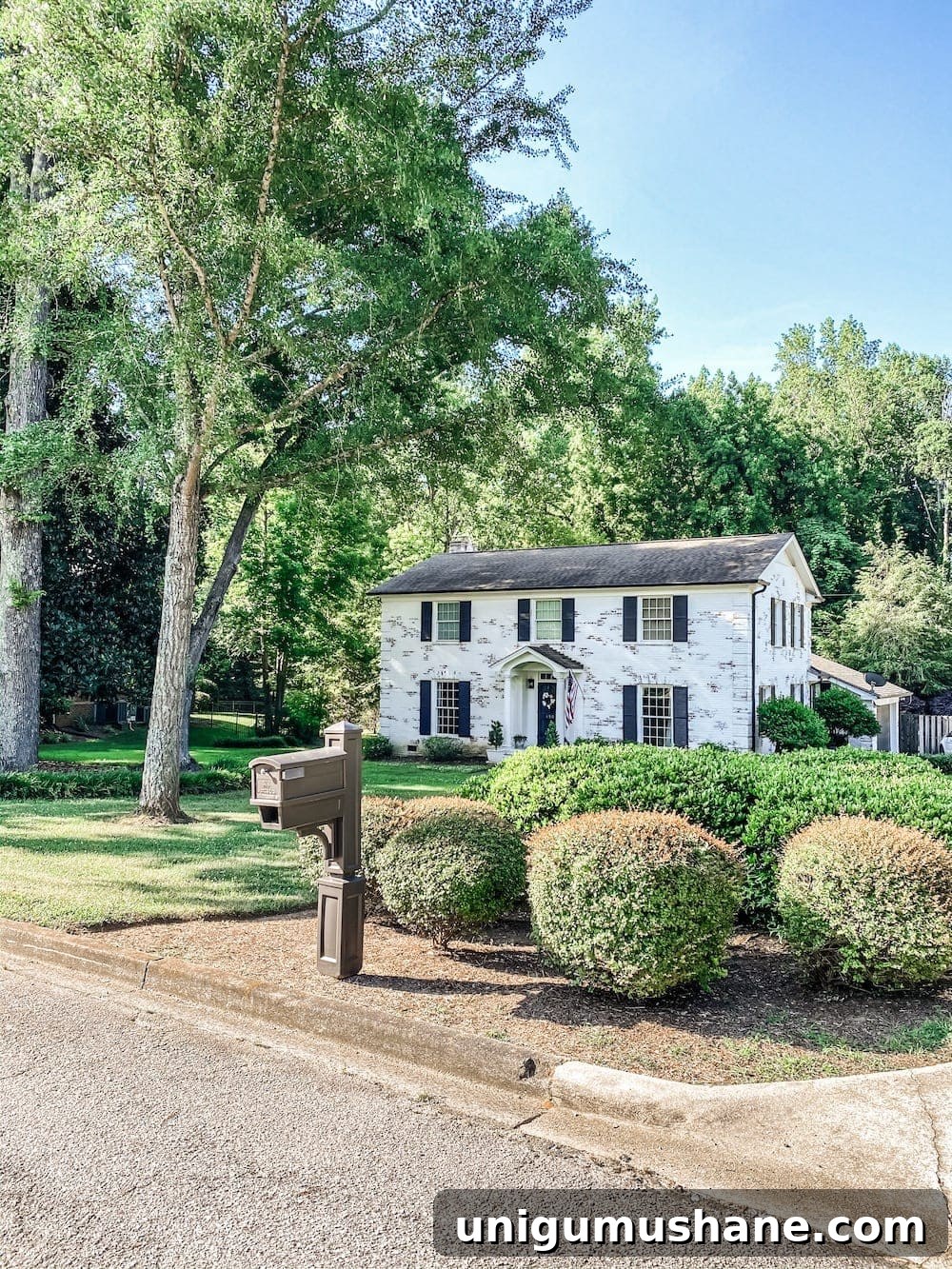
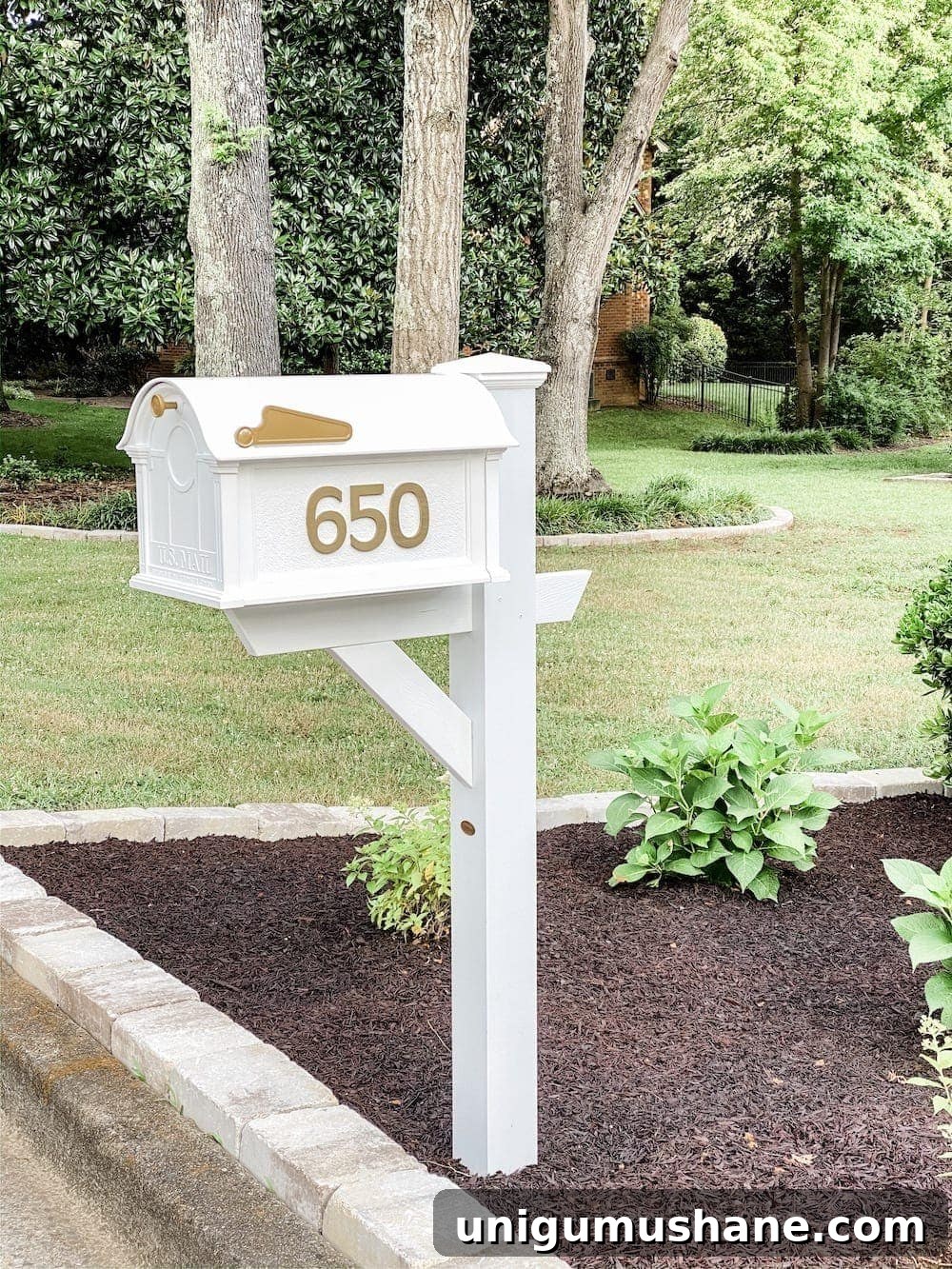
To complete the update, we also replaced a faded plastic mailbox with a cast white mailbox, which instantly lifts the curb appeal.
Before and After
The transformation is dramatic. A few days of focused work gave our front yard a fresh, tidy look that will only improve as the new shrubs fill out.
When we moved in:
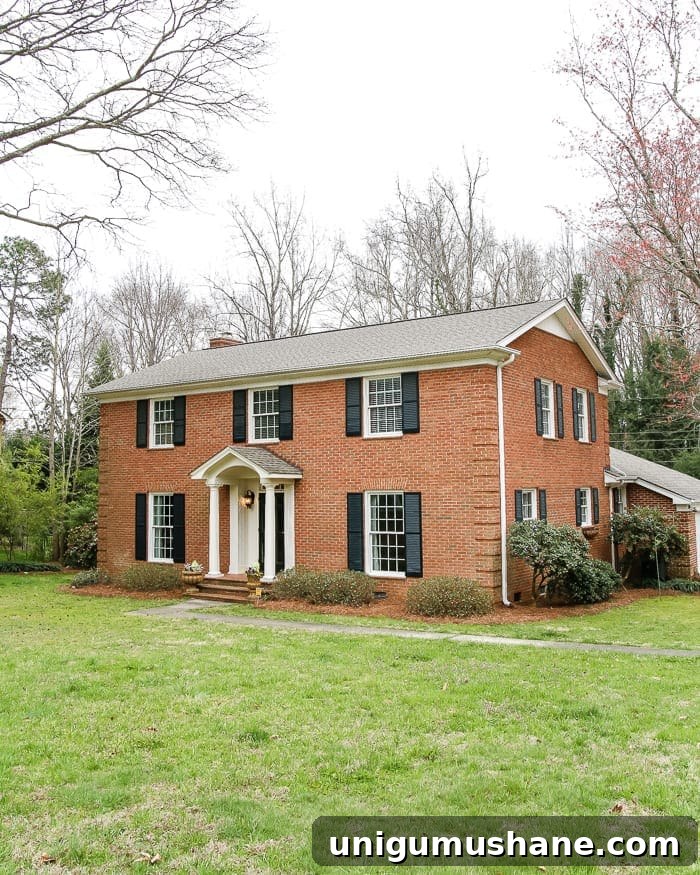
Before refreshing the beds:
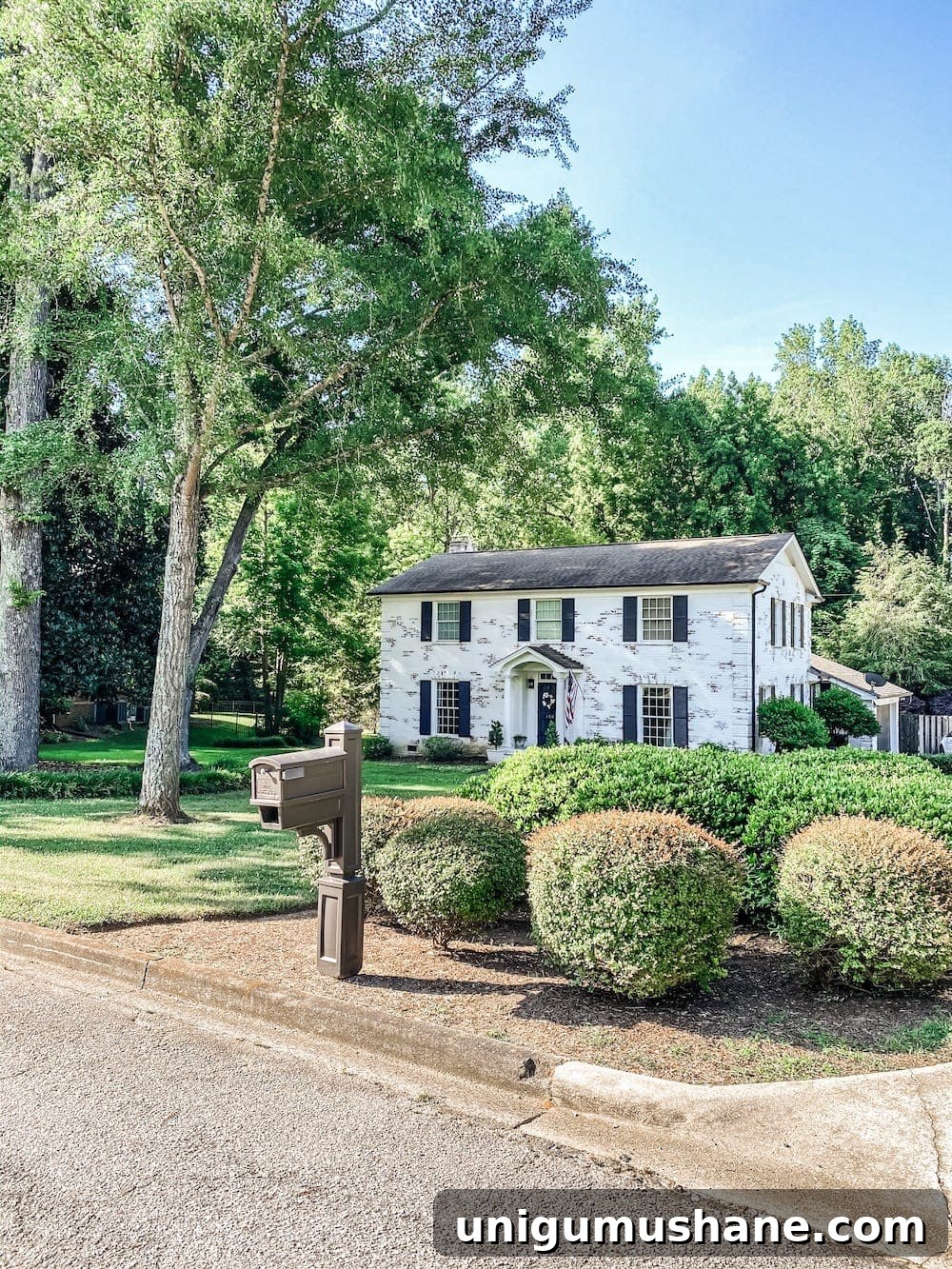
And now:
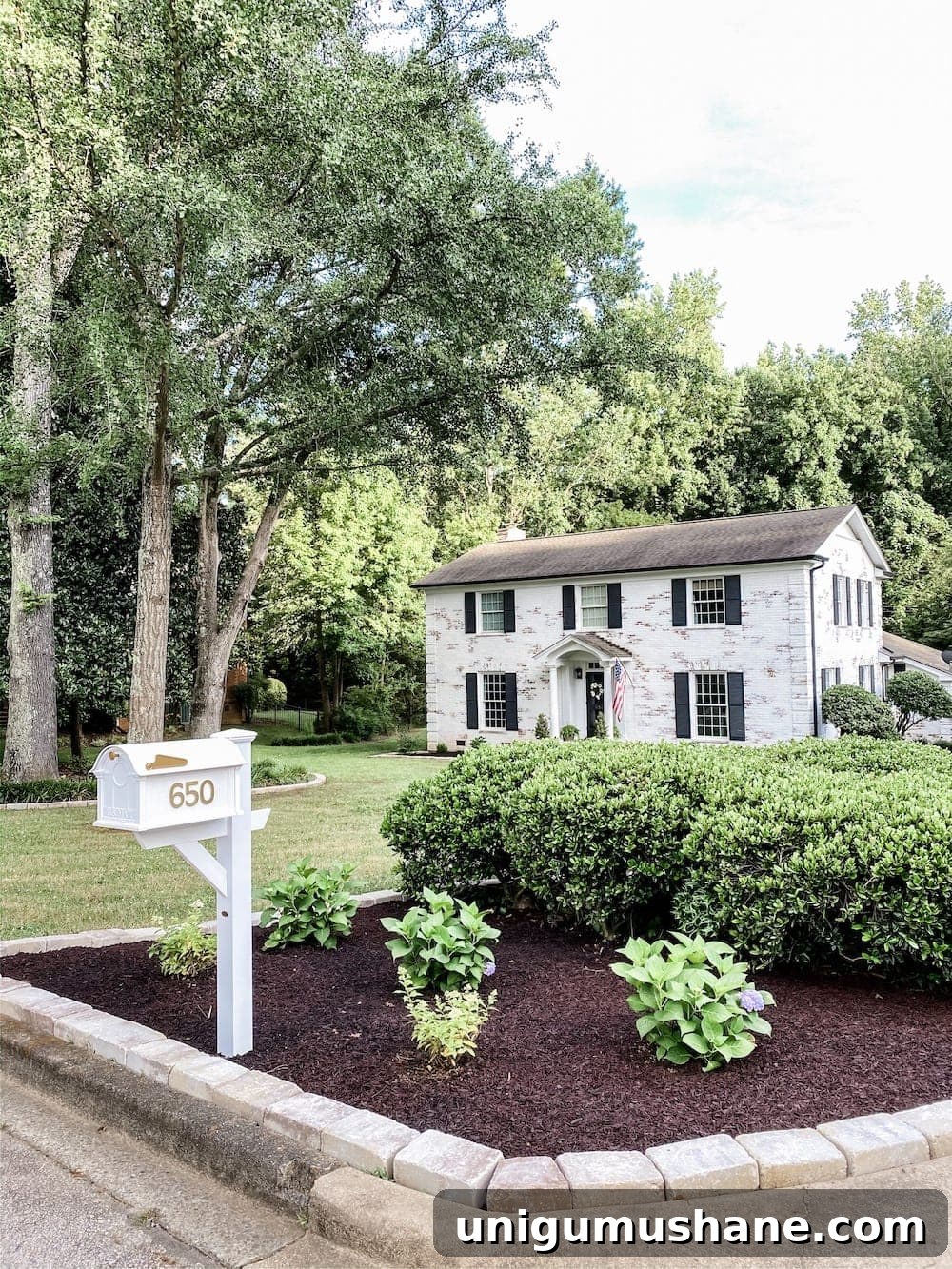
We still plan to remove two sweet gum trees that are causing issues, and later this fall we’ll de-weed, aerate, and overseed the lawn. But adding azaleas and fresh mulch already makes a huge difference.
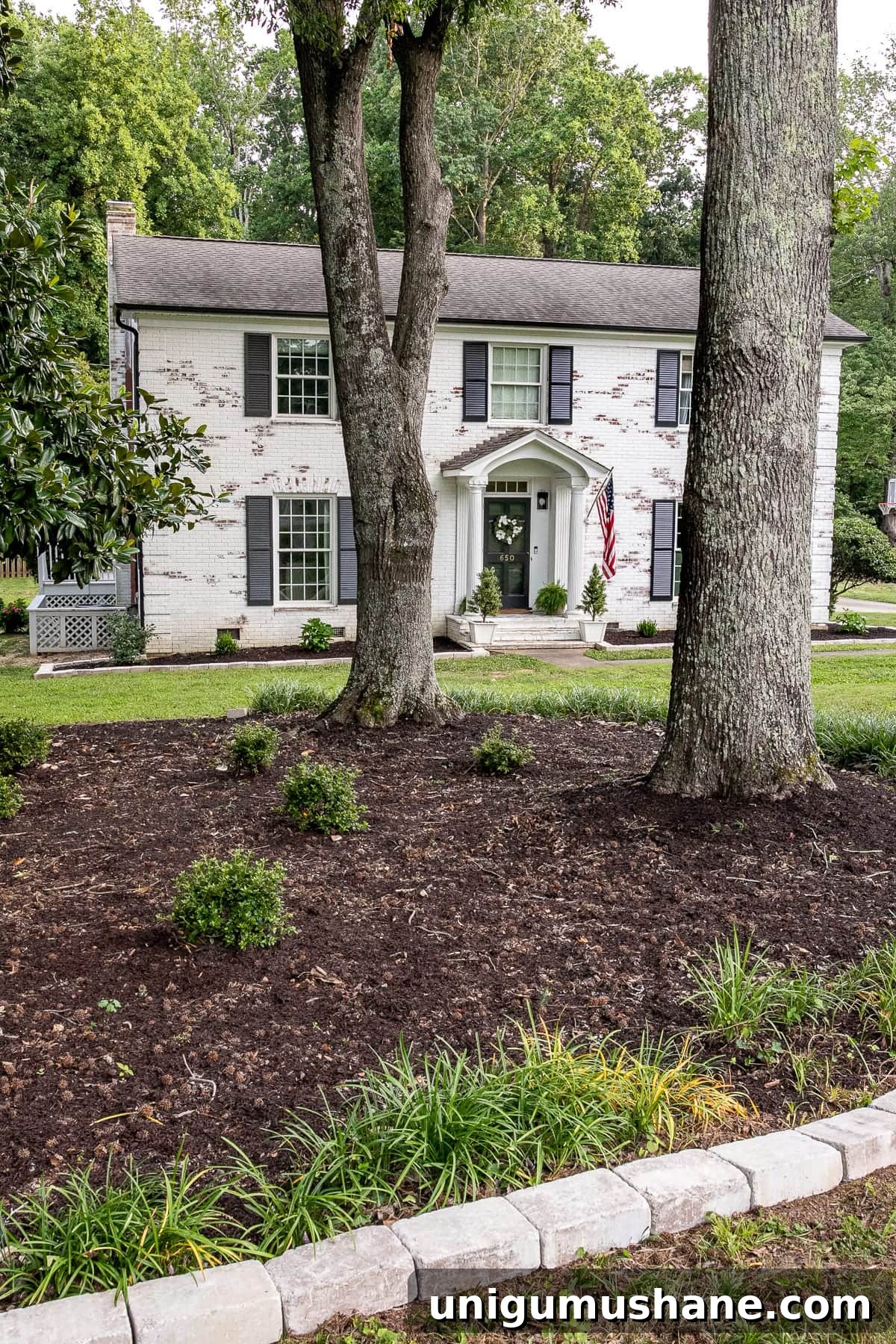
The new shrubs are understated now, but with a season or two of growth they’ll reach 3–4 feet and provide structure and privacy. We may add seasonal flowers later once the shrubs establish.
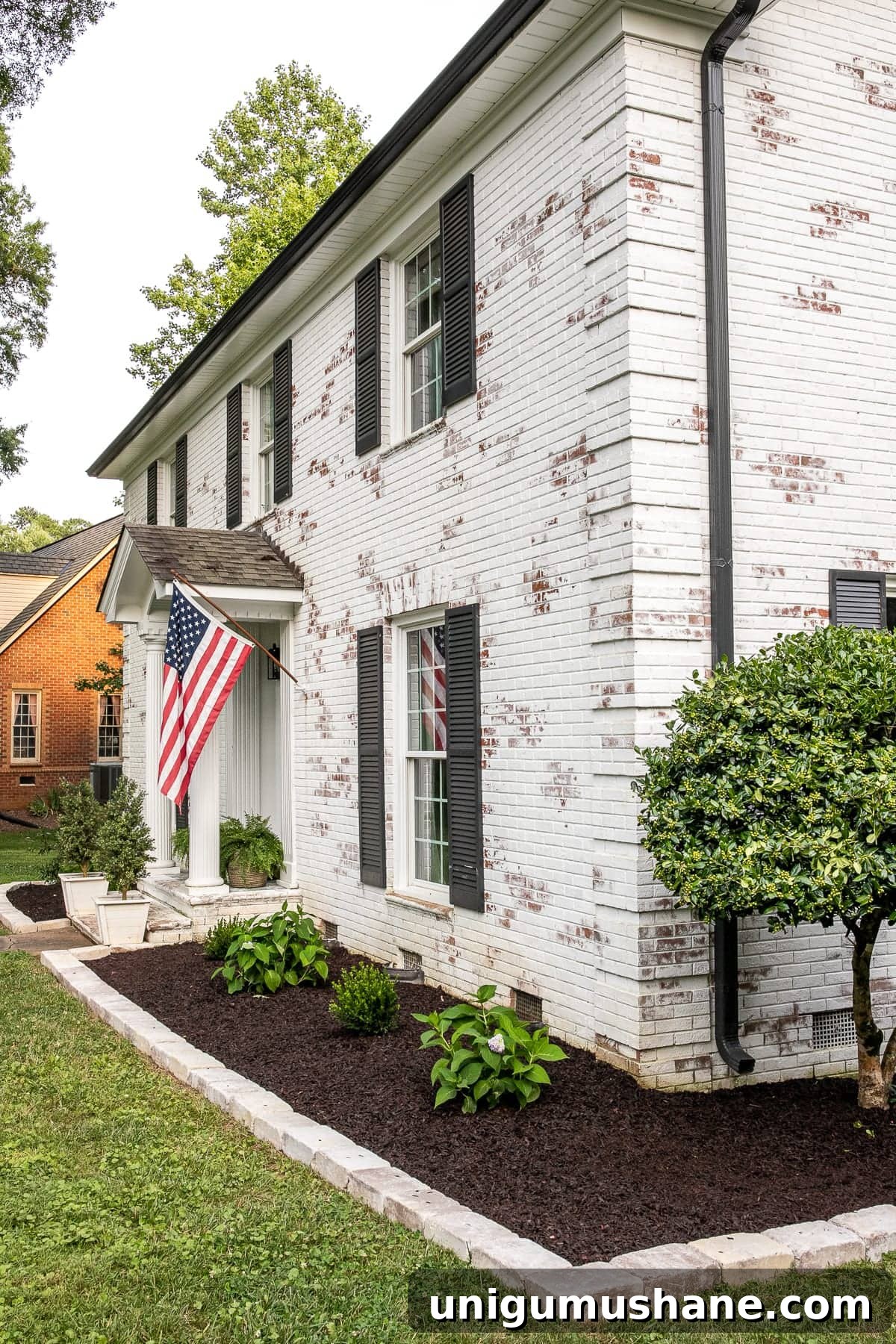
If tackling a flower bed project feels intimidating, start small and plan carefully—this project was worth every minute. It’s a relatively short-term investment of labor that pays off in long-term curb appeal and lower maintenance.
If you want to see more of our outdoor projects, you can find them in our outside projects collection.