
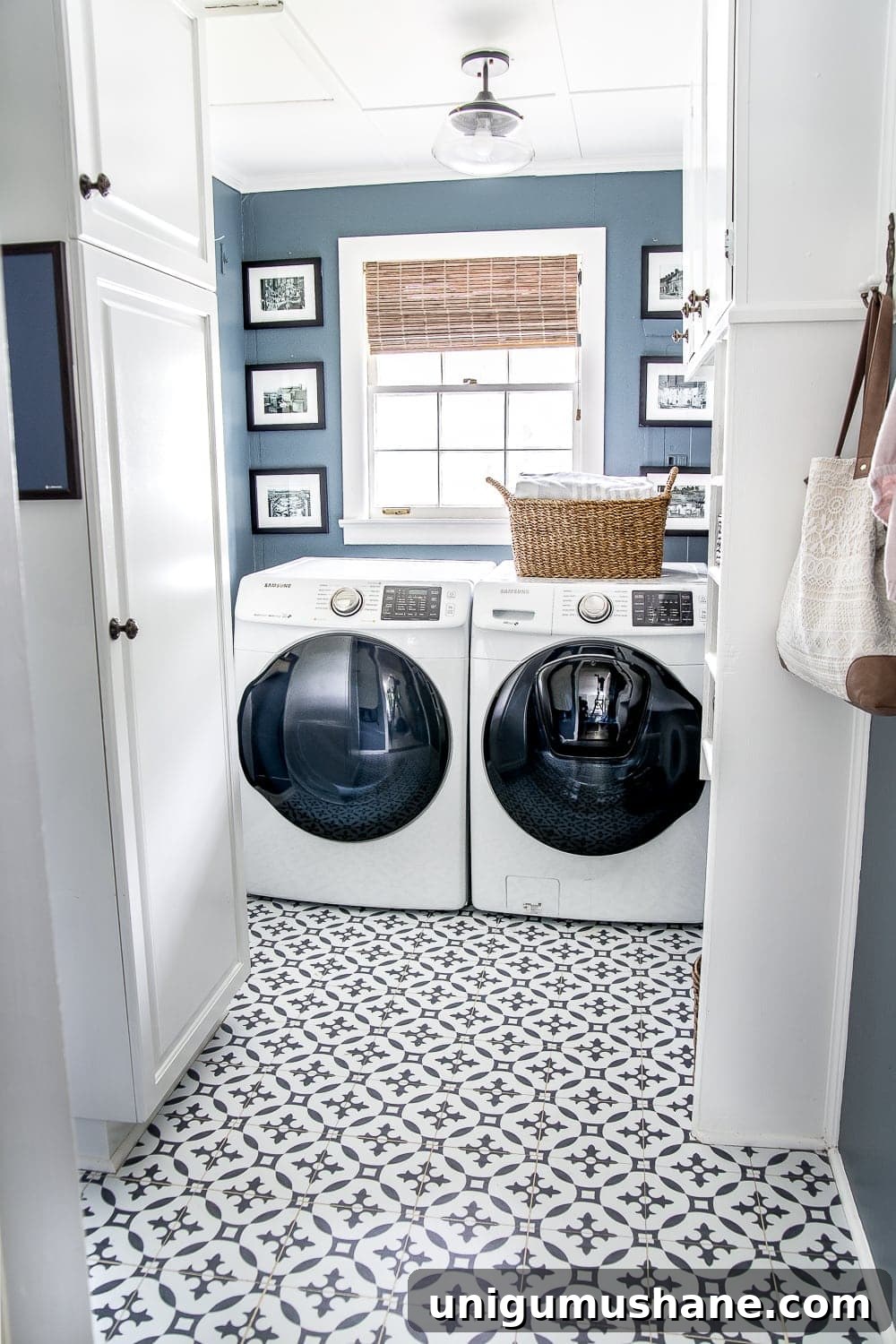
A 10 month update about the durability of vinyl tile – how it wears, how to clean it, and how to install it to get a patterned tile floor in an afternoon.
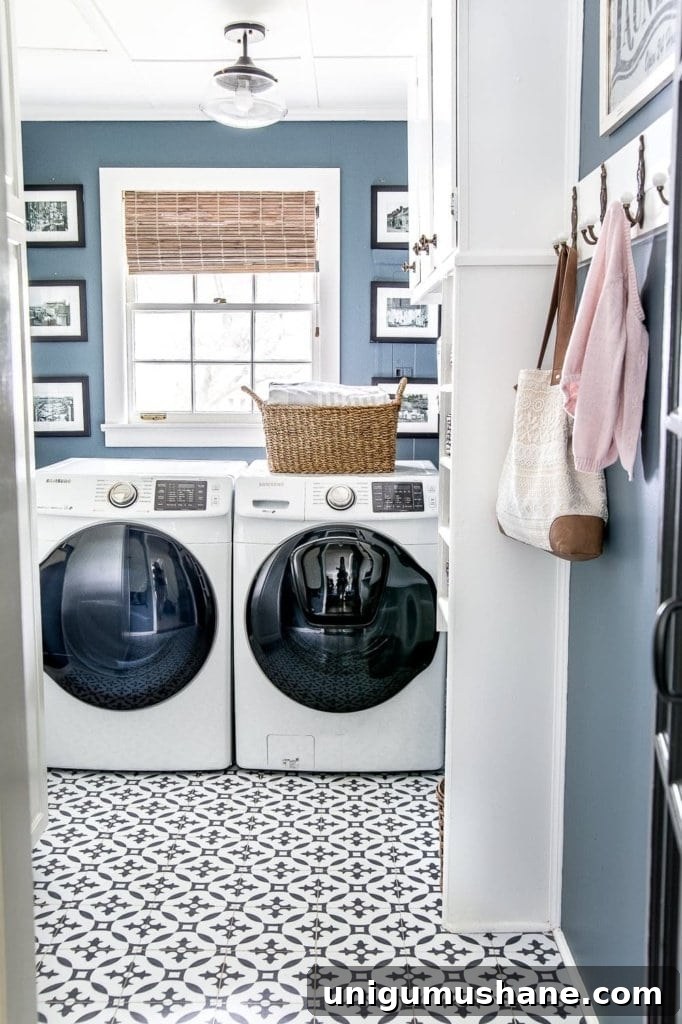
Last summer we installed a quick, temporary, and trendy solution over our worn vinyl sheet flooring, and it has become one of the most common questions I get: how is it holding up? After ten months of daily use, I can share what we’ve learned about longevity, maintenance, and why this was a smart short-term upgrade for our laundry room.
My partner Robert and I often test out budget-friendly projects to see whether they’ll stand up to real life. We’ve made similar bets before on things like concrete countertops and painted tubs, showers, and sinks, and those experiments helped inform this choice. This patterned vinyl tile has proven to be surprisingly durable and has required very little upkeep.
(Some affiliate links are provided in this post.)
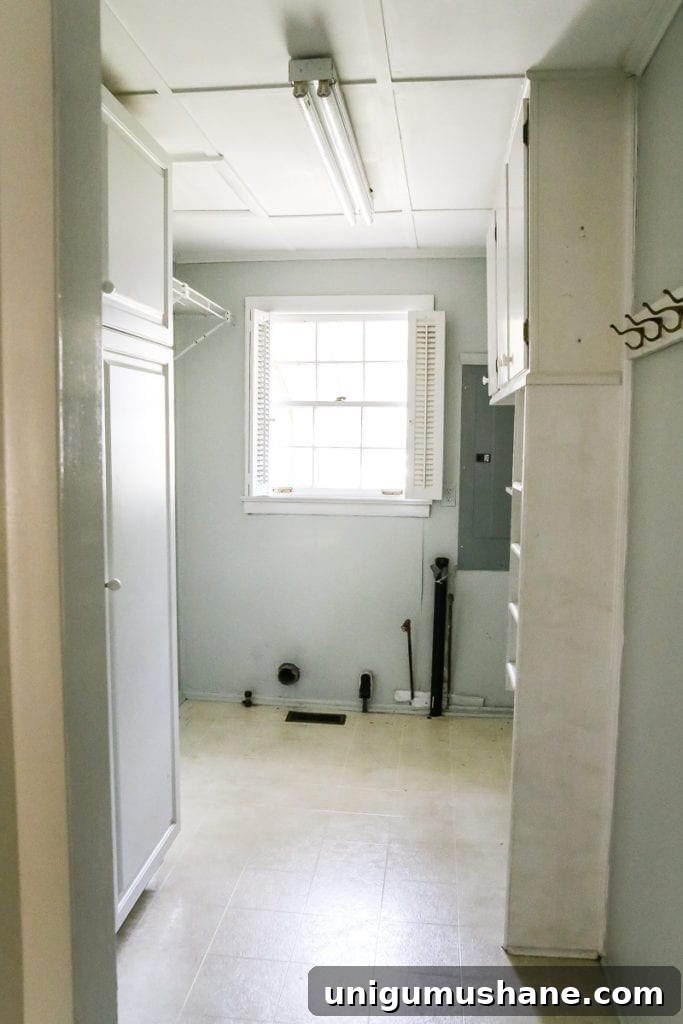
Before the refresh, the laundry room looked tired and neglected. Our goal was to create a nicer space without committing to a full gut renovation right away. We wanted a quick way to make the room feel fresh, and a patterned vinyl tile floor gave us that immediate impact without the long timeline or fumes of more permanent options.
We plan on bigger remodels down the road in several rooms, and those will be more involved and costly. But in the meantime, living with spaces that lift your mood makes a big difference. A few years is a long time to be stuck in a room that stresses you out every time you walk in.
So here is our vinyl tile update at ten months. We have not treated this floor gently: it endures mud, dirt, leaves, damp pool towels, puddles from plumbing mishaps, and everything else family life throws at it.
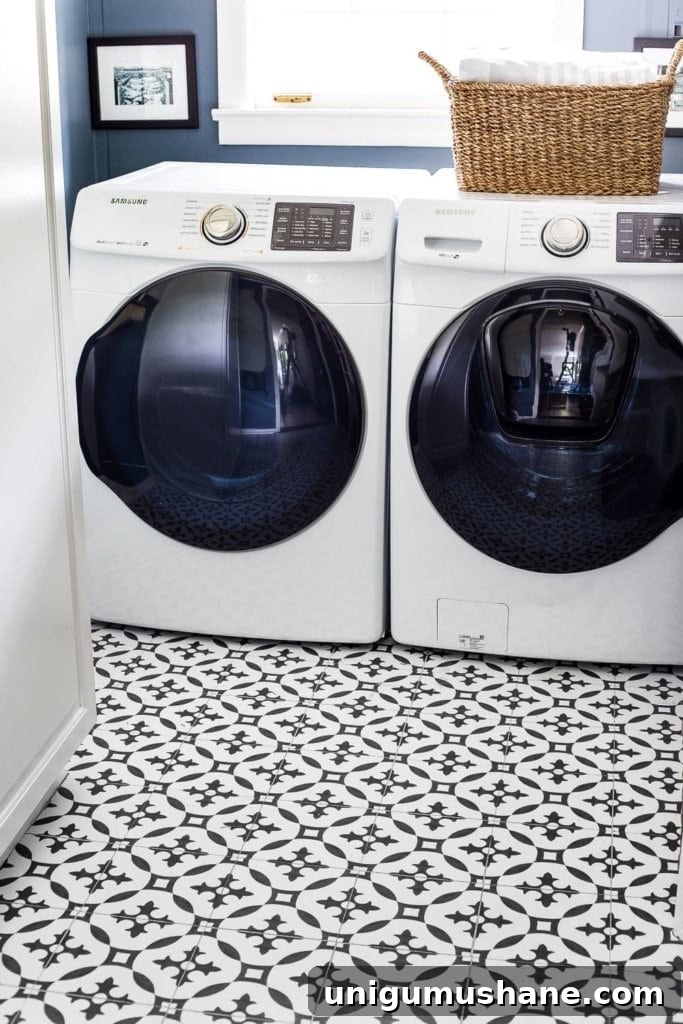
Both our washer and dryer have broken at different times, and we’ve had to move them across the floor for repairs and to allow electricians to access the fuse box. That heavy traffic left a scuff in front of the washing machine, but because we saved the leftover tiles from the original install, replacing a few scuffed pieces was quick and painless. That is one of the biggest advantages of using individual peel-and-stick tiles versus full sheet vinyl: damaged sections can be swapped out without replacing the entire floor.
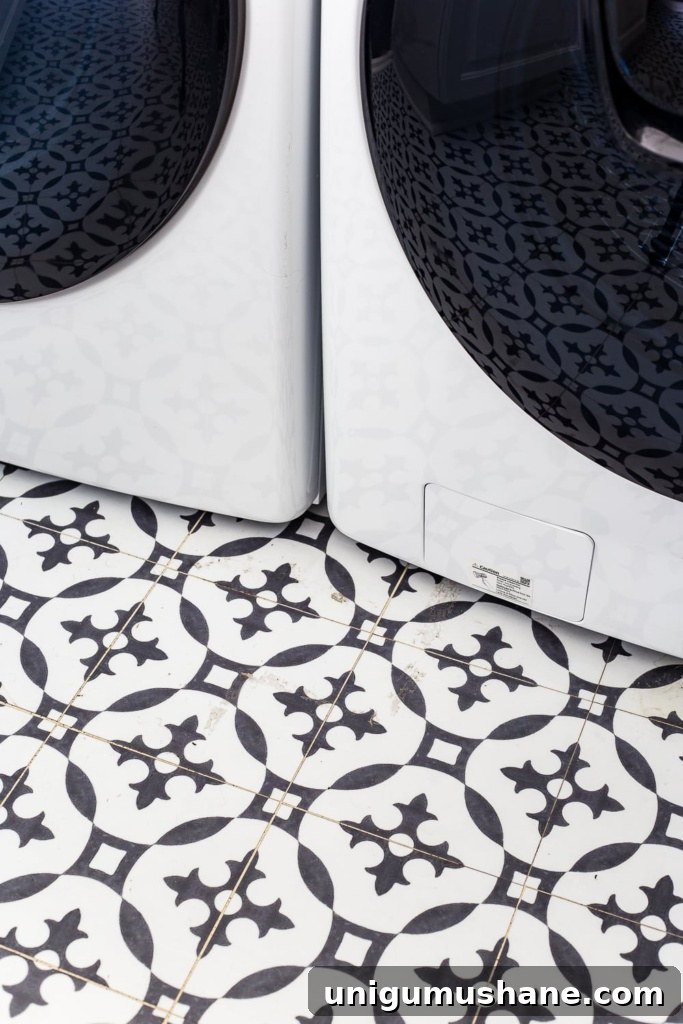
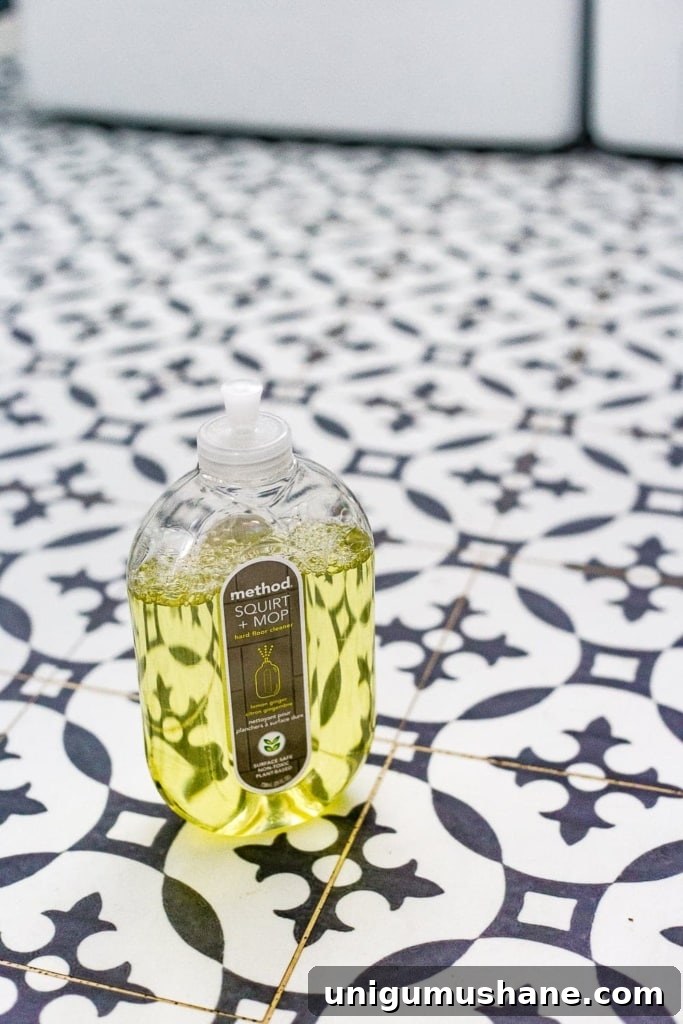
Maintenance has been straightforward. We sweep as needed to remove grit and debris, and when the floor needs a deeper clean we use a mild cleaner—Method Squirt & Mop works well for us. After ten months, none of the tiles have peeled up or shown signs of failing adhesion. The grout-line seams are cosmetic and, in our case, reveal a bit of the old sheet vinyl underneath in places because the room isn’t perfectly square, so laying the pattern evenly was a challenge. That slight imperfection is only noticeable if you’re looking for it.
Because of how well it’s held up, I’m tempted to try patterned peel-and-stick vinyl in a bathroom or kitchen one day. For now those rooms already have tile, and we’re content to refresh grout temporarily rather than replace the whole floor. If you have sheet vinyl in those spaces, though, peel-and-stick tiles are an easy and less permanent way to change the look without heavy demolition.
Compared to painting a vinyl floor, patterned tiles are more expensive, but they install much faster and there’s no paint odor or long curing times to deal with. If the Moroccan-style pattern ever goes out of style, the look can be changed again with minimal effort—especially if you keep leftover tiles for quick spot repairs.
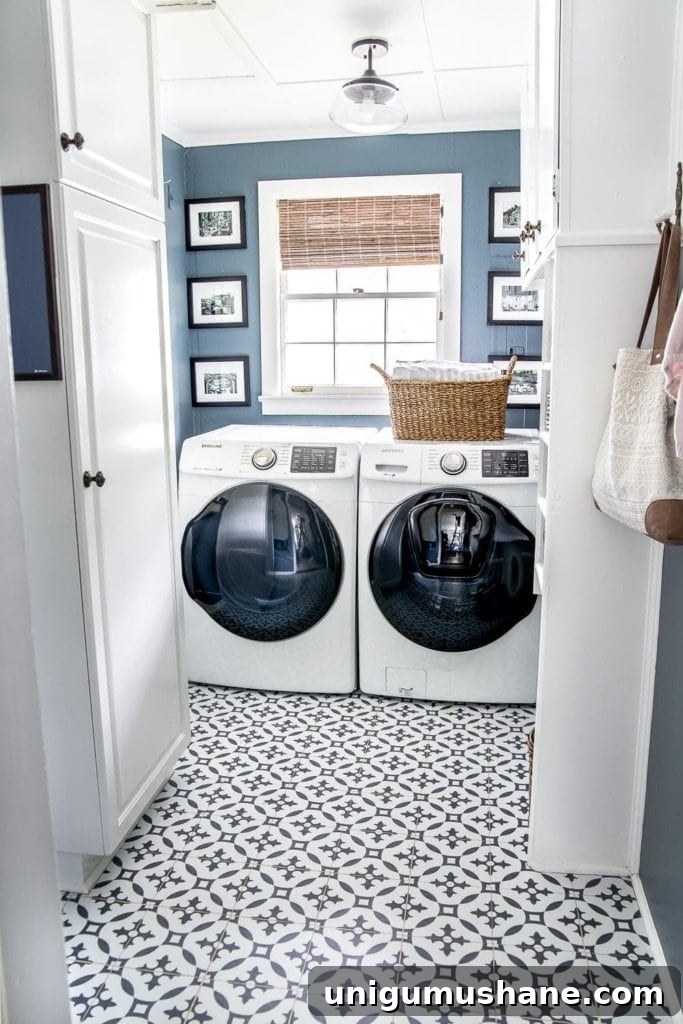
Doing laundry is still not my favorite chore, but walking into a brighter, more attractive room definitely makes it less of a drag. If you’re weighing short-term updates versus full renovations, patterned peel-and-stick vinyl tiles are a practical option to consider for immediate impact and manageable maintenance.
If you want to see the full project reveal or learn more about the installation and other details from our laundry room makeover, look for the room reveal post referenced in our notes. I’d also love to hear about other affordable flooring refreshes you’ve tried—share your ideas and experiences in the comments to help make this a useful resource for others.