After an entire summer of planning, we’ve finally settled on a clear vision for our classic bathroom design. Choosing finishes for a kitchen or bathroom remodel always feels more permanent than decorating a living or dining room, and I’ll admit I’m no stranger to decision paralysis. That’s why I rely on mood boards to narrow options and move forward with confidence.
This project is for our own home, which somehow makes decisions even harder. But after focusing on specific priorities for the primary bathroom and studying many classic bathroom designs, we landed on a plan that aims to remain timeless. The goal is a remodel that will still feel current through future trends and give us long-term value.
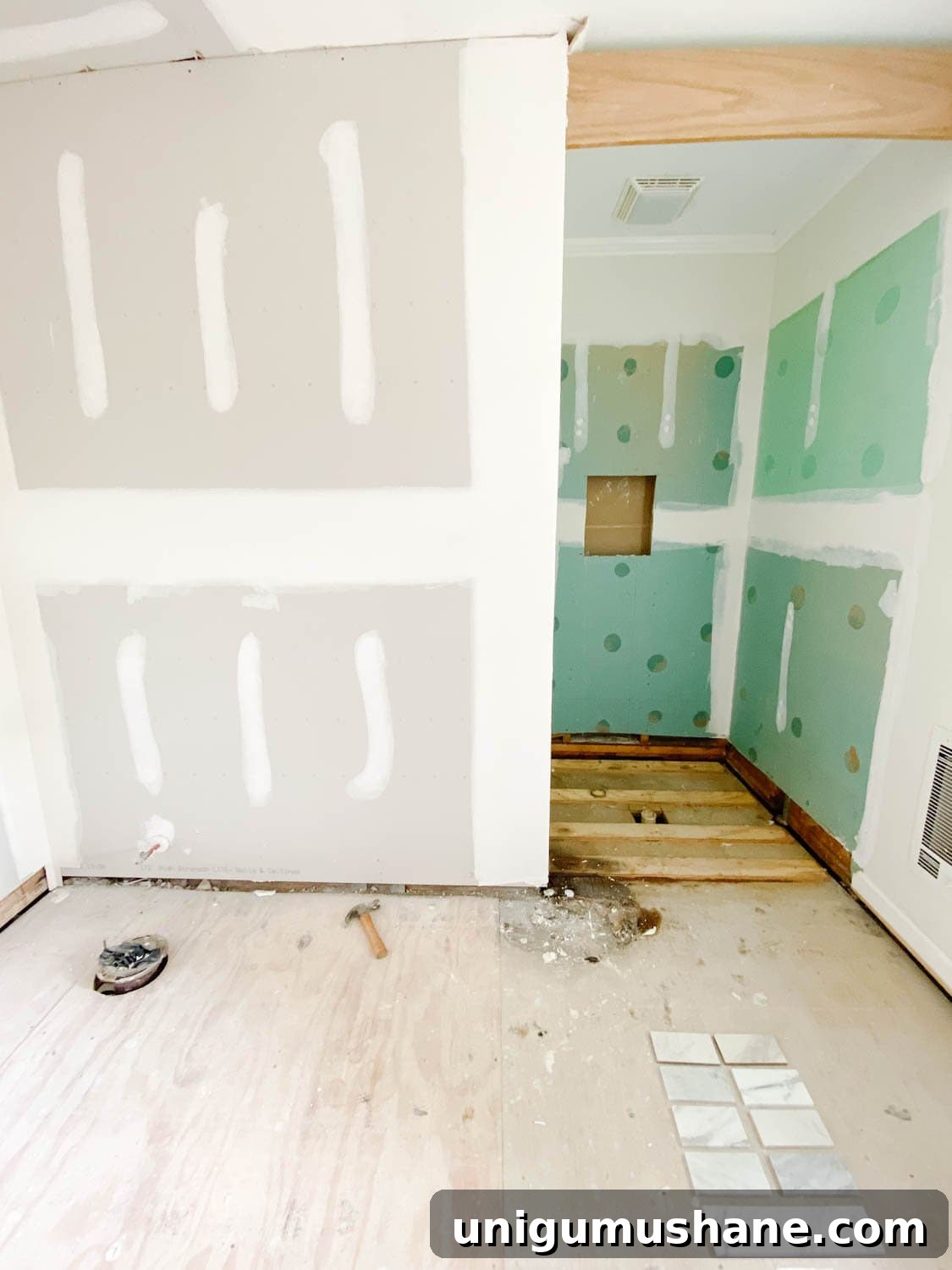
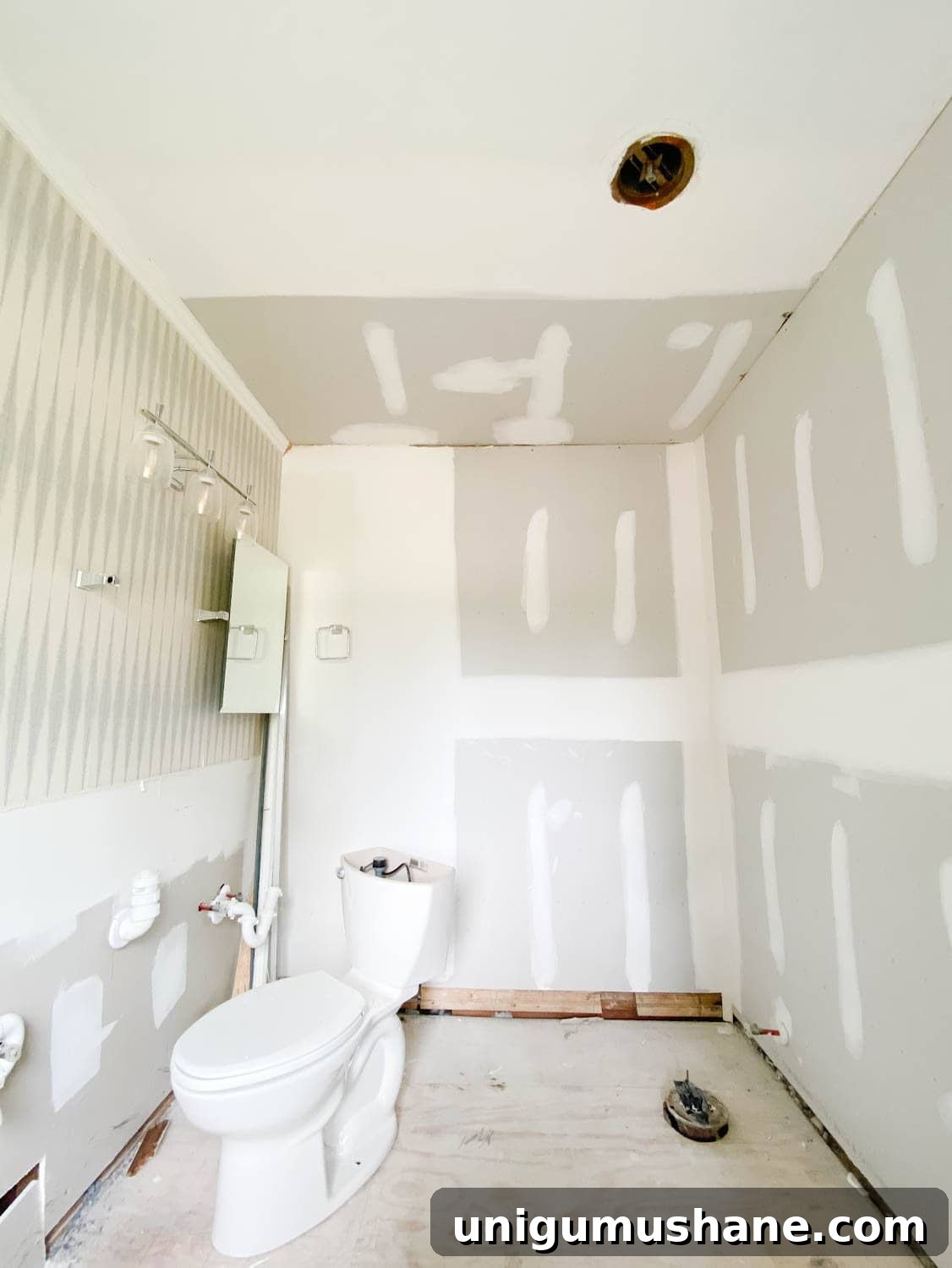
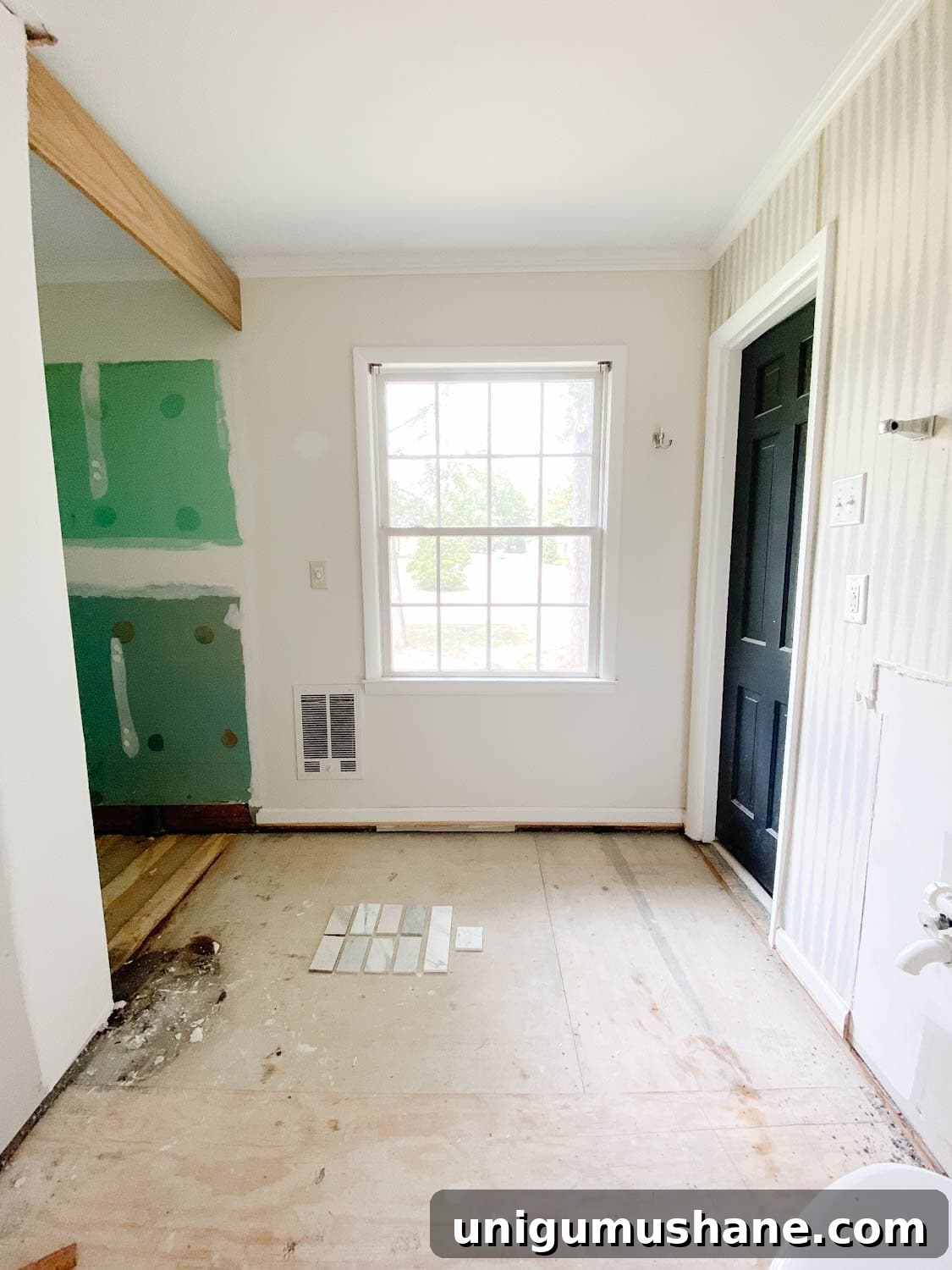
Below is the bathroom in its current, nearly-demolished state—about 90% gutted and ready for the next phase.
The Layout
This room is compact—about 63 square feet—so our contractor recommended keeping the existing footprint. Reconfiguring a small bathroom can quickly consume budget and storage, and after asking many of you about your remodel choices, we agreed that retaining practical storage and a comfortable vanity layout was more important than forcing a double sink or a much larger shower. The current plan optimizes function and minimizes costly structural changes.
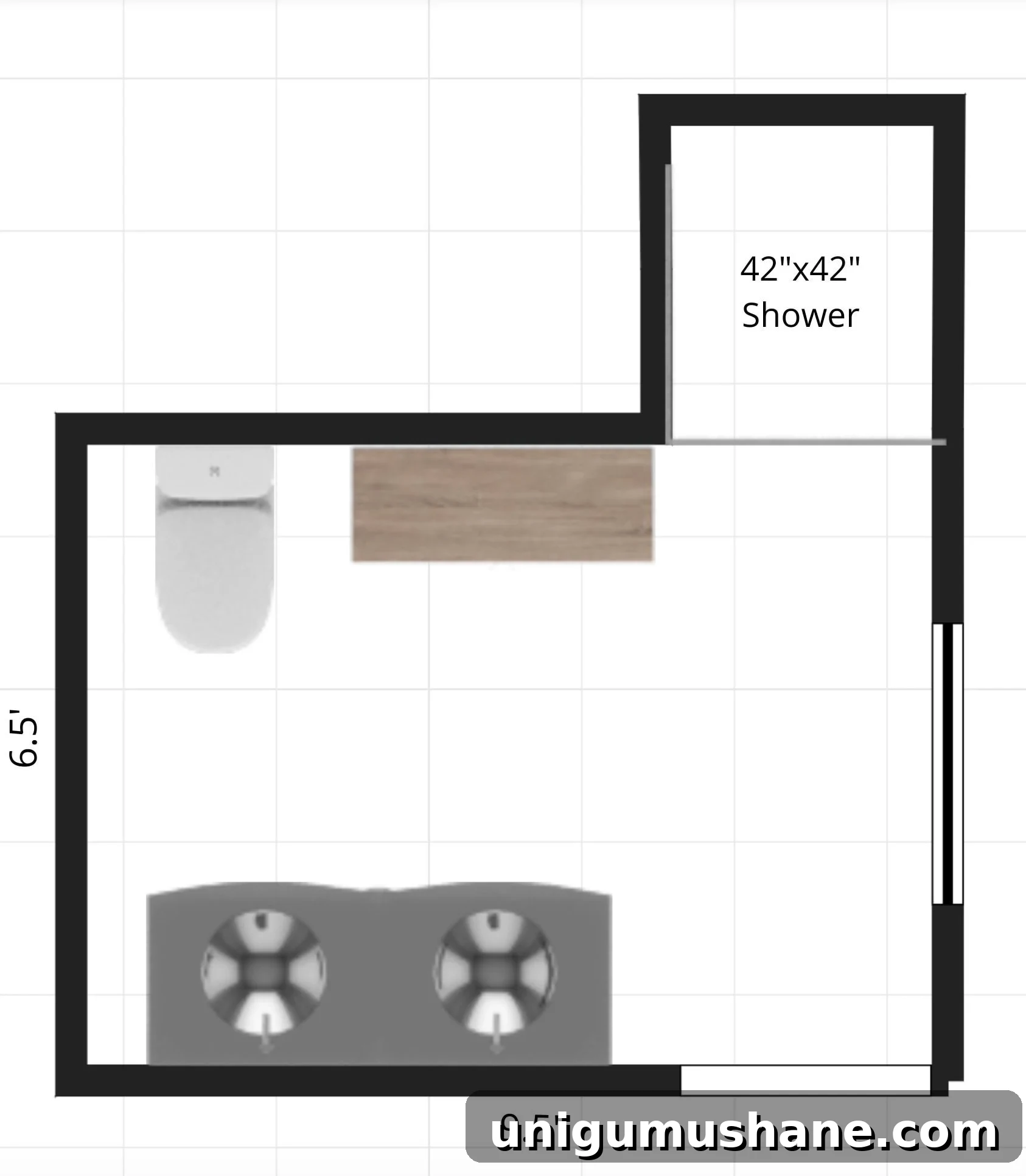
Keeping the layout also allows us to invest more in beautiful finishes—like tile, fixtures, and a striking backsplash—rather than spending heavily on plumbing moves or expanding the footprint.
The Mood Board
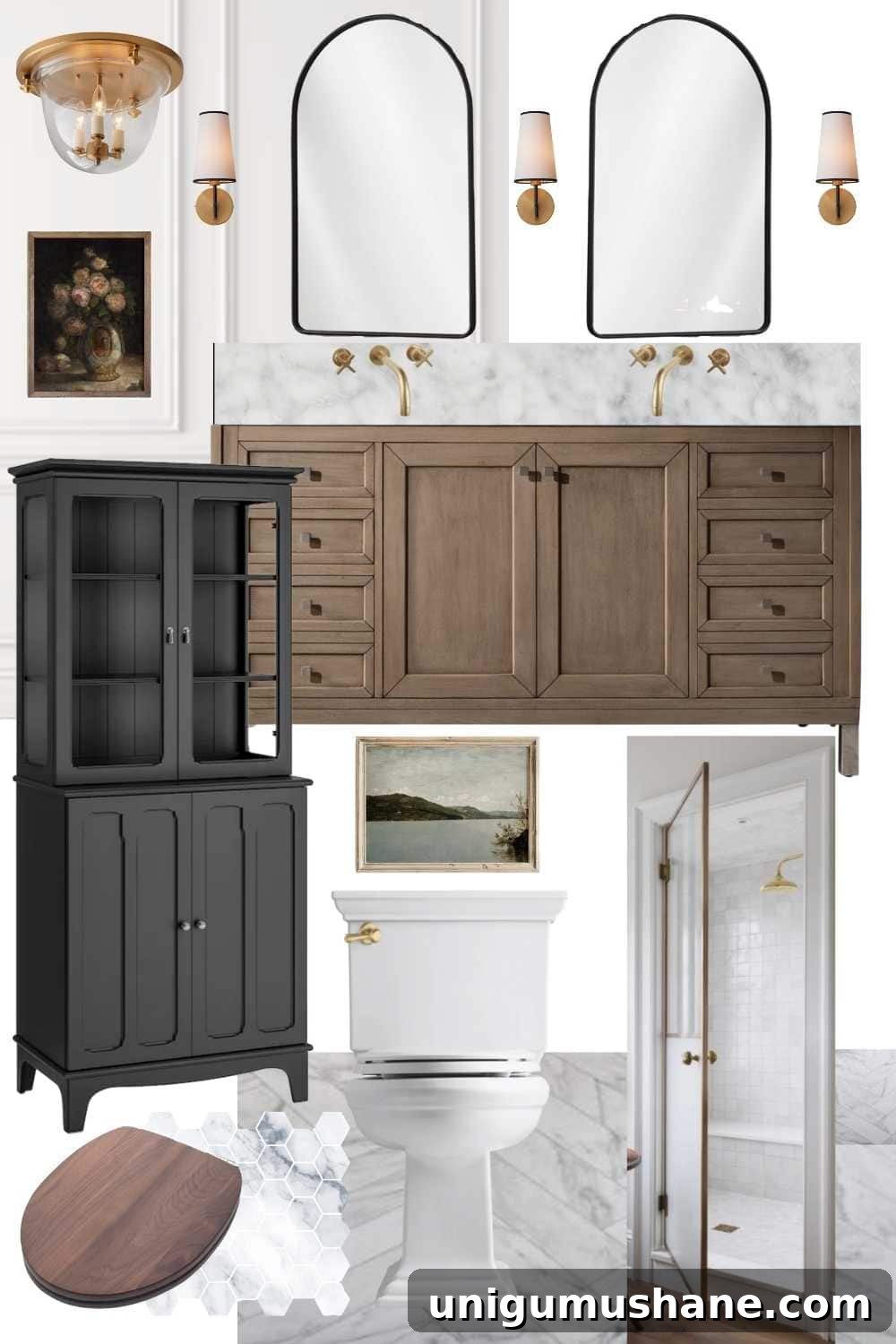
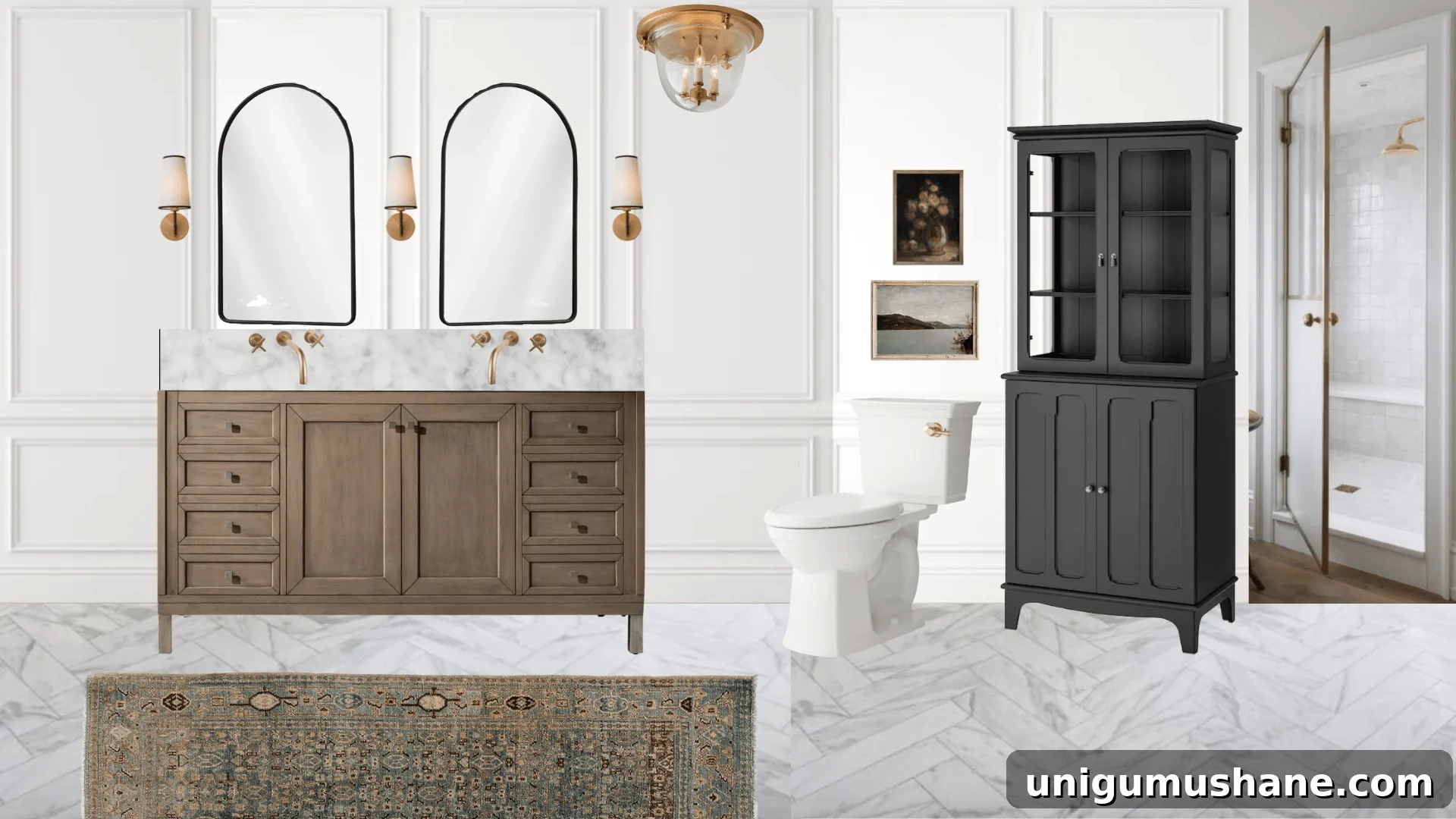
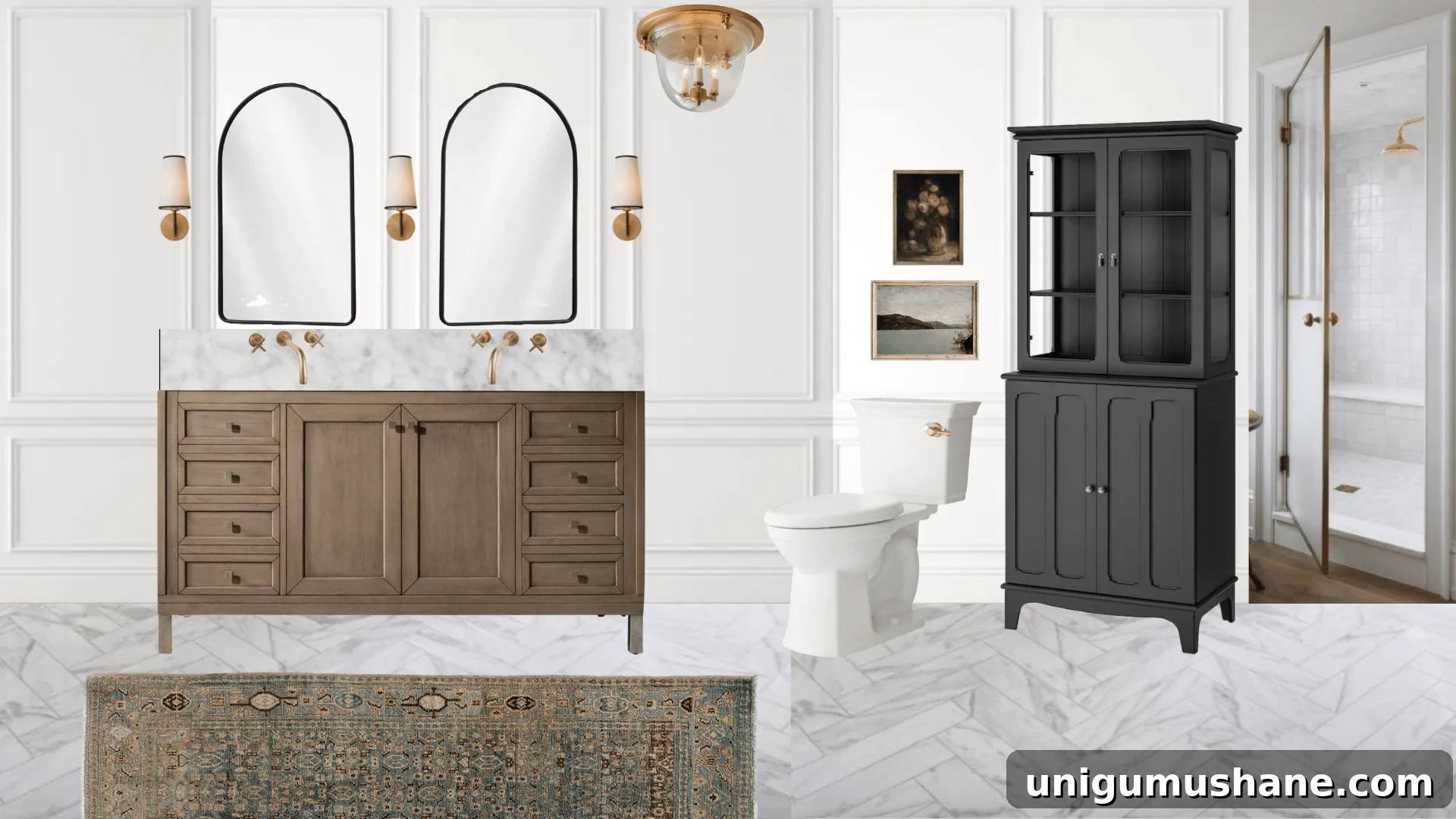
When I think “classic bathroom design,” a few elements come to mind immediately: herringbone pattern floors, marble or marble-look surfaces, mid-toned wood, brass accents, and a restrained black-and-white palette. Those ideas form the backbone of our mood board and inform every material choice.
- Floors – We’re torn between real marble and high-quality marble-look porcelain tile. Either option will be installed in a herringbone pattern to add movement and a sense of craftsmanship to the floor.
- Shower – The shower will continue the marble-look tile on larger walls, with small marble hexagon tiles on the shower floor for grip and visual interest. A frameless glass enclosure with a satin brass knob will keep the space feeling open and elegant.
- Vanity – A whitewashed walnut vanity strikes a balance: not too dark, not too light, and free of strong red or blue undertones. We plan a tall marble backsplash behind the sink for a high-impact, durable focal point.
- Wall Treatment – To add texture and architectural interest without the expense of full wall tile, we’ll use box molding (picture frame molding) on portions of the walls. It’s a cost-effective way to introduce classic detail and visual depth.
- Storage – I’m planning a black linen cabinet with reeded glass and a wood backing, including space for a pull-out hamper. That piece will likely be a DIY project after the contractors complete the heavy work.
- Faucets & Fixtures – Wall-mounted brass faucets are on the shortlist, paired with a reliable brass shower system. These finishes will add warmth and a refined, traditional touch to the space.
- Mirrors – Black arched mirrors will introduce a softer silhouette and allow for subtle metal mixing between the black frames and brass hardware.
- Lighting – I plan to DIY a dupe of classic sconce lights for the vanity and add a flush-mount fixture for overall ambient light. Layered lighting will ensure the room is both functional and flattering.
- Rug – We’re still searching for a small vintage rug to bring color, texture, and a lived-in feel to the finished room.
All together, these choices aim to create a classic bathroom that feels intentional, balanced, and usable every day.
The Inspiration
A particular detail that keeps drawing me back is a marble backsplash sink ledge I spotted in an award-winning bathroom. It’s a simple, elegant idea that reads classic and timeless. That example reminded me why we’re investing in enduring materials: classic design details tend to age gracefully and offer great long-term value.
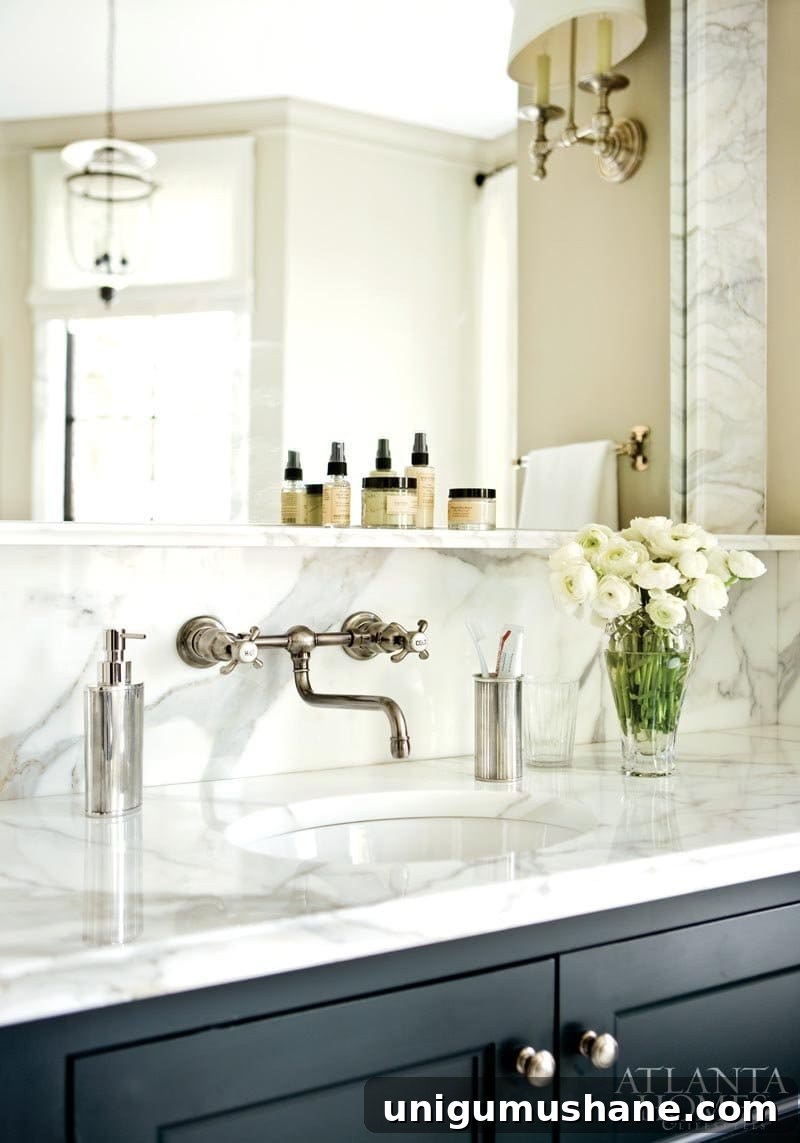
We’re eager to begin the next phase and see these decisions realized. The plan prioritizes functionality within our compact footprint while leaning into finishes that will stand the test of time. I’d love to hear what comes to mind for you when you think of a “classic bathroom design.” Does this direction resonate?

Related Posts
- Modern Classic Bathroom Ideas Giving Us Major Inspo for Our Remodel
- Choosing the Best Bathroom Designs – 10,000 of Our Followers Voted What They Would Pick
- High End Bathroom Art for a Tiny Budget
- DIY Painted Bathroom Sink Countertop
- How to Spray Paint Bathroom Fixtures
- City Meets Country Powder Room Reveal