
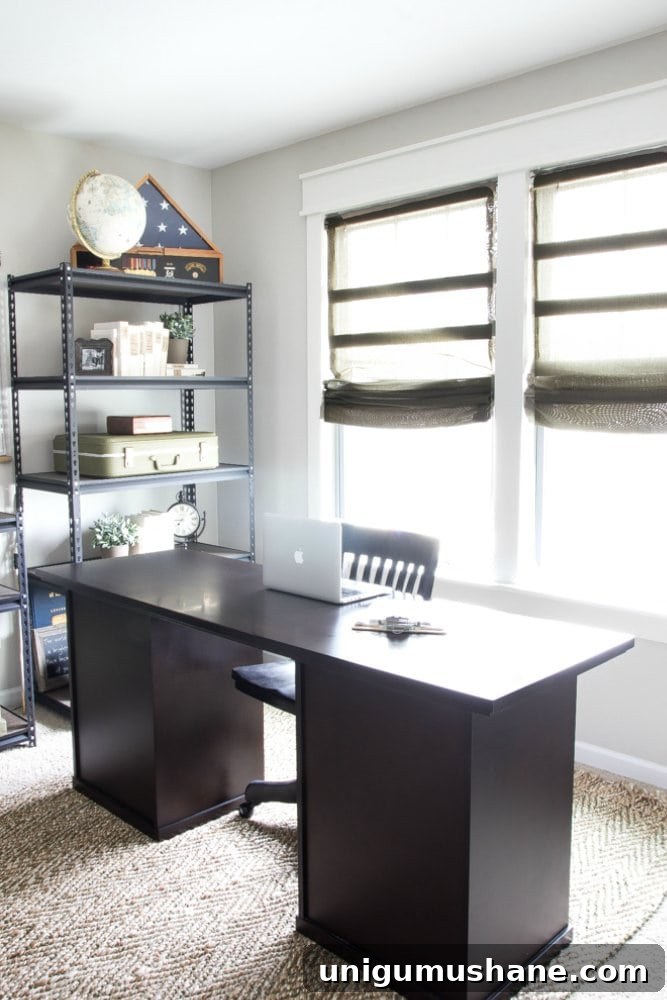
My mom has been nagging me to write a “Bless’er House blunders” post because I’ve collected a whole archive of hilariously imperfect DIY moments. Yesterday I nearly added another one — a borderline fail while making DIY Roman shades — but I’ll get to that in a minute.
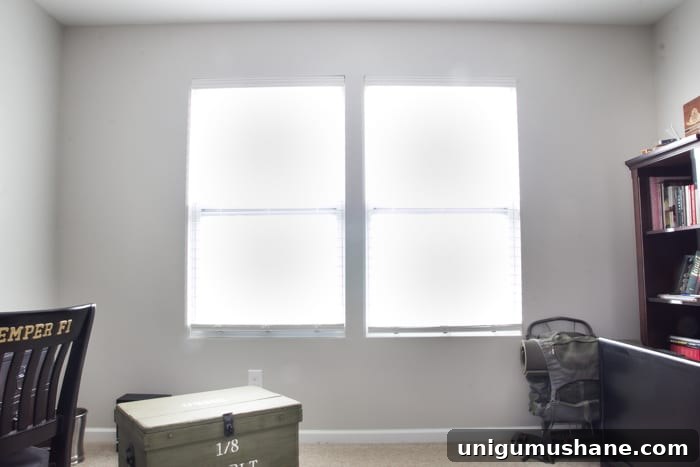
Big news: the office makeover is moving forward and it’s about 95% finished. When we first started transforming this vintage, industrial-inspired office, the room looked empty and unfinished. Those windows in particular were begging for some attention.
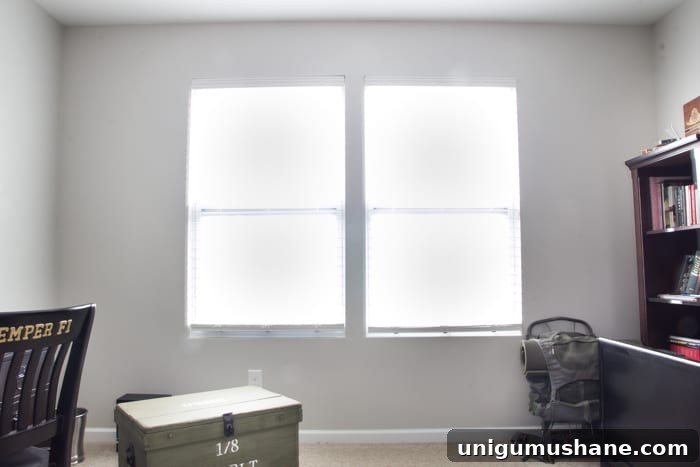
Over the weekend we framed the window with our go-to DIY Craftsman trim, which instantly improved the look. The plain blinds that were left behind felt a little, well, bland. I had read several tutorials about converting mini blinds into Roman shades, so I decided to try it myself using the cordless faux-wood blinds we already had.
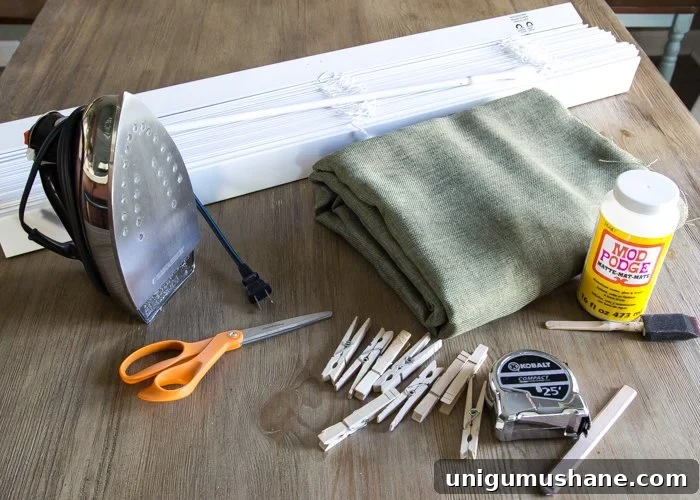
Supplies used for DIY Roman shades:
- Set of cordless faux wood blinds (the base for the shade)
- Fabric of your choice (I used green poly burlap)
- Fabric scissors
- Tape measure
- Iron
- Marker or pencil
- Clothespins or small clamps
- Hot glue gun and glue sticks (hot glue works best on burlap-style fabrics)
- Duct tape (handy for holding cordless blinds in place while you work)
- A large work table or surface
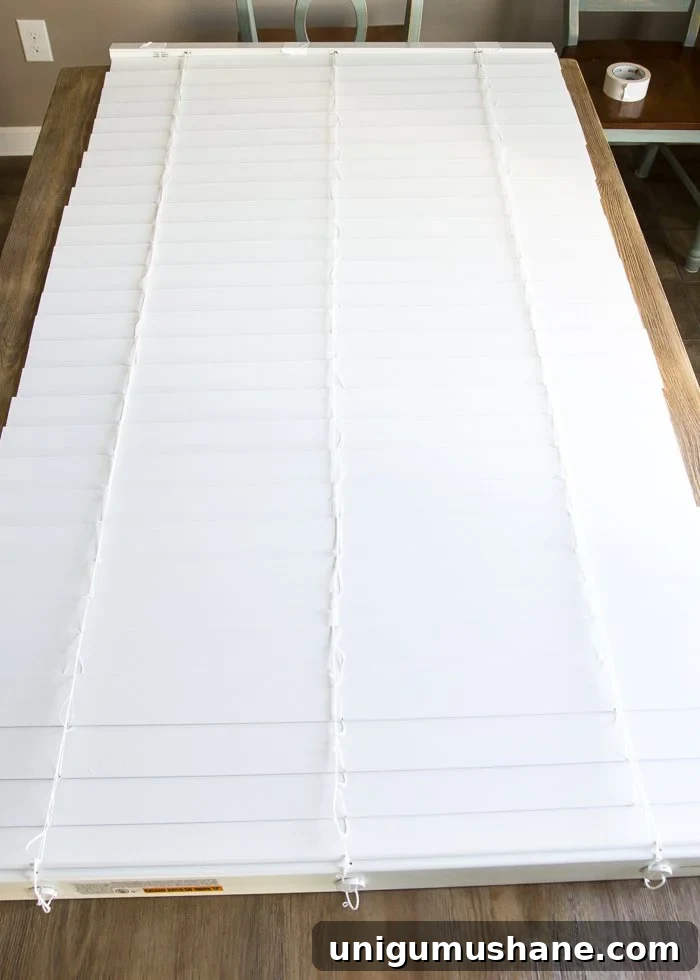
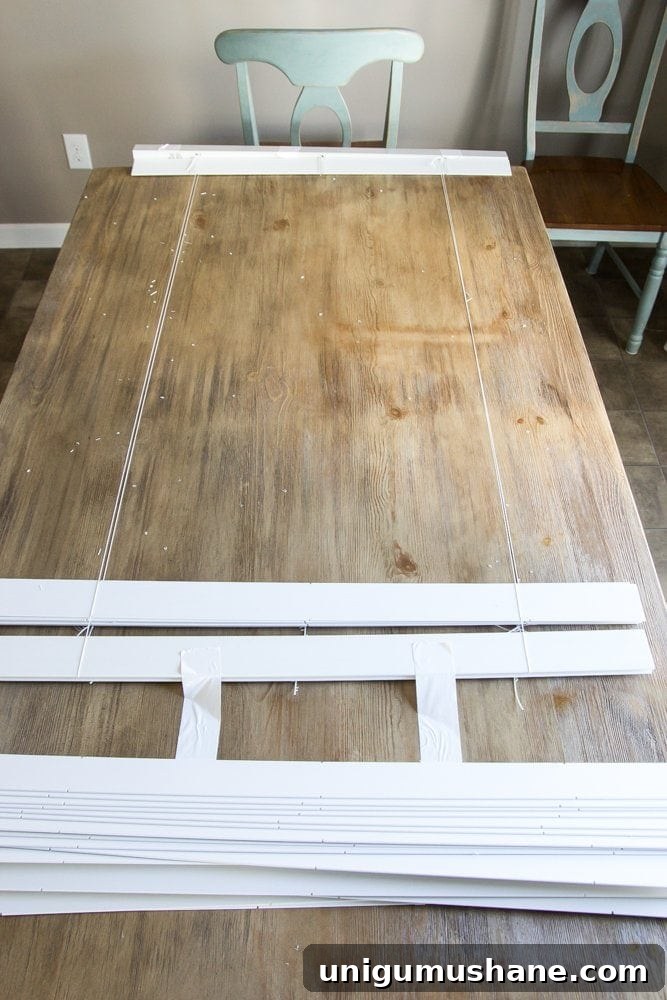
Set the blind face down on your table and pull it out as far as it will go. Because cordless blinds tend to retract on their own, I duct taped the ends down to keep everything steady. Then came the part that makes people nervous: cutting strings. Be careful which strings you cut.
Do not cut the smooth lift cord that runs straight up and down. Do cut the ladder strings wrapped around each slat, the rope-like supporting cords, and the small loop strings that connect to the ladder strings. Once the correct cords are cut, you can remove most of the slats and leave only enough to create the folds in the Roman shade.
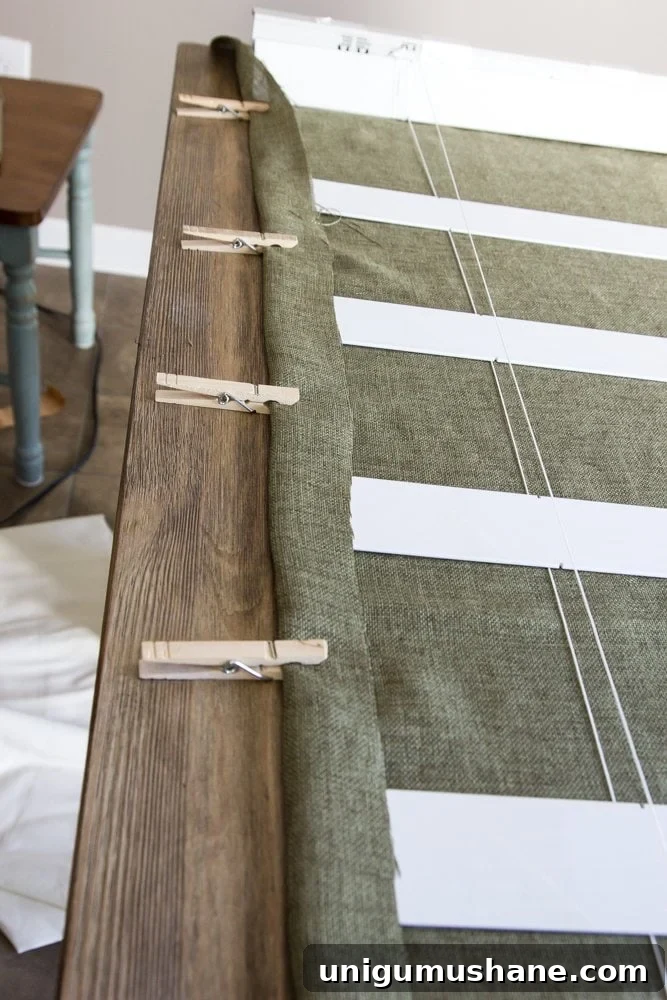
Decide how many slats you need by dividing the height of the window (in inches) by about eight. For my 60-inch window I chose seven slats. Lay your fabric beneath the blind (pattern side down if applicable), then space the remaining slats evenly. Make sure the blind is fully extended to the window height before you measure and clamp — this is where I made my biggest mistake on the first try when the blind retracted slightly and I didn’t notice until it was too late.
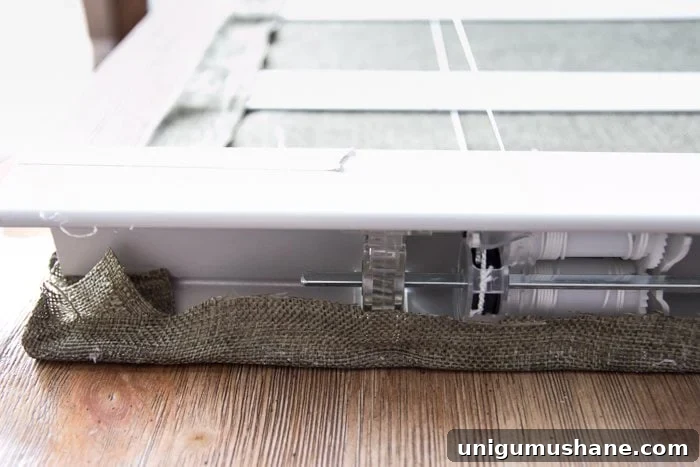
Leave about a 2-inch allowance on each side of the slats. Roll the fabric over that edge and secure it with clothespins, then iron a crisp crease to create a neat hem. At the top of the blind, cut a small tab in the fabric to wrap inside the headrail and hot glue it in place. Work on each slat individually: apply a few beads of hot glue along the slat edge, press the fabric over the glue, and clamp until the glue sets. I also ran a line of glue along the inside crease between each slat for extra hold.
Finish the top and bottom edges by running a line of hot glue and folding the excess fabric over. Once everything is secure and the glue has cooled, re-hang the blind and test the lift mechanism.
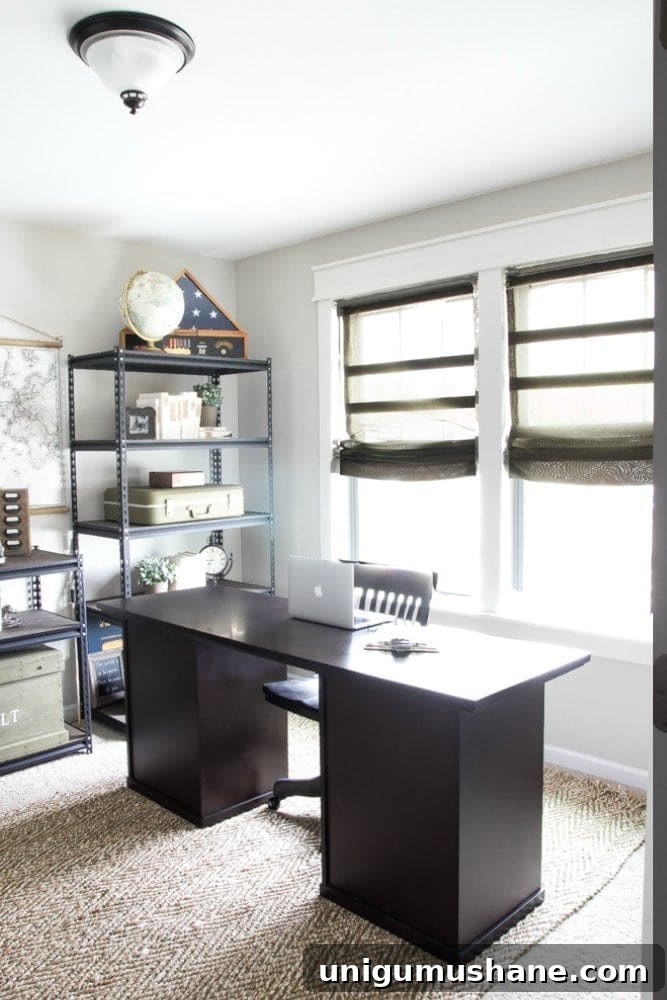
So where was the fail? In the after photos you can spot a few issues from my first attempt:
- One shade ended up slightly too short because the blind retracted while I was working.
- The visible slats beneath the fabric aren’t perfectly aligned side-by-side on that first shade.
- These shades might benefit from a lightweight cotton liner for a cleaner finish and better opacity.
Despite those imperfections, they still transformed the room and cost only about $25 each since we already had the blinds. I’ll redo the right-hand shade — it was my initial trial and needs a proper redo — but overall they look much better than the plain blinds we started with.
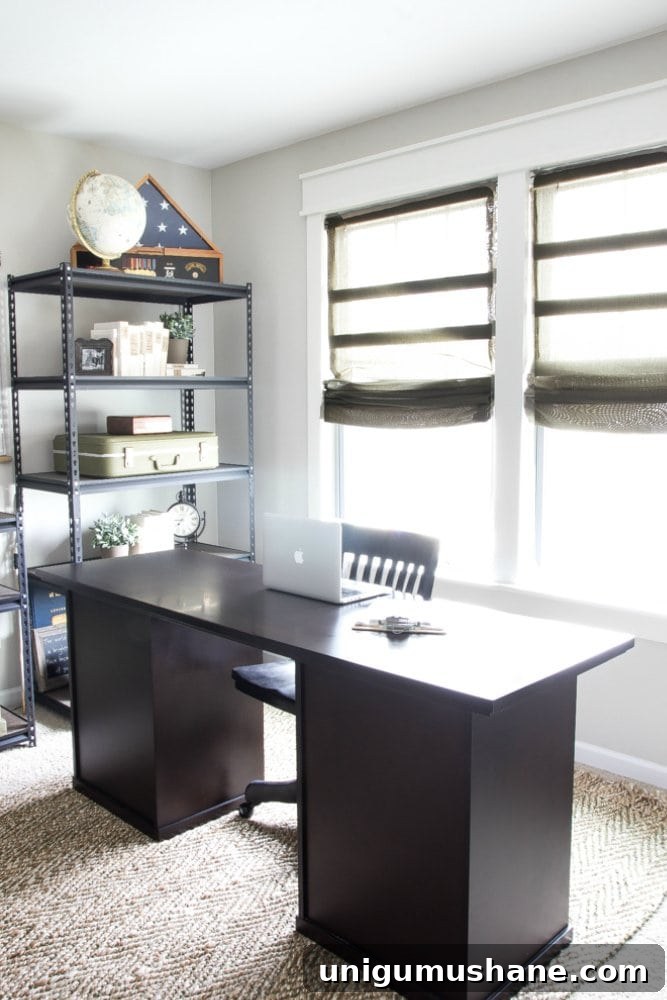
For comparison, here’s a quick before and after — the trim and shades make a dramatic difference and bring character to the office. A simple window treatment can feel like the “eyebrows” of a room, giving it personality and polish.
The final tasks on the list are replacing the outdated ceiling light and adding a few functional desk accessories. Once those are done we’ll officially call the office makeover complete.
If you want to see other projects from this office refresh, here are the highlights I worked on: Office Before Shots and Makeover Mood Board; DIY RH-Inspired French Mute Books; DIY Vintage Pull-Down Map; Industrial Shelving; Faux Zinc Safe Makeover.

Have you tried making Roman shades before, or are you tempted to give it a shot? Measure carefully, use a liner if you want more opacity, and keep a hot glue gun handy. And if you’ve ever had a spectacular Pinterest fail, I’m all for a project-fail party — we’ll bring the duct tape and laughter.