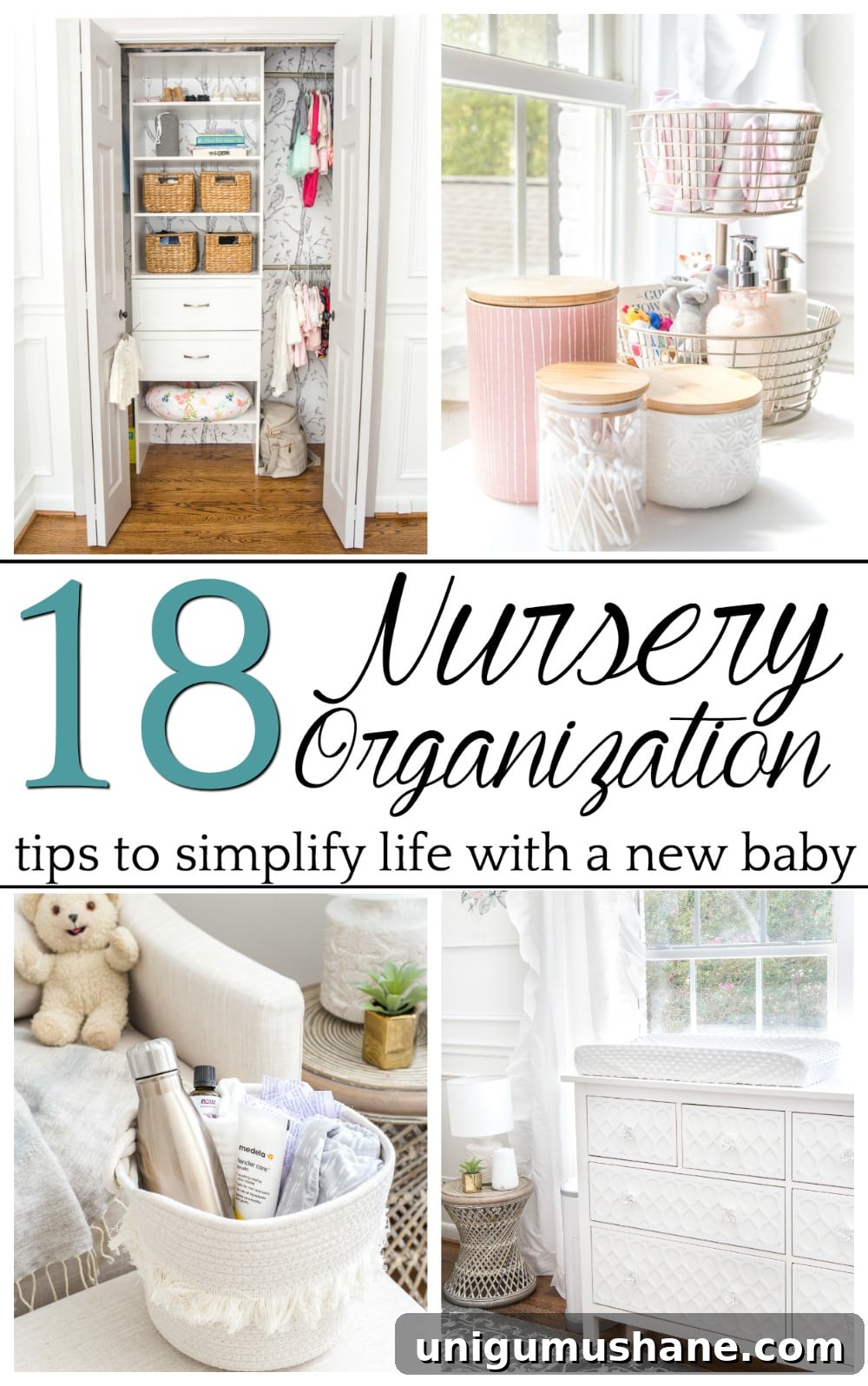
Nursery organization strategies to keep feeding, clothing, and diapering essentials easy to navigate and make baby care less stressful.
If you’ve been following along with the nursery makeover, this is the practical, behind-the-scenes look at how I organized the space to make daily baby care simple and calm. There were so many DIY projects and planning decisions that I couldn’t include everything in one post, so here’s a dedicated tour of the storage solutions and systems that actually help on those bleary 3 a.m. diaper changes.
It’s a little ironic to post an organization guide right after showing a messy house tour, but this room is the one that’s stayed organized—and it makes a huge difference.
If you missed earlier nursery posts, here are the topics covered:
- White Floral Nursery Makeover Reveal
- Nursery Closet Reveal
- Everything You Need to Know to Refinish Hardwood Floors
- How to Paint Interior Doors
- Applique IKEA Dresser Hack
- Nursery Light Fixture Update
- DIY Picture Frame Molding
- Nursery Design Plan
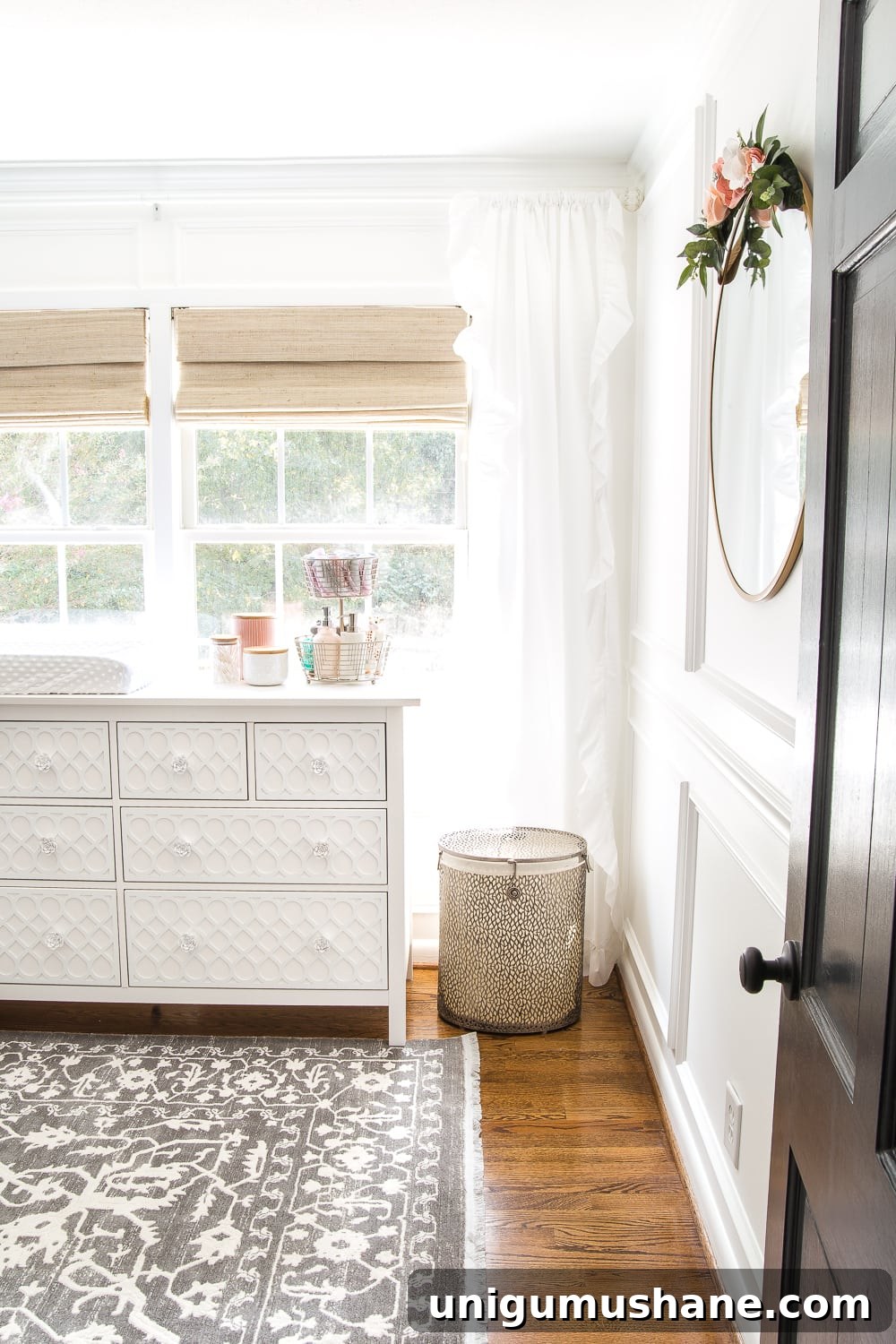
If you’re expecting or preparing for a baby, organizing the nursery thoughtfully can halve your stress. The key is to keep everything visible and accessible: clothes sorted by size, diapering supplies within reach, and small items contained so drawers don’t become black holes. Below are the specific solutions I used in this nursery, with tips on how to adapt them to your space.
1. Hamper
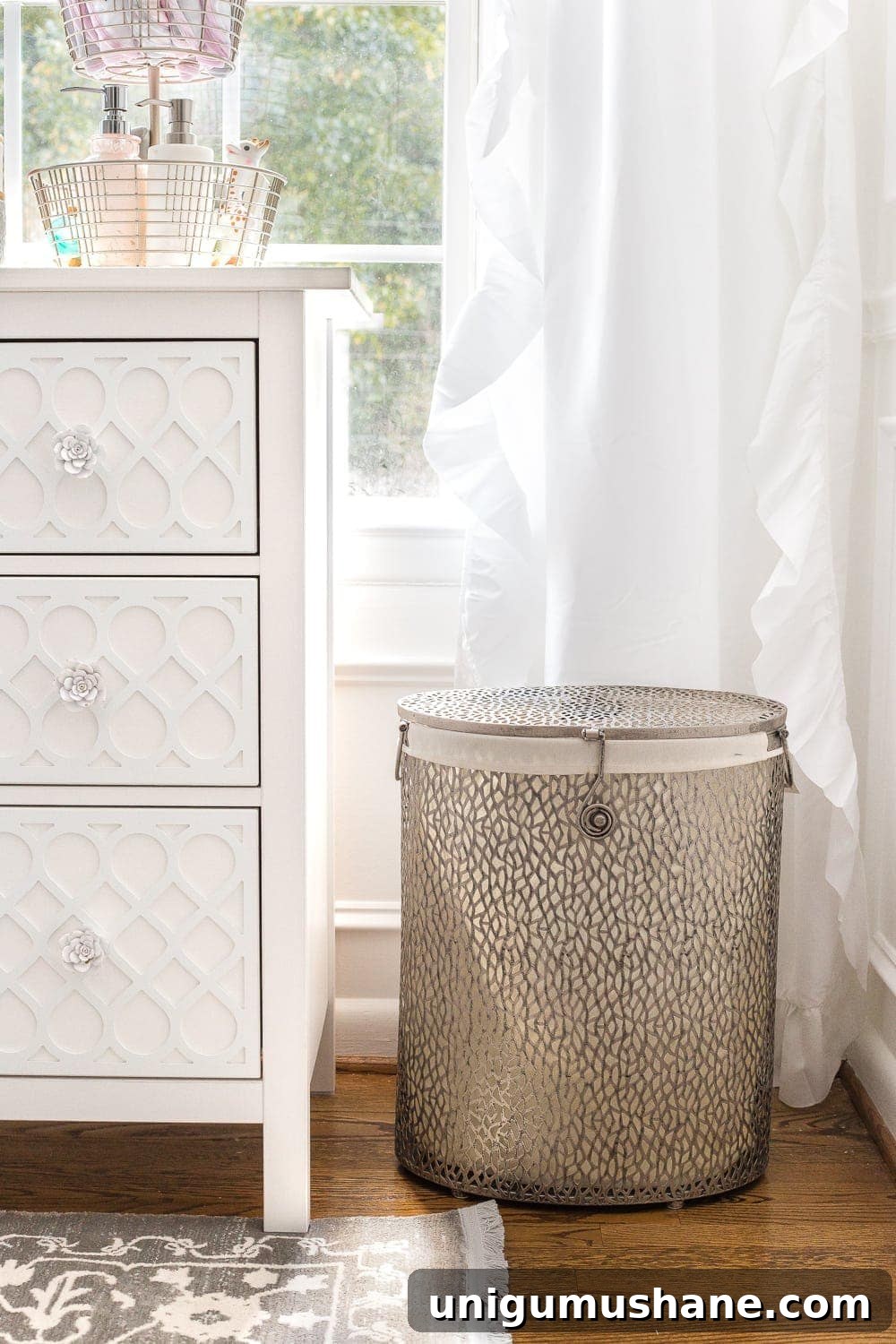
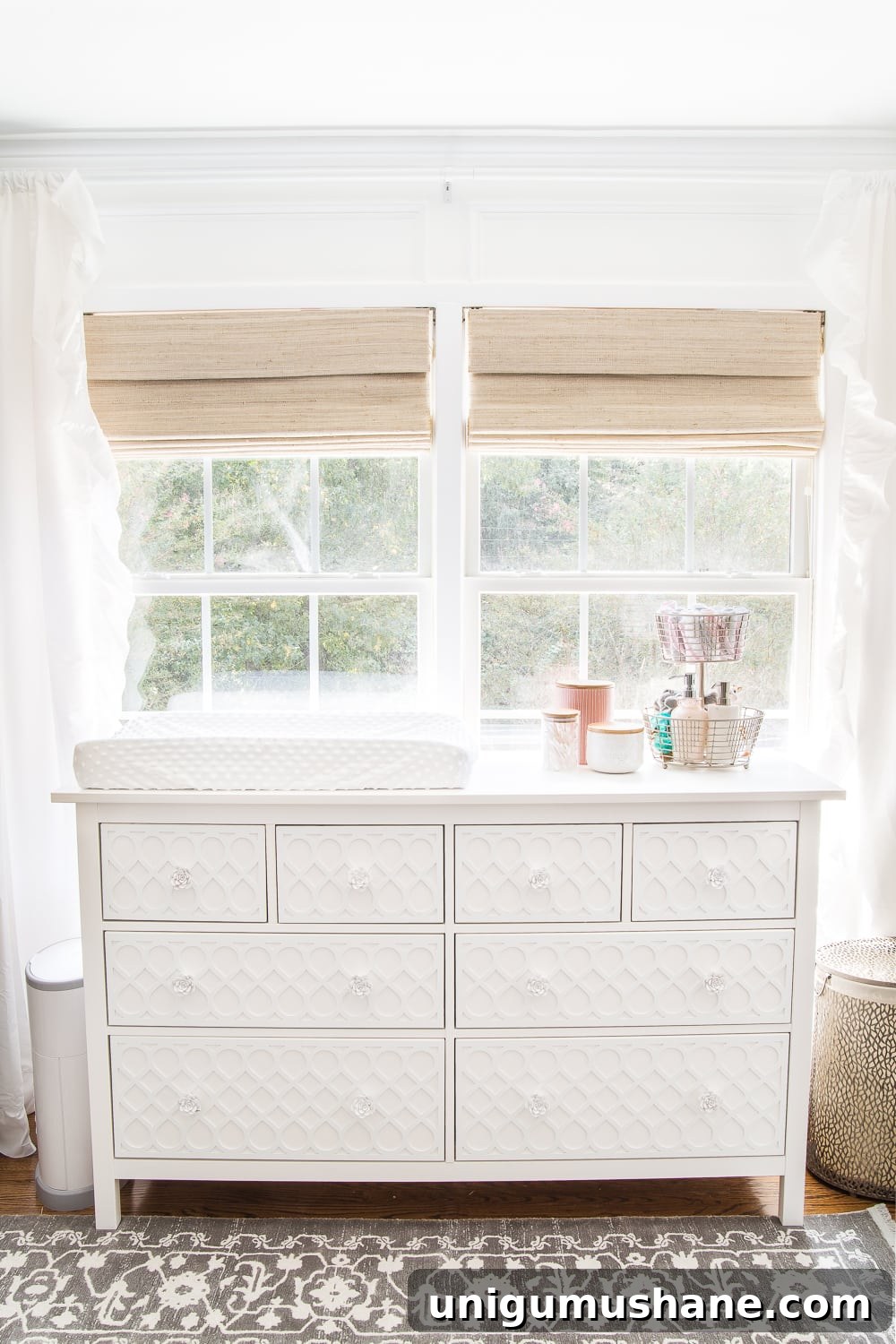
I found a metal hamper with a washable liner and a lid at HomeGoods. A lidded hamper keeps odors contained, and the removable liner makes it easy to pop directly into the wash—small details that save time and keep the room fresher.
2. Kitchen and bathroom canisters for small items
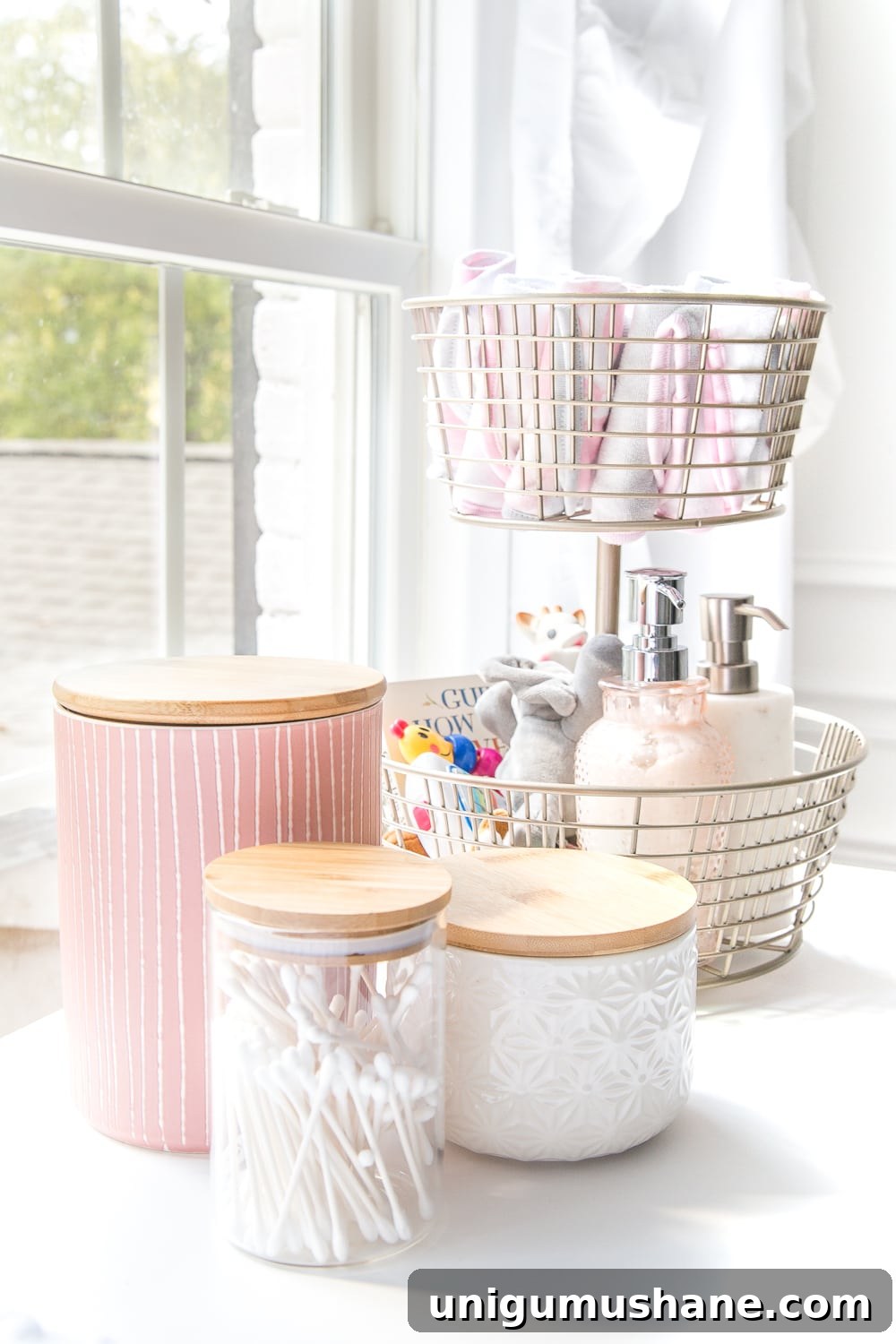
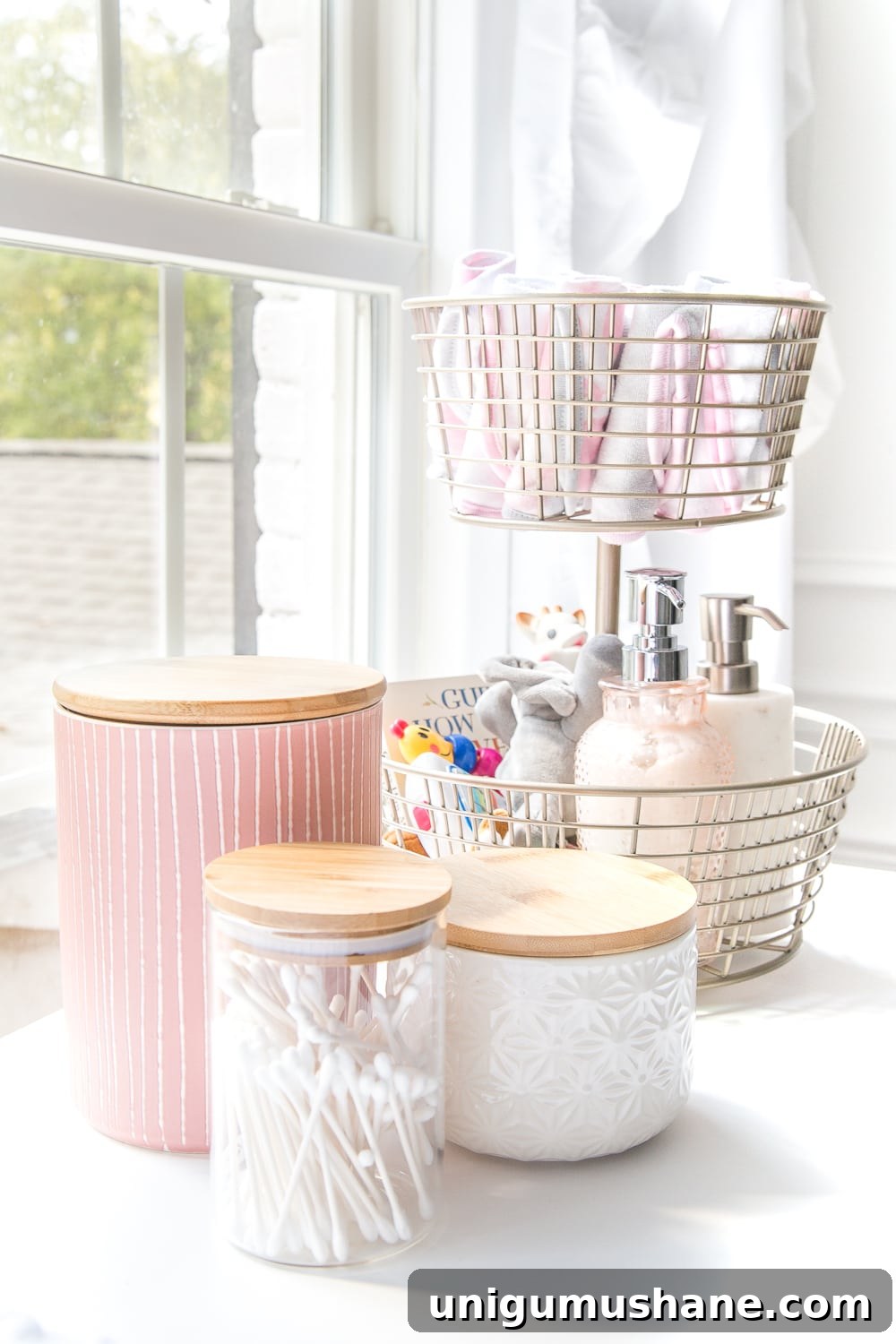
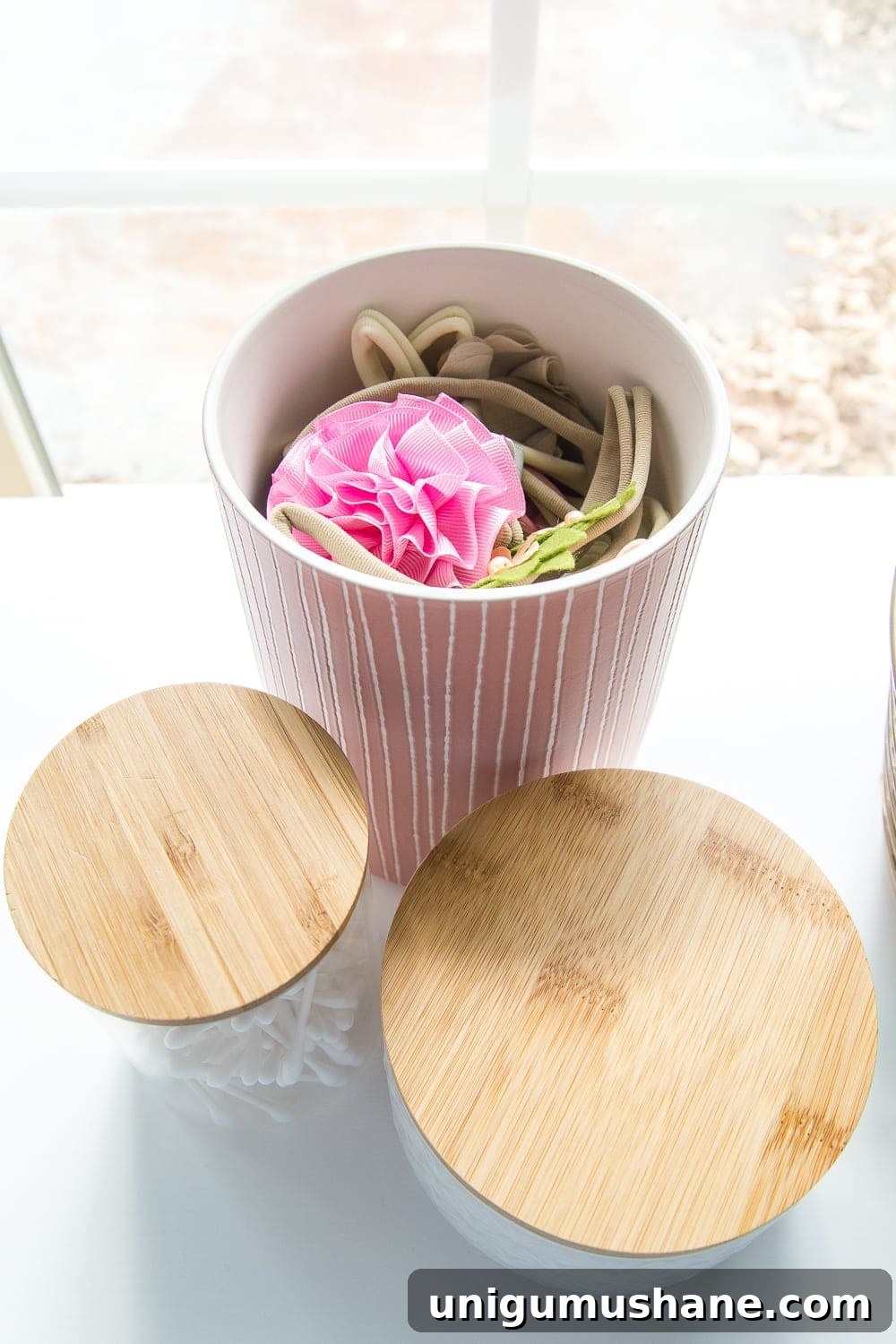
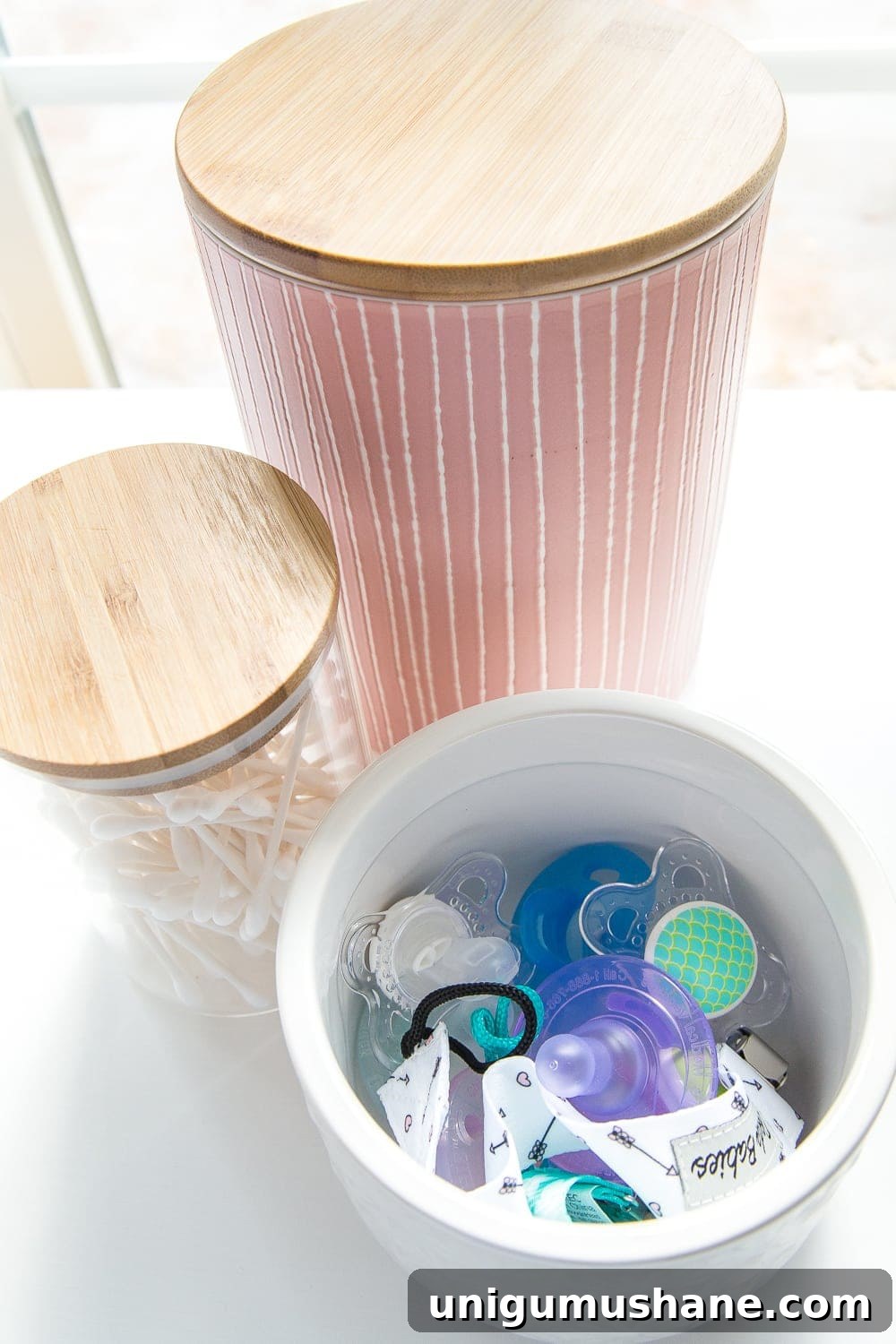
Small lidded canisters from the kitchen section are perfect for corralling tiny items that typically get lost in dresser drawers. Use a large one for headbands and bows, a medium for pacifiers and clips to keep them sanitary, and a small one for cotton swabs. The consistent look also keeps the changing area tidy and intentional.
3. Tiered basket for quick-grab items
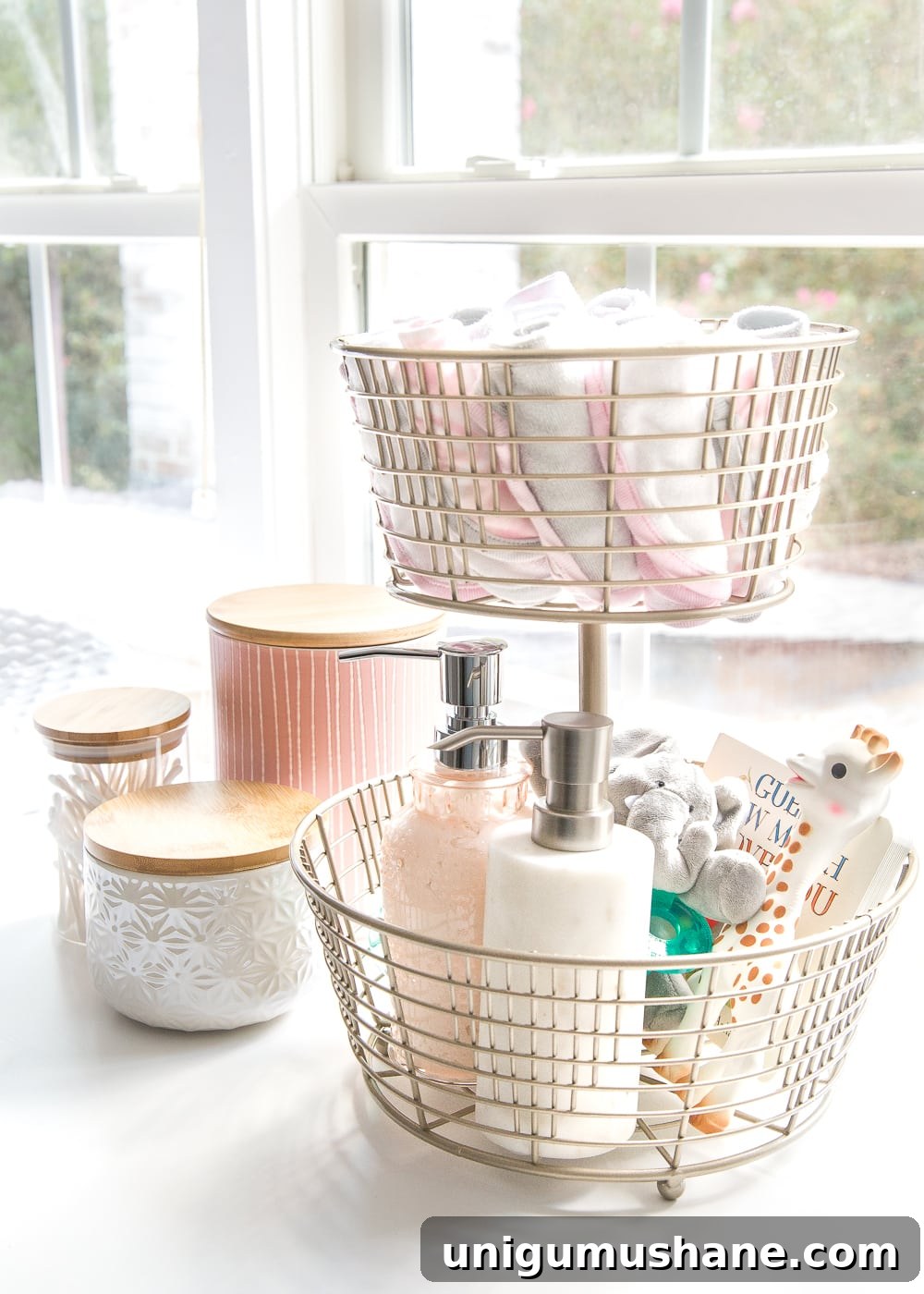
A tiered fruit basket is a kitchenware find that works beautifully in the nursery. It’s great for storing Wubbanubs (small soft toys), washcloths, and grabby toys—things that help distract a baby during diaper changes. I also keep soap dispensers in it for hand sanitizer and lotion for quick access.
Dresser
For the dresser I chose a new IKEA Hemnes because of the many available drawer inserts and organizational accessories. Investing in a piece with insert possibilities makes it much easier to keep clothing and supplies separated by category and size.
4. Dresser Drawer #1: Diapering and meds
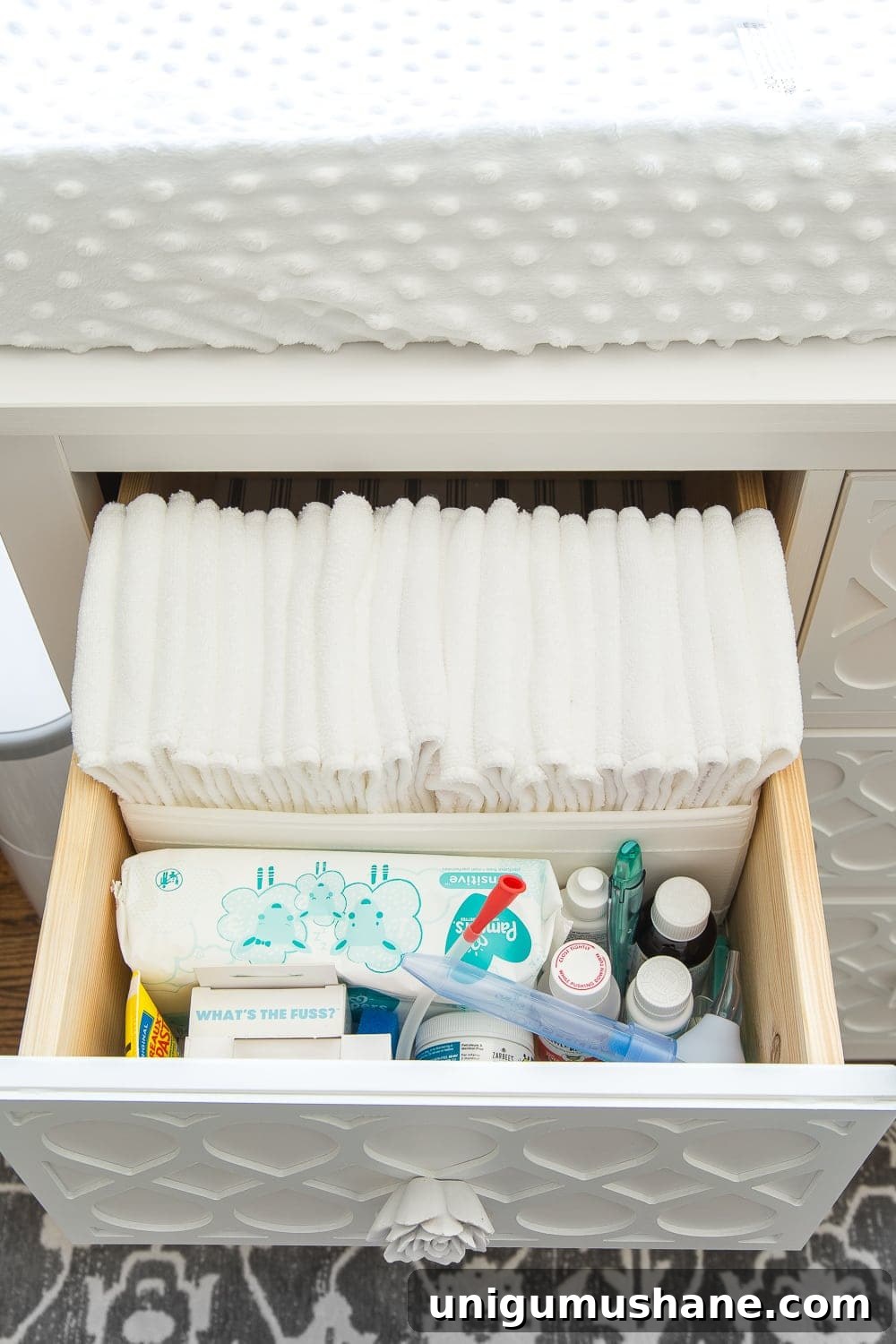
This top drawer holds cloth diaper liners (we’re trying cloth diapering), medicines, diaper cream, thermometer, and an aspirator. Keeping these up high and together helps keep dangerous items out of reach as the baby grows. I also keep a small container of disposable wipes for quick clean-ups when needed.
5. Dresser Drawer #2: Cloth diaper covers
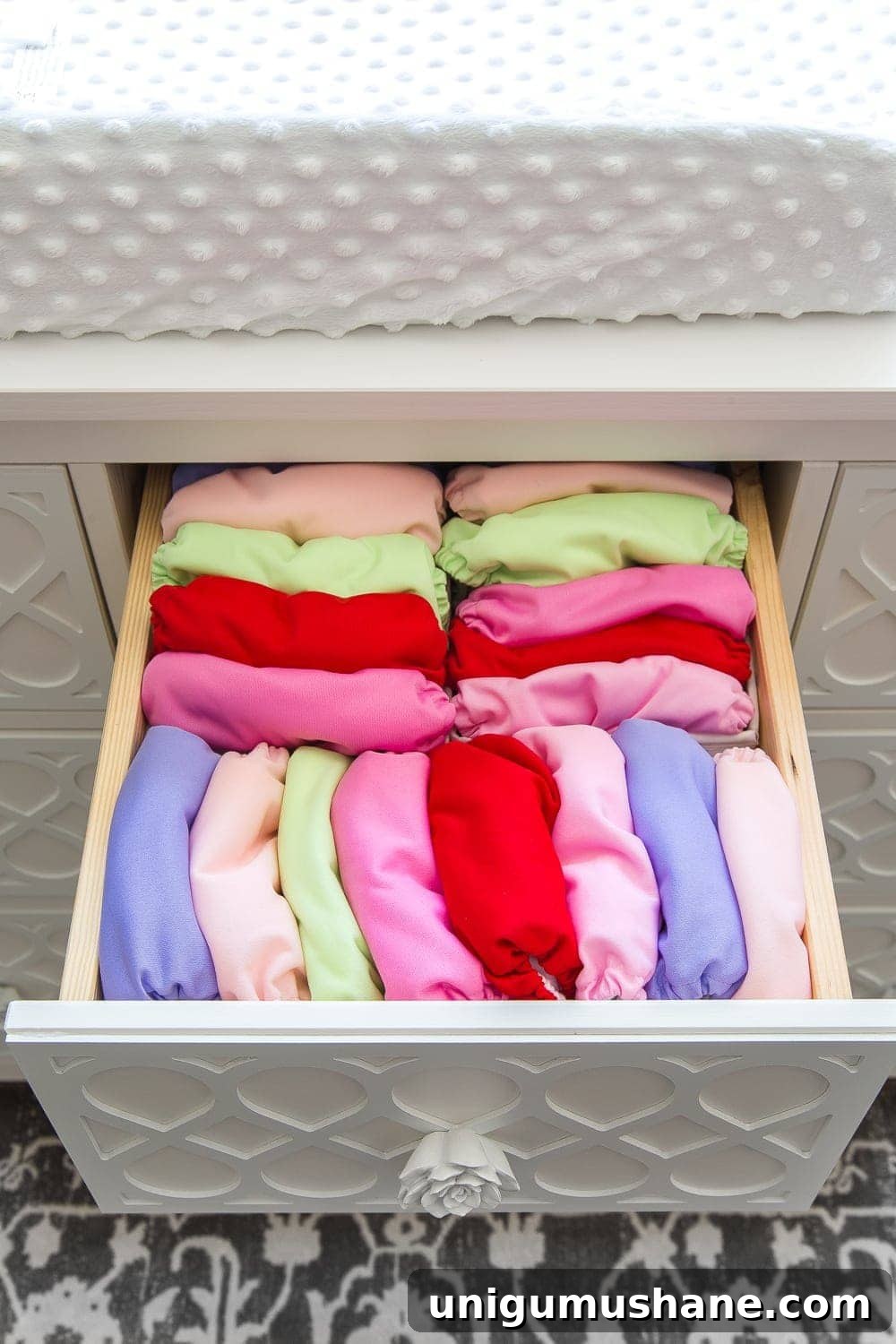
All cloth diaper covers are stored in one drawer. Organizing by item type makes laundry and quick changes simpler—we keep about 30 covers, which is close to a commonly recommended amount for a cloth-diaper rotation.
6. Dresser Drawer #3: Extras and small clothing
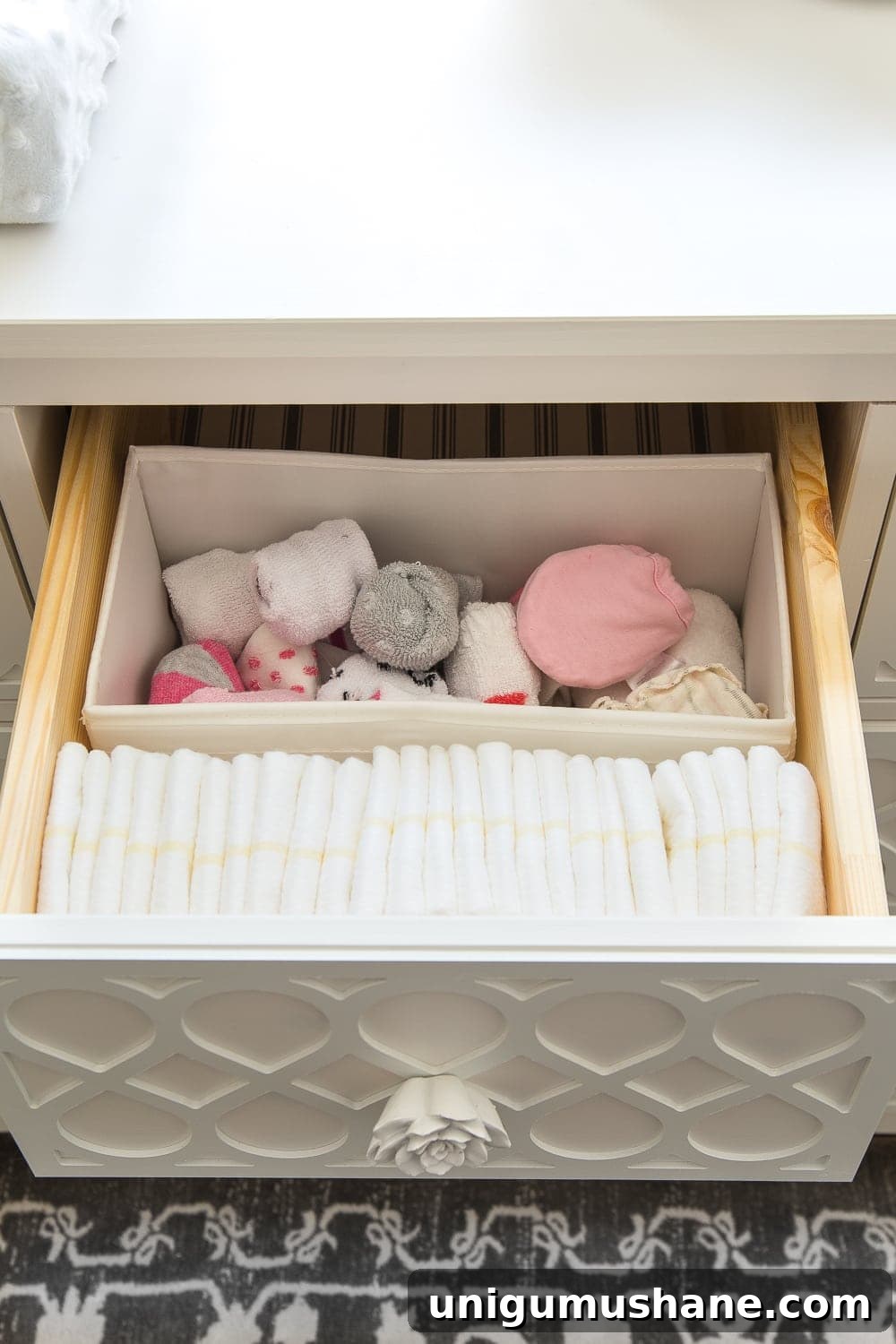
We keep a small supply of disposable diapers here for babysitters or grandparents who prefer them, along with an organizer that holds socks and mittens. It’s handy to have both cloth and disposable options available.
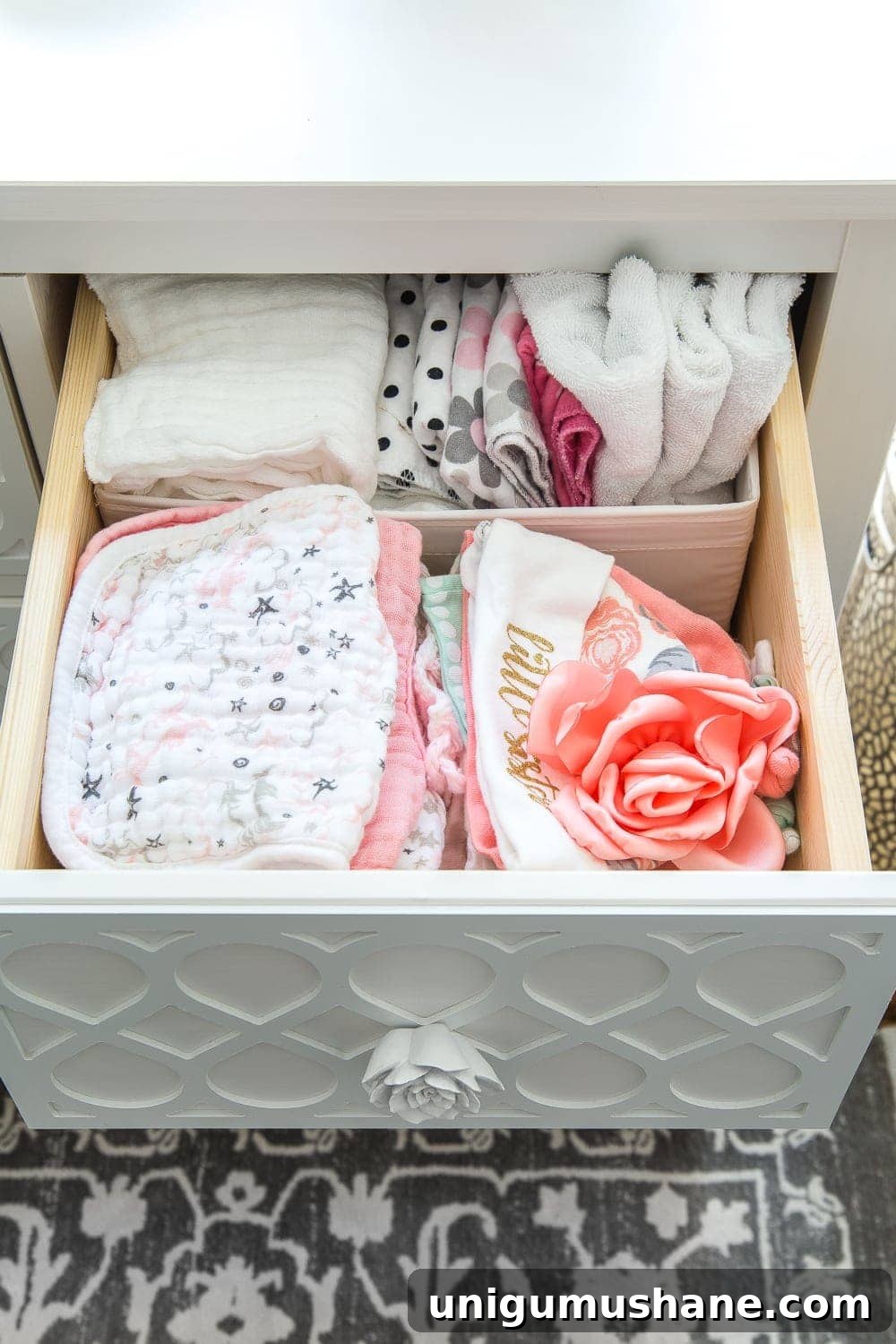
7. Dresser Drawer #4: Burp cloths, bibs, hats
Burp cloths, bibs, and baby hats are stacked and organized here for easy grabbing during feeds and outings.
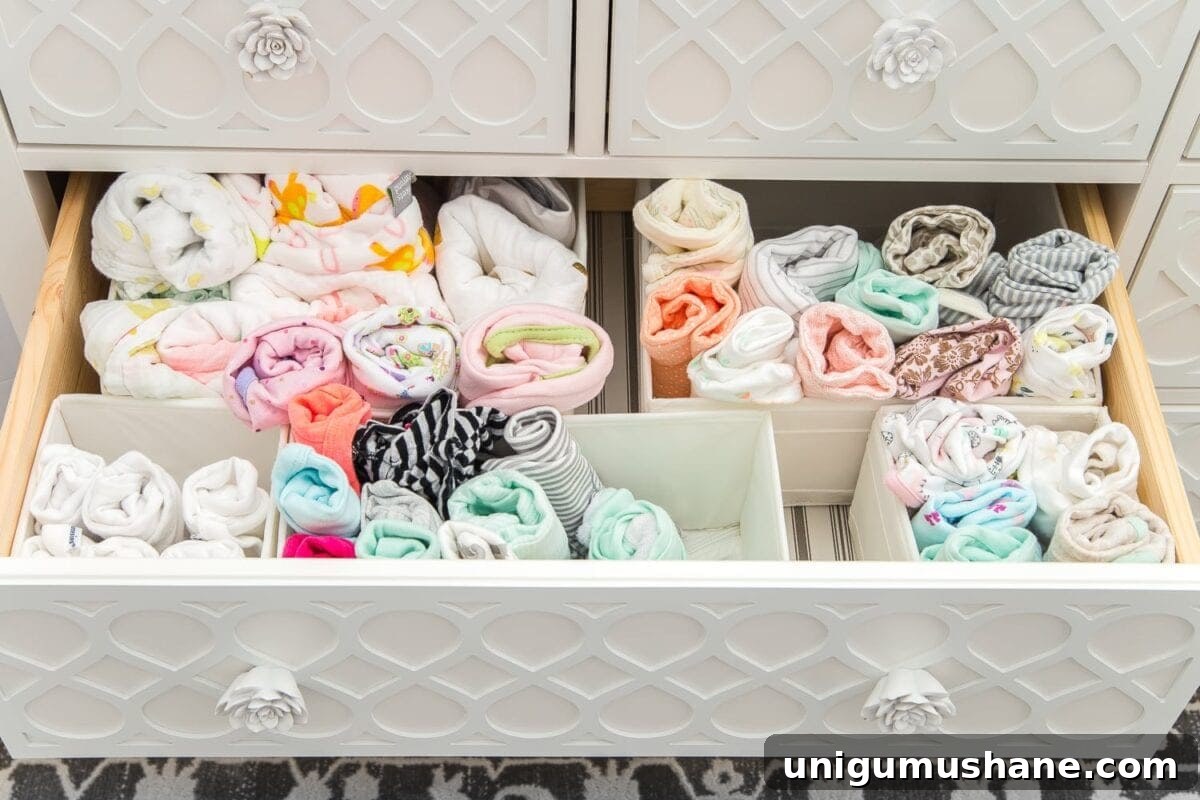
8. Dresser Drawer #5: Newborn and 0–3 months
Swaddle blankets are rolled to save space and kept within reach, since swaddles are essential those first months. This drawer also holds newborn and 0–3 month onesies, pajamas, and gowns.
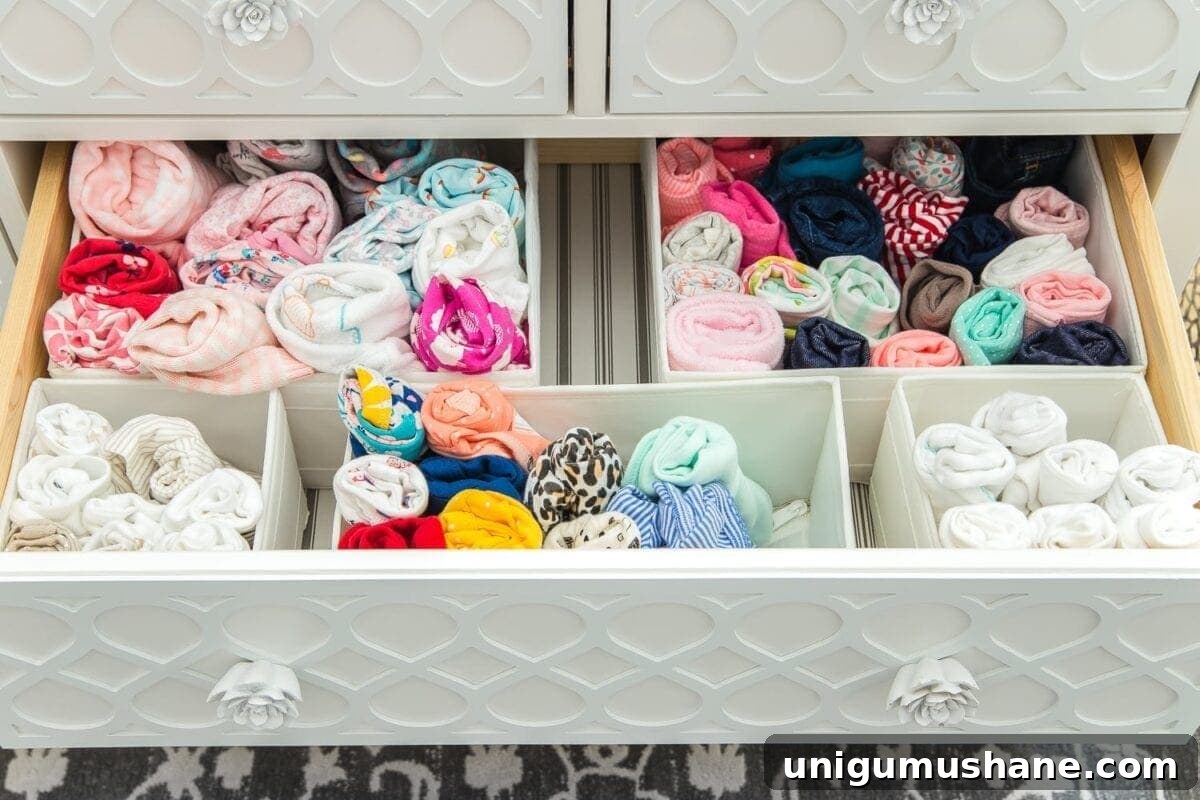
9. Dresser Drawer #6: 3–6 months
This drawer is dedicated to 3–6 month pajamas, onesies, and pants—keeping clothing grouped by size speeds up dressing and laundry rotation.
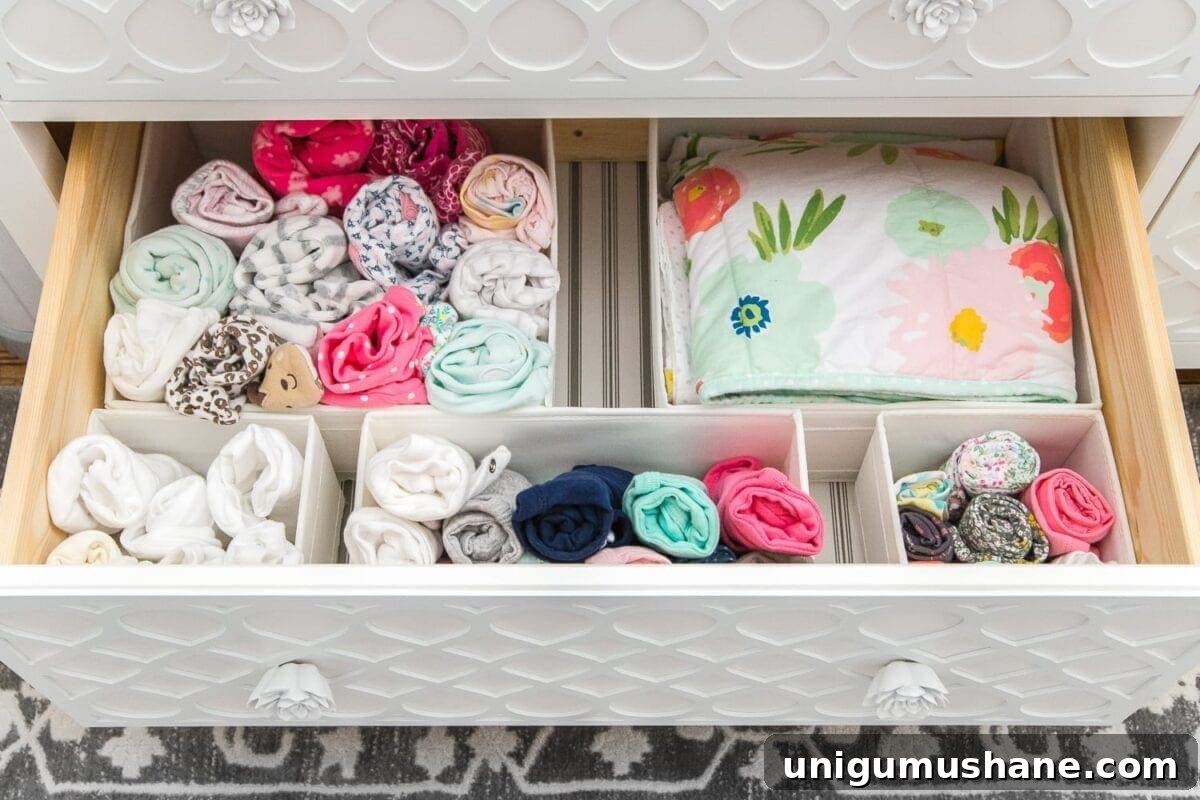
10. Dresser Drawer #7: 6–9 months
Clothes sized 6–9 months live here, along with a few security blankets and transitional items that may be useful soon.
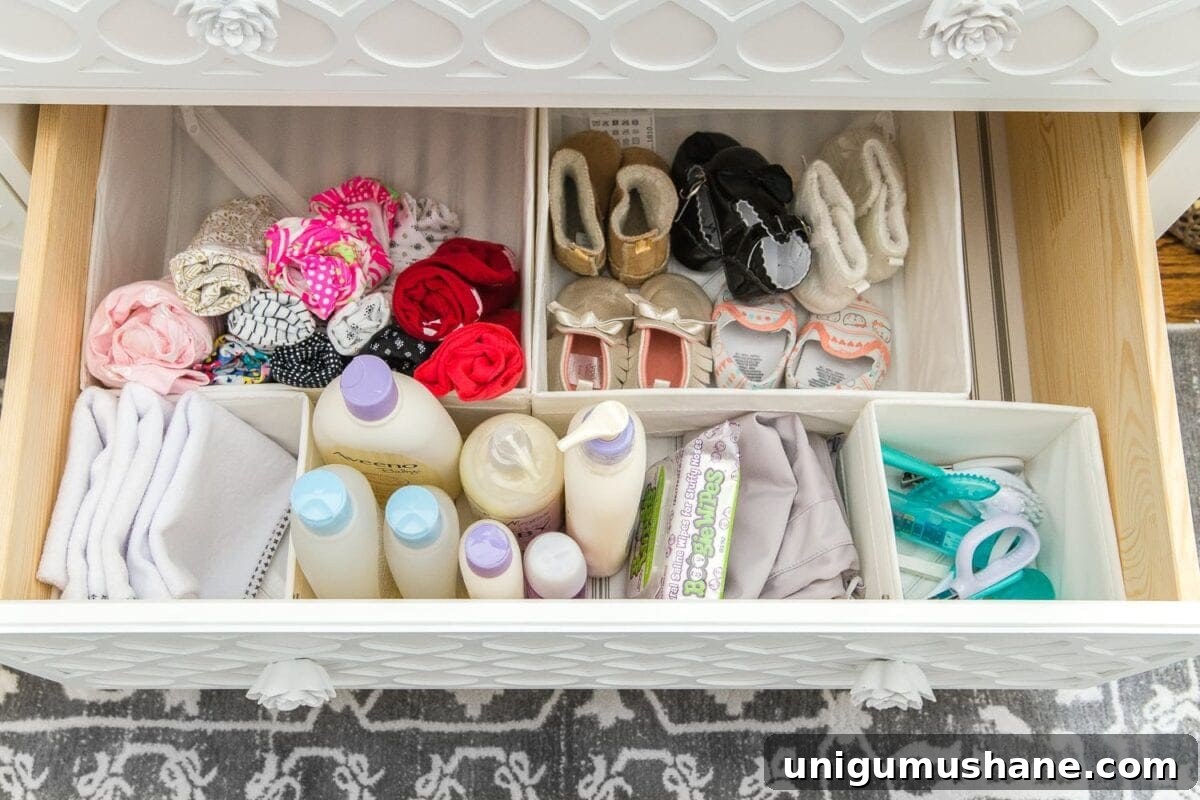
11. Dresser Drawer #8: 9–12 months + extras
This drawer houses the smaller 9–12 month stash along with bathing products, spare lotions, changing pad protectors, extra covers, travel wet bags, diaper pail liners, boogie wipes, and a grooming kit.
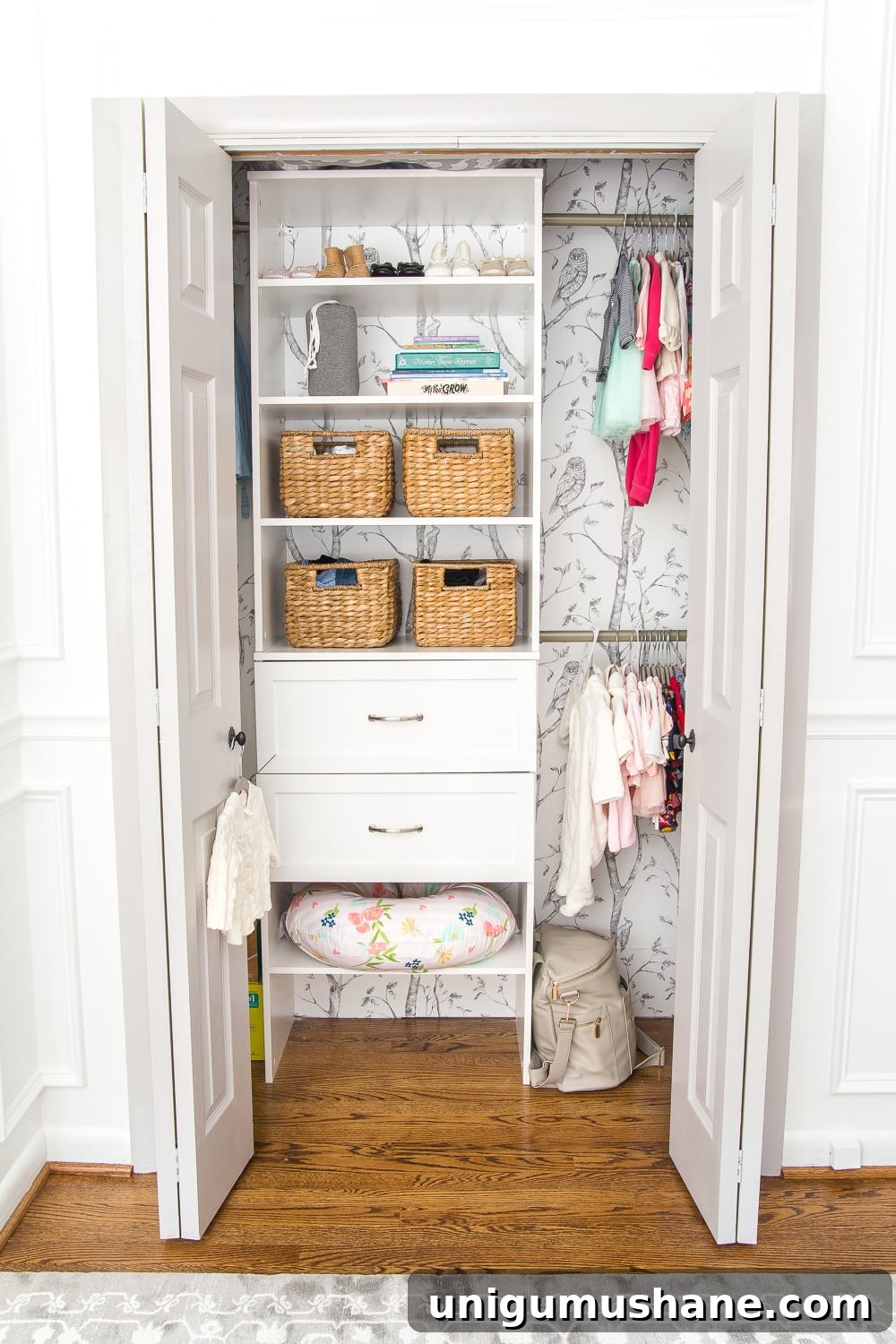
Closet
We replaced old wire shelving with solid shelves, drawers, and baskets to make the closet much more functional. A touch of wallpaper made it a nicer place to keep tidy, too—when a space looks good, you’re more likely to maintain it.
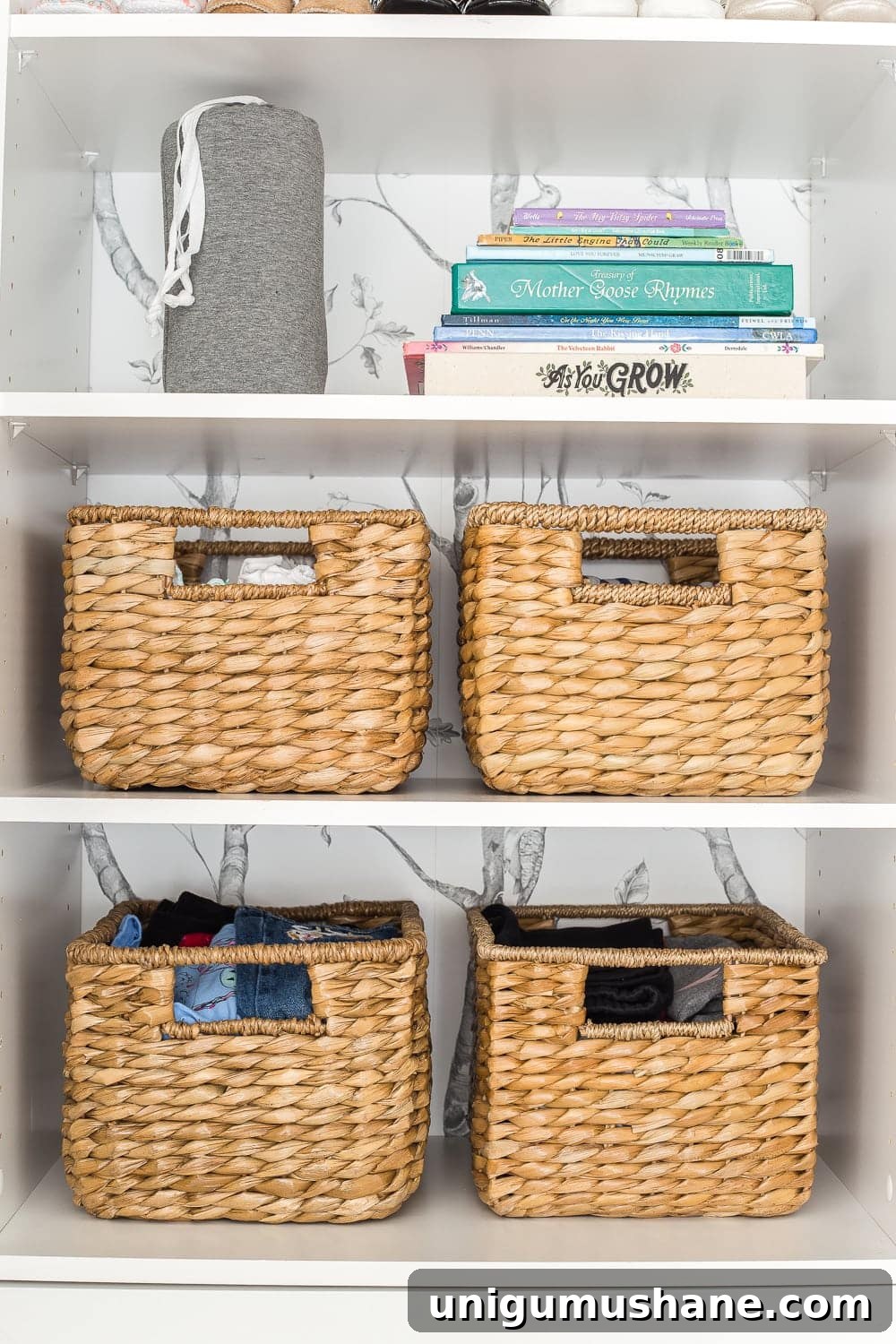
12. Closet baskets for future sizes
Large baskets hold clothing in larger sizes—12, 18, and 24 months—so hand-me-downs and future outfits stay out of the way until they’re needed. When it’s time, move the baskets to the dresser or lower shelves for daily use.
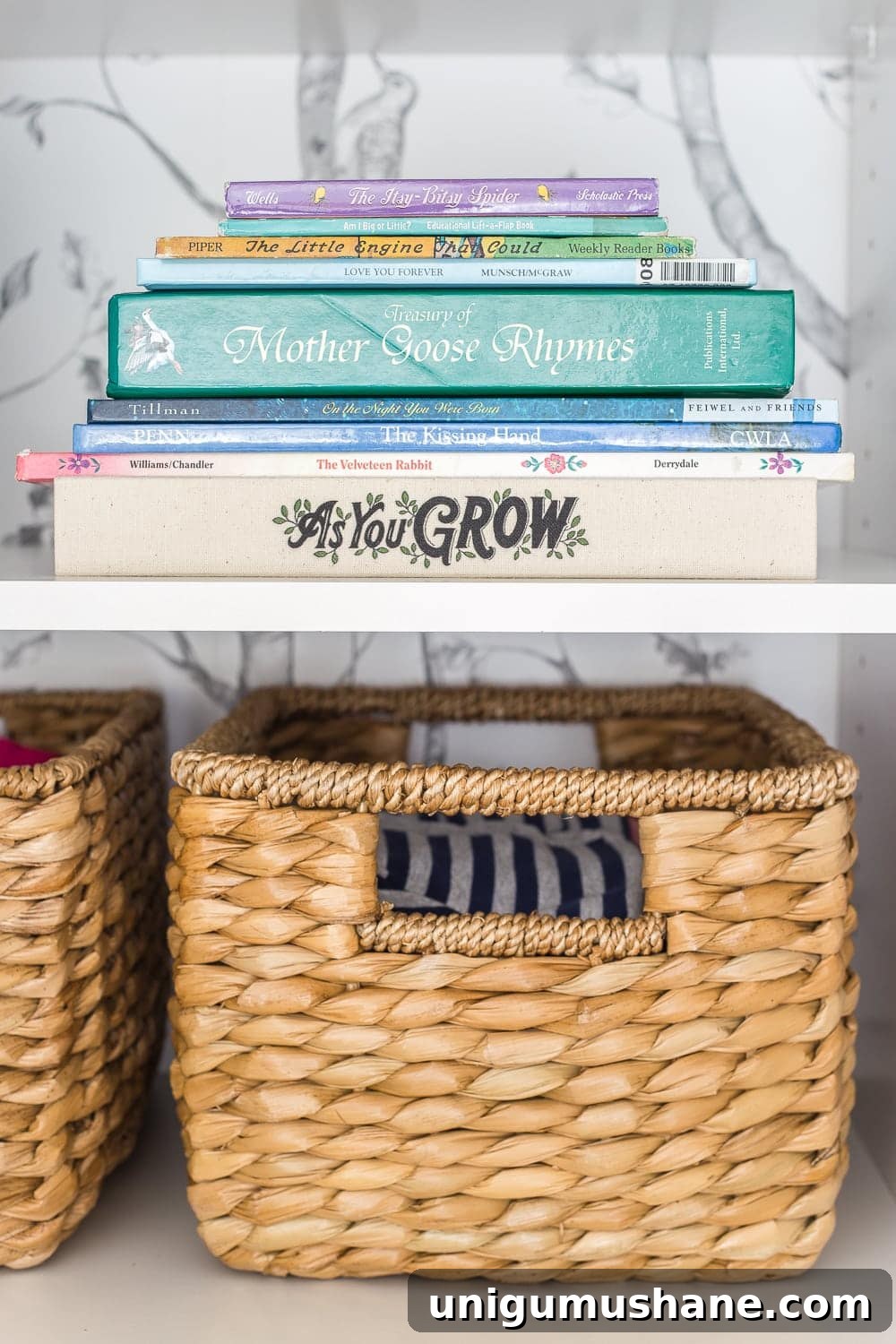
13. Books for storytime
A basket or shelf for books keeps bedtime stories handy. We also keep the baby book on a shelf so it’s easy to jot down milestones and memories as they happen.
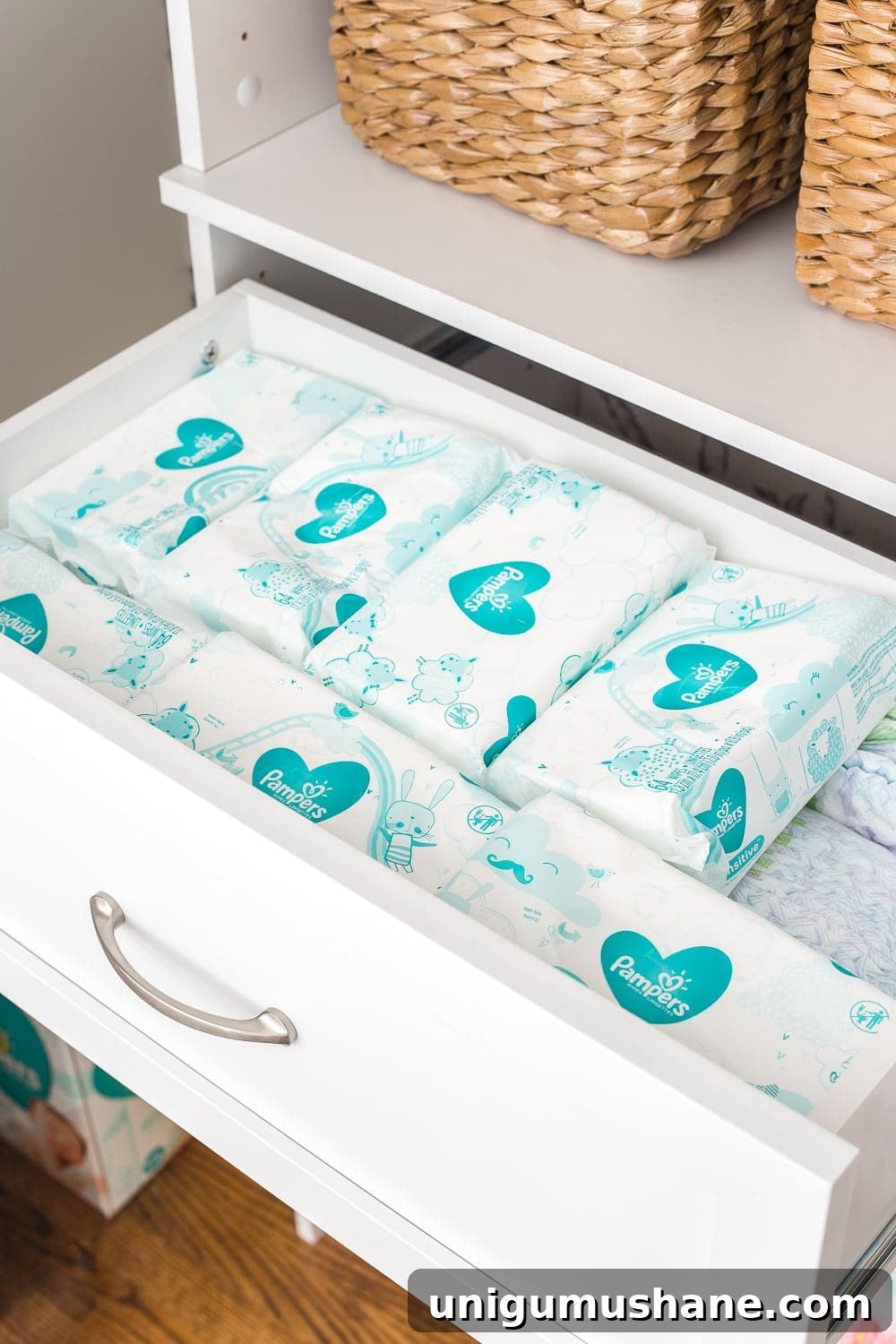
14. Closet Drawer #1: Travel and backup supplies
Extra disposable diapers and packs of wipes live here for travel or for caregivers who prefer disposables. Keeping a backup supply prevents last-minute runs to the store.
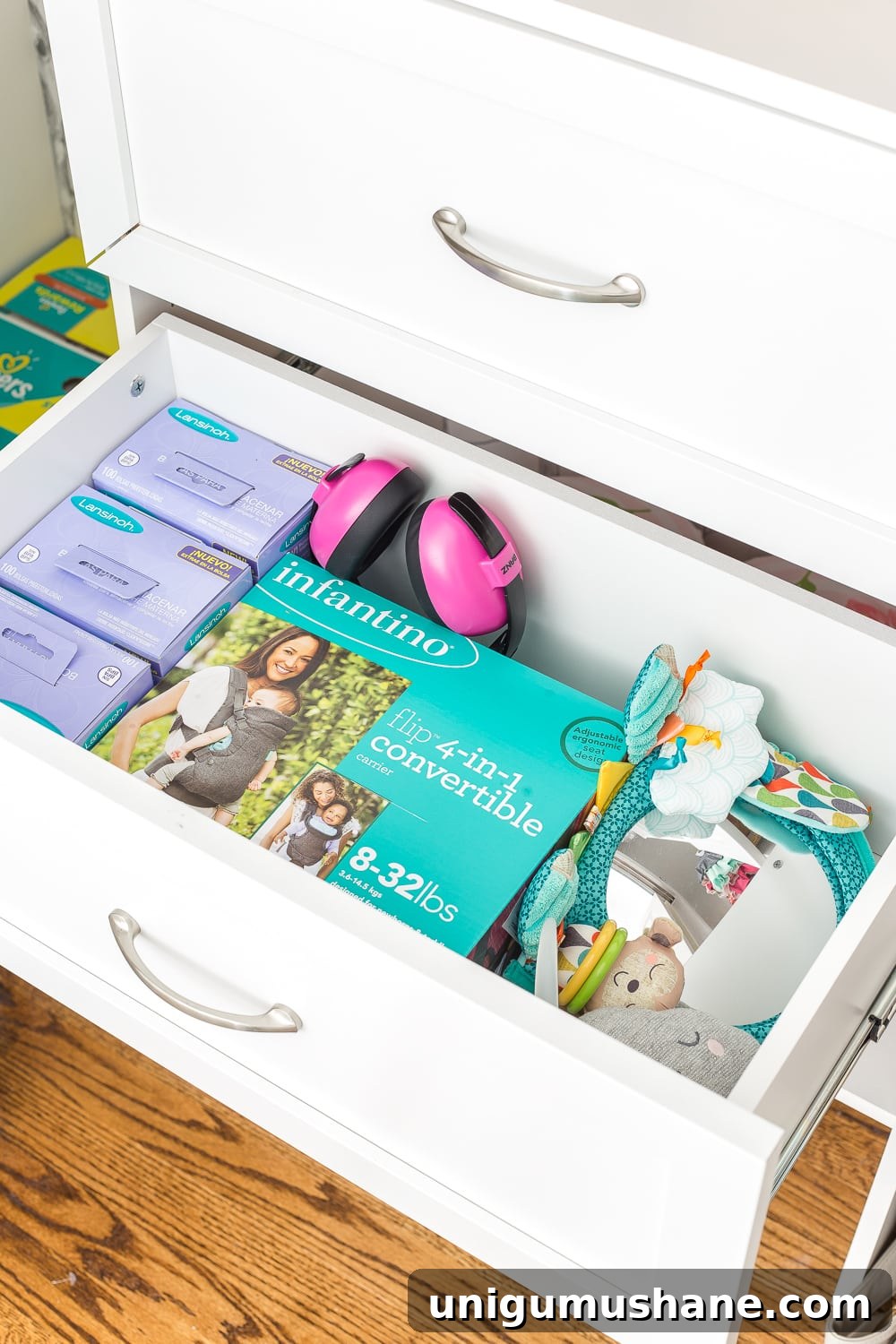
15. Closet Drawer #2: Catch-all
This drawer is a catch-all for breast milk storage bags, the baby carrier, noise-canceling ear muffs for loud outings, and a few tummy-time toys—items we need occasionally but don’t use every day.
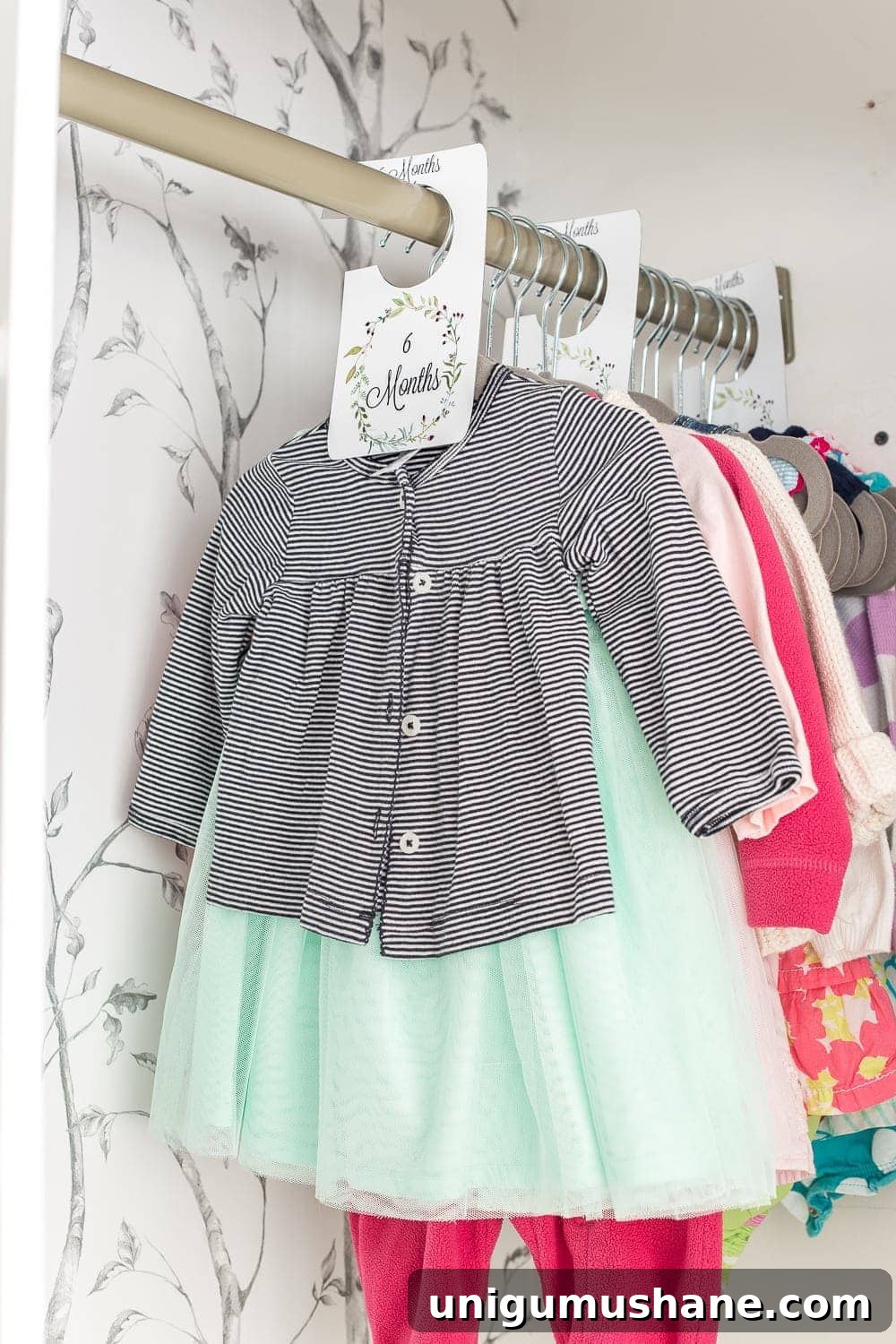
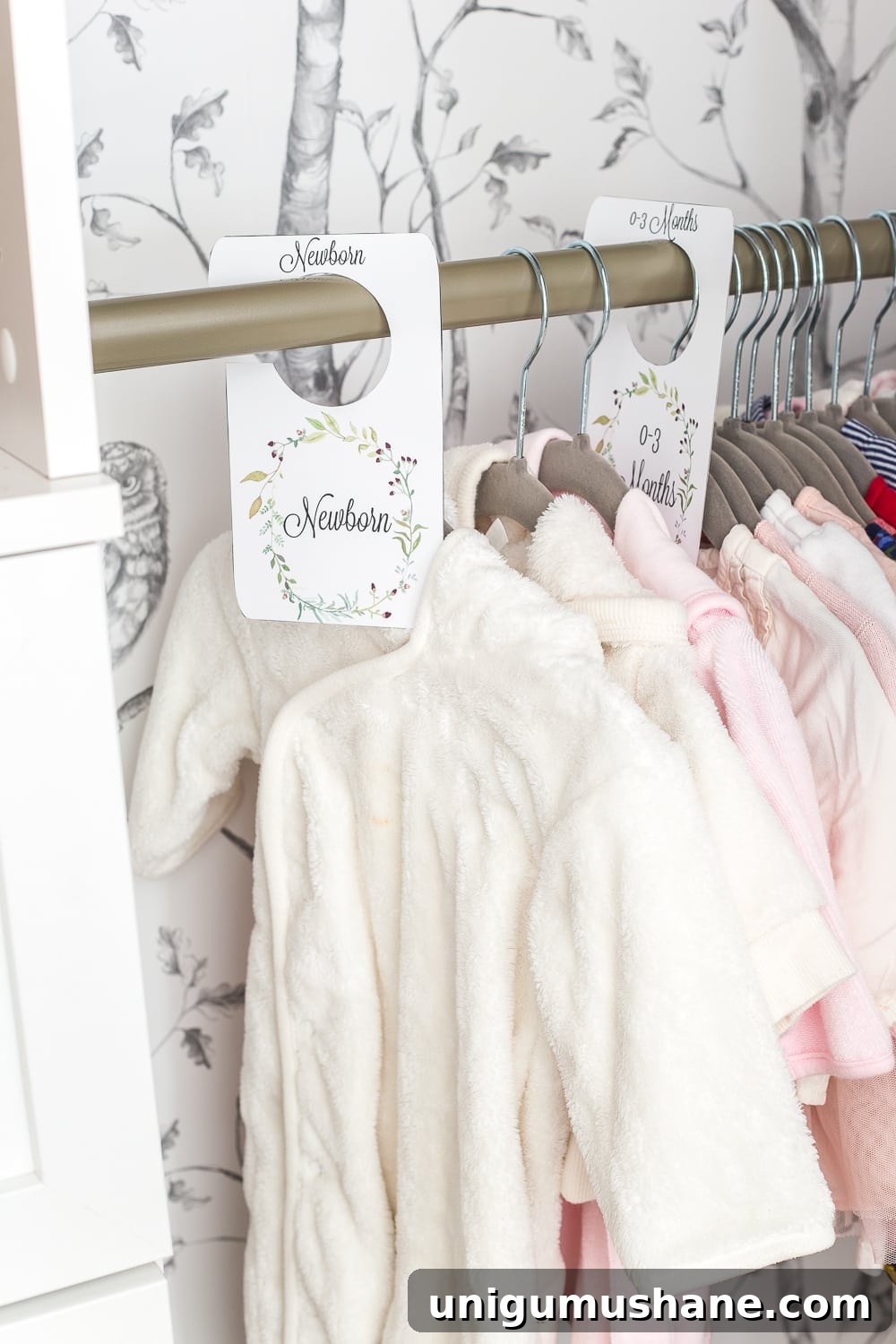
16. Closet divider tags
Printed divider tags keep hanging clothes separated by size so you can quickly find the right outfit. Labels make the closet more intuitive for anyone helping with dressing or laundry.

Glider
The glider gets the most use for nursing and rocking, so I keep essential items close by to avoid getting up mid-feed.
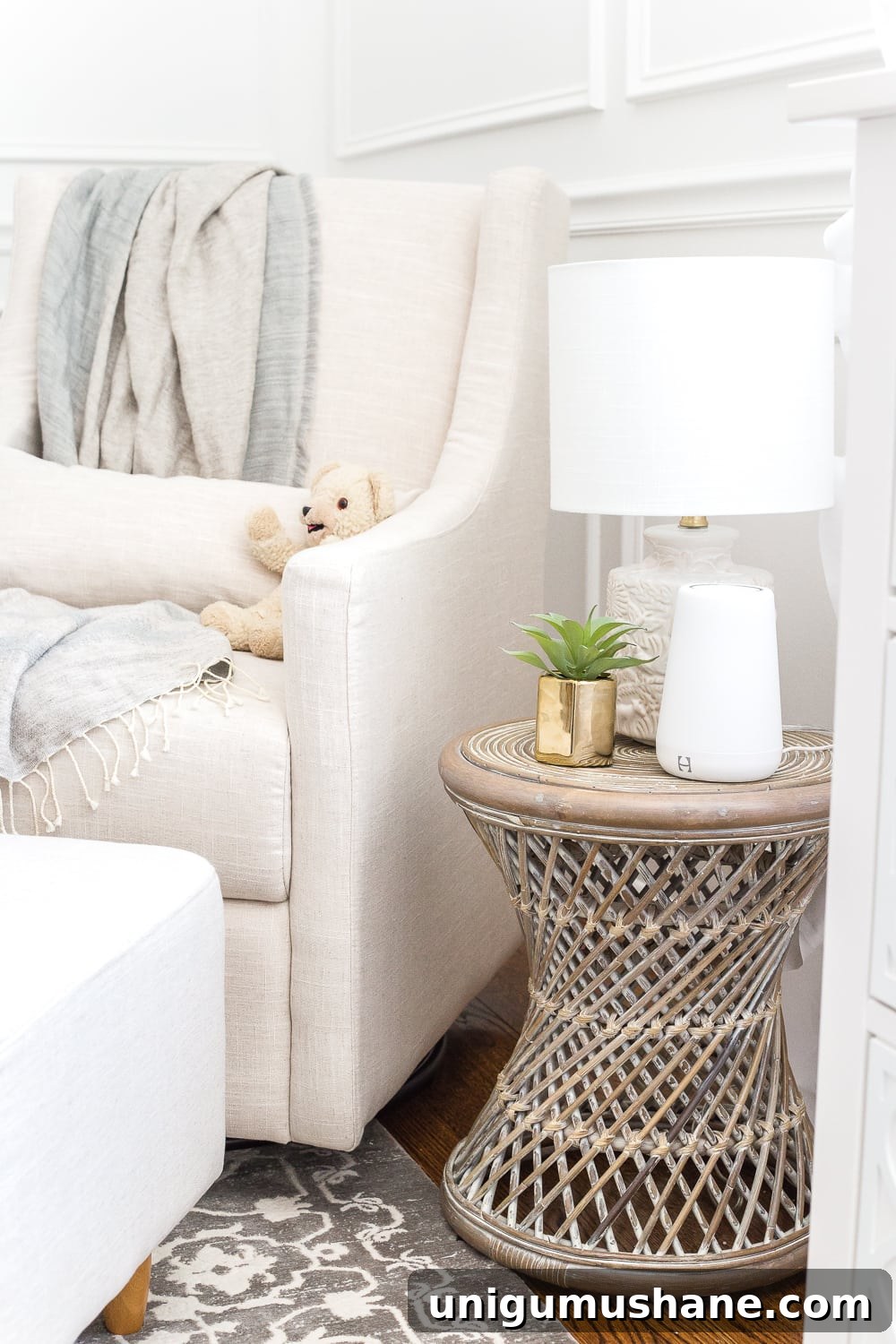
17. Side table
A side table holds a lamp with a soft sleeper bulb for low, calming light and a sound machine set to white noise for consistent sleep cues. These small sleep-friendly touches help soothe the baby without harsh lights or noisy interruptions.
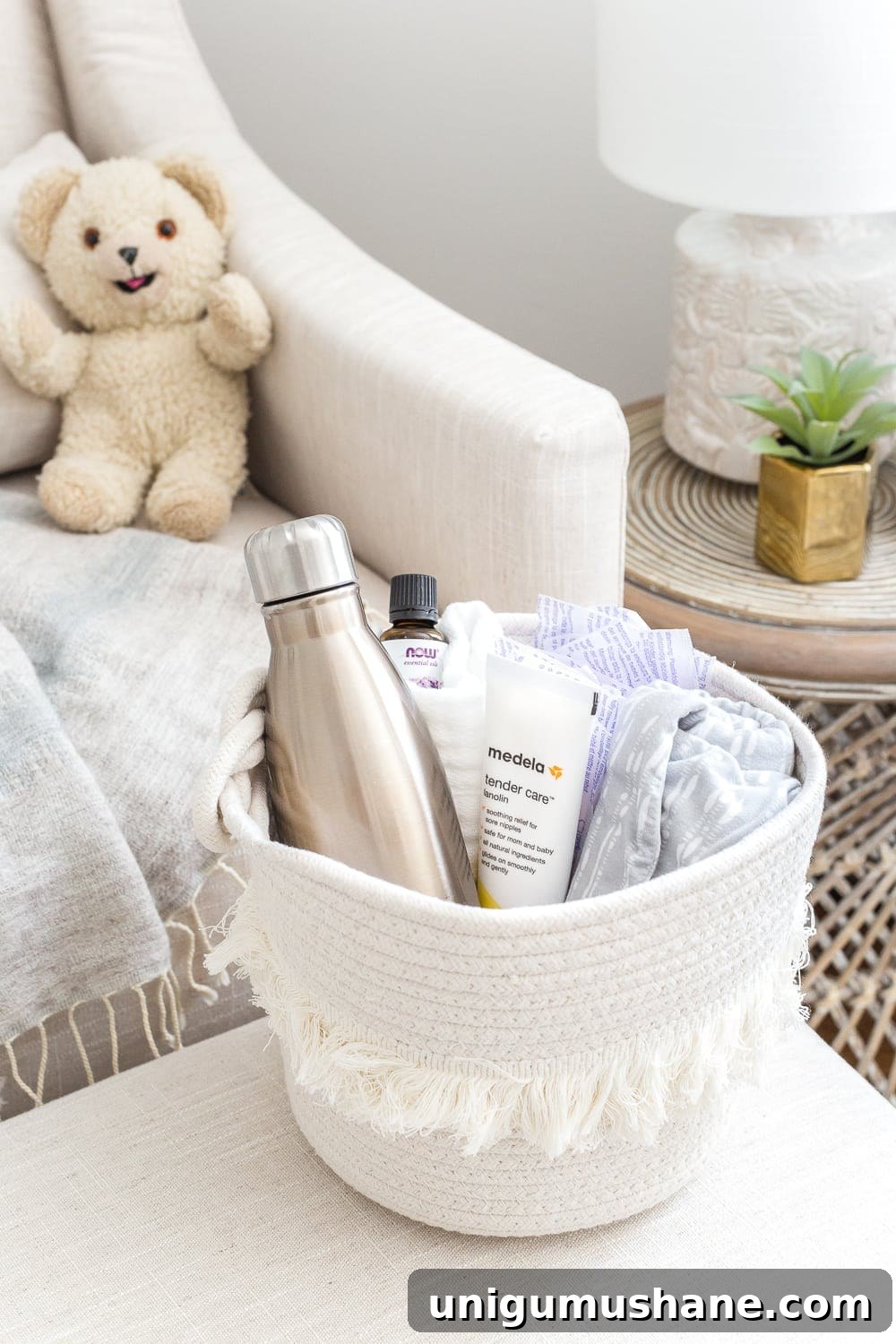
18. Nursing basket
A small basket beside the glider holds nursing essentials: nursing pads, lanolin, burp cloths, a water bottle, a nursing cover, and a little lavender oil for a diffuser to create a calm environment. Having these items in one place saves time and reduces distractions.
That’s the full nursery organization tour. Little humans come with a lot of gear, but a few intentional systems—labeled storage, sizes sorted, and everyday items kept within arm’s reach—make parenting routines easier and calmer. If you have other nursery organization tips, I’d love to hear them—there’s always room for one more smart shortcut.