
If you’ve been following along with me on Instagram stories, you probably already know we’ve been painting—quite a lot—since planning the paint scheme for this new house. Choosing paint colors can feel like a fresh start: you imagine new possibilities, test different personalities for your rooms, and then settle on a version that feels like you but even better.
I love experimenting with bold hues, but neutral colors will always have my heart. A clean white brightens and refreshes a room, while a soft gray keeps options open for switching accessories and decor down the road. Beige often gets unfairly labeled “boring,” yet its calming presence makes it ideal for winding down after a long day. Choosing the right neutral can set the tone for a home that feels timeless, cozy, and easy to update.
The other day I stopped into Benjamin Moore to pick up sample pots for all our walls. I thought I’d share a curated list of reliable neutrals—organized by cool, warm, whites, and darks—along with practical tips for choosing and testing paint. These are colors that work well across many home styles and lighting conditions, so if you’re ready to roll up your sleeves and paint, these picks are a great place to start.
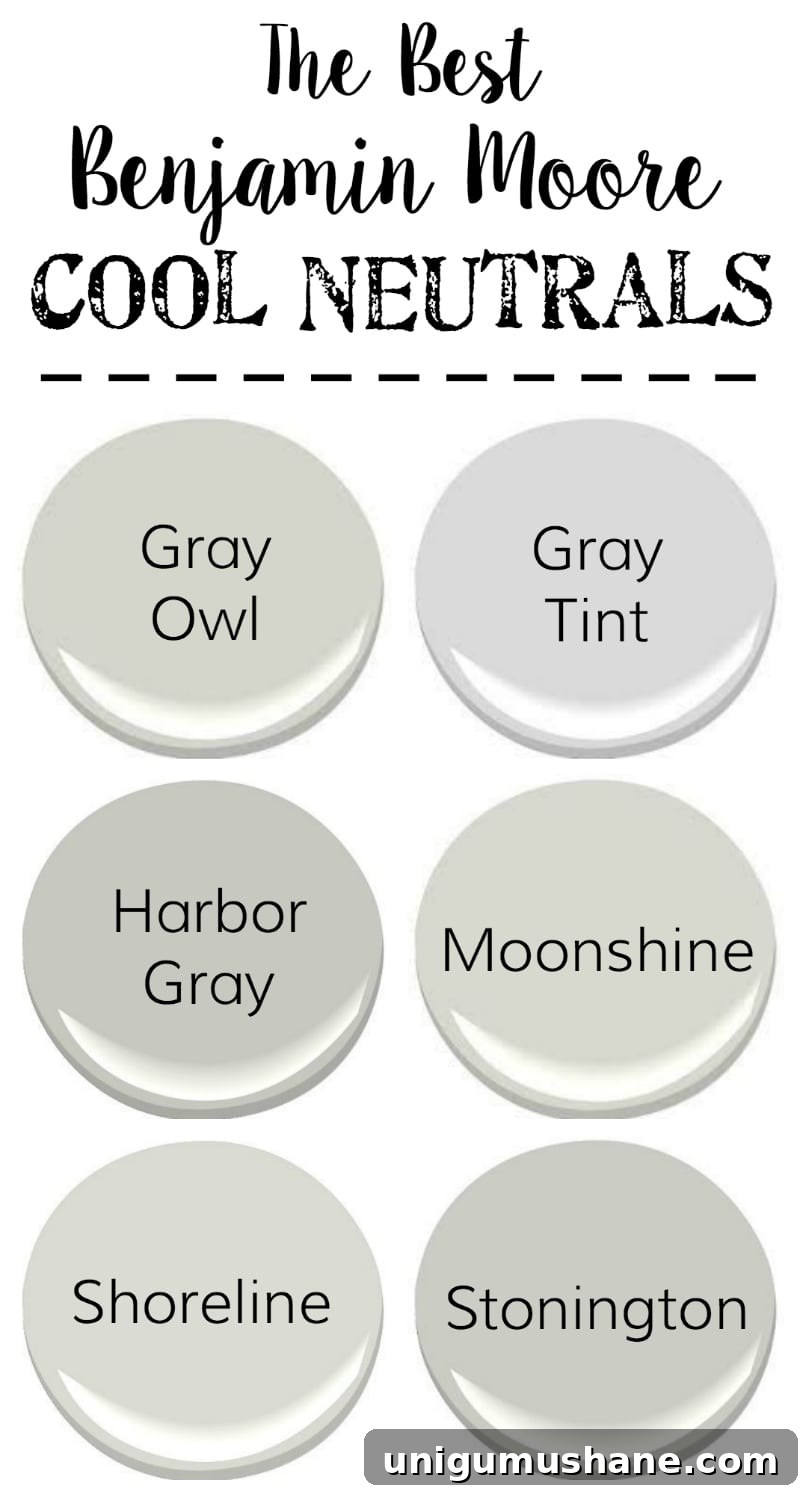
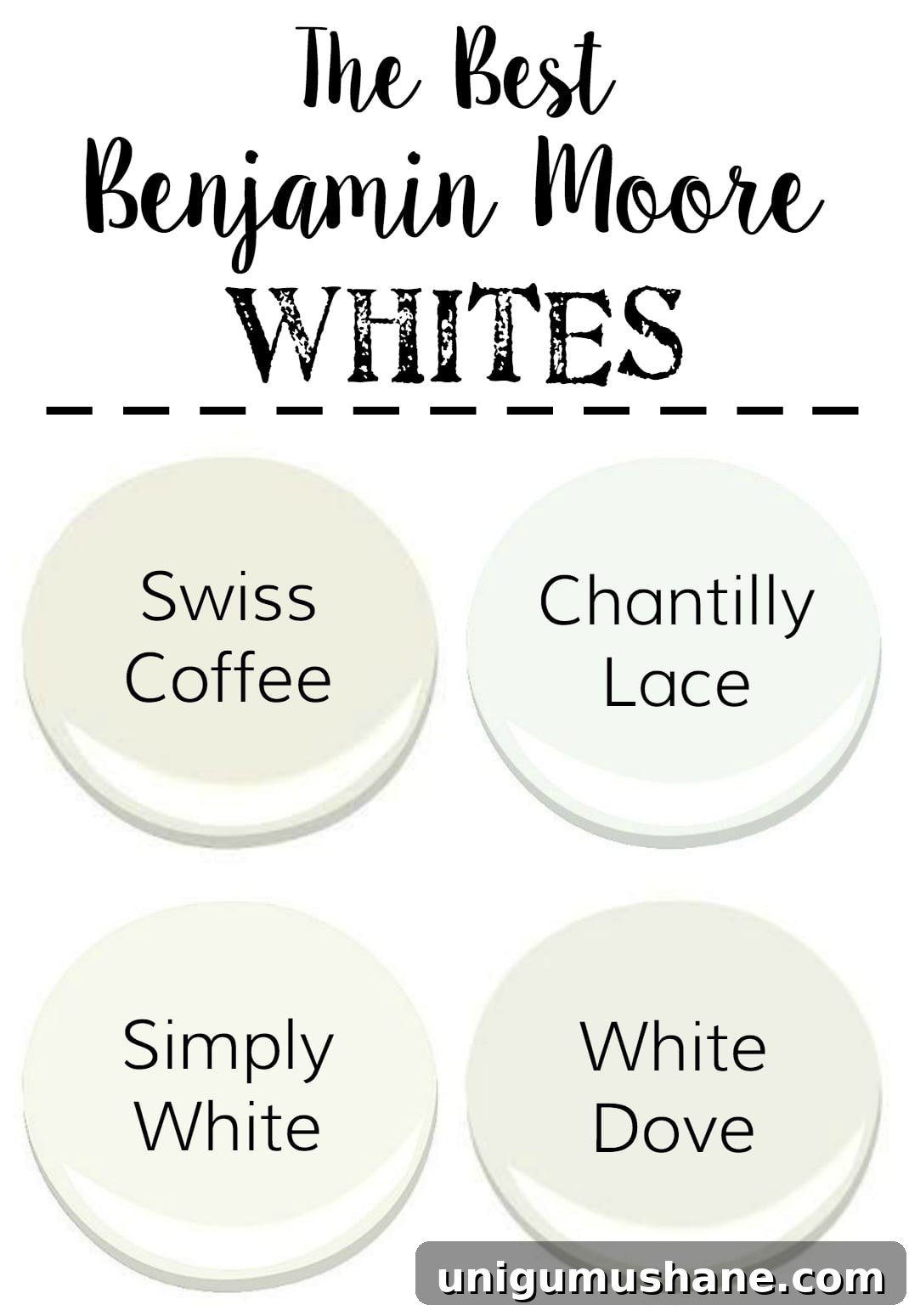
Cool Neutrals
Cool neutrals tend to have bluish or greenish undertones and read as crisp and modern in most light. They’re ideal for rooms with abundant natural daylight or spaces where you want a subtle, contemporary backdrop.
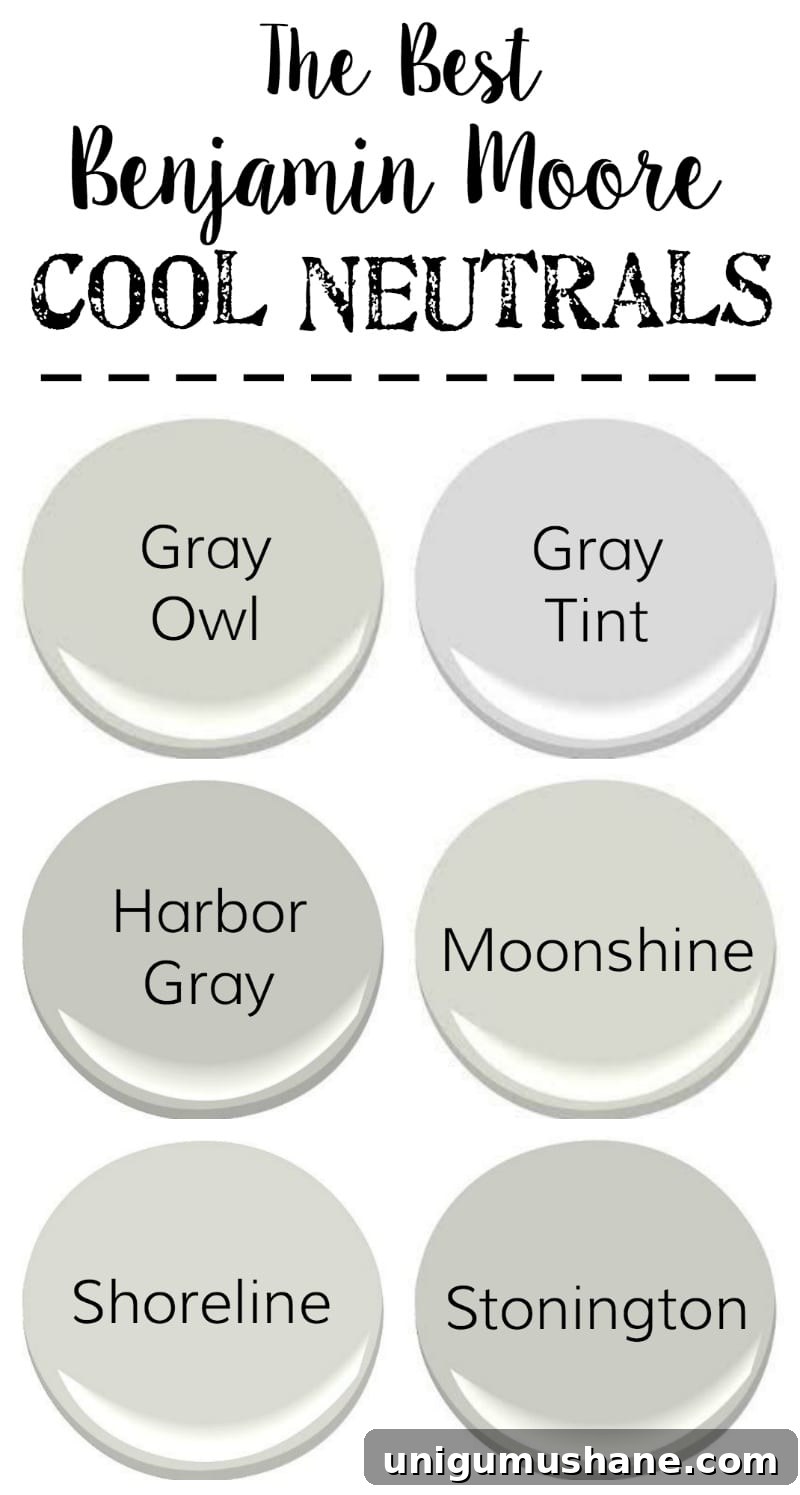
Warm Neutrals
Warm neutrals have subtle yellow, beige, or red undertones that create an inviting, cozy atmosphere. They coordinate beautifully with wooden finishes, brass hardware, and layered textiles, and they can balance cooler gray accents in open-plan spaces.
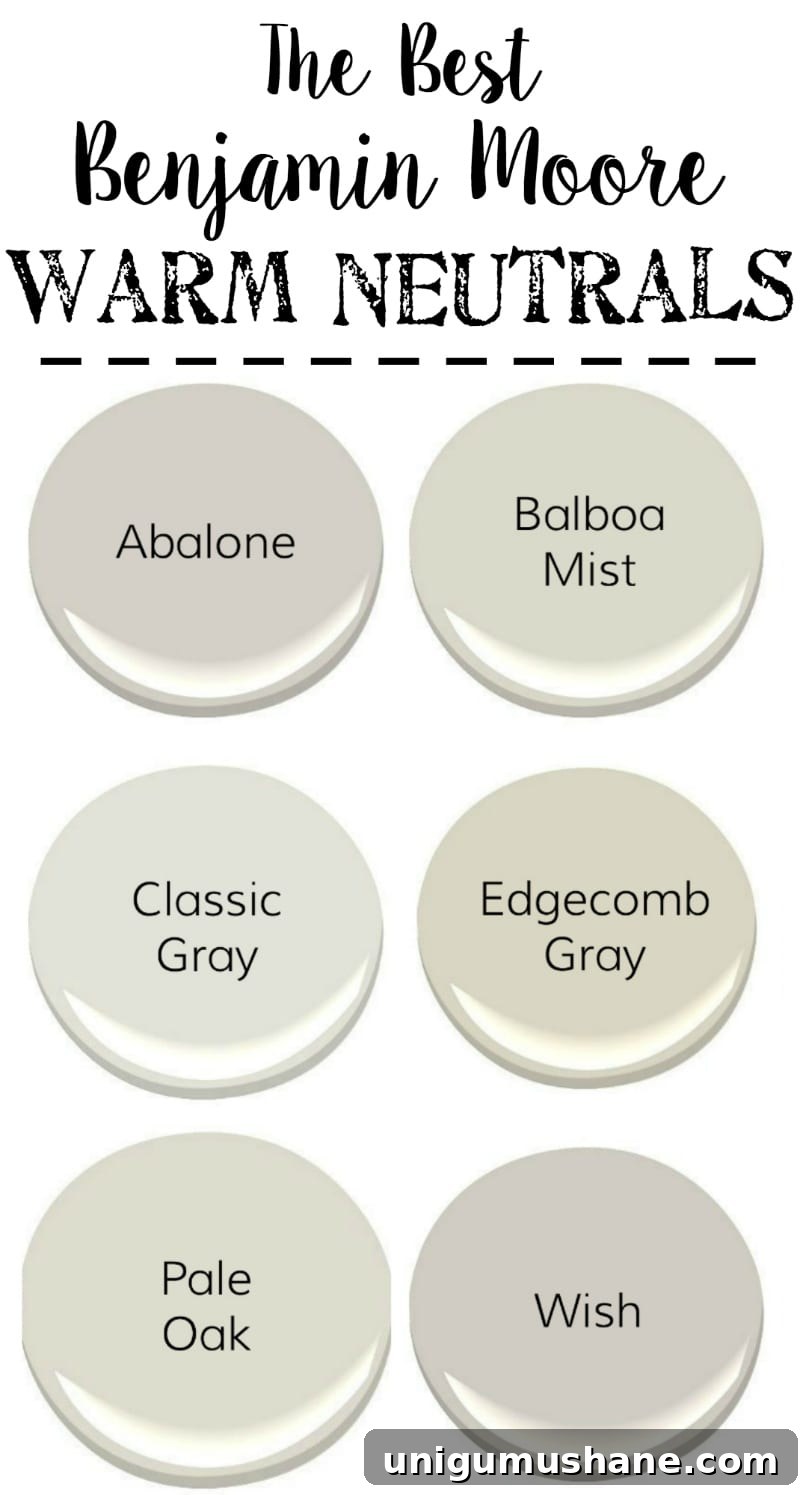
Whites
Whites are deceptively complex. Some whites read warm and creamy, while others are bright and crisp. For cabinets, trim, and rooms that need a lift, these whites are my go-tos. In our new house we painted the living room walls Swiss Coffee for a warm, welcoming glow that still feels bright. For trim, we used Simply White to keep the woodwork looking fresh and clean while complementing creamier wall tones.
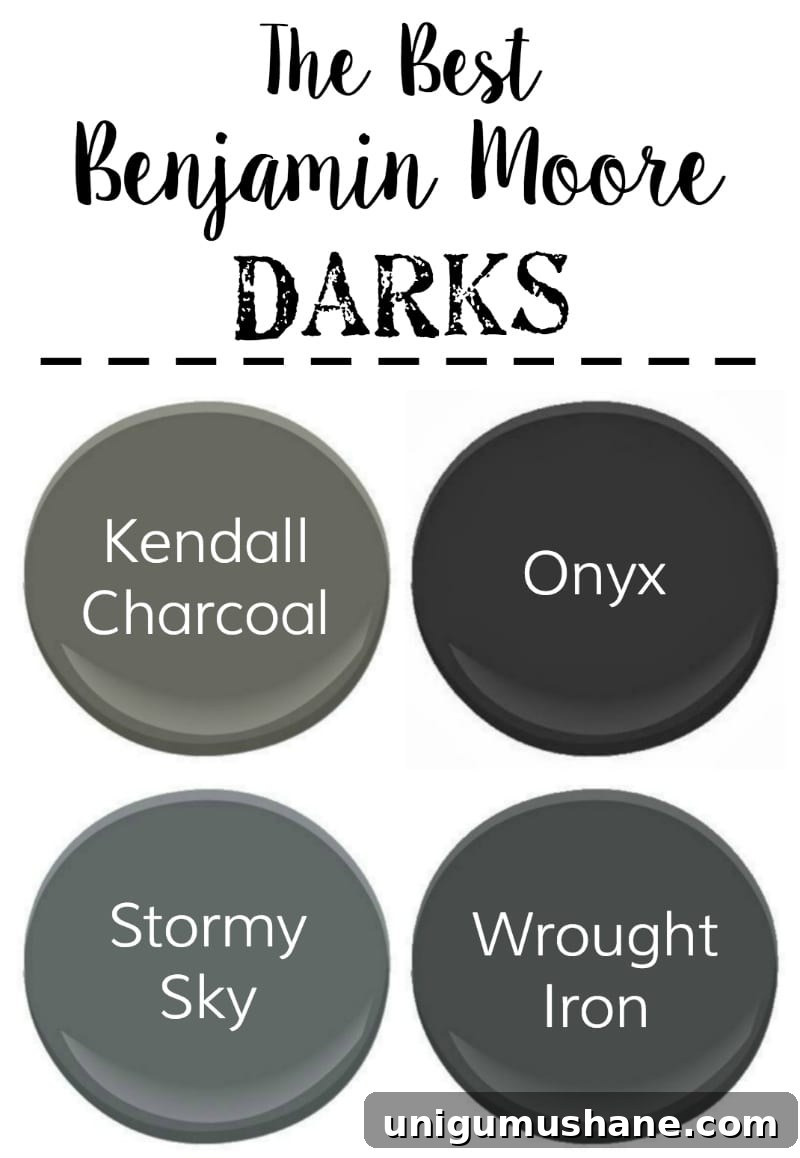
Darks
Dark paints add drama, depth, and a touch of luxury when used as accents, doors, or on an entire wall. Deep shades ground a room and create contrast against lighter neutrals. We painted our interior doors Wrought Iron, which reads richer than a flat black and has subtle dimension that looks refined against lighter trim and walls.
How to Choose the Right Neutral
Test paint samples on multiple walls and observe them at different times of day. Natural light, artificial light, and room orientation all change how an undertone reads. Place a 12×12 sample in full sun, partial shade, and near a lamp. Look at the paint next to your favorite furniture and flooring to make sure undertones harmonize rather than clash.
Consider sheen: eggshell or satin works well for most walls because they’re forgiving and easy to clean. Use semi-gloss for trim and doors for durability and a crisp finish. When sampling, paint a large enough swatch to see texture and depth, and let it dry fully before deciding.
Practical Painting Tips
Prep is everything—clean surfaces, repair holes, sand glossy spots, and use a quality primer when switching from a dark to a light color or when covering stains. Use good brushes and a high-quality roller for even coverage. Work in natural light when possible and paint interior trim first, then walls. Taping edges and using an angled brush helps speed up the process and ensures clean lines. If time is tight, enlist a helper to cut in while you roll; two people can finish a room much faster than one.
Just a few more touch-ups and I’ll be sharing the fully repainted living room later this week. Painting does take patience, especially in older homes with detailed trim, but the transformation is always worth the effort.
Do you have favorite neutral paint colors or speedy painting tips? I’d love to hear what colors you reach for or techniques that save you time.