
The “magic formula” for mixing and matching throw pillows like an interior decorator + the best resources for buying them.
It’s been a while since I shared a post in the Simplified Decorating series. Every so often I like to take a single decorating topic and break it down so the process feels simple and approachable.
I’m not a formally trained interior designer — I’m someone who studies what works, learns from professionals, and experiments in my own home. After asking on my Instagram Stories, many of you requested a post about mixing and matching throw pillows. So here it is: a straightforward system I use whenever I’m styling a bed, sofa, or chair.
Since I recently refreshed our master bedroom for the cooler months, it felt like the right moment to share my one main “Magic Throw Pillow Mixing and Matching Formula.” It’s not a strict rule, but it’s an easy, repeatable approach when you feel stuck.

(Some links below may be affiliate links.)
The Magic Throw Pillow Mixing and Matching Formula:
1 complex pattern/print + 1 geometric print + 1 solid or textured fabric
This trio creates visual interest through contrast while keeping the overall look balanced. If you prefer to think in color terms, a similar rule applies:
1 primary color + 1 accent color + 1 neutral
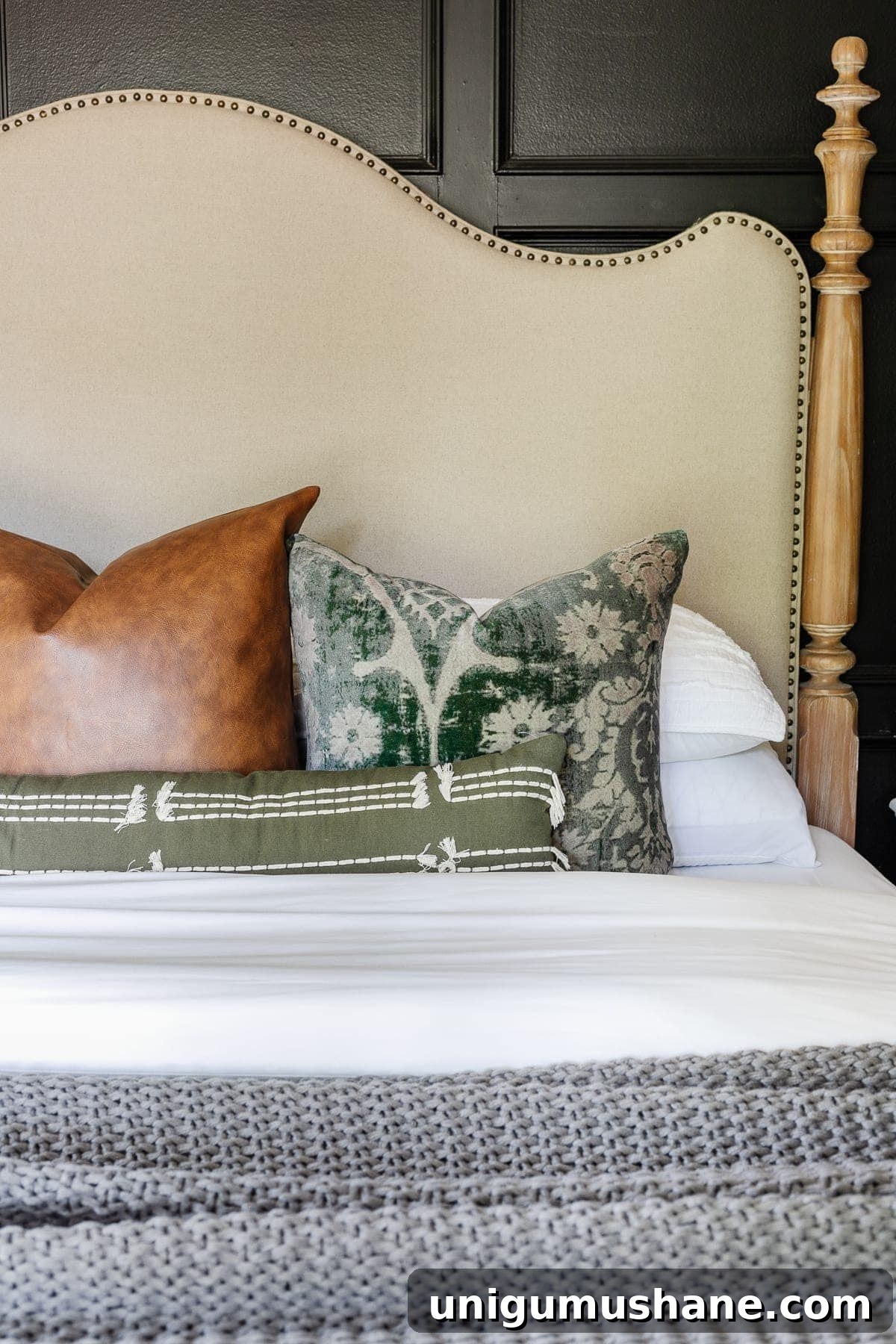
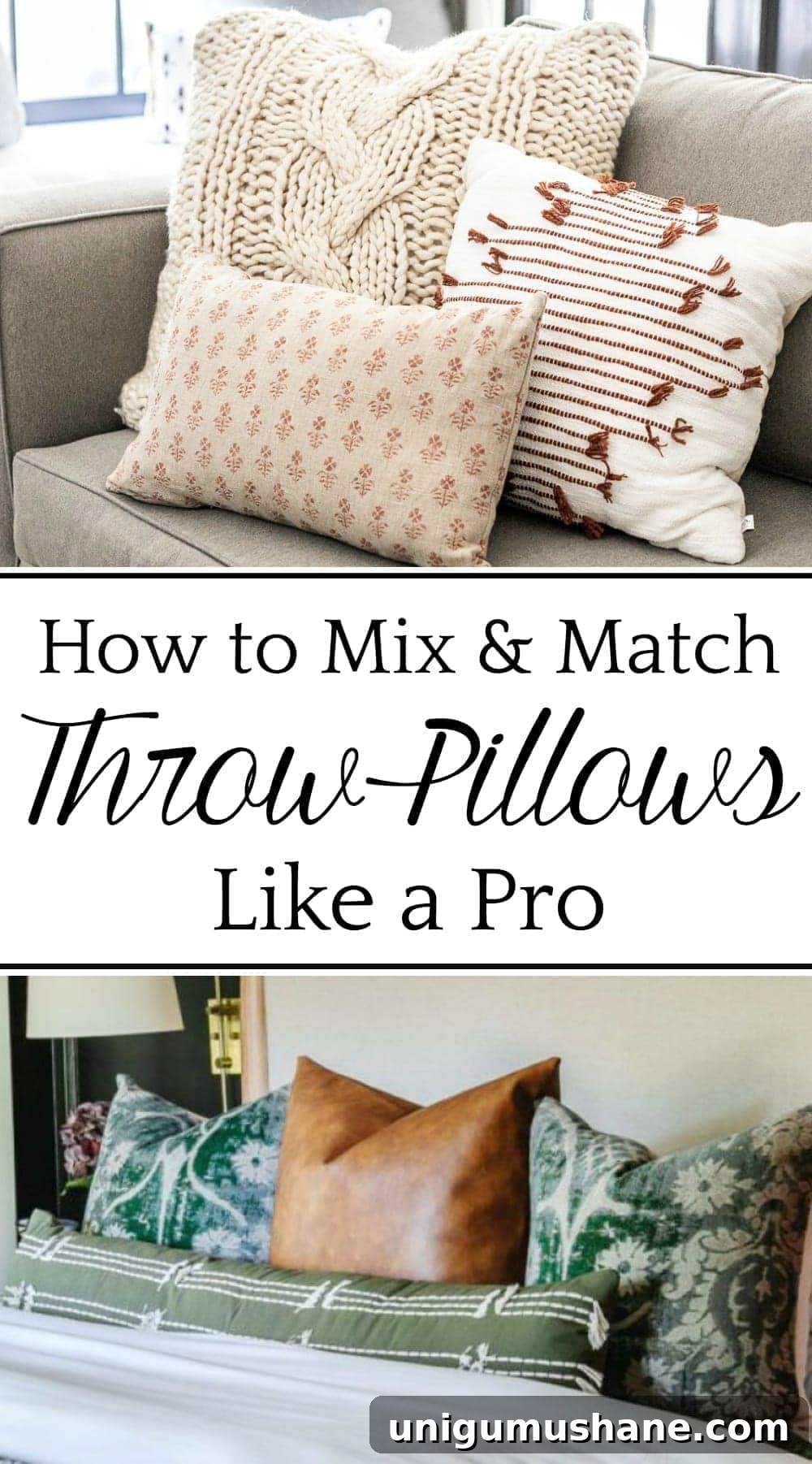
On our bed I combined:
- A complex antique jade print
- A geometric stitched olive lumbar pillow
- A faux leather pillow for texture
What sizes should you use?
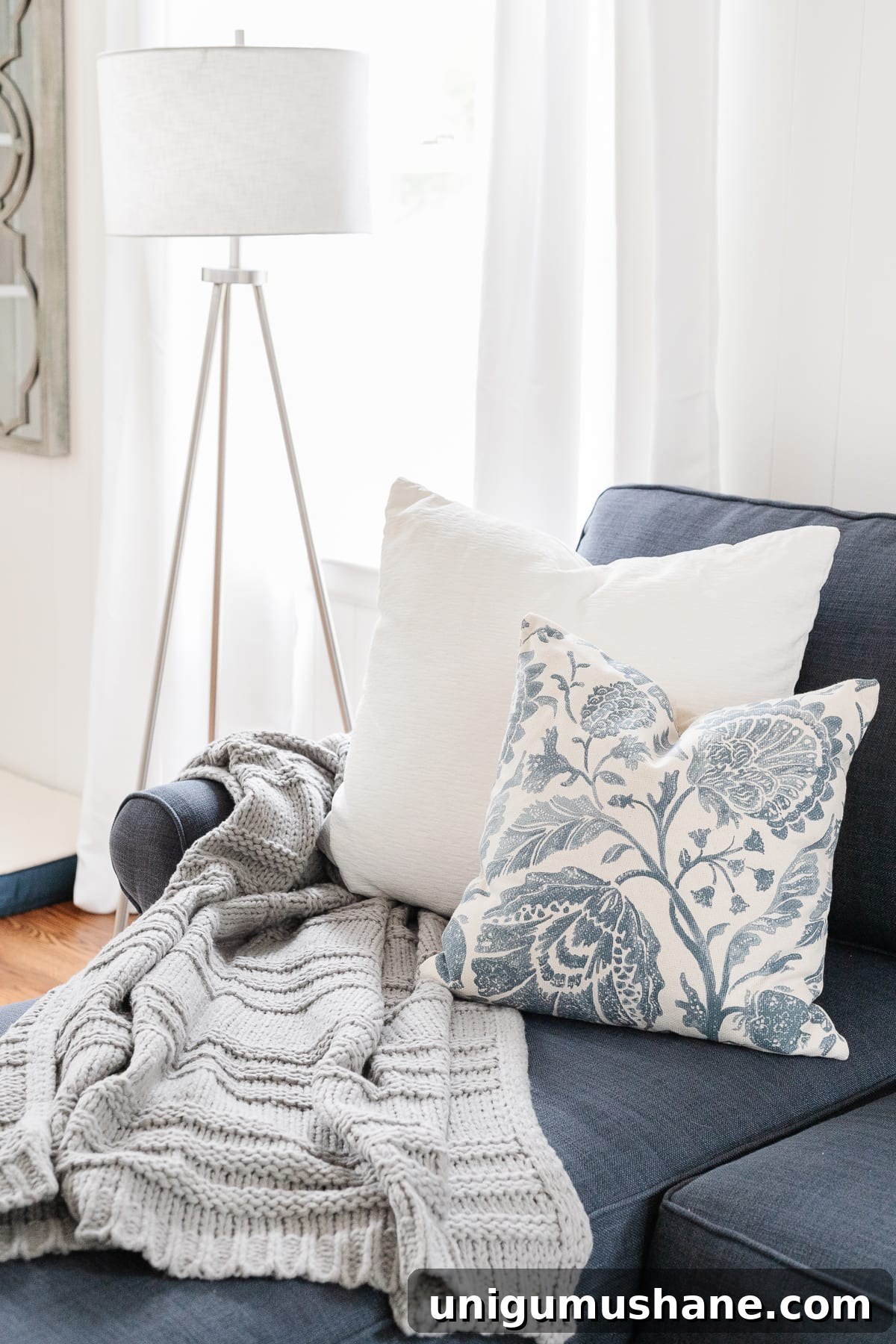
- For sofas: I like 20″–24″ pillows at each end, paired with a slightly smaller 18″–22″ pillow beside them. If the sofa is deep, add a small lumbar pillow in front for depth and support.
- For beds: Euro pillows (24″–26″) make a great backdrop. Accent them with 22″–24″ pillows on either side and finish with a long lumbar in front for a layered, hotel-like look.
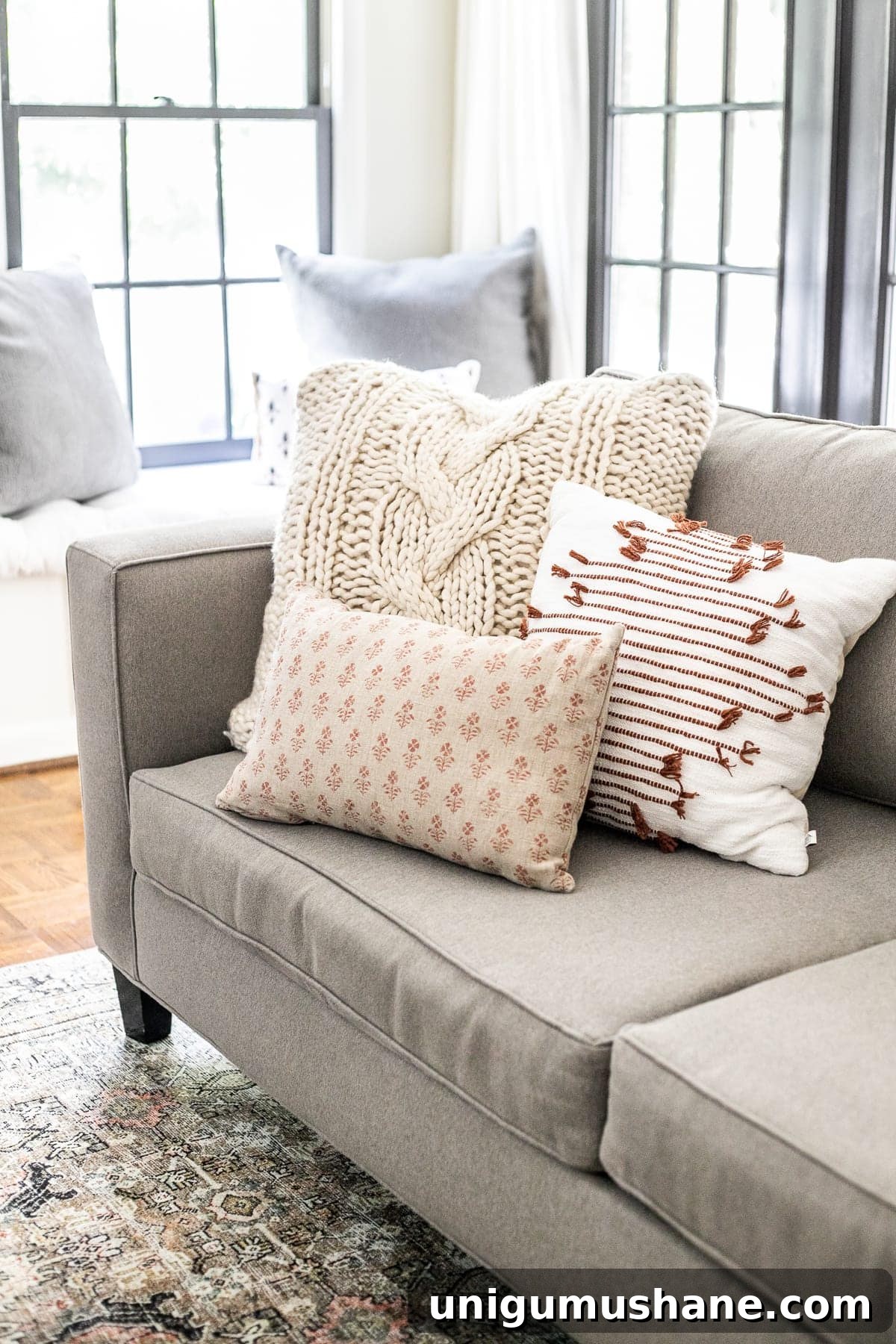
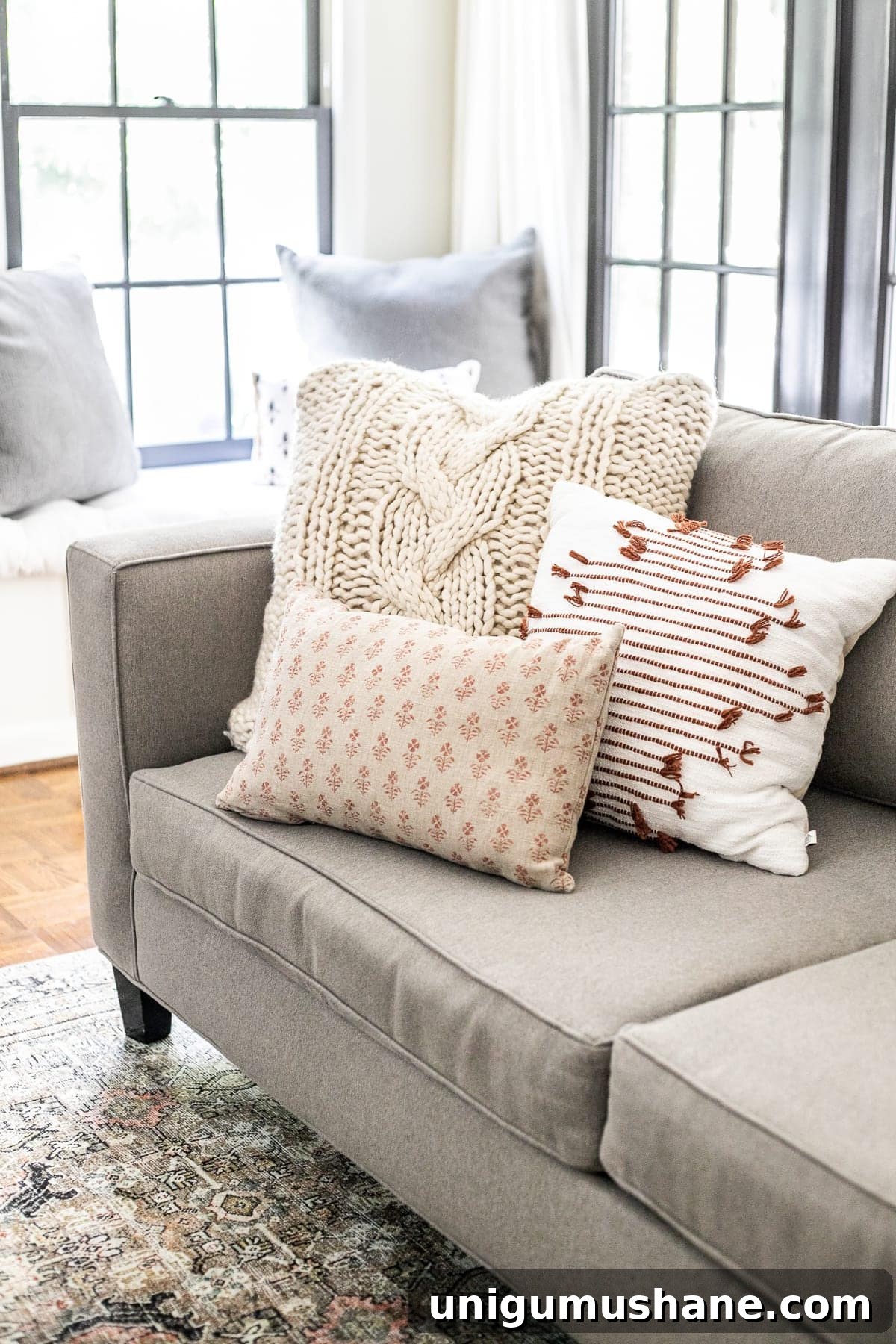
On our sofa I used:
- A 12″x20″ coral floral block print lumbar
- An 18″ rust geometric stitched pillow
- A 24″ ivory cable knit pillow for texture
My preferences and practical tips for throw pillows:
- Buy pillow covers instead of fully stuffed pillows when possible — it’s easier to store and swap out covers seasonally.
- Use down or down-alternative inserts that are about 2″ larger than the cover. That extra fill makes covers look fuller and more luxurious even if the cover itself was inexpensive.
- If you must buy whole pillows, choose ones with zippers so you can change inserts later.
- Favor versatile styles over overtly seasonal novelty pieces. For example, a cable-knit pillow works well for fall and winter, whereas a holiday-specific motif may feel limited in use.
Of course, exceptions happen — sometimes a pillow steals your heart and you’ll keep it anyway. But these tips are a useful starting point for building a cohesive, flexible pillow collection.
Favorite sources for throw pillows:
- H&M
- Etsy
- Pottery Barn
- HomeGoods / TJ Maxx / Marshalls
- Boutique Rugs
- IKEA
- Bed Bath & Beyond
- Amazon
- World Market
- Wayfair
- Target
- Walmart

Hopefully this gives you a clear starting point when you’re facing “decorator’s block.” These simple combinations — a pattern, a geometric, and a solid or textured piece — make it easy to create balanced, layered arrangements for sofas and beds.
Do you have favorite pillow sources or decorating rules you always follow? I’d love to hear what works for you.
If you want to save this post for later, pin it to your inspiration board.