
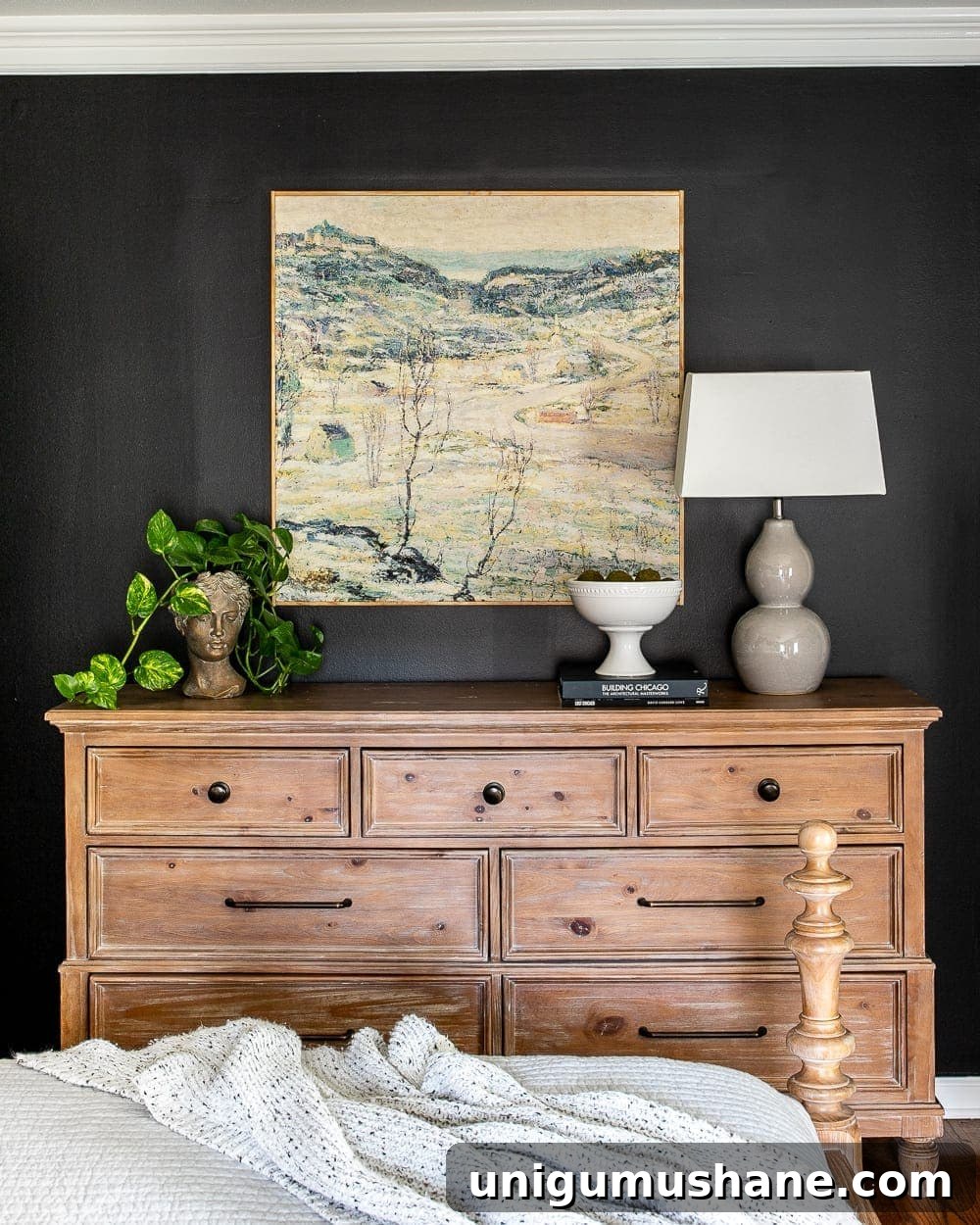
How to create large-scale wall art with a modern framed look that mimics a $1,000 gallery piece for under $50.
We are nearly finished with our master bedroom makeover and this oversized artwork was the perfect final touch. Waiting on a couple of small items has stretched the reveal out, but the art itself is done — and I’m thrilled with how it turned out.
This project is an affordable approach to custom, large-format art that looks high-end without the high price. We wanted a sizable statement piece to hang above the dresser but kept running into two options: affordable prints that didn’t suit our taste or beautiful pieces priced at $1,000+ — so we made our own.
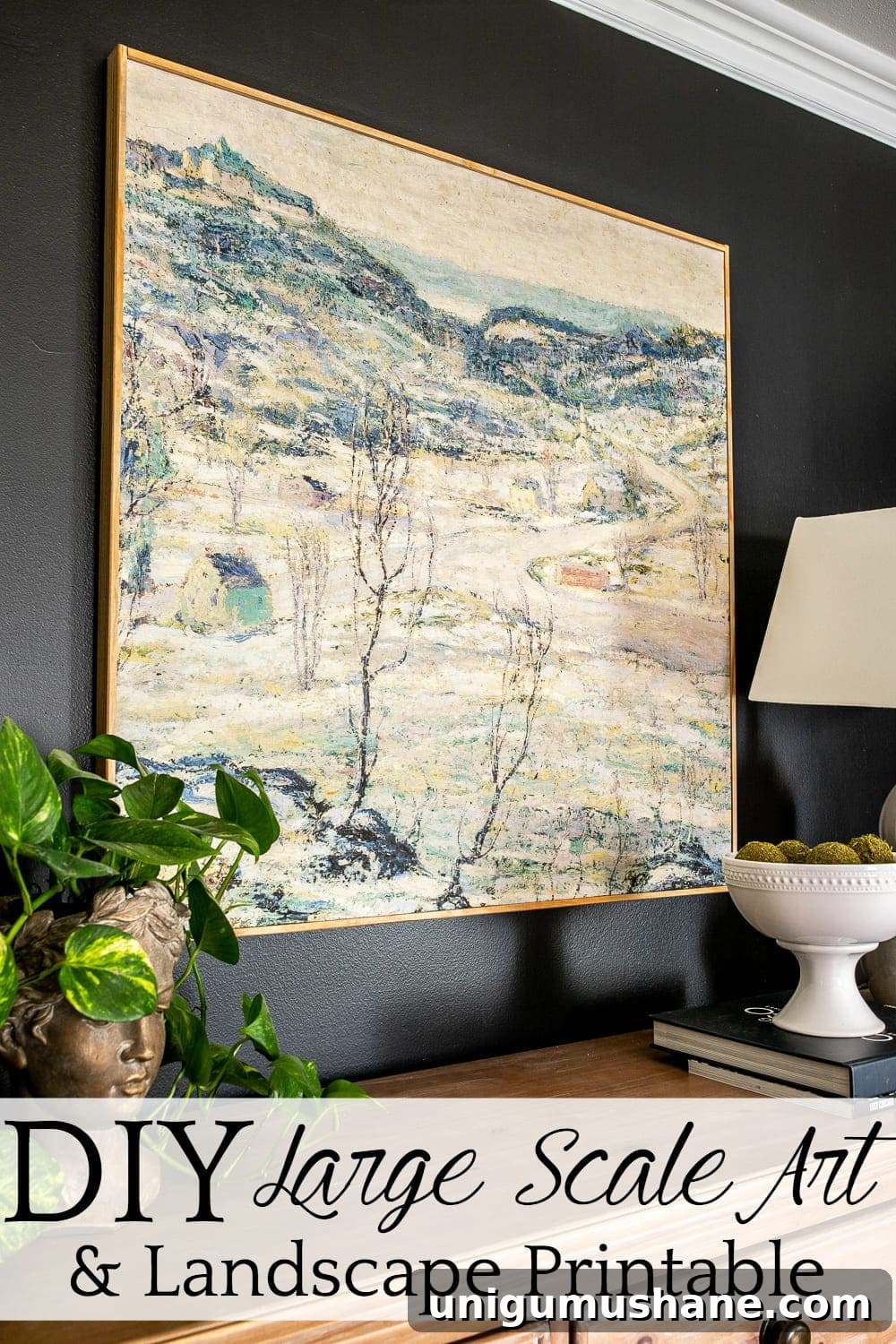
I sourced a public-domain winter landscape (Ernest Lawson’s “Harlem Valley Winter”) because the neutral tones work year-round. We printed it as a large-format blueprint and built a simple modern frame from inexpensive lumber and lattice to create a gallery-style piece with lots of impact.
DIY Large Wall Art
Supplies
- Large blueprint print of your chosen image (print instructions below)
- Tape measure and pencil
- Scissors
- 1/2″ thick plywood
- 1/4″ lattice strips for the frame
- Circular saw or miter saw
- Nail gun or brad nails and nail set
- Wood stain (we used a Weathered Oak tone)
- Stain or paint brush
- Spray adhesive (such as an all-purpose spray adhesive)
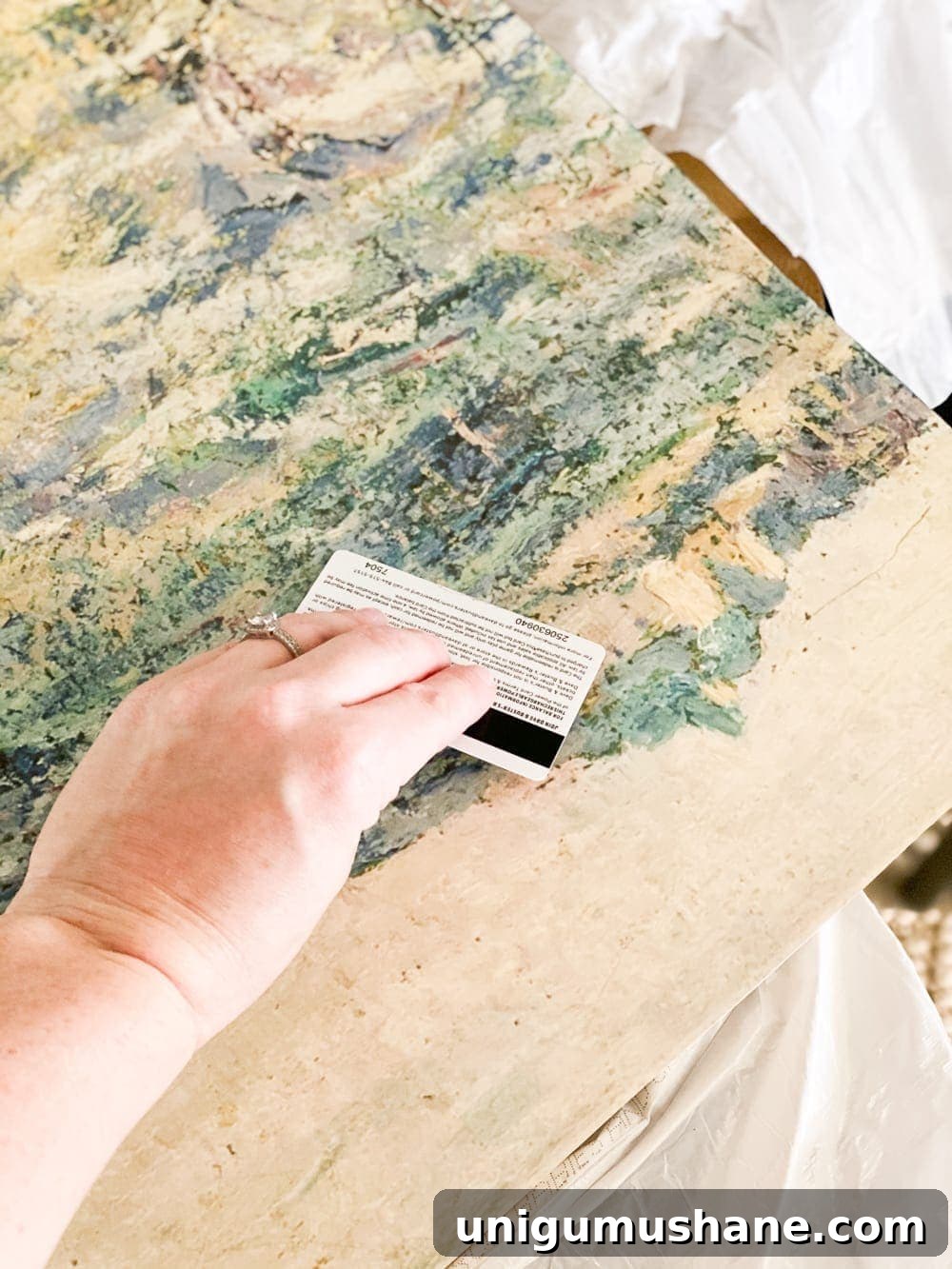
- Old credit card or squeegee to smooth the print
Step-by-step
1. Decide the finished size for your artwork. We wanted a large square, so we trimmed the horizontal blueprint to a 36″ square using a pencil and scissors.
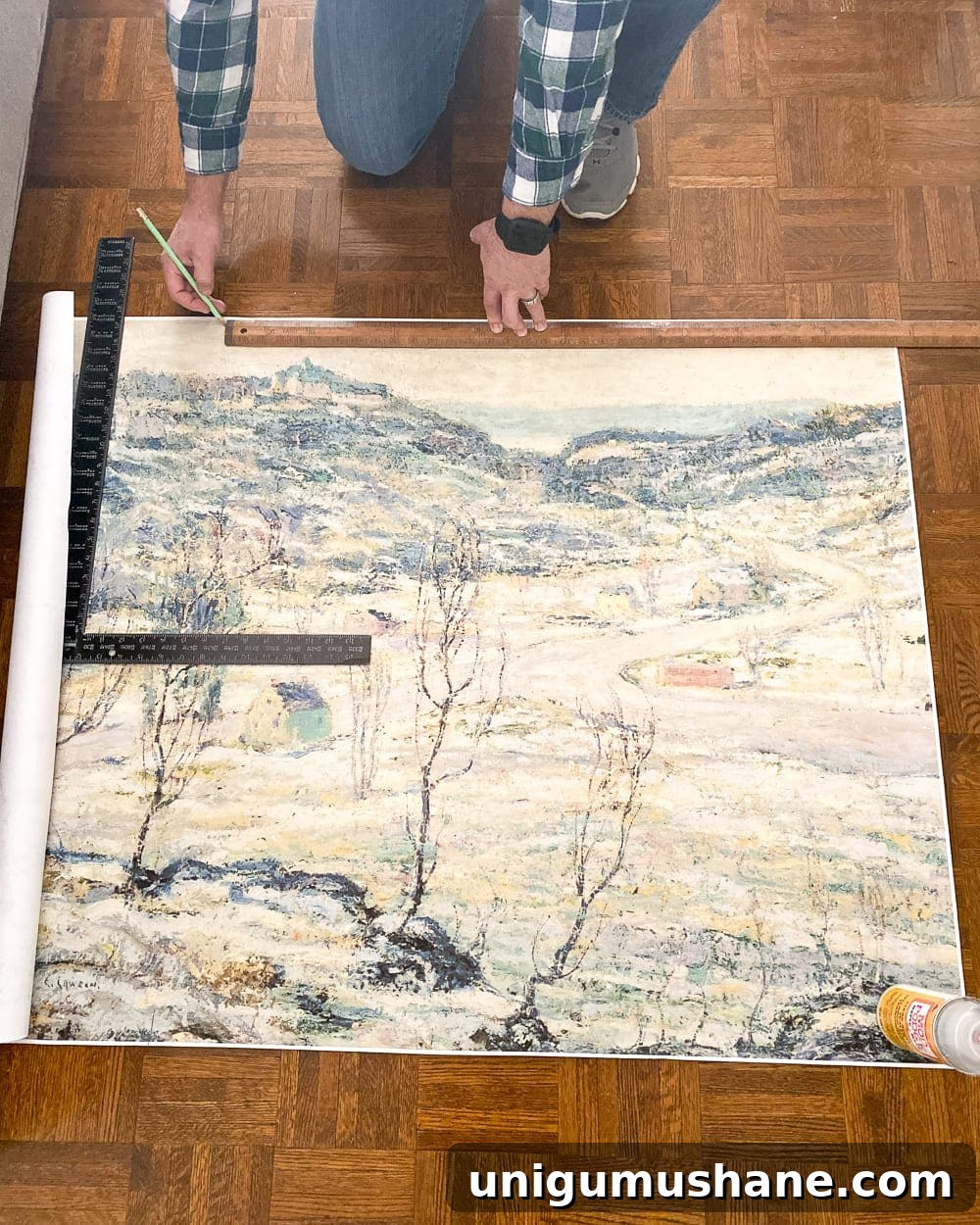
2. Measure and mark your plywood. Subtract 1″ from the blueprint dimensions to allow for the paper wrap — for a 36″ print mark the plywood at 35″.
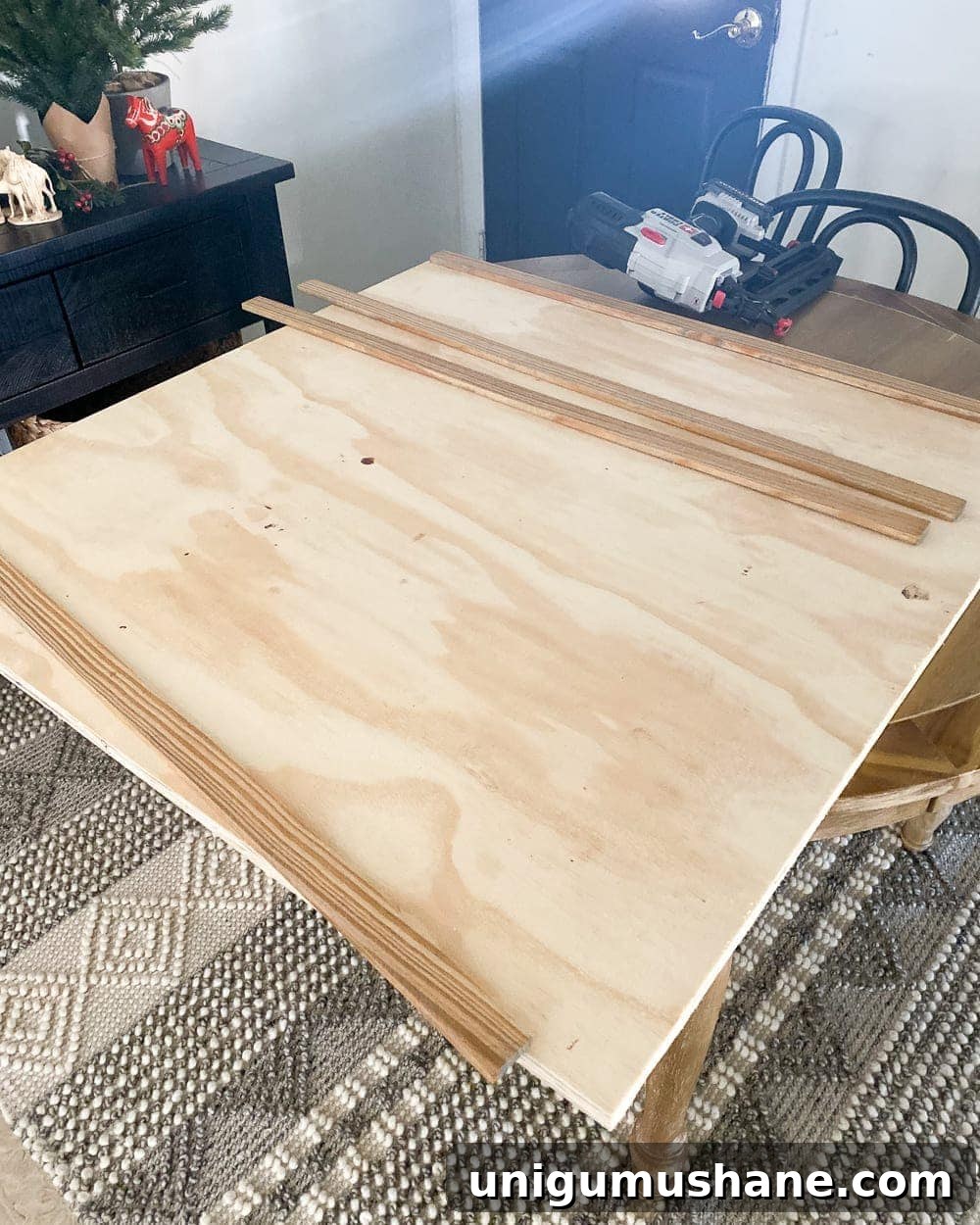
3. Cut the plywood to size with a circular or miter saw.
4. Lay the blueprint on the plywood to confirm fit. Leave roughly 1/2″ of paper overhang on every edge so it can wrap around to the back.
5. Working from one edge, lift the top of the blueprint and spray adhesive on the plywood surface.
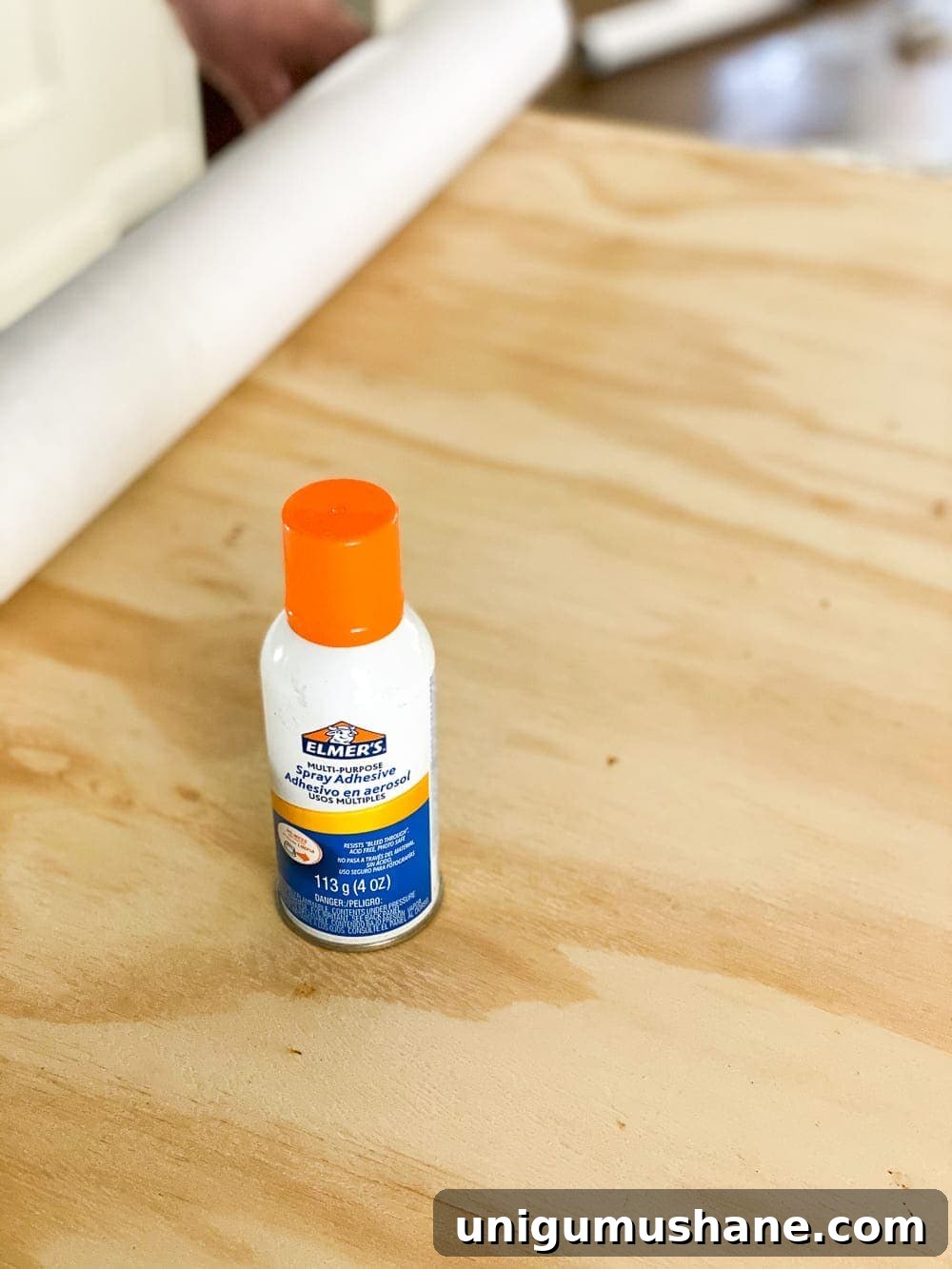
6. Press the top edge of the print to the plywood and slowly unroll the rest while applying adhesive and smoothing the paper as you go to avoid bubbles.
7. Use an old credit card or squeegee to work out air pockets and ensure a flat, even bond. Allow the adhesive to dry per product directions.
8. Cut four lattice strips for a shadow-box style frame: two the length of the plywood (35″) and two slightly longer (plywood length + 1/4″) so they overlap the top and bottom edges. Mitered corners are optional; straight cuts keep the look clean and simple.
9. Stain the lattice pieces in your chosen finish and let them dry completely.
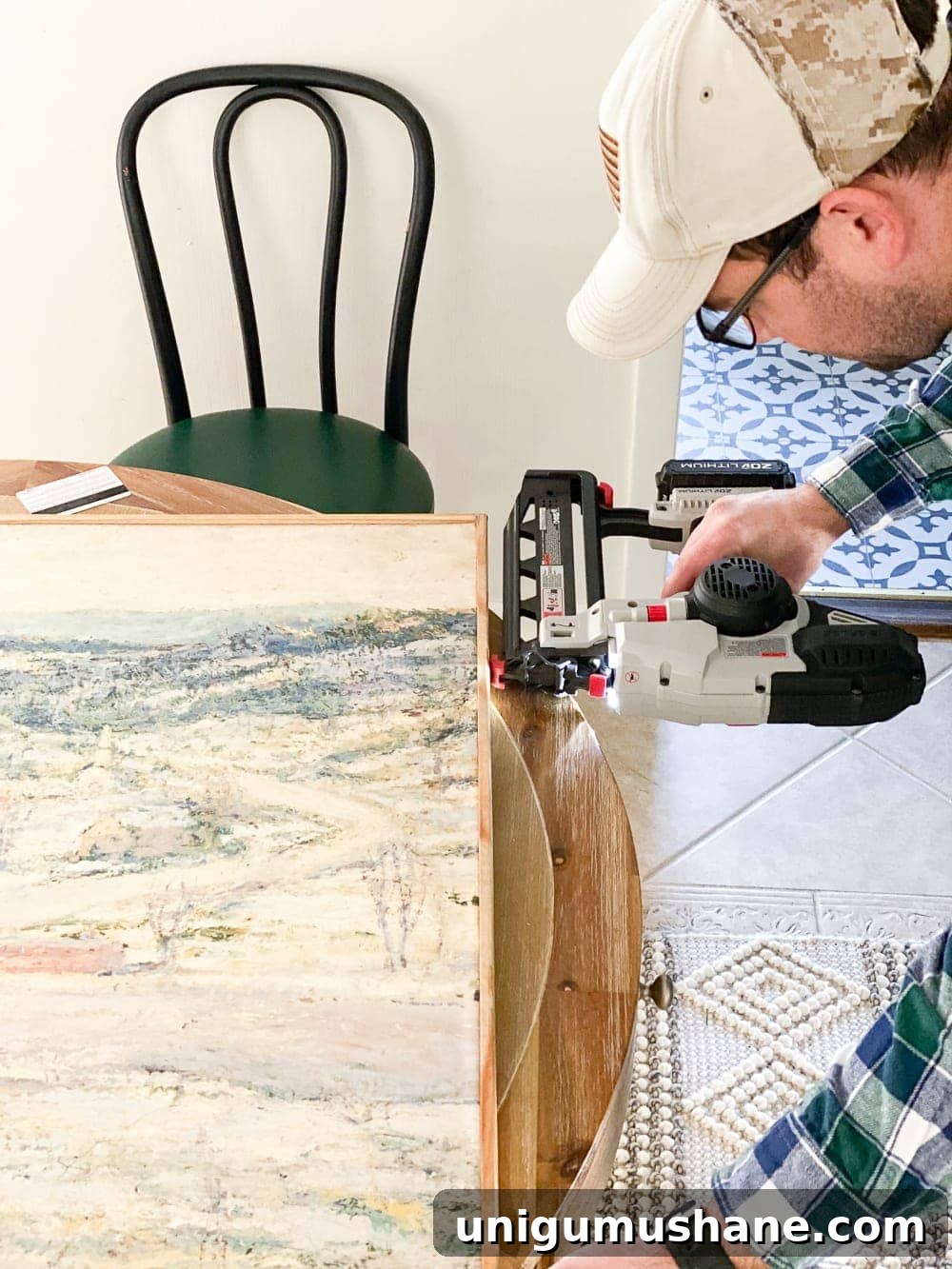
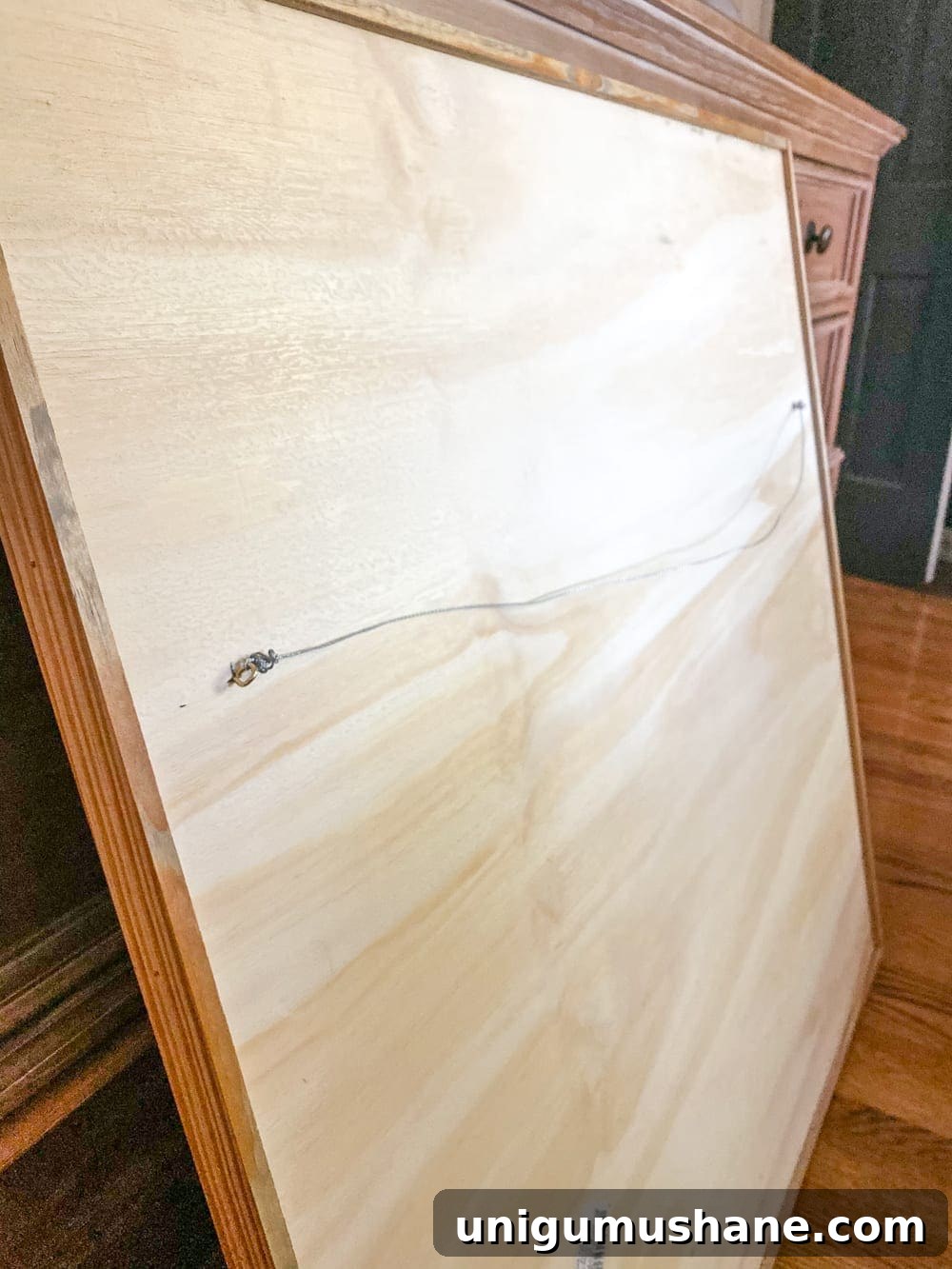
10. Prop the plywood art on a couple of spare lattice strips to elevate it while you work. Fold the paper overhang to the back and secure the top and bottom lattice strips with a nail gun to clamp the print edge to the plywood.
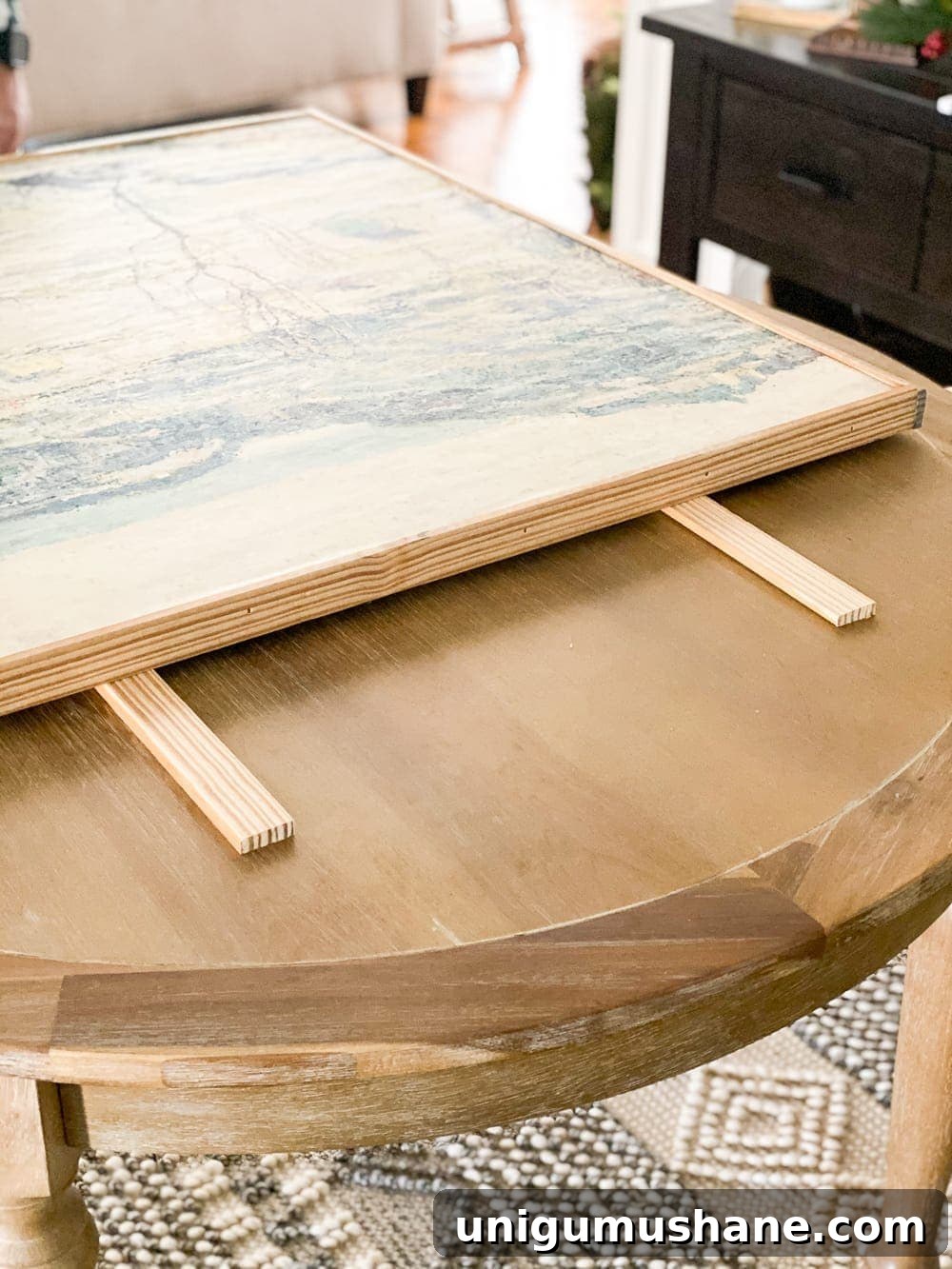
11. Repeat the process on the sides so the paper edges are wrapped and secured, creating a neat, built-in frame that reads like a modern gallery piece.
12. Attach hanging hardware (eye hooks and wire, D-rings, or a French cleat) to the back and you’re ready to hang.
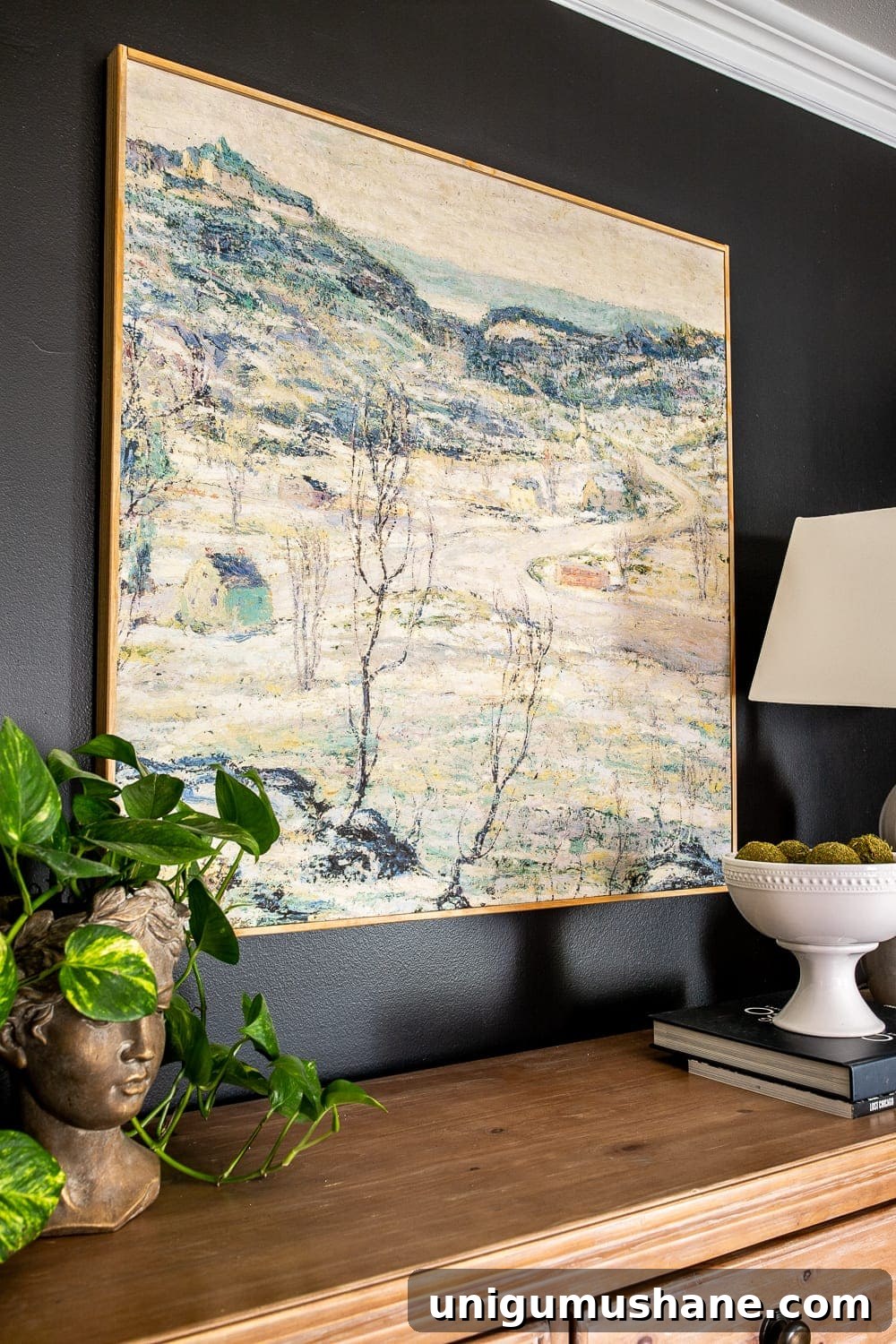
Finished product: a striking, oversized art piece with a subtle modern frame that reads like a polished gallery work — all for under $50 in materials.
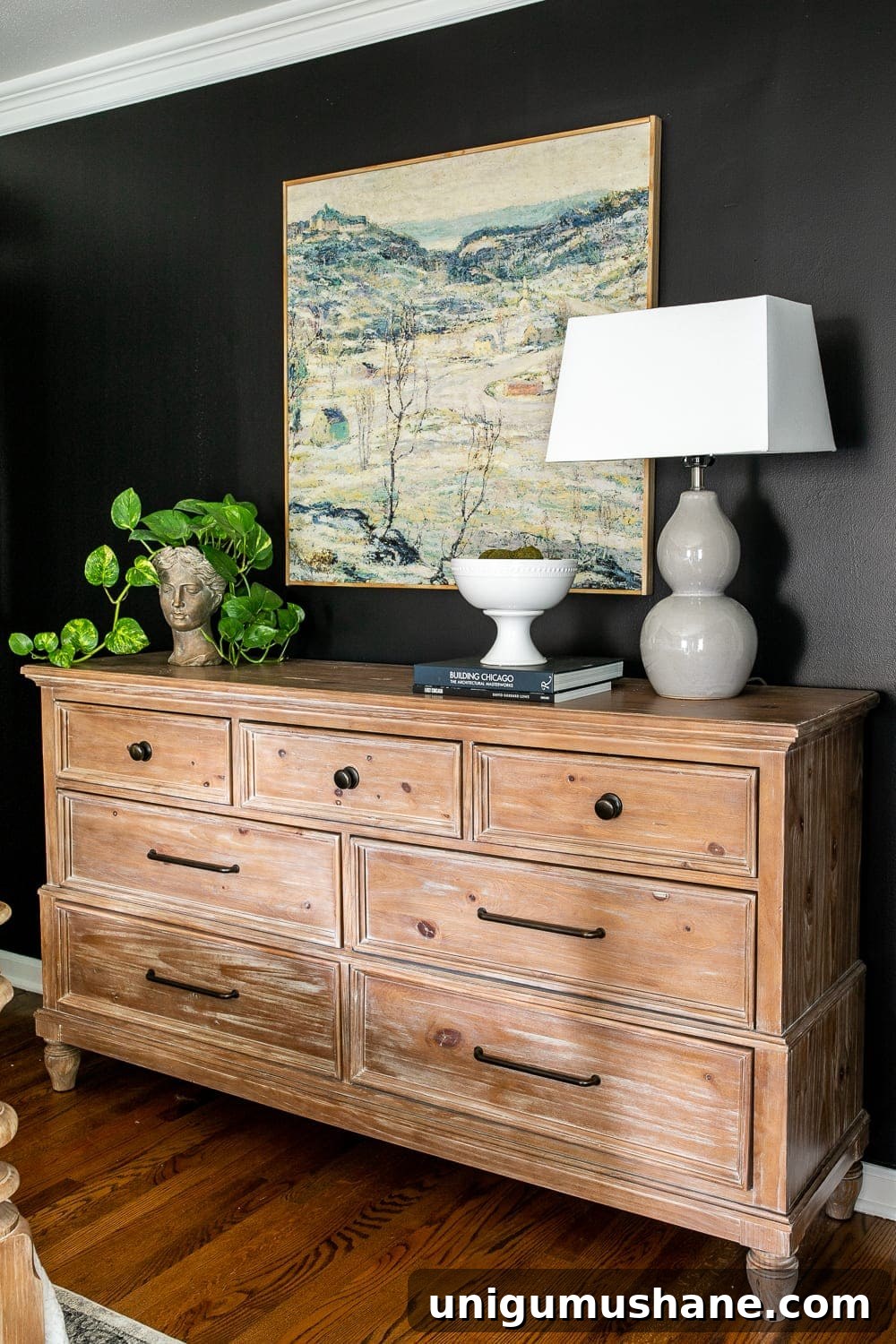
This is an excellent beginner-friendly woodworking and decorating project if you’re new to power tools. The combination of a public-domain image, a blueprint print, and a simple shadow-frame creates a designer look on a small budget.
Printing the large-format image
- Download or prepare your image at high resolution, sized to the dimensions you want to print.
- Order a large-format color blueprint (engineer print) in the dimension you chose (for example 36″ x 48″) from a local print center or an online printing service if your local store can’t produce engineer prints.
- If you prefer, print the file at home in smaller sizes (8×10, 11×14) to frame individually.
If you’d like to create the exact winter landscape used here, look for public-domain images or long-standing art archives, and then adjust the resolution and crop to the large-format dimensions before printing.
This approach gives you a timeless focal point for any room — a professional, gallery-inspired look without the gallery price. Happy building!