
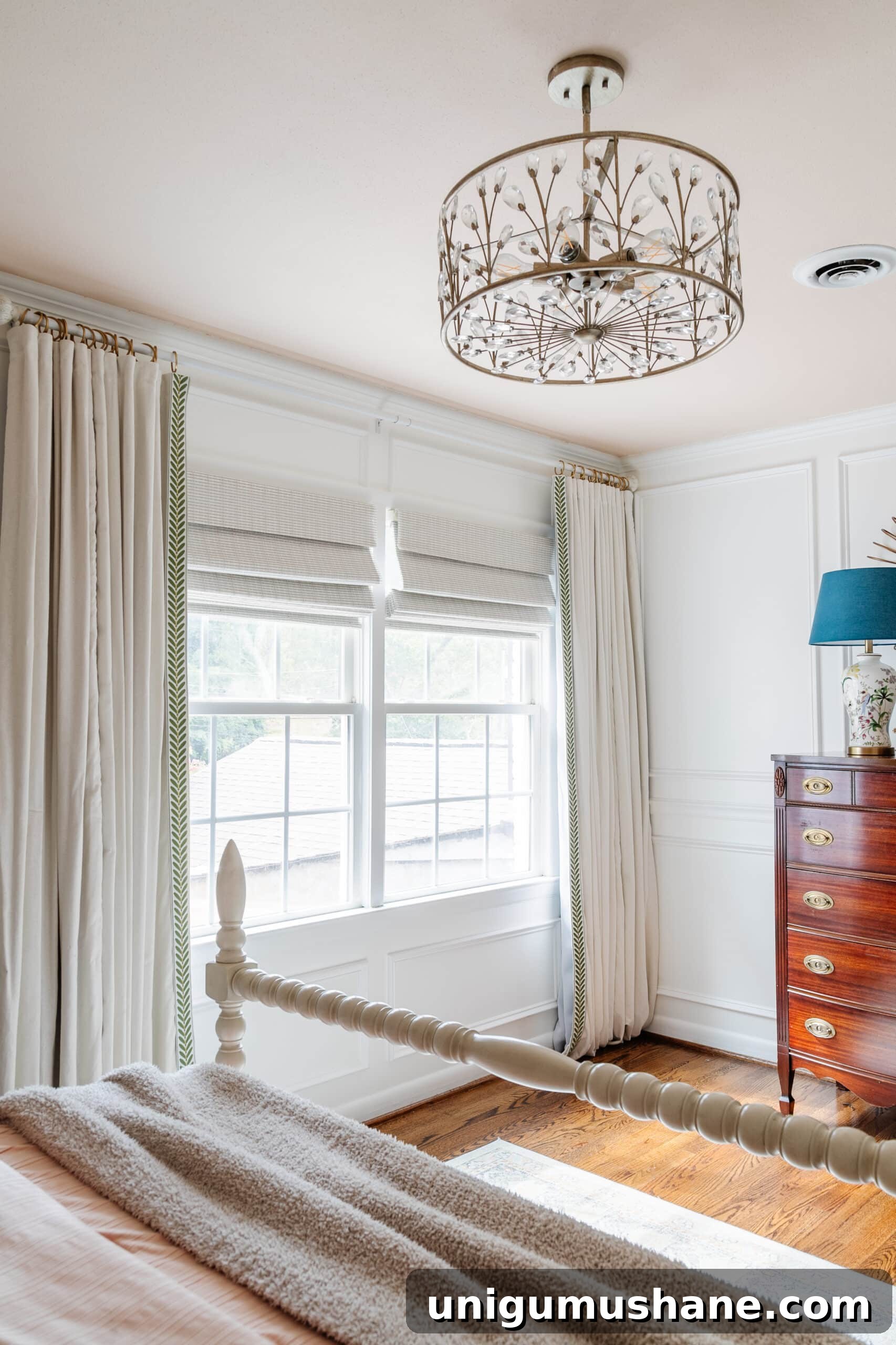
How to make your own DIY no-sew curtains with passementerie trim using hemming tape for a grandmillennial look on a budget.
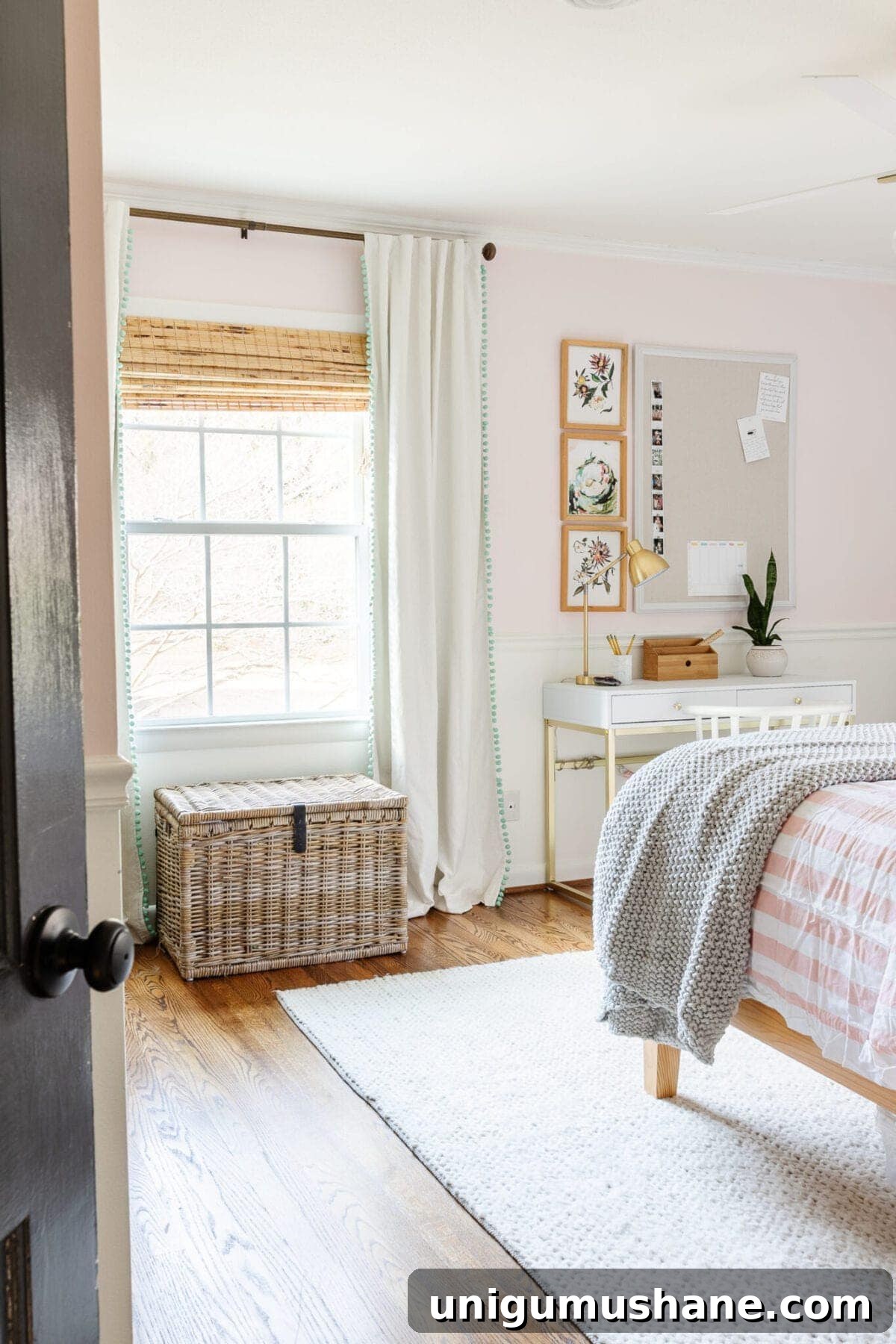
I’ve long pictured soft, cottage-inspired grandmillennial curtains for my younger daughter’s bedroom ever since I installed the chinoiserie wallpaper in that space. I wanted a refined, trimmed look but faced two real obstacles: high-end trimmed curtains are outrageously expensive, and I don’t sew.

The problem: cost and no-sew skills
Designer passementerie curtains can cost hundreds or even thousands of dollars per panel. I admired those styles but wanted a wallet-friendly approach. I also don’t sew, so I needed a durable no-sew method that would still look polished.
How do you make curtains without sewing?
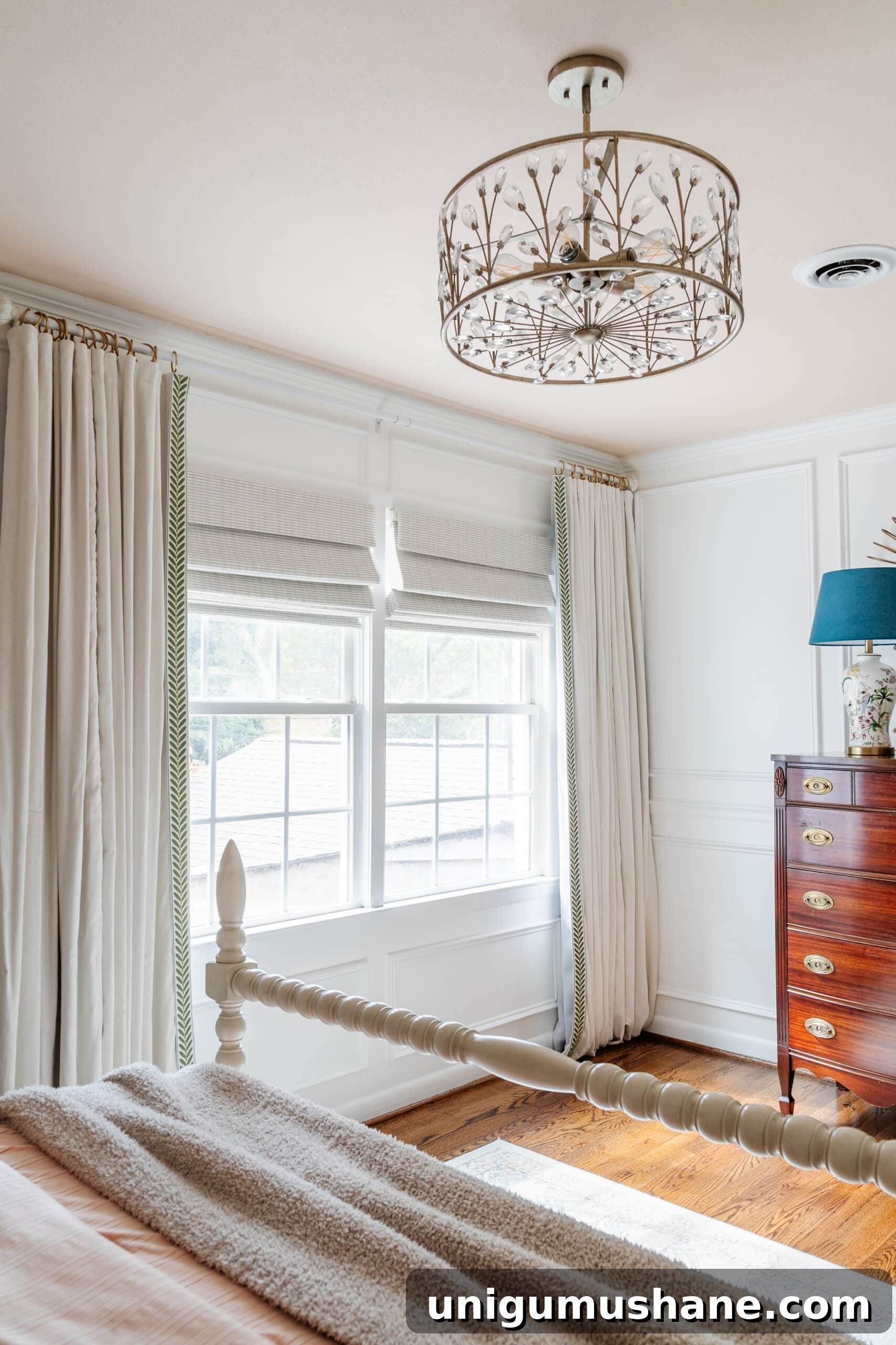
You don’t need a sewing machine to make or embellish curtains. My go-to hack was hemming tape — a no-sew permanent fabric adhesive (I used a heavy-duty Heat n Bond). I upcycled two old panels and ended up with trimmed curtains that cost about $50 total.
Passementerie — decorative trim and braids — is very on-trend with the grandmillennial aesthetic, and you can recreate the look affordably by adding trim to plain drapery using hemming tape.
How to change curtain headings with tape
While you could use hot glue or a micro stitch kit, those methods tend to be less durable. Hemming tape applied with an iron creates a secure, long-lasting bond that stands up to everyday use.
Supplies needed
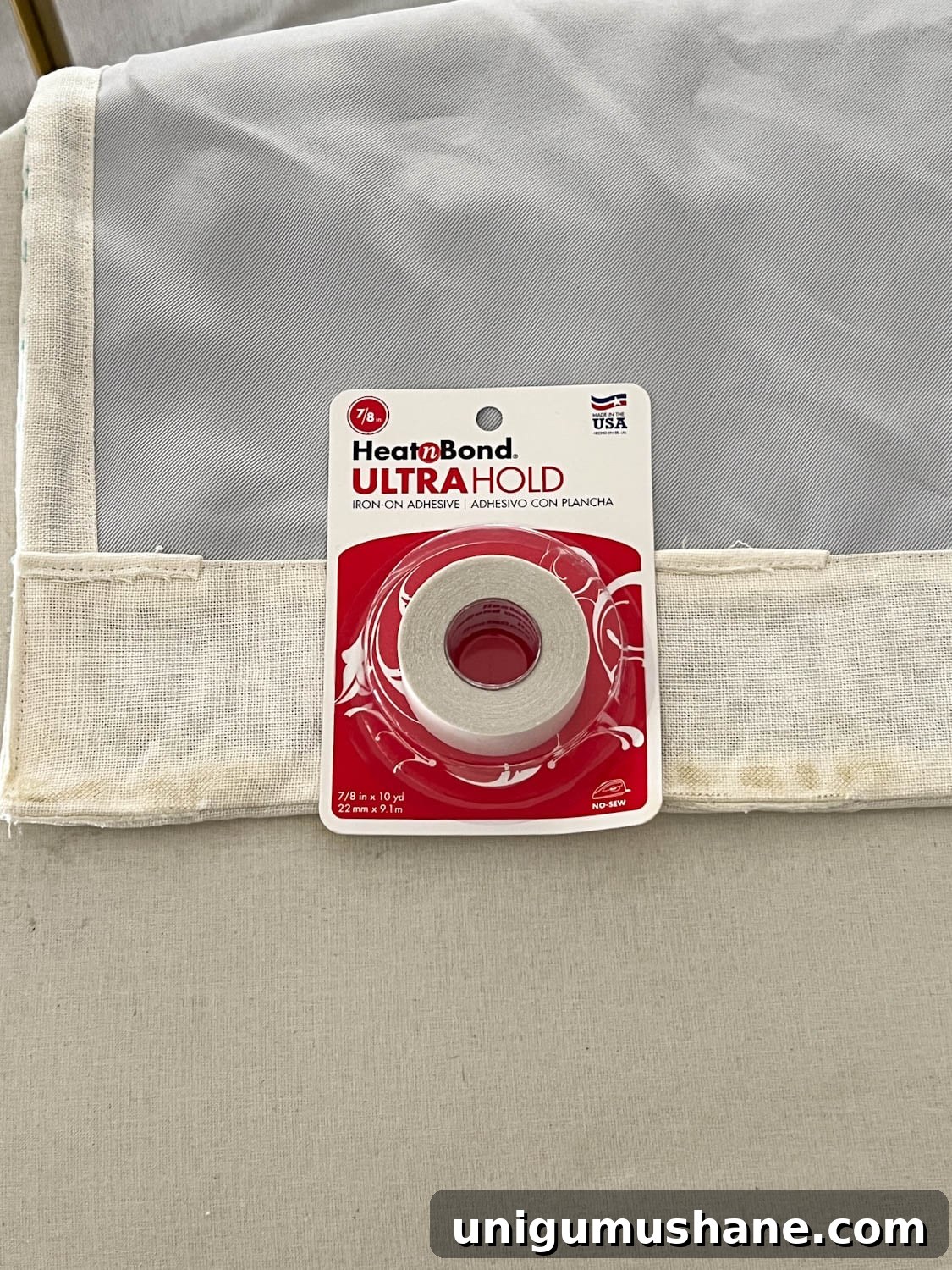
- Heavy-duty Heat n Bond hemming tape
- Iron and ironing board
- Sharp fabric scissors and/or a seam ripper
- Lighter or clear nail polish (to seal cut edges)
- Measuring tape
- Curtain trim or passementerie tape in your chosen design
- (Optional) Curtain header tape
- (Optional) Curtain rings with eyelets
Before adding trim, I updated the curtain heading for a tailored finish. The same technique works for brand-new panels or for updating existing curtains.
How to make DIY no-sew curtains from scratch
- Measure and cut the fabric to the required width and length.
- Create finished edges by folding 1″ over hemming tape around the perimeter.
- Press with an iron to fuse the tape and form neat hems.
Detailed steps and photos below demonstrate how I adjusted existing panels, changed the heading, and added passementerie trim.
Step 1 – Remove existing embellishments and trim panels to length
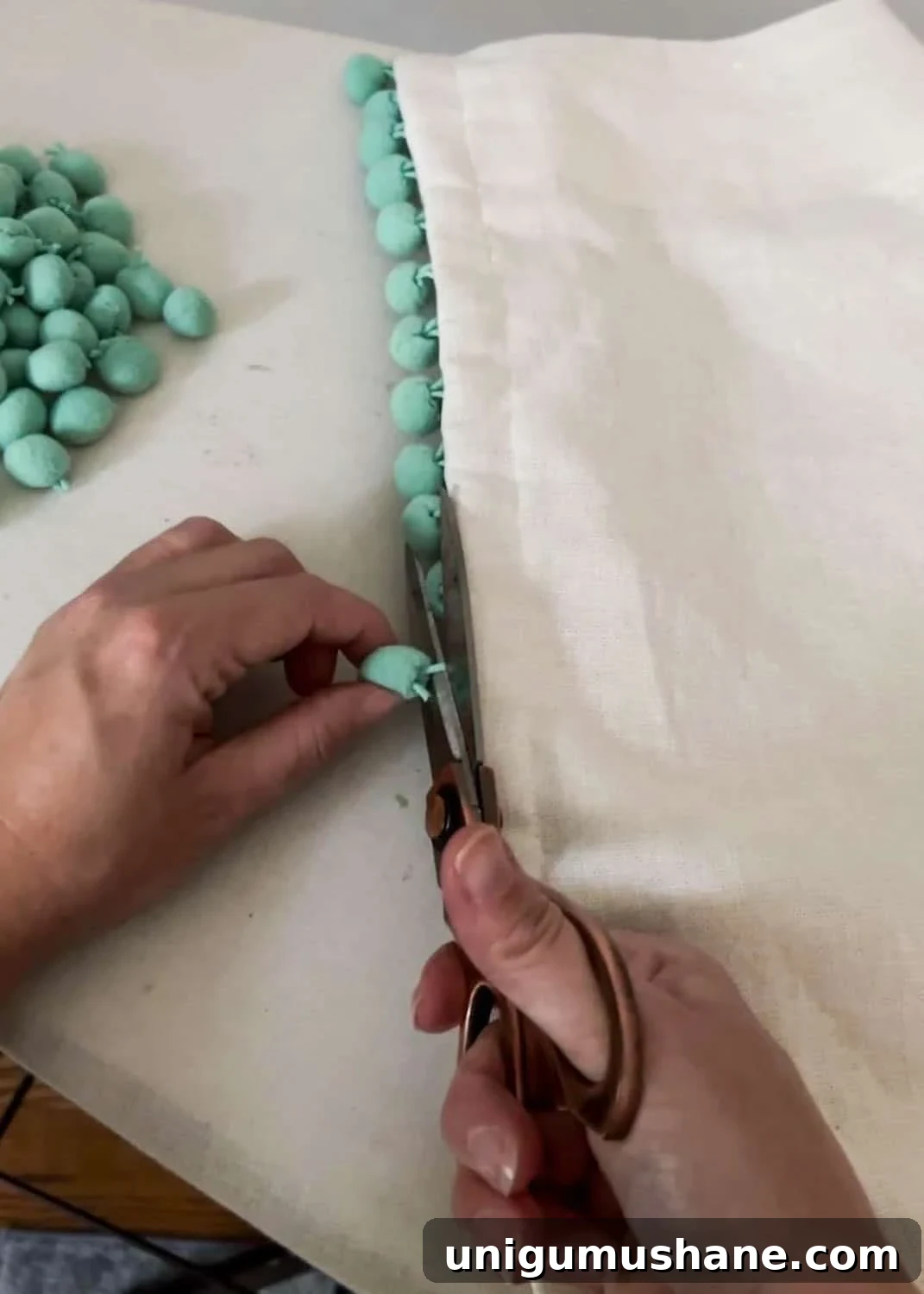
Use fabric scissors or a seam ripper to remove any existing trim (I snipped pom poms off old panels). Measure the final length you need and trim excess fabric, leaving about 3″ for the hem you’ll fold under later.
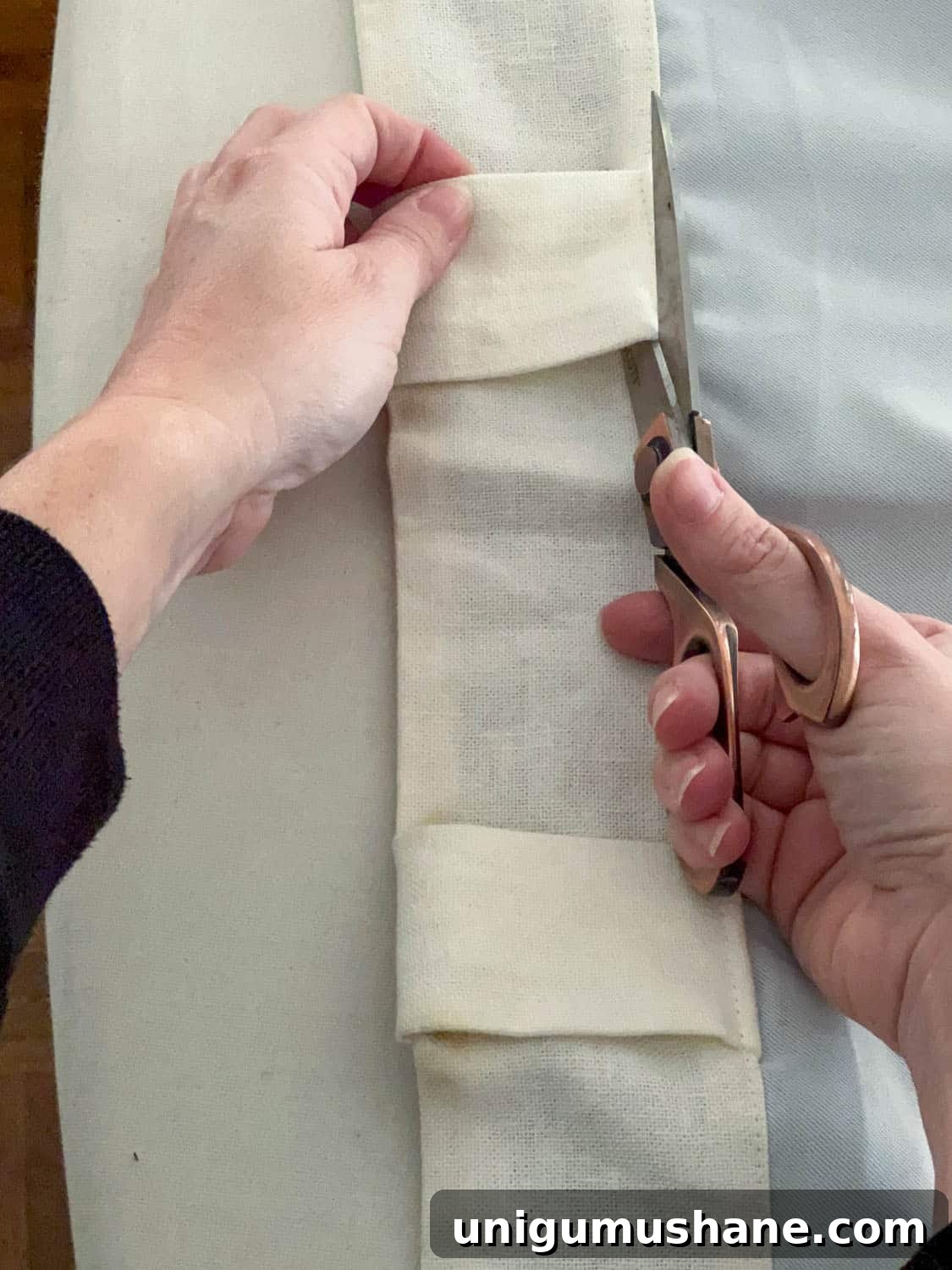
Step 2 – Cut off curtain tabs (if changing the header)
If you want a new heading—like header tape for rings—remove any sewn-in tabs or back tabs so the new header lies flat. I cut the tabs off to use header tape and rings later.
Step 3 – Measure and cut curtain header tape
Measure the header tape to the panel width and trim to length. Seal raw edges with a lighter or clear nail polish to prevent fraying. Set the header tape aside until you fuse it on.
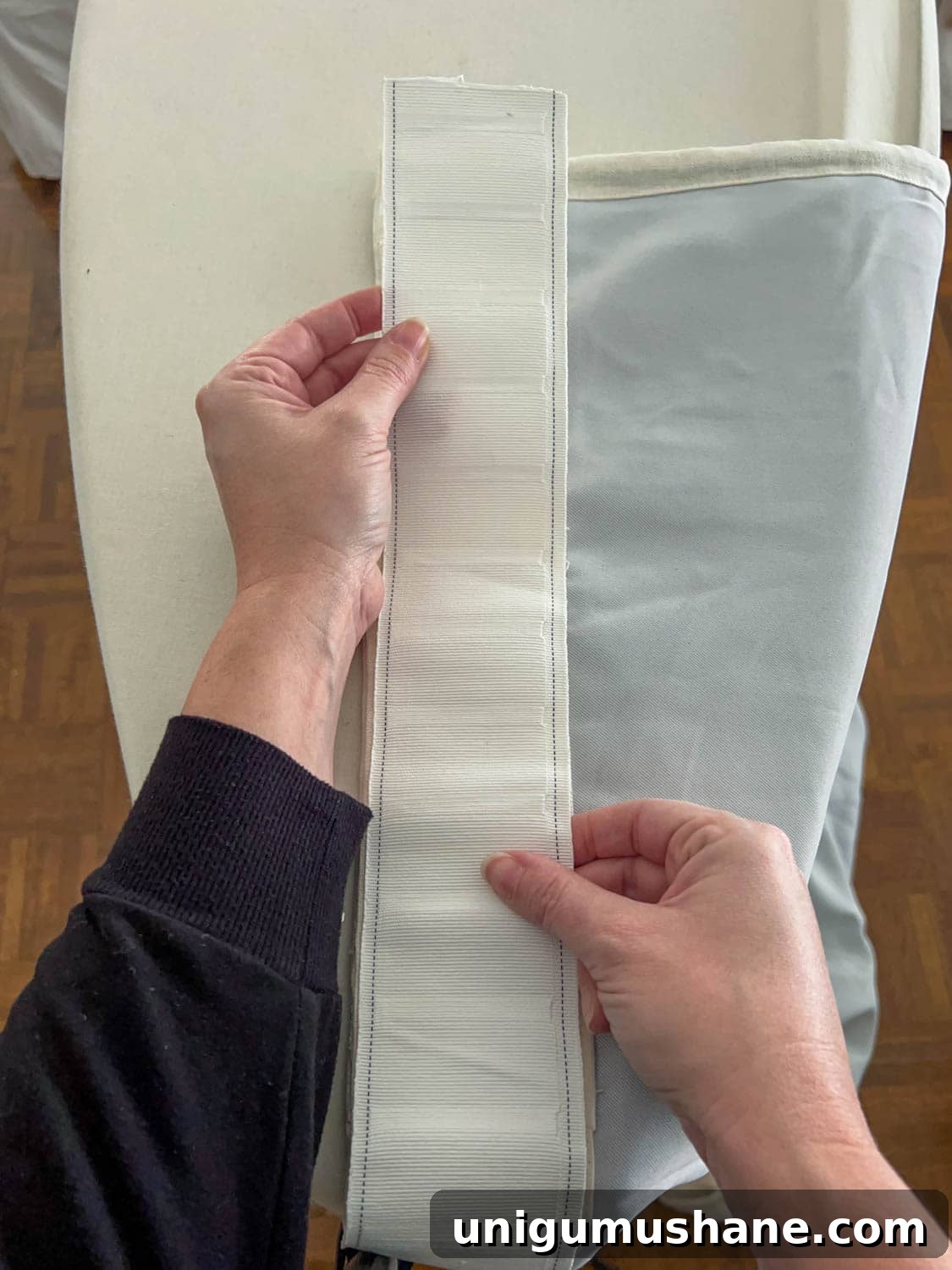
Step 4 – Iron on one side of hemming tape
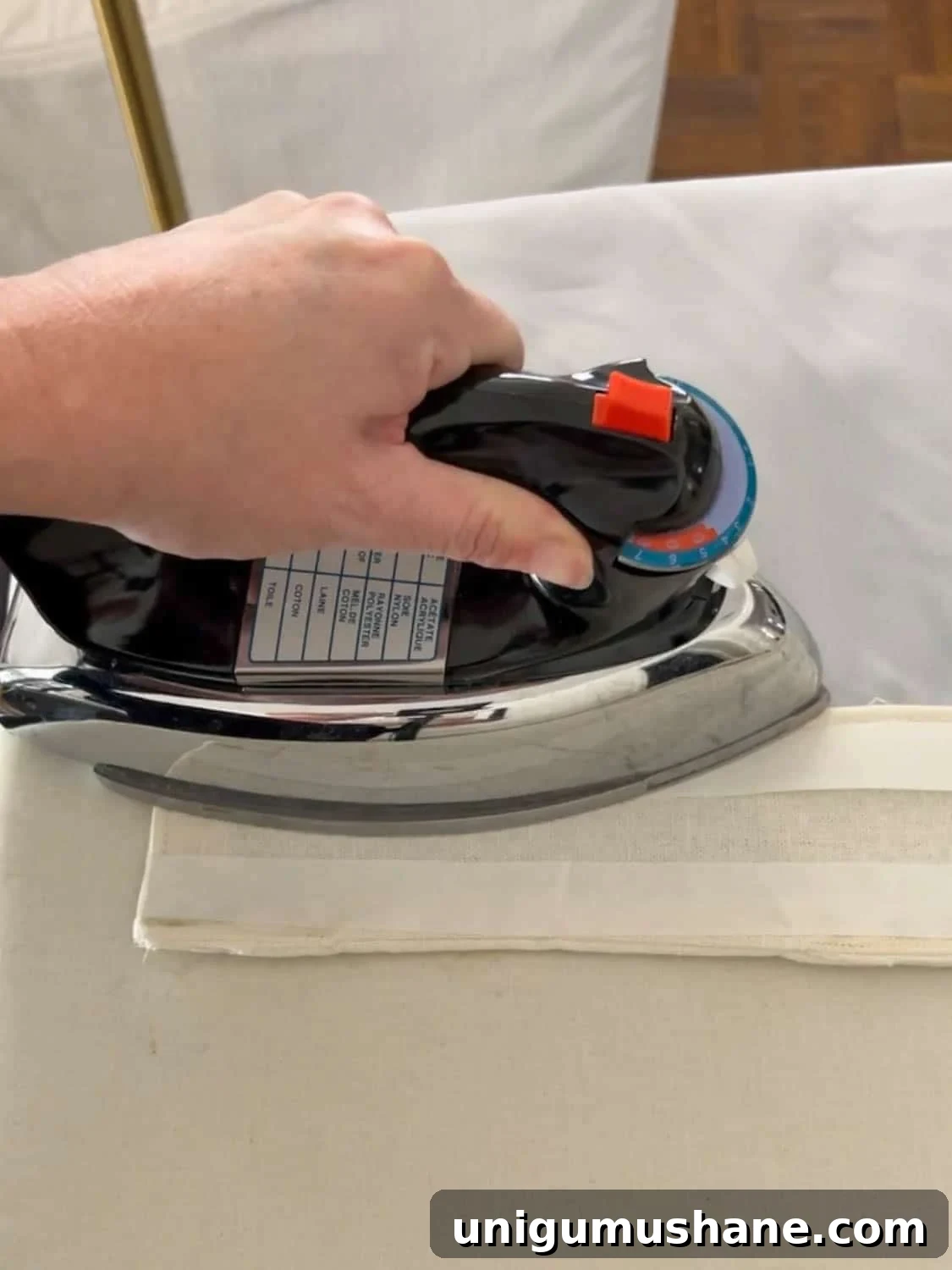
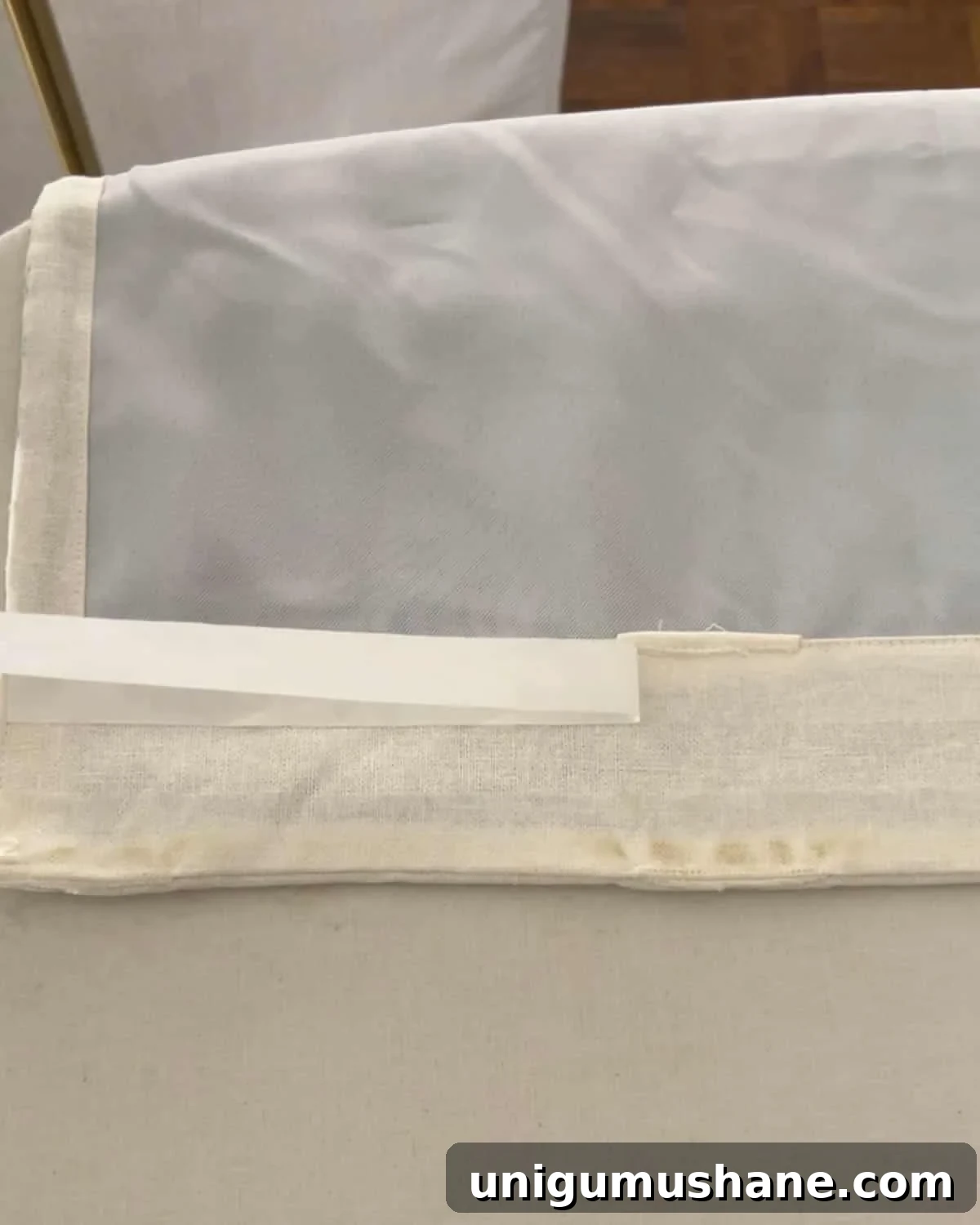
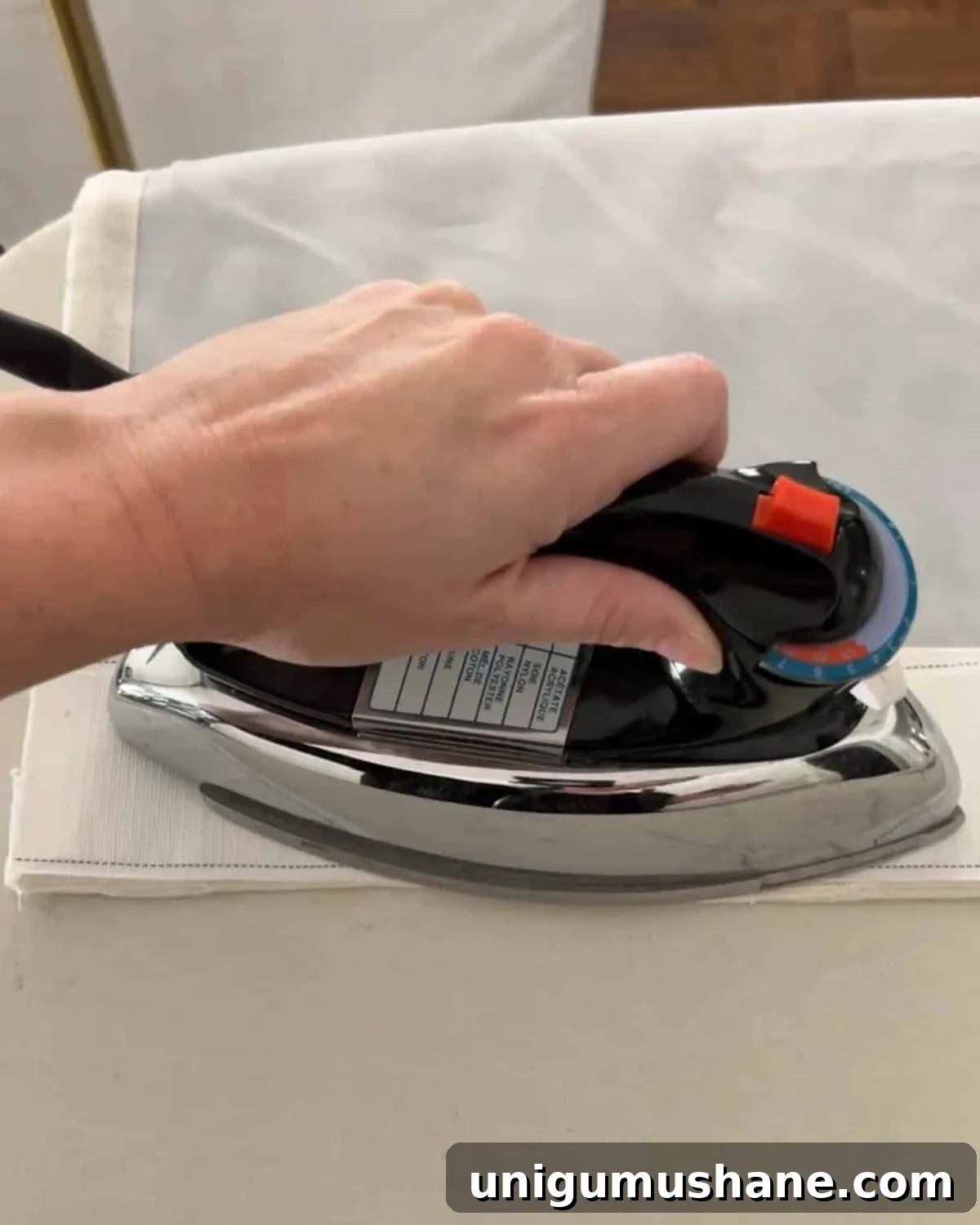
Cut two lengths of hemming tape to match the header. Remove the paper backing from one side and place the adhesive side onto the back of the curtain where the header will go. Set the iron to medium and press firmly in sections until the tape bonds to the fabric.
Step 5 – Attach curtain header tape
Peel the remaining paper backing from the exposed side of the hemming tape, position the header tape on top, and press with the iron in short sections so the two layers fuse. This creates a sturdy header you can hang from hooks or rings.
How to add a curtain border without sewing
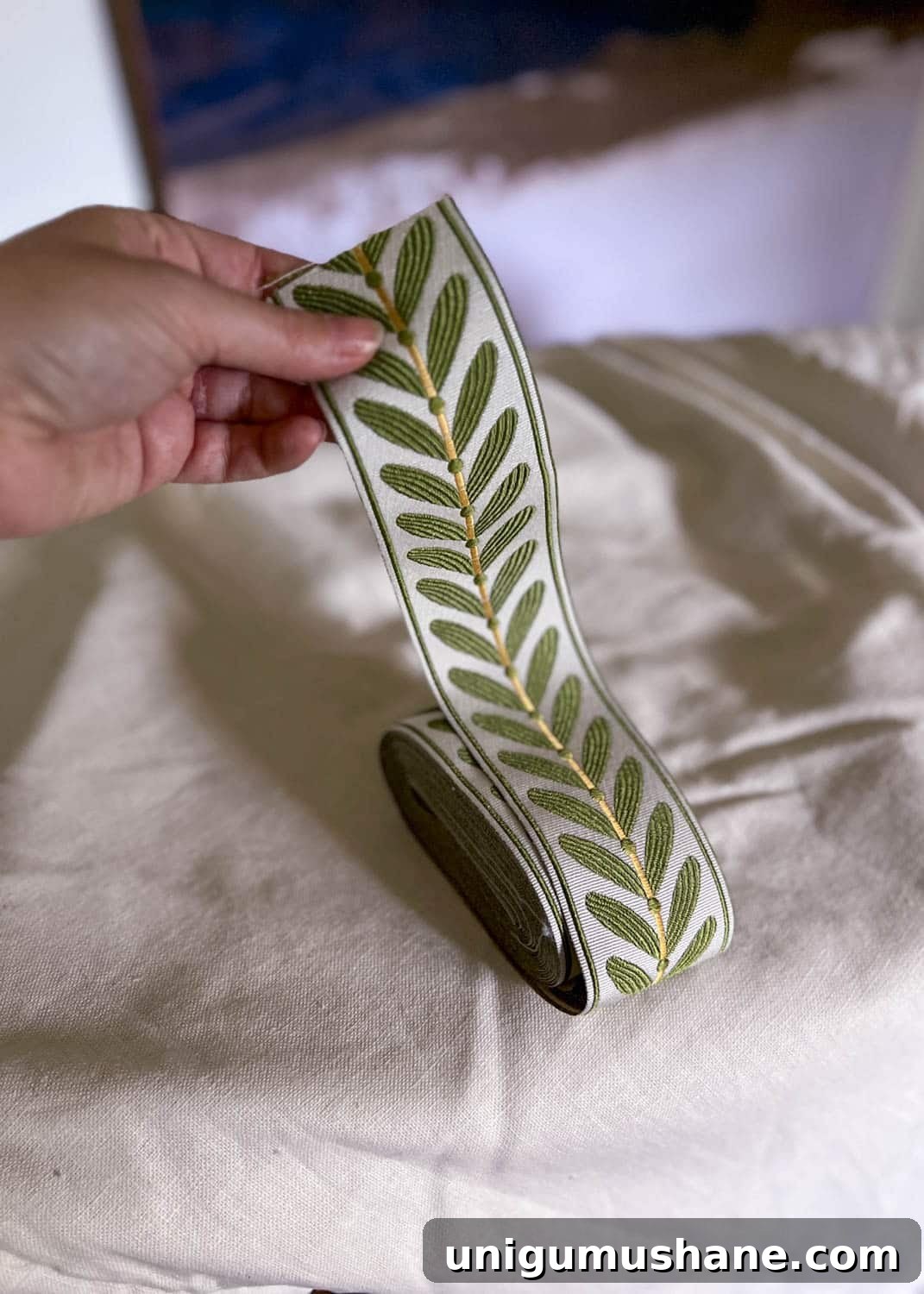
To recreate passementerie, choose a trim tape with the pattern and scale you like. Measure and cut the trim to match the panel length, and seal cut edges to prevent fraying. Then apply hemming tape along the edge and fuse the trim on top, paying attention to the orientation of the design.
Step 1 – Measure and cut trim and hemming tape
Cut hemming tape and trim to the curtain length. Seal the trims’ cut edges and confirm the design direction before attaching.
Step 2 – Attach hemming tape
Iron the hemming tape to the curtain edge the same way you did the header, following the product instructions for temperature and pressure.
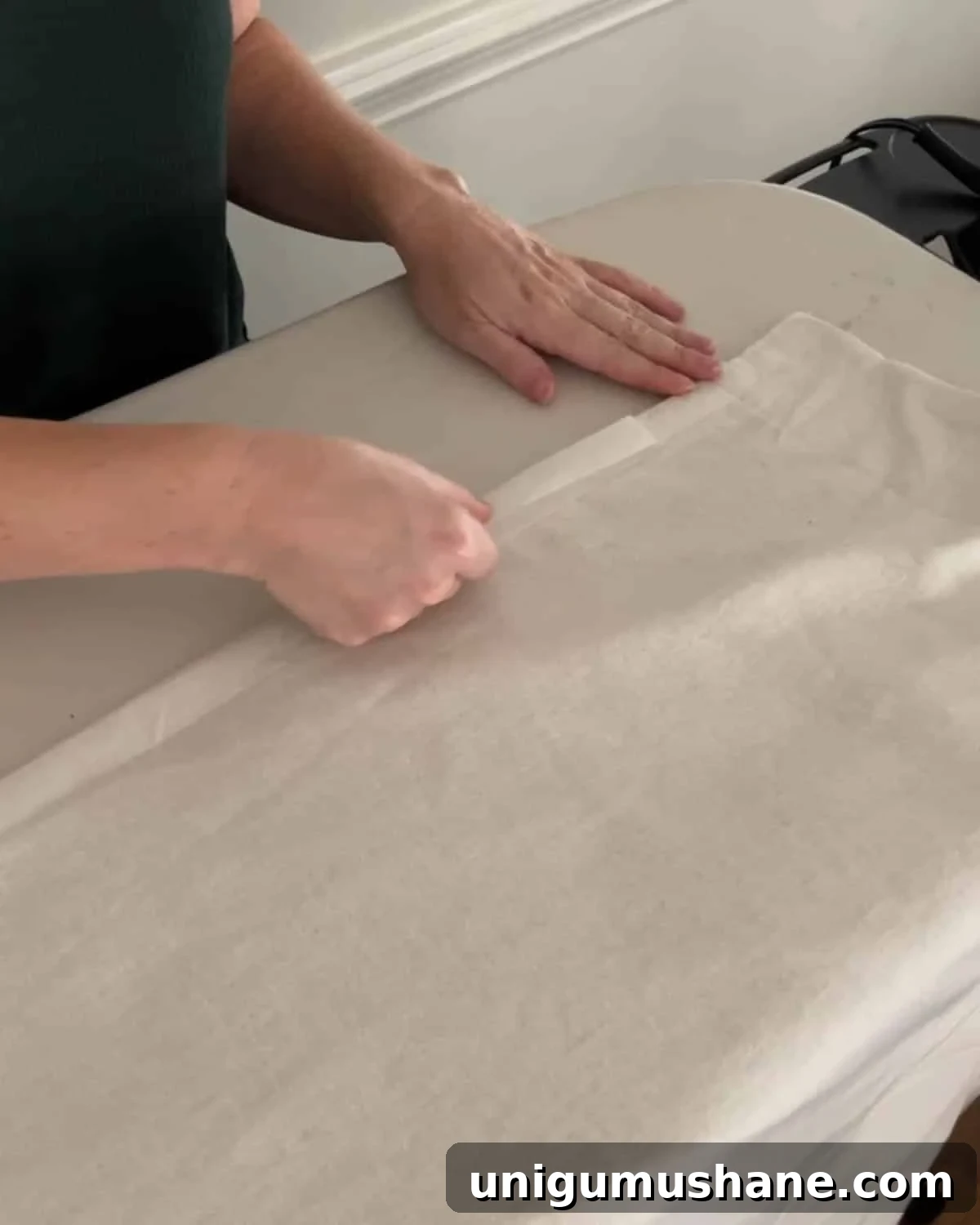
Step 3 – Attach trim tape
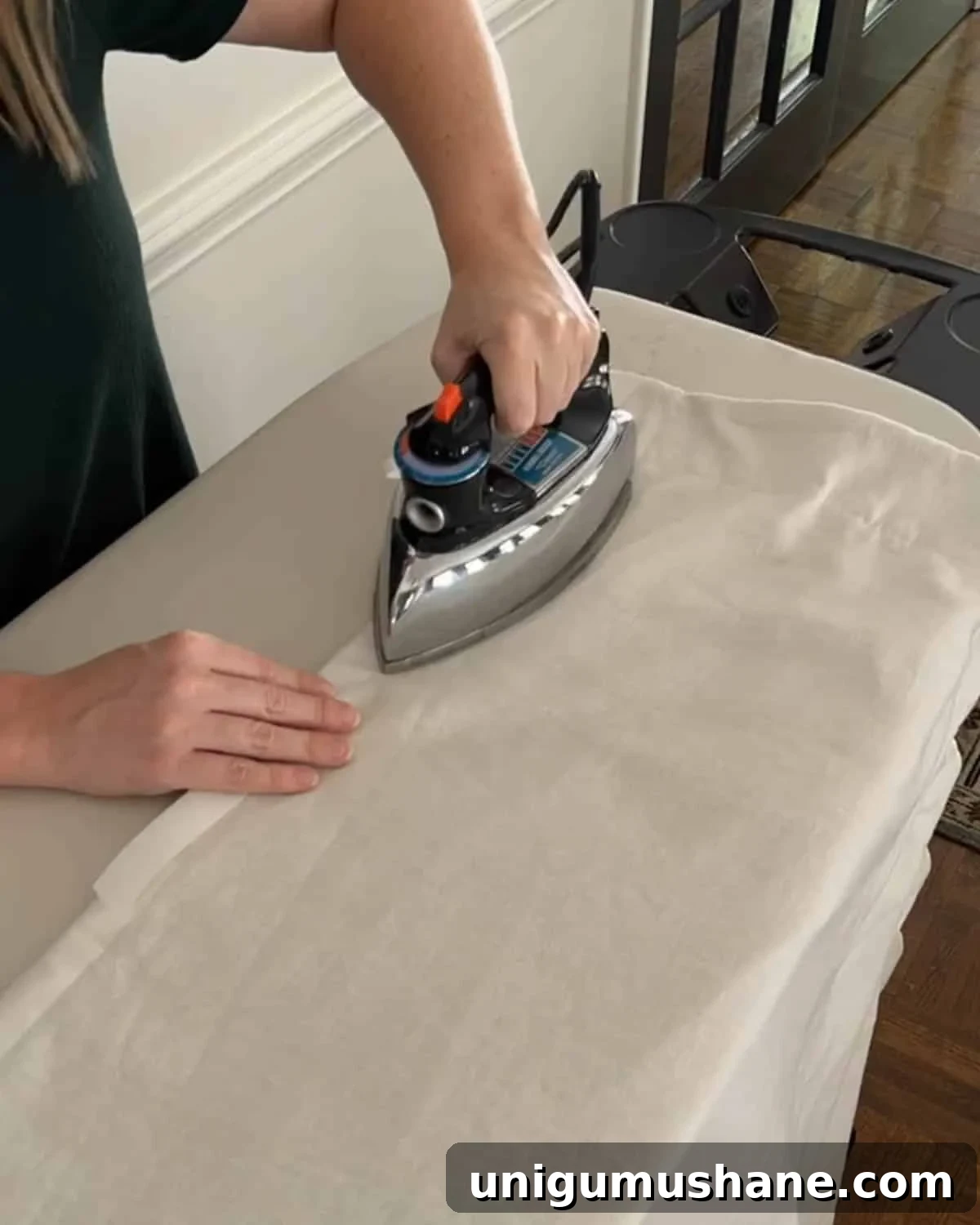
Peel the paper from the hemming tape, position the trim precisely, then press the trim with the iron in sections until the bond is complete. Take care to align patterns so the border reads correctly when the curtains hang.
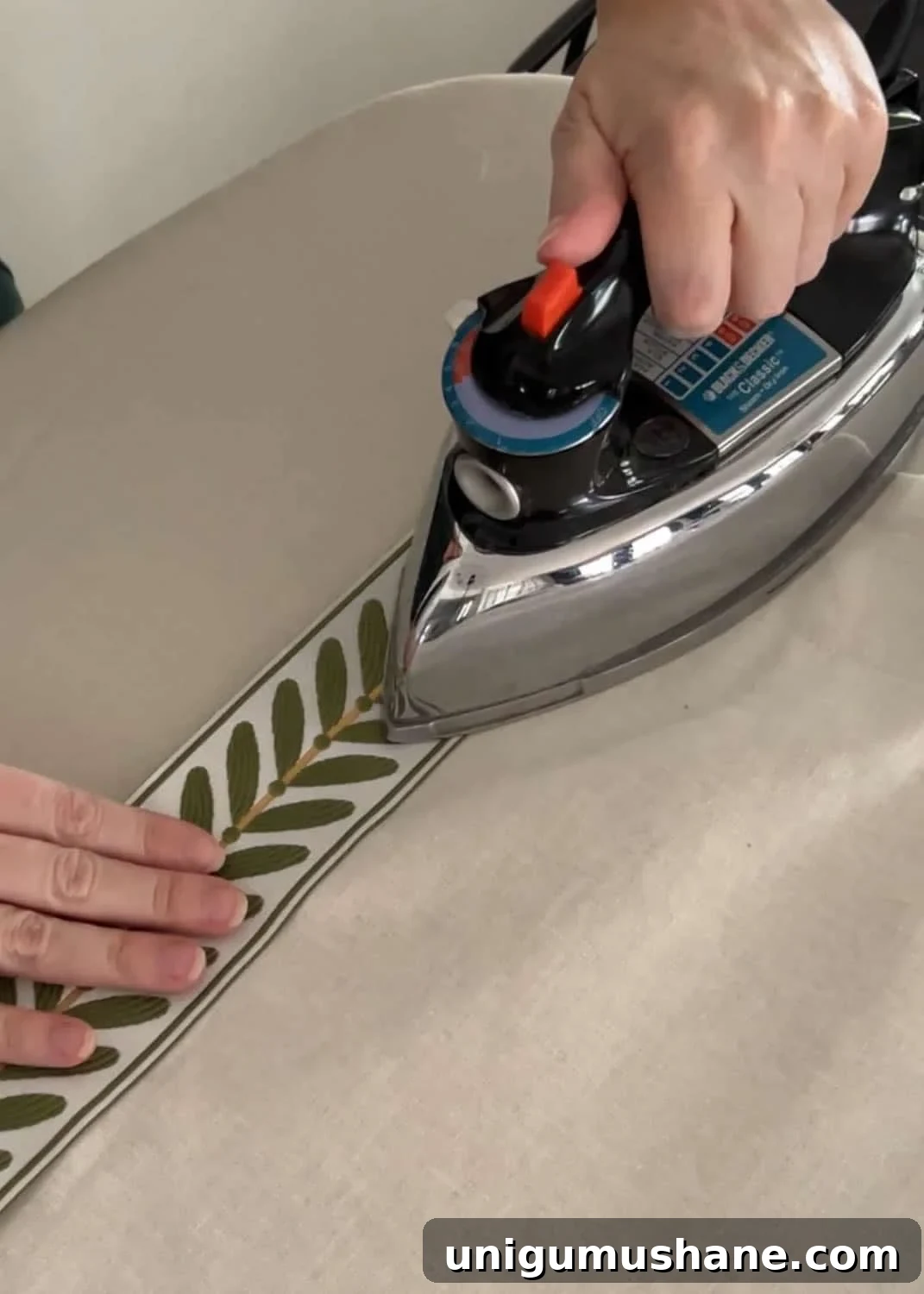
How to hang curtains
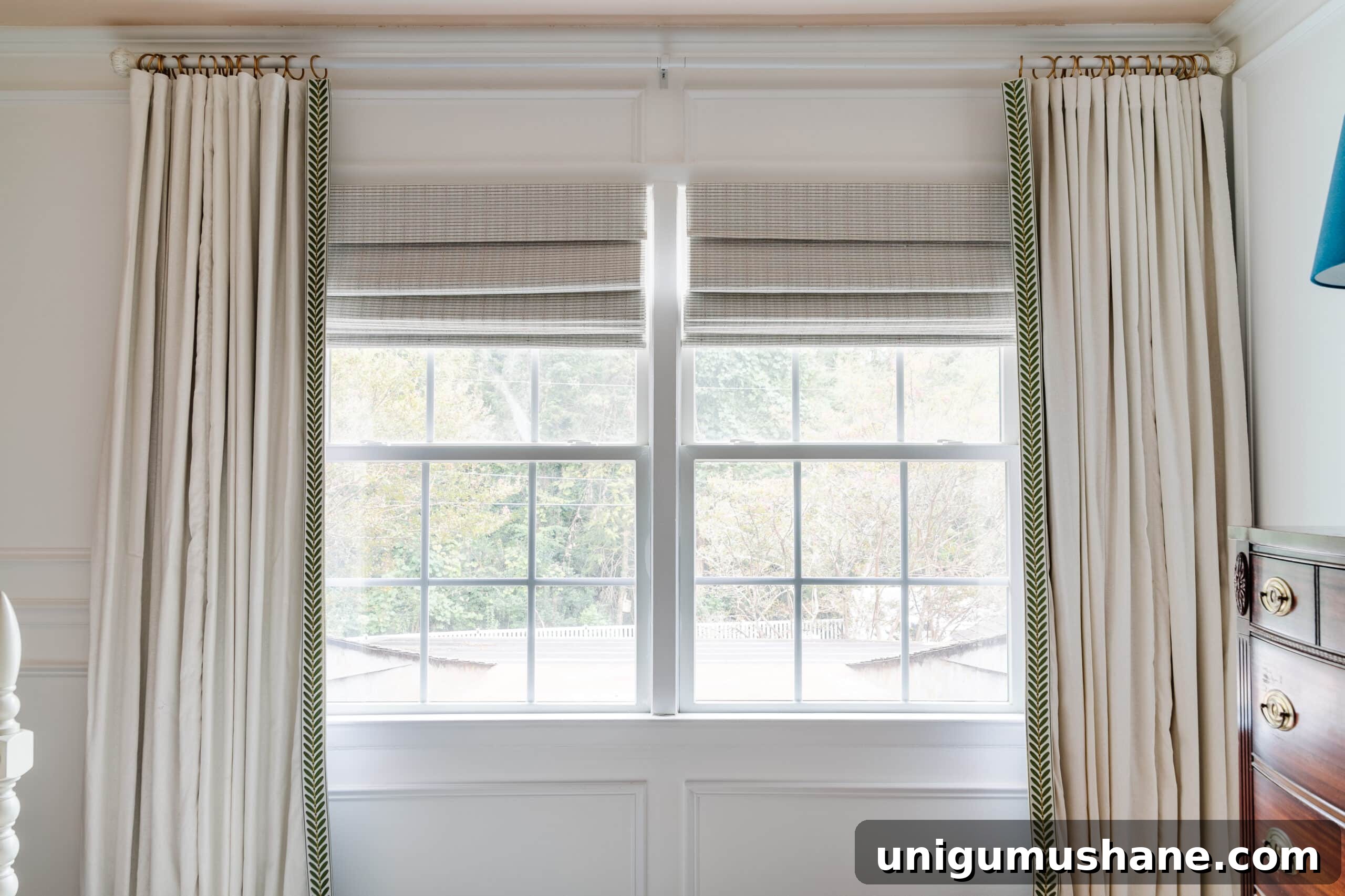
With header tape in place, select your preferred pleat style and hook placement. I staggered pleating hooks into the header spaces and finished the look with gold curtain rings for a classic feel.
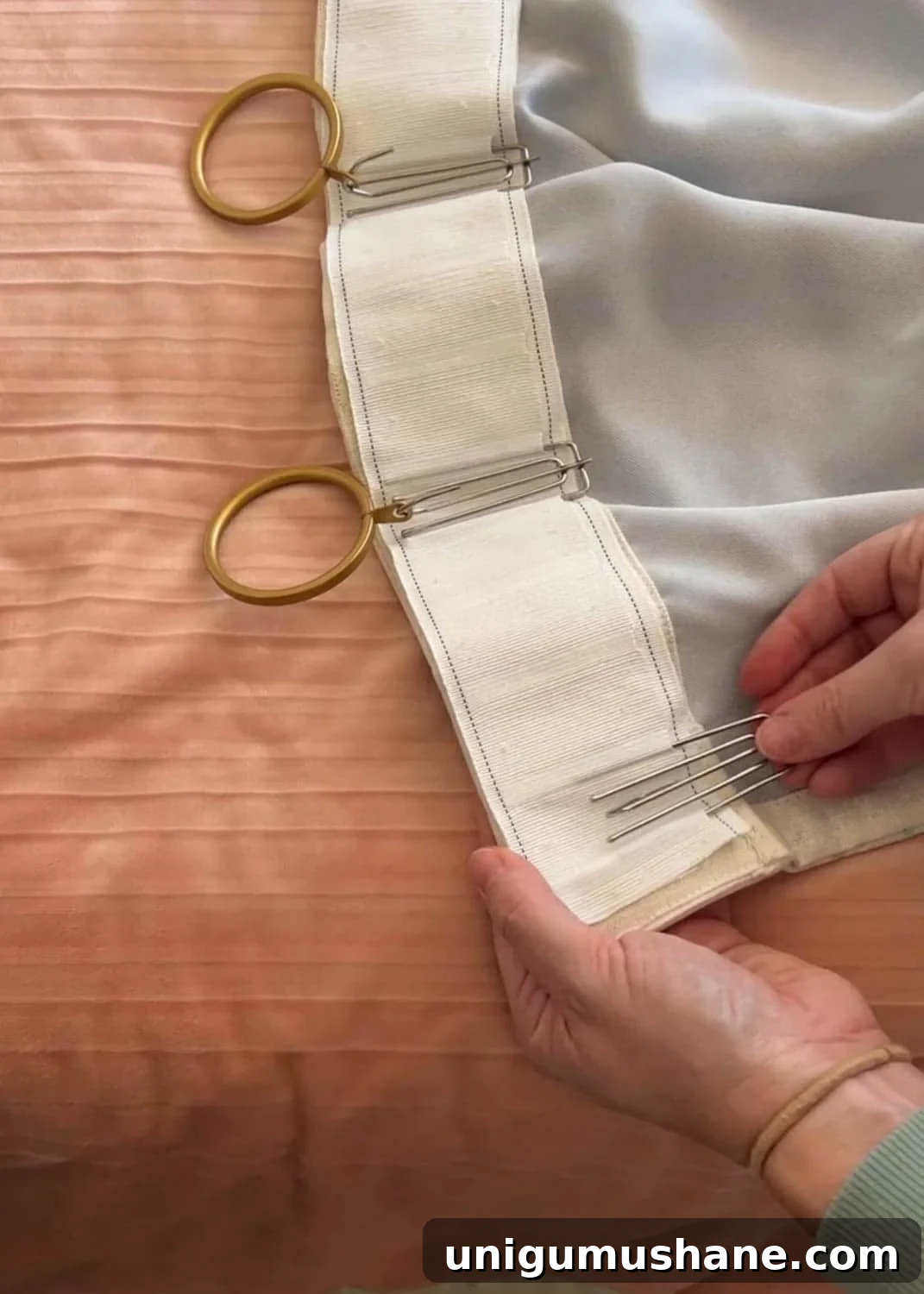
Hang panels high and wide so the top sits a few inches below crown molding, and leave 12″–18″ of fabric beyond the window frame on each side for balanced fullness. Use a steamer or iron to remove any creases after hanging.
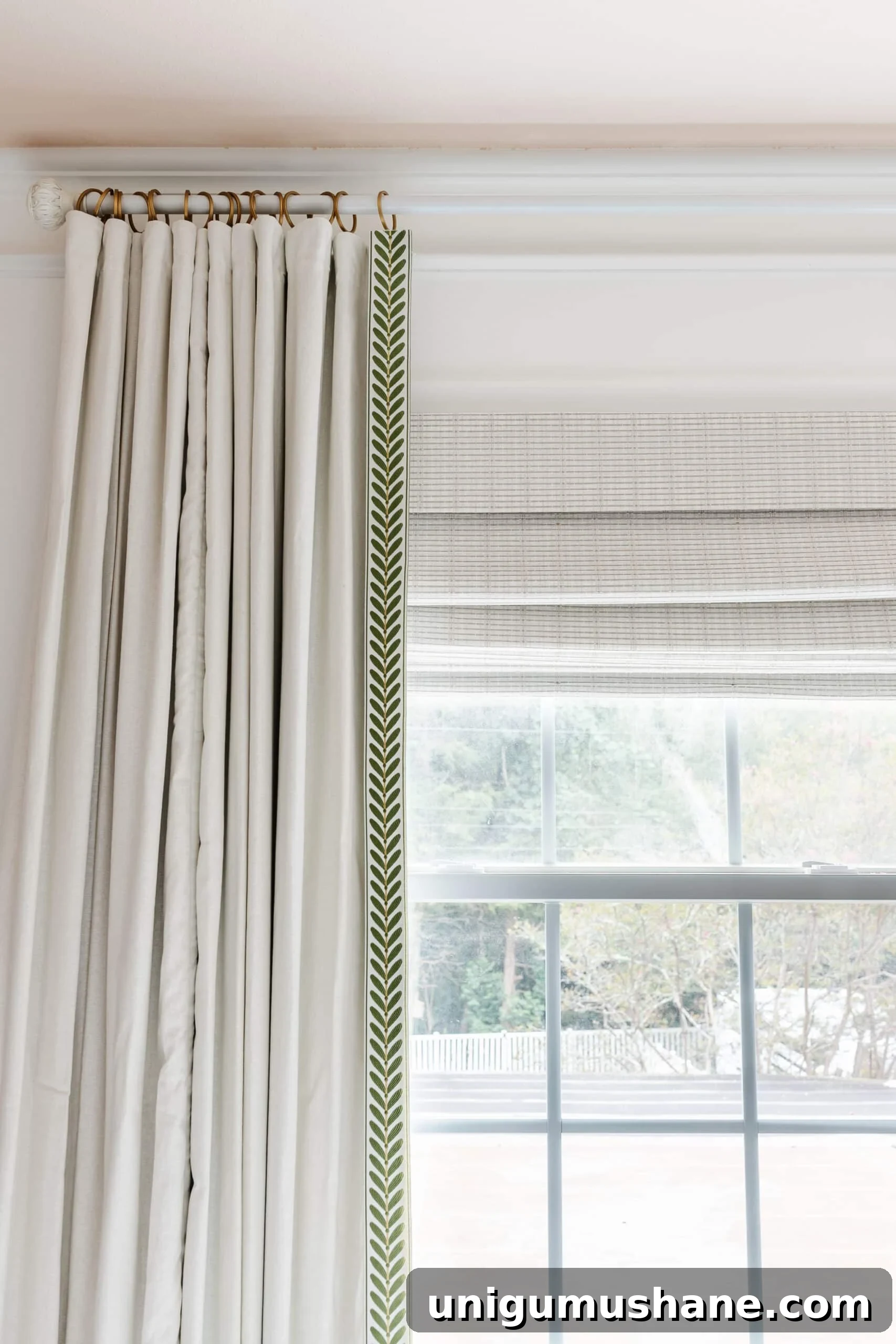
After finishing, I steamed the panels to smooth them. I did consider trimming the hem to kiss the floor, but left extra initially to account for the hooks and pleats. Small adjustments are easy to make later.
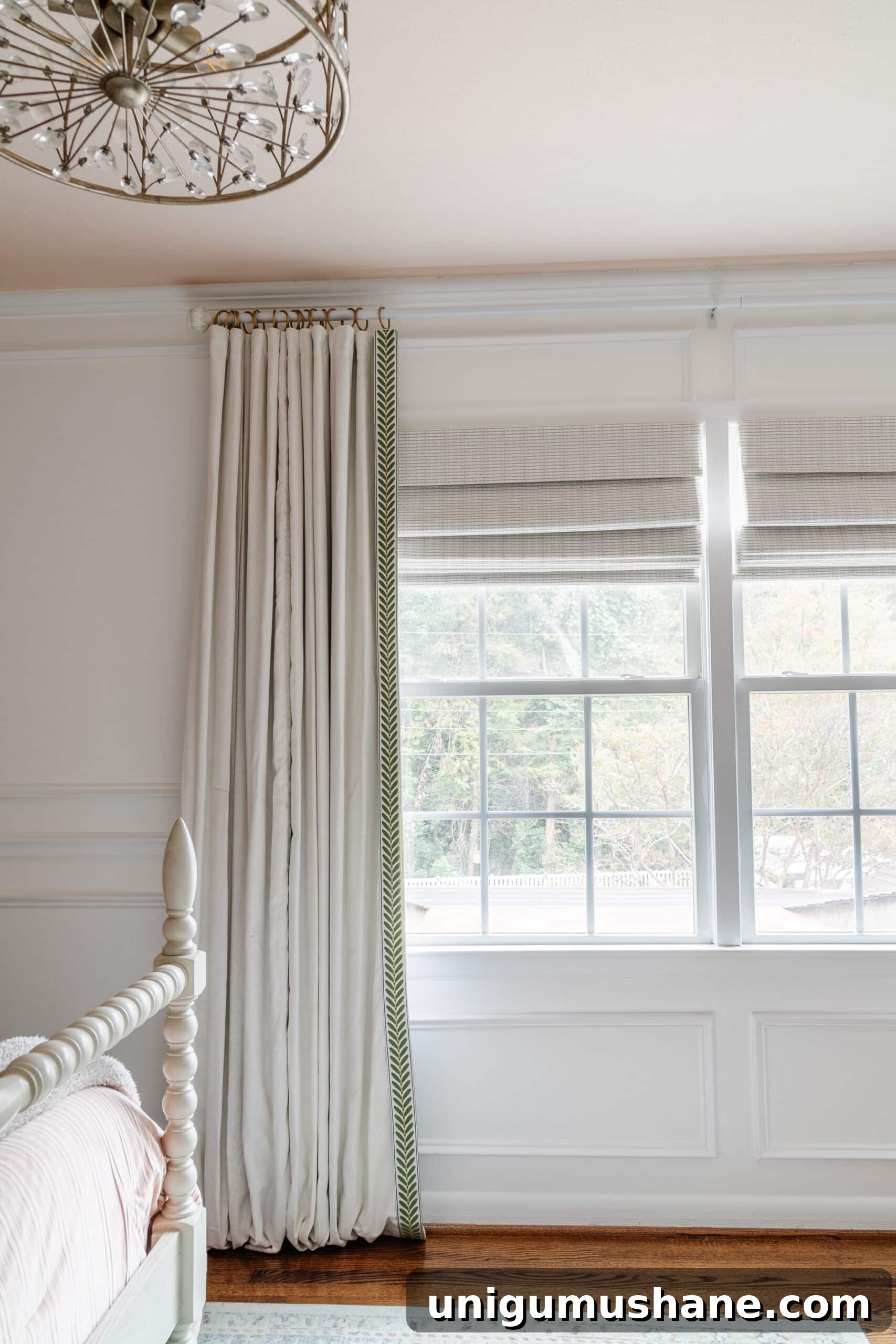
For about $50 and a few hours of work, these passementerie-style curtains look far more expensive than they are. The same approach would also elevate living room or dining room drapery.
What is passementerie?
Passementerie refers to decorative trimmings and ornamental braids used to embellish textiles and furnishings. Traditionally crafted from fine threads, cords, and beads, it adds a tailored, luxurious finishing touch to curtains, upholstery, and garments.
Curtain trim ideas
If you like the passementerie look, experiment with leaf tapes, bullion fringe, braided cords, or small pom-pom borders. Choose colors and scales that complement your fabric and room decor to achieve a cohesive, elevated result.

Have you tried a no-sew curtain project before? This method is forgiving and budget-friendly, making it a great first step toward more elaborate window treatments.
More window treatment ideas
- Use heavy linens or drop cloths as inexpensive curtain bases.
- Add header tape and rings for a polished, hotel-quality hang.
- Try outdoor-grade fabrics and hardware for covered porches.
- Apply decorative window film for privacy and pattern without fabric.
Frequently Asked Questions
Tablecloths, drop cloths, or flat bed sheets work well as temporary curtains—simply hang them with clip rings. Kitchen towels can be used as cafe-style no-sew curtains.
Sewing your own curtains usually costs less in materials than buying ready-made draperies, but it requires time and skill. If you value time over money saved, no-sew methods are a great alternative.