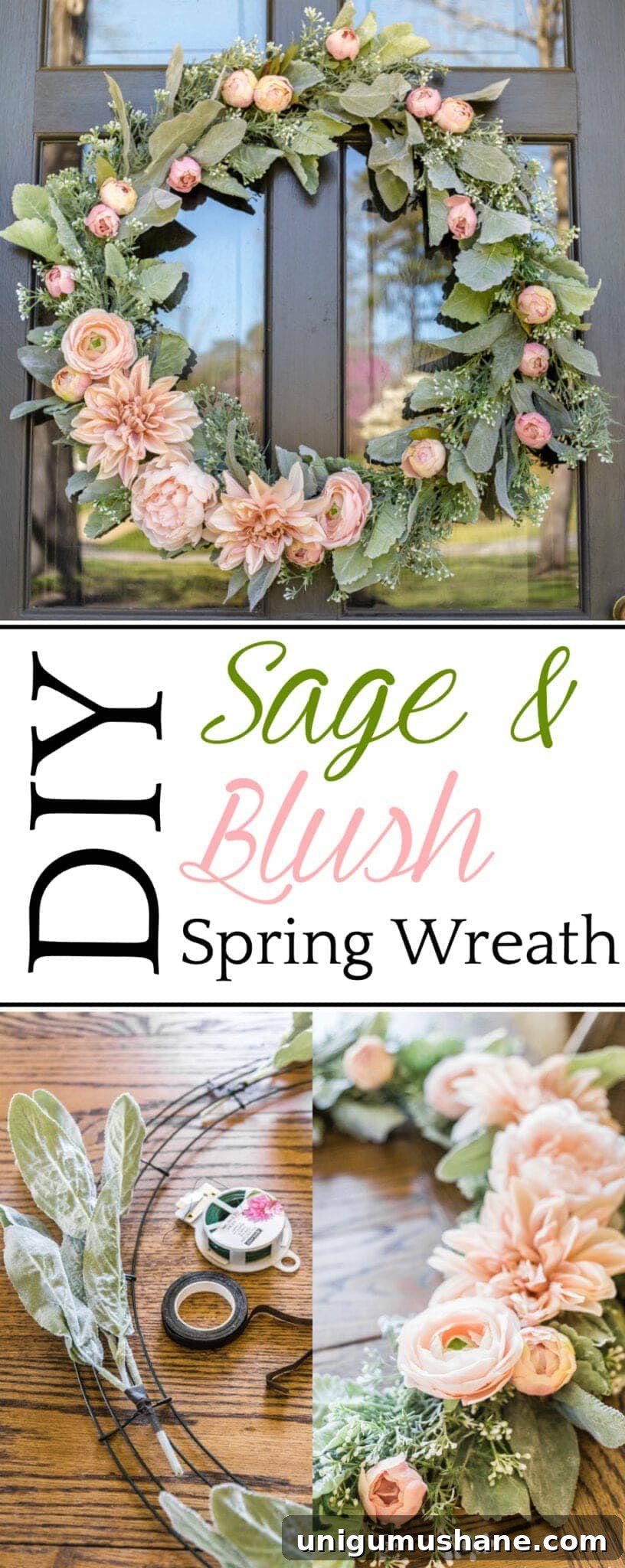
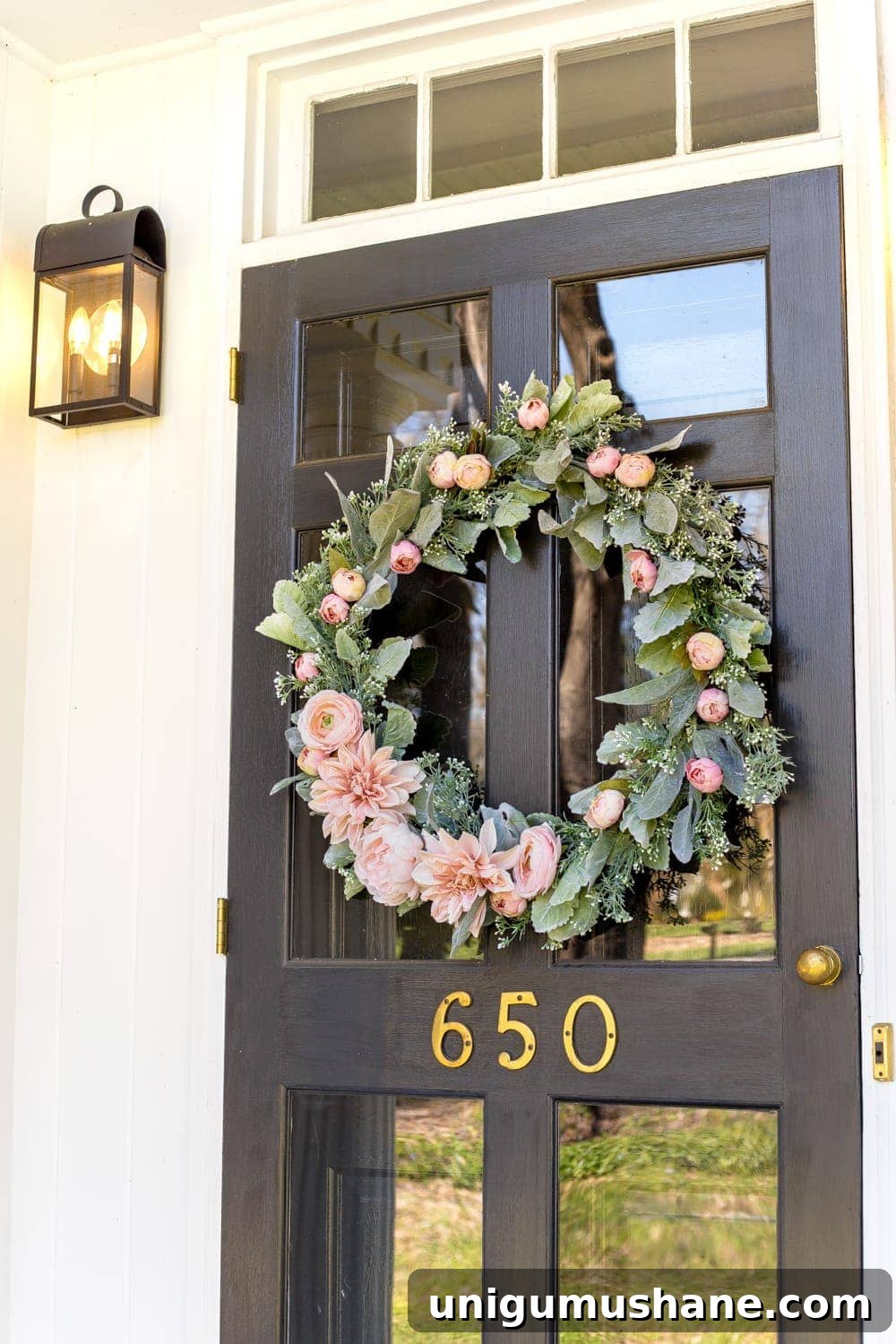
Step-by-step: Make a Soft Sage and Blush Spring Wreath from Scratch
This is a simple, romantic tutorial for creating a spring wreath from scratch using artificial sage greenery and blush-toned flowers. The finished wreath has a soft, understated look that suits a variety of entryways and porches. I made mine quickly and inexpensively with faux stems and a basic wire wreath form—no advanced craft skills required.
Full disclosure: I can be picky about wreaths. I’ll happily repurpose secondhand furniture or decorate with budget finds, but when it comes to the front door wreath I want it to feel just right. That’s why I focused on a restrained palette of sage greens and bashful blush flowers for this design. The combination feels gentle, welcoming, and versatile for spring.
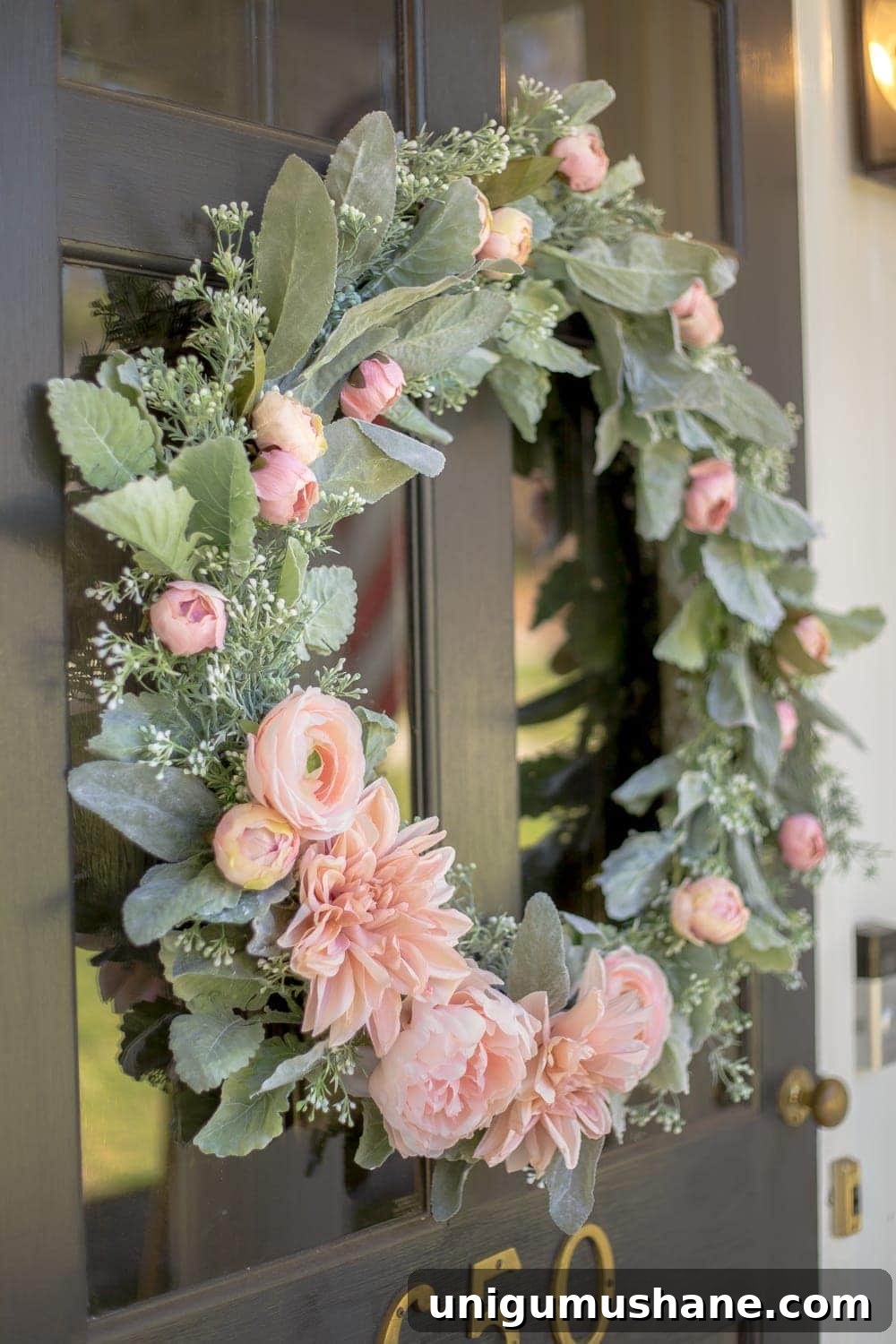
Why this wreath works
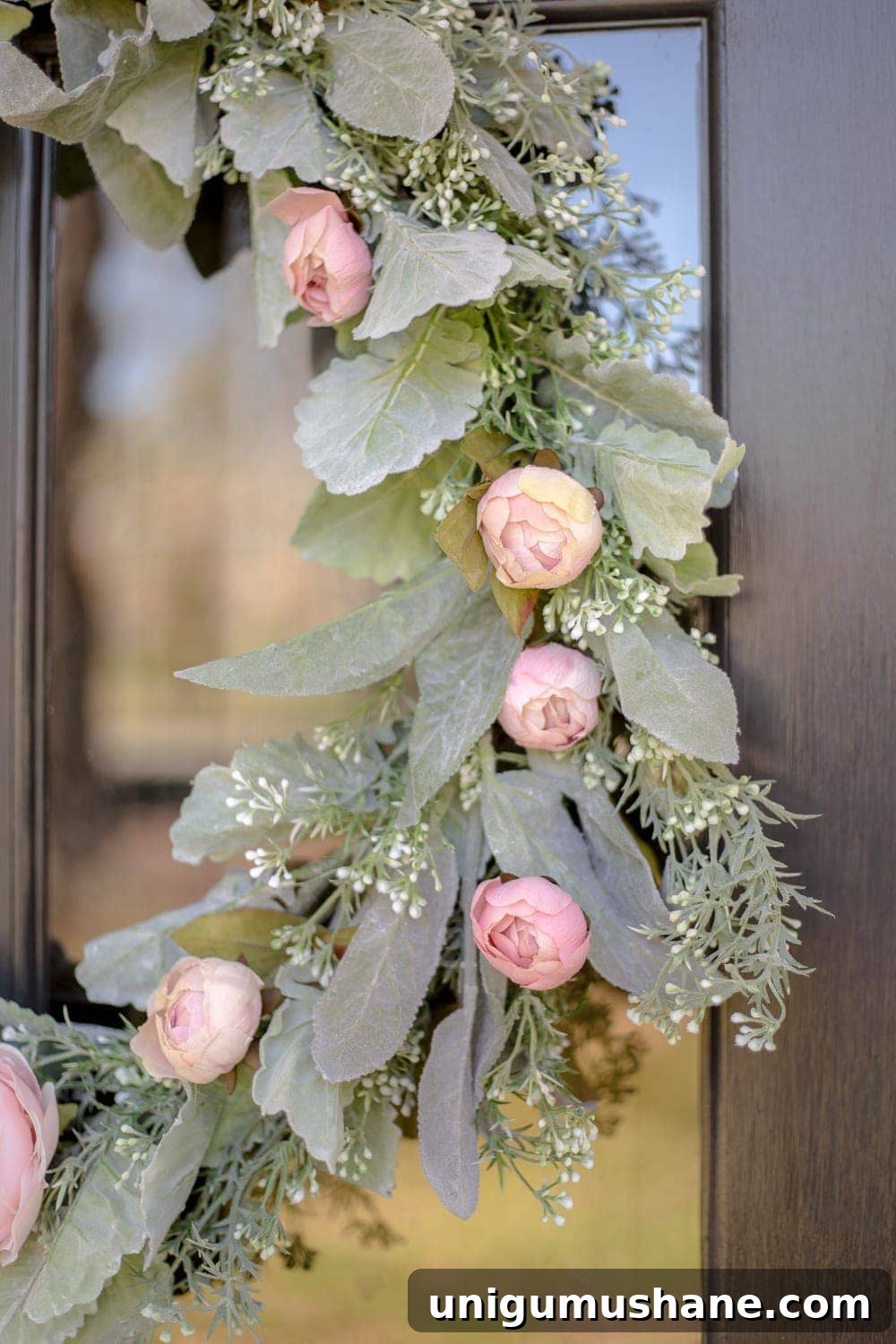
The key to this wreath’s soft, romantic style is the balance between texture and color. The lamb’s ear (or similar fuzzy sage greenery) provides a muted, velvety backdrop, while blush peonies, ranunculus, and garden roses give gentle pops of color. Small clusters of white berries or delicate filler stems help the composition feel natural and finished without overpowering the soft palette.
Supplies used
- 24″ wire wreath form (or a size you prefer)
- Floral wire
- Floral tape
- Floral cutters or wire snips
- Artificial lamb’s ear stem(s)
- Artificial lamb’s ear bush (for fuller coverage)
- Artificial white berry stems
- Artificial peony stem (blush)
- Artificial dahlia or similar bloom (blush)
- Artificial ranunculus stem (blush)
- Artificial garden rose bush (blush)
The steps
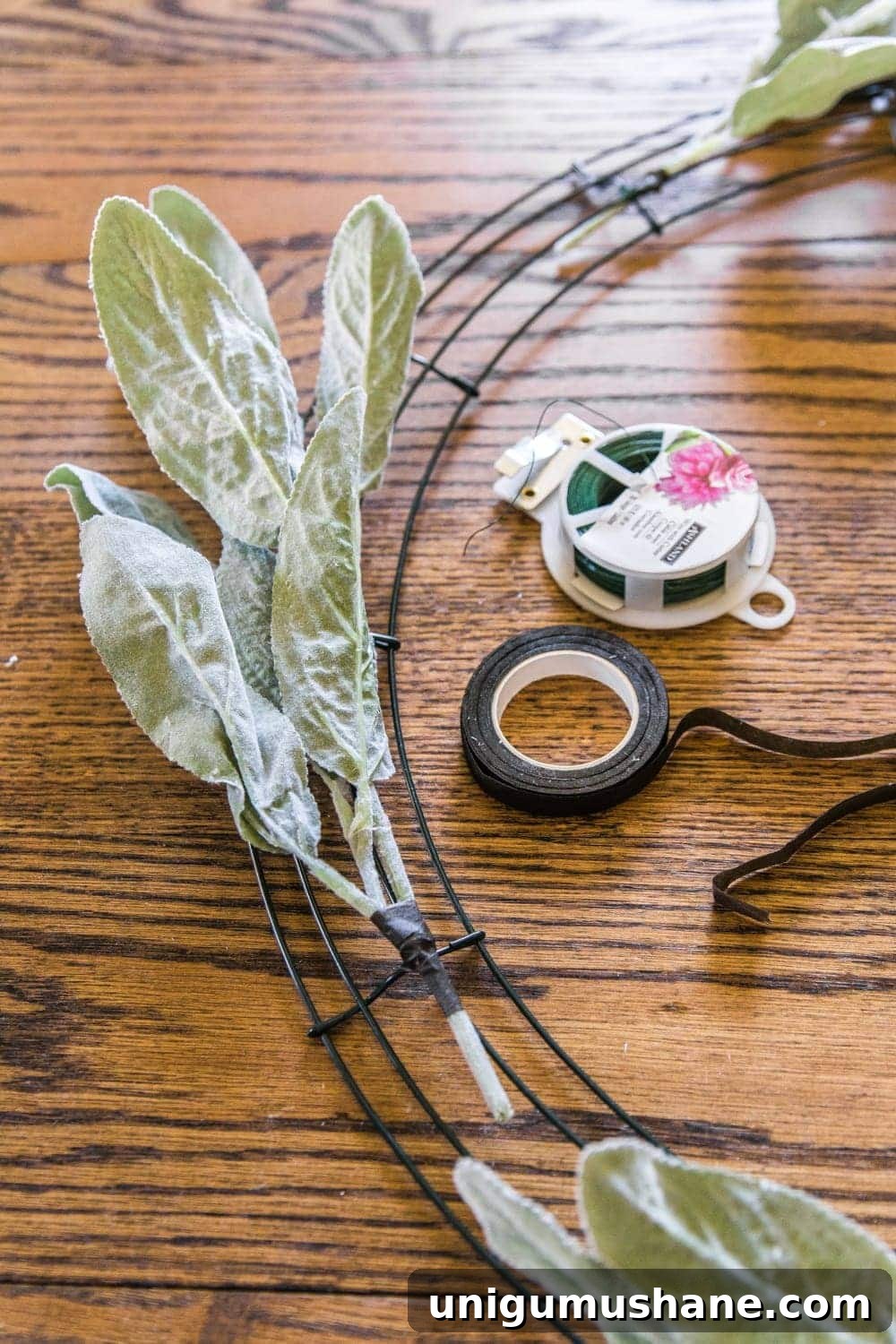
1. Prepare the greenery. Start by snipping lamb’s ear stems into shorter segments so they’re easier to tuck into the wreath form. Plan to place the greenery evenly around the frame to create a balanced base.
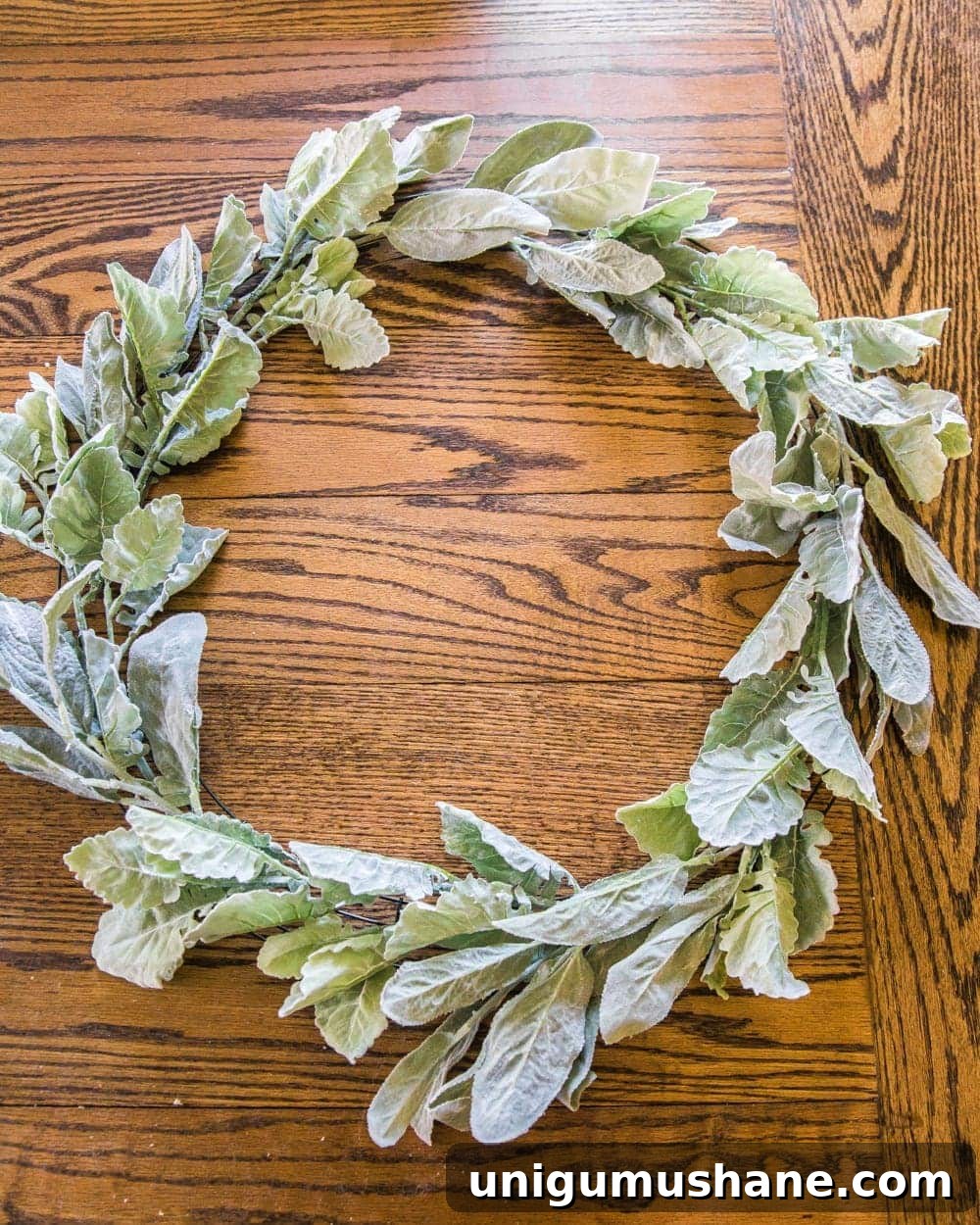
2. Attach the base greenery. Tuck the lamb’s ear stems through the wires of the wreath form and secure each cluster with floral wire. Wrap floral tape over exposed wire ends if needed to keep everything neat. Aim for an even coverage but allow some stems to overlap or angle naturally for a relaxed look.
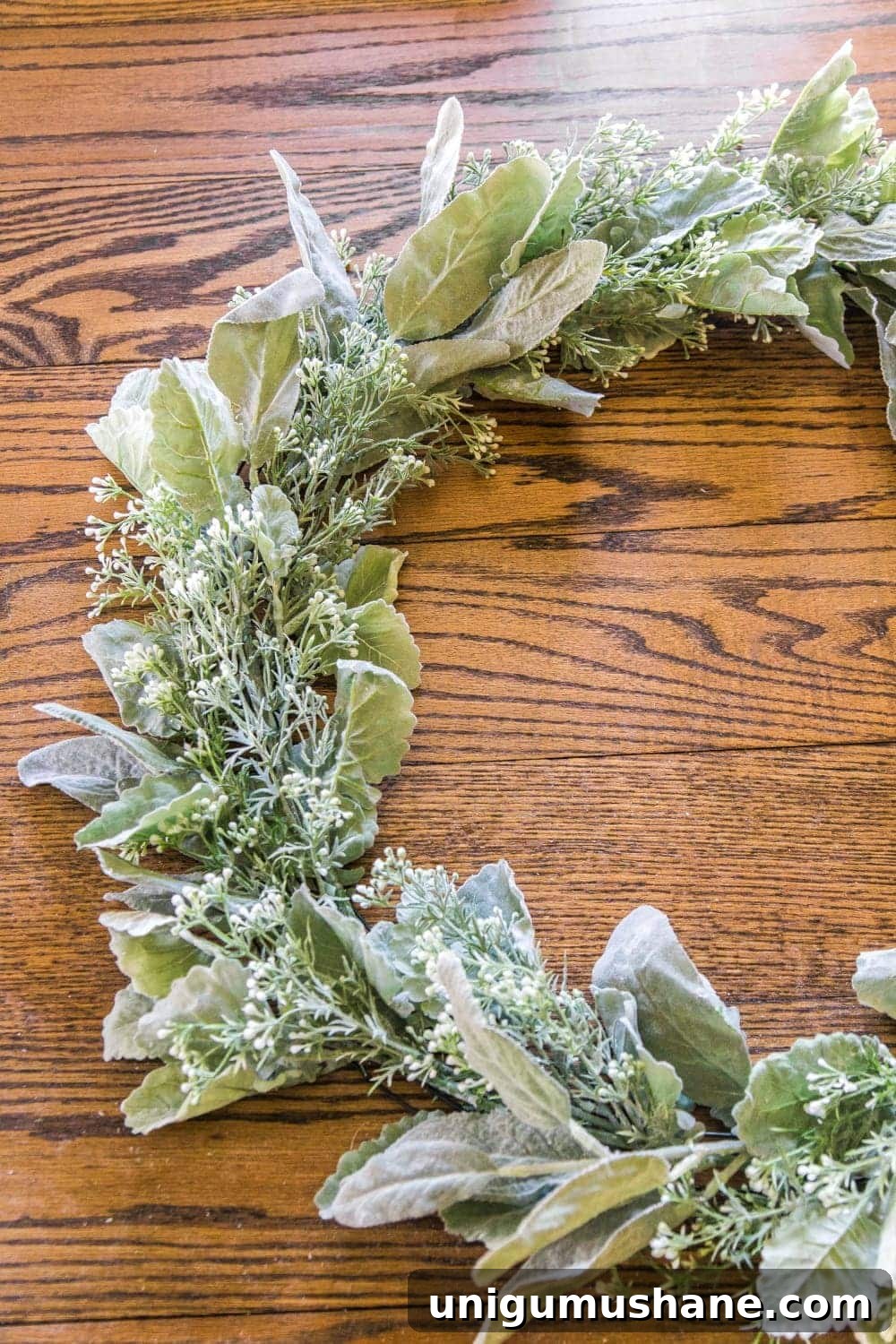
3. Add filler stems. Pull apart small white berry stems and add them between the lamb’s ear clusters. Secure each stem with floral wire and tuck the stems close to the form so they look integrated rather than sitting on top.
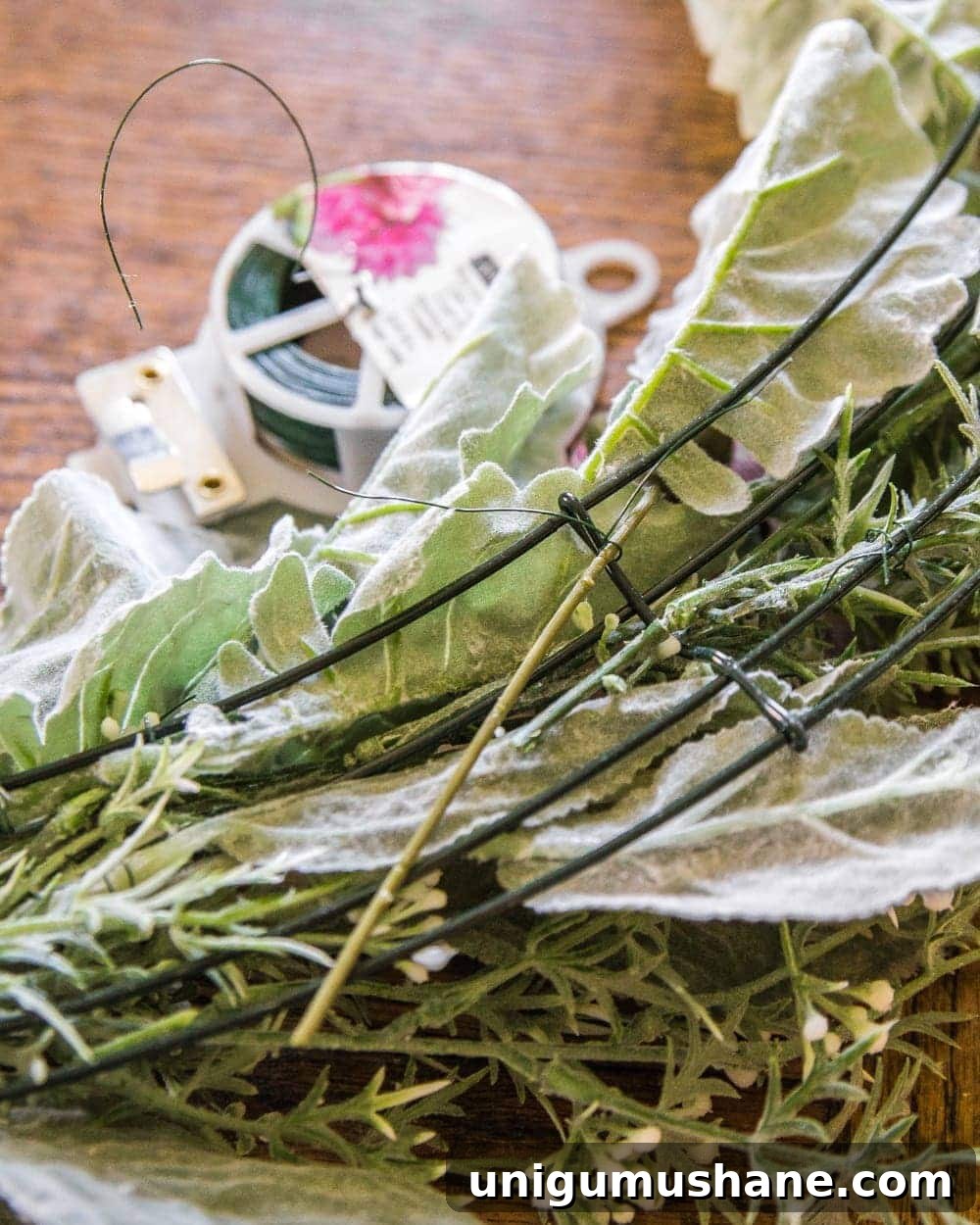
4. Position the focal flowers. Arrange the blush flowers where they will have the most impact—typically grouped on one side or clustered slightly off-center for a contemporary asymmetrical look. Push the stems through the wreath form and secure them on the backside with floral wire. Trim any excess stem length as needed.
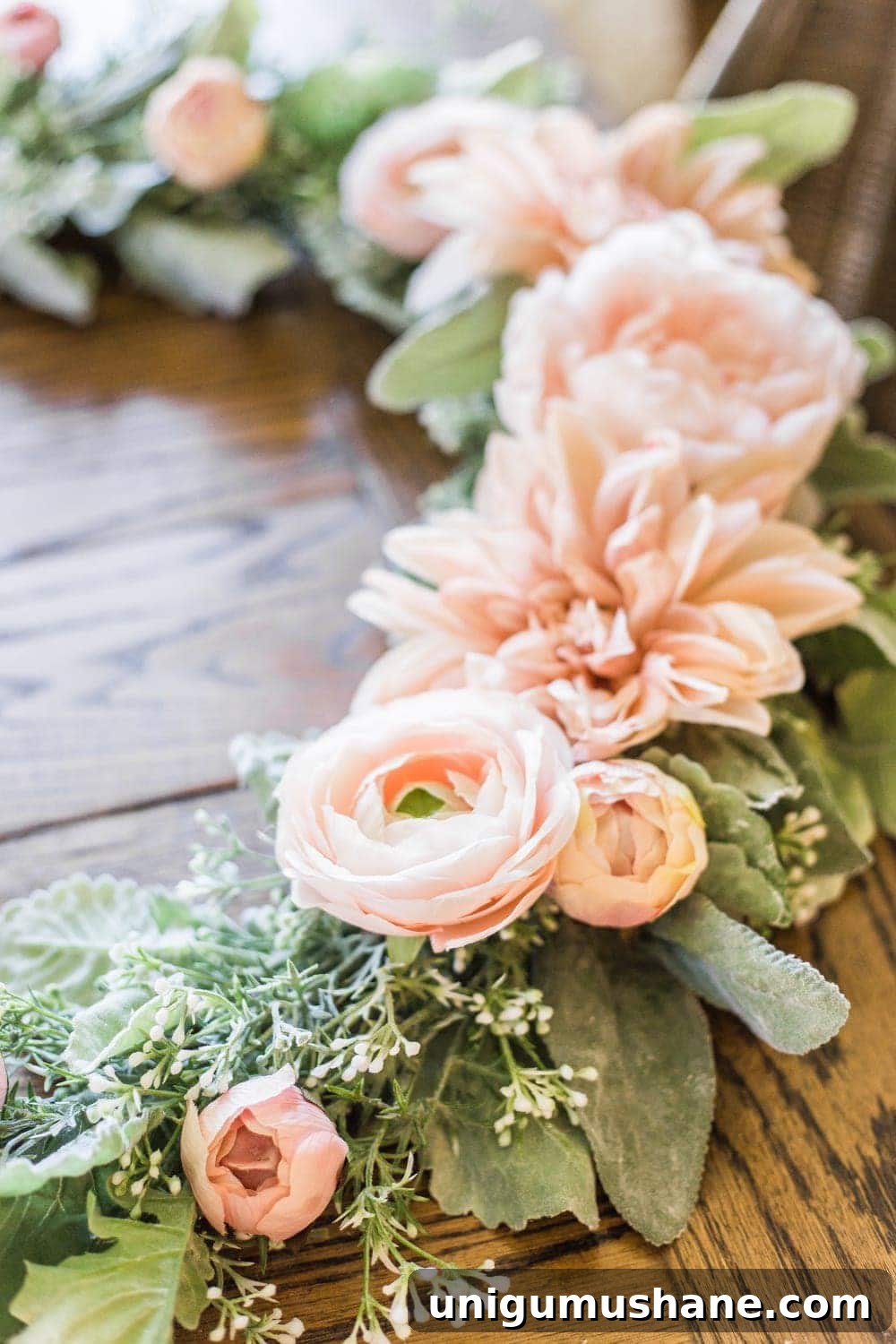
5. Final adjustments. Step back and evaluate the wreath’s balance and fullness. Add a few extra greenery sprigs or smaller blooms where gaps appear. Tuck and bend leaves for a more natural silhouette, and hide any visible wire or tape behind stems.
Most of this project can be completed in under an hour. The process is forgiving—if a flower looks off, simply remove it and reposition until you’re happy with the arrangement.
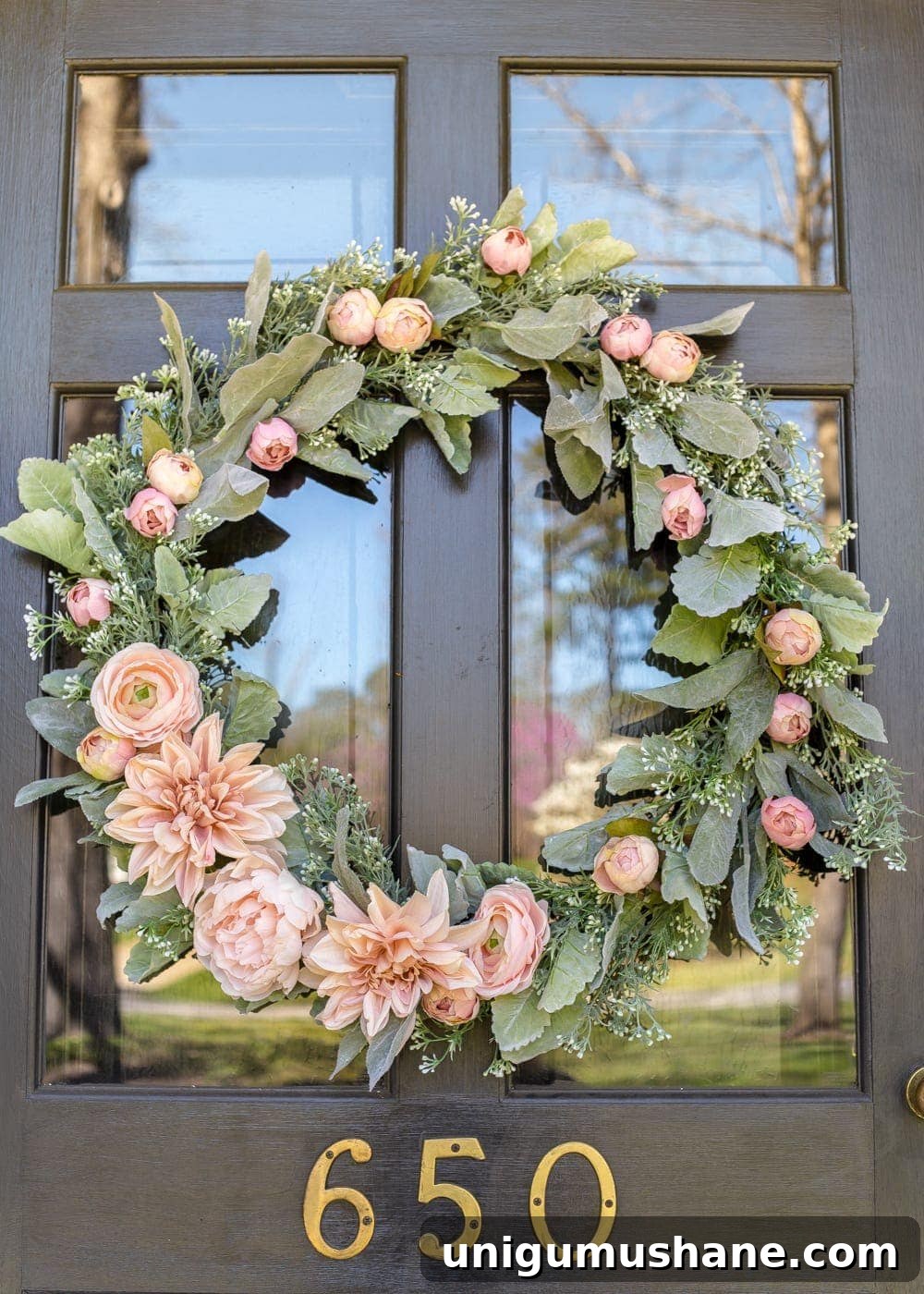
This was my first wreath made entirely from scratch, and I found the process surprisingly enjoyable. It’s a satisfying little project that creates a beautiful focal point for your front door or entry space. The muted sage and soft blush palette makes the wreath versatile enough to blend with many porch styles—from cottage to modern farmhouse.
More wreath inspiration
If you want more ideas, look for tutorials and examples such as: Succulent & Peony simple wreaths, dollar-store spring wreaths, elegant peony and eucalyptus designs, spring fern and eucalyptus hoops, boxwood and bicycle-themed wreaths, oversized succulent wreaths, eucalyptus quick wreaths, mini rosemary table wreaths, hydrangea wreaths, branch-and-vine designs, lemon-accent spring hoops, moss-covered wreaths, and paper flower or butterfly wreaths. These variations show how different textures and focal elements create distinct seasonal looks.