
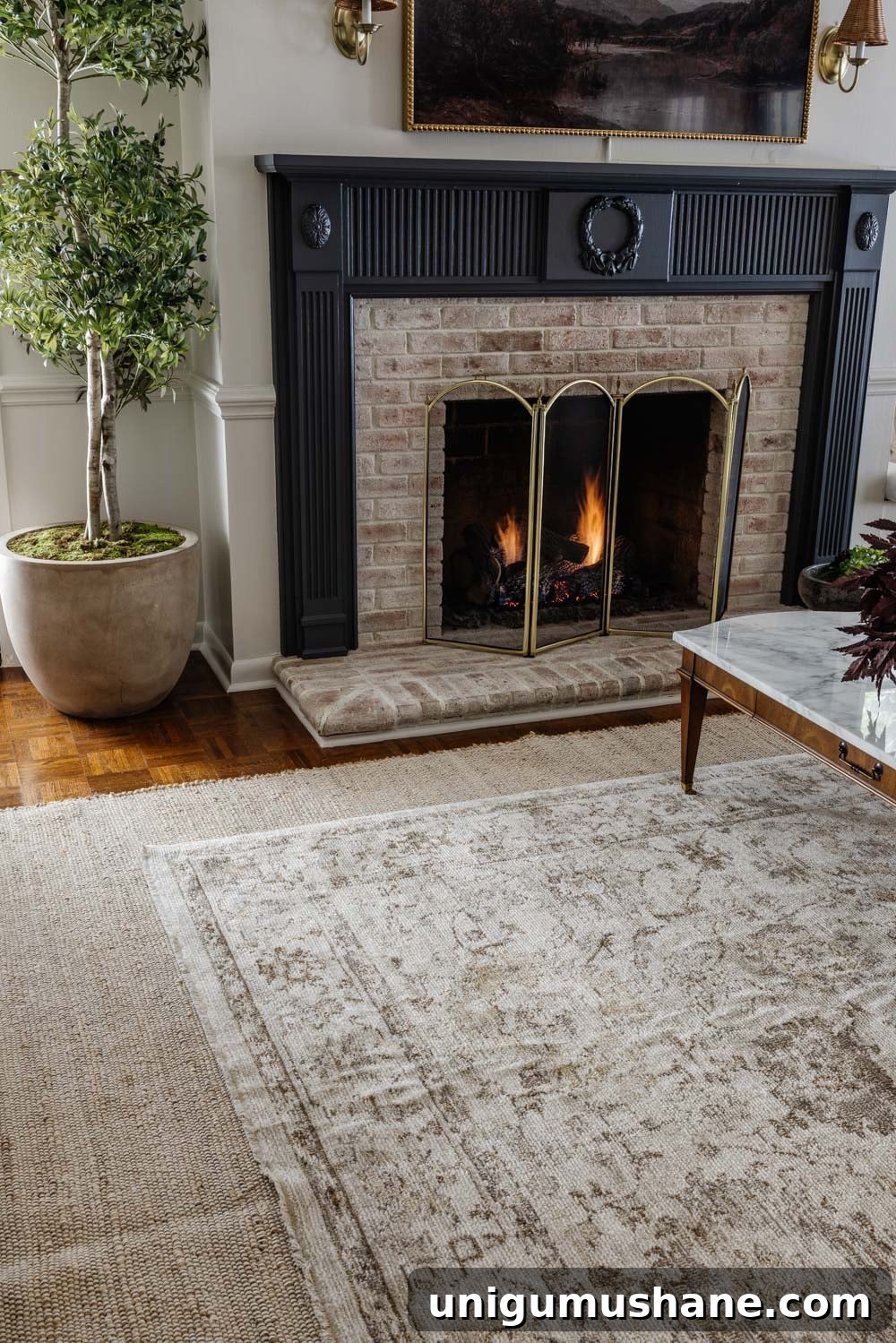
We recently layered rugs in our living room and immediately asked ourselves: why didn’t we do this sooner?
Adding a simple layer made the room feel warmer, cozier, and more finished without changing any furniture or décor. That single move introduced texture, depth, and a curated designer look that transformed the space.
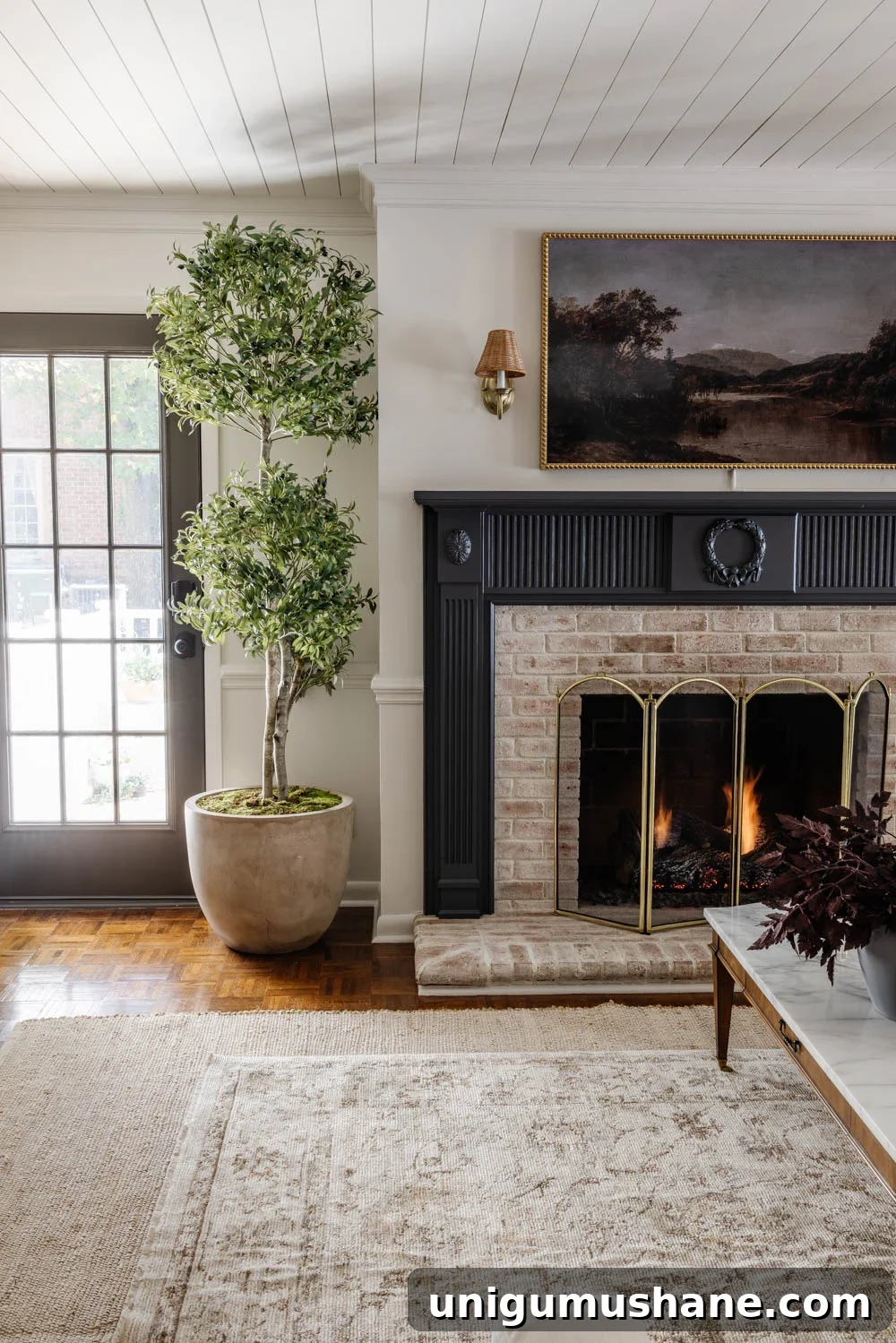
jute rug | patterned rug | fireplace screen | artificial tree | sconce | rattan shade
One of the best perks: layering can rescue a small vintage rug that’s too tiny for your space. Layer a smaller, loved rug over a larger, neutral base and you get the right scale plus the design you adore without compromising on size.
That said, not every combination works. Layering can look off if you pair clashing patterns, identical textures, or rugs that are too similar in size. Below I share straightforward rules and dependable pairings that help you layer confidently and beautifully.
Why Layer Rugs?
Layering rugs brings three essential qualities to a home: texture, depth, and personality. It’s an easy way to elevate a room without a big budget or a complete overhaul.
Benefits include:
- Warming up cold hardwood or tile floors
- Adding softness and underfoot padding
- Introducing pattern without overwhelming the space
- Making builder-grade rooms feel curated and custom
- Clearly defining seating and activity zones
It’s often more affordable than buying one large, statement designer rug. Even over wall-to-wall carpet, a layered arrangement protects the floor and helps define furniture groupings.
The Basic Rules for Layering Rugs
1. Pick the Right Size for the Base Rug
The base rug should set the scale for the room. In living areas, at least the front legs of sofas and chairs should sit on it. For dining rooms, the rug must be large enough so chairs remain on it when pulled out. In bedrooms, allow the rug to extend roughly 18–24 inches beyond the sides and foot of the bed.
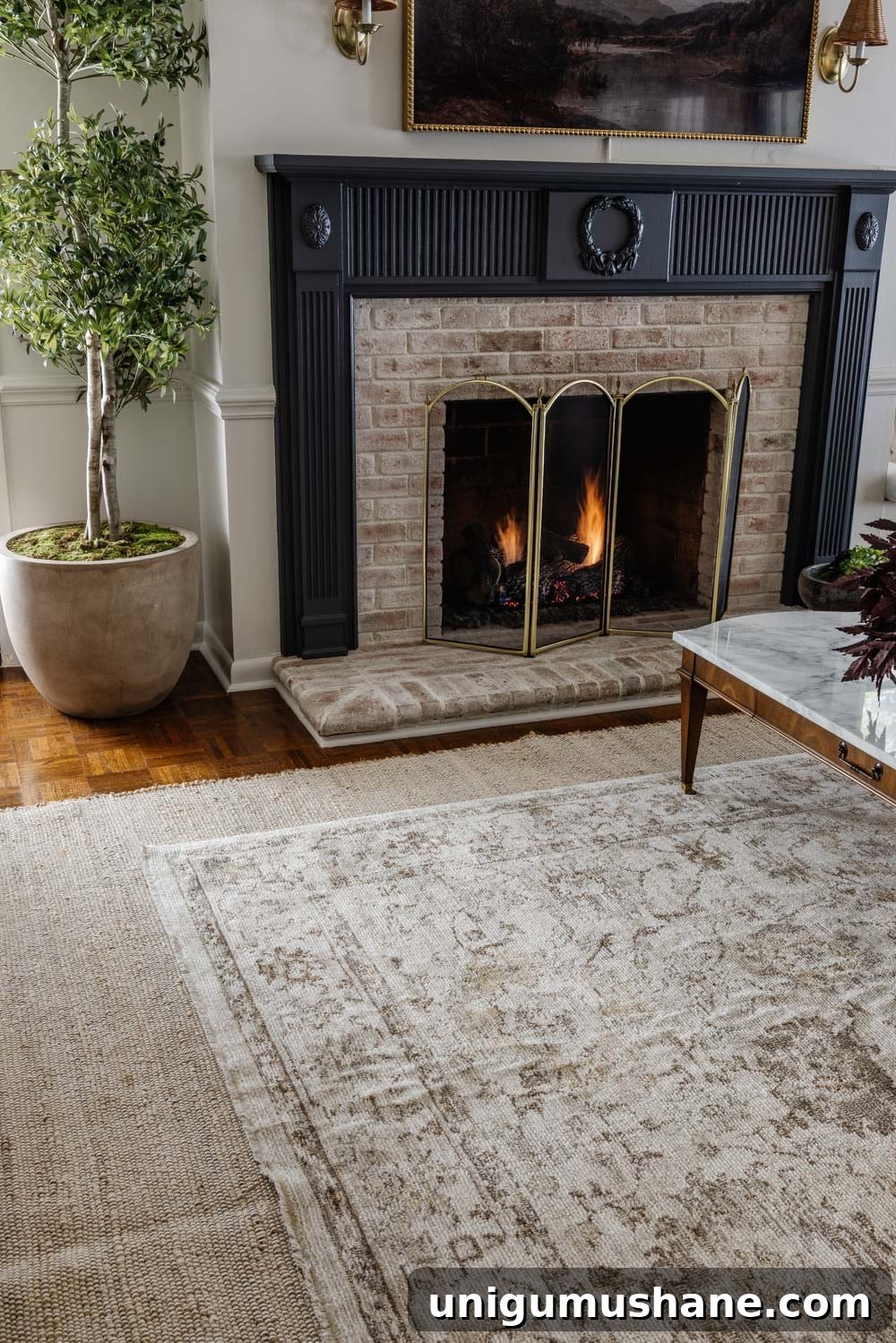
2. Start With a Neutral Base Rug
The bottom layer should anchor the room, not compete with the top rug. Neutral, textured options work best:
- Jute
- Sisal
- Flatweave wool
- Neutral striped flatweaves
These foundations add warmth and structure without overshadowing the accent rug.
Related: 25 Best Places to Buy Rugs Affordably Online
3. The Top Rug Should Be Smaller
A reliable guideline is to choose a top rug roughly two-thirds the size of the base. Typical combinations include an 8×10 base with a 5×7 top or a 9×12 base with a 6×9 top. The size difference creates visible borders and layered interest.
4. Mix Texture, Not Chaos
Layer for contrast in texture rather than competing patterns. Successful mixes include:
- Rough natural fibers with soft, plush rugs
- Flatweave foundations with a cushioned, shaggy top
- Neutral bases with a patterned accent
5. Let One Rug Be the Star
If one rug has a bold pattern, keep the other understated so the overall look stays balanced.
6. Don’t Stress About Perfect Placement
Centering feels classic and formal. A slightly off-center or angled placement creates a relaxed, collected vibe—both are fine, so choose what suits your room.
My Favorite Rug Pairings for Layering
Here are go-to combinations designers and decorators return to because they reliably look intentional and stylish.
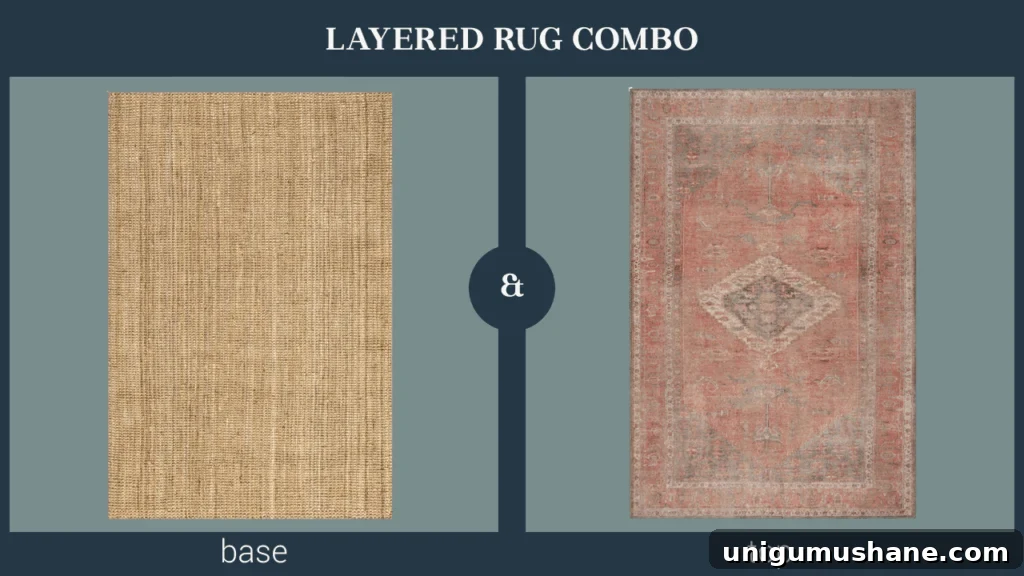
base rug | top rug
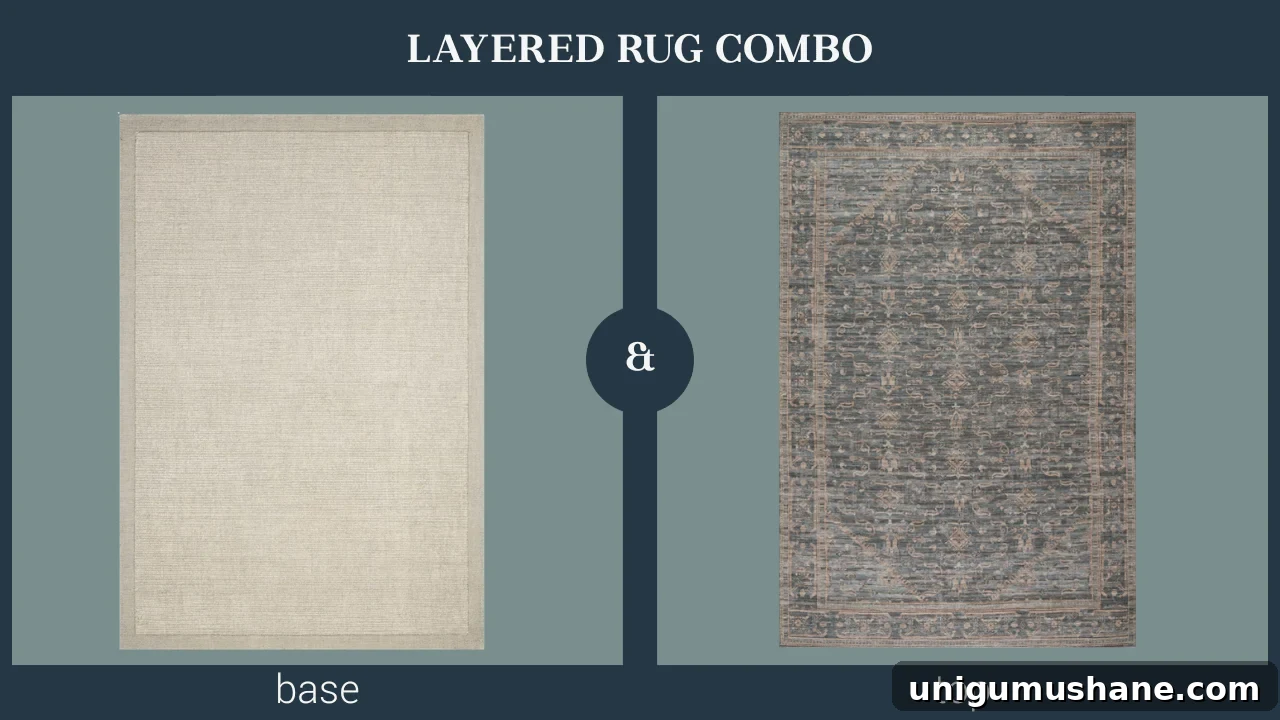
1. Jute Base + Persian Patterned Rug
Why it works:
- Natural jute grounds the space with organic texture
- A Persian or oriental rug on top adds color and character
- The combination feels warm, layered, and timeless
base rug | top rug
2. Wool Flatweave Base + Small Vintage Rug
Why it works:
- Wool flatweave offers softness and structure
- A smaller vintage rug brings unique patterns and history
- This pairing is ideal for layered, cozy interiors
base rug | top rug
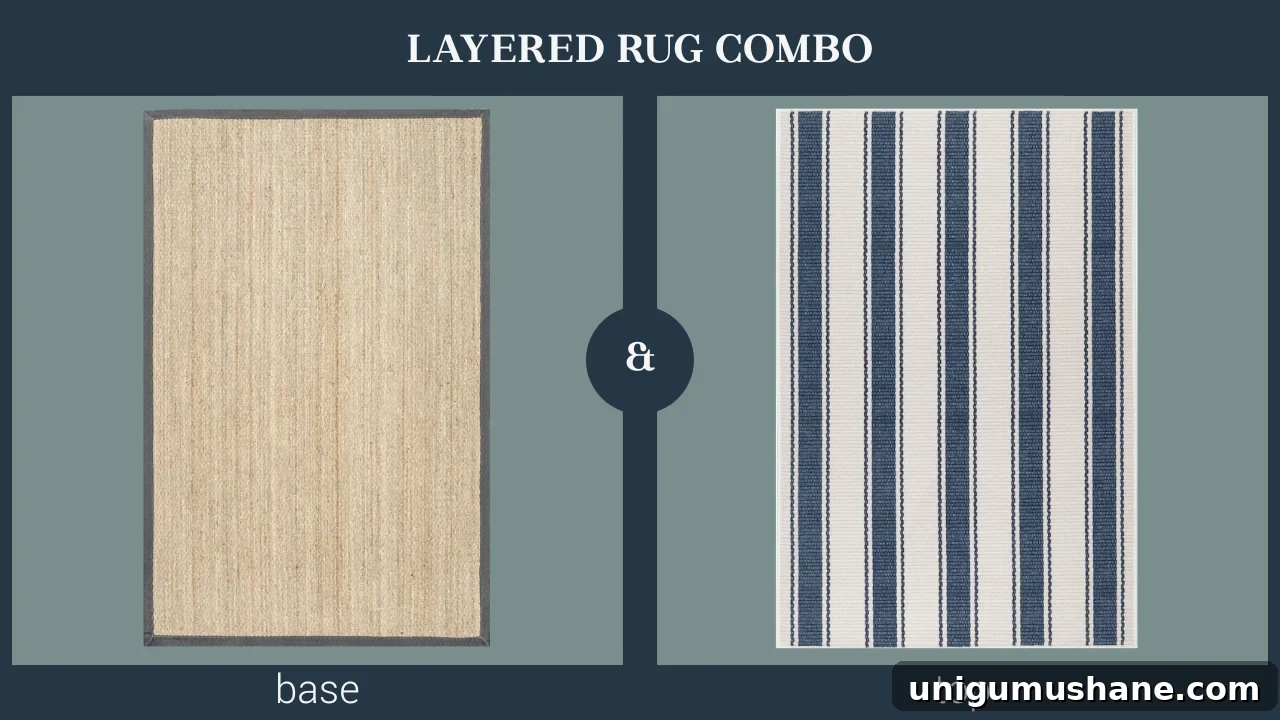
3. Seagrass Base + Striped or Patterned Flatweave
Why it works:
- Seagrass adds a relaxed, natural texture
- A striped or patterned flatweave brings rhythm without shouting
- The result feels deliberately layered and effortless
base rug | top rug
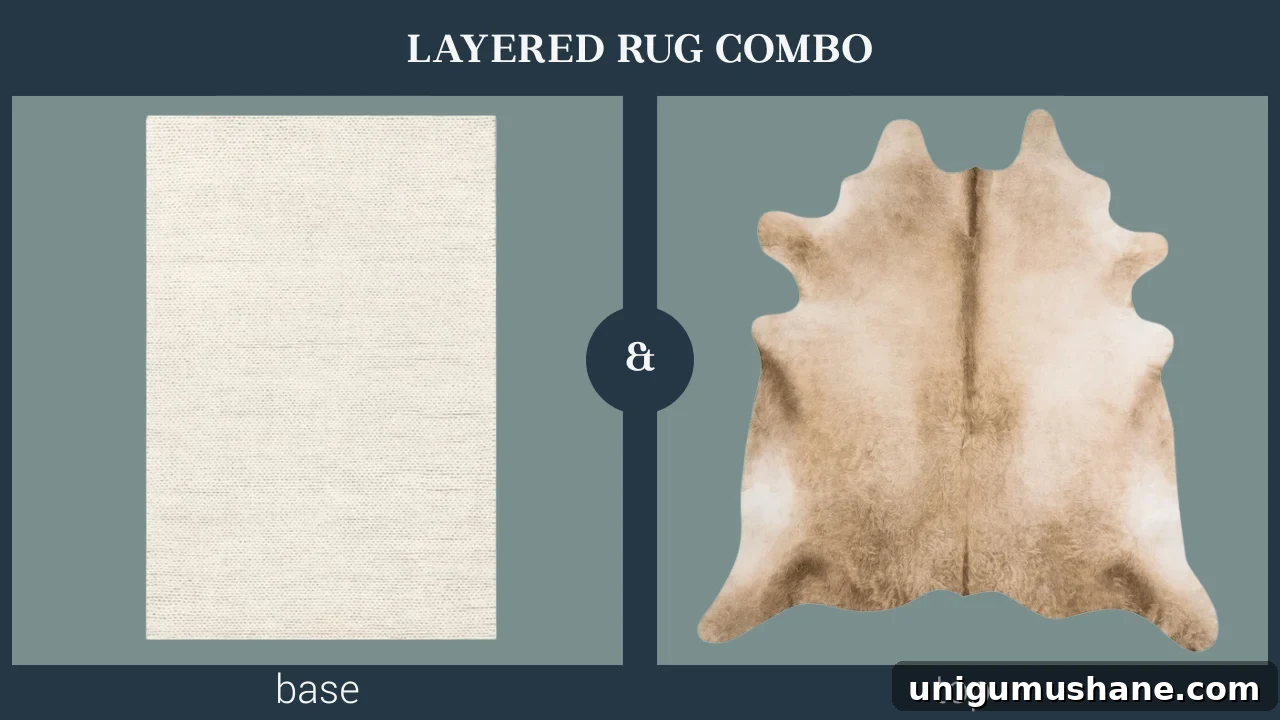
4. Braided Cotton Base + Soft Plush Accent
Pair with sheepskin, faux hide, or a small plush wool rug.
Why it works:
- Contrasting textures immediately make a room feel cozy
- Soft top layers add comfort to high-traffic or lounging areas
- Perfect for play areas or reading nooks where a soft surface is helpful
You can click the collage below to view my curated rug pairings:
SHOP RUG PAIRINGS
Common Layering Mistakes to Avoid
- Pairing two busy, competing rugs
- Choosing rugs that are too similar in size
- Neglecting rug pads when there’s slip risk
- Forgetting rug tape to prevent corners from curling
- Matching textures too closely so the layer feels flat
- Picking a base rug that’s too small for the room
Where Layered Rugs Work Best
- Living rooms—positioned under the seating area
- Bedrooms—at the foot of the bed or partially under the bed
- Hallways—layered runners enliven a basic corridor
- Reading corners, playrooms, and other cozy zones
Once you try layering, you’ll likely wonder why you didn’t do it sooner. It’s a simple, high-impact update that adds comfort and visual interest to almost any room.
More Ways to Use Rugs in Your Home
- How to combine small rugs to create the look of a larger rug
- A dining table rug trick that makes me swear by consistent placement
- An unbiased review of washable rug systems for busy homes