
This post is sponsored by ProCore Floors.
Learn how to install herringbone LVP flooring as a floating floor over existing tile, without demolition, for a durable and high-end look at a more budget-friendly price.
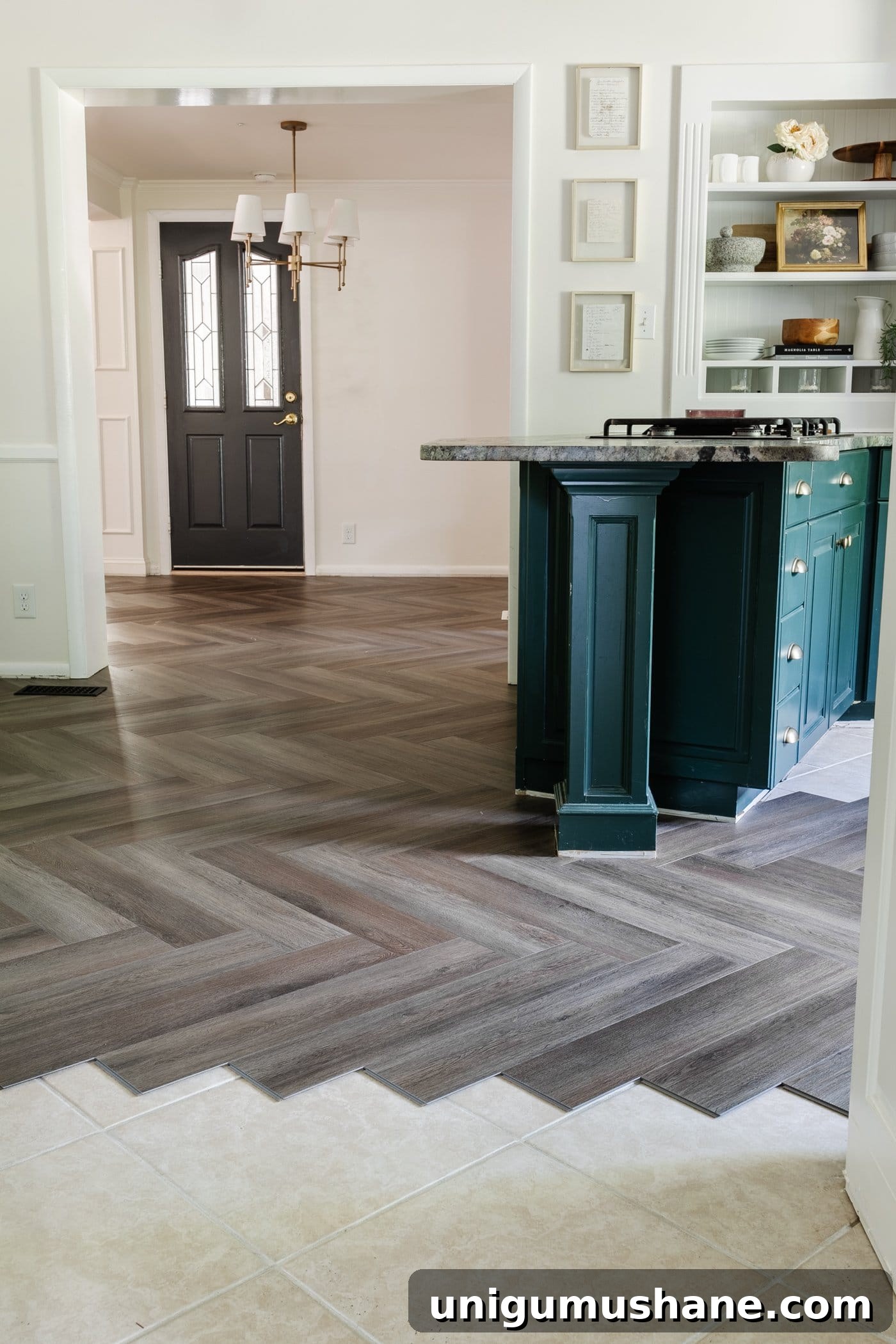
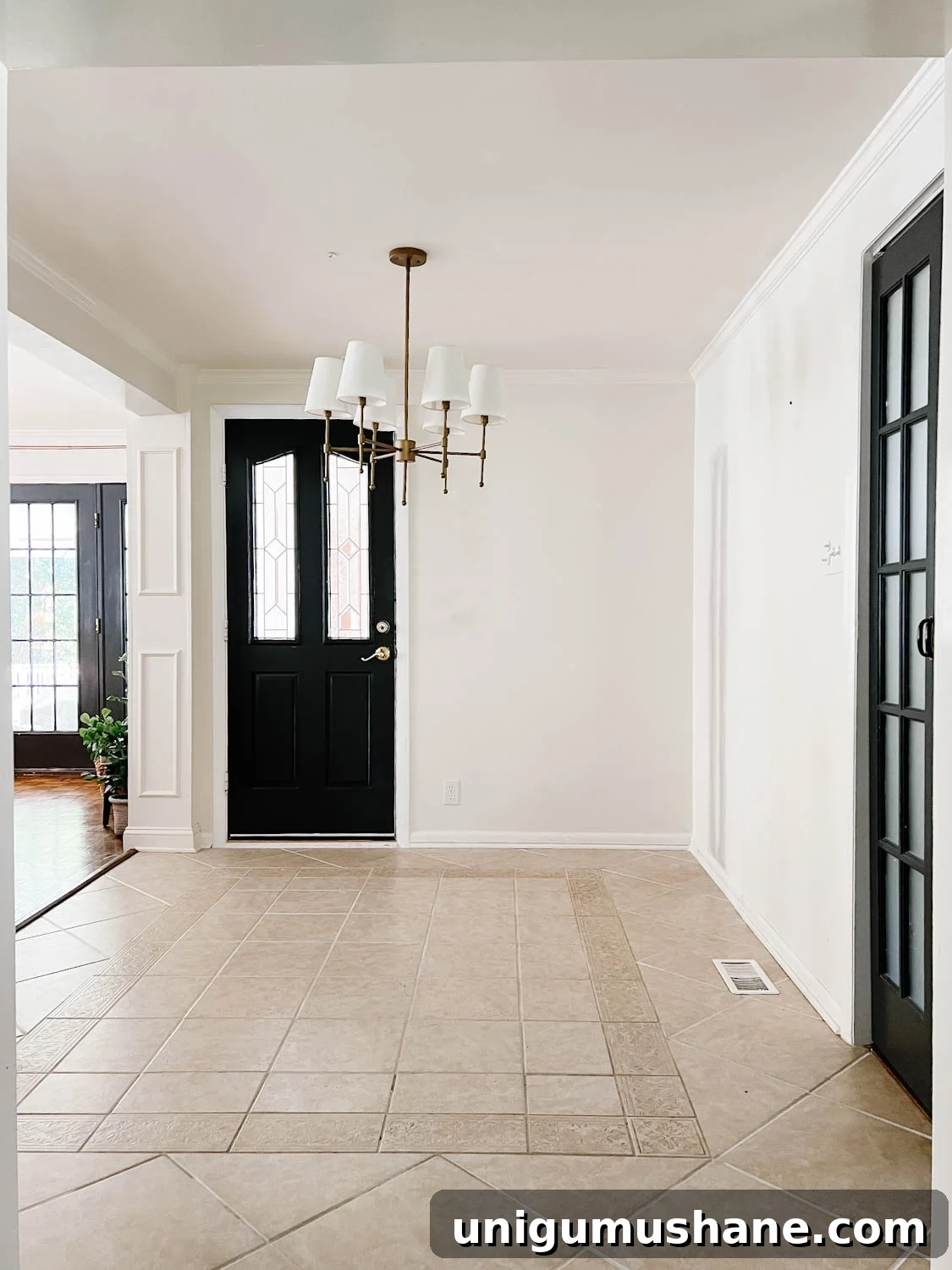
Goodbye old beige tile, and hello beautiful herringbone vinyl flooring. This DIY flooring project completely changed the look and feel of our kitchen and breakfast nook without the mess, cost, or time involved in removing the existing tile.
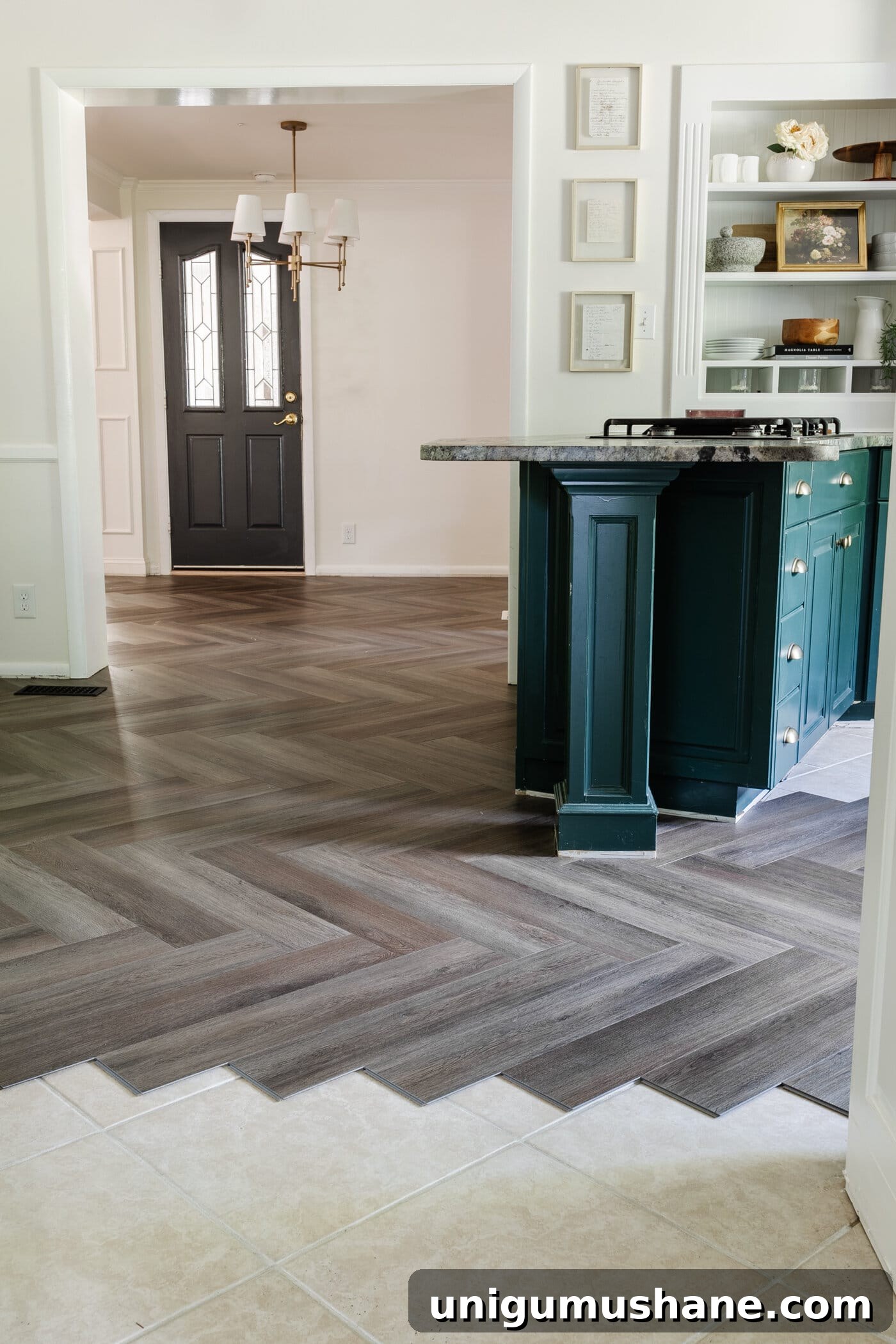
Our breakfast nook and our kitchen received a major flooring upgrade this week. I knew new floors would help, but I did not expect such a dramatic transformation from flooring alone. The best part is that we were able to cover the tile I had disliked for years without tearing it out.
Since finishing the project, everyone who has walked into our home has noticed the floor right away. The herringbone pattern adds so much character and gives the space a more custom, polished look.
Why Choose Luxury Vinyl Plank Flooring
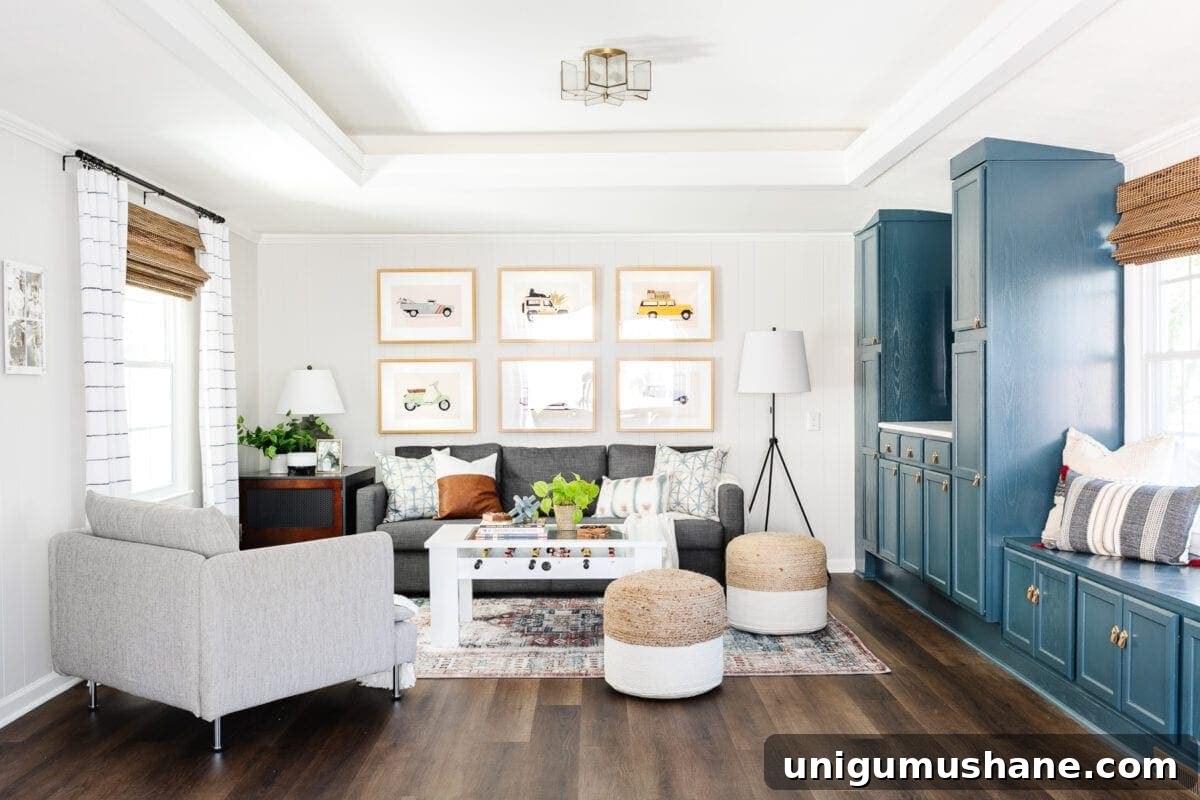
The herringbone layout is what makes these rooms feel special. Luxury vinyl plank flooring is also practical for everyday life. Compared with our original 60-year-old hardwood floors, this floor feels more durable and slightly more cushioned underfoot. It is also much warmer than the cold tile we had before.
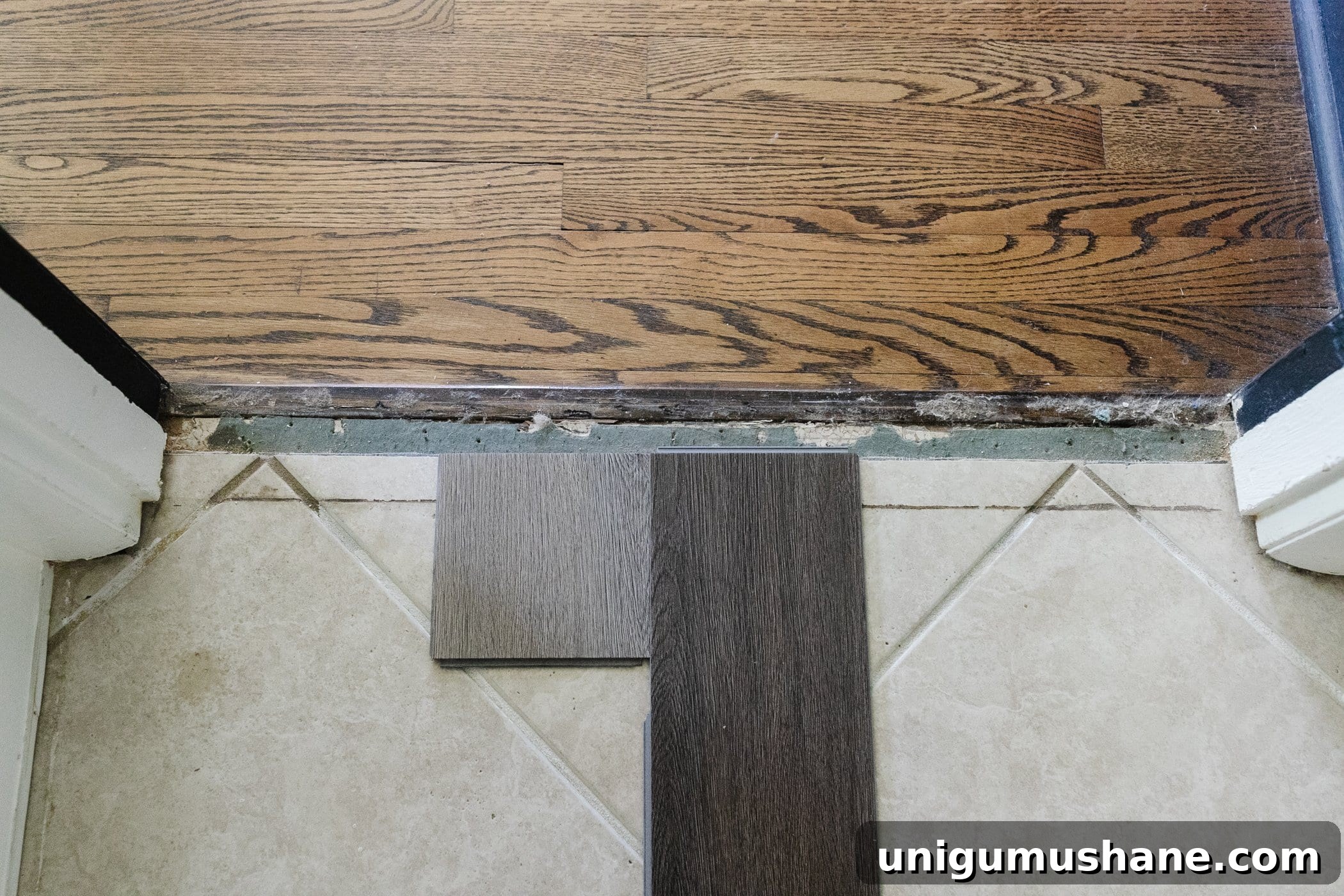
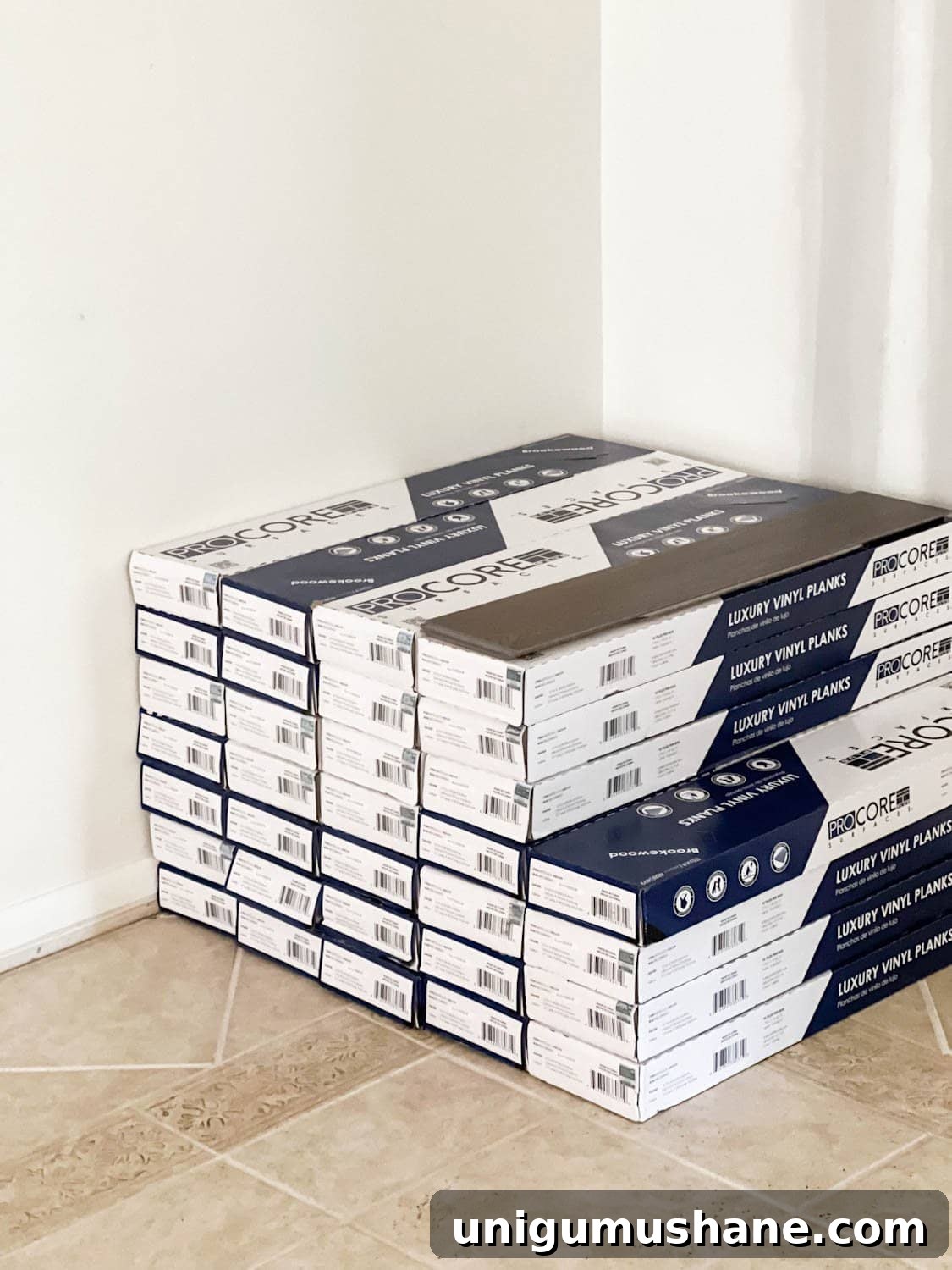
Because the kitchen and breakfast nook get the most daily traffic and connect to the rest of our downstairs rooms, I wanted flooring that suited our home’s traditional style while offering the benefits of modern materials. We chose Brookewood Herringbone Luxury Vinyl Plank waterproof interlocking flooring from ProCore Floors, available at Lowe’s.
For a lighter, more modern Scandinavian-inspired look, the Ashewood color is another beautiful option.
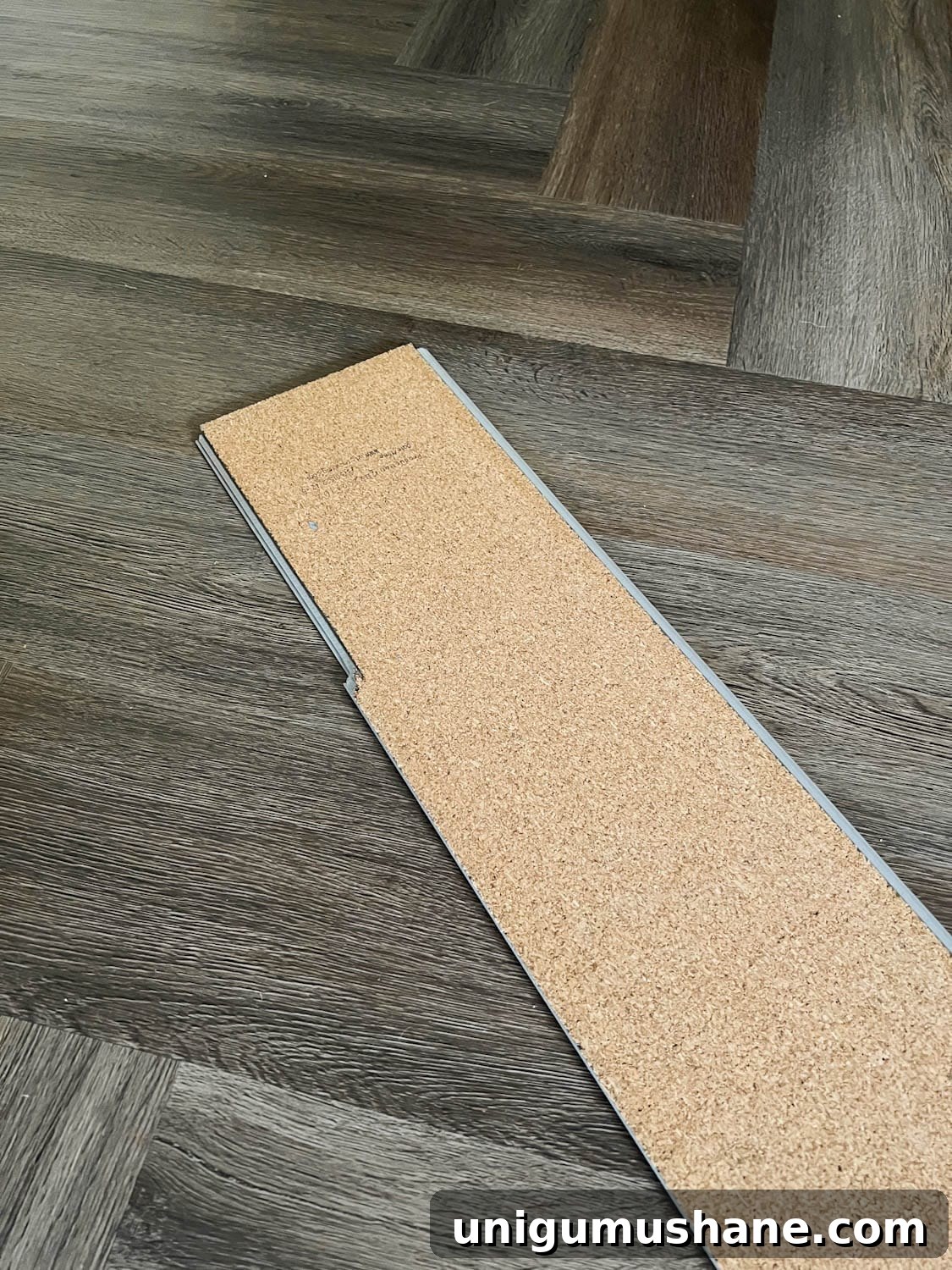
One detail I especially like is the slight texture on the planks. It helps the floor look more like real wood and adds to the overall realistic finish.
The Benefits of an LVP Floating Floor vs Tile or Hardwood
We had already used ProCore Floors in our neighbors’ playroom when we installed it ourselves for their family of nine kids. Because the flooring held up so well and was easy to install, we felt confident choosing it for our own kitchen area.
LVP Flooring Benefits:
- Waterproof
- Stain resistant
- Scratch resistant
- Durable
- Low maintenance
- Better sound absorption
- Suitable for kids, pets, and high-traffic areas
- Easier to install than tile or hardwood flooring
You can see how we installed regular luxury vinyl plank from ProCore Floors in our neighbors’ playroom. After more than a year of heavy use from nine kids and a dog, the floor has held up beautifully.
That is why I was so excited to discover a herringbone vinyl flooring option with the same practical advantages.
What is a Floating Floor?
A floating floor is an interlocking flooring system that fits together without glue or nails. The planks connect like puzzle pieces, creating a secure surface that rests over the subfloor or an approved existing floor. Luxury vinyl plank flooring typically uses a tongue-and-groove or click-lock system, making it a good option for DIY installation.
When to Install a Floating Floor Over Tile
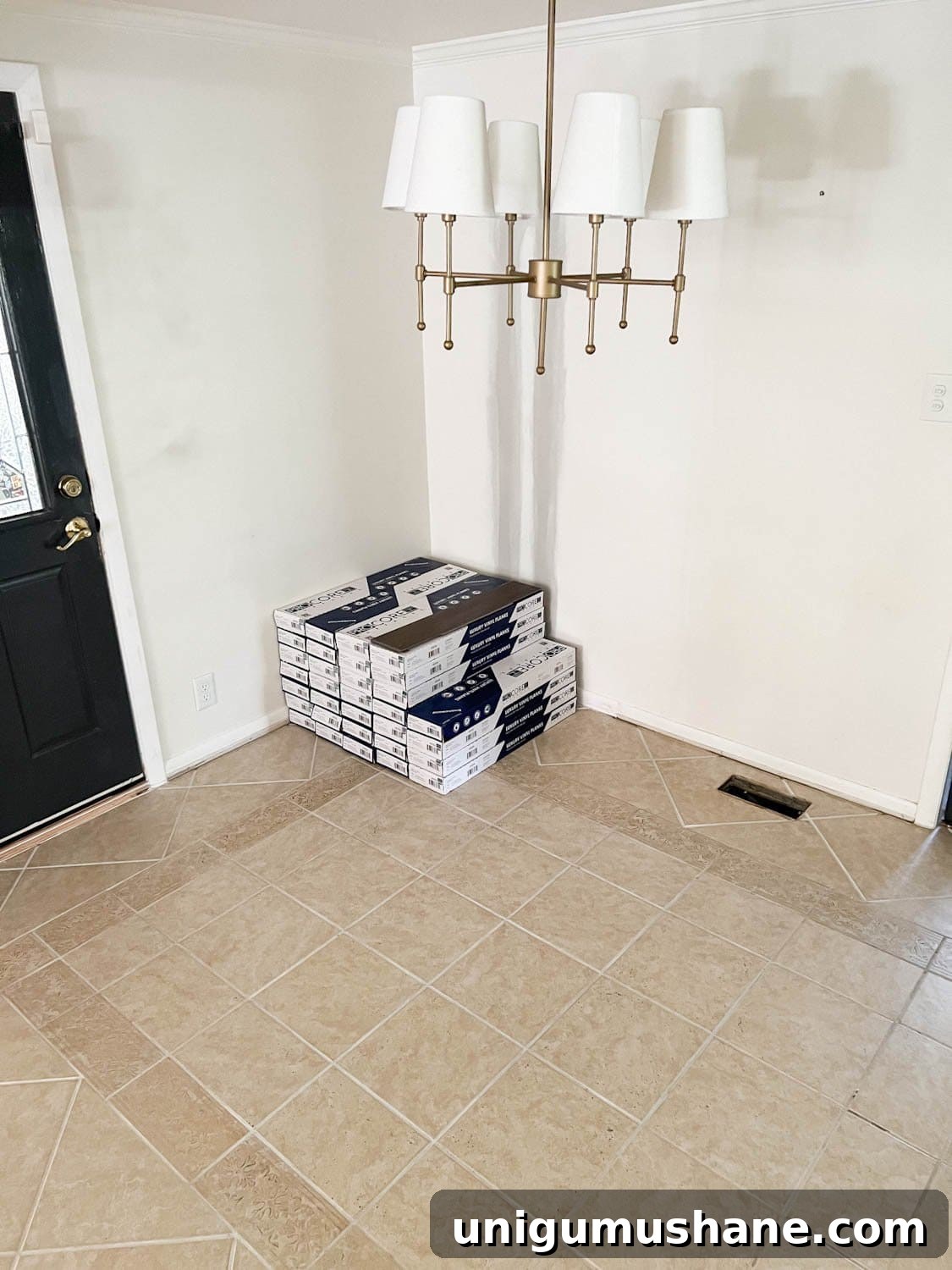
In a large renovation with a hired contractor, removing old tile may be the preferred route. However, when you need a DIY flooring solution or are working within a limited budget or schedule, installing a floating floor over tile can be a smart way to improve a room without demolition.
Not every LVP product is designed for this type of installation, so it is important to choose a rigid core flooring that can be installed as a floating floor over an existing surface. The ProCore Plus rigid core line includes a built-in cork underlayment and is rigid enough for this kind of application.
Important: When installing luxury vinyl plank flooring over tile, the tile must be clean, free of debris, and without cracks, holes, or raised texture.
Where You Can Install LVP Floating Floor:
- Old ceramic tile that is still in good condition without cracks or holes
- Concrete
- Sheet vinyl flooring
- Particle board
- Hardwood floors
How to Install Herringbone LVP Floating Floor Over Tile
Supplies
- ProCore Plus Herringbone LVP Flooring in Brookewood
- Safety glasses
- Dust mask
- Work gloves
- HEPA filtered vacuum
- Rubber mallet
- Knee pads
- Utility knife
- 6-foot and 1-foot level or straight edge
- Speed square
- Chalk line
- Pencil
- Jigsaw with carbide blades
- Tape measure
- Oscillating multi-tool
- 5-N-1 flooring transitions
- Broom
- Pry bar
- Brad nailer gun, or a hammer and brad nails
- 6 mil polyethylene sheeting or moisture barrier if installing over concrete
Floating Floor Installation Method Steps
Step 1 Prep the space
Remove any shoe molding before beginning the installation. Use a utility knife to score the caulk line, then gently pry the molding away from the wall with a pry bar. Set the pieces aside so they can be reinstalled after the new flooring is in place.
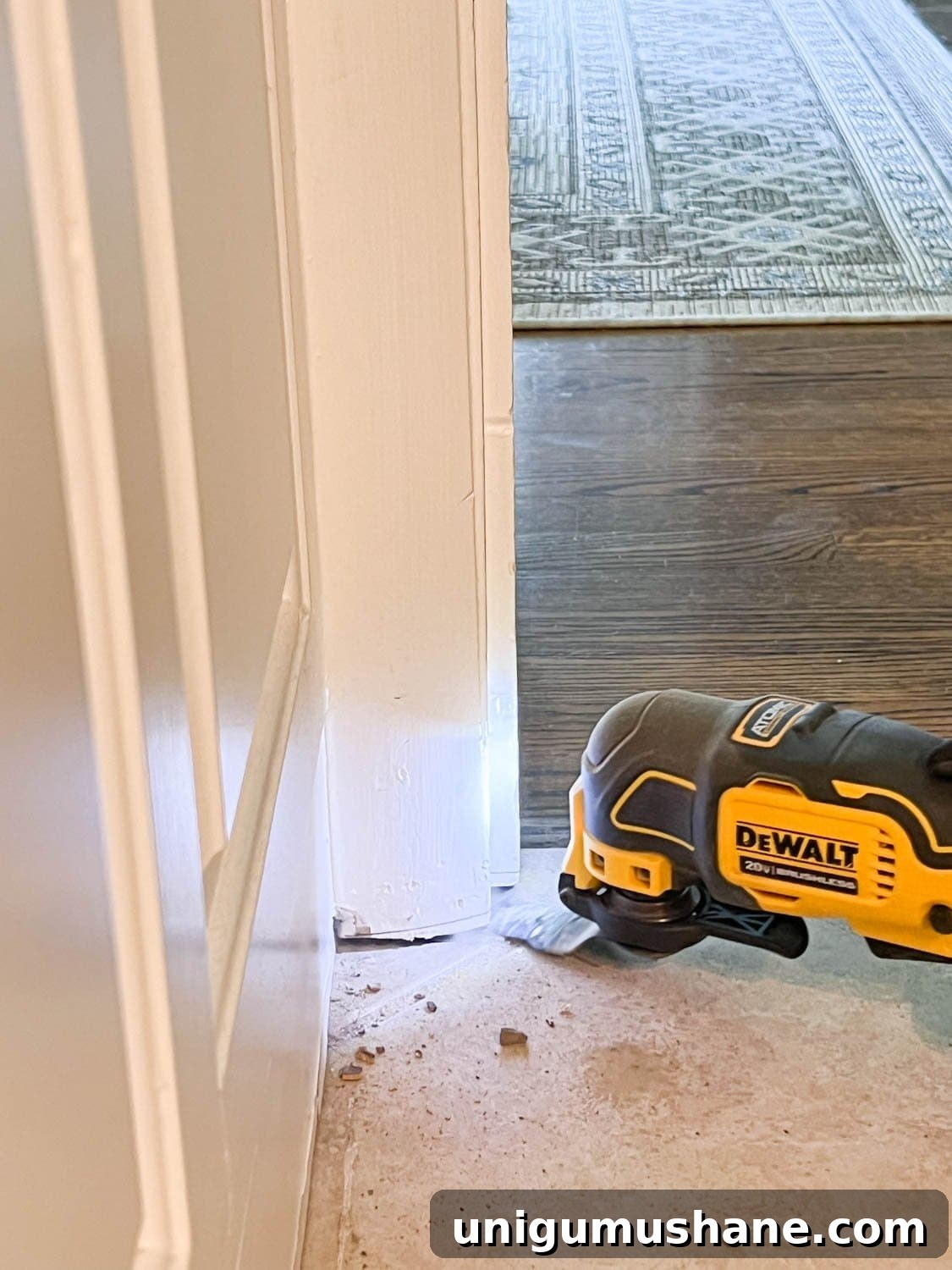
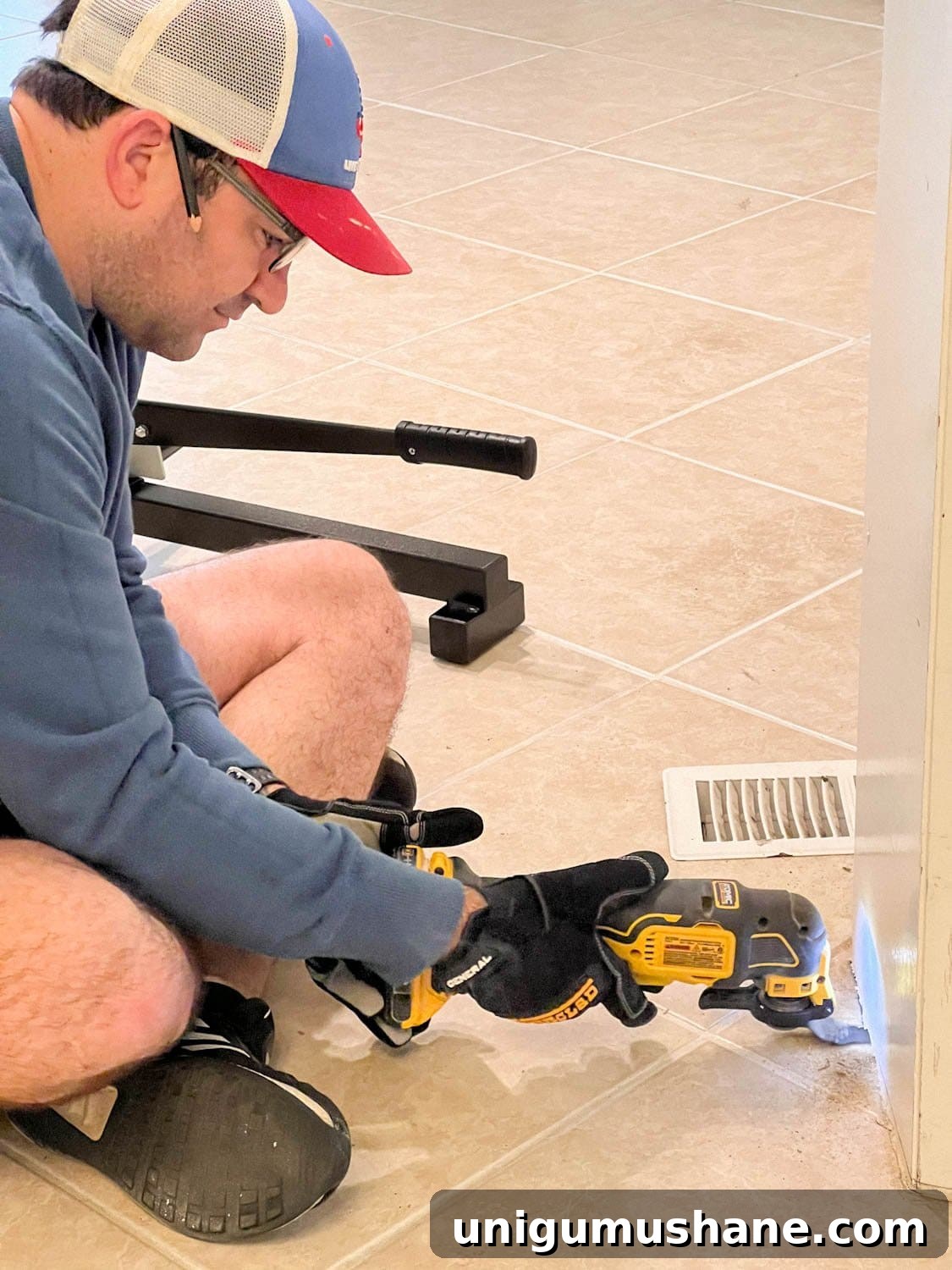
Step 2 Undercut Door Jambs
Use an oscillating multi-tool to undercut door jambs to the height of the LVP flooring. This allows the planks to slide underneath for a cleaner, more professional-looking finish.
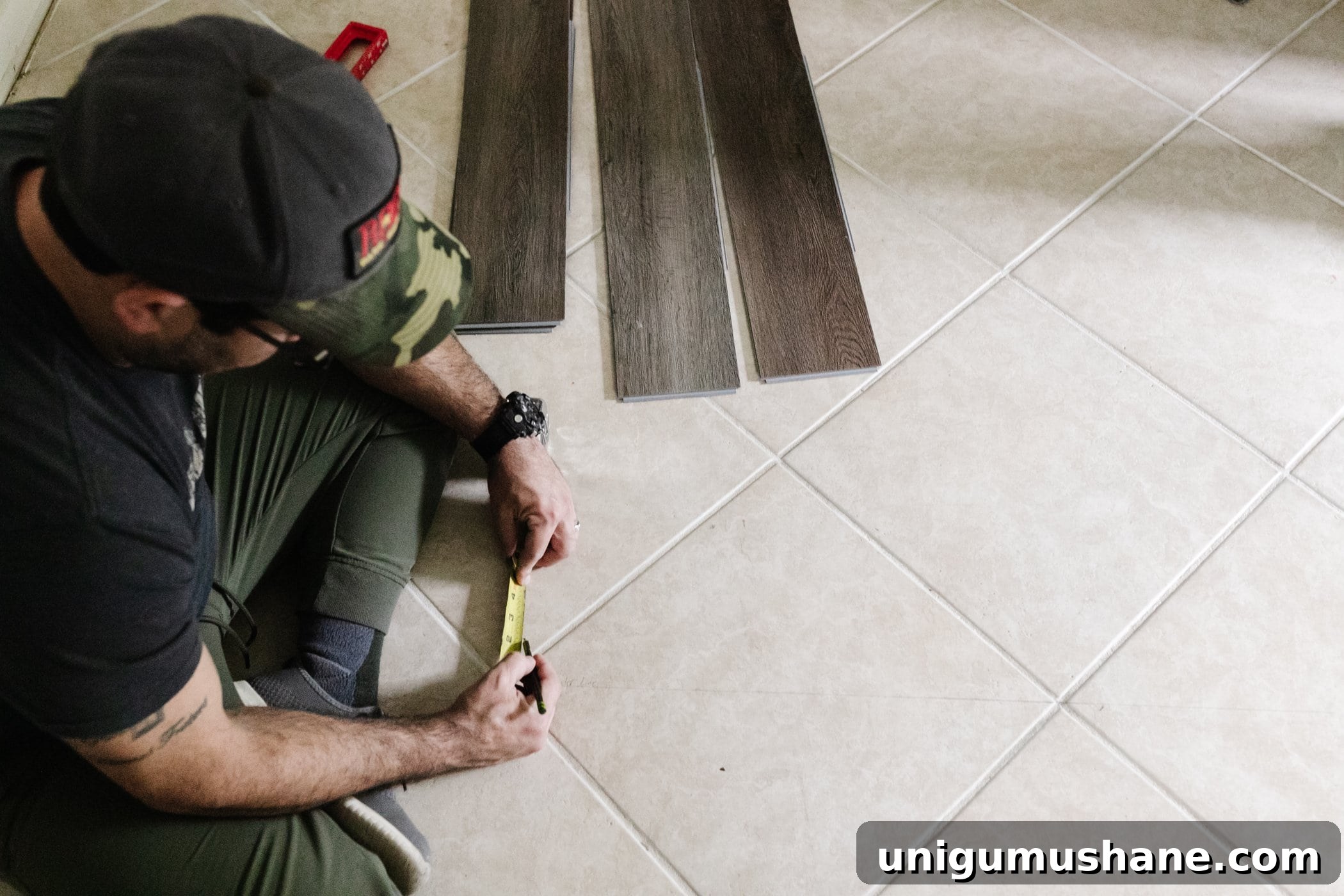
Step 3 Mark Your Starting Line
Start with a clean surface that is free of dust and debris. Decide which direction you want the herringbone pattern to run, then measure the room and mark the center point.
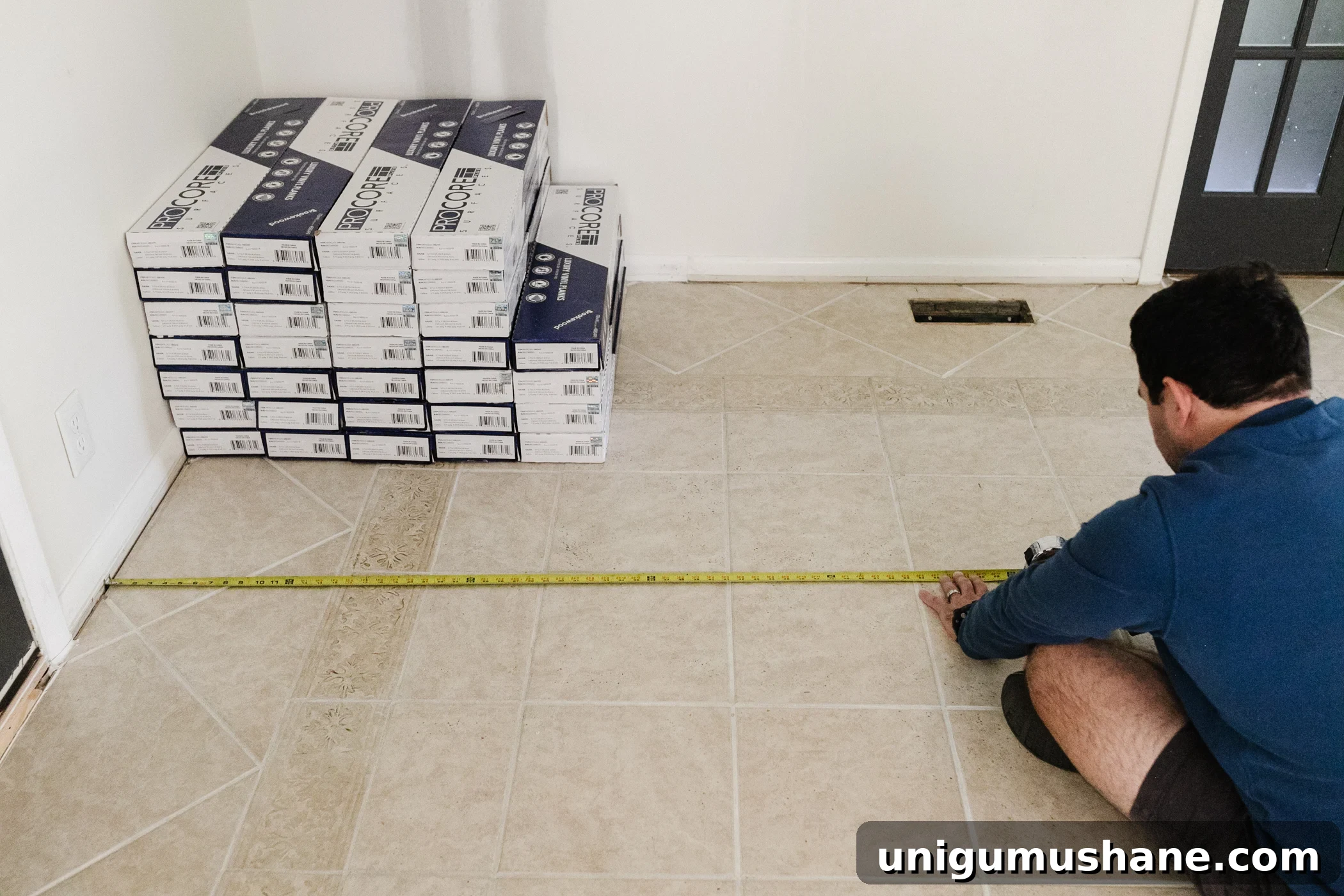
Use a chalk line, straight edge, and pencil to mark the center line of the room.
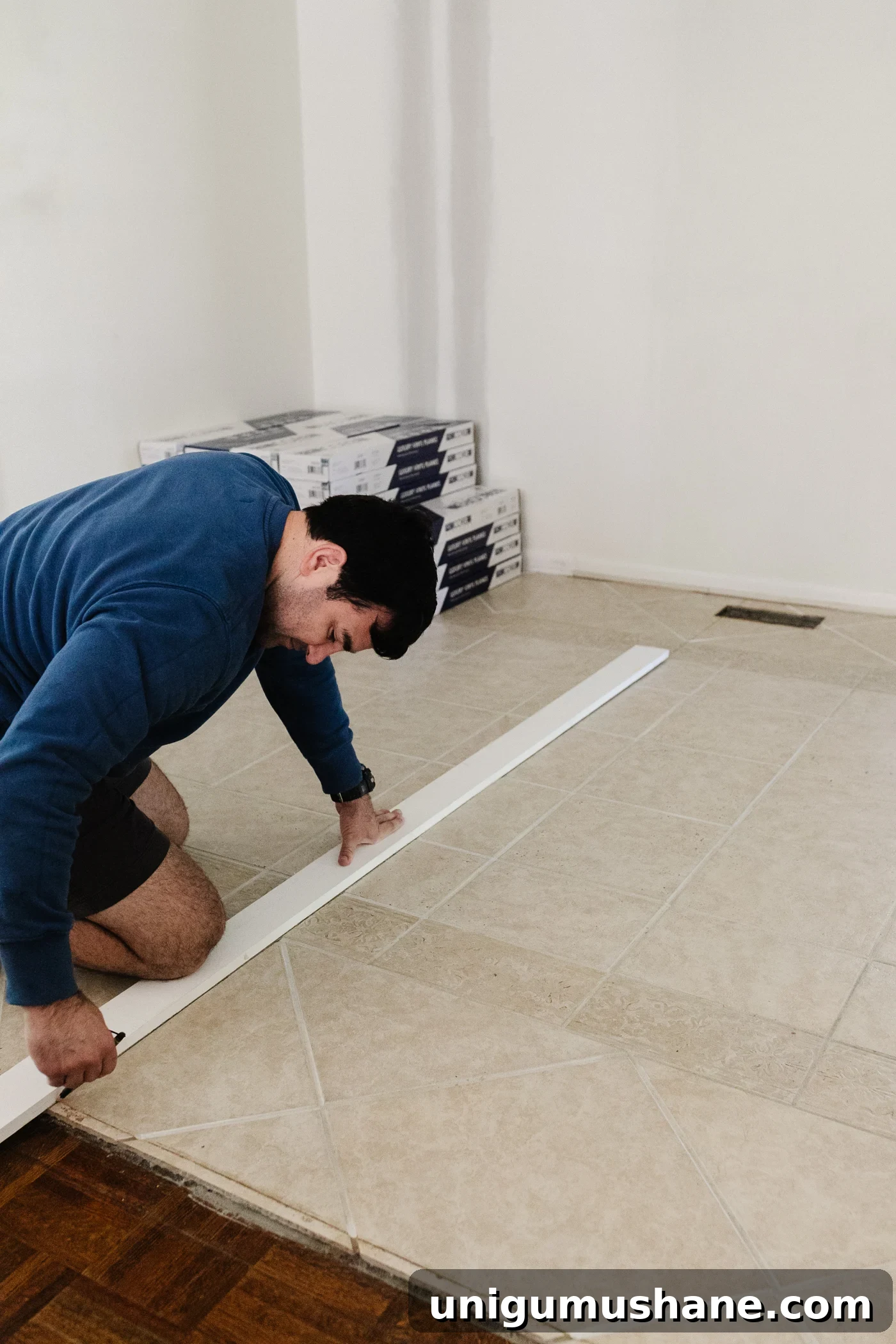
Step 4 Mark A Second Line
After marking the center line, mark a second guide line 2 inches away from it. This line will help position the first row of herringbone planks accurately.
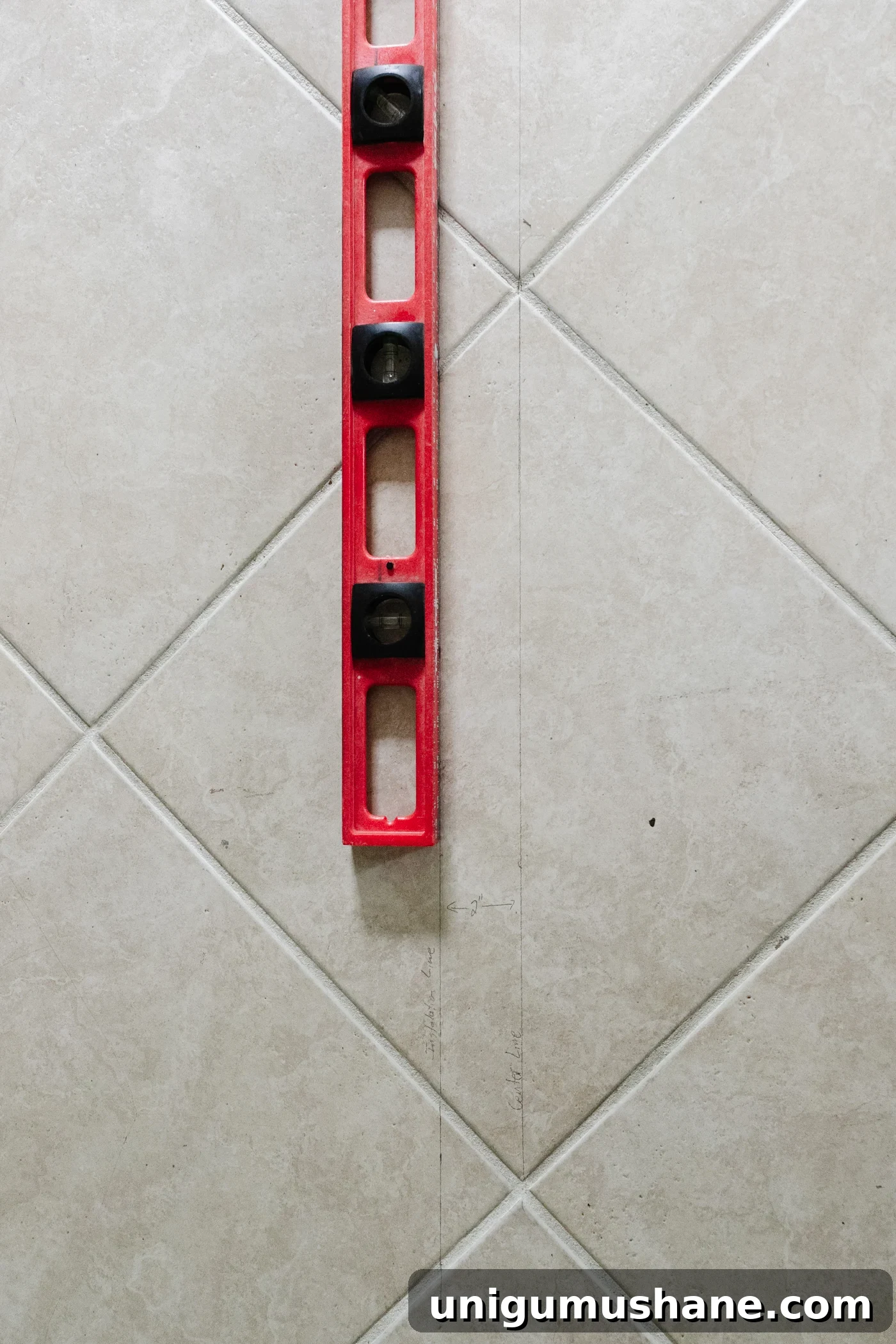
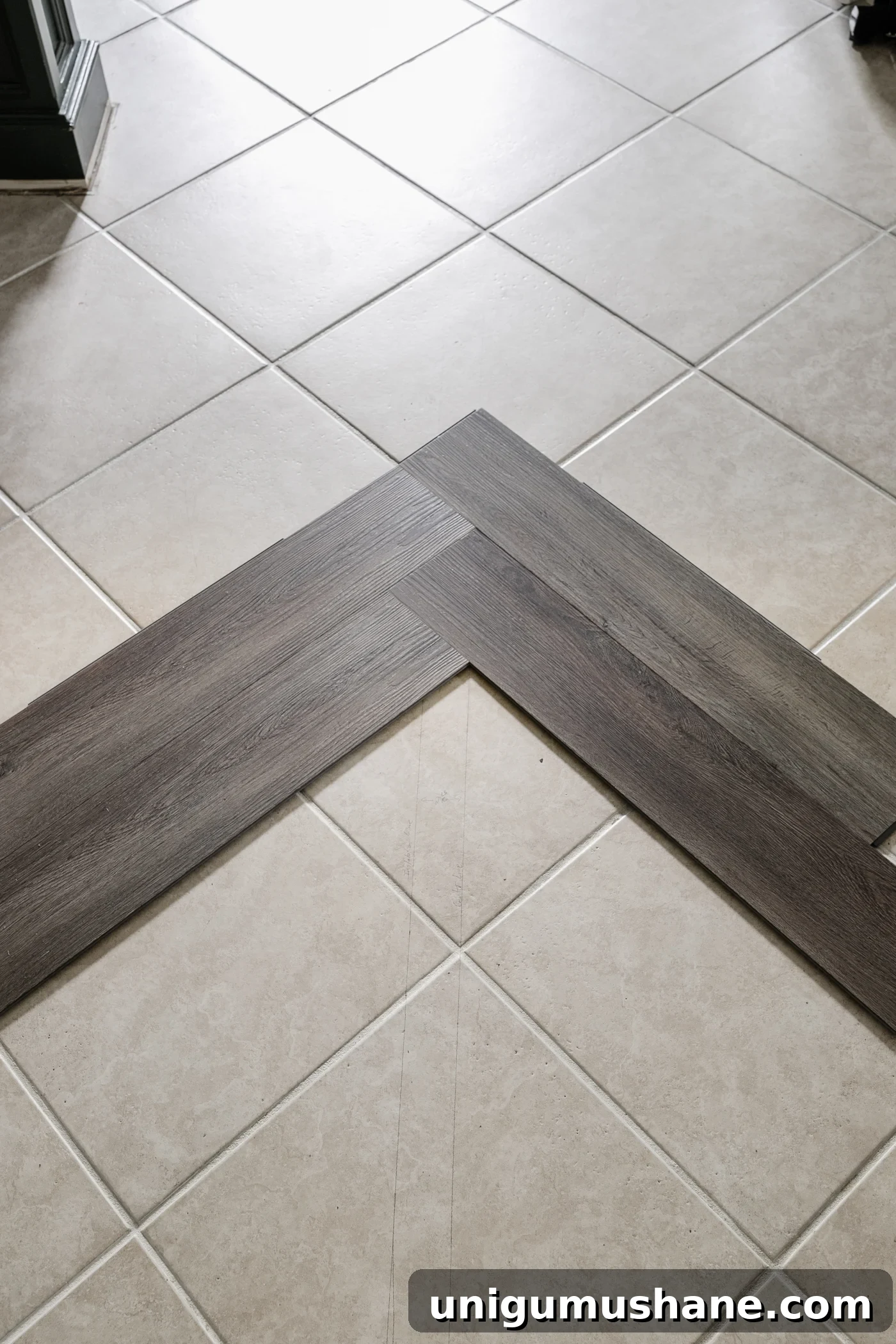
Step 5 Begin Placing Planks
Click the first few planks together, keeping the V-shape of the herringbone design aligned with your guide marks.
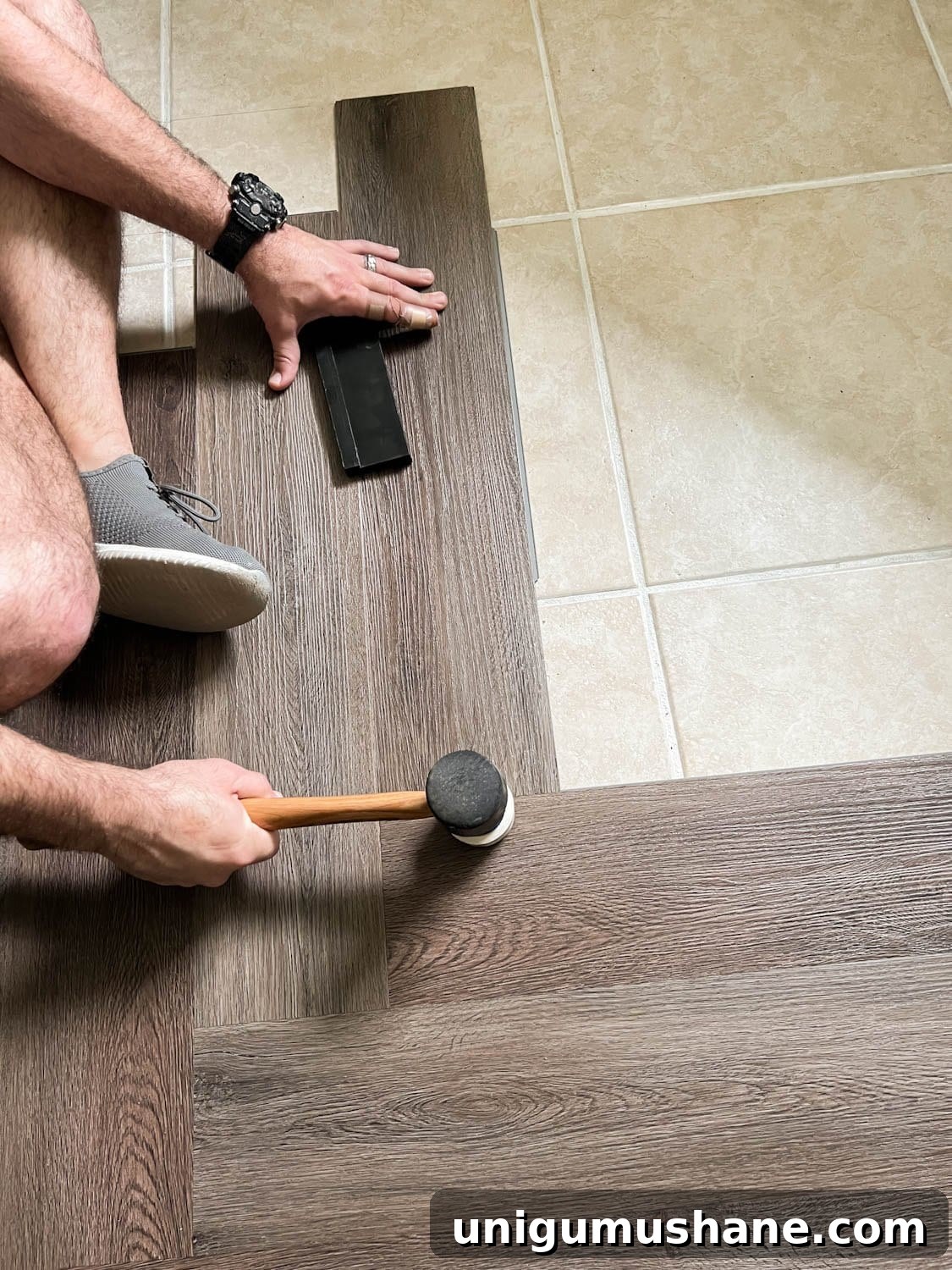
Step 6 Click Seams Together
Use a rubber mallet and a scrap piece of flooring to help push the planks together tightly at the seams. Avoid using a tapping block if the manufacturer’s instructions recommend a different method.
Step 7 Lock Seams
Once the planks are positioned, tap the top of the seams gently with a rubber mallet to lock them into place.
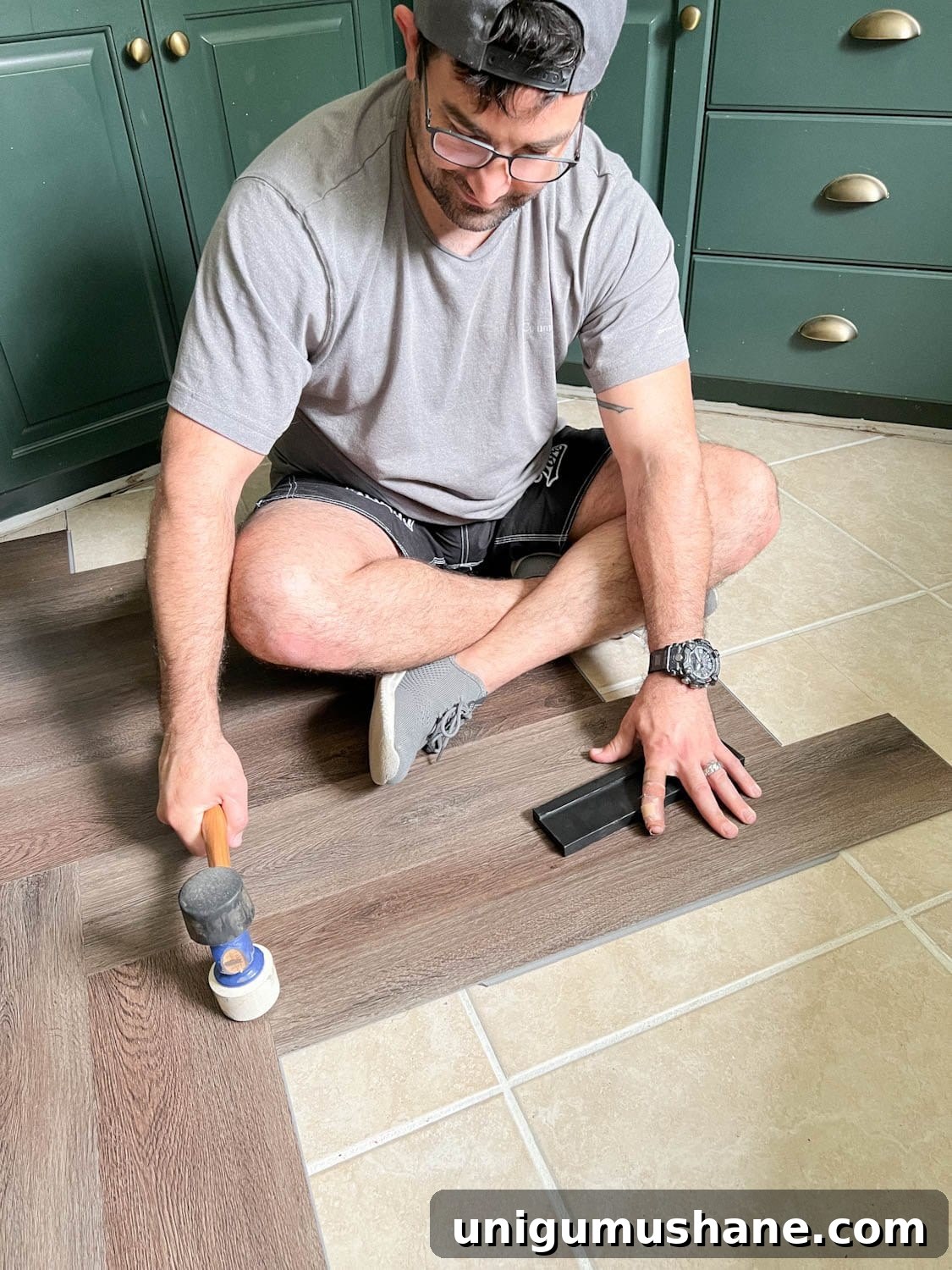
Step 8 Vary Plank Patterns and Shades
As you install the planks, avoid placing identical patterns or shades side by side. Pull planks from several boxes and sort them into stacks so the finished floor has a more natural variation, similar to real wood.
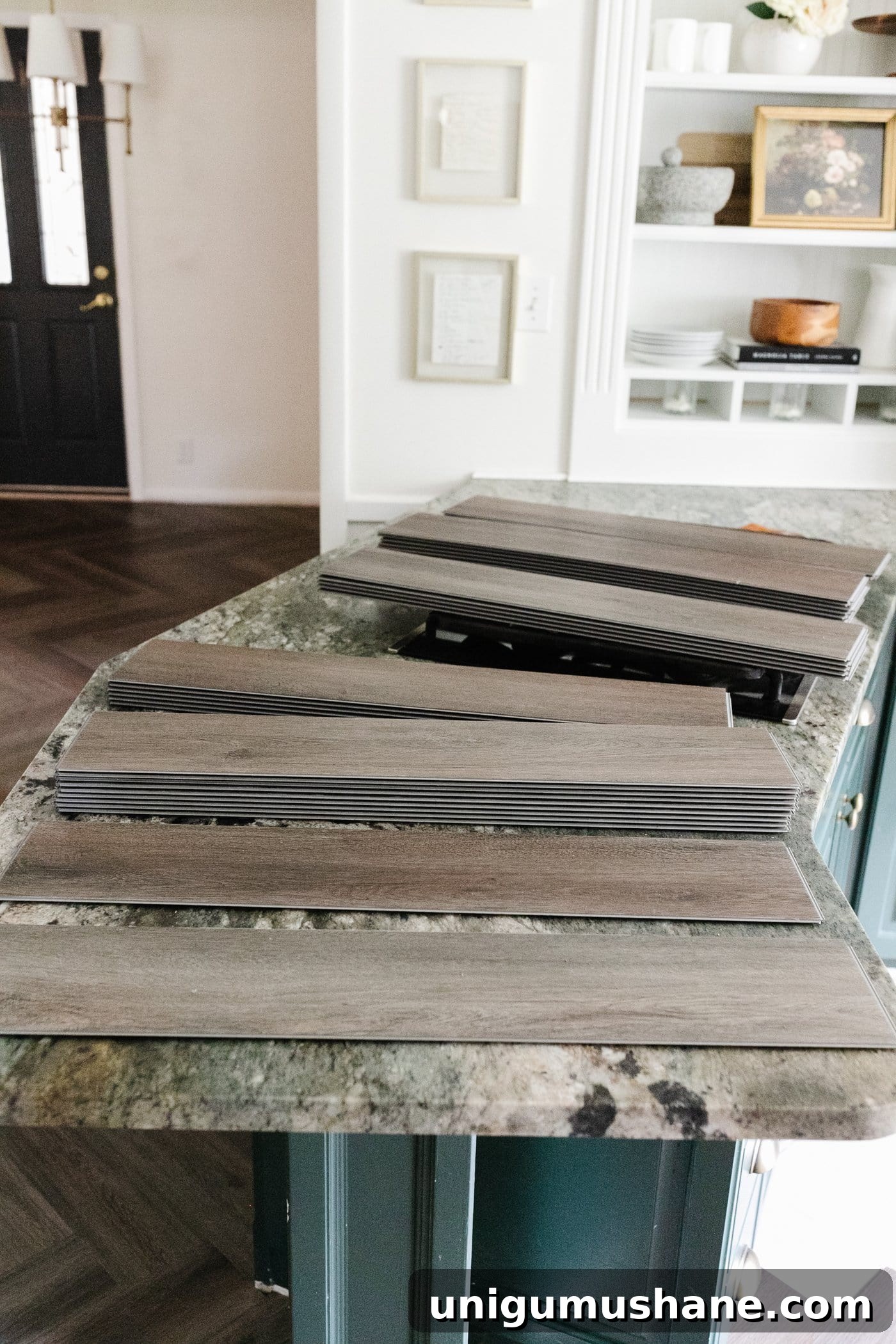
Step 9 Repeat
Continue laying, clicking, and locking full planks throughout the center of the room. Work carefully to keep the herringbone pattern straight as you move across the space.
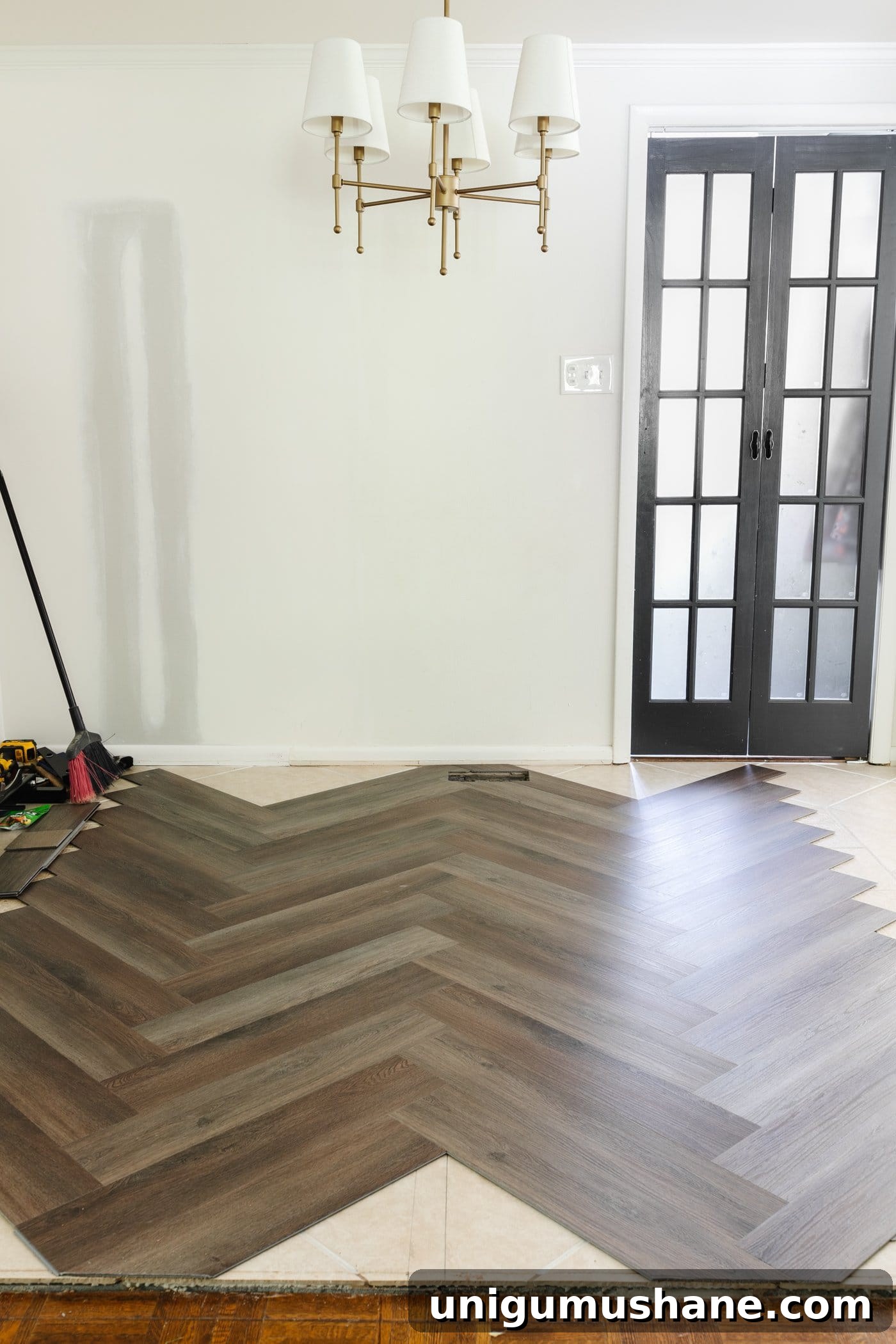
Step 10 Begin Filling In Edges and Corners
After the main area is filled, begin measuring and cutting pieces for the edges and corners. This is the most time-consuming part of installing herringbone LVP compared with regular vinyl planks, but the finished pattern is worth the extra effort.
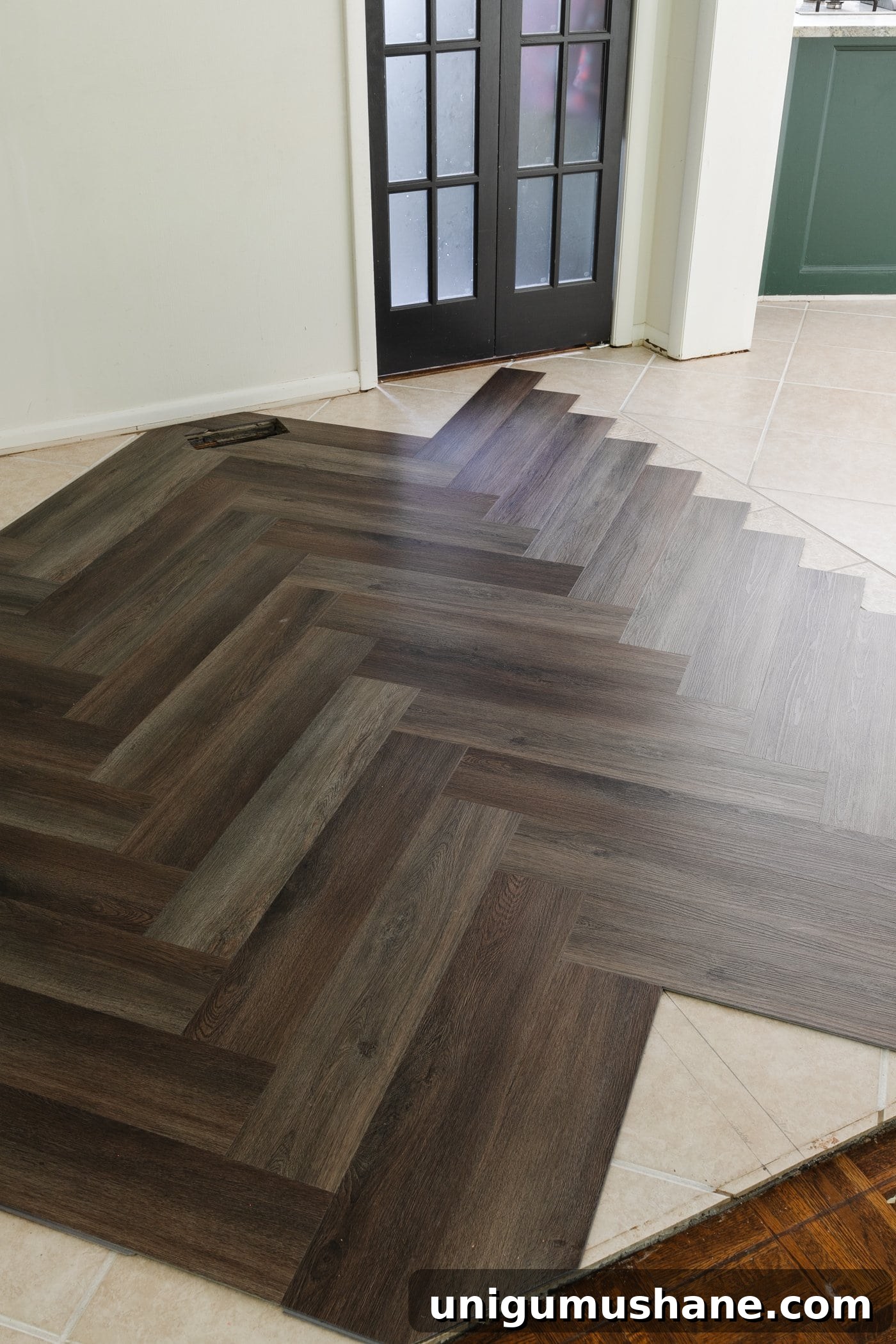
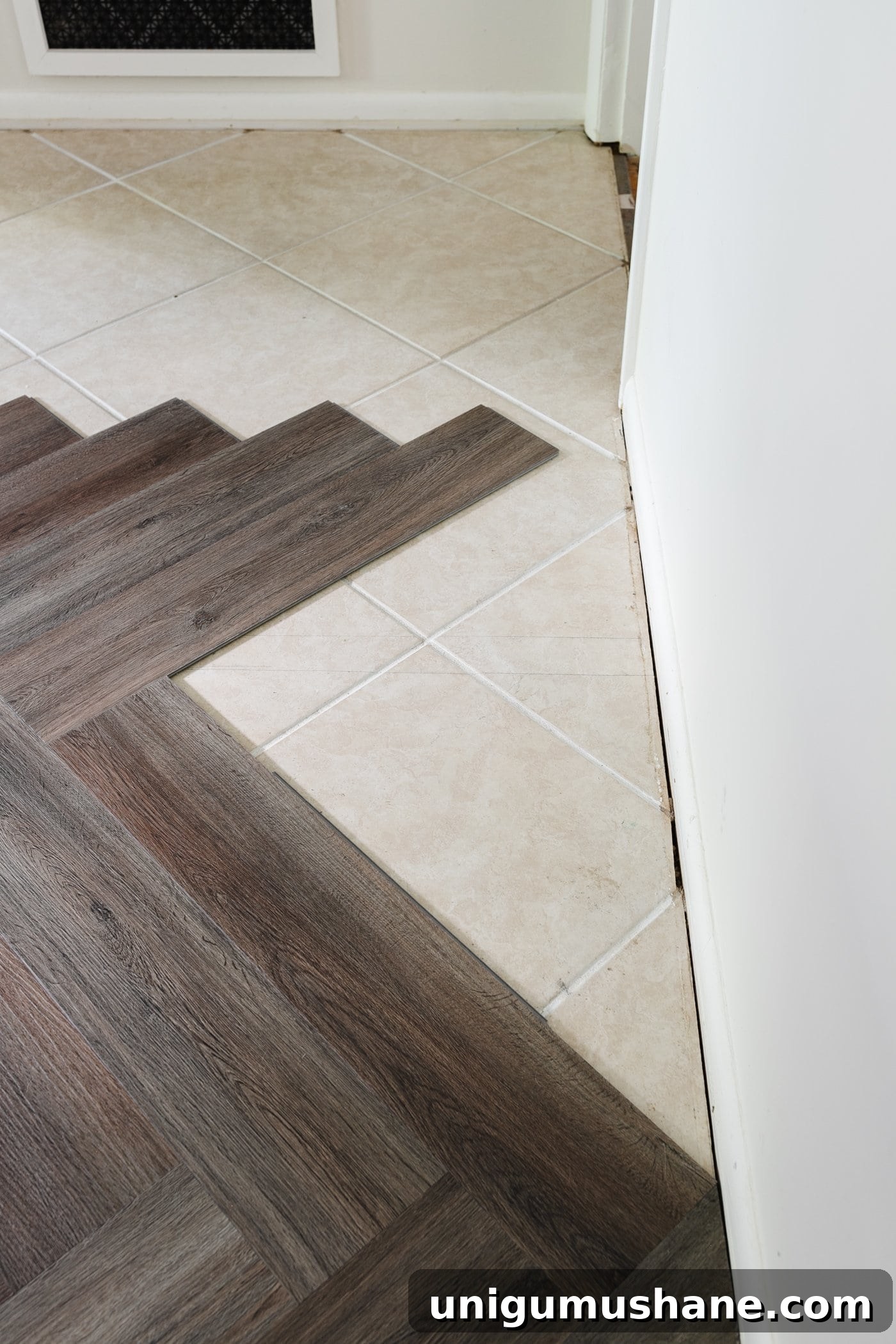
Step 11 Measure Edges
Use a tape measure to determine the distance between the wall and the installed plank.
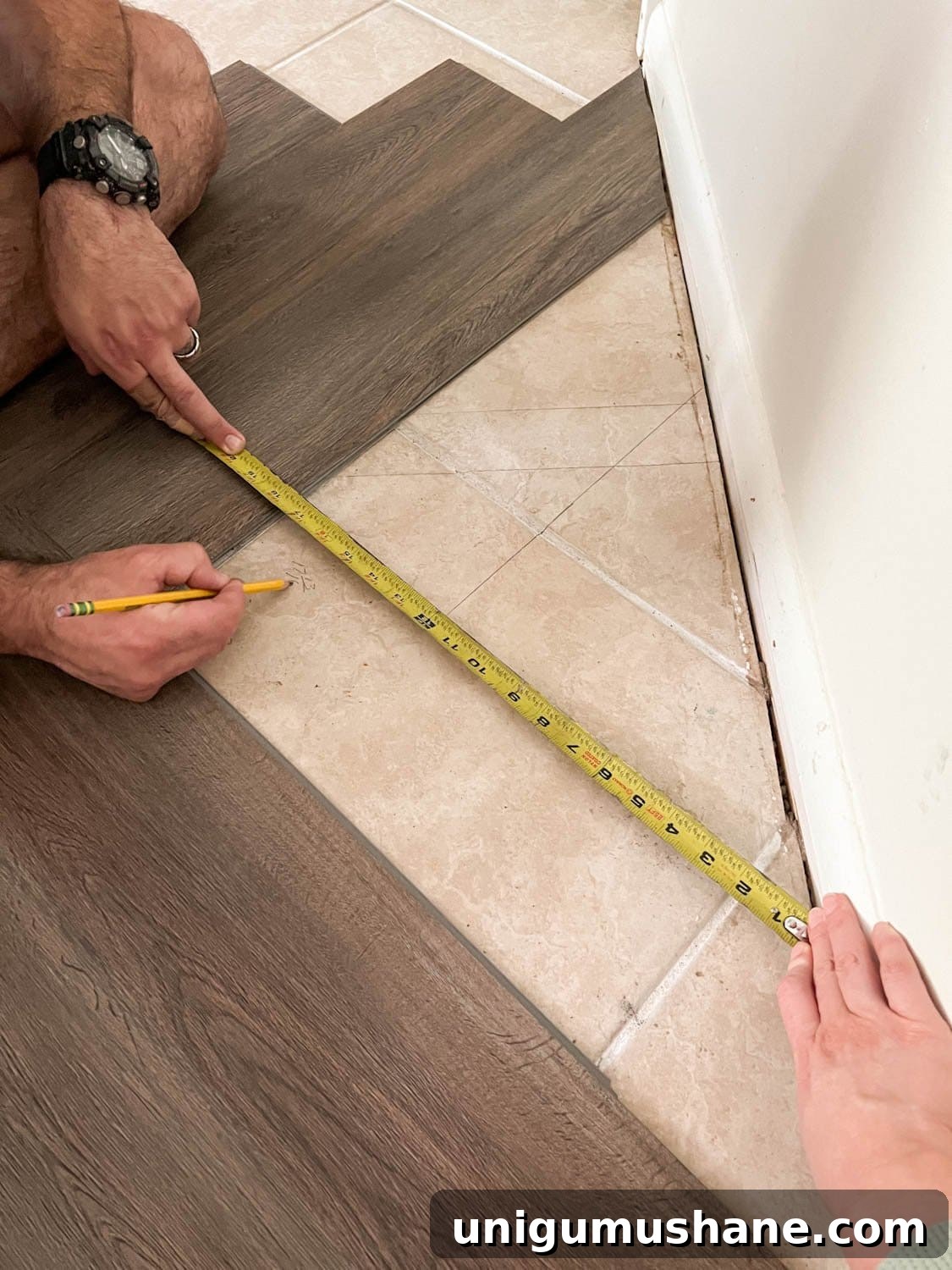
Step 12 Mark Plank Width
Use a spacer cut from a plank to mark the width needed, then measure the new line for accuracy.
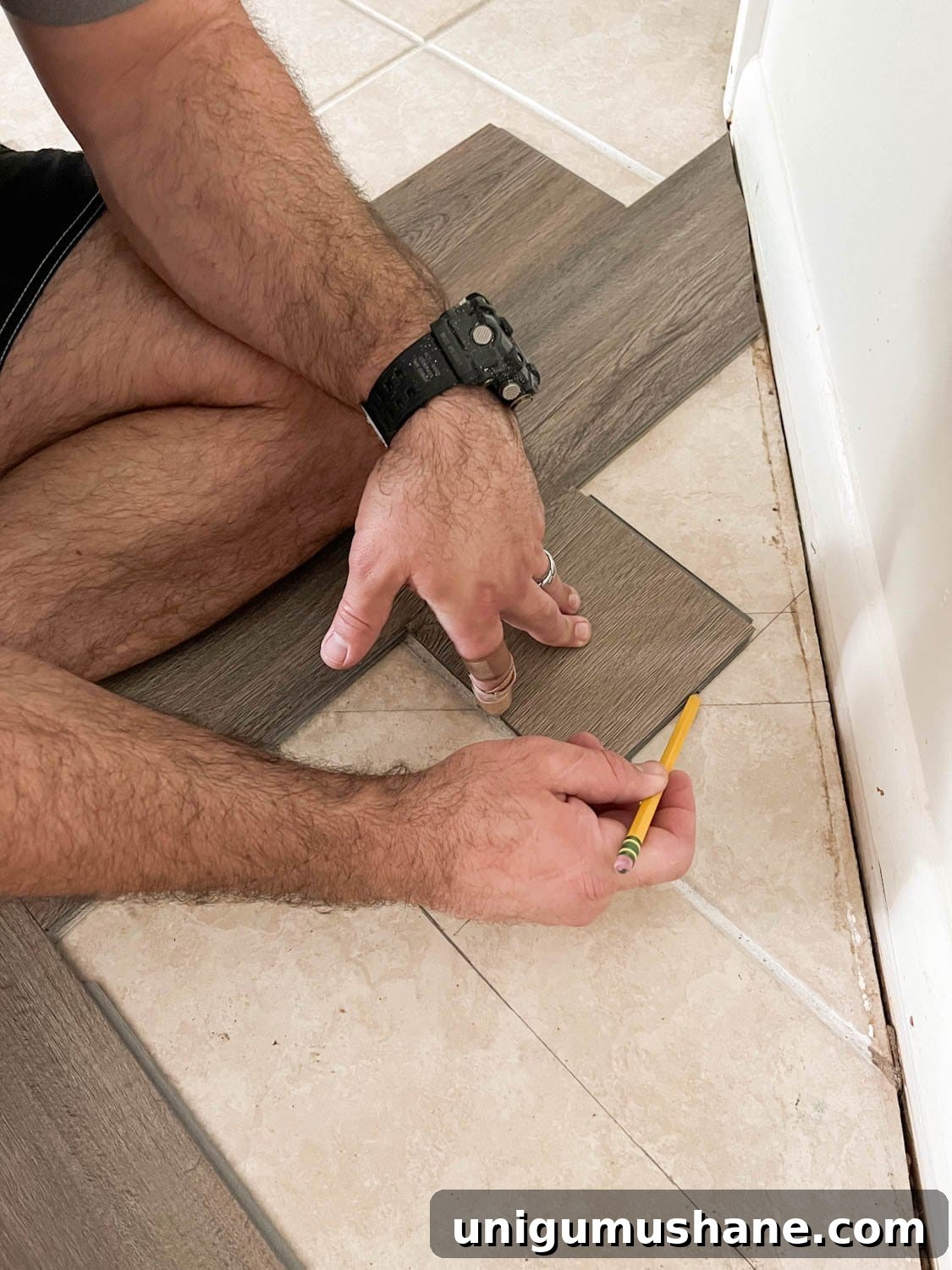
Step 13 Mark the Plank for Cutting
Transfer the measurements onto a new plank, marking clearly where the cut needs to be made.
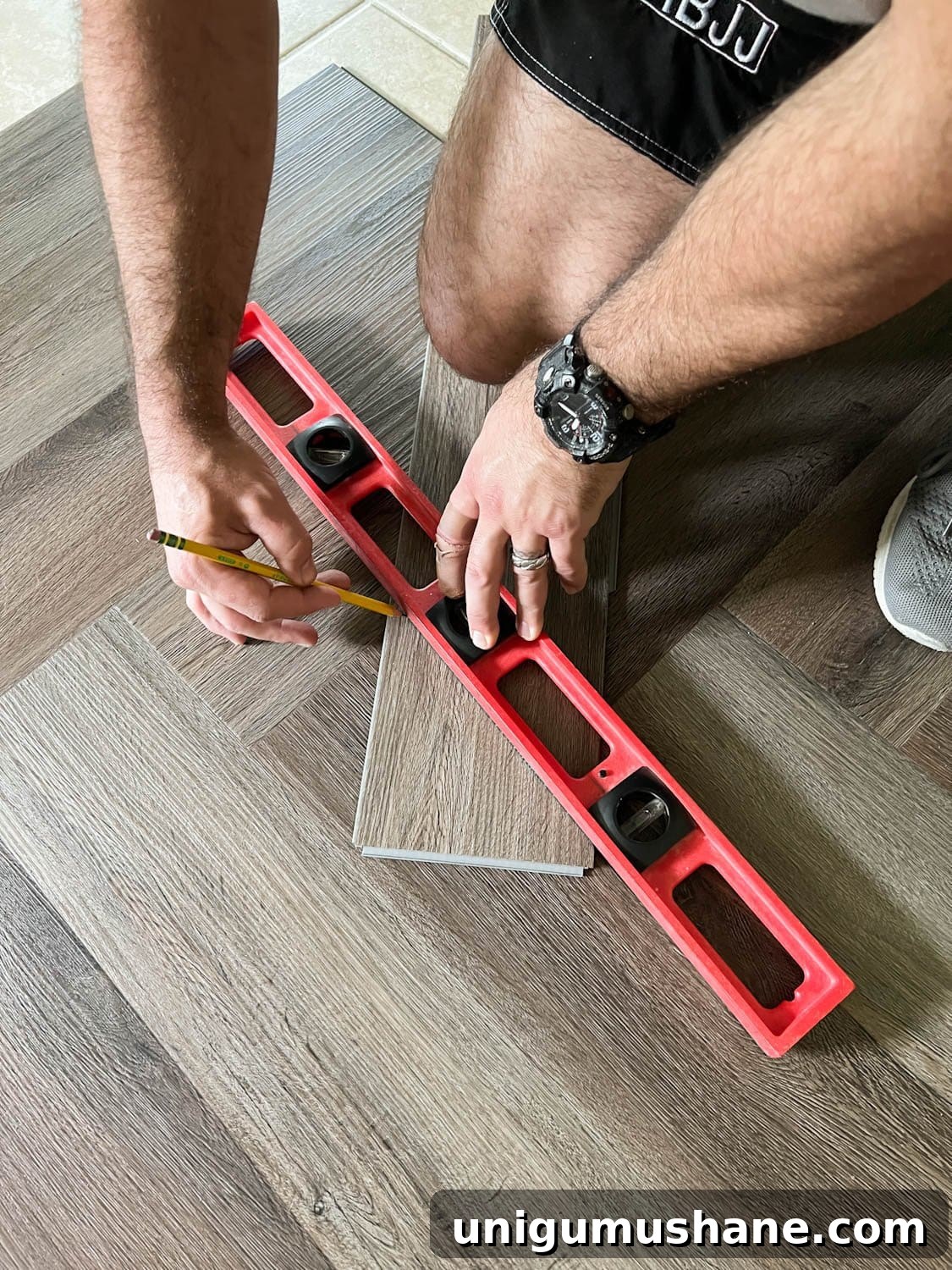
Step 14 Cut the Plank
Use a jigsaw with a carbide blade to cut the plank along your marks.
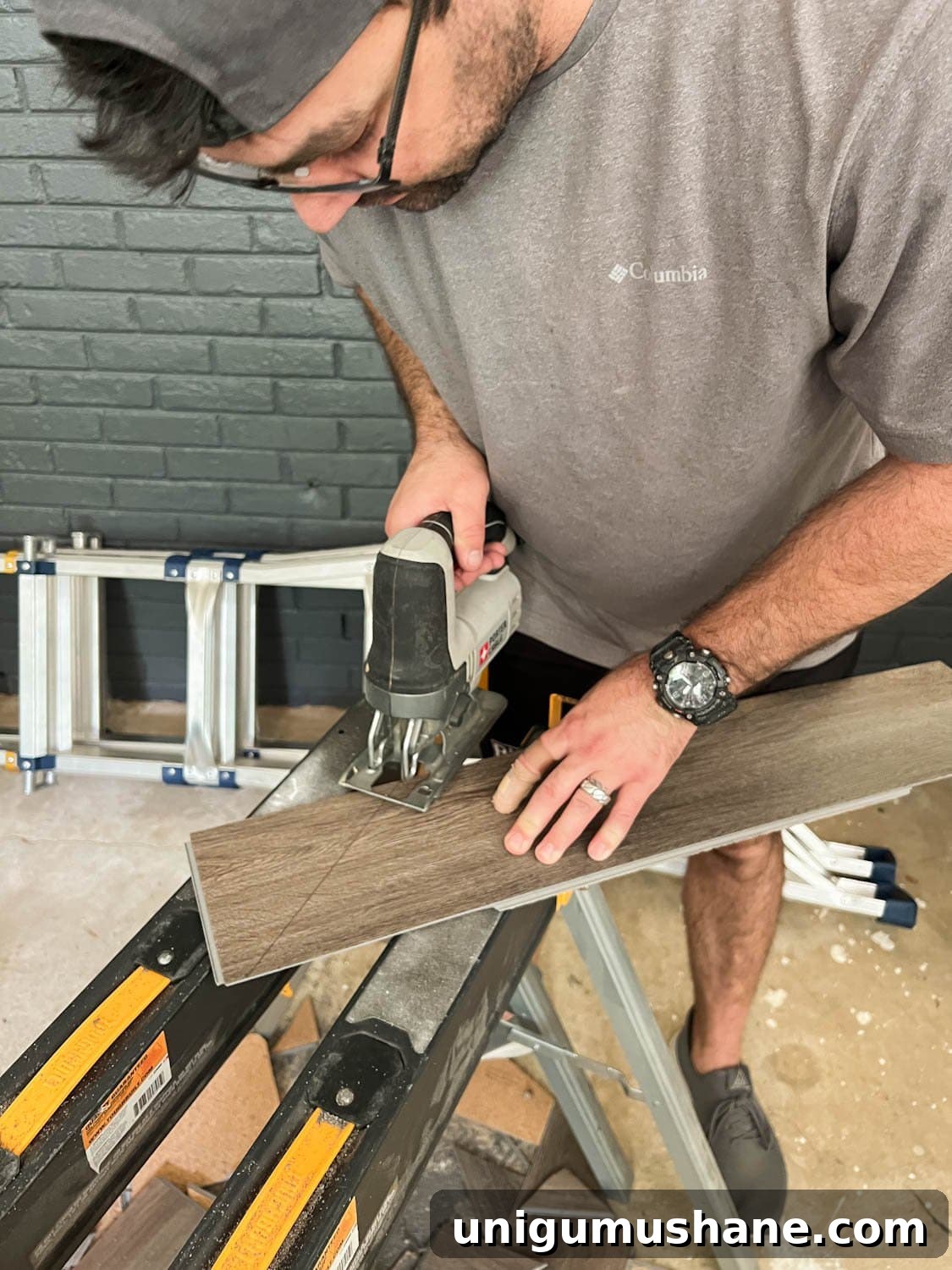
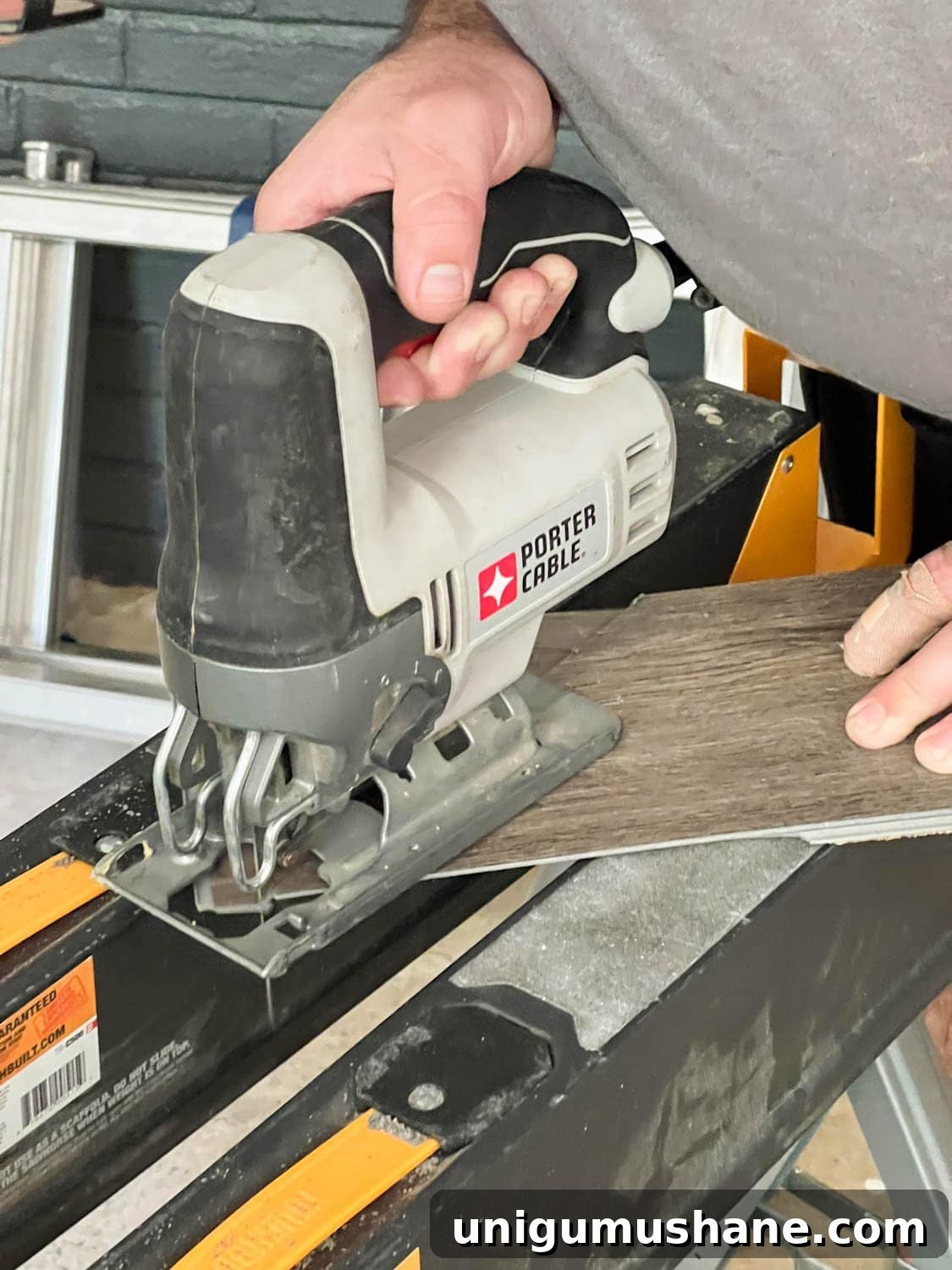
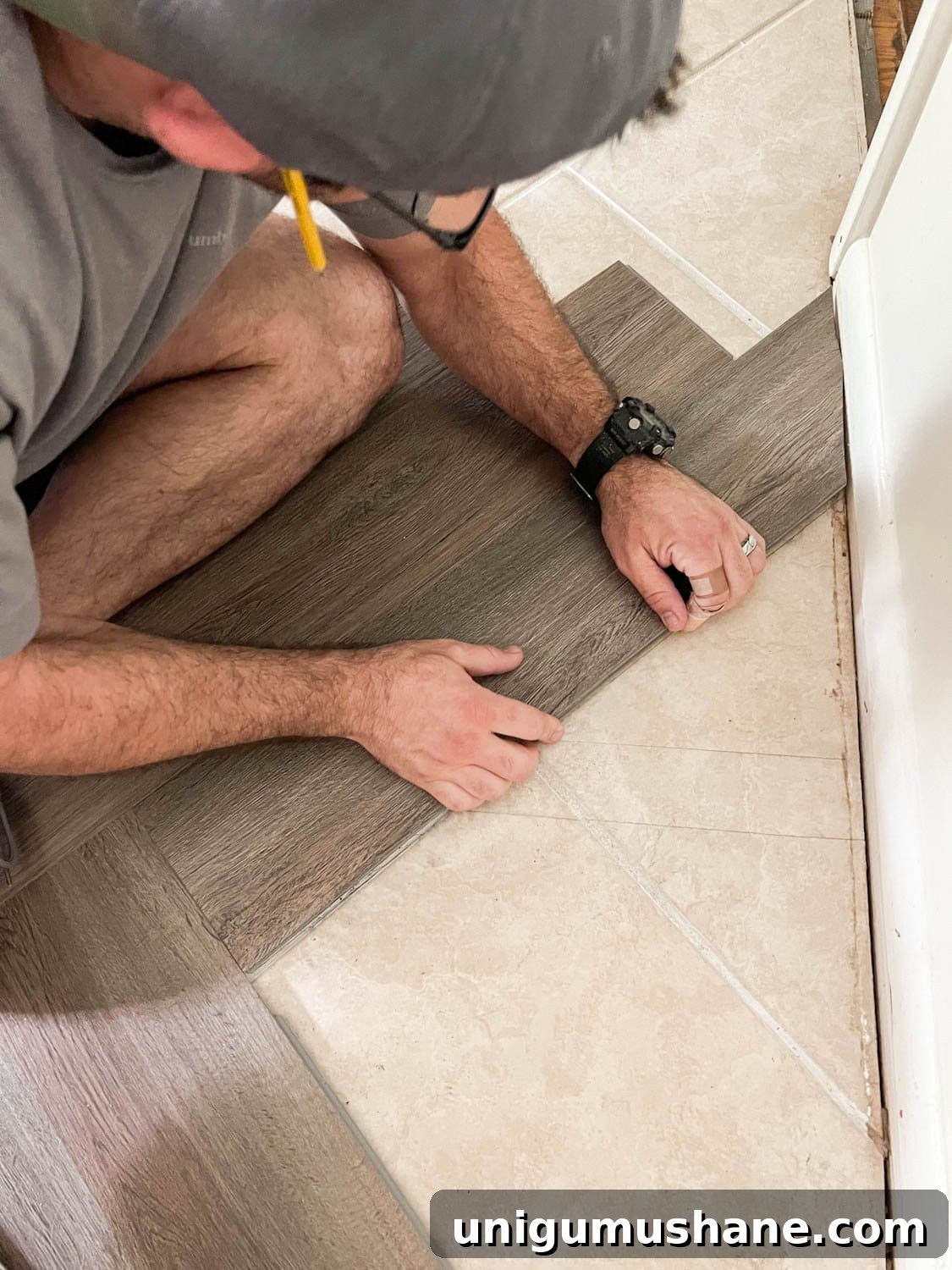
Step 15 Fill in the Rest of the Room
Continue measuring, cutting, and installing planks around the room’s perimeter. Use the same approach for obstacles such as floor vents or awkward corners.
Step 16 Attach Transition Strips
At doorways, snap transition strips into place to create a clean transition between rooms and flooring surfaces.
Step 17 Attach Shoe Molding
Once the flooring is fully installed, reattach the shoe molding to the baseboards to hide the cut edges around the room. Use a finish nailer, or a hammer and brad nails. Finish by caulking and painting as needed.
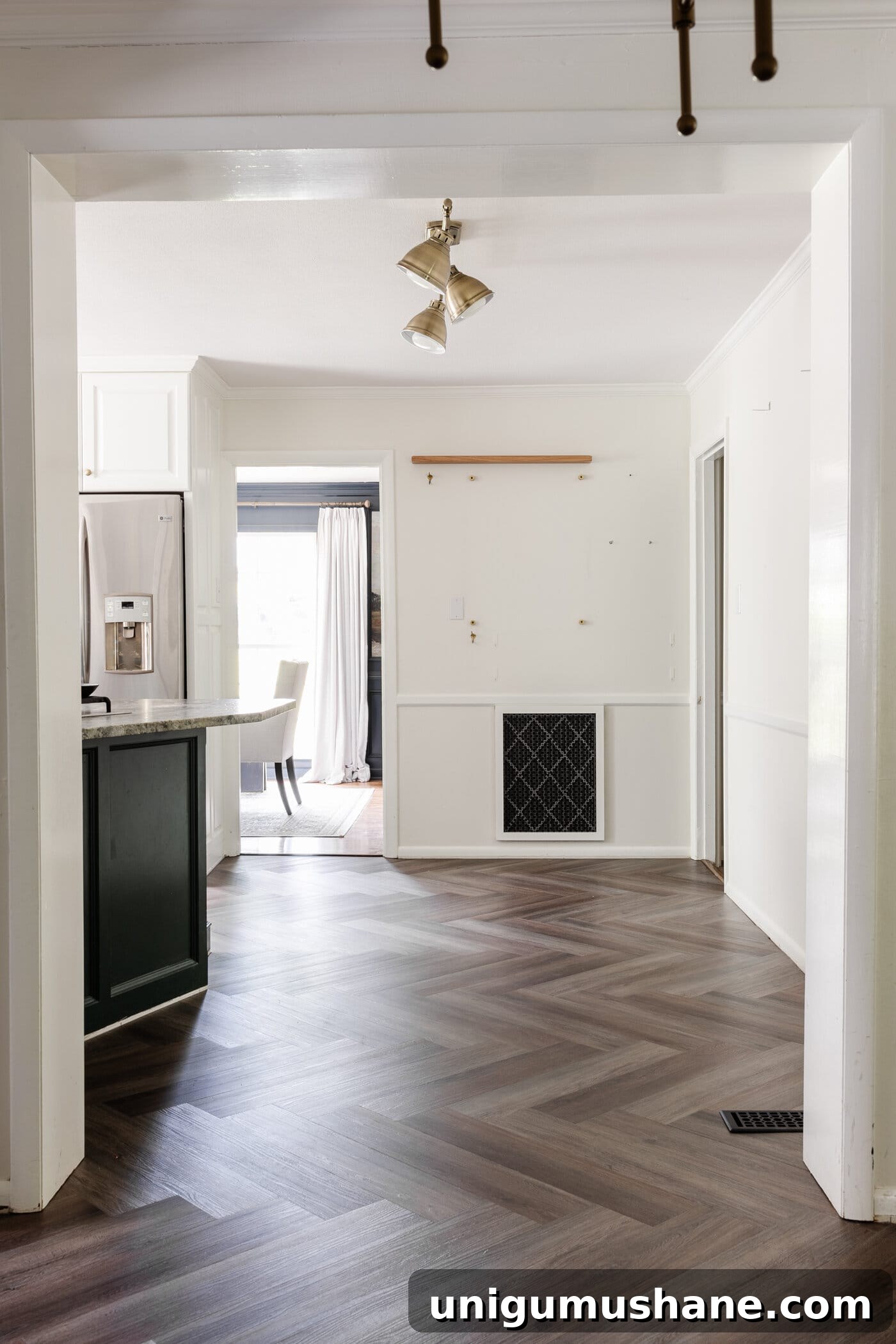
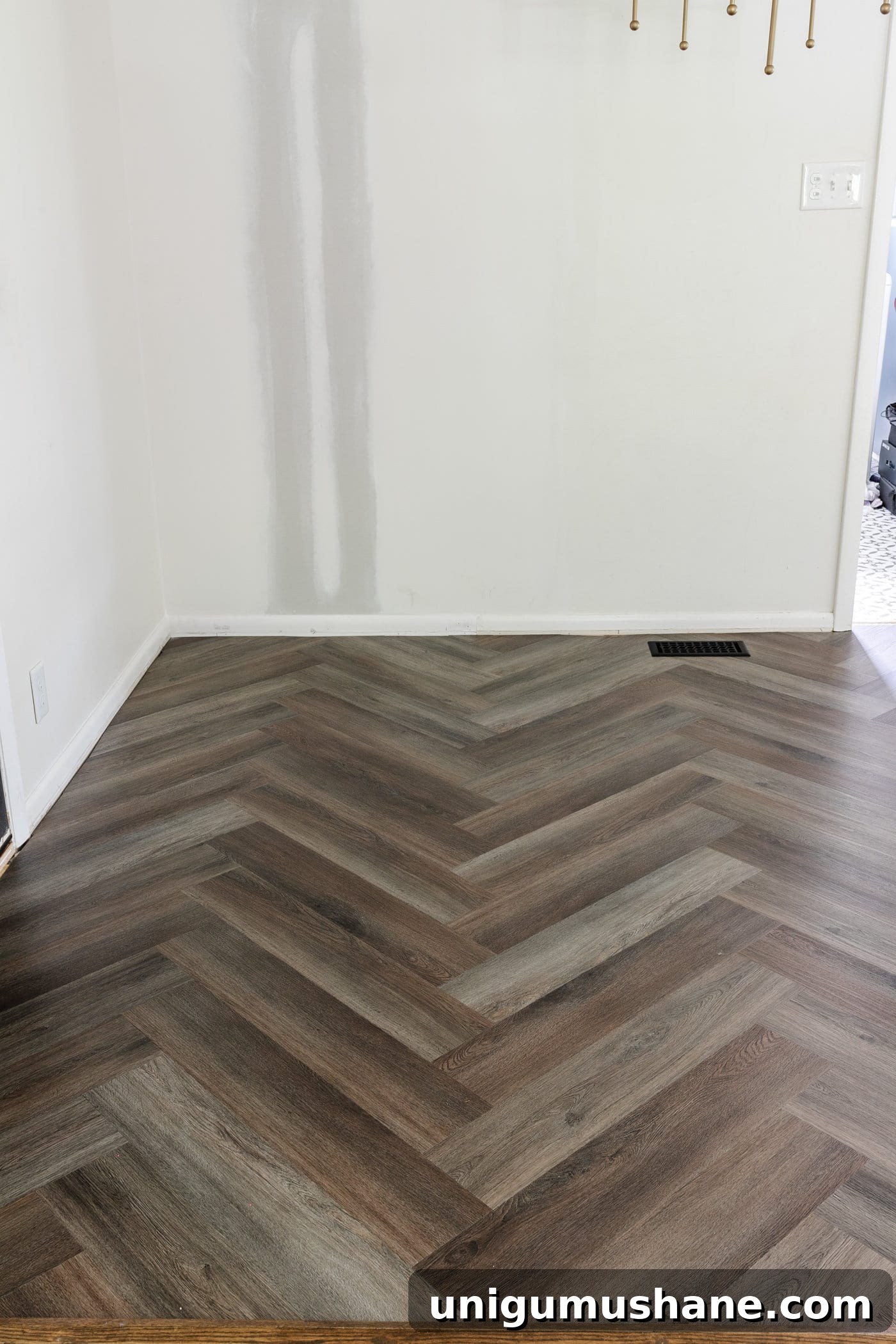
The Finished Herringbone LVP Floating Floor
The finished herringbone LVP floating floor looks so much better than the old beige tile. The room feels brighter, warmer, and more intentional, with the contrast and pattern giving the space a high-end look.
Because this flooring is waterproof, it is also a practical choice for a kitchen. Spills and everyday messes feel much less stressful, which is exactly what we needed in such a hardworking part of the house.
I cannot believe we waited this long to make the change. The herringbone pattern required more careful measuring and cutting than a standard LVP installation, but the final result made the extra work completely worthwhile.
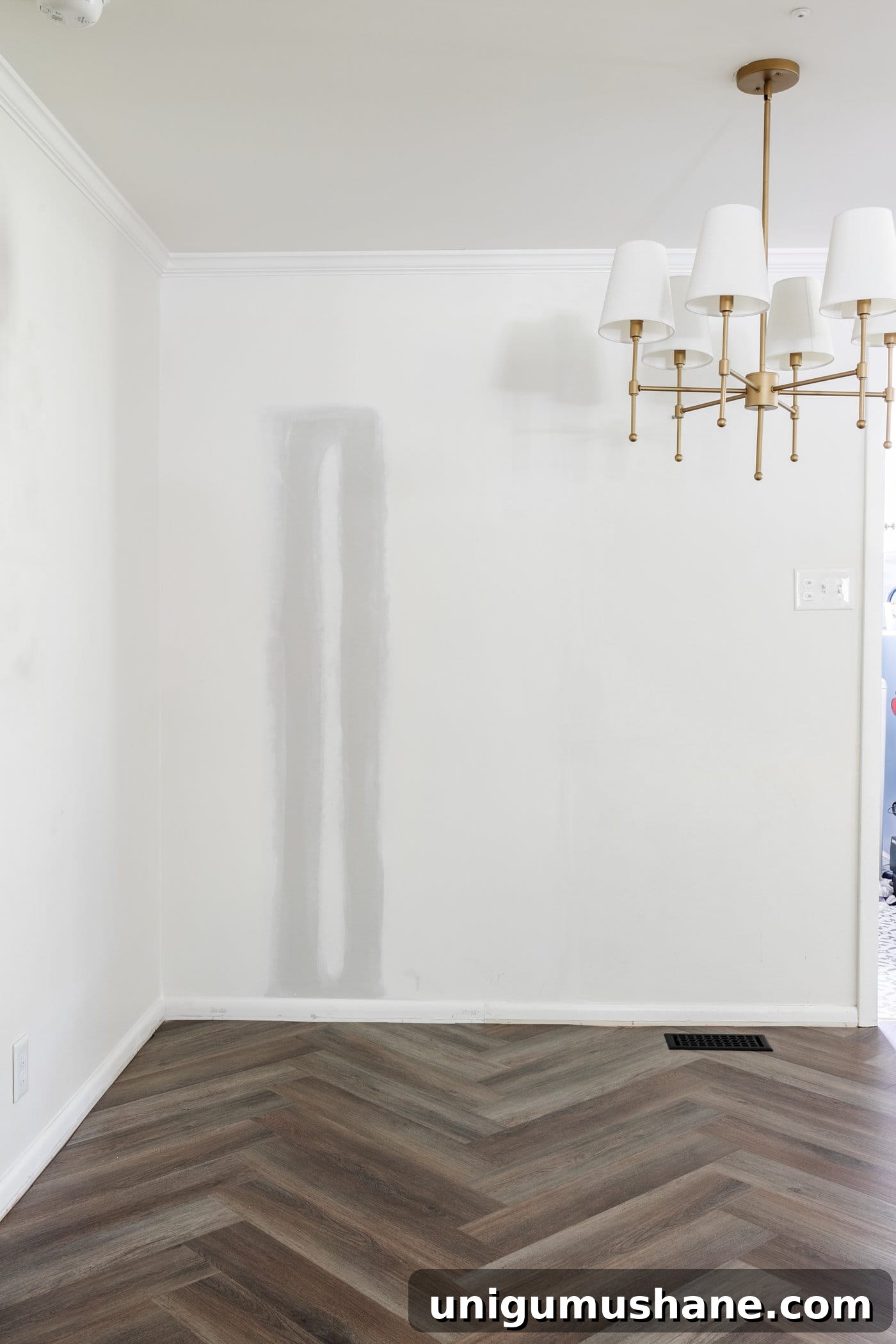
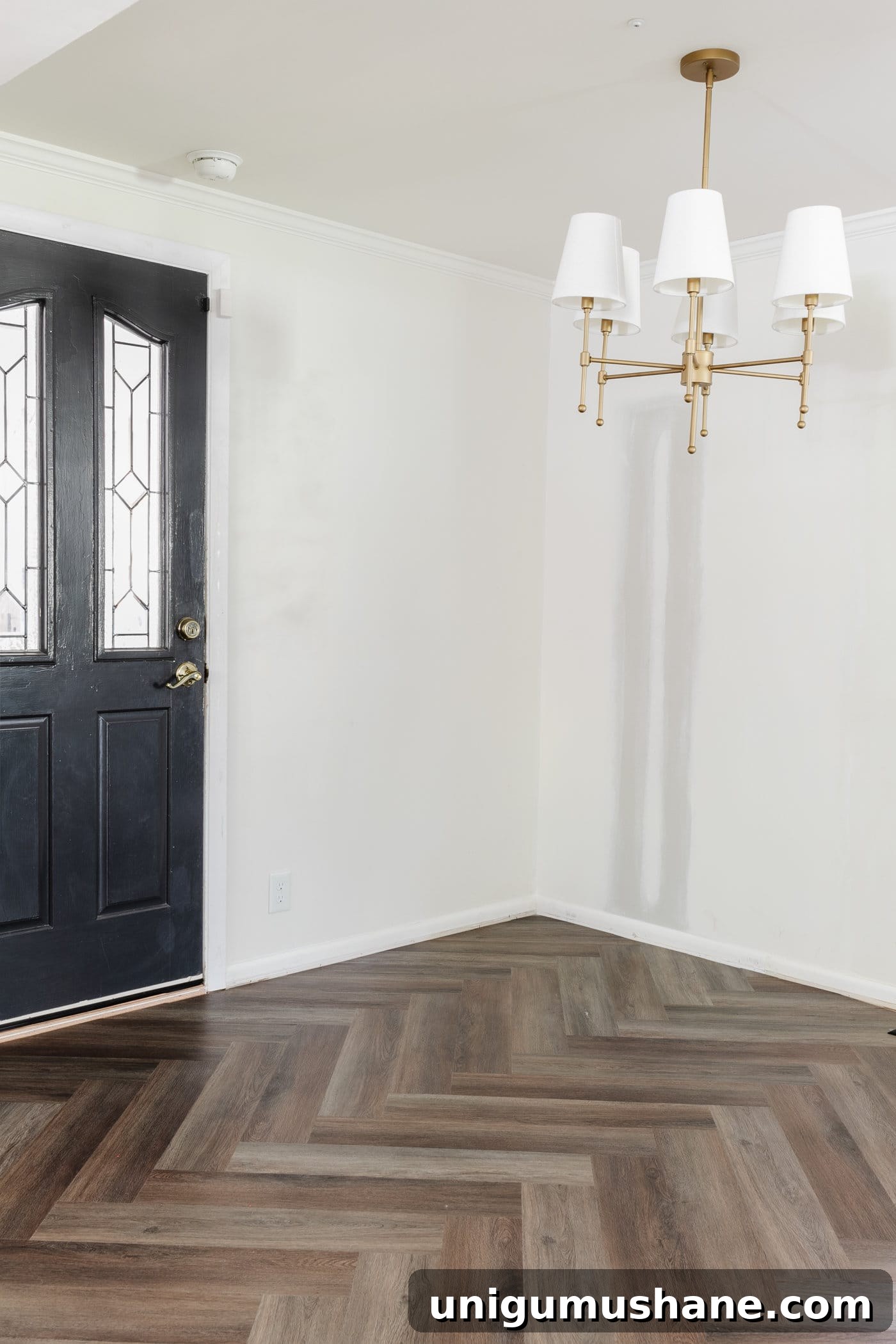
We still have more projects planned for this breakfast nook, including a banquette makeover and installation, a chandelier replacement, a table build, and a wall treatment. There is still a long way to go, but the new floor already makes the space feel completely different.
Covering the tile instead of removing it gave us the upgrade we wanted without the demolition. The old tile may still be underneath, but it is finally out of sight.
More Flooring Ideas
- How to Install Luxury Vinyl Plank Flooring
- How to Install Sheet Vinyl Flooring Over Tile
- Marble Tile vs Marble Effect Tile: Which Is Best?
- Everything You Need to Know to Refinish Hardwood Floors
- DIY Moroccan Vinyl Peel and Stick Tile Floor