
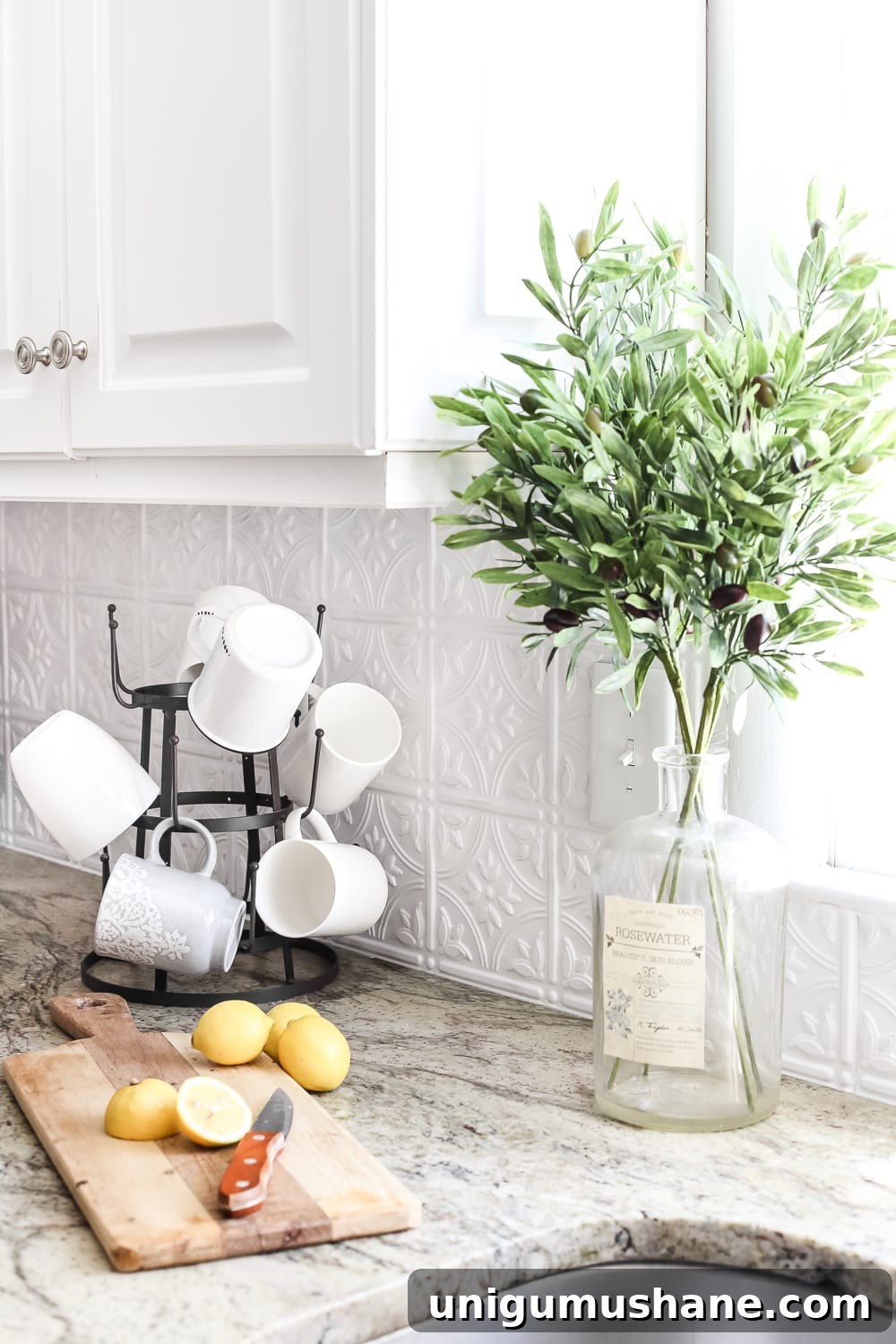
How to transform a kitchen backsplash into a pressed-tin farmhouse look quickly and affordably—done in about six hours with no power tools.
We recently gave our kitchen backsplash a quick facelift, and the result made a big impact. When we first closed on the house this spring, the kitchen was already in decent shape for a 1960s home, but the backsplash felt a little busy next to our granite counters. We wanted something cleaner and more in line with the farmhouse-colonial vibe of the house without a major renovation.
Instead of ripping tile out right away, we chose a temporary, budget-friendly solution: pressed “tin” panels made from white PVC. They mimic the look of pressed metal tile, install easily over existing tile, and only require basic hand tools—no saws, drills, or power tools.
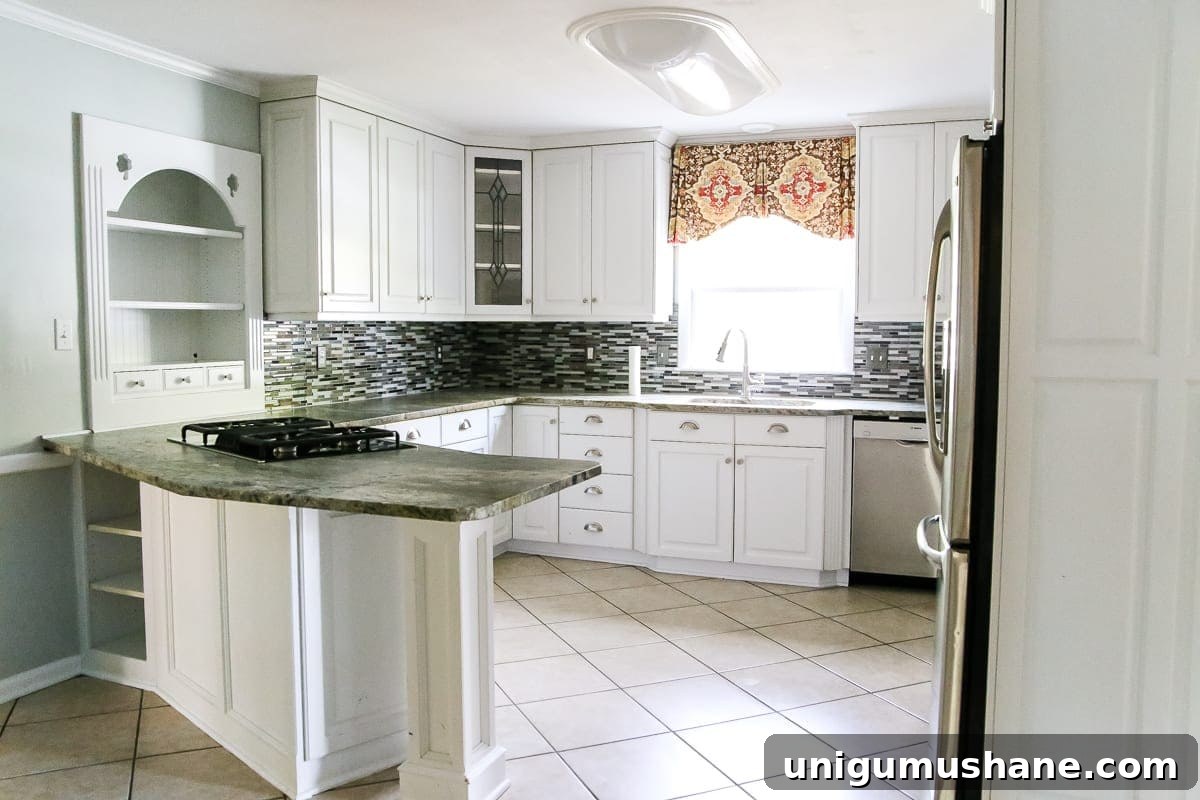
This is a Phase 1 update for the space—Phase 2 will come later and might include changing the floor tile or updating built-ins and cabinets. For now, updating the backsplash was a fast, high-impact change that made the entire kitchen feel more cohesive.
UPDATE: See our completed budget-friendly kitchen refresh here!
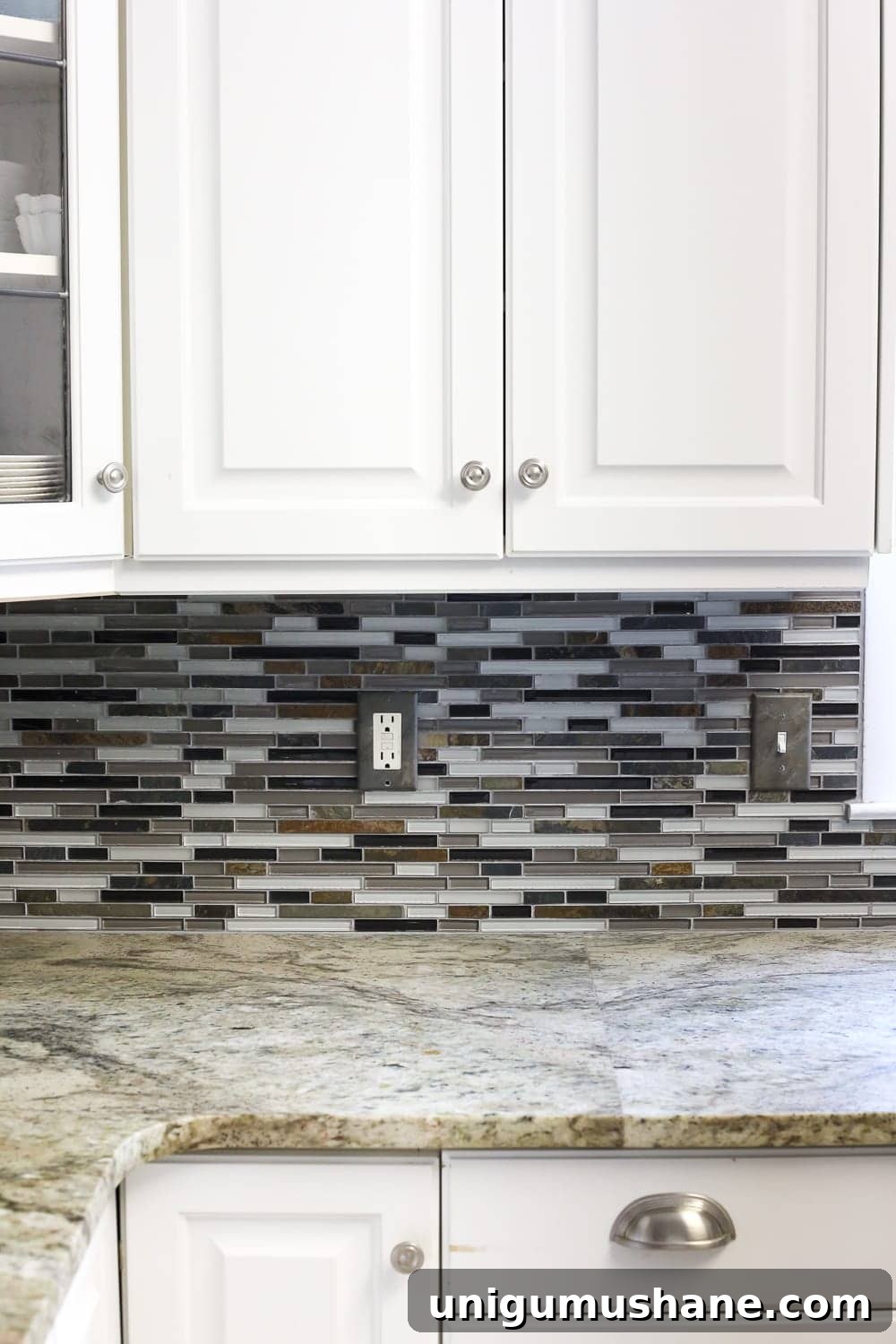
The patterned tile that came with the house clashed a bit with the granite. The pressed tin-style PVC panels helped tone things down and give the kitchen a more traditional, farmhouse feel that suits our Colonial-style home.
Why pressed tin-style PVC? It looks like tile, is inexpensive, easy to cut with a utility knife, and attaches with construction adhesive. If you plan to install panels directly behind a stove or other high-heat areas, choose real metal panels rated for heat resistance instead of PVC.
Supplies Used:
- Primer (for sealing the existing tile)
- Paint brush
- Pressed tin-style vinyl/PVC panels (2′ x 4′ sheets)
- Utility knife with a sharp blade
- Pencil and tape measure
- L-square or straight edge for marking cuts
- Caulk gun
- Construction adhesive suitable for PVC to tile
- White caulk for finishing seams
Total cost for our backsplash project was about $104, and it took roughly six hours from start to finish. It’s a small investment for a big aesthetic boost, and because it’s reversible, it’s a great temporary solution until we commit to a full tile replacement.
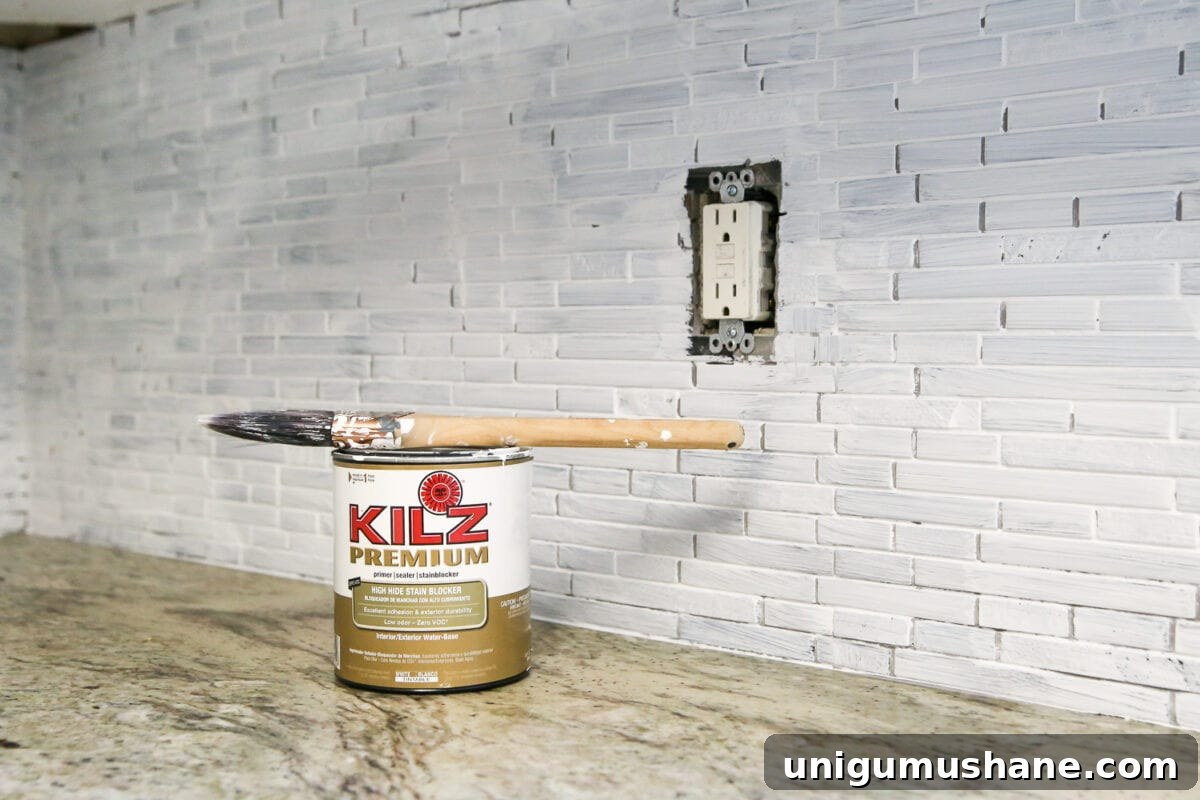
The Steps:
- Prime the existing tile: We applied a coat of white primer to the tile to prevent the original color and pattern from showing through the thin panels.
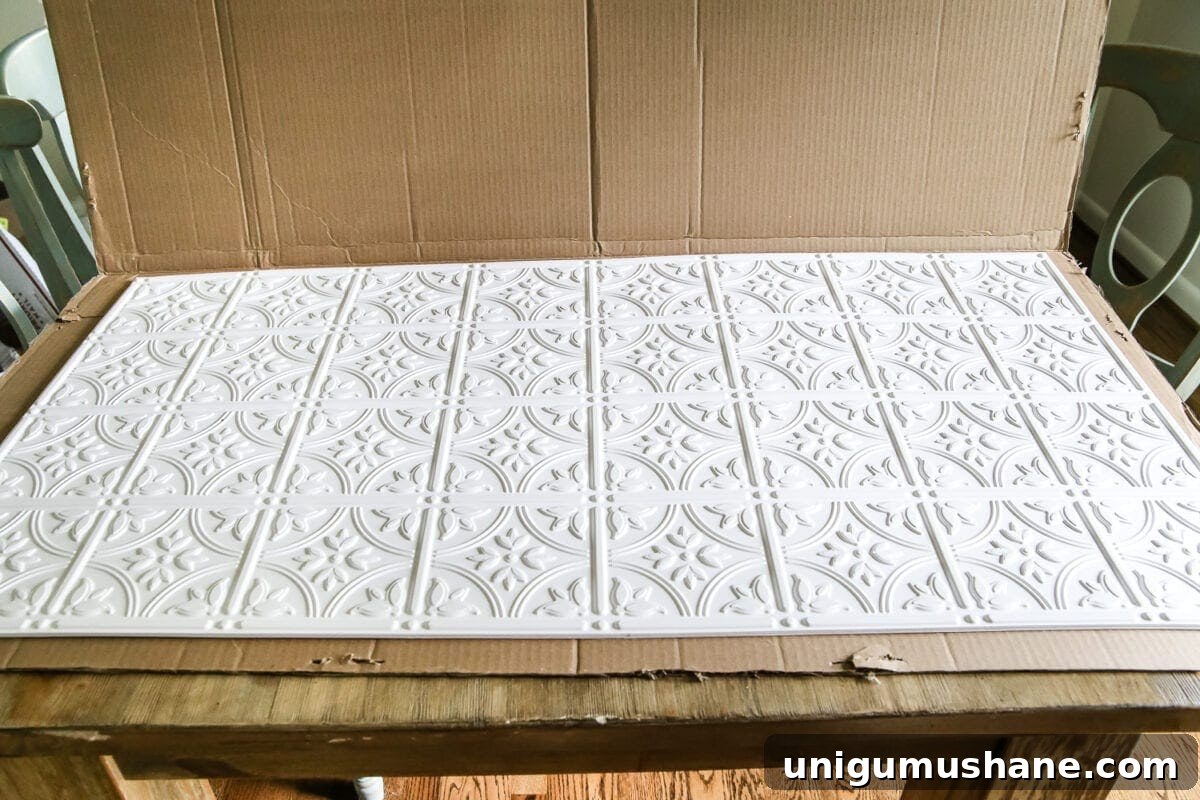
2. Work in sections: Panels come in 2′ x 4′ sheets, so measure each area of the backsplash and plan your cuts. Start at a less-visible corner if you’re testing the technique for the first time.
3. Mark and cut: Use a pencil and an L-square to mark straight lines. Cut panels with a sharp utility knife—place cardboard under the panel to protect your work surface. Cutting is straightforward, but take your time for clean edges.
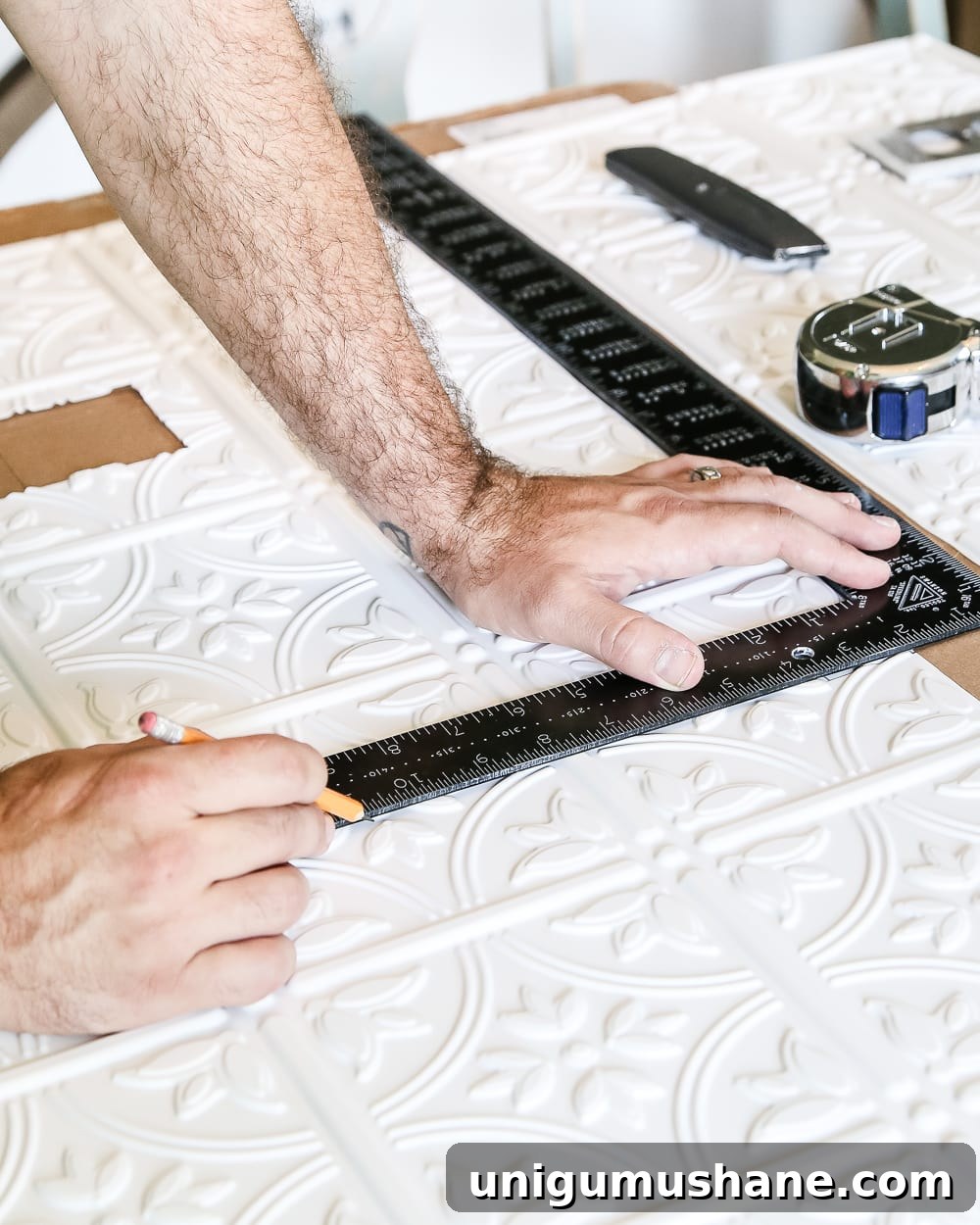
4. Cut openings: Measure and mark openings for outlets, switch plates, and under-cabinet lighting, then cut them out with the utility knife. This step takes patience—consider buying an extra panel to account for any mistakes.
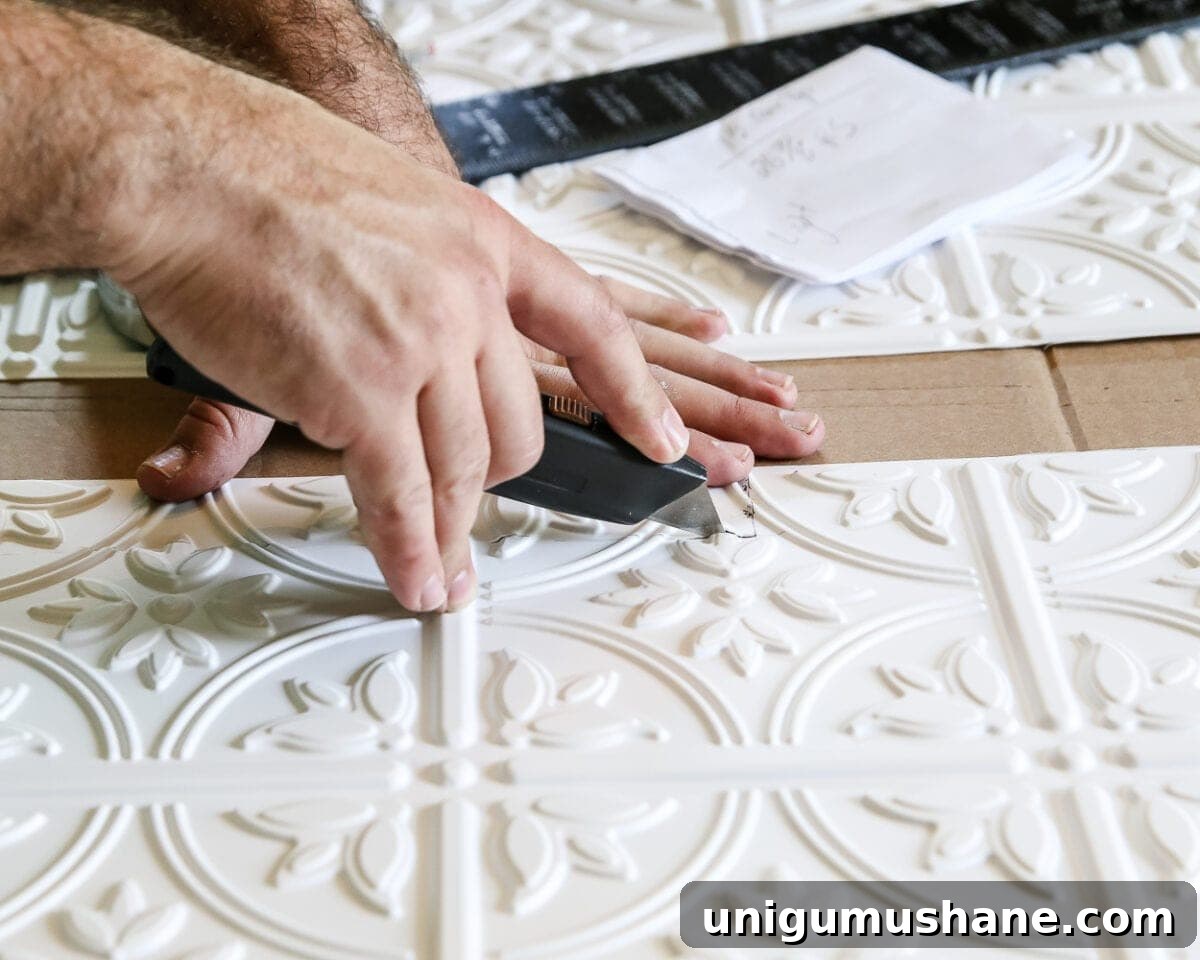
5. Adhere panels: Apply a modest amount of construction adhesive to the back of each panel—follow the manufacturer’s pattern recommendations. One bead an inch from the edges plus a few dabs in the center is usually enough. Press the panel firmly onto the primed tile.
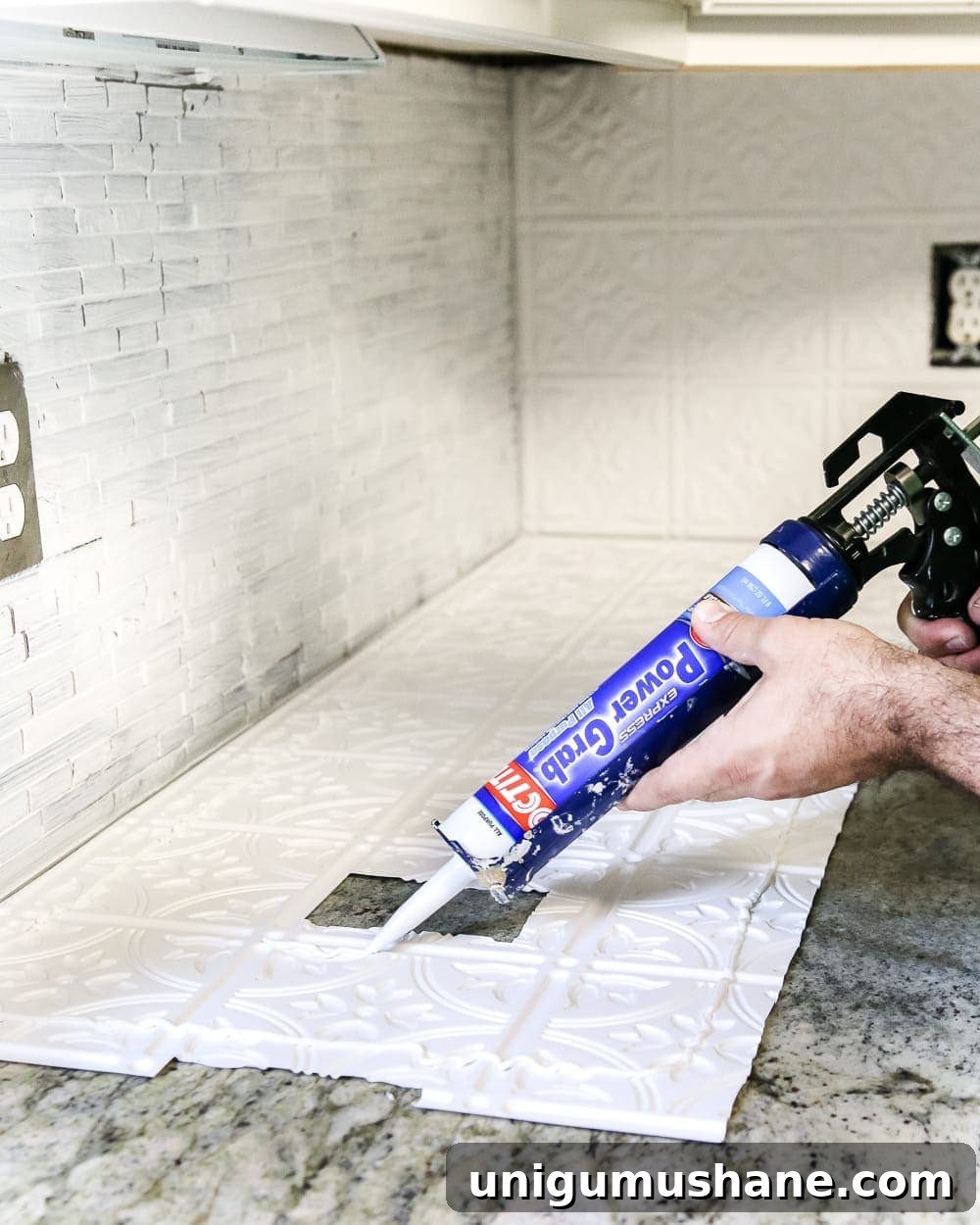
6. Finish seams and trim: Once all panels are installed, seal seams and edges with white caulk for a clean, continuous look. If you prefer, you can paint the panels after installation, but we left ours crisp white to complement the counters.
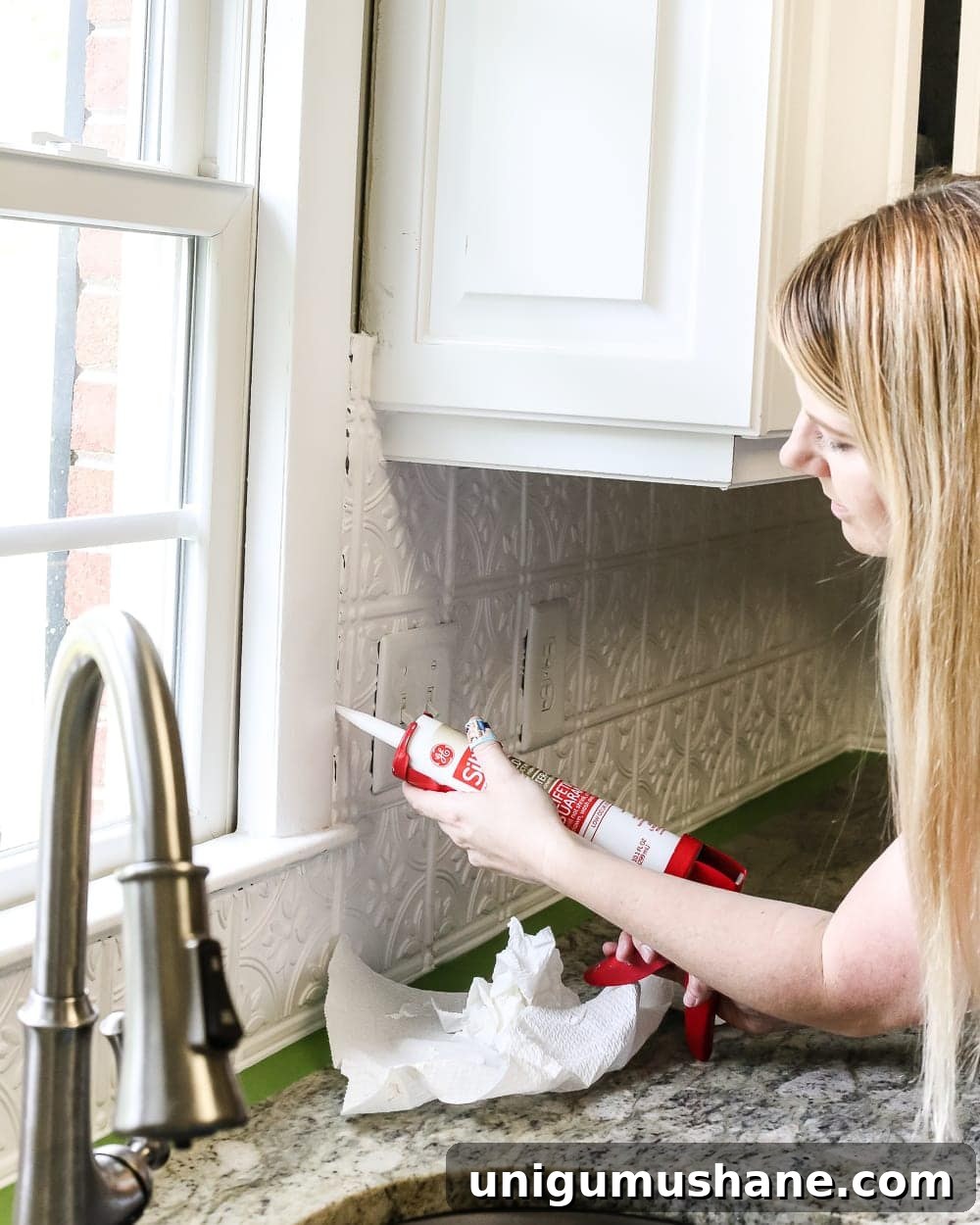
That’s it—an easy, affordable backsplash upgrade that instantly softens the space and complements our counters better than the original patterned tile. The installation is reversible, so when we’re ready for a full tile remodel, we can remove the panels without a huge demolition project.
I’m thrilled with the way the pressed-tin look fits our traditional Colonial home. It reads more classic and farmhouse than the previous ultra-modern feel. Having a window above the sink doesn’t hurt either—washing dishes is a little more pleasant when you can watch the kids play outside.
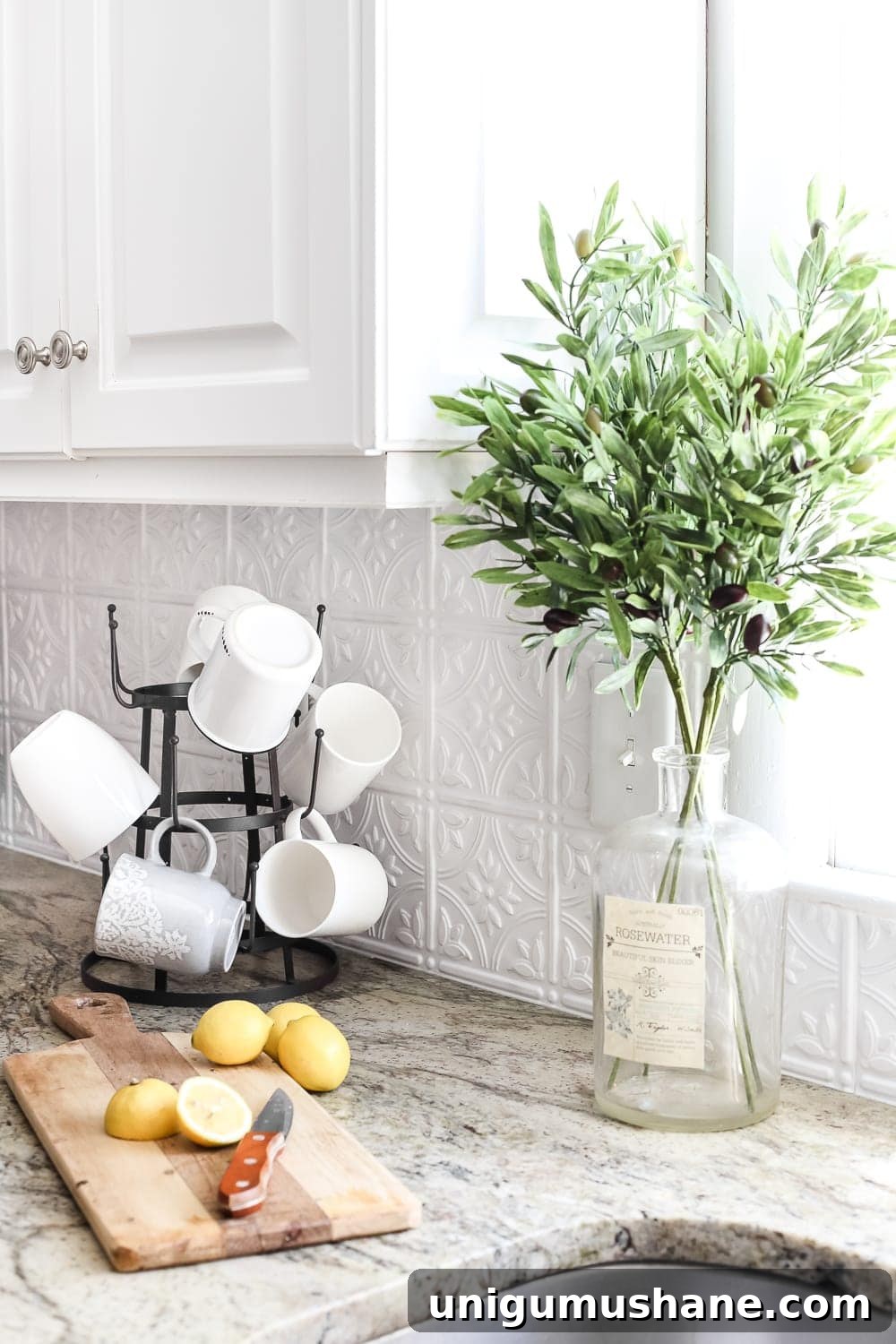
Full disclosure: the rest of the kitchen still looks lived-in—mail piles and dishes happen. This project was meant to be a quick, high-impact improvement, and it delivered.
Countertop decor right now:
- Small step stool
- Wooden tiered tray
- Olive branches in a jar
- Labeled antique-style jar
- Mug drying rack
- Wood cutting board
- Vintage-style scale (DIY aged finish)
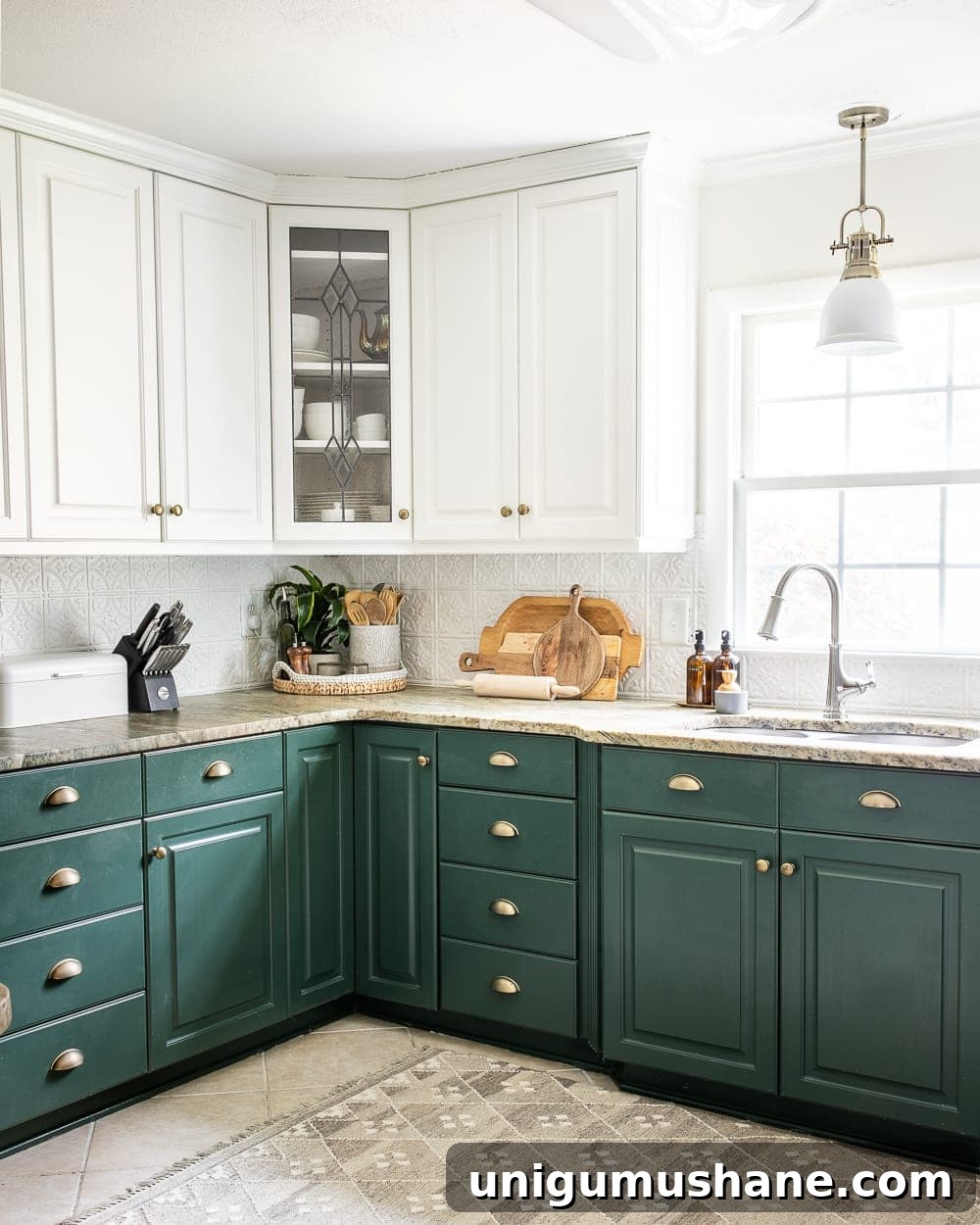
Three months after closing and two months after moving in, the house is beginning to feel like home. I’m already thinking about small finishing touches—maybe a shade for the window, a pendant light above the sink, or a few plates on the wall. But for now, the pressed-tin-style backsplash made the biggest difference.
What do you think—did this quick backsplash refresh work? Have you tried a similar DIY project? I’d love to hear about your experiences and tips.
UPDATE: It’s been over three years since we installed these panels and they’re holding up well. Cleaning is simple—just wipe them with a damp cloth—no staining or maintenance issues so far.
UPDATE x 2: See our completed budget-friendly kitchen refresh here!

Related Posts
- Our Full Kitchen Organization Makeover
- Simplified Decorating: How to Decorate Kitchen Countertops
- How to Paint Kitchen Cabinets Like a Pro
- DIY Feather Finish Concrete Countertops
- DIY Whitewashed Faux Brick Backsplash