
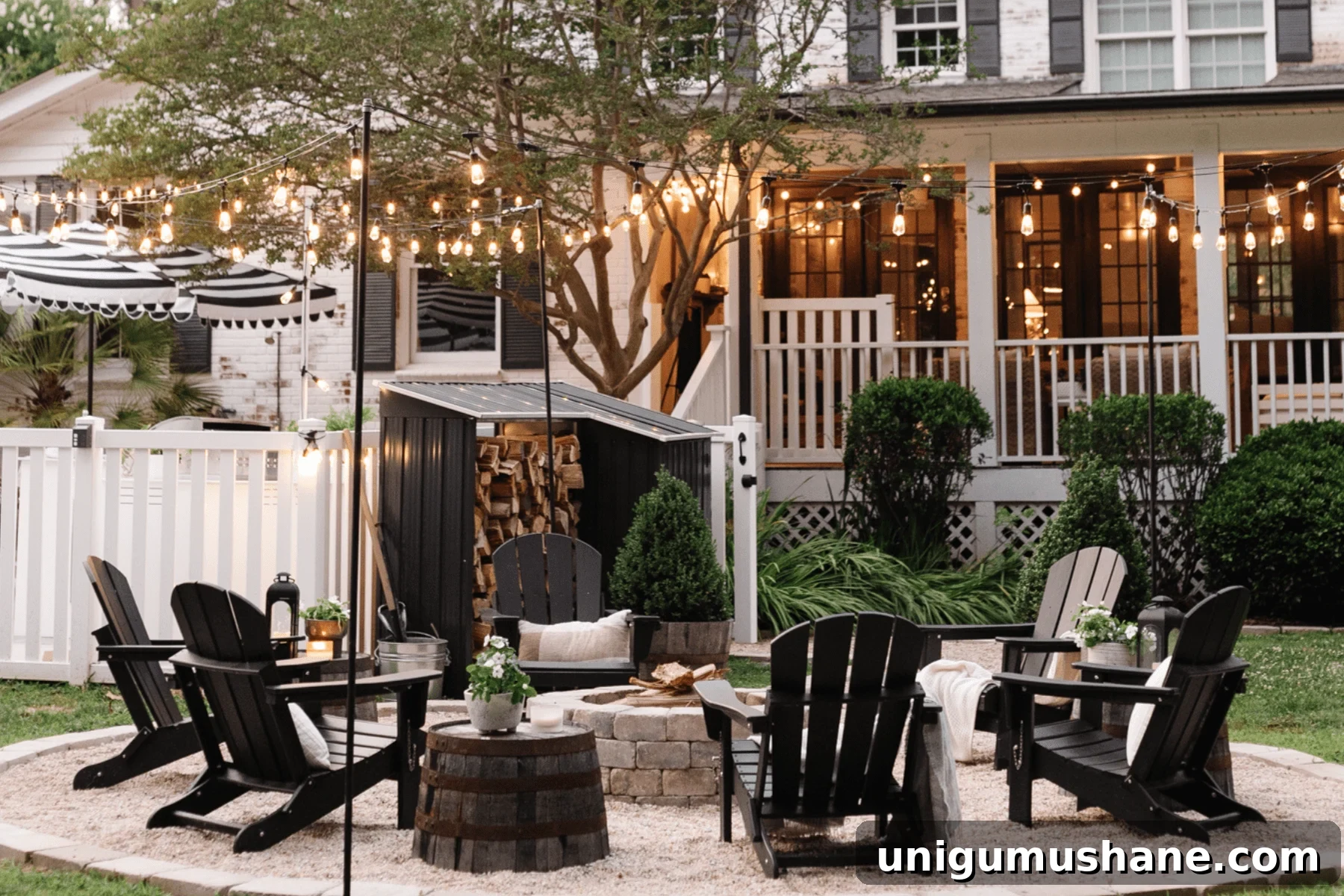
6 straightforward DIY tutorials showing how to hang outdoor string lights without trees — around a fire pit, pool, fence, porch, from siding, around a patio, or anywhere in your backyard.
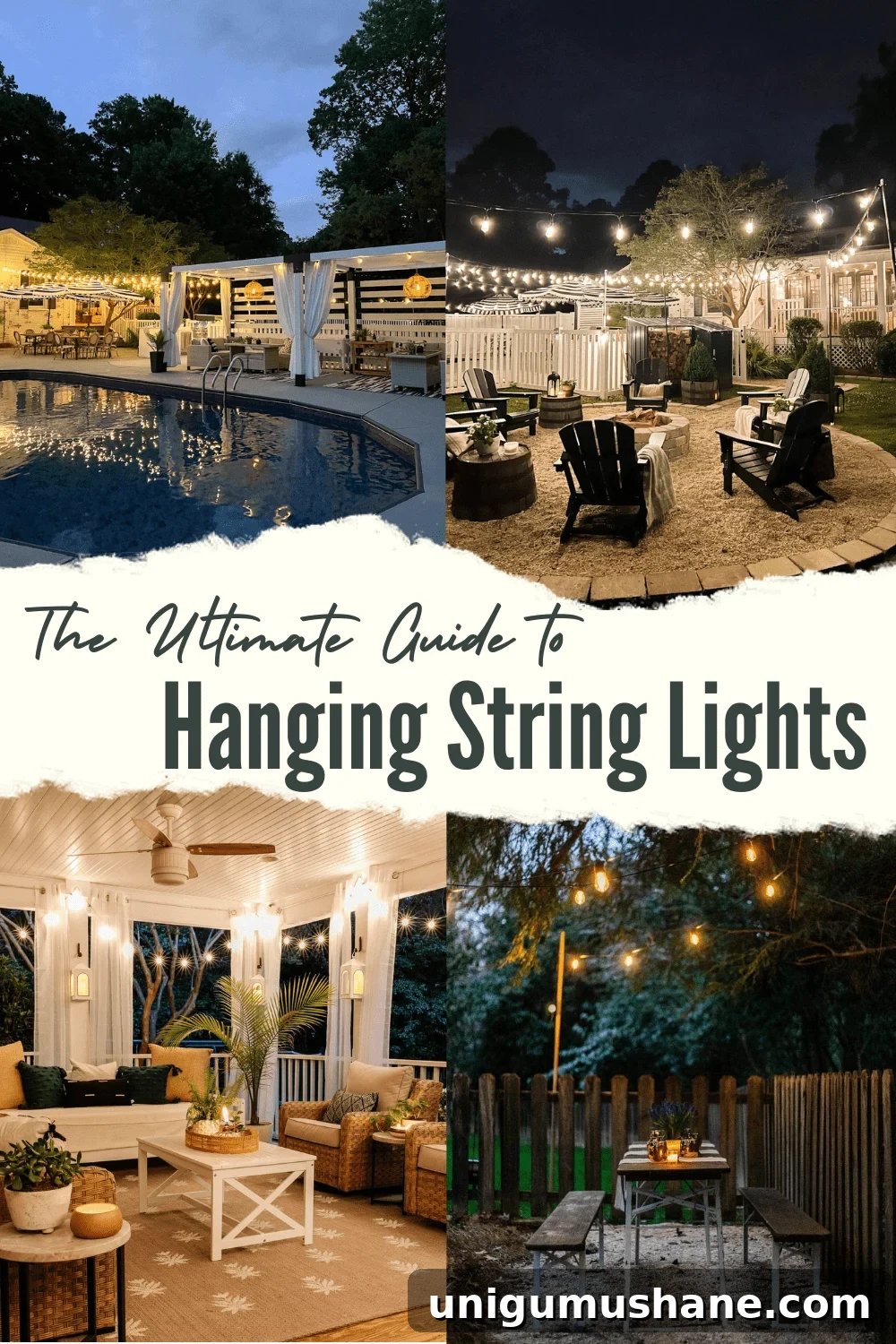
Ultimate Guide: How to Hang Outdoor String Lights
Hanging outdoor string lights sounds simple, but it can get technical fast — especially when you factor in outlets, wiring, brackets, and aesthetic details. Whether you need to span long distances, secure lights against wind, or hide cords neatly, the right approach makes all the difference.
Over the years we’ve tried nearly every backyard lighting setup, so this guide breaks down practical, step-by-step methods for common situations so you can confidently hang string lights in almost any backyard layout.
The Best Backyard String Lights
Choose string lights designed for outdoor use: shatterproof bulbs, warm soft-white color, and LED technology are generally the best options.
Shatterproof LED string lights reduce the risk of broken glass and overheating, and soft-white tones (around 2700K) create a cozy, inviting atmosphere. For spans longer than 8 feet, consider adding a cable kit to avoid sagging.
- Cafe or globe string lights for short spans (under 8 feet)
- Edison-style LED strands for longer spans — ideally used with a cable kit for support
- Solar string lights for areas without power access (note: solar lights provide ambient glow but limited brightness)
Why Choose Shatterproof Bulbs?
Shatterproof bulbs prevent broken glass hazards, especially in high-traffic areas or windy locations. They’re safer around pools, patios, and anywhere people walk barefoot.
Why Soft White?
Warm white (soft white) lights give a comfortable, welcoming glow. Cool or daylight tones can feel harsh and less relaxing for outdoor entertaining.
When to Use a Cable Kit
Use a cable kit when spans exceed about 8 feet or when you want minimal sagging and better resistance to wind. The cable acts as a secure backbone that supports the light strand.
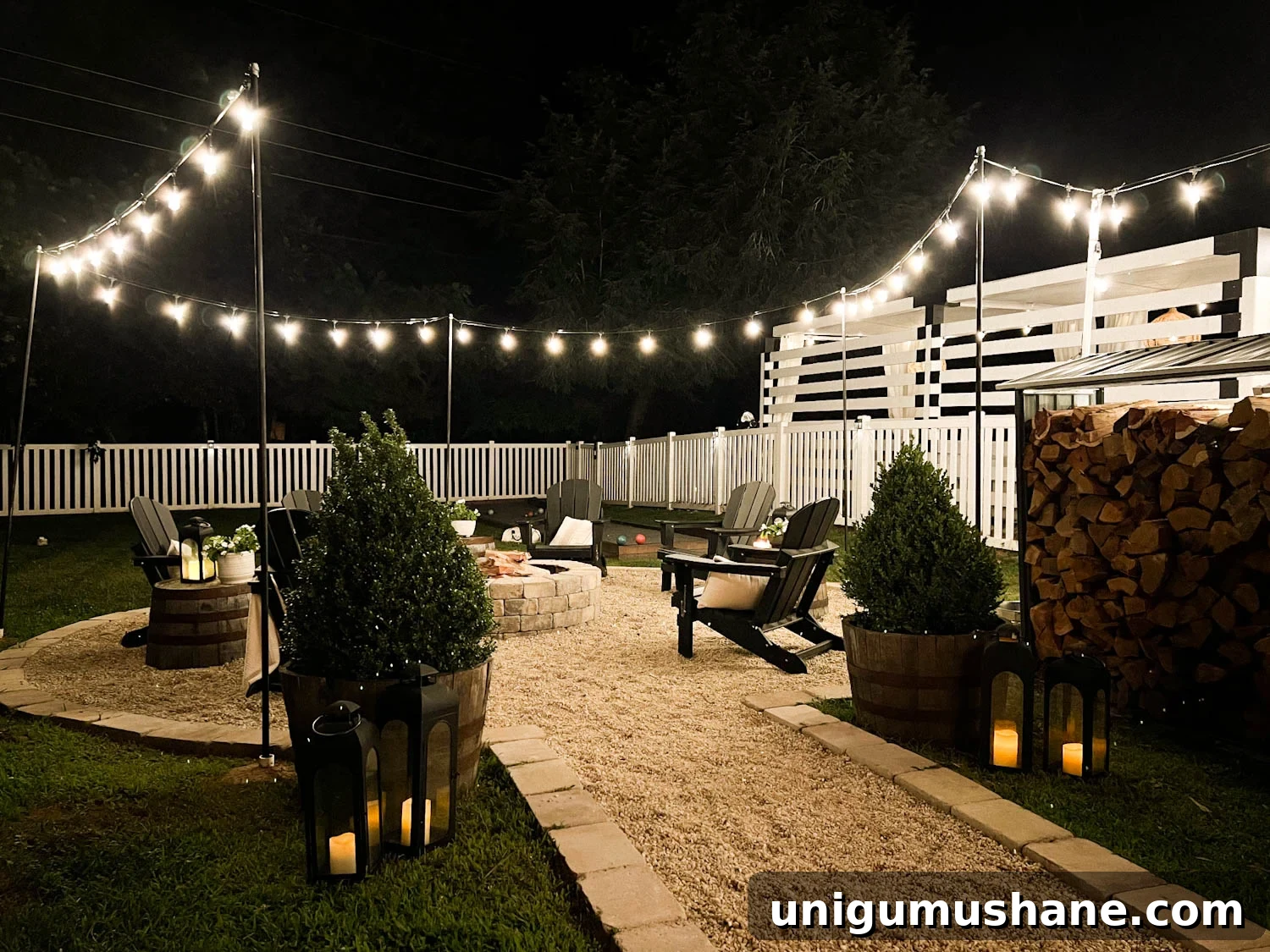
Where to Use Outdoor String Lights
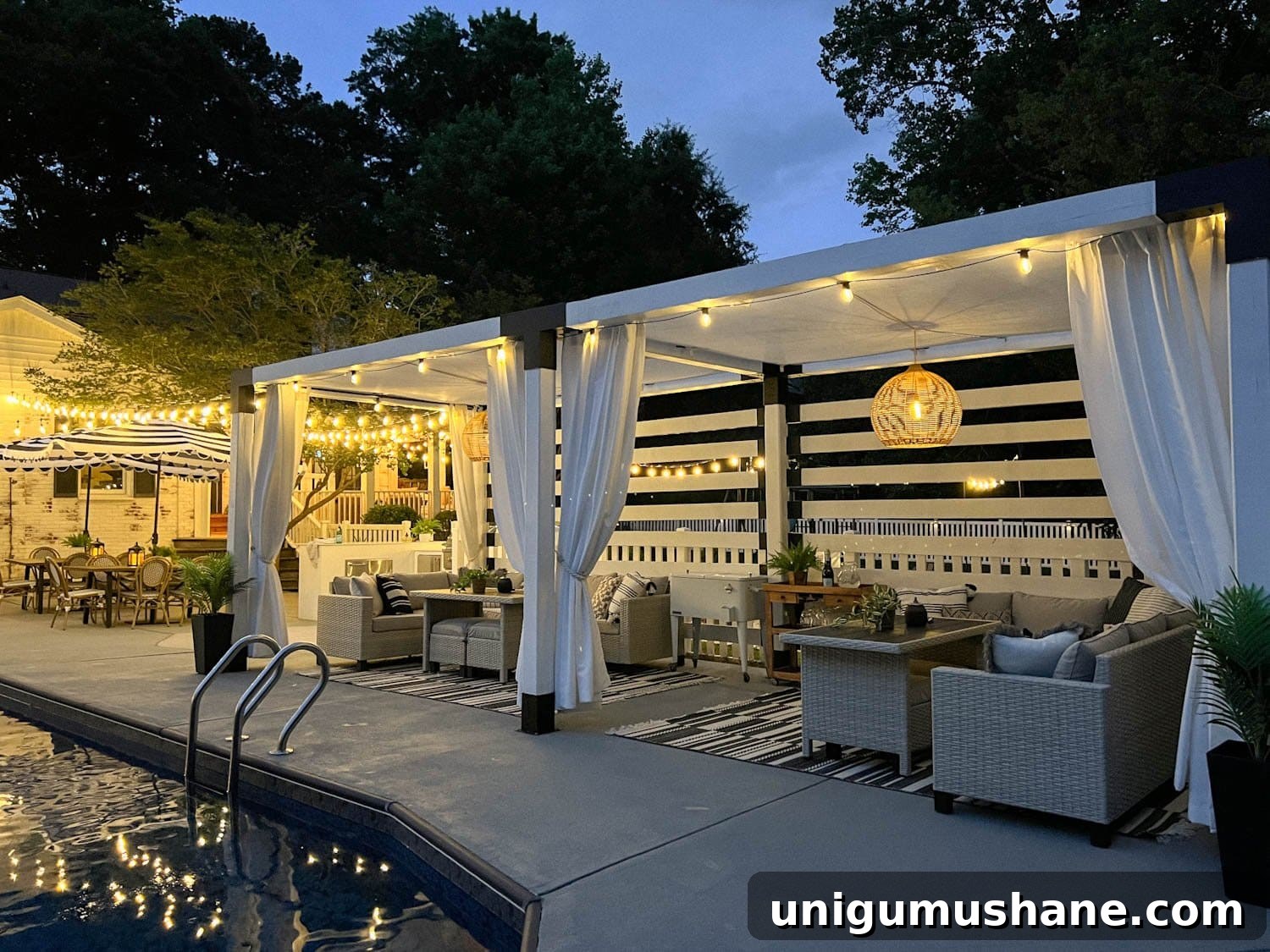
Safety first: always keep lights and cords away from direct contact with water and avoid placing them over pools to meet electrical code and reduce risk.
Popular locations to hang string lights for atmosphere and function include:
- Under a covered porch
- Around a fire pit
- Above an outdoor dining table
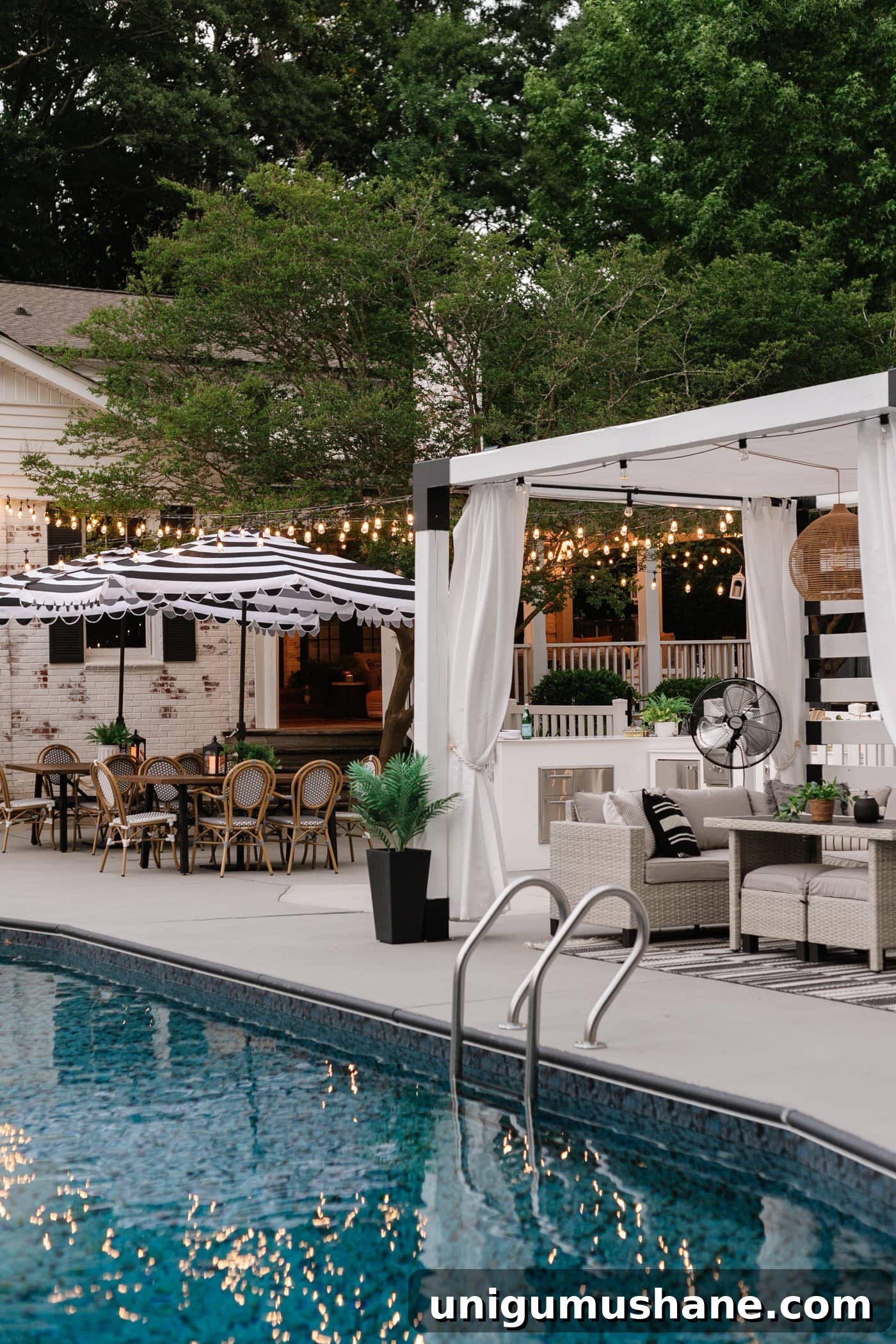
- Around a patio or pergola
- Along fence lines
- From trees in the yard
- On a playhouse or gazebo ceiling
- Across buildings or between structures
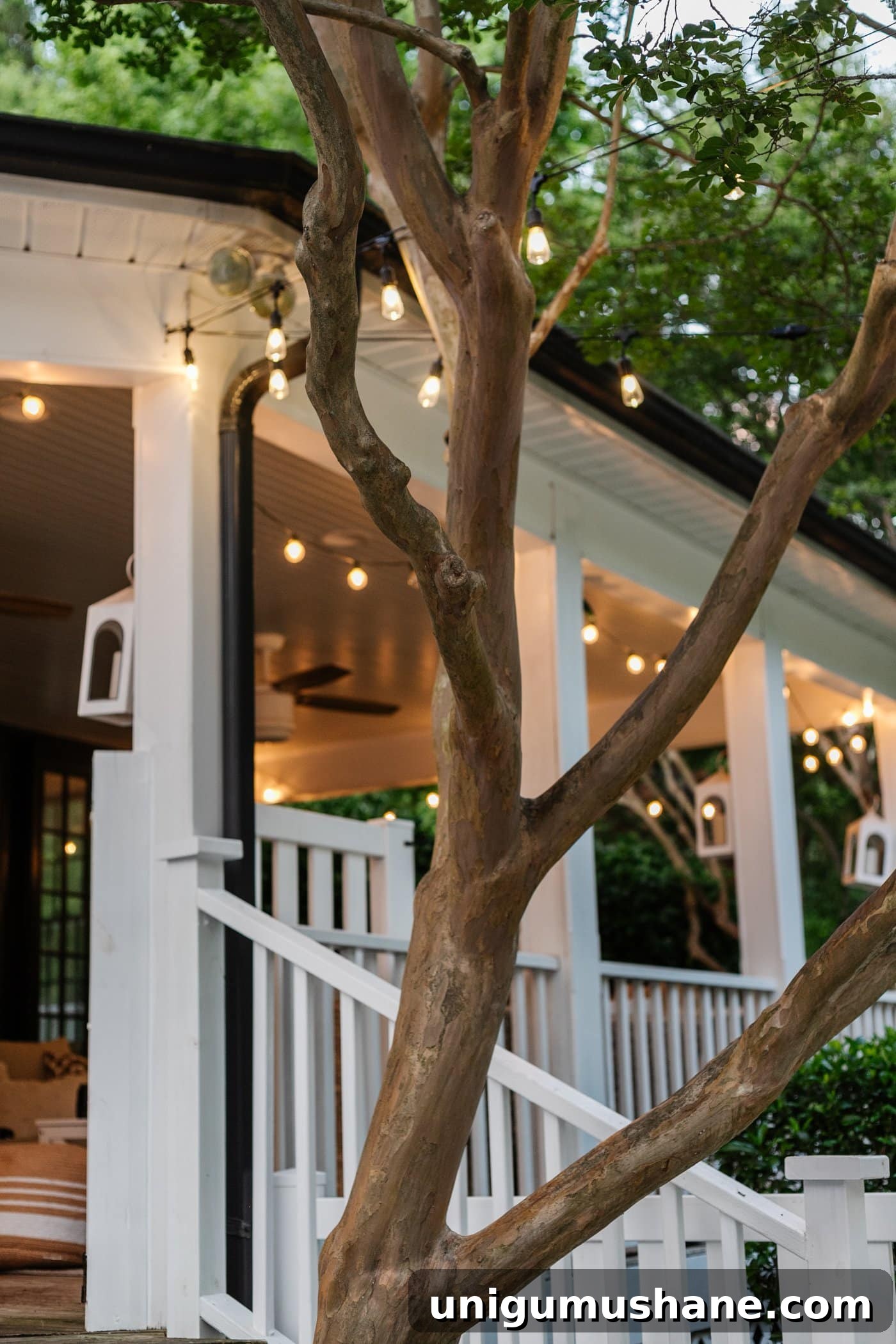
What to Hang Lights From
If trees aren’t available or conveniently placed, you can anchor lights to many backyard structures. Common supports include:
- Porch, pergola, or gazebo ceilings
- Fences and fence posts
- Retaining walls
- House, shed, or outbuilding siding
- Deck railings
- Vinyl siding with clips
- Freestanding posts or planter posts you build yourself
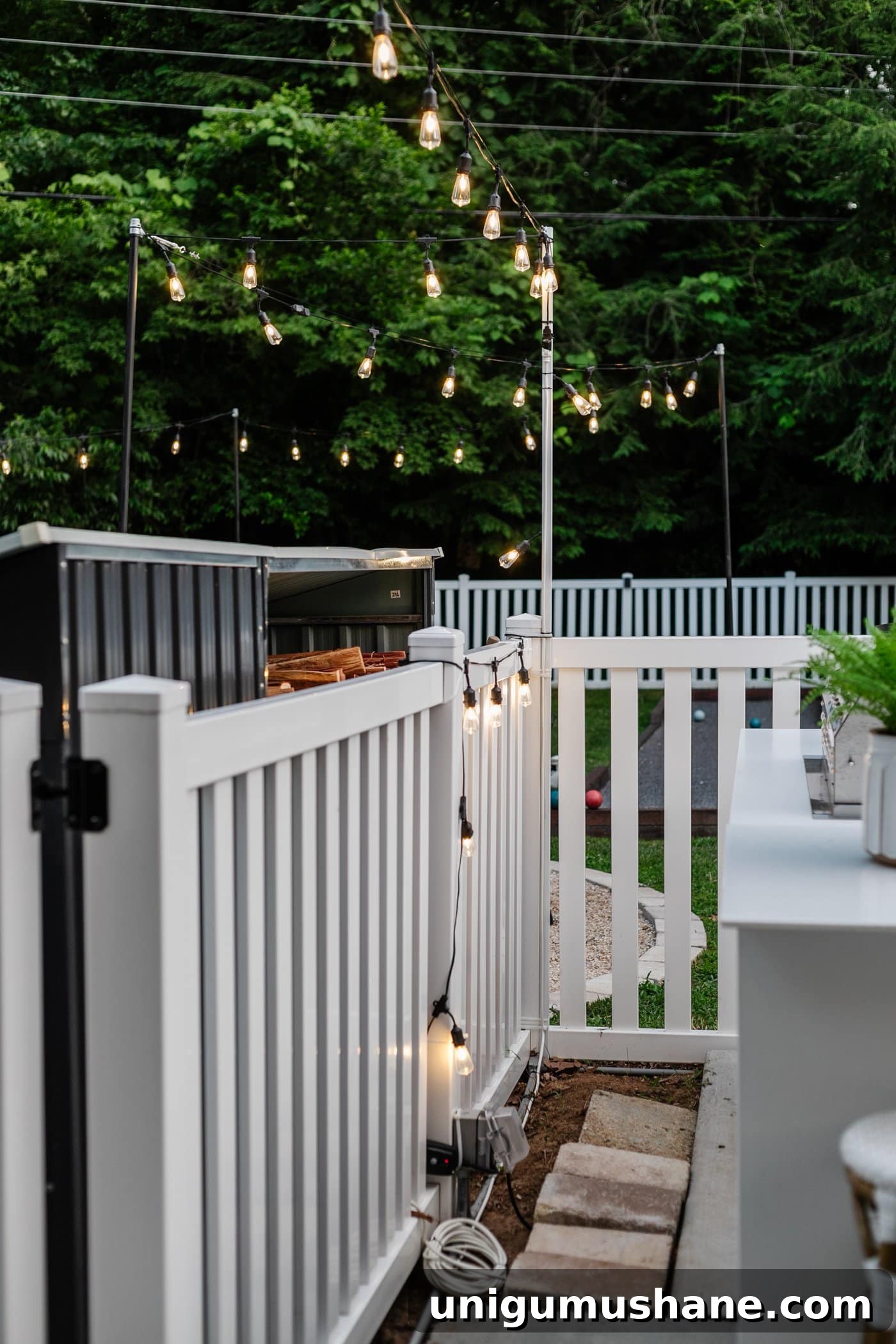
What to Do Before Hanging String Lights
Plan Around Your Outlet Access
Locate outdoor outlets and plan to start your light runs close to a power source. Tucking an outlet behind an outdoor kitchen, grill area, or other structure keeps cords discreet yet accessible.
Measure Your Route
Measure all routes before buying lights to ensure you purchase enough length and any cable kits or hardware needed for support.
How to Hang Outdoor String Lights Around a Fire Pit
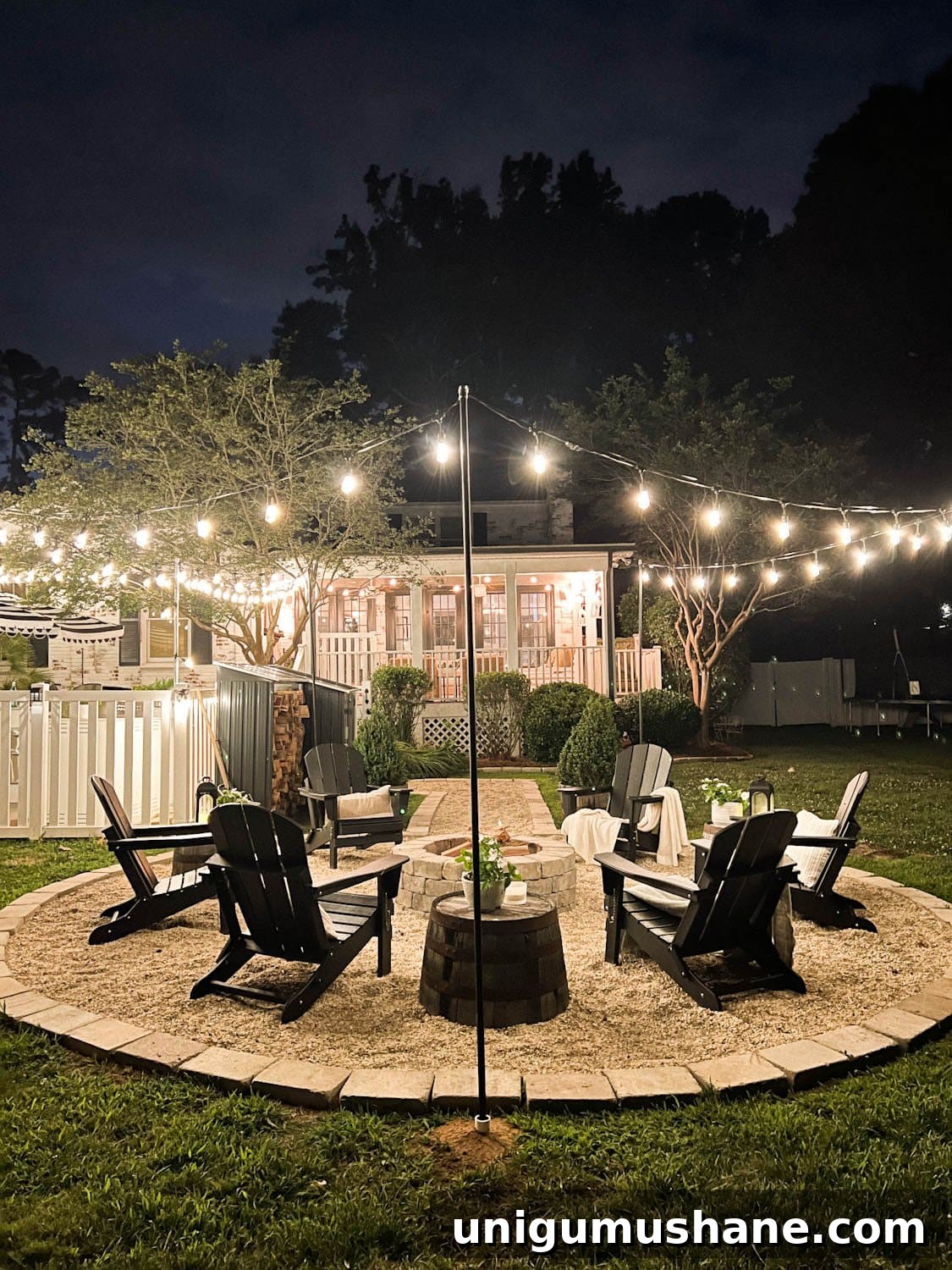
Supplies
- 3/4″ x 10′ metal conduit pipes (for poles)
- Drop cloth
- Automotive primer for metal (optional)
- Black spray paint (optional)
- 1″ x 10′ PVC pipe
- PVC cutter
- Small level
- 3/4″ zinc squeeze connectors
- Mounting tape or heavy-duty outdoor tape
- Black electrical tape
- Post hole digger
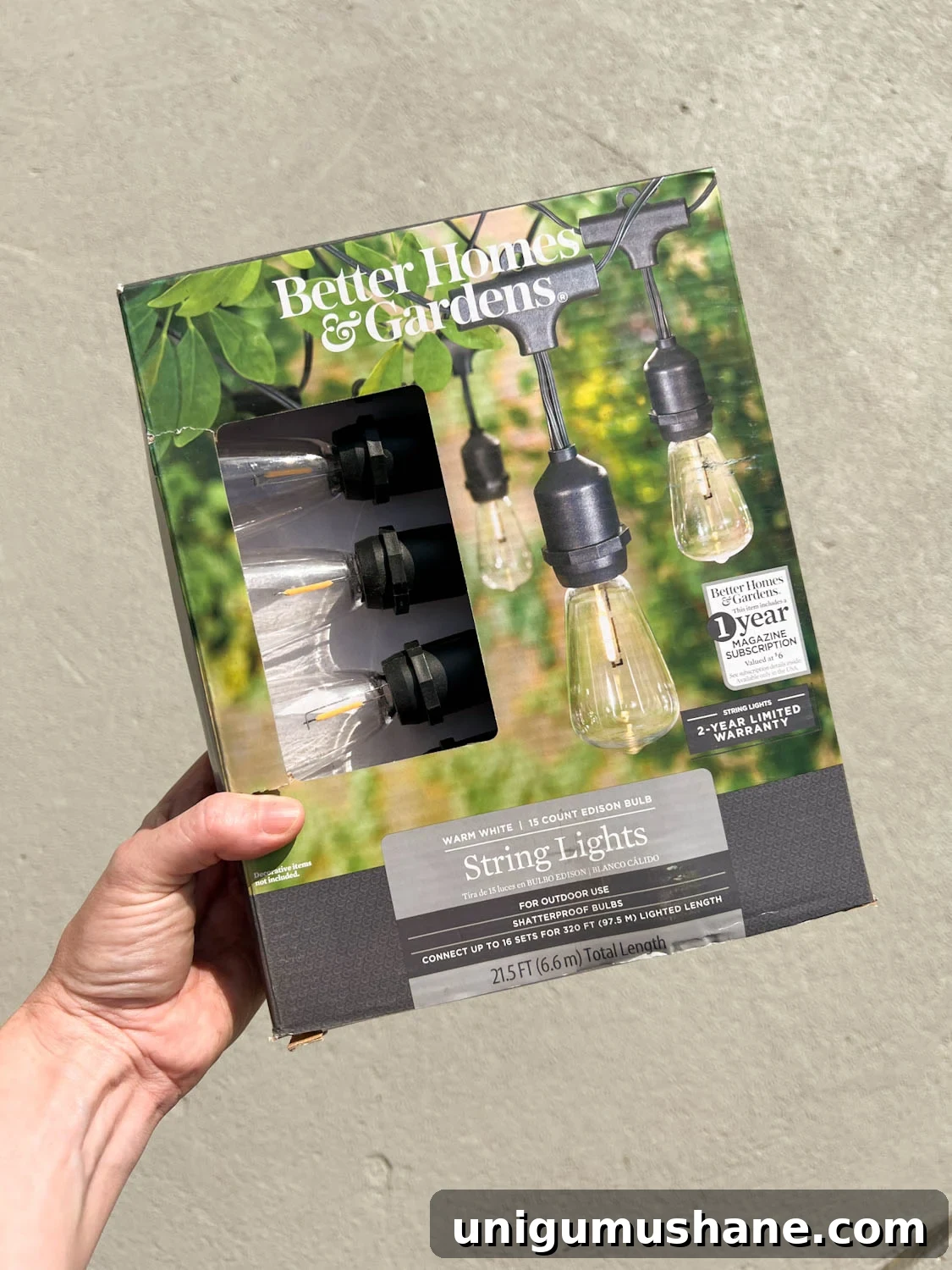
- String lights (shatterproof LED preferred)
- String light cable kit (optional but helpful)
- Outdoor extension cord and an outdoor timer or sensor (if using plug-in lights)
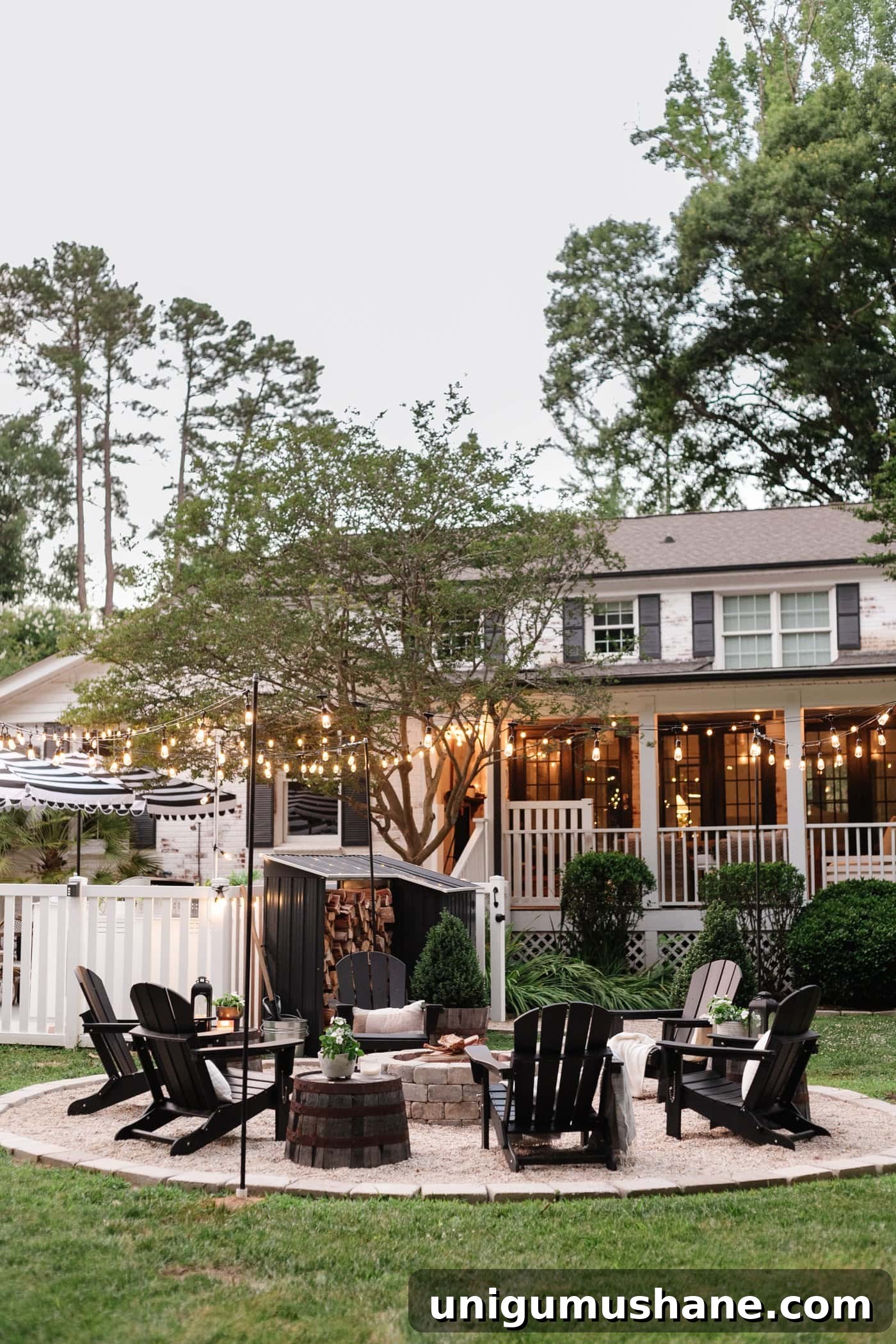
Steps to Hang Outdoor String Lights Without Trees Around a Fire Pit
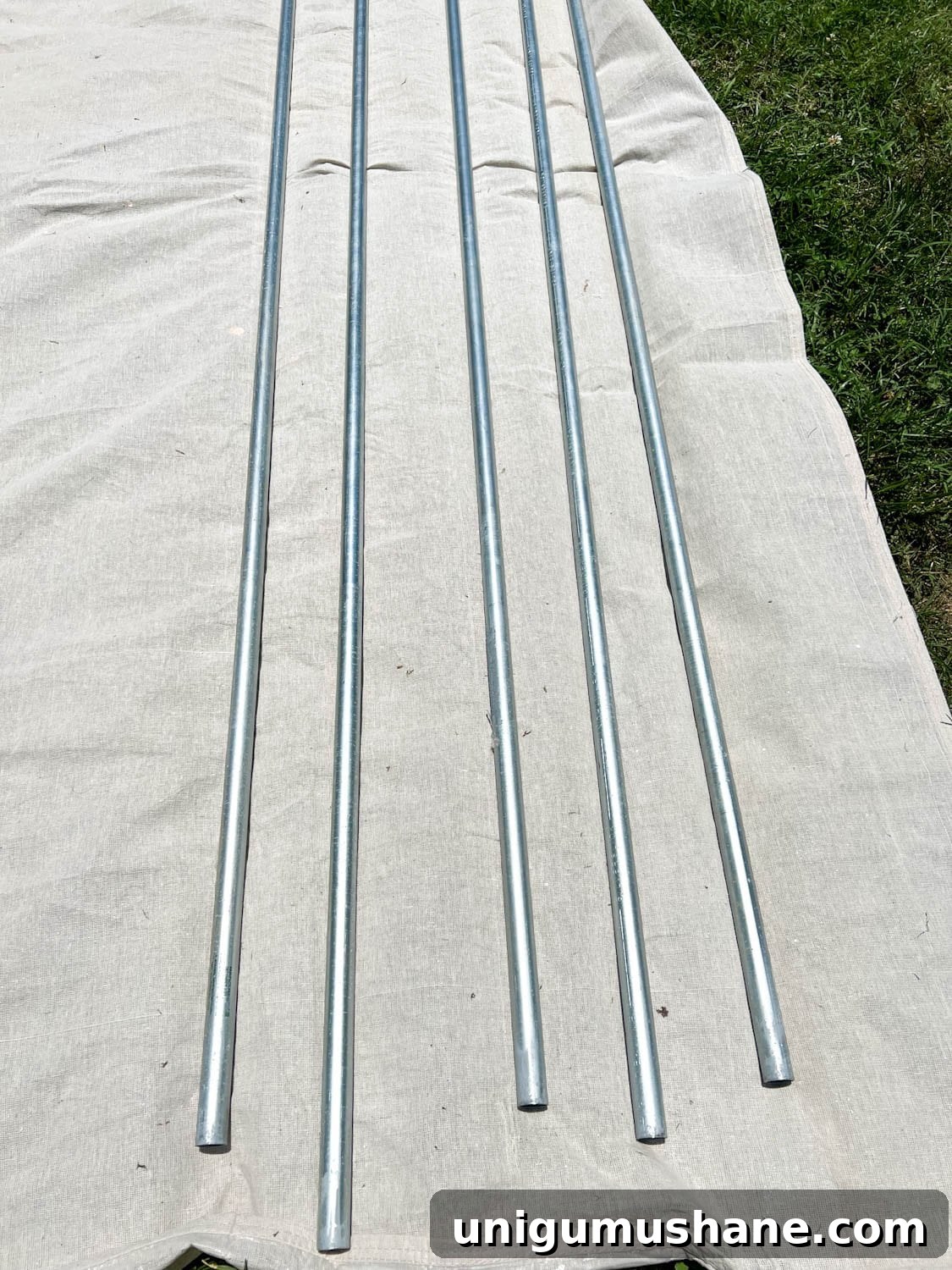
Step 1 — Lay Out Conduit and Prepare for Paint
On a dry day, lay your conduit on a drop cloth and paint if you want the poles to blend with the landscape. Priming first helps paint adhere to metal.
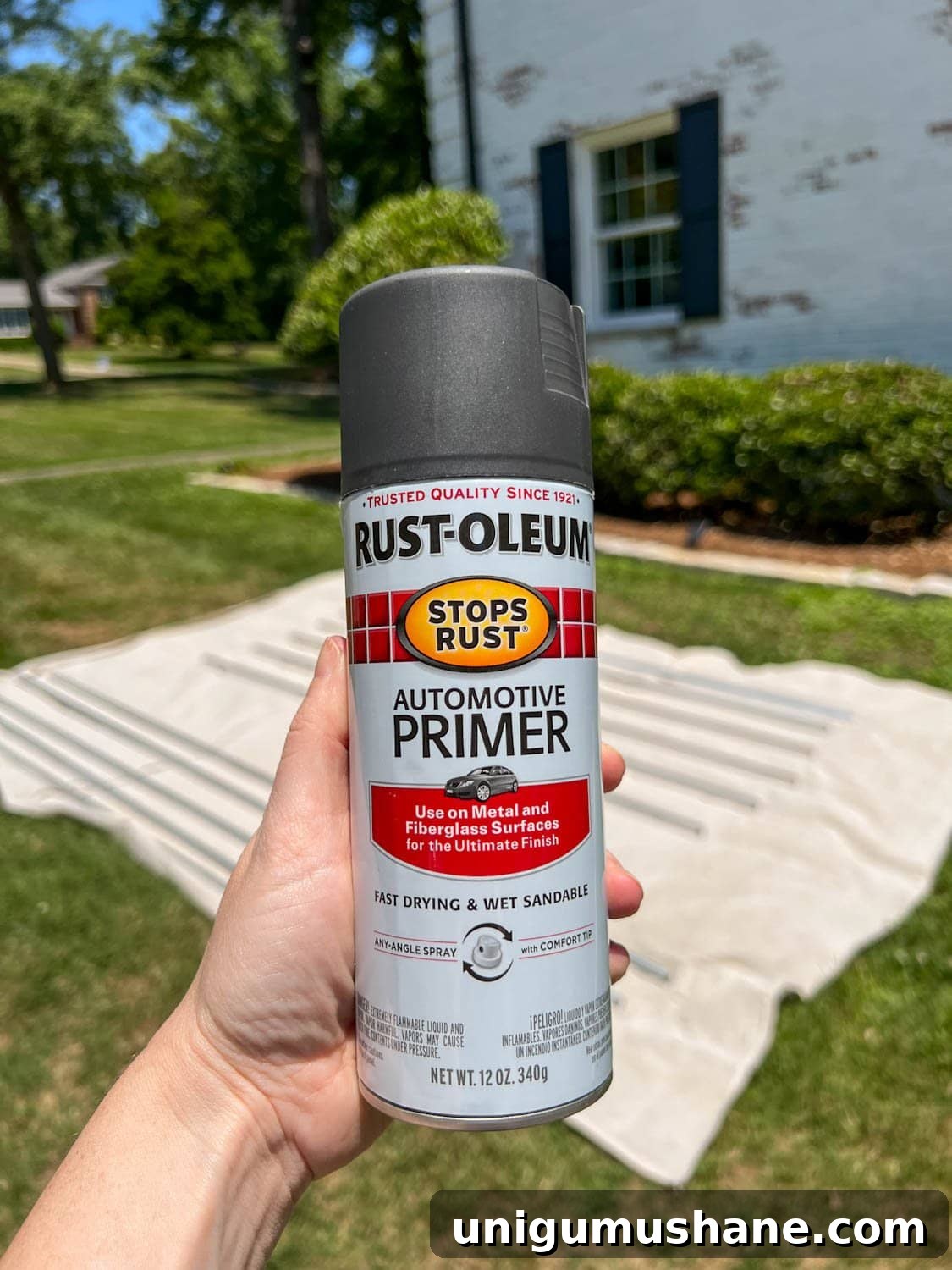
Step 2 — Prime the Conduit
Spray a thin, even coat of automotive primer over the conduit for better outdoor durability.
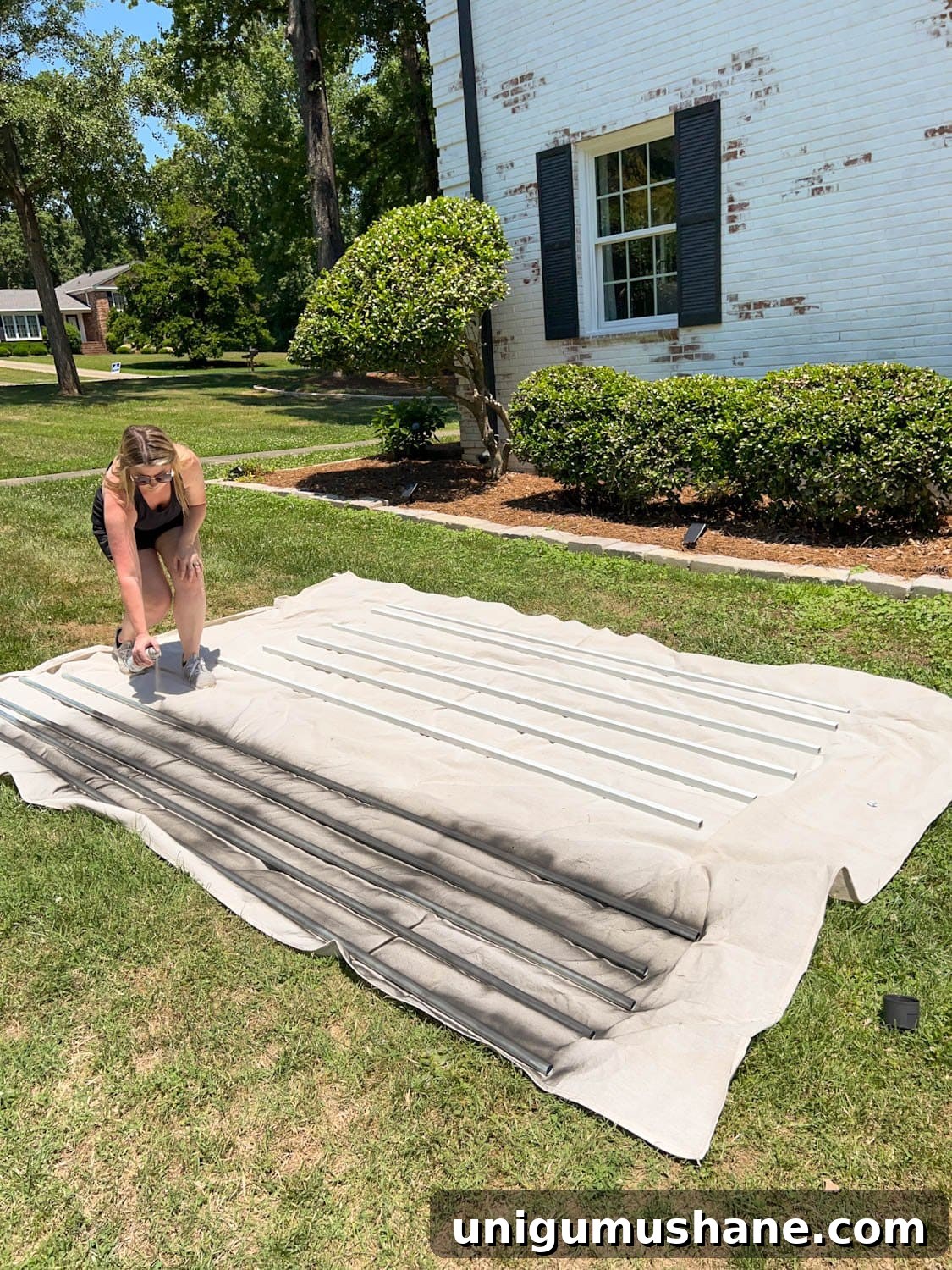
Step 3 — Paint Conduit
After the primer dries, apply one or two thin coats of spray paint in your chosen color.
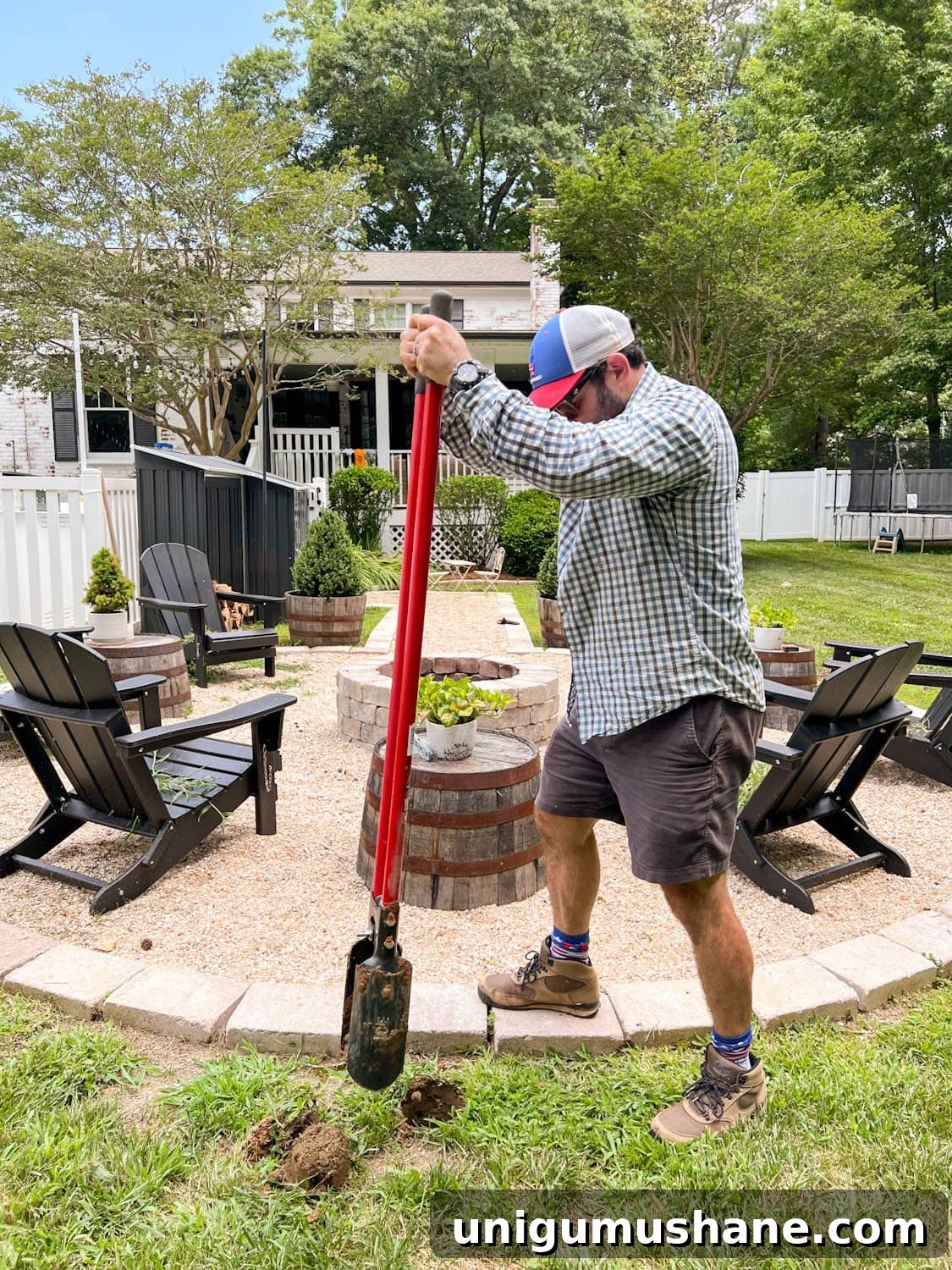
Step 4 — Dig Holes for Poles
Mark pole locations around the fire pit and dig holes about 2 feet deep. Use a post hole digger for speed and consistency.
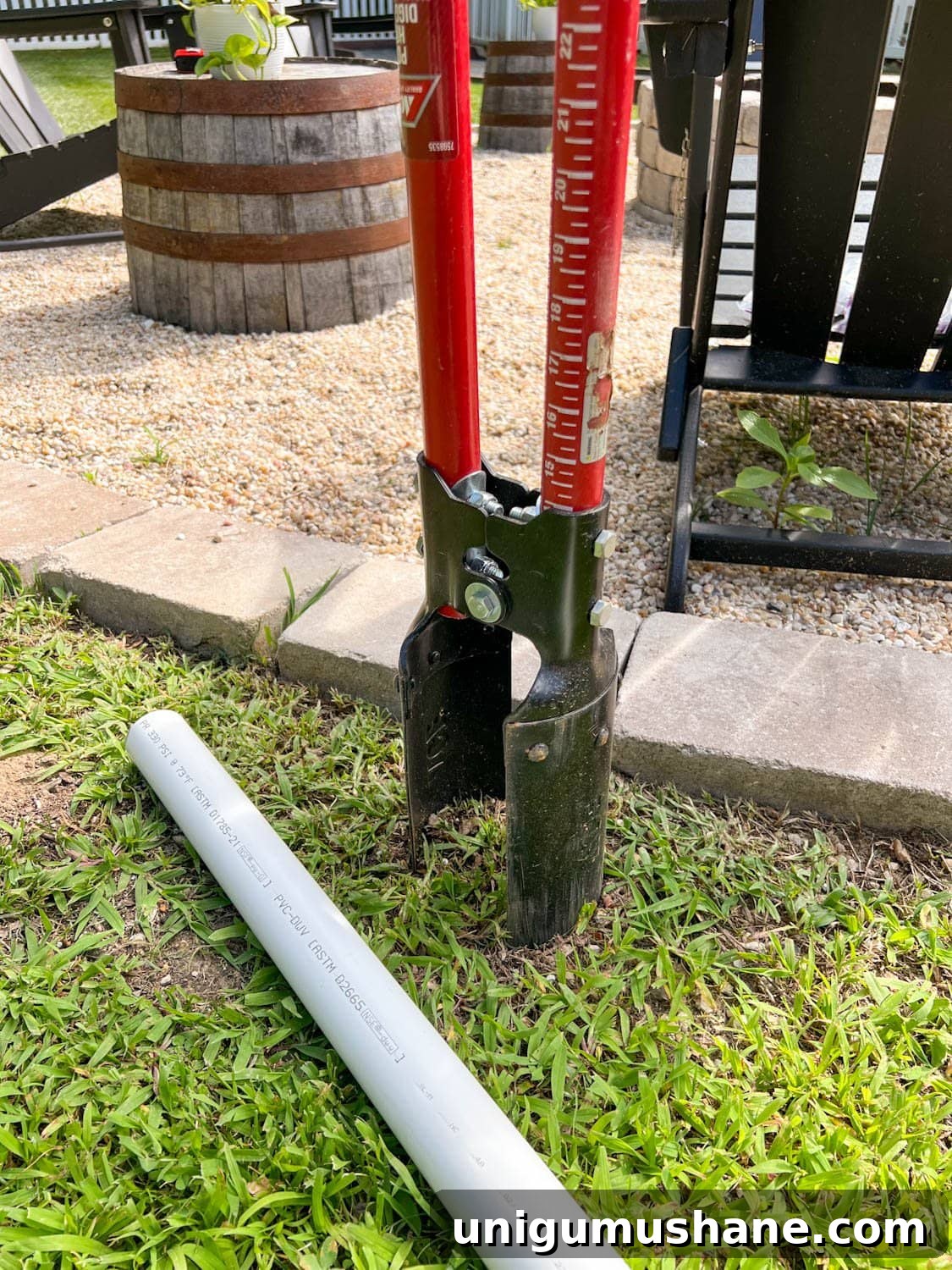
Step 5 — Cut and Place PVC Sleeve
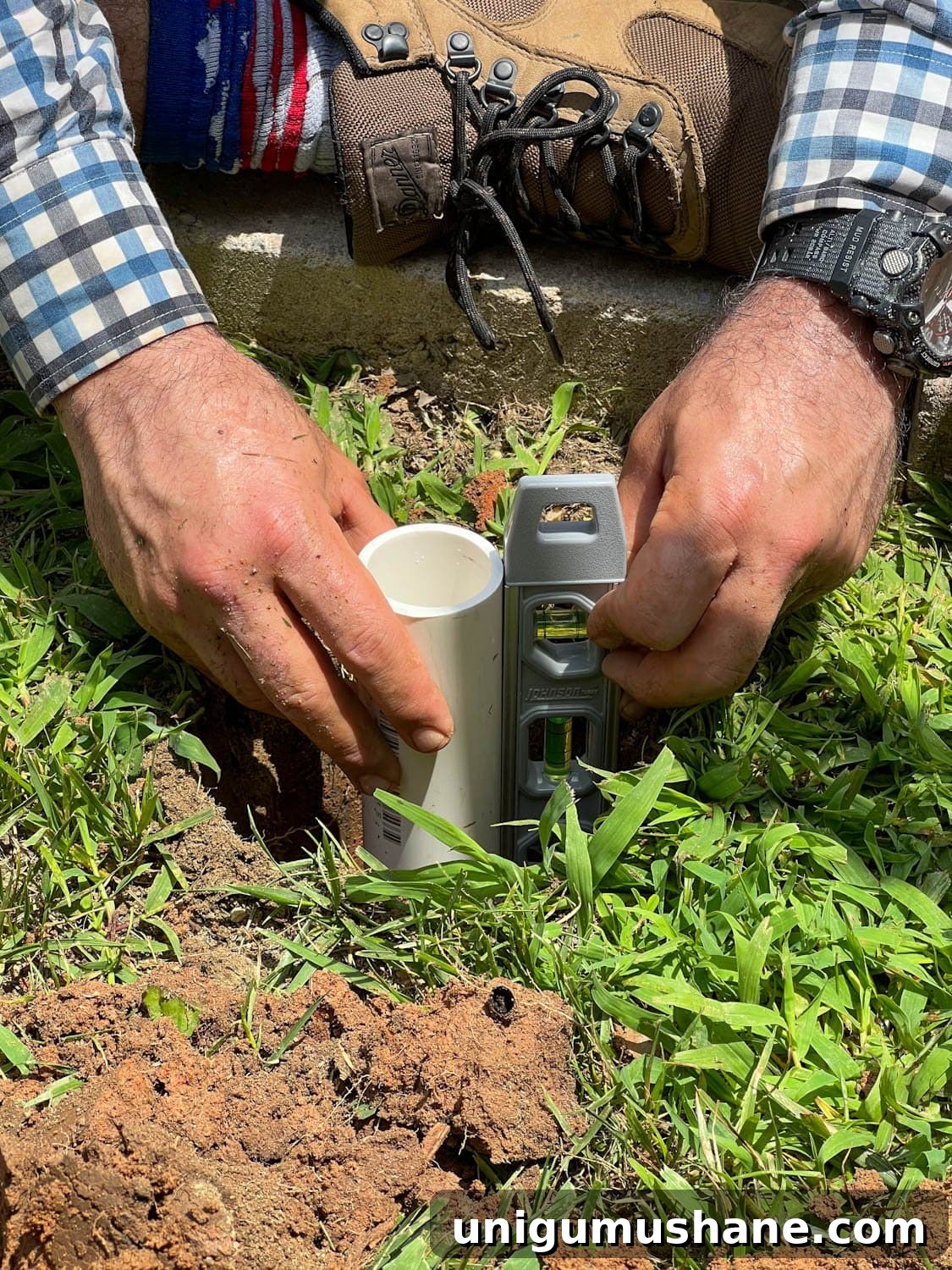
Cut the 10′ PVC pipe into 2′ sections, drop a 2′ sleeve into each hole, level it, and backfill soil tightly to anchor.
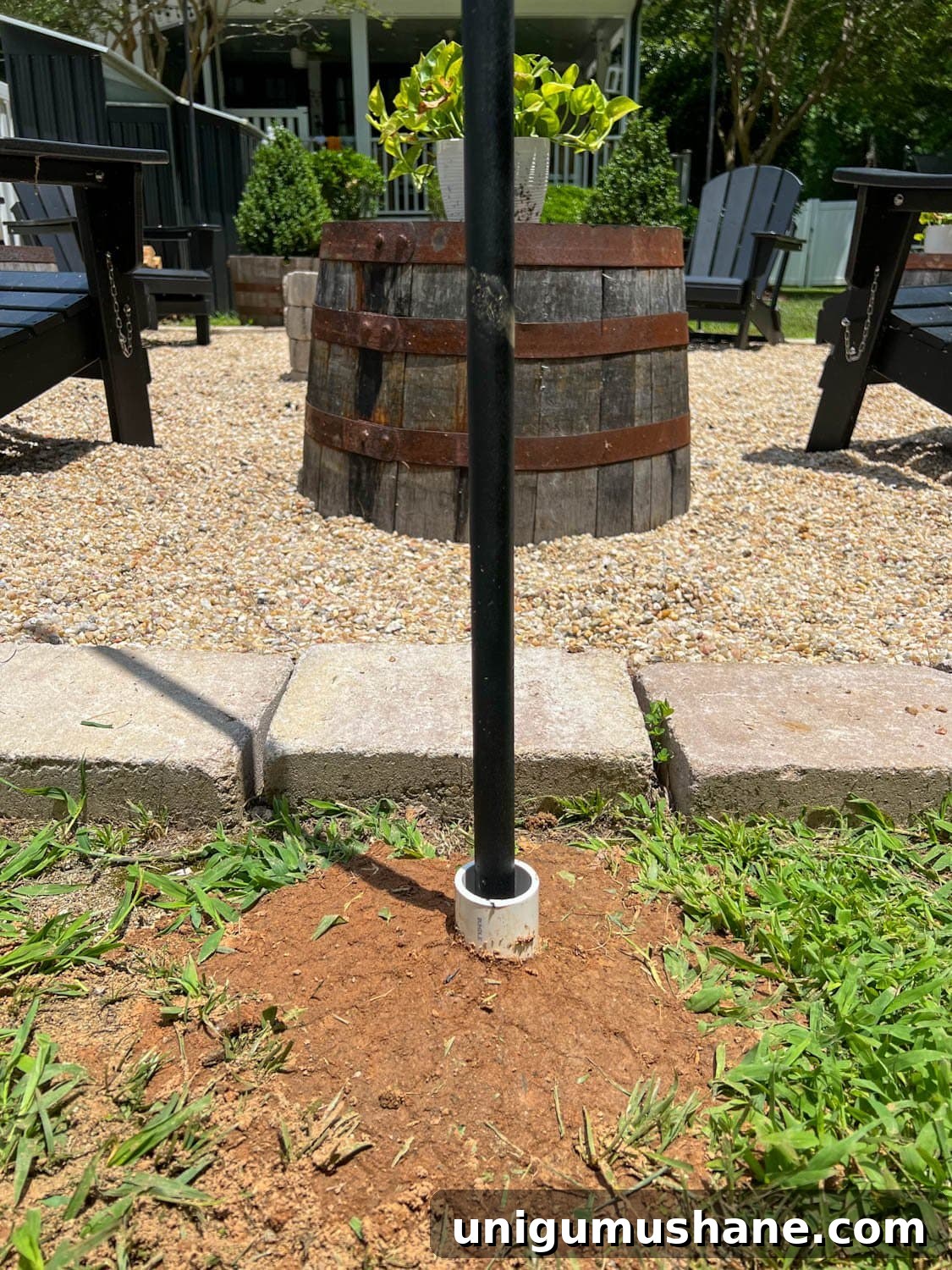
Step 6 — Insert Conduit into PVC Anchors
Place the painted conduit into each PVC sleeve. Check vertical alignment with a level and make any needed adjustments.
Step 7 — Attach Squeeze Connectors
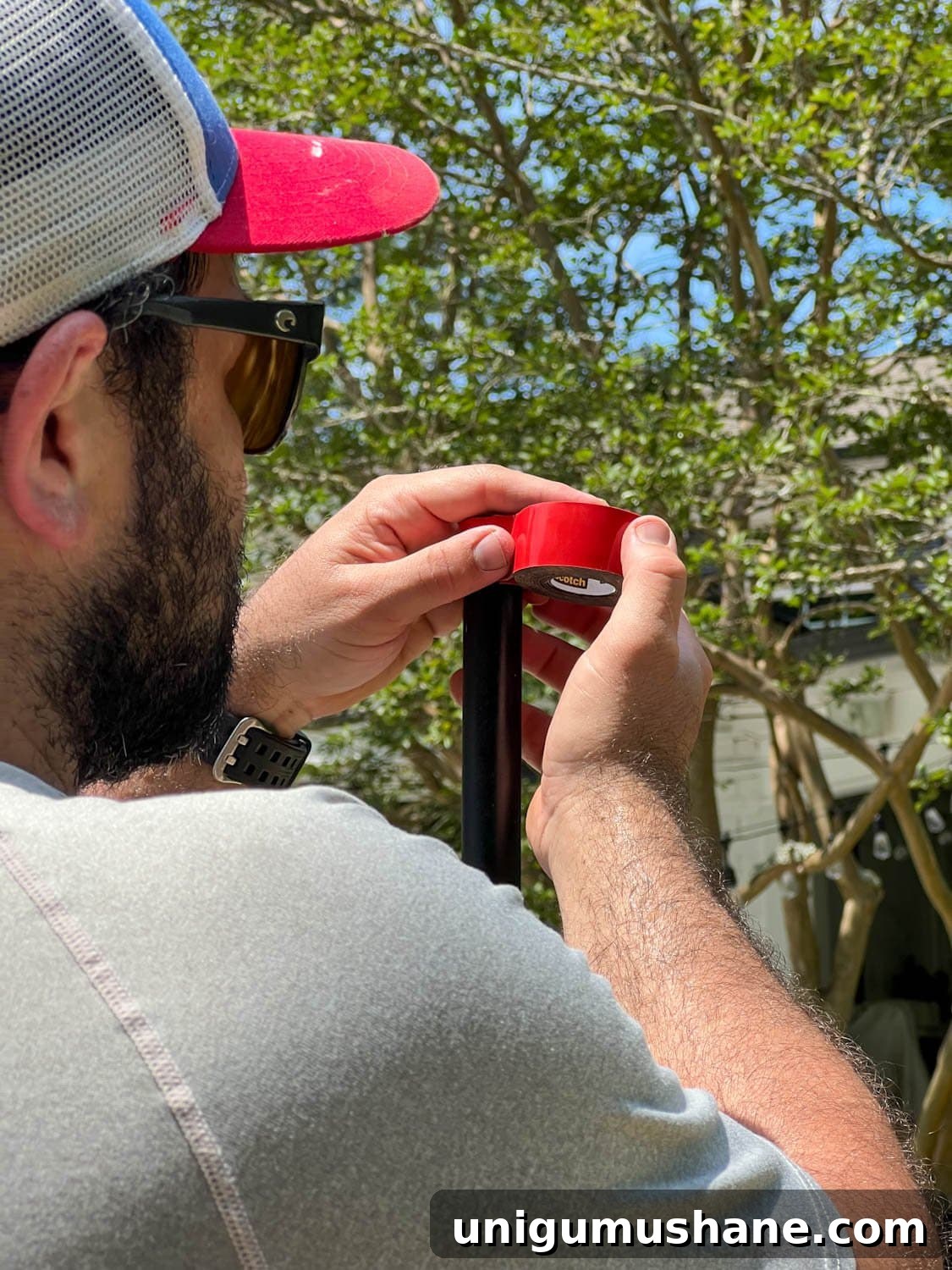
Use squeeze connectors at the top of each pole to secure the cable hardware. Apply heavy-duty mounting tape for extra hold if desired.
Step 8 — Hang the Support Cable
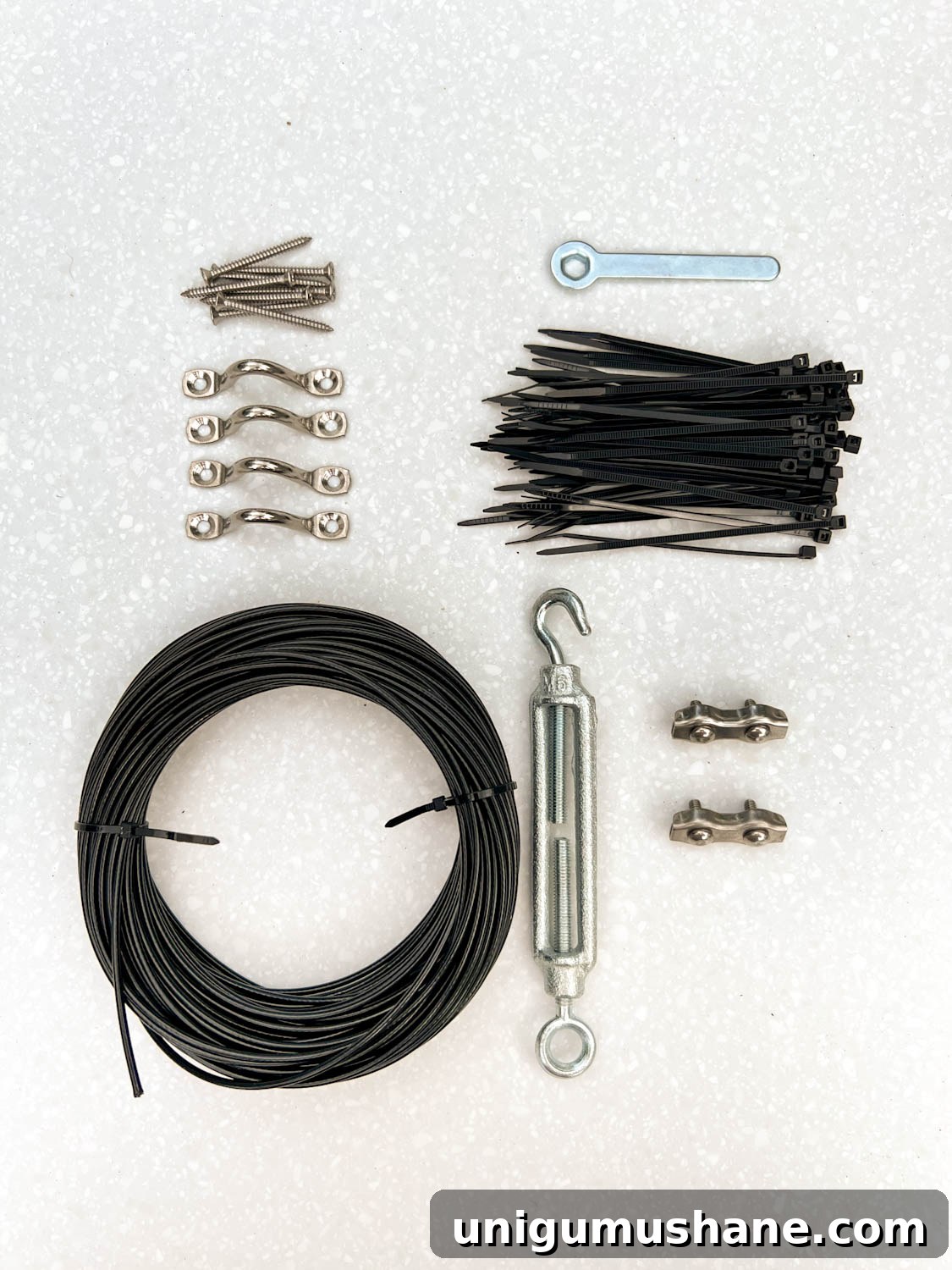
Loop the cable from your hanging kit through each squeeze connector and pull it tight between poles to create a stable support line.
Step 9 — Attach the Lights
Start at your outlet access point and hang the first strand. Secure the light cord to the cable using small zip ties included with most kits, trimming excess tie ends for a neat finish.
Step 10 — Secure Plug Connections
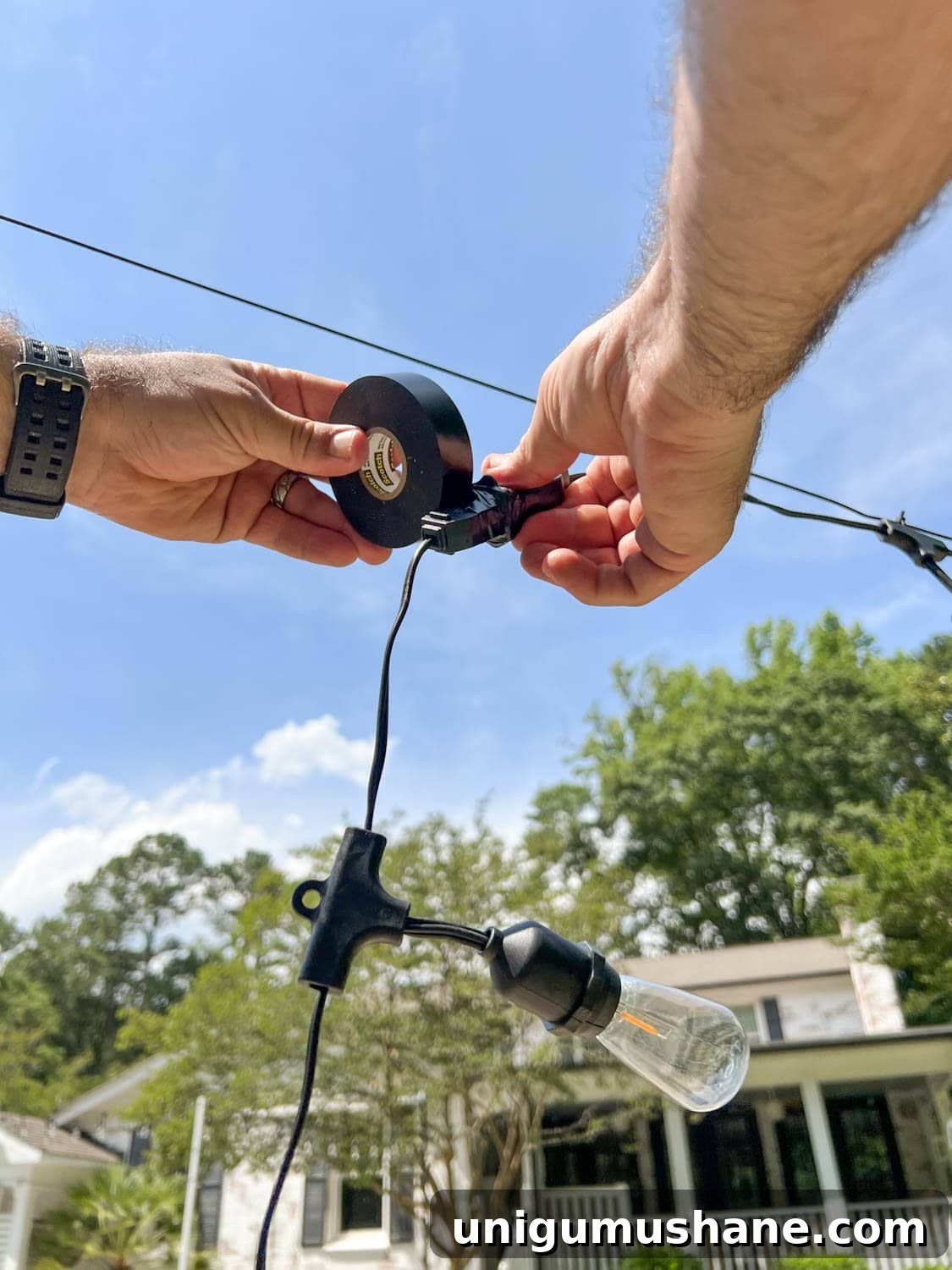
Wrap plug connections with black electrical tape to prevent them from separating under tension or wind.
Step 11 — Run Extension Cord and Set Timer
Run an outdoor-rated extension cord down a pole to the outlet and set an outdoor timer if you want automated dusk-to-dawn operation.
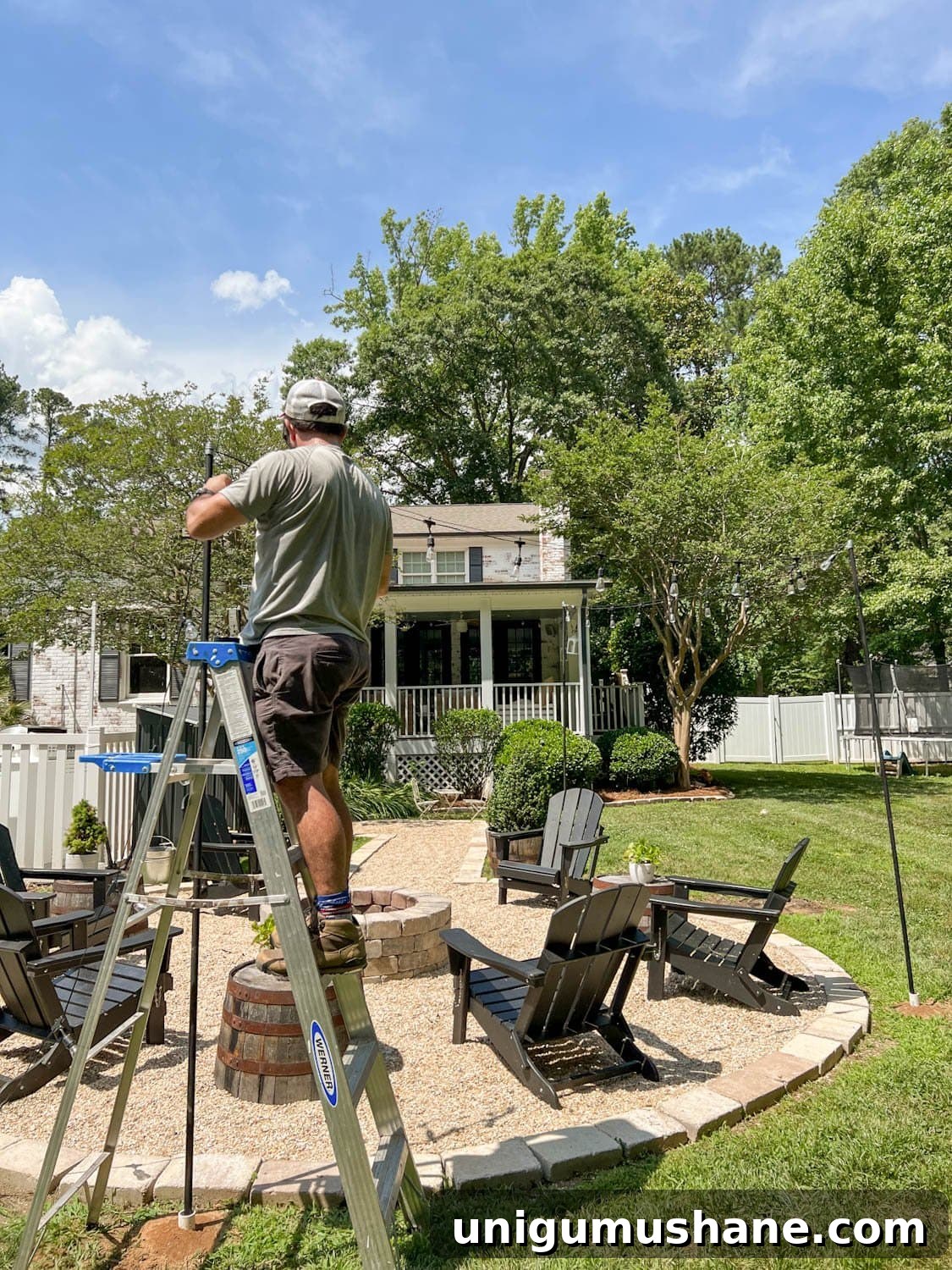
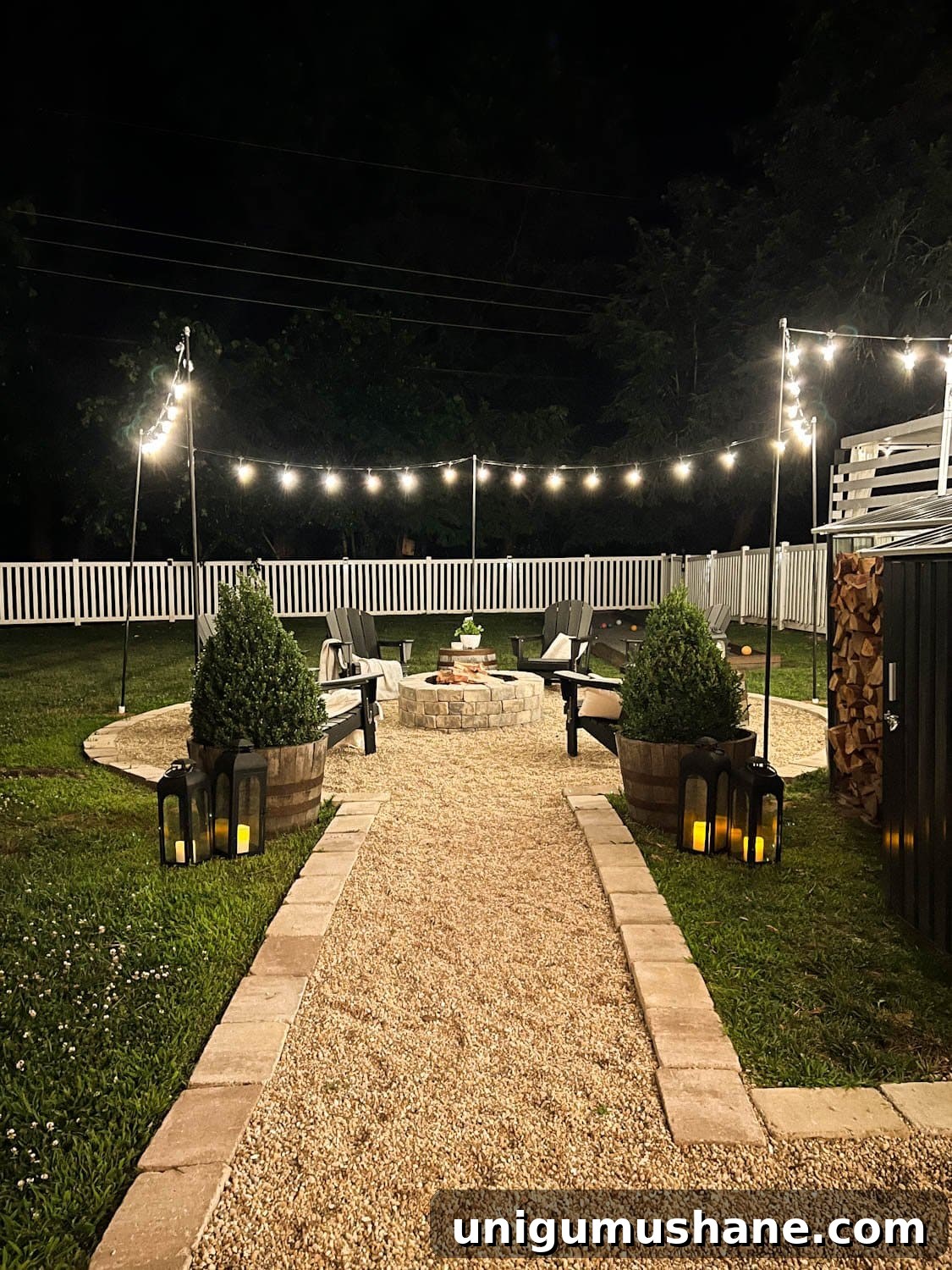
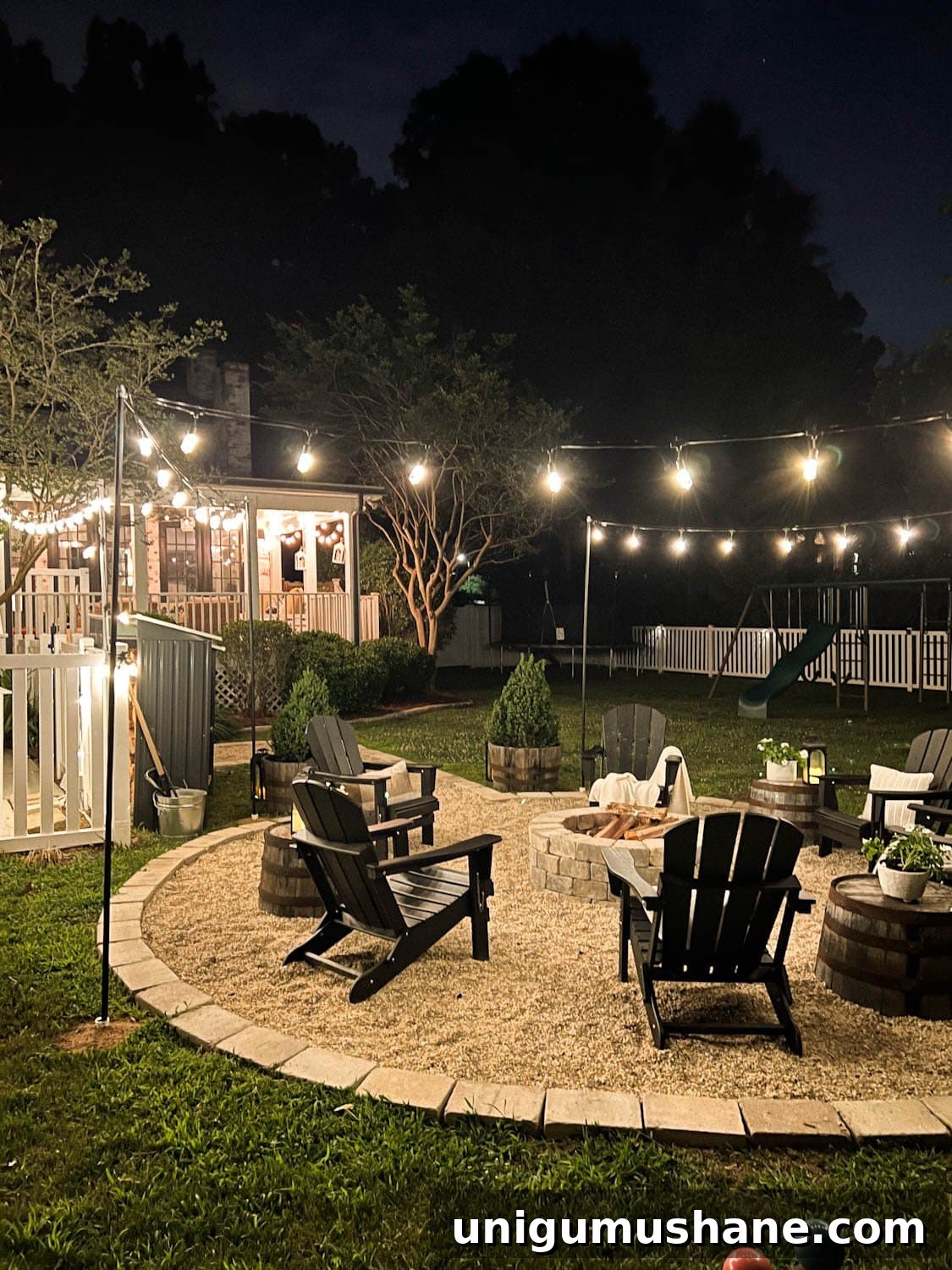
Once complete, the transformation is dramatic: string lights add warmth and ambiance to a fire pit area while improving visibility and comfort.
How to Hang Outdoor String Lights on a Fence Without Damage
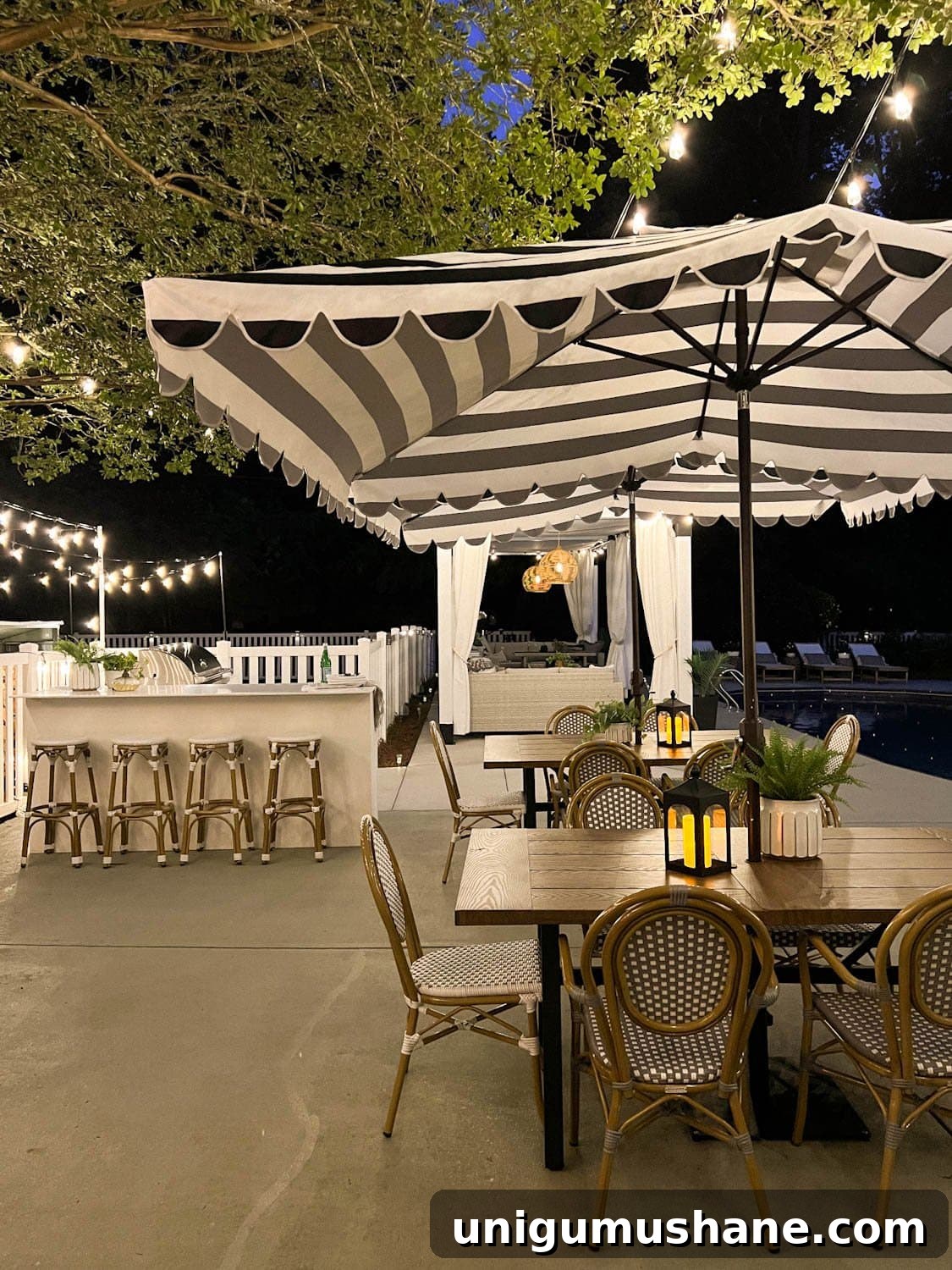
This fence method uses lightweight tubing attached to posts so you can hang lights without drilling into the fence itself. It’s a renter-friendly option when you want a clean look with minimal impact.
Supplies
- 1″ x 8′ aluminum square tubing (cut to desired lengths)
- Automotive primer and spray paint to match your fence (optional)
- Drop cloth
- Long zip ties to fasten tubing to posts
- Wire cutting pliers
- Drill and appropriate bits
- Cup hooks or screw hooks for hanging
- String light cable kit and string lights
- Outdoor extension cord and timer (if using plug-in lights)
Important: Do not hang lights directly over a pool. Keep all electrical components a safe distance from water.
Steps to Hang String Lights on a Fence
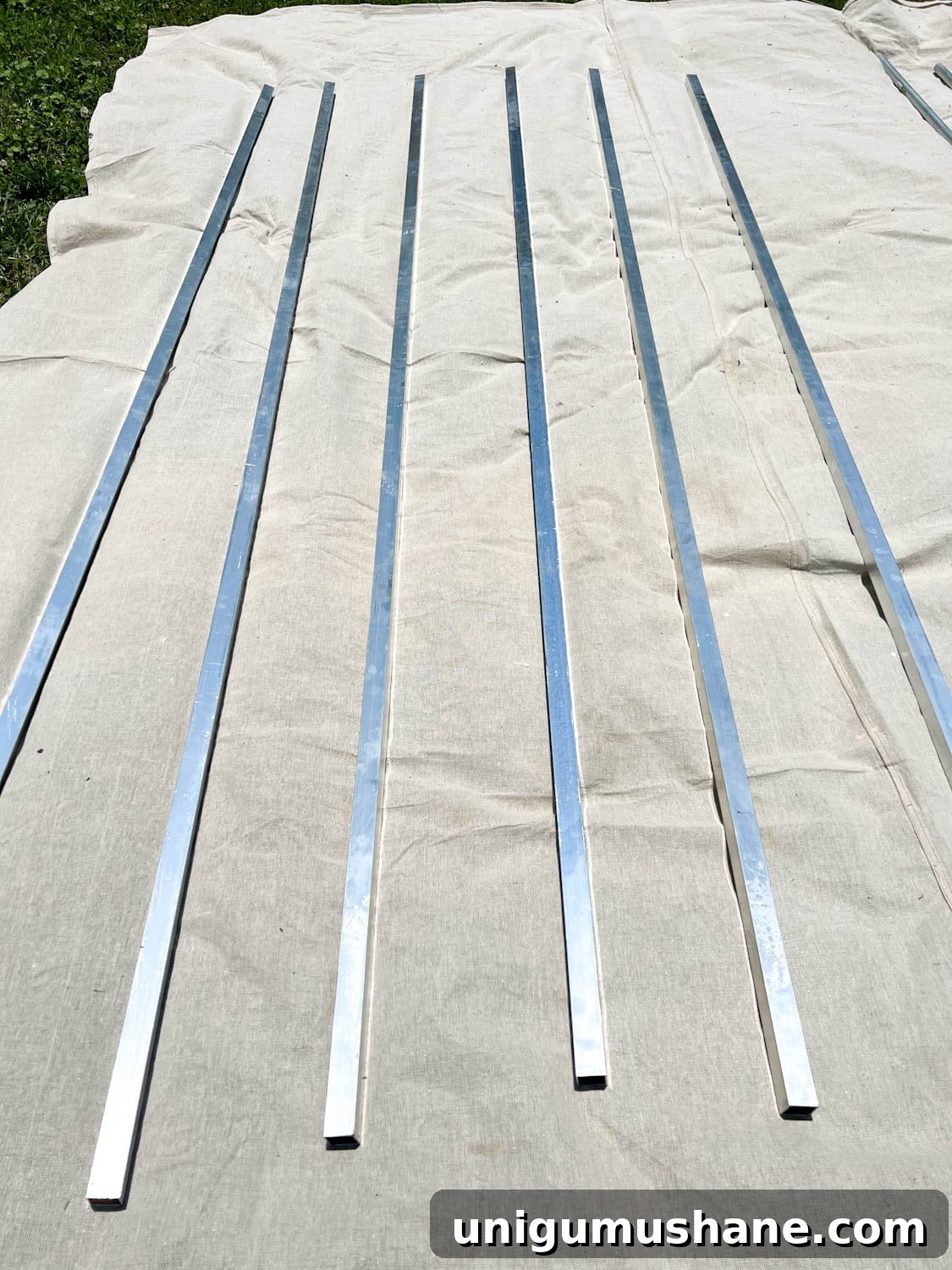
Step 1 — Prime Tubing
Apply a thin coat of primer to the tubing and allow it to dry for better paint adhesion and longevity.
Step 2 — Paint Tubing
Spray 1–2 thin coats of exterior spray paint in a color that complements or matches your fence.
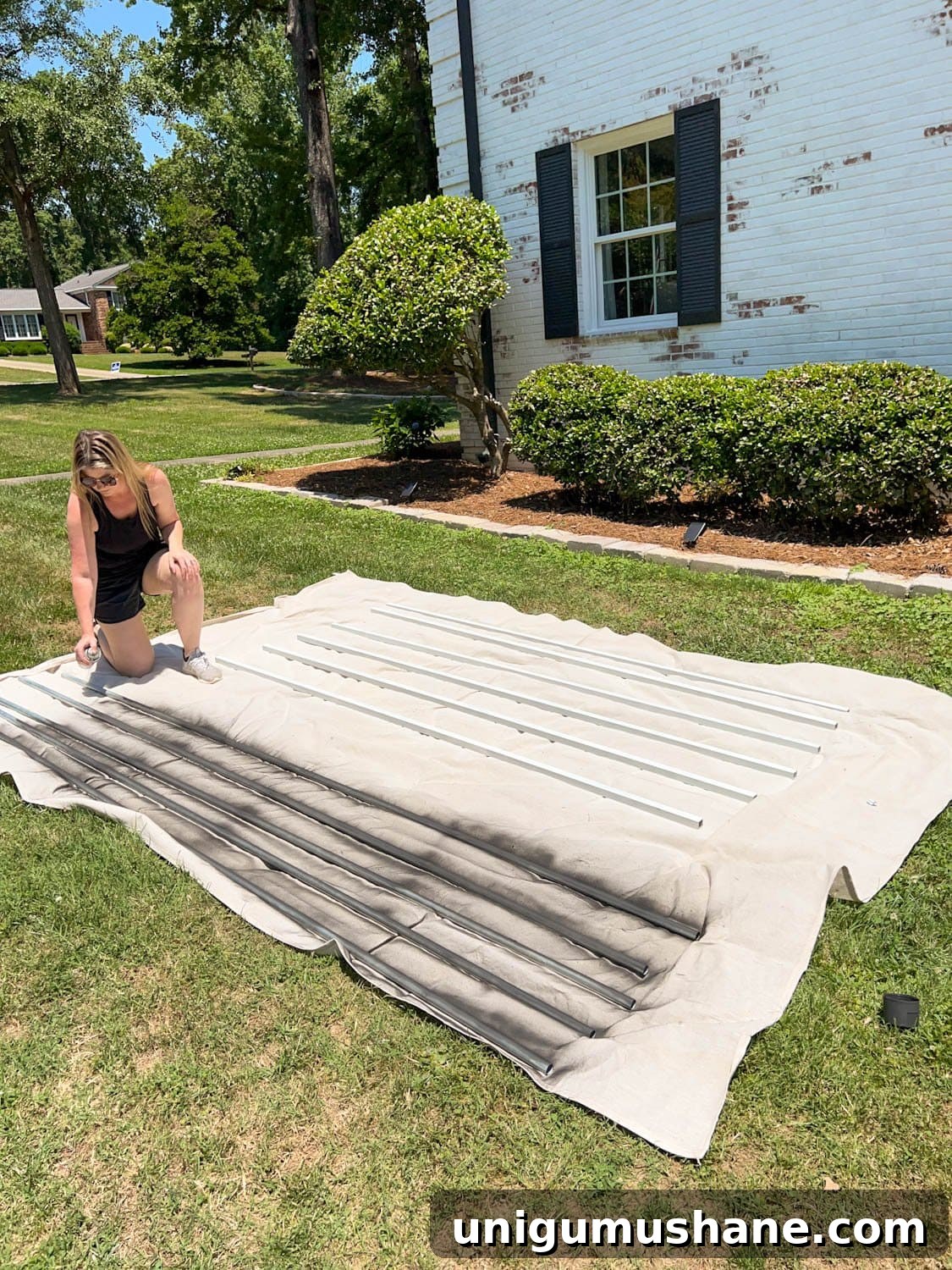
Step 3 — Attach Tubing to Fence
Position tubing along fence posts and secure with zip ties. Trim tie ends for a tidy appearance.
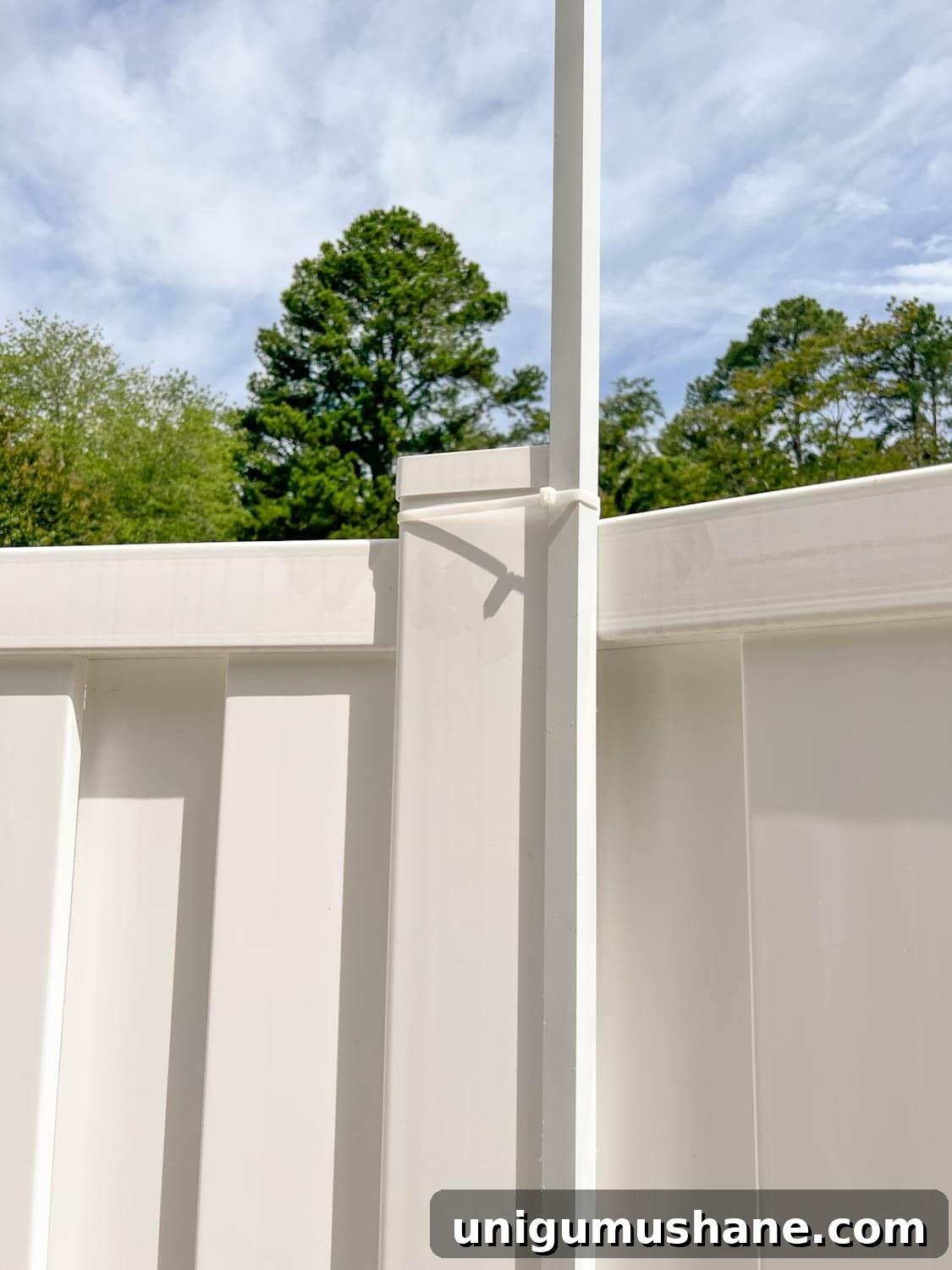
Step 4 — Add Hooks to Tubing
Drill a pilot hole into the tubing end and screw in a cup hook or screw hook to create a hanging point for your lights.

Step 5 — Attach End-Point Brackets
Identify building eaves, soffits, or other anchor points and install brackets from your hanging kit at those locations. These will be the end points for the support cable.
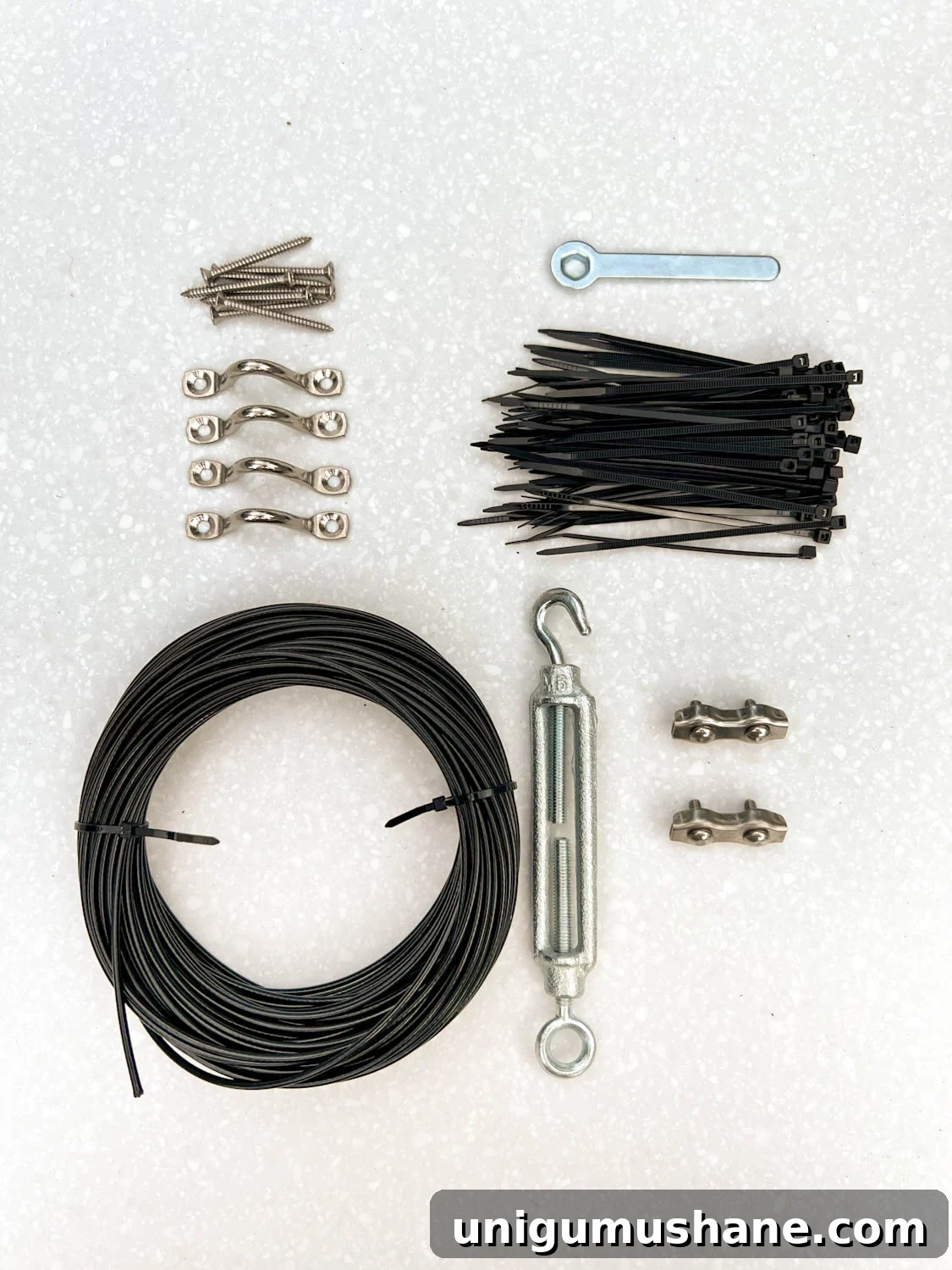
Step 6 — Hang Cables
Run the cable between the brackets and tubing hooks, tighten to remove slack, and secure with the kit hardware so the light strands won’t sag.
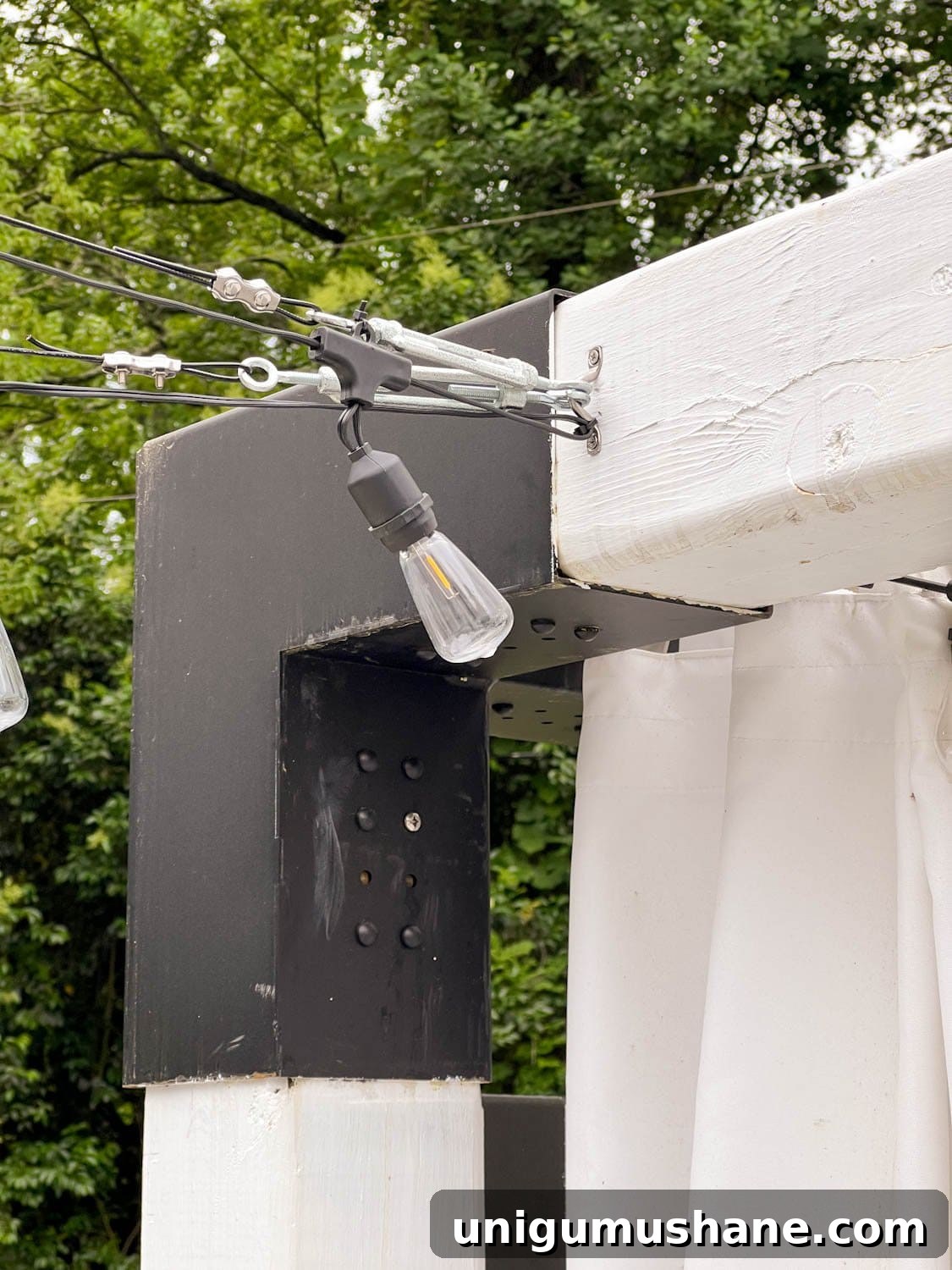
Step 7 — Hang the Lights
Hang the first strand near your outlet and secure each bulb or cord to the cable using the small zip ties from the kit. Trim any excess tie material for a finished look.
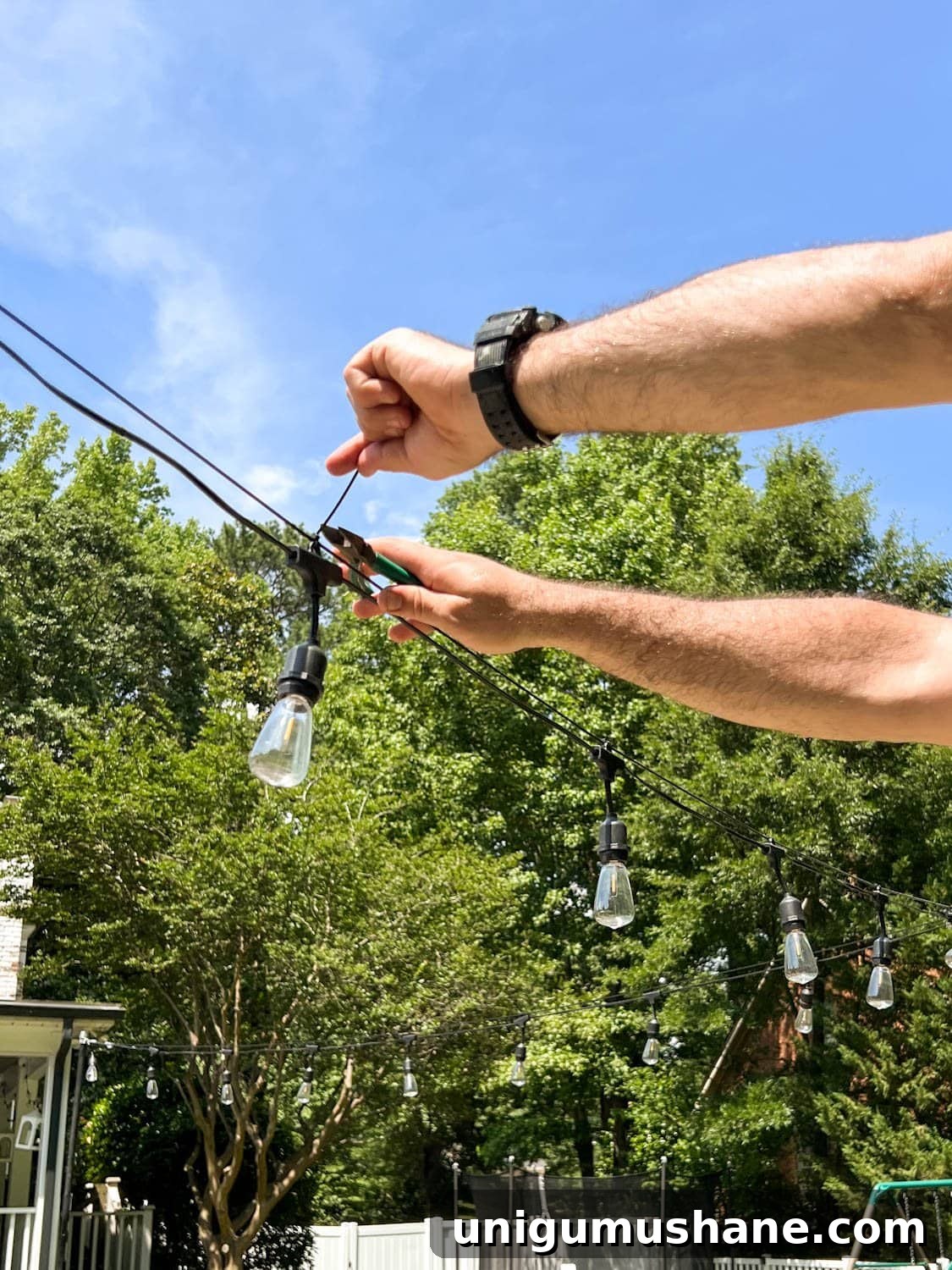
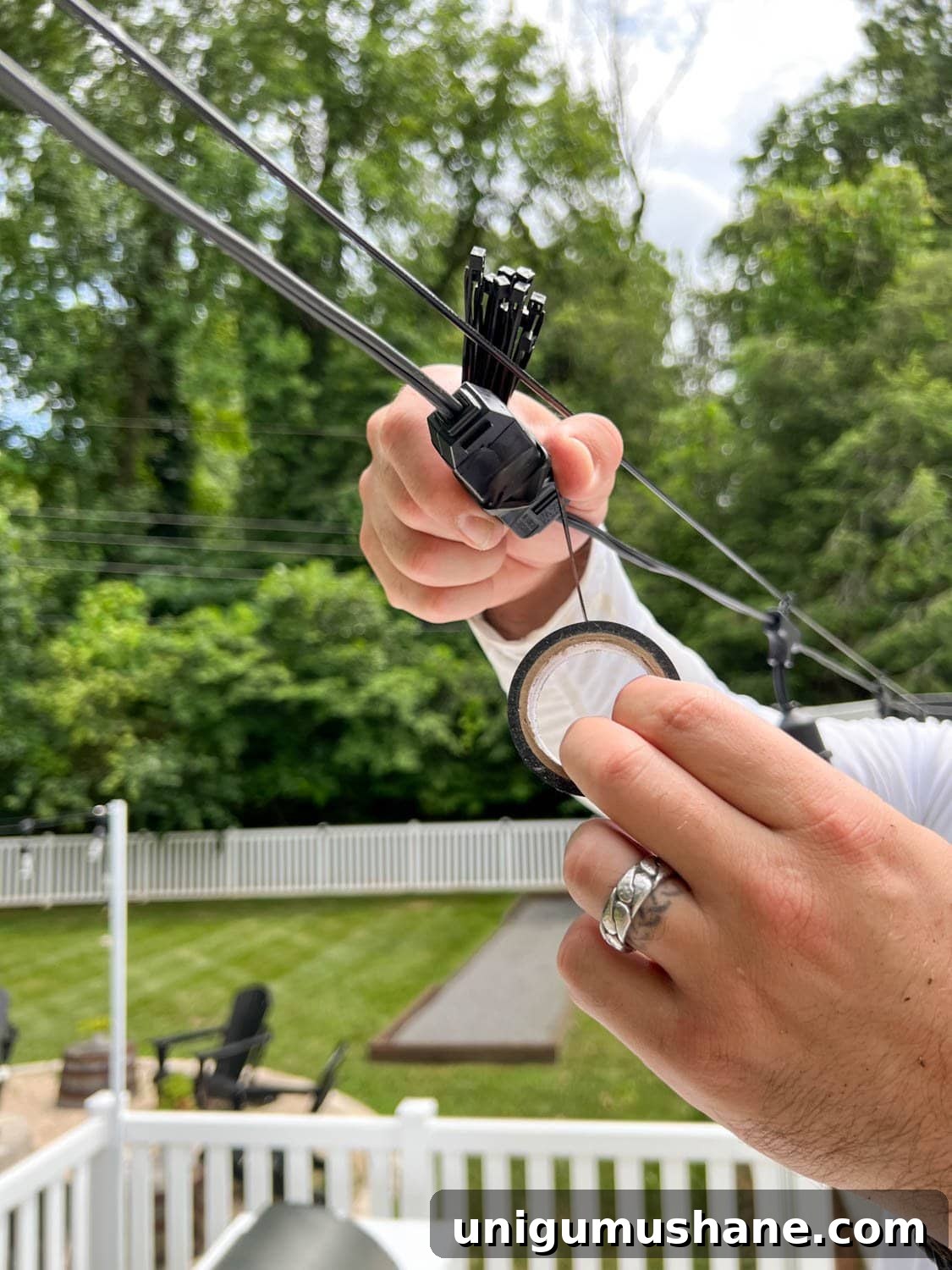
Step 8 — Protect Plug Ends
Wrap plugs with electrical tape so connectors stay together under tension. Continue hanging strands until the route is complete.
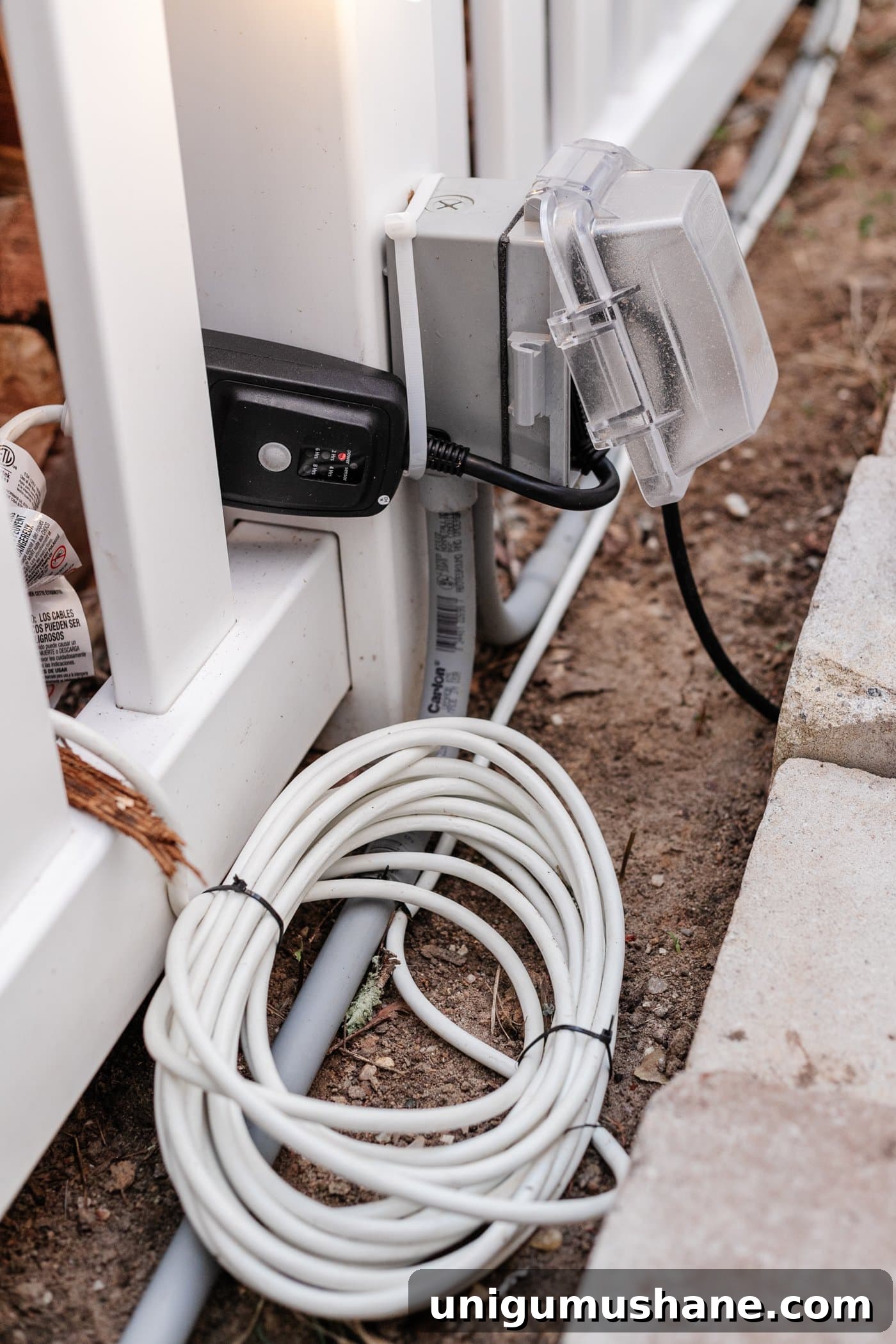
Step 9 — Power and Automation
Run an outdoor extension cord to the nearest outlet and set an outdoor timer if you prefer automated on/off scheduling.
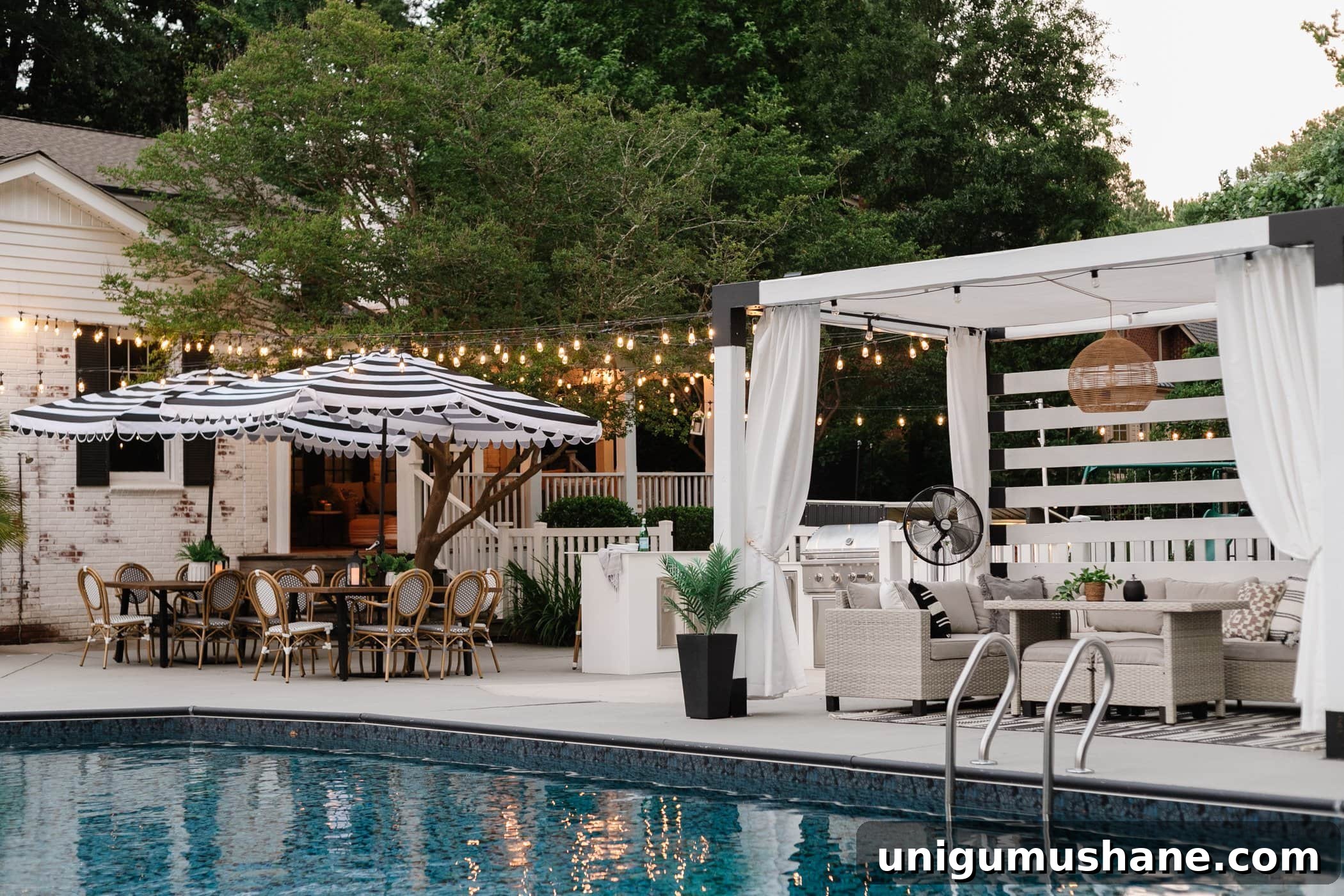
For pool areas, keep all electrical connections away from the water and comply with local electrical code. Consider perimeter mounting and keep strands well back from swimming areas.
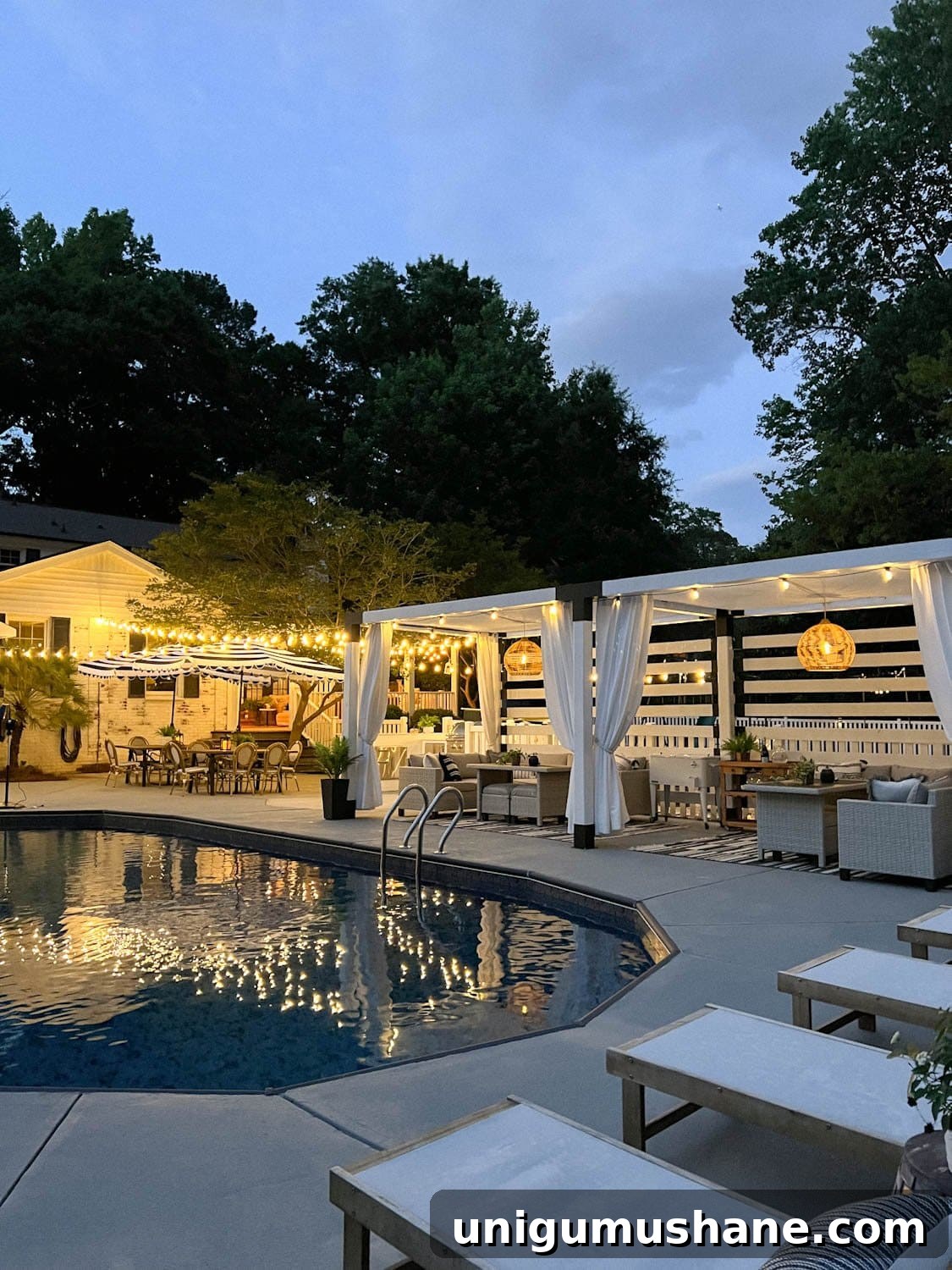
How to Hang String Lights from Trees
Hanging lights from trees is flexible and attractive, especially in wooded or garden areas. Solar lights are a convenient option when outlets aren’t nearby.
Supplies
- Solar string lights or battery-operated strands
- Screw hooks or cup hooks with safety buckles
- Drill and bits for installing starter hooks
Steps to Hang String Lights from Trees
Step 1 — Install a Starter Hook
Drill a pilot hole into a trunk or large limb and screw in a hook to serve as a starting attachment point.
Step 2 — Weave and Wrap the Strands
Weave the light strands through branches and wrap cords around limbs where needed. Add additional hooks for more secure routing if you plan multiple spans.
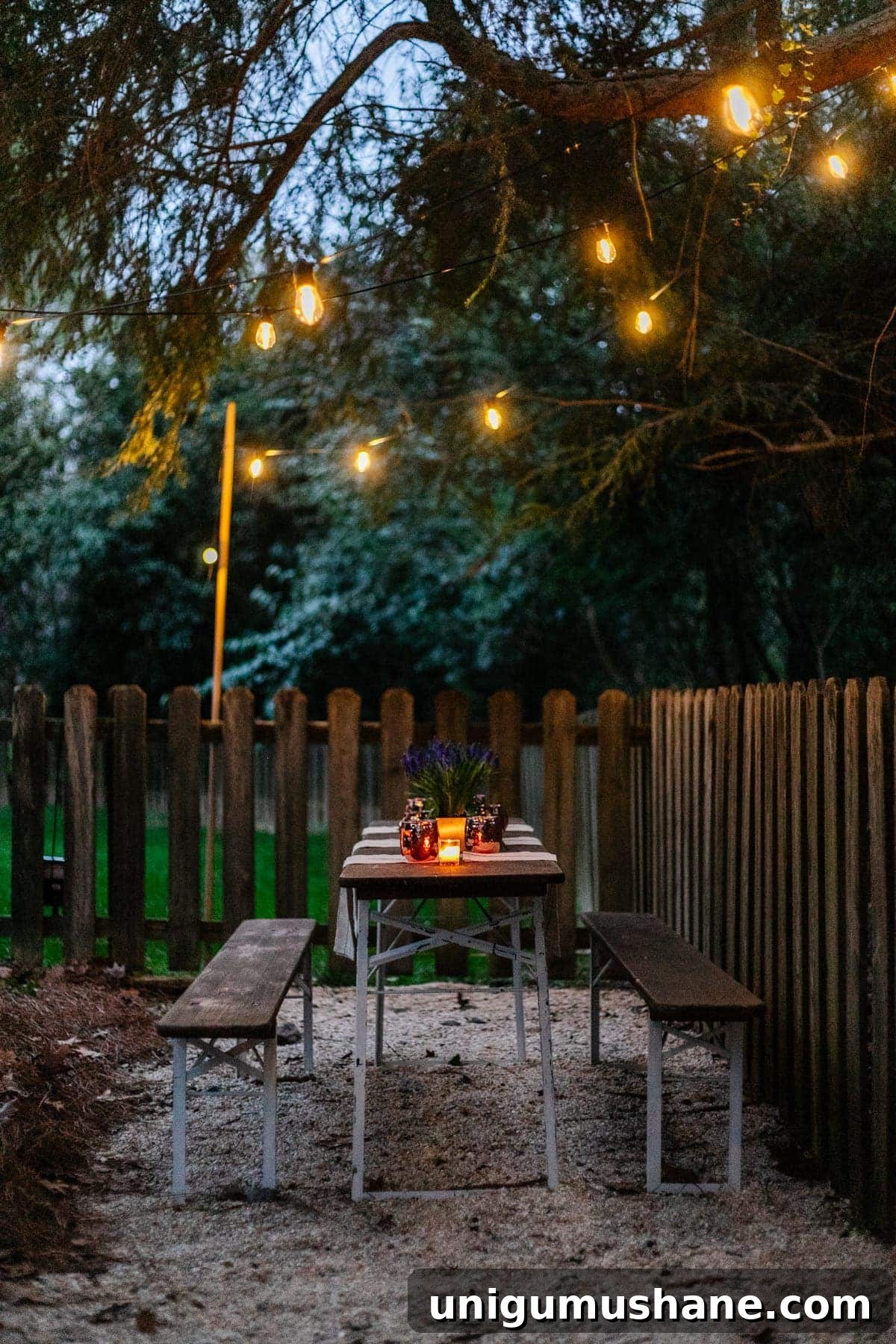
Solar lighting makes installations in remote areas simple, though brightness is usually lower than plug-in LEDs, so they’re best for ambiance rather than task lighting.
How to Hang Porch String Lights
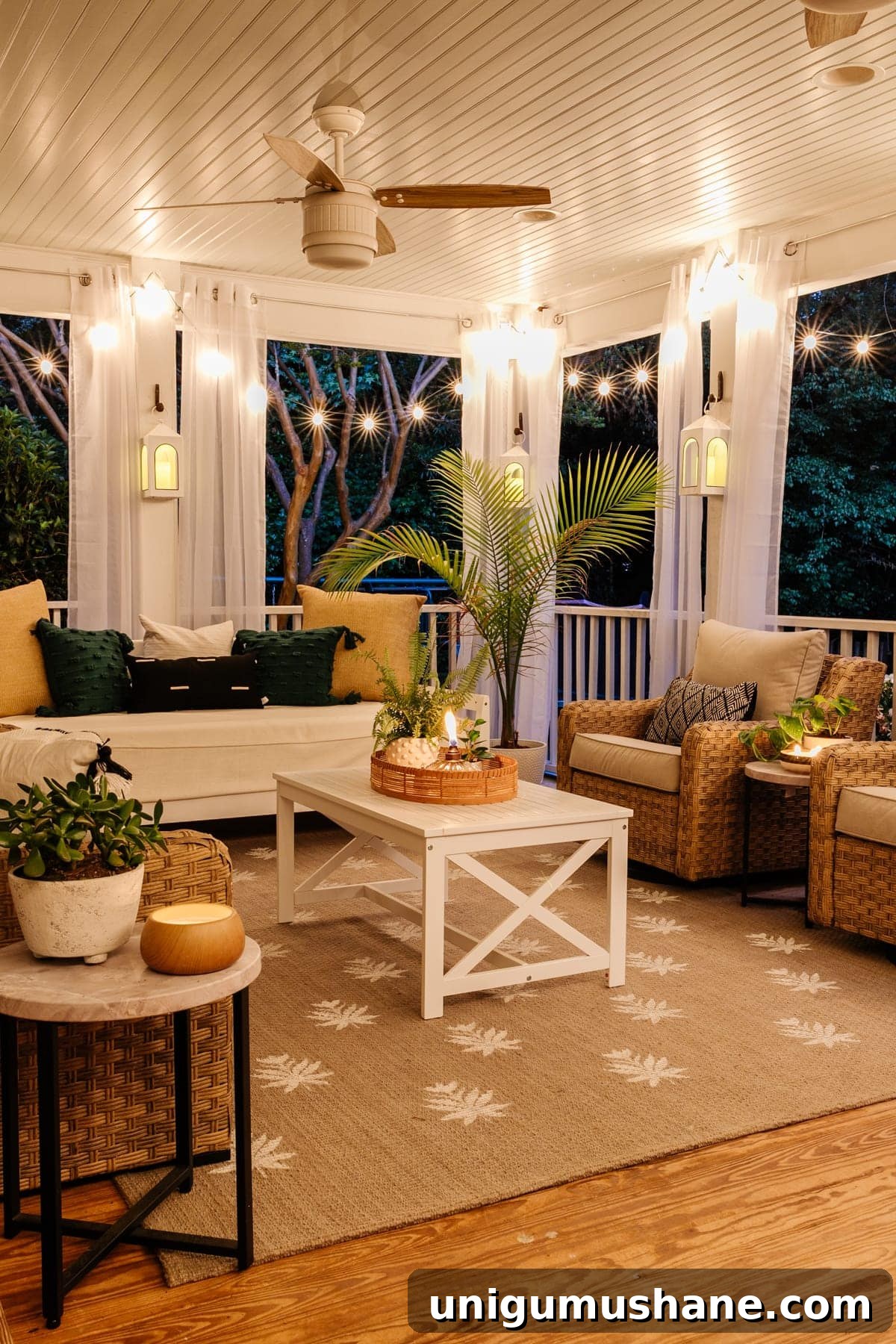
Supplies
- Cafe or globe string lights
- Outdoor-rated adhesive hooks (Command or similar) for temporary hanging
- Outdoor extension cord and an optional outdoor timer
Steps to Hang Cafe Lights on a Covered Porch
This is a very simple method: clean the soffit surface with rubbing alcohol, follow the adhesive hook instructions carefully, press hooks in place, allow the adhesive to set, then hang the lights from the hooks. Let the adhesive cure for the recommended time before adding weight.
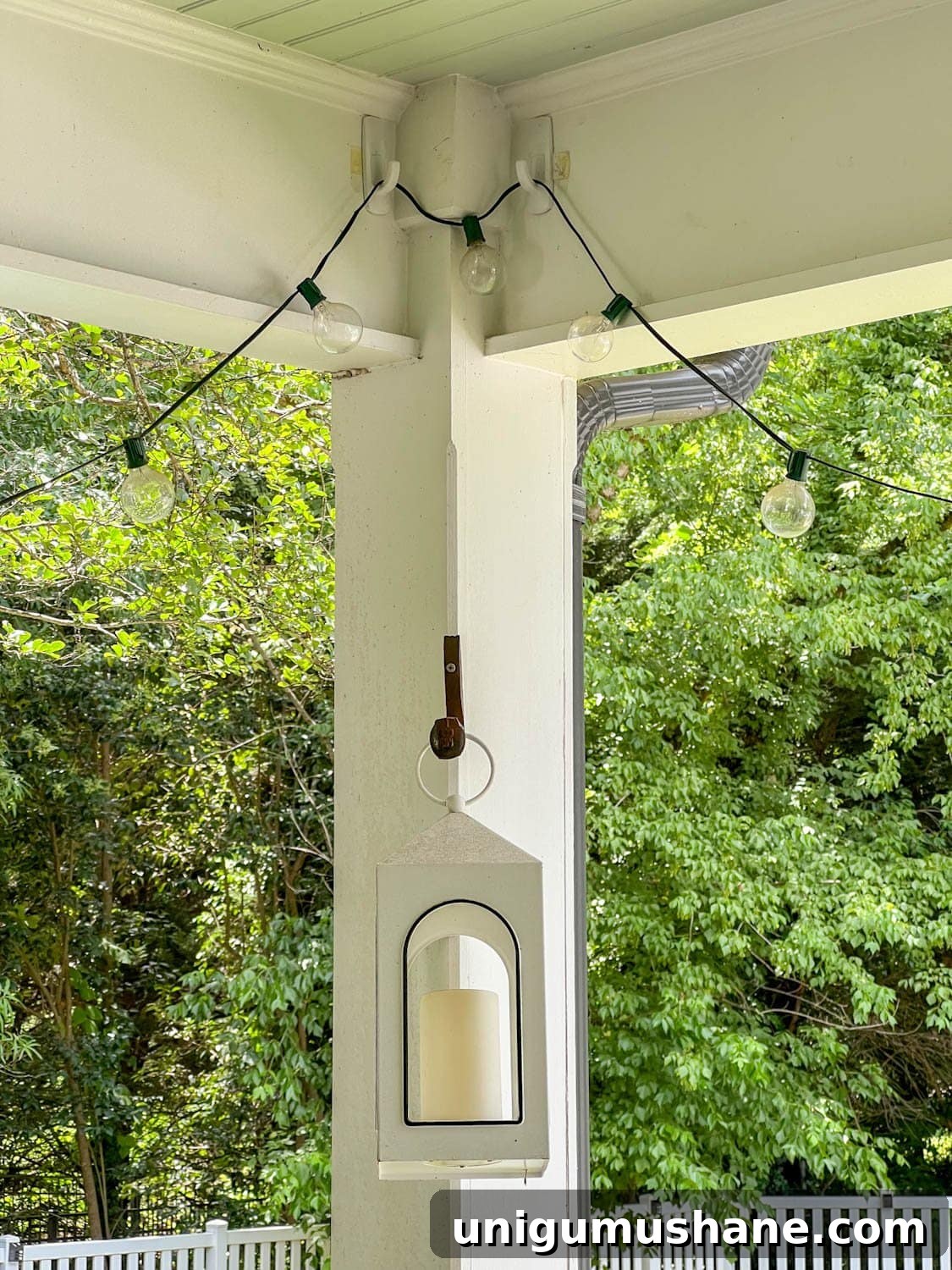
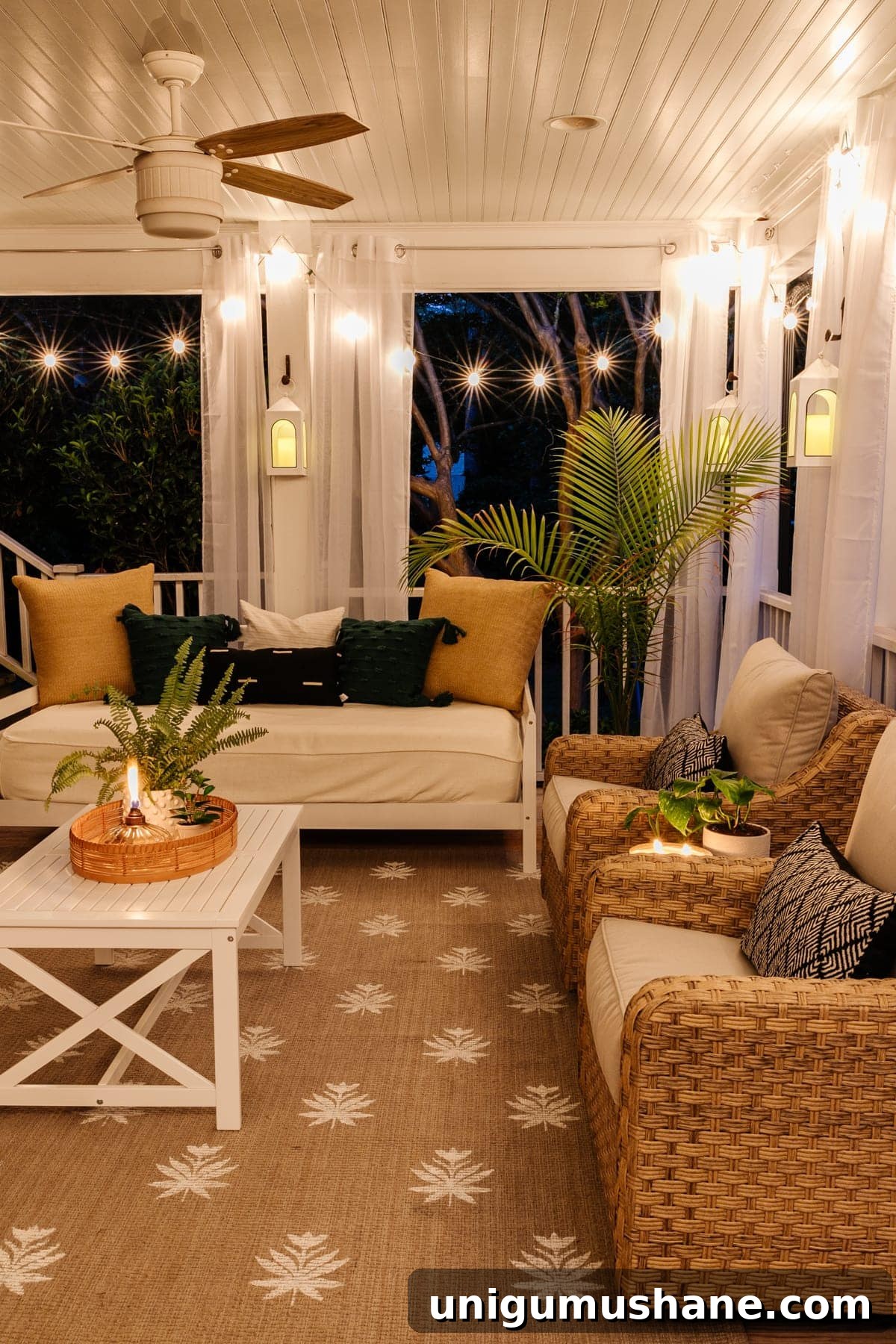
If you need to reach a power source, use a weatherproof extension cord and set a timer for automatic operation.
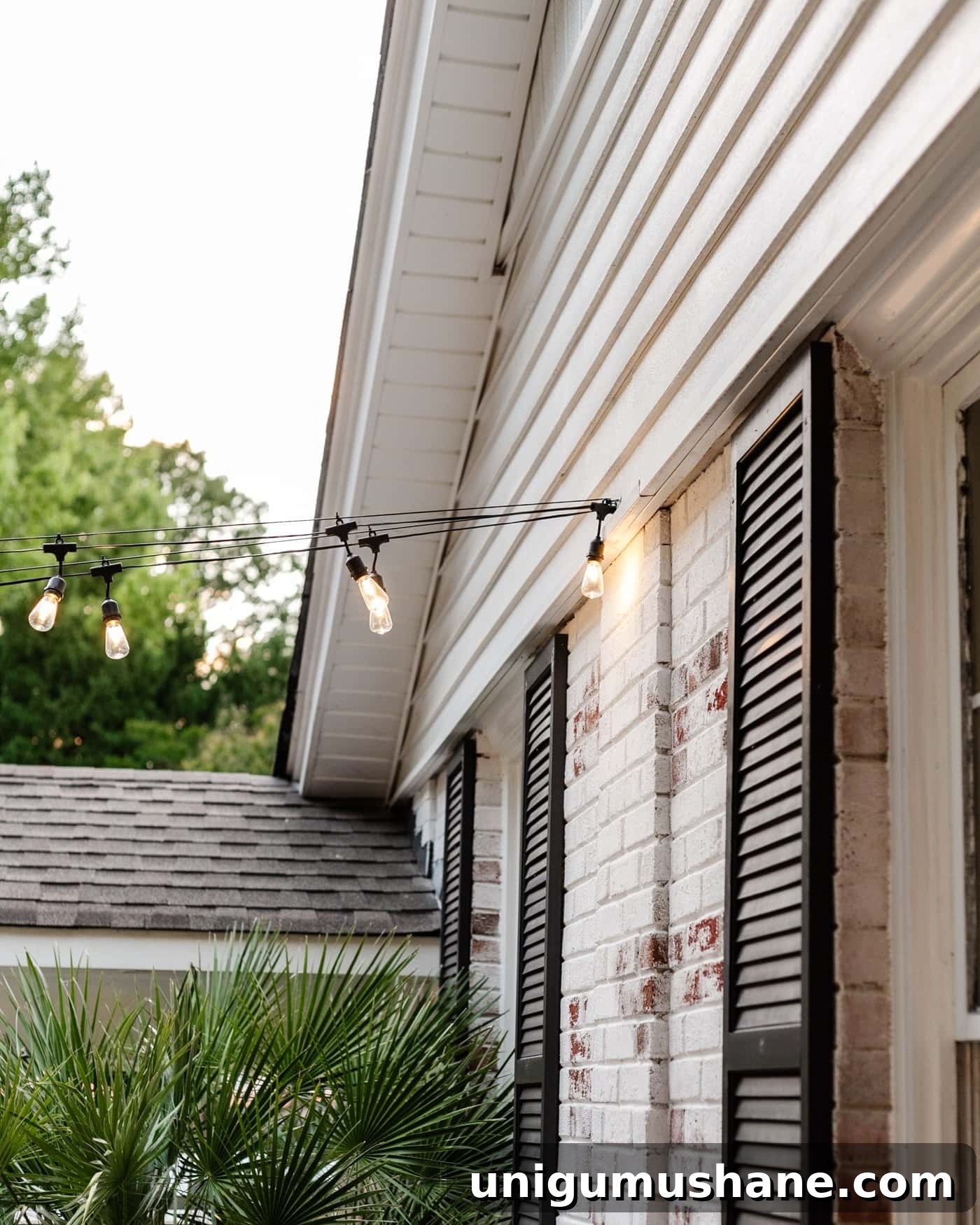
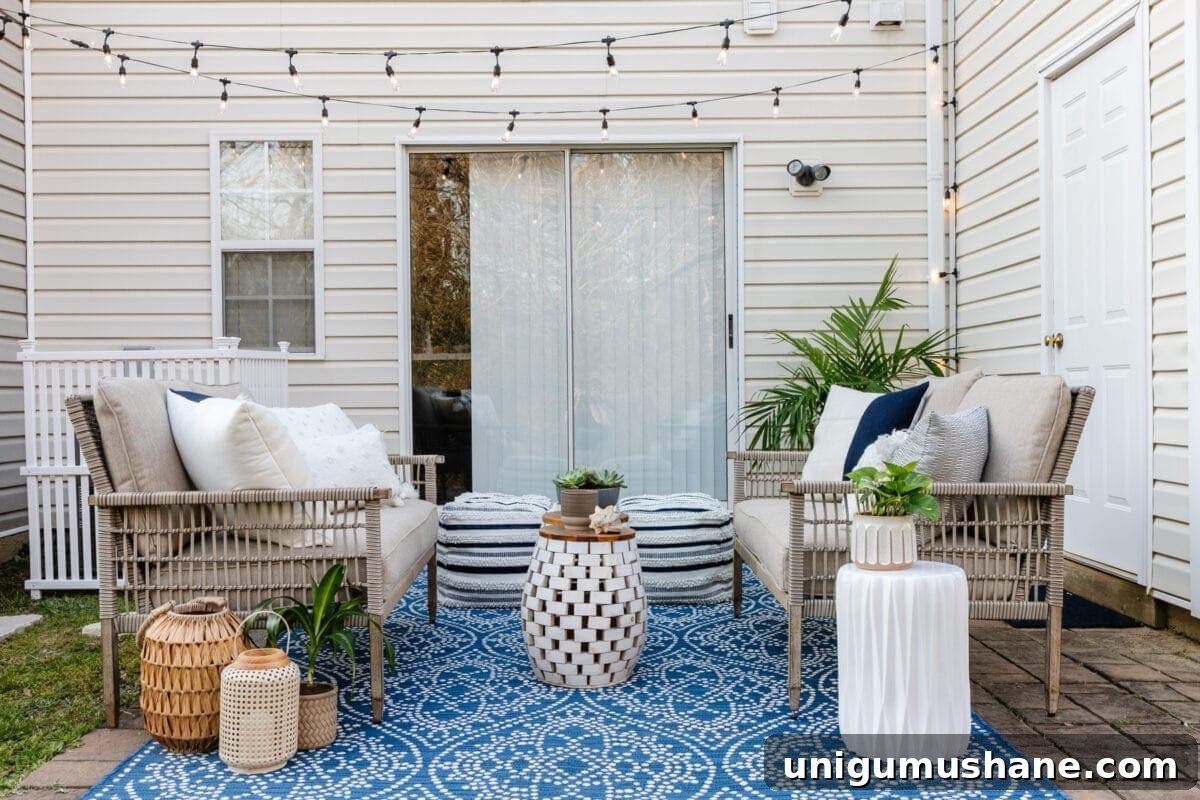
How to Hang Outdoor Patio Lights from Siding
Supplies
- Shatterproof string lights
- Vinyl siding clips or hooks designed for siding
- Outdoor extension cord and optional timer
Steps to Hang String Lights on Vinyl Siding
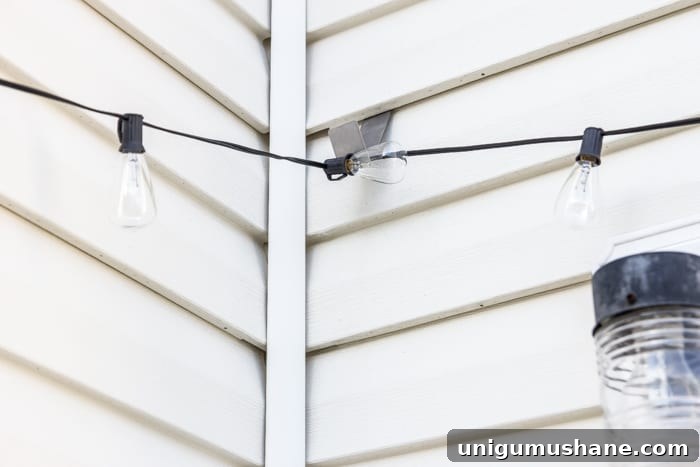
Use siding clips inserted under the siding lip to create secure hanging points without drilling. Loop the light strand around each hook and pull gently to seat the clip. These clips are easily removable and typically won’t damage siding when used correctly.
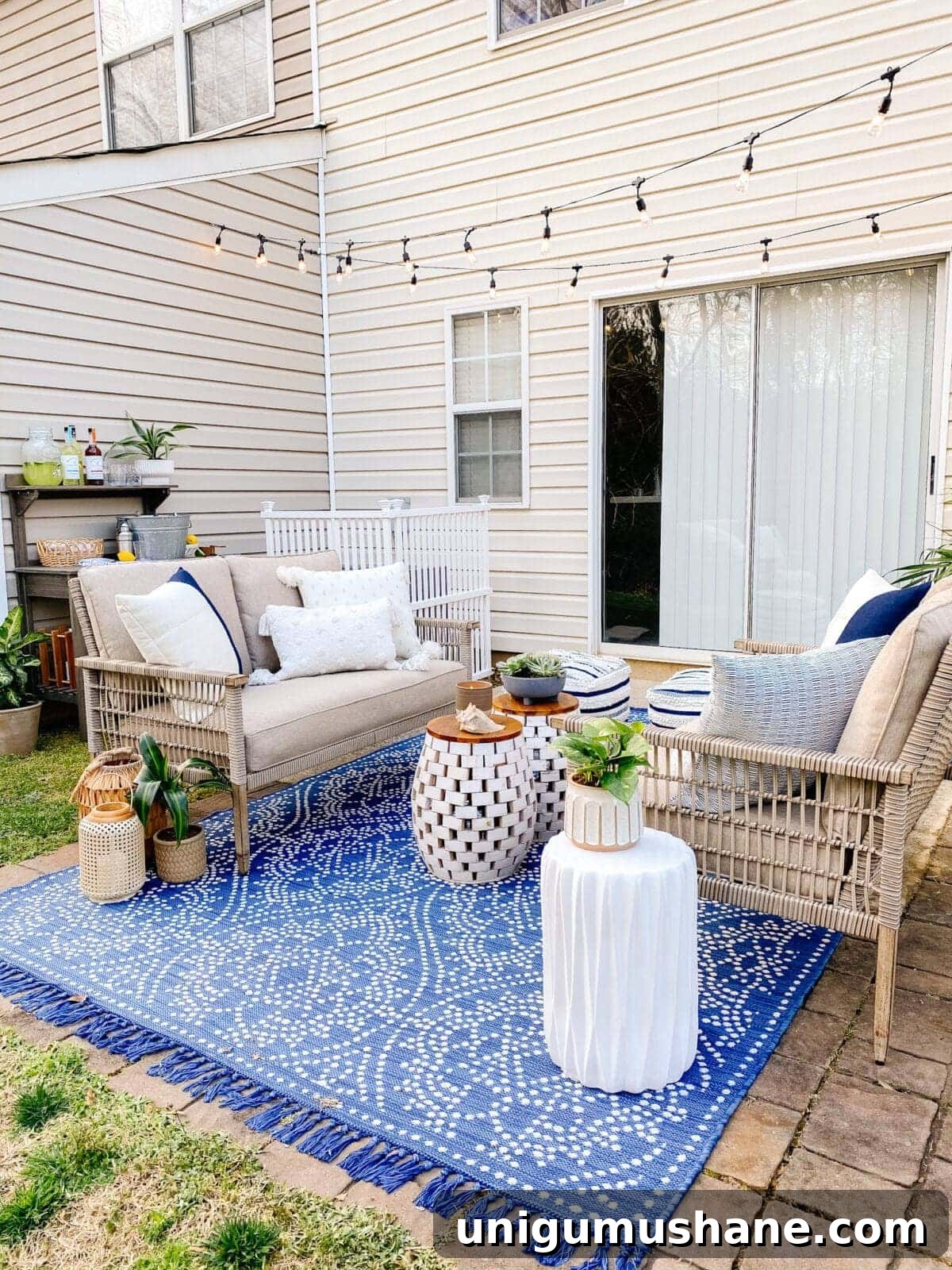
How to Make Planter Posts for String Lights Around a Patio
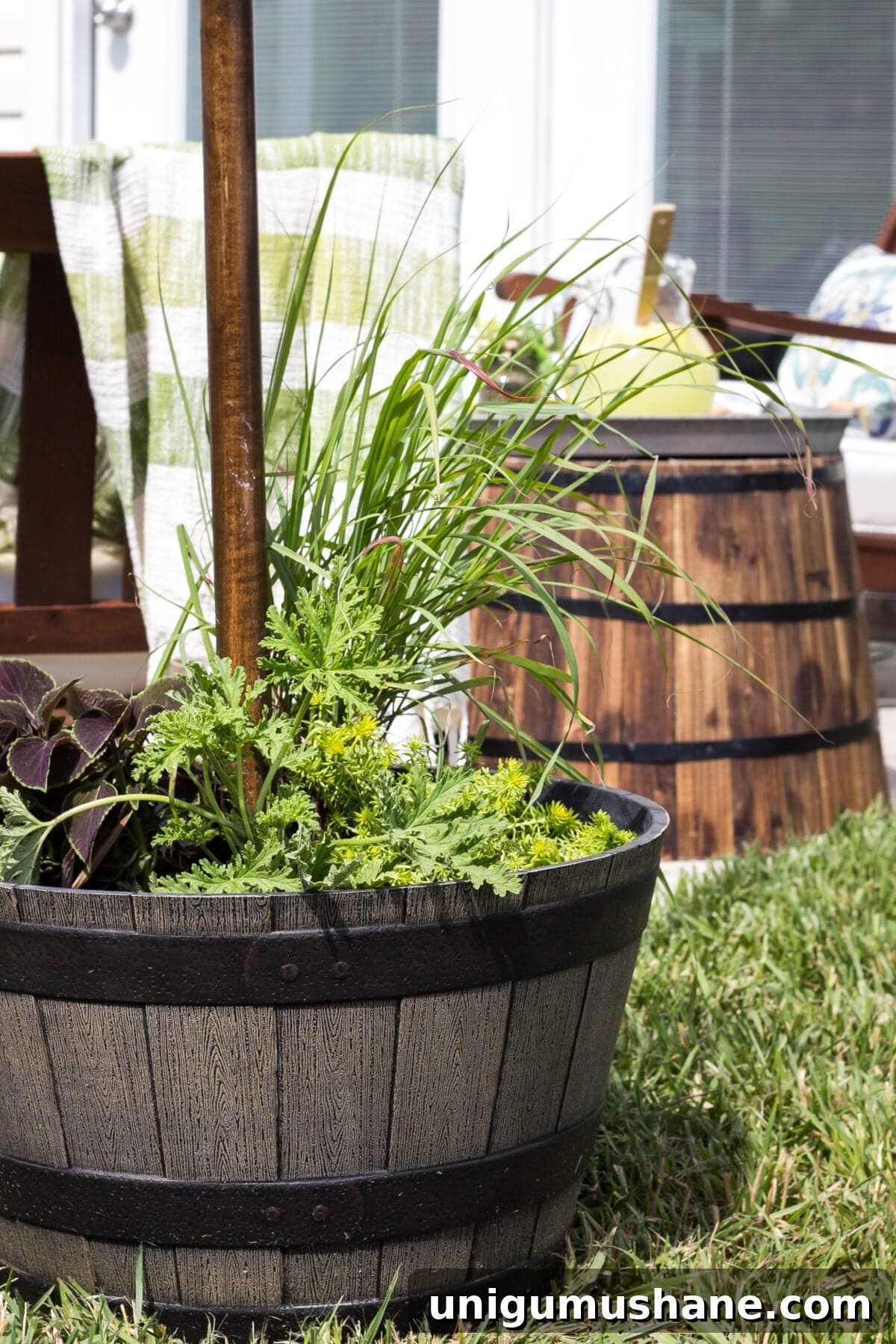
Planter posts are a renter-friendly way to support lights around a patio without digging holes. They also let you add plantings like citronella or lavender to help deter mosquitoes.
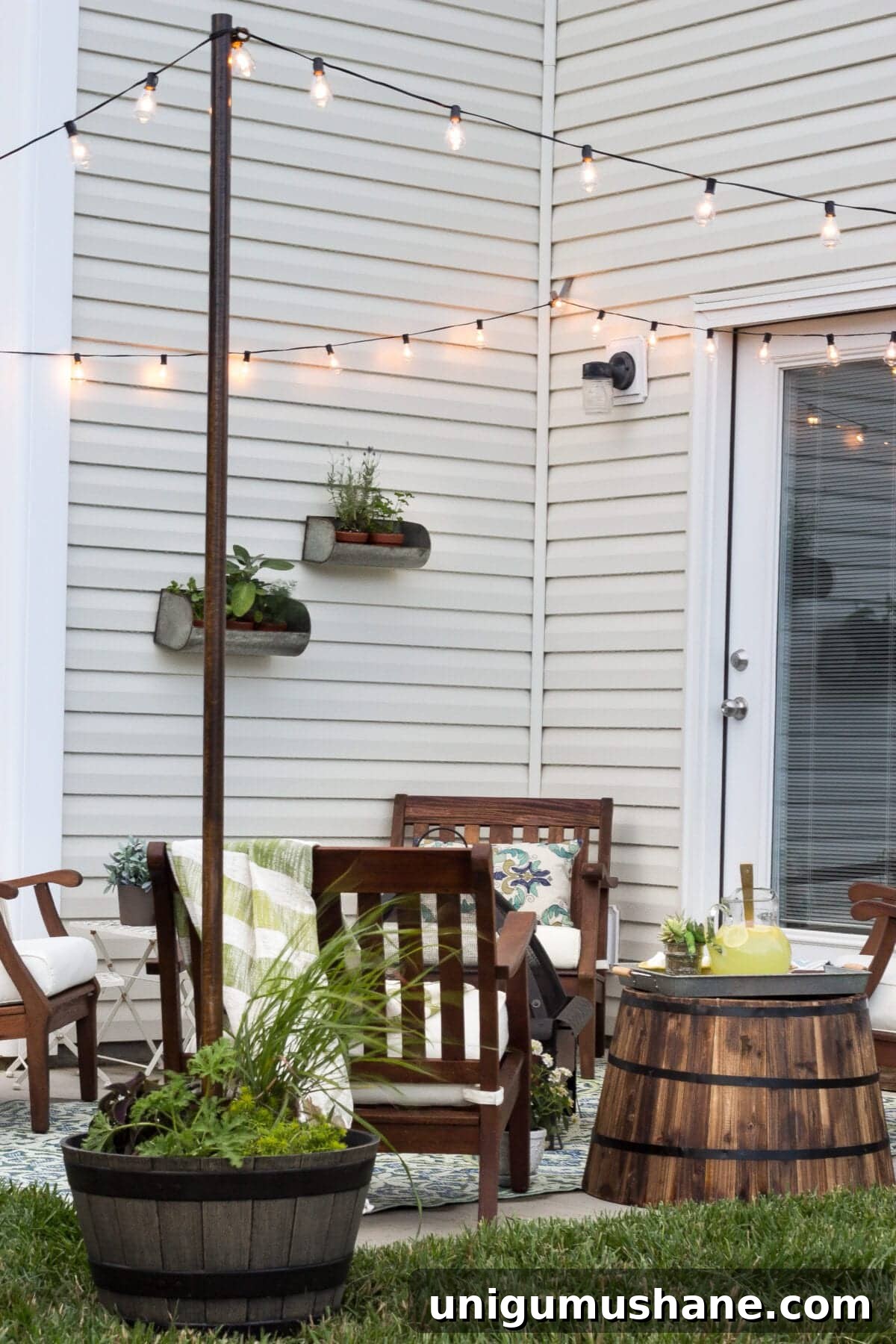
Use a sturdy planter base and tall posts secured within it; many DIY tutorials provide measurements and step-by-step instructions for building durable planter posts that double as light supports.
Combining planter posts with siding clips or nearby anchors gives you flexible layouts for small patios and rental spaces.
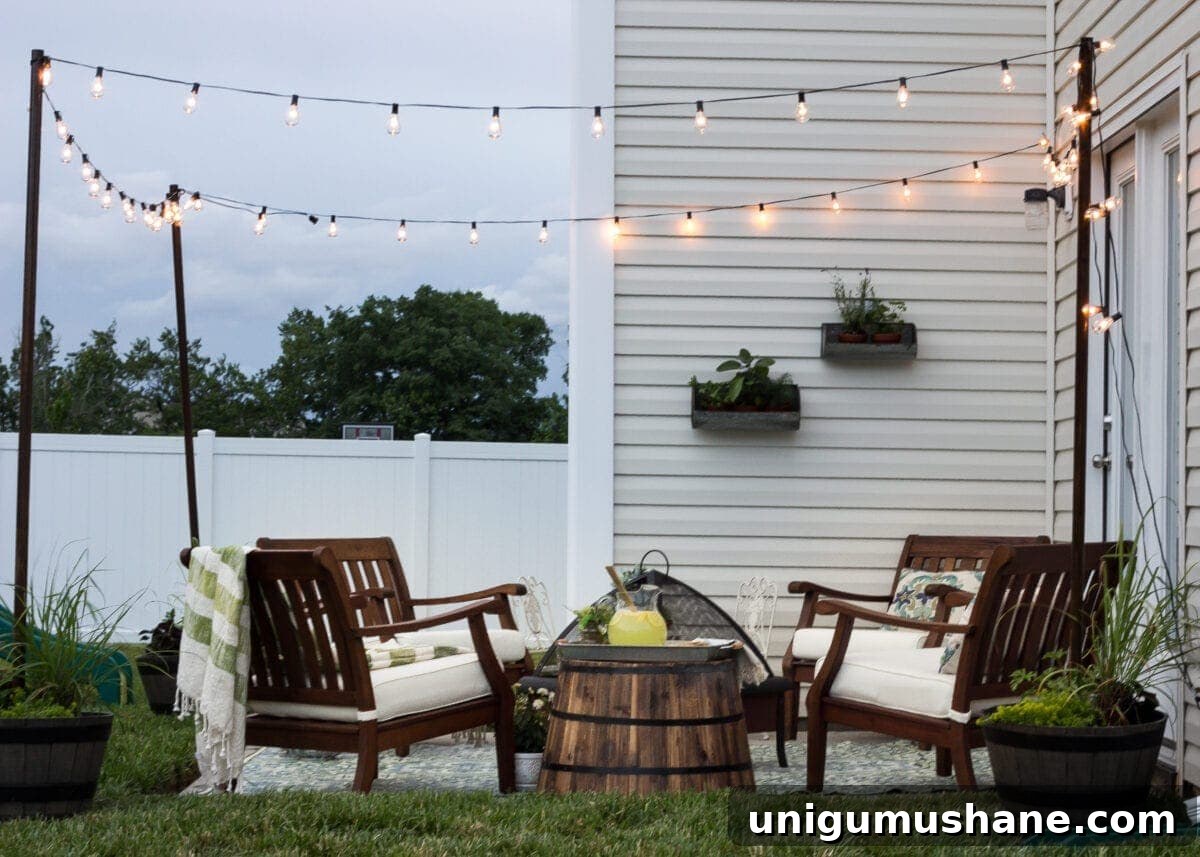
That covers nearly every common scenario for hanging outdoor string lights. With a little planning — measuring routes, choosing the right lights, and using proper supports — you can create a beautiful, safe backyard lighting scheme that enhances evening gatherings.
If these tutorials help you set up your own lights, enjoy the ambience — and feel free to share which method you used.
More Backyard Ideas
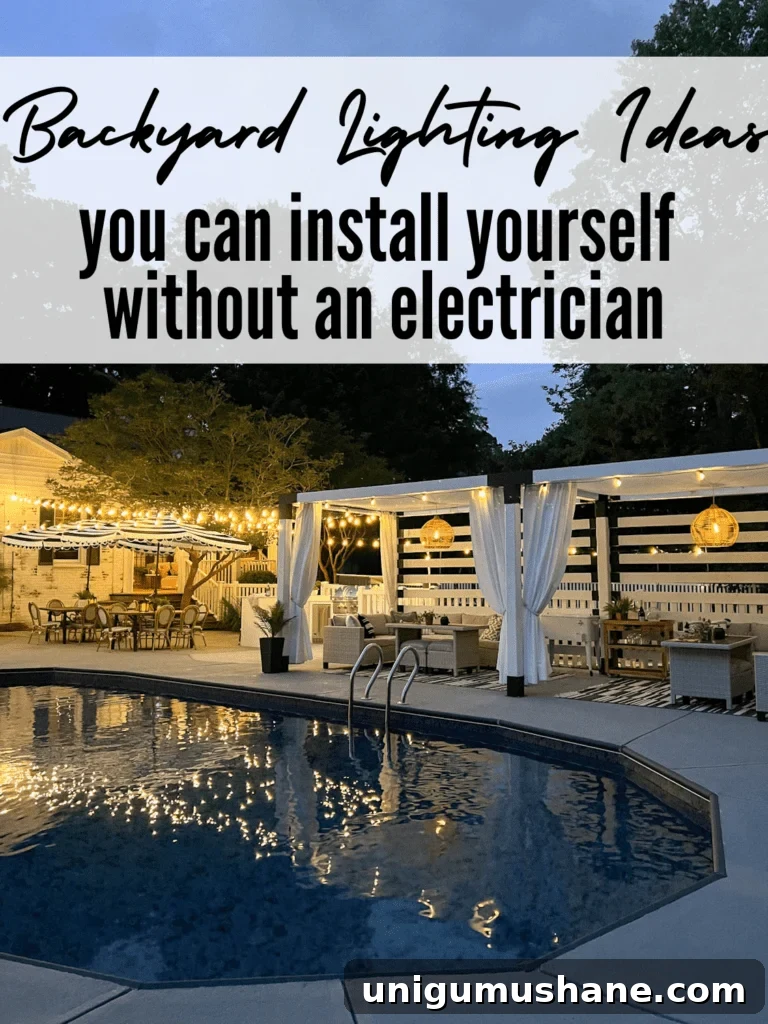
Backyard lighting ideas you can install yourself on a budget
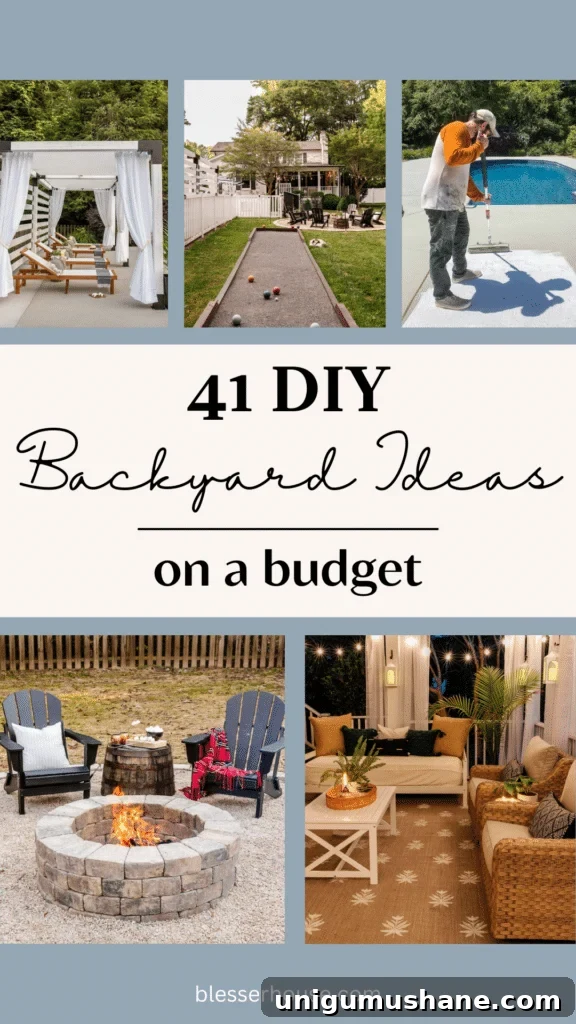
41 DIY backyard ideas on a budget for easy outdoor living
Our patio furniture review — one year later

Backyard DIY fire pit done in a weekend

See more DIY backyard ideas in the related posts section.
Frequently Asked Questions
Yes. Outdoor-rated adhesive hooks and clips can support lightweight string lights on soffits, siding, gutters, and other smooth surfaces. Follow the manufacturer’s instructions and allow the adhesive to cure before loading with weight.
A guide wire is recommended for long spans or windy areas. It prevents sagging and keeps strands secure during storms. For very short runs, you may be able to hang without a wire.