
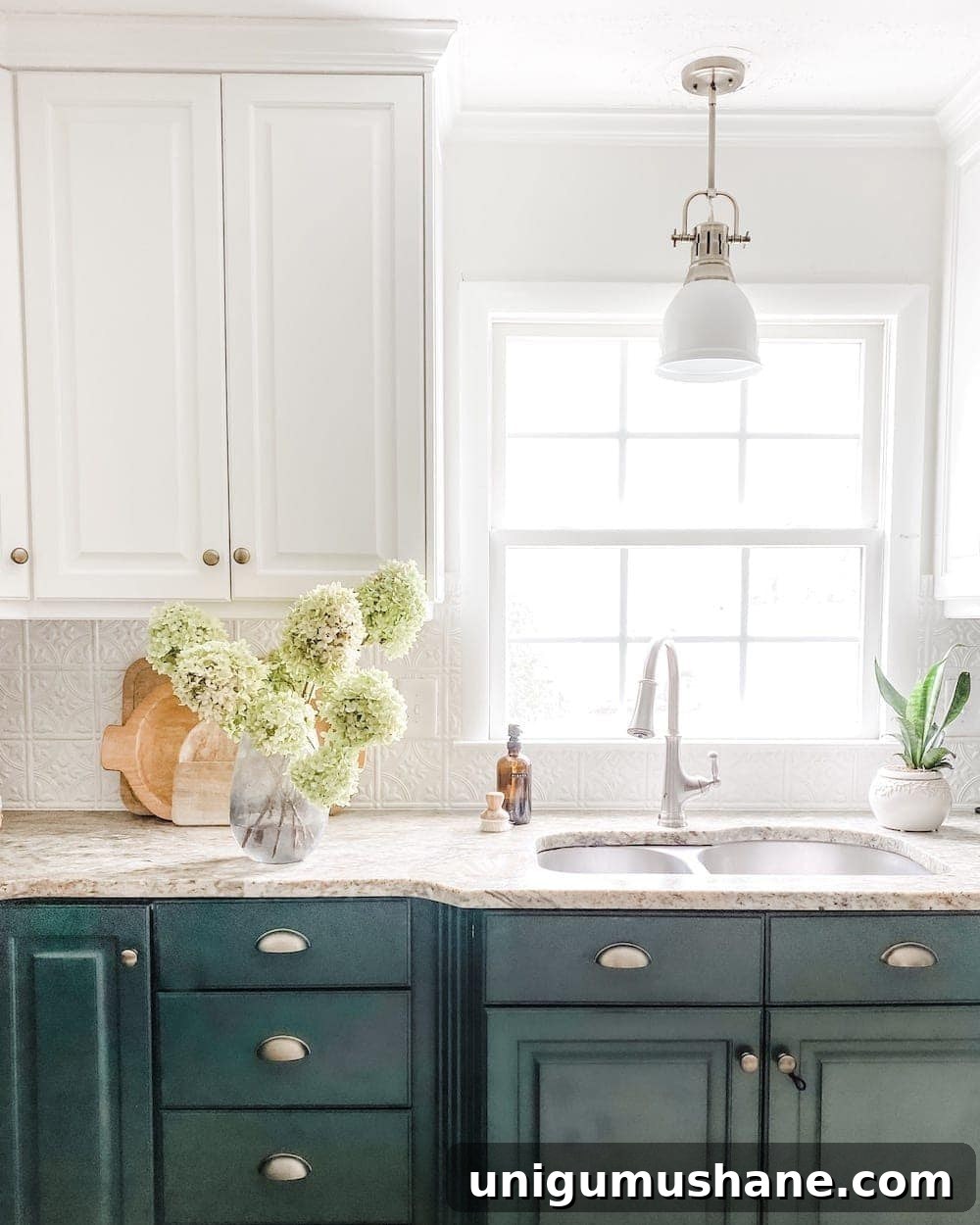
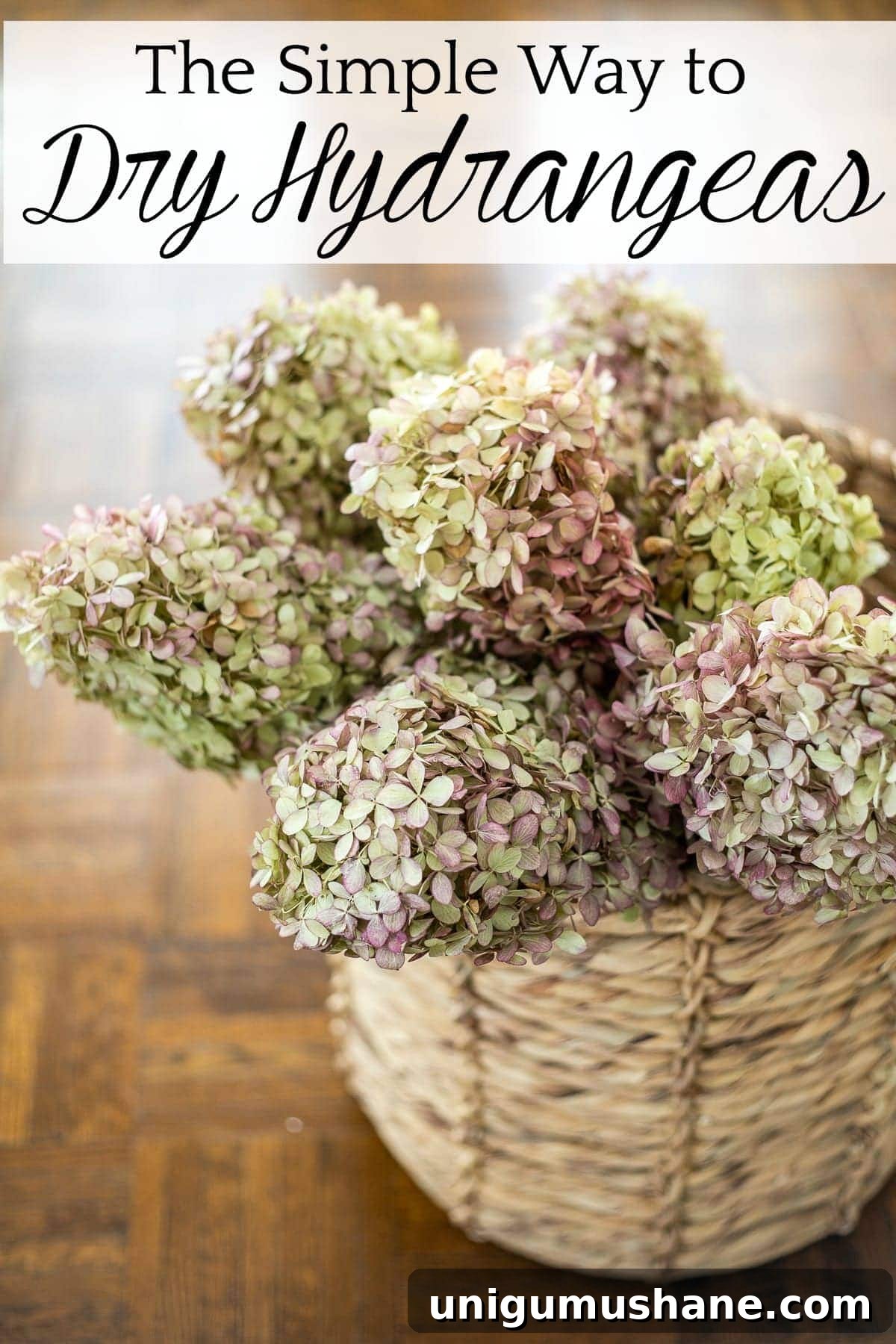
Get ready for one of the easiest flower drying tutorials you will ever try. If you have hydrangeas growing in your yard, this is a simple way to turn those late-season blooms into beautiful dried hydrangeas for fall decorating without spending a thing.
Drying hydrangeas is an easy, low-effort project, and the results are perfect for adding natural texture, soft color, and a cozy autumn feel to your home. Once dried, hydrangea blooms can be styled in vases, baskets, bowls, wreaths, or seasonal arrangements and enjoyed for months or even years.
Related: Pressed Leaf Art Gallery Wall and Fall Entryway
How to Dry Hydrangeas the Easy Way
If you have never dried hydrangeas before, you may be surprised by how simple the process is. You do not need special tools, floral supplies, or complicated techniques. A pair of garden clippers, a vase, a little water, and patience are enough to preserve hydrangea blooms naturally.
Hydrangeas are especially beautiful in late summer and early fall when their bright summer colors begin to fade into softer, muted shades. Instead of letting those blooms disappear when cooler weather arrives, you can cut them at the right time and dry them for seasonal home decor.
This method works well because hydrangeas already begin to dry on the shrub as the season changes. By waiting until the blooms feel slightly papery, you give yourself the best chance of keeping their shape and color after cutting.
When to Cut Hydrangeas to Dry Them
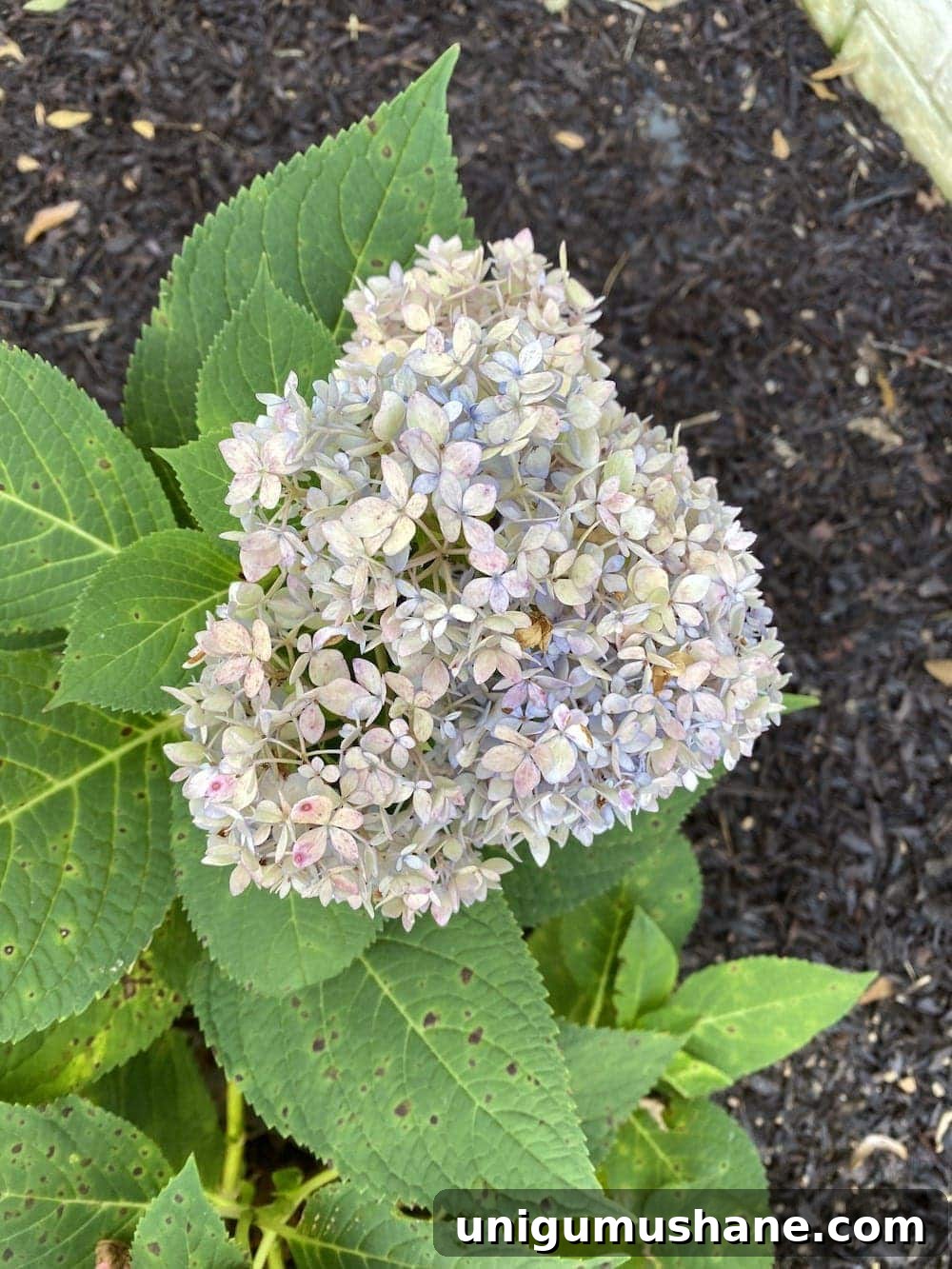
The best time to cut hydrangeas for drying is usually from late August through early October, depending on your climate and when your hydrangeas bloom. Look for flowers that have started to lose their intense summer color and have taken on a softer, more vintage-looking tone.
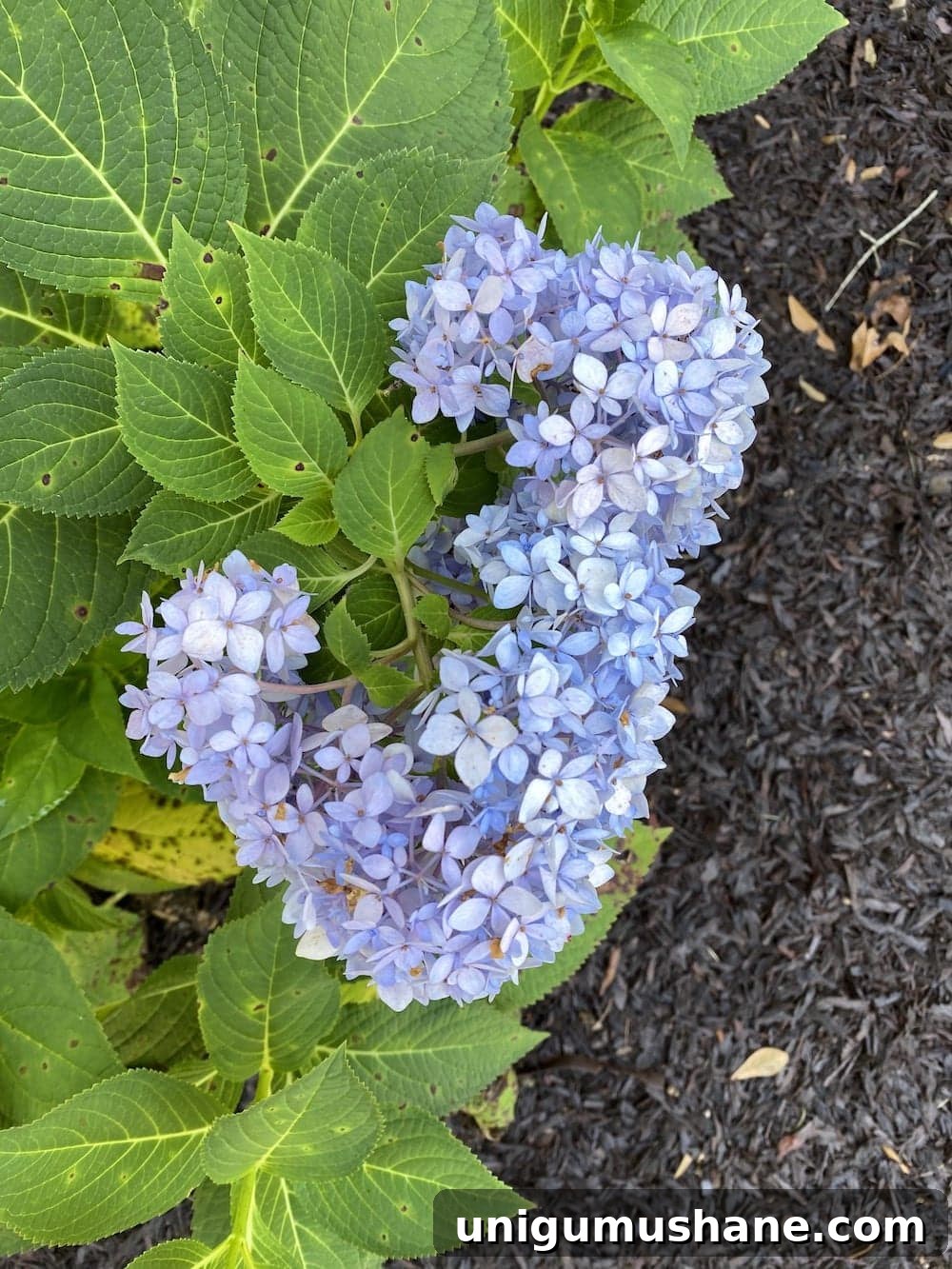
The petals should feel a little “crunchy” or papery rather than soft and fresh. If the blooms still feel delicate, tender, and full of moisture, they are probably too young to dry successfully. Cutting them too early can cause the petals to wilt instead of holding their rounded shape.
Too early to cut:
Ready to cut:
Related: Simple DIY Pressed Flower Art
How to Dry Hydrangeas in a Vase
The vase method is one of the easiest ways to dry hydrangeas because it lets the blooms dry gradually while still looking pretty in your home. You can display them as they dry, which makes this method both practical and decorative.
- Cut the hydrangea stems about 12 to 18 inches long.
- Remove all leaves from the stems so the flowers can dry more cleanly.
- Place the stems in a vase with about 1 inch of water.
- Set the vase in a cool indoor spot away from direct sunlight.
- Leave the hydrangeas in place for about 1 to 2 weeks.
- Allow the water to evaporate naturally as the blooms slowly dry.
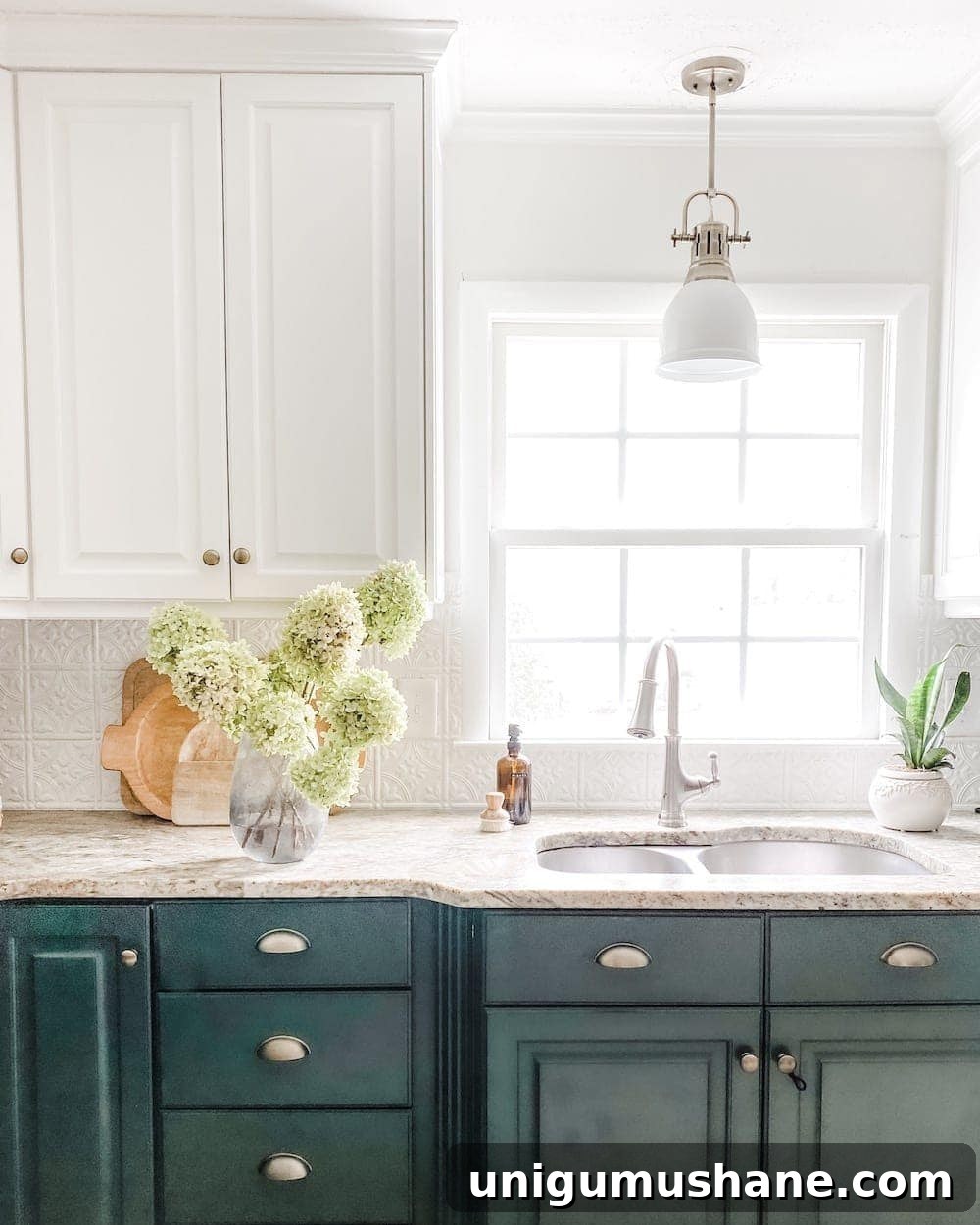
As the water disappears, the hydrangeas will continue to dry while keeping much of their shape. Avoid placing the vase in a bright window, because direct sunlight can cause the colors to fade more quickly. A cooler room or shaded area works best.
How to Dry Hydrangeas Using the Hanging Method
Another popular way to dry hydrangeas is the hanging method. To do this, hang the blooms upside down in a dark, cool, dry place, such as a closet. You can use a clothespin to attach the end of each stem to a clothesline, hanger, or similar support so the flower head hangs freely.
A dark and dry location helps hydrangea blooms keep more of their color while they dry. This method is especially useful if you want to dry several stems at once and keep them tucked away until you are ready to decorate.
Even though the hanging method works well, the vase method is often the easiest hands-off option. It allows you to enjoy the hydrangeas right away while they naturally dry in place, making it a simple choice for casual fall decorating.
Related: Preserved Flowers + How to Dry Leaves and Flowers for Decor
How to Preserve Dried Hydrangeas
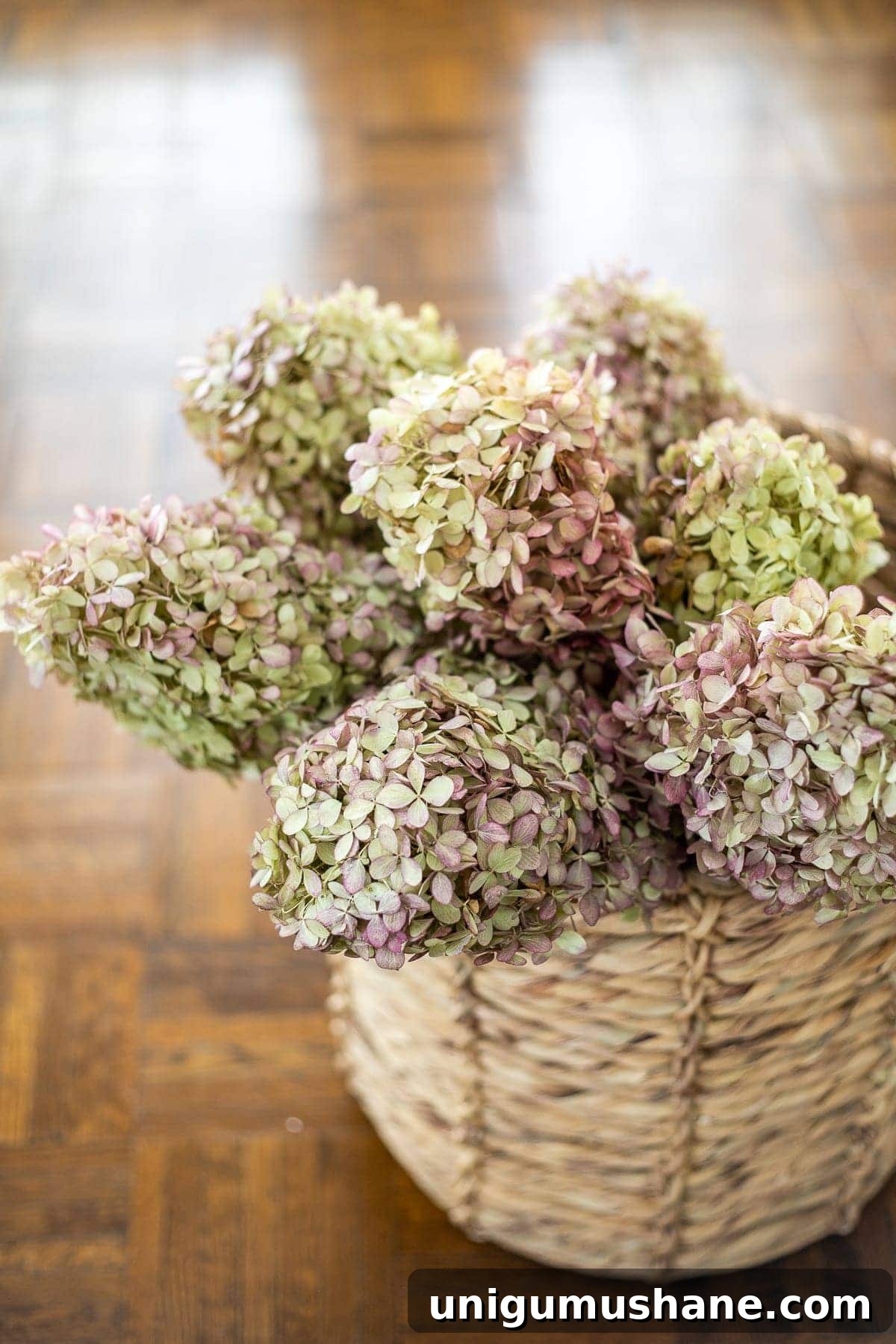
After your hydrangeas are fully dried, you can help preserve them with a light coat of aerosol hairspray. Hold the can far enough away from the bloom so the spray does not disturb the delicate petals. Mist the entire flower head evenly, including the underside of the petals.
This simple step helps reduce shedding and gives the dried blooms a little extra hold. Be gentle when moving or arranging dried hydrangeas, since the petals can become fragile once they are dry.
Use dried hydrangeas in vases, bowls, baskets, wreaths, mantel displays, fall centerpieces, or anywhere you want a natural layer of texture and muted color. They are a beautiful way to decorate for autumn using materials from your own yard.
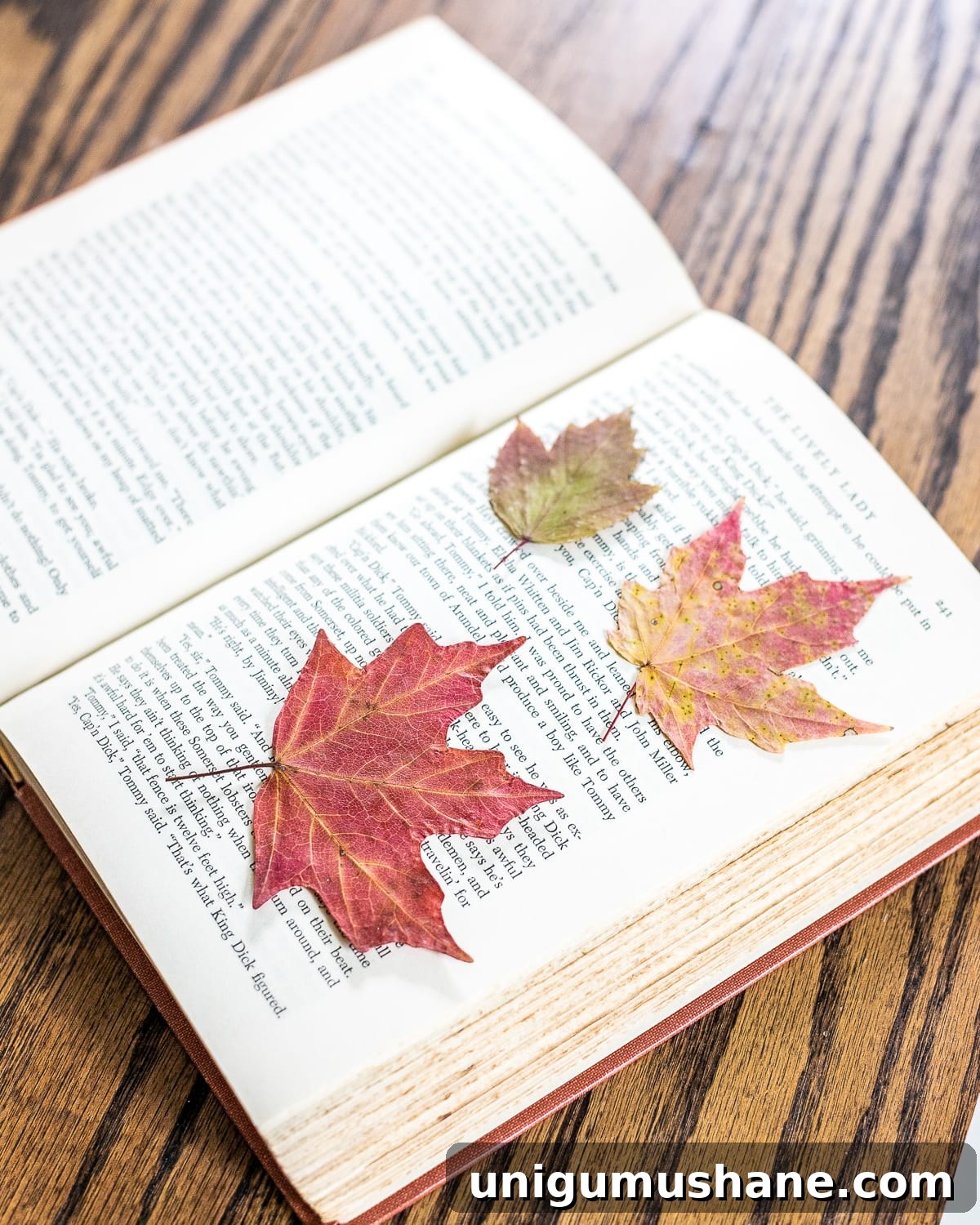
You can also press fall leaves in books for simple seasonal decor, similar to the way pressed flowers can be saved and displayed. Dried flowers, pressed leaves, and other natural pieces from the yard can become easy handmade decorations for fall.
Related: DIY Fall Decor Ideas to Create Cozy Home Vibes
Nature offers so many beautiful decorating materials, and dried hydrangeas are one of the easiest ways to bring that beauty indoors. This project is also a fun backyard activity for kids, especially if you turn it into a little scavenger hunt or a simple home craft lesson about flowers, leaves, and seasonal changes.
Whether you display them in a basket by the entryway, arrange them in a vase on the kitchen counter, or use them in a wreath, dried hydrangeas are a lovely and budget-friendly way to decorate for fall.
More Floral Decorating Ideas
How to Make a Simple Fall Floral Arrangement Step By Step
Where to Find the Best Fake Flowers That Look Real