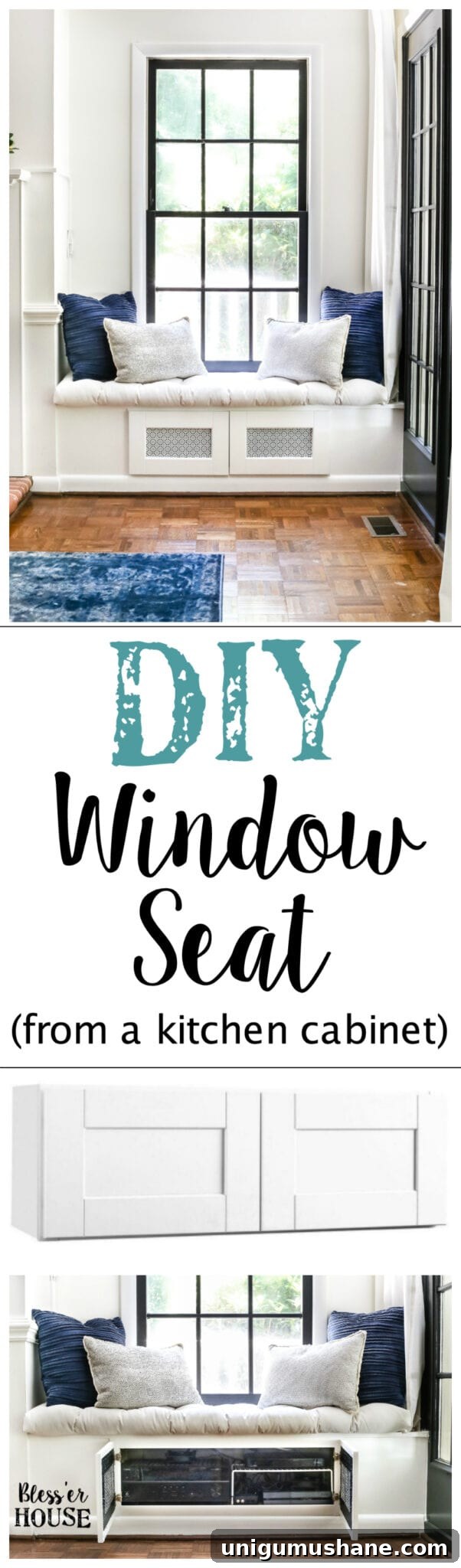
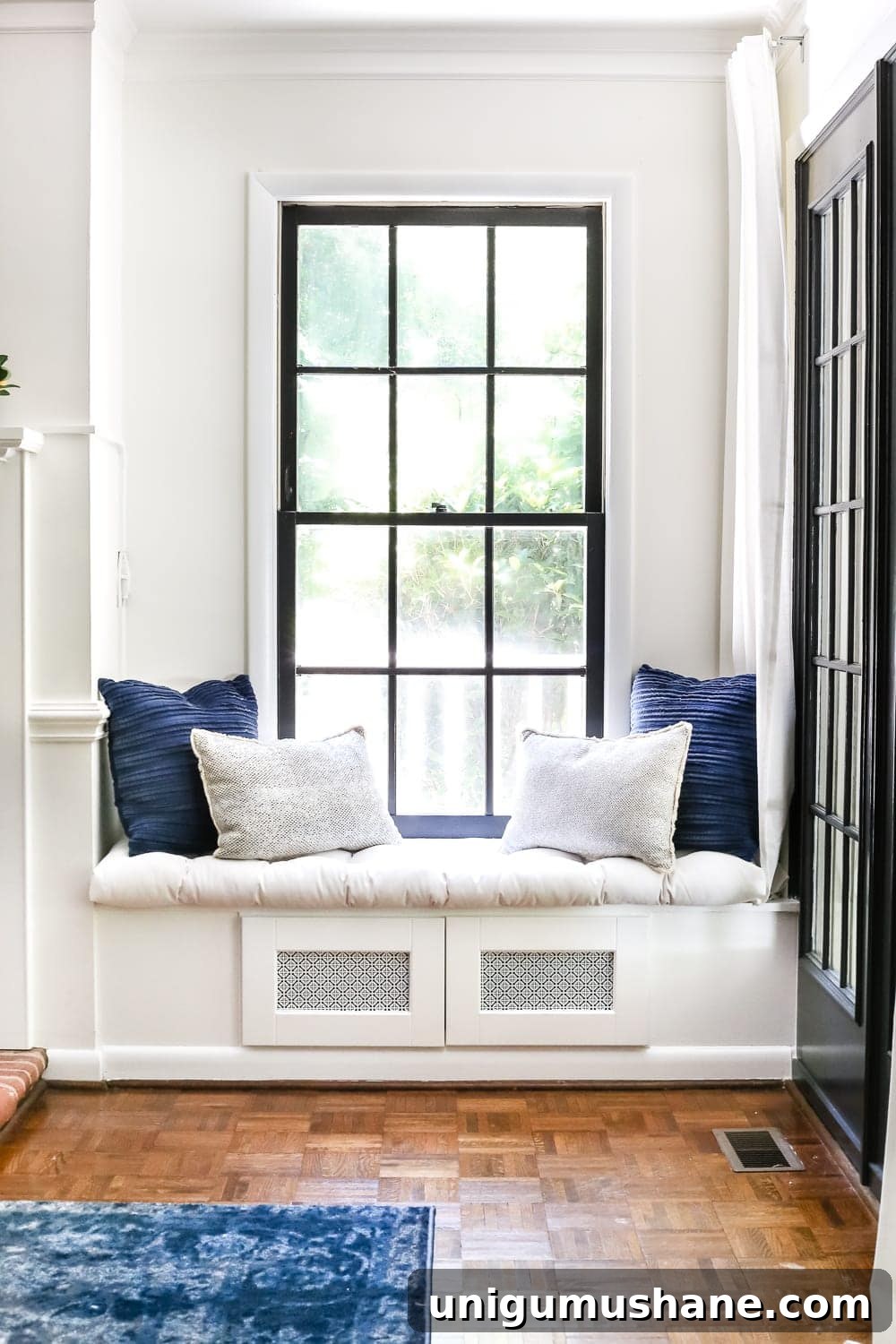
Slowly but surely, we’re making progress on the living room. Recently Robert and I finally tackled a problem spot that had bothered us since we moved in: a messy electronics corner with cords and devices on full display.
That chaotic corner is officially gone.
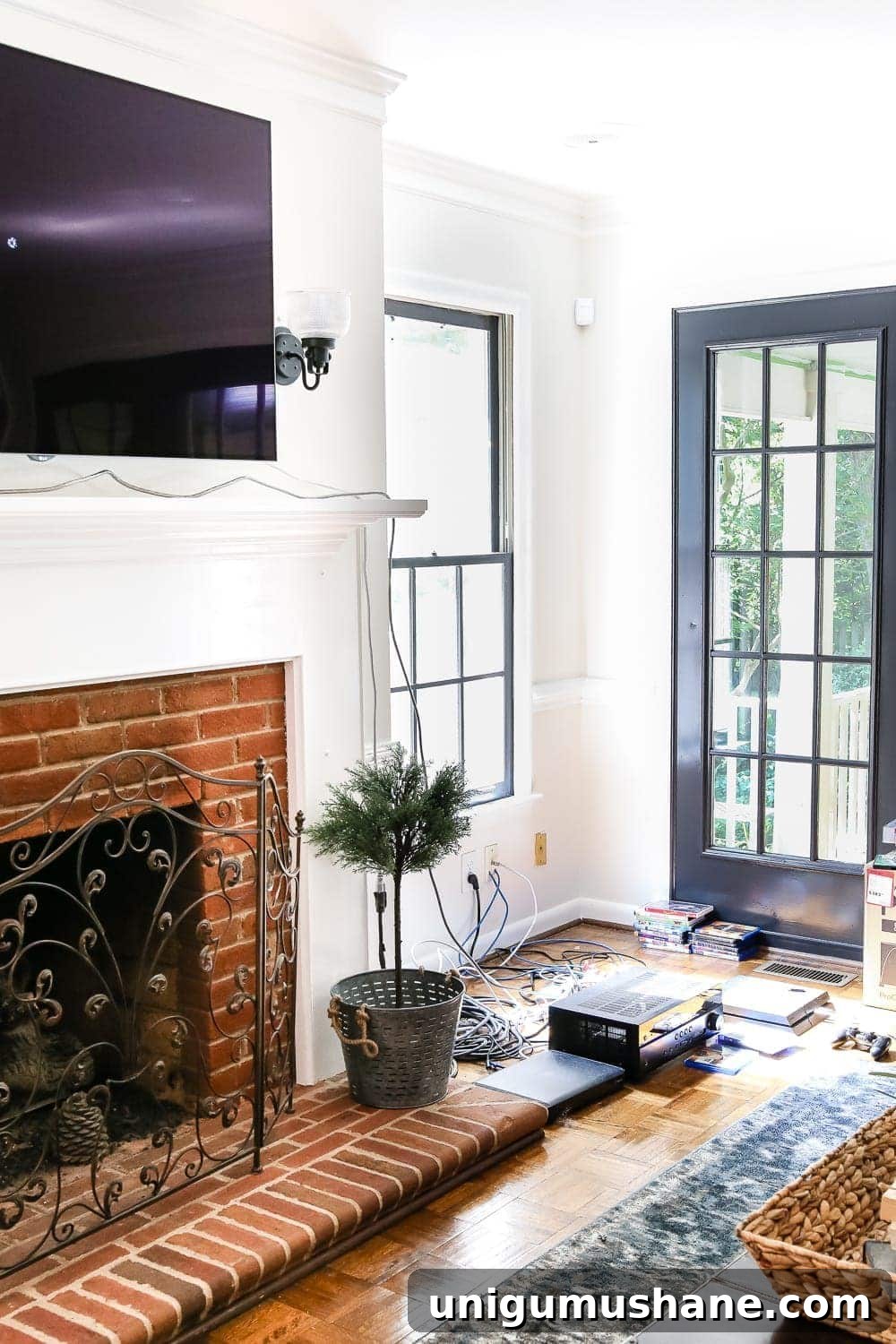
The room has changed a lot since it used to be painted bright sunshine yellow and beige. Repainting the walls white and painting the doors black instantly opened the space. Adding comfortable seating, a vintage coffee table, framed botanical prints and a new ceiling fan turned it into our favorite room — except for where all the electronics lived.
With the TV mounted above the fireplace, there wasn’t a natural spot for the surround receiver, cable box and game console. Stashing them in a closet wasn’t practical because the nearest closet was at the other end of the house. A window seat on either side of the fireplace felt like the perfect solution — and we solved the electronics problem while adding extra seating.
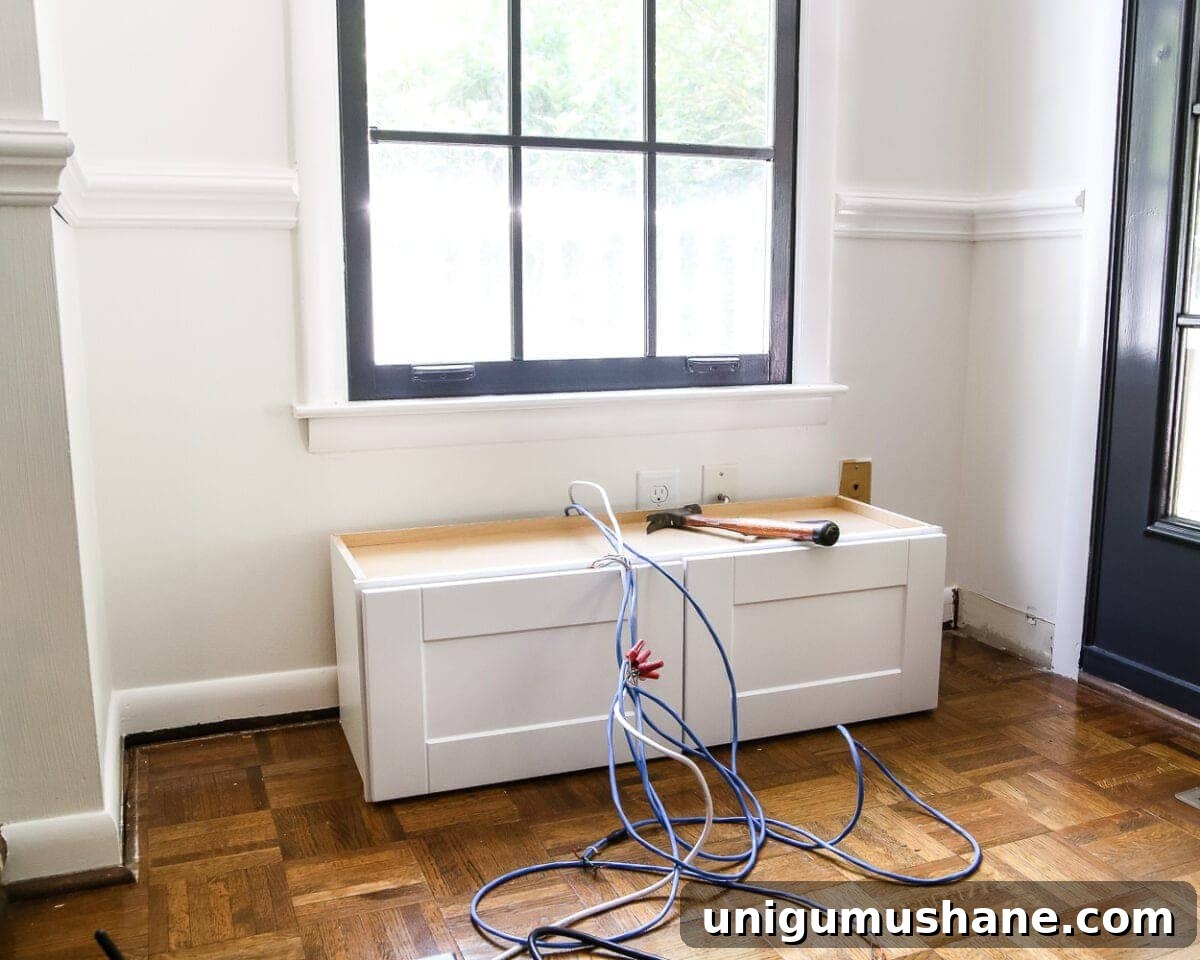
Instead of building a seat entirely from scratch, we sped things up by repurposing a small prefab kitchen cabinet as the cabinet that houses the electronics. It’s a shortcut that saved time and gave us a clean, built-in look.
Supplies Used:
- Kitchen cabinet (ours was 36″ x 12″ x 12″)
- 4 – 2″ x 4″ x 8′ boards
- 3/4″ x 2′ x 4′ pre-primed plywood
- Wood baseboard to match existing trim
- Quarter round molding strip
- 1″ x 12″ x 6′ board
- 1″ x 10″ x 6′ board
- Tape measure and pencil
- Small crowbar
- Square tool
- Hammer
- 1 1/2″ carpentry nails and 1 1/4″ finishing nails
- Caulk and wood filler
- Fine grit sandpaper
- Circular saw and jigsaw
- Primer and paint (we used a white semigloss to match trim)
- Manual staple gun and staples
- Aluminum sheets and sheet metal snips
- Paint brush
This whole project took about eight hours from start to finish — a satisfying weekend build that transformed an eyesore into useful storage and seating.
The Steps
1. Prep the space by removing the existing baseboard and quarter round molding with a crowbar. We kept the original quarter round to reuse since it matched the floor. Measure the opening to determine the exact width for the seat base.
2. Build a base frame from 2x4s. Cut two boards to the width of the nook and add braces between the front and back to support the cabinet.
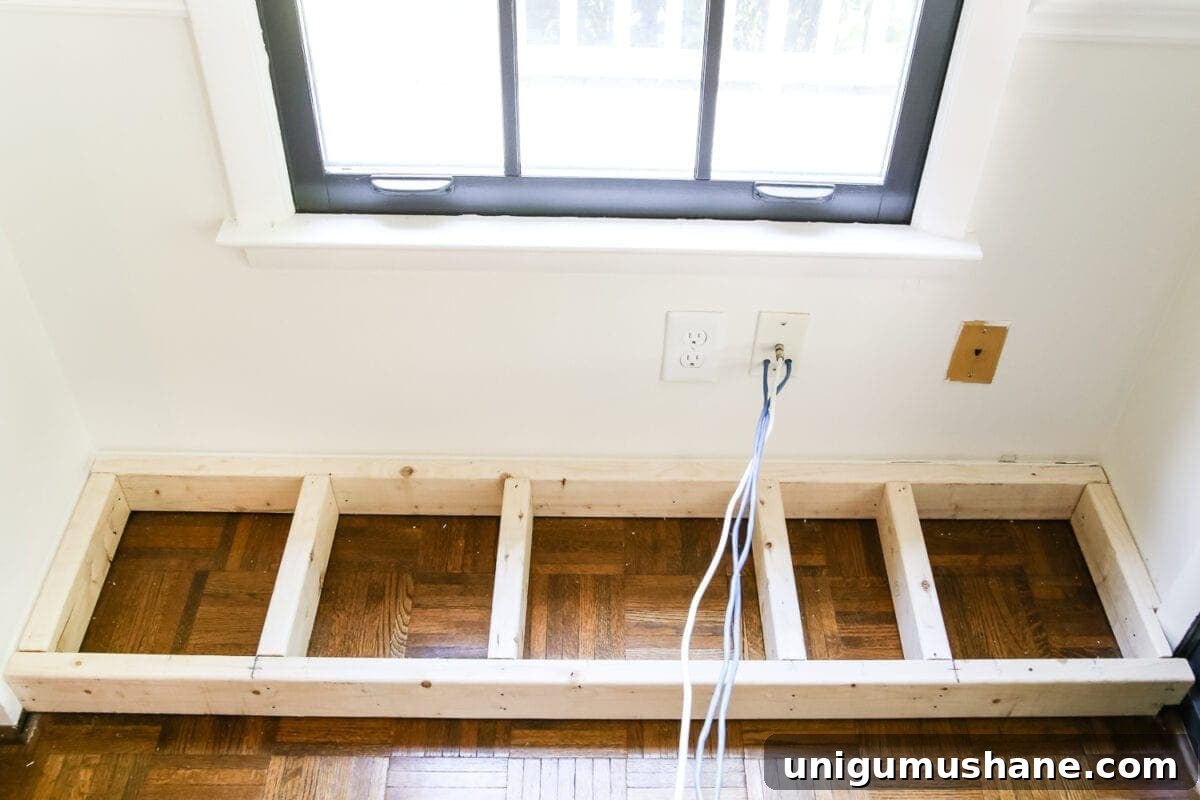
3. Secure the base to the back and side walls of the nook by nailing or screwing through the frame into the studs.
4. Dry-fit the cabinet atop the base to verify height and position. Use those measurements to cut vertical 2×4 braces that will anchor the cabinet in place.
(And yes, we made the usual funny faces while measuring — DIY requires a little silliness.)
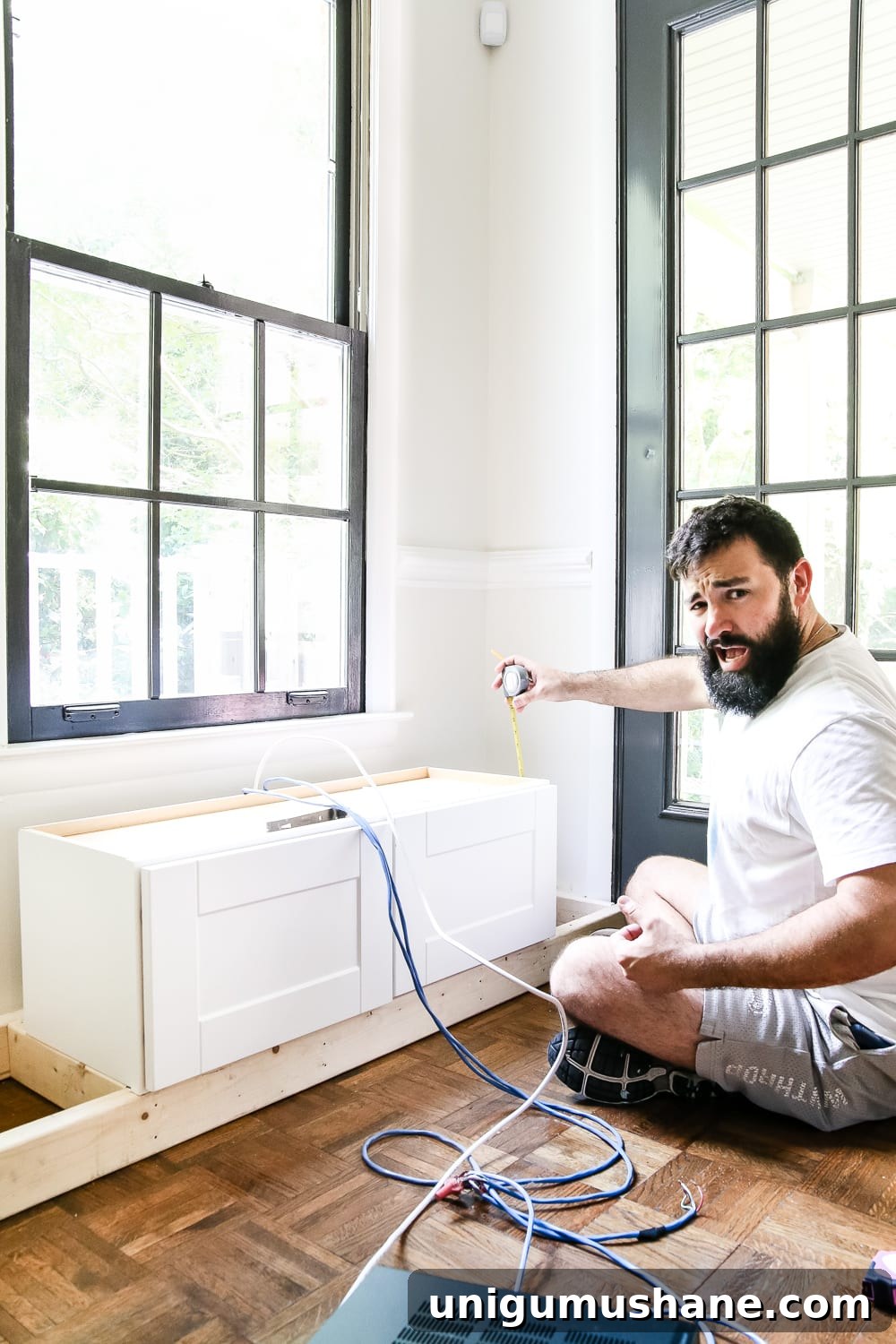
5. Cut the 2×4 braces to height with a circular saw and attach them to the base and wall where the cabinet will sit.
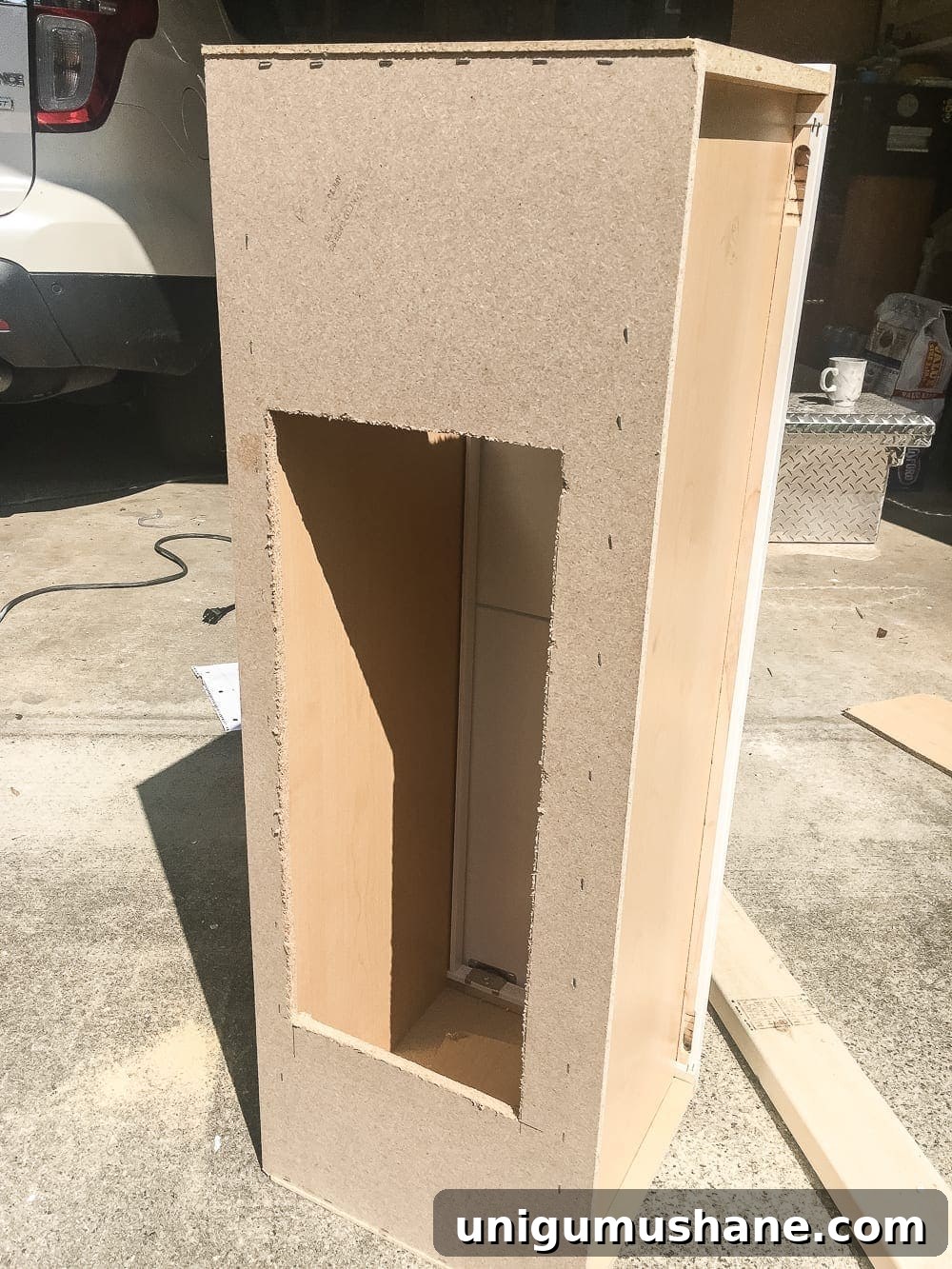
6. Outside or in a well-ventilated area, use a jigsaw to cut ventilation and cord access holes in the back of the cabinet so devices can plug into the outlet and so the receiver and cable box can receive remote signals. Trim the cabinet doors if necessary to allow remote signals to pass through.
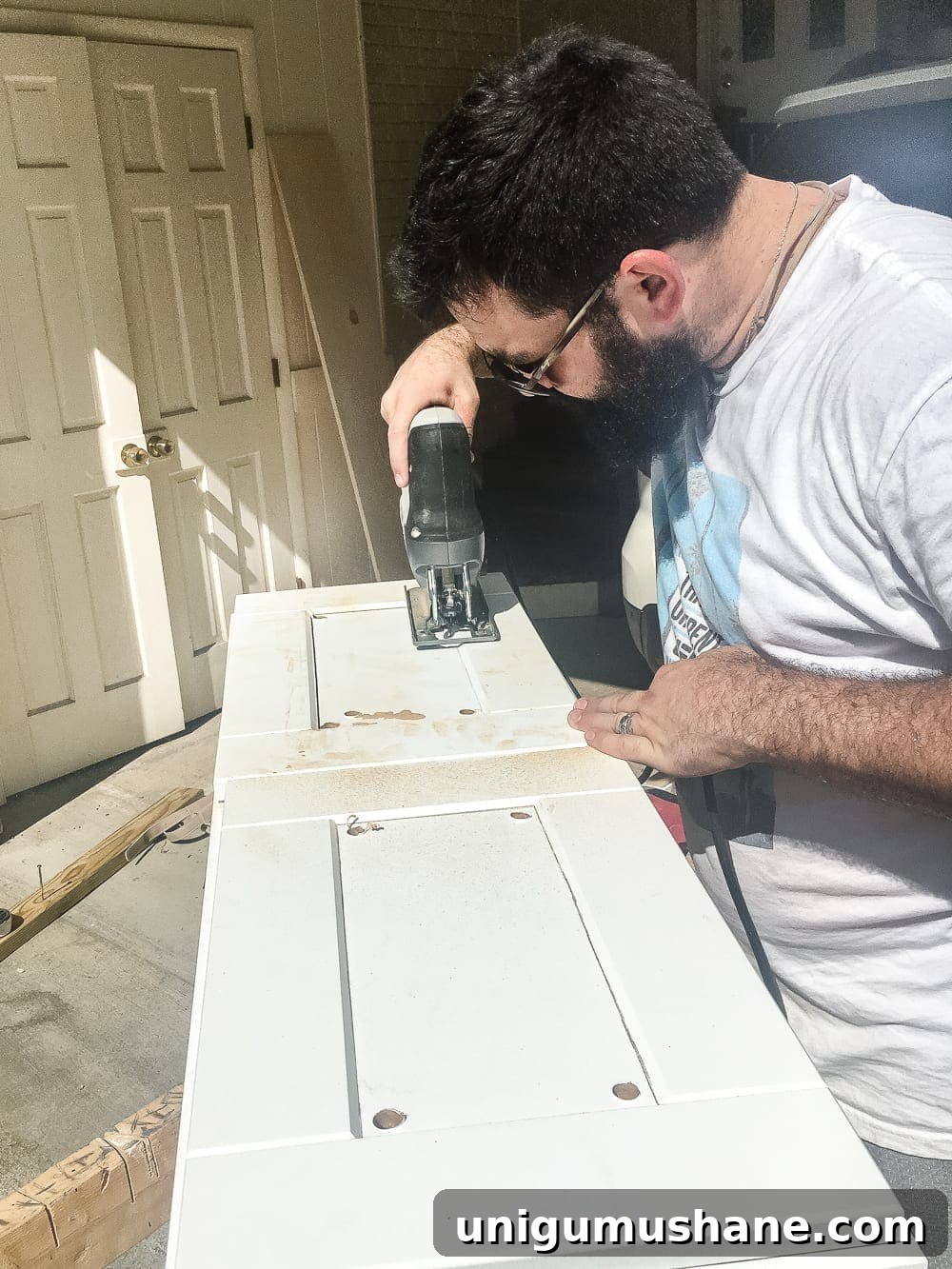
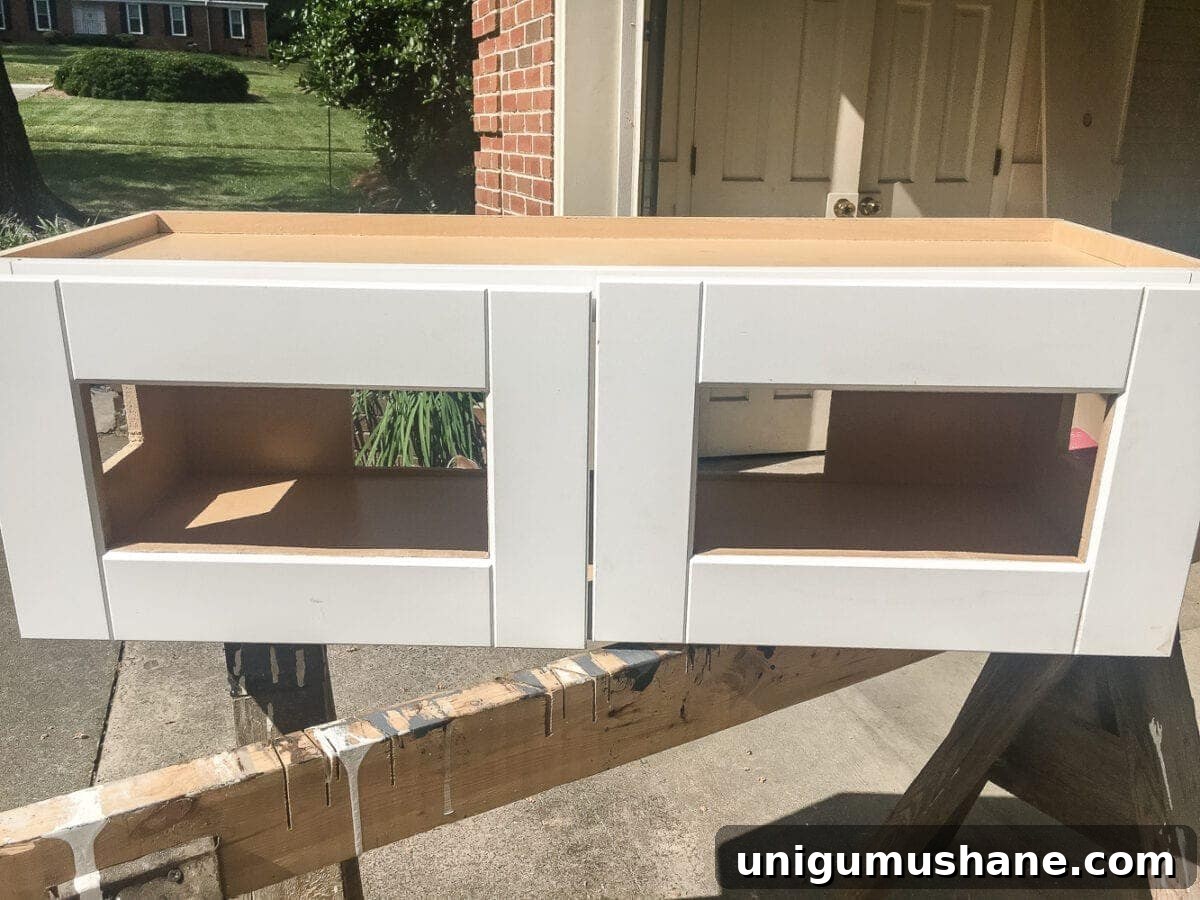
7. Position the cabinet on the base, then screw the vertical braces into the sides and corners of the cabinet to lock it in place.
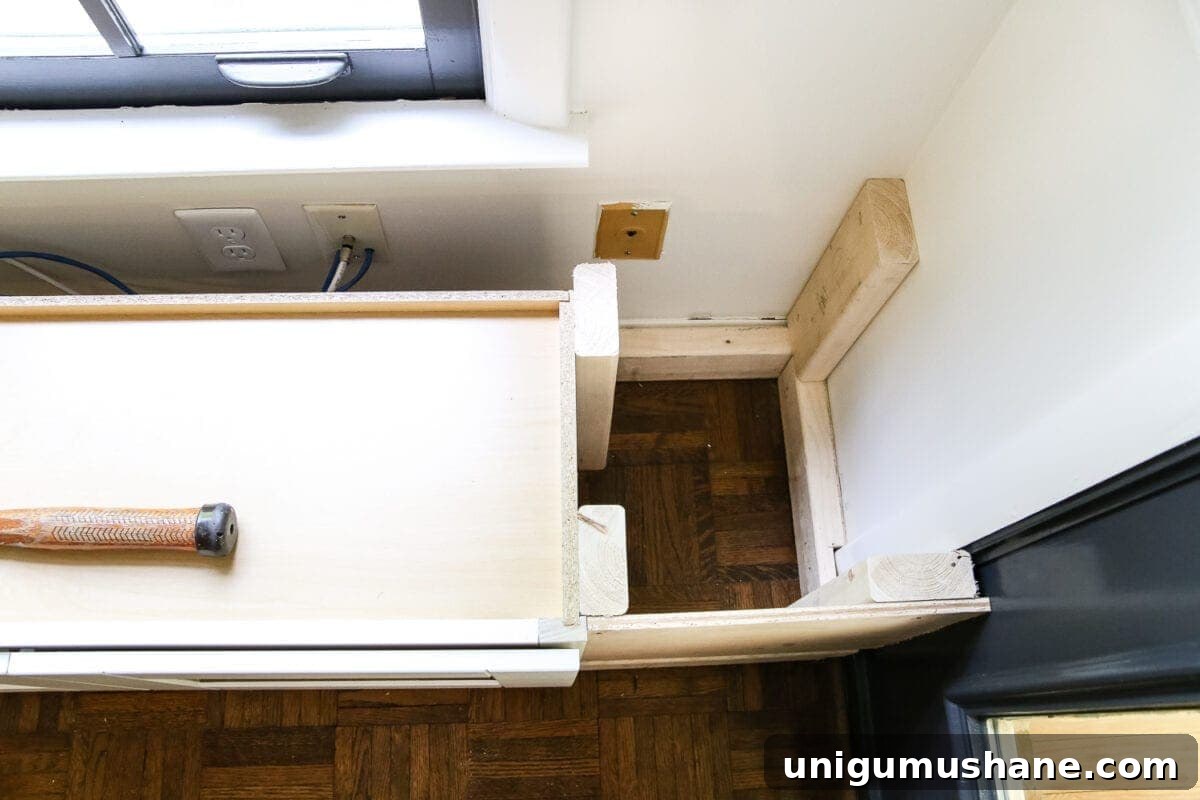
8. Measure the gap between the cabinet and the wall and cut plywood to close the front and sides of the framework.
9. Nail the plywood flush to the front 2×4 braces so the face is solid and stable.
10. Repeat on the opposite side so the cabinet box is fully enclosed on the front and both sides.
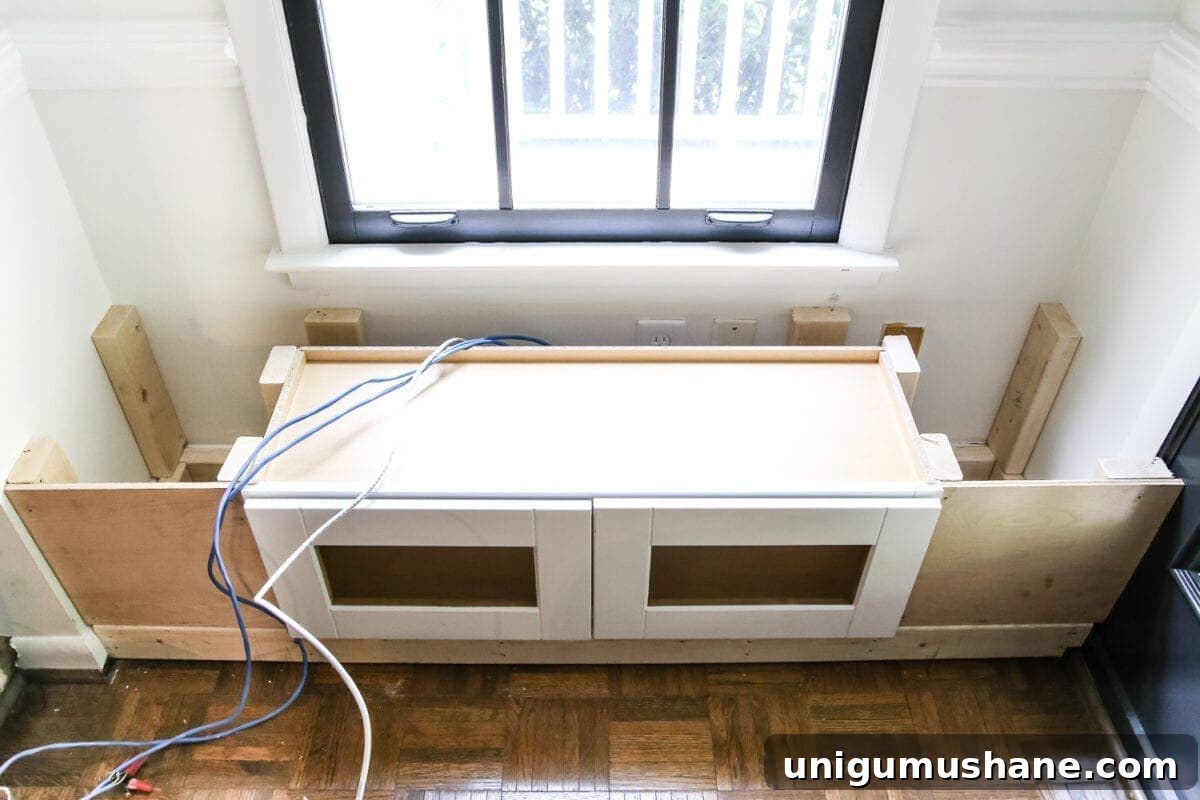
11. Add two additional 2×4 braces at the back of the seat for extra support and nail them into the wall studs.
12. Finish the front by nailing on baseboard trim and replacing the quarter round for a seamless look with the floor.
13. For the top, cut and install the 1″ x 12″ and 1″ x 10″ boards so they span the cabinet and 2×4 braces, creating a sturdy seat surface.
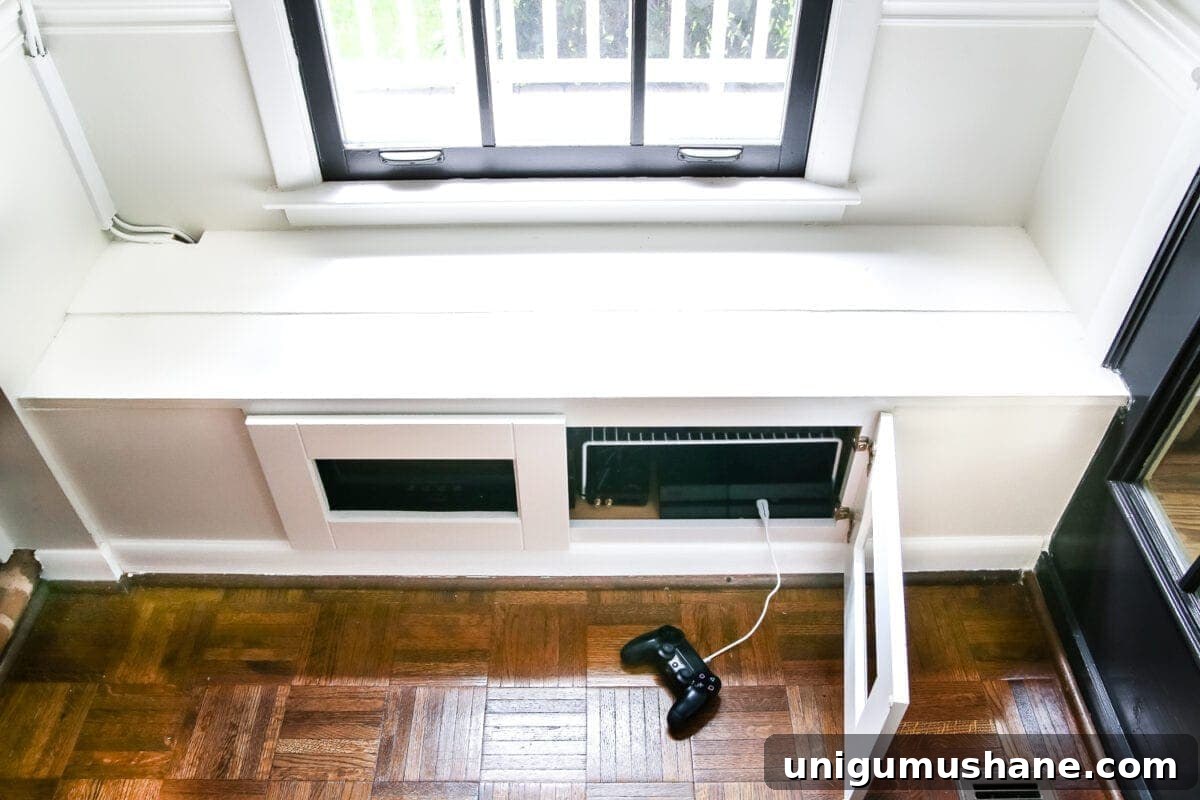
14. Caulk seams, fill nail holes with wood filler, sand, then prime and paint the seat to match the surrounding trim. Once painted, the seat looks like it was always part of the room.
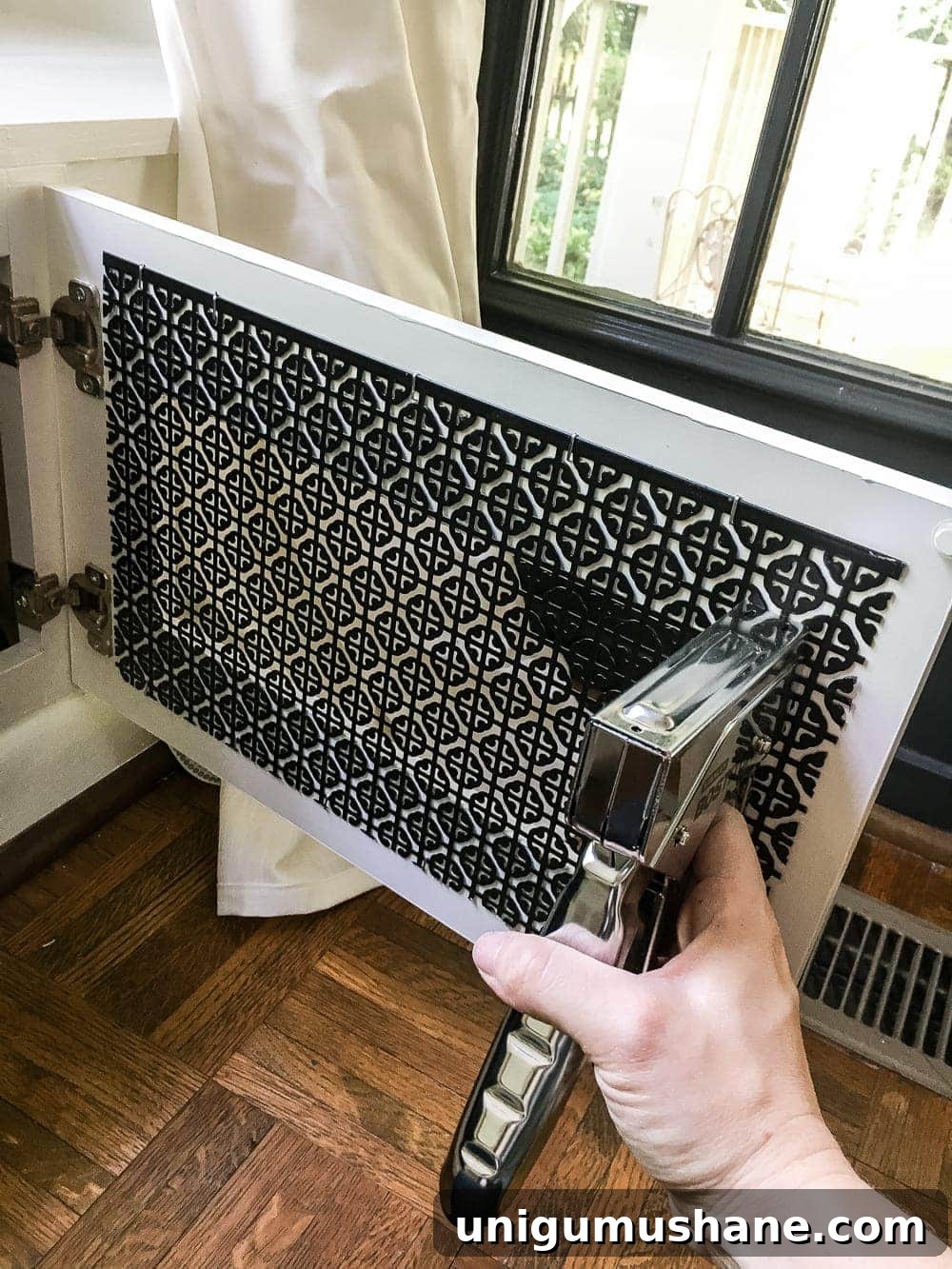
15. For remote-friendly doors, cut two aluminum sheets slightly larger than the door openings, staple them to the inside of the doors, then prime and paint them to match. The metal lets infrared signals pass while keeping electronics hidden and ventilated.
The result is a neat place to store all our electronics and a comfy bench for reading or extra seating when guests arrive.
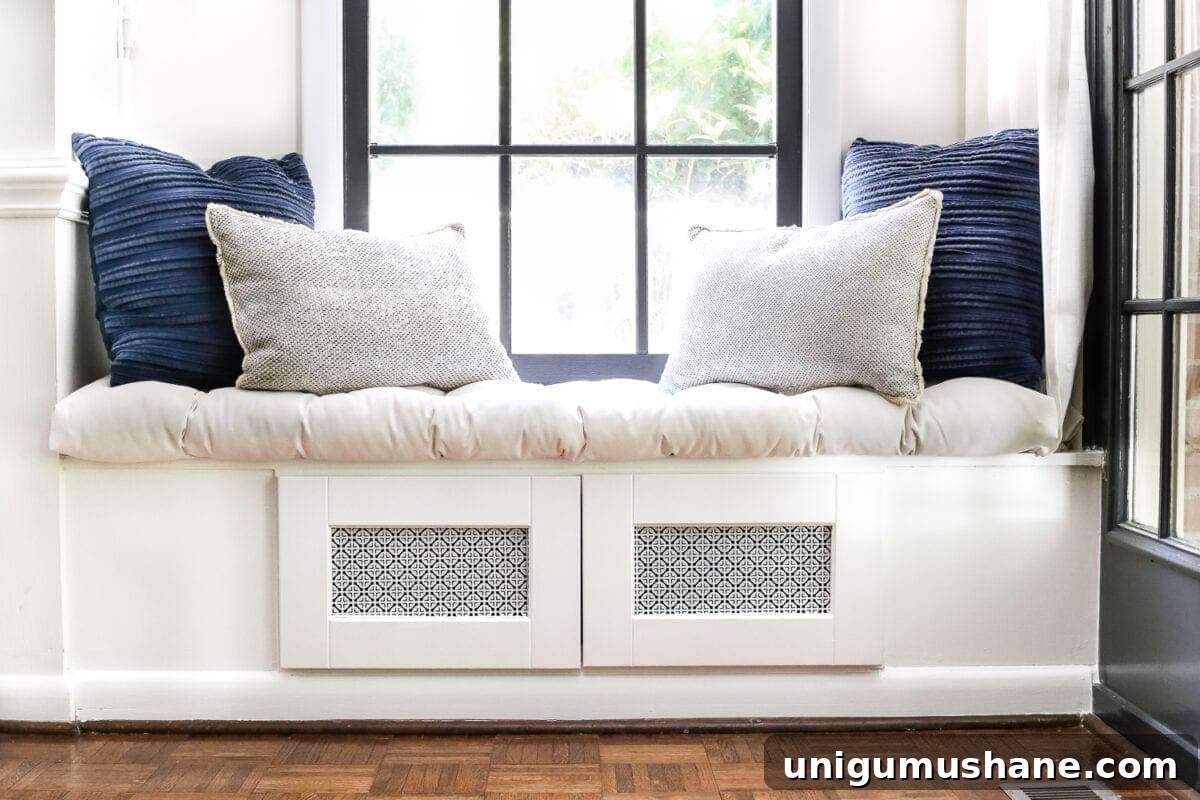
We could have built the whole thing from scratch, but reusing a prefab cabinet made the project much faster — instant gratification in about eight hours. To keep equipment cool, we installed quiet dual fans inside the cabinet to maintain airflow. For the seat cushion, a custom-sized cushion was ordered to fit the dimensions; its durable fabric makes it kid-friendly and easy to clean.
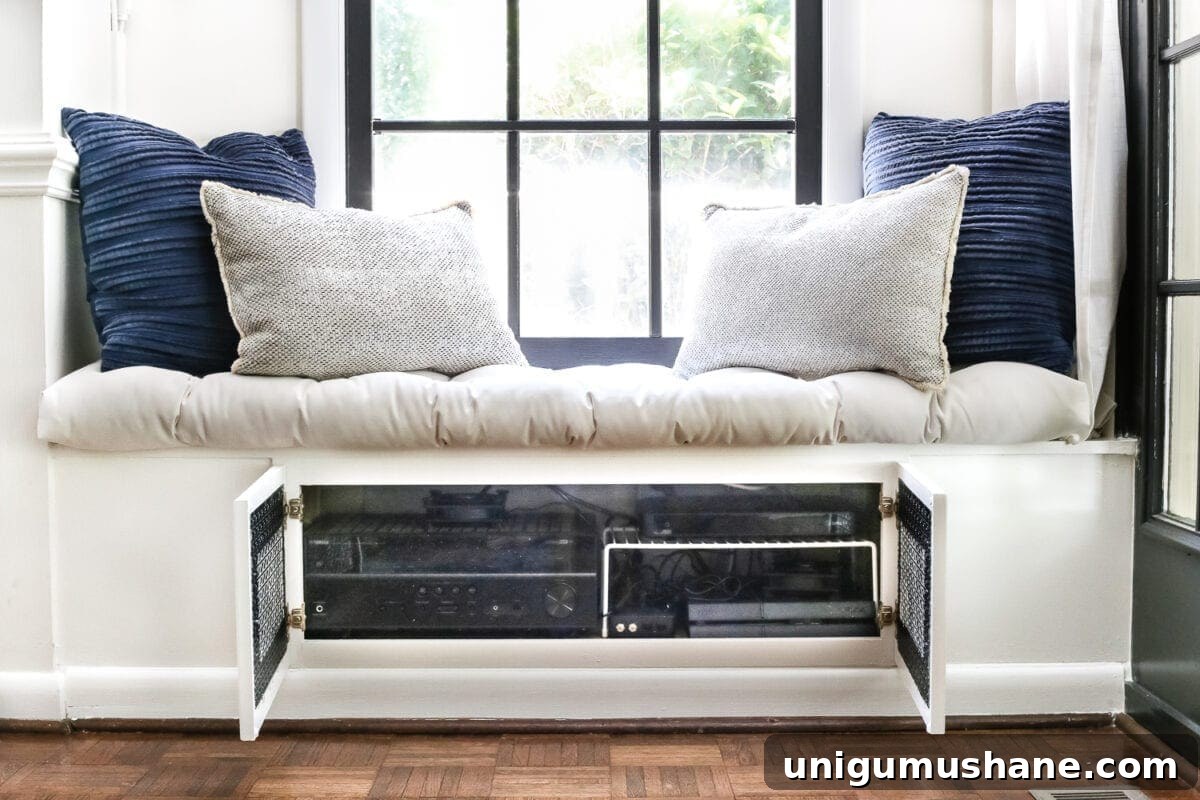
To hide the cables between the TV and the seat, we used paintable cord covers tucked into the corner and painted to match the wall color so they blend in. I debated hanging curtains, but for now I’m keeping the look simple so the window seat remains the focus.
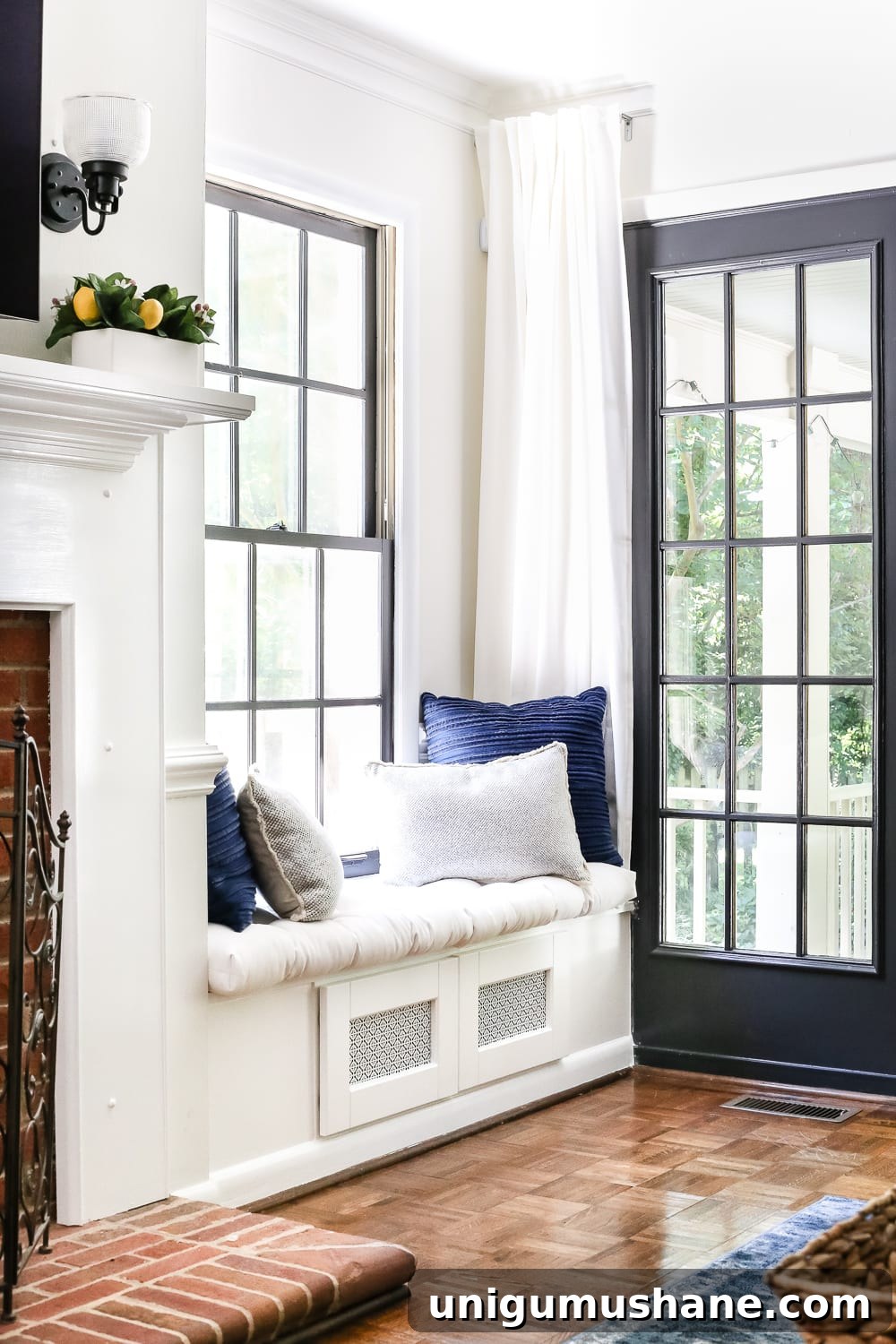
Olivia immediately claimed the seat as her nap spot, which makes me think we made the right choice. Someday we’ll add a matching seat to the other side of the fireplace once we replace an old non-working door with a window.
Next on the living room list is the brick fireplace. We’re still deciding whether to clean and leave it raw, paint it, or use a rubbed finish technique. Until we pick a direction, it will stare back at us and demand attention.
Sources:
- Hyacinth basket tray
- Lemon mantel arrangement
- Metallic lumbar pillow
- Blue pleated pillow
- Area rug
- Seat cushion (custom size)
- Wall sconce
- Wall color: Benjamin Moore Swiss Coffee
- Trim color: Benjamin Moore Simply White
- Door color: Benjamin Moore Wrought Iron