
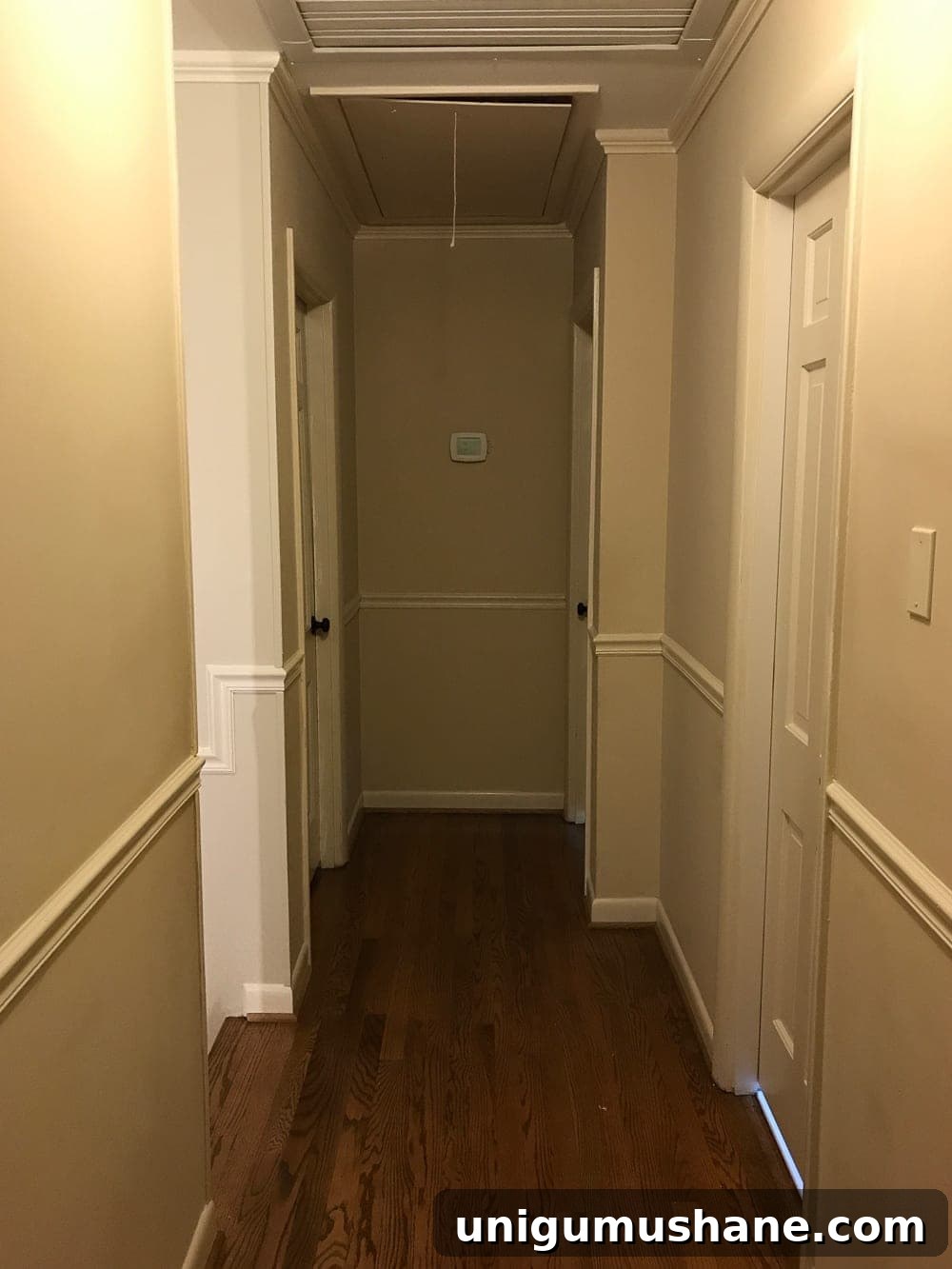
You know those small projects that nag at you for months or years—kept on the back burner because they’re literally up above your head? That was our attic door during our first year in this house.
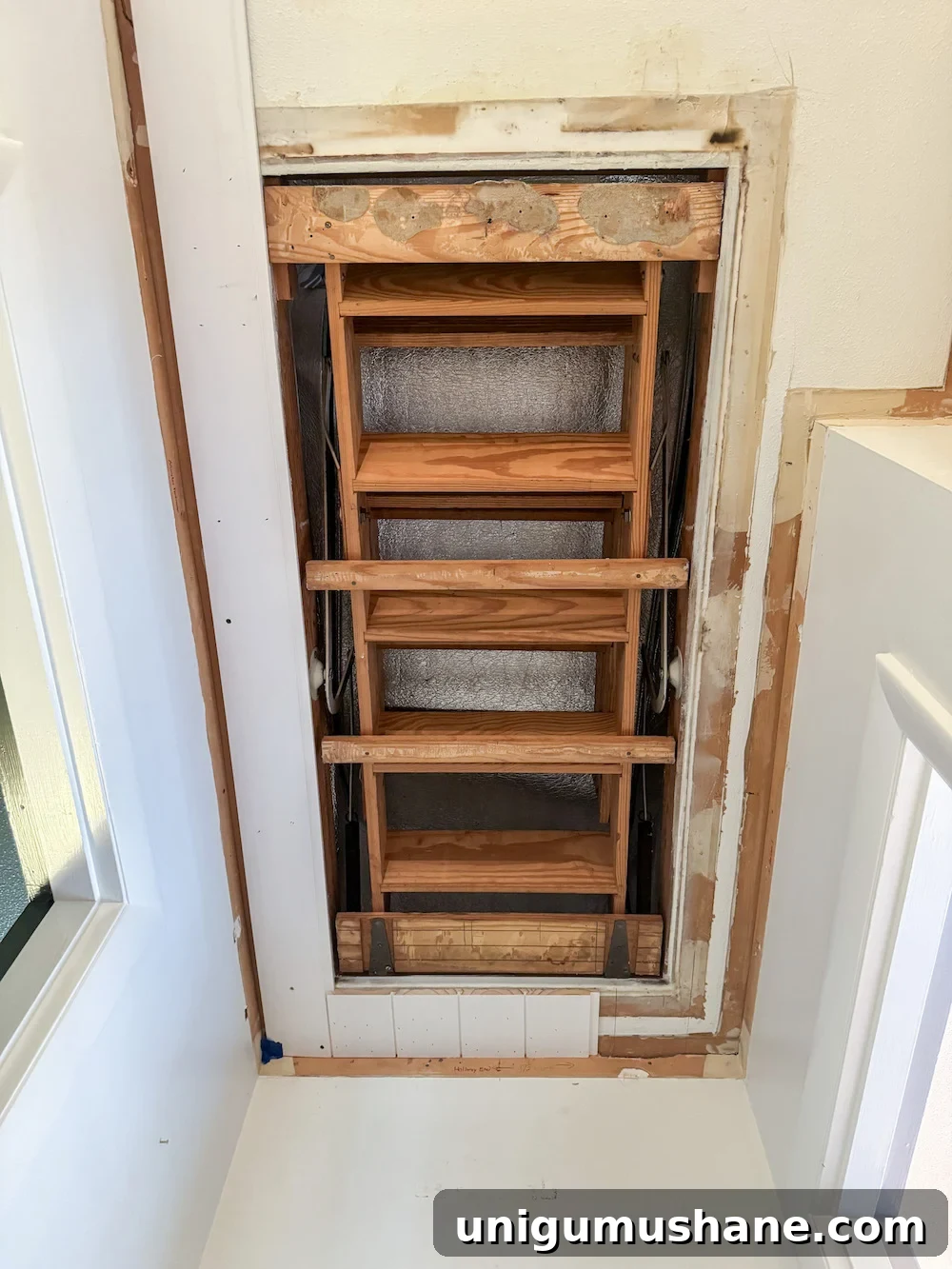
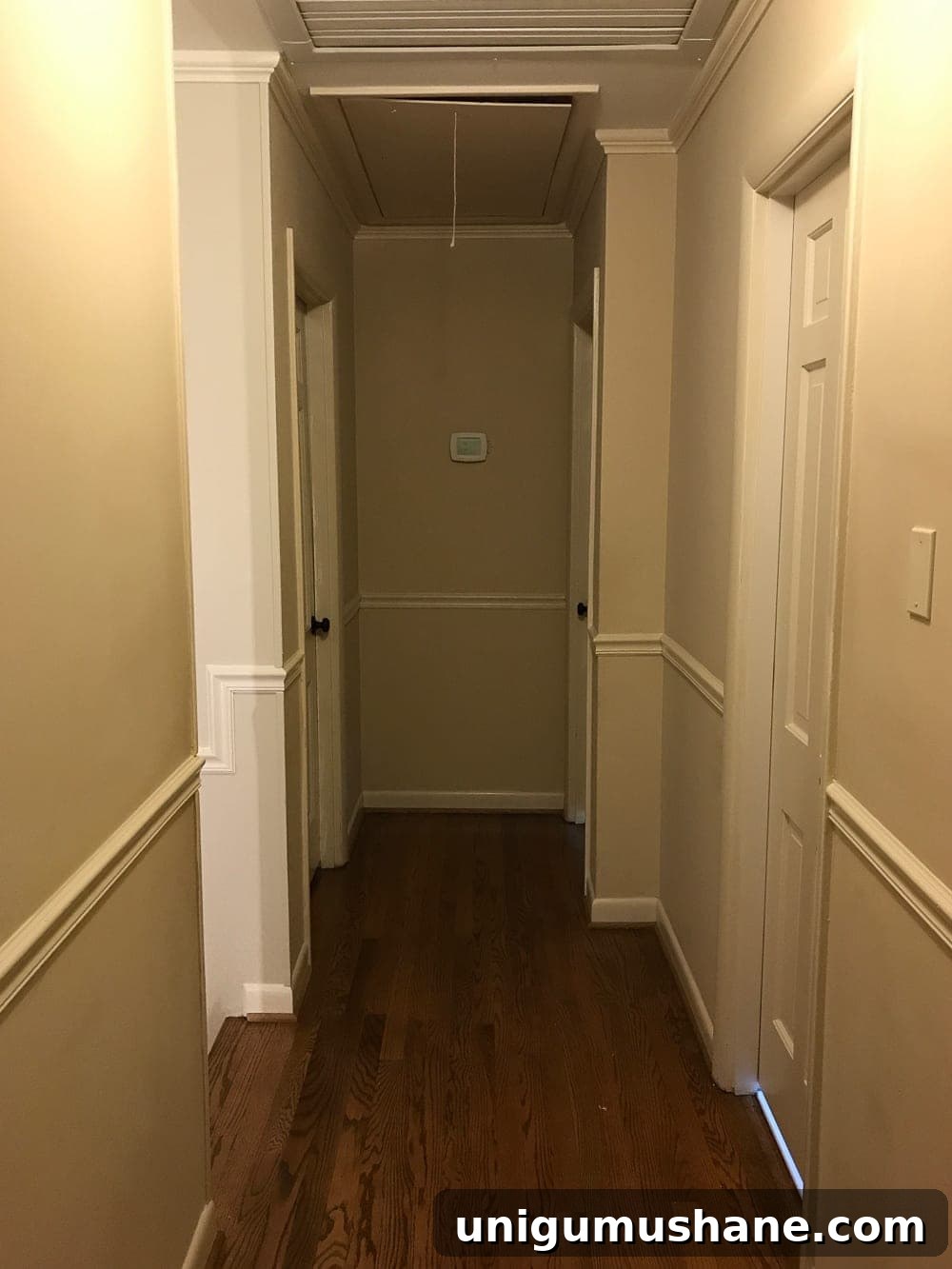
Here’s how it looked before. (Ignore the painter’s tape in the after photos—we were still finishing the trim.)
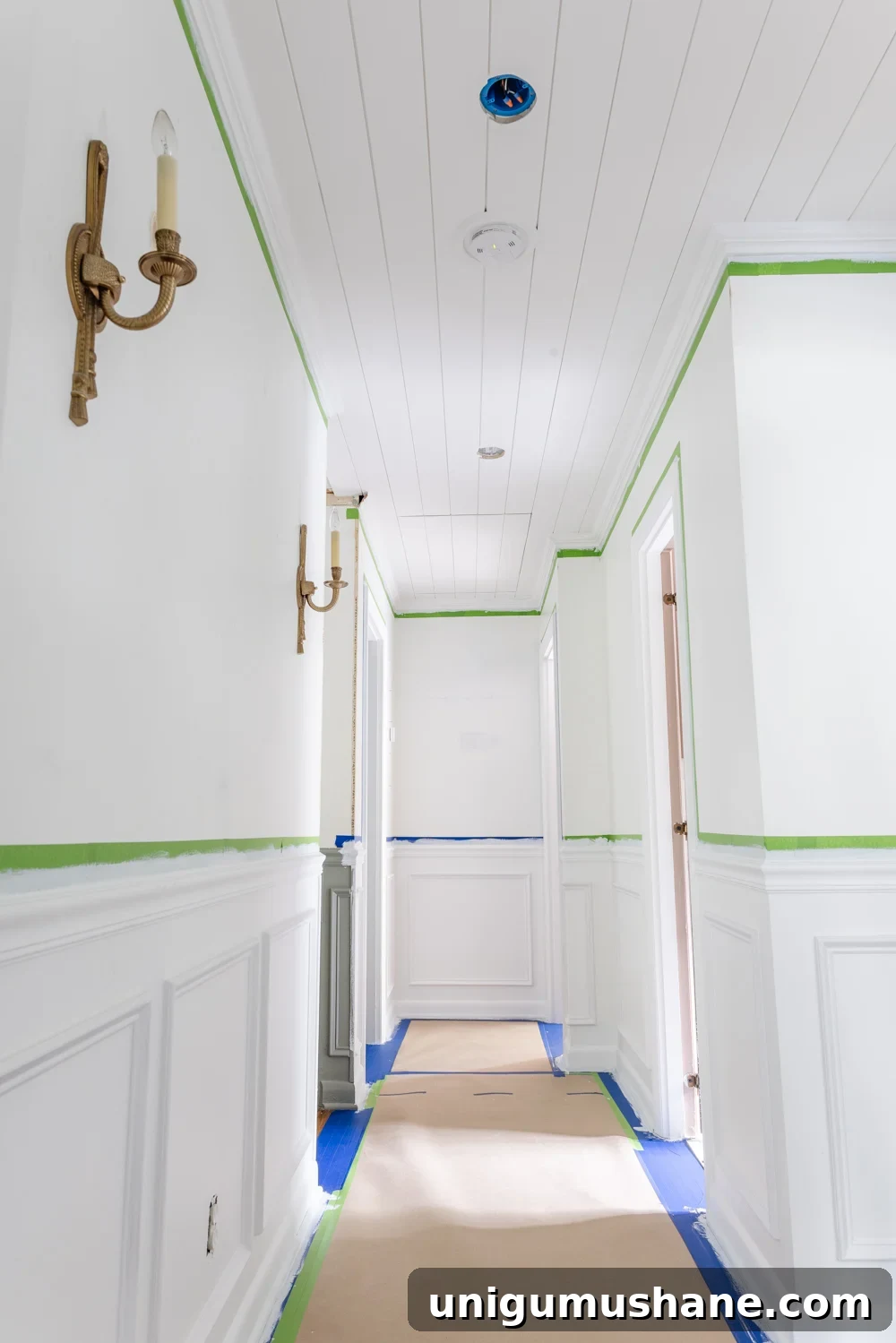
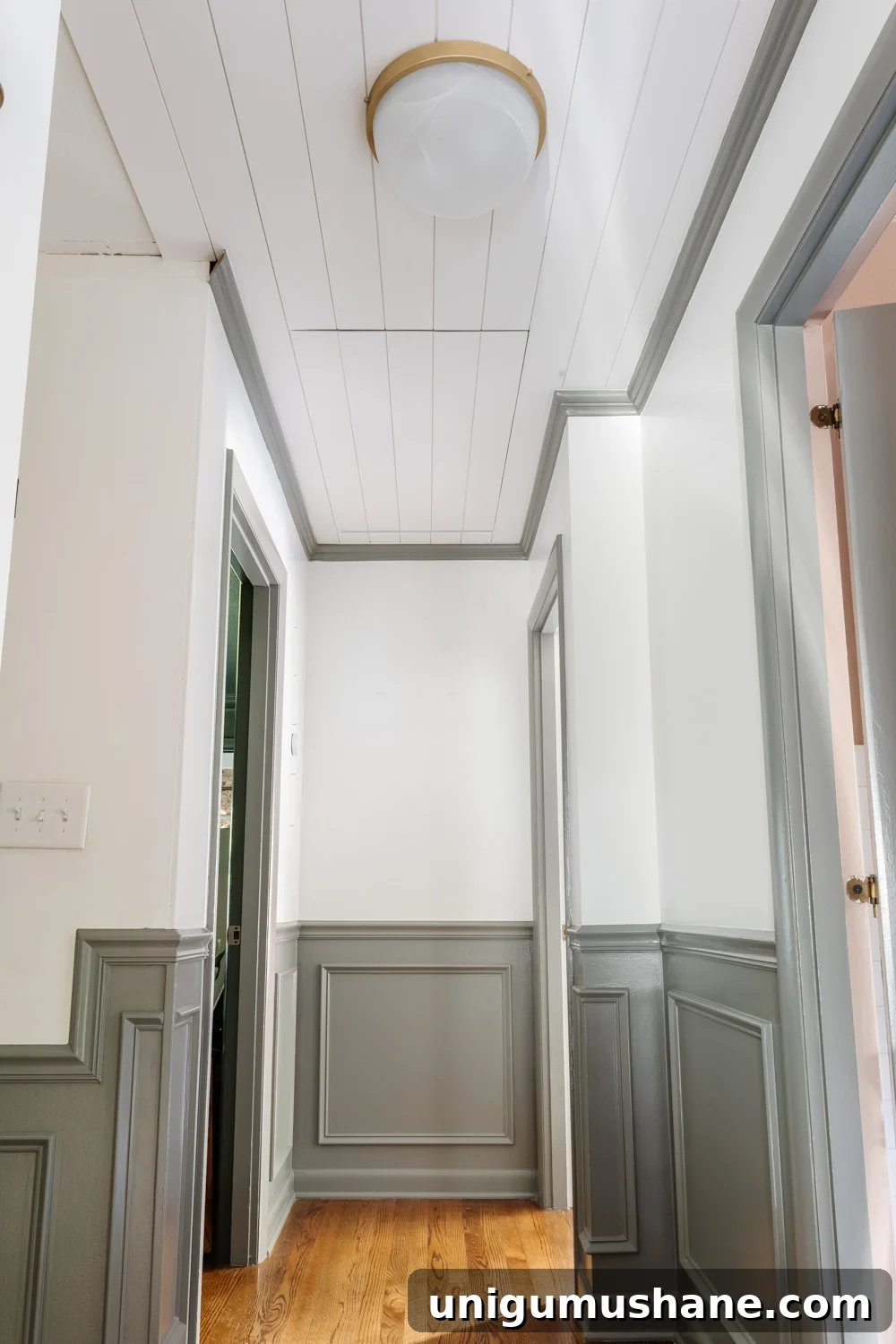
Now you can barely notice it. We replaced the old fan and tired hardware, smoothed the visual clutter, and wrapped the ceiling in tongue and groove planks so the attic door blends almost seamlessly with the surrounding surface.
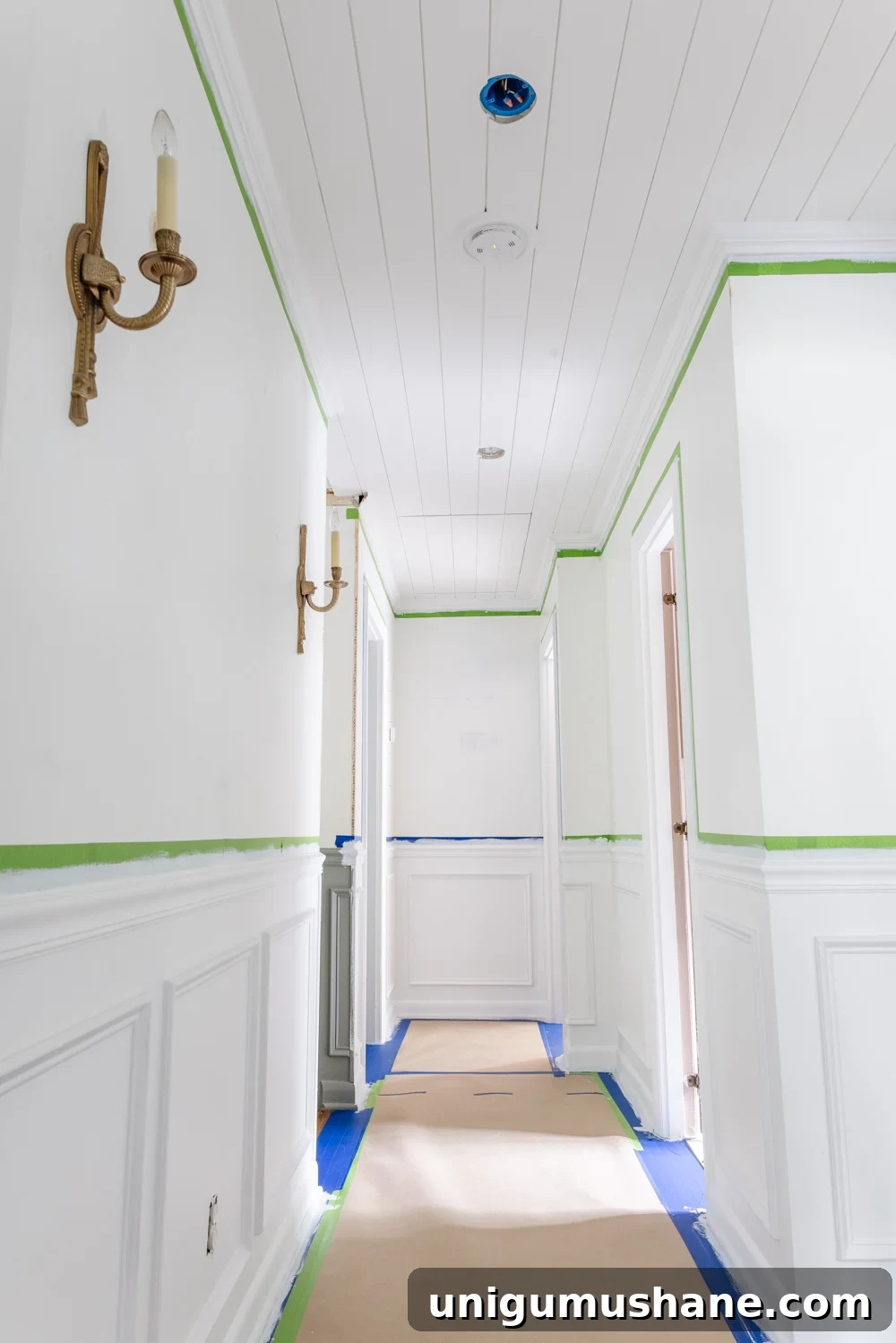
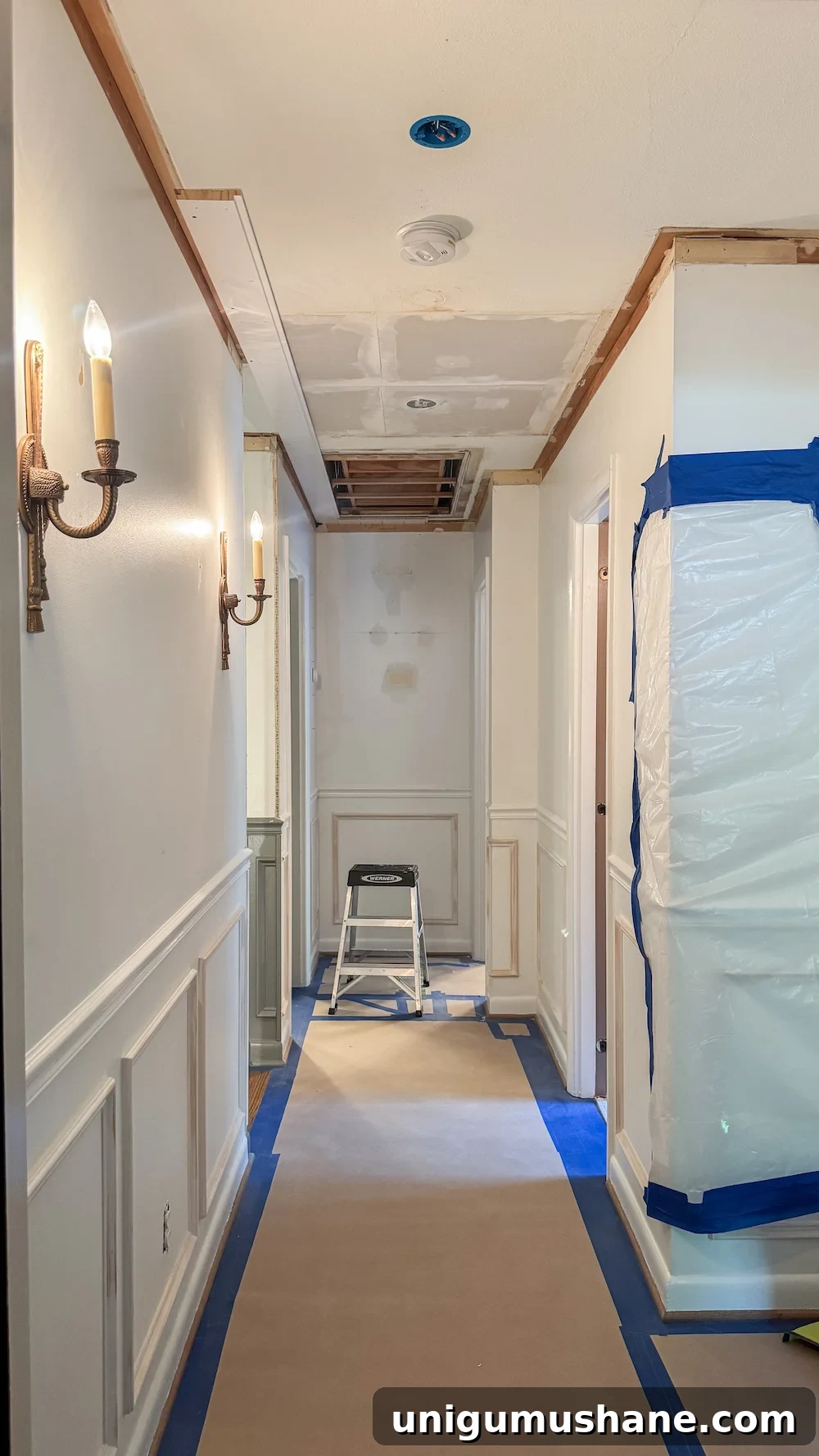
Before the project, the upstairs hallway ceiling had an aged fan, a crusty vent, and a frayed attic-door pull that screamed for an update. This hallway is also getting a full makeover with contrast trim and wainscoting, so hiding the attic door was one of the first priorities.

Our solution was a simple one that also adds instant charm: a tongue and groove ceiling. It concealed the attic access and gave the hallway a cozy, cottage-core feel.
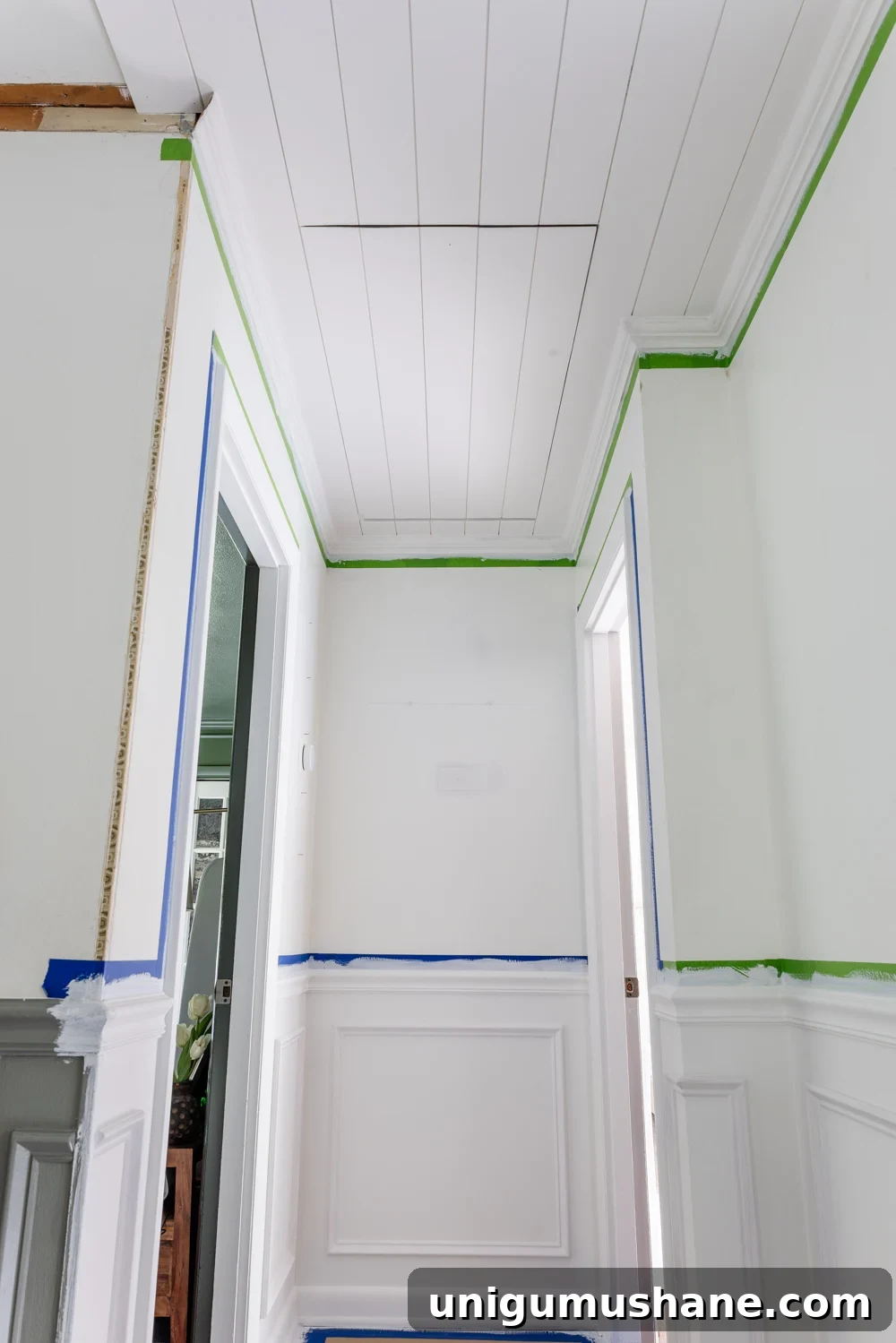
This guide explains the process we used to hide an attic door in a ceiling with tongue and groove planks, including practical tips to get tight seams and a professional-looking finish.
How to Hide an Attic Door in the Ceiling with Tongue and Groove Planks
Disclosure: I earn from qualifying purchases through affiliate programs.
Tools & Materials
- Tongue and groove planks — we used 5 1/4″ pre-primed pine shiplap boards
- Miter saw
- Measuring tape
- Construction adhesive
- 2-inch 16-gauge finish nails and a nail gun
- Caulk and wood filler
- Crown molding (optional)
- Coping saw (if installing molding)
- Primer and paint
- Hook & pull kit to replace a dangling attic-string
Step 1: Remove the Old Trim, Molding, and Attic Door
Start with a clean ceiling. Remove the existing attic panel, trim, and any molding so you have an even surface to work with. Patching over an old fan or vent first will make installation easier.
Step 2: Measure Your Ceiling and Plan Plank Placement
Measure the full length and width of the ceiling to determine how many boards you’ll need. Dry-fit a scrap plank to mock up the layout and pencil-mark the placement so you don’t end up with a narrow, awkward strip next to the molding or hatch. Taking time to plan now prevents frustration later.
Step 3: Install Planks Beginning at the Attic Door Edge
Apply a bead of construction adhesive to the back of the first plank and secure it to the ceiling with 2-inch finish nails. We started with the boards along the attic opening so the pattern centered and the seams read evenly across the ceiling.
Step 4: Cut Planks at 45° Where They Meet the Hatch
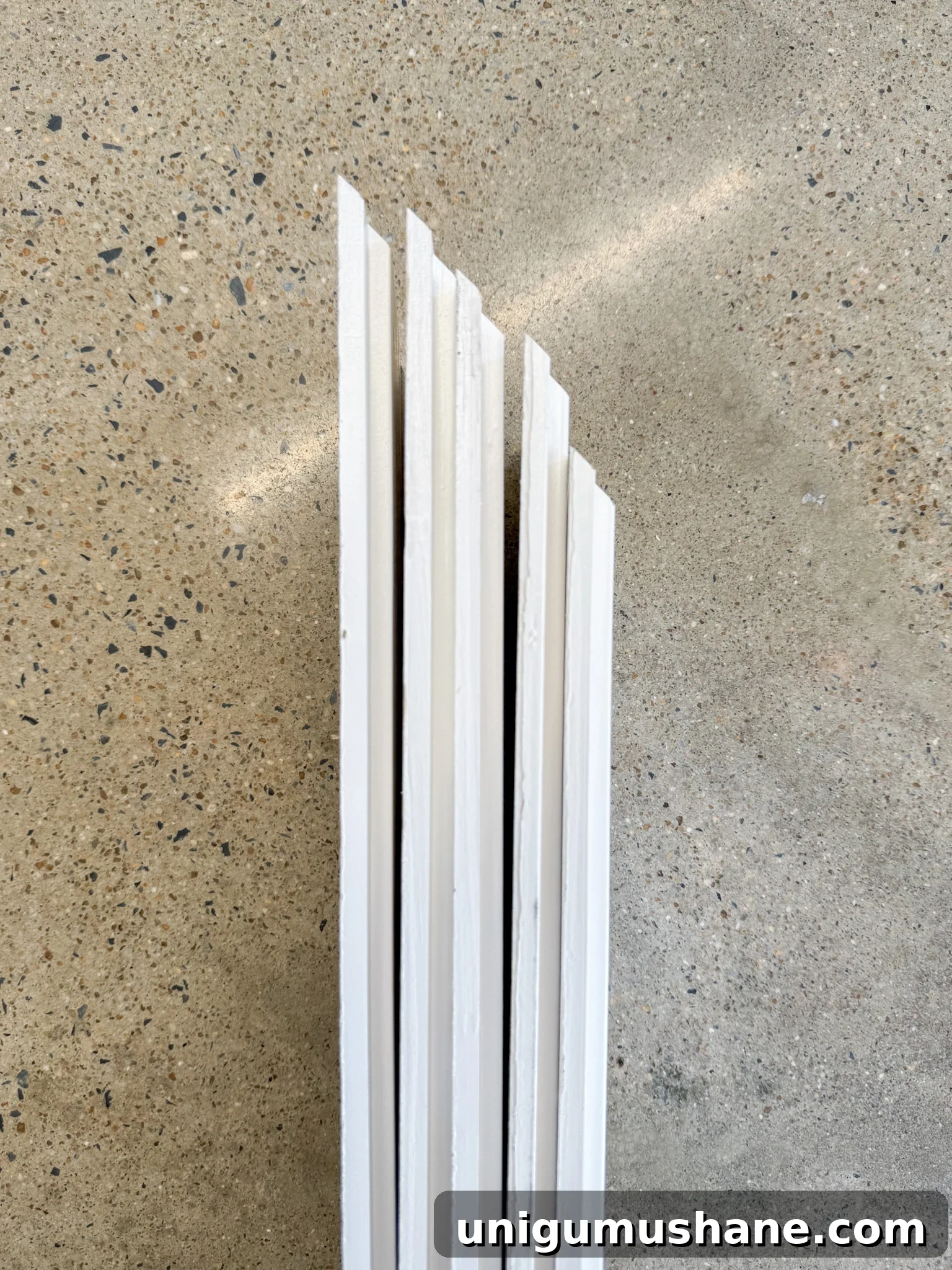
Use a miter saw to bevel the end of any board that meets the hatch at a corner. A 45° cut creates a clean intersection so the seam is much less visible once painted.
Step 5–6: Continue Installing with Beveled Cuts
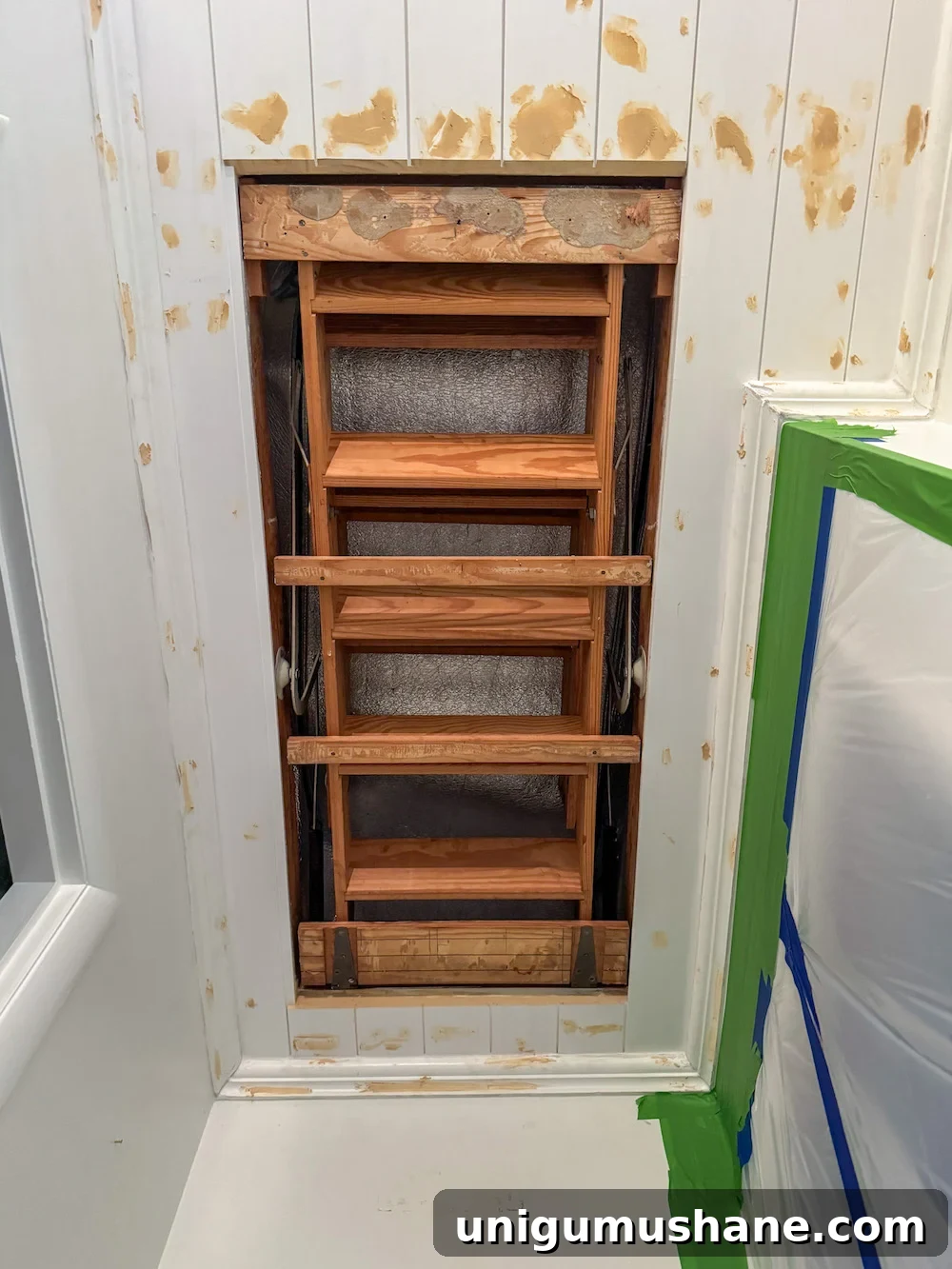
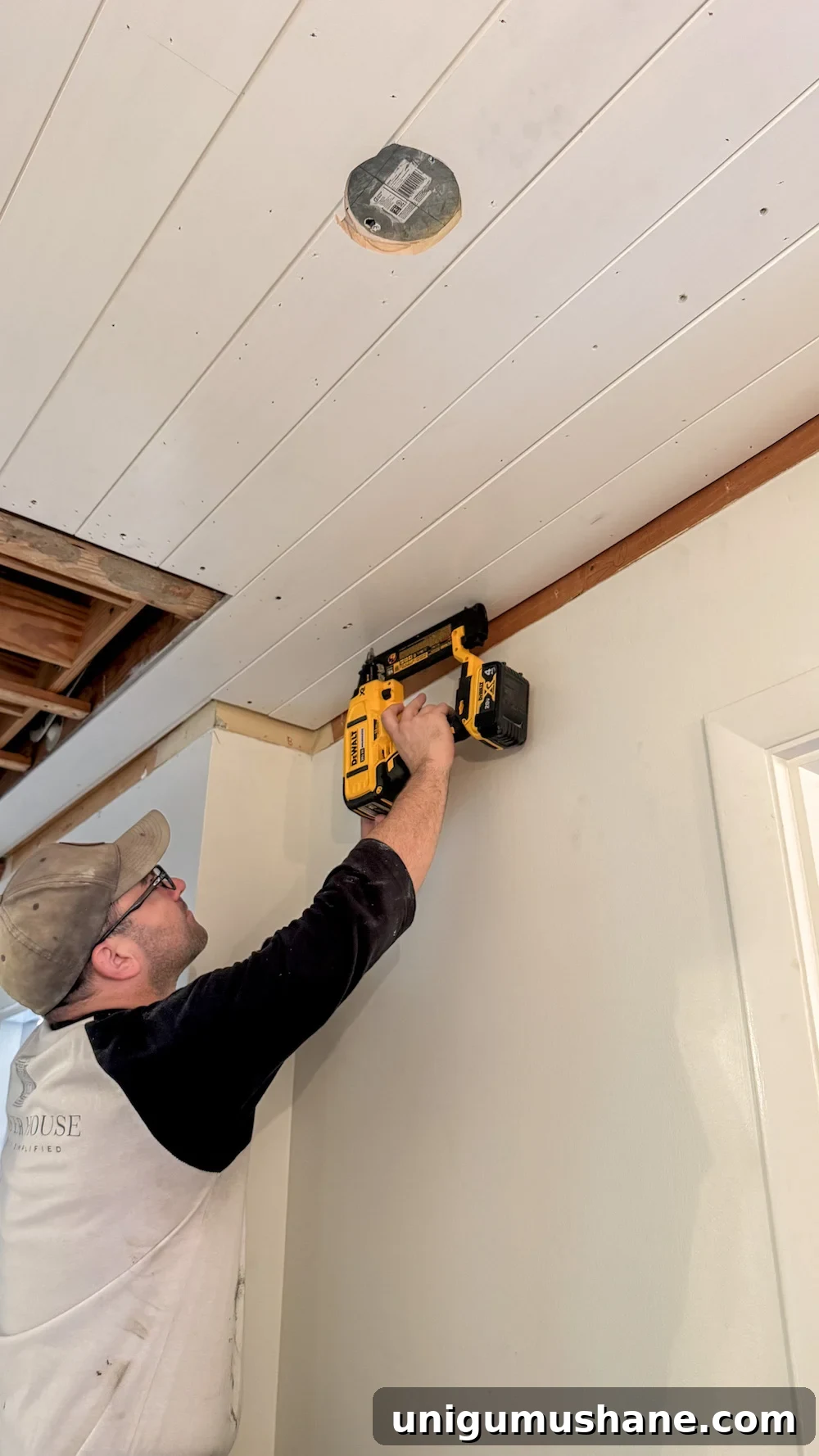
Repeat bevel cuts for each board that meets the hatch perimeter, adhering and nailing them in place. The tongue and groove connection locks everything together so the ceiling reads as one continuous plane.
Step 7: Add Crown Molding (Optional)
After the ceiling is planked, you can reattach crown molding around the perimeter for a finished look. Use a coping saw for tight inside corners and accurate joints. If you want guidance on coping, refer to a DIY picture frame molding tutorial for step-by-step help.
Step 8: Cut Planks to Fit the Attic Door
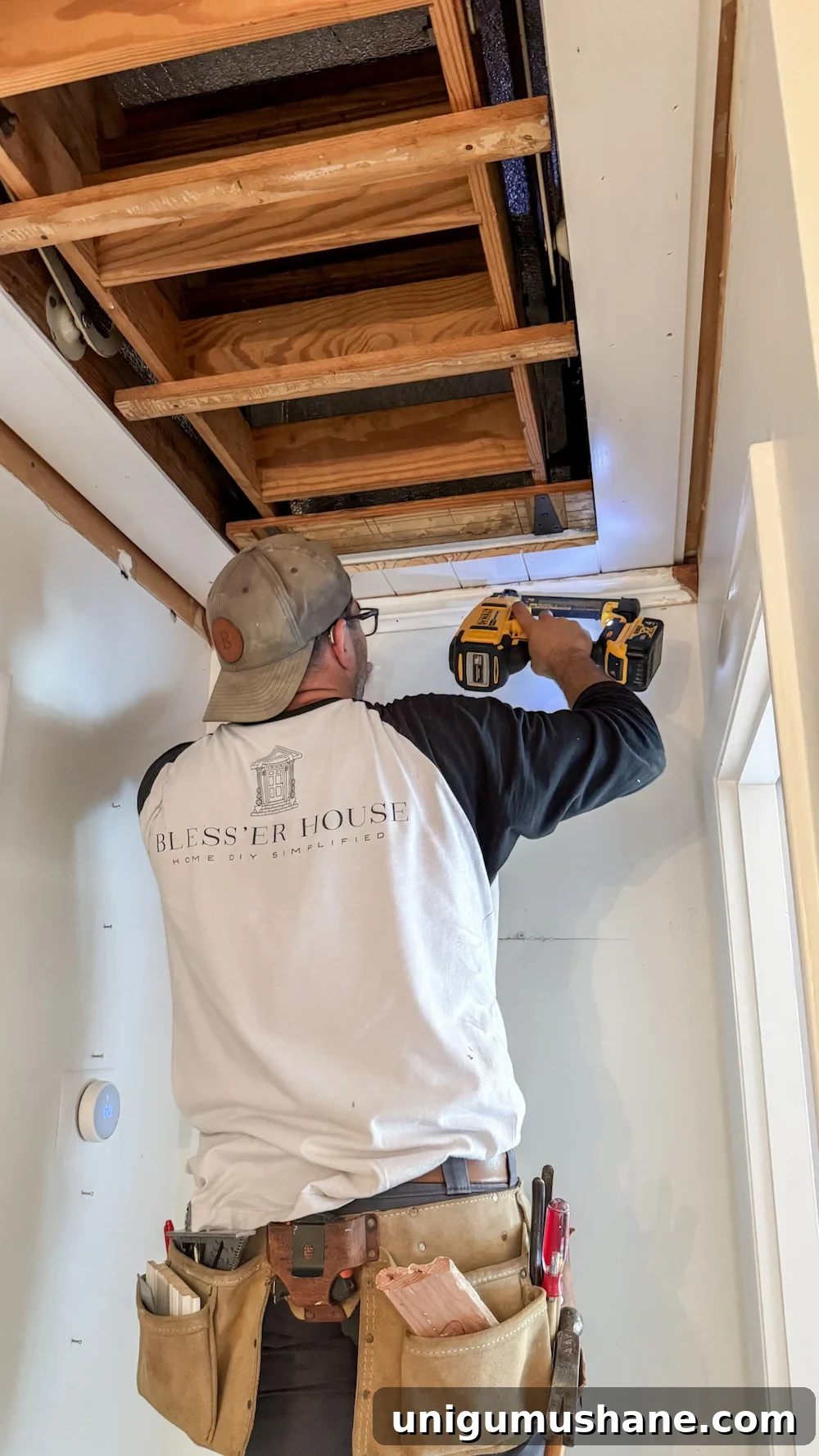
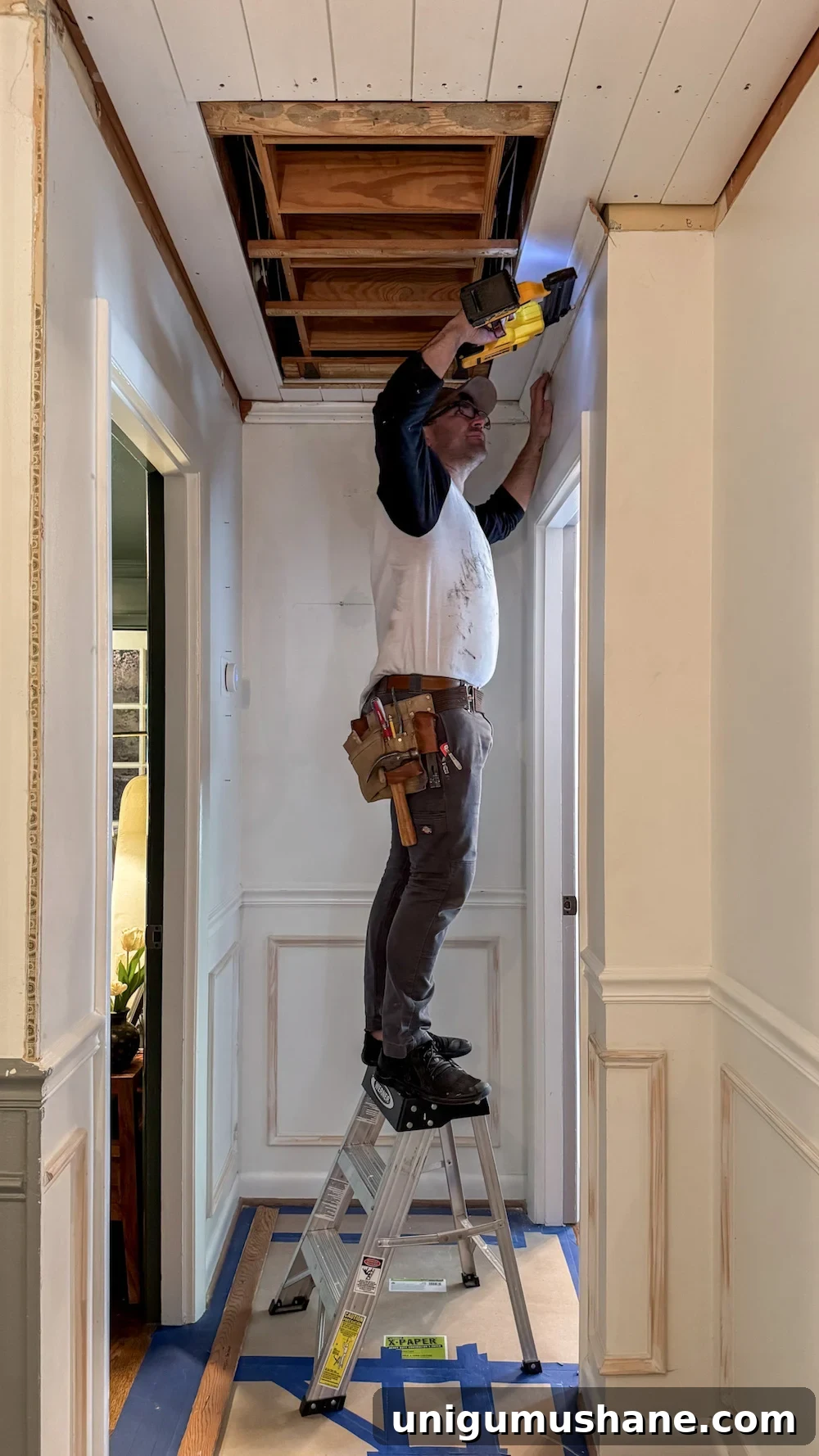
Measure the hatch opening precisely and cut planks for the door panel. Again, bevel ends at 45° where they meet the surrounding ceiling for the most seamless transition.
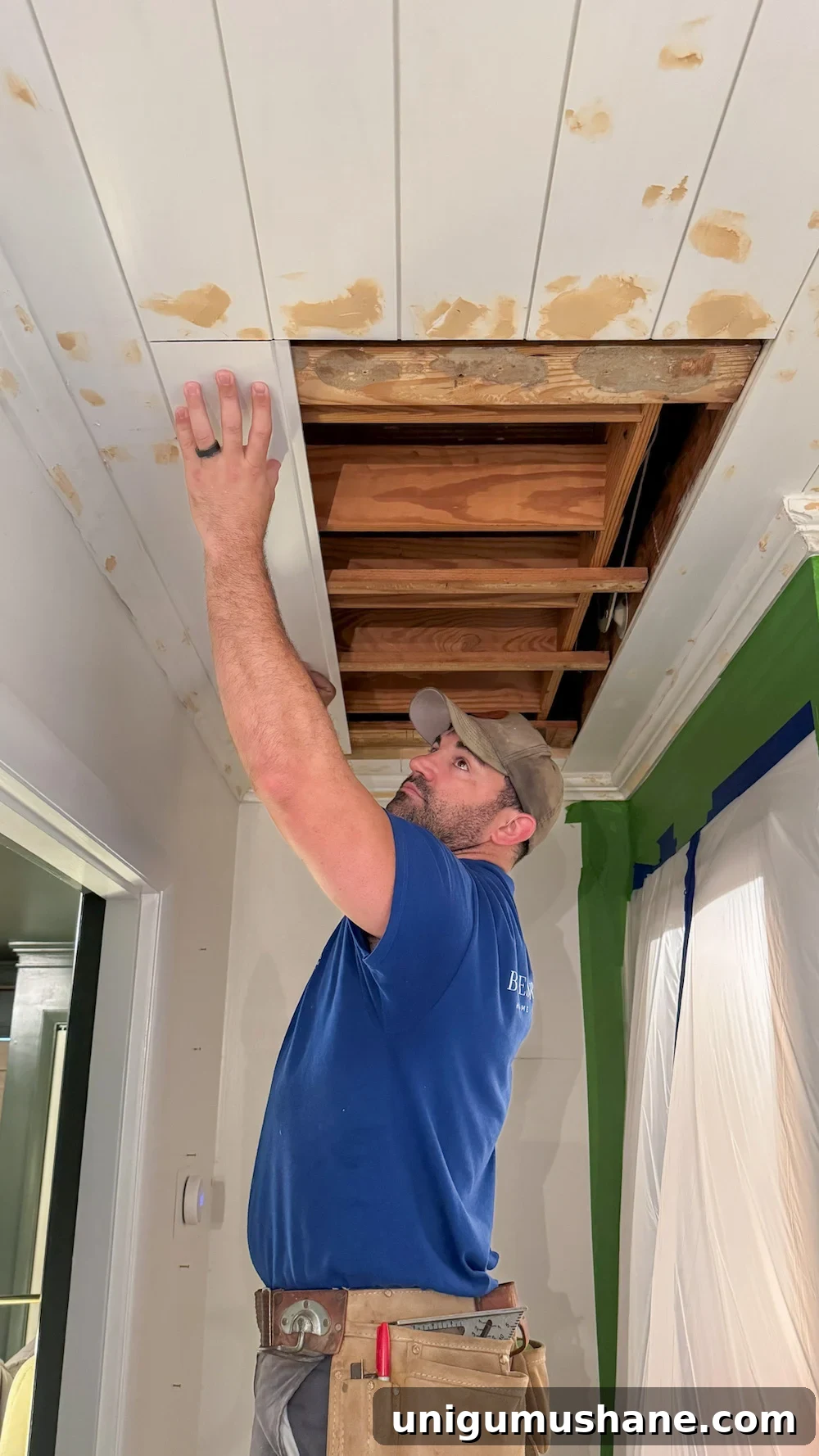
Step 9: Attach Planks to the Attic Door Panel
Secure planks to the door with construction adhesive and finishing nails. If your hatch is heavy, reinforce the hinges so the added weight won’t strain the hardware.
Step 10–11: Fill Nail Holes and Caulk Seams
Fill nail holes and any gaps with wood filler, then caulk where the planks meet molding or trim. Allow everything to dry completely before sanding and painting.
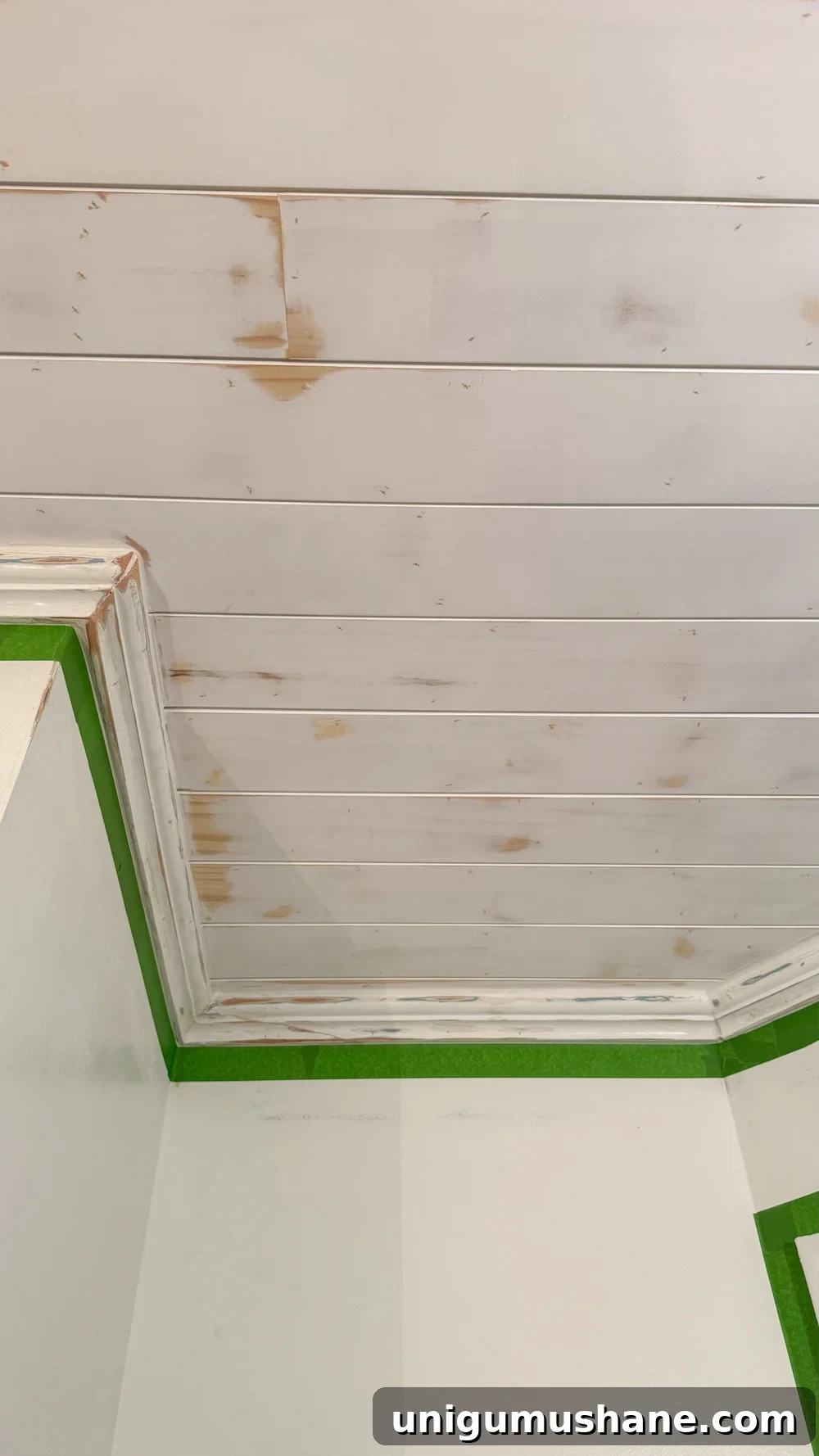
Step 12: Sand, Prime, and Paint
Sand the wood filler smooth, prime the boards, then paint everything in your chosen color. We went with crisp white for a clean, classic finish, but a moody ceiling color can also make a bold statement if that’s your style.
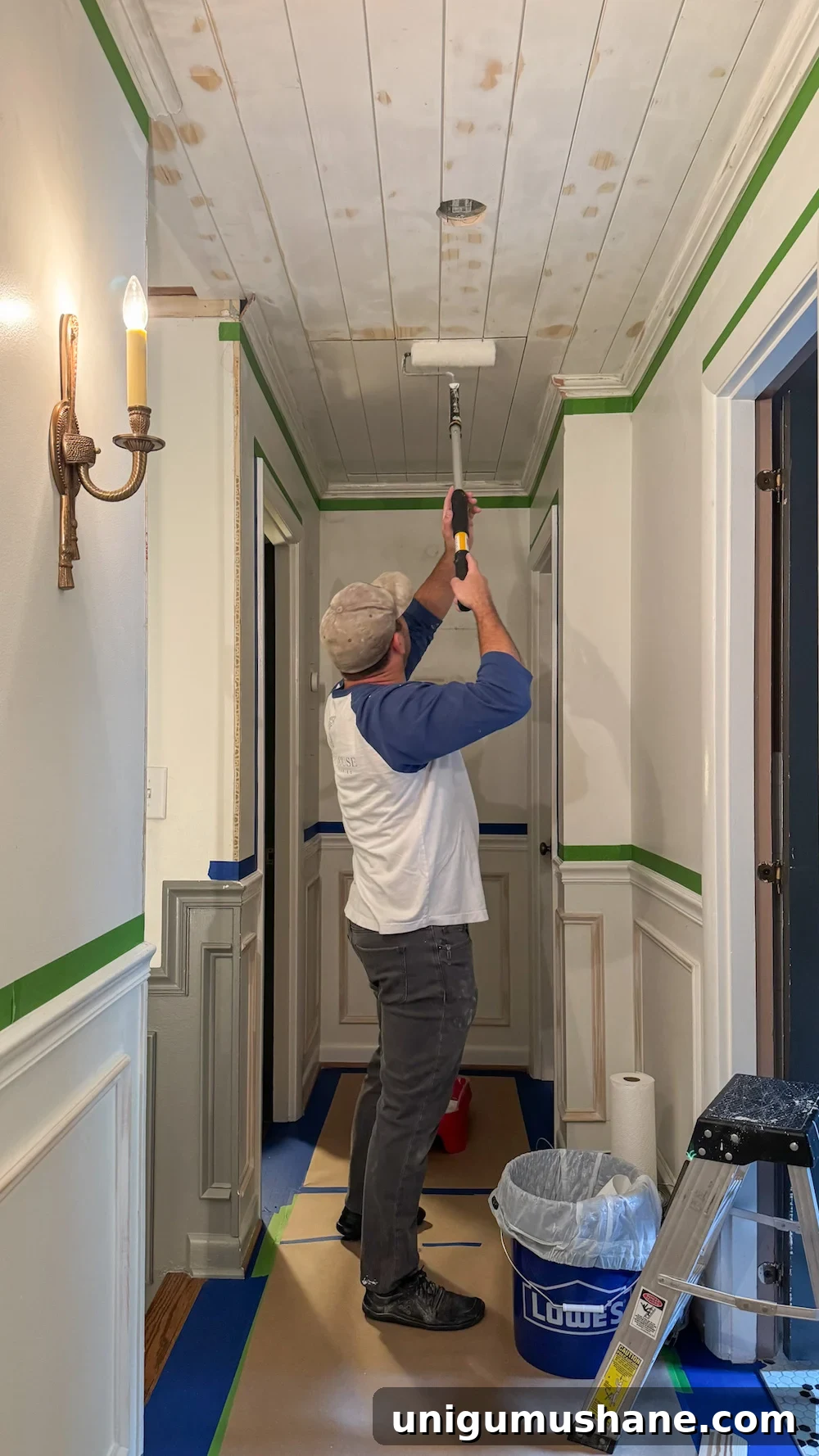
Step 13: Replace the String with a Hook & Pull Kit
Swap the old dangling string for a compact hook-and-pull kit. It’s cleaner-looking and much safer, and once the planks are painted the hardware practically disappears into the ceiling.
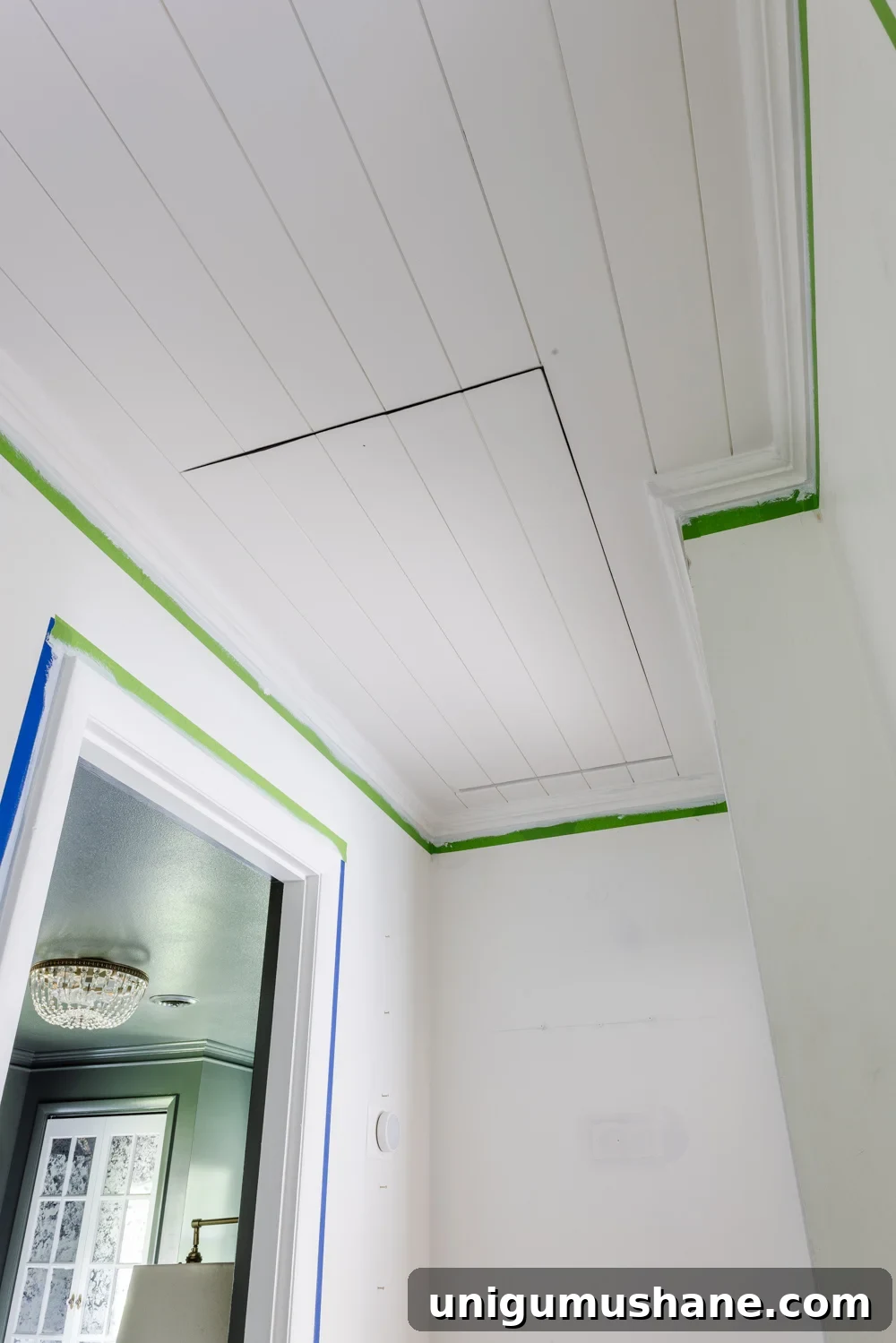
Attic Door Before & After
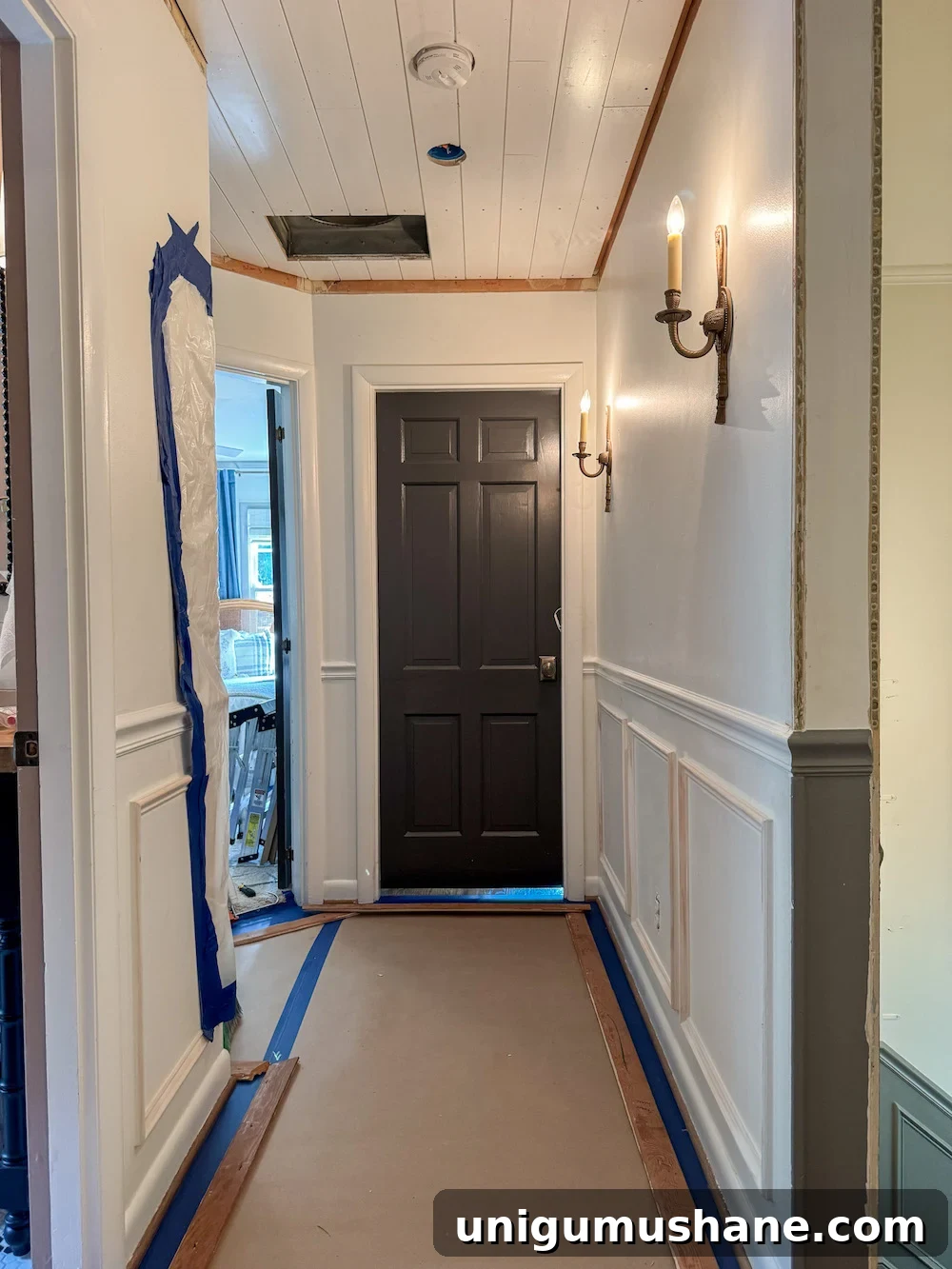
After installing the tongue and groove ceiling and camouflaging the hatch, the hallway looks taller and far more intentional. The visual noise is gone and the space finally reads the way we’d always imagined.
With the ceiling finished we were able to return our antique mirror, add a runner rug to soften the floor, and start a small gallery wall to complete the transformation.
Hiding the attic door was the one finishing touch that gave the upstairs hallway the character it needed.
Here’s a peek while we were painting the trim.
If you’ve been avoiding a ceiling eyesore, consider tongue and groove planks as a straightforward, high-impact solution. It hides access panels, smooths the visual plane, and adds architectural interest, all while remaining accessible when you need to use the hatch.
If you decide to try this project, I’d love to see how it turns out—tag @blesserhouse on Instagram so I can cheer you on.
More DIY Millwork Ideas
- DIY Picture Frame Molding
- How to Quickly Beef Up Crown Molding
- How to Install Stair Wainscoting the Easy Way
- 8 DIY Wall Molding Ideas to Add Character to Your Home