
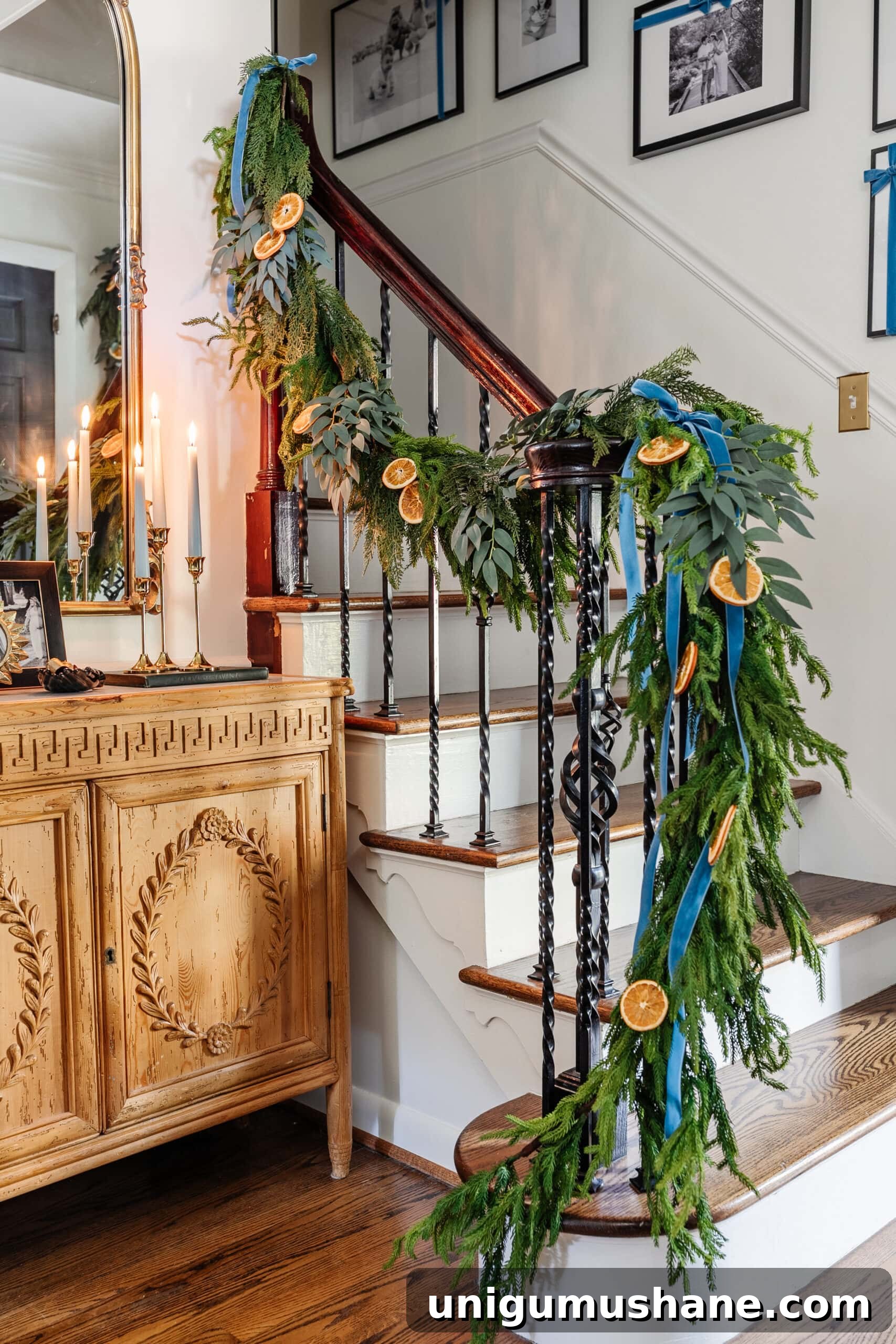
A concise tutorial for hanging Christmas garland on stairs, tips to make faux garland look authentic, and a tour of a modern-traditional entryway decorated for the holidays.
I’ve been documenting small decorating tutorials lately — like last week’s Christmas tree ribbon how-to — and today I’m sharing my process for draping garland on the staircase. Over the years I’ve decorated our stair banister multiple times, changing the style slightly each season, but the basic steps remain the same no matter the size of your staircase or your decorating preferences.
Our banister spans just six steps into the foyer, but whether your stair run is short or stretches across many steps, the technique is identical. Below I’ll walk through the tools and materials, step-by-step instructions, and styling tips to help your garland look full and natural — even when it’s faux.
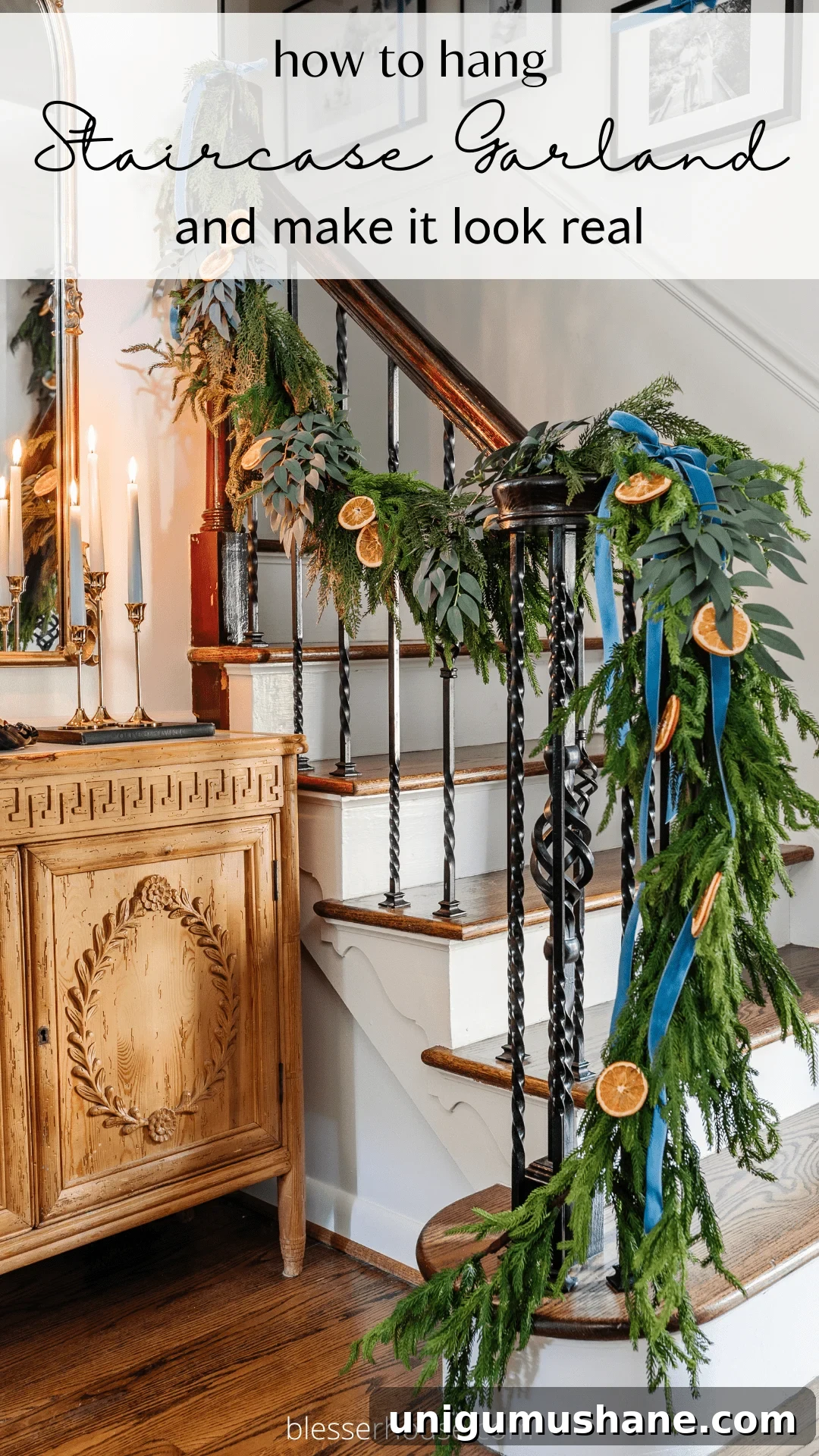
How to Hang Christmas Garland on Stairs
Start by assessing the length of your banister and choosing a garland that allows for gentle drape. I typically use a 6′ strand on a 4′ banister to create a soft swag, and I connect multiple strands when I want a longer continuous length that cascades down the newel post. You can also purchase garland in longer lengths (for example 15′ and up) if you prefer not to join pieces together.
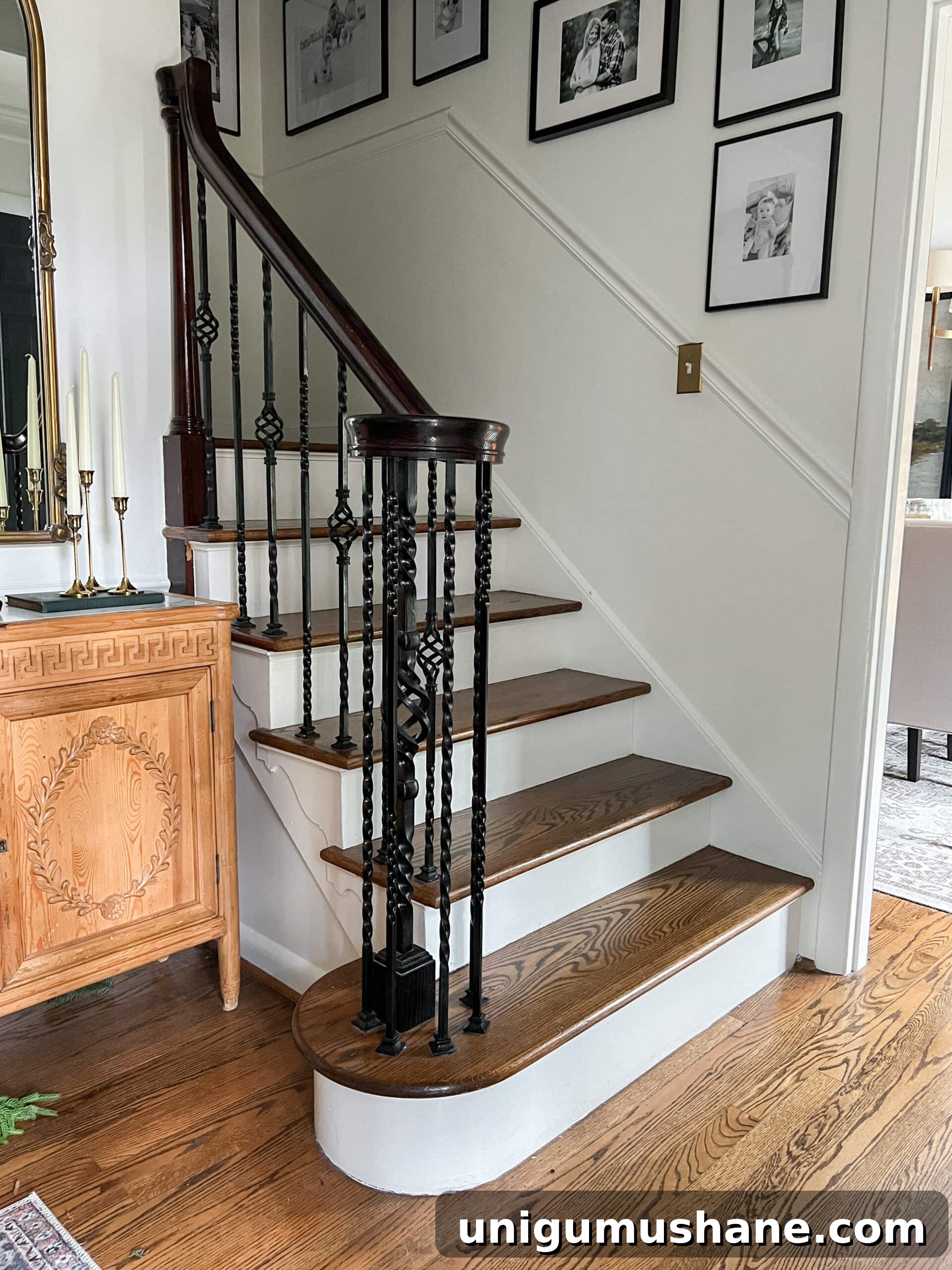
Garland Types and Styling
Choose a garland with a realistic profile as your base — Norfolk pine and similar full-needled styles look very natural. I sometimes layer in other textures like eucalyptus, cedar, faux berry stems, and dried orange slices for visual interest. Mixing materials (fresh or faux) adds depth and helps faux garland look more authentic.
If you want a very full look, plan to overlap or connect multiple strands and tuck filler stems into gaps. For a lighter, more modern aesthetic, a single sparse strand can read elegant and less formal.
What You’ll Need
- Enough garland to span your banister plus extra for draping
- Zip ties
- Scissors or wire cutters
- Floral wire
- Accent stems: faux berries, eucalyptus, dried orange slices, etc.
- Non-wired ribbon (for drape and visual softness)
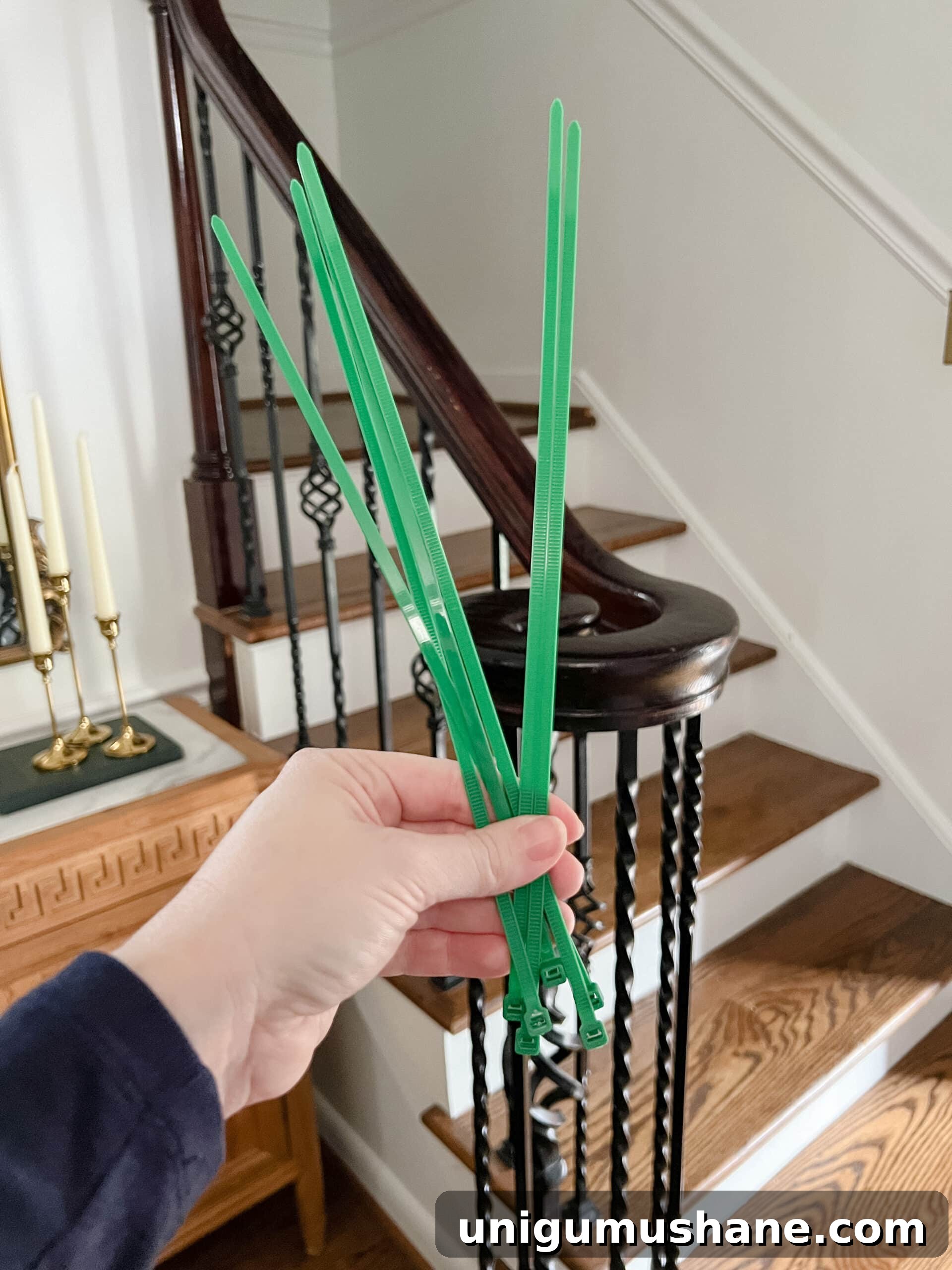
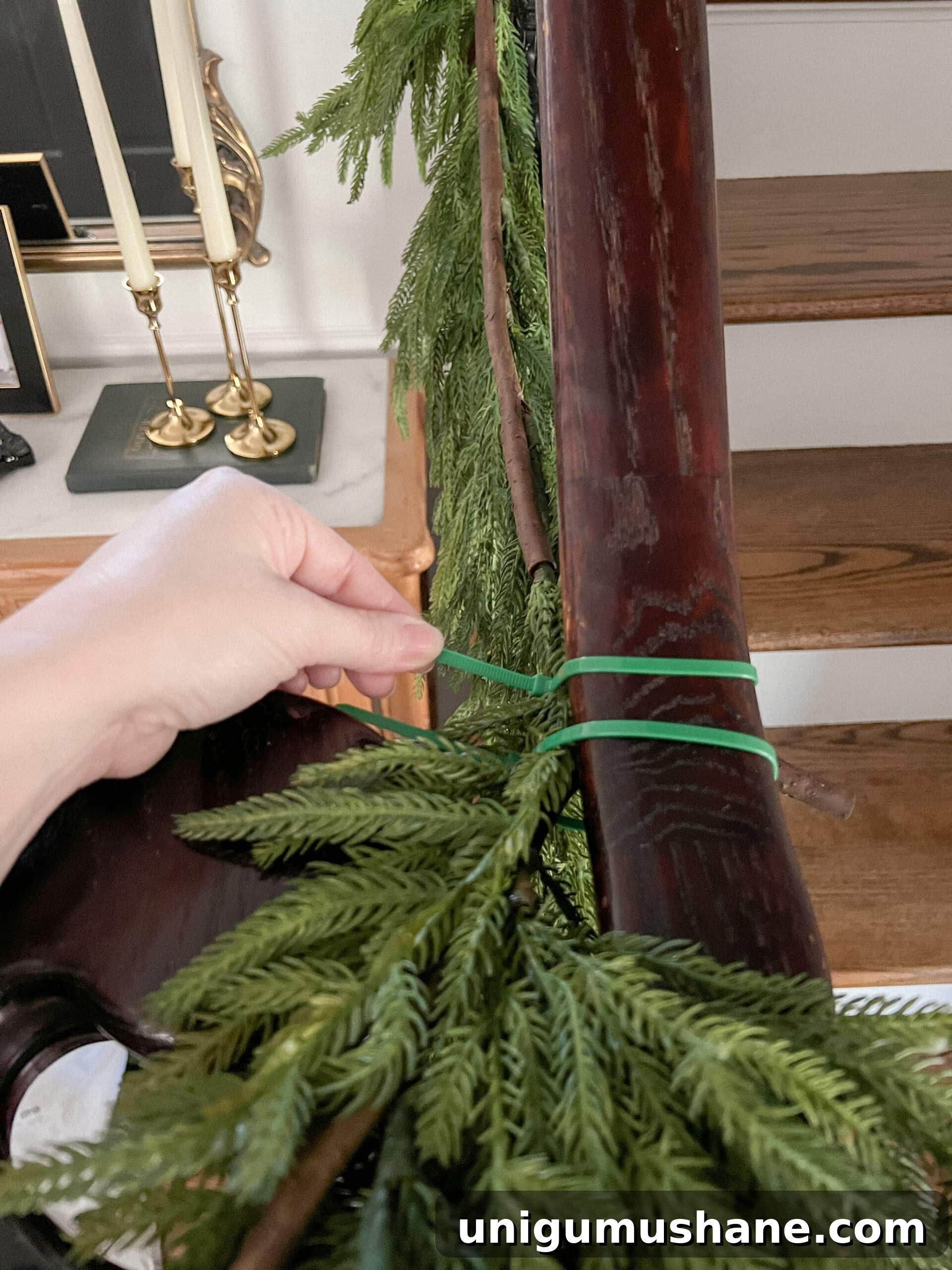
Step 1 — Secure Garland with Zip Ties
Attach each end of the garland to the banister with zip ties. Zip ties are discreet, strong, and non-damaging when used carefully; they hold the garland steady while you style and add accents. They’re much easier than trying to tie knots while balancing the garland in place.
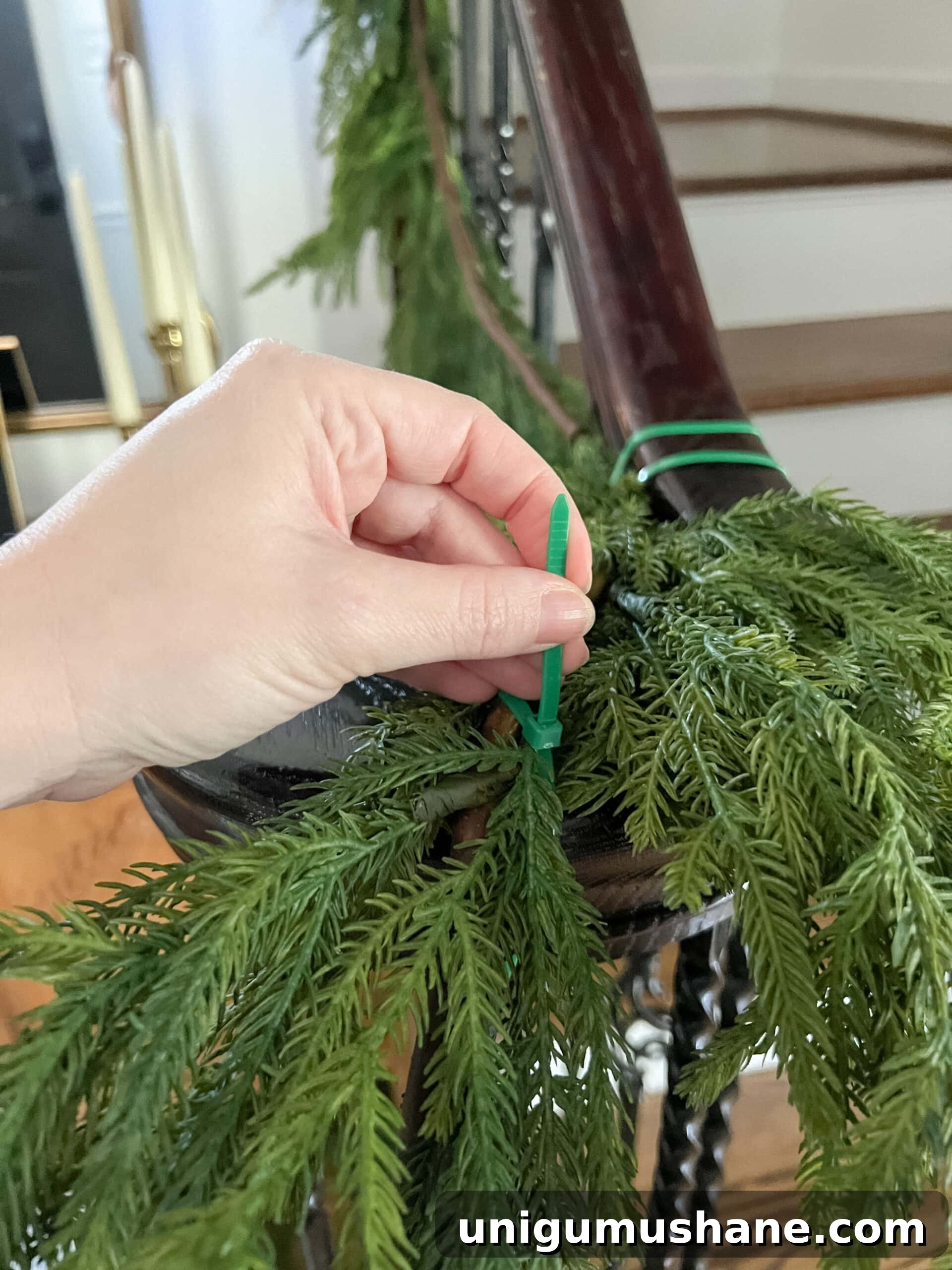
Step 2 — Connect Pieces Seamlessly
Butt the next garland piece against the one you just secured and fasten them together so they read as one continuous length. Use zip ties or floral wire to join the central connection points, then twist and tuck branches to hide the seam.
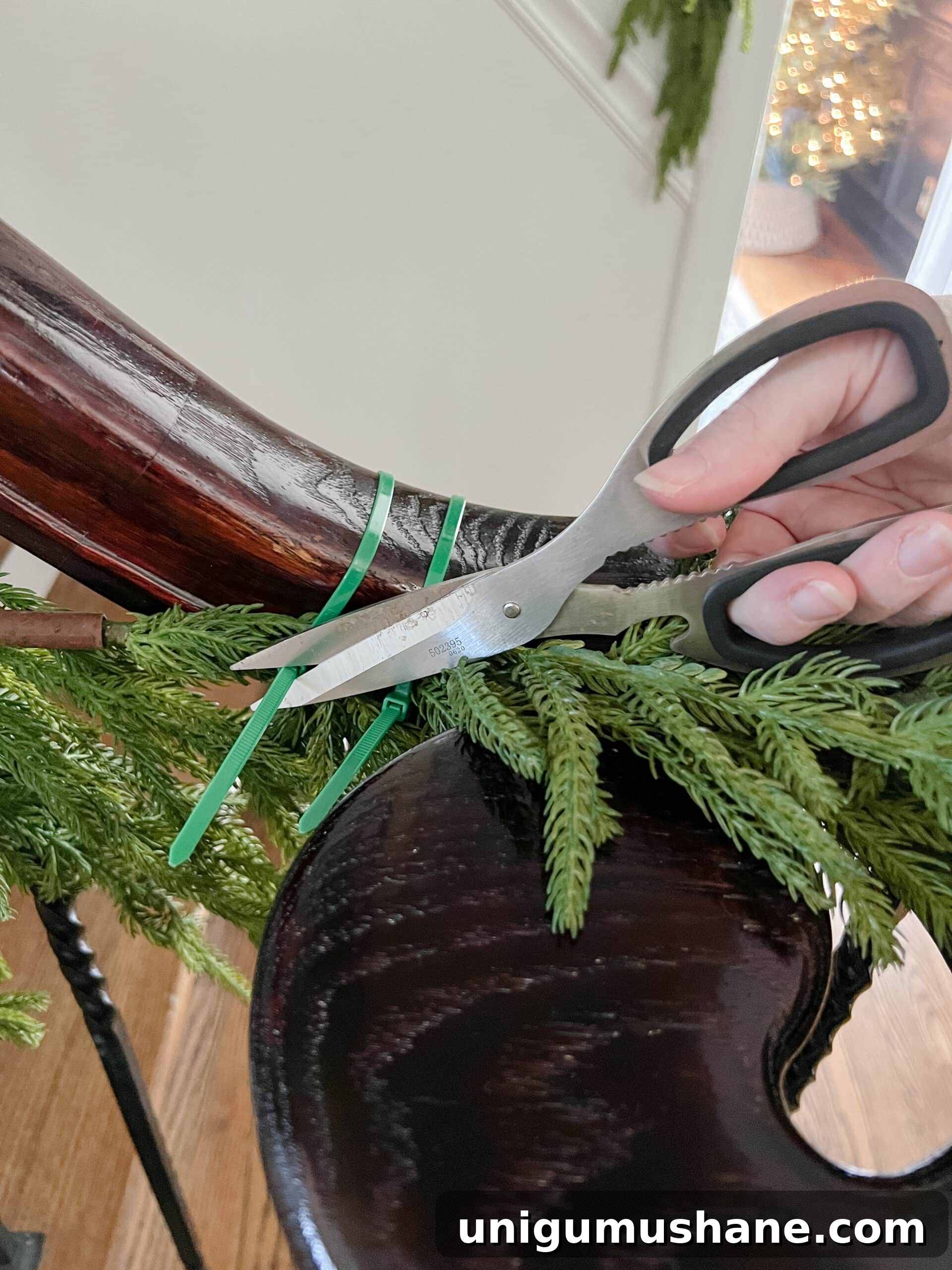
Step 3 — Trim Zip Tie Tails
Trim the excess zip tie tails close to the head so they’re not visible amid the greenery. Snipping them flush keeps the garland looking tidy and professional.
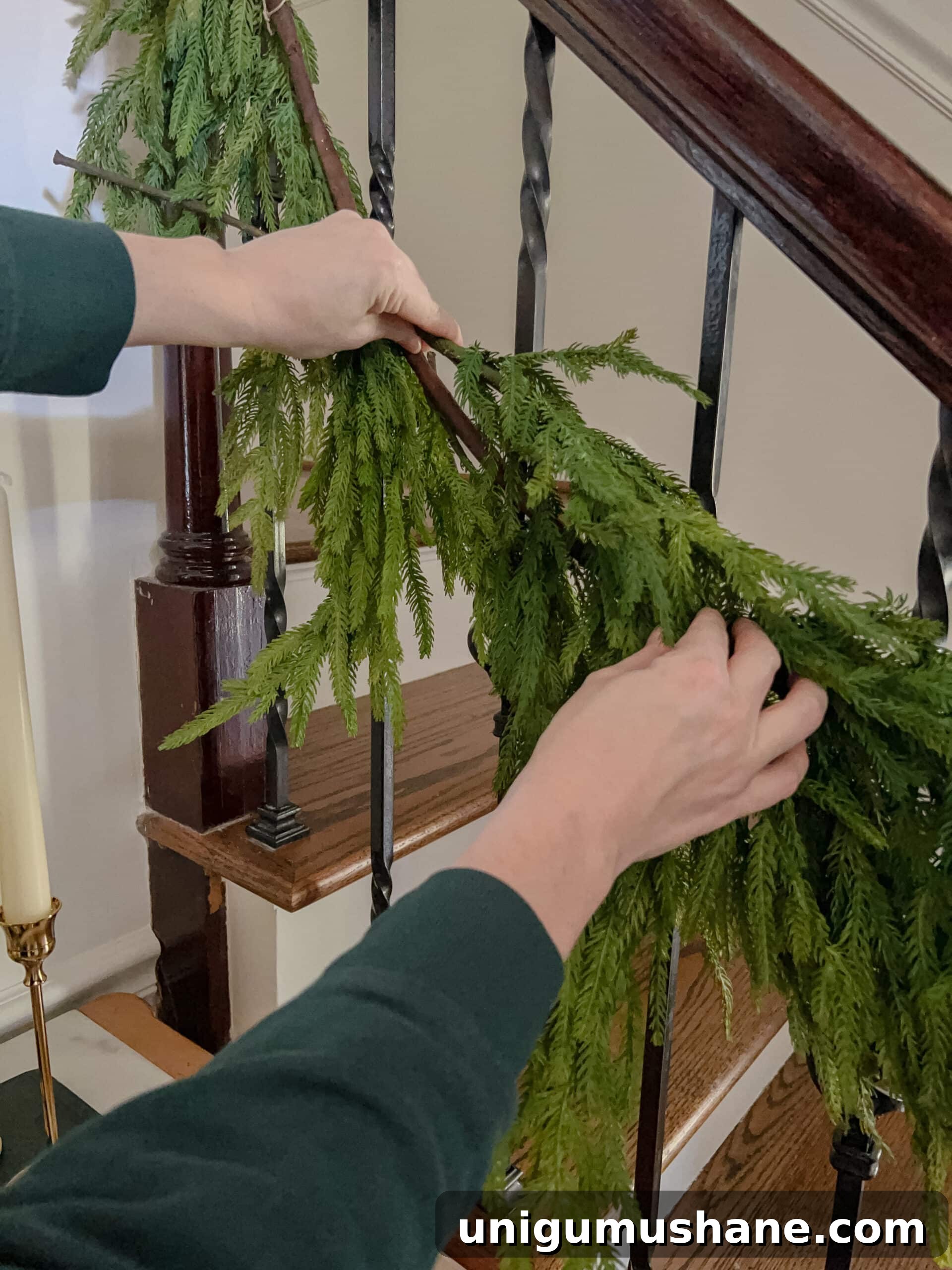
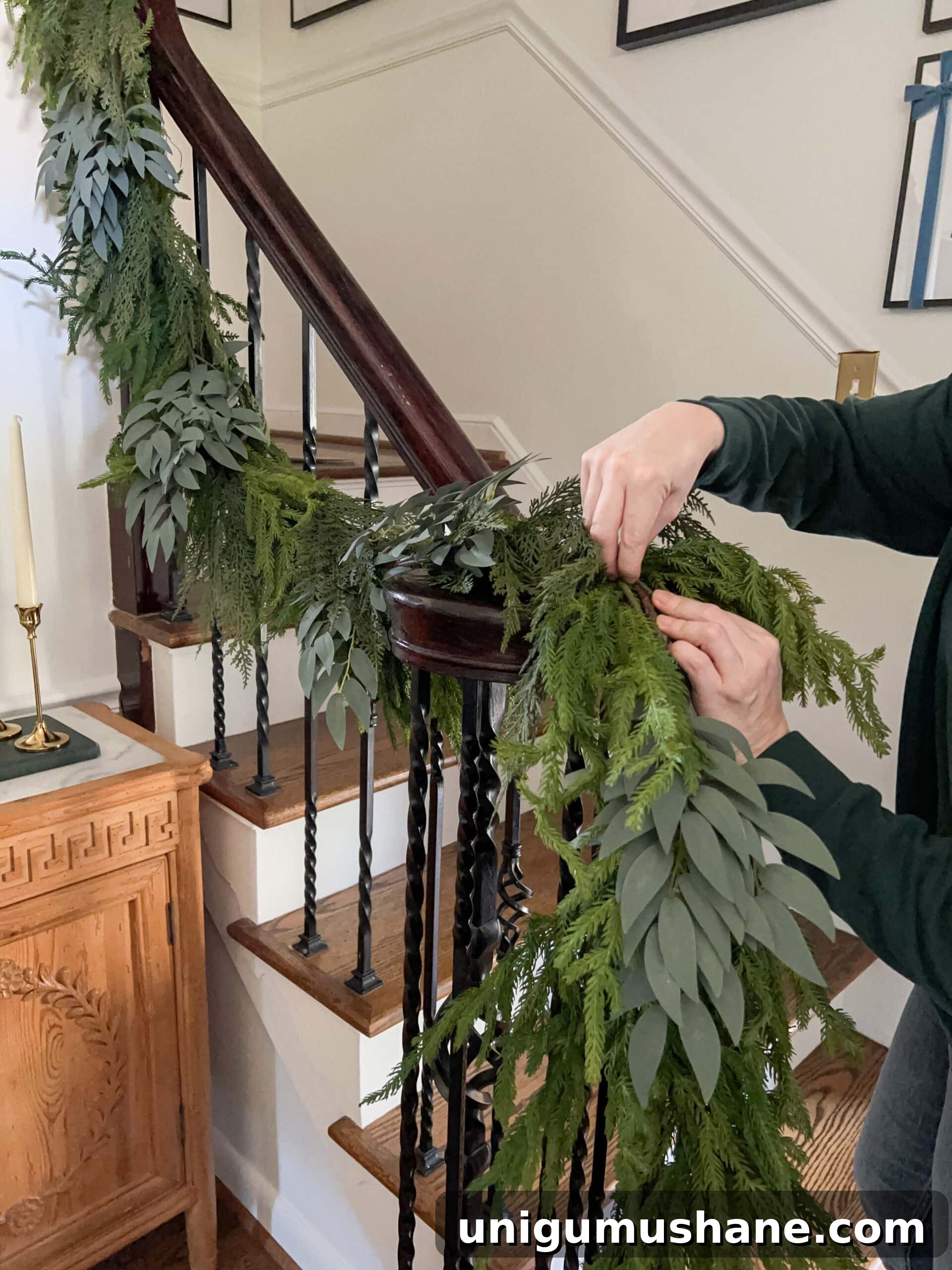
Step 4 — Fill with Extra Stems Using Floral Wire
To achieve a fuller, more natural look, tuck additional stems into sparse areas and secure them with floral wire. Use stems made from similar materials as your garland to blend textures seamlessly. Twist the wire tightly to hold each stem in place and hide the connection beneath foliage.
Step 5 — Add Accents for Character
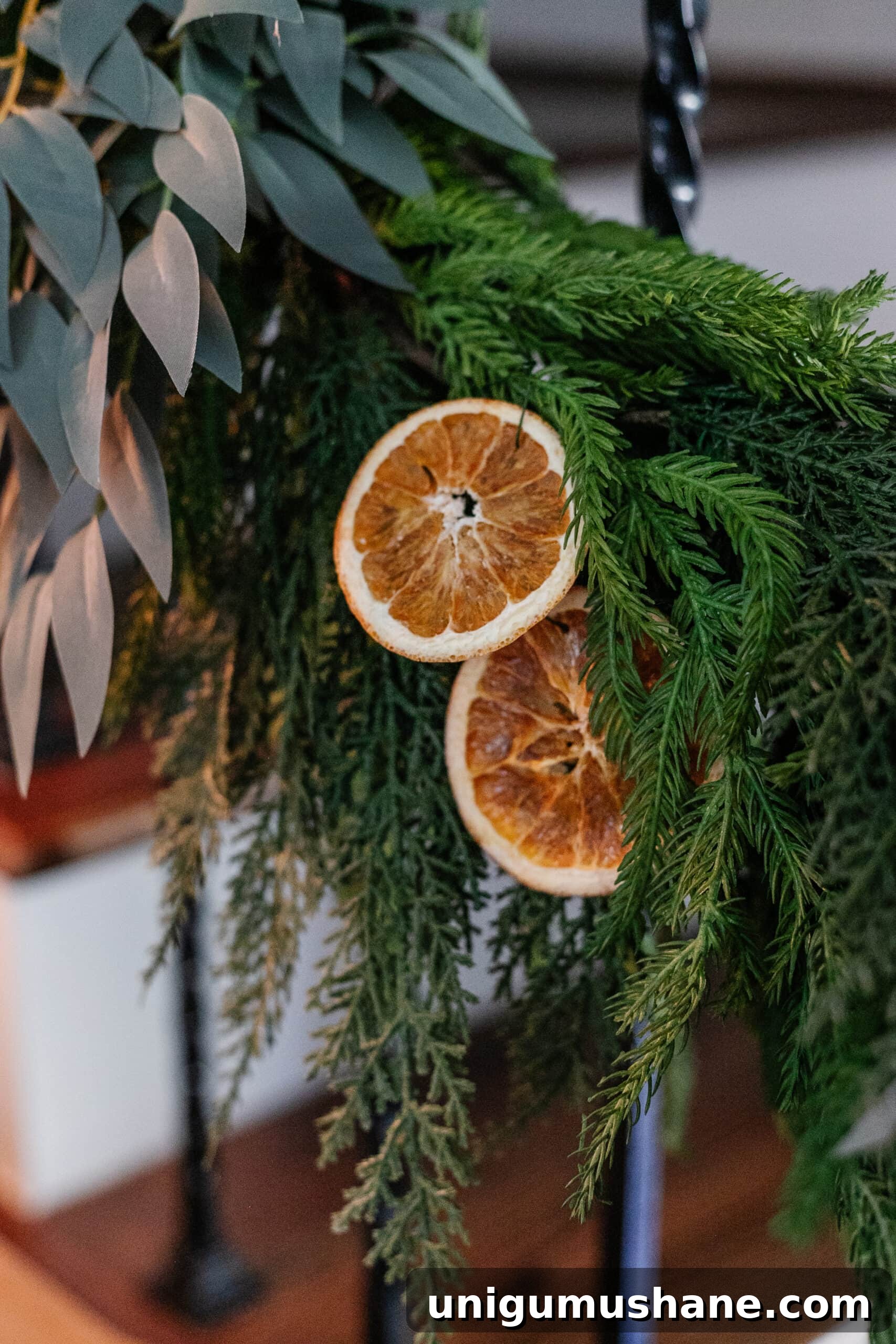
Layer in accents like faux berries, eucalyptus sprigs, or dried fruit. Floral wire works well to secure these elements so they sit naturally within the garland. For fresh foliage, consider a plant preservative like Wilt Stop to extend its life. Dried orange slices bring color and scent and look especially warm under candlelight.
If you want extra sparkle, weave battery-operated string lights through the garland before adding final accents so the cords stay hidden.
Step 6 — Finish with Ribbon
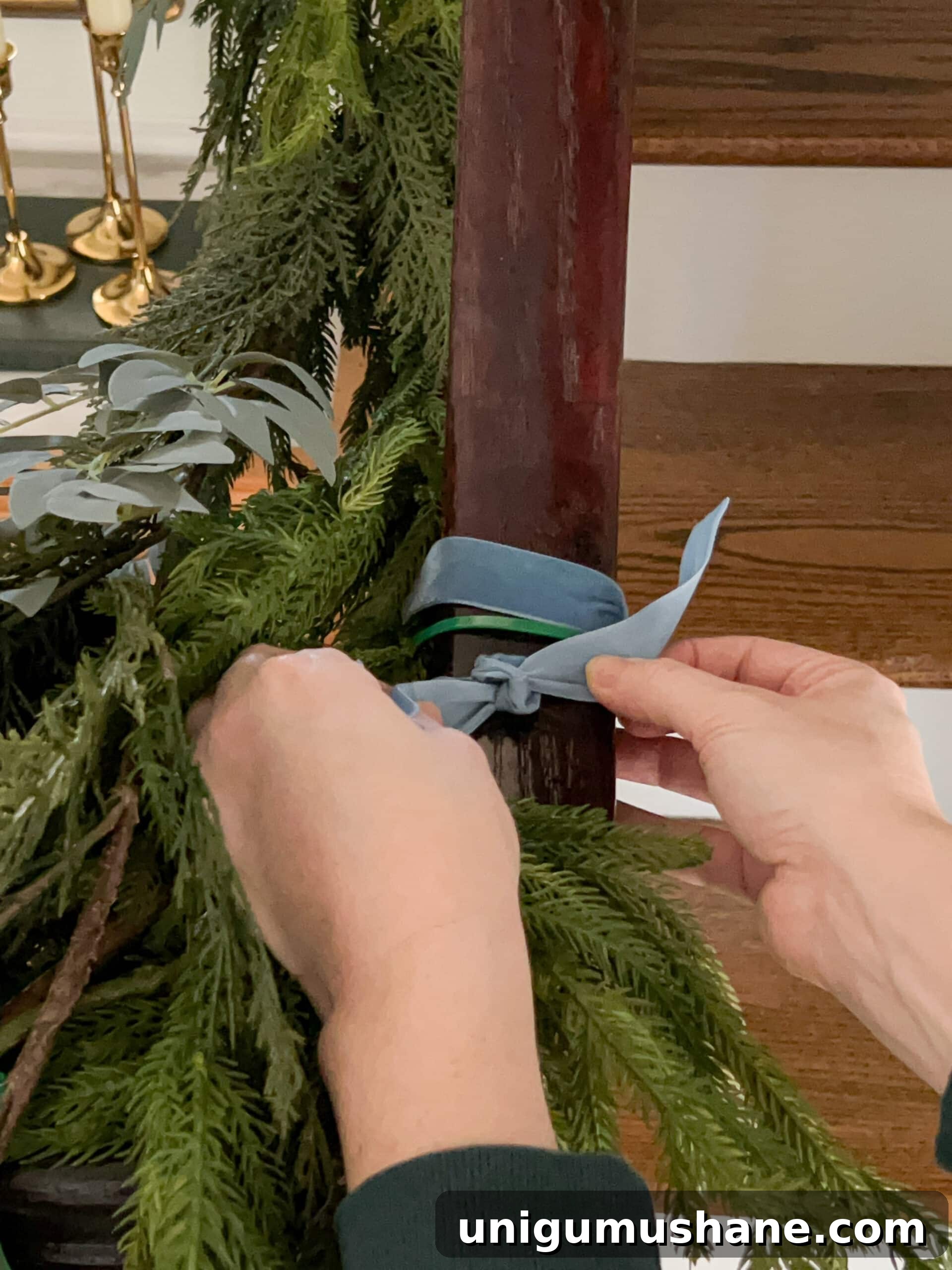
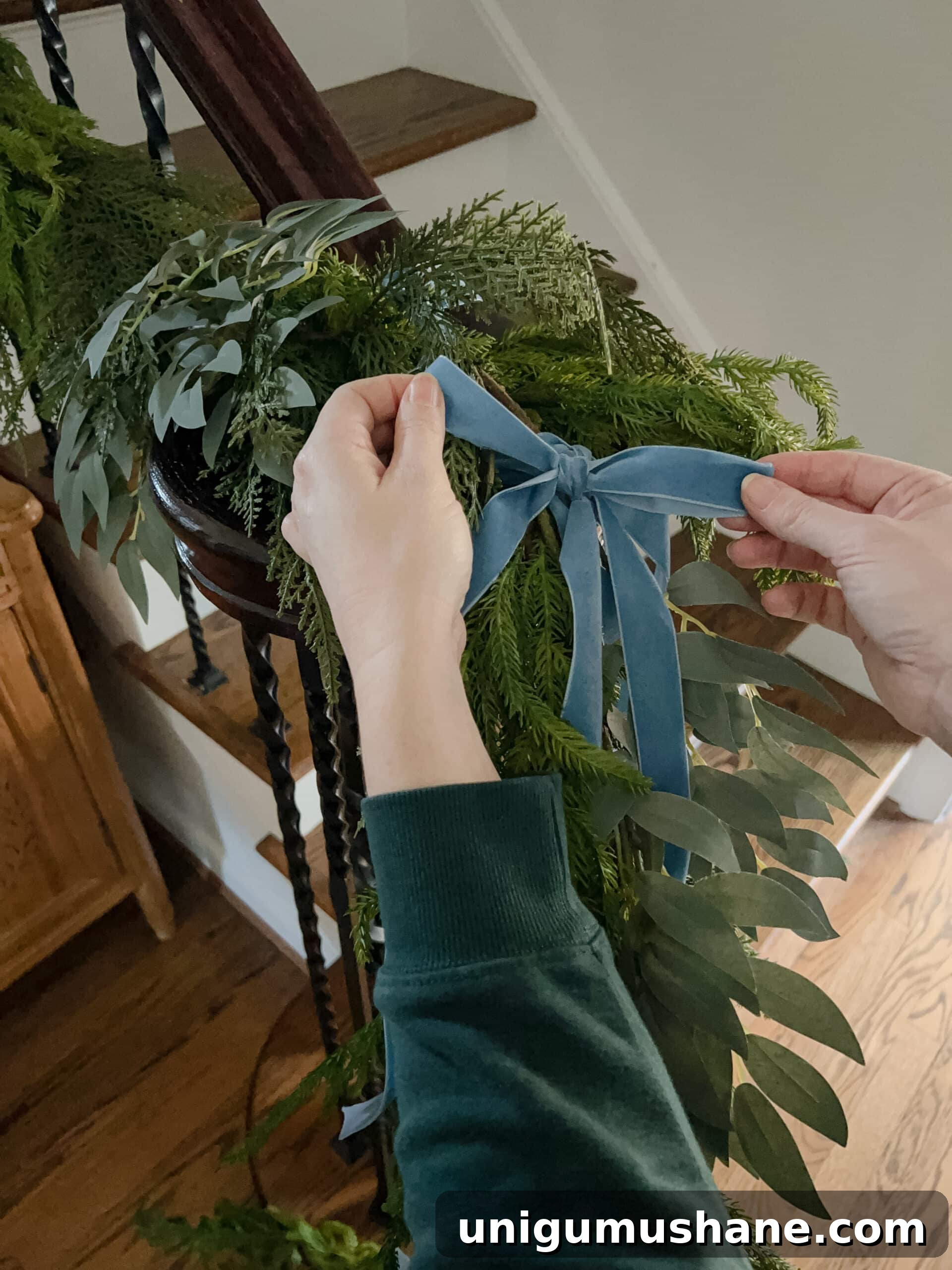
Cover the visible zip tie points on the banister with ribbon and tie a few simple bows if desired. I prefer non-wired ribbon because it drapes softly and creates a relaxed, vintage look. Let a few long tails cascade down the newel post for a finished, elegant touch.
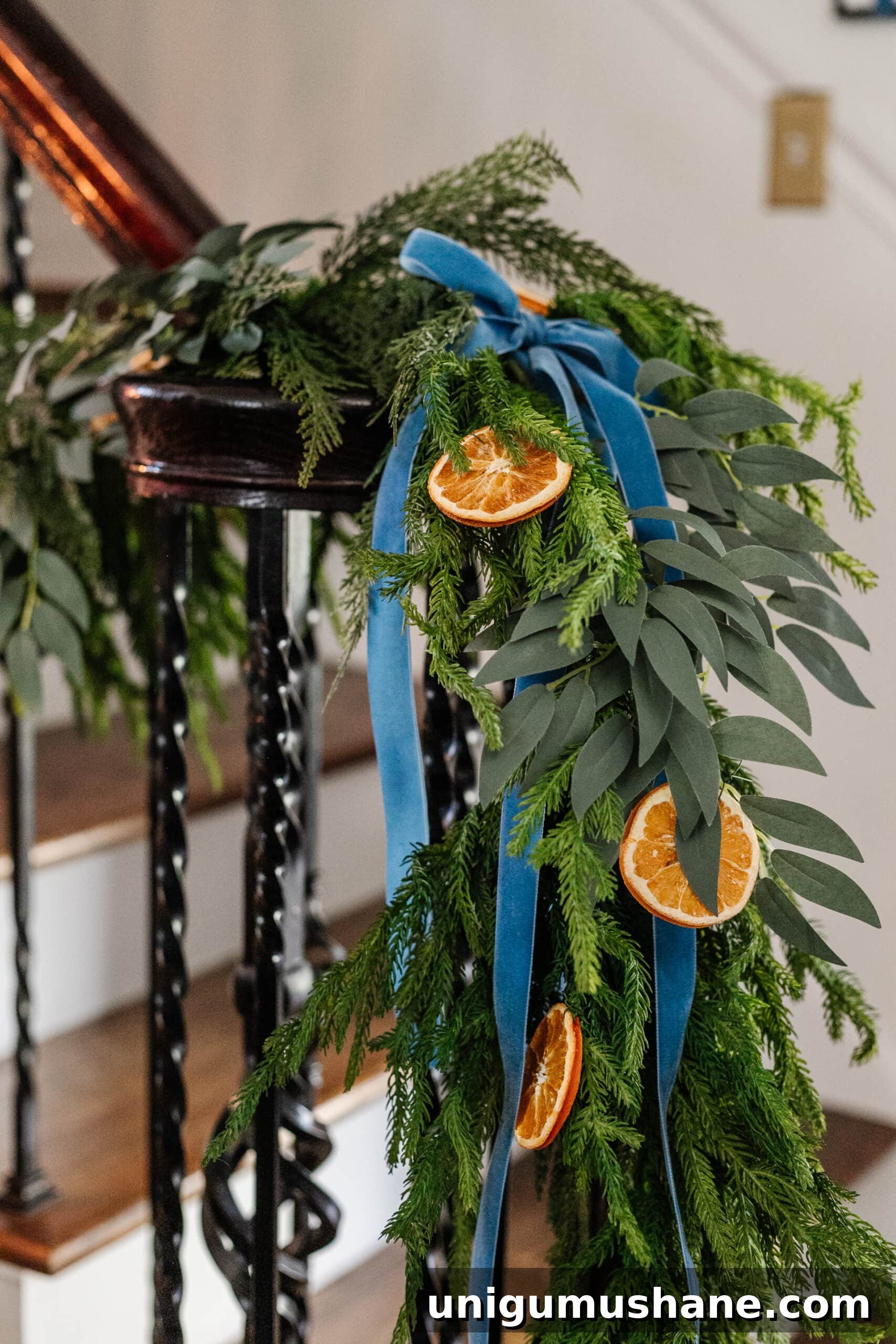
If you want to add garland to a doorway as well, the method is similar; I often use removable hooks and battery lights for door frames to avoid hardware damage.
Entryway Christmas Decor Tour
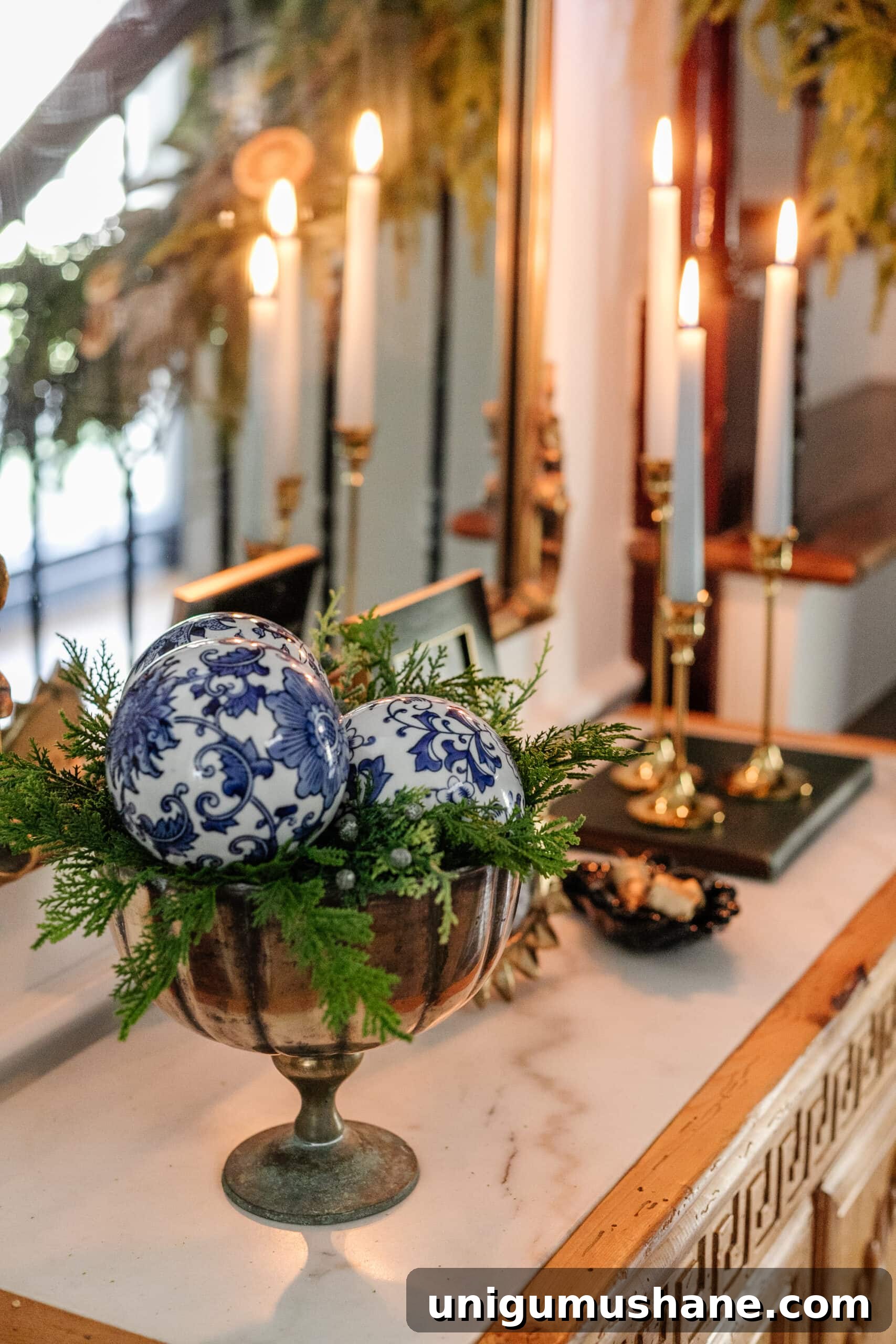
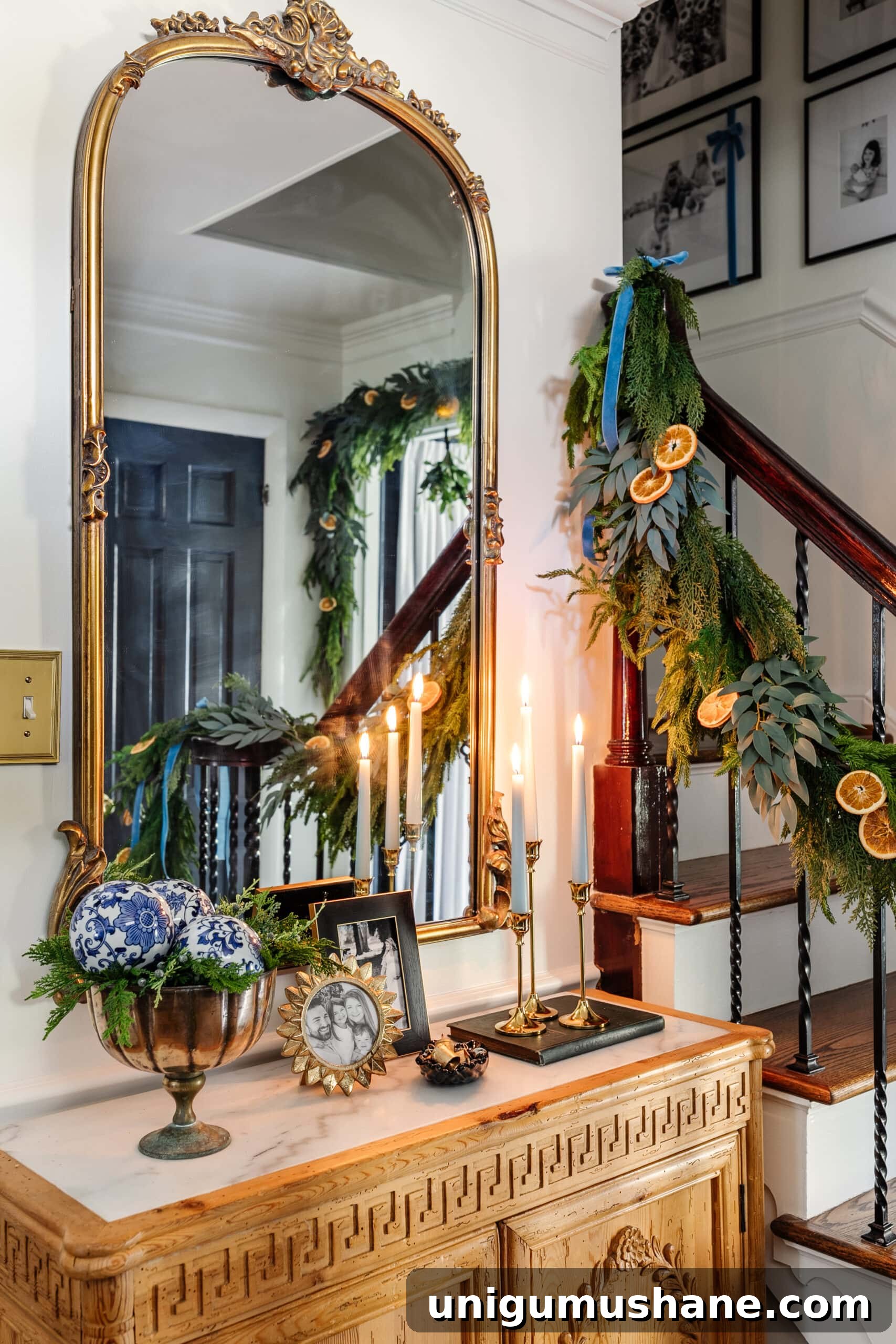
With the banister garland in place, the foyer takes on a warm, traditional-meets-modern look. I like to keep the entry table styling simple: a carved wooden cabinet with a marble top, family photos, a few brass candlesticks, and a bowl of porcelain orbs mixed with faux cedar and juniper. The blue-and-white palette feels cool and classic against the warm glow of candlelight.
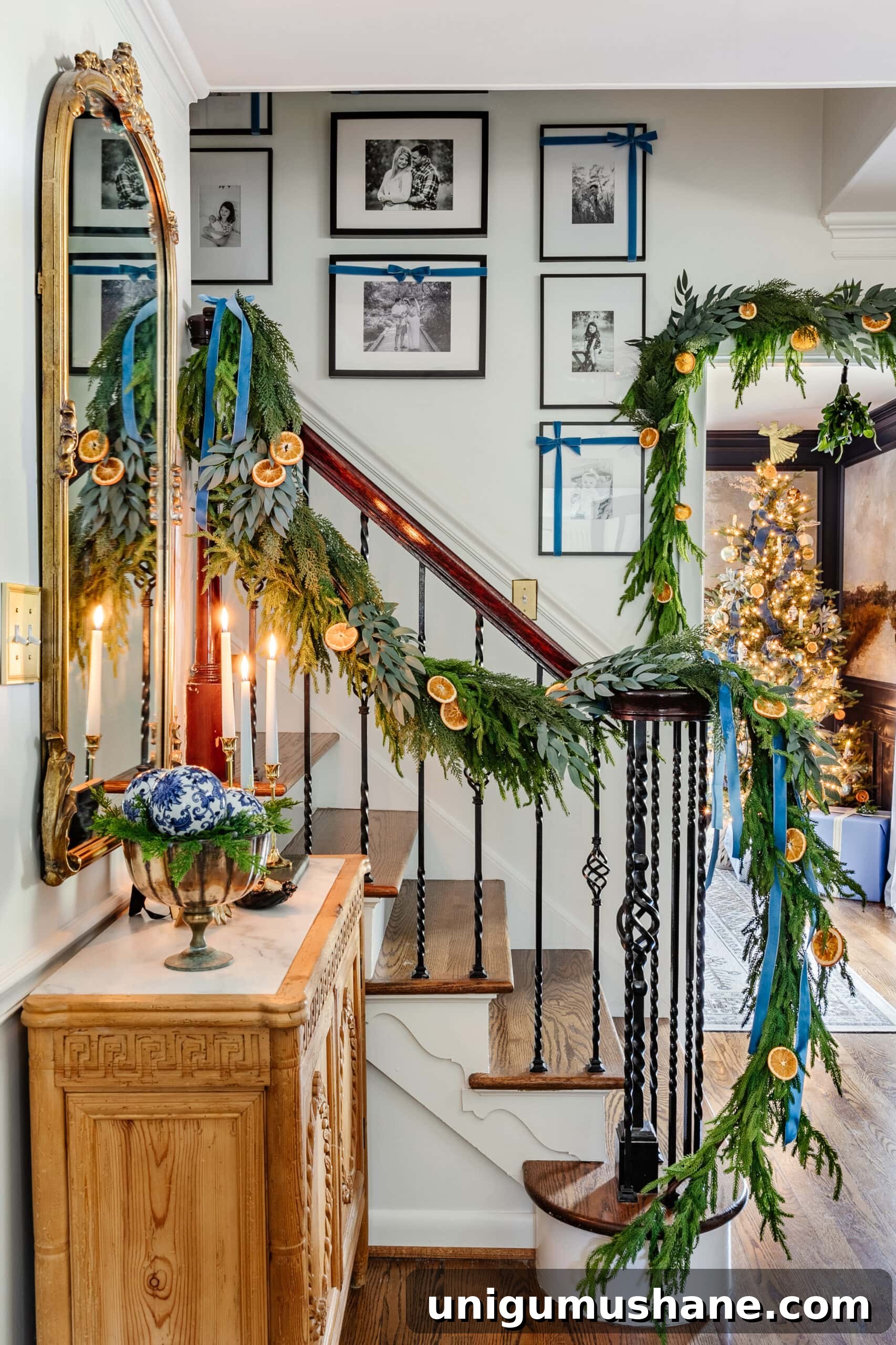
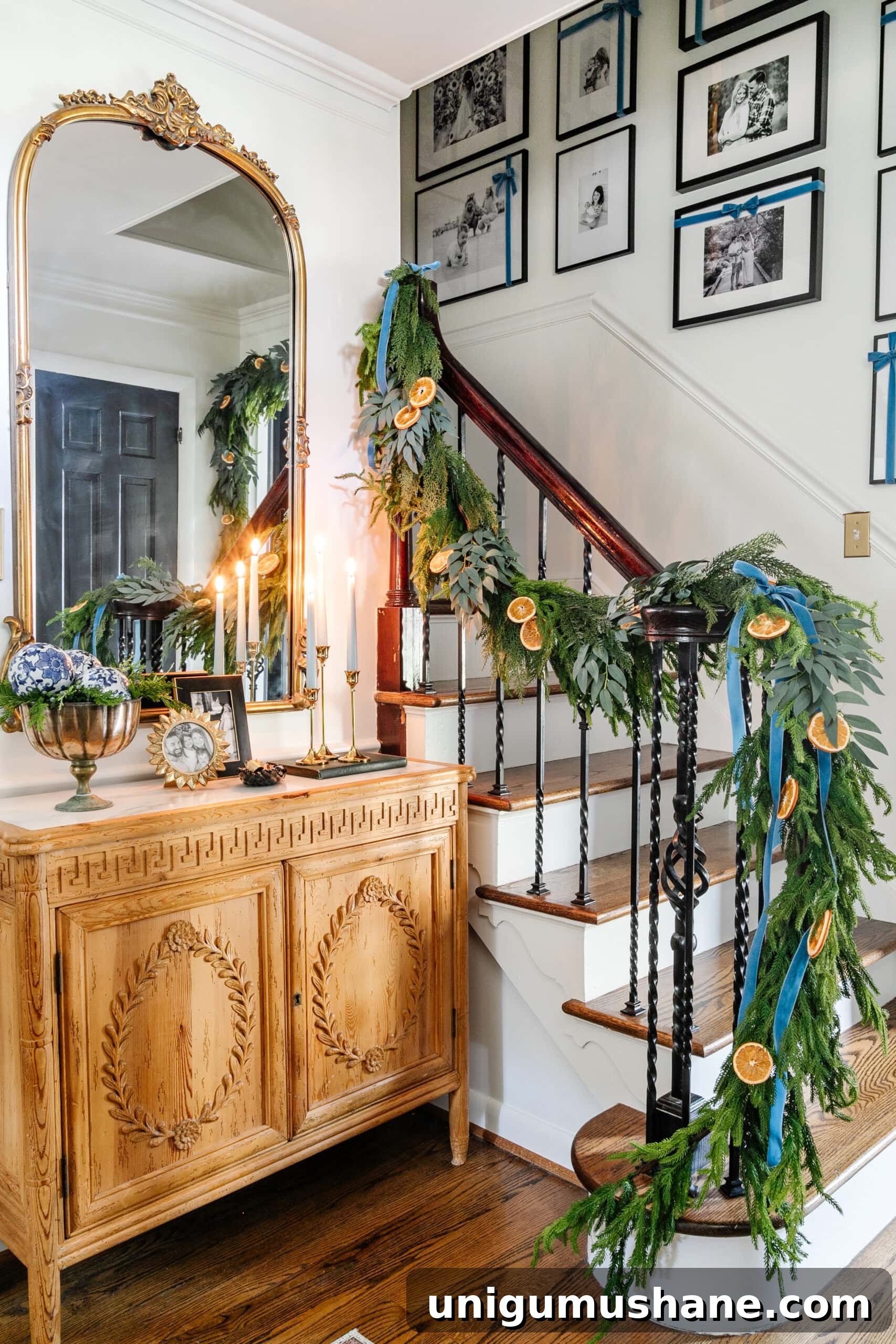
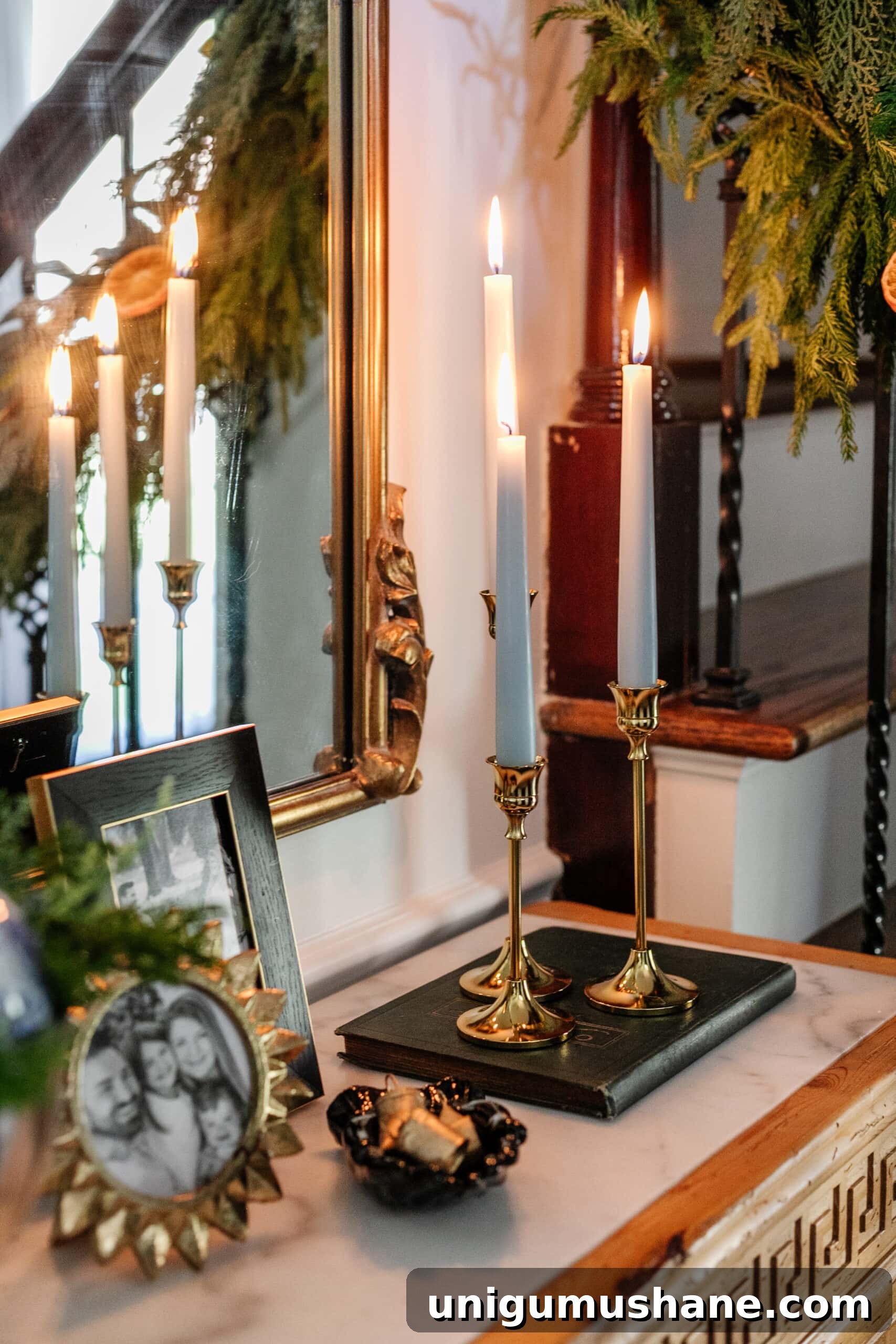
A few small details elevate the scene: a footed brass bowl with a lovely patina filled with porcelain orbs and greenery, an antique gold mirror that picks up candlelight, and a scattering of dried orange slices that catch the glow of the tapers. Together, these elements create an inviting focal point when guests arrive.
The view down the entryway to the dining room tree is one of my favorite shots — the garland frames the space and the tree’s twinkle lights add a cozy backdrop. It’s a small setup that makes the whole house feel festive and welcoming through the darker months.
Do you hang garland on your stairs? I loved helping hang garland at my parents’ house growing up and still enjoy the tradition — it instantly makes an entry feel cared for and festive.
More Holiday Decorating Ideas
- How to hang wreaths on windows for Christmas
- How to add ribbon to Christmas trees
- Choosing realistic artificial Christmas trees
- Thrifty DIY Christmas decor ideas