
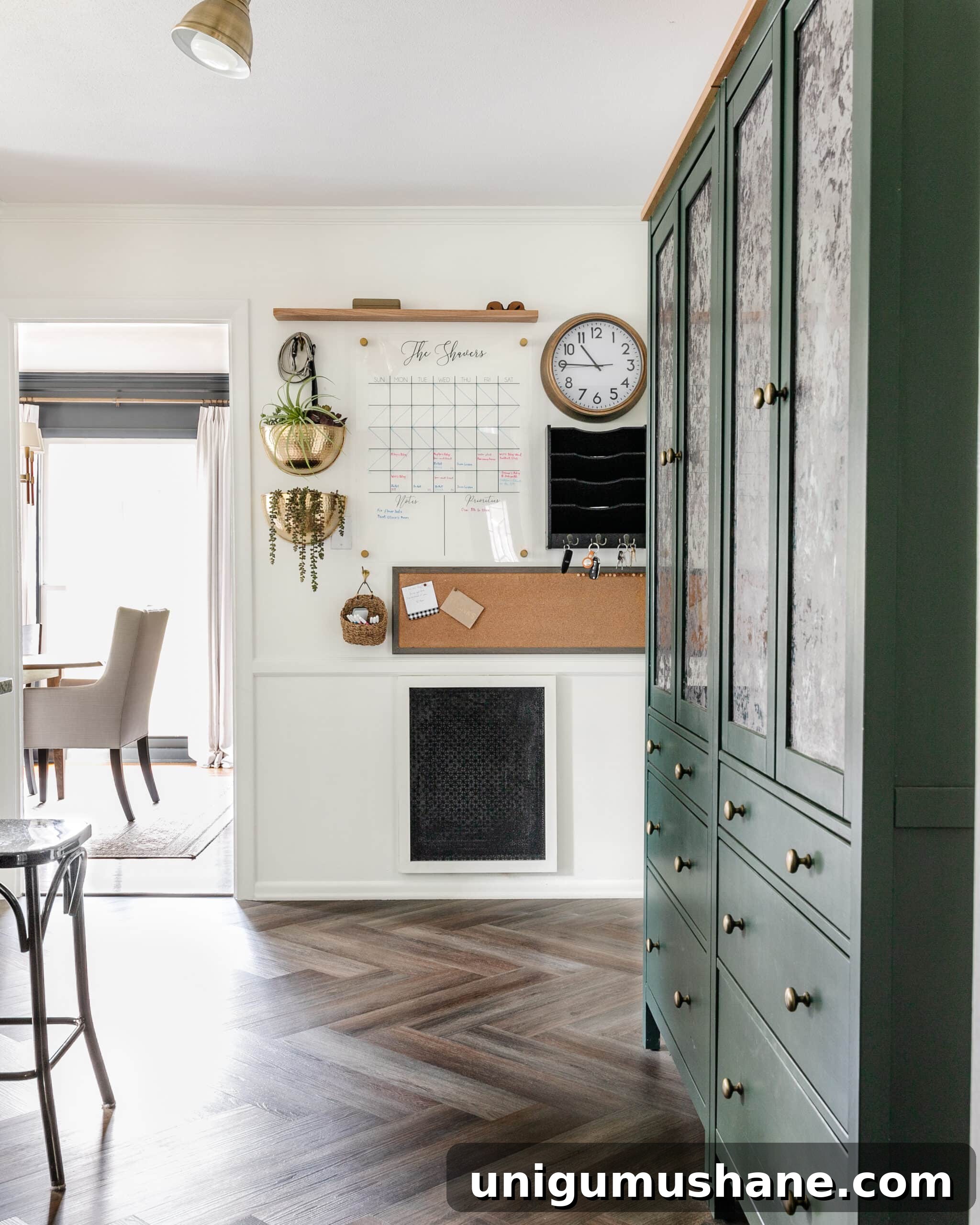
How to set up a home command center using smart solutions to keep mail, schedules, keys, and documents organized for your family every day.
For busy households, a kitchen command center can be the single most helpful habit you add to your routine. Whether your days are full of after-school activities or you simply need a better way to manage family life, a thoughtfully arranged command center eliminates the little daily chaos and keeps everyone coordinated. Over the years I’ve refined our DIY family command center to suit our needs, and it still makes life easier every day.
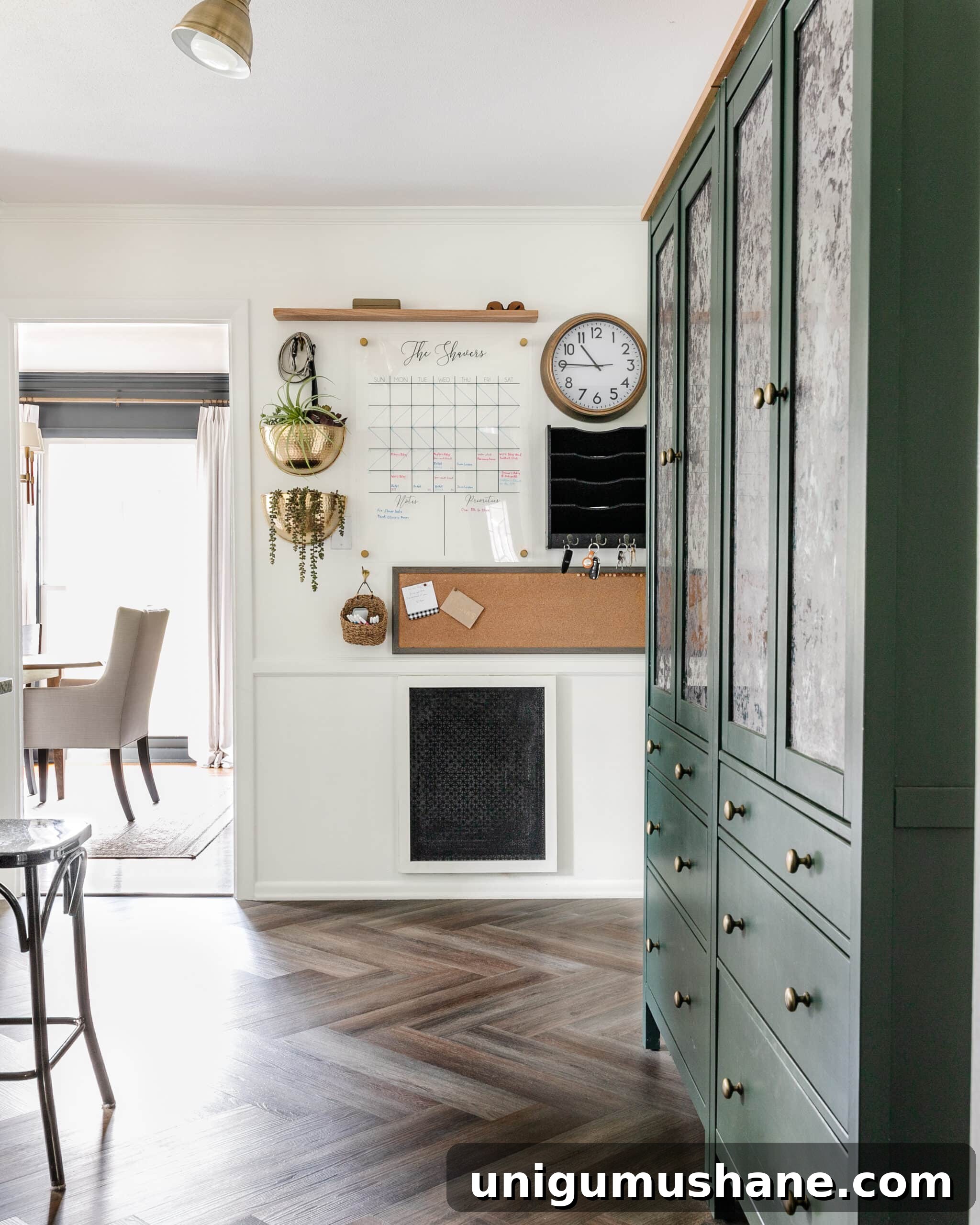
As your household grows and schedules become more complex, setting aside a dedicated command center helps everyone know what’s happening and what needs to be done. We’ve had ours in our kitchen for years, and it’s become the heart of our daily planning.
We’ve all had those hectic mornings where a forgotten lunch or a missed practice throws off the whole day. If you have a spare wall in the kitchen, entryway, mudroom, or laundry room, creating a home command center will give you a consistent place to store schedules, items to leave with, and reminders so fewer things slip through the cracks.
What is a Home Command Center?
A home command center is a dedicated wall or station that organizes the essential pieces of family life: calendars, to-do lists, chore charts, mail, permission slips, keys, notes, and quick storage for items you grab on the way out. Think of it as your family’s landing zone when you come home and the final check before you leave.
Its purpose is to reduce daily friction — a visible, central place where everyone can find schedules, reminders, grocery lists, and messages at a glance.
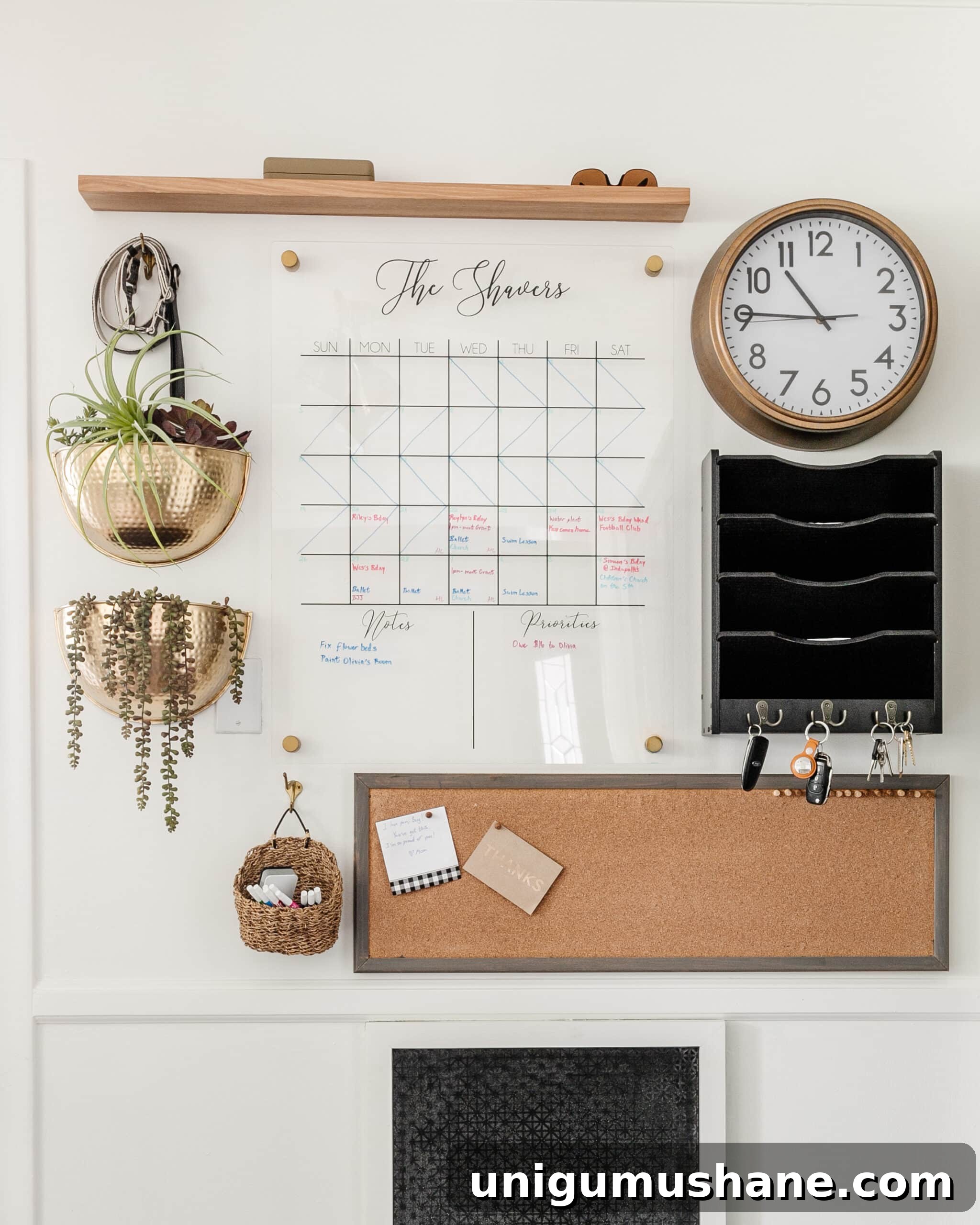
Kitchen Command Center Ideas
Designing a family command center is straightforward, but it helps to start by assessing how much space you have and what items your family uses most. Below are practical ideas based on our setup that you can adapt for your home.
1. Choose a Blank Wall in a Central Part of Your Home
Pick a wall where your family naturally passes every day—near the entry, by the kitchen, or beside the garage door. If space is tight, the inside of a cabinet door, the back of a pantry door, or a slim hallway wall can work just as well. The point is visibility: put the command center where everyone will see it every day.
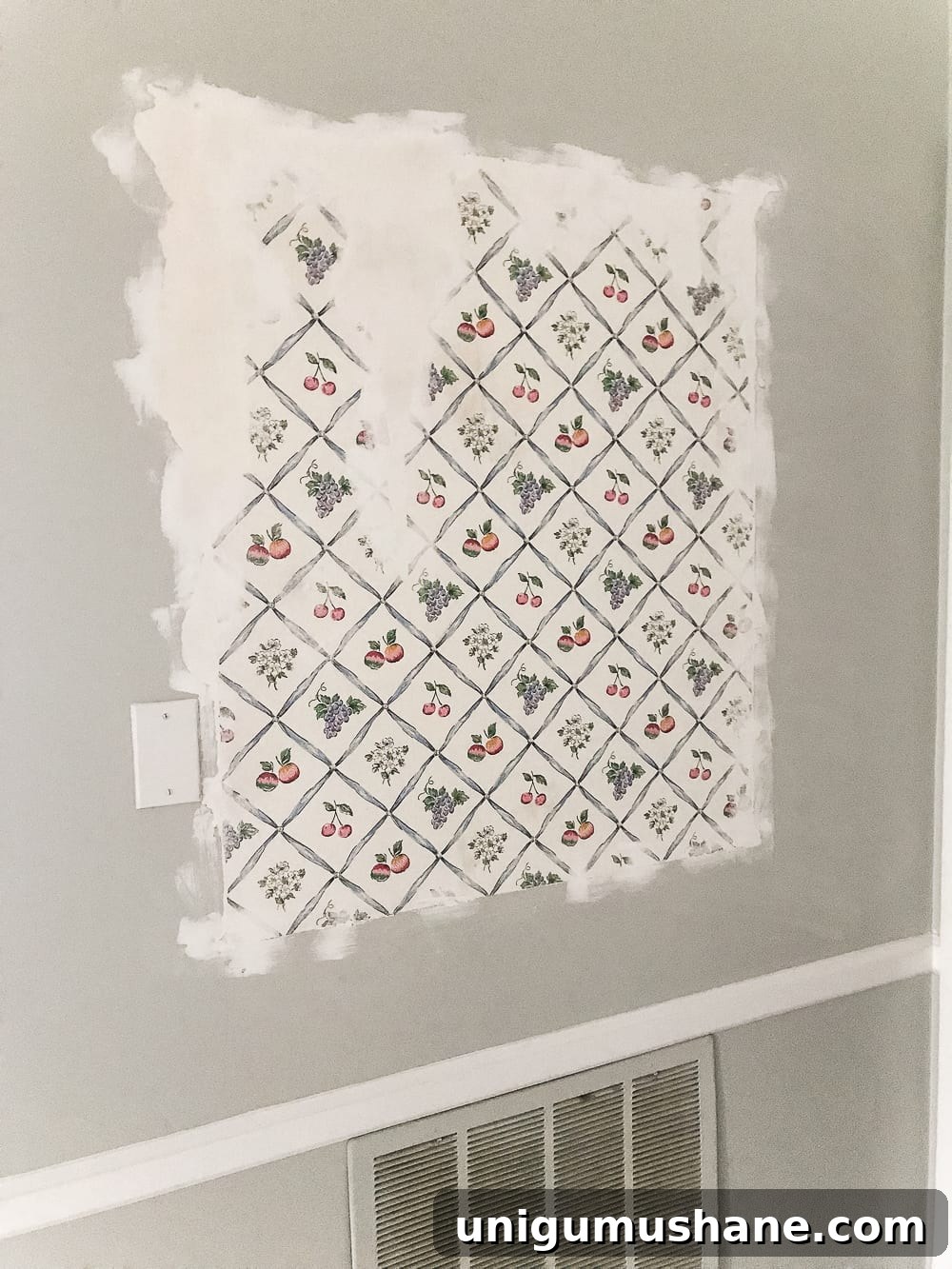
When we tackled our kitchen wall, an old shelf that had only collected clutter came down and revealed surprising wallpaper underneath. After repairing and painting the wall, the blank space finally became a functional hub instead of a scramble spot.
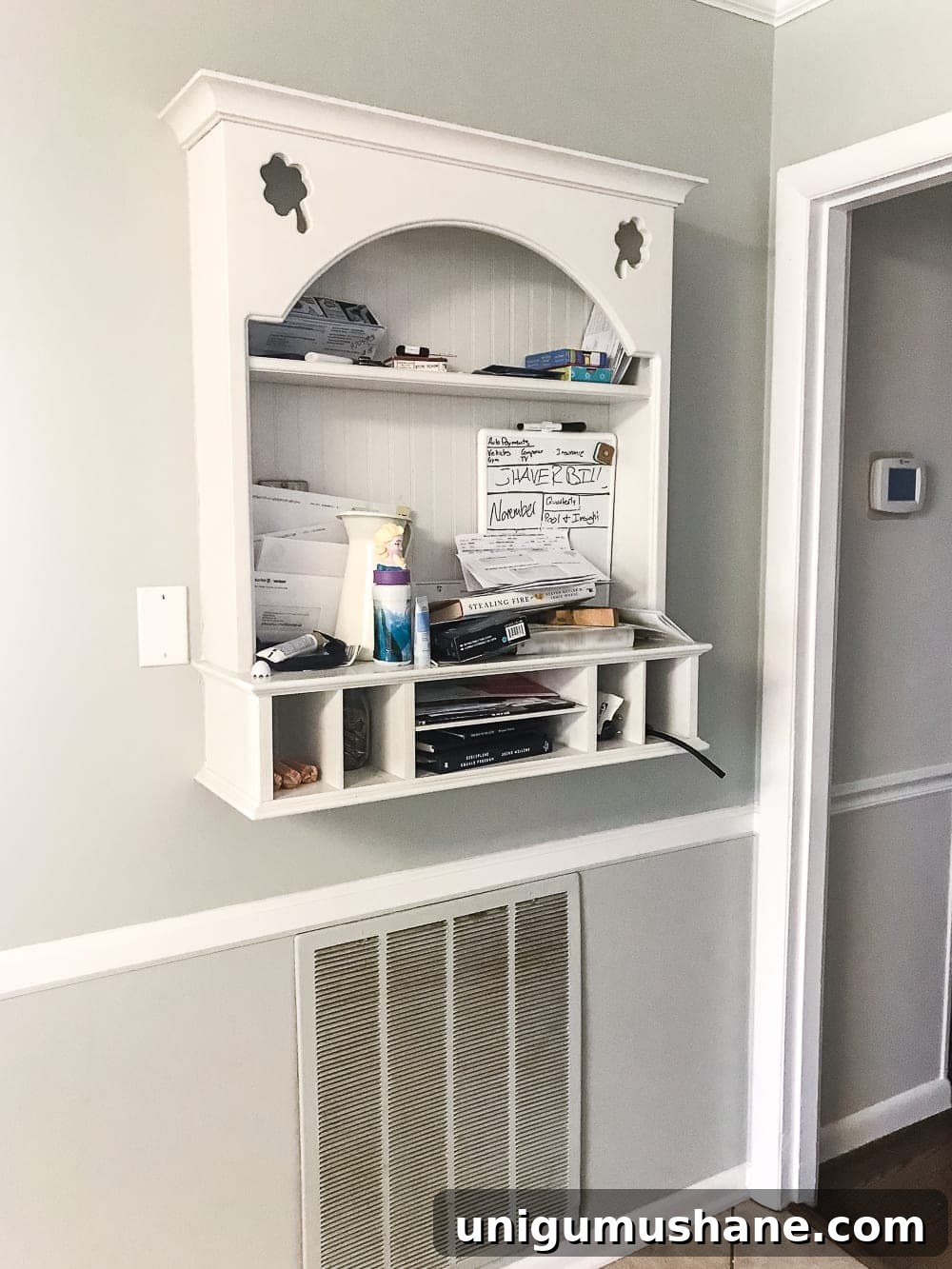
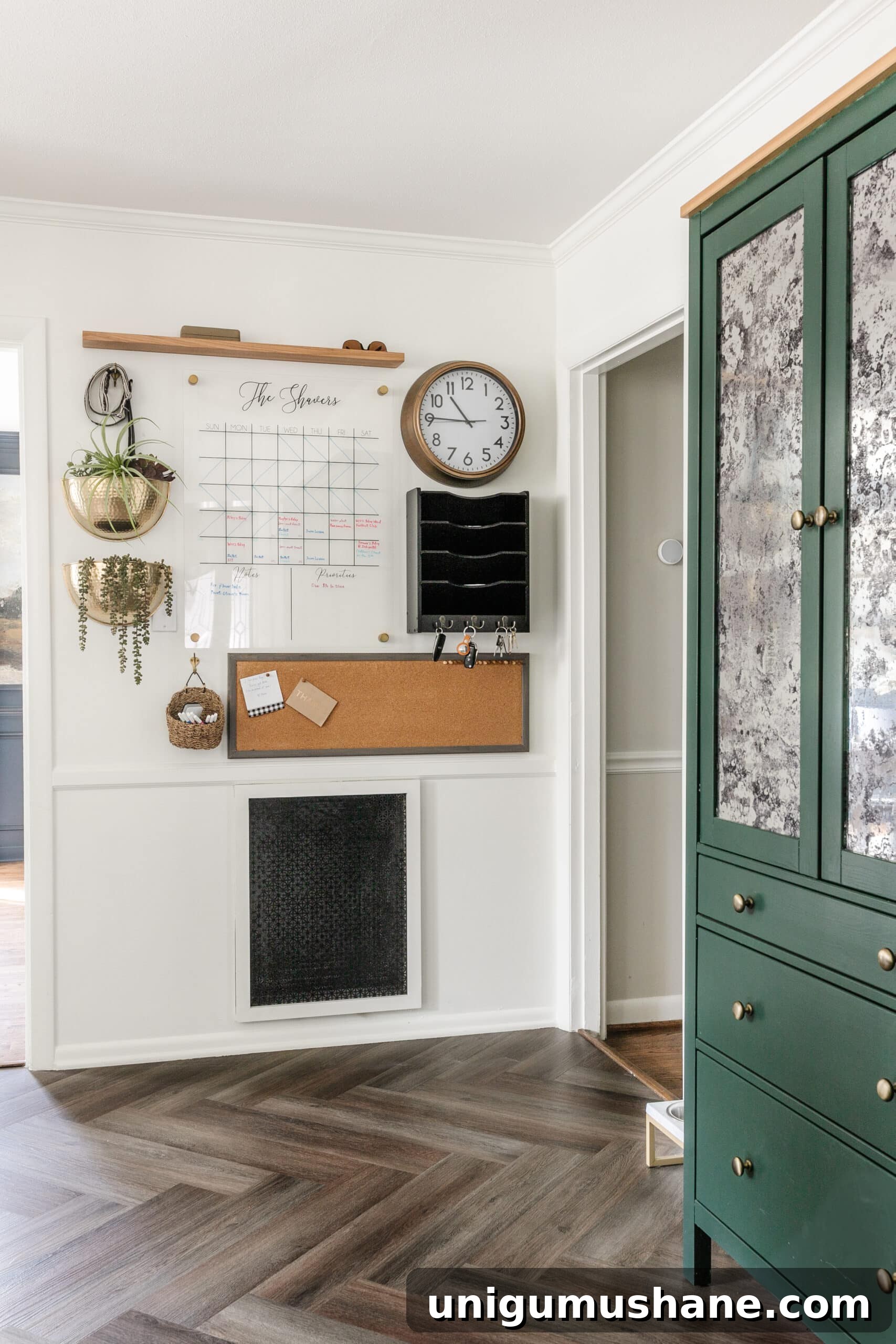
After removing the old shelf and freshening the wall, we installed the pieces that now make our command center useful every day.
With fresh paint and a few simple organizers, the wall quickly became a practical station we use every day.
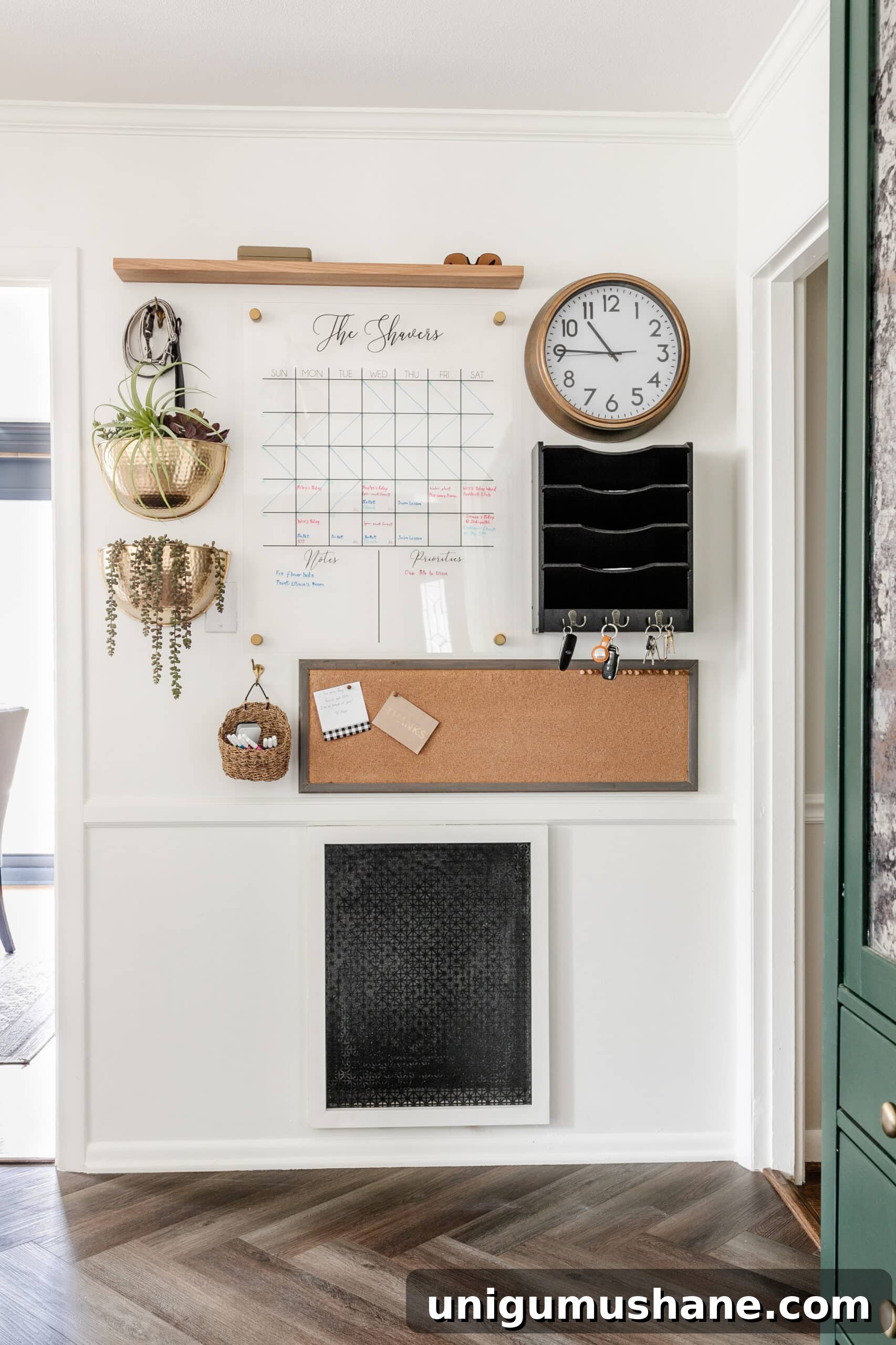
2. Hang a Family Wall Calendar
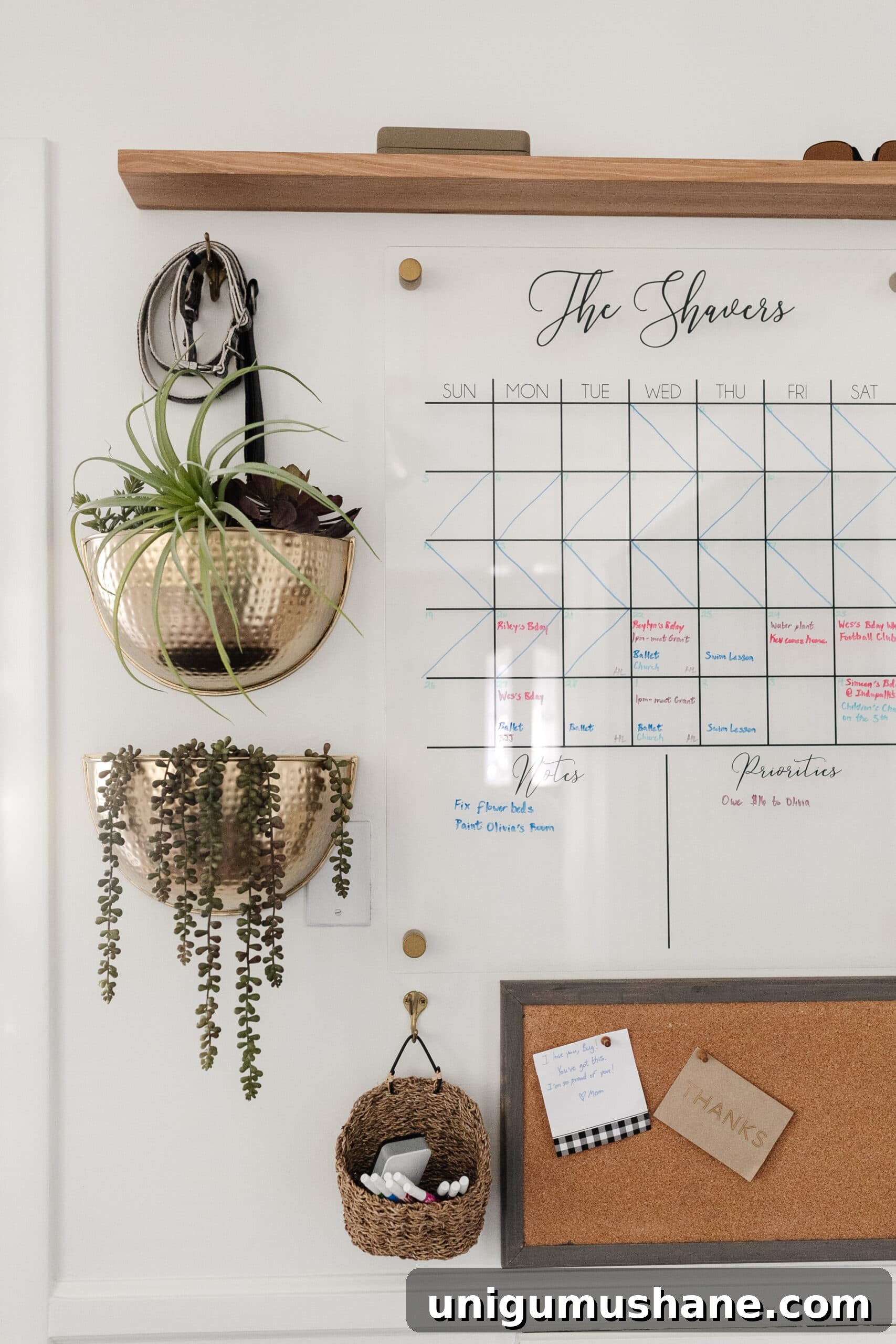
A large calendar is the backbone of any command center. Choose a dry-erase board, chalk-style calendar, paper calendar, or peel-and-stick monthly chart with ample writing space. A shared, visible calendar makes it easy to see each family member’s commitments, plan meals, and note appointments.
Keep the calendar large enough so each person has room to write. Consider a weekly layout for quick planning or a monthly grid for long-term visibility. Add a small basket or ledge nearby to hold markers for easy access.
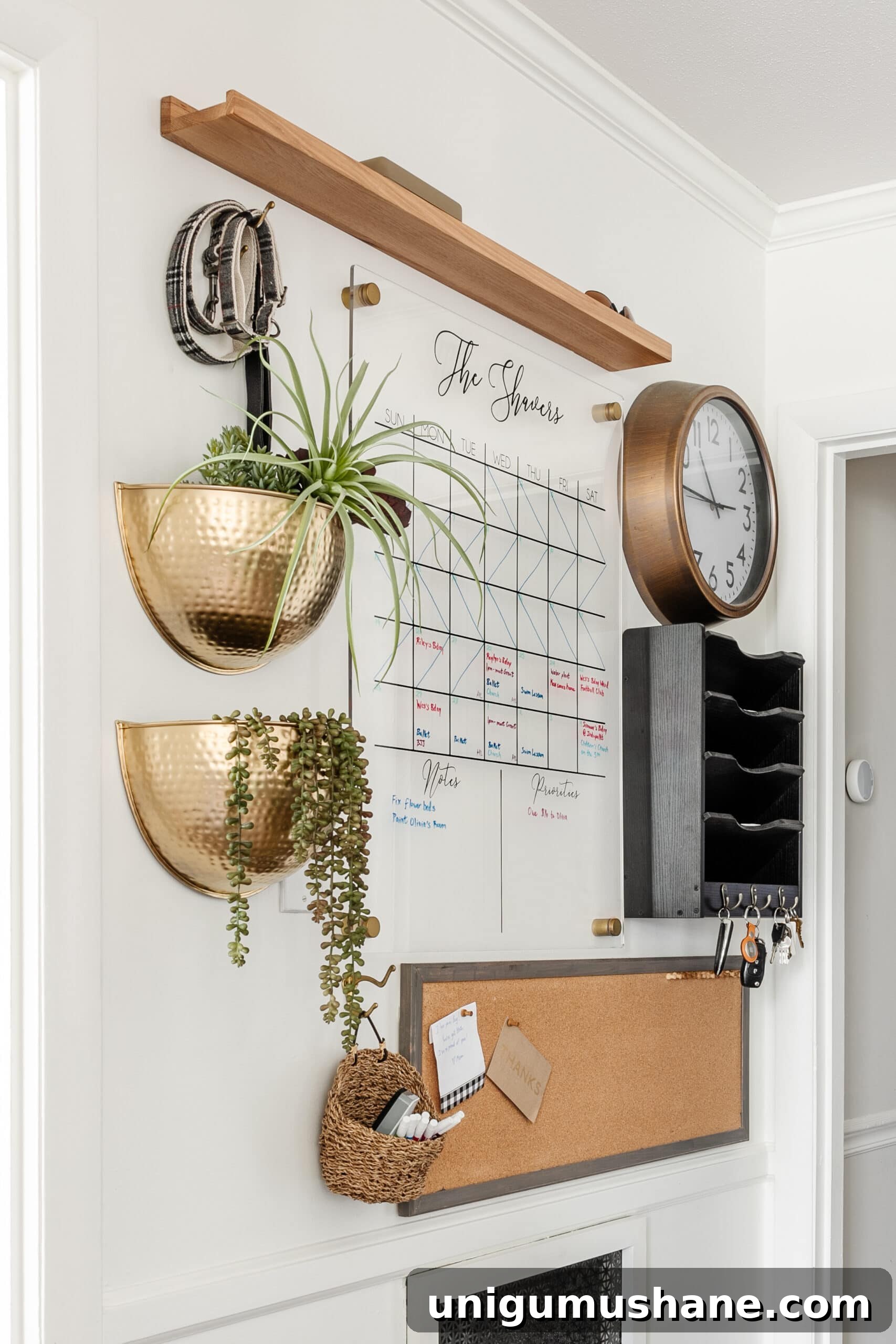
3. Include a Paper Sorter
Paper can quickly take over counters, so wall-mounted paper sorters or pocket organizers are essential. Use labeled slots for receipts, coupons, incoming mail, bills, school forms, and important documents. Labeling each slot makes it quick to file and easy to find items at a glance.
To maintain the system, set a weekly time to clear the sorter: file what’s needed, recycle what’s obsolete, and place action items where they belong.
4. Keep a Key Rack Handy
A simple key hook or small rack prevents daily key hunting and keeps surfaces clear. Place it at eye level so everyone knows exactly where to hang house keys, car keys, and pet leashes. One wall hook per family member or per vehicle reduces confusion and makes leaving the house smoother.
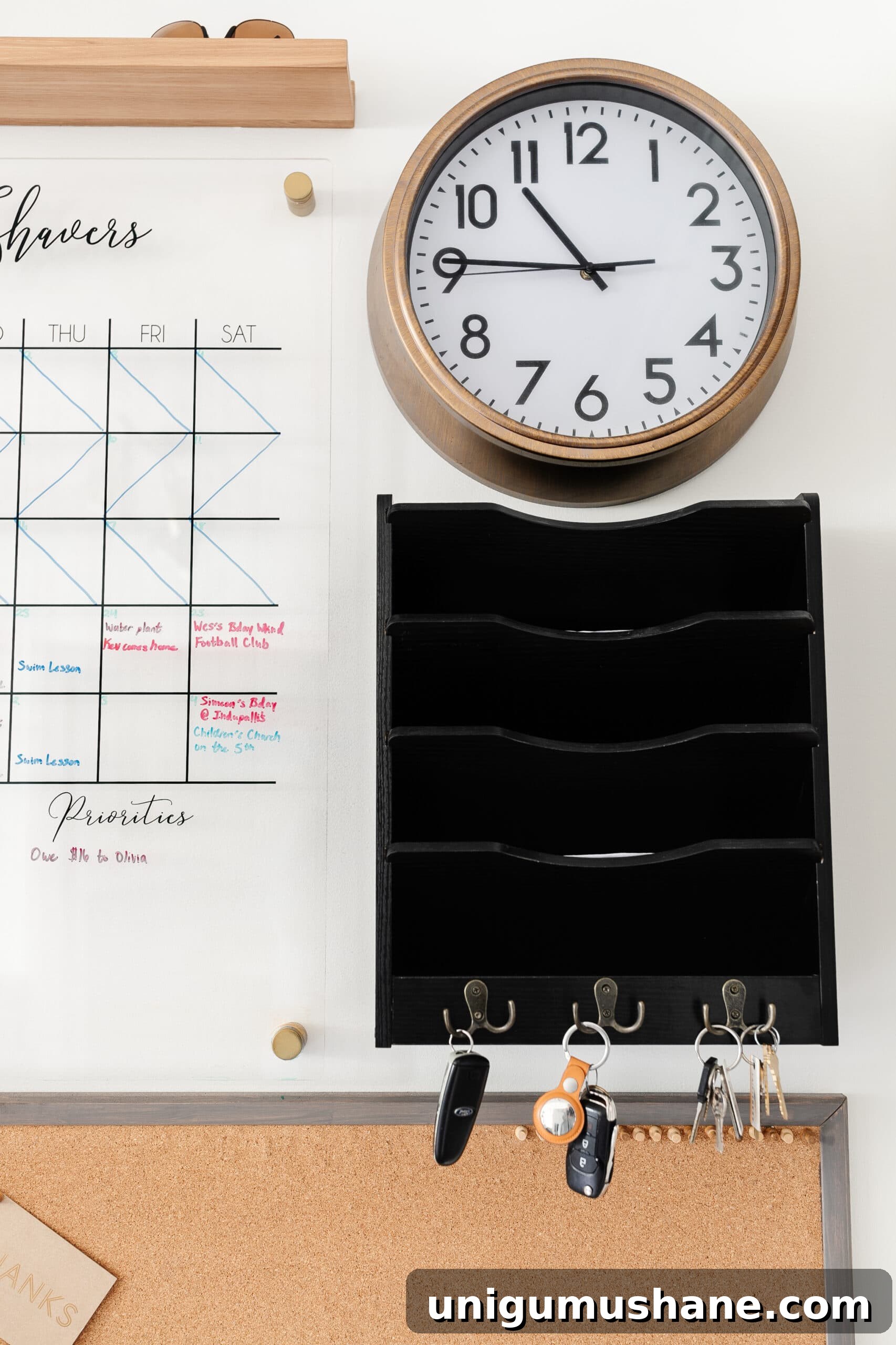
5. Add a Bulletin Board
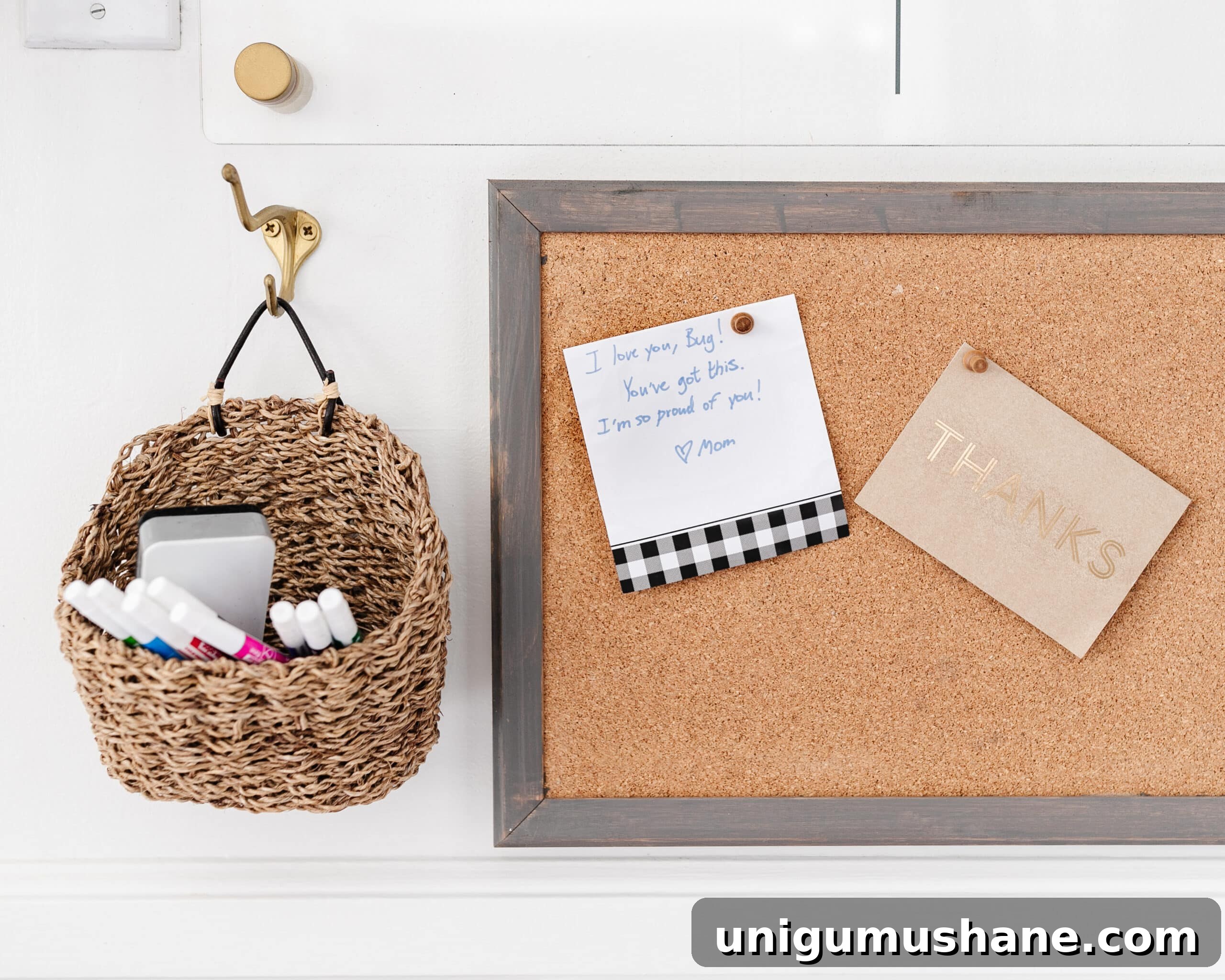
A cork or fabric bulletin board gives you a place for last-minute notes, school reminders, invitations, or tickets. Keep push pins or clips nearby so anyone can pin important papers or creative drawings. A bulletin board also makes a lovely place to leave encouraging notes or display family photos and cards.
6. Include Markers for Color Coding
Use color-coded markers to assign events to family members or highlight different types of activities. Hang a small basket or container near the calendar to store dry-erase pens, erasers, and a small cleaning cloth. Consistent color-coding makes the calendar easier to scan quickly and reduces scheduling mix-ups.
7. Incorporate Storage Tailored to Your Family
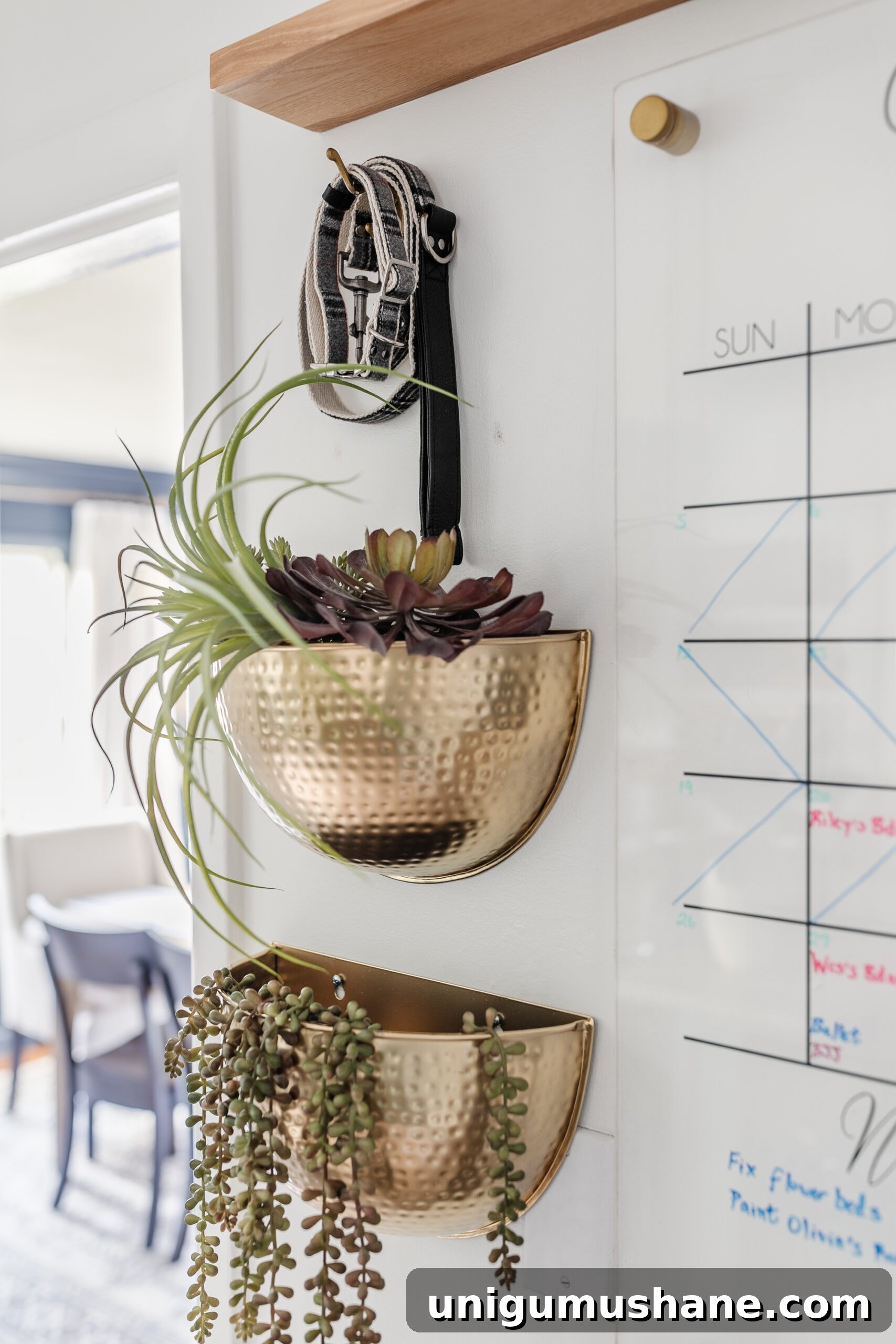
Think about the items your family grabs before leaving and include storage for those. Hooks for backpacks and coats, a small shelf or tray for wallets and sunglasses, and a hook for a dog leash keep essentials in one place. Customize your command center to fit your routine—what you add should save time and reduce morning friction.
We added a slim ledge for wallets and sunglasses and a hook for our dog’s leash so everything is ready for walks without searching the house.
We’ve tweaked items over time, but the core of our command center—calendar, paper sorter, key rack, bulletin board, and a few hooks—has remained a reliable system. Even simple changes can make daily life feel less chaotic and more manageable.
Anything that reduces daily stress and smooths transitions out the door is a win.
Family Command Center Organizers
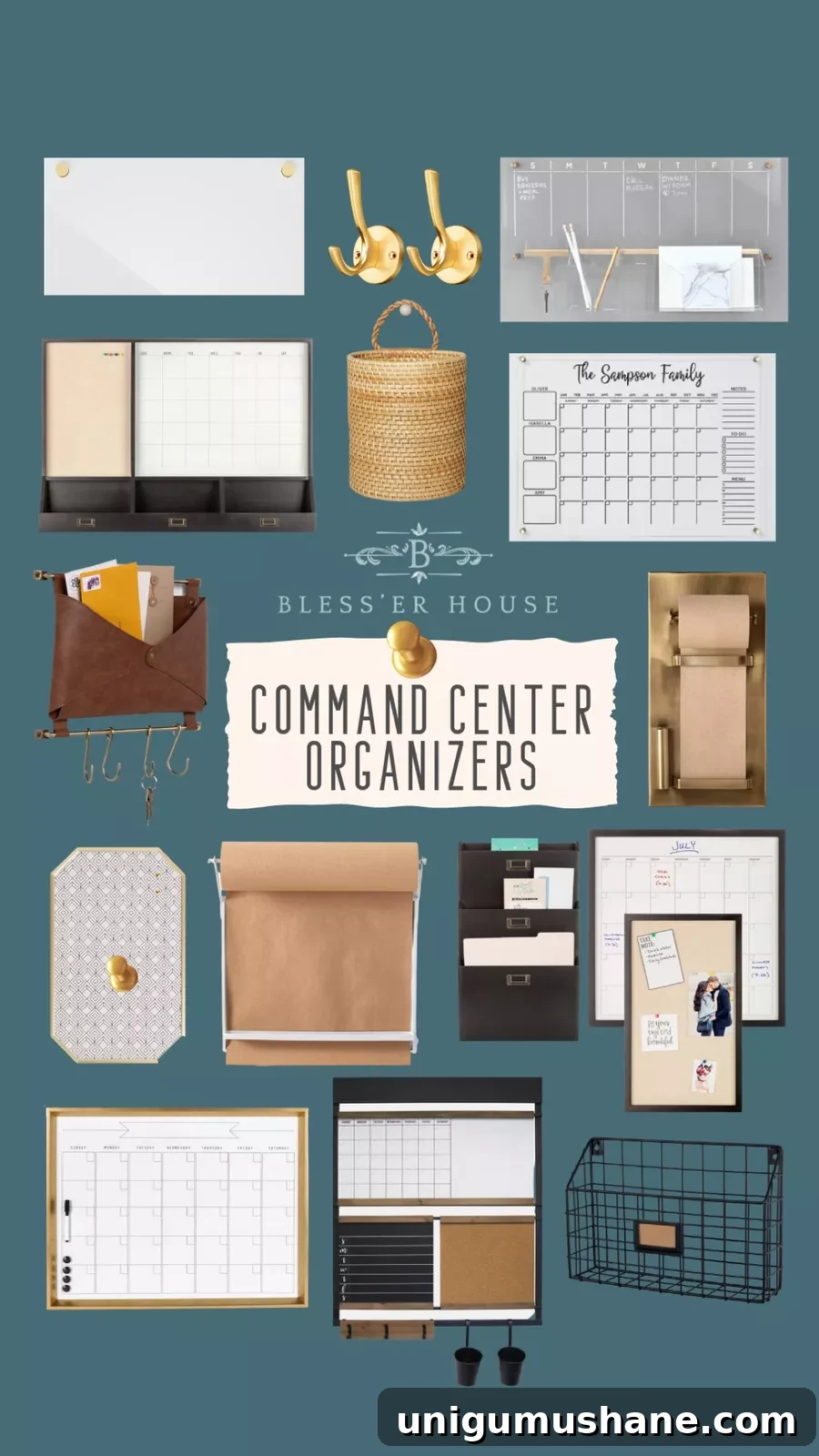
Below are common organizer types to consider when building a command center. Choose items that match your space and simplify your daily flow.
- Acrylic dry-erase board for schedules and notes
- Wall hooks or brass hooks for keys and bags
- Weekly or monthly wall calendar with large cells
- All-in-one wall organizer with mail slots and small pockets
- Woven hanging baskets or wall-mounted baskets for markers and small items
- Mail pockets or faux leather pouches for incoming mail
- File holders or pocket organizers for school paperwork
- Bulletin board or linen-covered memo board for pinned notes
Sources
- Personalized acrylic wall calendar (example)
- Cork memo board (similar)
- Mail sorter or combined mail-and-key rack
- Slim shelf ledge for wallets and sunglasses
- Small wall basket for markers
- Clock and decorative planters for added style
If you prefer digital tools, shared calendars like Google Calendar or family apps can work well, but a physical command center remains useful when kids don’t carry phones or when a visible, central display supports the whole household. It’s an especially good solution for younger children and for families who benefit from tactile reminders.
Do you have tricks that help your household stay organized? What works for keeping mail and paperwork under control? Share your tips and adapt ideas that fit your family’s routine.
More Organizing Ideas
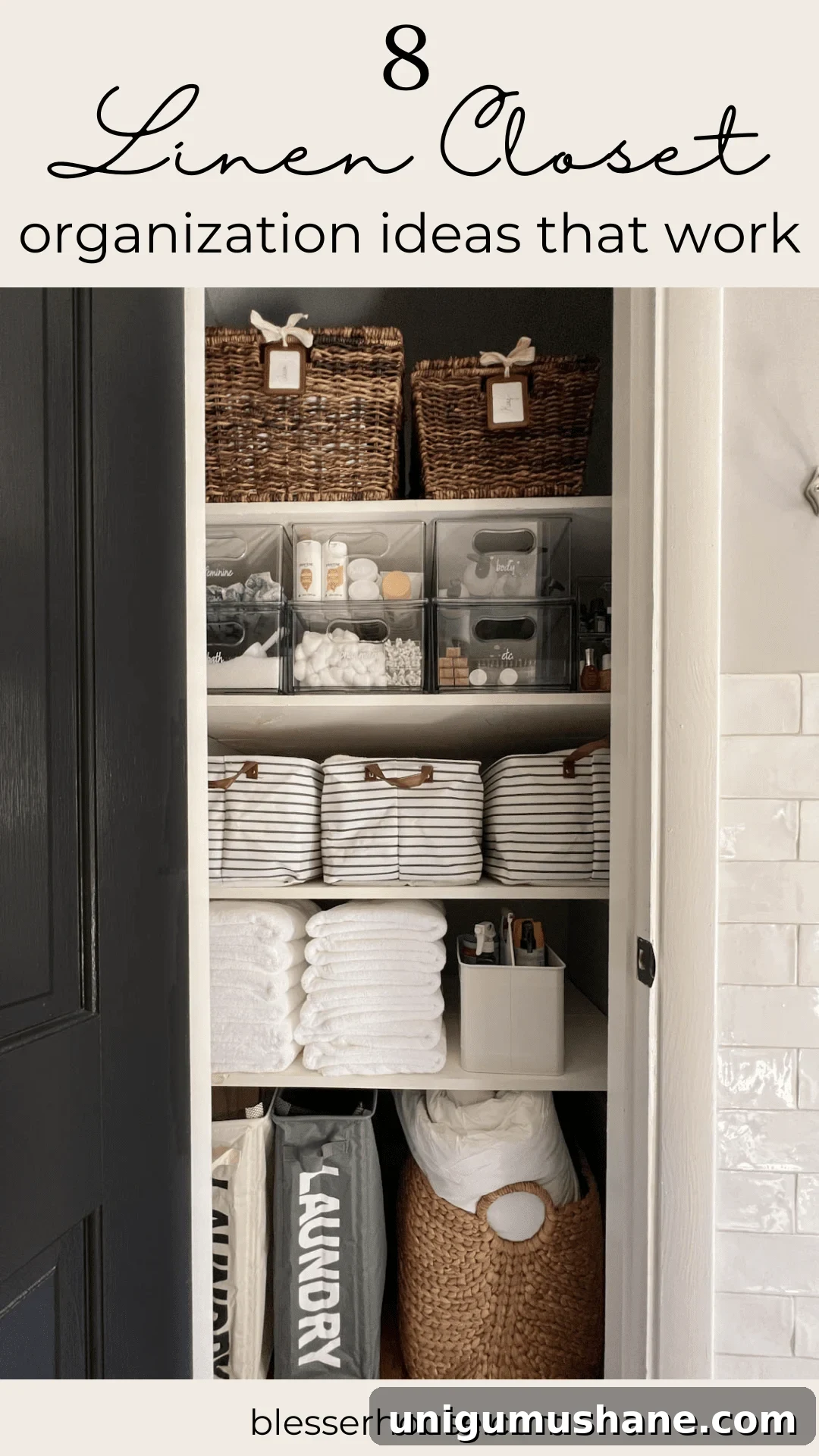
Bathroom linen closet organization ideas that actually work
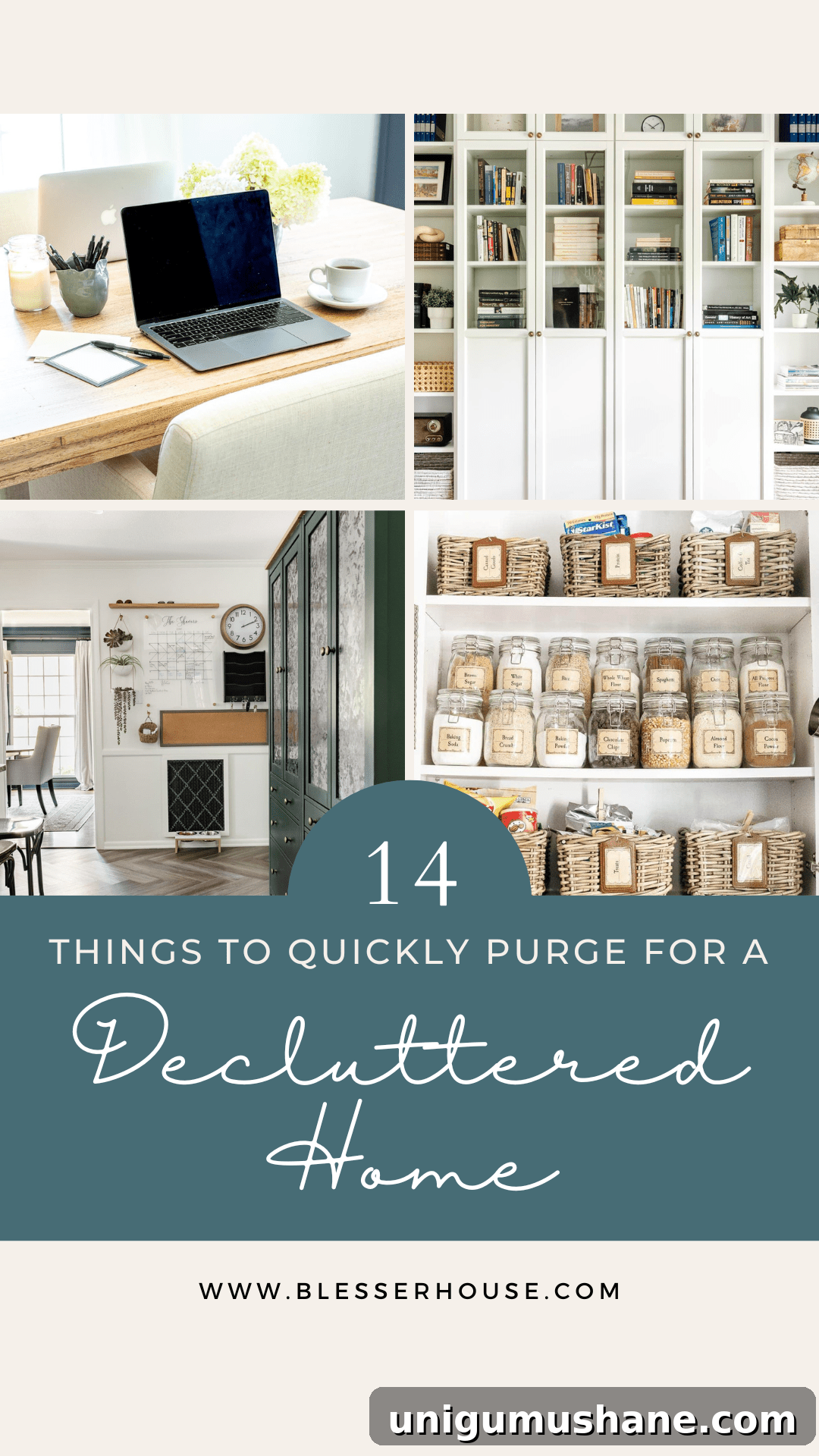
How to declutter your home quickly with proven organizer tips
Best storage solutions that transformed our garage

Frequently Asked Questions
A kitchen command center is a dedicated wall or station that helps a family manage schedules, to-do lists, mail, keys, and other daily essentials. It acts as a drop zone when you come home and a final check before you leave, keeping day-to-day life running smoothly.
Typical elements include a wall calendar, memo or bulletin board, mail sorter, key rack, a small ledge or shelf for wallets and sunglasses, and labeled storage for paperwork and school items.