
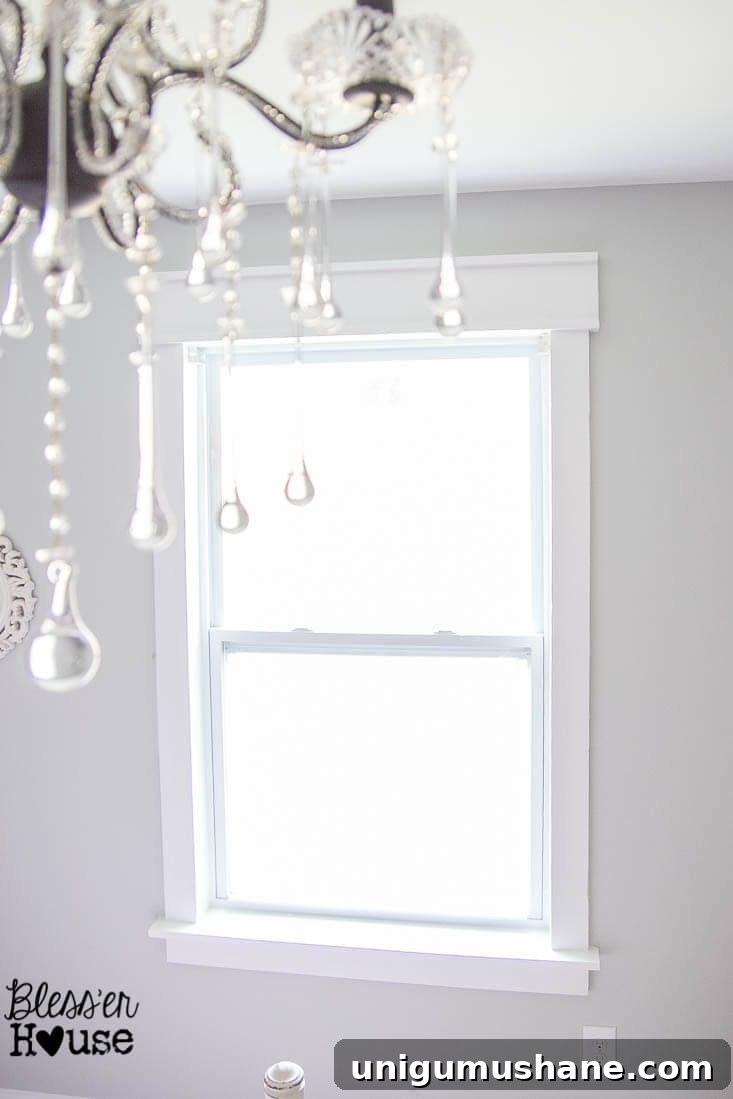
Learn how to add chunky window trim the easy way — no complicated miter cuts or special tools required — and make small, builder-grade windows look larger and more finished.
Not every house arrives with charming architectural details. If your home is new construction or has plain, builder-grade windows, adding a simple, chunky interior window casing is one of the fastest and most affordable ways to introduce character and the feel of an older home.
This guide walks you through a straightforward, beginner-friendly approach to creating Craftsman-style window trim using basic lumber and simple straight cuts. It’s not an elaborate carpentry project, but it delivers a big visual payoff for relatively little effort.
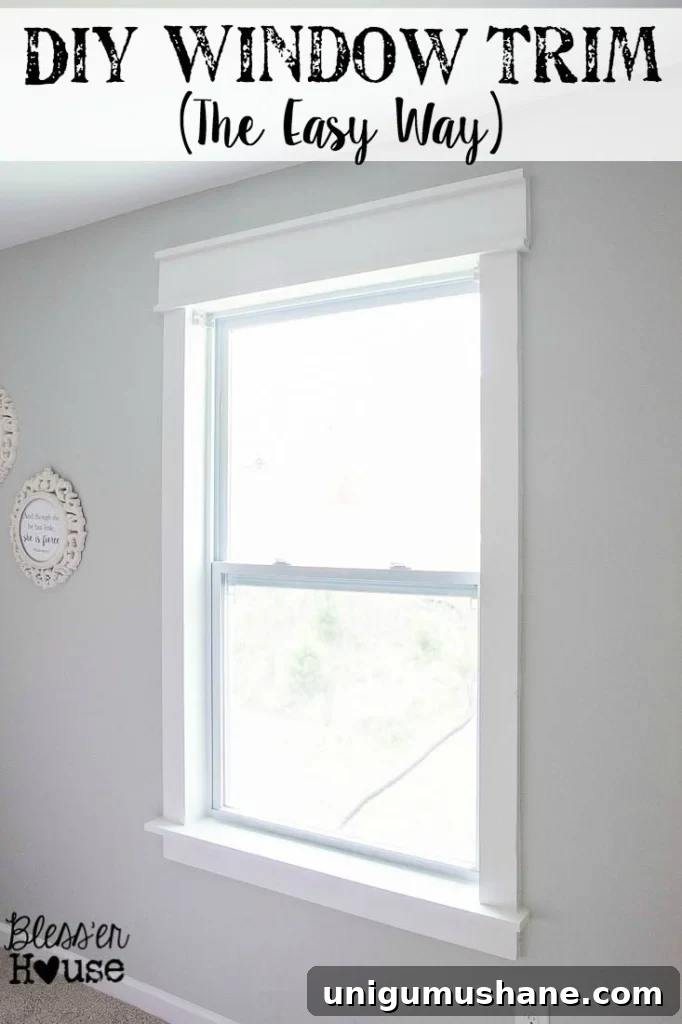
If you’re new to home improvement, this project is ideal: you can complete it using straight cuts only. Power tools like a miter saw or brad nailer will speed the work, but a hand saw and hammer will also get the job done.
Adding consistent trim throughout a home ties rooms together visually. We used this simple trim style in a bedroom and it instantly made the room feel more intentional and finished.
DIY Ideas to Add Character to Your Home
- Install simple wall molding to create visual interest on blank walls.
- Beef up crown molding and baseboards to add depth and proportion.
- Choose trim paint colors that complement your walls for a cohesive look.
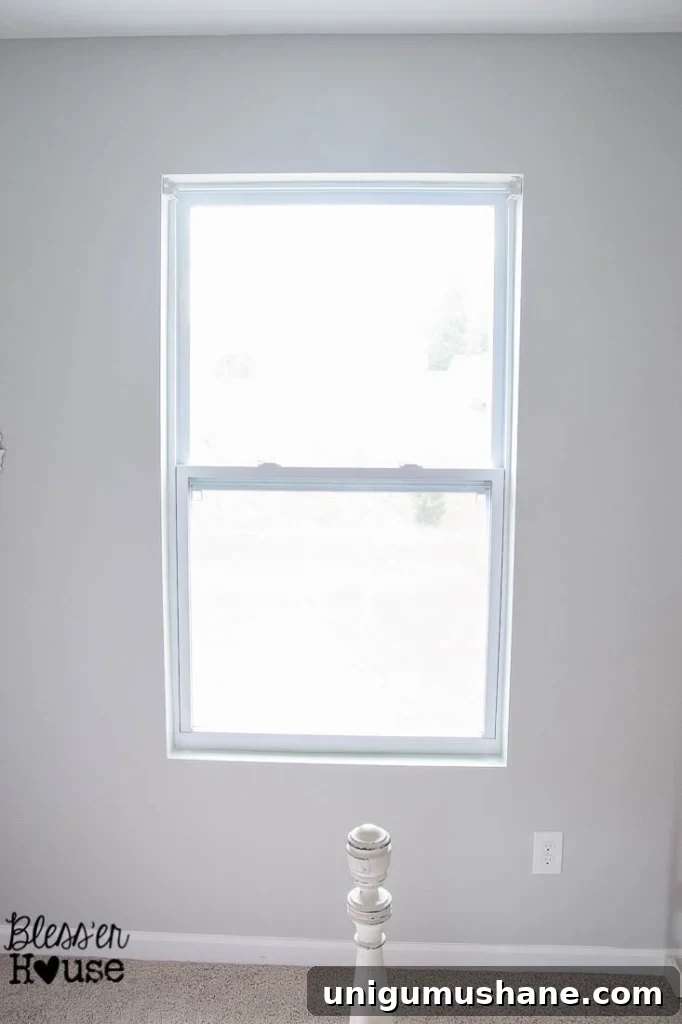
Before the trim, Olivia’s bedroom window looked plain and forgettable. Adding trim changed the whole appearance.
Trim helps balance other focal points — for example, a pretty chandelier looks complete when paired with substantial window casing rather than bare window frames.
DIY Window Trim – The Easy Way Without Miter Cuts
Supplies
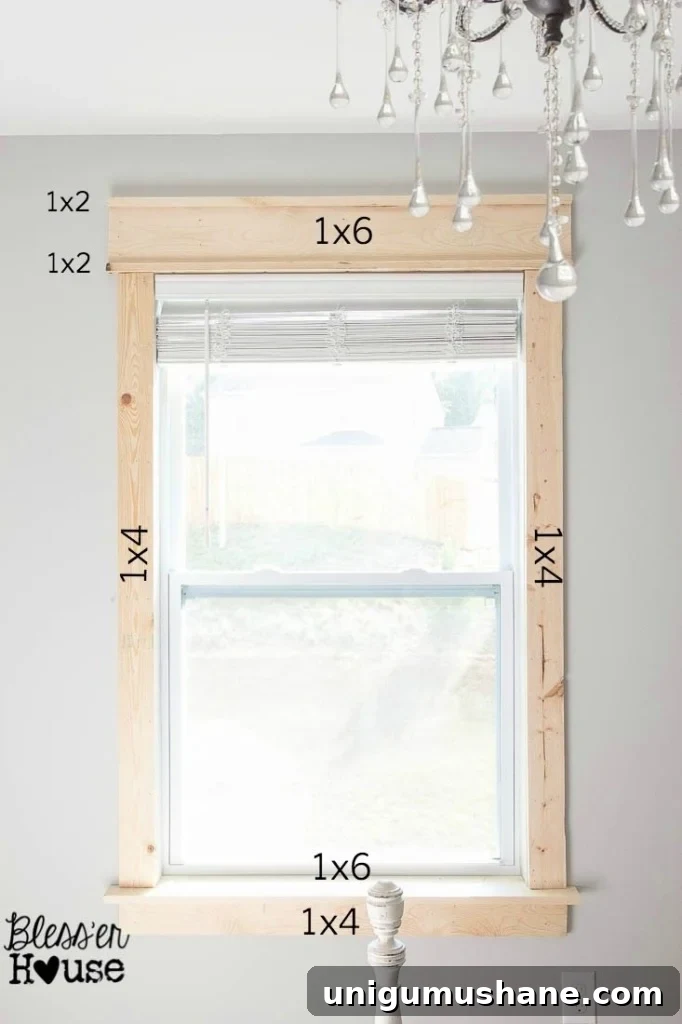
- 1×2 board (length determined by window width)
- Two 1×4 boards
- One 1×6 board for the sill/header
- Brad nails or finishing nails
- Wood screws
- Hammer or cordless brad nailer (optional, but faster)
- Paintable caulk
- Wood filler for knots and nail holes
- Primer and paint
- Jigsaw or handsaw for notching the sill
- Nail setter and fine-grit sandpaper
- Pry bar and utility knife (if removing existing trim)
Plain pine lumber works well for clean lines and paints nicely. MDF or other boards are also suitable for interior applications. For exterior trim, choose pressure-treated lumber or composite materials that resist moisture.
Steps
Below is a simple step-by-step overview. Photos can help, but the process boils down to measuring, cutting straight pieces, fastening, filling gaps, and painting.
If you are removing old trim, score the caulk joints with a utility knife around the casings and sill, then pry the trim away carefully with a pry bar.
Step 1 – Make the Window Sill
1. Begin with the sill. Cut the 1×6 to the window width plus roughly 10 inches total, leaving about 5 inches of overlap on each side. This creates a substantial sill and a handsome ledge.
2. Hold the sill piece up to the bottom of the window and mark the notches where it must recess into the window base. Use a jigsaw (or handsaw) to remove those corners so the sill fits flush.
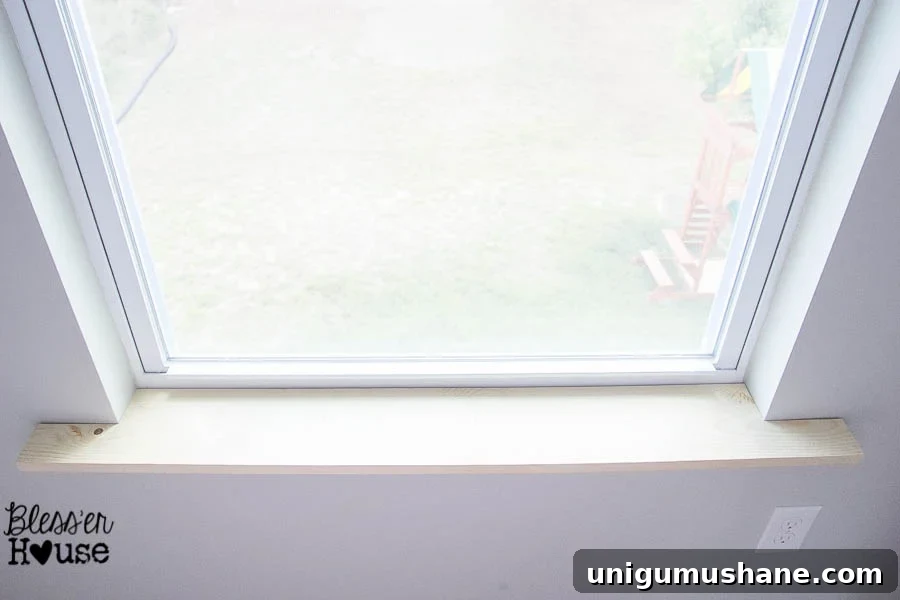
3. When the fit is right, attach the sill using brad nails or finishing nails. If using a nail gun, hold the piece steady and fasten into the framing behind the drywall where possible.
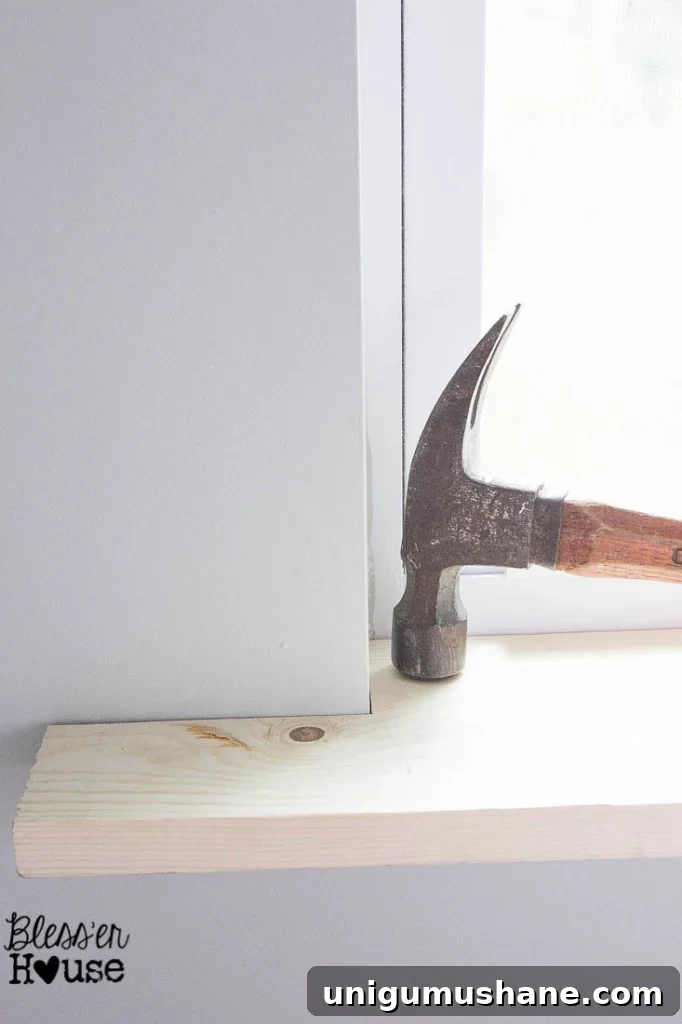
Step 2 – Add Window Trim Sides
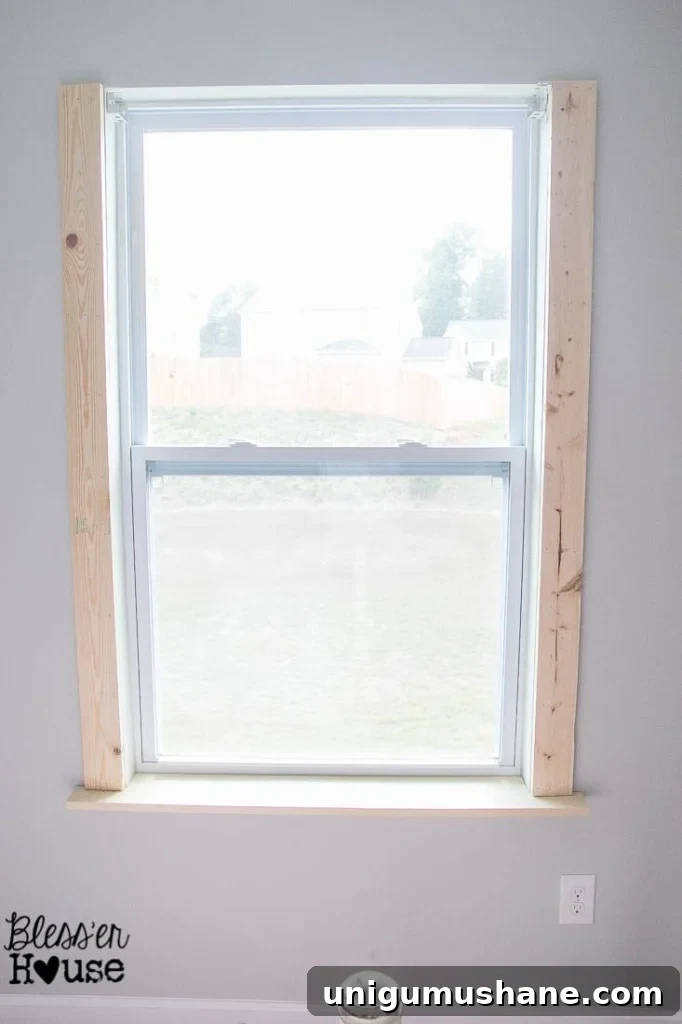
4. For the side casings, hold each 1×4 vertically against the window to mark the correct length, then cut straight across. Align the boards so they sit tight to the sill and head casing and fasten them in place with nails or screws into studs when possible.
Step 3 – Assemble the Header
5. Cut another 1×6 to match the sill length for the header. Cut the 1×2 into two pieces the same length as the 1×6; these will form a simple layered cap on the header piece.
6. Attach the 1×2 pieces to the front and back edges of the 1×6 header with wood screws to create a stepped profile. Fasten the completed header above the window, securing into studs when possible for a solid mount.
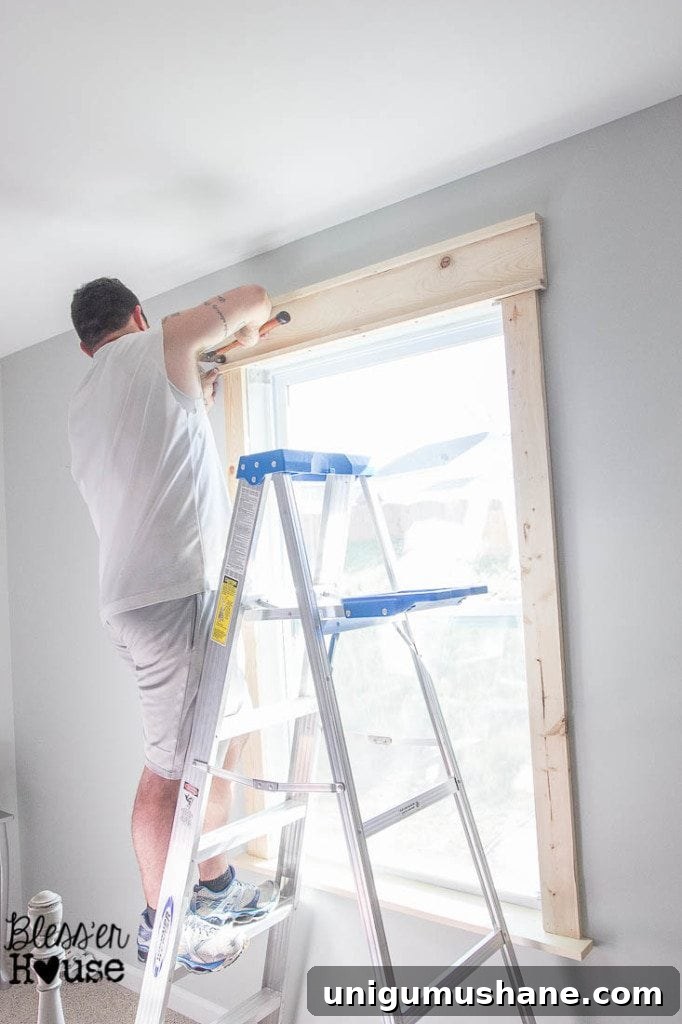
7. Use brad nails or finish nails to help hold the header while you secure it; double-check that it is level.
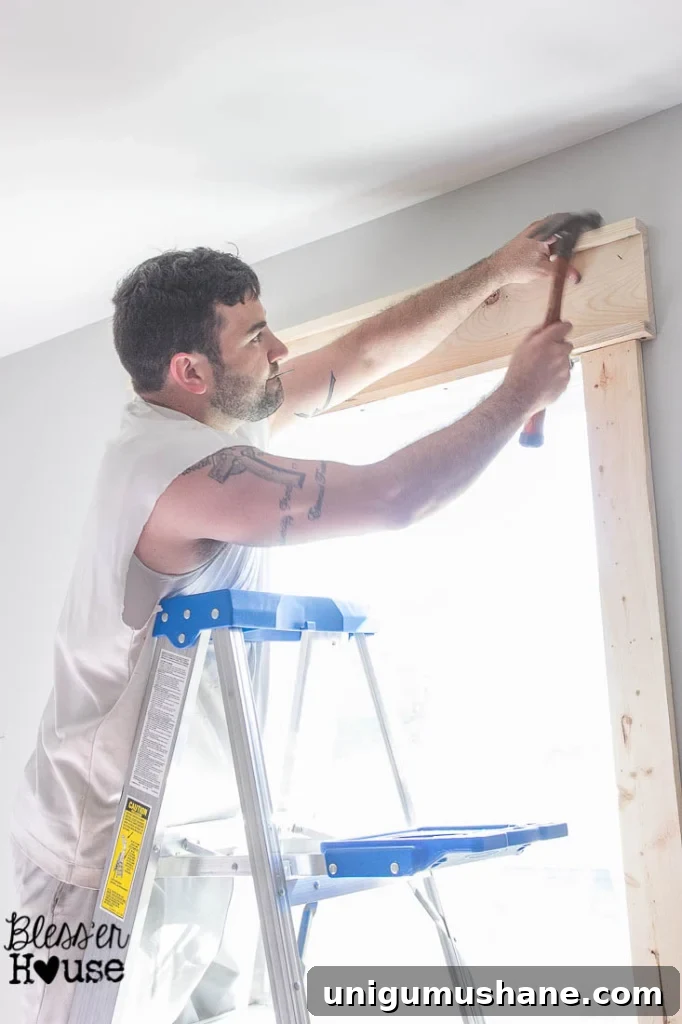
Step 4 – Add the Apron
8. Add a 1×4 apron beneath the sill to complete the lower profile. This piece hides the joint between the wall and the underside of the sill and reinforces the finished look.
9. Run paintable caulk along any seams where the trim meets the wall and where pieces meet each other. Fill knots and nail holes with wood filler, then sand smooth. Caulk fills small gaps and gives a crisp, professional finish.
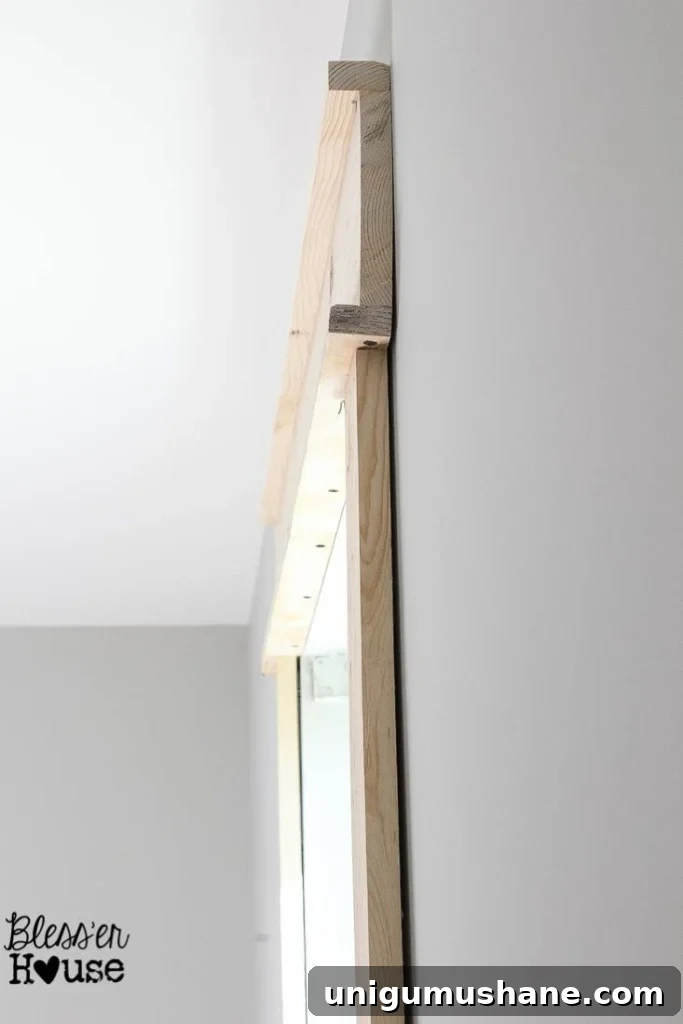
Step 5 – Set Nails, Fill, Sand, and Caulk
10. Drive any finishing nails below the surface with a nail setter so they won’t show after painting. Fill the dents and holes with wood filler, let it dry, then sand smooth.

11. After sanding, wipe away dust and inspect all seams. Add a final bead of caulk where needed and smooth it for a clean line.
Step 6 – Prime and Paint
12. Apply one coat of primer to raw wood to ensure even paint coverage and to block any tannins from bleeding through.
13. Paint one to two coats in your chosen color. We used a light, neutral white which brightened the room and made the window read larger at a glance.
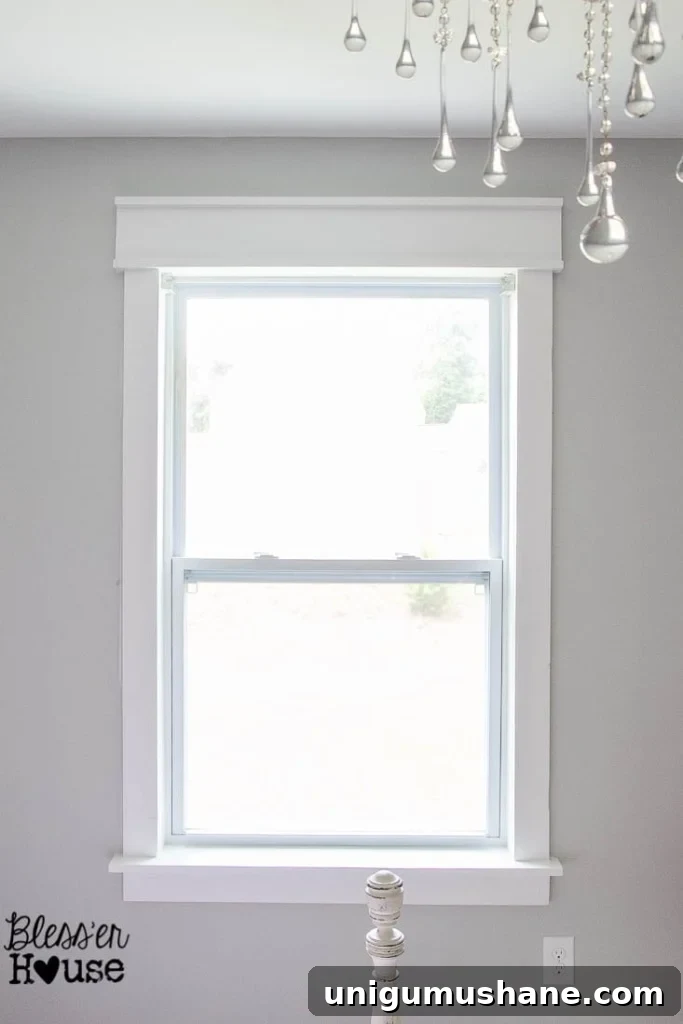
With the trim painted and caulked, the window suddenly feels larger and more refined. Hanging curtains or blinds will further enhance the finished look.
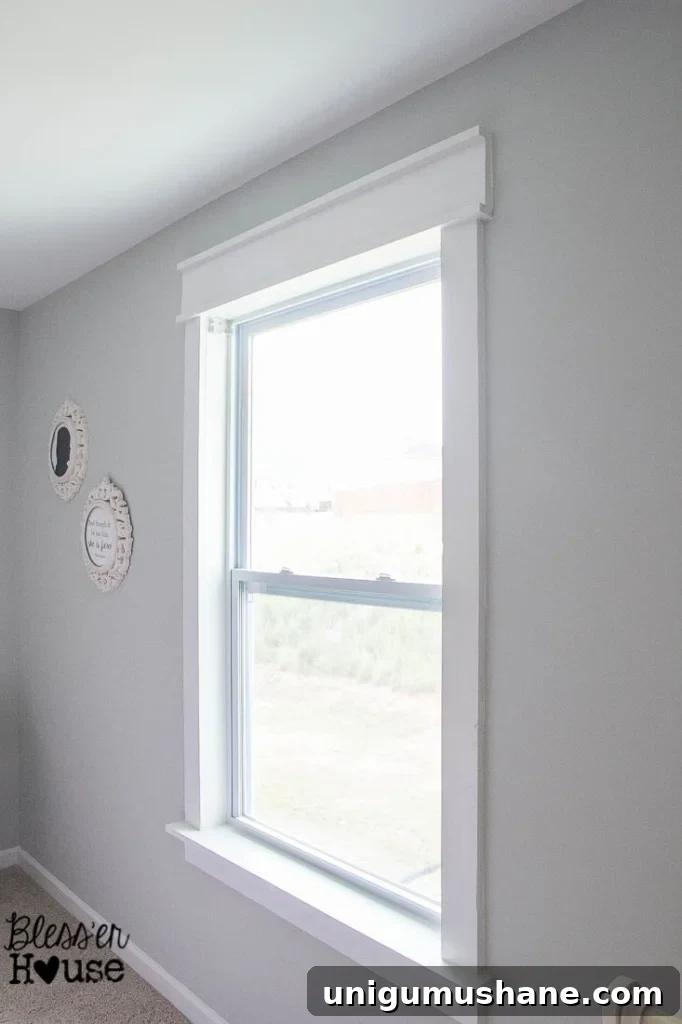
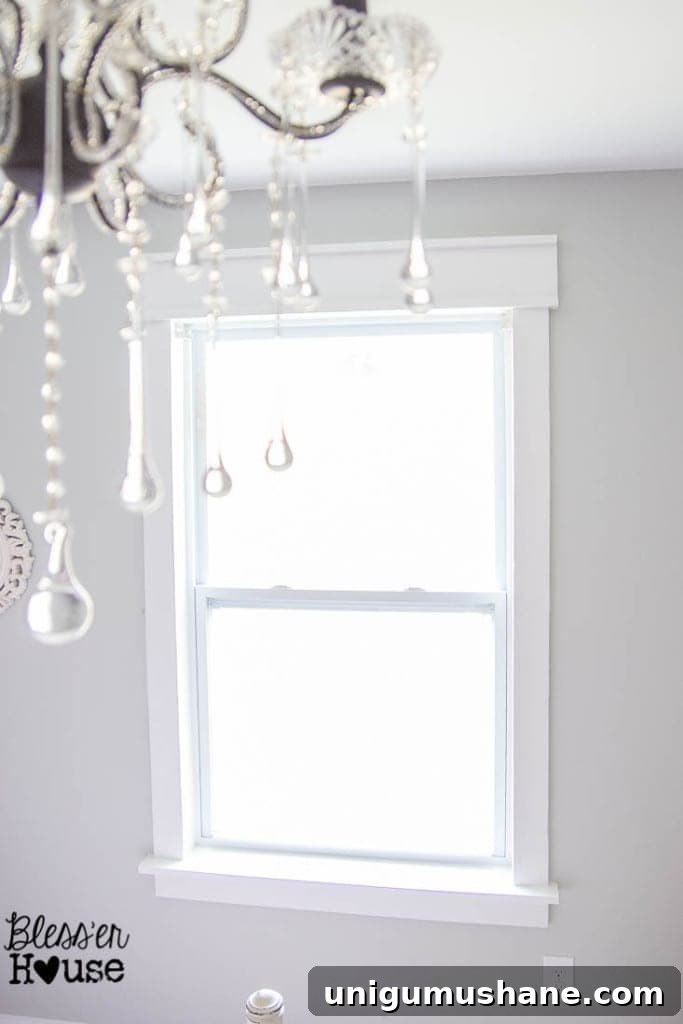
The Finished Window Trim
A few boards, some caulk, and a coat of paint can transform a plain window into a standout feature. The result looks custom and substantial without the complexity of angled cuts or elaborate profiles.
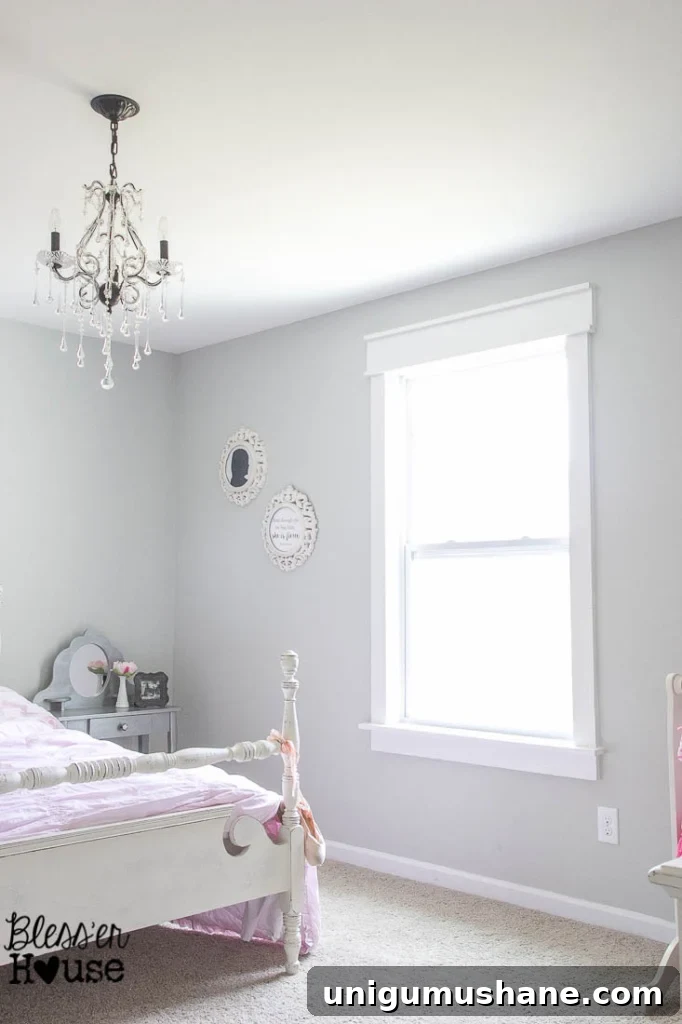
Once curtains and an area rug are in place, the whole room will feel cohesive and designed. This is an approachable project that many DIYers can tackle over a weekend.
Would you try this window casing method? It’s simple enough to repeat across multiple rooms for a consistent look.
More DIY Window Ideas
- Choose curtains and hardware to frame the window and enhance scale.
- Use decorative window film to add privacy and pattern without replacing glass.
- Convert a deep sill into a built-in bench or window seat for extra function.
Frequently Asked Questions
Does window trim have to match baseboards?
No. Matching trim and baseboards can create a cohesive look, but contrasting trim colors or profiles can also be an intentional and stylish design choice.
Are window casings worth it?
Yes. Interior designers often recommend casings because they make windows look finished and can elevate the overall appearance of a room, making spaces feel more polished and higher-end.