
The perfect beginner DIY project: how to install vertical wood shiplap wainscoting in a bathroom to add character on a small budget.
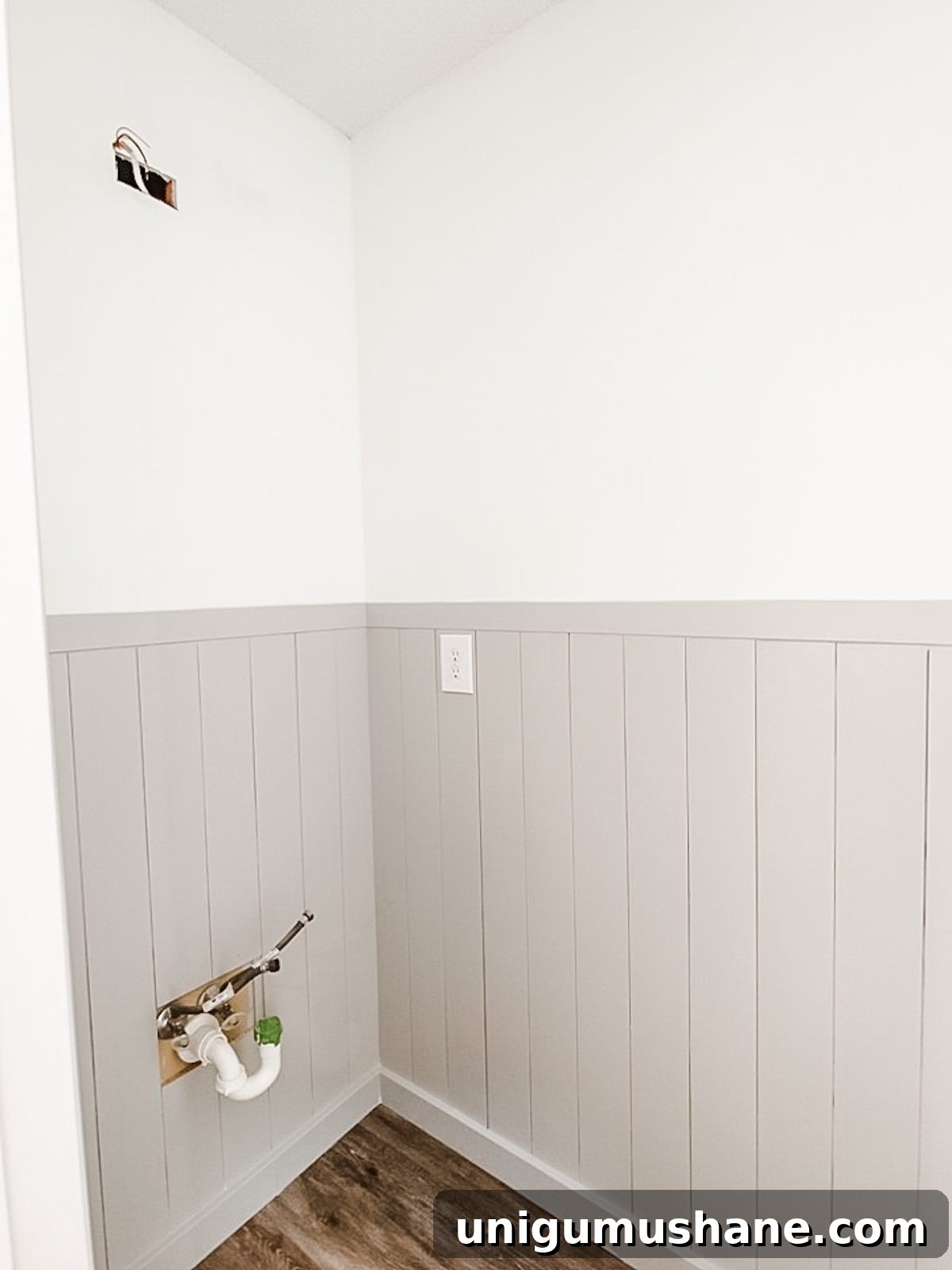
Have you been following the powder room makeover on our Instagram Stories? This vertical shiplap wainscoting and a fresh coat of paint transformed a tiny bathroom for a dear friend—proof that simple wall treatment can deliver big impact without a big budget.
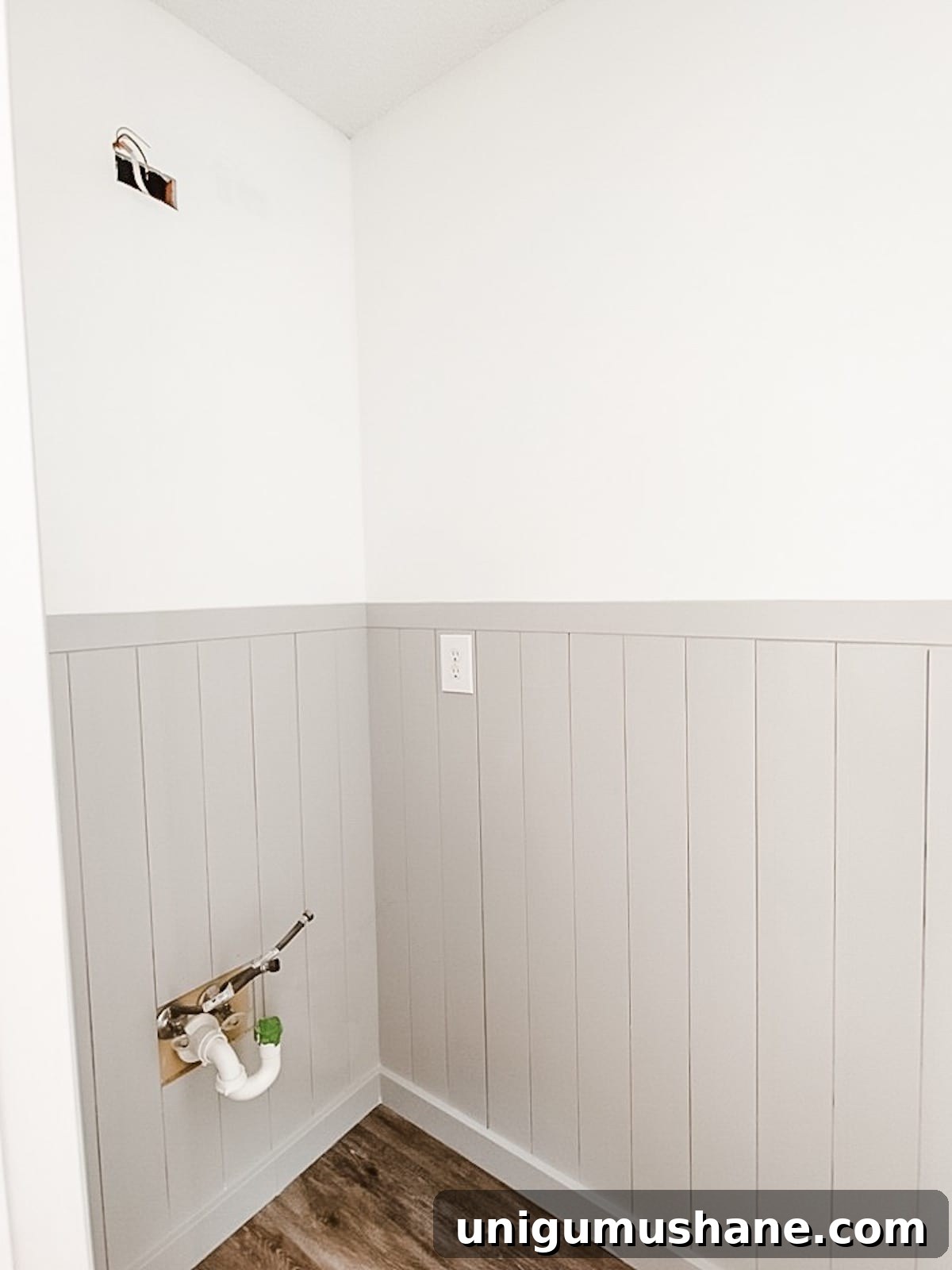
UPDATE: See the finished powder room makeover reveal in the linked post.
Vertical Shiplap vs Horizontal Shiplap: Which to Use?
When to Choose Vertical Shiplap
Vertical shiplap creates a more contemporary look and visually stretches the ceiling, making it a great choice for modern bathrooms and smaller spaces that need a taller feel.
When to Choose Horizontal Shiplap
Horizontal shiplap is the classic choice for farmhouse, coastal, or rustic rooms. It reads wider across the wall and helps narrow rooms feel broader.
We’ve been installing shiplap for years, and rotating the boards from horizontal to vertical can completely change the vibe. For this California Casual powder room, vertical shiplap delivered the modern, versatile backdrop we wanted.
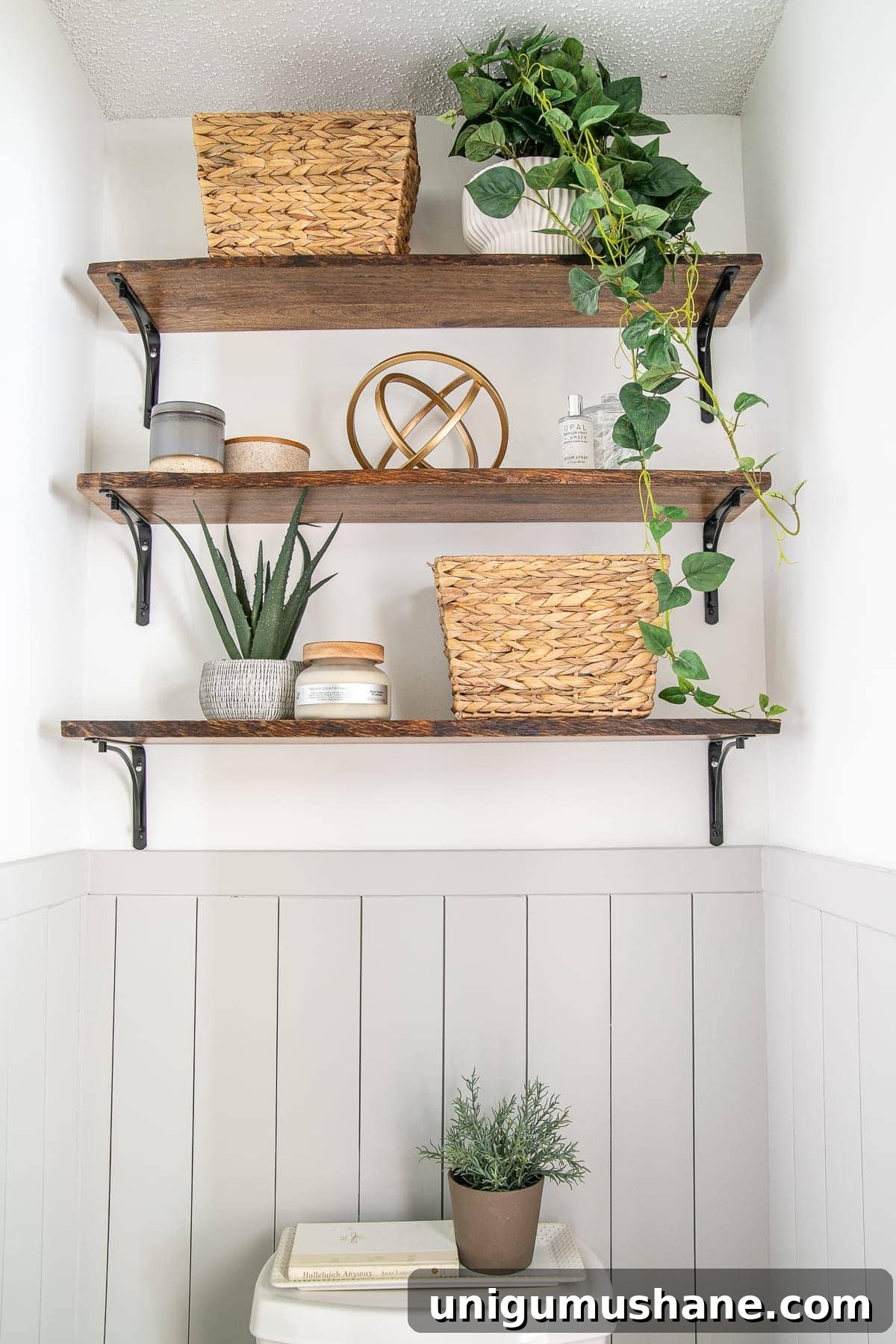
How to Install Vertical Shiplap Wainscoting in a Bathroom
This project can be done as a full wall treatment or as wainscoting (half wall), depending on the look you want and your budget. Below is a straightforward, beginner-friendly process with the supplies and step-by-step instructions.
Supplies
- 5″ shiplap boards (pre-primed tongue & groove boards are easiest to work with)
- 1×2-1/2″ MDF Craftsman moulding (upper rail)
- 1×4-1/2″ MDF Craftsman moulding (baseboard/lower rail)
- Construction adhesive (for vertical installation)
- Caulk gun
- Cordless finish nailer and 1 1/2″ finish nails
- Tape measure and pencil
- Jigsaw for outlet cutouts
- Power drill
- Table saw or circular saw; miter saw (optional but useful)
- Wood filler and caulk
- Rags and a sander with medium-grit pads
- Outlet spacers and jumbo outlet/switch covers
- Flathead screwdriver
- Paint (satin or semi-gloss recommended for bathroom wainscoting)
The Steps
Step 1 – Measure the Room Perimeter and Calculate
Measure the total perimeter of the room to estimate how many boards you’ll need. For example, a 22′ perimeter required twenty-seven 8′ boards cut in half for 4′ sections, plus a few extras for waste and mistakes.
Step 2 – Measure and Cut Shiplap Boards
Cut boards to length with a miter saw. For this project we cut 8′ boards into 4′ pieces to reduce waste and simplify handling.
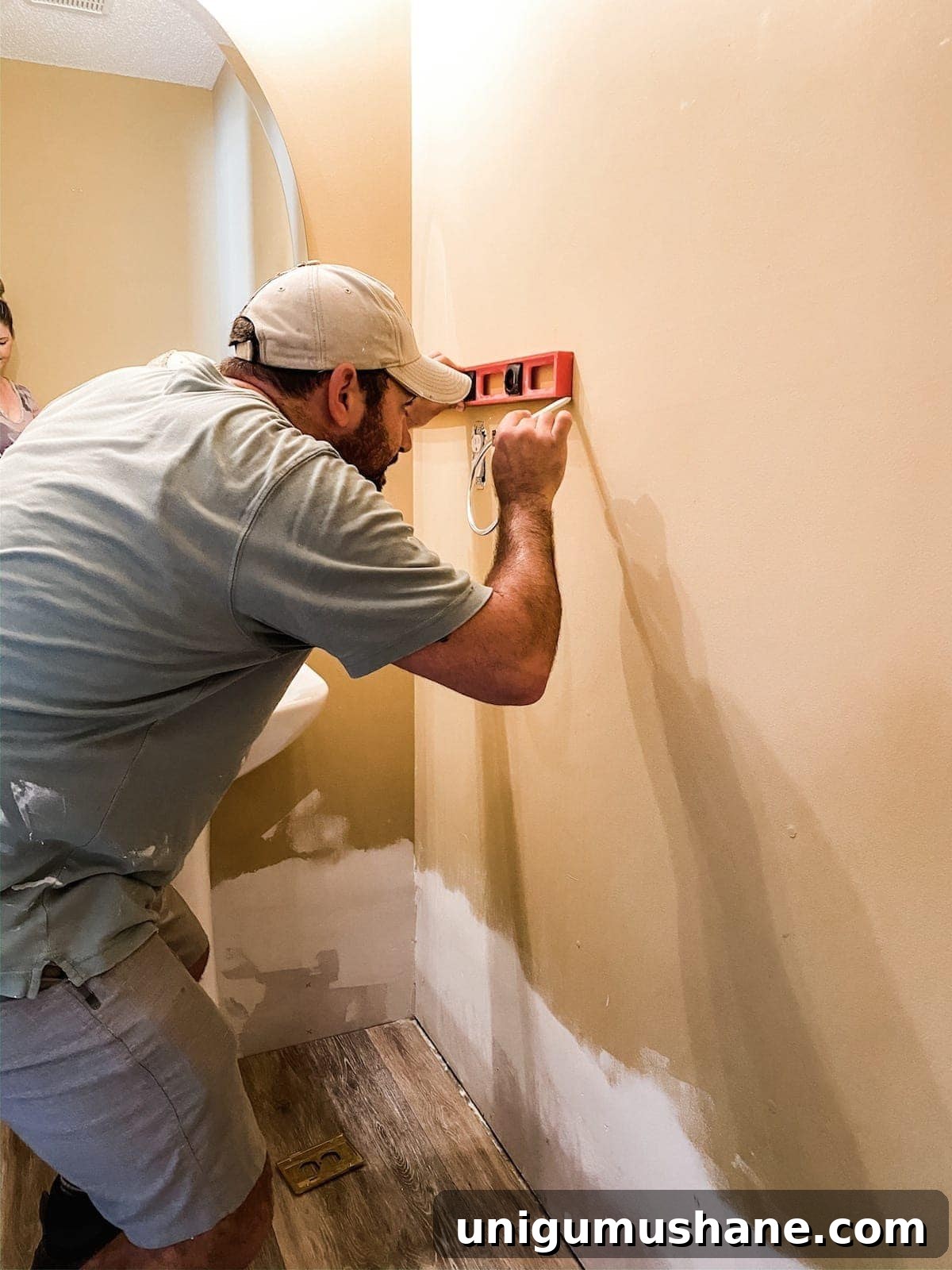
Step 3 – Mark the Height of the Shiplap Wainscoting
Mark the desired height (4′ in our case) and use a level to draw a continuous line around the room. Position the top of the shiplap a couple inches above outlets and switches to make cutouts easier.
Step 4 – Check the First Board’s Placement and Level It
Dry-fit the first board and ensure it’s perfectly level before attaching. Corners are often out of square, so rely on your level rather than the corner.
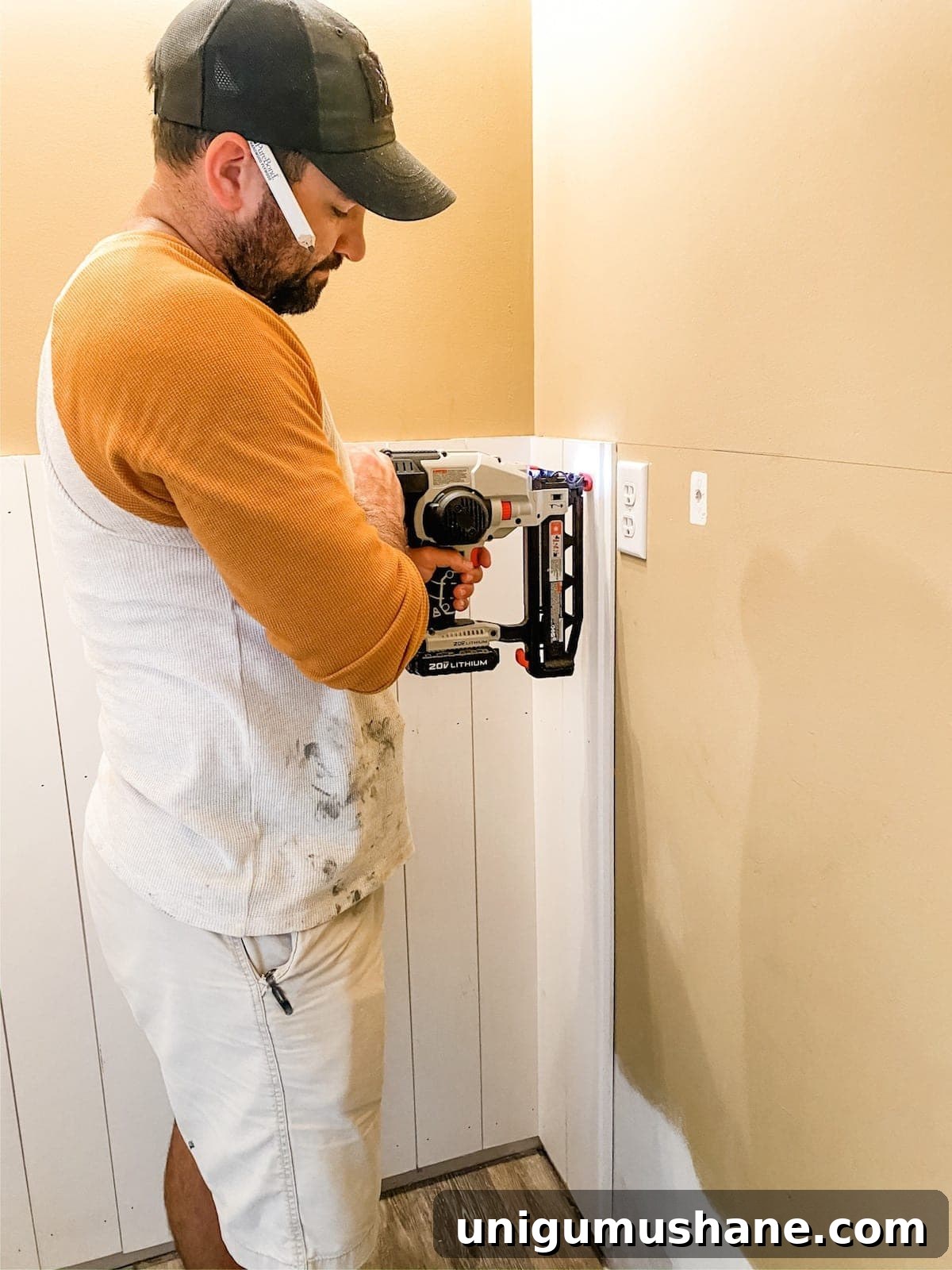
Step 5 – Apply Construction Adhesive and Finish Nails to Secure Boards
Run a bead of construction adhesive on the back of the board and press it to the wall along your pencil line. Use a finish nailer to tack the board in place. With vertical shiplap you won’t always hit studs, so adhesive is essential.
Step 6 – Repeat, Checking with a Level Often
Continue installing boards around the room, checking level frequently to maintain a straight line.
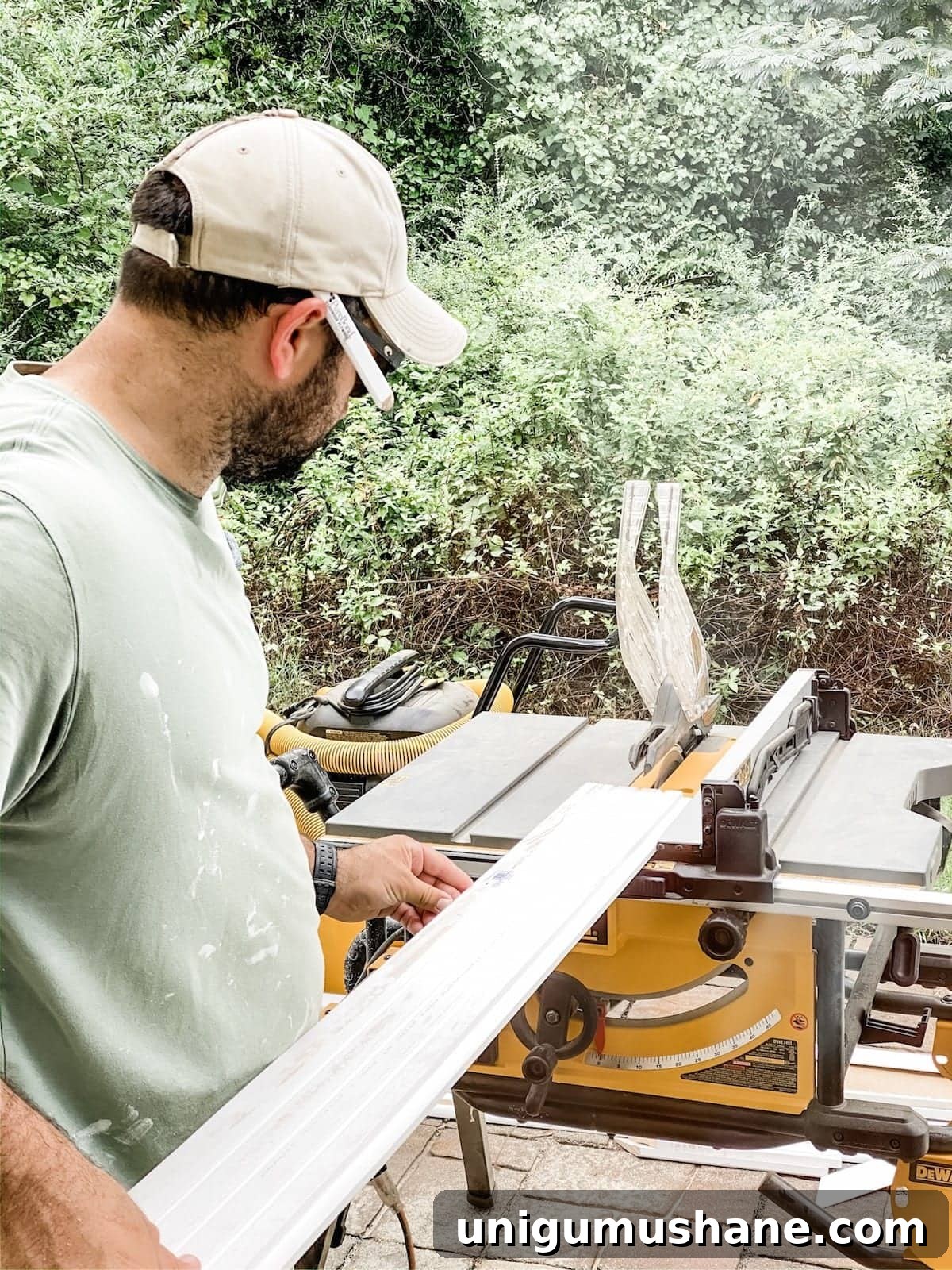
Step 7 – Trim Boards to Fit at Corners
Trim boards to fit corners and transitions using a table saw or circular saw, making clean, straight cuts for tight joints.
Step 8 – Mark Obstacles Like Outlets and Switches
Trace outlet and switch locations onto the boards before installing. Using a small outlet cover as a template speeds this up.
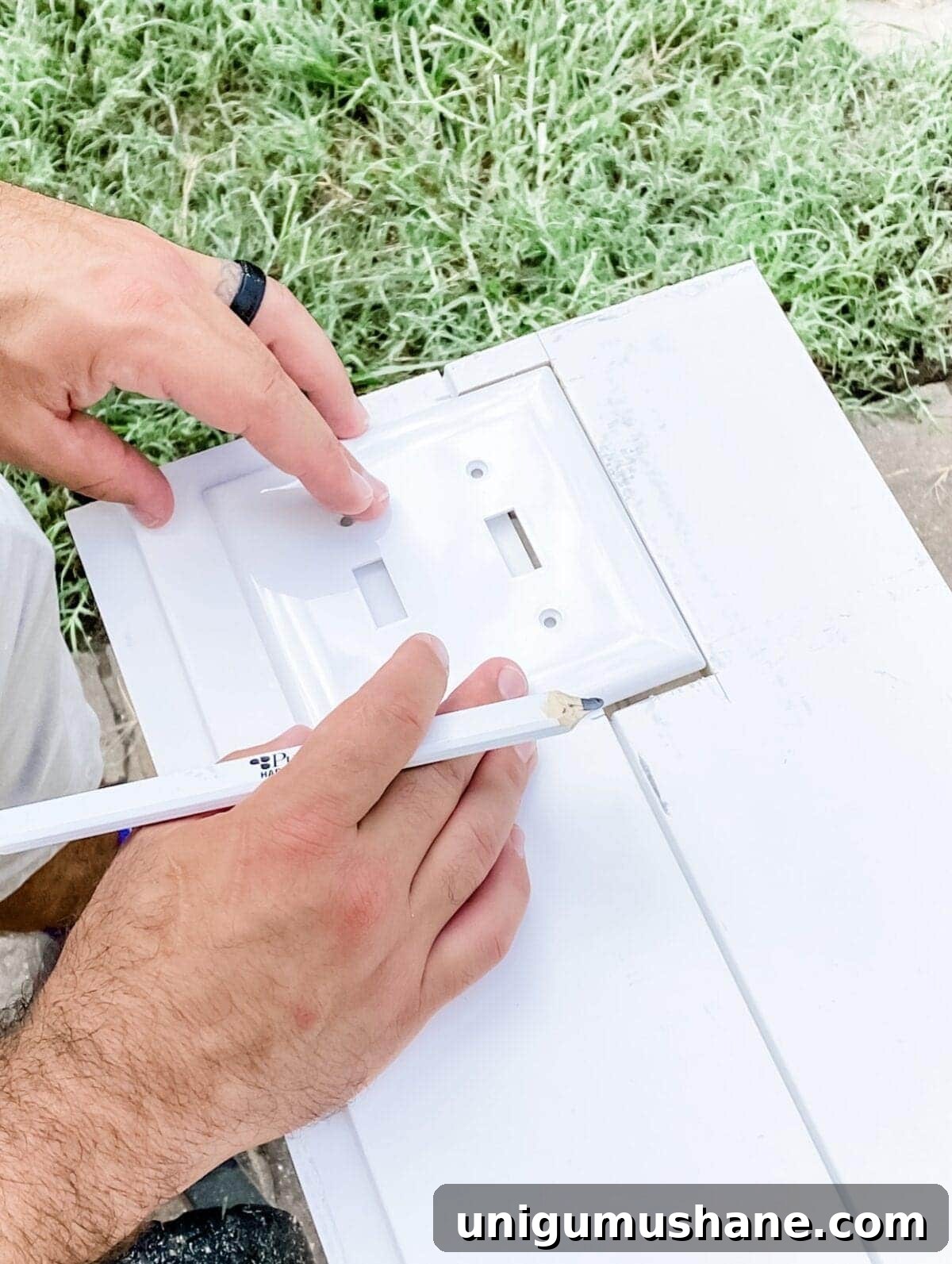
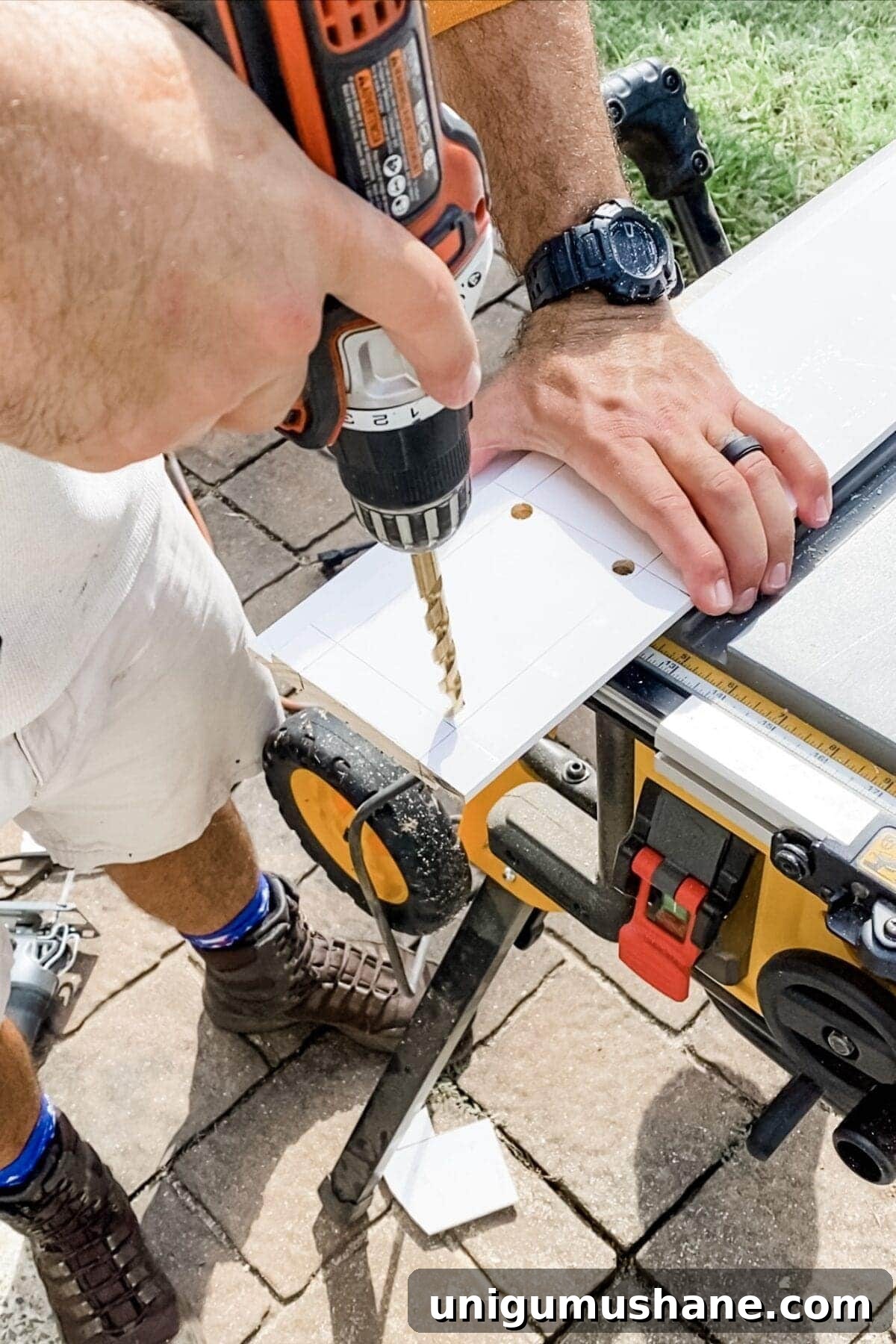
Step 9 – Drill Starter Holes at Outlet Corners
Drill a hole in each corner of the traced outlet to give your jigsaw a clean starting point.
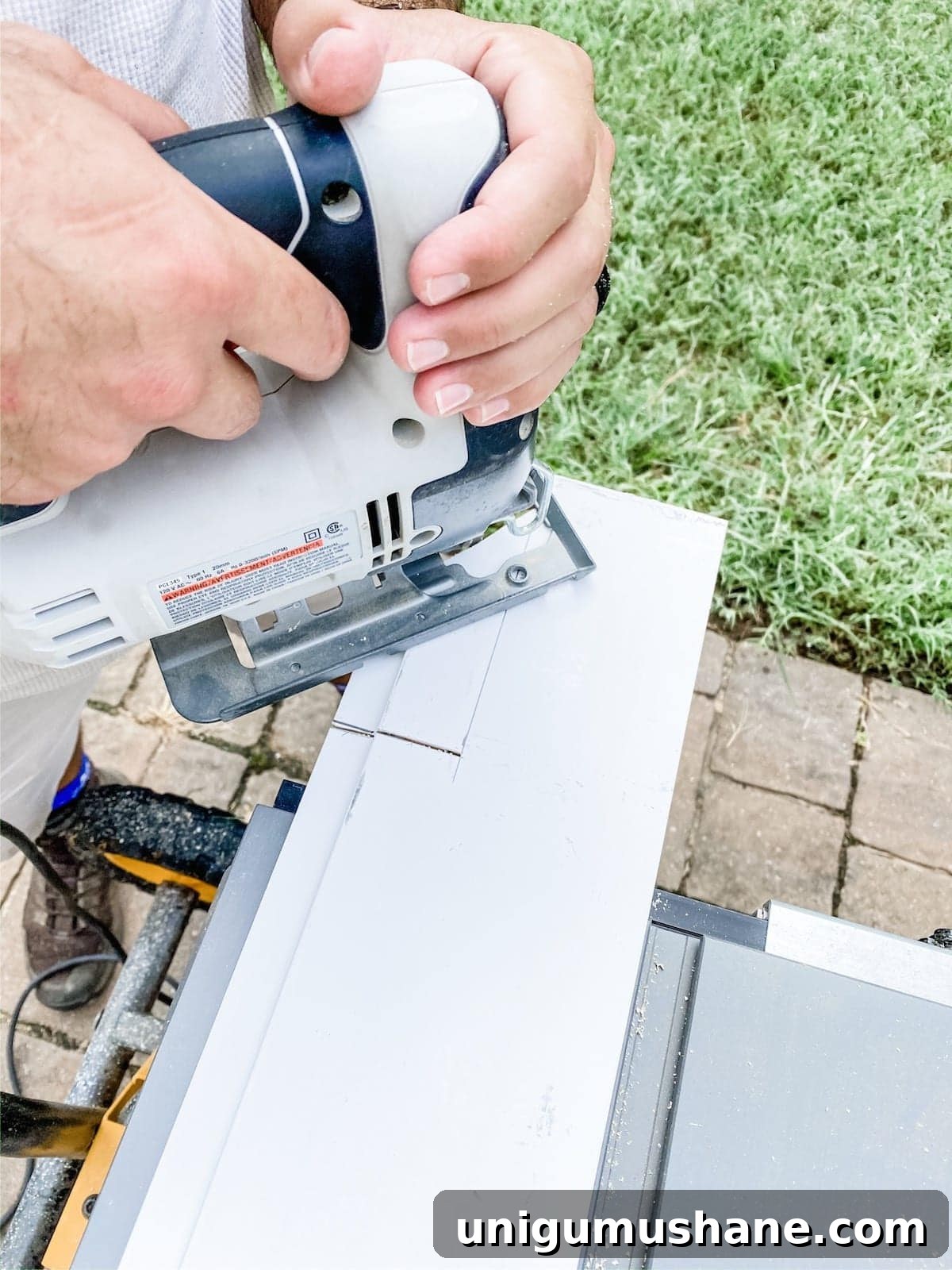
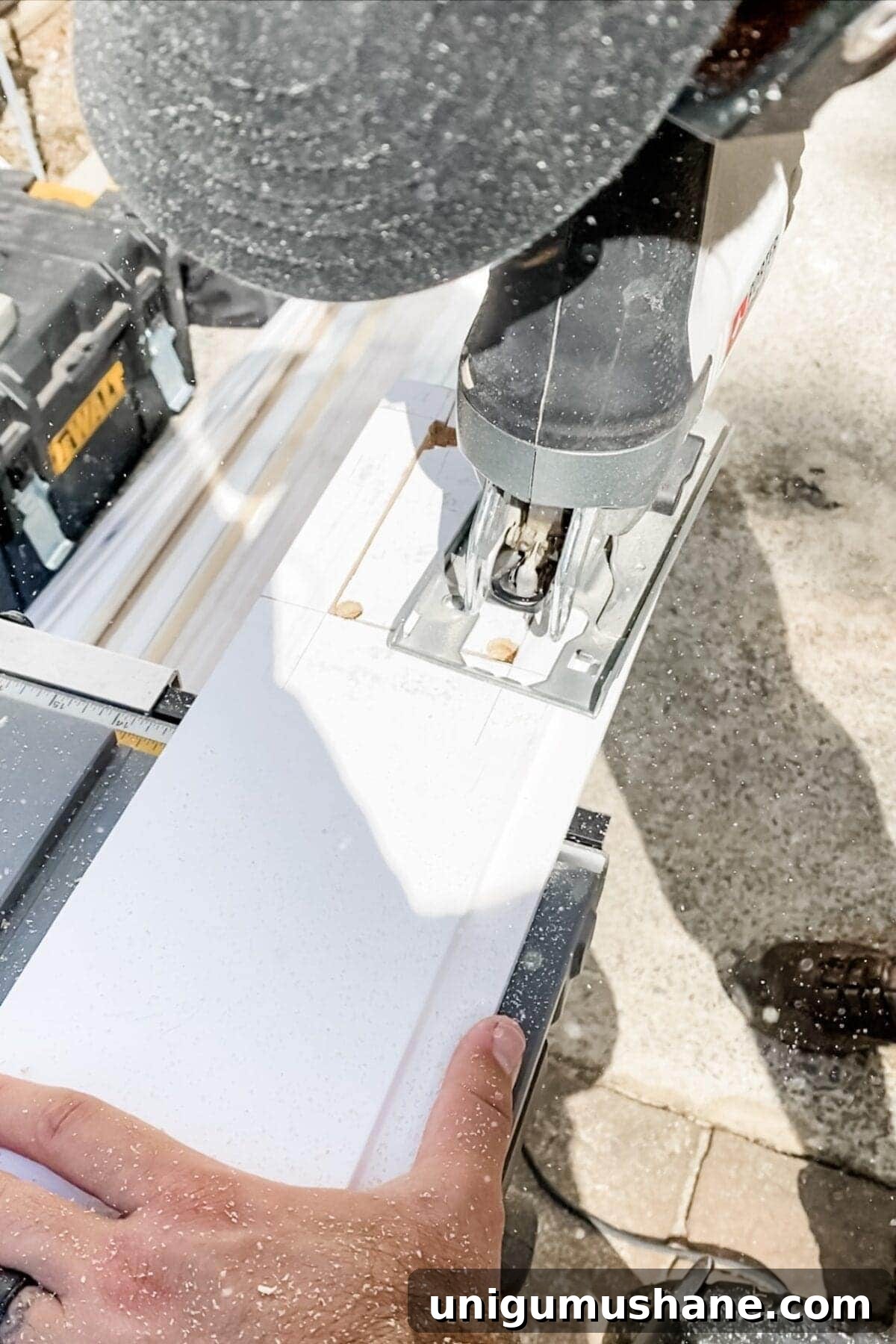
Step 10 – Cut Outlet Openings with a Jigsaw
Use the jigsaw to cut out the outlet openings, then test fit the board on the wall.
Step 11 – Adhere and Nail the Board to the Wall
Attach the prepared board using adhesive and finish nails as before.
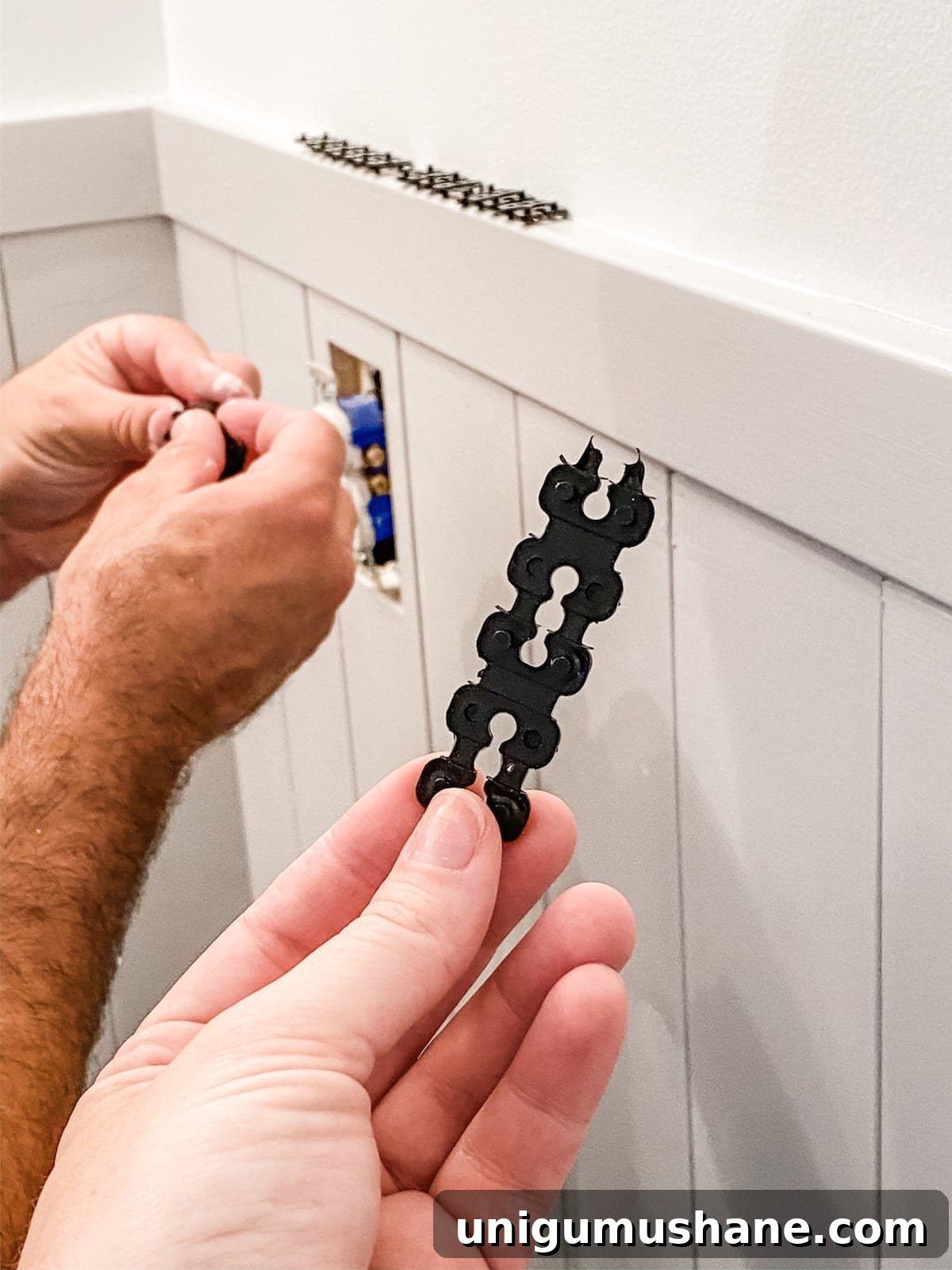
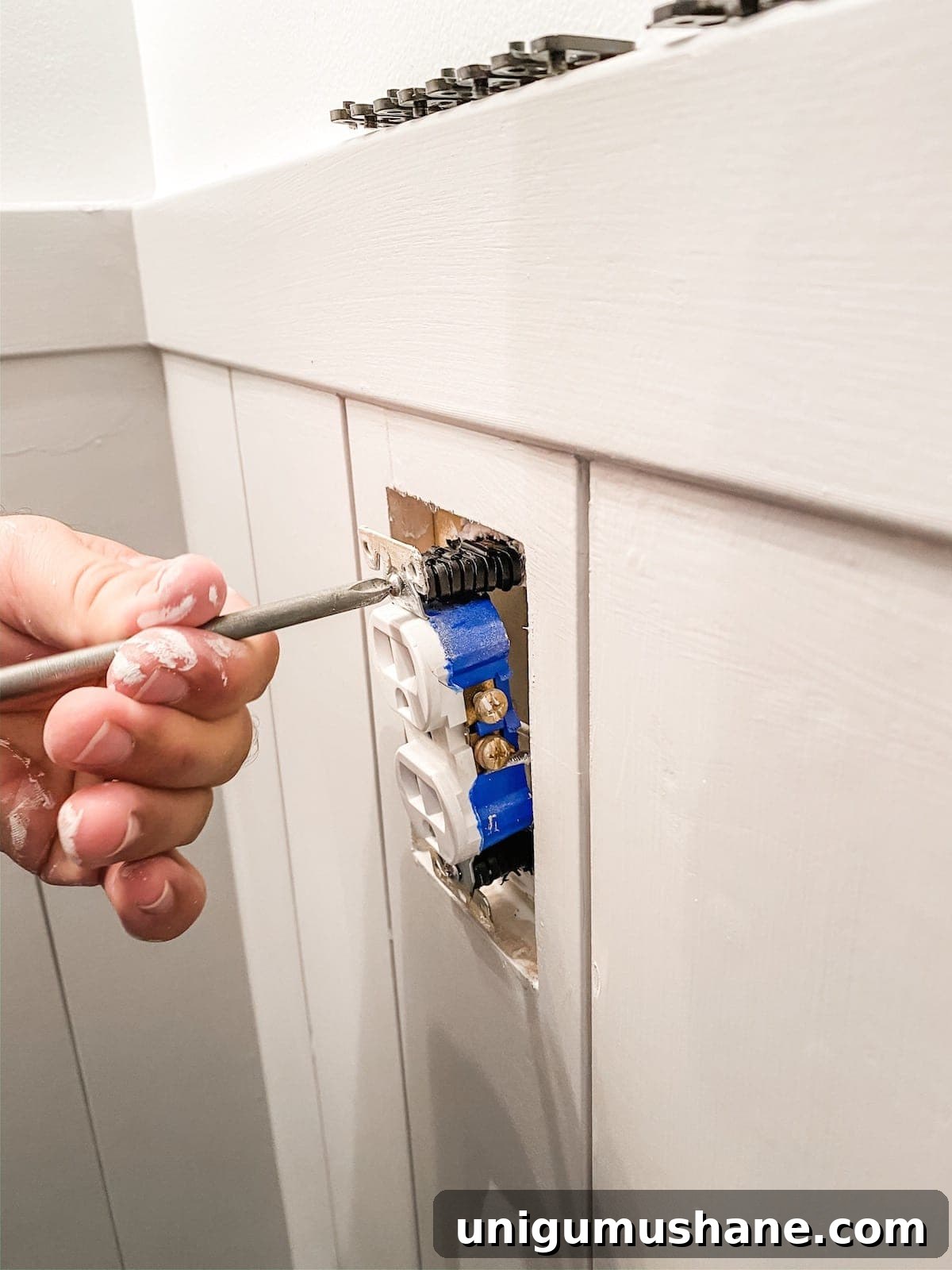
Step 12 – Use Spacers to Make Switches Flush
Add outlet spacers behind switches and outlets so their faces sit flush with the shiplap surface. Always turn off power and follow safety precautions when working with electrical components.
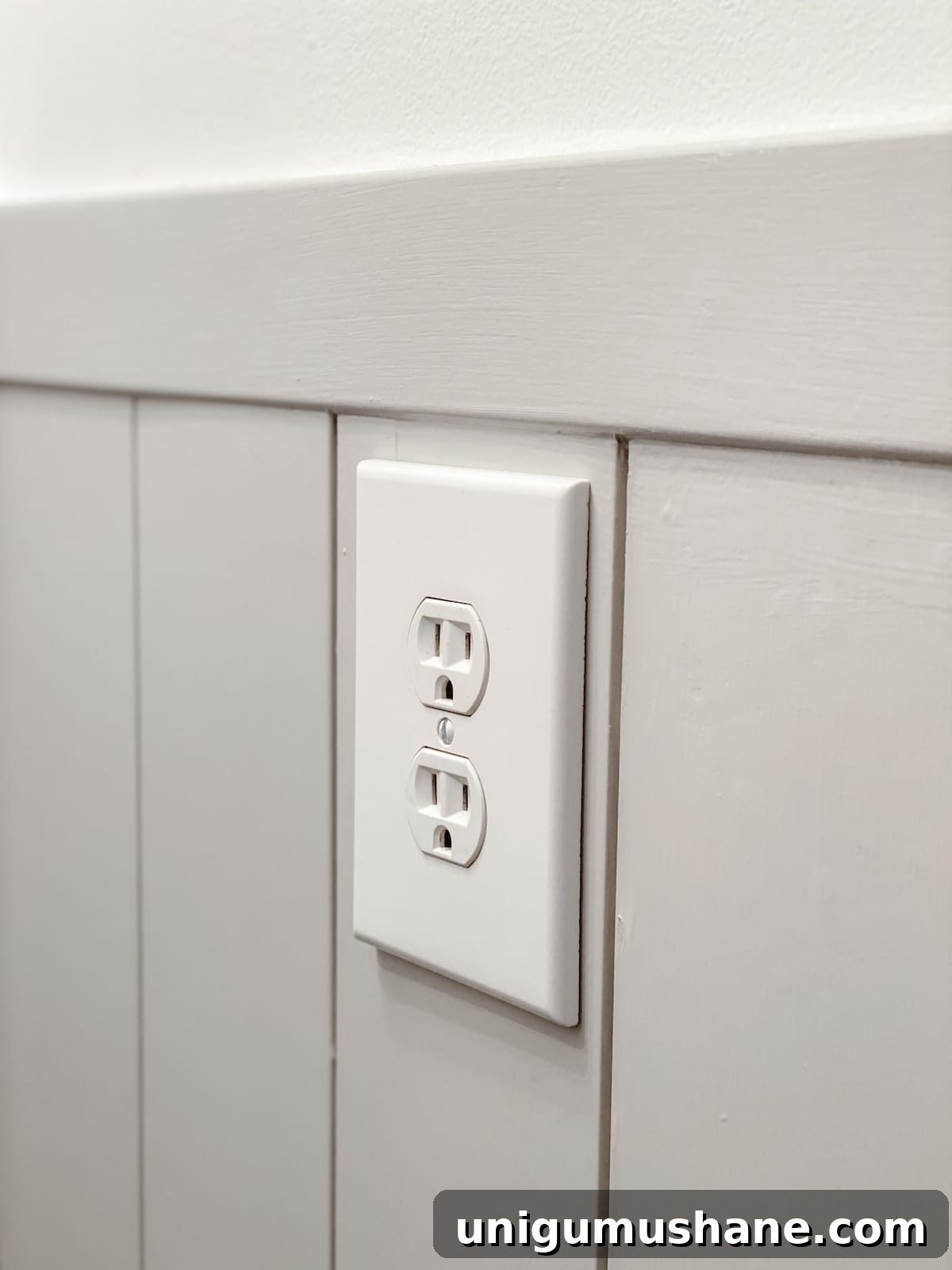
Step 13 – Use Oversized Outlet and Switch Covers
Install jumbo covers to hide any irregular cut edges from using smaller templates. They create a clean, finished look.
Step 14 – Install the Upper Rail
Attach the 1×2-1/2″ upper rail along the tops of the vertical boards to create a neat cap and finished transition to the wall above.
Step 15 – Install the Lower Rail
Attach the 1×4-1/2″ Craftsman-style board at the bottom as the baseboard, securing it into the shiplap as needed.
Step 16 – Fill Nail Holes
Fill nail holes with wood filler and allow it to dry completely.
Step 17 – Caulk Gaps
Caulk seams and gaps between trim and walls; let the caulk dry before sanding or painting.
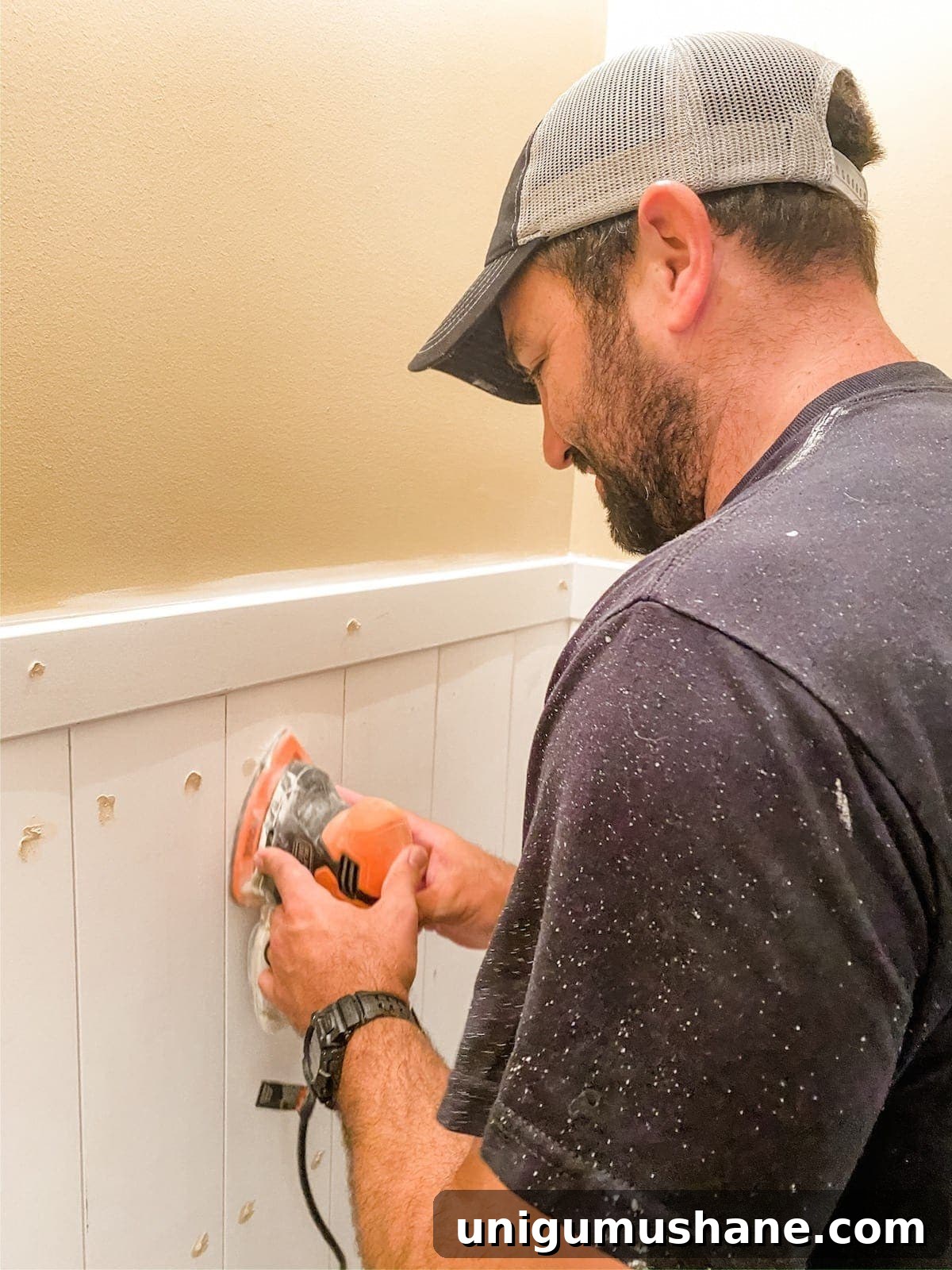
Step 18 – Sand Wood Filler
Sand the filled areas smooth. Do not sand caulk, as it will crack and pull away.
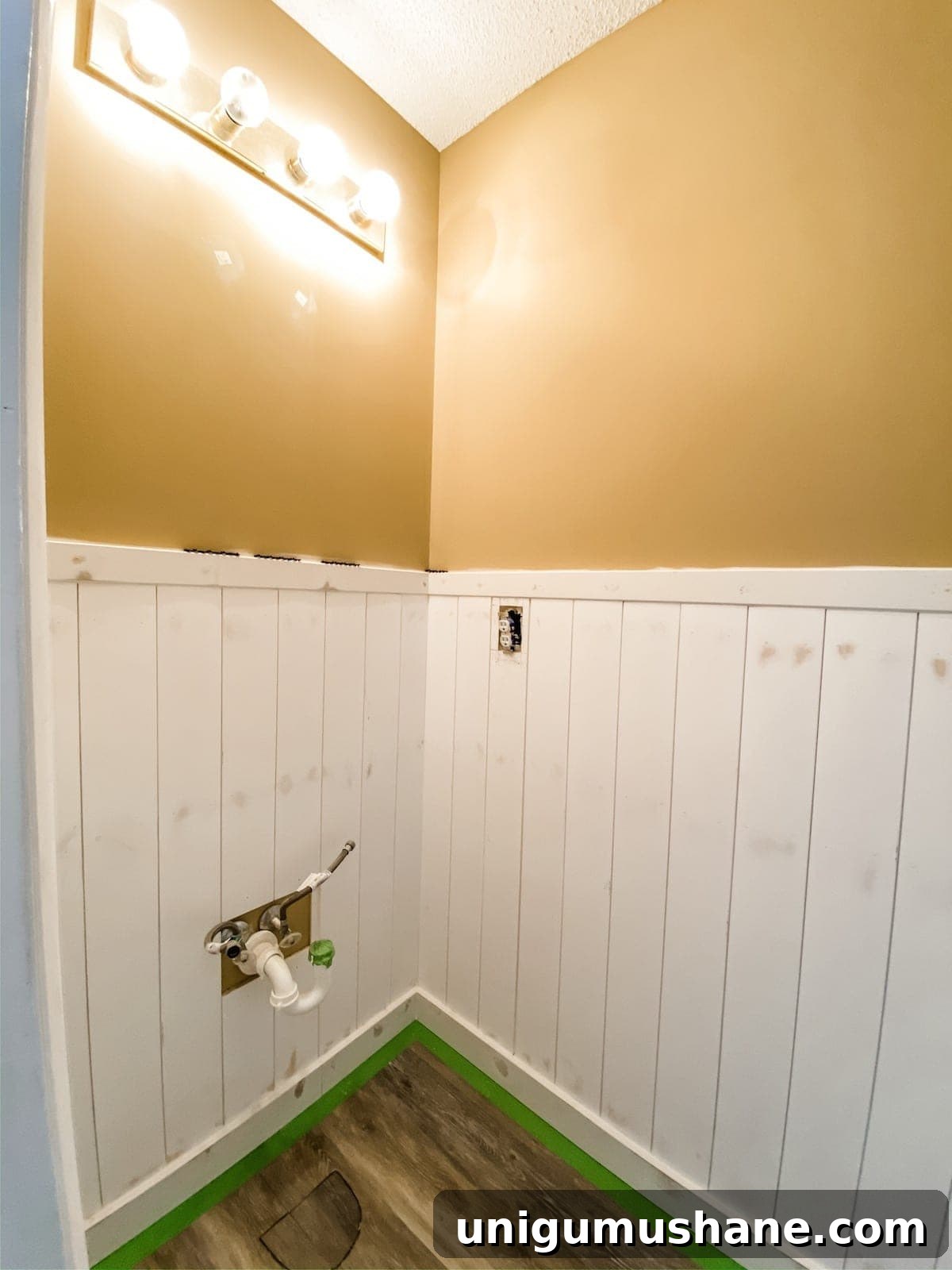
Step 19 – Paint
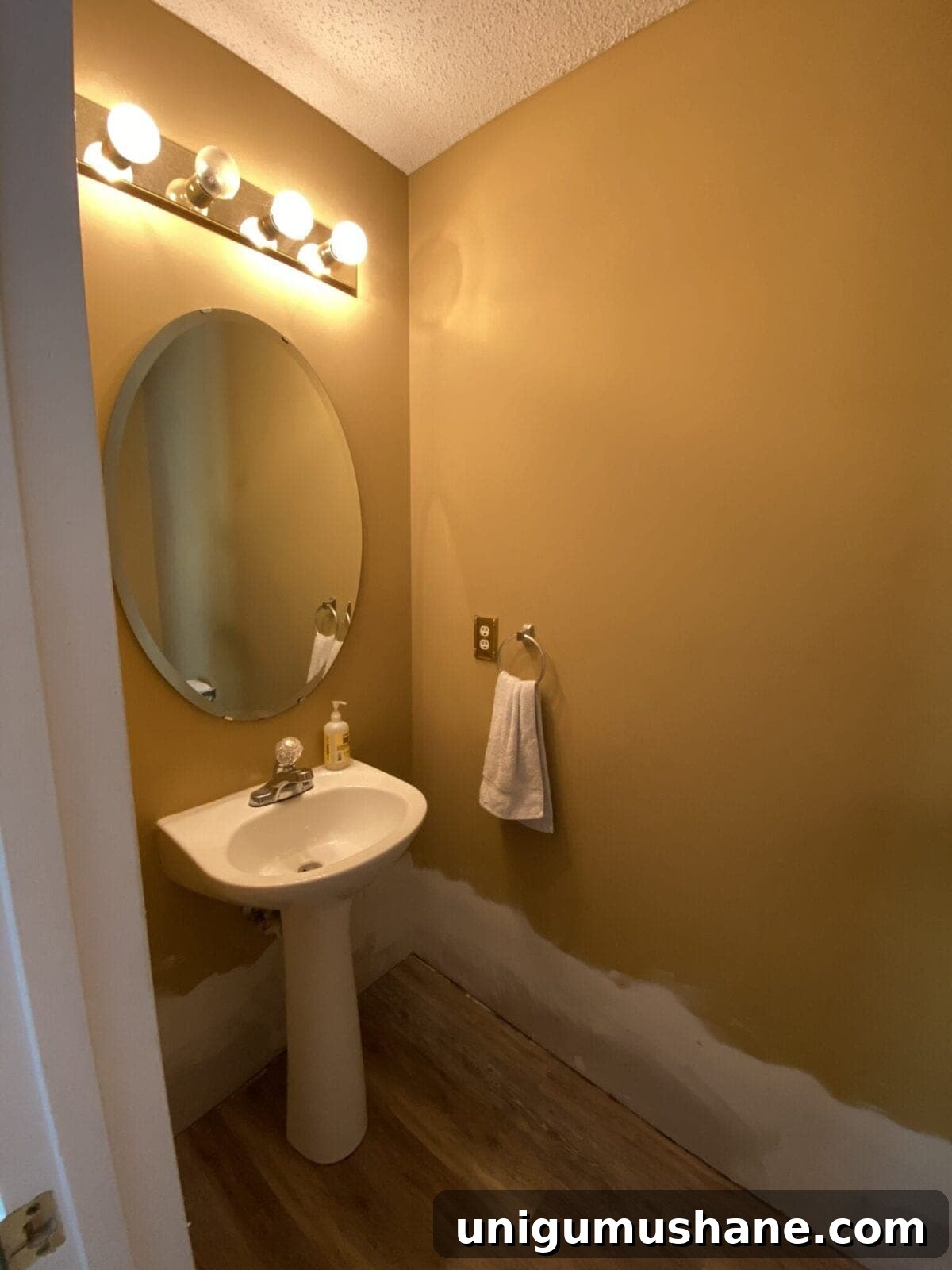
Paint the shiplap and trim. For bathroom wainscoting, satin or semi-gloss finishes are recommended for durability and cleanability. Waterborne alkyd formulas are popular among pros for a hard, smooth finish. In this room we used a gray on the shiplap and a crisp white on the upper walls to brighten and modernize the space.
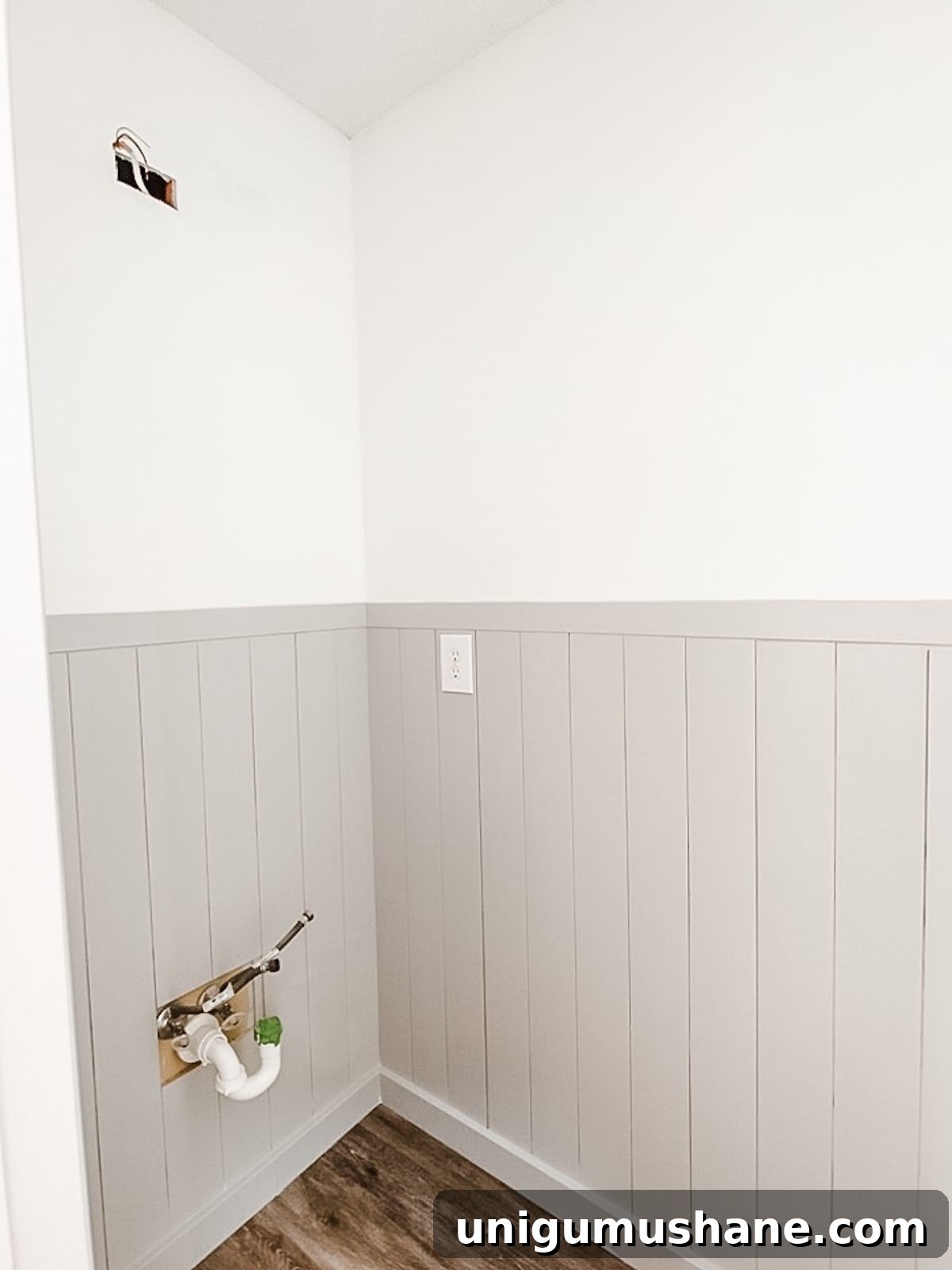
Removing the previous gold paint and adding vertical shiplap made the powder room feel much larger and more cohesive. The transformation shows how wall treatment, paint, and a few well-chosen details can completely change a small space.
The final reveal is on its way—this little powder room turned out exactly as hoped.
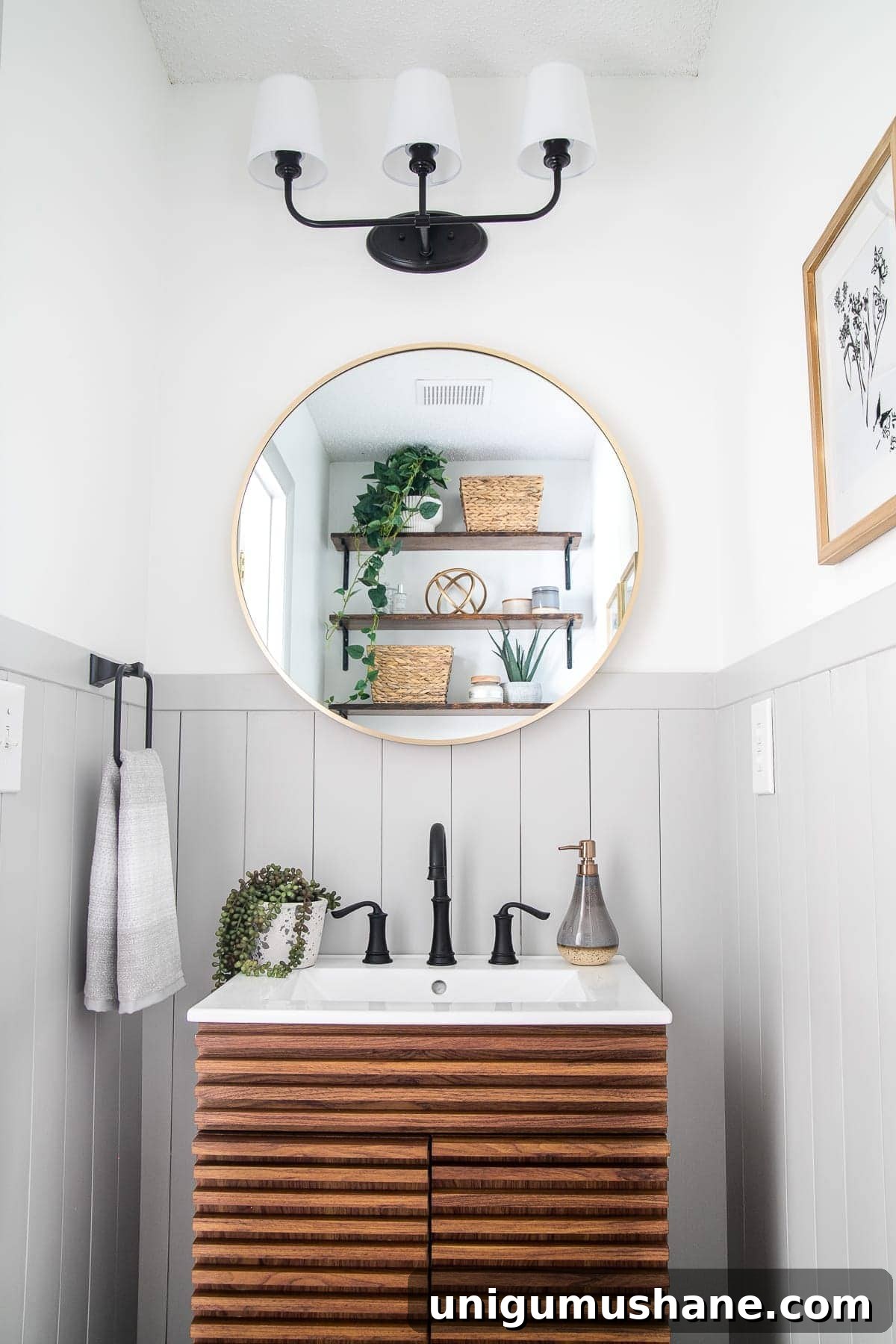
Have you ever installed vertical shiplap wainscoting? If you’re on the fence, it’s a beginner-friendly way to add texture, character, and architectural interest to bathrooms, hallways, and accent walls.
You can find more wall molding and shiplap tutorials and ideas in our previous posts.
- How to Quickly Beef Up Crown Molding and Baseboards
- DIY Traditional Grid Molding and Focal Wall
- Picture Frame Molding
- Craftsman Window Trim – the Easy Way
- How to Shiplap a Wall for Free
- DIY Simple Shiplap Wall
- Wood Plank Focal Wall
- DIY Planked Board and Batten Wall
- The Cheapest and Easiest DIY Board and Batten