
How to Create Pottery Barn and Restoration Hardware Knock-Off No-Sew Dining Chairs from 1970s Castoff Chairs
I never thought this day would come. If there is a post where I wanted to do cartwheels across the yard to show a dramatic makeover, this is it.
I tend to bite off more than I can chew: I spot a fixer-upper, ideas start flowing, I hit a snag, my ambition outruns my experience, and the project often ends up buried in the garage. Sound familiar? I call it my “when-I-get-the-nerve” pile.
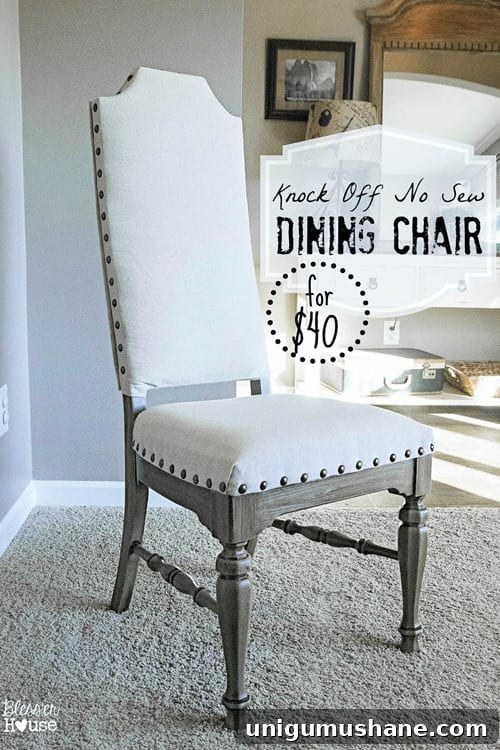
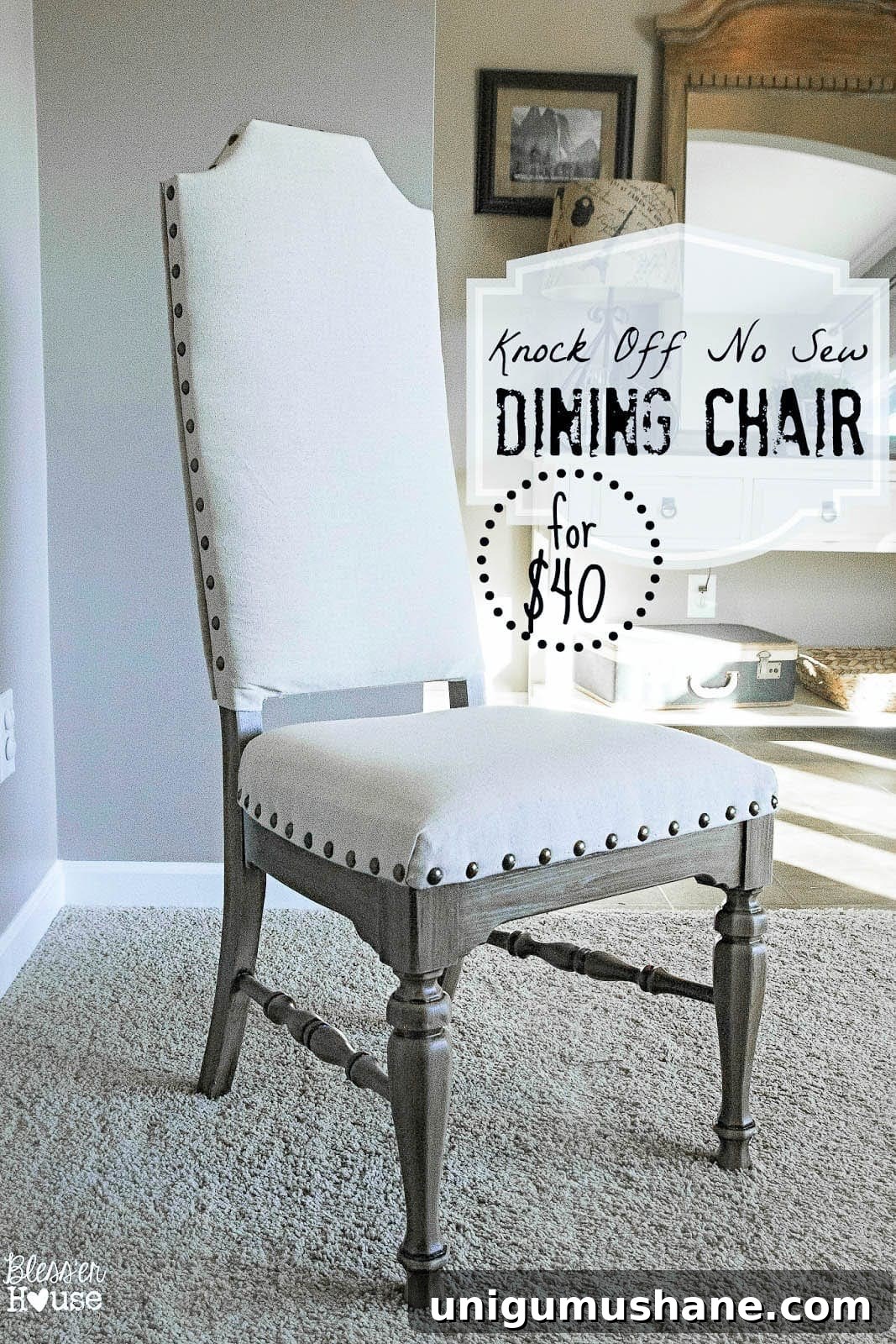
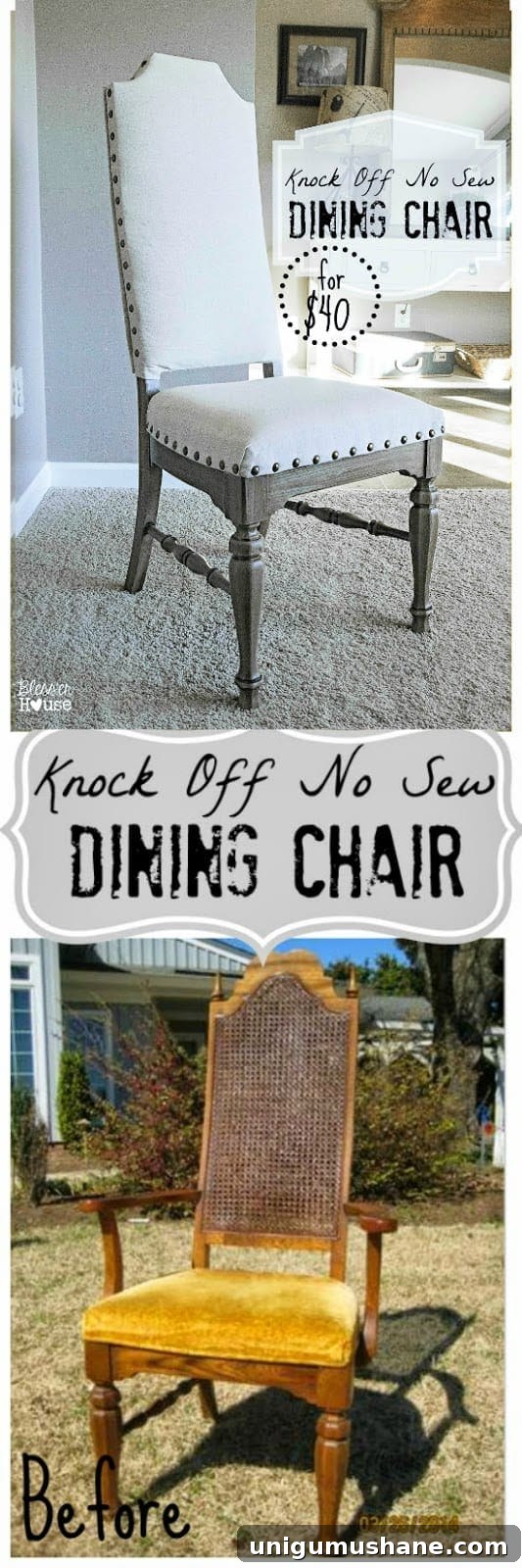
But this time my DIY skills finally caught up with my imagination, and I’m so excited to share the result. Scroll down or take a look now at the final reveal:
Here’s where this big project began — before my upholstery-inexperienced self got involved:
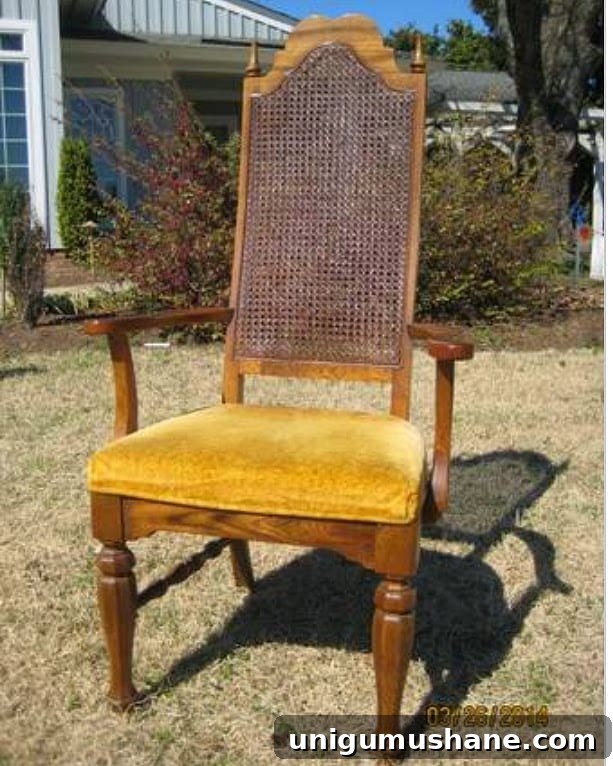
Hello, Harvest Gold. Long time no see.
When I began planning our still-very-bare dining room, I kept returning to the same chair criteria: light linen or canvas upholstery, eye-catching nailhead trim, and weathered oak-look legs.
My inspiration pieces included a Restoration Hardware Baroque Upholstered Side Chair, a Pottery Barn Calais Chair, and a Ballard Designs Capistrano Dining Chair — all beautiful, but all very pricey.
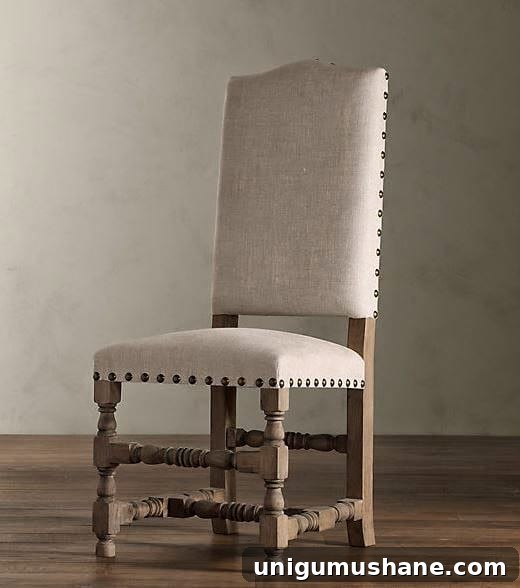
Restoration Hardware Baroque Upholstered Side Chair – $449 (for reference)
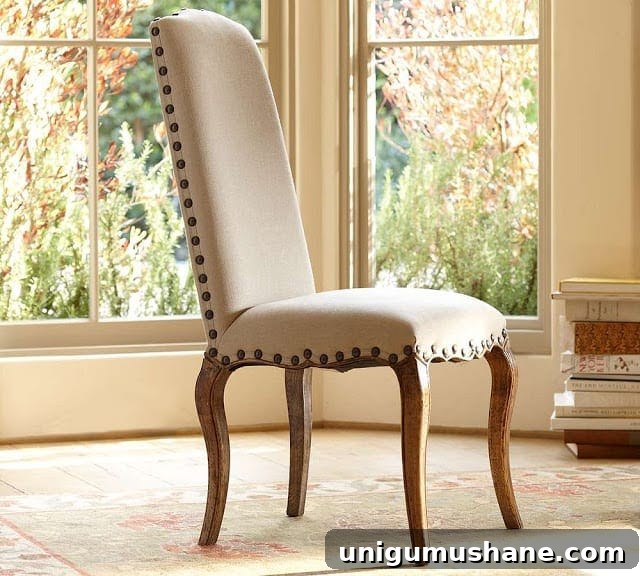
Pottery Barn Calais Chair – $349 (for reference)
I loved them, but there was one small problem: buying six of those chairs would have cost more than our entire budget allowed. So I drooled — and then I found these chairs on Craigslist for $20 each. They sat in my garage for months while I wrestled with the project.
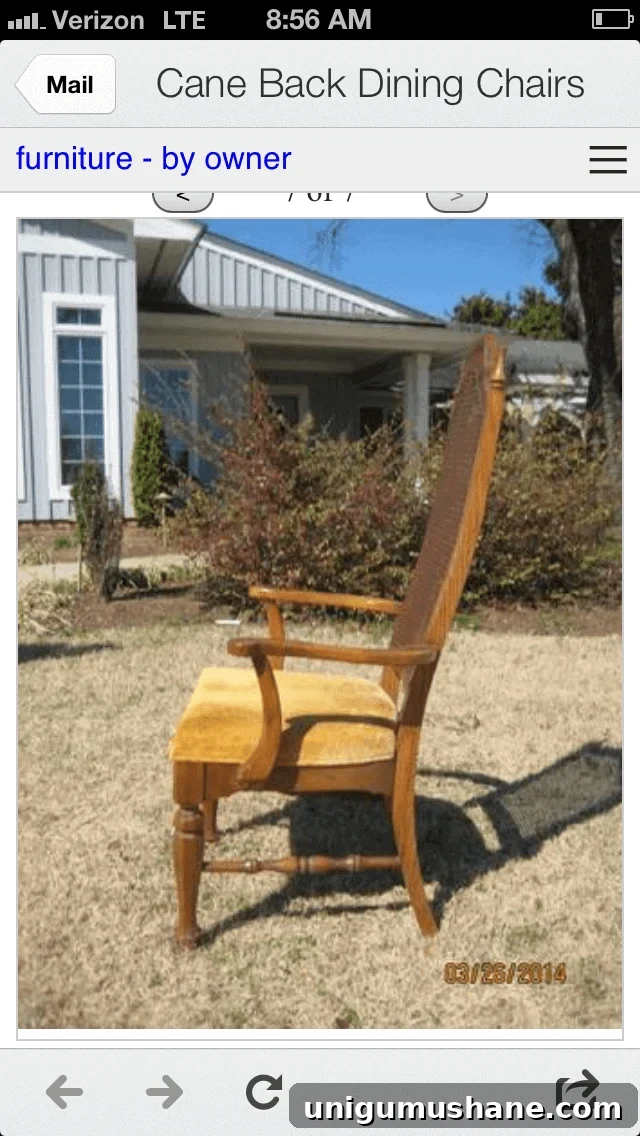
The chairs needed a lot of updating and didn’t look anything like my inspirations, but they had solid bones. My dad — who’s been in the furniture business for over 30 years — came with me to pick them up. They were built by American Drew, a reputable maker, and they were incredibly sturdy.
Supplies used:
- Jigsaw
- Pneumatic staple gun (or heavy-duty staple gun)
- Mouse sander
- Electric drill
- Kilz primer
- Valspar paint in Montpelier Ashlar Gray (flat)
- Minwax Dark Walnut stain
- Rags
- 1 1/2″ paint brush
- Sponge paint brush
- Mattress egg crate foam (used as inexpensive batting)
- Canvas drop cloth (for upholstery)
- Spray upholstery adhesive
- Fabric scissors
- Staples
- Sharpie marker
- Cardboard template
- Hot glue gun and glue sticks
- DAP contact cement
- 5/8 inch nailheads in antique gold (about 4 packs per chair)
- Tape measure and pencil
I already had many tools in my workshop and borrowed the pneumatic staple gun, so my out-of-pocket cost for supplies was modest. My final cost worked out to about $40 per chair, including the Craigslist purchase — a huge savings compared with retail.
Overview of the process
Because I planned to upholster the entire chair backs, I anticipated the curves would be difficult. To simplify, we removed the finials and cut straight tops across the back, using a level to mark even lines and avoiding the caning.
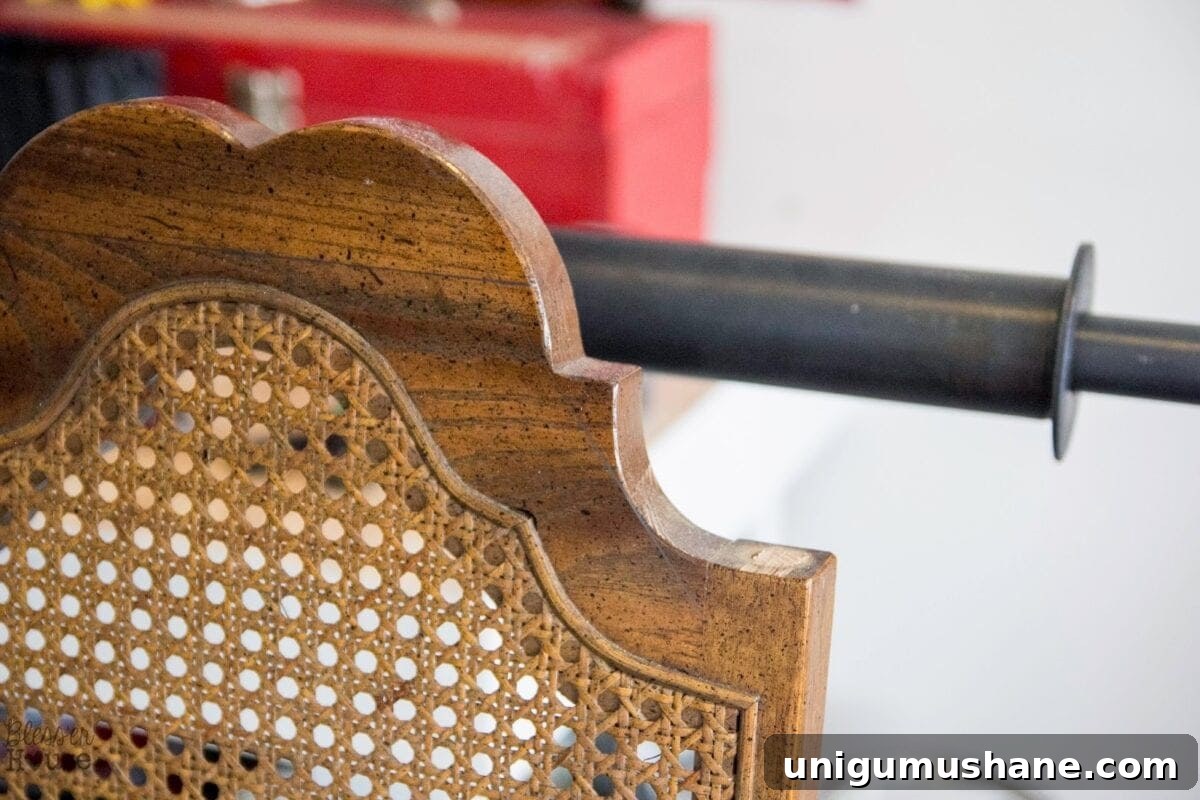
We sanded the cut edges smooth and primed the lower halves before painting two coats of Valspar Montpelier Ashlar Gray. Once dry, we applied Minwax Dark Walnut stain with a sponge brush, letting it sit briefly before wiping off to achieve a weathered, gray-washed wood tone that still shows beautiful grain.
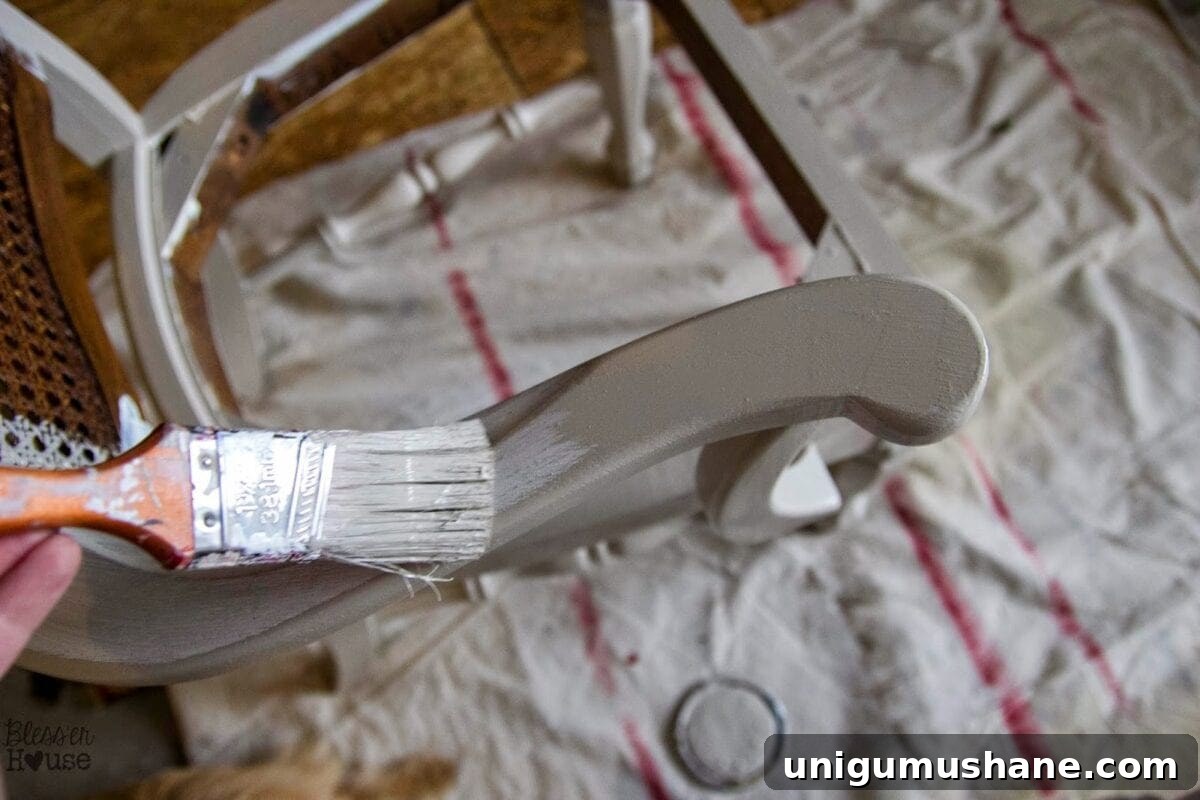
Once the finish was dry, the upholstery stage began. I traced the chairback shape onto cardboard to make a template, then used that template to cut egg crate foam for padding. We adhered the foam to the chairback with spray upholstery adhesive.
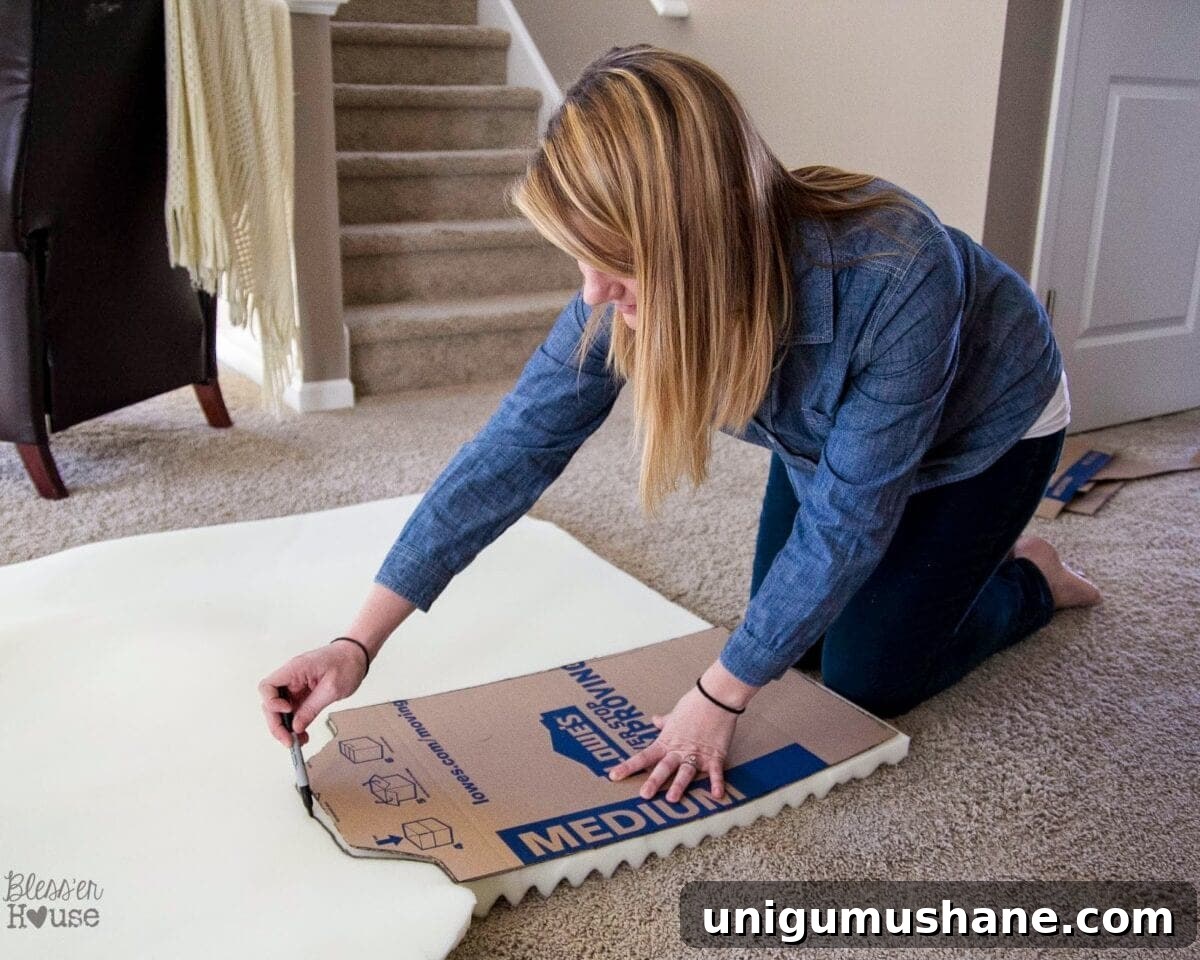
For the fabric, I measured the chairback and added about 4 inches around for ease. Our front fabric pieces were 24″ x 36″ for a 16″ x 28″ backing. The front fabric was stretched and stapled around the back, working in stages and smoothing as we went. This was definitely a two-person job: one person holds and smooths; the other pulls, staples, and trims excess fabric.
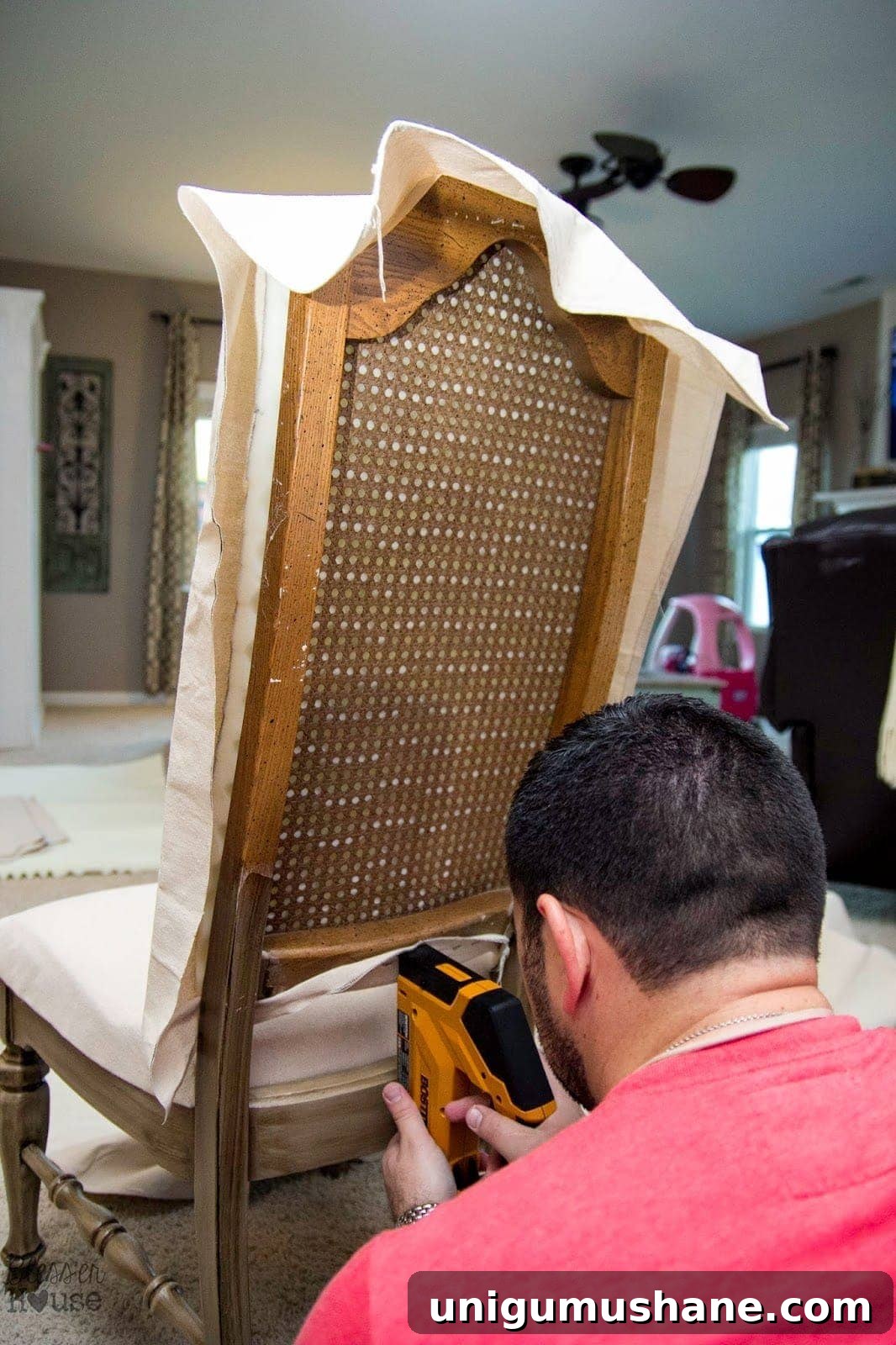
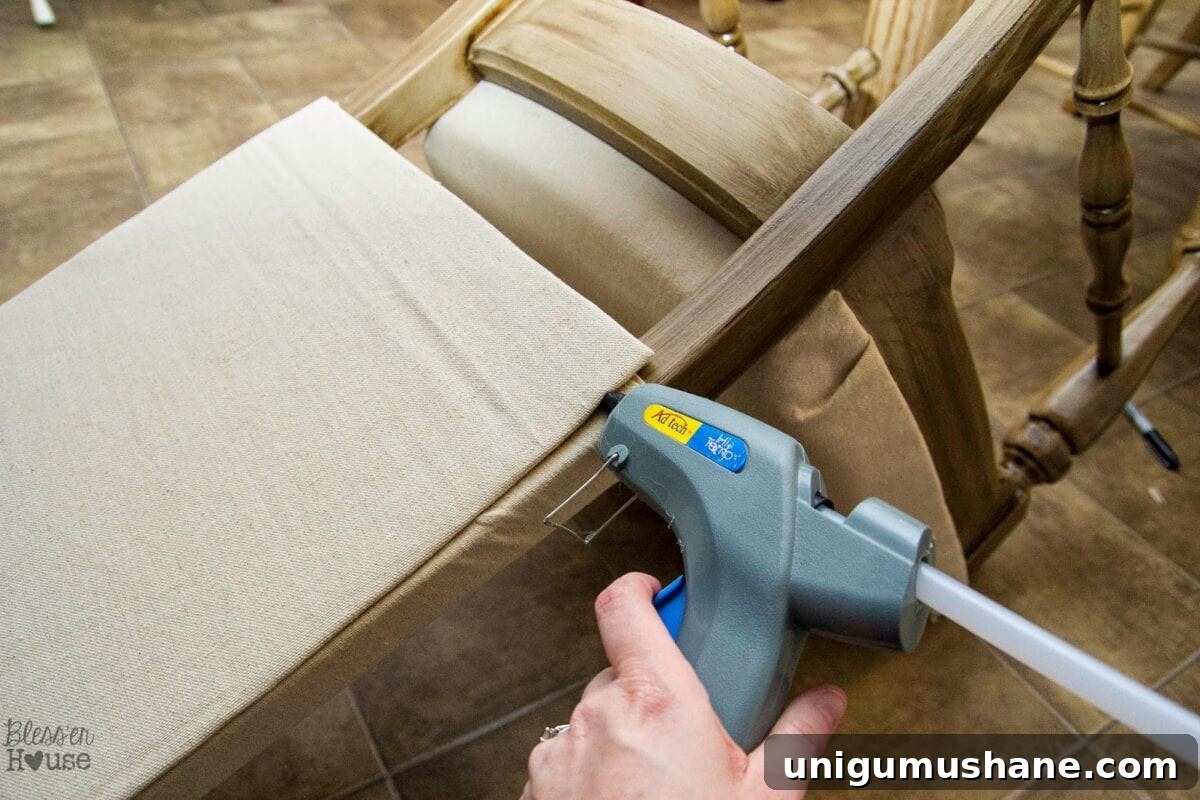
To finish the back neatly, we made a stiff panel from the cardboard template, glued fabric tightly over it, and secured it to the chair back with contact cement and hot glue. This gave a clean, upholstered look on the back side.
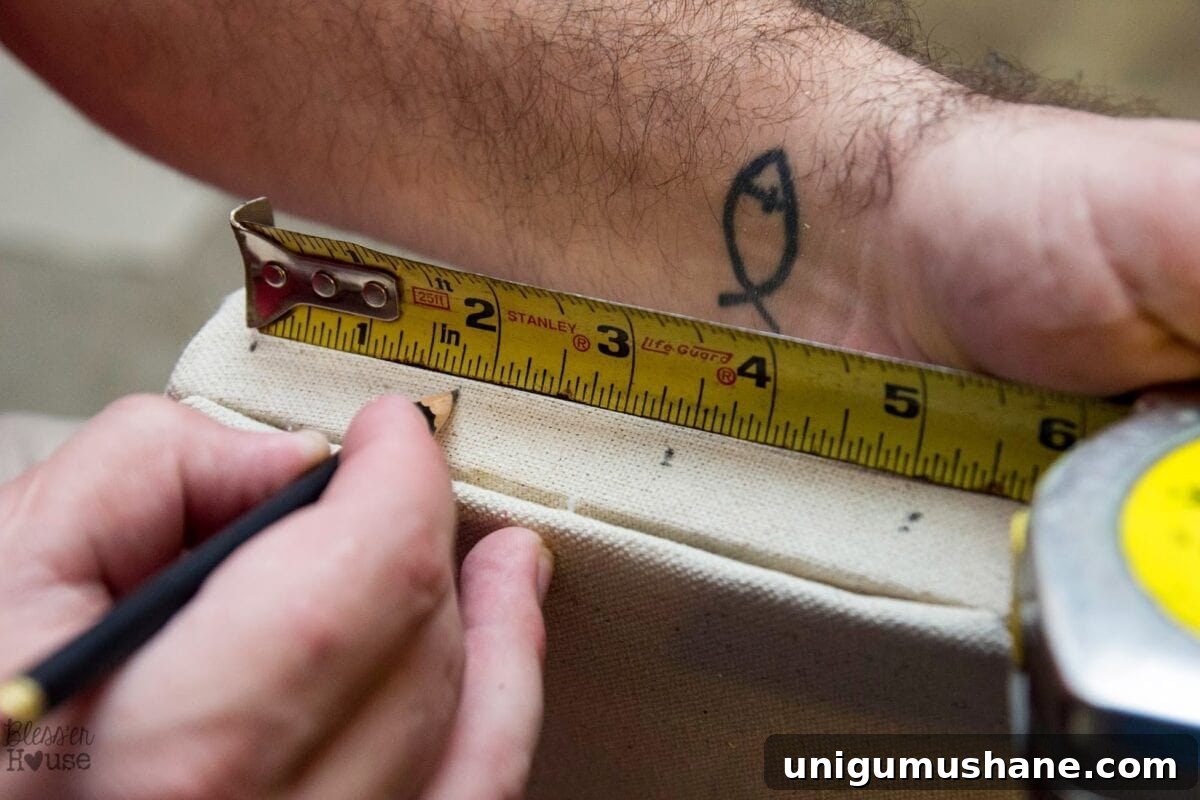
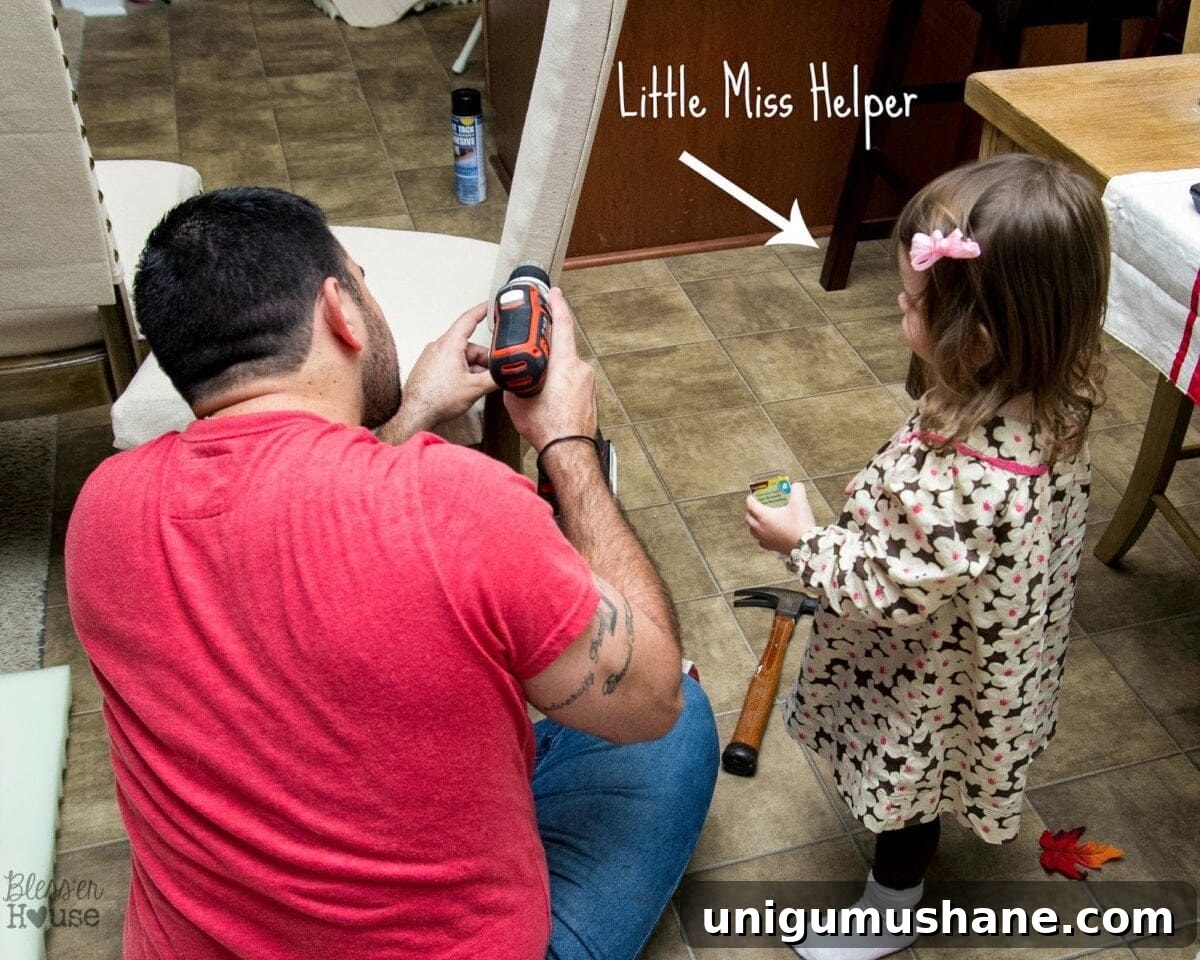
For the nailhead trim, we measured and marked spacing every 1.75 inches, pre-drilled pilot holes because the chair wood was very hard, and then hammered the nailheads into place. It’s time-consuming but makes a huge difference for a professional, Restoration Hardware–style look.
My daughter enjoyed handing the nailheads to her dad for the final touches — a family project memory I’ll keep.
Final thoughts
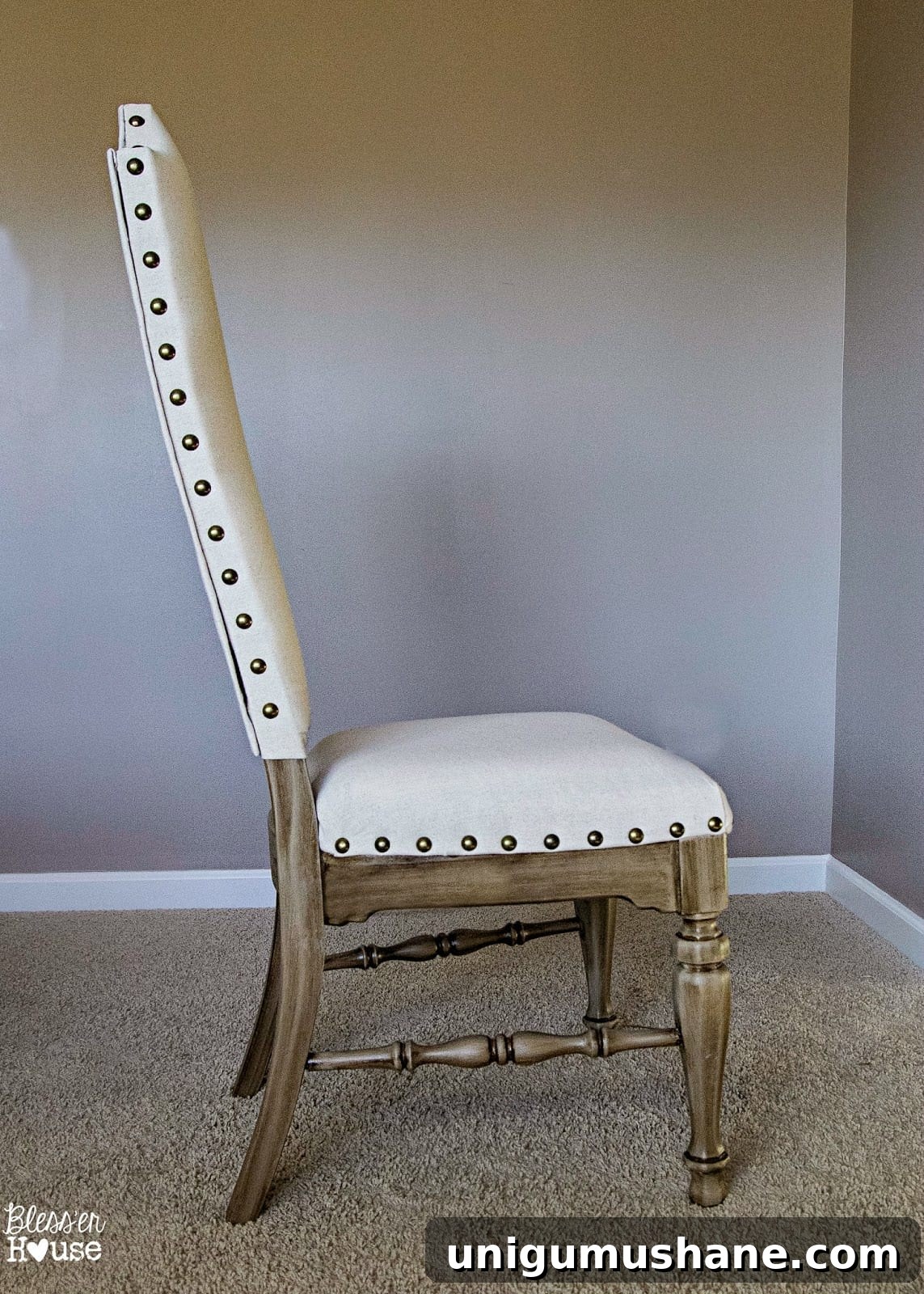
The chairs aren’t perfect, and I still have a lot to learn about upholstery and sewing, but I’m thrilled with the transformation. The dining room already feels more finished. Two chairs are done and four more armchairs remain — those will be trickier — but the goal was to have them ready for Thanksgiving so family can gather, and we made great progress.

If you want a budget-friendly way to achieve a Pottery Barn or Restoration Hardware look, this no-sew method with foam, canvas drop cloth fabric, and nailhead trim is a great place to start. It saved money, added character, and gave these vintage pieces a modern life.
What do you think — convincing knock-offs? I’m hooked on reproducing high-end looks for less.

Blessings,

Follow me on Bloglovin
Or find me on Facebook | Twitter | Pinterest | Google+
Shared with Thrifty Decor Chick