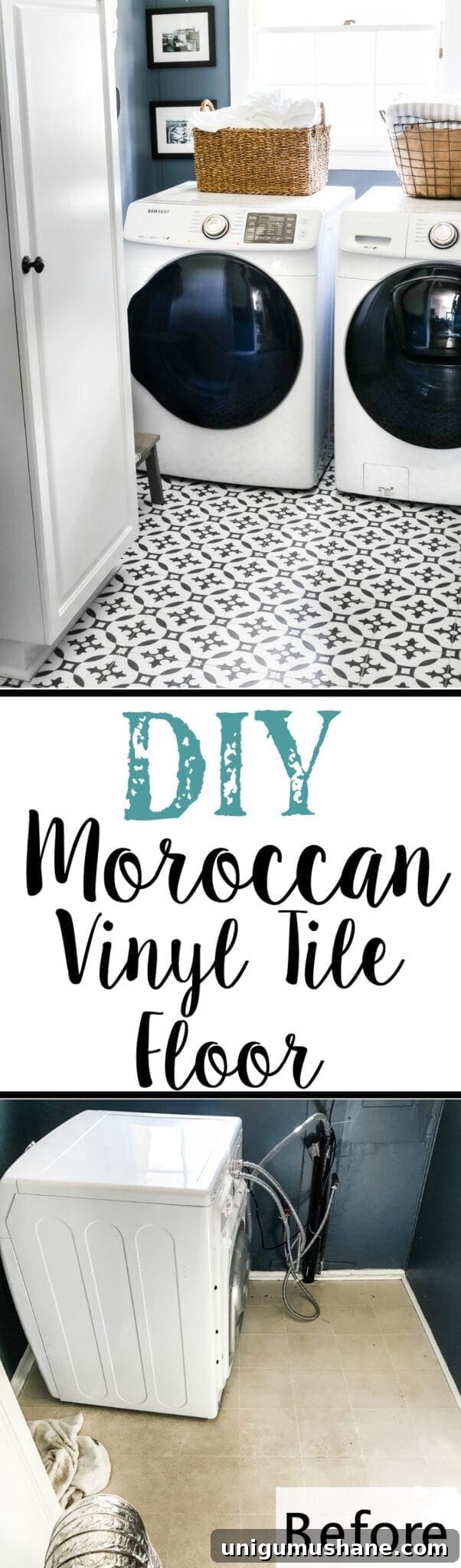
How to Install Moroccan Peel and Stick Vinyl Tiles: an easy DIY flooring tutorial that is cleaner than paint, faster than real tile, and budget-friendly for a laundry room makeover.
When we started planning our laundry room makeover, one of the biggest problem areas was the old vinyl floor. It was worn, dated, and definitely not helping the room feel fresh or finished. At first, I thought about painting the vinyl floor with a Moroccan-style stencil, because I had seen so many beautiful DIY floor transformations done that way.
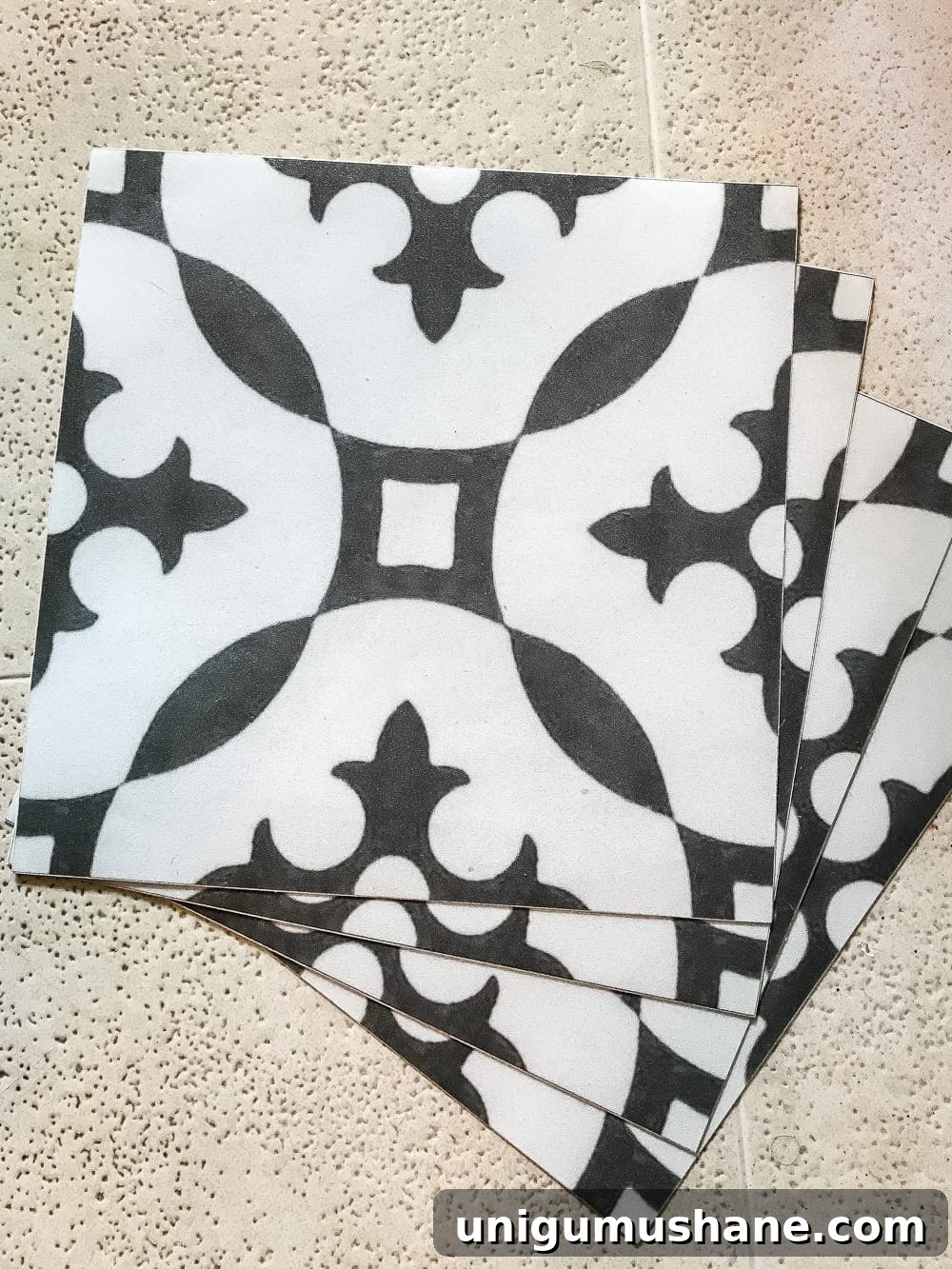
But after painting the walls, the cabinets, the ceiling, and the trim, I was ready for a flooring solution that did not involve more paint, drying time, fumes, or mess. That is when I decided to try Moroccan peel and stick vinyl tiles instead. They offered the bold patterned look I wanted, but with much less effort than painting or installing real tile.
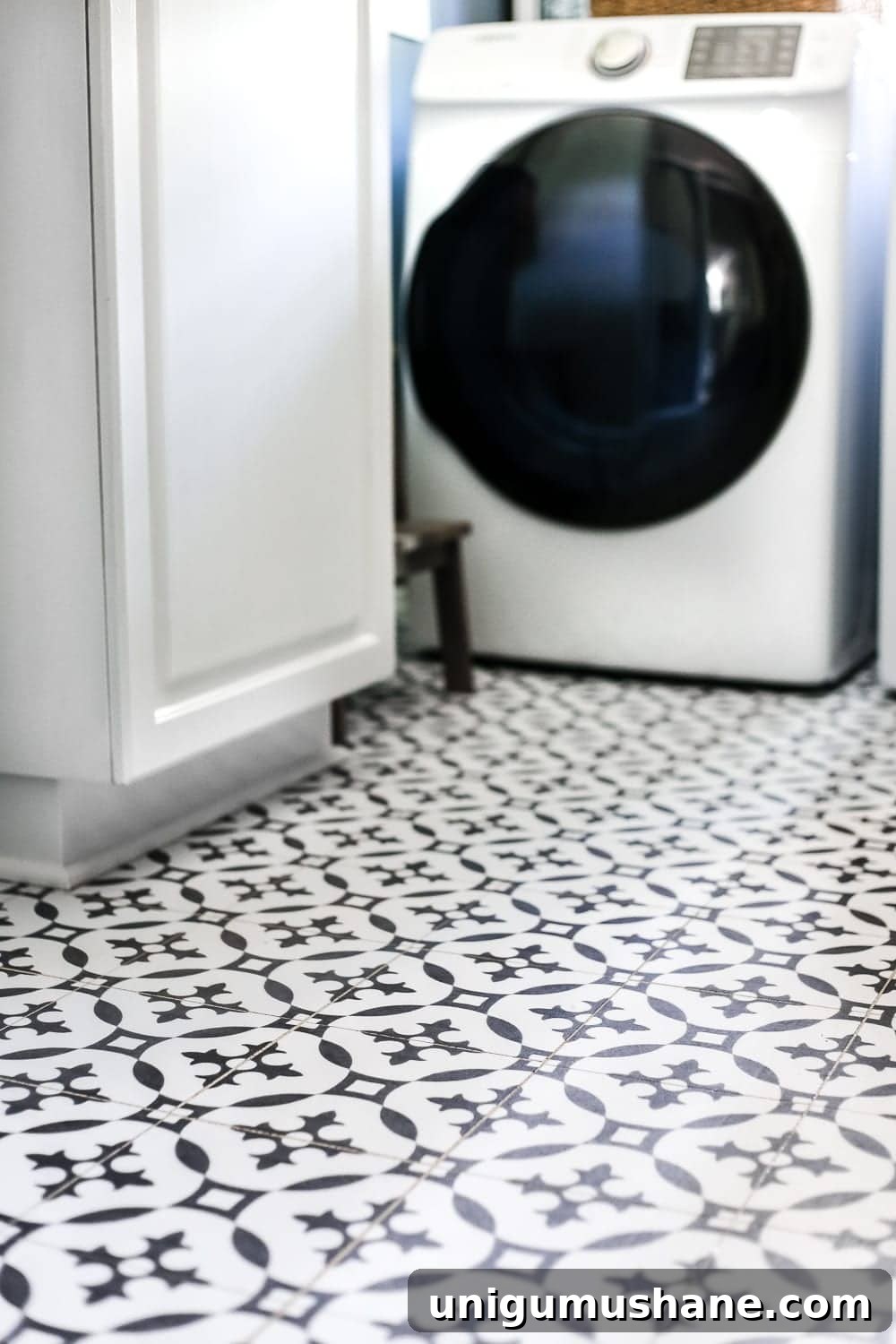
The black and white Moroccan pattern added instant character to the laundry room. It also felt like a practical choice because this is one of the hardest-working rooms in our home. Between laundry, cleaning supplies, shoes, and everyday traffic, the floor needed to hide dirt better than the old plain vinyl ever could.
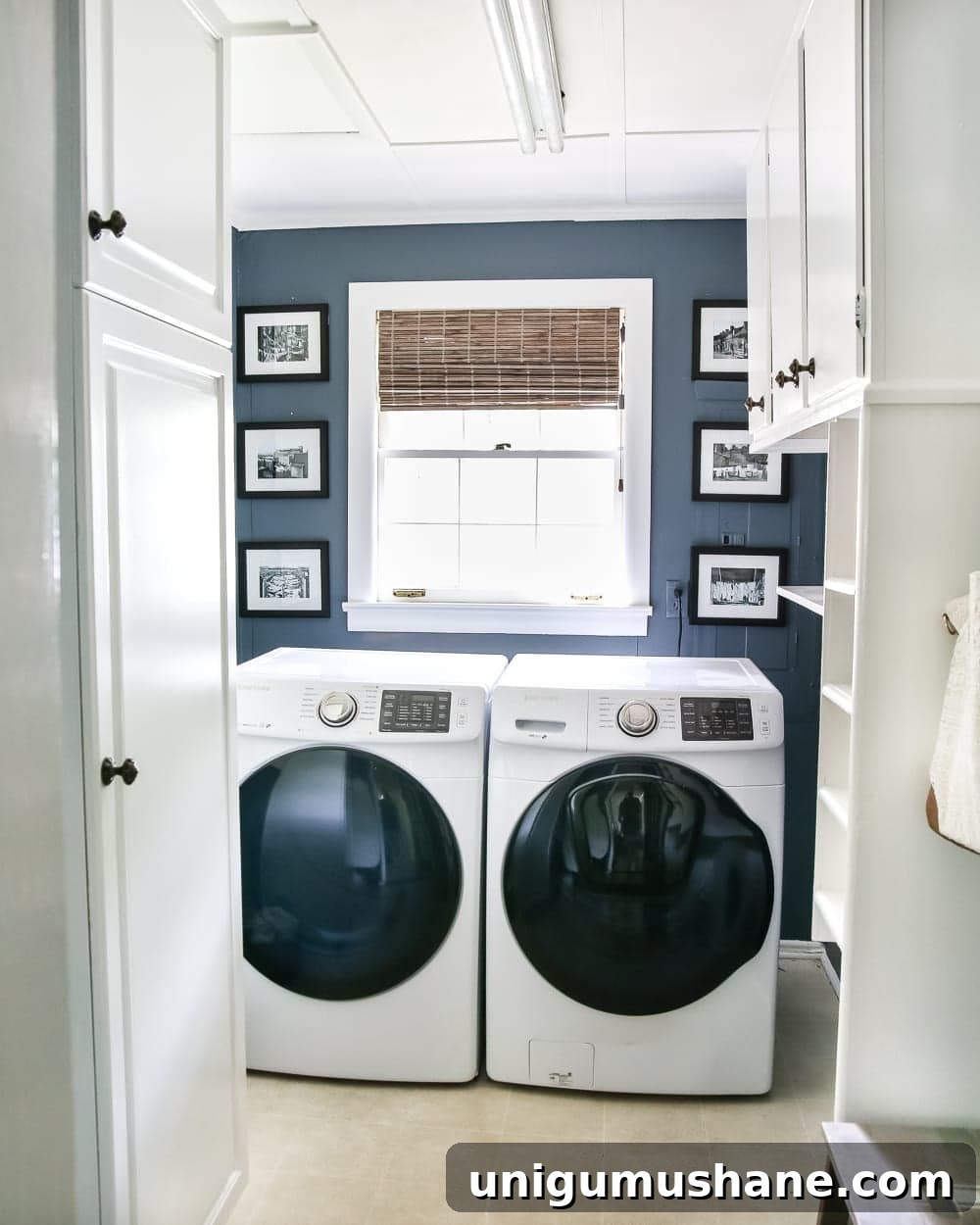
Here is what the floor looked like before we started the project.
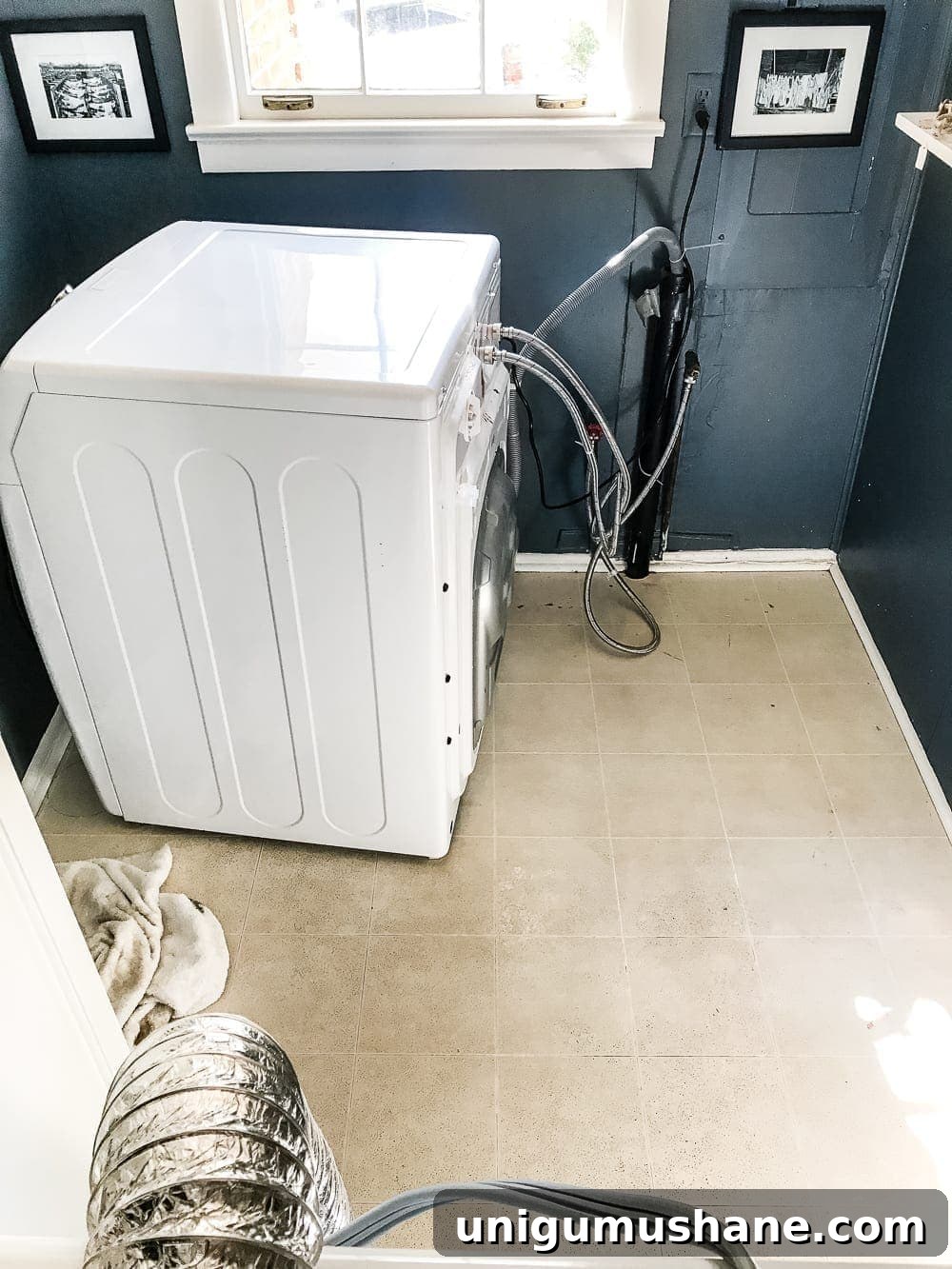
It was not cute, and it made the entire room feel tired. Eventually, we may do a larger renovation with new cabinets, a better layout, and real tile flooring. For now, though, this peel and stick vinyl tile project was exactly the kind of quick cosmetic update the space needed.
Supplies Used:
- Moroccan peel and stick vinyl tiles, floor-rated and matte finish
- TSP substitute cleaner
- Dry rags or towels
- Wallpaper smoothing tool
- Utility knife
- Pencil
- Paper backing or scrap paper for templates
The first and most important step was preparing the old vinyl floor. Peel and stick tiles need a clean surface so the adhesive can bond properly. I swept the floor thoroughly, then scrubbed it with a TSP substitute cleaner to remove grime, residue, and anything else that might keep the tiles from sticking. After cleaning, I let the floor dry completely before installing the new tiles.
We began laying the tiles in the area that would be hidden underneath the washer and dryer. That gave us a chance to get comfortable with the process before moving into the more visible parts of the room. The existing vinyl floor already had straight lines in the pattern, so we used those as a guide to help keep the new Moroccan vinyl tiles aligned.
If your existing floor does not have straight lines to follow, use a chalk line to create a reliable starting point. Walls are not always perfectly straight, so using the wall as your only guide can cause the tile pattern to drift as you move across the room.
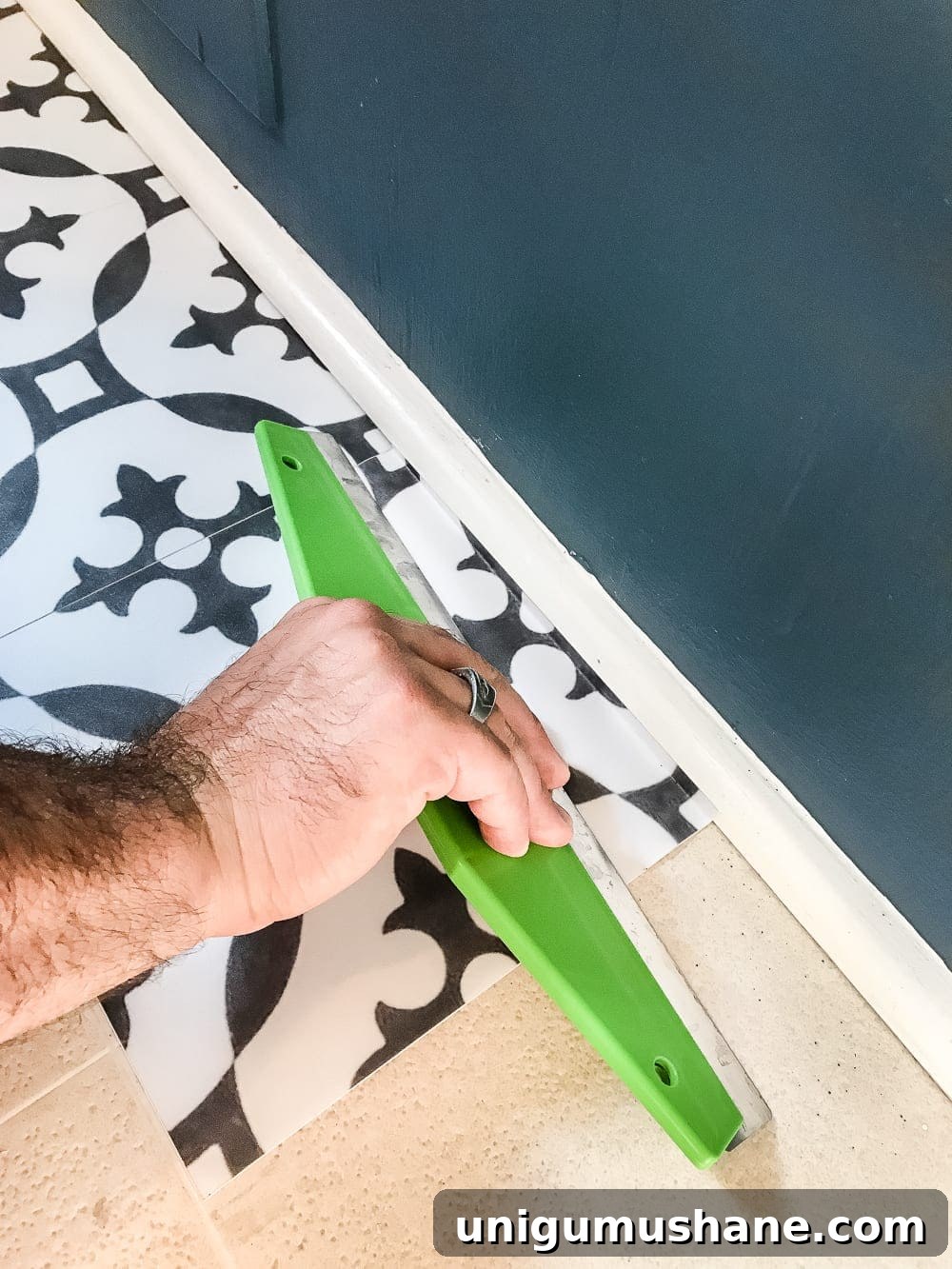
Installing each tile was simple. We peeled off the paper backing, placed the tile carefully, pressed it into position, and smoothed it down with a wallpaper smoothing tool. We did not have problems with bubbles, but smoothing each tile still helped make sure the adhesive made full contact with the floor.
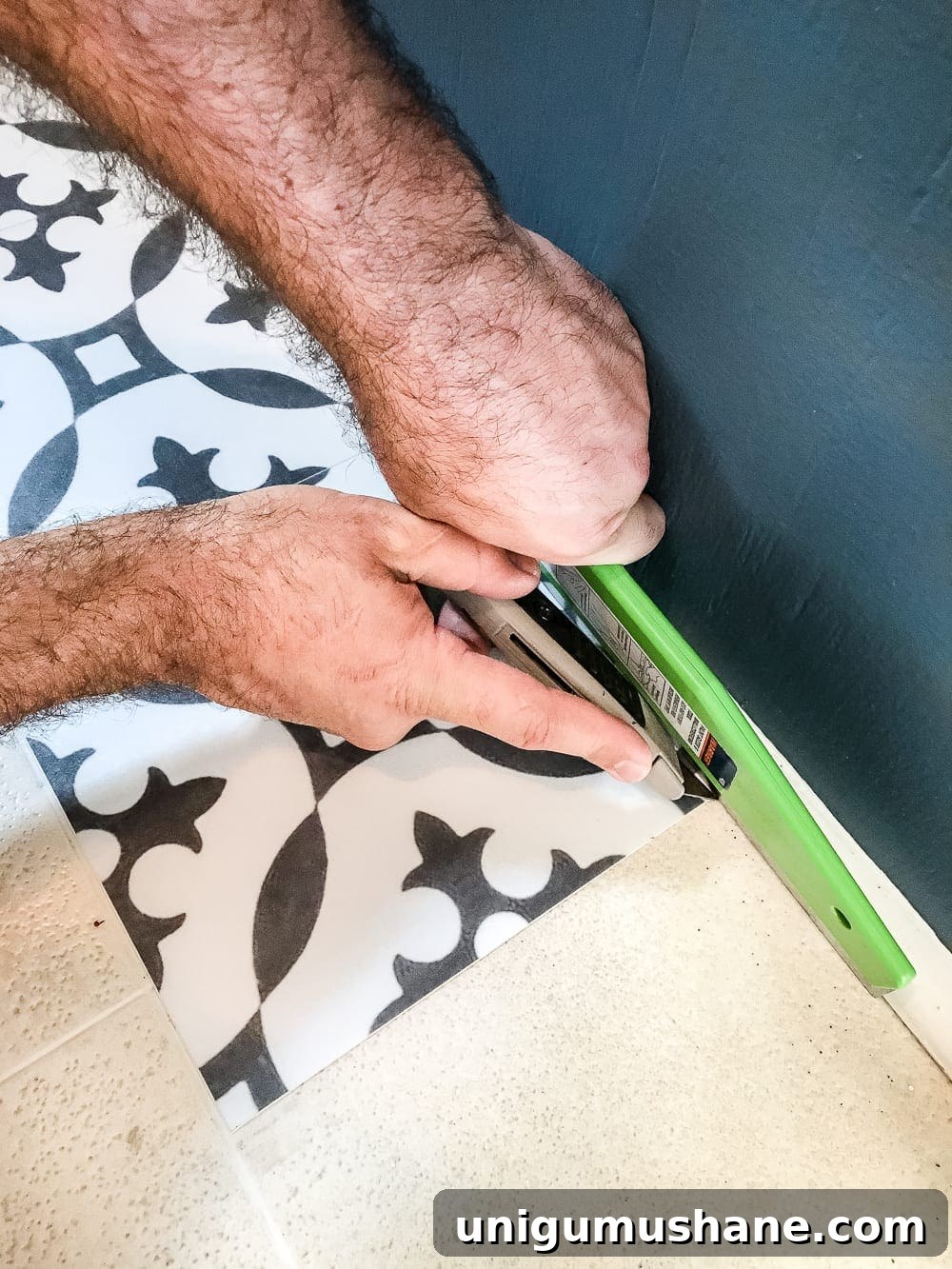
The trickiest parts were the edges and corners where the tiles had to be cut to fit around obstacles. For simple cuts, we folded the tile where it needed to crease and trimmed it with a utility knife. For more complicated areas, we used the paper backing as a template. We traced the shape with a pencil, transferred it to the tile, and then cut the tile to fit.
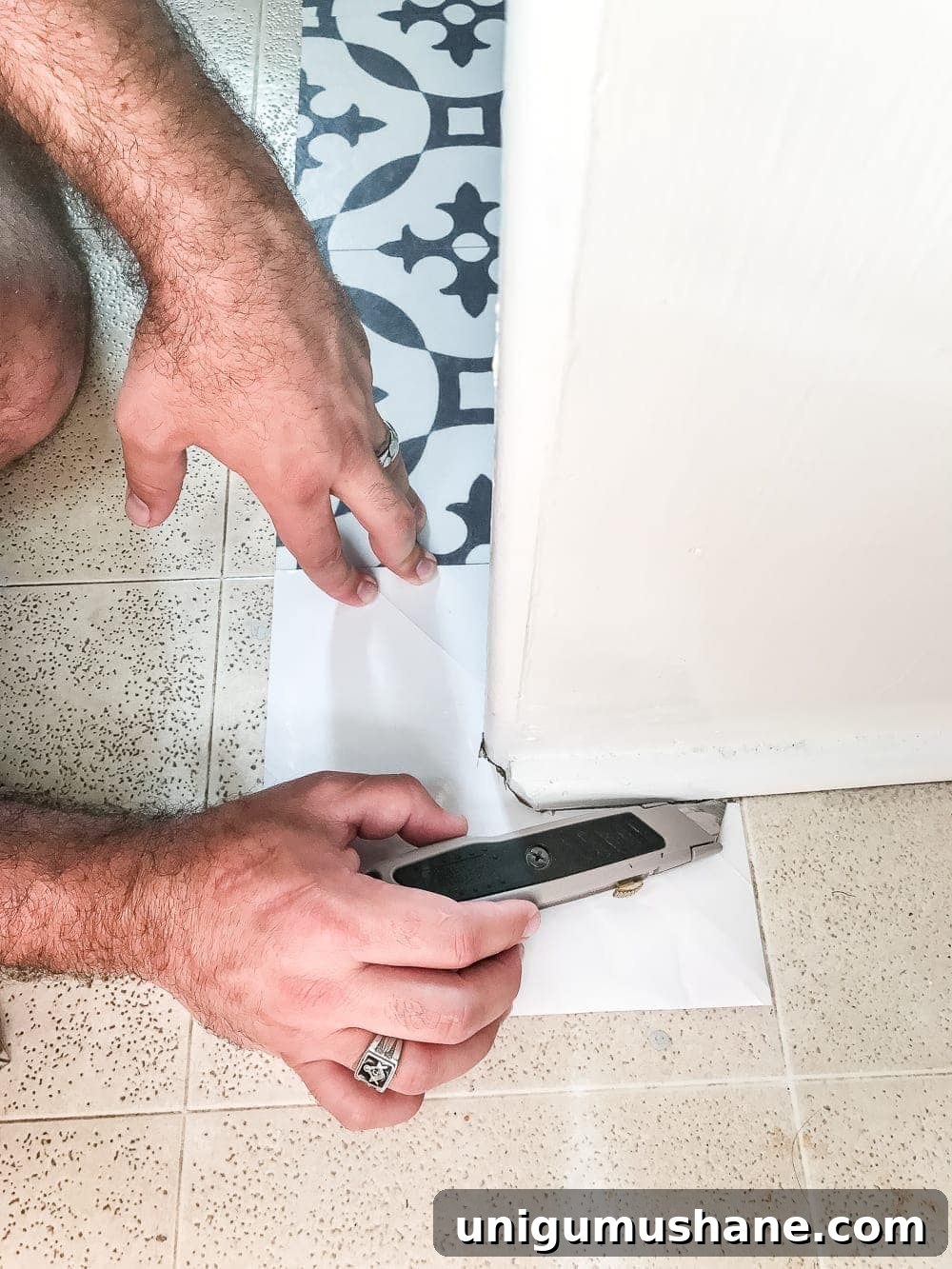
The entire installation took only a couple of hours. Compared with painting a floor, which would have required multiple coats and drying time, this was a much faster project. It also gave us the patterned Moroccan tile look without the expense, dust, or labor involved in laying real cement tile.
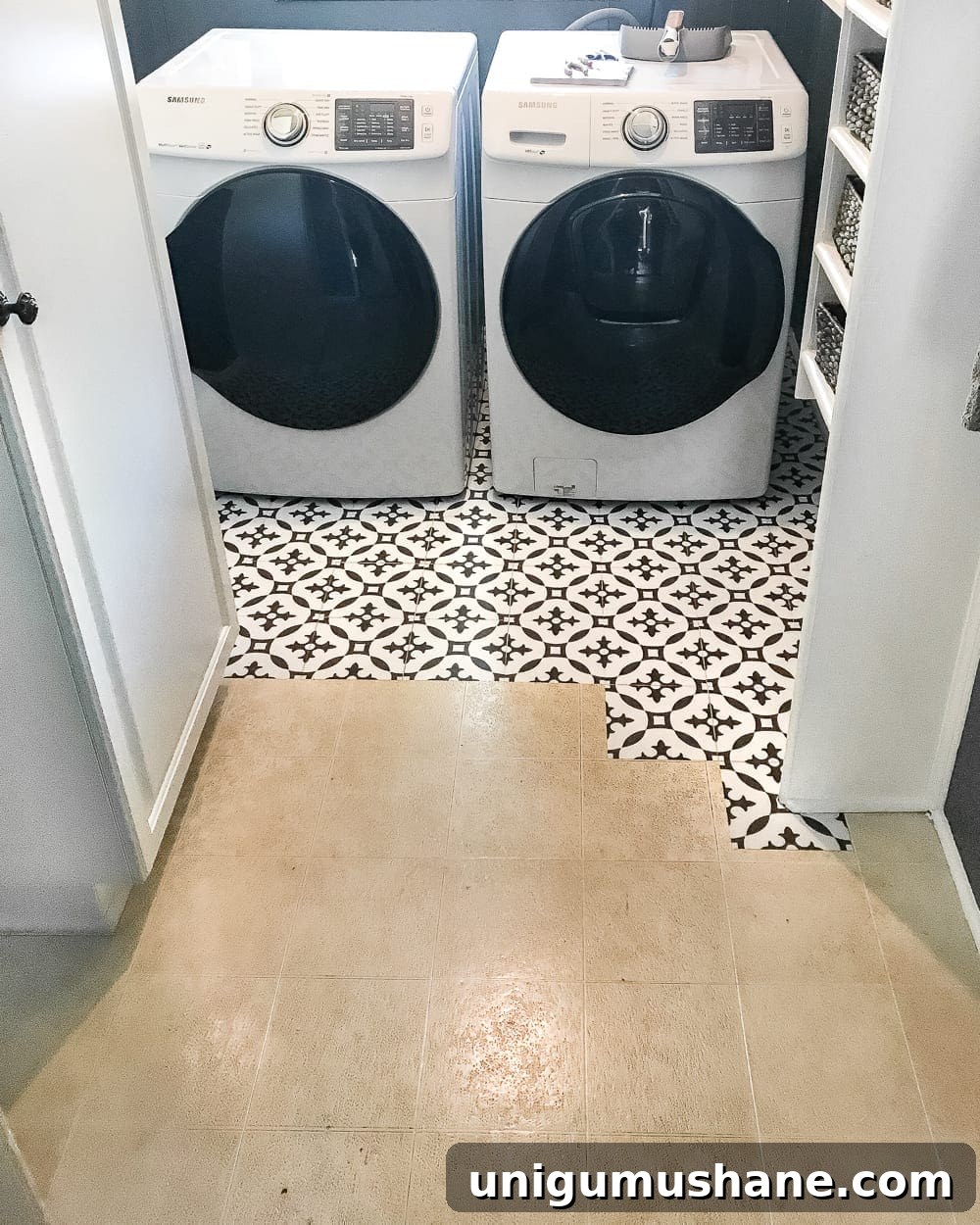
The finished floor was not absolutely perfect, but it was a huge improvement. A few of the printed patterns were off by a millimeter or two, and we left about a 1/8-inch gap between the tiles to make the floor look more like it had grout lines. Even with those small imperfections, the final result looked dramatically better than the old vinyl floor.
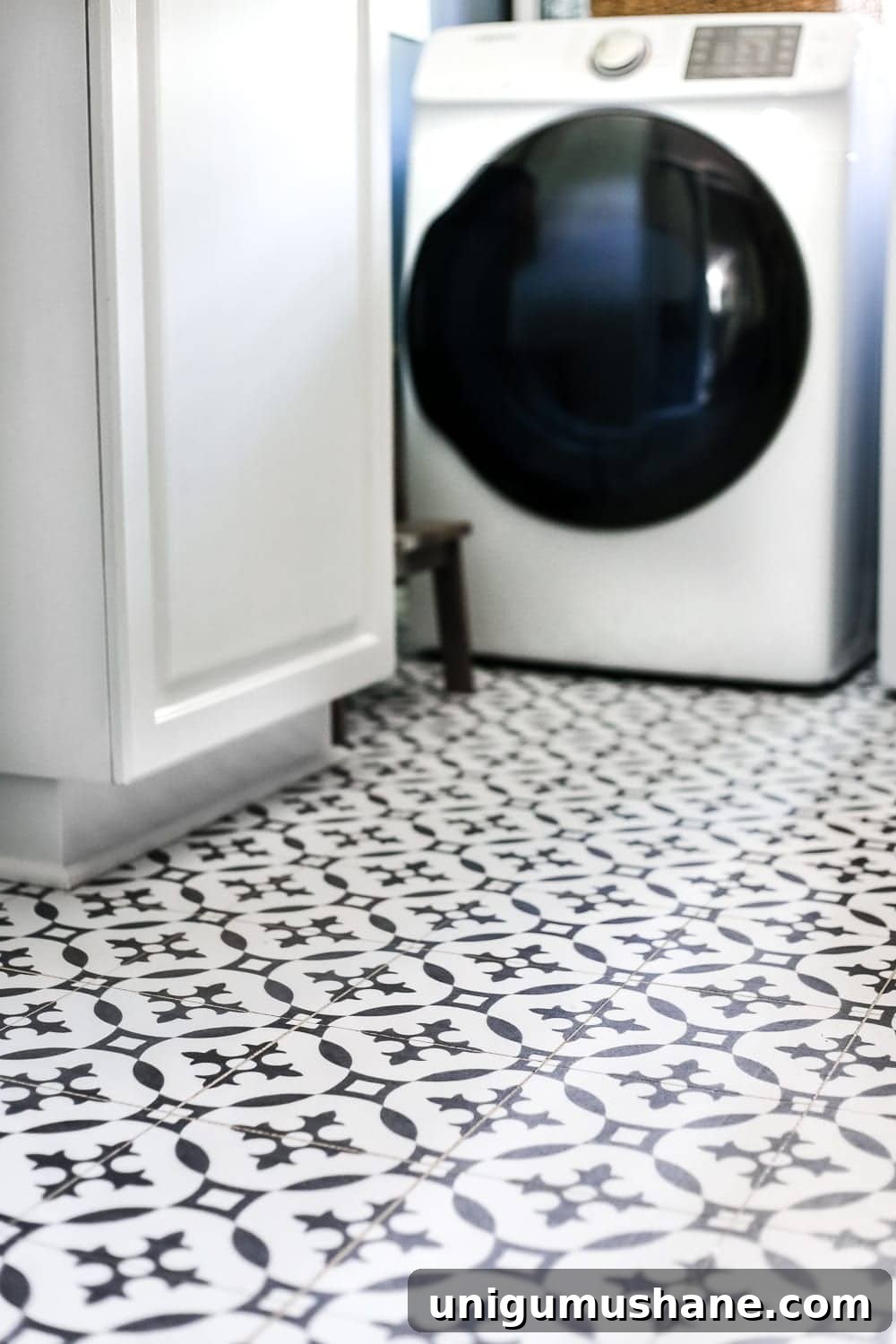
After installation, we allowed the adhesive to cure for 24 hours. Once that curing time passed, the floor could be walked on and mopped. We also had to move the washer and dryer back into place, and even after scooting them across the floor, not a single tile shifted.
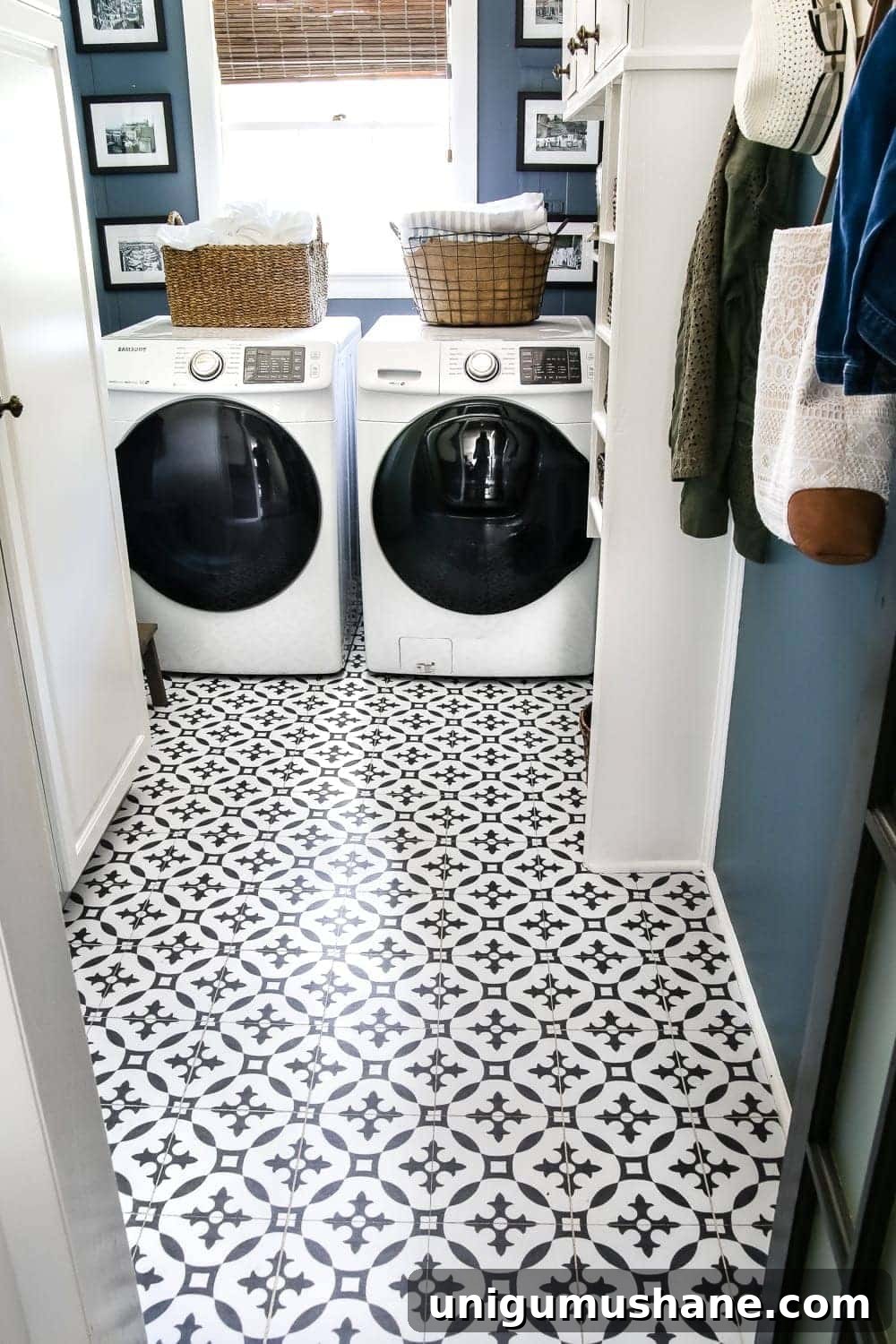
After nearly two weeks of regular use, the peel and stick vinyl tiles were still holding up perfectly. The room already felt cleaner, brighter, and more finished, and the patterned floor made a much bigger impact than I expected.
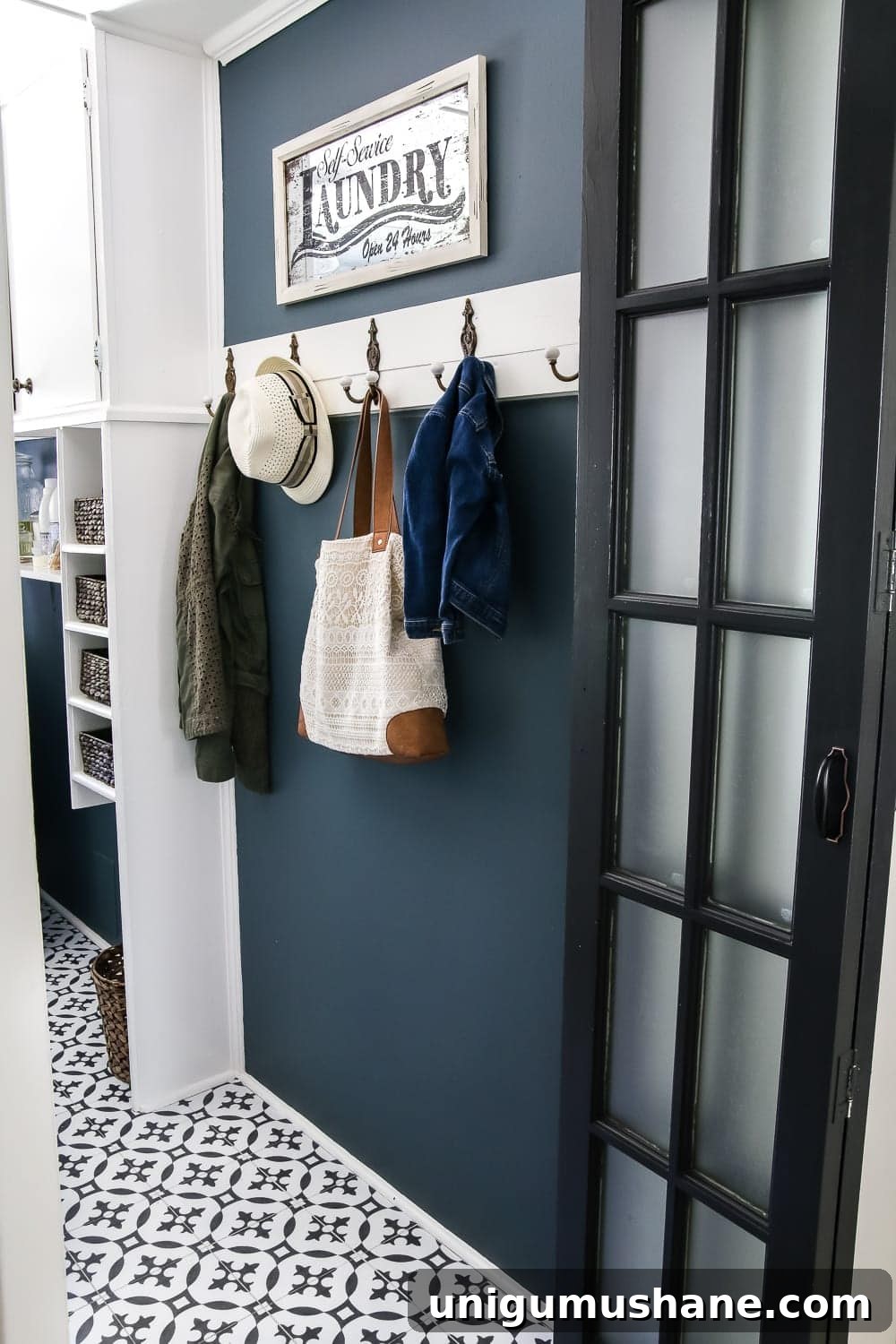
I am so happy with how this DIY Moroccan vinyl tile floor turned out. If we ever decide to change the pattern later, it will be far easier than removing real tile. For now, though, I do not see us replacing it anytime soon.
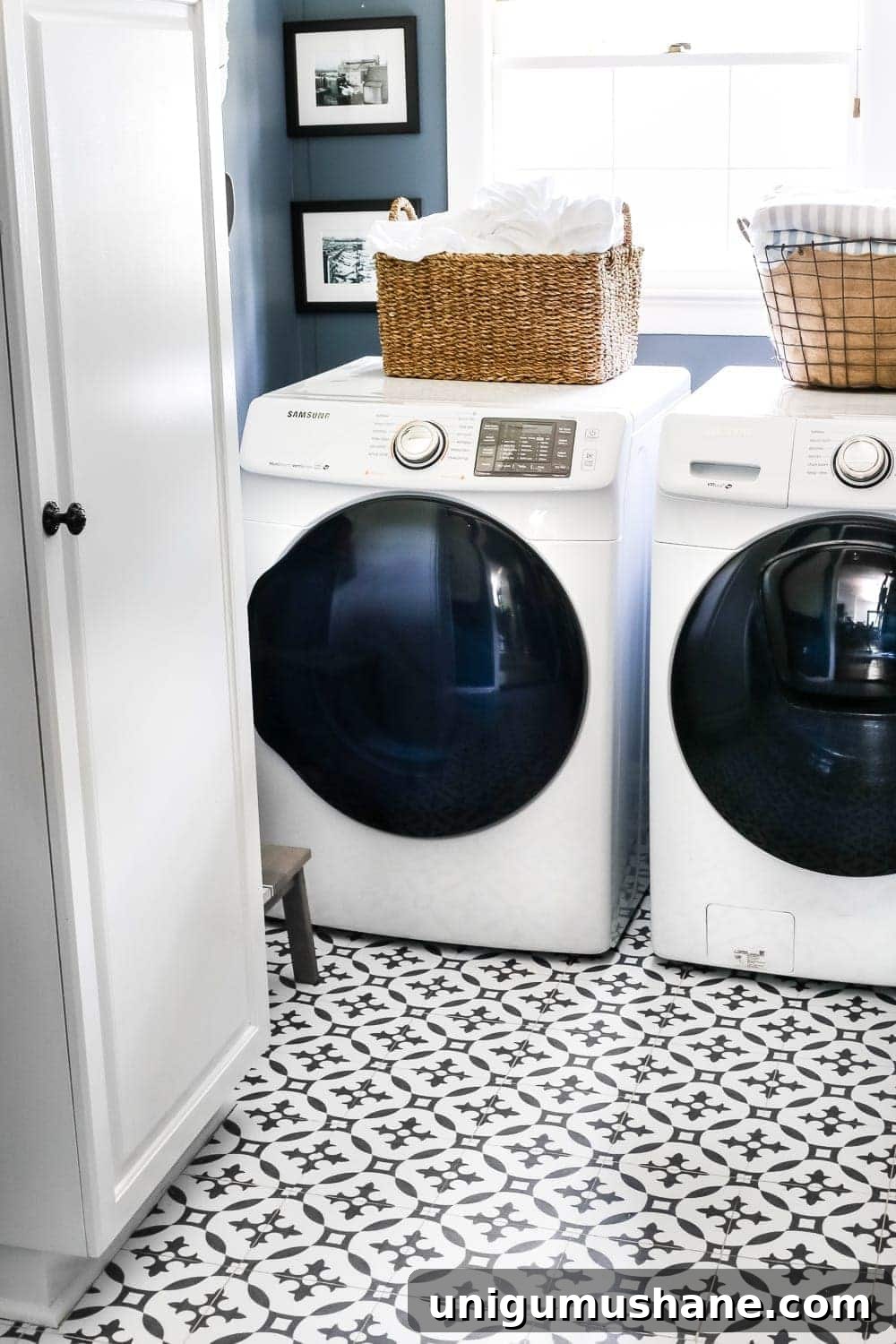
There are still a few finishing touches left in the laundry room, including better organization and replacing the fluorescent light fixture. But with the new peel and stick vinyl flooring installed, the space is very close to feeling complete.
Other laundry room projects and sources included:
- Mood board and design plans
- Laundry room paint
- French bifold door
- Vintage clothesline printable art
Have you ever used peel and stick vinyl tiles in your home? This project was a simple way to update an old laundry room floor without committing to a major renovation. I am hoping the tiles continue to hold up well over time, and so far, they have been a great budget-friendly flooring solution.
If you want to save this DIY peel and stick vinyl tile floor idea for later, you can pin it here: