
This post contains affiliate links to help fund more DIY adventures.
A few weeks ago I shared ideas for updating our breakfast area and asked for opinions while I hovered over the first brush stroke on our kitchen chairs. Even after all that input, I found myself standing in the kitchen more times than I care to admit, staring at those manufactured “weathered” wood chairs and asking, “to paint or not to paint?”
In the end, I flipped a coin. Yes, really. I left it to chance, and when it came up tails (my call for “paint”), I got to work. I’m so glad I did—what was I so worried about?
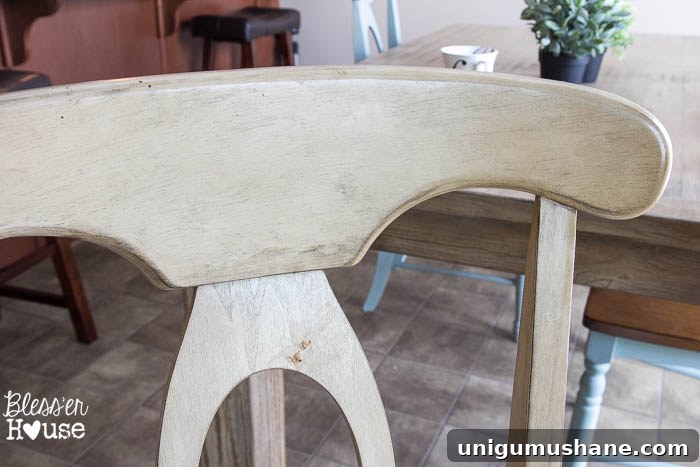
I painted three chairs before I remembered to take a proper “before” shot. They looked fine originally, but I wanted contrast with the table—everything matching perfectly made me antsy.
True to my impulsive streak, I didn’t even spread a drop cloth for the quick project—just paper plates under the legs.
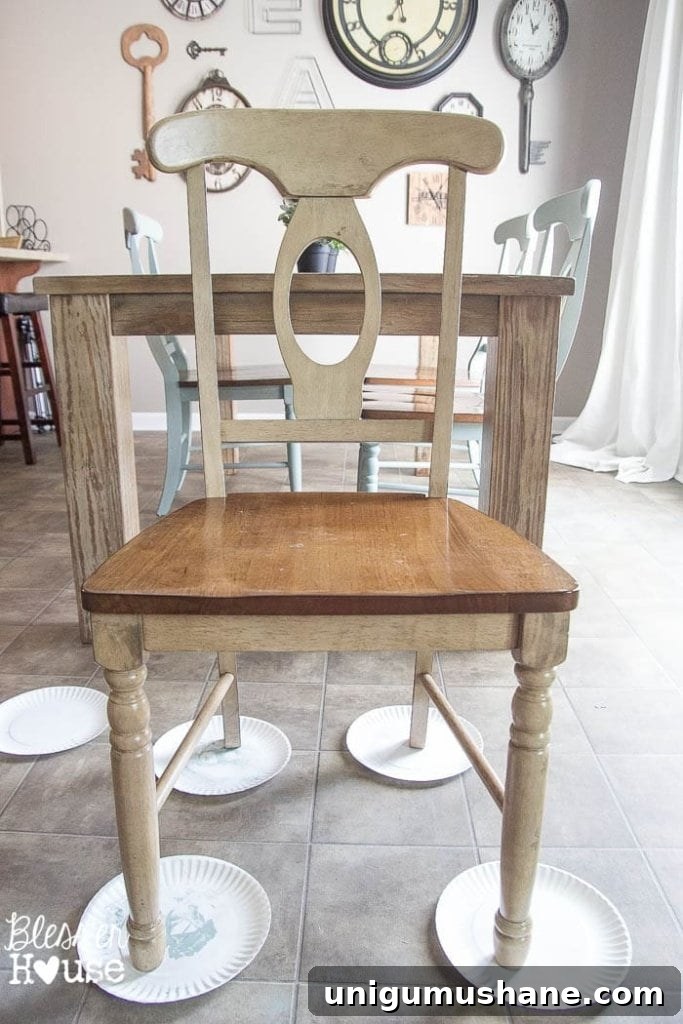
These chairs get regular use and frequent messes—there was still oatmeal clinging to one from breakfast. That’s life with a toddler.
I realized I hadn’t put together a simple, step-by-step guide to painting with chalk paint yet, so consider this a beginner-friendly outline. If you’ve been hesitant to try chalk paint, the process is forgiving and easier than it looks.
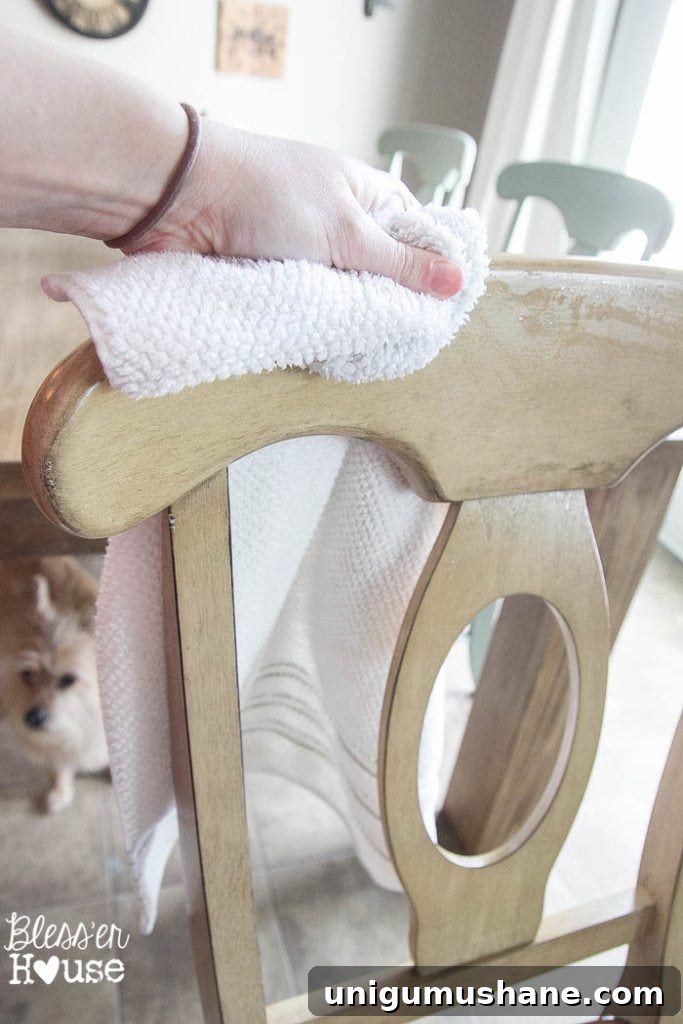
Prep was basic: a quick wipe with soapy water, a follow-up with a damp cloth, then let the chairs dry. They were ready to be refreshed. (You might even spot my little helper hiding under the table in a photo.)
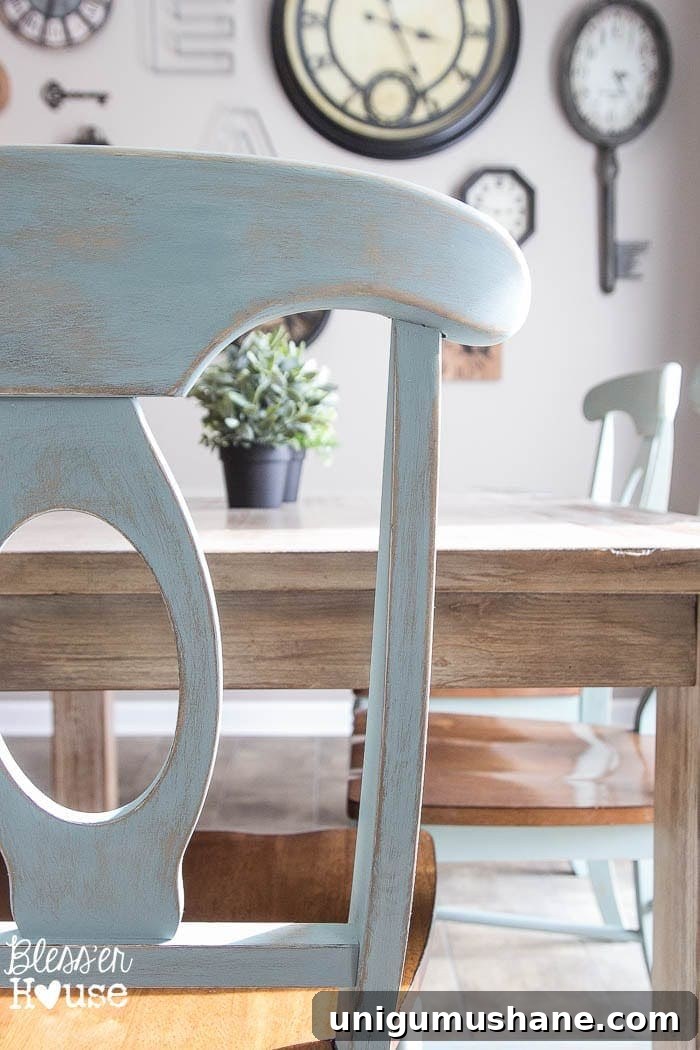
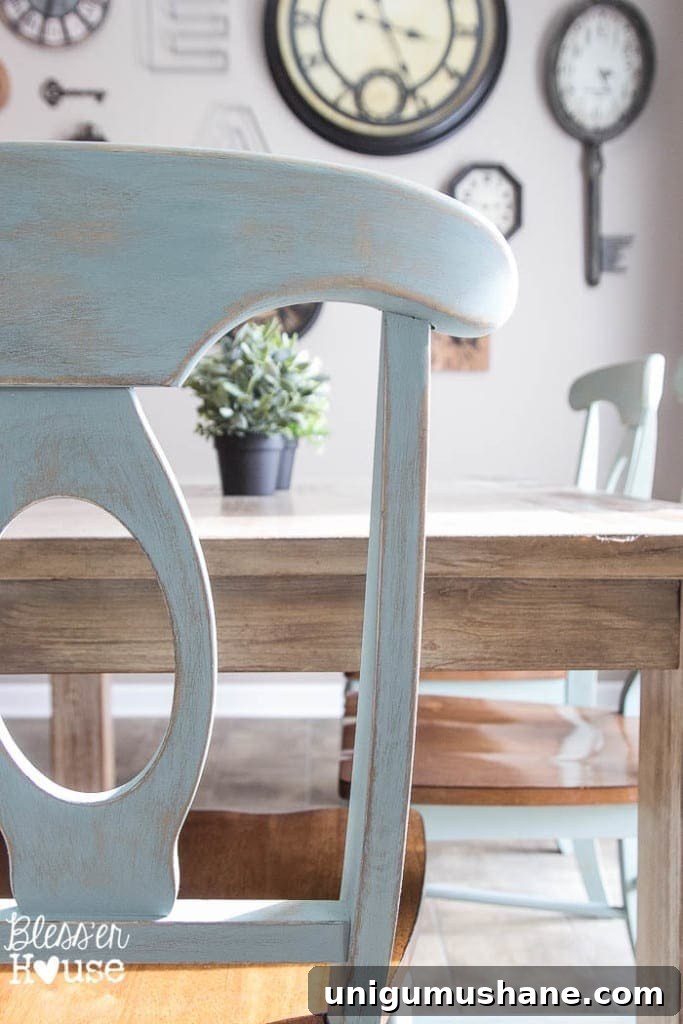
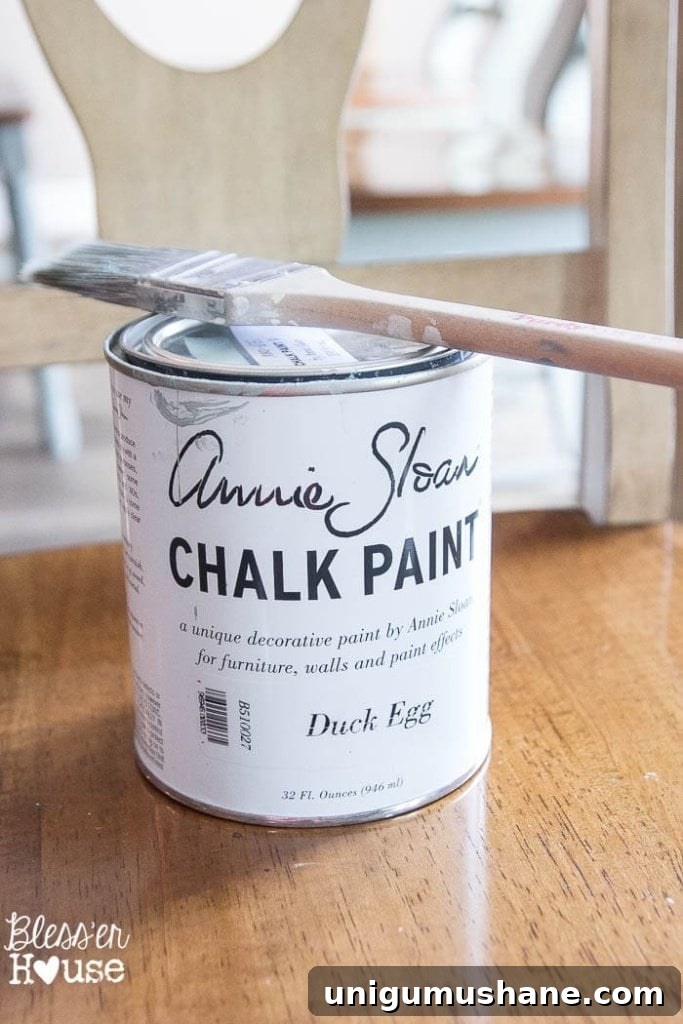
I had almost a full quart of Annie Sloan Chalk Paint in Duck Egg leftover from another project. This color is my go-to for adding life and interest to a neutral room—perfect for anyone who usually avoids bold color.
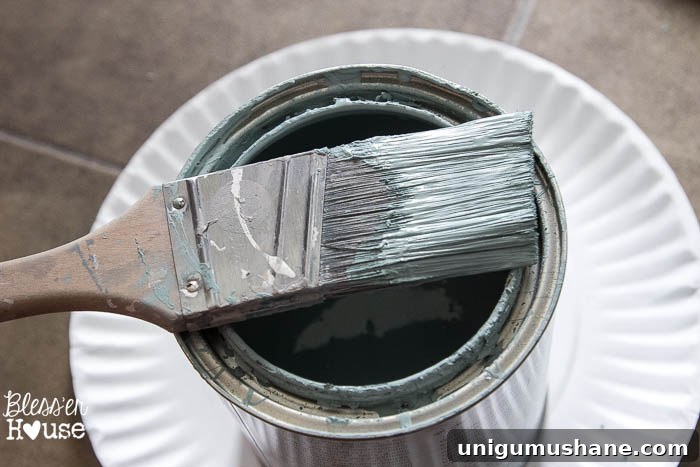
I used a 1.5″ angled Purdy brush and worked straight from the can, tucking the lid on between dips to avoid waste. Chalk paint applies easily, and streaks at this stage are normal.
Paint away—this paint dries quickly, and some areas were already dry before I finished a single chair. After about an hour I grabbed 100-grit sandpaper to start distressing.
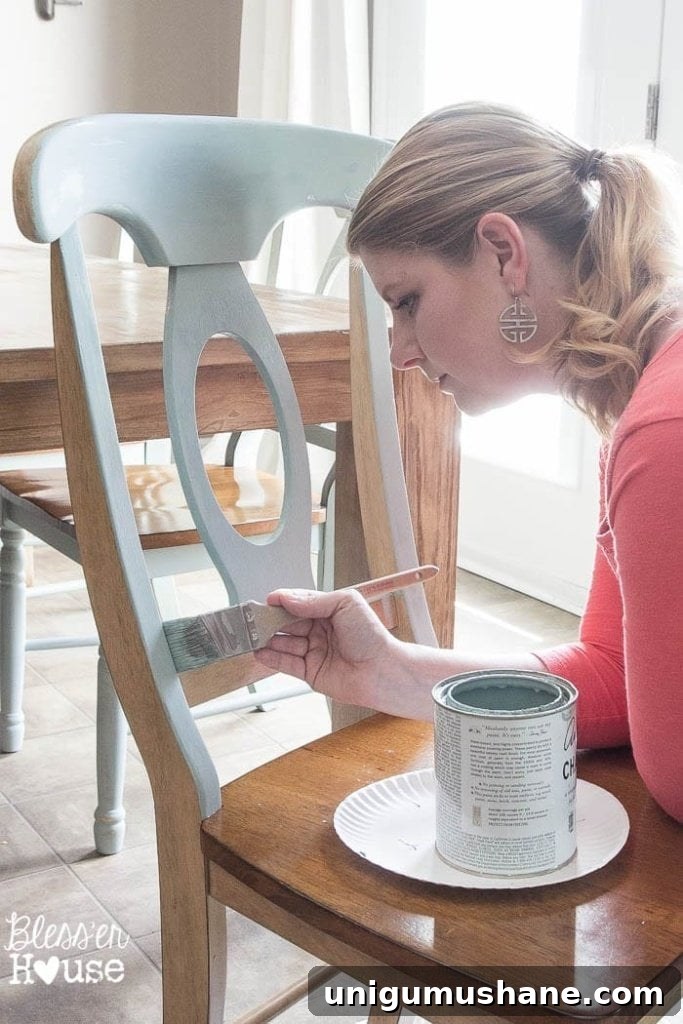
I concentrated distressing on edges and spots that would naturally wear first, then roughed the surface a bit everywhere so the original wood would peek through and create that weathered look.
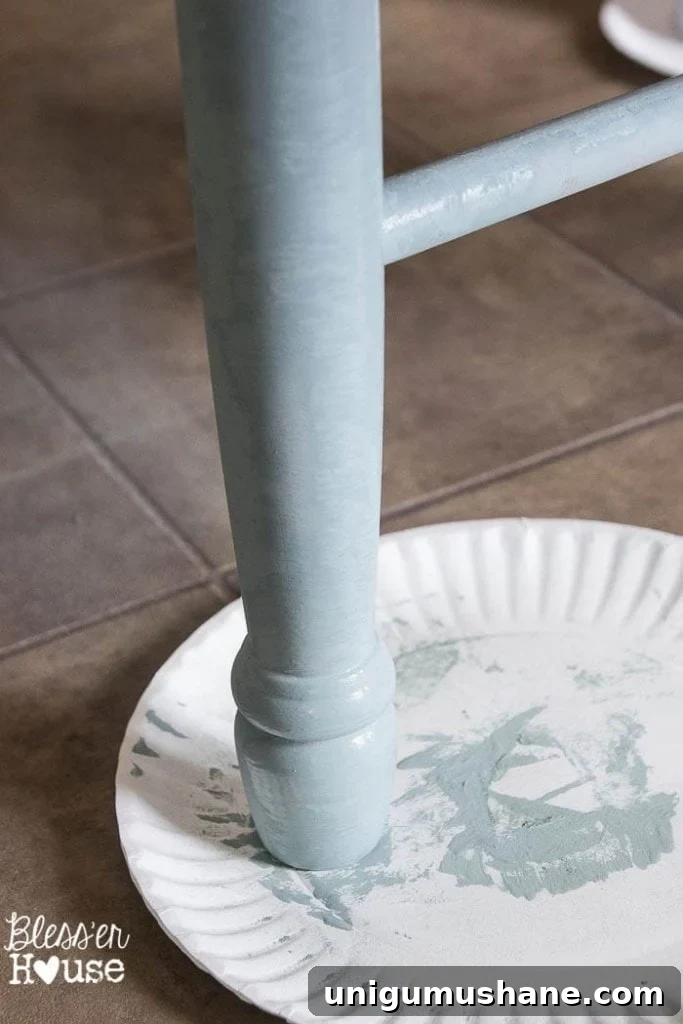
If you’ve never painted with chalk paint, don’t be alarmed by the initial streaks. They’ll blend out and look beautiful once sanded and finished.
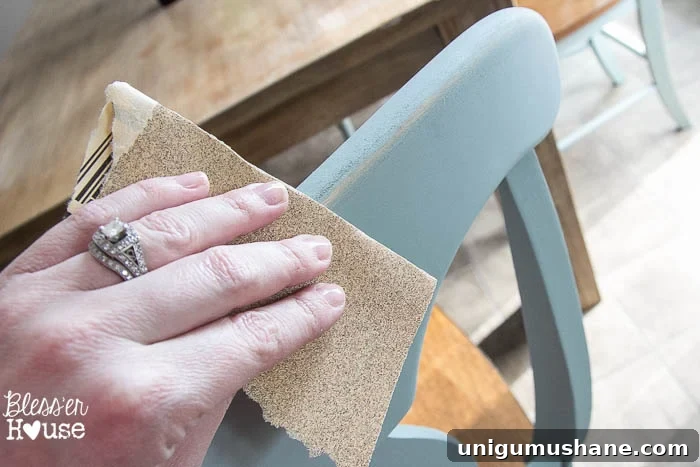
After distressing with 100-grit, I softened the scratches with 220-grit to blend everything smoothly. Then I wiped the chairs down with a damp cloth to remove sanding dust.
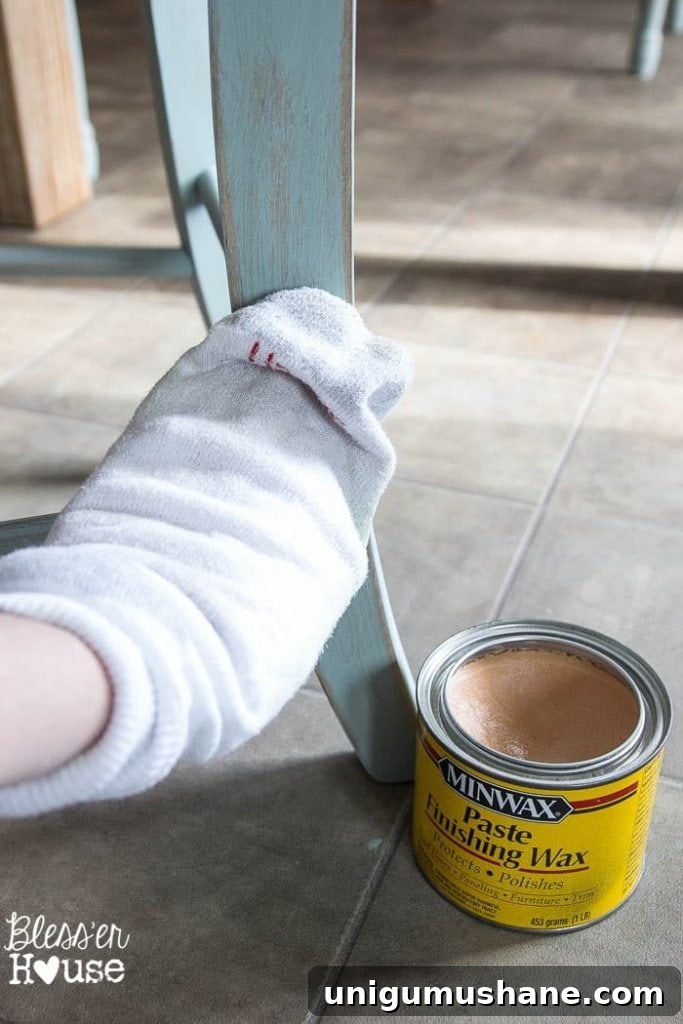
For protection and a silky finish I used clear paste finishing wax. I’ve used the same tin for several projects; it’s durable, easy to apply, and helps guard the paint from stains and daily wear. I apply wax with an old sock worn like a mitten and then buff it to a soft sheen.
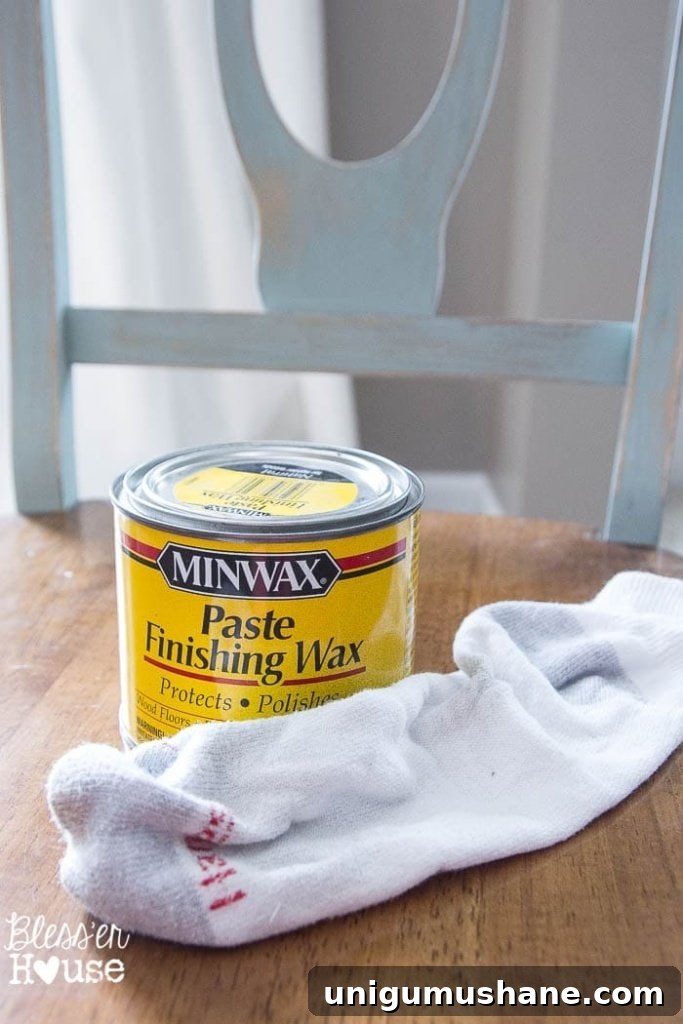
The wax makes the paint feel smooth to the touch and adds a layer of protection against spills and little hands. Since I chose a distressed finish, any further wear from everyday use just adds character, which is perfect for a busy family home.
I had a lot of fun with this quick makeover. The duck egg color feels fresh and familiar—I love it so much that it even featured heavily in my wedding palette.

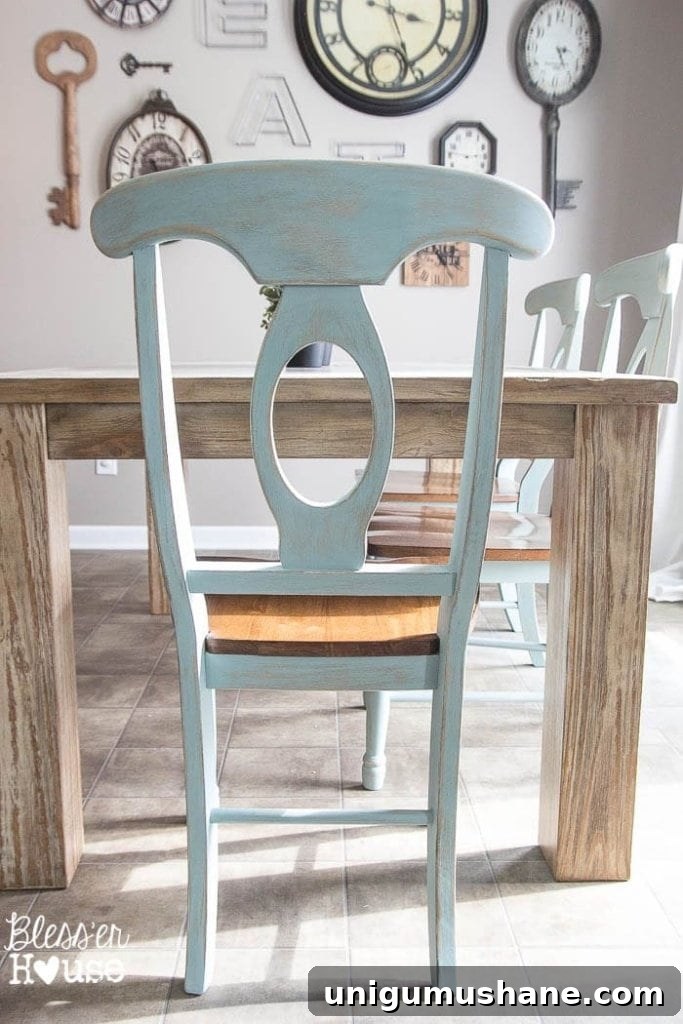
Do you see a hint of the breakfast nook updates? The curtains are getting hemmed and then that corner will be finished. Small changes like these—painted chairs, fresh fabric—make a big impact.
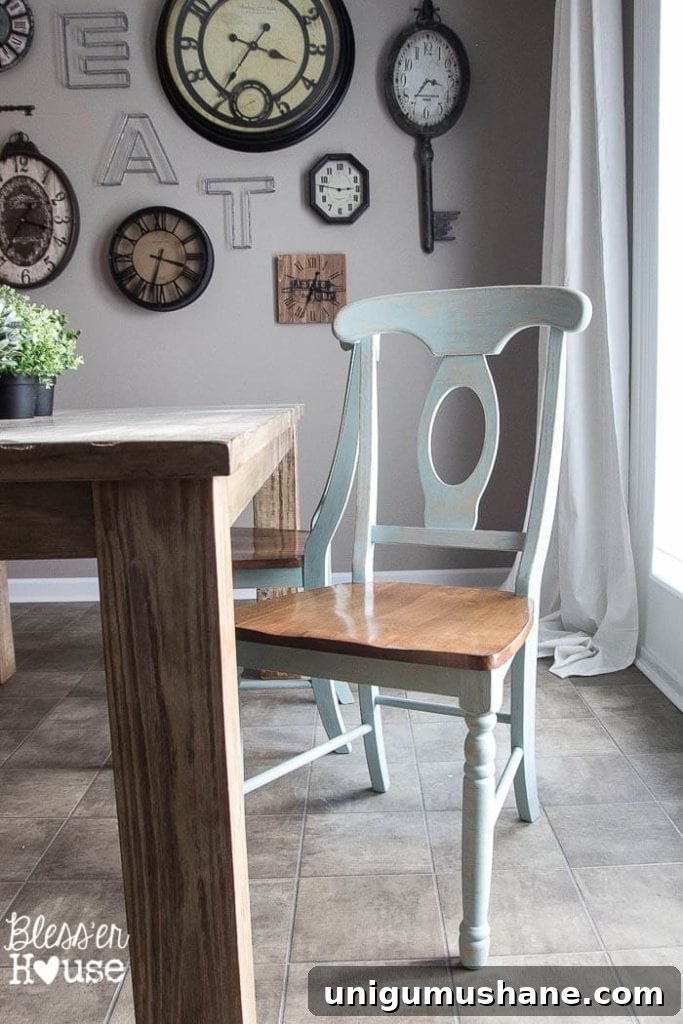
What do you think? Is duck egg one of your favorite colors too? Did you ever have a decorating “duh” moment where the solution was obvious in hindsight? Or have you ever had to flip a coin to decide a makeover? The hardest part is often just making the decision and starting.
If you enjoyed this project, check out other makeovers and tutorials on the blog.

Follow: Facebook | Pinterest | Instagram | Twitter | Google+ | Bloglovin | Hometalk