
How to Create a Faux Reclaimed Wood Look on a Solid Painted Wood Table Top Using Just a Circular Saw and Paint
I love the look of reclaimed wood, but I don’t always want to deal with the cost, weight, or the loss of storage that real planks can bring. This step-by-step guide shows how I created a convincing faux reclaimed wood table top on a veneered, painted trunk-style coffee table using only a circular saw (set shallow), paint, glazes, and a few simple finishes. The result gives the warm, weathered texture of planked wood while keeping the table’s original function intact.
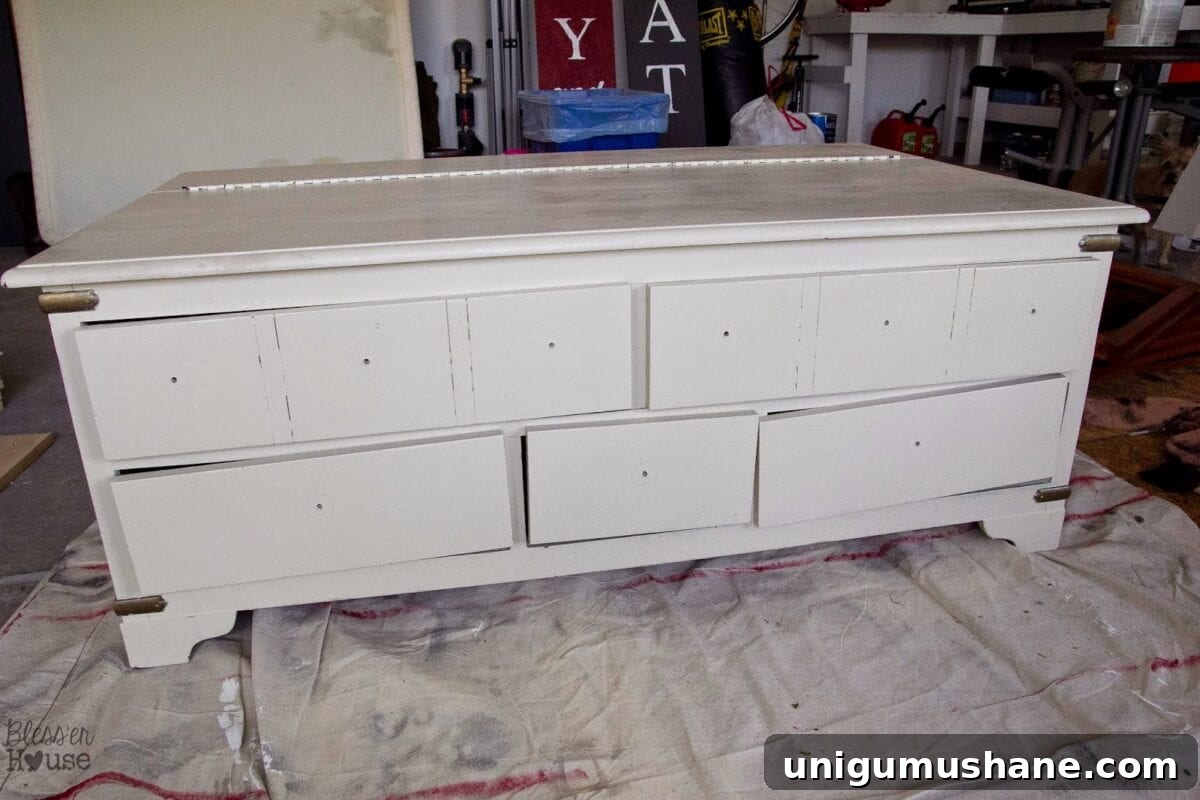
I found this trunk-style coffee table on Craigslist. It was sturdy, had excellent storage with a lift-top and drawers, and was an ideal candidate for a makeover—except the top was a plain veneer painted a neutral beige. I wanted the visual interest of planked, reclaimed wood without removing the top or covering the storage features with nailed-on boards. The solution: score faux plank lines into the surface and build up layered paint, glaze, and stain to mimic authentic wood grain and depth.
Before you start, gather materials: a circular saw you can set shallow (1/8″ depth), chalk or a pencil for layout, painter’s tape, base paint, a darker paint for glaze, a glazing medium, a wood graining tool, a dark wax or dark glaze for seams, a gel stain (I used Antique Walnut), rags, and finishing topcoat if desired. Two online tutorials inspired my process and provided helpful supply lists and techniques—search for faux planked desk and faux weathered wood grain tutorials for additional detail.
Step 1 — Plan and Mark Your Faux Planks
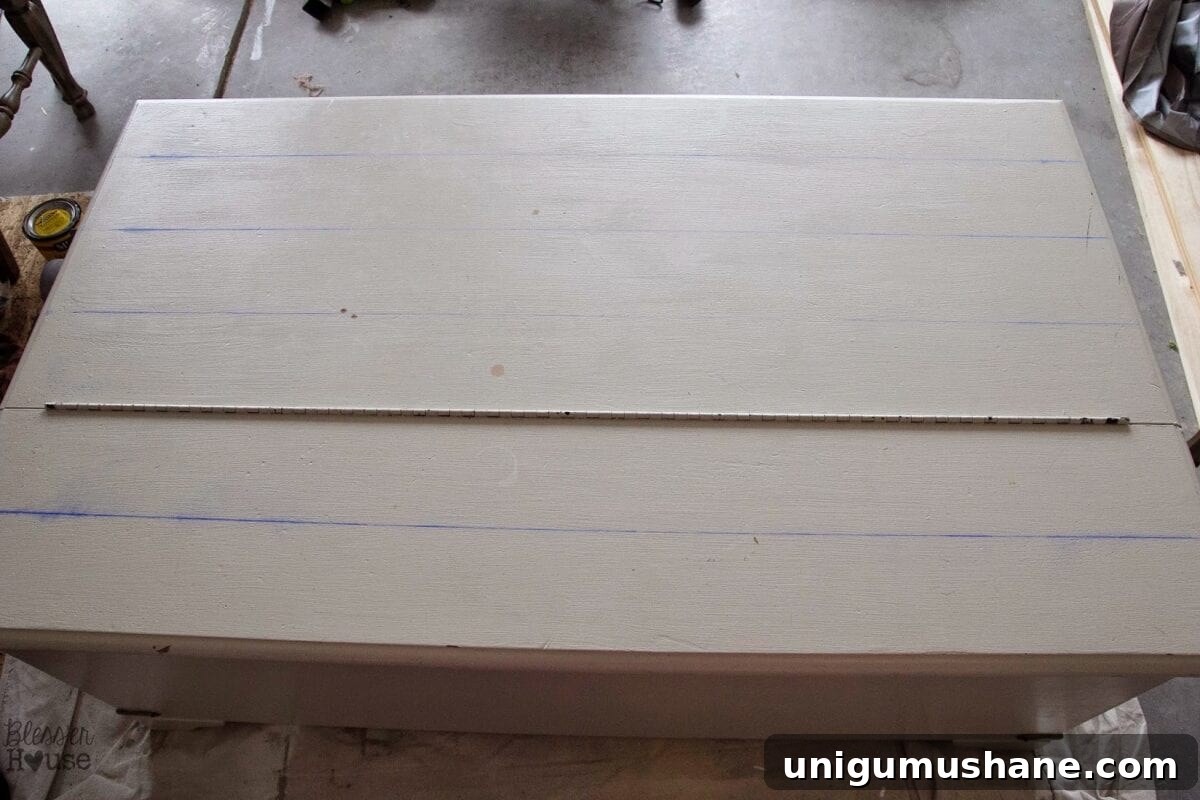
Measure the width of the table top and decide how wide you want each plank to appear. My top was 30 inches across and I chose five-inch-wide “planks,” which worked well with the existing hinge location. Mark your plank lines across the top and wrap the lines down the apron or sides so the effect reads as real boards from every angle.
Step 2 — Score the Plank Lines
Use a chalk line or pencil to transfer your layout. With the circular saw set to a shallow depth (about 1/8″), carefully run the blade along each marked line. The shallow cut creates a groove that reads like a plank joint without penetrating far enough to damage underlying structure or storage mechanisms. Take steady, measured passes and clamp or support the table top to keep it stable while cutting.
Step 3 — Darken the Joints
To give the scored joints depth and an aged appearance, work a dark wax or dark glaze into the grooves, then quickly wipe the excess from the surface. This step creates natural shadow lines and makes the “planks” read more convincingly as separate pieces of wood.
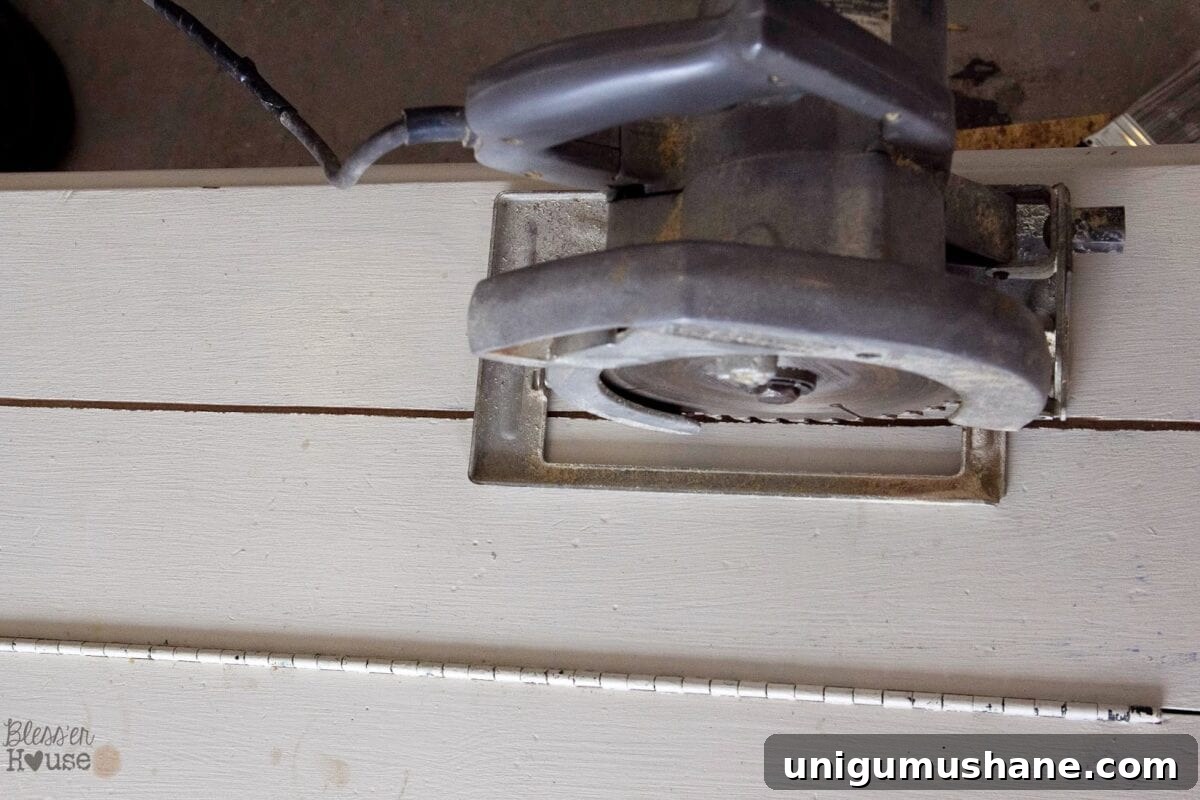
Step 4 — Apply a Base Coat
Paint a solid base coat over the entire top to act as the underlying wood color. Let the base fully dry. The base will peek through the subsequent layers, so pick a warm wood-like hue that will read as the heartwood underneath your grain finish.
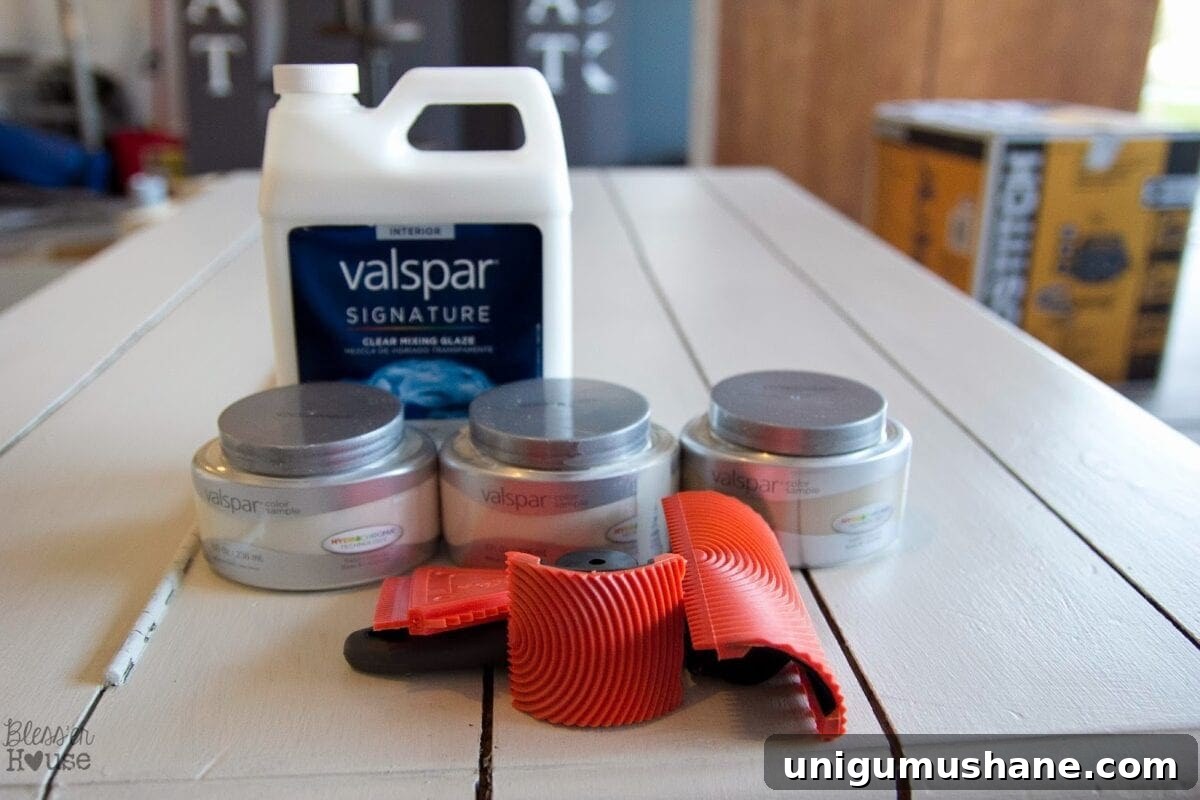
Step 5 — Layer Paint Glaze for Grain
Mix a glazing medium with a slightly darker paint color to create a translucent glaze. Work one plank at a time: brush a light coat of the glaze over the plank area, leaving streaks of the base coat exposed. Use a wood graining tool to drag and rock through the glaze while it’s still wet—this motion creates the vein and knot effects characteristic of natural wood. Use a smaller graining tool to texture the edges and sides for continuity.
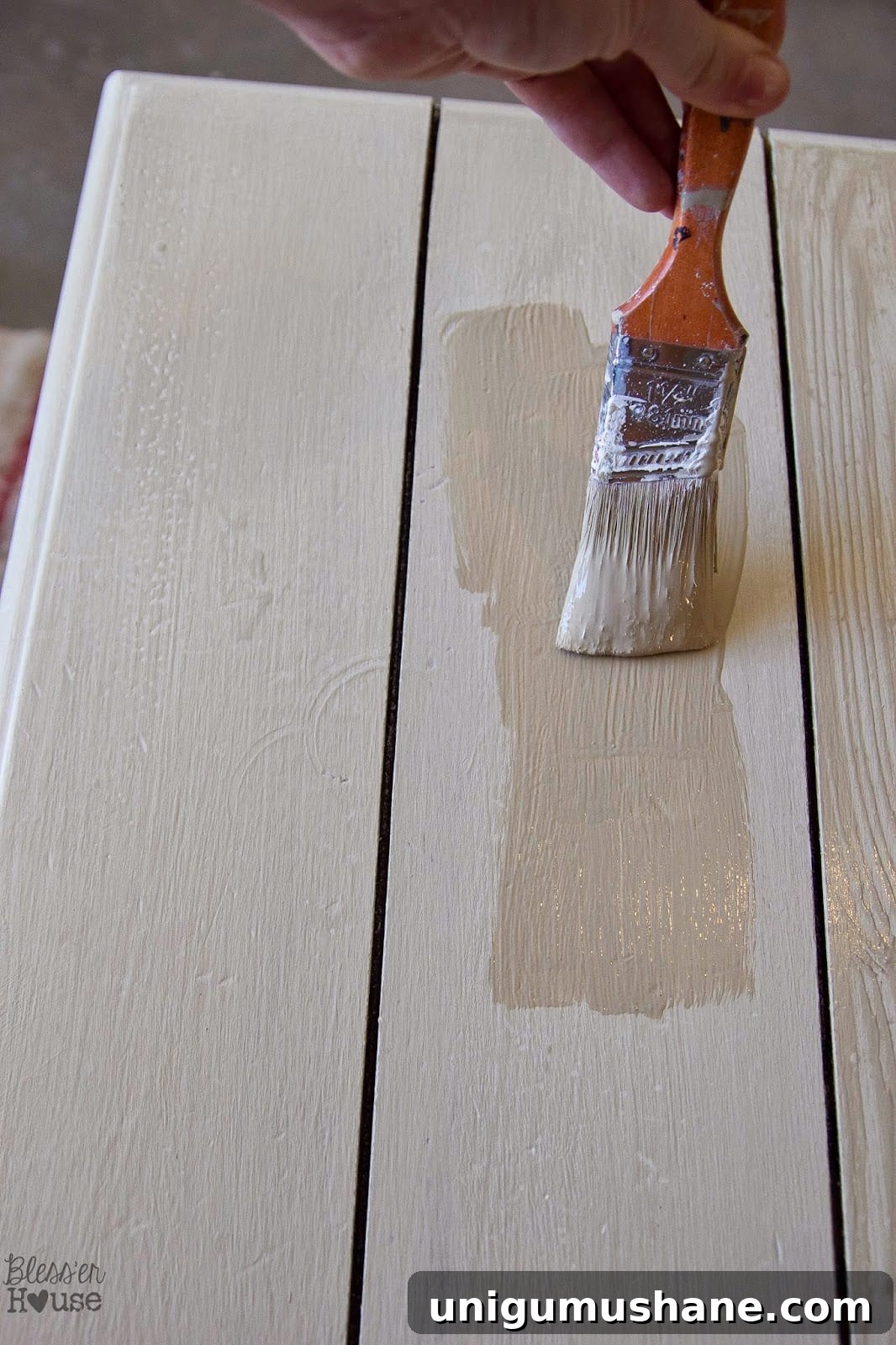
Step 6 — Add Light Glaze Highlights
After the darker glaze layer dries, apply a lighter glaze randomly to parts of the grain to simulate wear, sun-bleaching, and varied plank tones. Subtle variation is key—avoid uniform coverage so the top reads as aged, reclaimed wood.
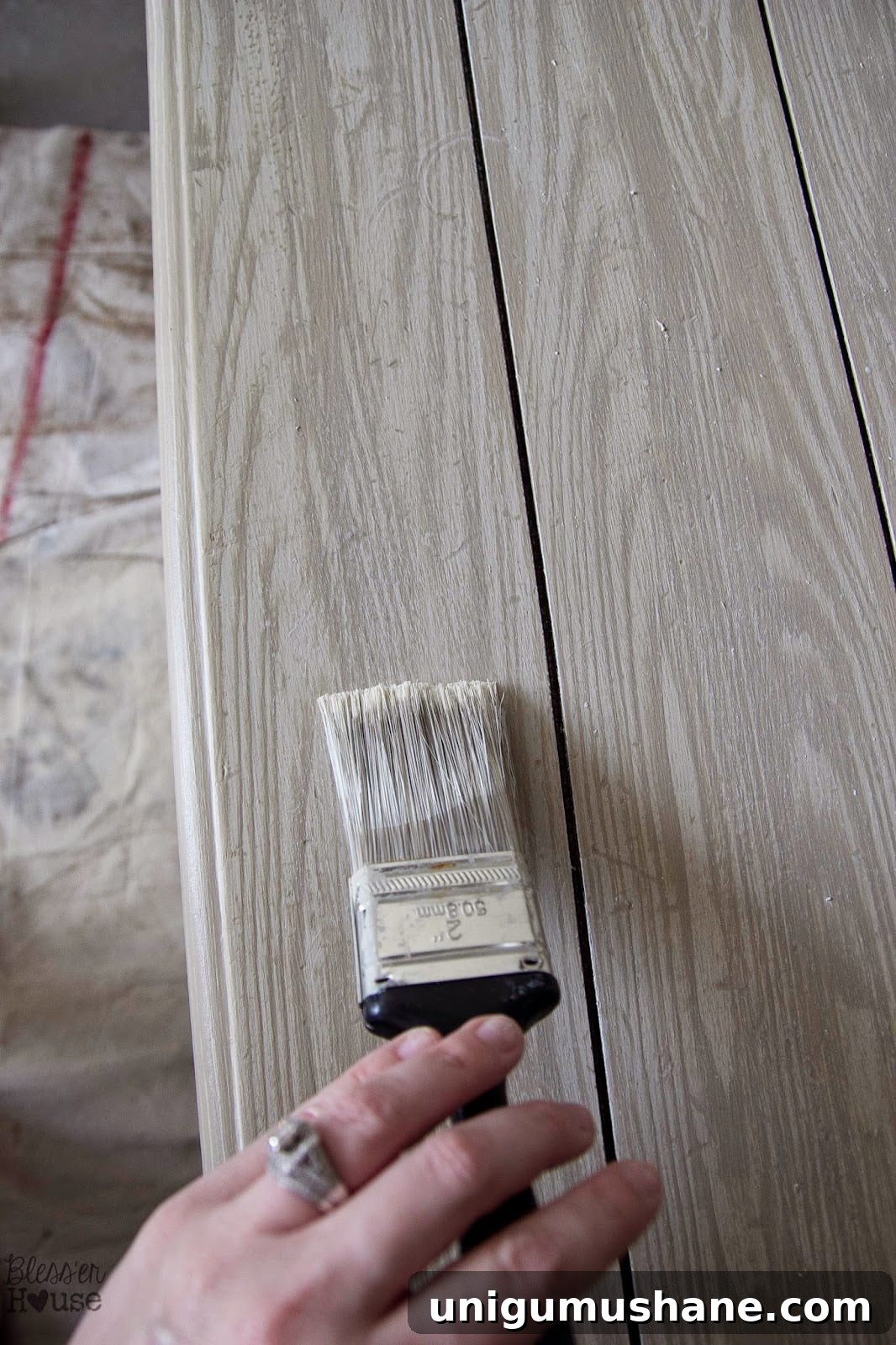
Step 7 — Deepen the Tone with Gel Stain
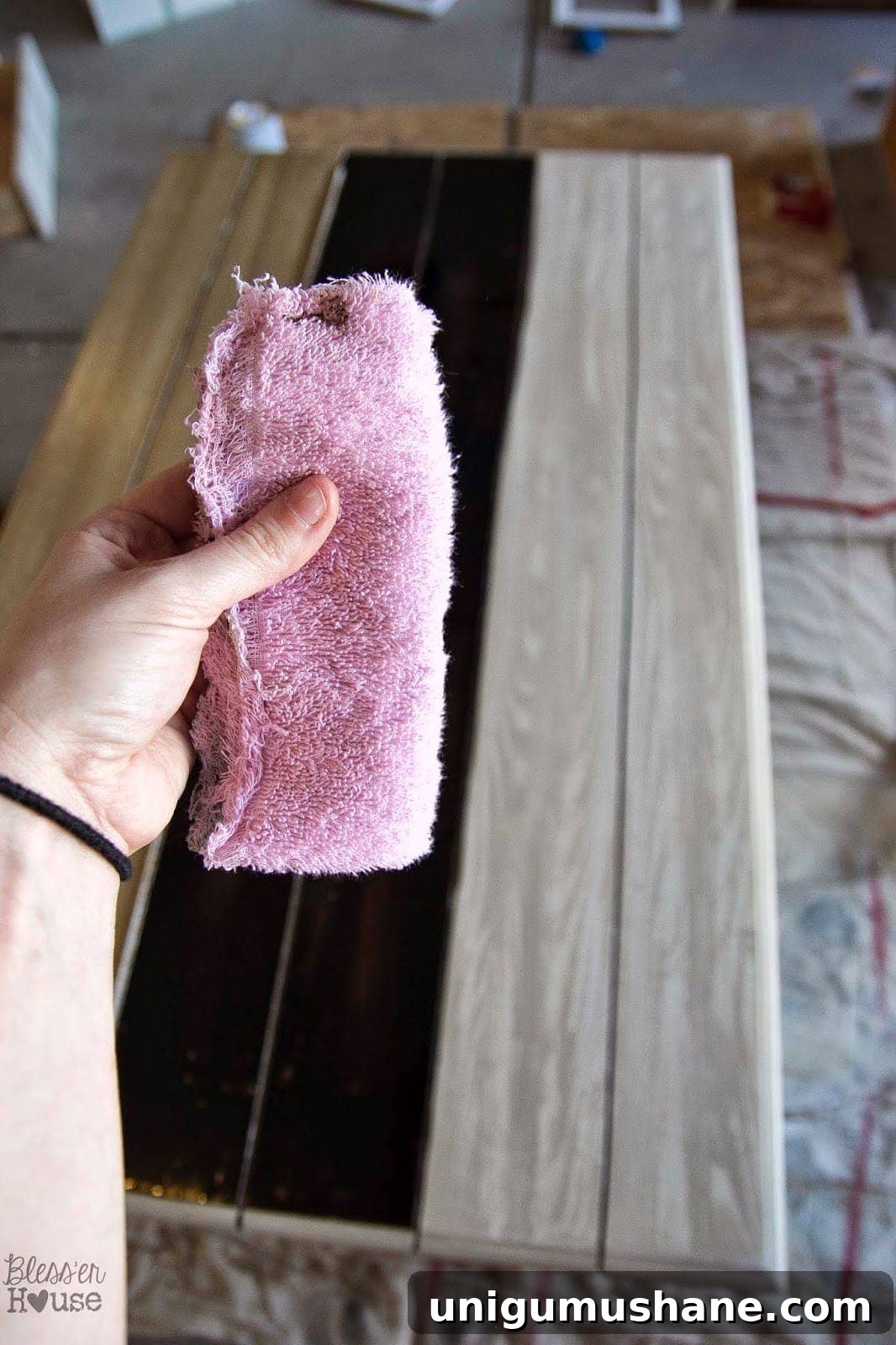
To enrich the color and add a deeper wood tone, apply a gel stain one plank at a time. Gel stains have a thick, pudding-like consistency that’s easy to control. Apply with a rag or brush and wipe back to the desired intensity. This step gives the finish a natural, richer depth and helps blend the glaze layers into a cohesive wood look. Don’t forget to stain the edges and sides so the illusion holds up from every angle.
Step 8 — Final Touches and Protection
After all layers are dry and you’re satisfied with the color and grain, protect the surface with a clear topcoat suitable for tabletops. Choose a durable polyurethane or water-based finish to protect from daily wear. Lightly scuff between coats if applying multiple layers to ensure adhesion.
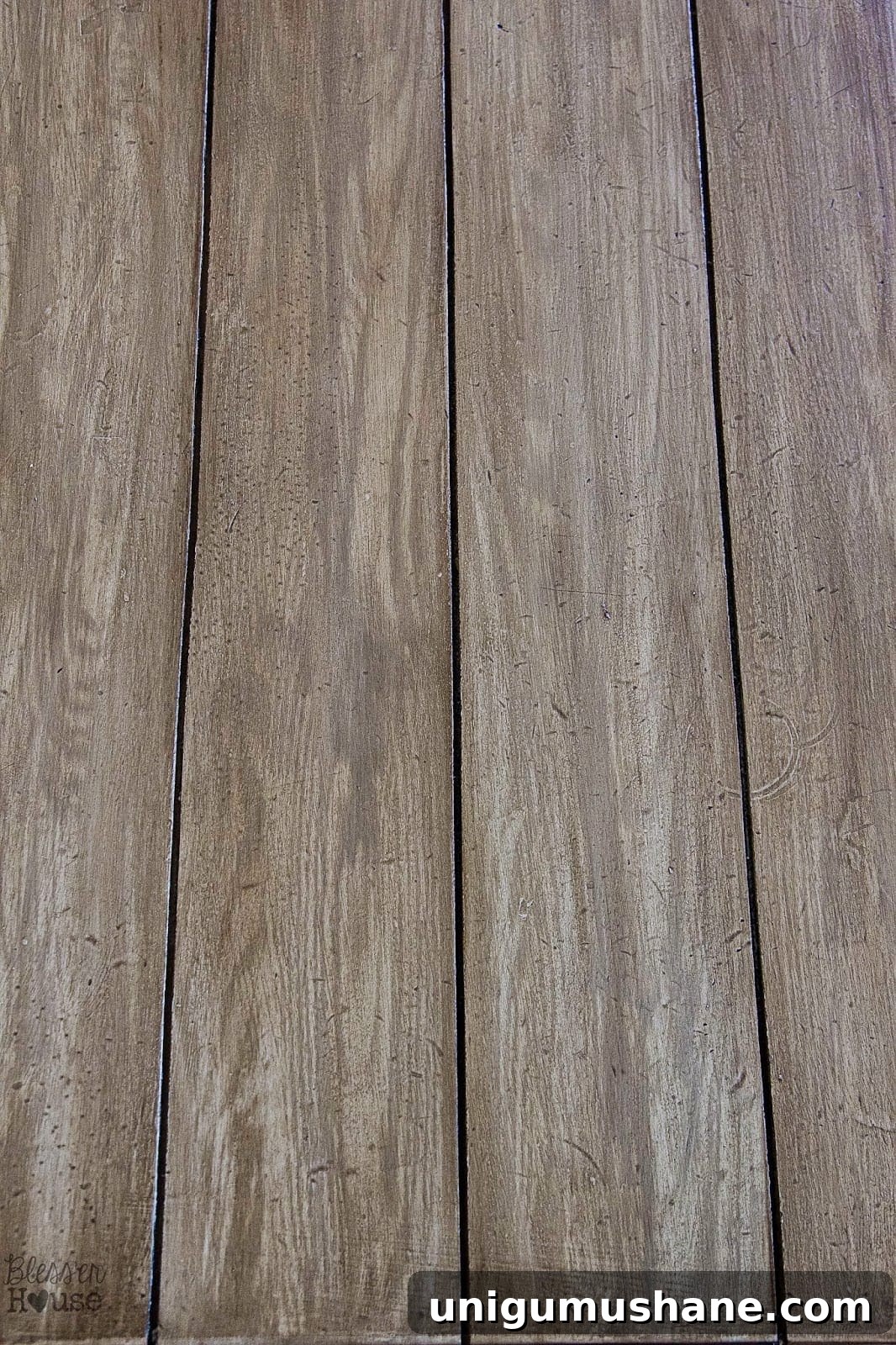
The process has a few detailed steps, but it’s very doable and doesn’t require replacing the table top or losing any functionality. The shallow scored lines, layered glazes, and a final gel stain combine to create a convincing faux reclaimed wood finish on a veneered or painted surface.
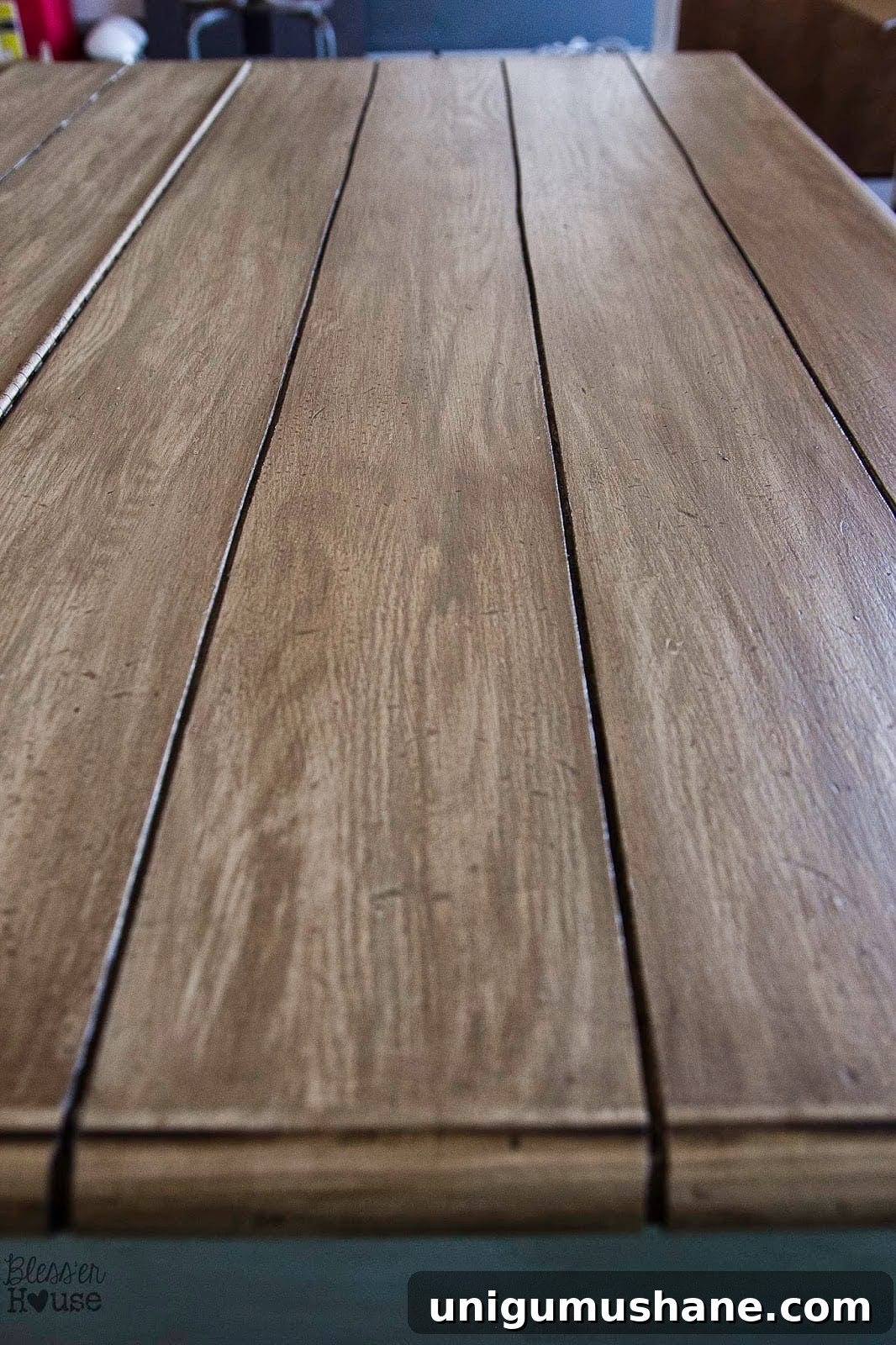
If you want more texture or a more weathered look, vary the glaze contrast, add light sanding in places to simulate wear, or incorporate subtle paint washes to simulate discoloration. Practice the graining tool motions on scrap material to develop confidence before working on the tabletop. With patience and a few materials, you can transform a plain painted surface into a warm, reclaimed-style focal point for your living room—without nailing on boards or sacrificing storage.

Blessings,