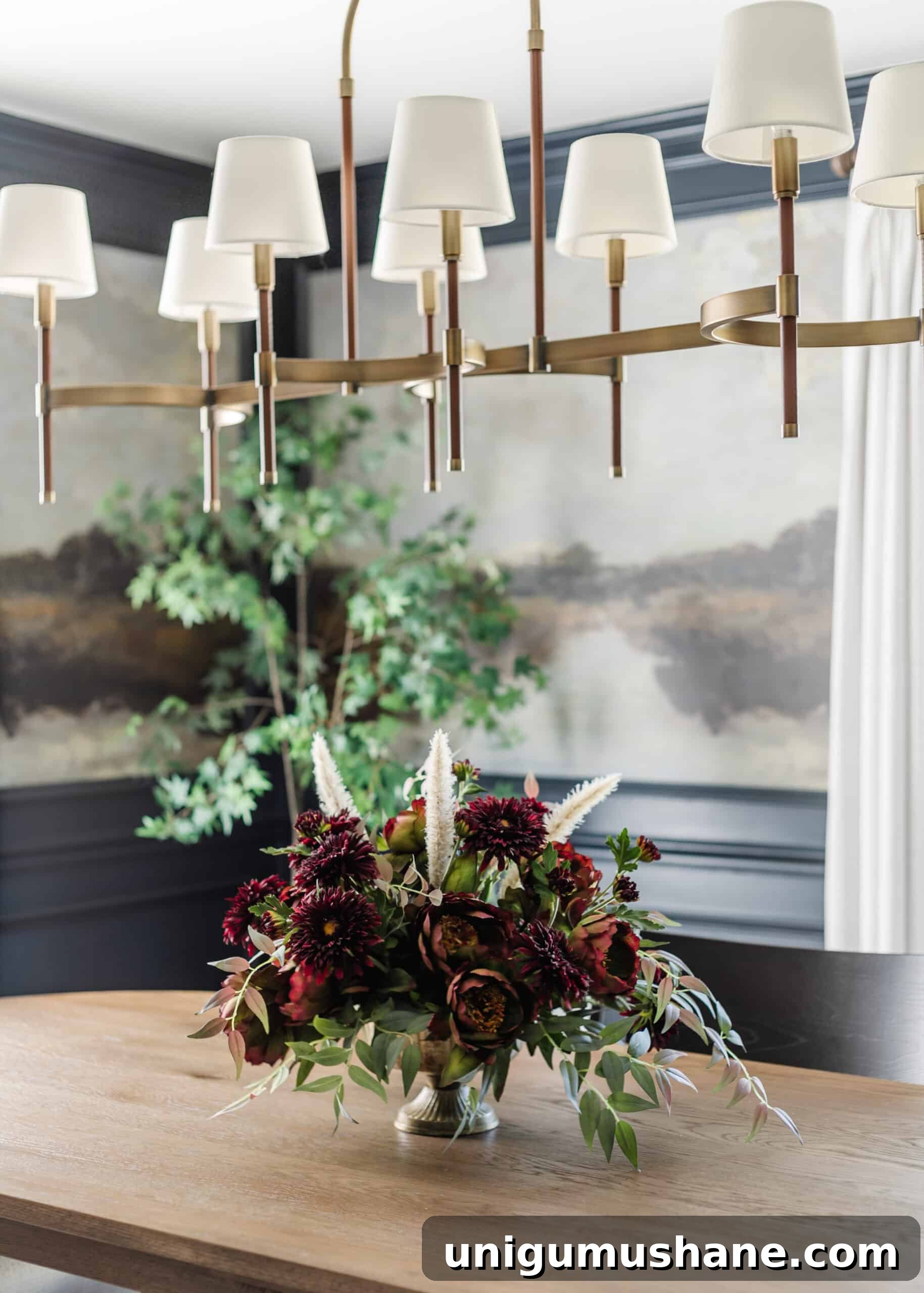
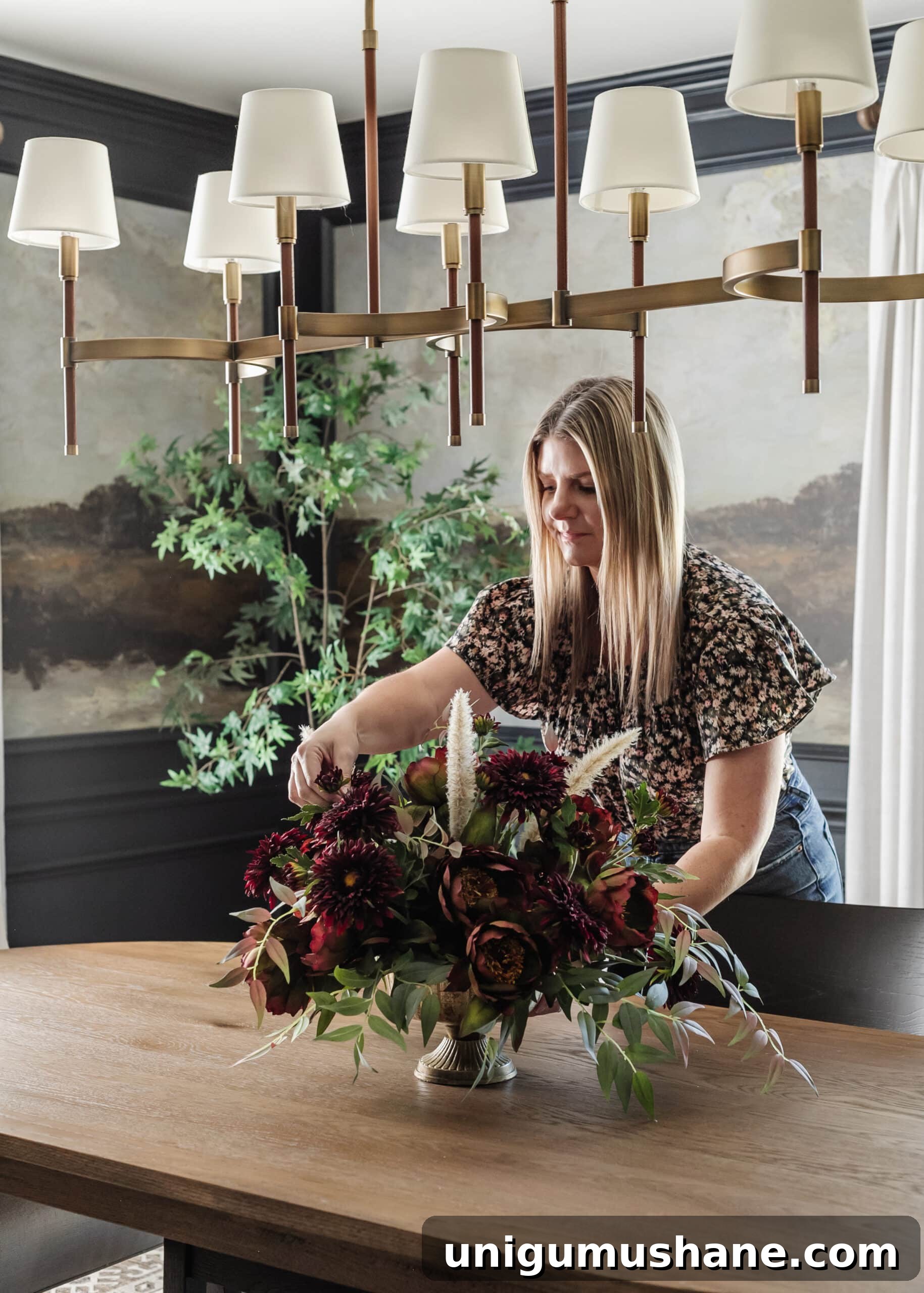
A clear, step-by-step DIY guide to create a beautiful fall floral arrangement—perfect for home decor, entryway tables, or seasonal events and weddings.
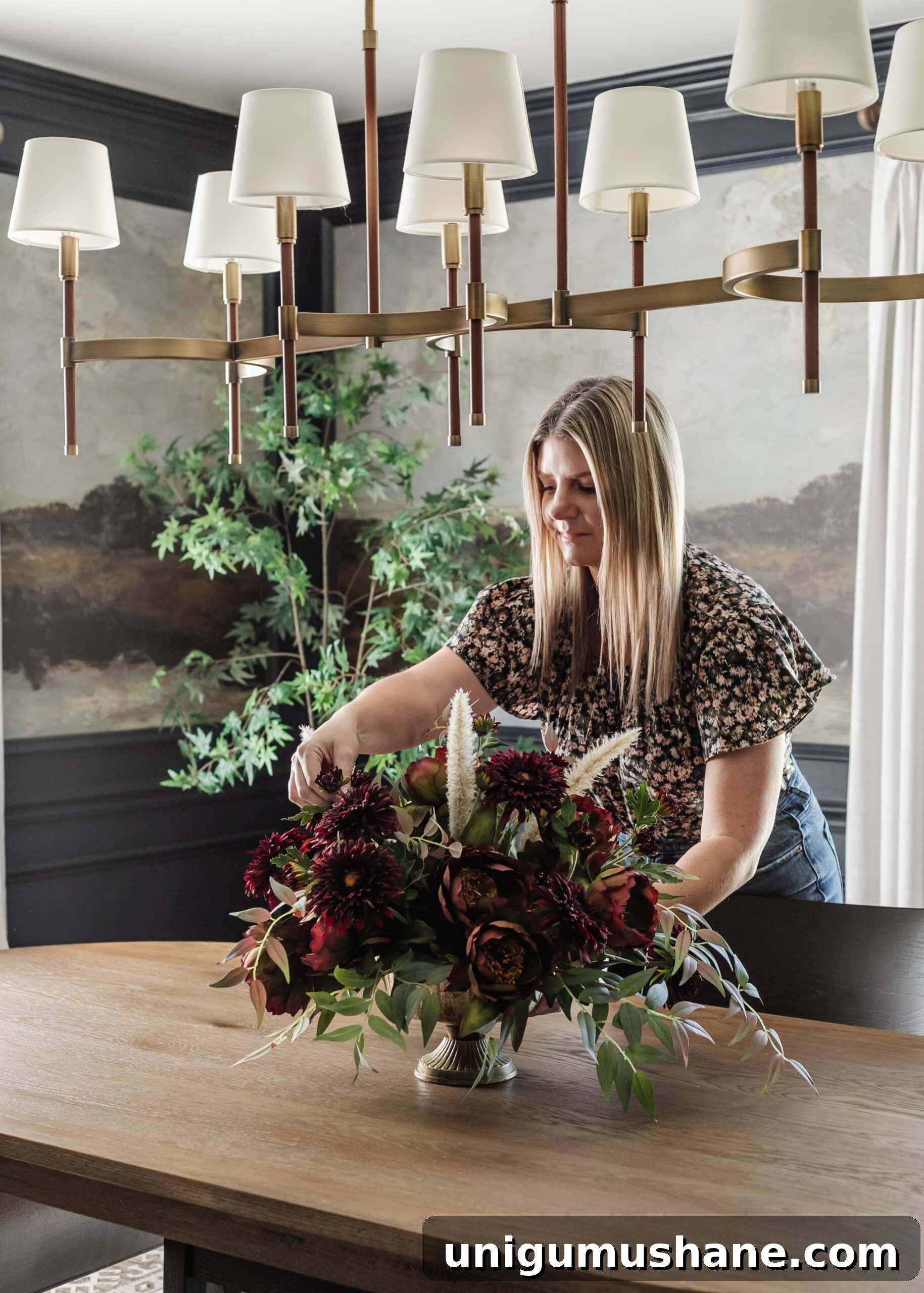
DIY Simple Fall Flower Arrangement Centerpiece
Working on creative projects—like arranging flowers—can be restorative for both mind and spirit. When I’m feeling stressed, I find that making something by hand helps me reset. This week I put together a simple fall floral arrangement that’s ideal for an entryway, dining table, coffee table, or even as altar decor for a church.
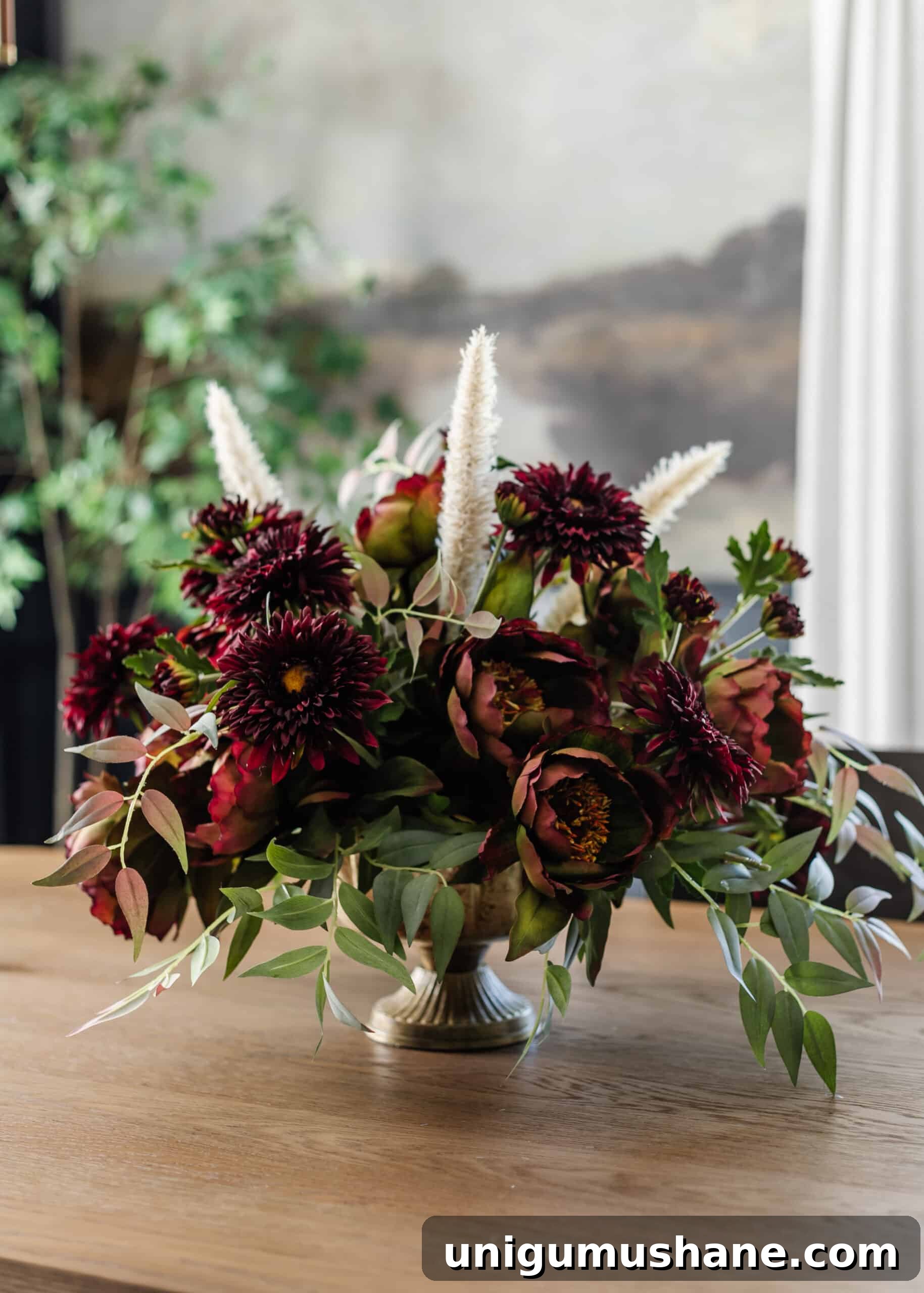
The design uses a rich autumn palette of purples, greens, and burgundy tones. I created two matching arrangements for our church’s fall season, but the same approach works equally well for a fall wedding or a cozy Thanksgiving centerpiece.
Supplies
I used realistic faux flowers for durability and low maintenance, but you can adapt this tutorial for fresh-cut or dried blooms. Choose materials that match your venue and the season.
- Flowers: A mix of focal blooms and secondary flowers in fall tones—examples include peonies, dahlias, roses, chrysanthemums, or sunflowers in deep reds, purples, and warm greens.
- Foliage: Add texture with eucalyptus, Italian ruscus, maple or oak leaves, and ornamental grasses.
- Vase or Container: A compote bowl, rustic ceramic vase, or mason jar can all work—pick a container proportionate to your desired arrangement size.
- Half-sphere floral foam: A half-sphere foam creates a rounded, stable base and makes placement easy.
- Cutting tools: Wire cutters for faux stems or pruning shears for fresh flowers.
- Water and preservative (for fresh flowers): Keep fresh arrangements hydrated with clean water and floral food.
Example items I used for each arrangement:
- Distressed gold metal compote bowl
- 8″ half-sphere florist foam
- Green and purple peonies (faux)
- Burgundy mums (faux)
- Mauve and green Italian ruscus (faux)
- Foxtail grass stems, cut into shorter sections
- Floral wire snips
Step 1 – Prepare Your Stems
Start by preparing stems so they sit neatly and look natural in the arrangement.
- Trim stems: Cut stems at a diagonal to create a clean entry angle into the foam or vase. For my arrangement I trimmed stems to roughly 10 inches, which suited the compote bowl height.
- Remove lower foliage: Strip leaves or branches from the bottom portion of stems that will be inserted into foam or sit below the rim of the container.
- Condition fresh flowers: If using real blooms, hydrate them in warm water with floral food for a few hours before arranging to extend their life.
Step 2 – Create the Base
Build a stable foundation so stems stay secure and the arrangement has a pleasing dome shape.
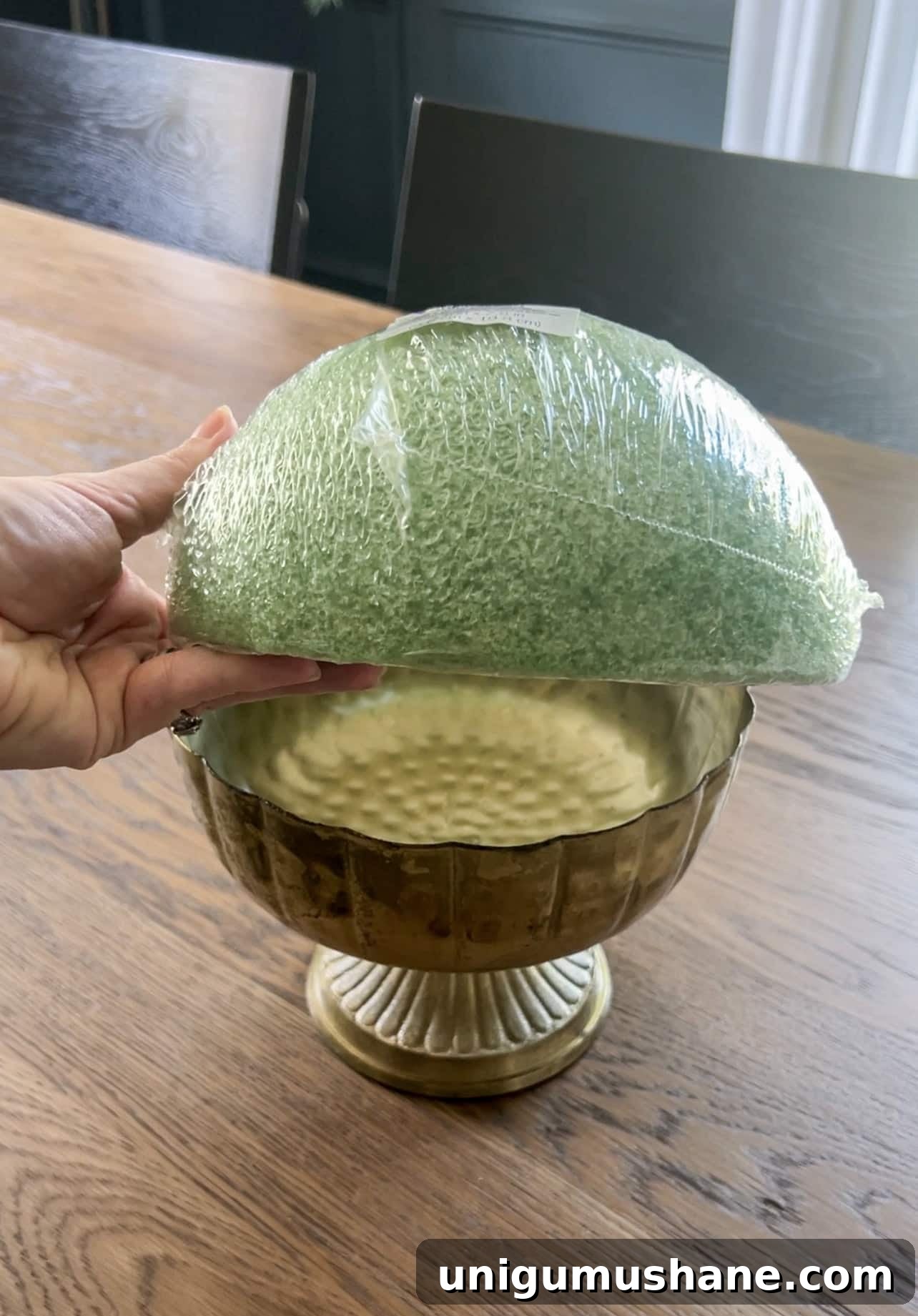
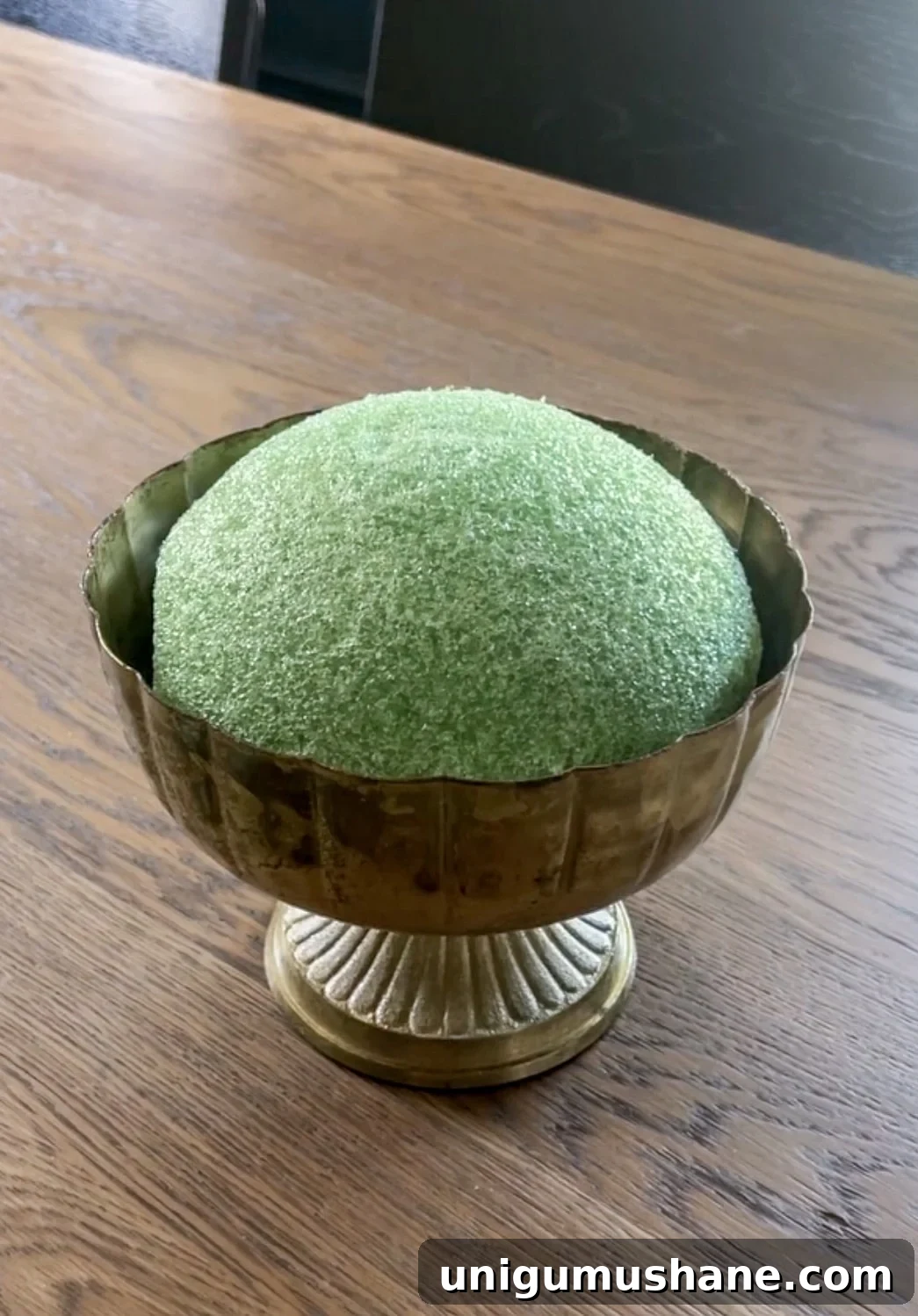
- Place the half-sphere foam into the compote or vase. Trim the foam edge with a knife if needed so it fits snugly. For fresh flowers, soak the foam completely in water before setting it in the container.
Step 3 – Build the Arrangement
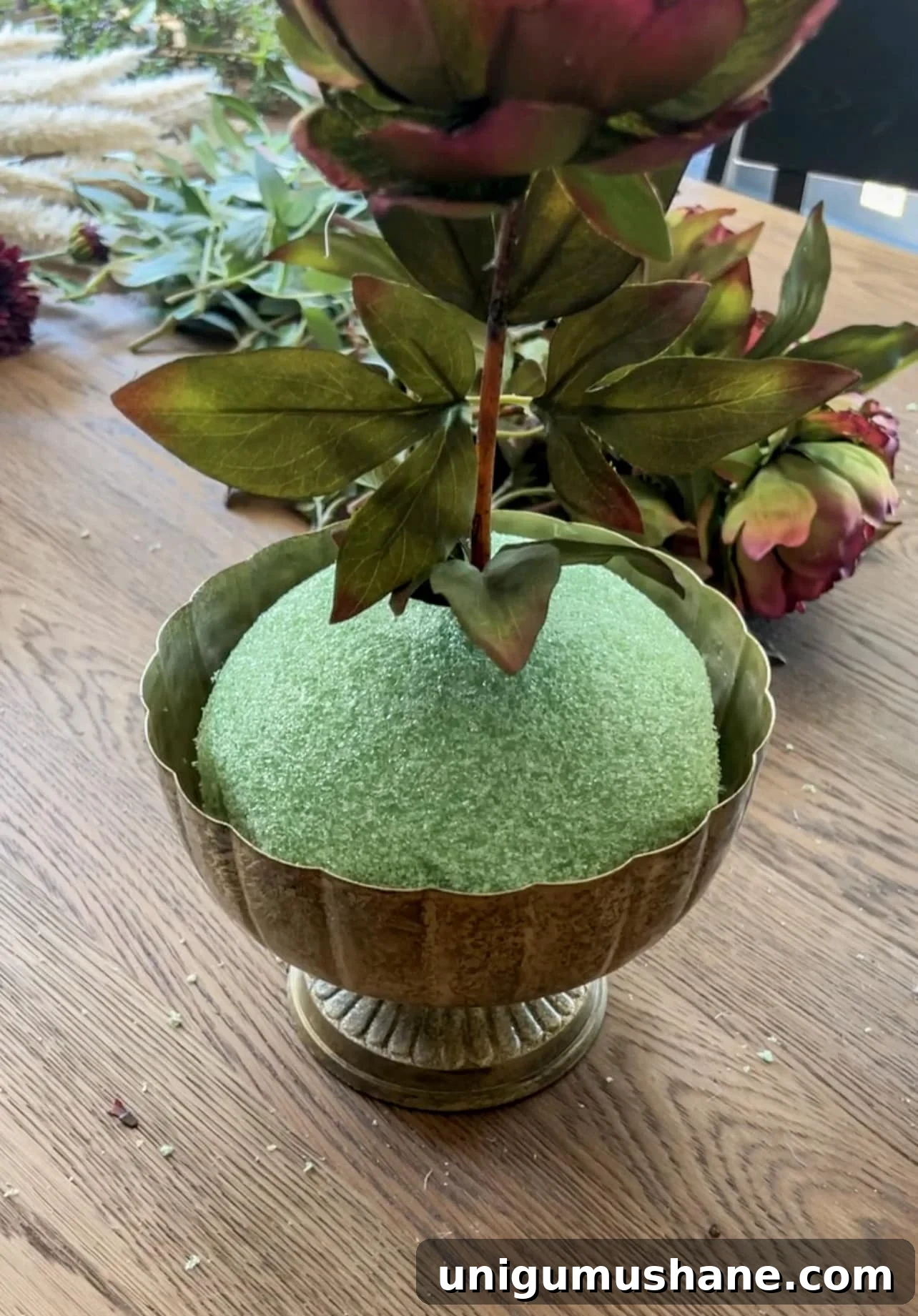
- Start with a focal bloom: Push the largest flower into the very top and center of the foam sphere. This establishes the arrangement’s height and focal point. I used a purple-and-green peony for the center.
2. Add four stems spaced evenly around the primary bloom, inserting them at about mid-height on the half-sphere.
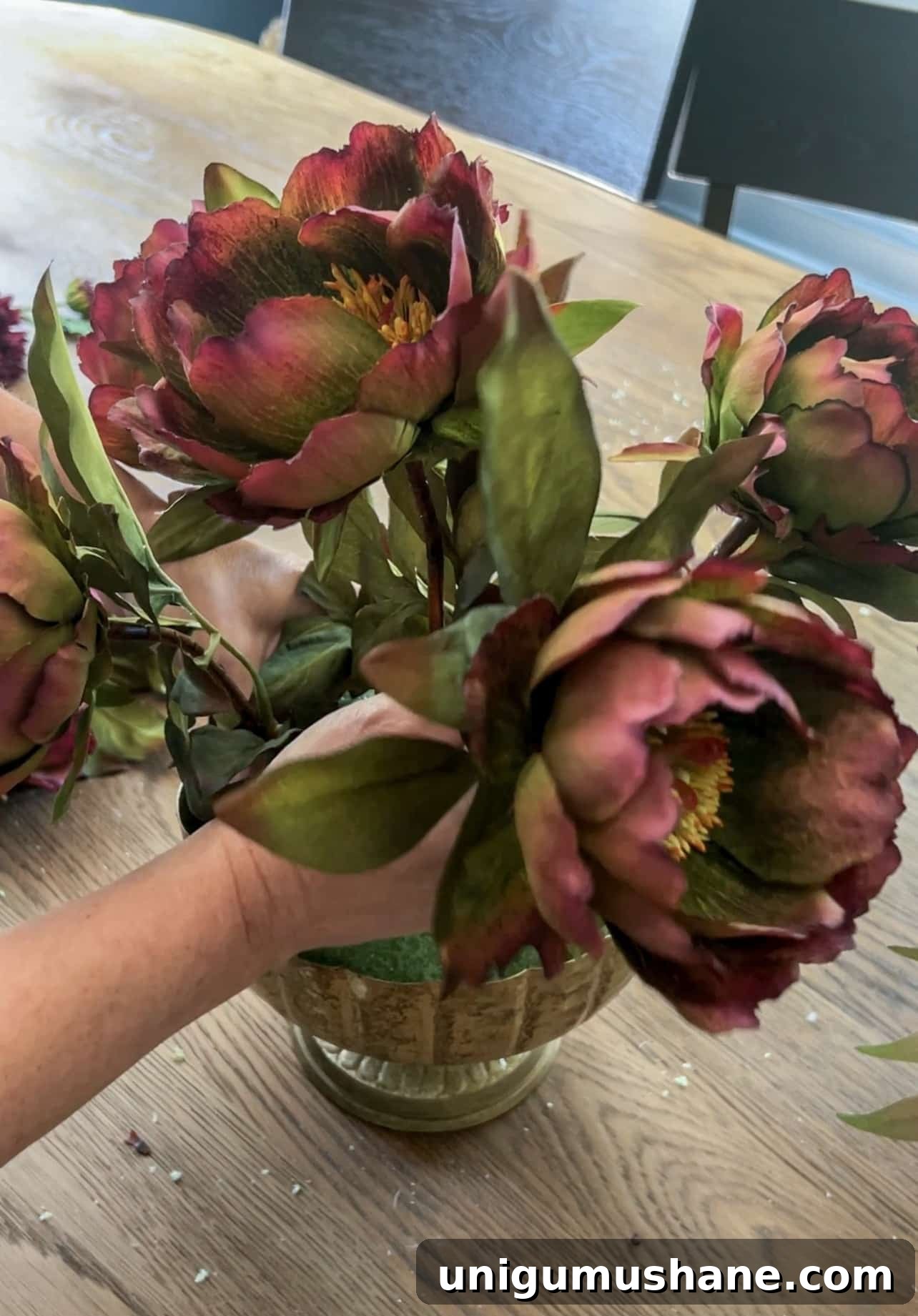
3. Fill with 6–8 more stems around the base of the foam to fill out the dome and create a balanced silhouette.
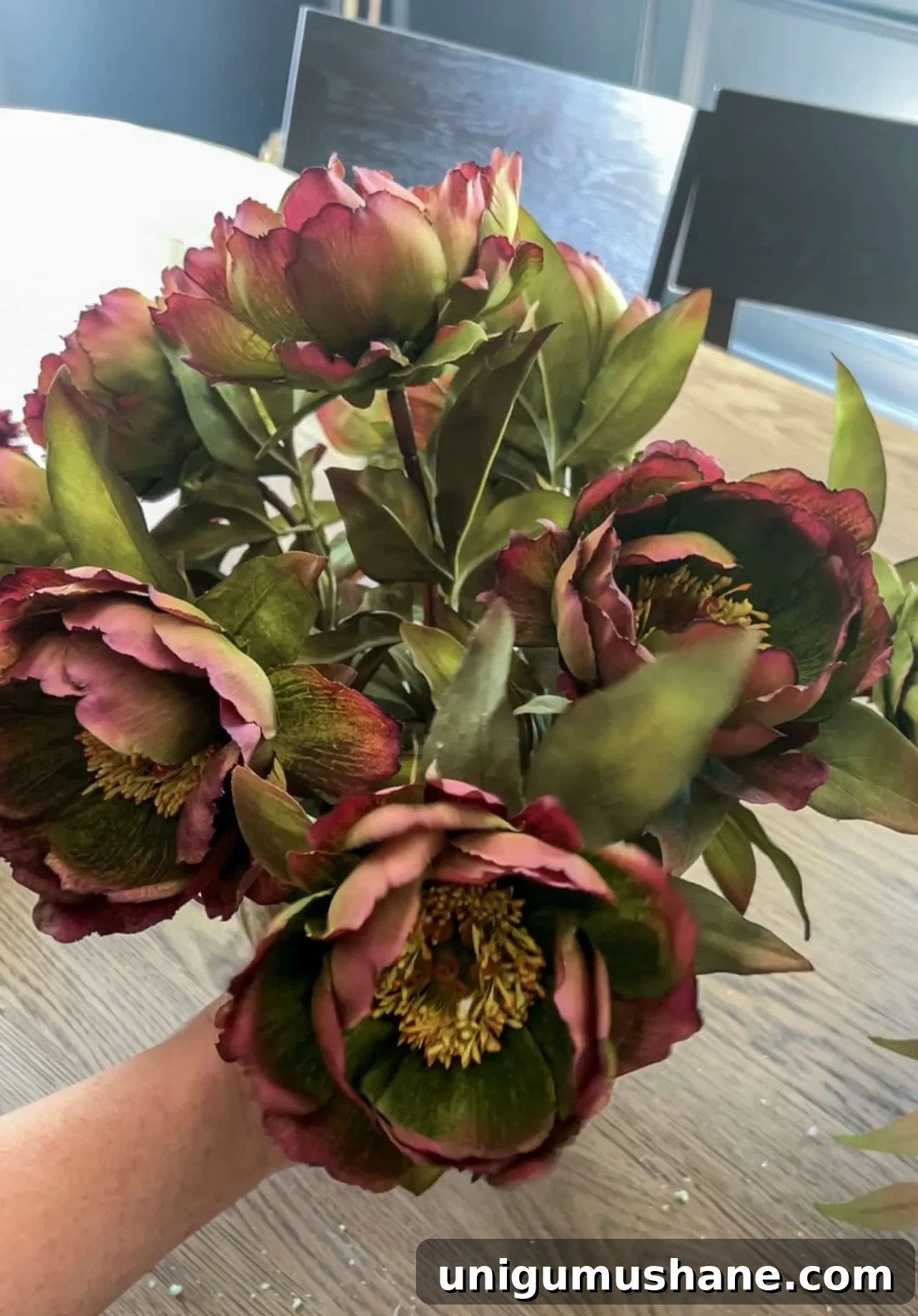
4. Layer in secondary flowers: Choose the next largest bloom as your secondary flower (for example, burgundy mums) and place them evenly between the focal stems to build depth.
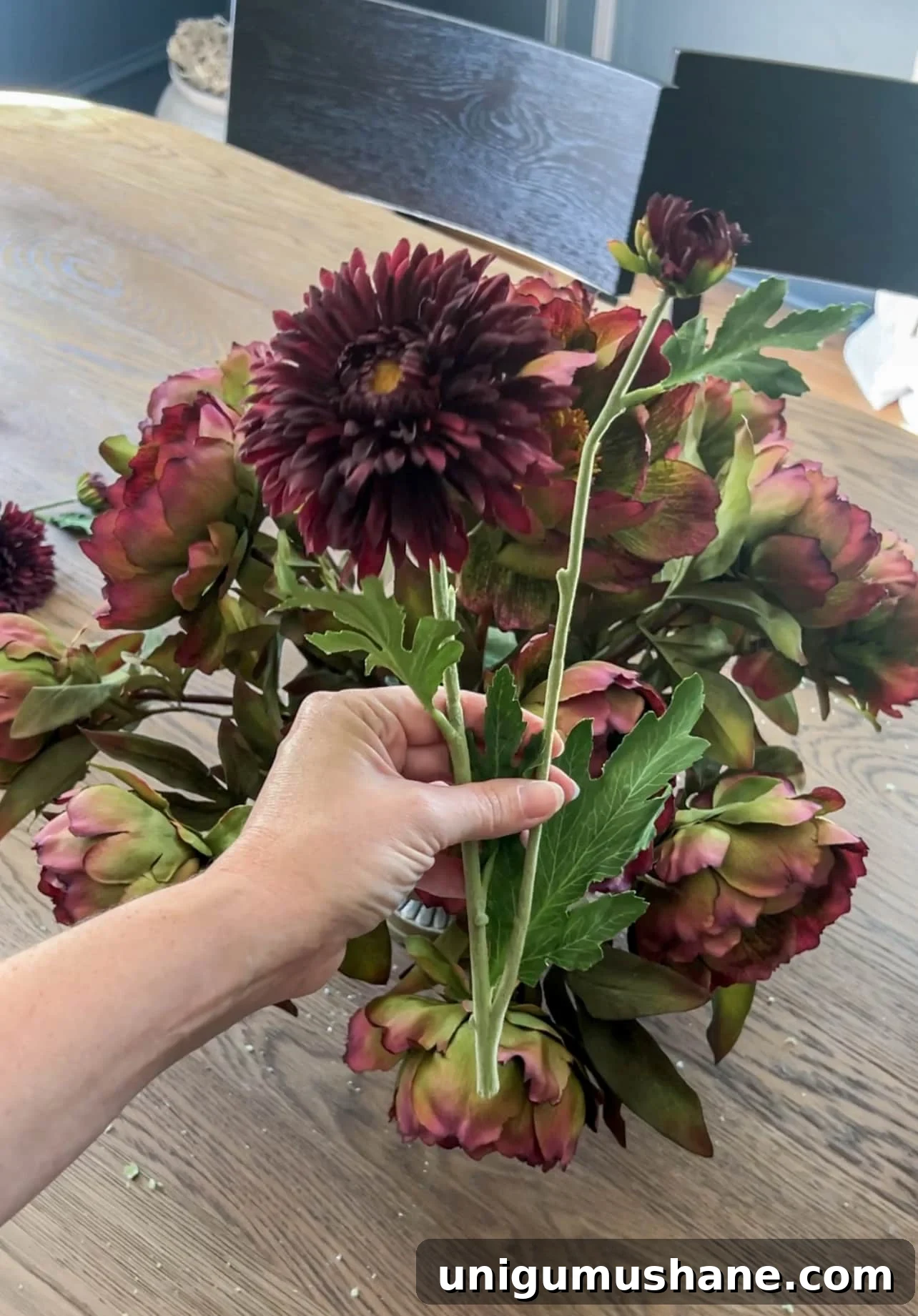
5. Space the secondary blooms to fill visual gaps and keep the arrangement balanced.
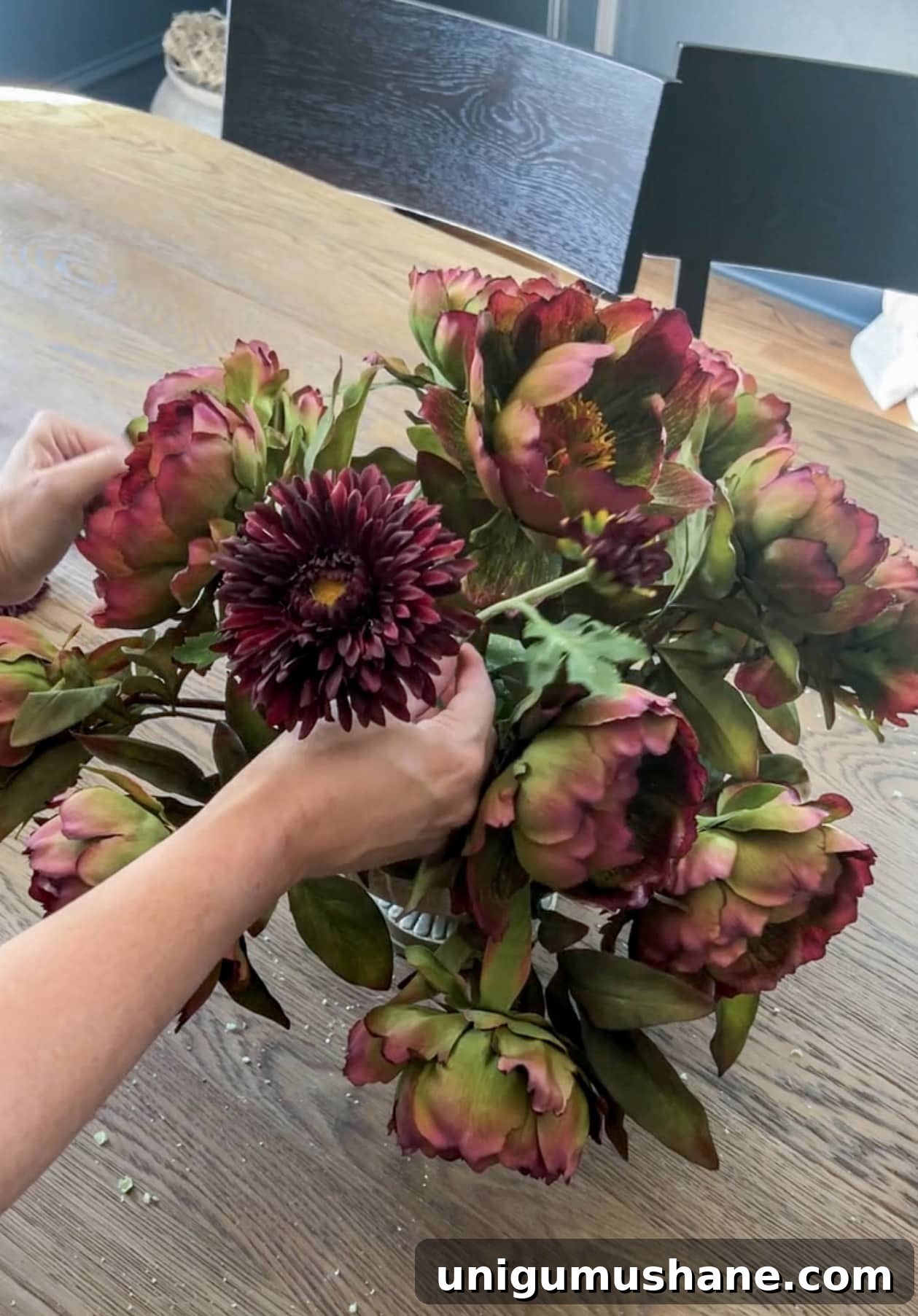
6. Add leafy stems as filler: Use ruscus or other foliage cut into shorter pieces and tuck them among the flowers. I cut three large ruscus stems into thirds for even coverage.
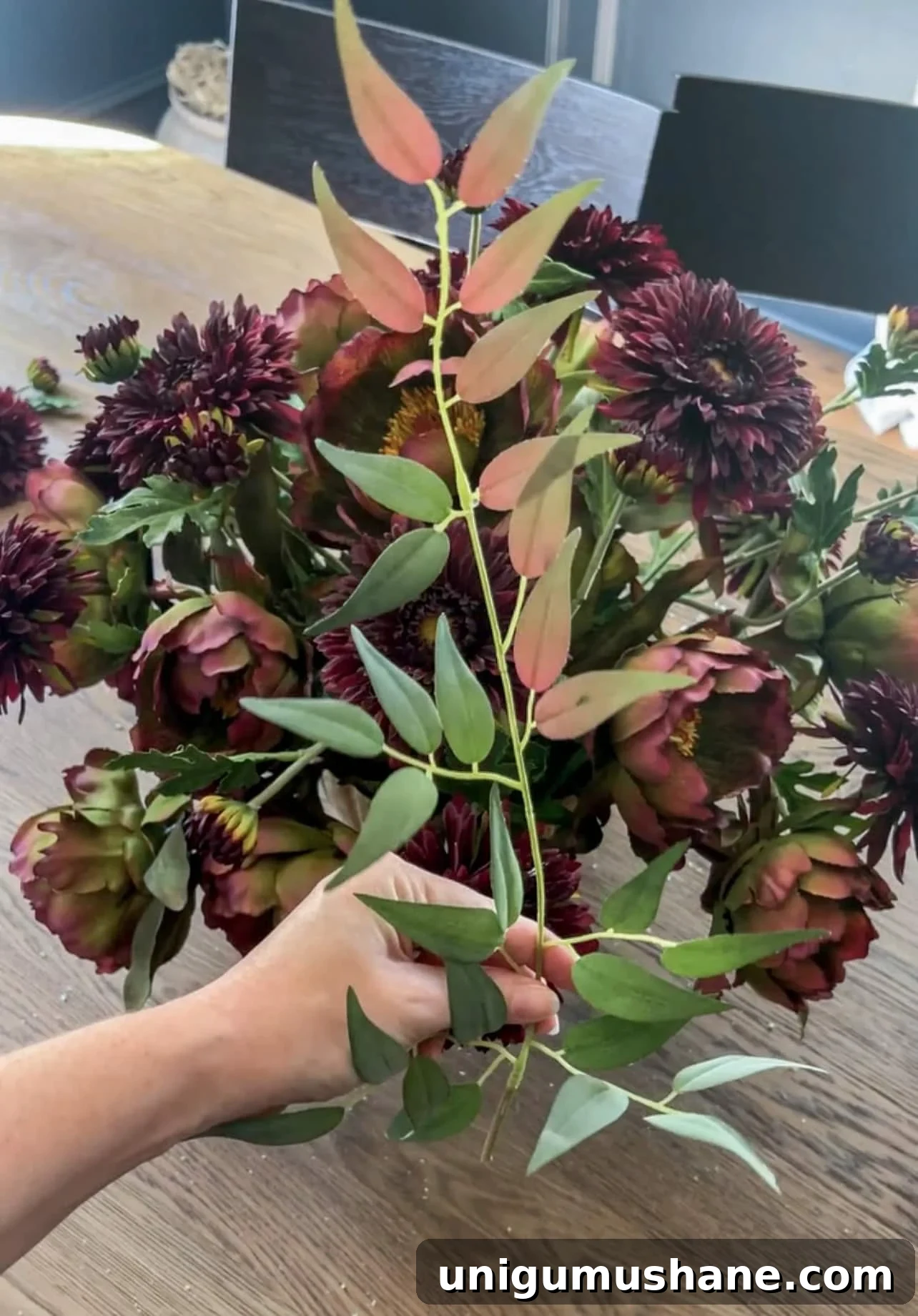
7. Fill gaps with greenery to add volume, texture, and to conceal any visible foam.
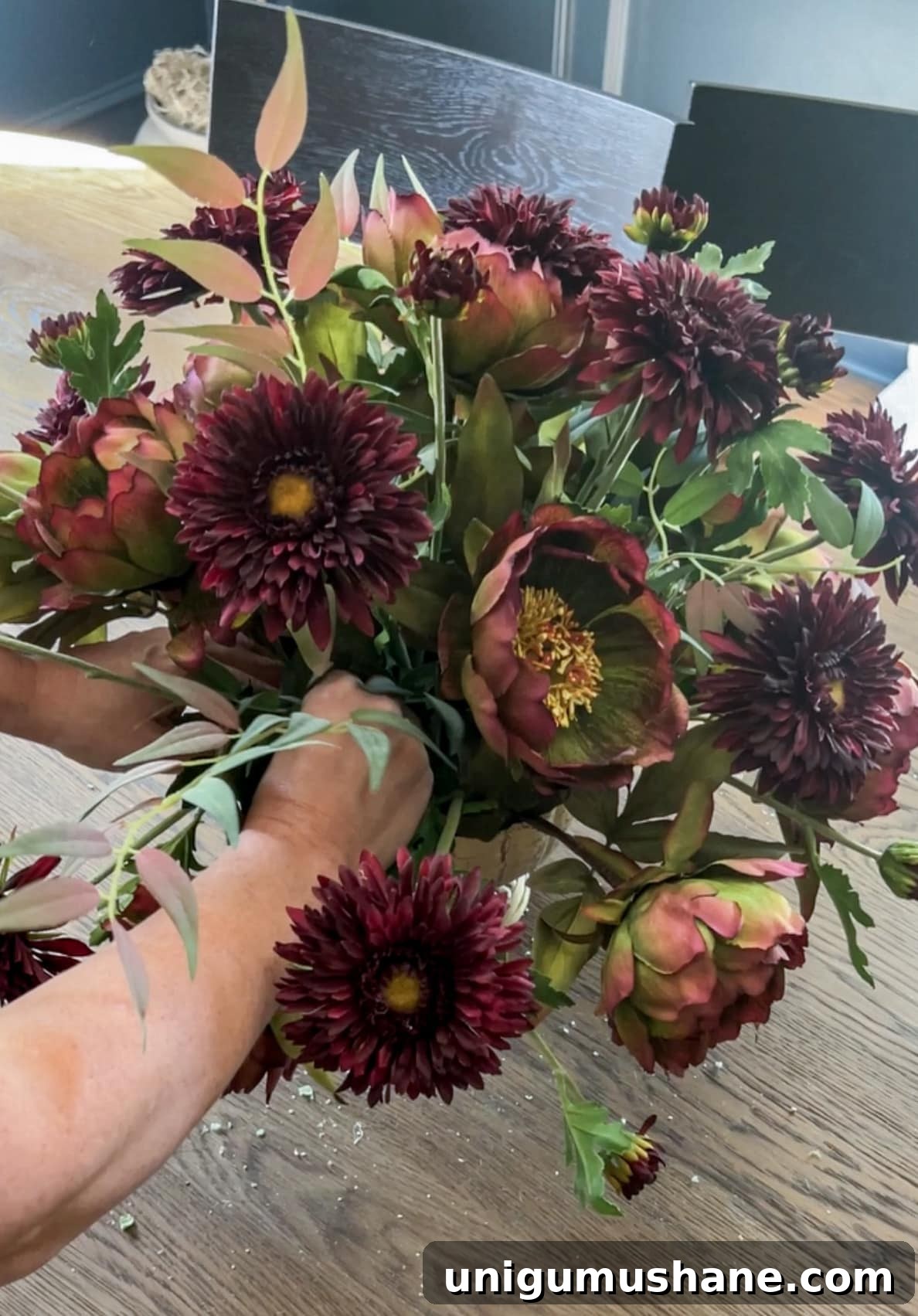
8. Hide the base: Place a few leafy stems around the rim of the container so the foam appears invisible and the piece feels finished.
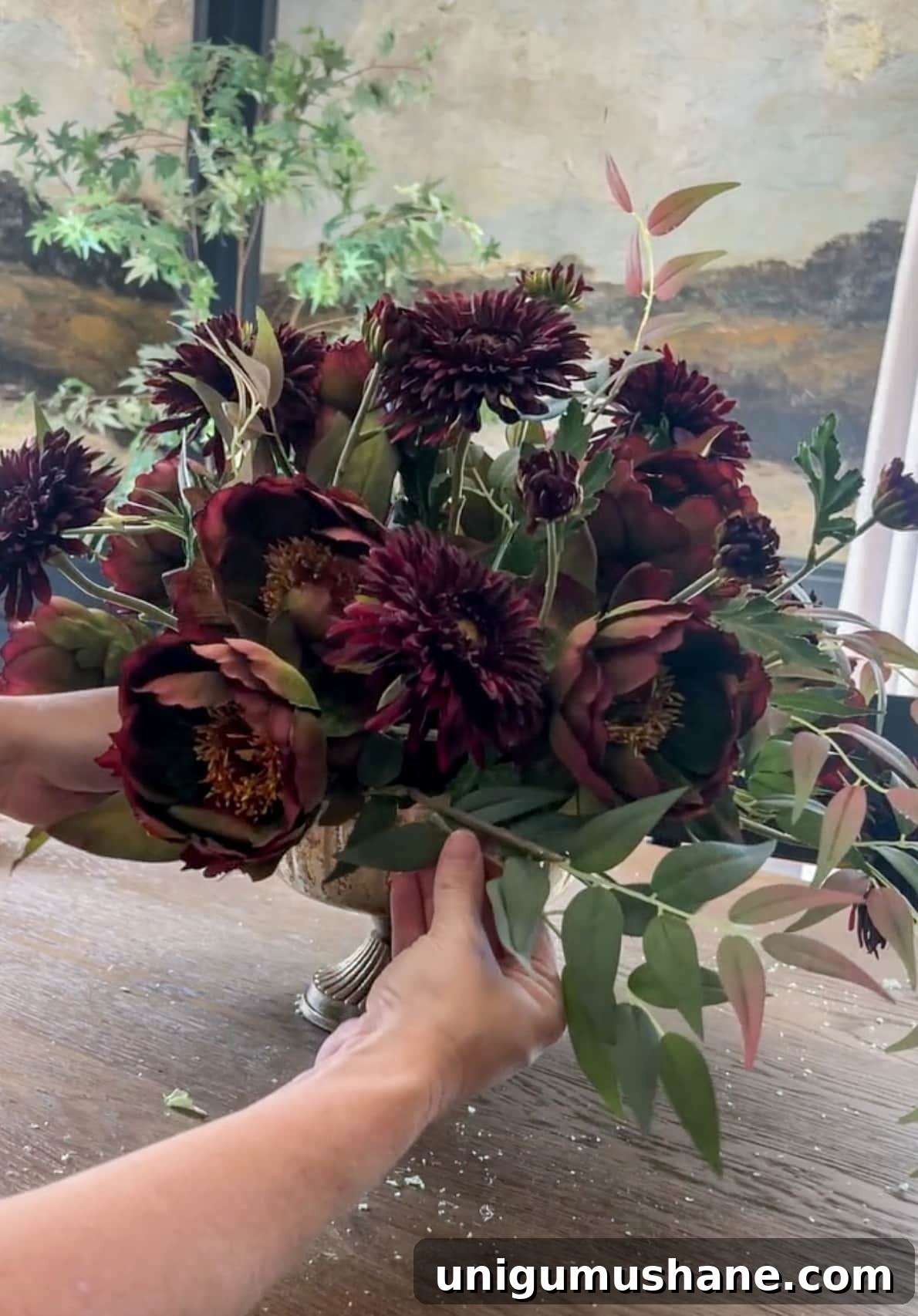
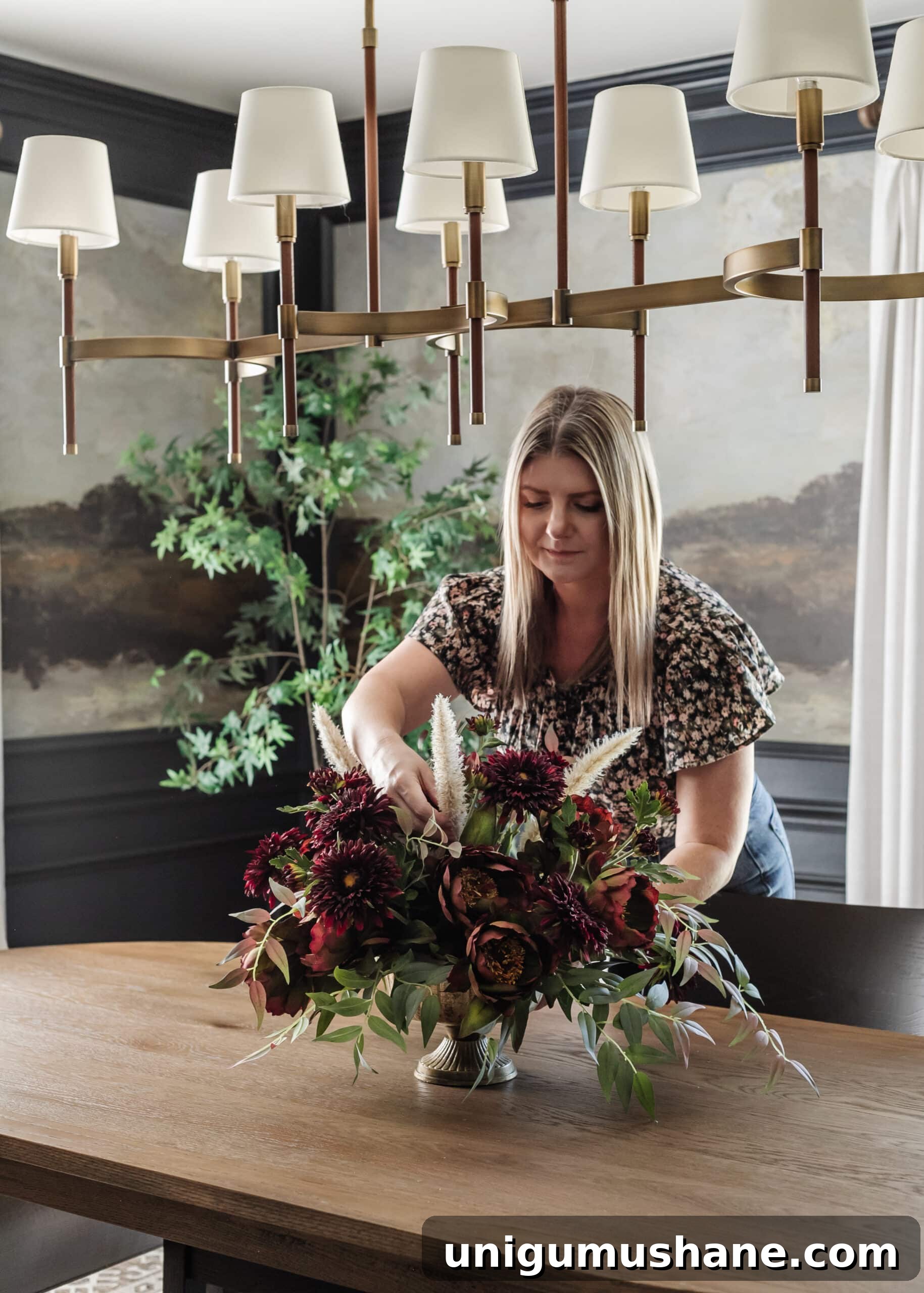
9. Add seasonal accents: Tuck in a few stems of ornamental grass or autumn foliage to introduce movement and extra color—these small touches give the arrangement a natural, layered look.
Step 4 – Care and Maintenance
If you choose fresh flowers, follow these simple care tips to keep the arrangement looking its best:
- Keep it hydrated: Check the water level daily and refresh the water when it becomes cloudy.
- Trim stems regularly: Every few days trim stems at an angle and replace the water to extend vase life.
And that’s all there is to it. I love how the purples, greens, and burgundy tones blend to create a warm, elegant fall centerpiece. Using faux stems means these arrangements will last season after season, which is a big bonus if you need durable decor for a church, event, or holiday table.
While I’m not a professional florist, I enjoy experimenting with floral design. This project is approachable for beginners and makes a lovely seasonal statement.
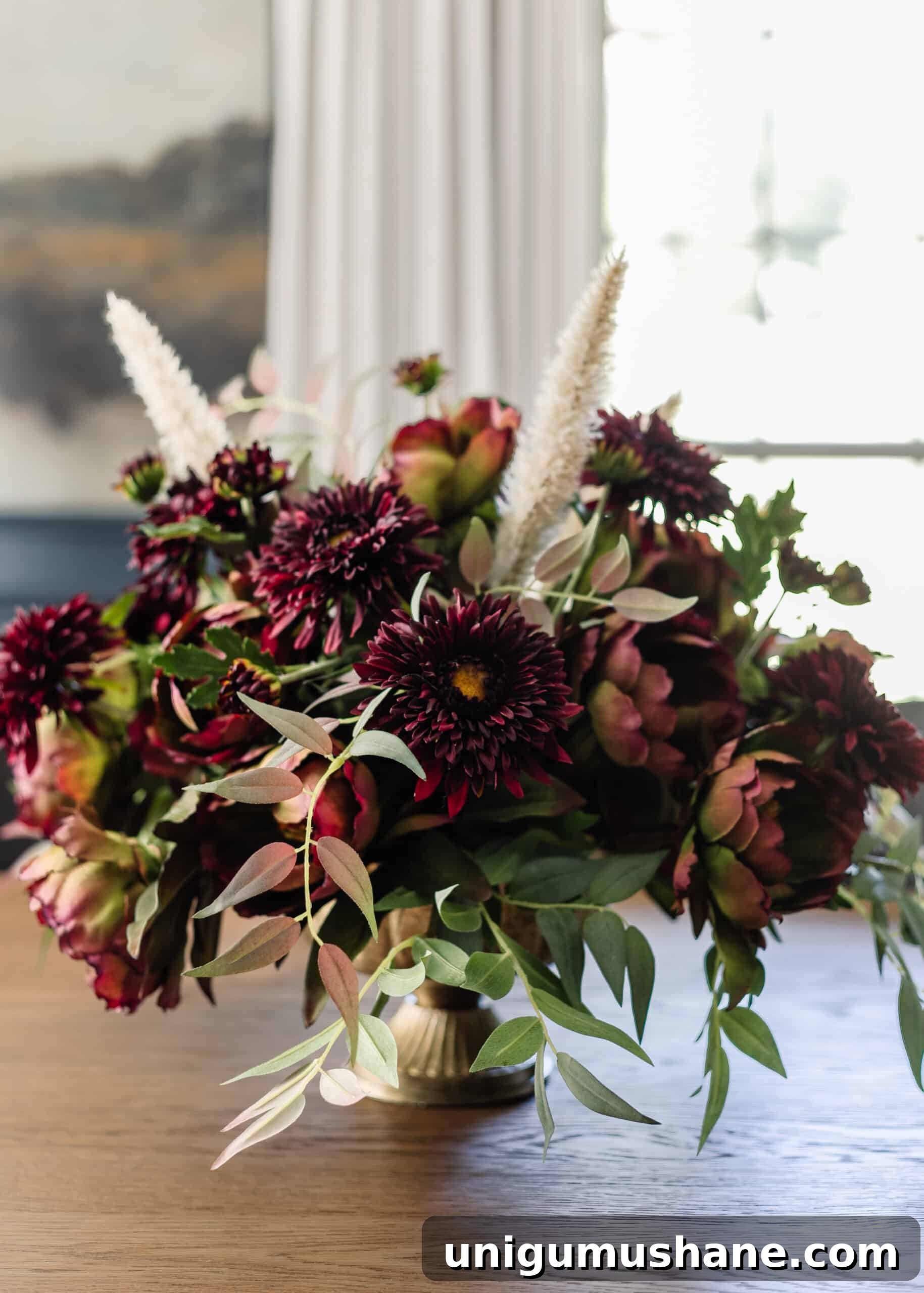
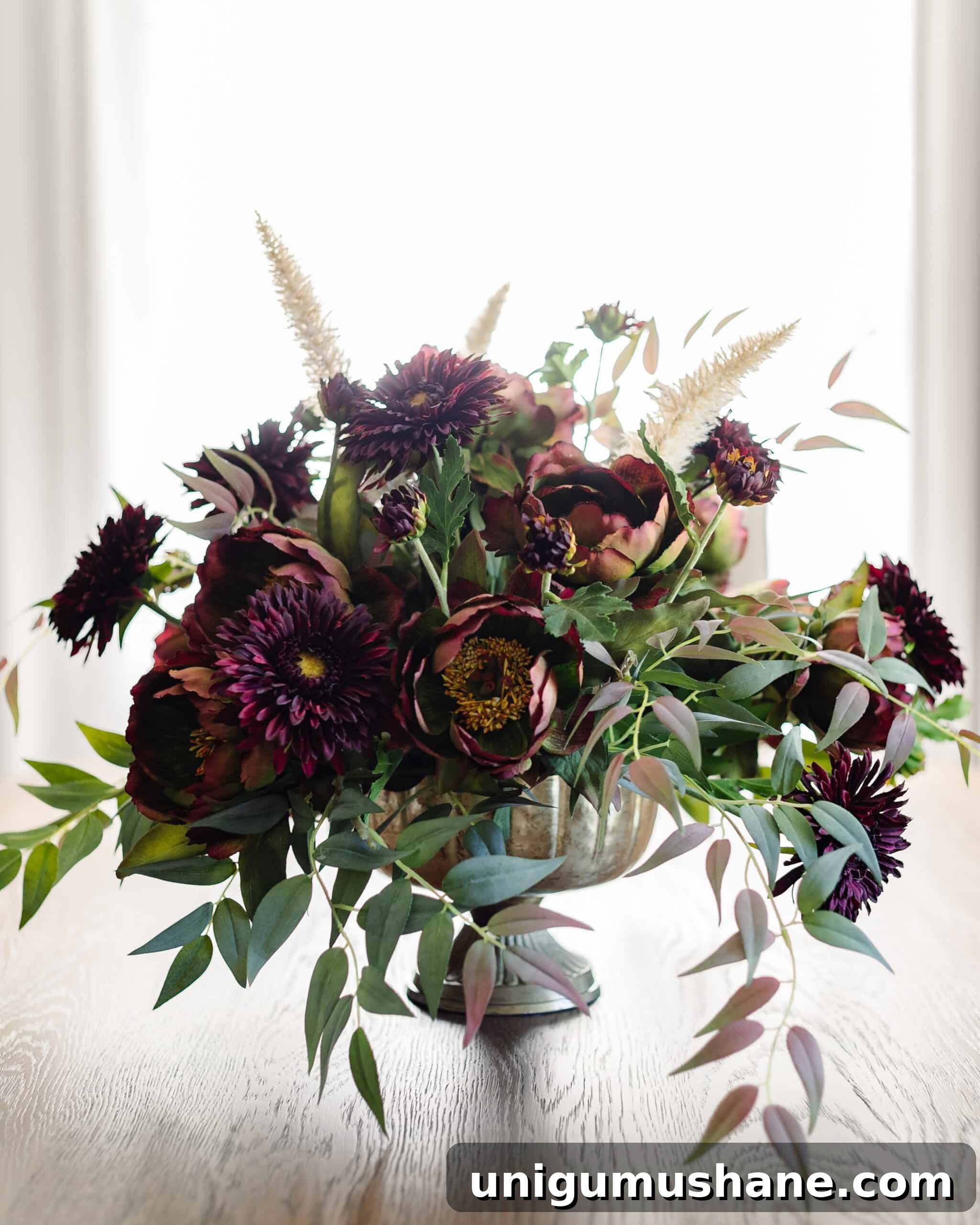
I might make one of these to keep at home for my own fall or Thanksgiving table—the colors and texture are just right for the season. If you try this DIY, experiment with different containers and flower combinations to match your style.
Have a tip or technique for floral arranging you’d recommend? I’m always eager to learn new ideas and improve my designs.
More Fall Decorating Ideas
- Simple DIY stem-and-pumpkin centerpieces and the best fall branches
- Choosing realistic faux pumpkins for seasonal styling
- Budget-friendly fall wreath ideas under $100
- Easy fall decor tips to create cozy home vibes