
I’ve always loved a good Cinderella story — the underdog who surprises everyone and comes out on top. Lately that theme has been real in our lives: a childhood friend of Robert’s, who grew up in the same rural town and learned to cook on the job, is now competing in a high-stakes culinary contest. Watching his journey from a backwoods kitchen to the regional spotlight has been thrilling, and it’s made me even more eager to rescue overlooked pieces at the thrift store.
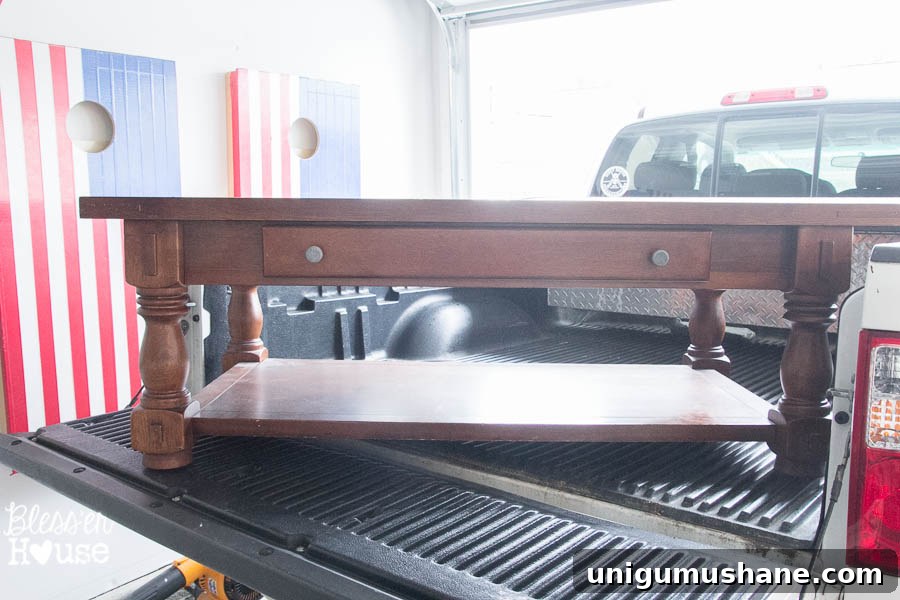
On a recent thrift run I found this coffee table for just $20. It wasn’t perfect — a noticeable gash on the corner kept it from being a ready-made winner — but that flaw was the reason it came home with me. I love taking pieces like this and giving them new life.
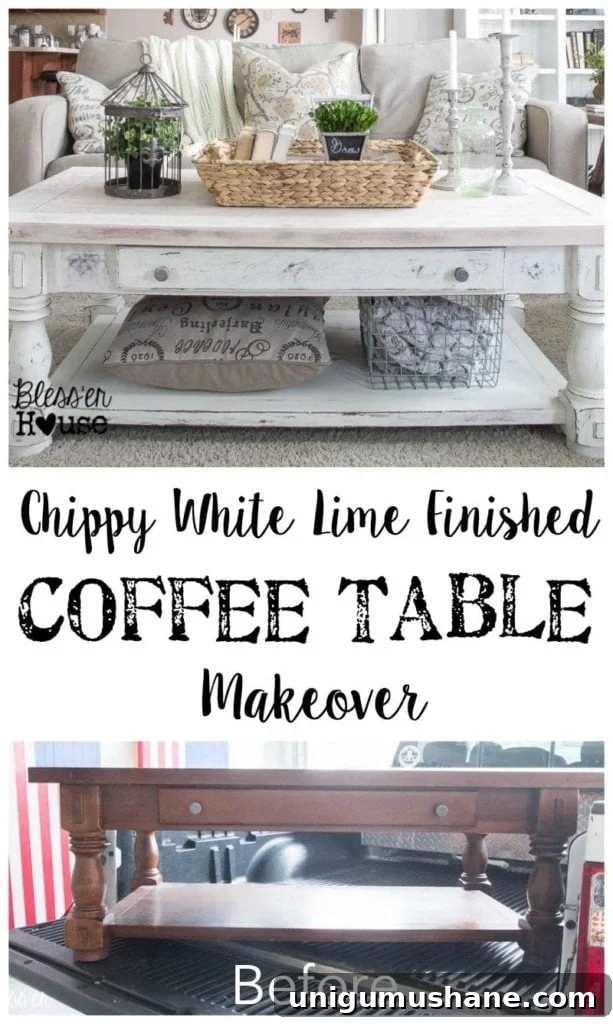
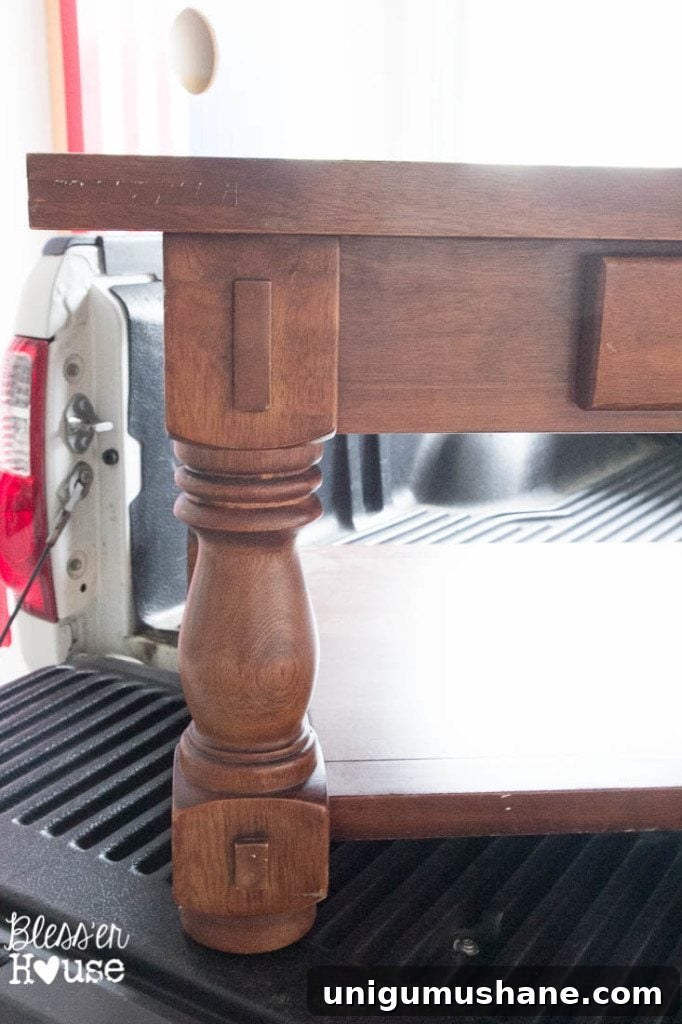
The lines and legs on this table immediately caught my eye — those turned legs have serious character. For me, the hardest part of a furniture makeover is settling on a direction. I considered stripping the top to highlight the natural wood grain, trying a Restoration Hardware-inspired salvaged finish, or going for a distressed duck-egg blue like other pieces I’ve done. I asked for feedback from my community and most people suggested a chippy white finish.
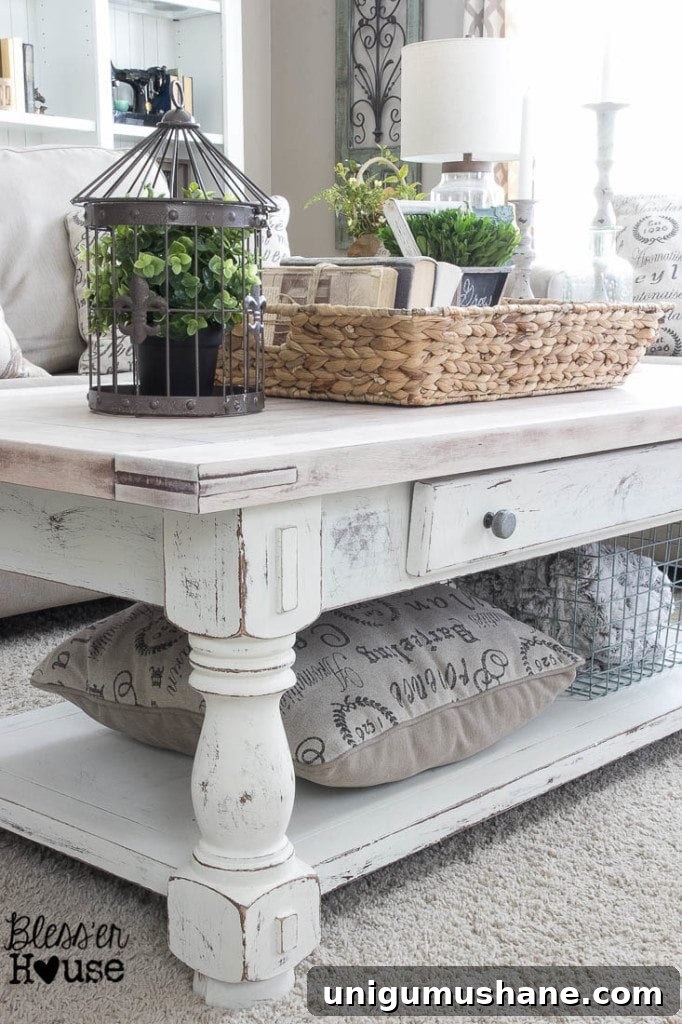
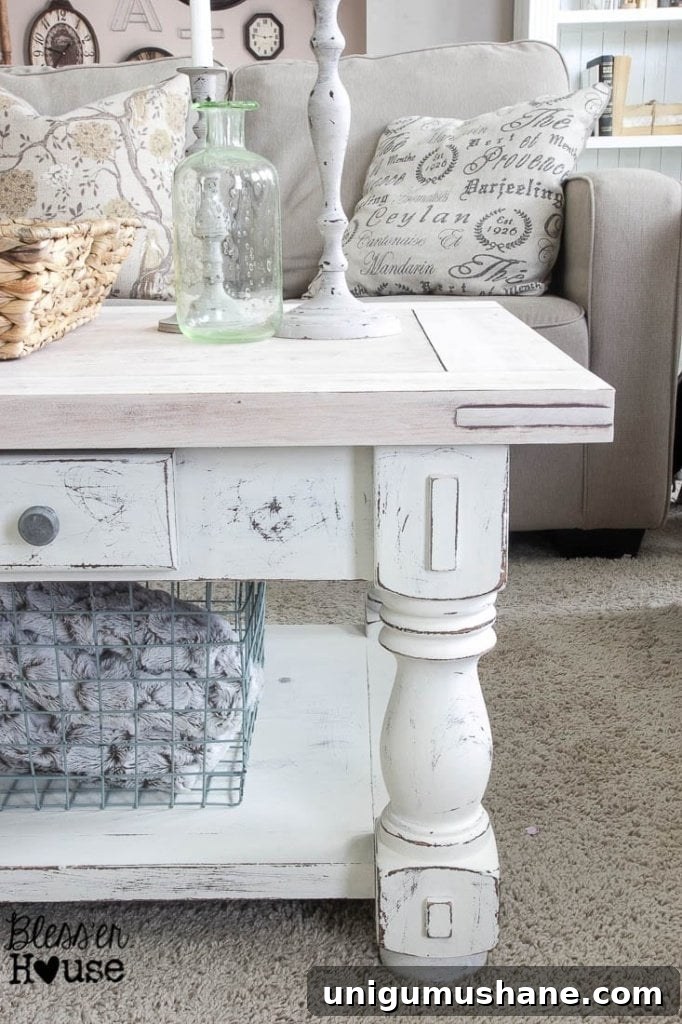
I started with several coats of Linen MMS Milk Paint. Oddly enough, the paint didn’t flake the way I expected. Instead of forcing chips with multiple products, I used sandpaper to distress the surface and create the intentionally weathered, chippy look. Sanding allowed me to reveal layers and highlight the table’s details while keeping the finish controlled and consistent.
I also sanded the tabletop because it had quite a few surface scratches from years of use. Initially I planned to stain it using my usual method, but Robert wandered into the garage while I was working and suggested leaving the wood raw. He rarely offers an opinion on finishes, so I listened.
To enhance and protect the raw wood, I applied a liming wax to the tabletop. Liming wax brightens the grain and gives a slightly whitewashed, soft look that plays beautifully against the chippy white-painted base. The result emphasizes the table’s texture while maintaining a clean, farmhouse aesthetic.
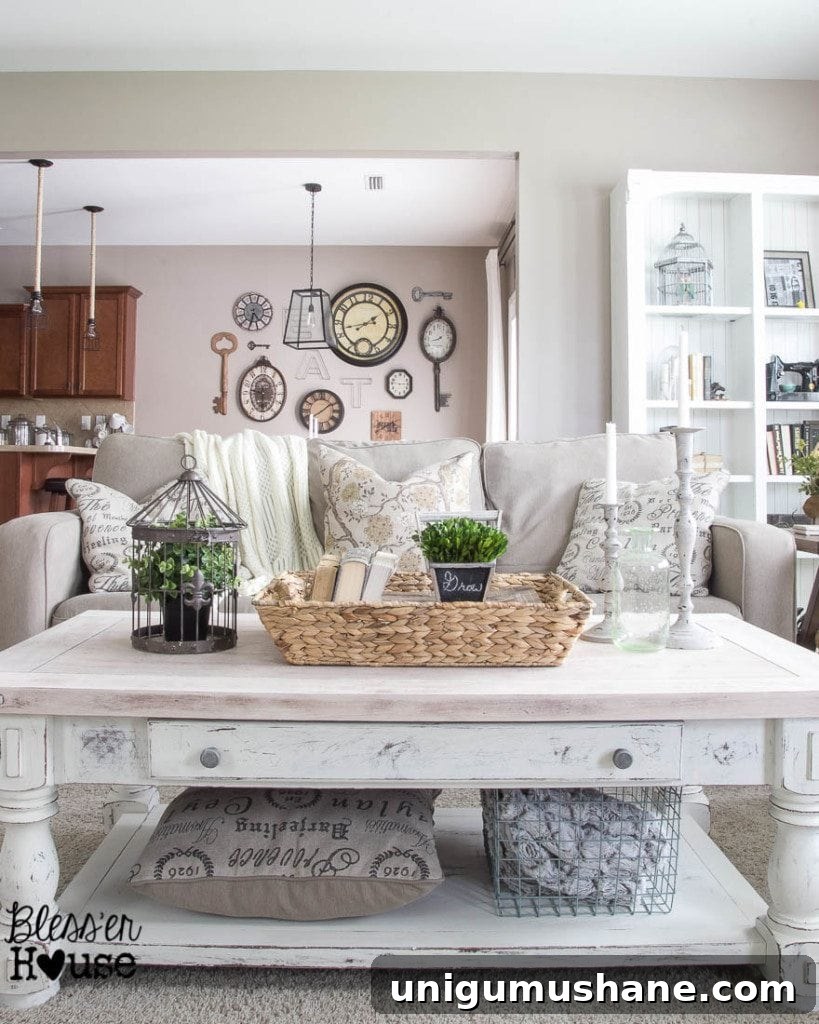
Photographs only capture so much of the finish — in person the limed top is smooth and full of visible grain. It contrasts nicely with the distressed white base and adds an organic warmth that feels intentional rather than overworked. Styling the table in my living room helped me see how it would live in a real home setting.
I almost kept the table for myself — it fit the space nicely — but I decided to pass it on to a new home. There’s something satisfying about rescuing a piece and sending it off to continue its story with someone else. Small imperfections like that corner gash become part of the character rather than flaws to hide, especially after a makeover.
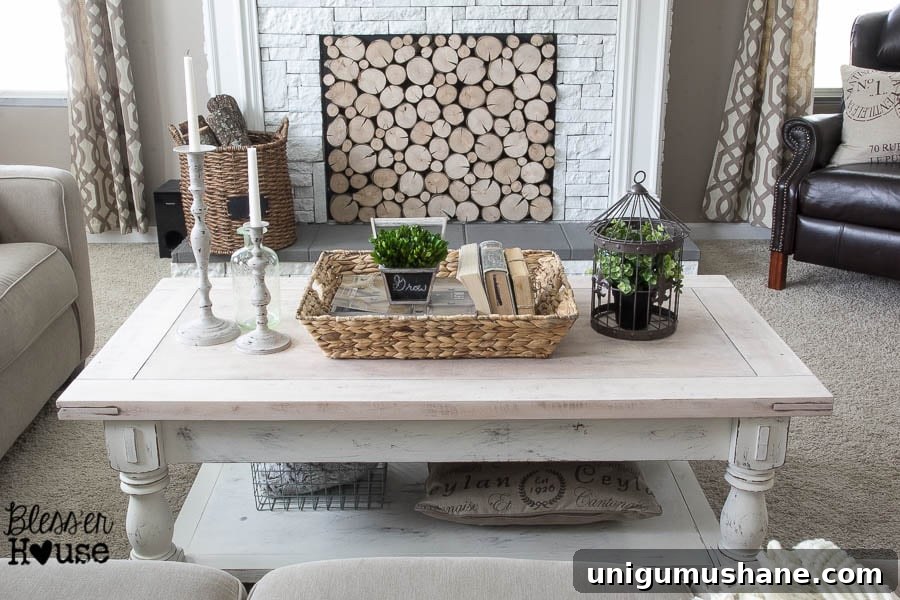
One practical note: because our living room still needs a rug and a few finishing touches, I haven’t published a full “Living Room Reveal” yet. Small details like an area rug can change how a space reads, and I’m refining that room slowly so it feels complete. In the meantime, I enjoy placing finished pieces in the space to test the look.
Alongside the joyful parts of design, there’s always real life: a stray sticker on the carpet, or a dog who leaves little dents in the loveseat because she insists on curling up like a cat. These details make a house feel lived-in and authentic, and they make the before-and-after stories more relatable.
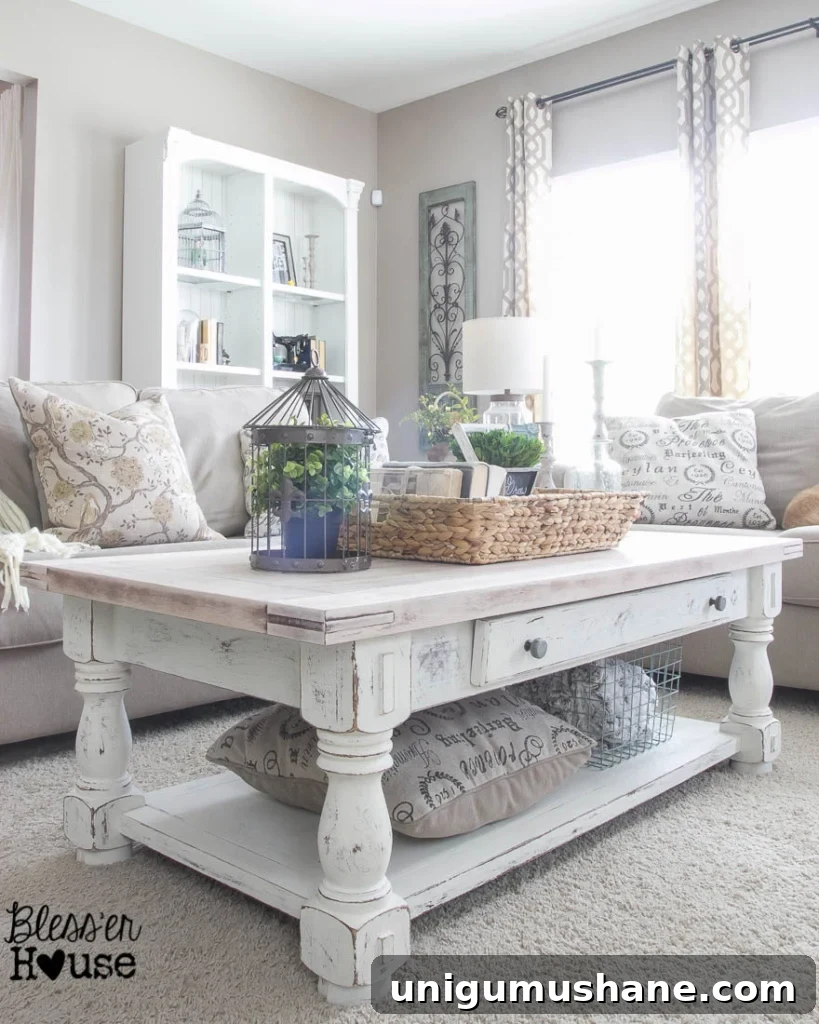
If you enjoy furniture makeovers, I’ve documented many past projects that show different techniques and finishes. This thrifted coffee table is a good example of how a simple, inexpensive find can become a standout piece with a chippy white base and a limed wood top. It’s balanced, durable, and full of character.
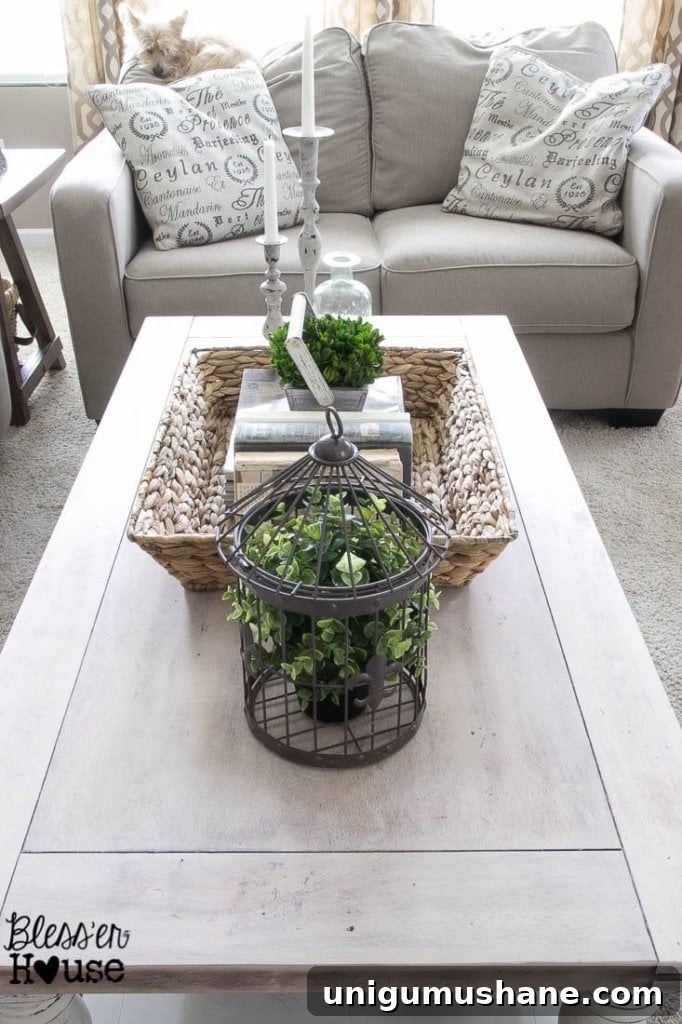
Let me know what you think — do you prefer a painted, distressed base with a limed top, or a fully stained, natural look? I’m always excited to hear which finishes people love and what types of thrifted pieces you’d like to see transformed next.

Follow: Facebook | Pinterest | Instagram | Twitter | Google+ | Bloglovin | Hometalk