
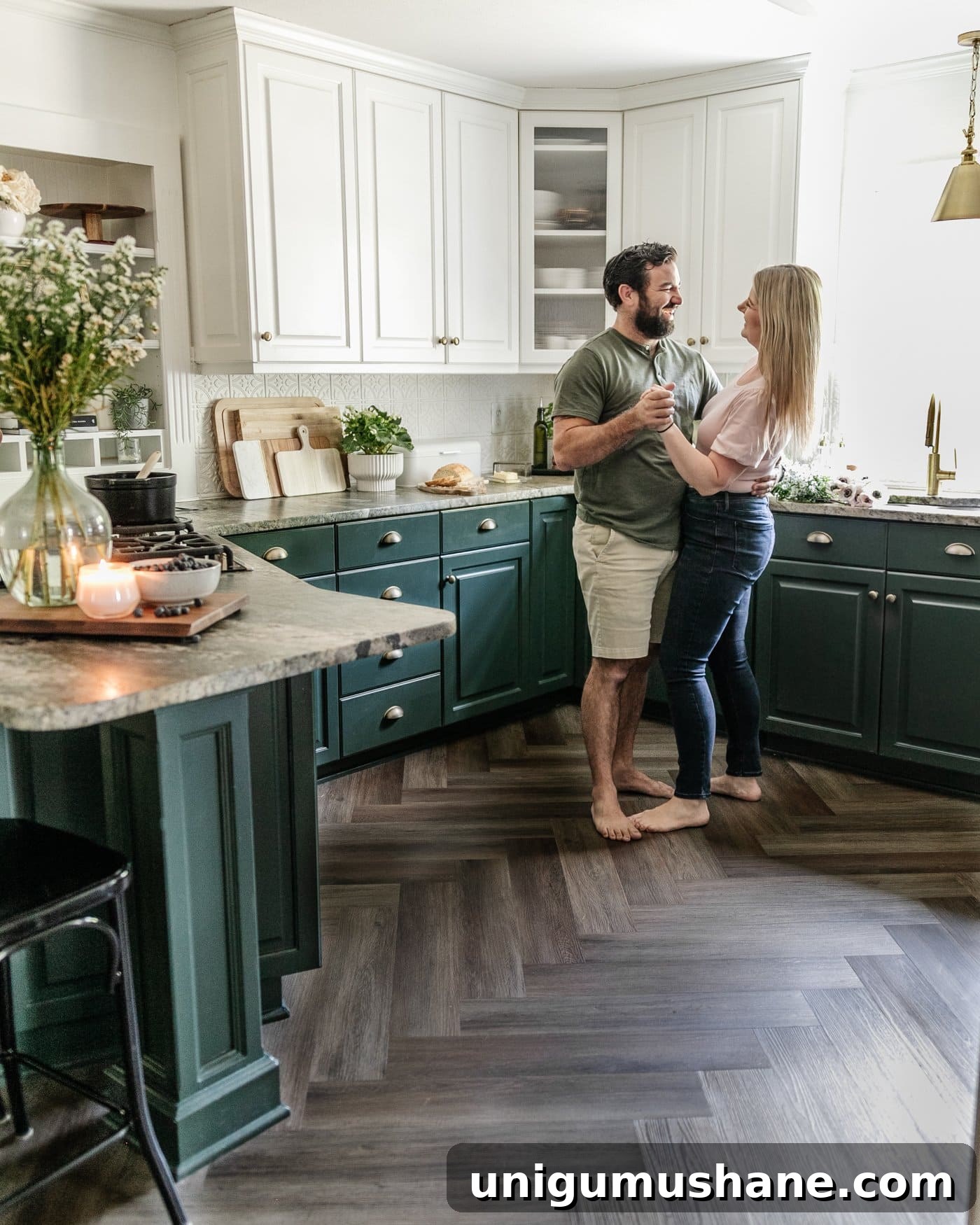
This post is sponsored by ProCore Floors.
A corner breakfast nook and kitchen refresh featuring herringbone LVP flooring that transformed the space on a budget.
Today’s reveal of our corner breakfast nook and the kitchen is finally here—and after a no-demo makeover, the difference is unbelievable. I’ll share full budget and timeline details in another post, but here are the highlights, design choices, and why the flooring made such a dramatic impact.
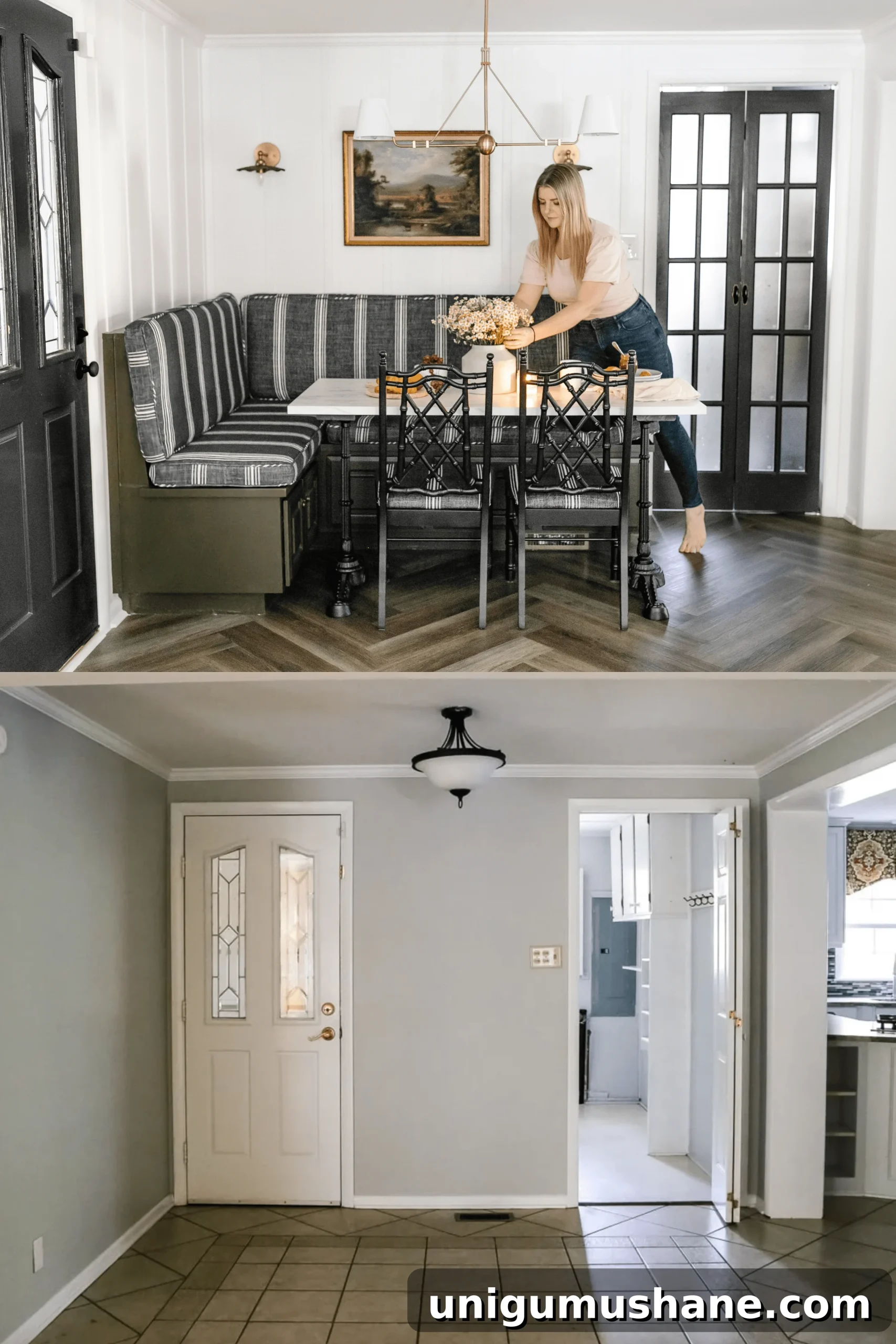
Breakfast Nook Sources & Budget Breakdown
Kitchen Sources & Budget Breakdown
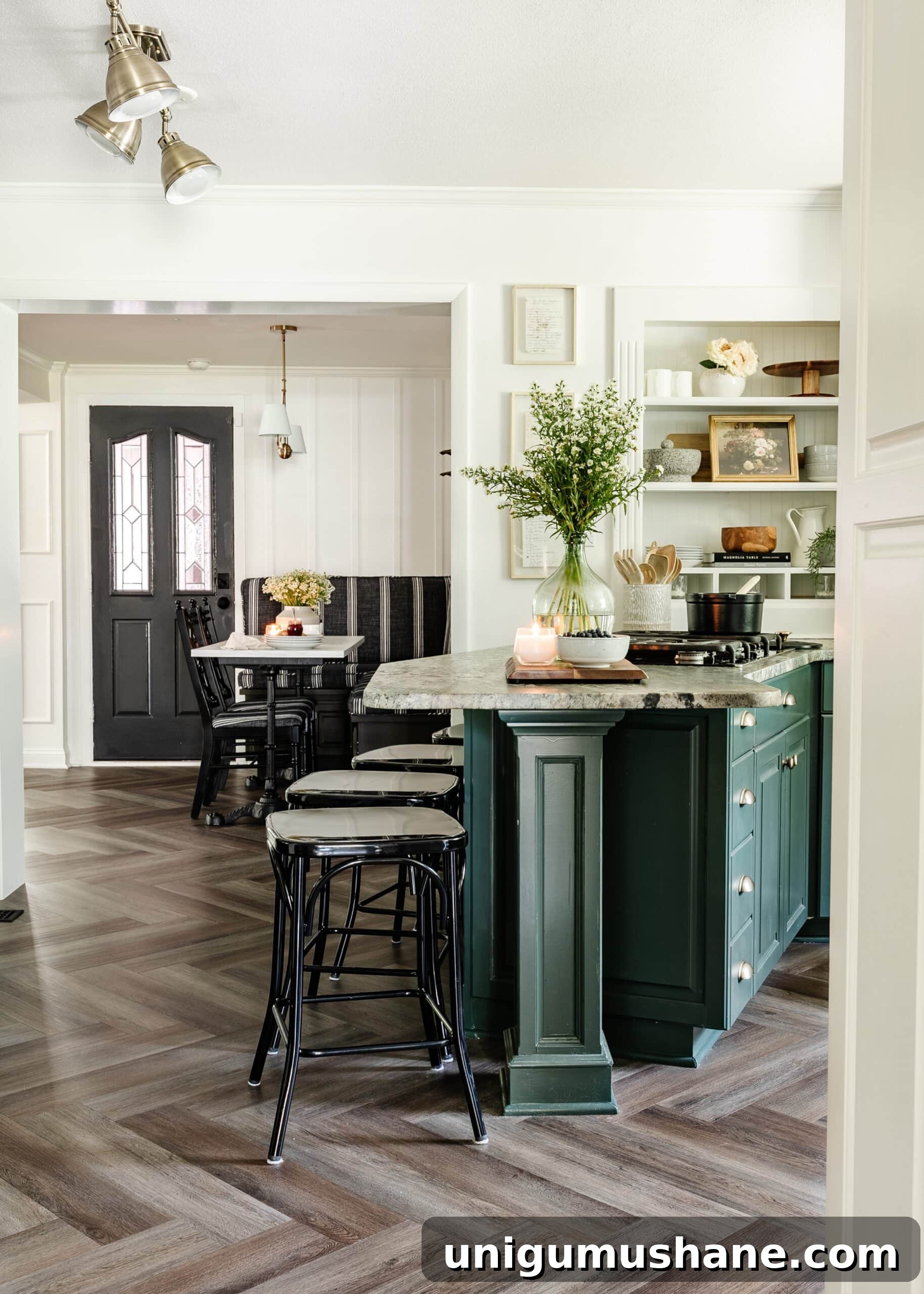
We pulled inspiration from Facebook Marketplace finds, breakfast nook ideas, and some creative, non-demo solutions to work with the existing layout. A lot of the makeover came down to paint, styling, and—most importantly—new flooring. We installed ProCore Floors’ herringbone luxury vinyl plank (LVP) in the Brookewood tone from Lowe’s, and the effect is immediate: the dark wood tones ground both rooms and the contrast actually makes the space feel larger. If you prefer something lighter, the Ashewood color is a beautiful, airier option.
Corner Breakfast Nook Before and After
This small corner nook stumped me for years—its tight size and odd traffic flow made it tough to furnish. After many idea revisions, a single suggestion—move a door—unlocked the layout. Once the space was functional, the styling and finishing touches brought it to life.
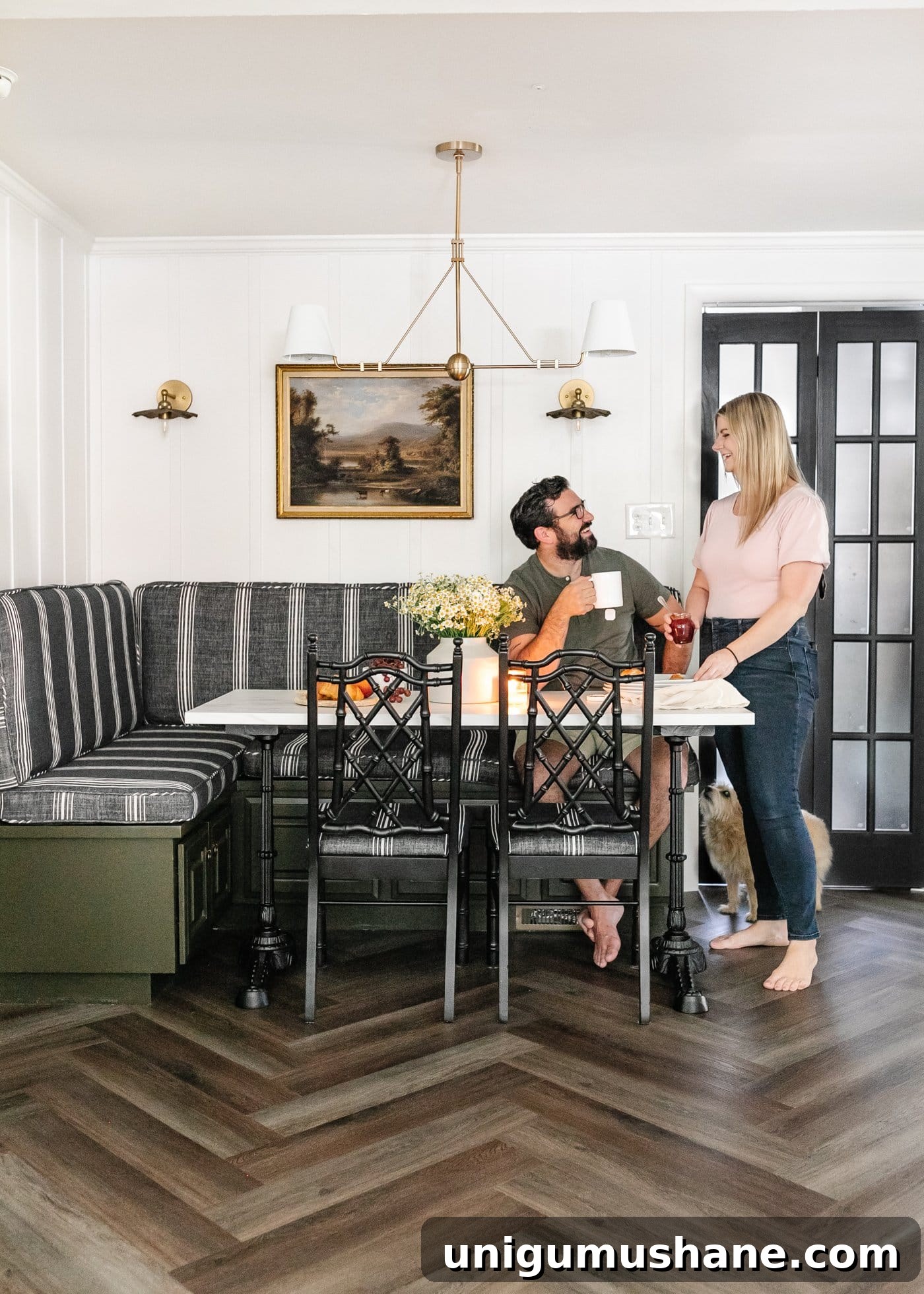
Why We Chose Luxury Vinyl Plank Flooring
We’d planned to replace the old tile eventually because it was slippery and had caused multiple falls, especially when tracked in water from our backyard pool. Removing tile and the underlying mud bed would have been costly, messy, and time-consuming. Instead, we discovered we could float ProCore Floors’ herringbone LVP directly over the tile—no demo required. That DIY-friendly installation, durability, and slip improvement sealed the decision for us.
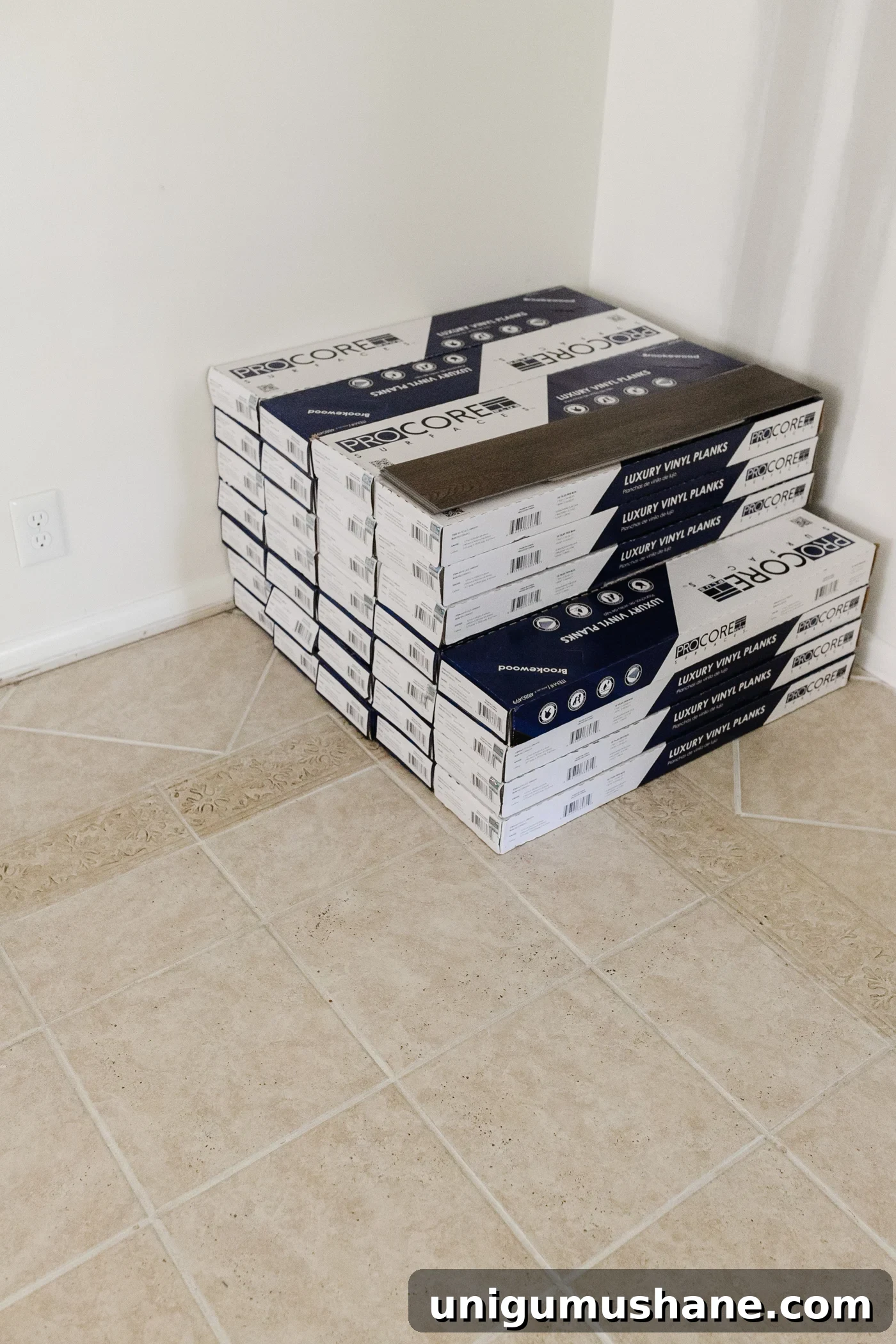
LVP Flooring Benefits
- Waterproof and low-maintenance
- Stain- and scratch-resistant
- Durable for kids, pets, and high traffic
- Better sound absorption than many hard floors
- Much easier and quicker to install than tile or hardwood
We previously used a different ProCore LVP style in a neighbor’s rec room and were impressed with how well it wore and how straightforward the install was, which gave us confidence for this project.
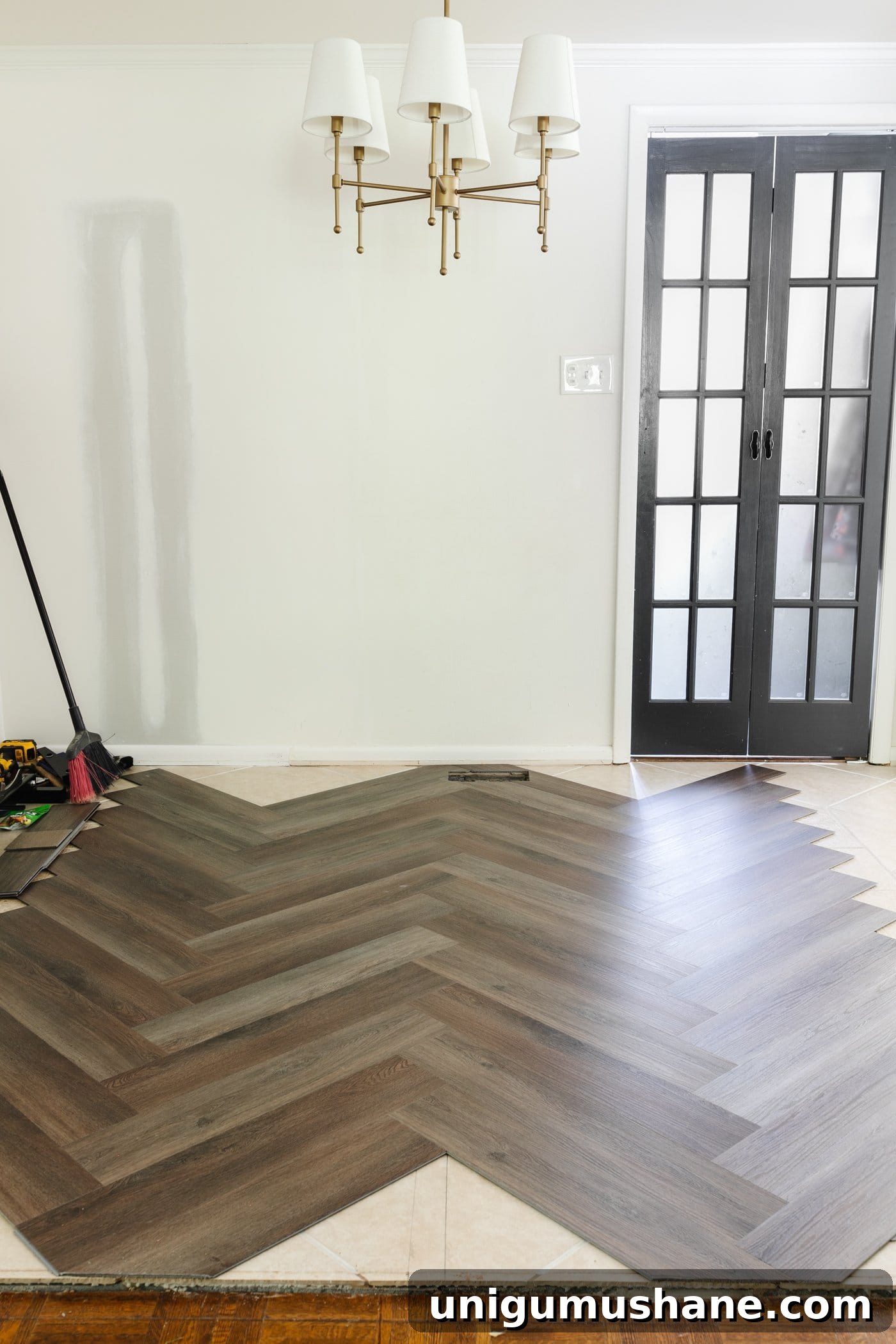
When to Install Floating Vinyl Flooring Over Tile
While removing old flooring is often ideal, floating LVP over tile is an excellent option when:
- You need a DIY-friendly solution
- Budget or liveability prevents a full demo
- You want hardwood looks with durable, low-maintenance performance
- You need a cost-effective and fast upgrade (ProCore LVP often starts at accessible price points)
After living with the new floors for a month, we love how easy they are to clean and how much less slippery they feel than the old tile.
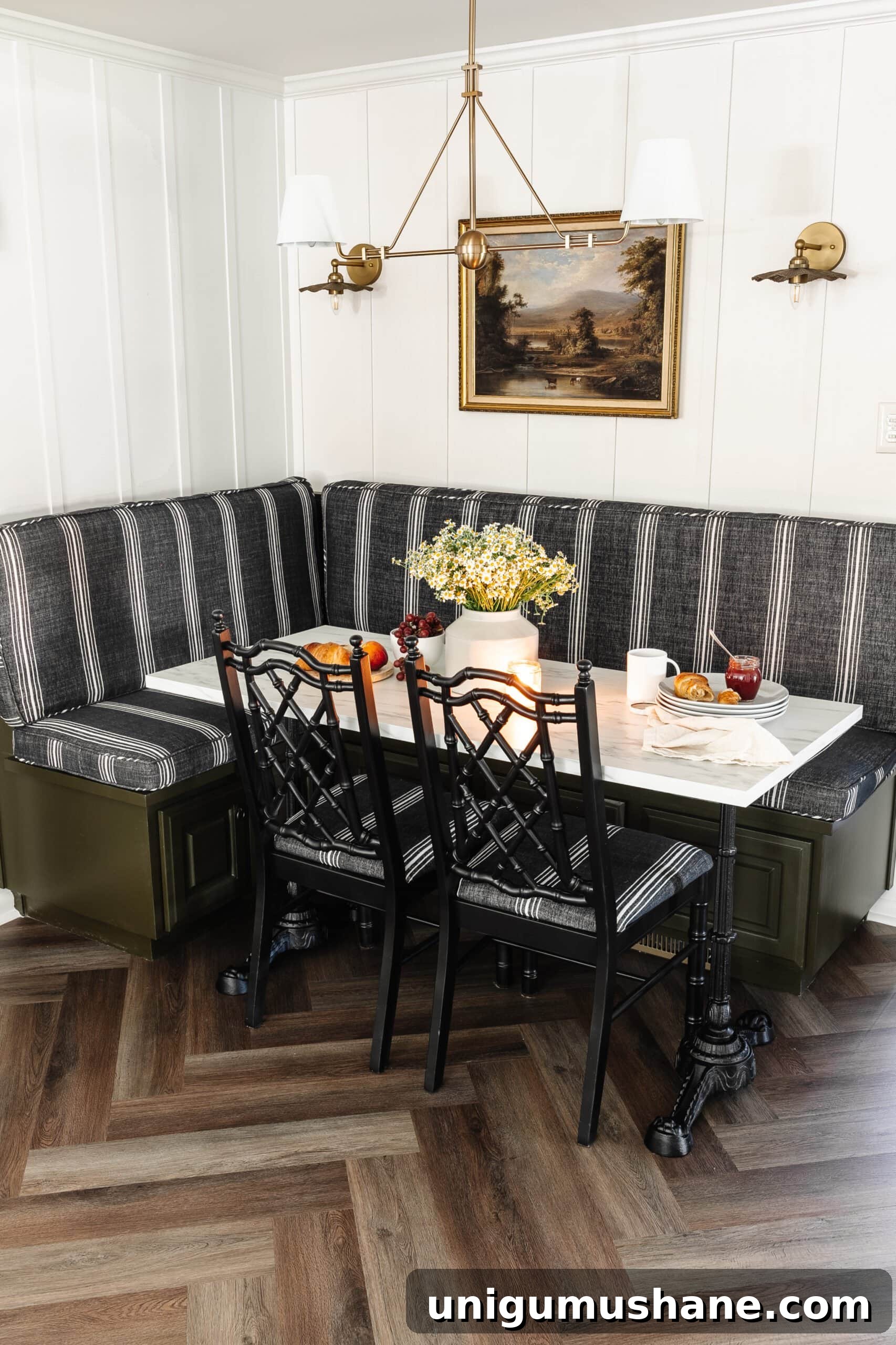
Corner Banquette
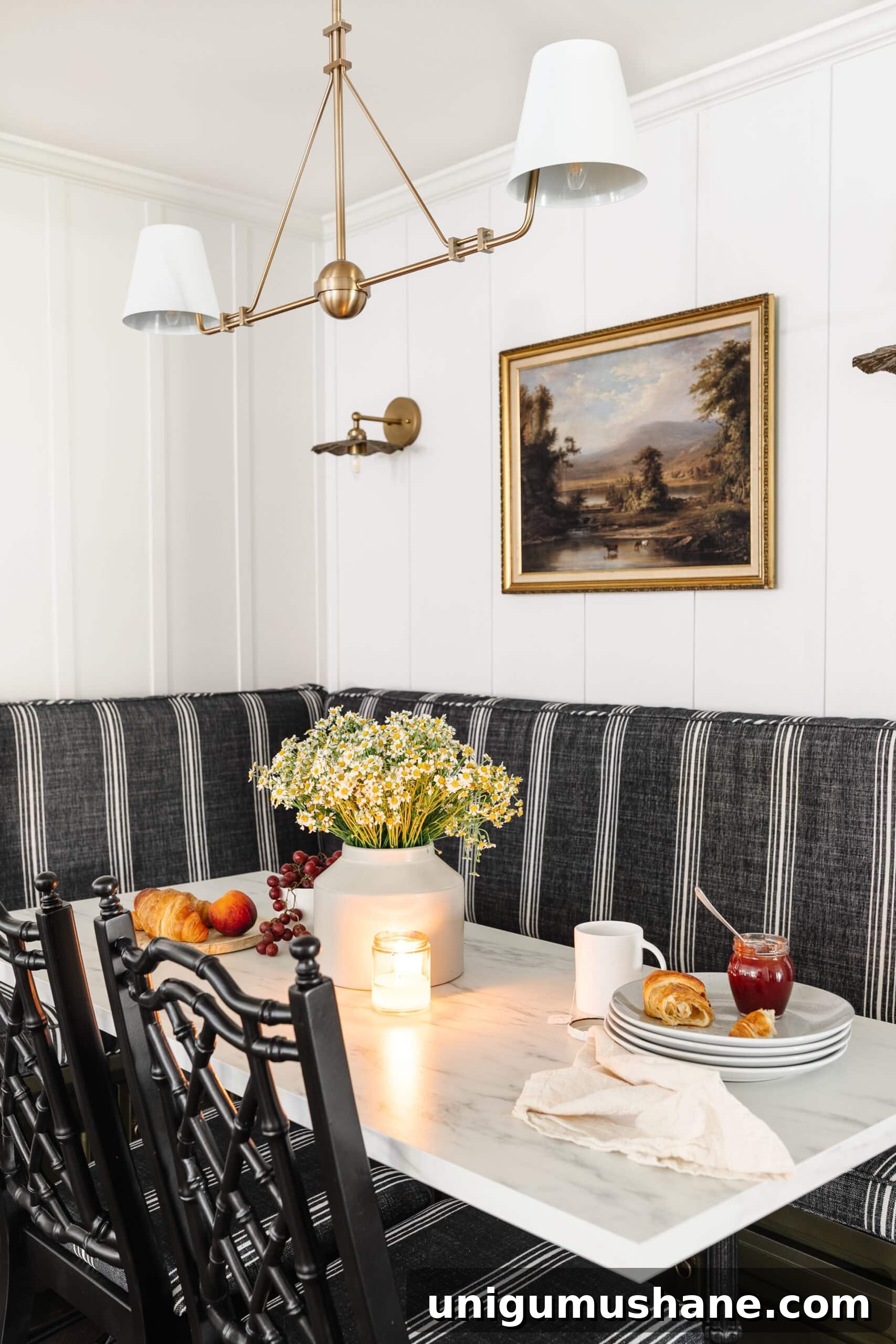
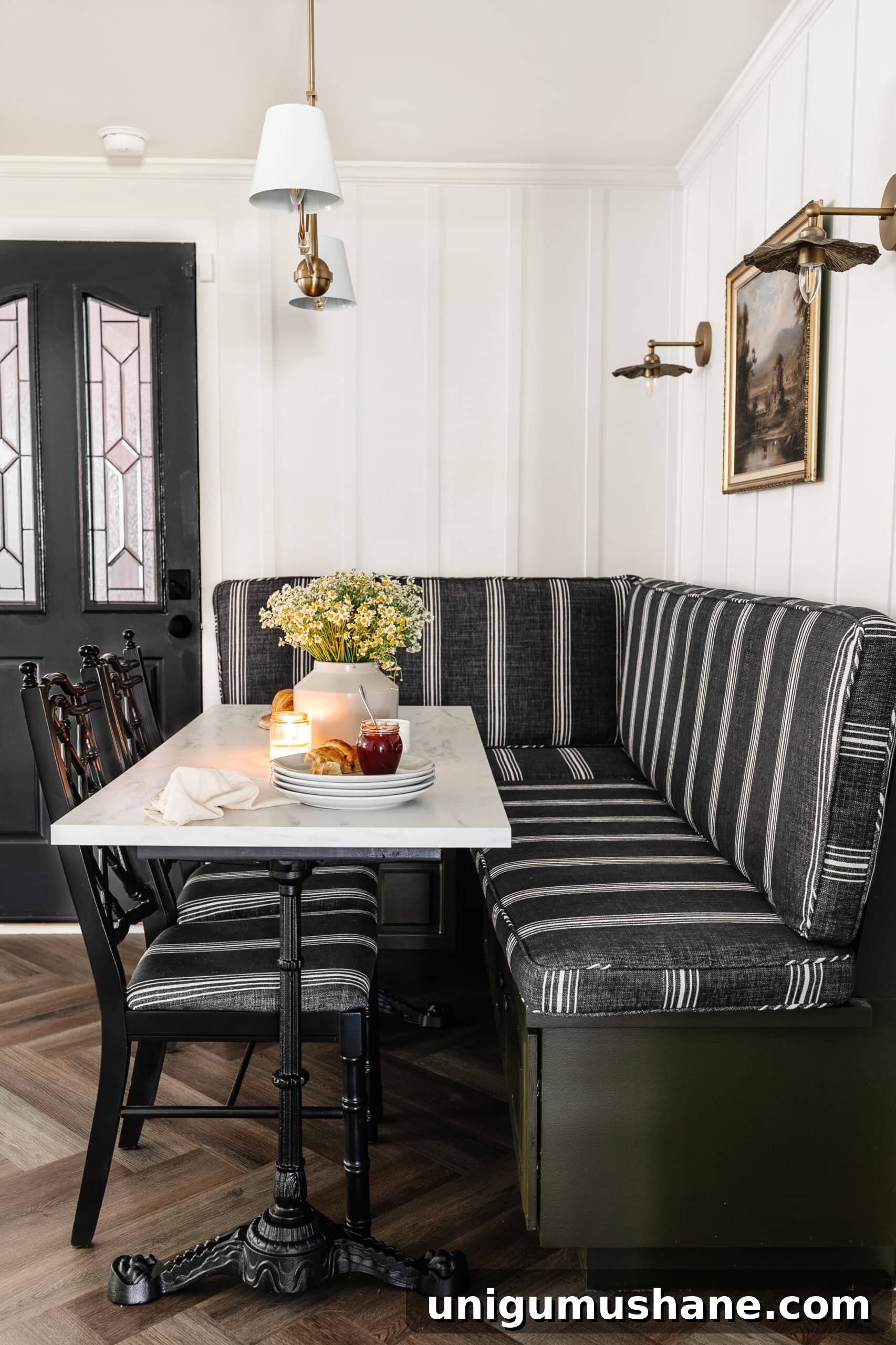
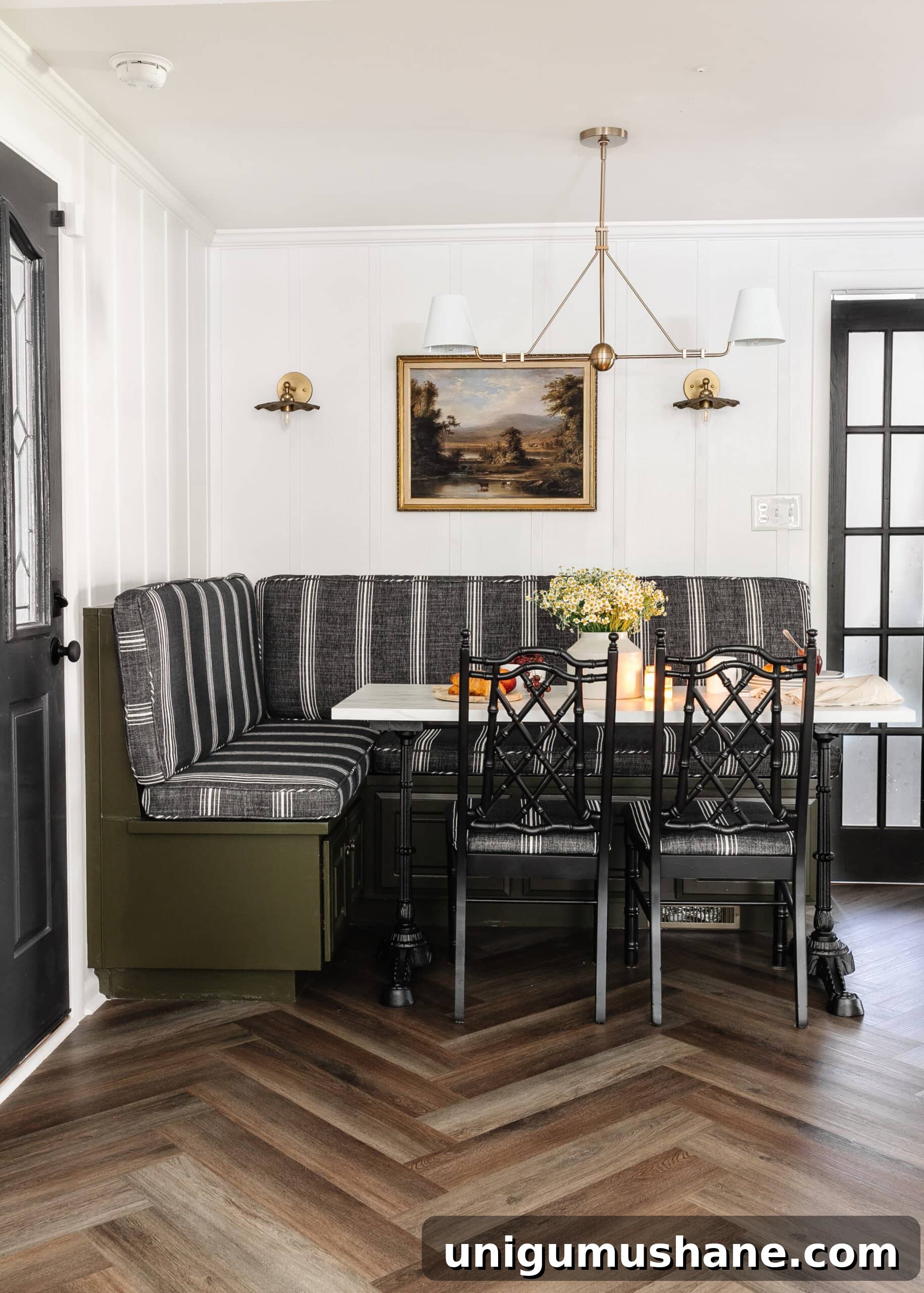
We scored a used banquette on Facebook Marketplace that fit the nook like it was custom-made. I painted it using a laminate furniture method, and local upholstery recovered the cushions in stain-resistant fabric. The bench anchors the corner and creates cozy built-in seating without a custom build.
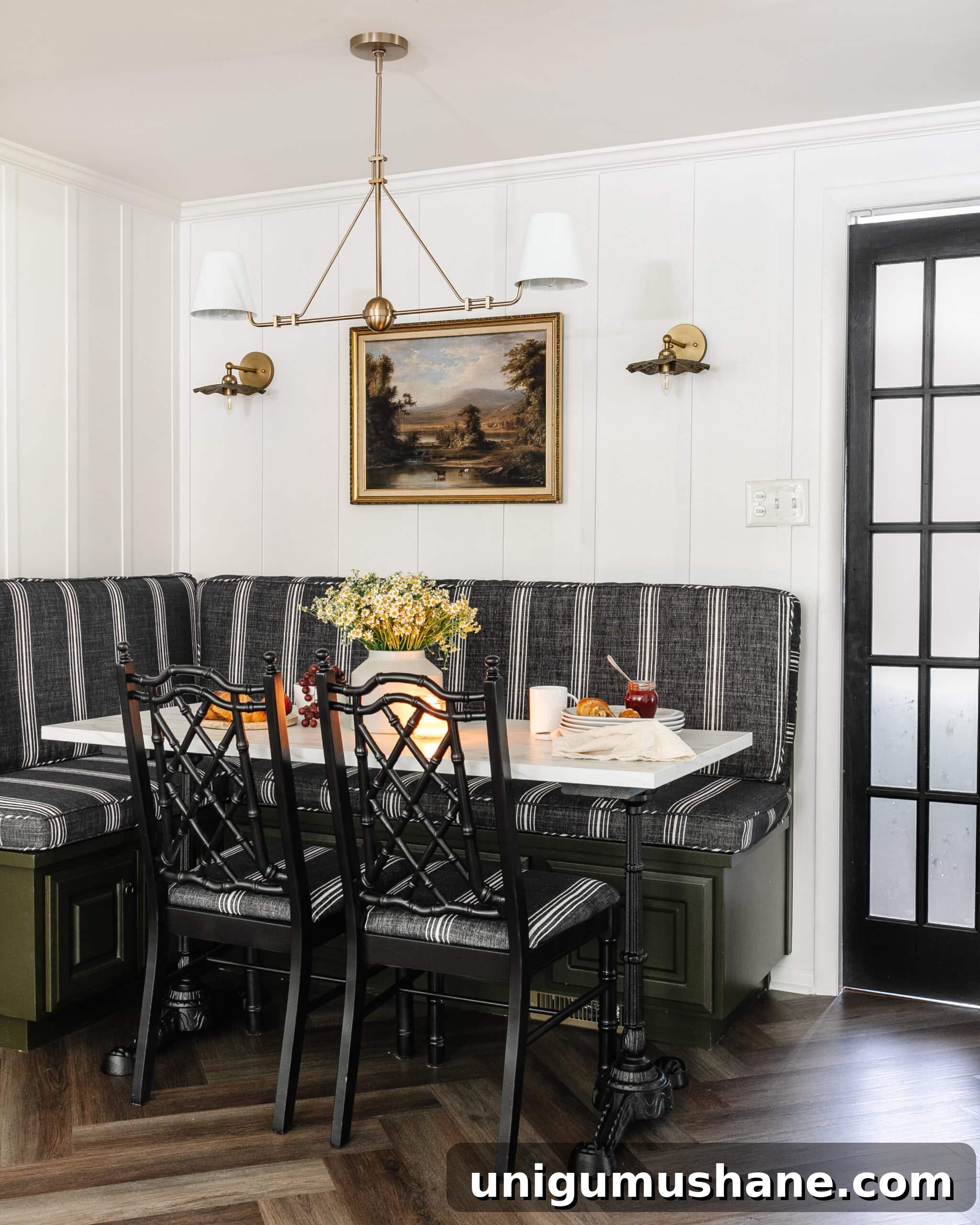
DIY Faux Marble Bistro Table
Because our nook is long and narrow, we built a pedestal-style bistro table using cast iron legs and a faux marble laminate countertop. It’s affordable, easy to clean, and the perfect scale for banquette seating.
Bifold French Doors
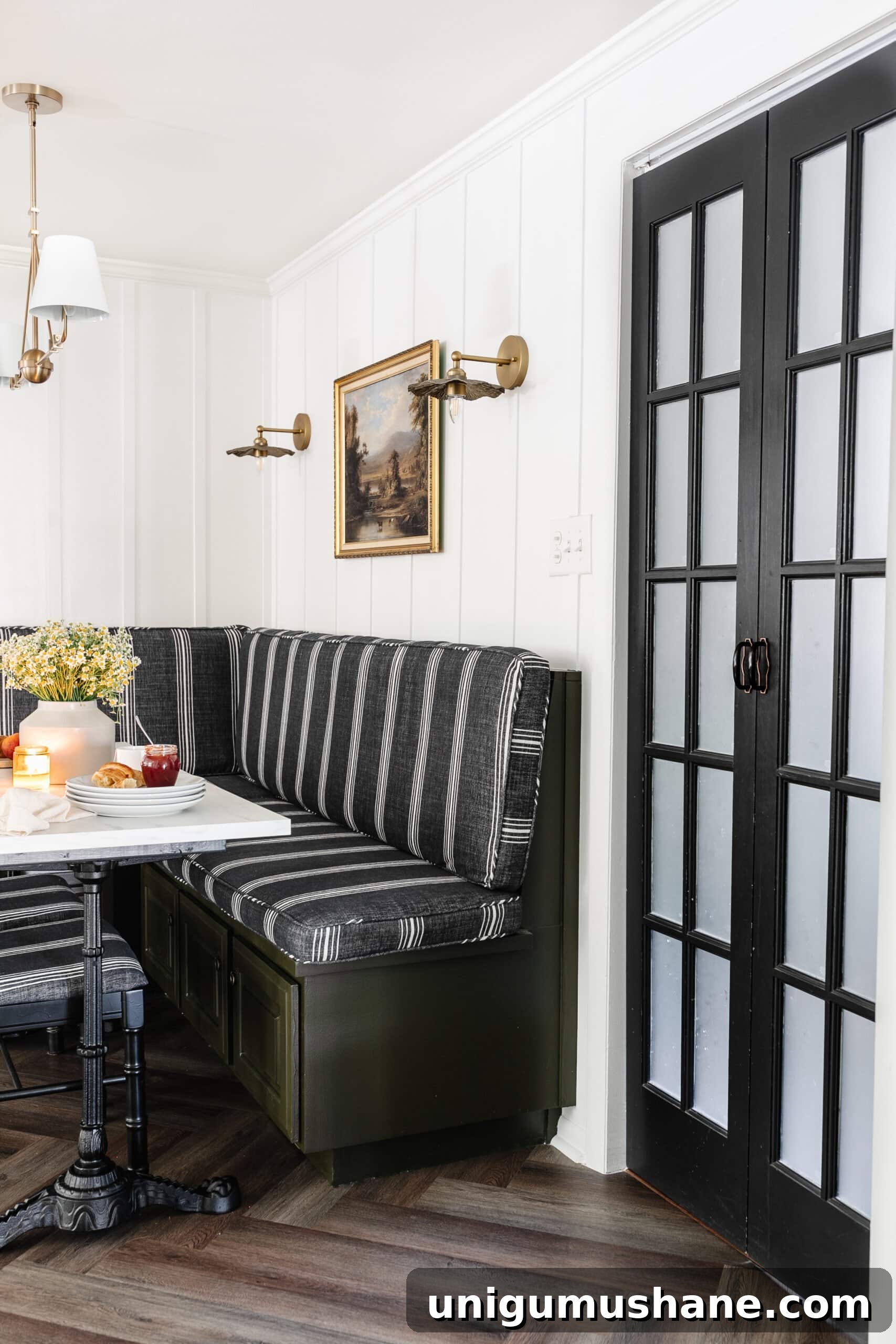
We converted a plain bifold into French-style bifold doors to add character and to let light from the adjoining laundry room into this otherwise windowless nook. In the future we may replace them with pocket doors to save space, but for now they’re a beautiful, practical upgrade.
Dining Chairs
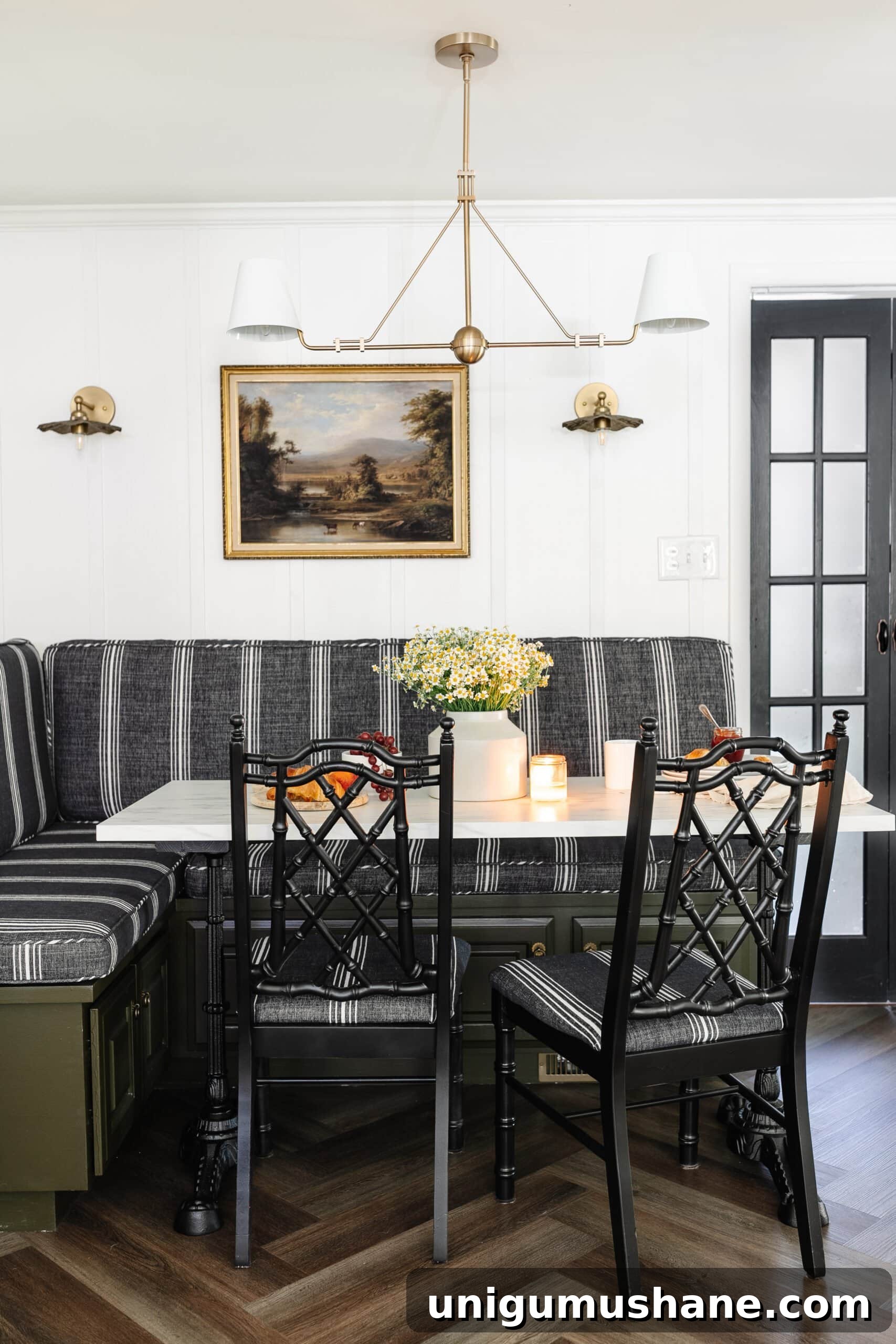
I found bamboo-style chairs on Marketplace, spray-painted the frames black, and recovered the seats with the same fabric used on the banquette—an easy one-day refresh that ties the look together.
Antique Art
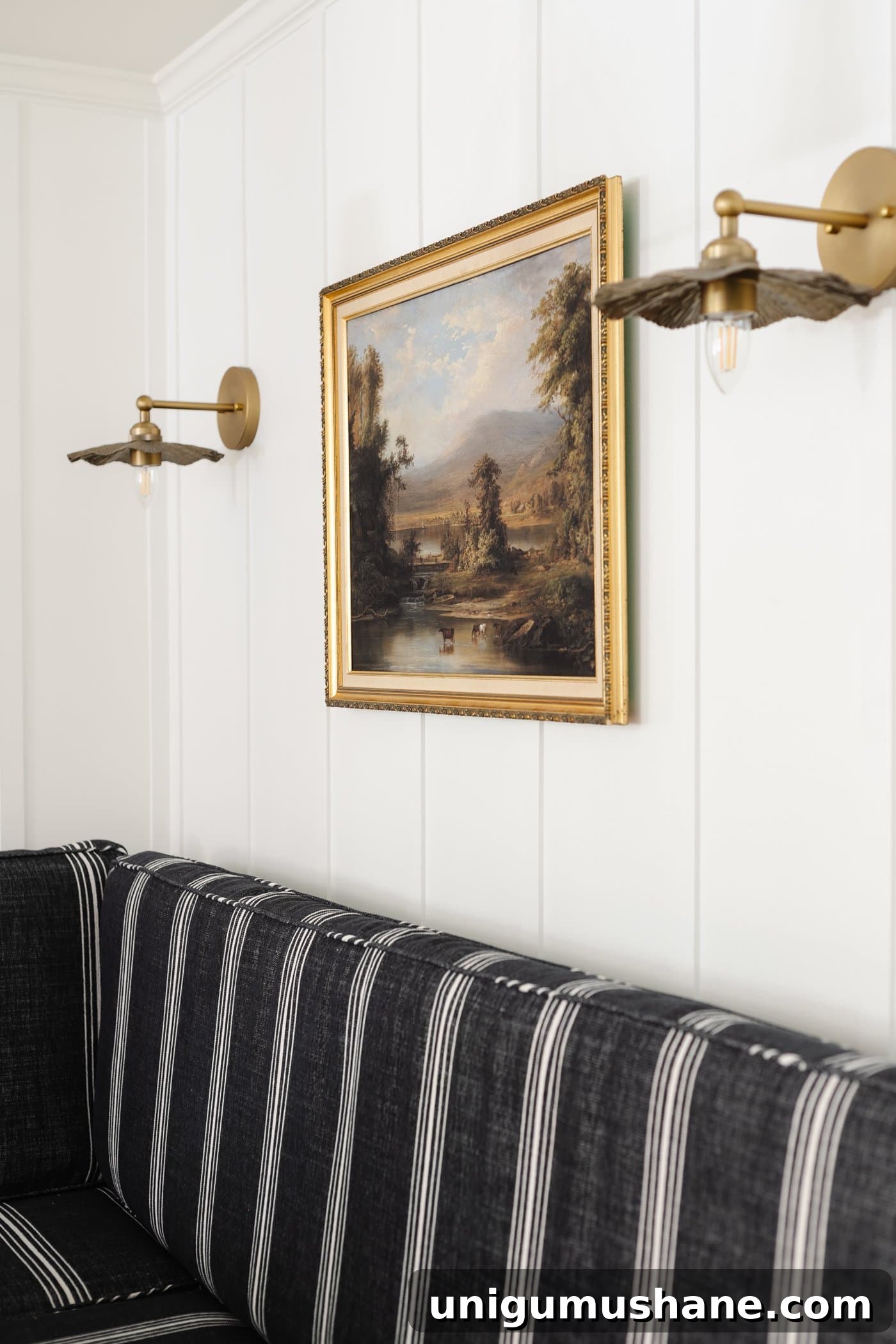
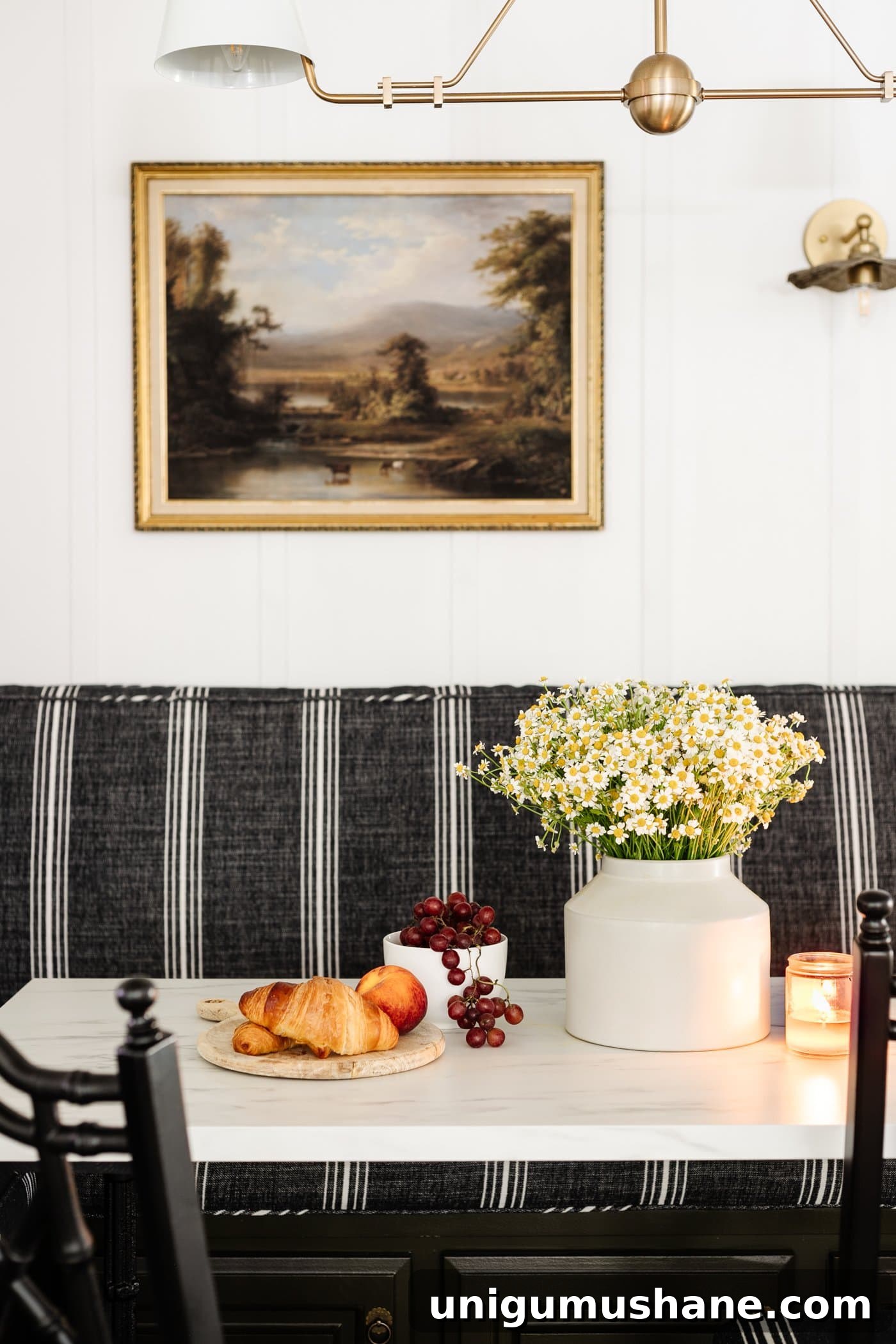
I printed an oil painting from public domain archives and framed it in a thrifted frame. It’s an inexpensive way to add vintage charm and personality to the nook.
Batten Wall
For about $80 and minimal carpentry, we installed a simple board-and-batten wall using lattice strips. It adds subtle dimension and vintage character—an ideal beginner project with a big visual payoff.
Lighting
We installed a slim linear chandelier to fit the narrow table and added vintage-style sconces to brighten the windowless corner. The lighting complements the cozy, bistro-inspired feel.
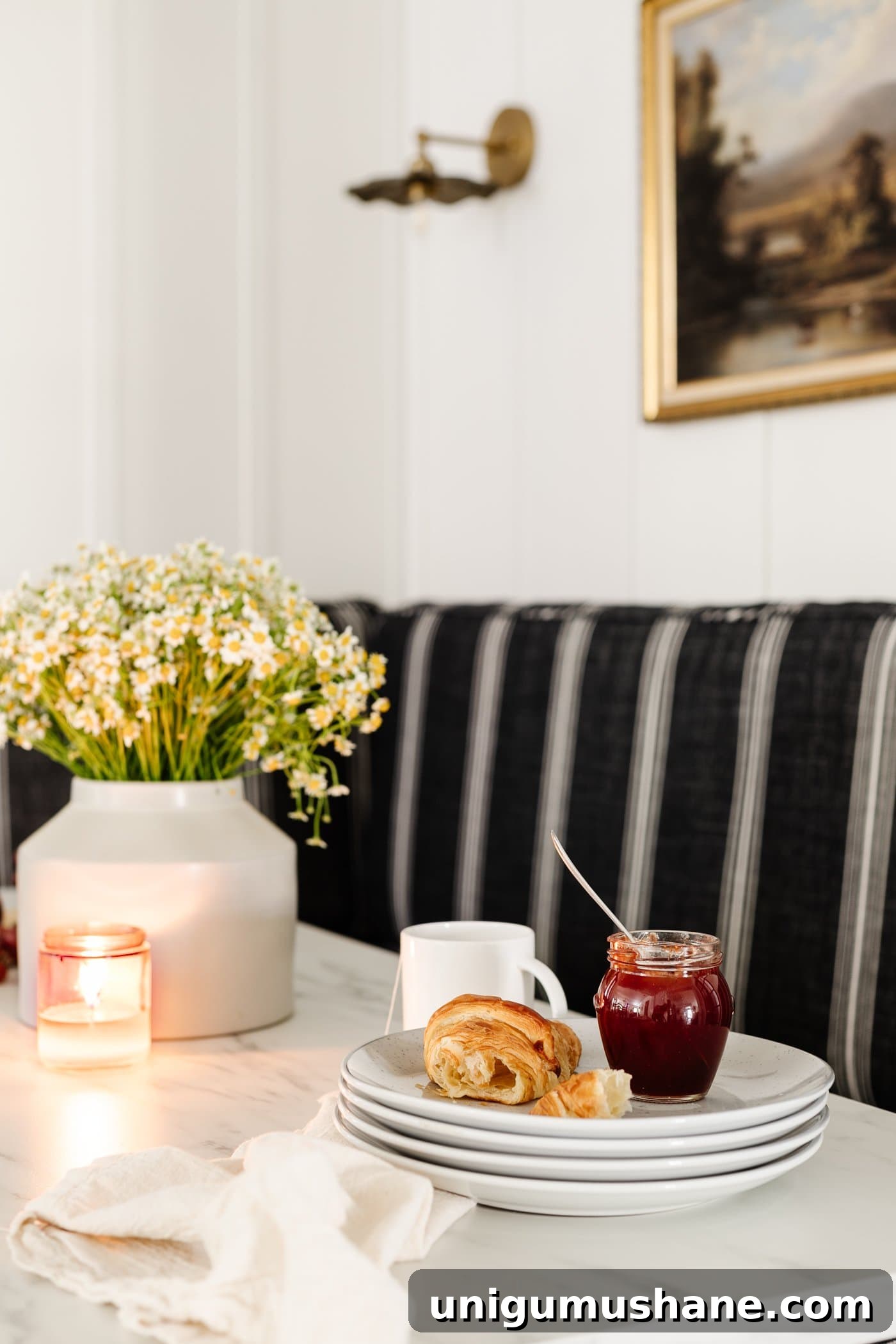
There’s much more detail—paint colors, exact costs, and step-by-step tutorials—that I’ll publish separately. For now, I’m thrilled with how cozy and functional the nook is; we can seat more people and the traffic flow finally makes sense. The herringbone pattern gave the room a classic, quaint finish that the old tile never could.
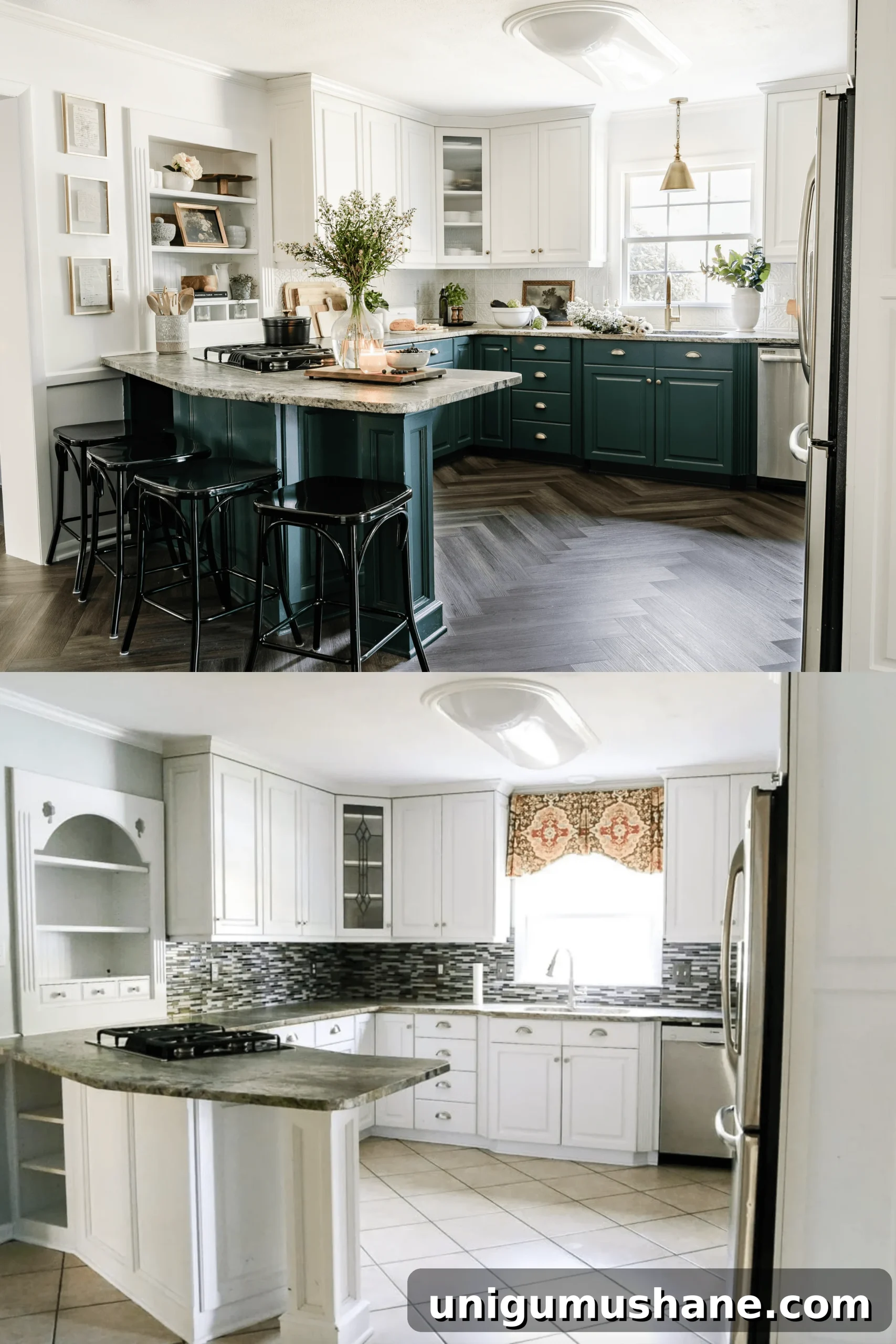
Kitchen Refresh Before and After
Stepping from the nook into the kitchen, the herringbone flooring instantly elevates the whole area. While we haven’t gutted the kitchen, several cosmetic updates—along with the new floors—created a cohesive, cottagecore-inspired facelift without sacrificing storage or modern conveniences.
Painted Kitchen Cabinets
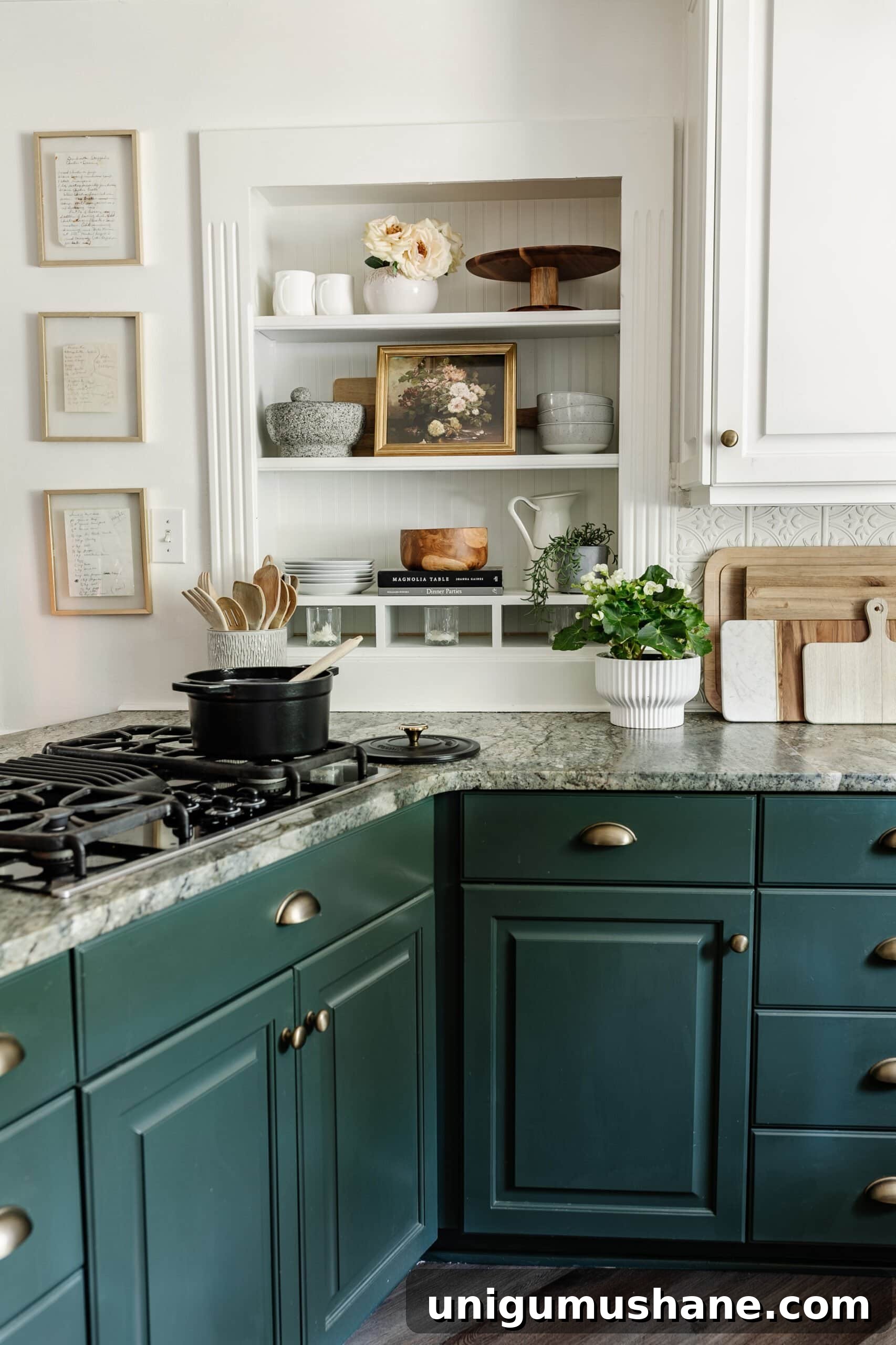
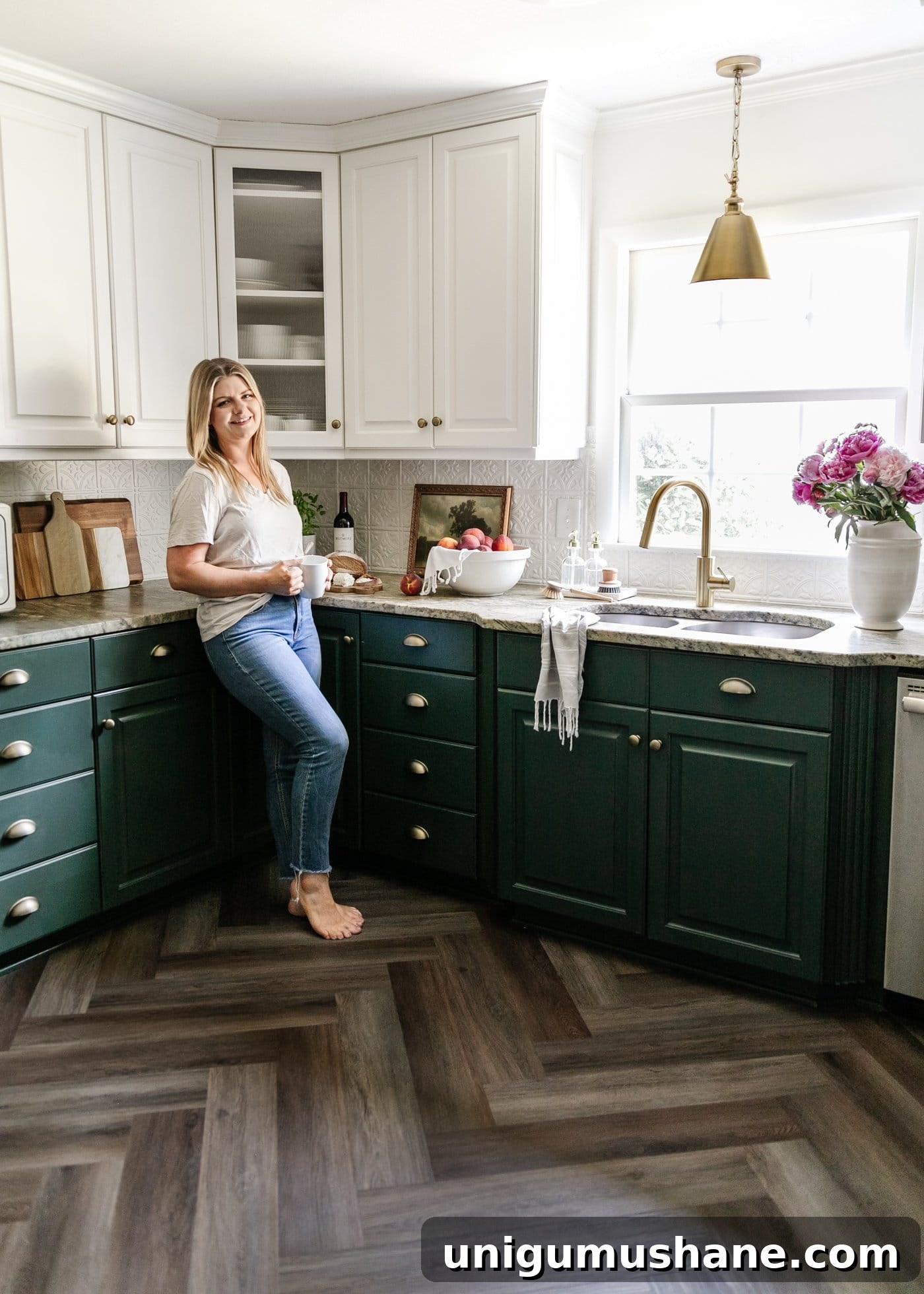
I painted the lower cabinets a deep green years ago to complement the existing leathered granite counters. It was hard work, but the color remains a timeless choice that I still love.
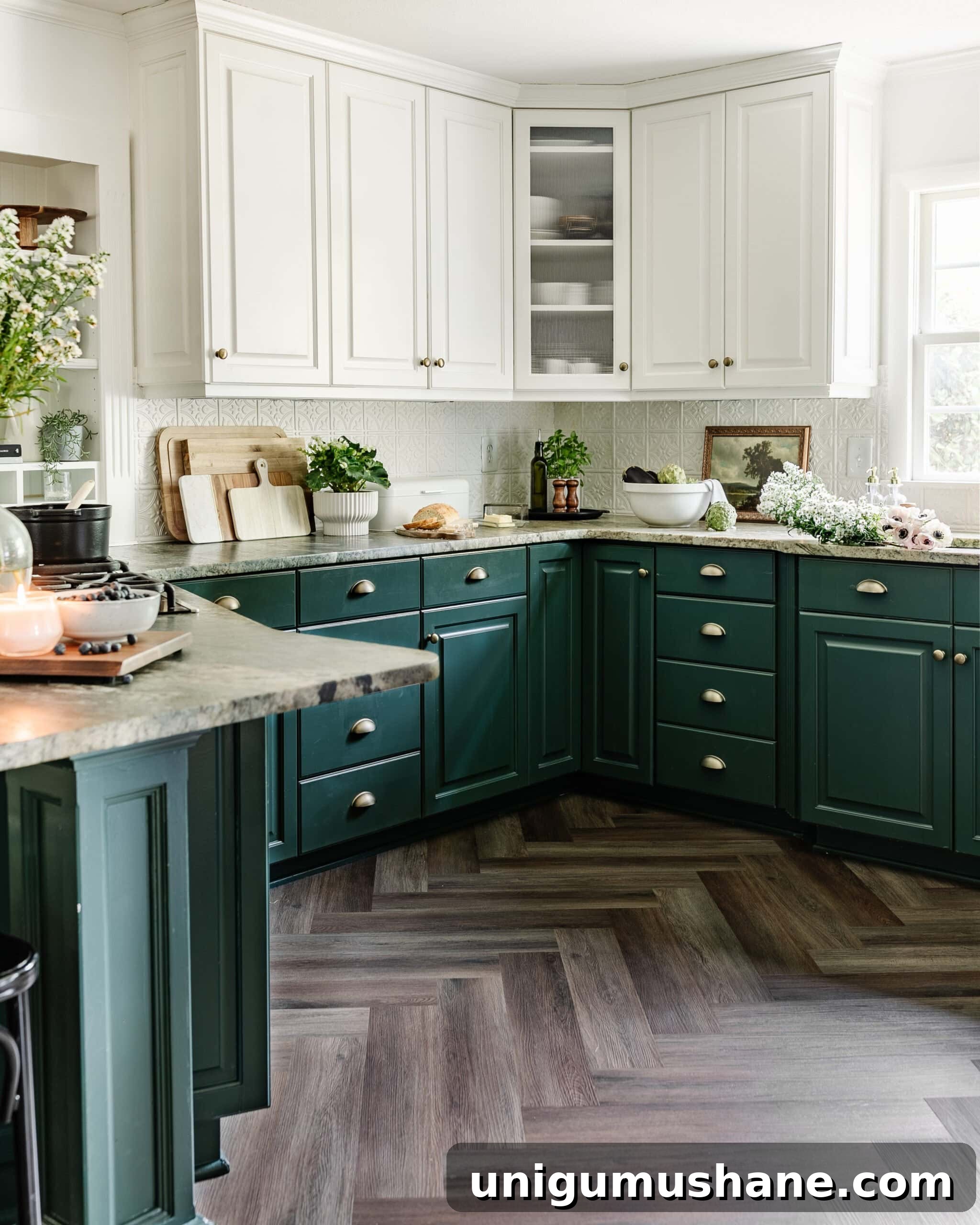
DIY Pressed “Tin” Kitchen Backsplash
We covered the old tile backsplash with PVC pressed-tin-style panels as a quick, no-demo update years ago. It’s inexpensive, easy to install, and still looks great five years later.
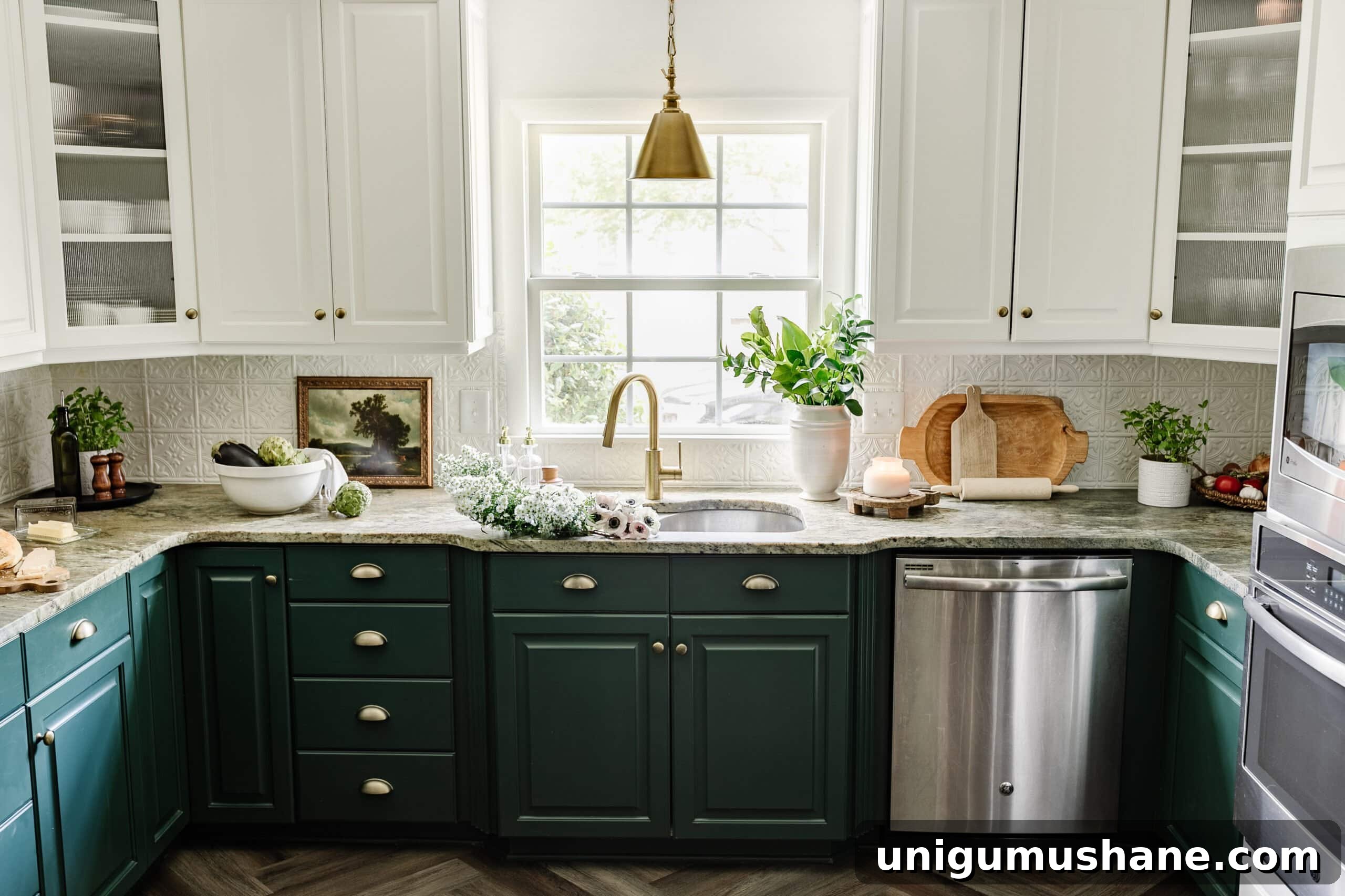
Lighting & Fixtures
We added a brass mini pendant over the sink and replaced the old faucet with a modern brushed-brass pull-down model for a cleaner, more cohesive look. Updating cabinet hardware to aged brass knobs and cup pulls warmed the space instantly.
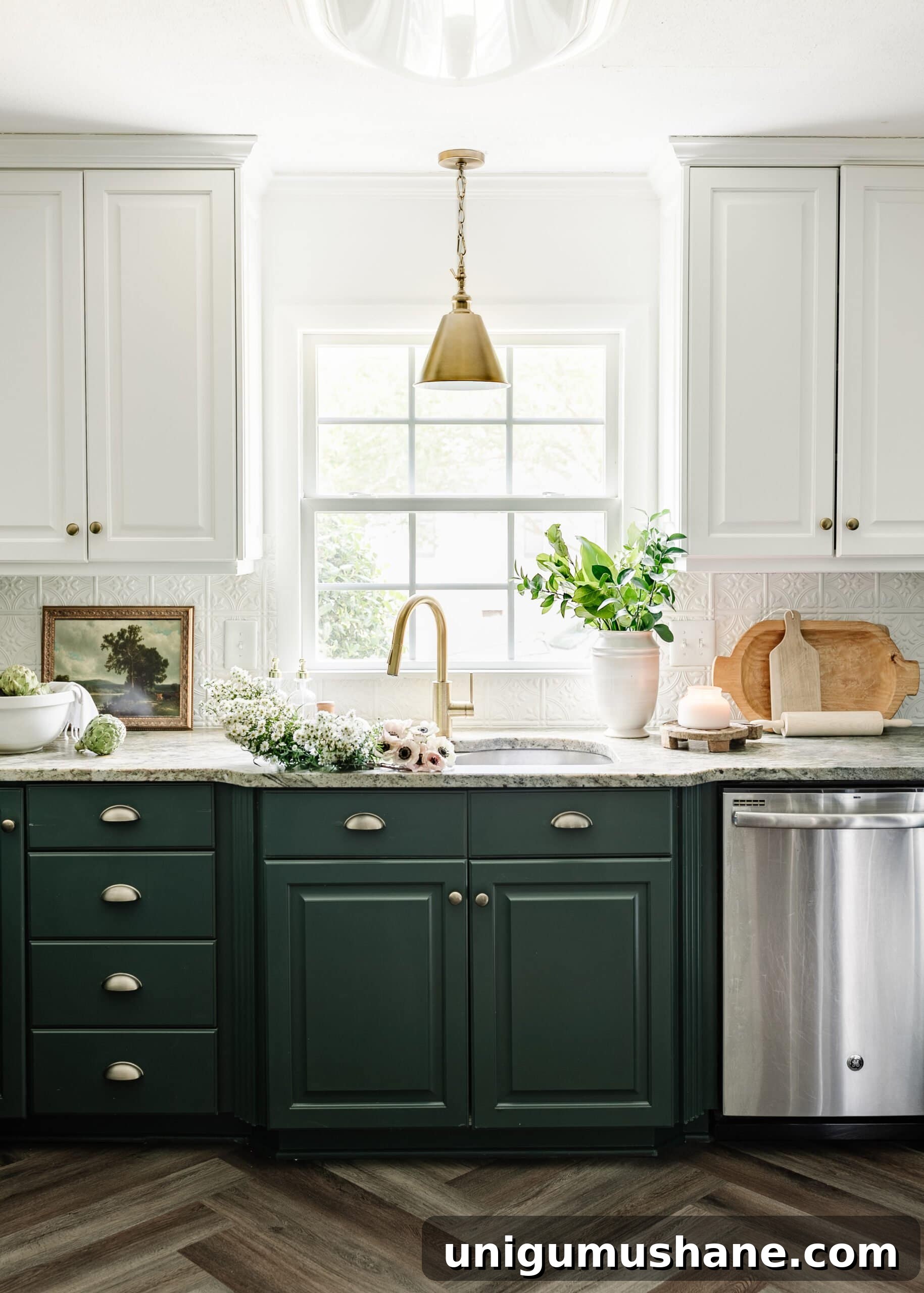
Reeded Glass Cabinet Fronts
One of the original corner cabinets had leaded glass; after it broke, we installed reeded glass for a slightly modern yet vintage look that still feels authentic to the kitchen.
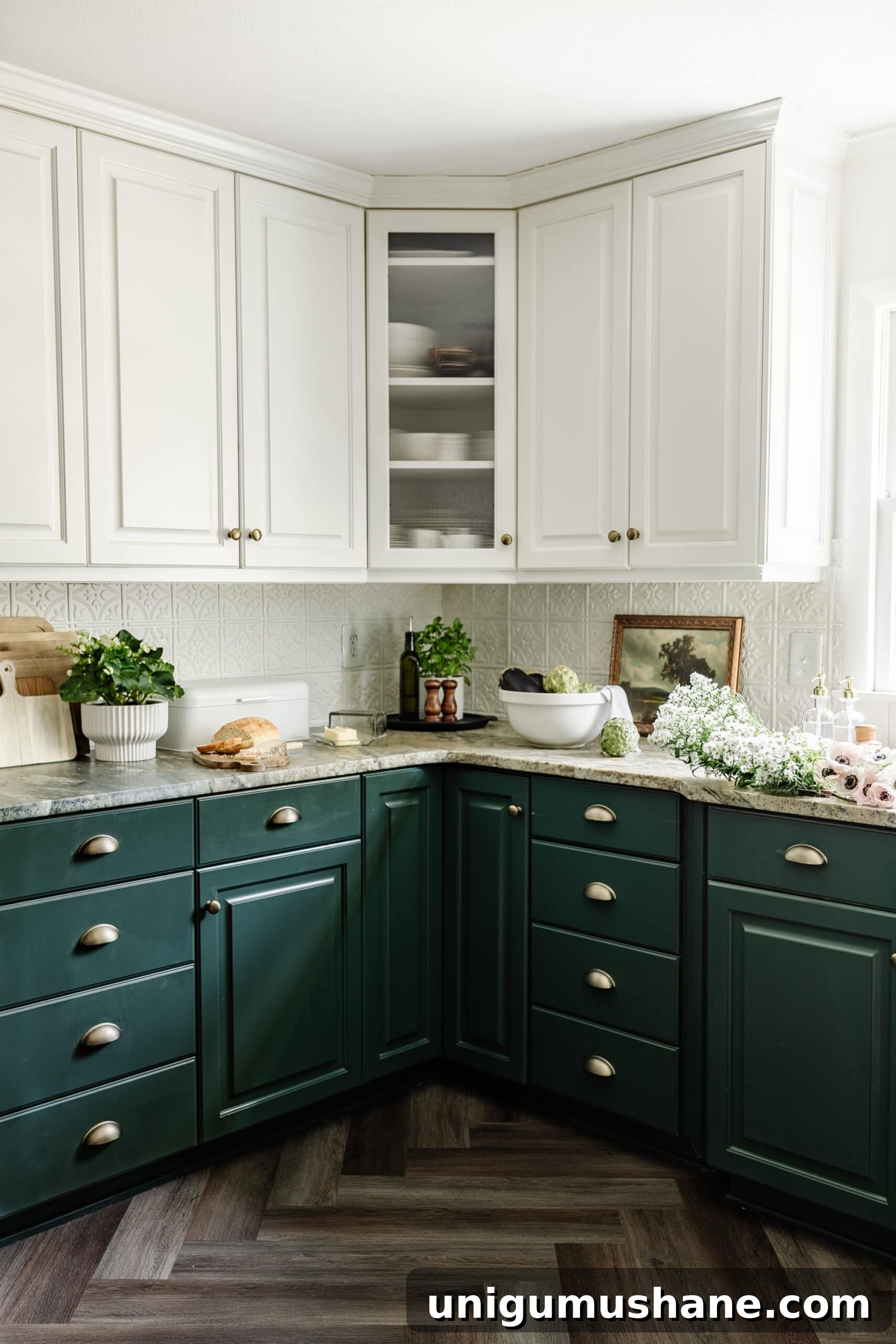
Kitchen Shelves & Hidden History
We removed an ornate shamrock detail from a shelf to simplify the look; behind that shelf is an old sealed doorway that once led to a porch. Old homes are full of surprises, and we’re saving the bigger renovations for a future full remodel.
Pantry Cabinets
To solve a lack of pantry space, we added standalone pantry cabinets and applied antique-mirror window film to the glass to hide food storage while reflecting light. It brightens the windowless side of the kitchen and adds useful storage.
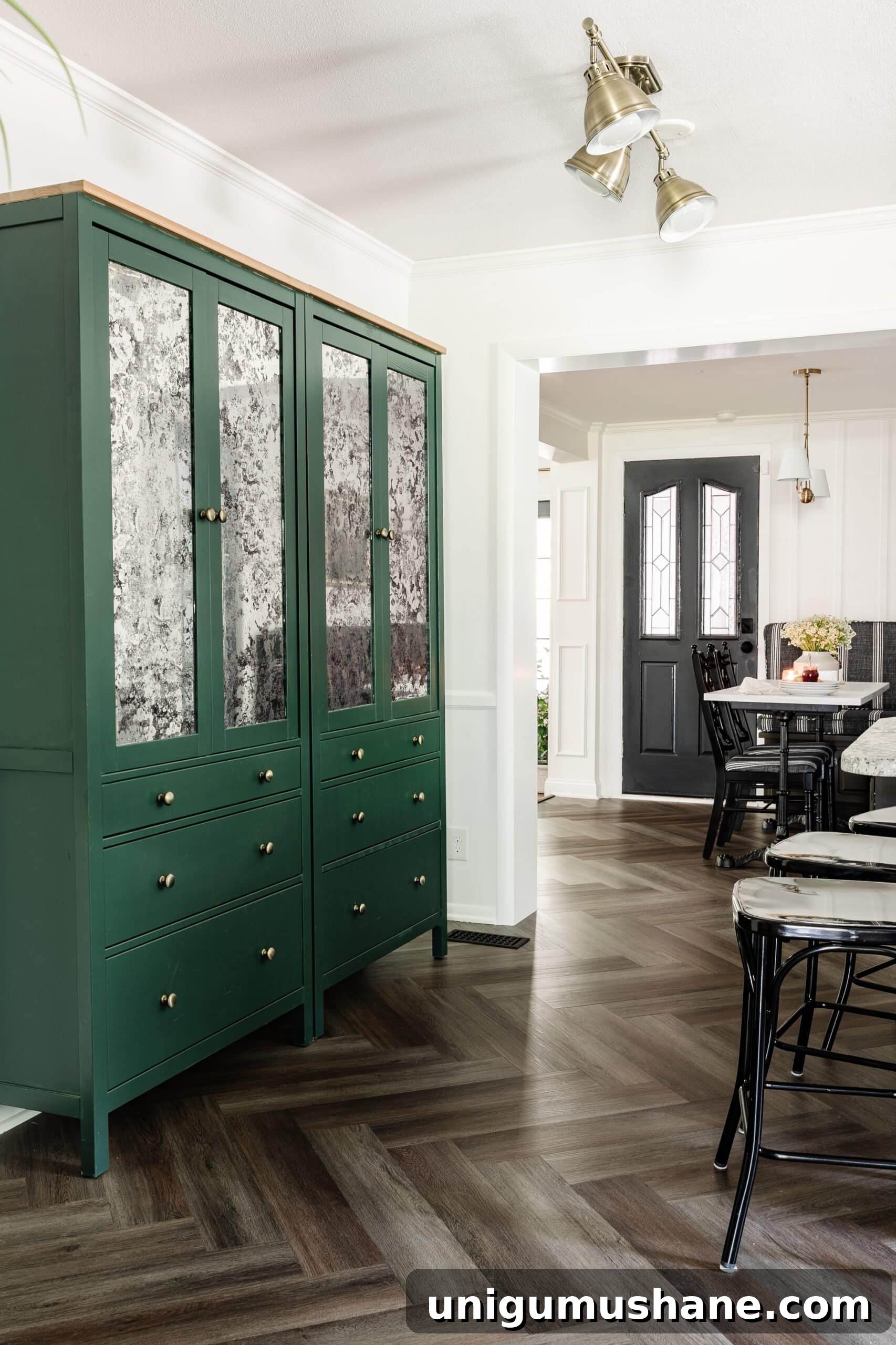
Overall, this kitchen refresh has been a layered process over several years. The new herringbone LVP flooring was the finishing touch that pulled everything together. It improved safety, added warmth, and created a cohesive flow between the kitchen and the nook—without a full remodel.
Final Breakfast Nook and Kitchen Facelift
We’re so happy with how the nook and kitchen came together. The process took time and trial and error, but most of the work was done ourselves, which made the result even more meaningful. The ProCore Floors herringbone LVP was the change that finally made the space feel complete—classic, warm, and durable enough to handle whatever family life throws at it.
More Kitchen Ideas
If you have kitchen projects you love, I’d love to see them shared in the Bless’er House Decorating Ideas Facebook Share Group. Sharing ideas and lessons learned is one of my favorite parts of this process.
- DIY Whitewashed Faux Brick Backsplash
- How to Paint Kitchen Cabinets Like a Pro
- How to Install a Herringbone LVP Floating Floor Over Tile
- The Best Boob Light Replacement Fixtures for All Budgets
- The Good, Bad and Ugly of Concrete Countertops
- Simplified Decorating: How to Decorate Kitchen Countertops