
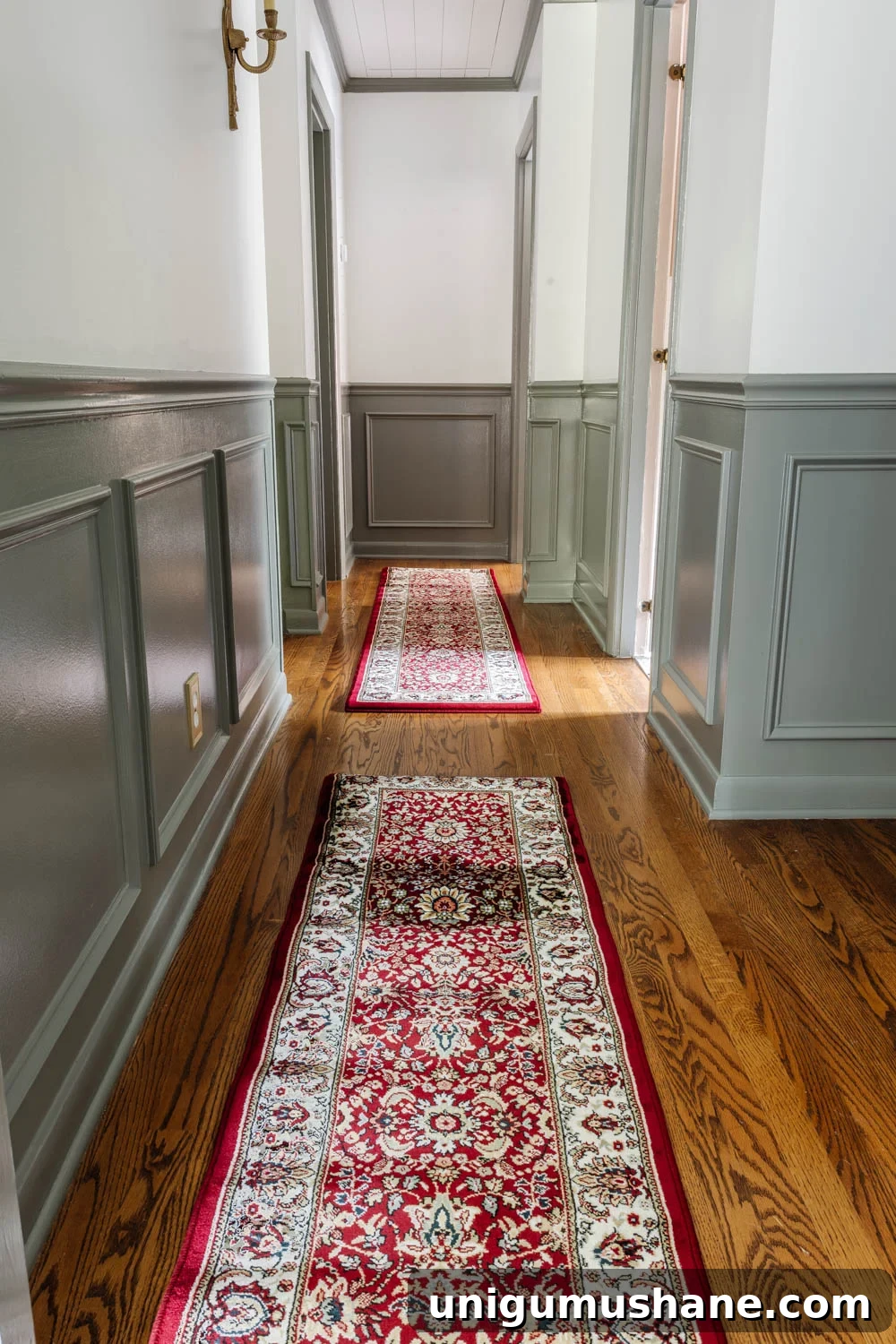
If you’ve ever hunted for the perfect rug, you know how frustrating it can be. Finding the right color, pattern, material, and size all at once feels impossible—especially when the ideal runner is out of stock or priced like a luxury item.
During our upstairs hallway refresh, I ran into that exact problem. I wanted a rich red, vintage-style runner to contrast with new Sherwin-Williams Willowleaf wainscoting. I found a gorgeous runner for an unbeatable price—except it was five feet too short. Rather than keep searching or paying for a custom piece, I made my own long runner by joining two identical smaller rugs. The result looks seamless and cost a fraction of a single long runner.
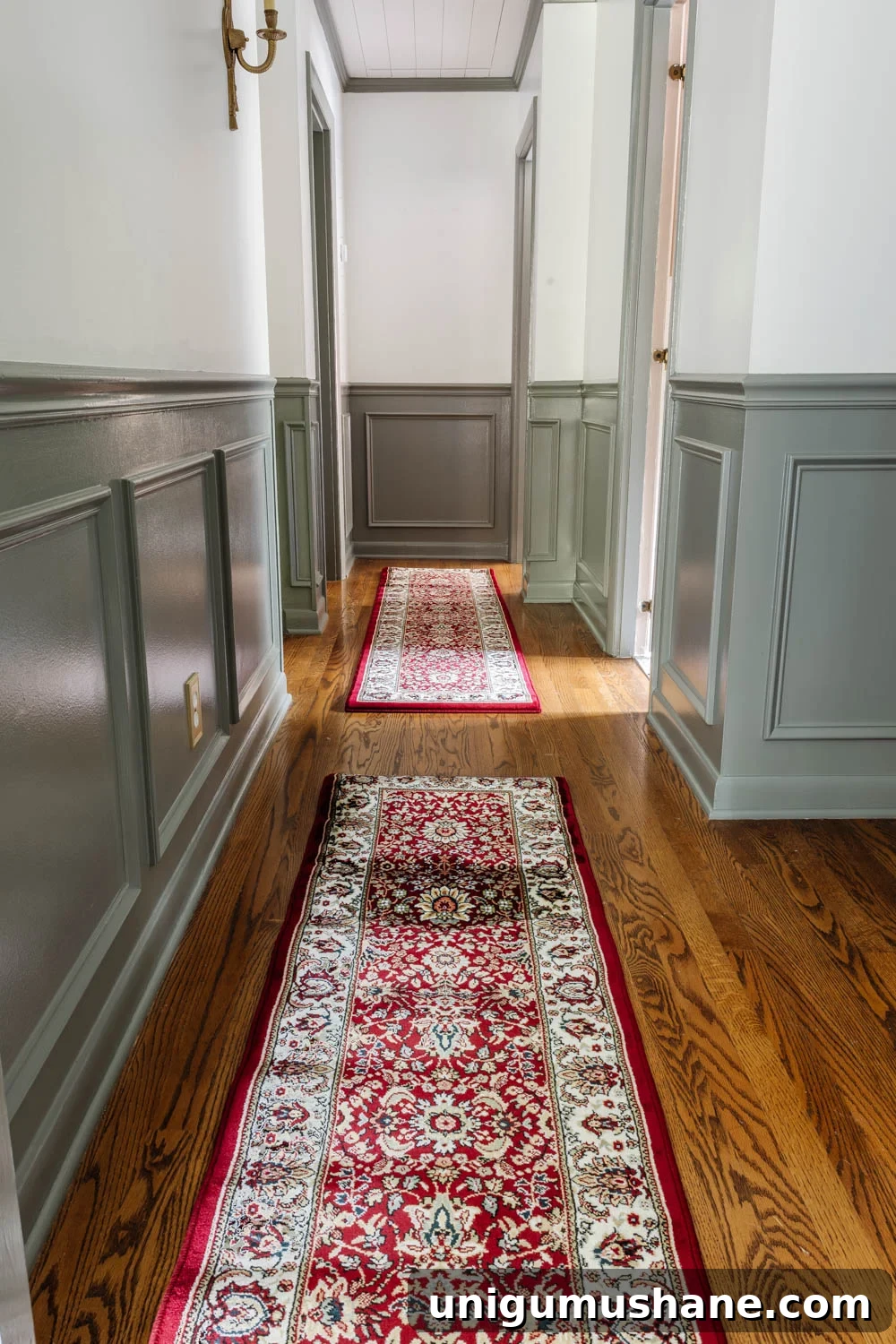
Below is a clear, step-by-step guide to combine two rugs into one custom-size runner—an inexpensive DIY that works especially well in hallways, galley kitchens, or any narrow space where a long rug makes a big visual difference.
How to Join Rugs to Create a Custom Size Runner
This budget-friendly method is straightforward and gives professional-looking results when done carefully. Follow these steps to create a long runner from two identical rugs.
Supplies You’ll Need to Join Two Rugs:
- Two identical rugs (repeating patterns or simple designs work best)
- Permanent marker (Sharpie)
- Straight edge—yardstick, ruler, or level
- Utility knife or carpet cutter with a fresh blade
- Heavy cardboard or plywood to protect the floor while cutting
- Single-sided carpet tape (not double-sided)
- Vacuum (optional, to clean loose fibers after cutting)
1. Find the pattern repeat.
Lay both rugs next to each other and study the pattern. For the smoothest join, choose a spot where the design repeats or aligns naturally—geometric or symmetrical motifs are easiest to match. Identifying the repeating point ahead of time reduces visible seams.
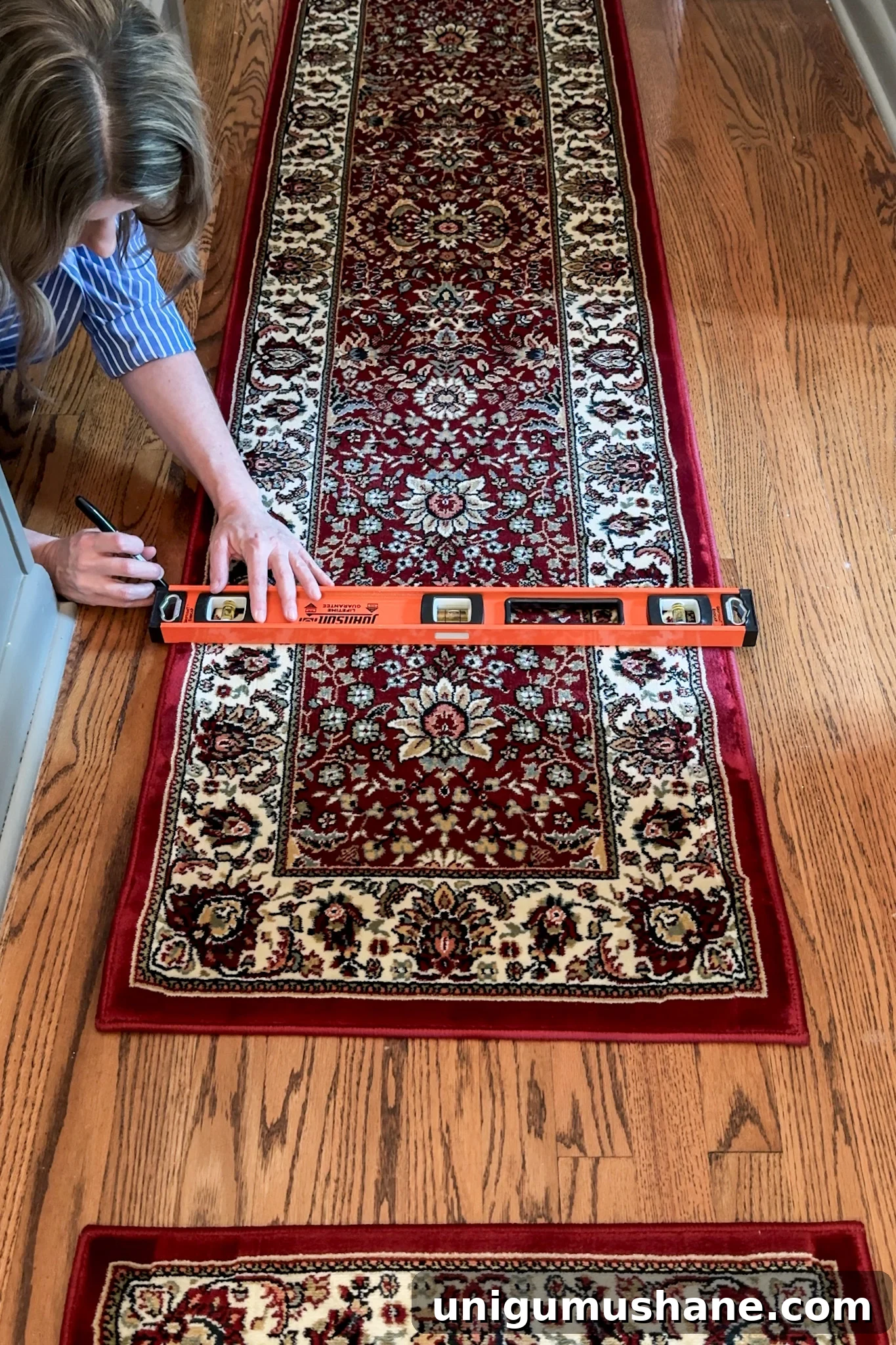
2. Mark your cut lines.
Make small alignment marks on the rug edges where the pattern lines up. Flip the rugs over and use your straight edge to draw a cutting line on the backing. Keeping the line straight is crucial for a tight seam.
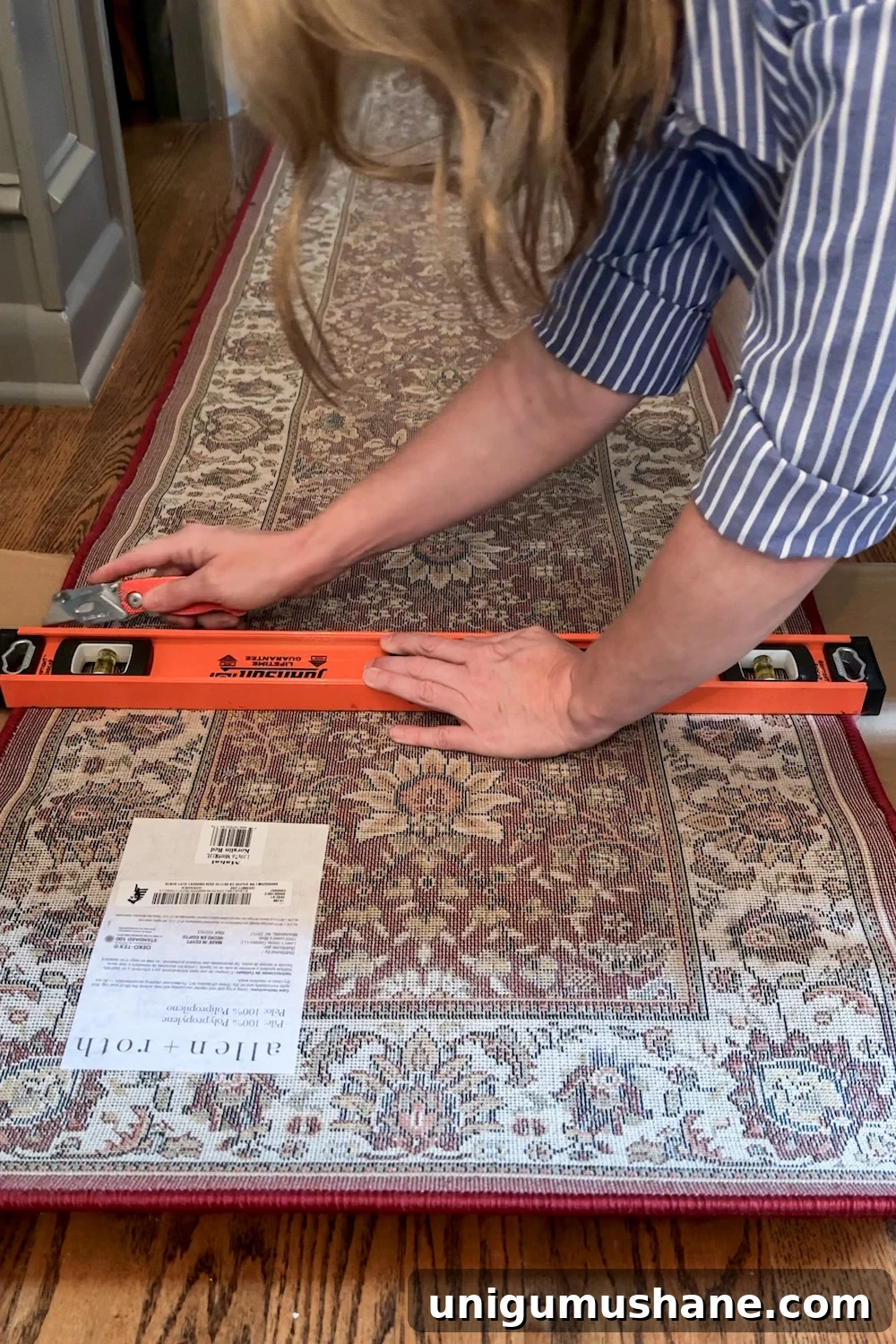
3. Cut the rugs.
Place heavy cardboard or plywood under the rug to protect your floor, then carefully cut along the marked line with a sharp utility knife or carpet cutter. Use steady pressure and multiple shallow passes if needed to get a clean edge without fraying the pile.
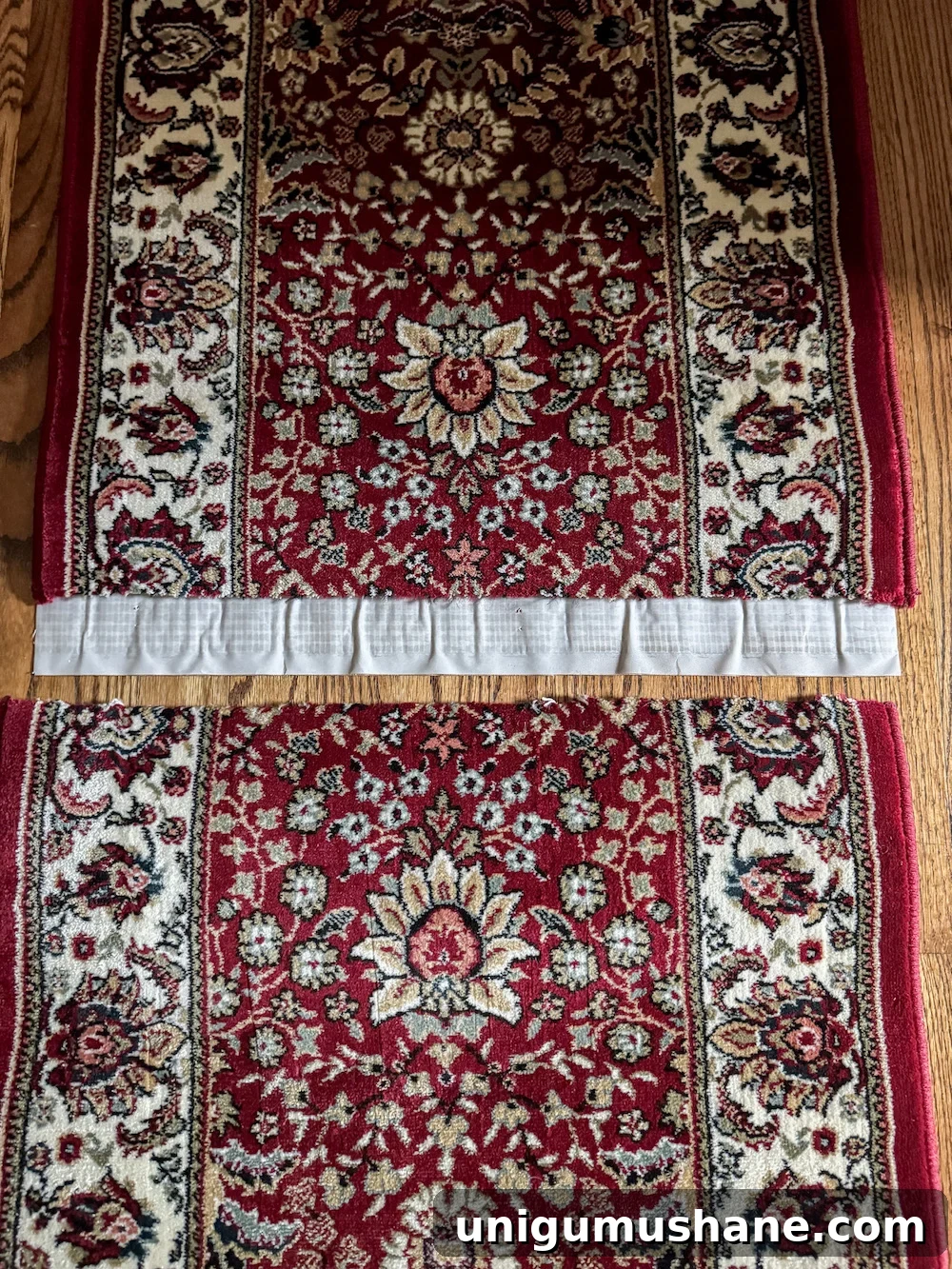
4. Check your edges.
Before securing anything, lay the cut edges together and verify the pattern alignment and edge straightness. Small adjustments now will prevent a crooked or obvious seam after taping.
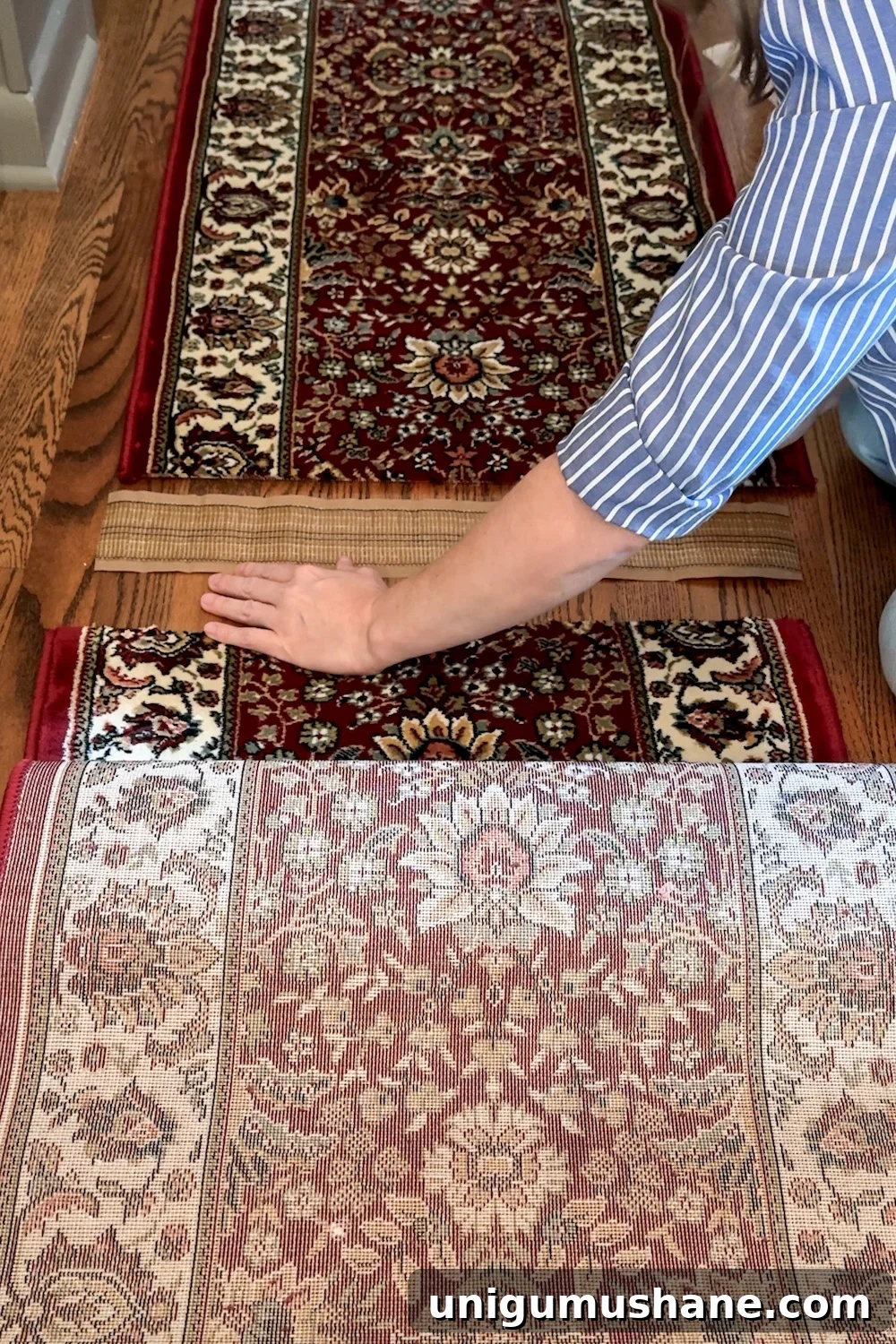
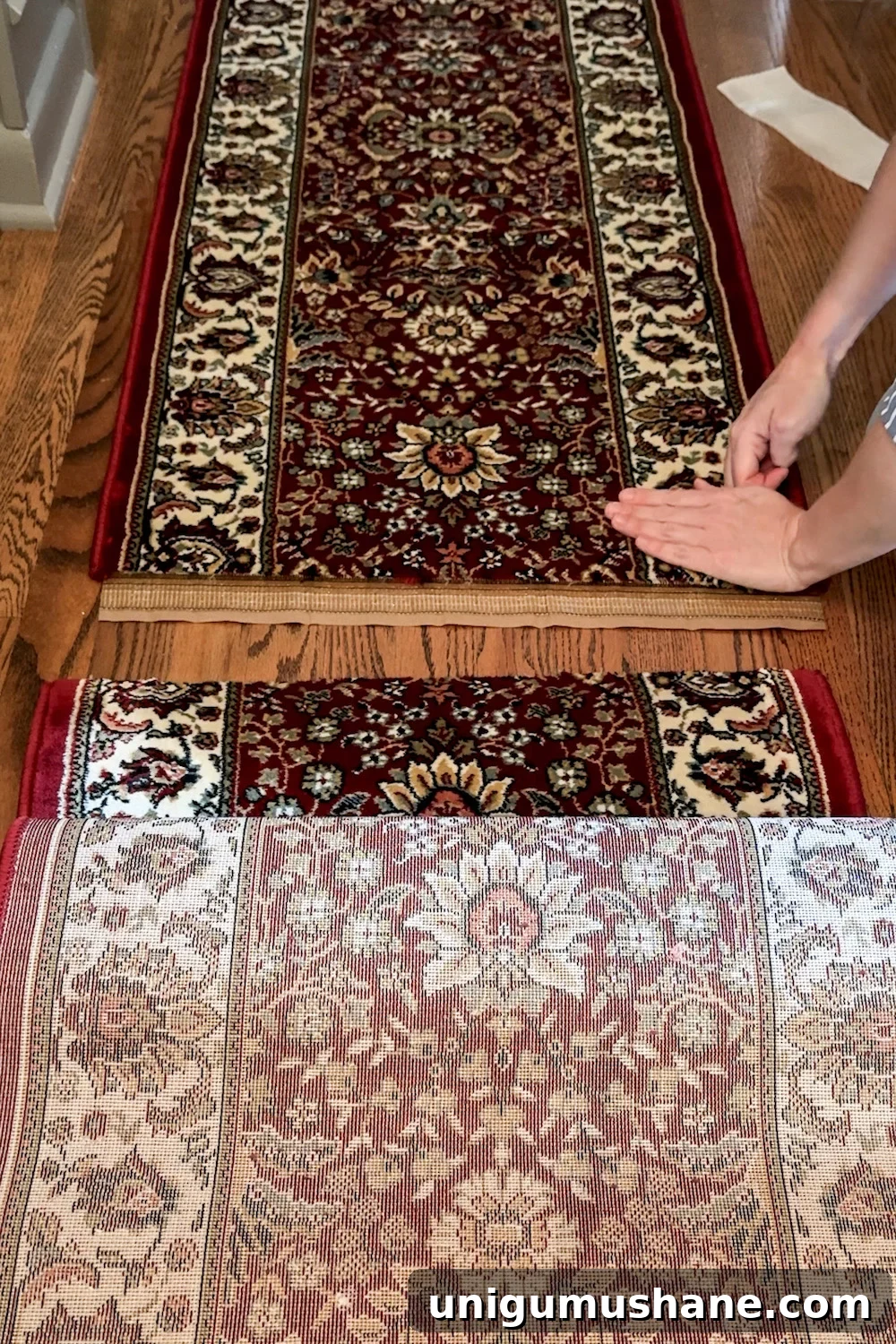
5. Tape the rugs together.
Lay a strip of single-sided carpet tape on the floor where the two cut edges will meet. Peel the backing and press each rug edge firmly onto the tape, making sure the pattern lines up tightly. Walk along the seam to press everything flat and ensure a secure bond.
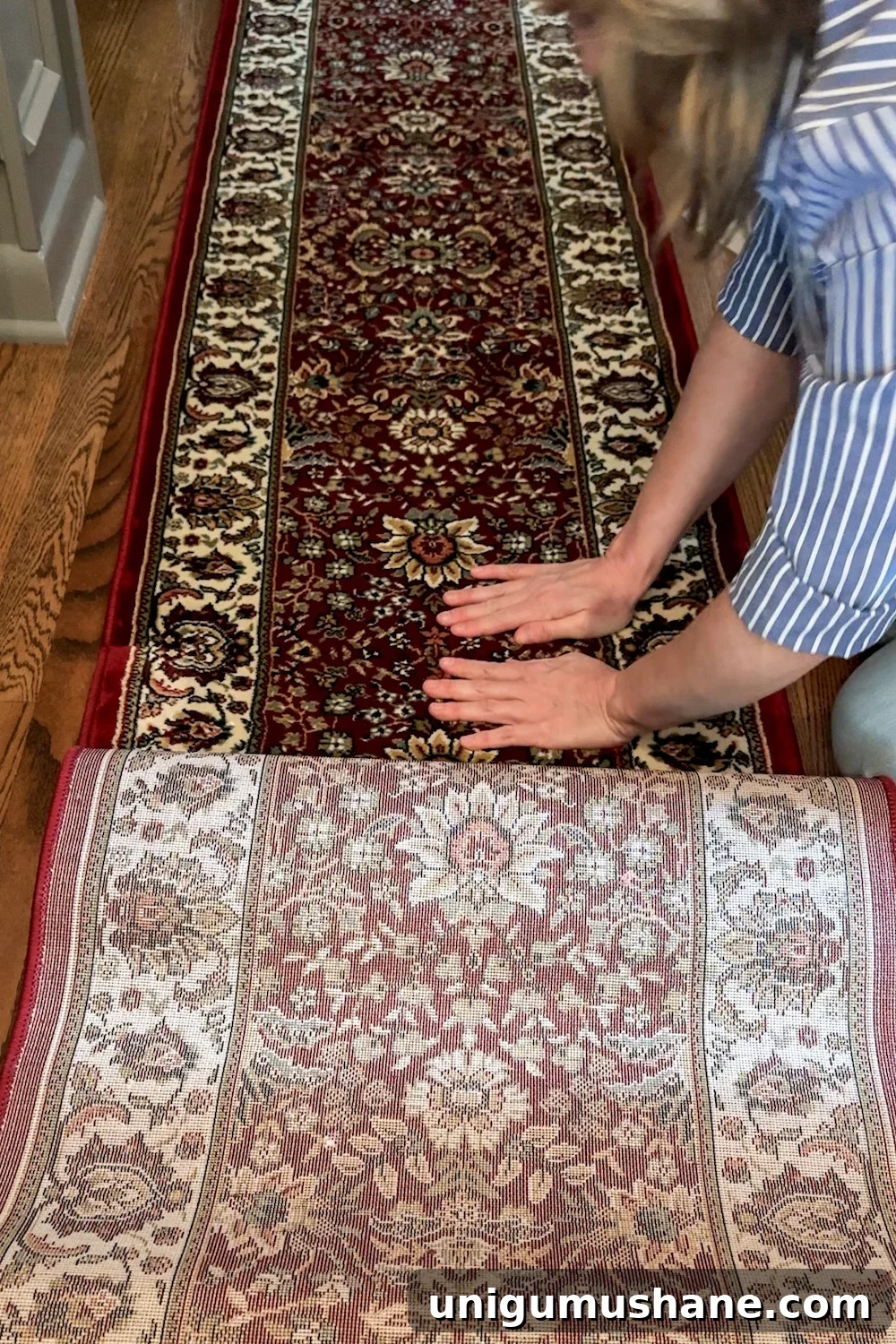
That’s all it takes. With accurate cuts and careful alignment, the seam is subtle and the finished runner reads like a single long rug.
A Budget-Friendly Rug Hack That Looks High-End
This technique saved me from paying for a custom runner and created a high-impact look on a tight budget. From across the room, the seam is barely noticeable. Even up close, a thoughtful pattern match and clean cut make the join blend in.
It’s a useful trick for renters, budget-conscious decorators, or anyone who wants to repurpose smaller rugs into a large area rug. Multiple small rugs can be combined the same way to cover broader spaces, and the method works with many machine-woven styles.
For our hallway, the red oriental-inspired runner adds warmth and depth against the painted wainscoting. The total spend was far less than a single long runner of comparable style—proof that a little DIY planning can yield big design payoff.
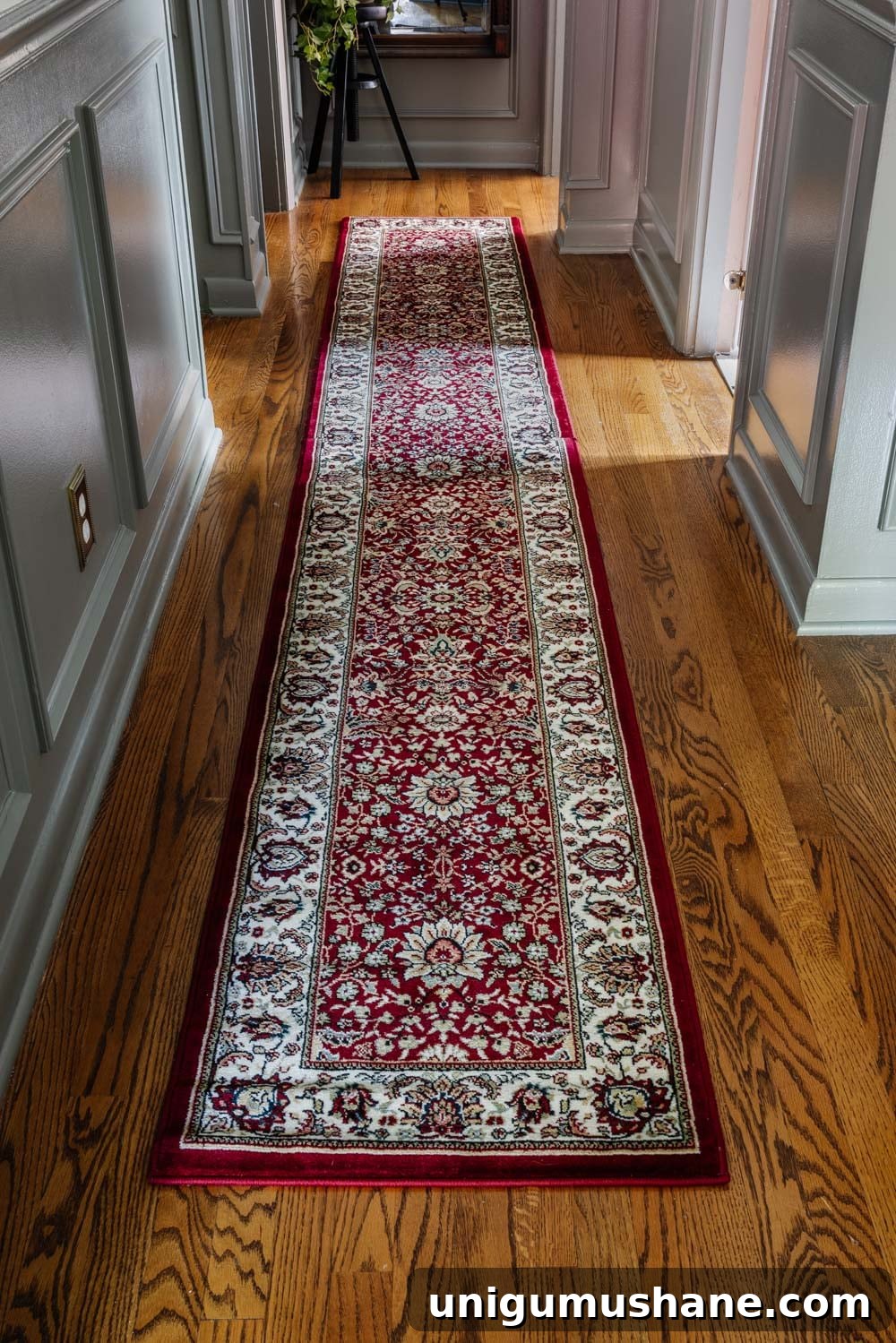
With the ceiling, doors, and trim wrapped up, installing the runner was the final touch to finish our hallway project. Once the runner was in, adding a few accessories pulled the whole space together.
If you can’t find the perfect size rug, don’t dismiss smaller options. With the right supplies and a bit of patience, you can combine rugs to make a custom-length runner that looks intentional and polished.
Have you ever made a custom rug or joined smaller rugs together? I’d love to hear your experience. If you try this method, share a photo so others can see how well it works.
More Rug Decorating Tips and Tricks
- The best type of rug for under a dining table
- An honest review of washable rug systems
- Top places to buy affordable rugs online
- How to make a DIY floral block outdoor rug