
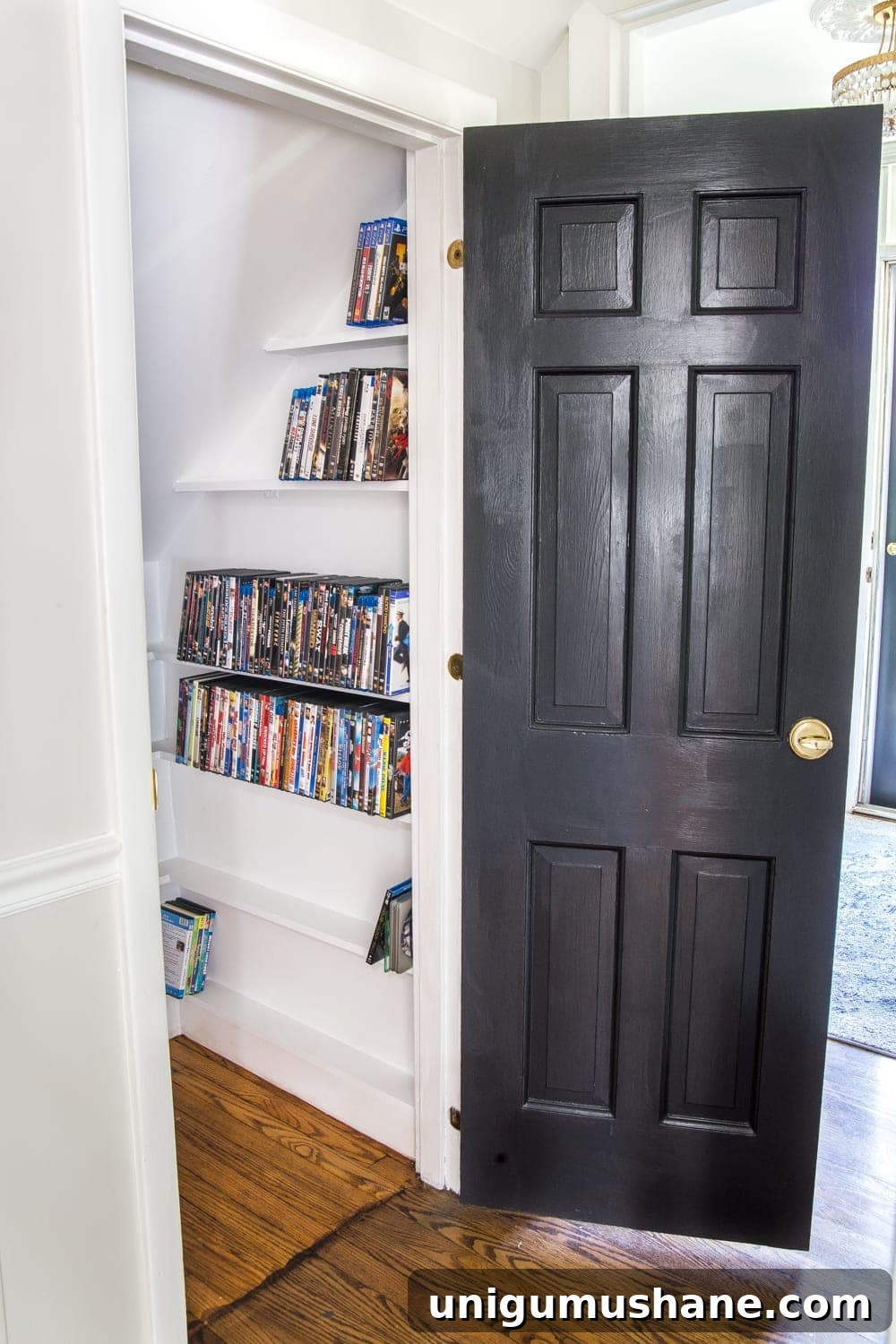
How we packed tons of media and DVD storage into a small under-stairs closet using just a few pieces of lumber in one weekend.
Our kids and grandkids will never fully understand the ritual of wandering through a Blockbuster on a Friday night—searching the new releases, hoping you’ll snag one of the few copies of Titanic, wandering the “old school” aisles (which, to a twelve-year-old, meant anything older than five years), begging for candy in exchange for promises to clean your room, and cursing the person who forgot to rewind the VHS. We didn’t realize how much we’d miss it until we started organizing our own physical collection at home.
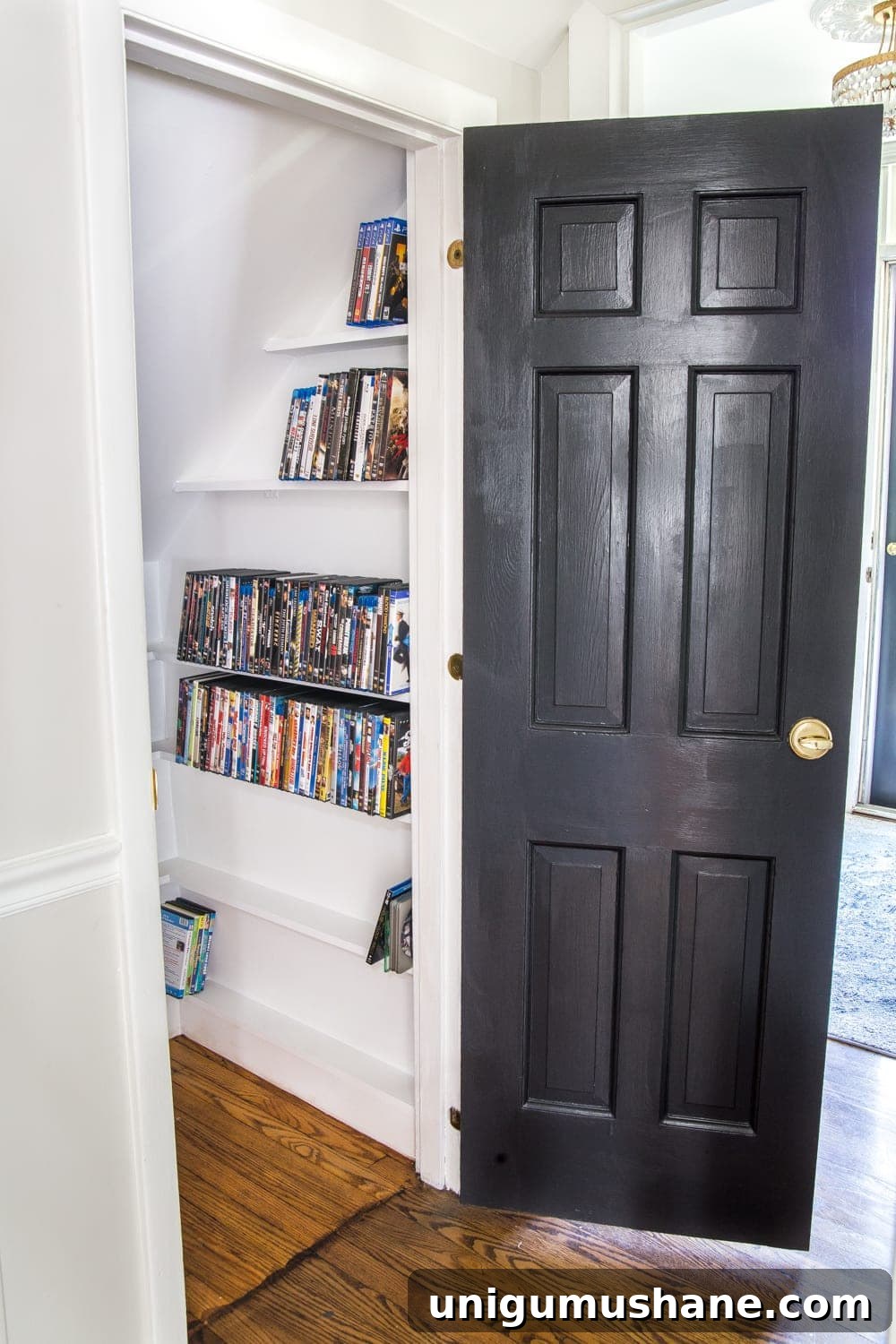
Instead of letting our DVDs sit in bins and boxes, we turned an awkward, under-stair closet into a compact, efficient mini-Blockbuster. We were determined to keep our hard-copy collection accessible and tidy, and this small makeover did just that.
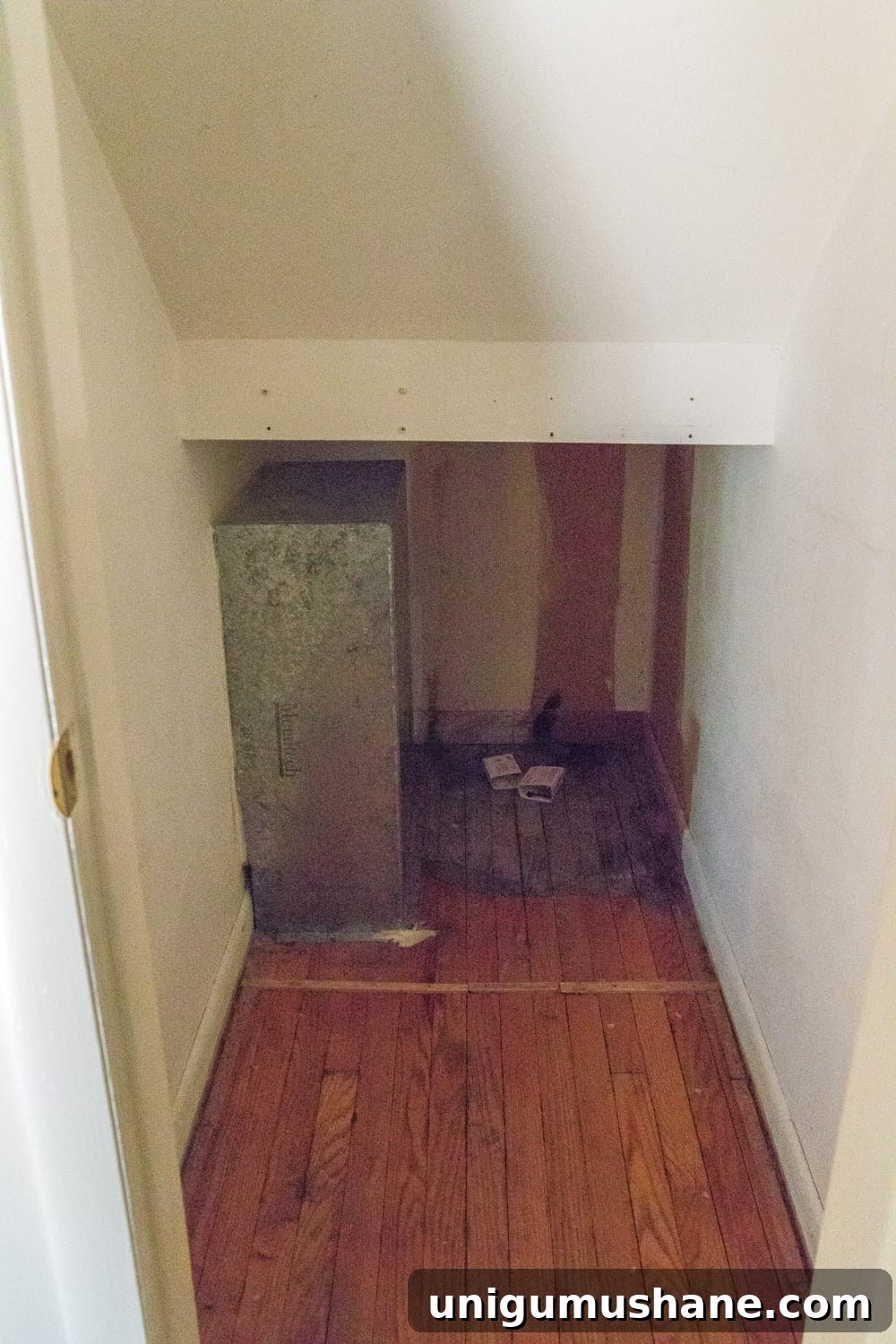
The space was oddly shaped, dark, and underused—perfect for a quick weekend project. Robert had the idea, and he and Olivia turned it into a fun father-daughter build. In a single day they transformed the tiny closet from a junk catch-all to organized media storage.
Supplies Used:
- 2 pieces of 2″ x 4″ x 8′ lumber
- 1 sheet of 1/4″ plywood (or similar thin paneling)
- 1 piece of 1″ x 4″ x 8′ lumber for shelf faces
- Circular saw (or handsaw and straight edge)
- Finishing nail gun (or hammer and finishing nails)
- 1 3/4″ finishing nails
- Power drill
- Wood screws
- Caulk and caulk gun
- Primer and paint plus brushes or small roller
- 1-1/2″ L brackets for added shelf support
The materials list above is simple and inexpensive, and most items are common in basic DIY toolkits. If you prefer different wall material, drywall or MDF work as well—plywood was chosen here because we had a scrap on hand and it’s quick to install.
The Steps:
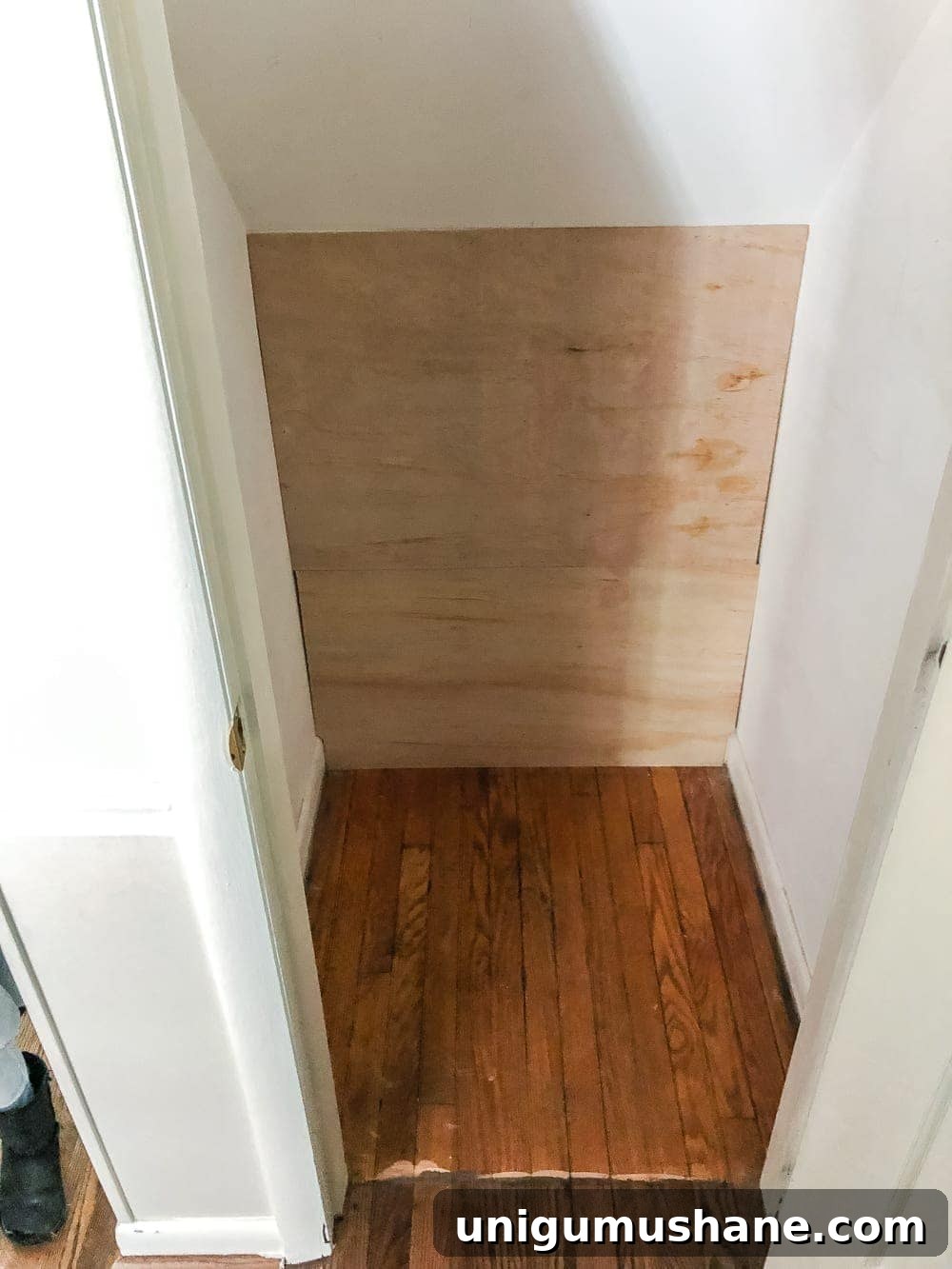
1. Evaluate the space and close off unusable areas. Because part of this closet extended beneath an inaccessible section of the stairs (next to the air return vent), we framed it in using 2×4 boards and wood screws to create solid “studs” for mounting a wall. Framing gives you a flat surface to attach shelving and makes the finished project look more intentional.
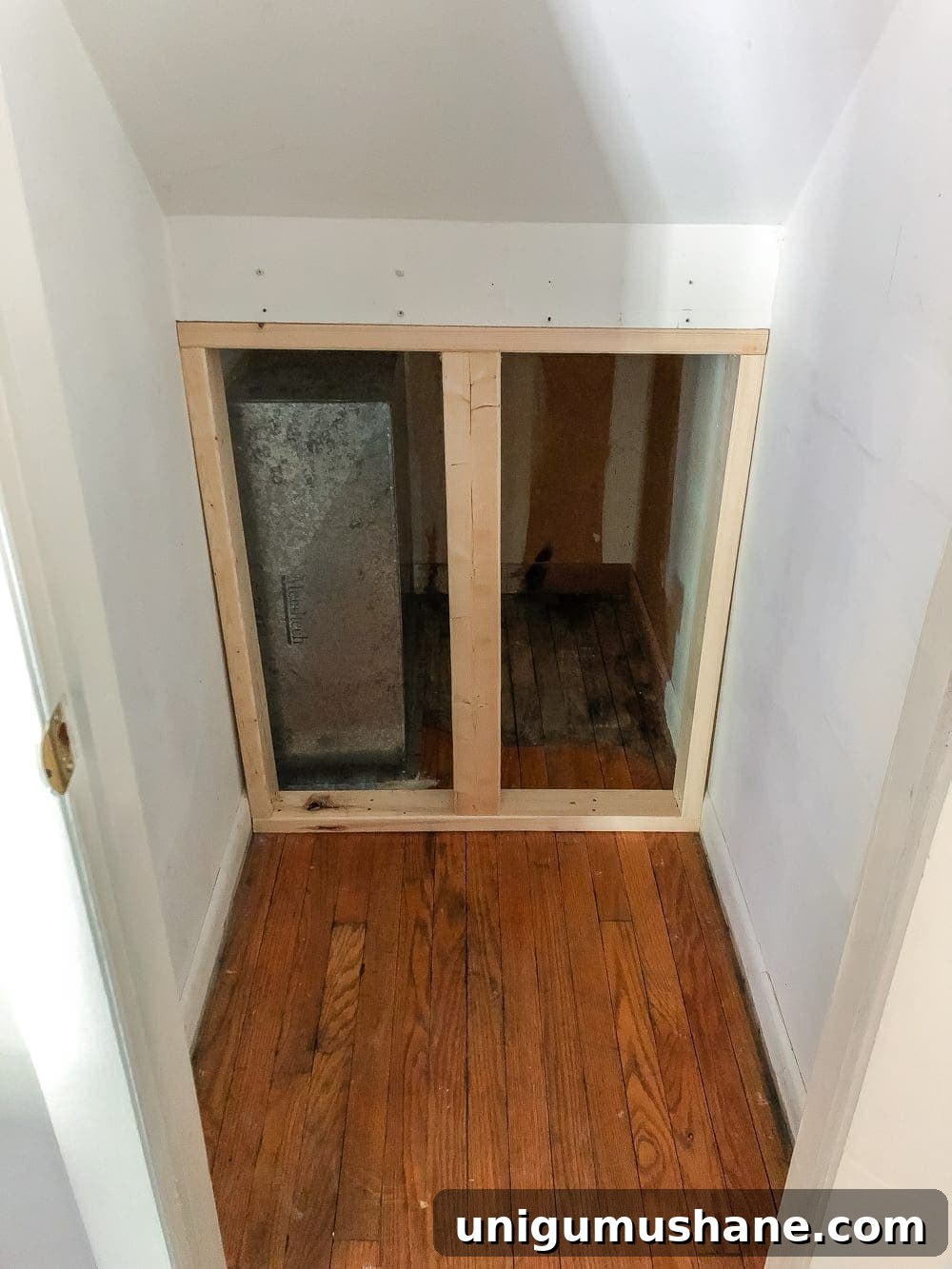
2. Attach the wall panel. We cut the plywood to match the framed opening and nailed it in place with a finishing nail gun. If you’re using drywall, follow normal installation steps. Make sure the panel fits snugly and check for gaps around the edges before moving on.
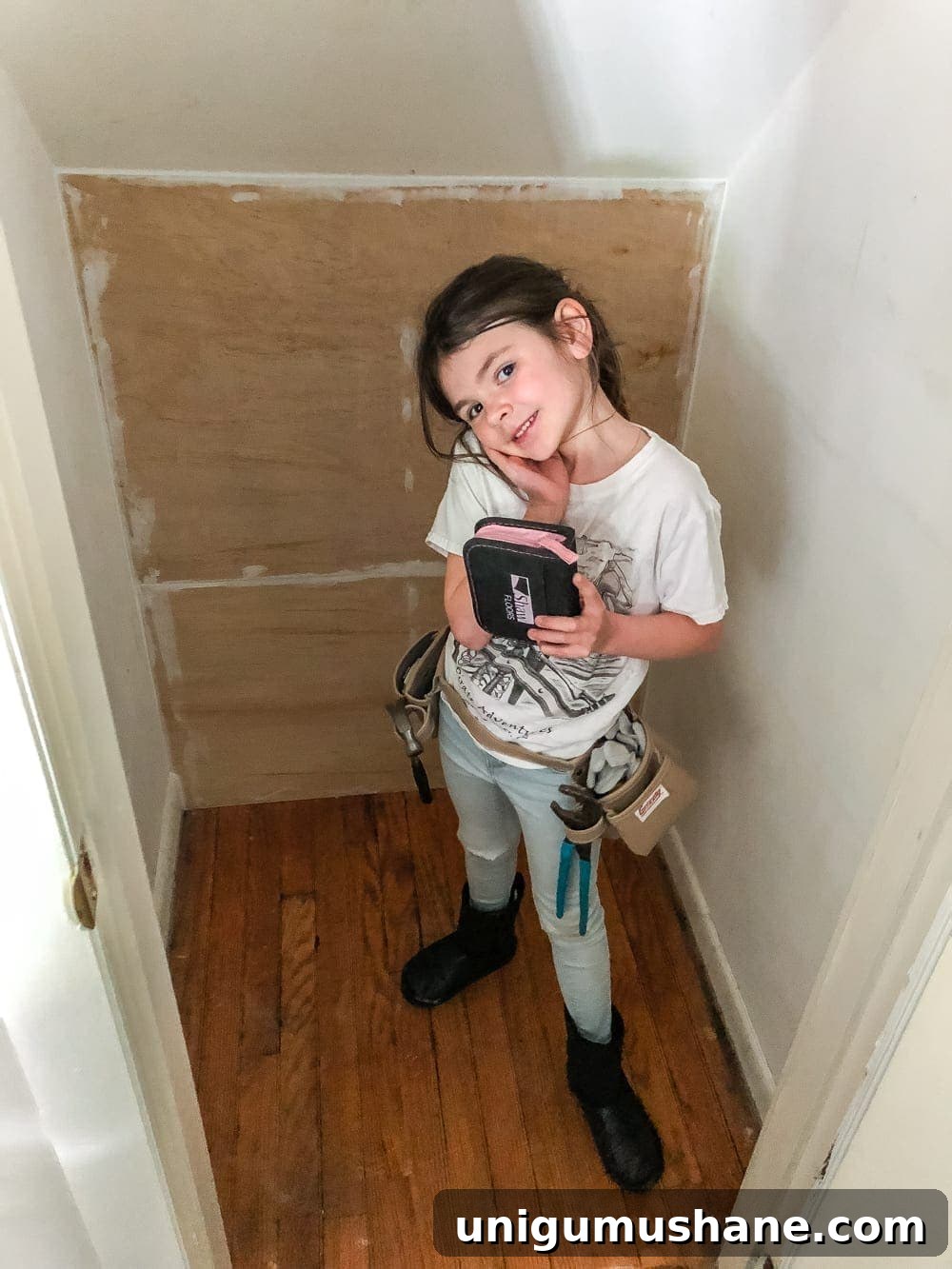
3. Caulk the seams. Running a bead of caulk along the edges smooths the transition between wall and frame and blocks dust. This is a great step for a clean, finished look—our little helper became a caulking pro pretty quickly.
4. Plan your shelf spacing for DVDs. Standard DVD cases are roughly 7.5 inches tall, so we decided on 10-inch vertical spacing to allow for easy access and a bit of breathing room. Measure across the width of the wall at each shelf height because the closet wall is angled—each shelf width might be slightly different.
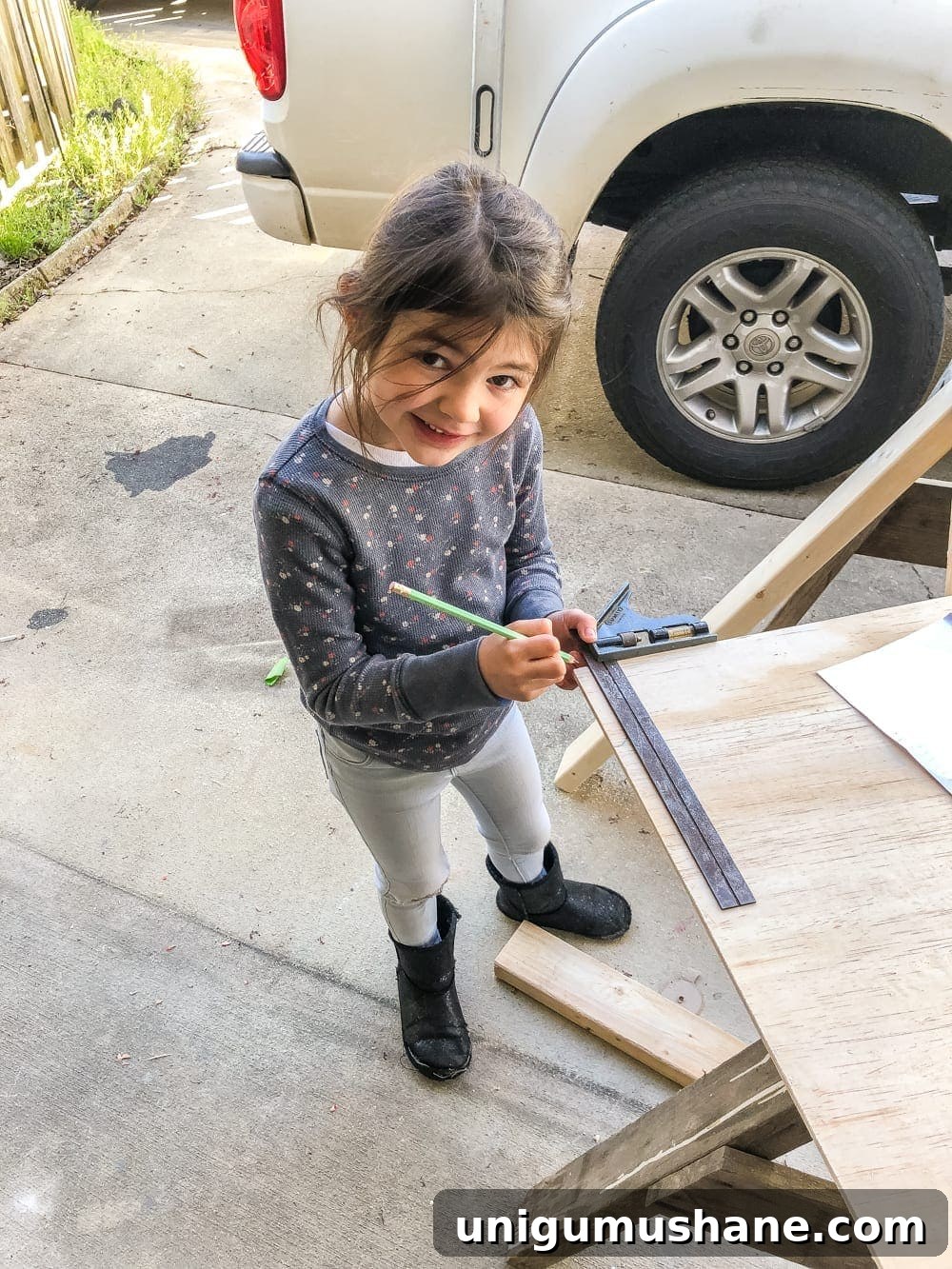
5. Cut the shelf boards to fit. We used 1×4 boards cut to the exact widths needed for our angled wall. A circular saw with a straight edge made quick work of these cuts. Label each board as you cut so you know which shelf it belongs to.
6. Mount the shelves using L brackets. Secure each 1×4 board to the wall using 1-1/2″ L brackets and wood screws. Where possible, screw into studs for extra strength or use multiple screws into the framed plywood. Brackets keep the shelves level and able to support full rows of DVDs without sagging.
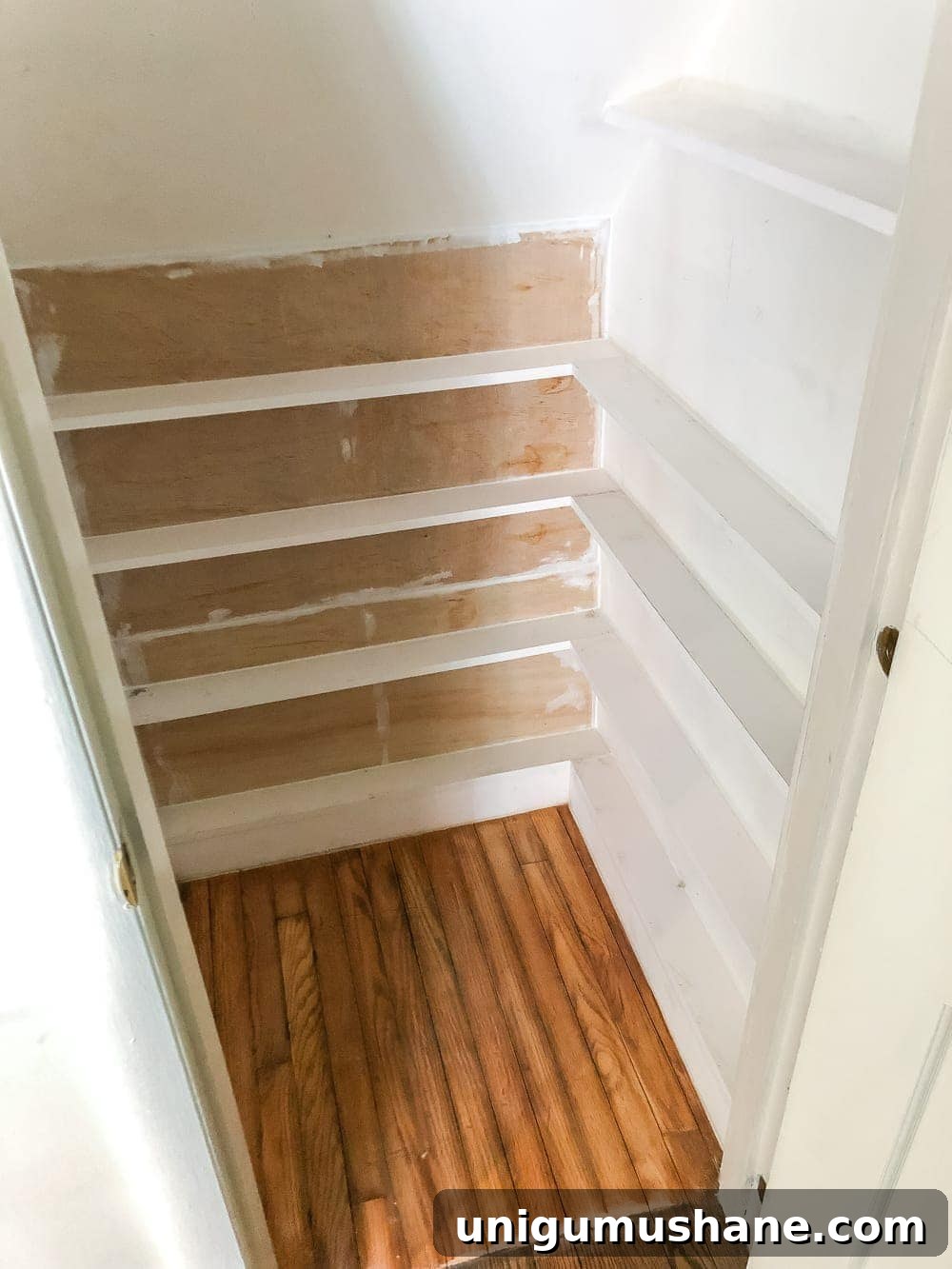
7. Finish the shelves. After installation we caulked around the shelf seams for a seamless look, primed the wood, and painted everything. A coat of primer helps the paint adhere and hides knots or imperfections. Once painted, we had a surprising amount of organized DVD storage and everything fit neatly.
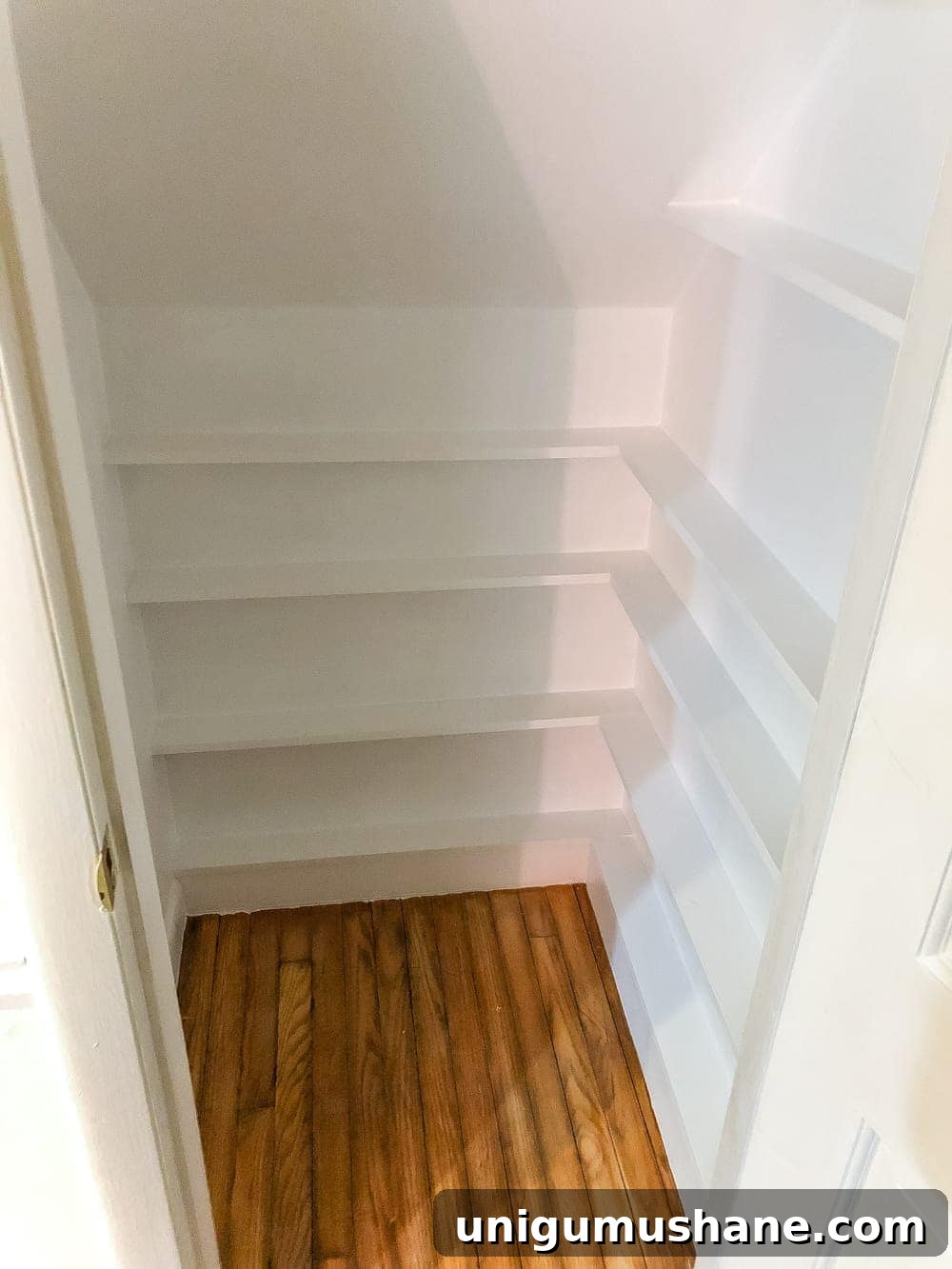
With the job finished, the closet holds dozens of DVDs in a compact footprint and looks tidy and intentional. It may not be showy, but the organization and accessibility are a big win—especially when you want to find a movie quickly.
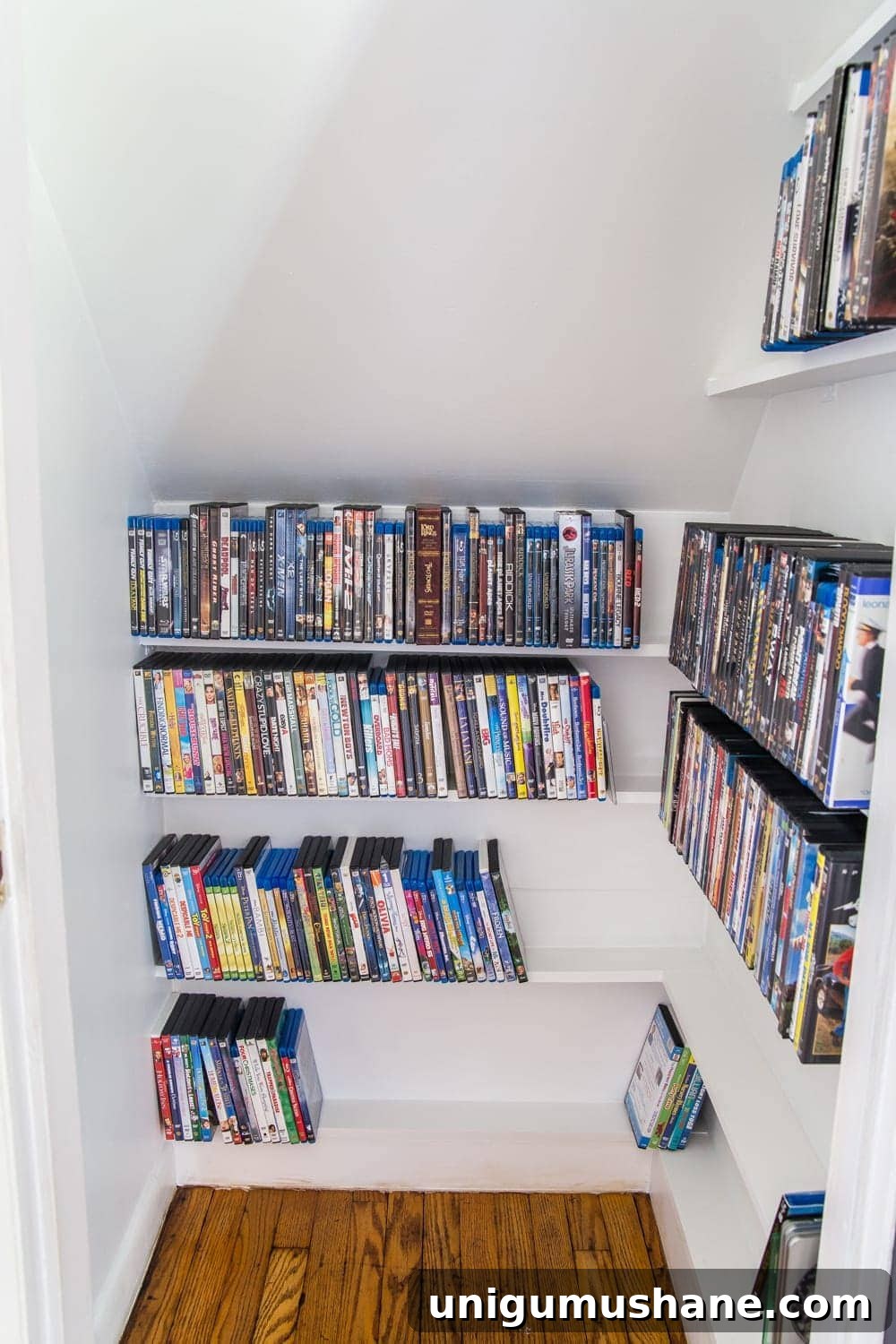
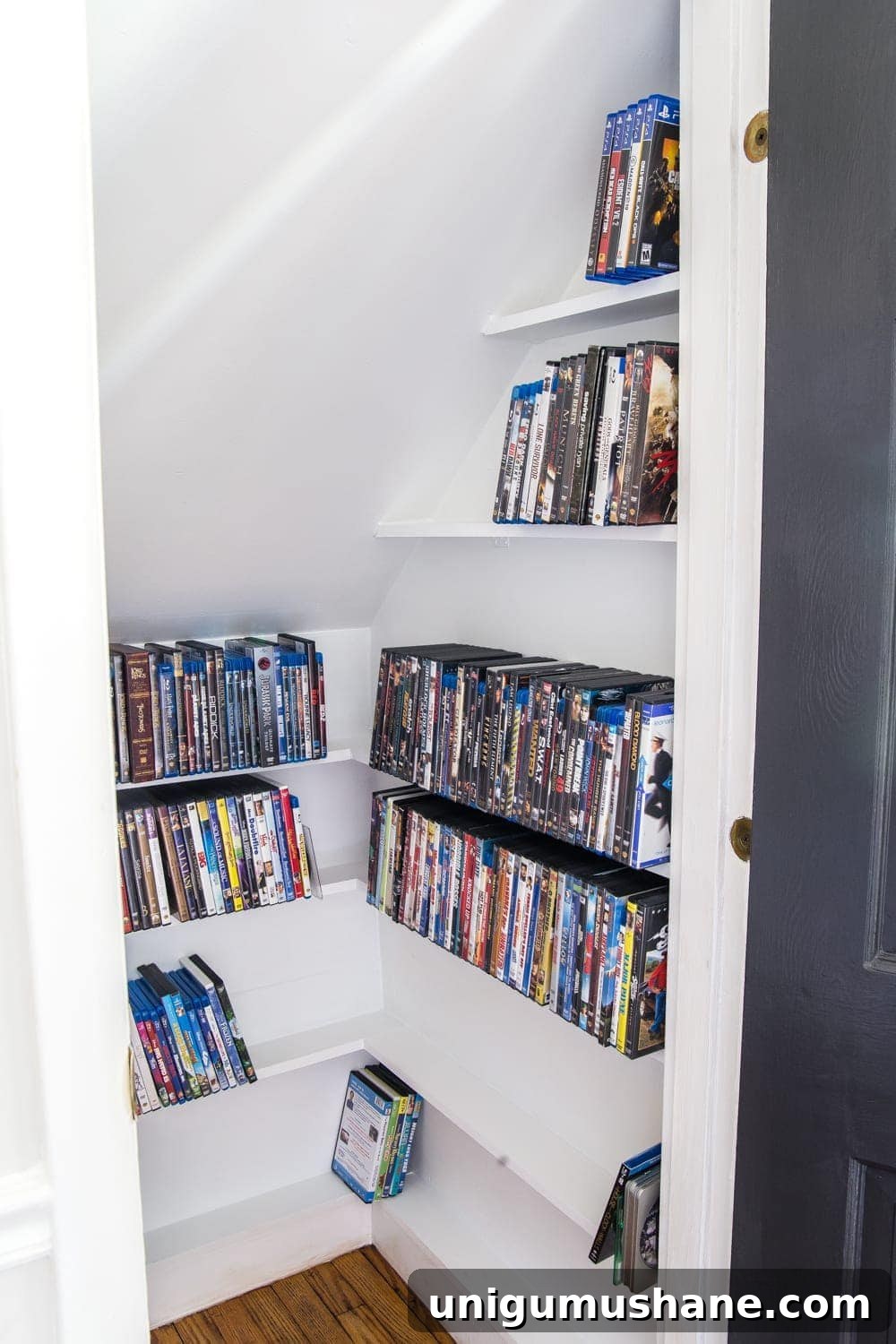
We joked about shopping for more DVDs, but whether you keep physical media or move to digital, this kind of small-space organization is useful for all sorts of collections—books, games, or craft supplies. The key takeaways: measure carefully, frame for a flat mounting surface, use brackets for strength, and finish with caulk and paint for a professional look.
How do you store your movies? Are you keeping shelves full of cases, using binders, or streaming everything? We’re still a little old school and not in a hurry to go fully digital—at least not yet.