
Budget-Friendly High School Classroom Decor That Feels Like Home
During the first week of a new semester, one of my students gave me one of the best compliments I have ever received. She looked around my classroom and said, “Mrs. Shaver, you’ve got style!” If you have ever taught teenagers, you know they are not easy to impress. They are honest, direct, and rarely say something just to be polite. So when a confident 16-year-old tells you your classroom has style, it means something. I smiled for the rest of the day.
If you are new here, I have been a high school English teacher for five years. In that time, I have learned more about dedication, patience, hard work, and the joy of making a difference than I could ever fully explain. This year is bittersweet because Robert and I have decided that I will become a stay-at-home mom after June so I can spend more time raising our little one. Still, I will always look back with love on the more than 800 students I have had the privilege to teach.
From the first day I walked into my classroom, I knew I wanted it to be more than a place where students completed assignments. I wanted it to feel safe, welcoming, and comfortable. I wanted students to feel accepted there. I also wanted it to be a peaceful place for me, because teachers spend so many hours in their classrooms. Of course, decorating a high school classroom on a teacher’s budget is not easy. Education budgets are tight, and most classroom money goes toward lesson plans, books, copies, and instructional materials. But with creativity, thrift-store finds, fabric scraps, and a lot of hot glue, I was able to create a warm classroom environment without spending a fortune.
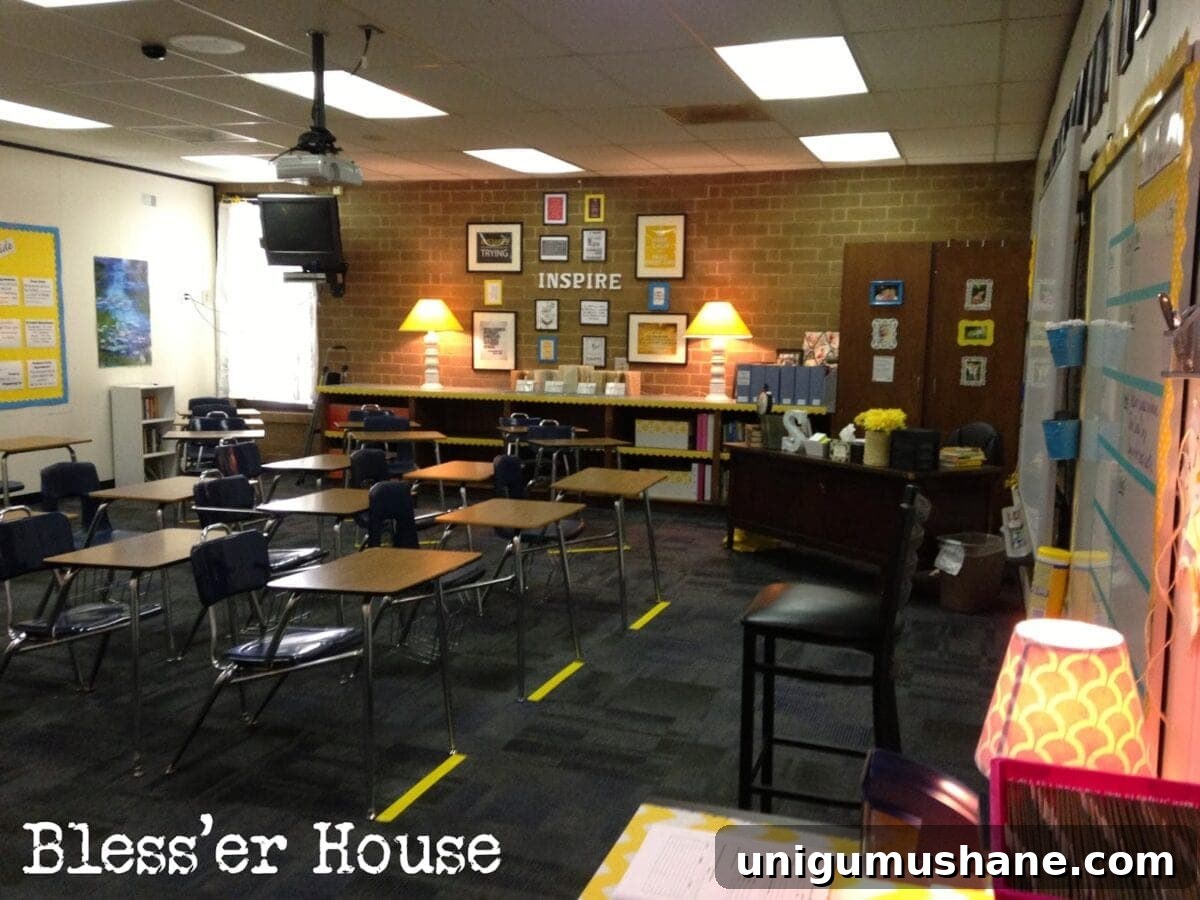
Colorful, decorated classrooms are common in elementary schools, but by the time students reach high school, classroom decor often disappears. There are understandable reasons for that. High school teachers are focused on standardized testing, technology requirements, complex lesson planning, Common Core expectations, higher-order thinking skills, grading, parent communication, and countless other responsibilities. Decorating a classroom is usually at the bottom of the list.
Even so, I believe the atmosphere of a classroom matters. At the end of each semester, I give my students a questionnaire so they can share feedback about my teaching, lessons, and classroom environment. Many of them have written comments such as, “I loved coming to your classroom. It felt like my home away from home,” or, “I could think better in here,” and, “Your room makes me feel like you care about us.” Those words stayed with me.
Last semester, even while teaching lower-level students, every student passed. Many told me they earned a higher grade in English than they ever had before. Their writing improved significantly, and their reading comprehension grew as well. My class is not an easy A. We write text-based argumentative essays, study major American classics, and work hard. I cannot claim that classroom decor alone improved their grades, but I do believe a comfortable learning environment can help students feel calmer, more focused, and more willing to try.
After all, wouldn’t you think better in a cozy, welcoming classroom than in a blank, institutional space?
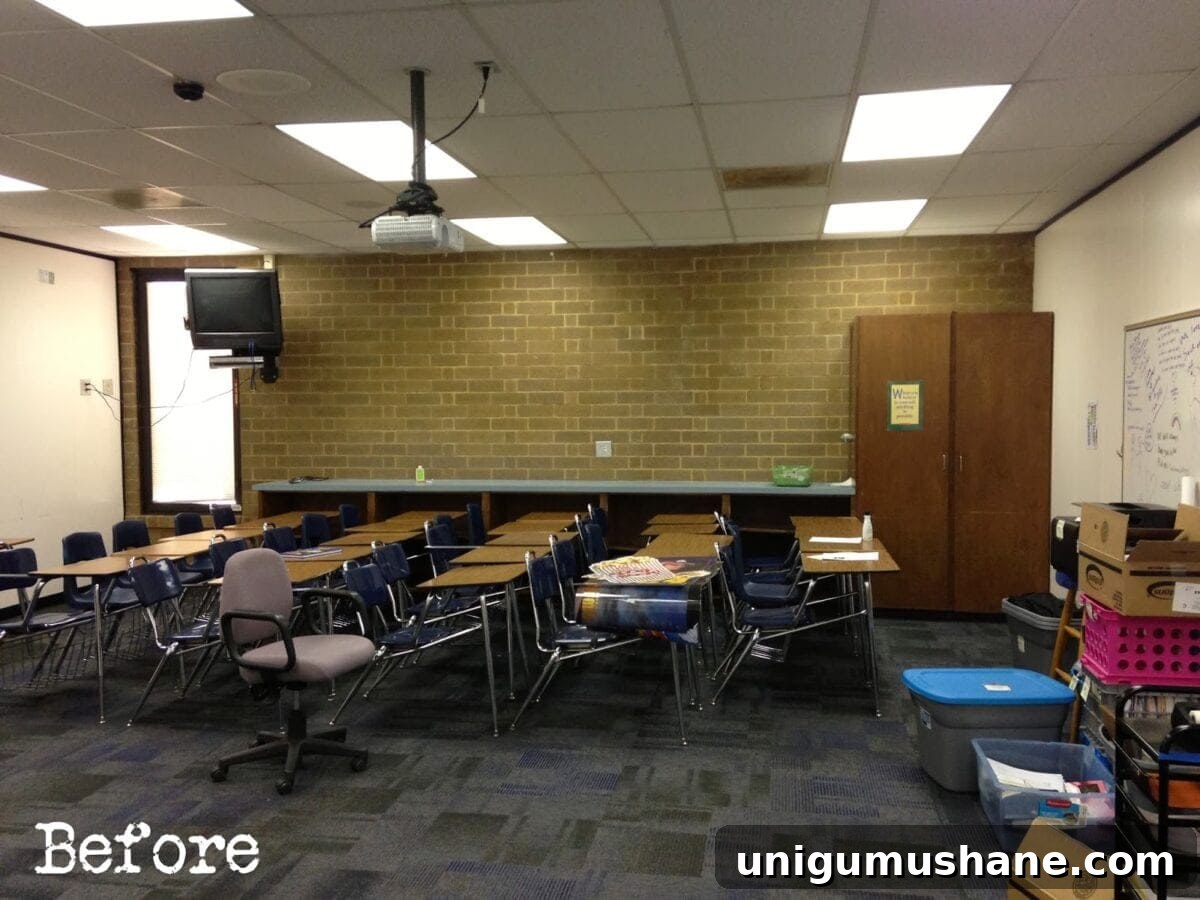
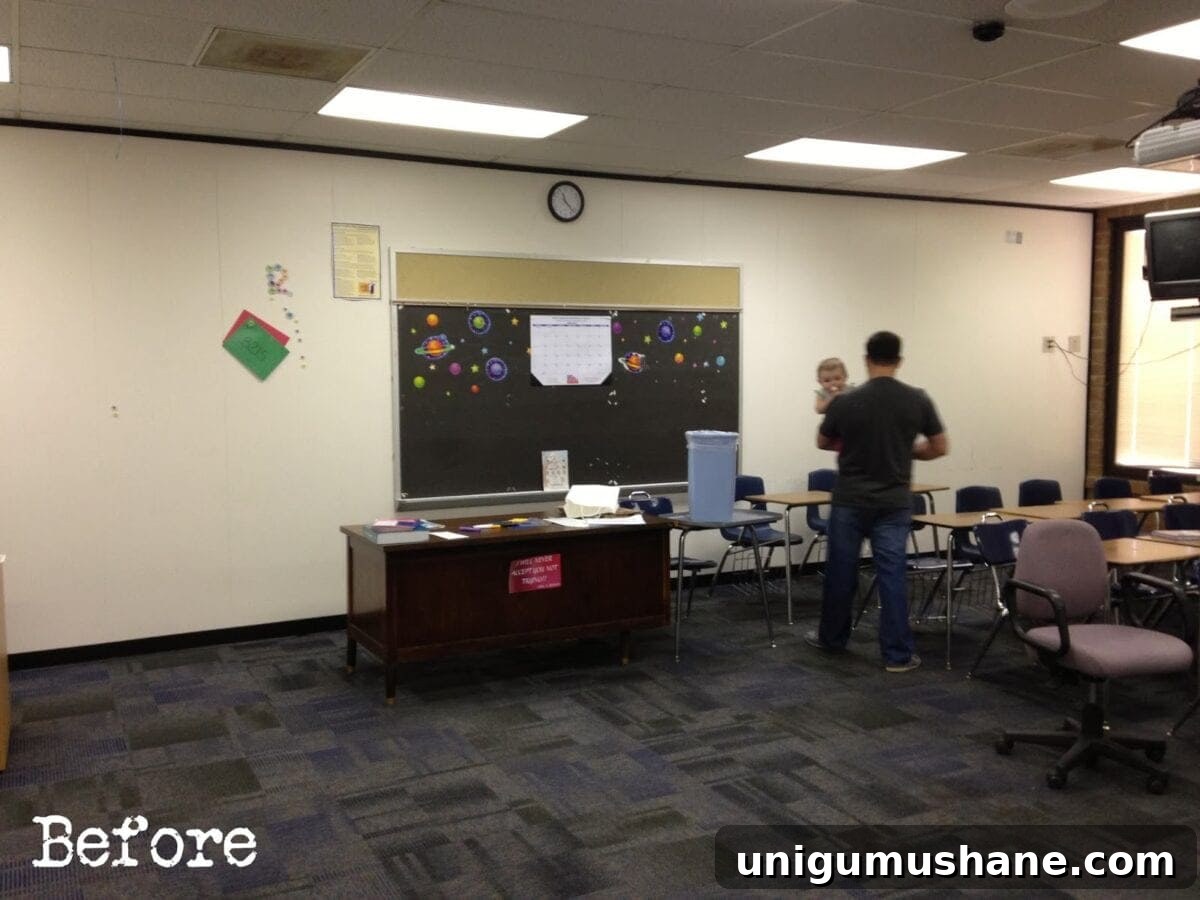
For many teachers, a simple classroom is all they can manage, and that is completely understandable. Teachers are constantly planning lessons, grading, adapting instruction for different learning styles, communicating with parents, attending meetings, supervising activities, and adjusting to new technology. Still, if you are looking for affordable high school classroom decorating ideas, here is how I made my classroom feel more like home.
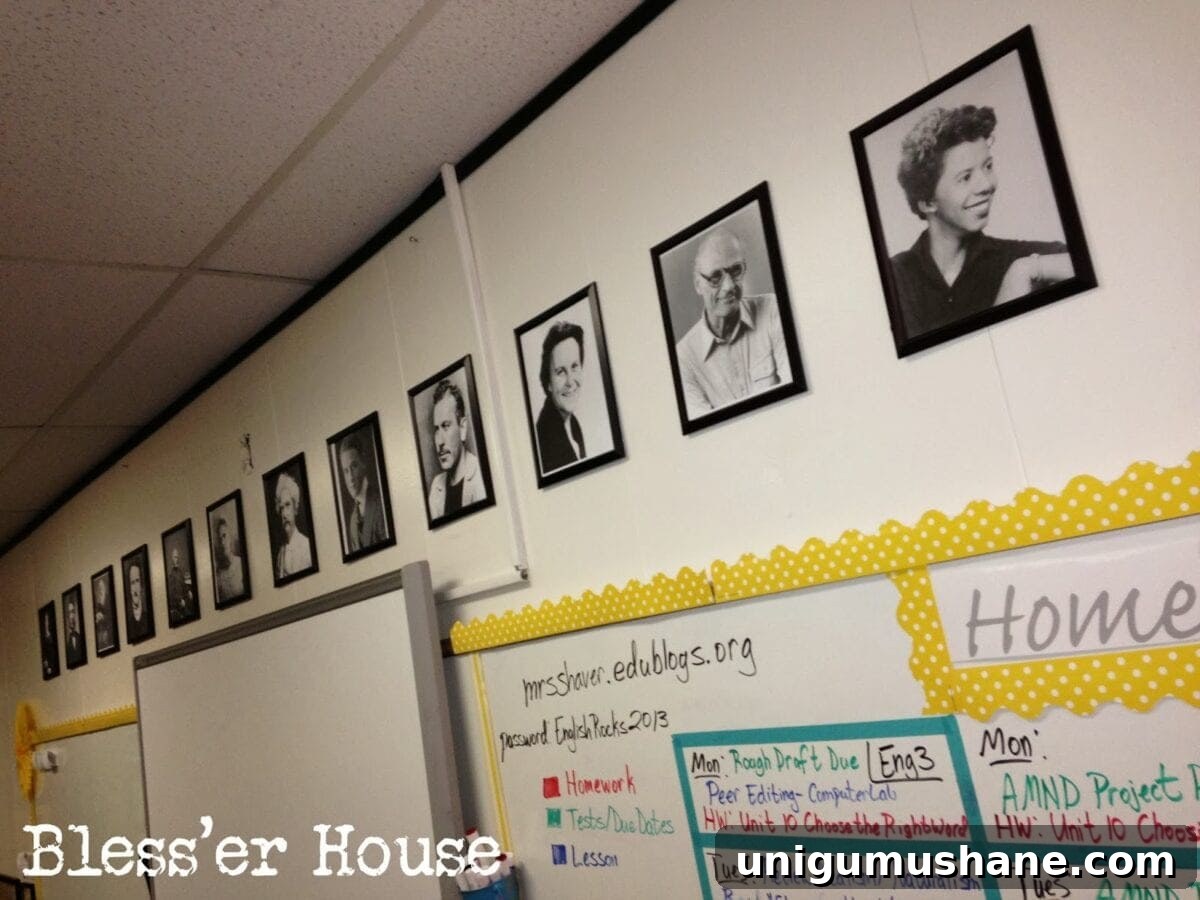
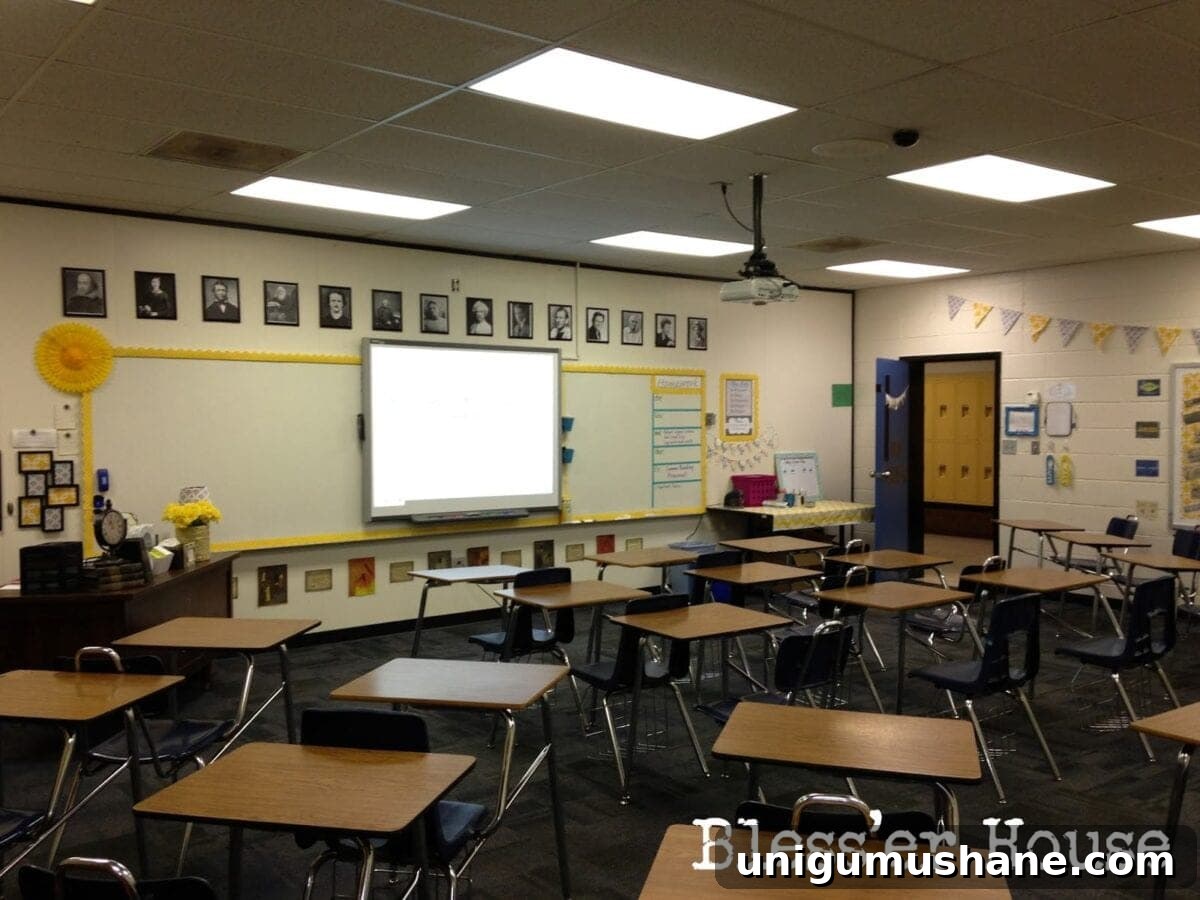
Author Wall: $8
For my author wall, I printed black-and-white photographs of the authors we would study during the semester. I found inexpensive frames at the dollar store and the Habitat for Humanity ReStore. The entire wall cost about $8. It also became part of my instruction because I used the photos when introducing authors and their biographies. By the end of the semester, almost all of my students could identify each writer on the wall.
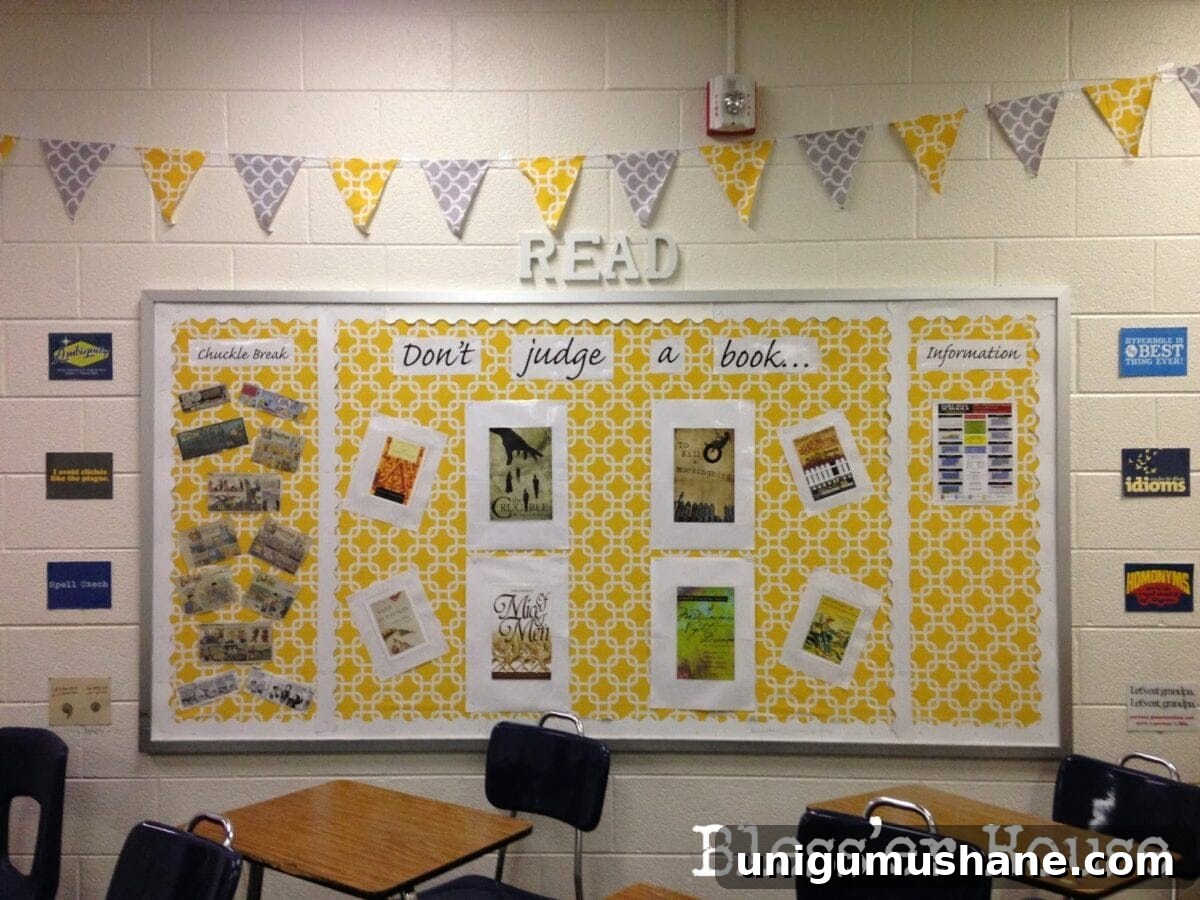
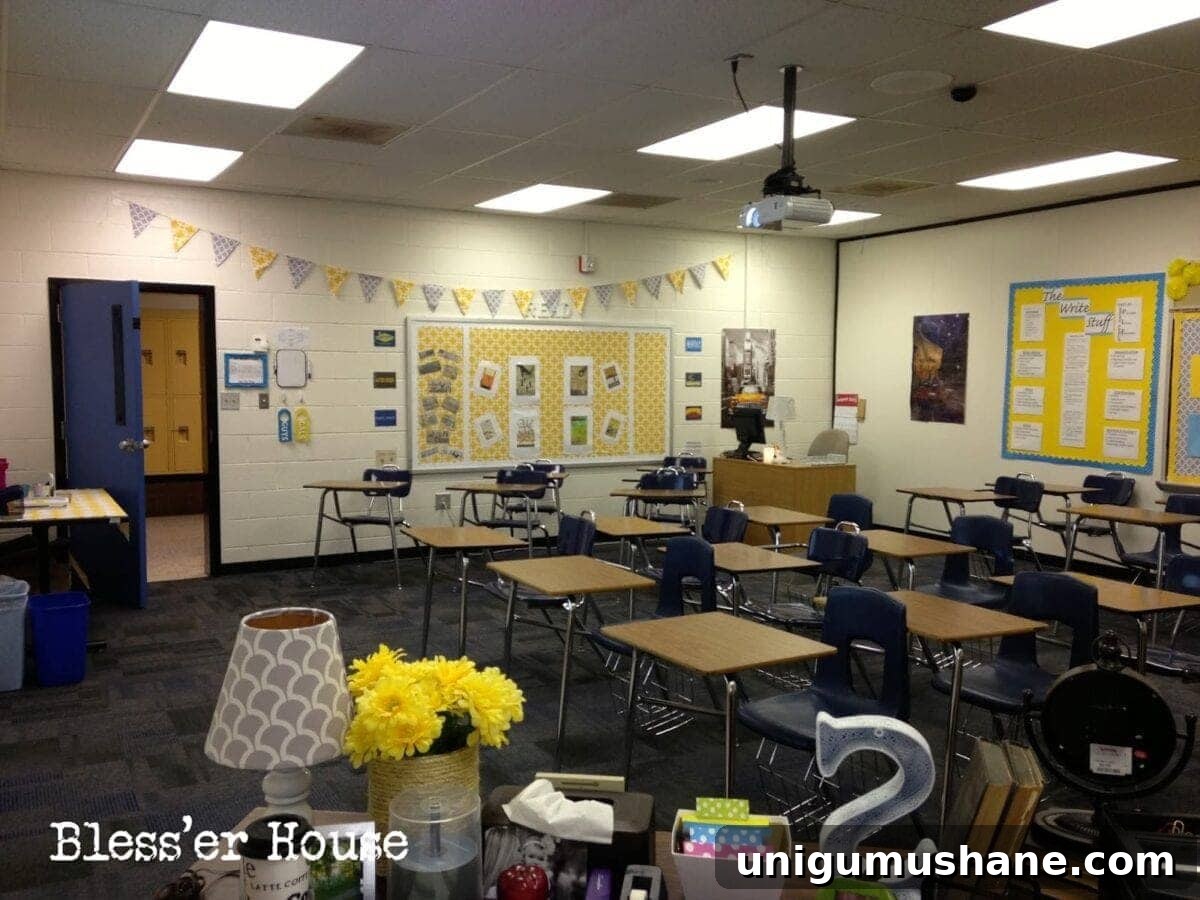
Bulletin Board and Bunting: $27
I love the cheerful pops of yellow in my classroom. Since my school colors are blue and yellow, those colors became the inspiration for the room. For this bulletin board, I bought a few yards of fabric for about $16 and stapled it to the board. I added a plain white border from Staples for about $3. With the leftover fabric scraps, I made bunting by cutting triangles and attaching them to twine with hot glue.
The “READ” letters were on sale at Michael’s for about $8, and I used a coupon as well. On one side of the bulletin board, I displayed funny school-related comics I had collected over the years. In the center, I placed printed images of the novels we would read that semester, mounted them on white computer paper, and laminated them. On the surrounding wall space, I added printed and laminated grammar and literary device memes to bring in humor and reinforce English concepts.
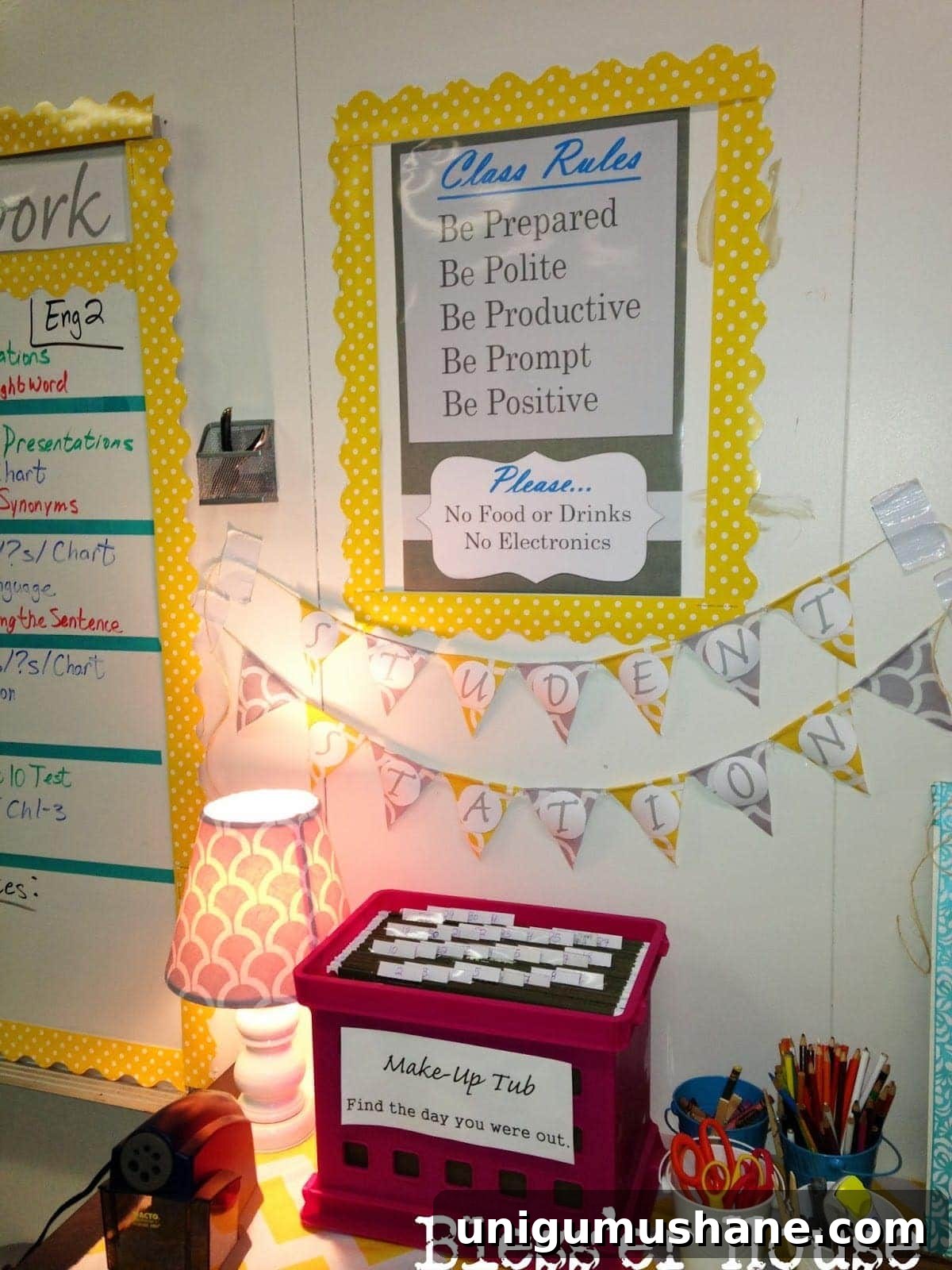
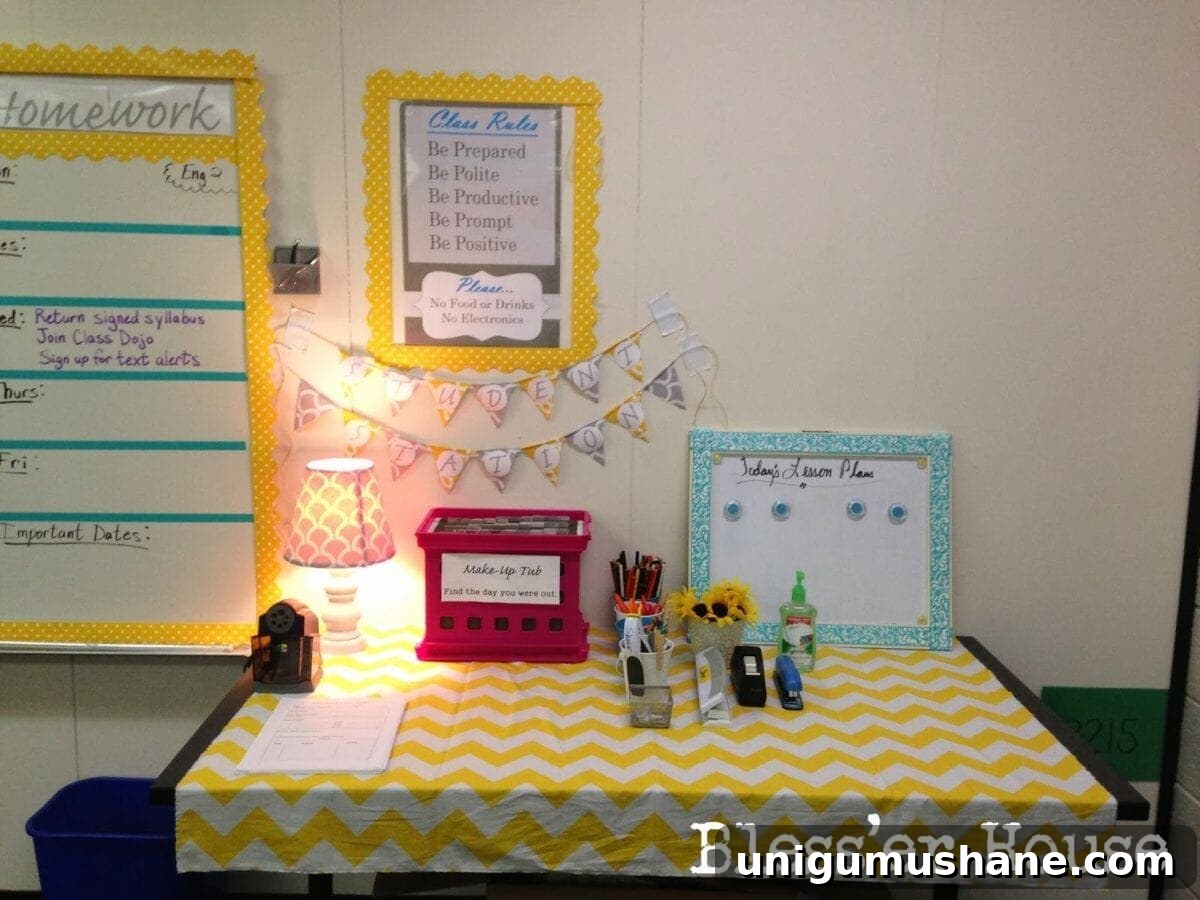
Student Station: $41
This area is one of the most functional parts of my classroom. My students know that if they need scissors, colored pencils, a stapler, paper clips, tape, or other basic supplies, this is where they can find them. It keeps them from gathering around my desk and helps them take responsibility for classroom routines.
I designed the rules poster in Photoshop and printed it at Office Max for about $10. The small lamp cost $8 at the Habitat for Humanity ReStore. It was originally brown and worn-looking, but white spray paint and a small piece of fabric gave it a fresh look. The supply buckets were $1 each from the dollar section at Target. I made the bunting using leftover fabric, hot glue, twine, and letters printed in Microsoft Word.
The make-up work tub came from Walmart for about $5. I already had folders on hand, so I numbered them for each day of the month. The table covering is just a couple yards of inexpensive fabric, and the flower pot is actually a pen cup. I taped flowers to the pens so students would remember to return them after borrowing them. I already owned the small magnetic whiteboard, which I use for papers with no names. A bit of ribbon around the board finished the look.
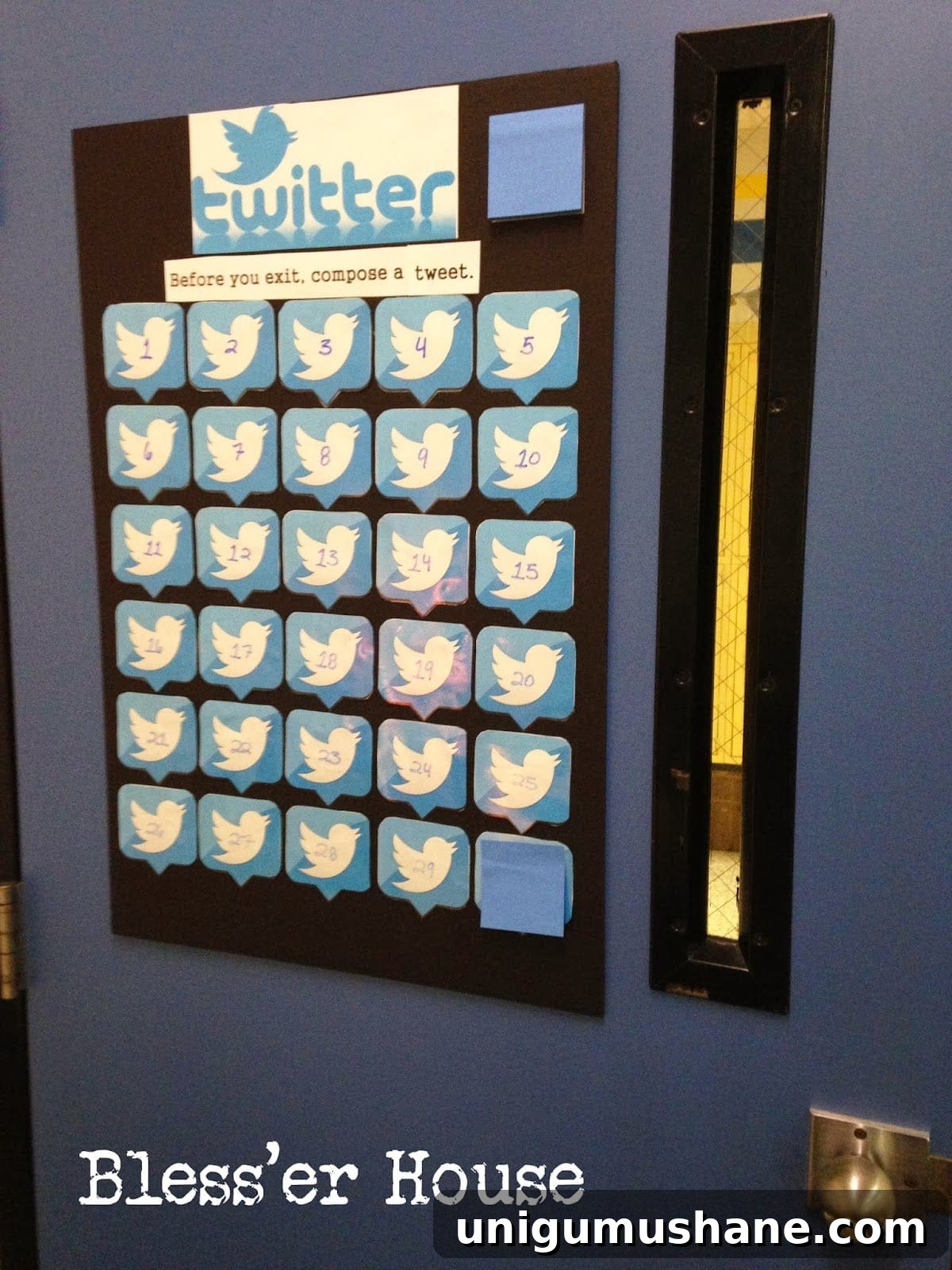
Twitter Exit Ticket Board: $6
This small board is one of my favorite classroom tools, and my students enjoy using it too. I use it during the last five minutes of class to check for understanding. Students write their responses to a prompt on sticky notes and place them on their numbered spots. The numbers help me track responses in case a student forgets to write a name.
Students can ask a question about the day’s lesson, identify something they still do not understand, or tell me what writing skill they need help with, such as MLA citations or transitions. I can also use the board as a quick assessment by asking them to recall one important concept from the lesson. To make it, I used black foam board, printed paper, laminated images, and hot glue.
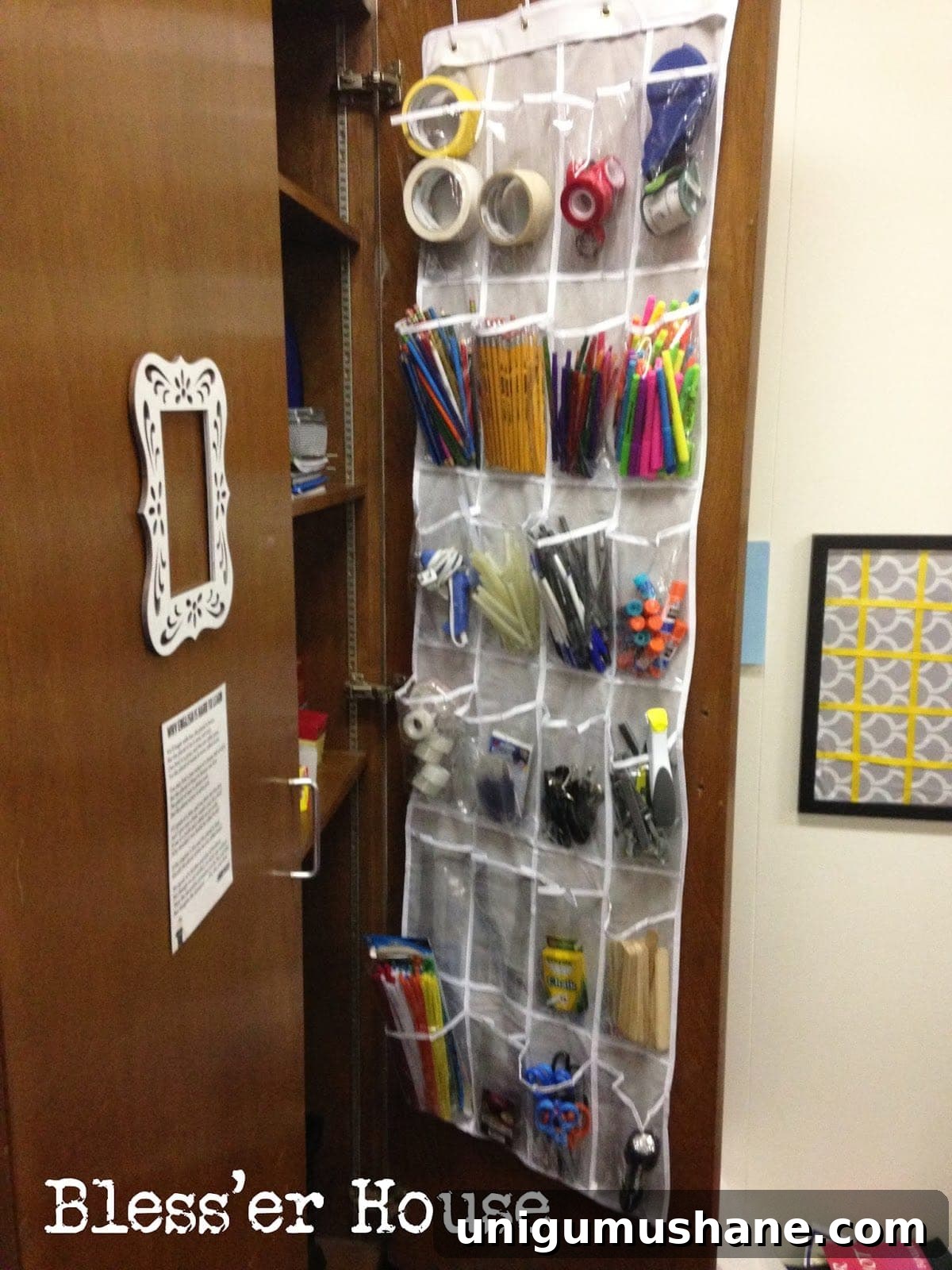
Supply Organizer: $4
This organizer is simple, inexpensive, and incredibly useful. It is a repurposed shoe organizer from Walmart, and it keeps small classroom supplies from disappearing into random drawers and boxes. When I am in a hurry, I can quickly find exactly what I need. It also works well at home for organizing cords, chargers, and other small items that usually end up tangled in a drawer.
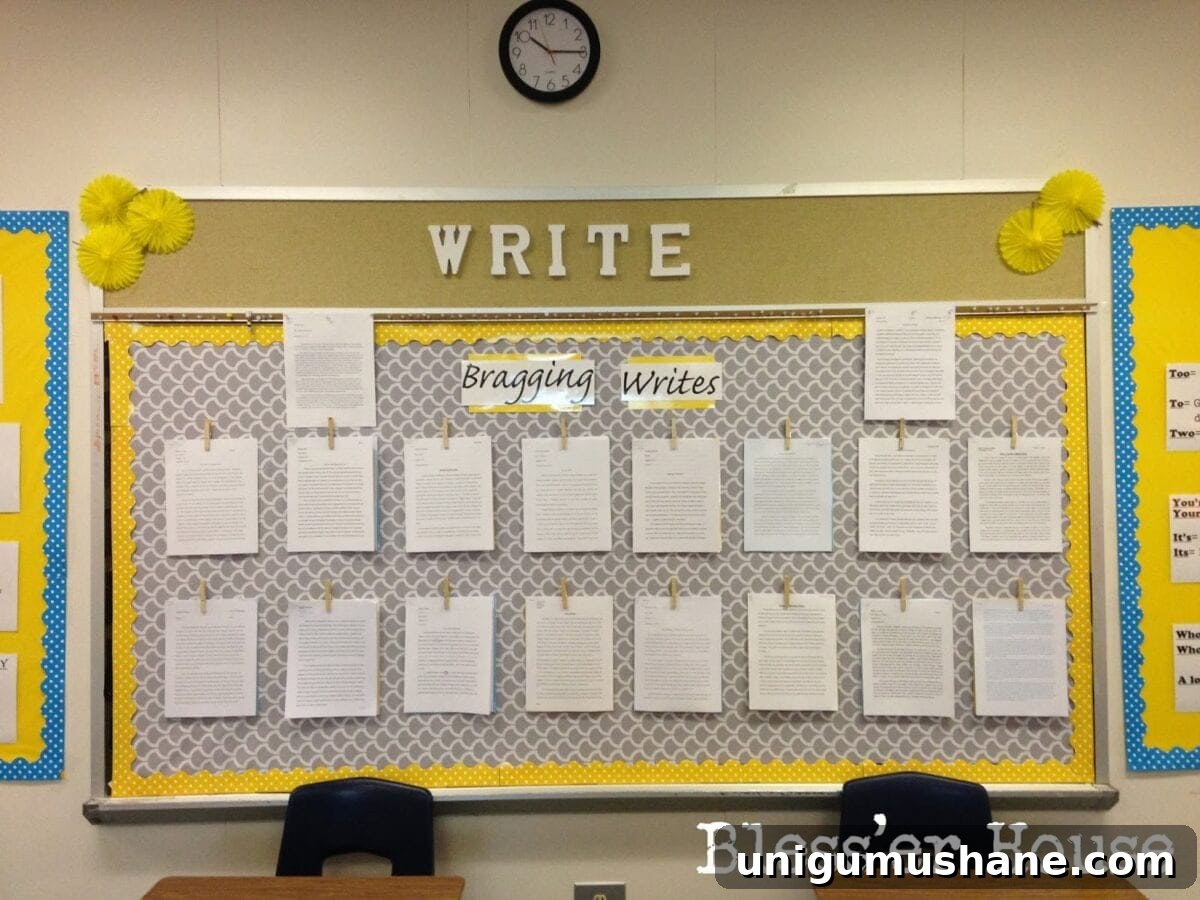
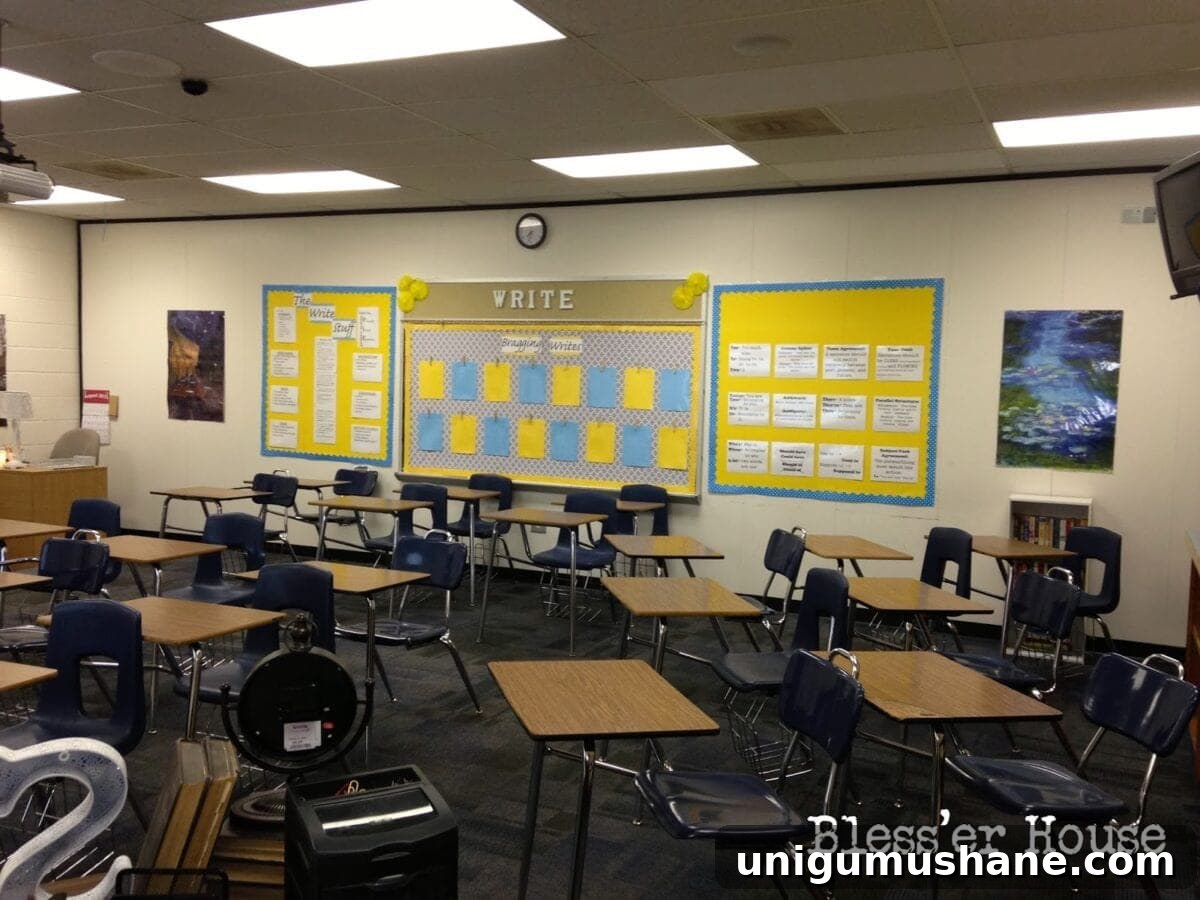
Bragging Writes Wall: $44
My students compete to get their work displayed on this wall. The students whose essays are chosen often tell me it boosts their confidence as writers. Even better, the wall serves as a learning resource. Students who struggle with writing can look at strong examples and better understand what effective essays include.
The cost included fabric for about $16, “WRITE” letters from Michael’s for about $10, a border from Staples for $3, party fans from Party City for $5, and clothespins for $2 to attach essays to the board. The side bulletin boards were made from dollar-store plastic party tablecloths. I added printed posters about common grammar and writing mistakes that I created in Microsoft Word. The borders cost about $6 total. The Van Gogh and Monet posters were inexpensive finds from my college dorm days.
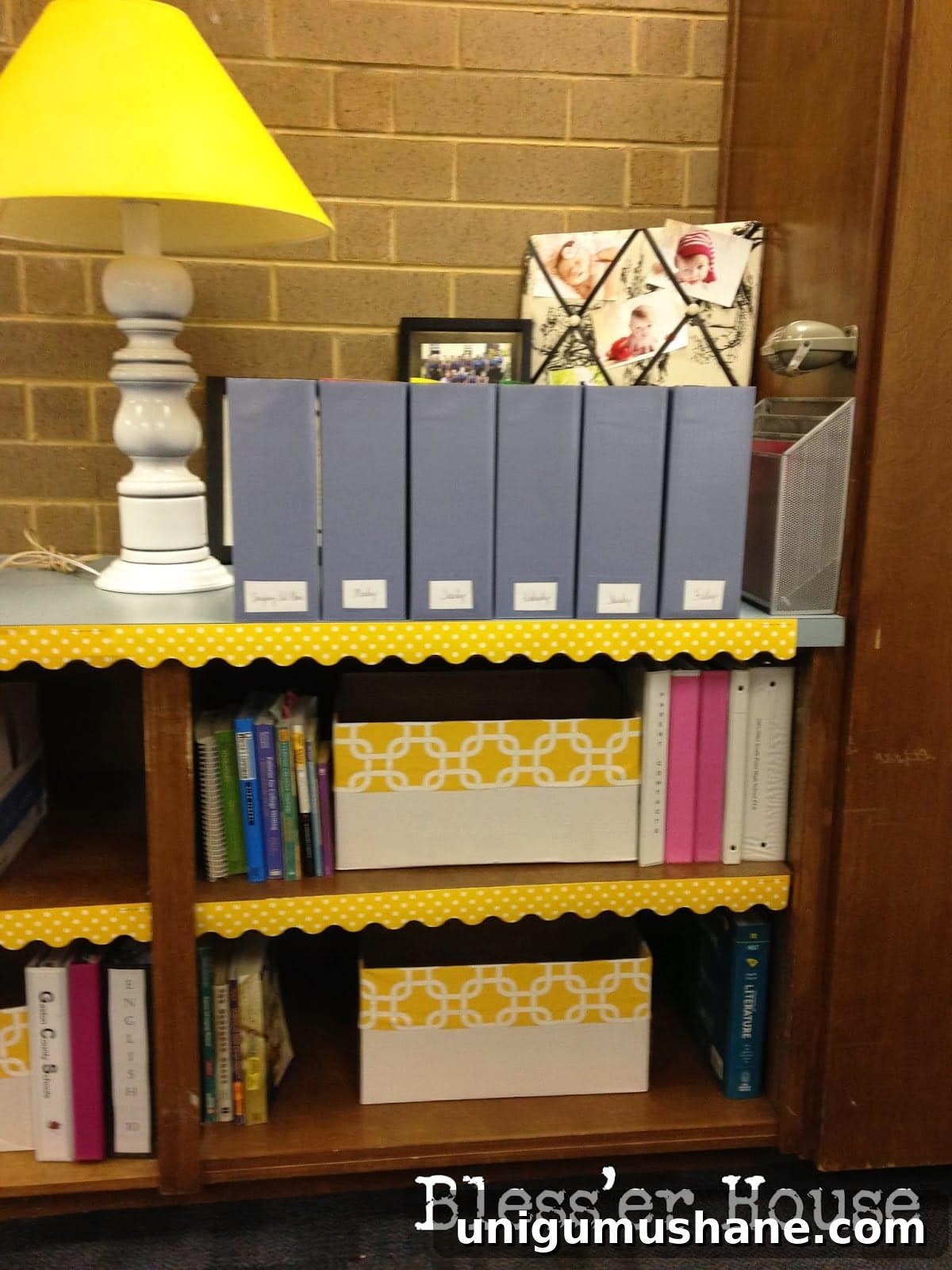
Copies and Lesson Organizers: $11
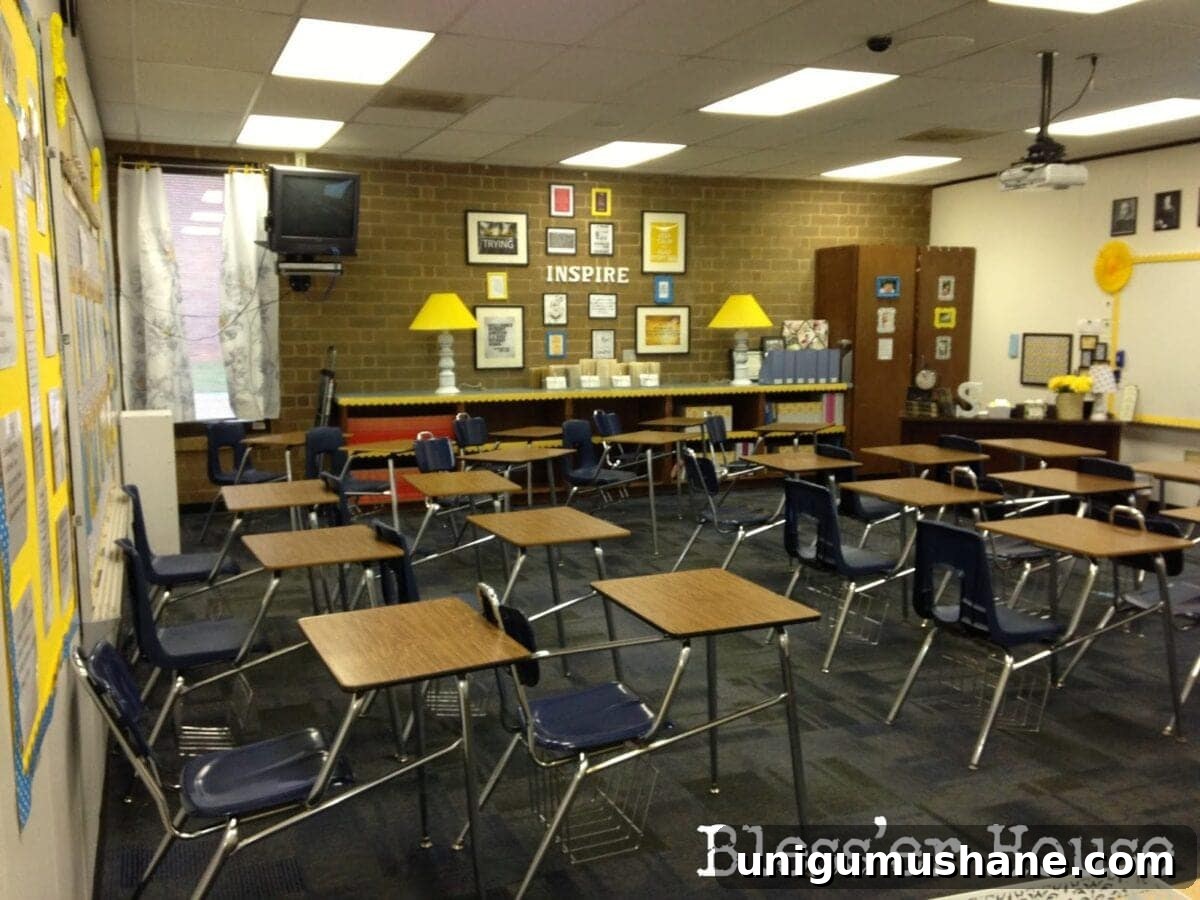
This corner gets a lot of use. The two storage boxes are actually paper ream boxes from the copy room. I dressed them up with strips of scrap fabric and hot glue. They are perfect for holding master copies and extra class copies during a busy lesson. Every teacher knows about the mysterious stack of papers that grows on the desk until it starts to topple over. Mine still exists, but at least it is hidden.
The magazine boxes on top of the counter came from the dollar section at Target. I use them to organize copies and lesson plans for the week, which I usually prepare on Fridays. One extra magazine box is labeled “911 Sub Plans” and holds a binder with resources, schedules, important information, emergency lesson plans, and an attendance roster. I also added bulletin board border to the front of the bookshelves to make them look more polished. The books and memo board were items I already had from college.
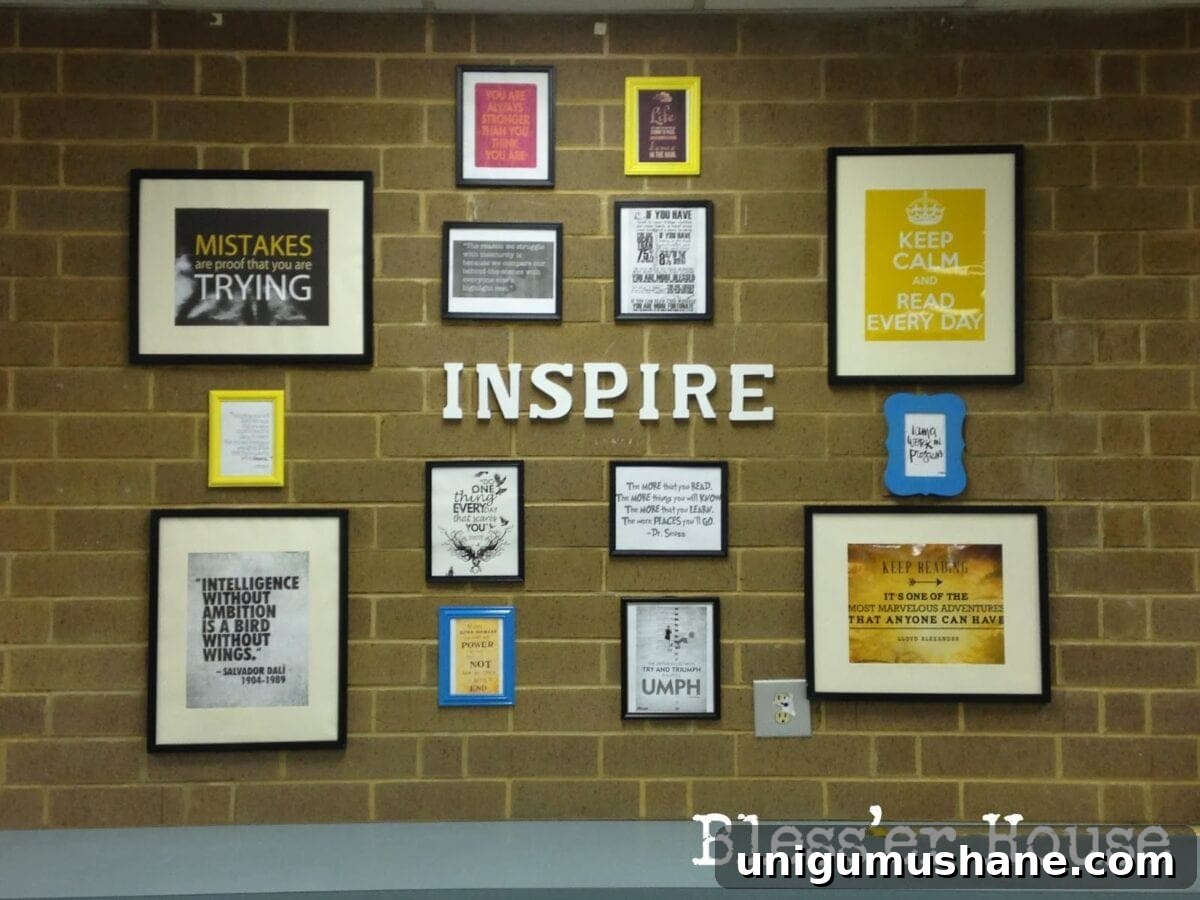
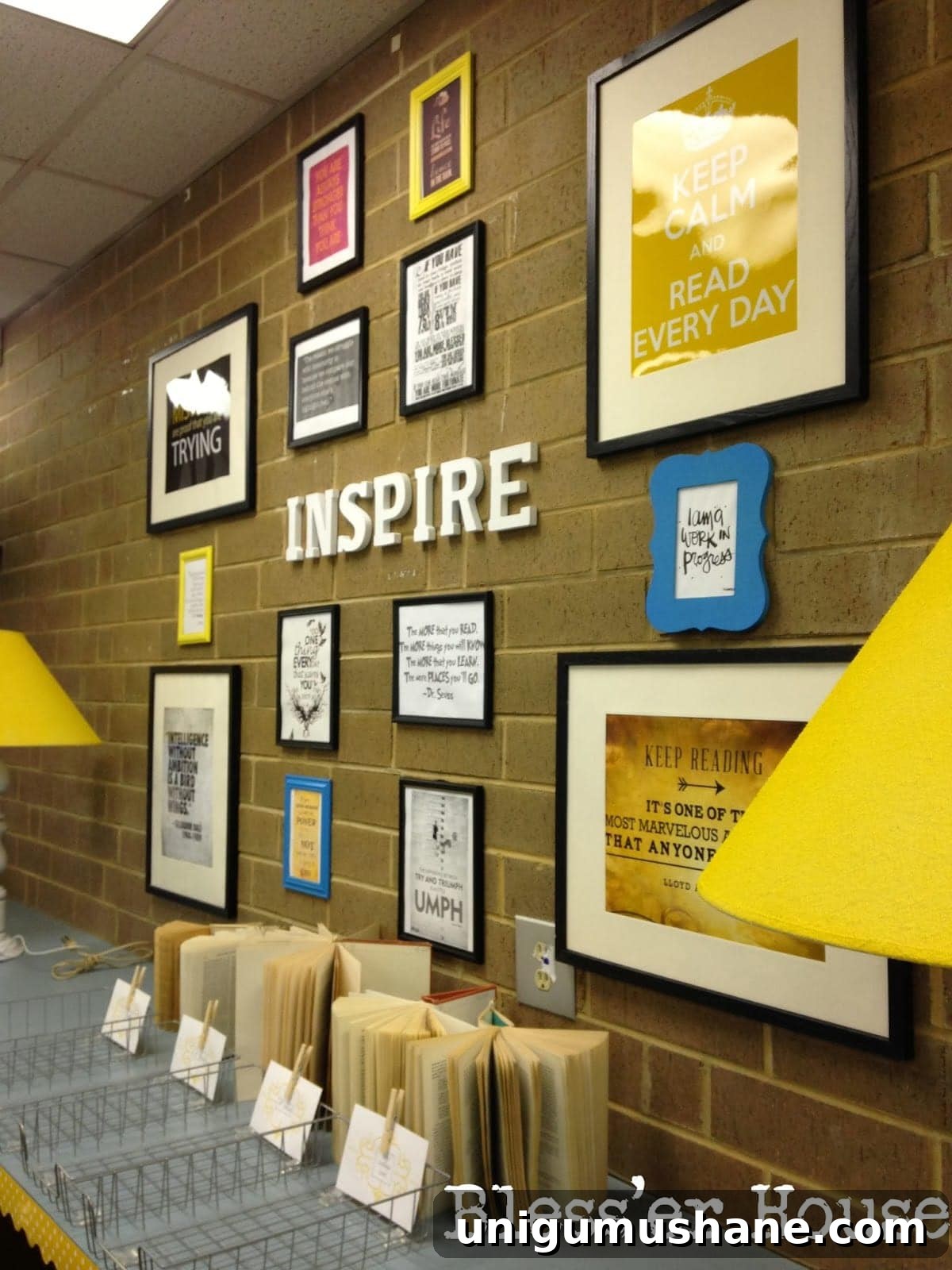
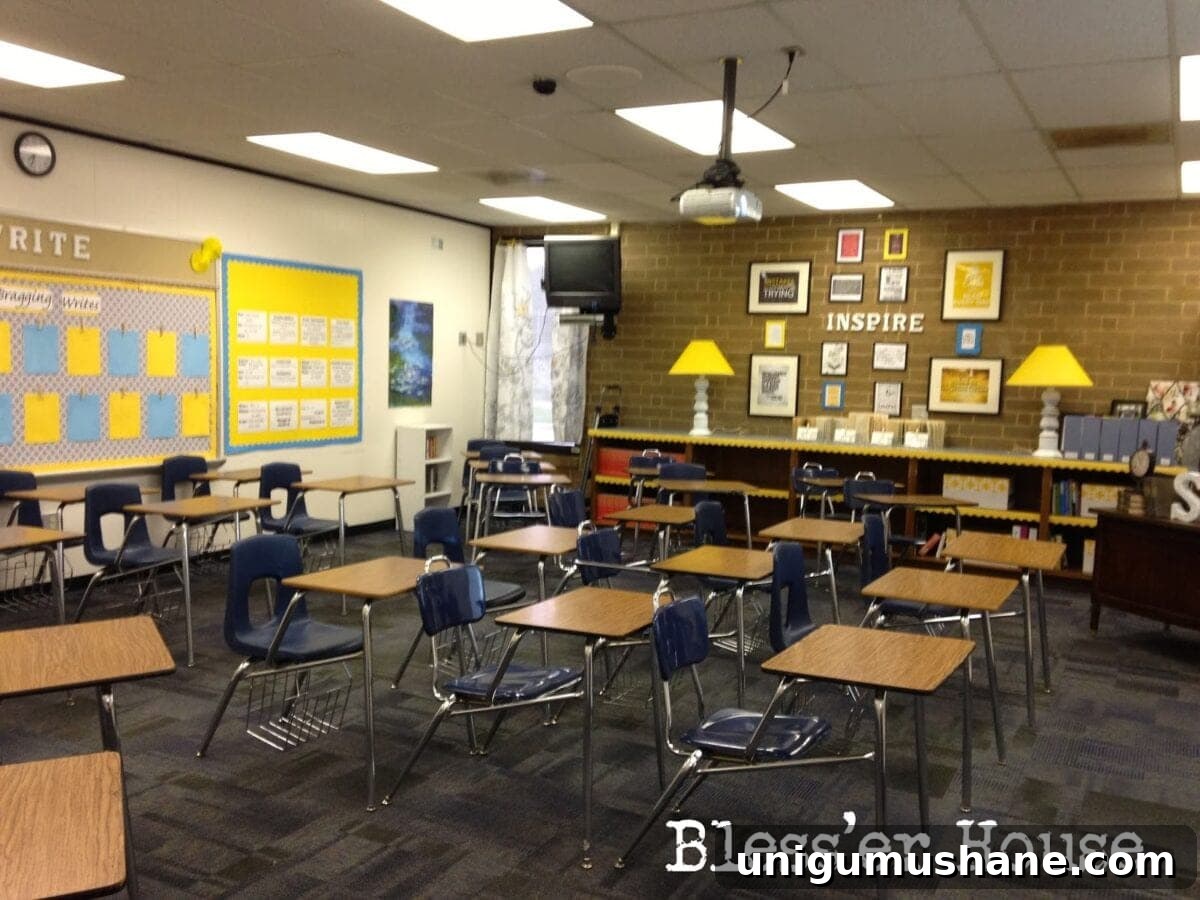
Inspiration Wall: $20
This is my favorite wall in the classroom. I often catch students walking over to read the quotes. It includes many messages I want my students to remember: encouragement, perseverance, kindness, courage, and the importance of growth. Most of the quotes were printed on plain computer paper. The larger prints cost about $10 total, and I collected random frames from the Habitat for Humanity ReStore and the dollar store for about $10. I already owned some of the larger frames from my younger years, when they held posters from my ballet days.
The lamps came from my parents’ garage. They were not being used, so I gave them a second life in my classroom. They were a little unusual, but they worked perfectly in the space. Lighting makes a huge difference in a room. Lamps create a softer, warmer feeling than fluorescent lights. I painted the lamp bases white and spray-painted the dusty shades yellow to match the rest of the classroom decor.
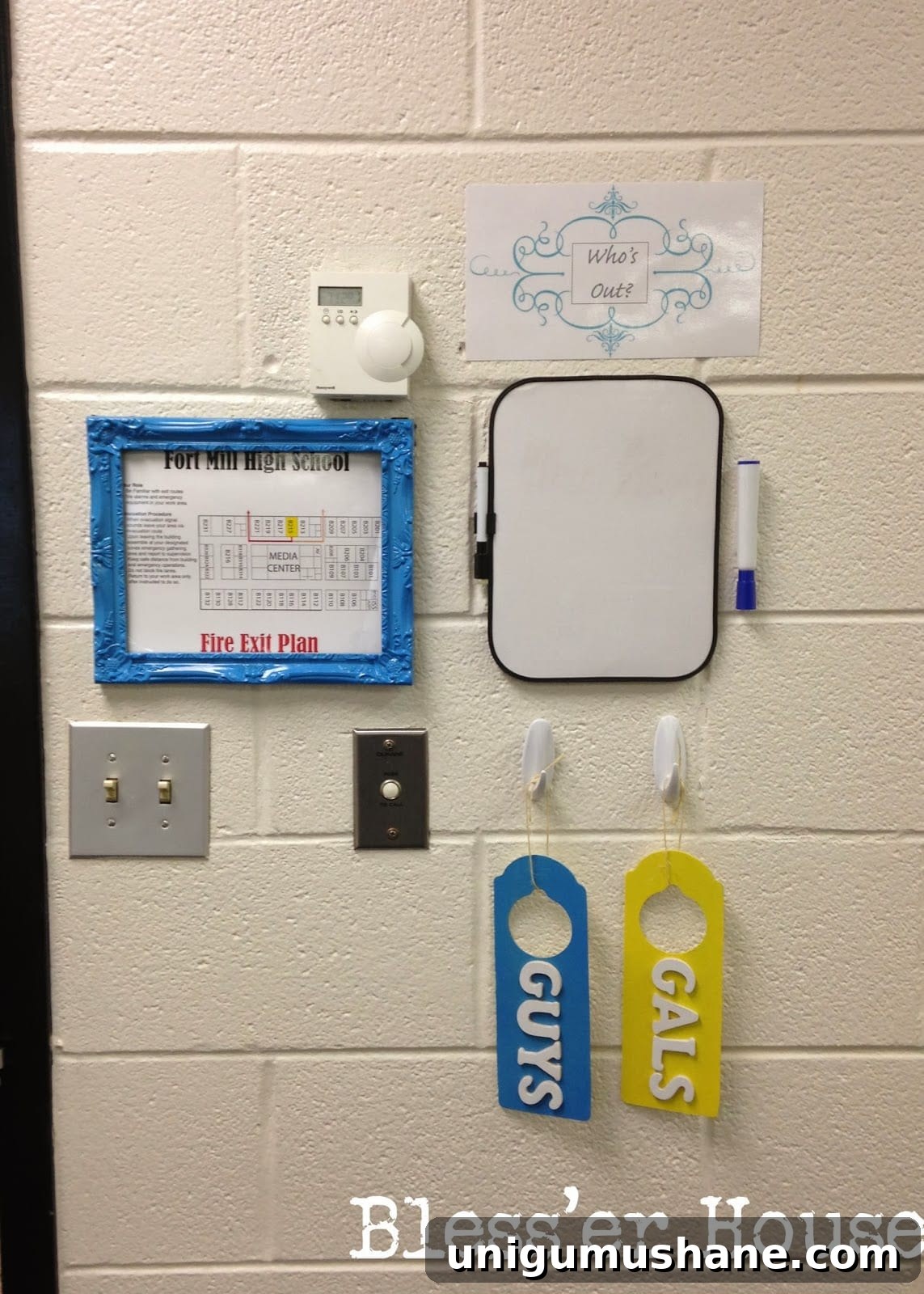
By-the-Door Exit Station: $9
One of my classroom procedures is for students to take the bathroom pass and sign out on the board before leaving. When they return, they erase their names. Since I often have about 30 students in the room at once, this system helps me know where students are if the office calls looking for someone.
The door hangers and wooden letters came from Hobby Lobby for about $6. I spray-painted them and attached the letters with strong glue. The small whiteboard came from the dollar store, and the marker is attached to the wall with a strip of Velcro. The little frame around the fire exit sign was a ReStore find for only 50 cents, and a quick coat of spray paint made it fit the room.
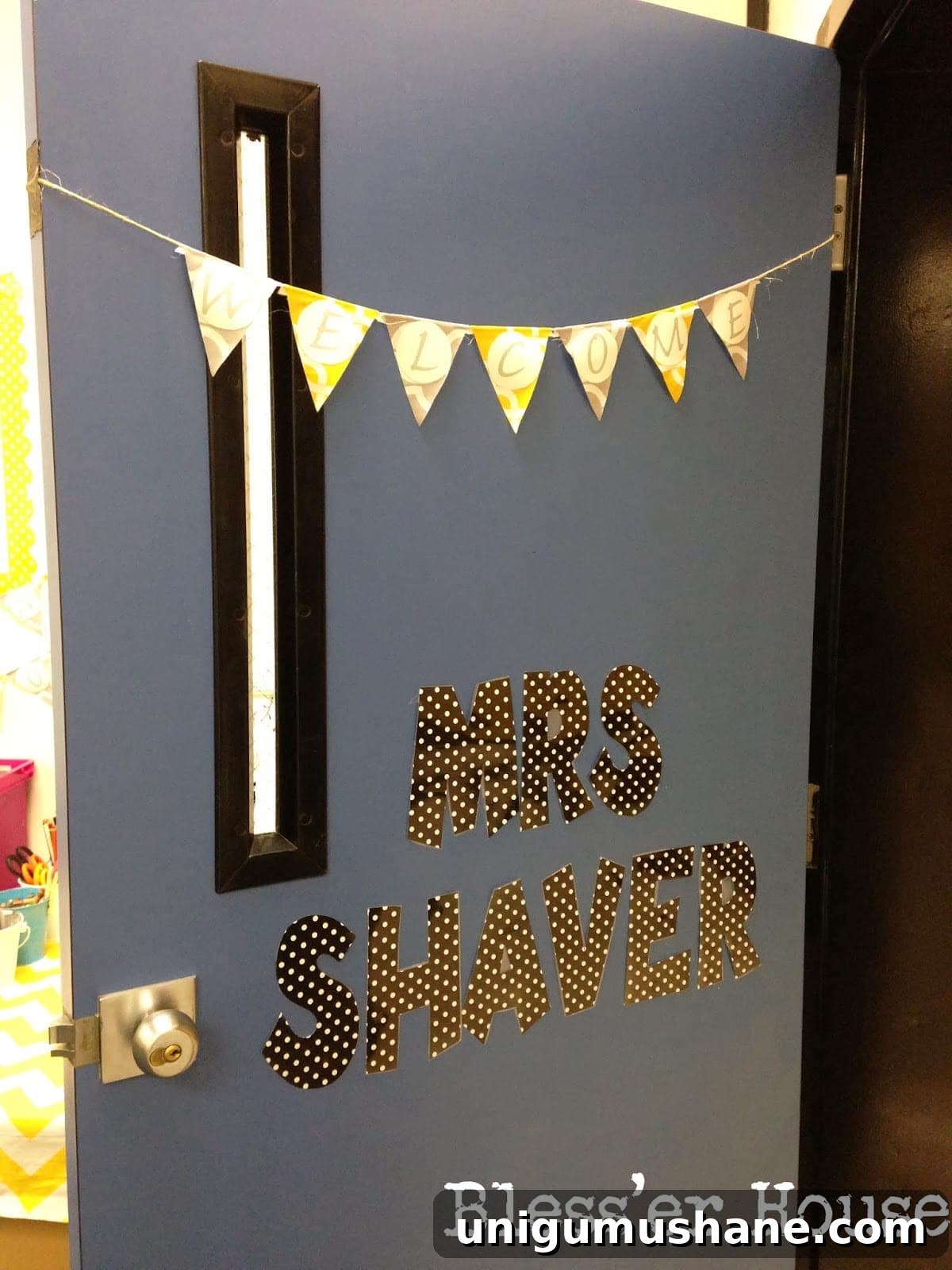
Welcome Door: $5
The welcome door is simple but cheerful. By now, you can probably guess how I made the bunting: fabric scraps, hot glue, and twine. I counted the cost as about $5 because that was the price of the box of bulletin board letters, even though I used only a few letters for this project.
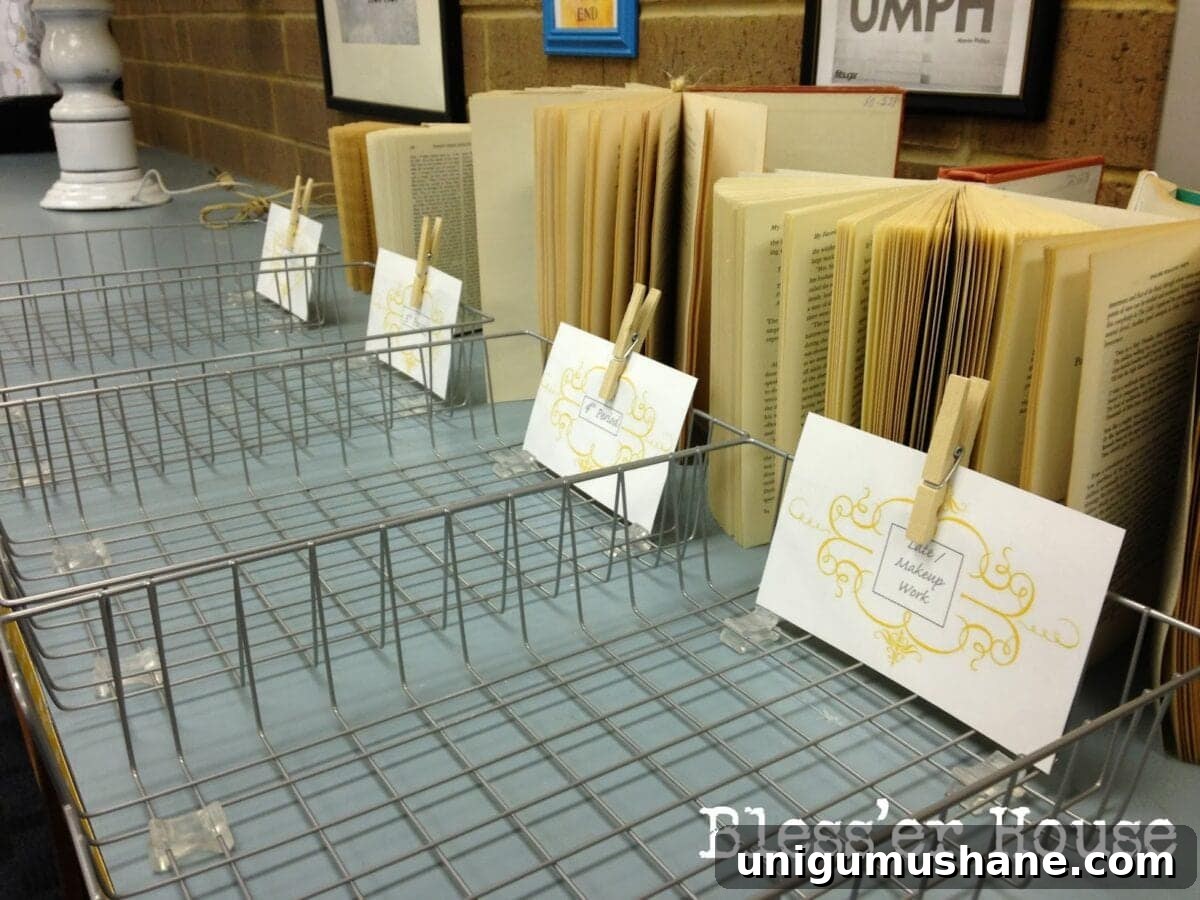
Turn-In Trays: $20
This area is another important part of my daily classroom routine. The wire letter trays were $5 each from Staples. I had used plastic trays before, but they broke quickly, so the wire trays were a better choice. I made the labels from printable templates and attached them with clothespins so I could switch them out whenever needed.
To hide the lamp cords on either side of the trays, I used old discarded library books as decoration. Librarians often remove books when they are outdated or falling apart, so I was happy to give a few of them another purpose in my classroom.
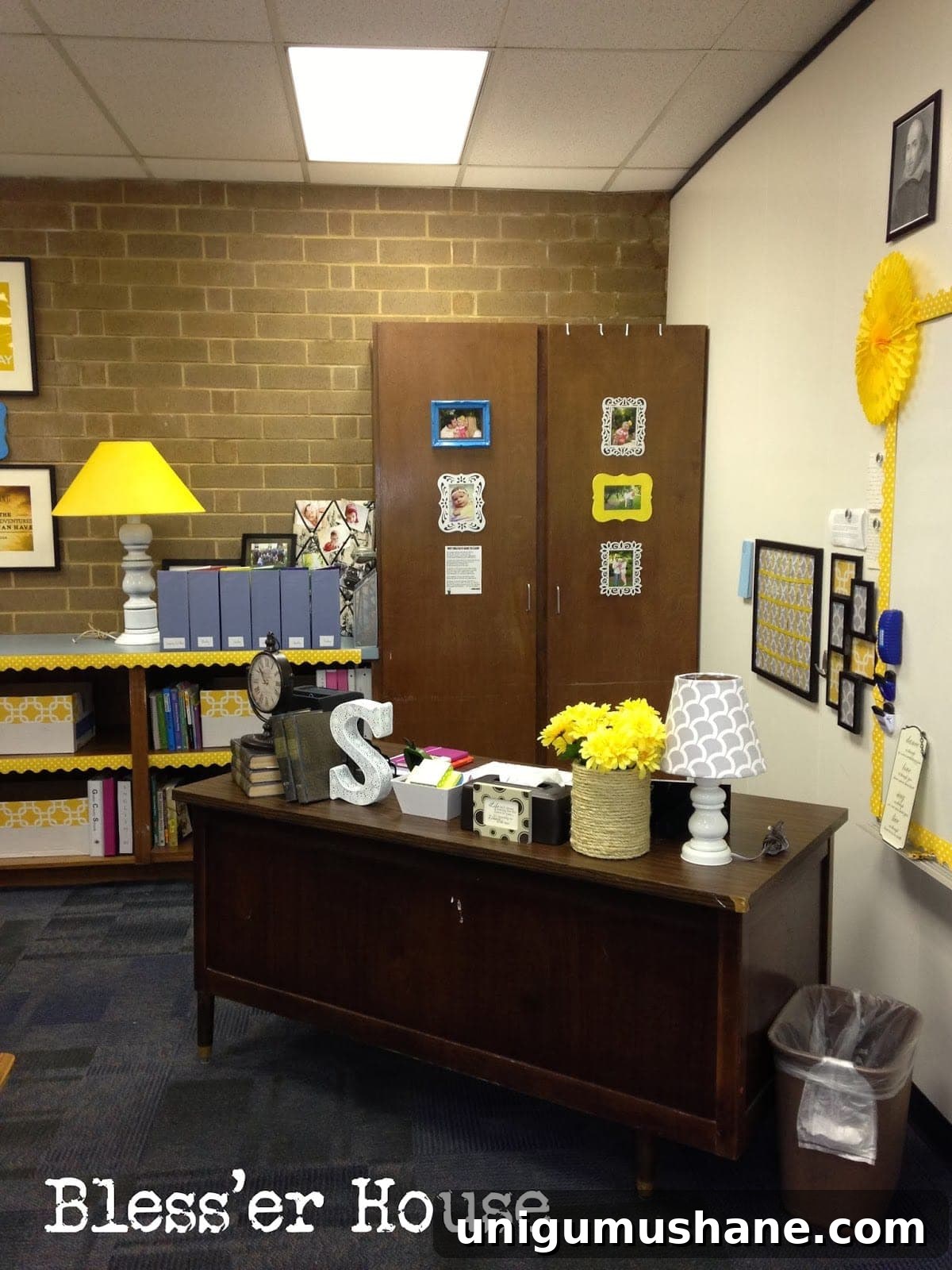
Teacher Desk
My teacher desk is a collection of small items that make the space feel more personal and homey. The container holding the yellow dollar-store flowers is actually a coffee can wrapped in rope. The white “S” was a TJMaxx find. It was a bit of a splurge at $12 because it does not serve a practical purpose, but I loved it.
The old leather-bound books came from my mother’s library after they were going to be discarded because the information was outdated. She is also a high school librarian. The clock was another TJMaxx find, and I like having a clock at both the front and the back of the classroom. The small frames on the cabinet were craft-store finds that I painted and hung with removable mounting tape. The dry-erase calendar and weekly planner were made from old frames I had in college, with fabric and ribbon cut to fit inside.
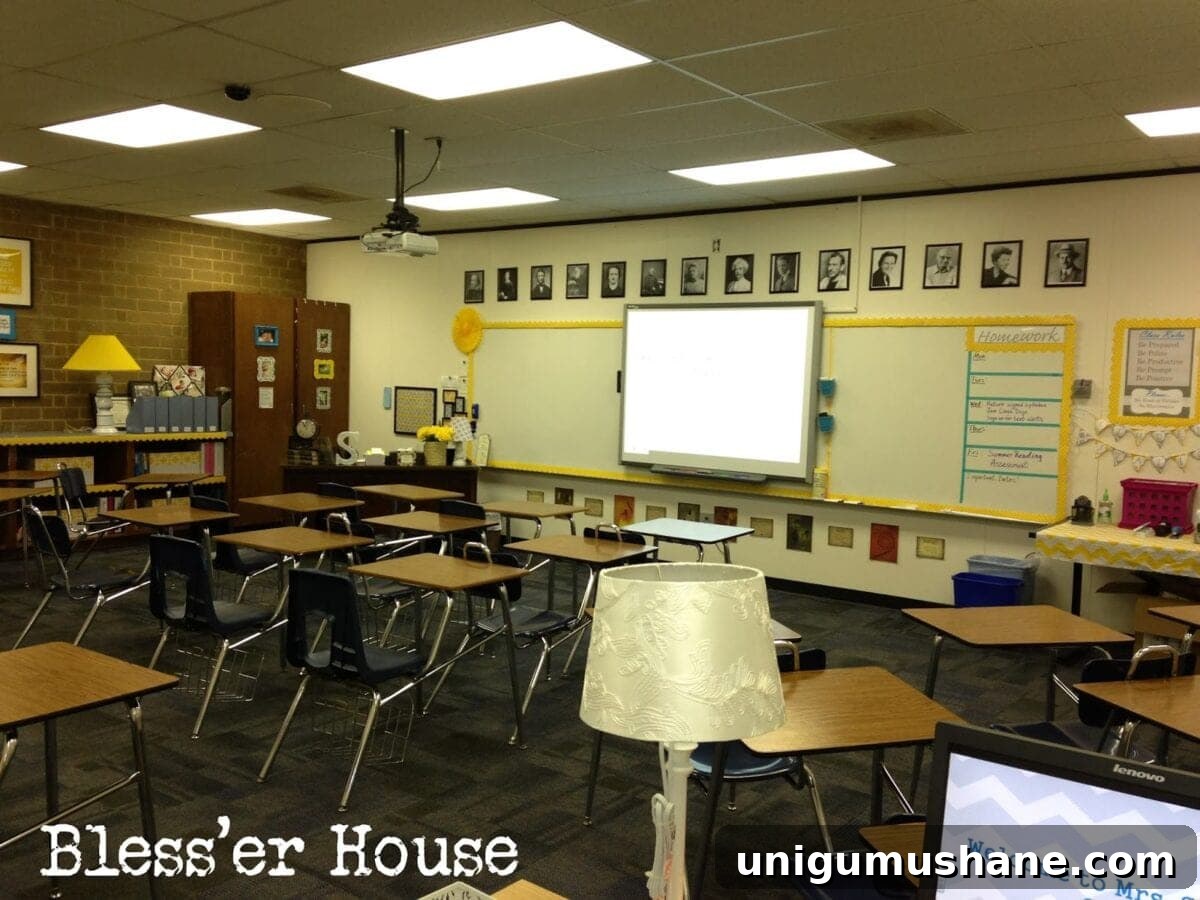
A Classroom That Feels Like Home
That is the full tour of my classroom, my home away from home. To make it feel even warmer, I use an apple cinnamon warmer and sometimes play quiet instrumental piano music during writing time. It creates a calm environment that helps students settle in and focus.
To my fellow teachers, I hope this gives you a little inspiration if you want to try something new in your classroom. I know teachers do not have endless extra time, and creating a decorated classroom takes effort. Still, I can honestly say I am glad I spent part of my summer putting this room together. It gives me a sense of peace during the chaos of teaching, and it reminds my students that their learning environment matters. A little classroom decor can truly change the mood of a space.
And to anyone who is not a teacher, I hope this gives you a meaningful glimpse into why classroom environment matters so much. I love my students, no matter their backgrounds, personalities, strengths, or struggles. It is incredible to watch teenagers grow into young adults over the course of a year. I feel blessed to play a small part in their development as they learn about literature, writing, themselves, and the world around them. They are our future, and they are worth every investment we can give them.