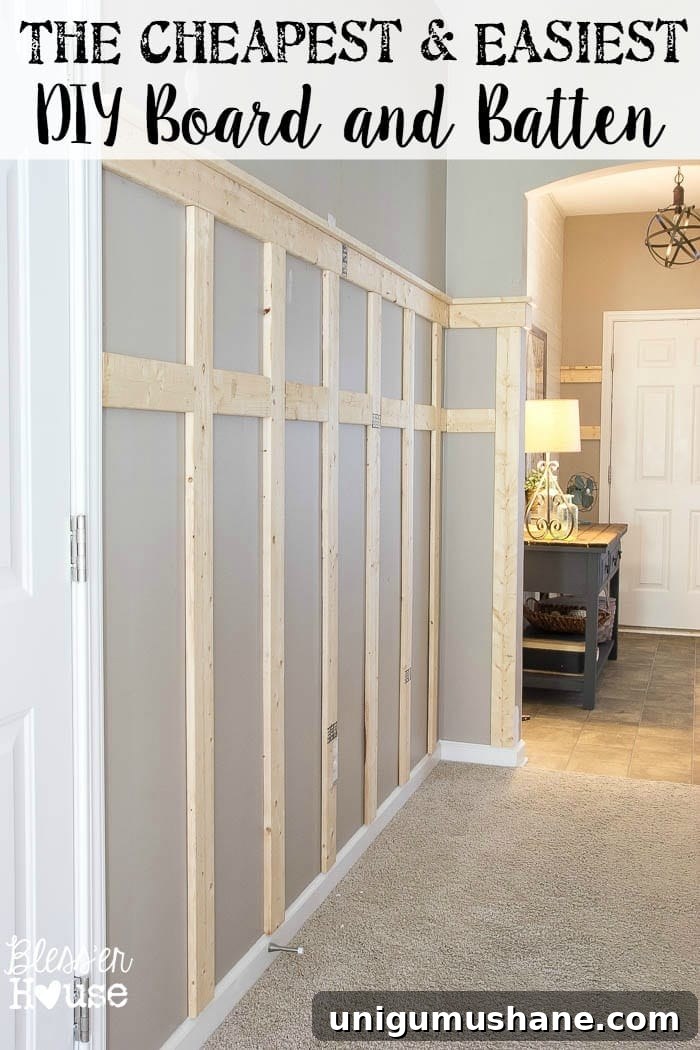
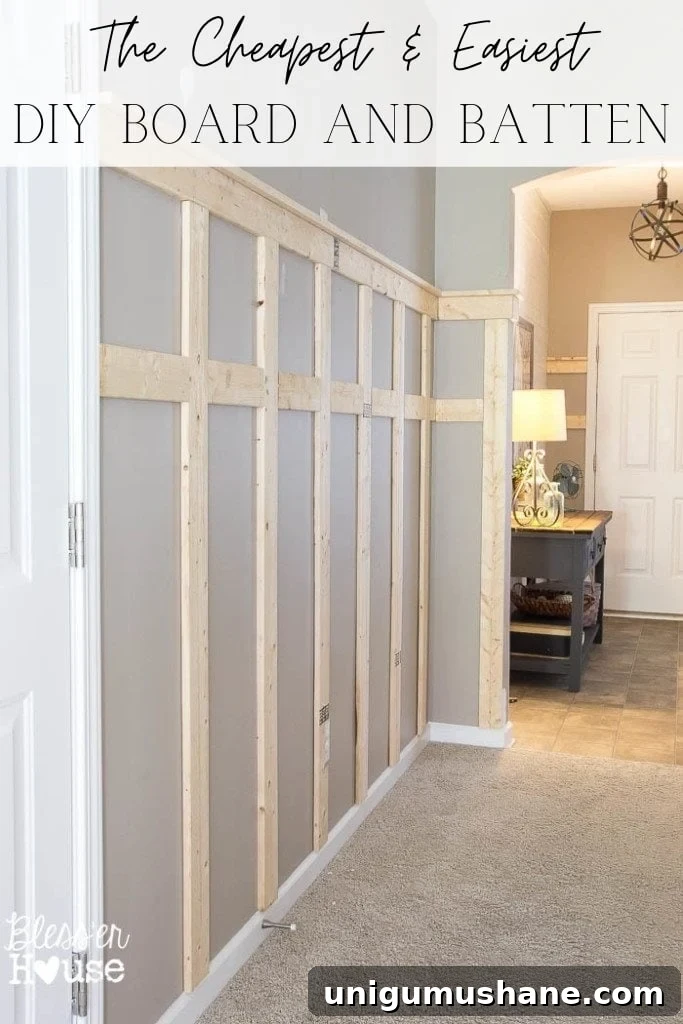
8 straightforward steps to remove the guesswork from building affordable board and batten wainscoting — a quick way to add character and lasting detail to plain walls.
Remember the children’s book If You Give a Mouse a Cookie — the one where one small favor leads to a long chain of requests? The DIY version of that story is: give a DIYer a table makeover and they’ll want a shiplap wall next. Once the shiplap is done, board and batten wainscoting is usually the next upgrade on the list.
That progression is exactly how this hallway project began.
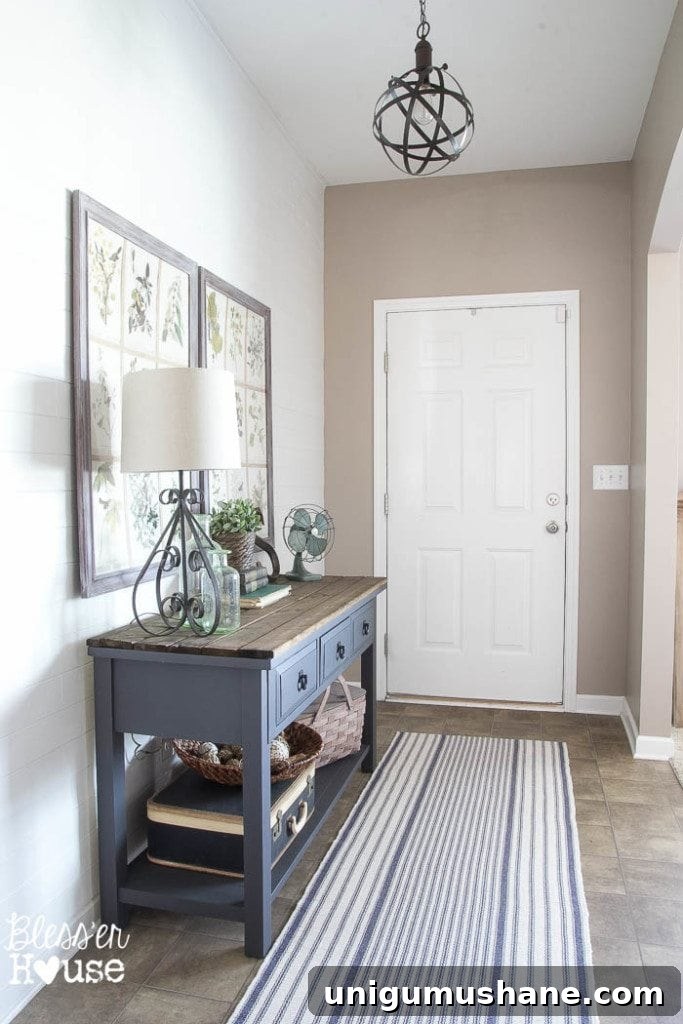
UPDATE: See Part Two for the full reveal.
What is Board and Batten?
Board and batten is a wall treatment made from vertical boards (the “boards”) with narrower strips (the “battens”) covering the seams. The layered arrangement creates shadows and texture that give plain walls a richer, more architectural look.
While commonly used on exterior siding, fences, and cabinetry, board and batten also makes an excellent wainscoting option indoors. It suits hallways, entryways, bathrooms, bedrooms, dining rooms — basically any space that benefits from added depth and character.
One of the best features of board and batten is its versatility: it works with both modern and traditional styles and remains a timeless detail rather than a passing trend.
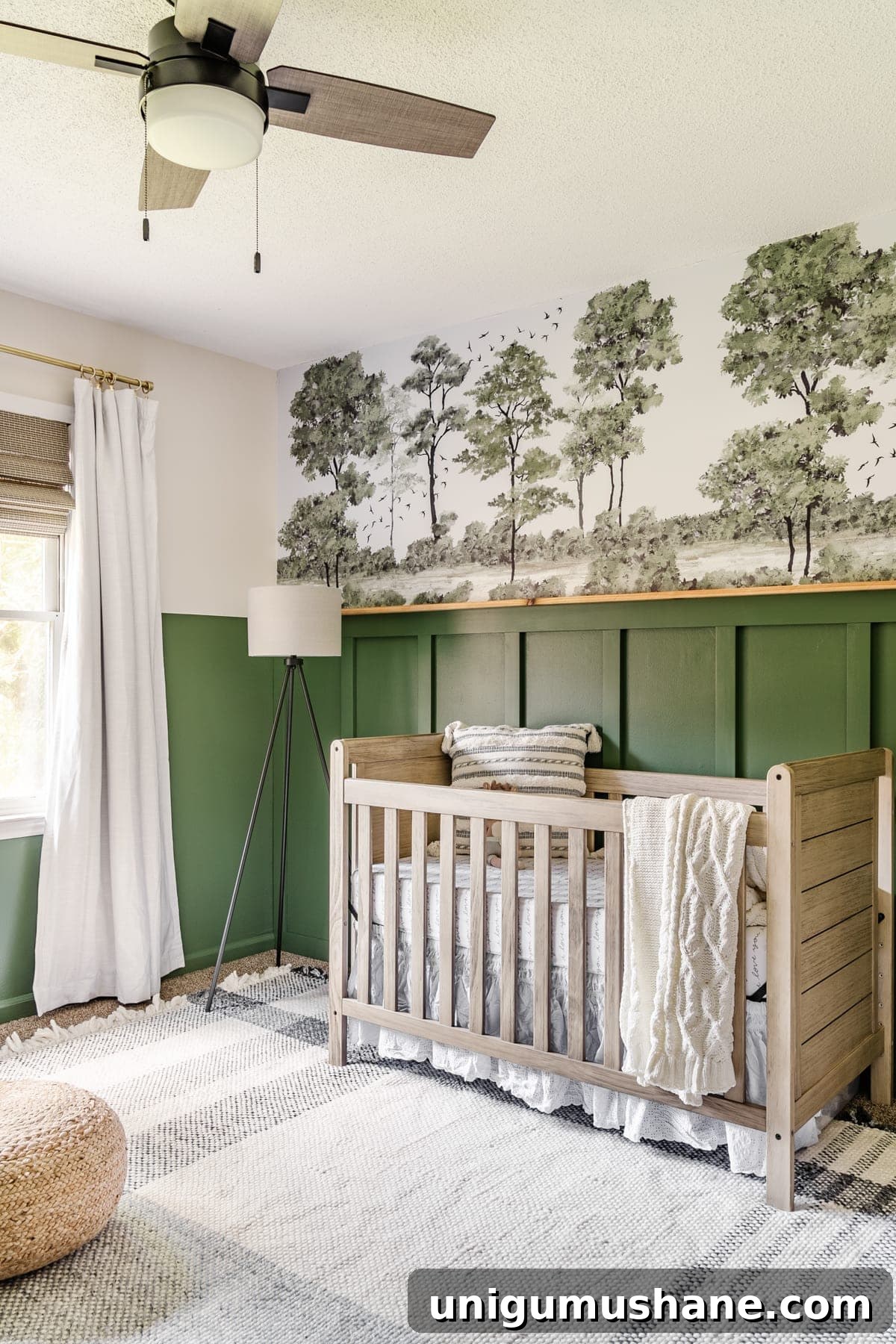
What Kind of Wood is Best?
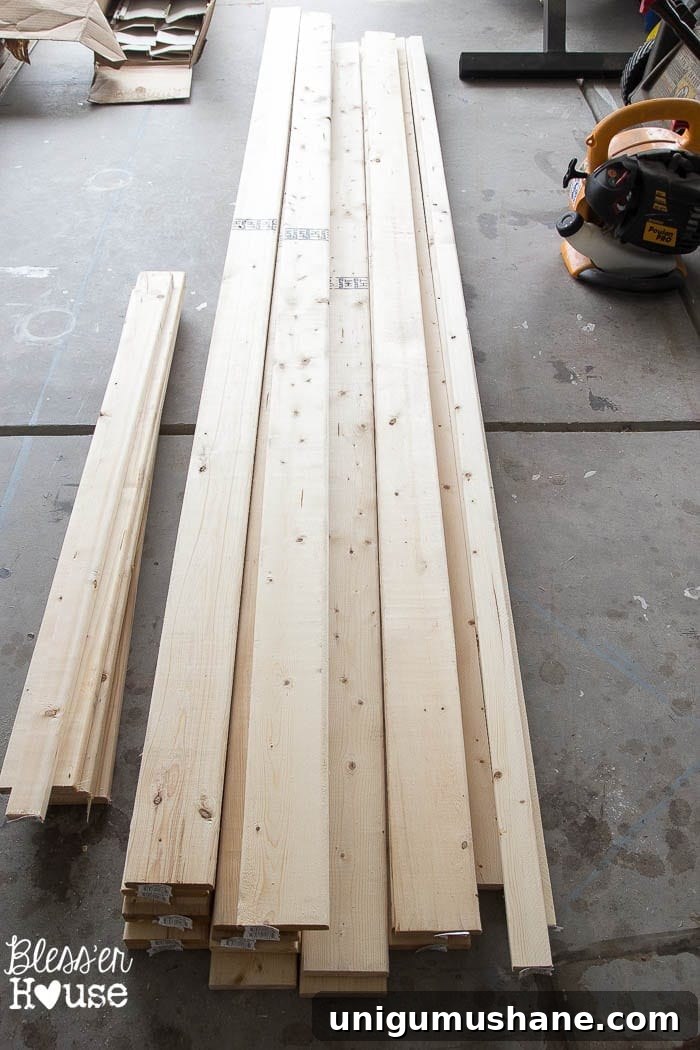
For budget-friendly board and batten, pine furring strips are an excellent option. They cost significantly less than MDF or standard pine trim yet still produce a solid, attractive result. Using furring strips does require extra prep—filling knots and light sanding—but the savings can be substantial.
Use solid wood only in rooms that stay relatively dry. For bathrooms, kitchens, or other humid spaces, opt for PVC trim to avoid warping or moisture damage.
Tip: When shopping for furring strips, inspect the ends and look straight down the edge of each board to ensure they’re straight and not warped.
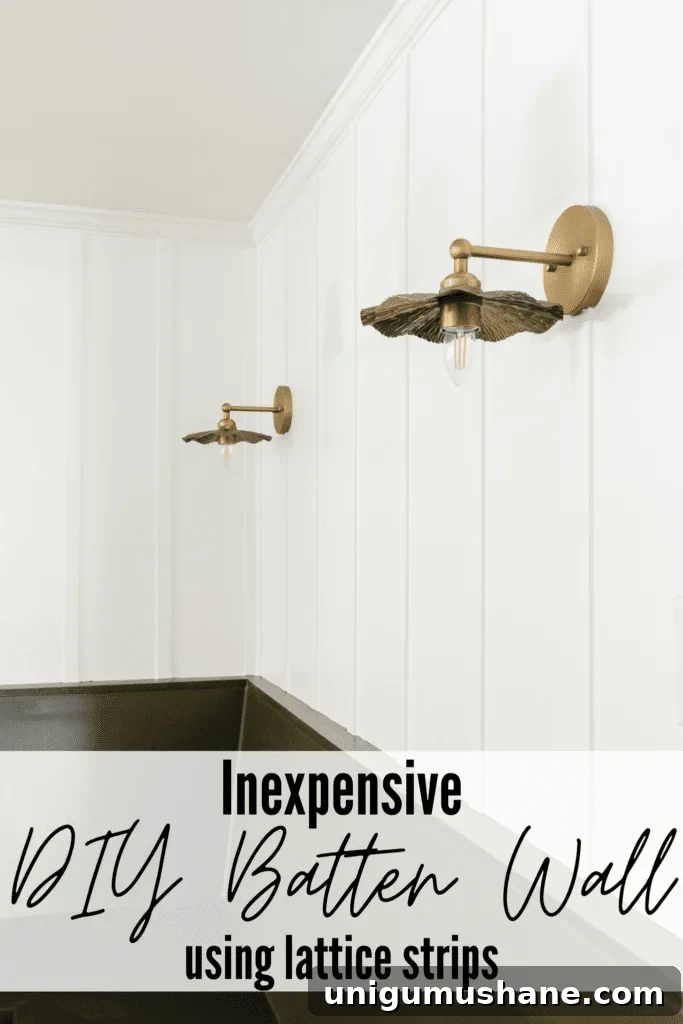
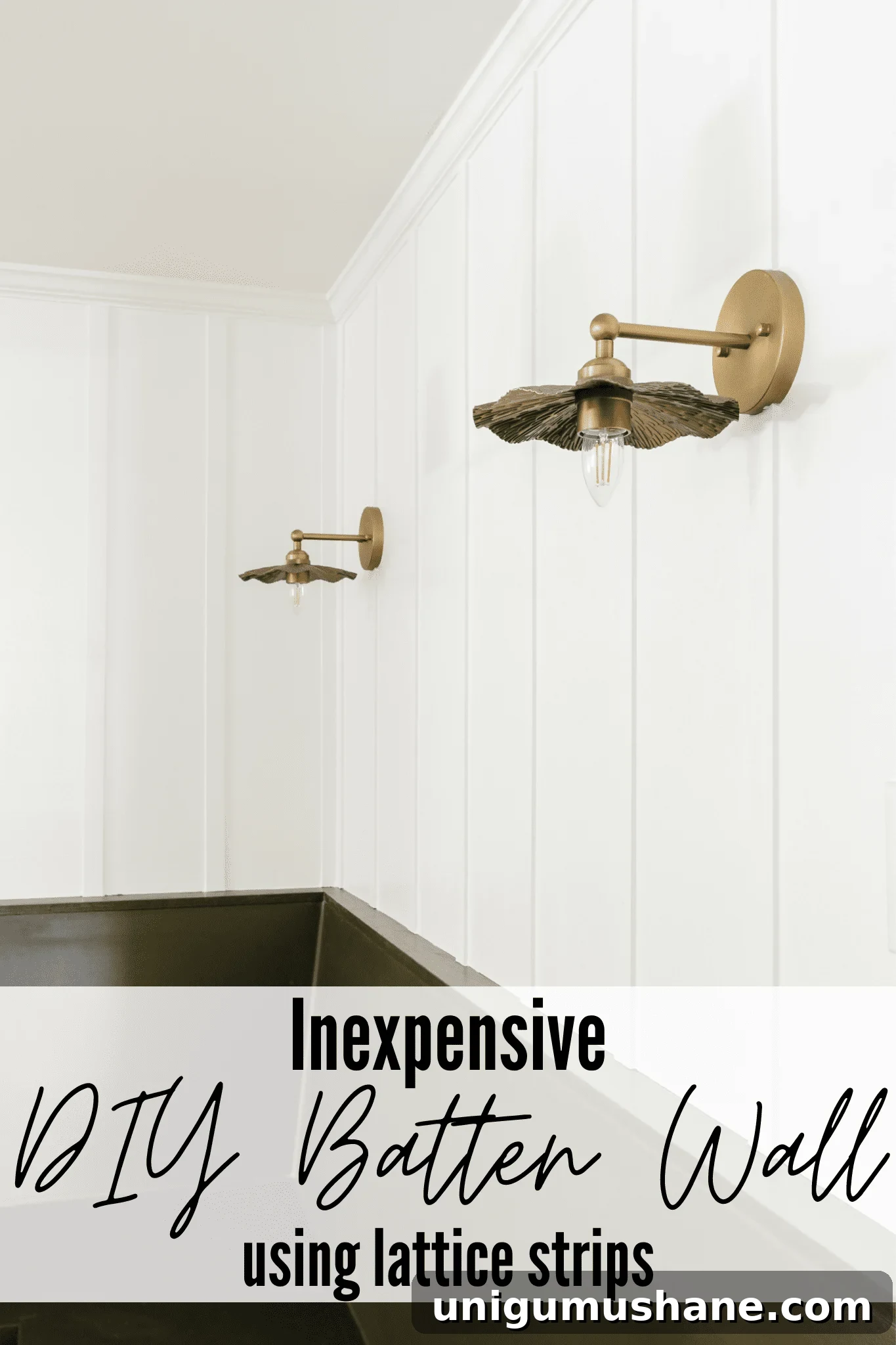
If you want an even cheaper alternative, narrow lattice strips can create a batten-like look and can be installed without power tools. That technique skips the horizontal rails and places straight lattice strips across the wall for a lightweight, affordable effect.
Tutorial: Inexpensive DIY batten board wall using lattice strips.
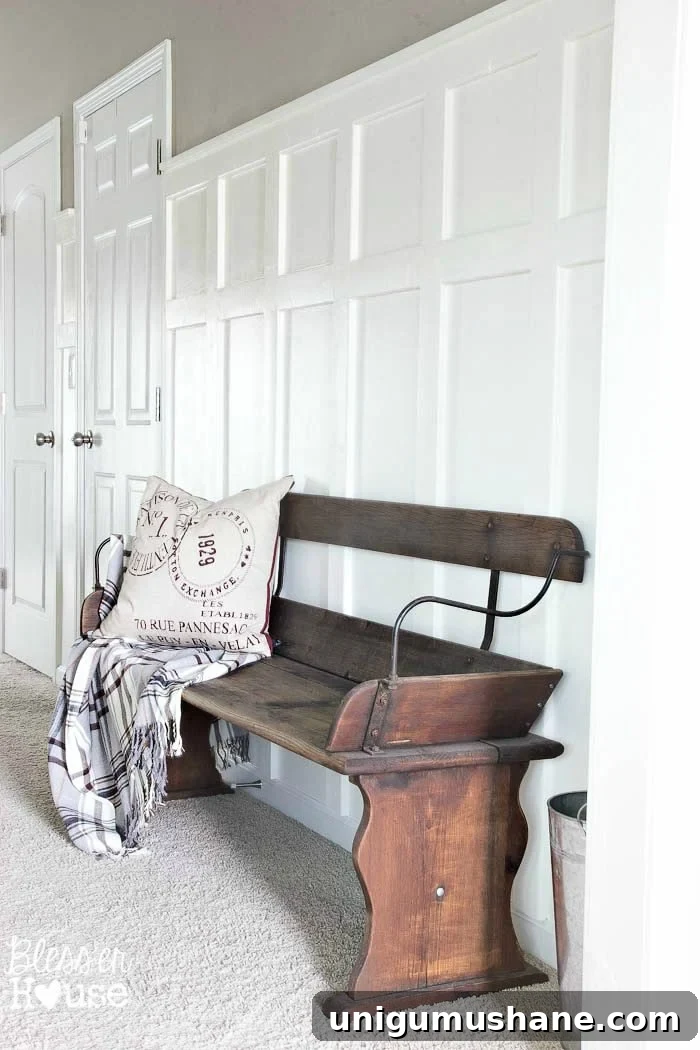
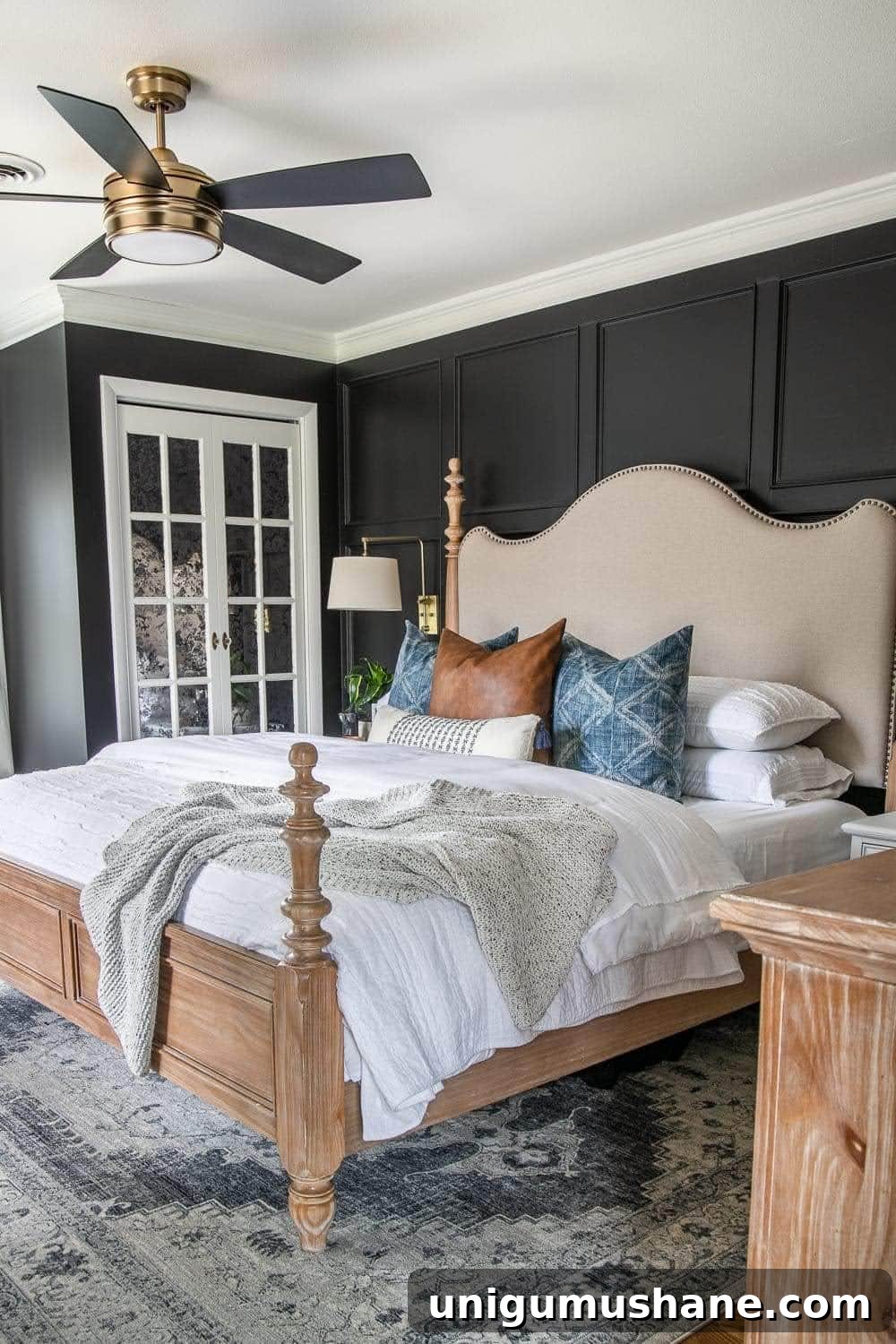
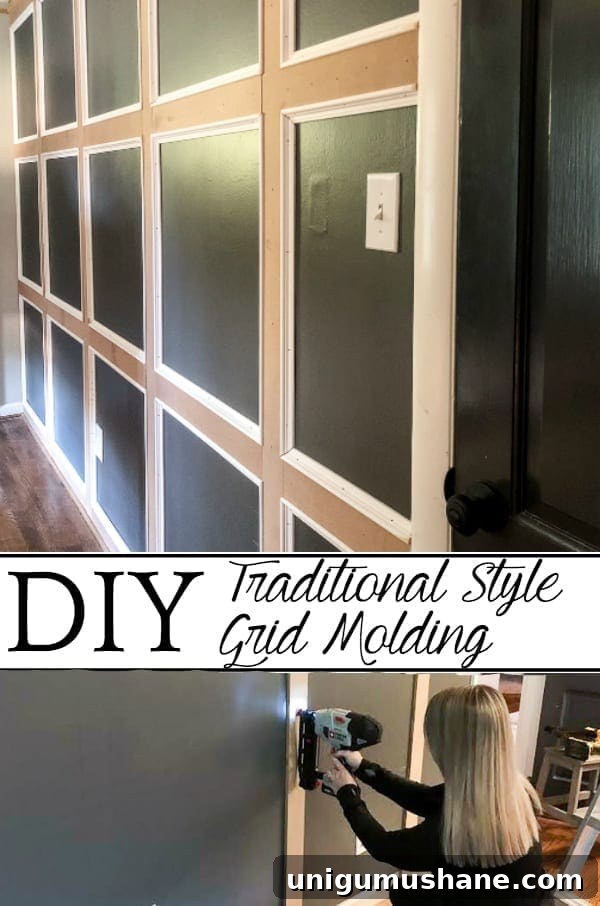
For a more traditional finish, add a panel cap or crown molding along the tops of the boards. That rounded detail softens the lines and gives the wall a refined appearance, similar to the grid wall used behind a bed in another project.
Tutorial: DIY traditional grid molding focal wall.
Why Board and Batten Brightens Hallways
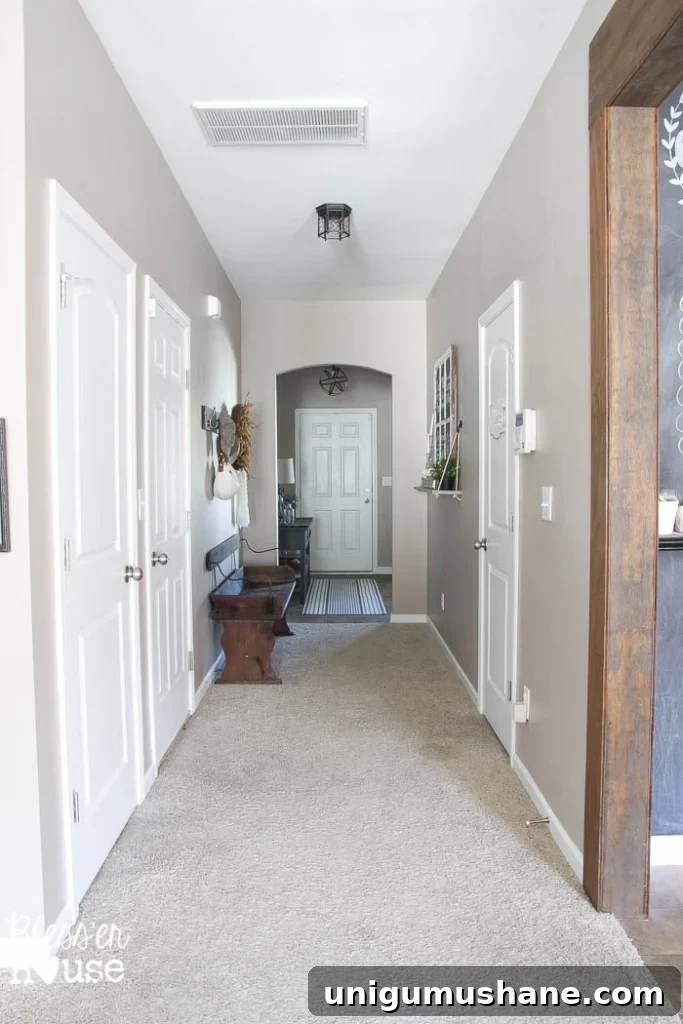
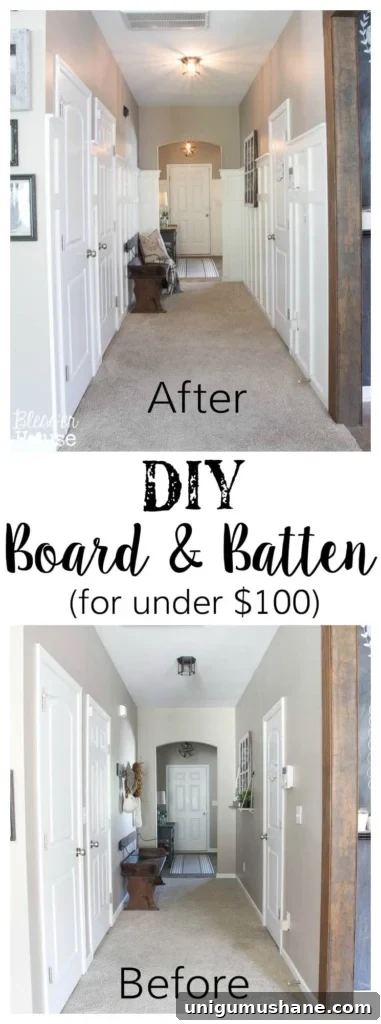
Our hallway had no natural light and felt closed in. A dark paint choice made it feel even smaller. Board and batten is an ideal solution for narrow or windowless corridors because the added texture and contrasting paint create depth and reflect light, making the space feel brighter and more inviting.
It’s an affordable way to achieve a high-end look: the architectural detail makes the room feel purposeful and designed, not just painted.
How to Install an Affordable Board and Batten Wall
At the time we built this, a 1x4x8 pine furring strip cost roughly $2. That price makes furring strips roughly 70% cheaper than MDF boards. They’re a practical, budget-conscious choice that can be painted for a clean finish.
Though installing board and batten is somewhat tedious, it’s straightforward and yields a dramatic transformation for relatively little money.
Supplies
- 1x4x8 pine furring strips (quantity depends on wall length)
- 1x2x8 pine furring strips for shelf detail
- 2″ brad nails (2 boxes)
- Hammer or brad nailer
- Stud finder
- Level
- Miter saw or circular saw
- Jigsaw
- White trim caulk
- Wood filler
- Medium to fine grit sandpaper
- Construction adhesive (optional for a permanent bond)
If your walls are textured, you’ll need thin plywood paneling or MDF paneling behind the battens to create a smooth base. Our smooth drywall allowed us to skip that step and keep costs down.
Even with a long hallway, we kept materials under $100 (tools excluded). Many hardware stores offer tool rental if you don’t own the equipment.
Steps
1. Place the Top Rail
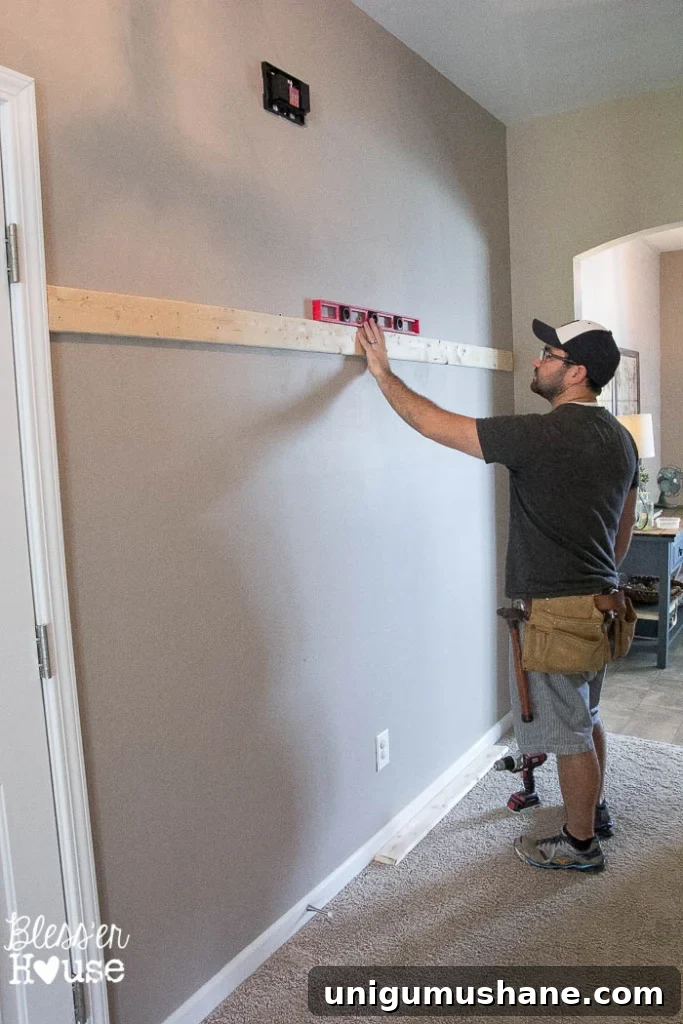
Decide the top height for your wainscoting. We set the top horizontal 1×4 at 65″ measured from the top of the baseboard and used a level to make sure it was straight across the wall. Two people makes this step easier and keeps the line accurate.
Tip: You can keep your existing baseboard and miter the bottom of the vertical battens to sit on top, or remove the baseboard and run a bottom rail the same thickness as the top rail for a symmetrical look.
2. Fasten the Top Rail
Secure the top board into studs with nails or a finish nailer. We used longer nails by hand where our nailer couldn’t accommodate the length. For a permanent installation, apply construction adhesive to the back of the boards before nailing. To minimize wall damage if you want future removal, alternate the angle of nails so the boards are secure but removable.
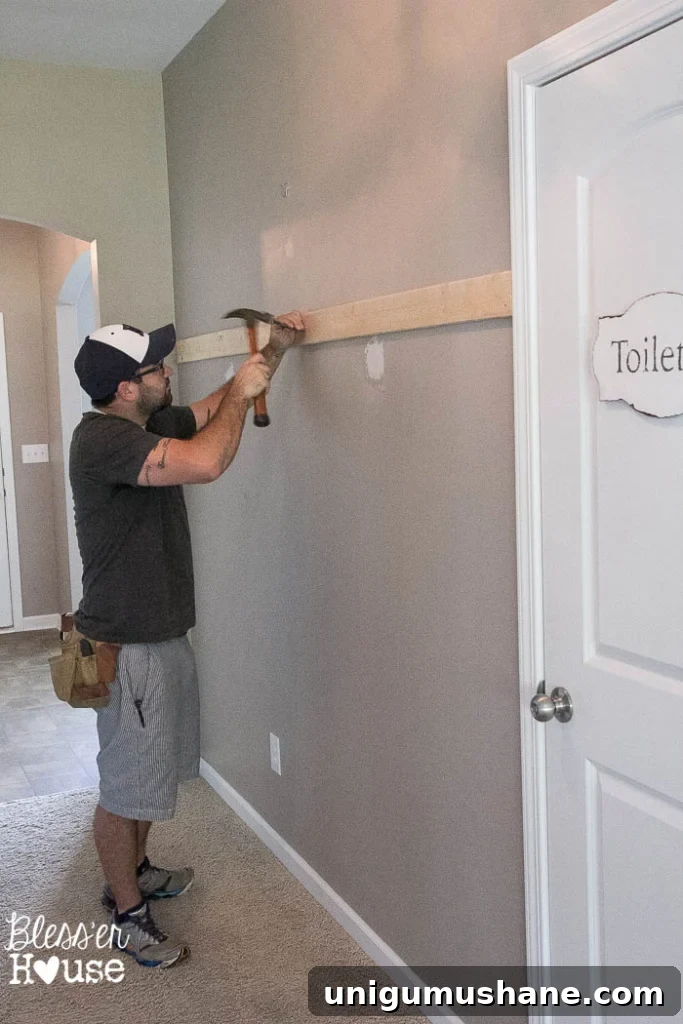
This project took several days, but each installed section felt like progress.
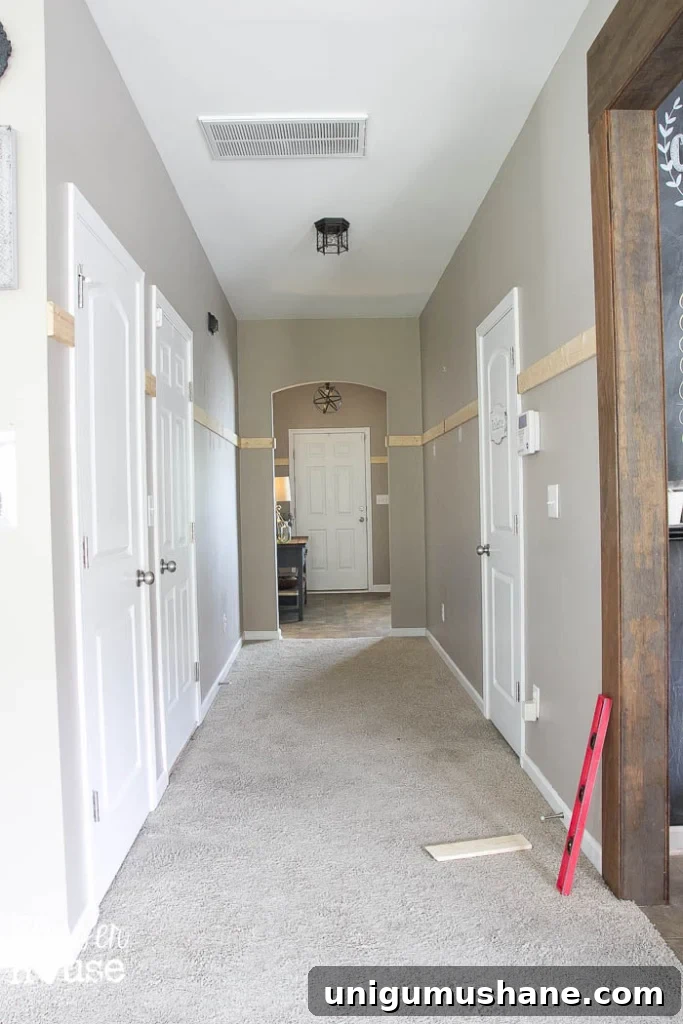
3. Measure and Cut Vertical Battens
Measure each vertical batten individually from just above the baseboard to the underside of the top rail. For our hallway the pieces measured about 61.5″ each. Cutting each batten to fit ensures a snug, professional appearance.
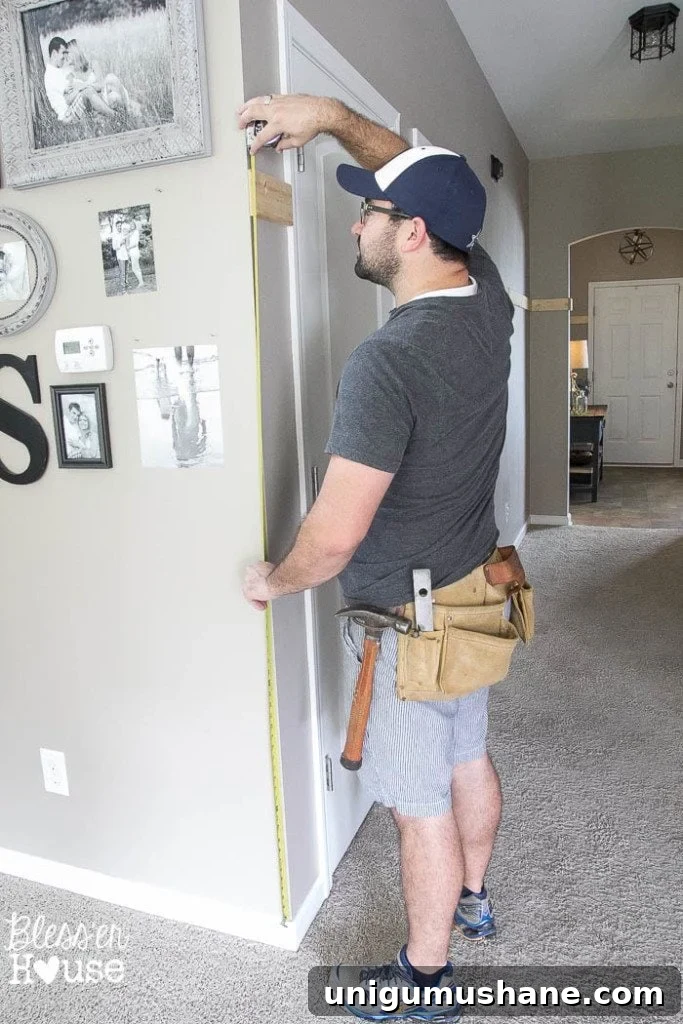
4. Cut Around Obstacles
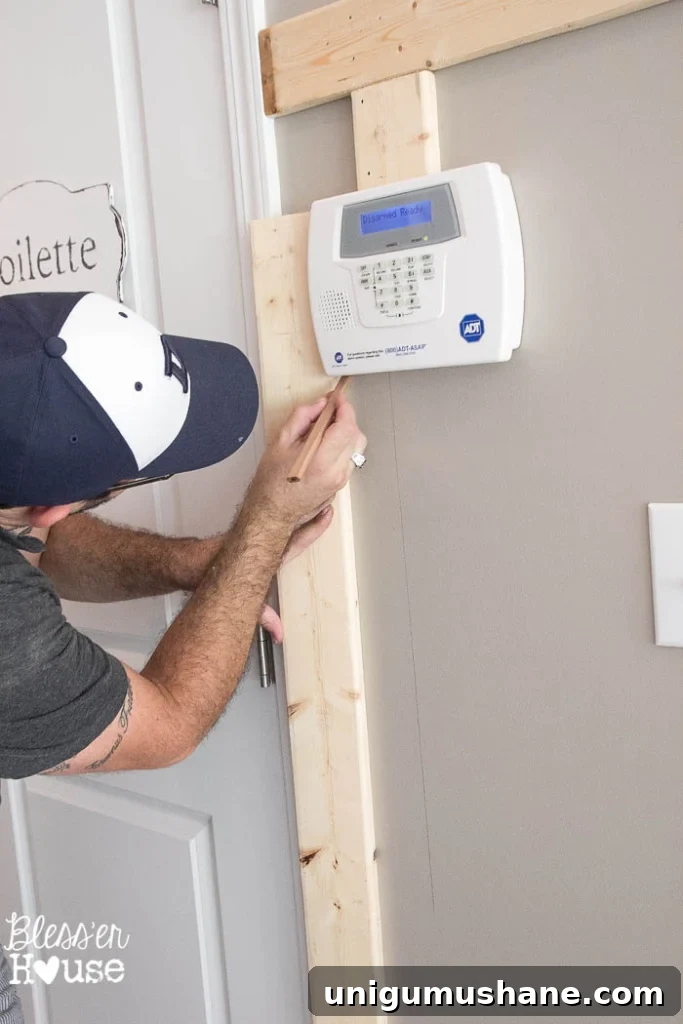
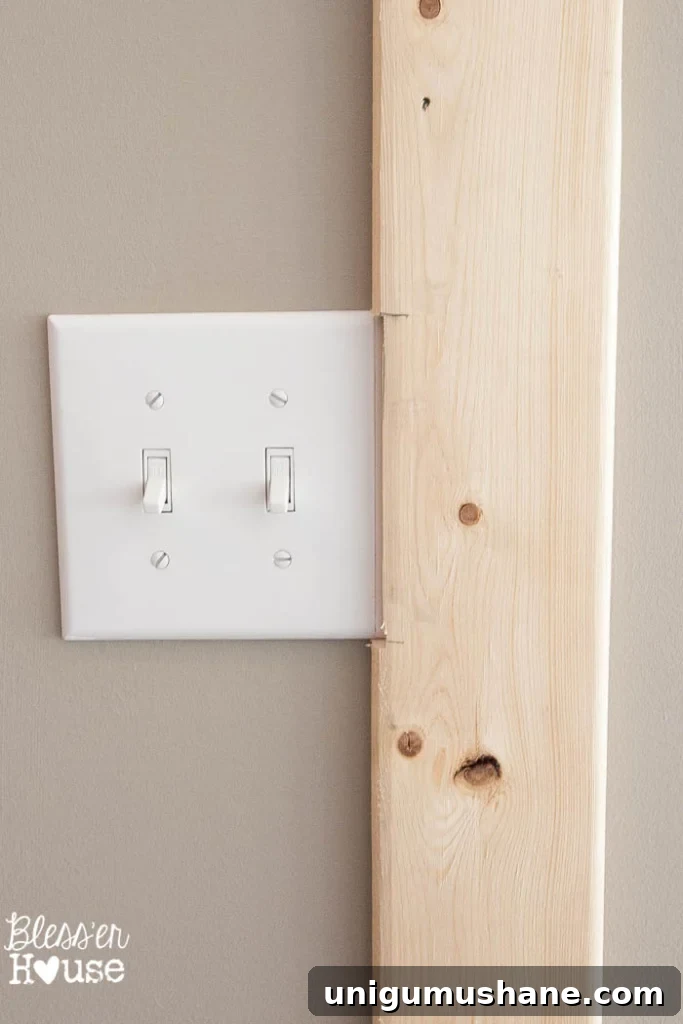
Work around outlets, switches, and wall-mounted devices by marking and cutting the battens to fit. For small interruptions, use a jigsaw to notch boards precisely. For larger fixtures, split a batten and frame around the obstacle so everything sits flush.
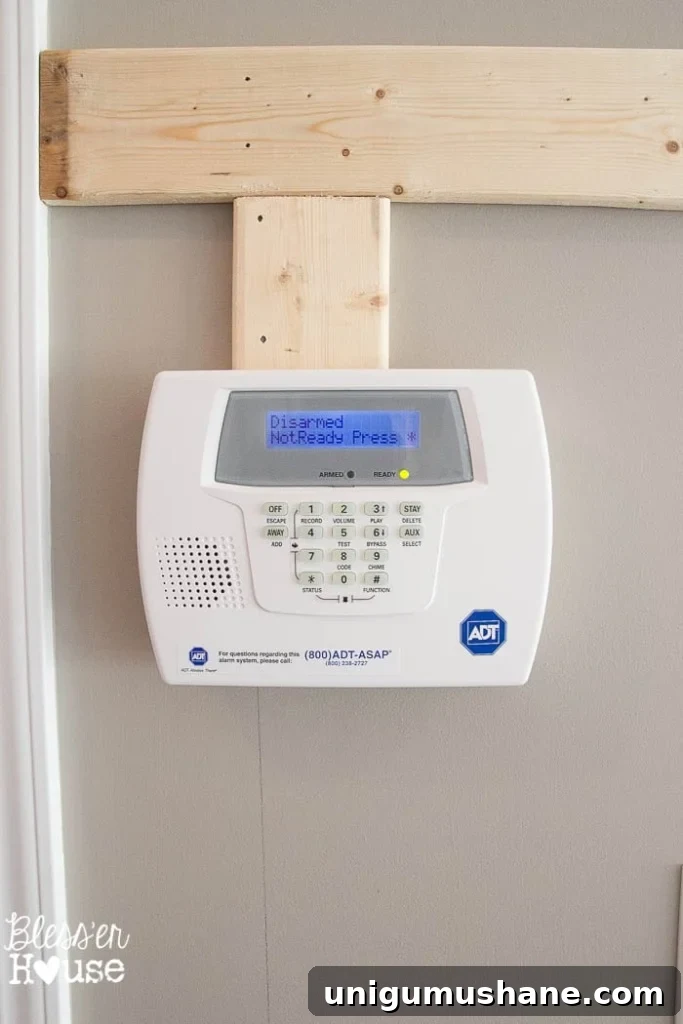
5. Anchor Battens to Studs
Where possible, align the vertical battens with wall studs and nail them into the studs. This creates a solid, secure installation that resists pull and holds up to everyday use. A stud finder is very helpful to keep spacing consistent and to ensure you’re hitting framing instead of just drywall.
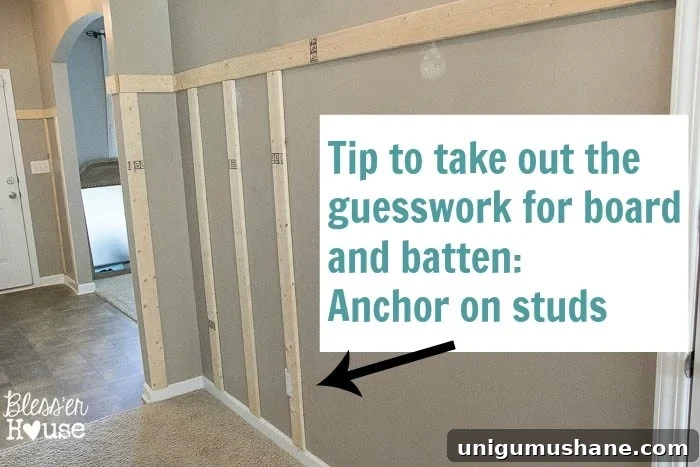
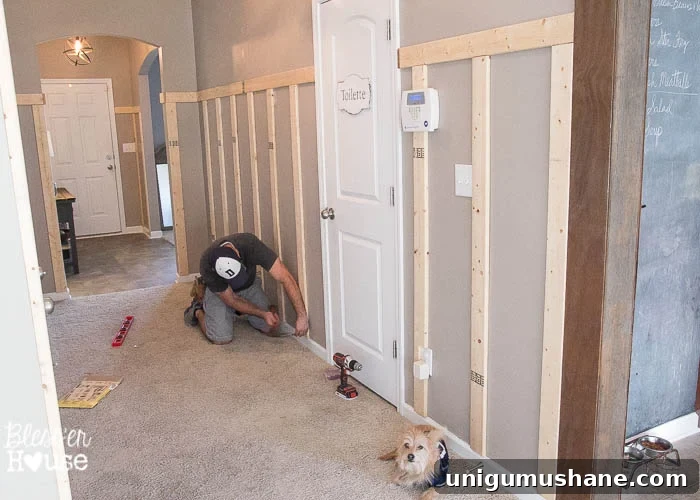
Using studs as anchors made the installation much sturdier and gave us confidence the battens would stay secure.
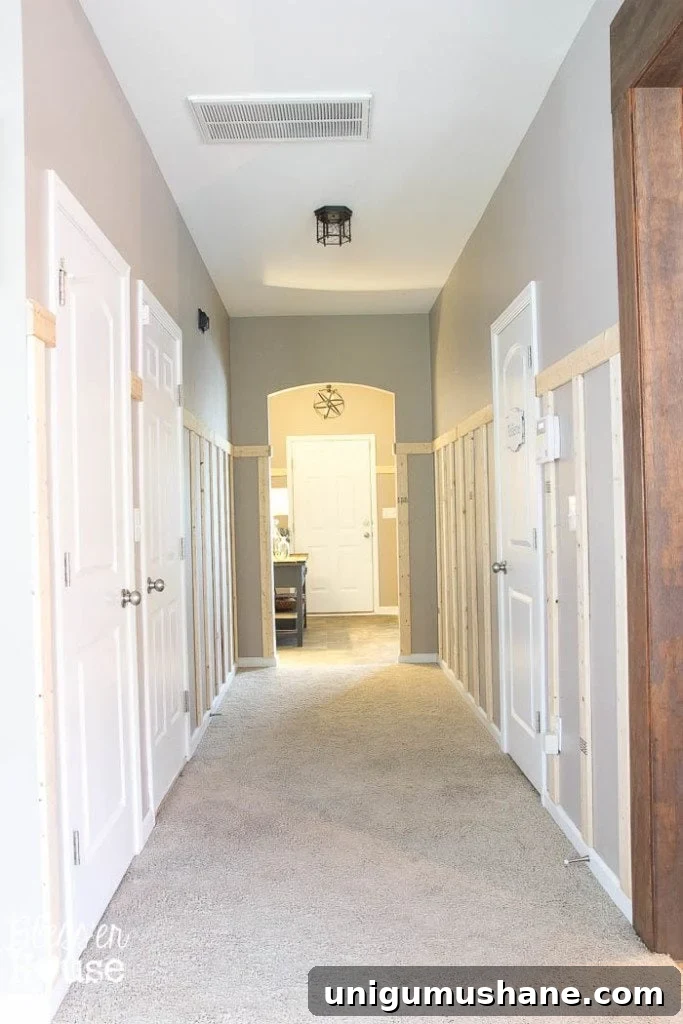
6. (Optional) Add a Second Horizontal Rail
For added detail and balance, install a second horizontal board about 12″ below the top rail. This creates a defined panel area and can make the design feel more intentional.
7. (Optional) Add a Small Shelf Detail
Nail a 1×2 board flat on top of the top rail to create a slim shelf or ledge. This small trim detail provides a finished look and can be made deeper if you want a picture ledge.
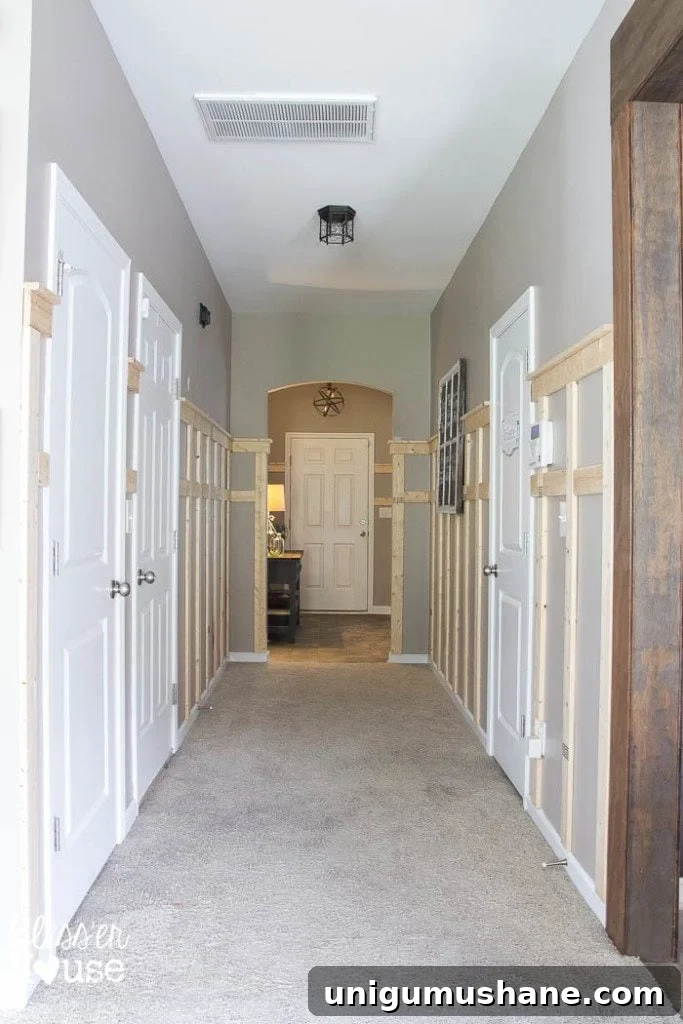
8. Caulk, Fill, Sand, and Paint
Run a bead of caulk along every seam where wood meets wall to hide gaps. Fill knots and nail holes with wood filler, let it dry, and sand smooth. Proper caulking and sanding are what make the installation look polished and professional once painted.
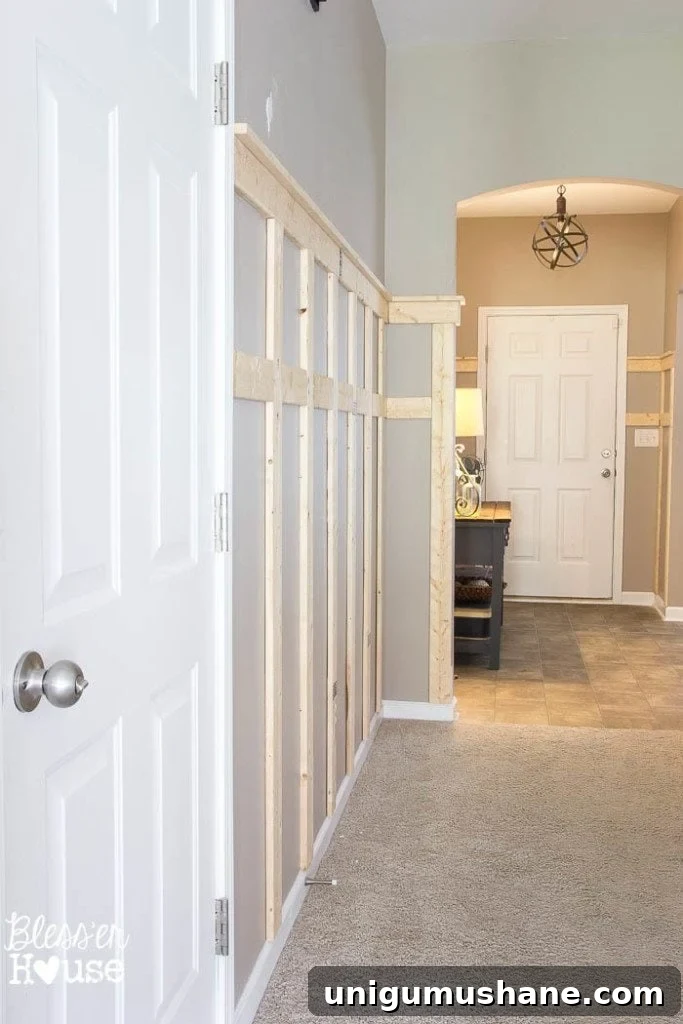
This finishing stage took longer than expected, but it’s essential for a seamless final result. Once everything is sanded and primed, a fresh coat of paint turns the whole project into a stunning, cohesive feature.
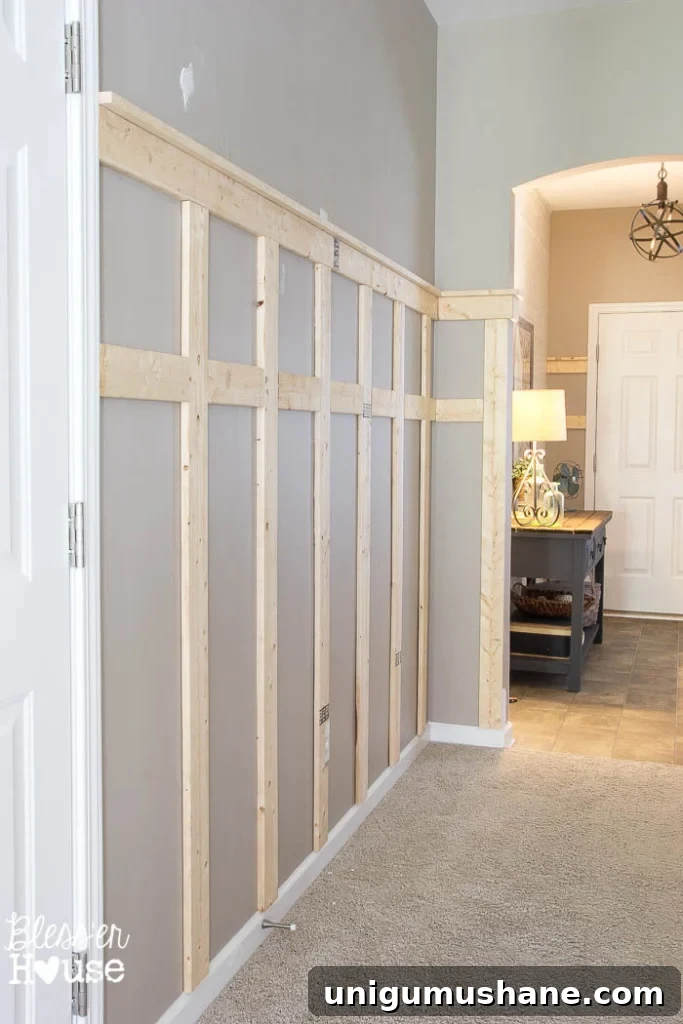
UPDATE: See the final board and batten reveal.
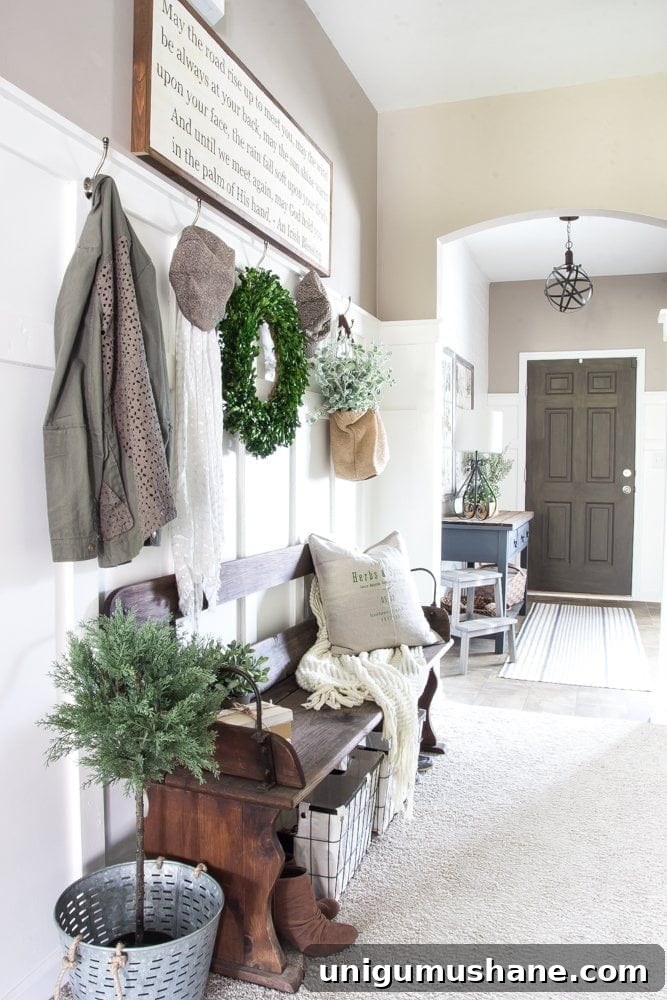
We still want to replace the carpet with hardwood eventually, but the new wainscoting alone made a dramatic improvement. Small architectural updates like this can completely change how a space feels without a large budget.
Have you tried board and batten or other molding projects in your home? Share your experience — these kinds of architectural details are often the most rewarding DIY transformations.
Frequently Asked Questions
Can this method be used on textured walls?
Is board and batten just a trend?
How high should wainscoting be?
How do I prevent battens from standing proud of existing baseboards?
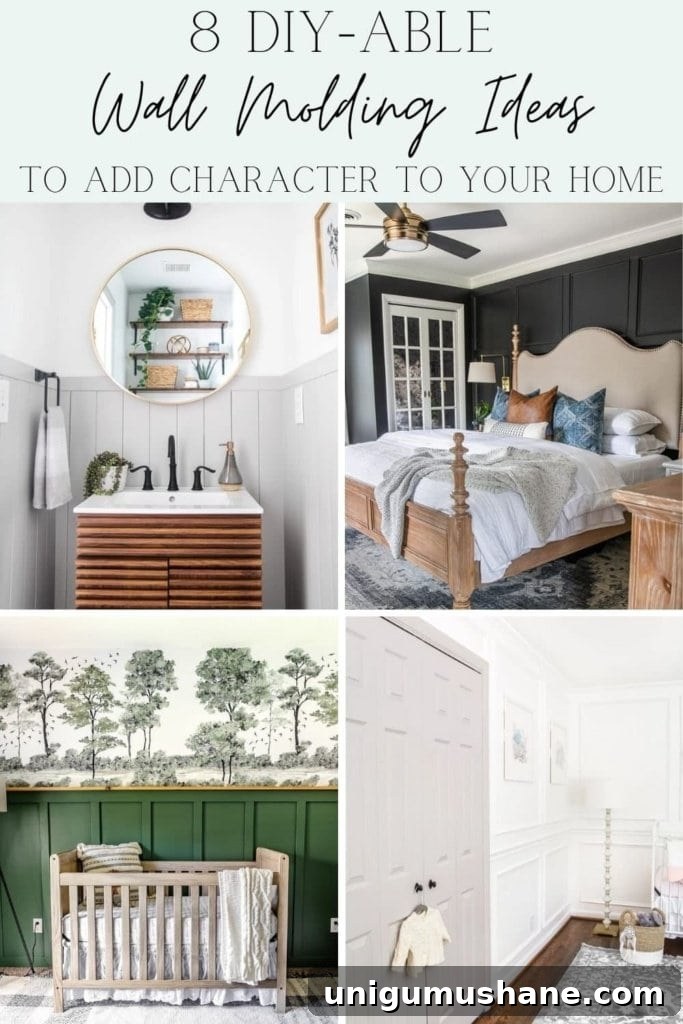
Wall Molding DIY Project Ideas
8 DIY Wall Molding Ideas to Add Character to Your Home
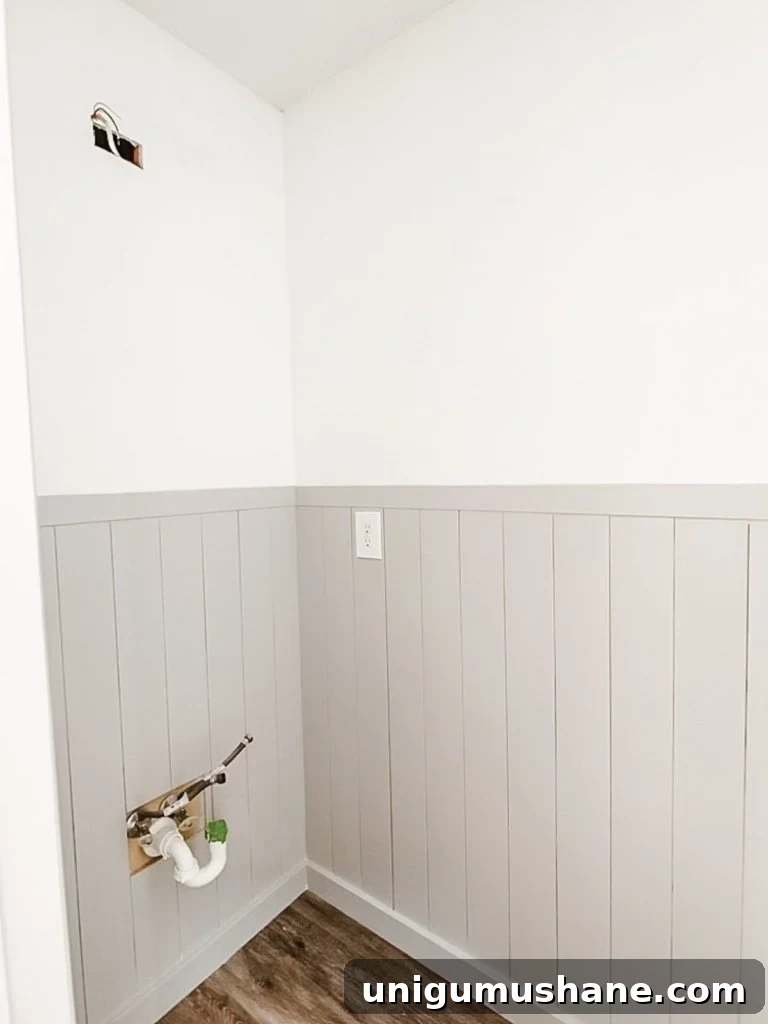
Easy DIY Vertical Shiplap Wainscoting
DIY Traditional Grid Molding Focal Wall
Inexpensive DIY Batten Wall Using Lattice Strips