
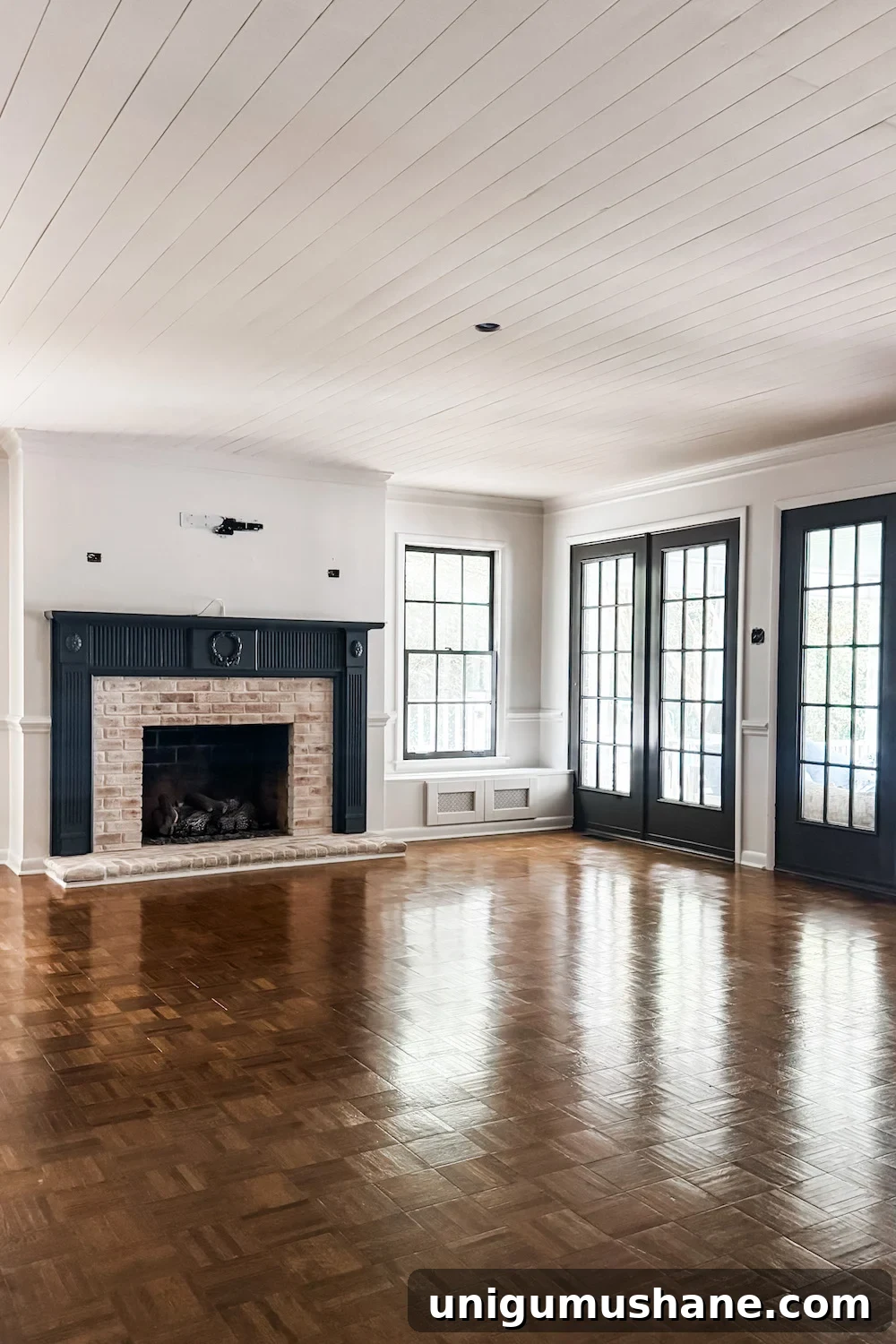
Ceilings are seriously underrated. After experimenting with color-drenching and wallpapering ceilings, and adding tongue-and-groove planks to our upstairs hallway, I was ready to bring that same attention to our living room. The room felt cozy but the flat 8-foot ceiling lacked character, so as part of our living room makeover I finally tackled a DIY shiplap ceiling with traditional crown molding to keep a polished, classic look.
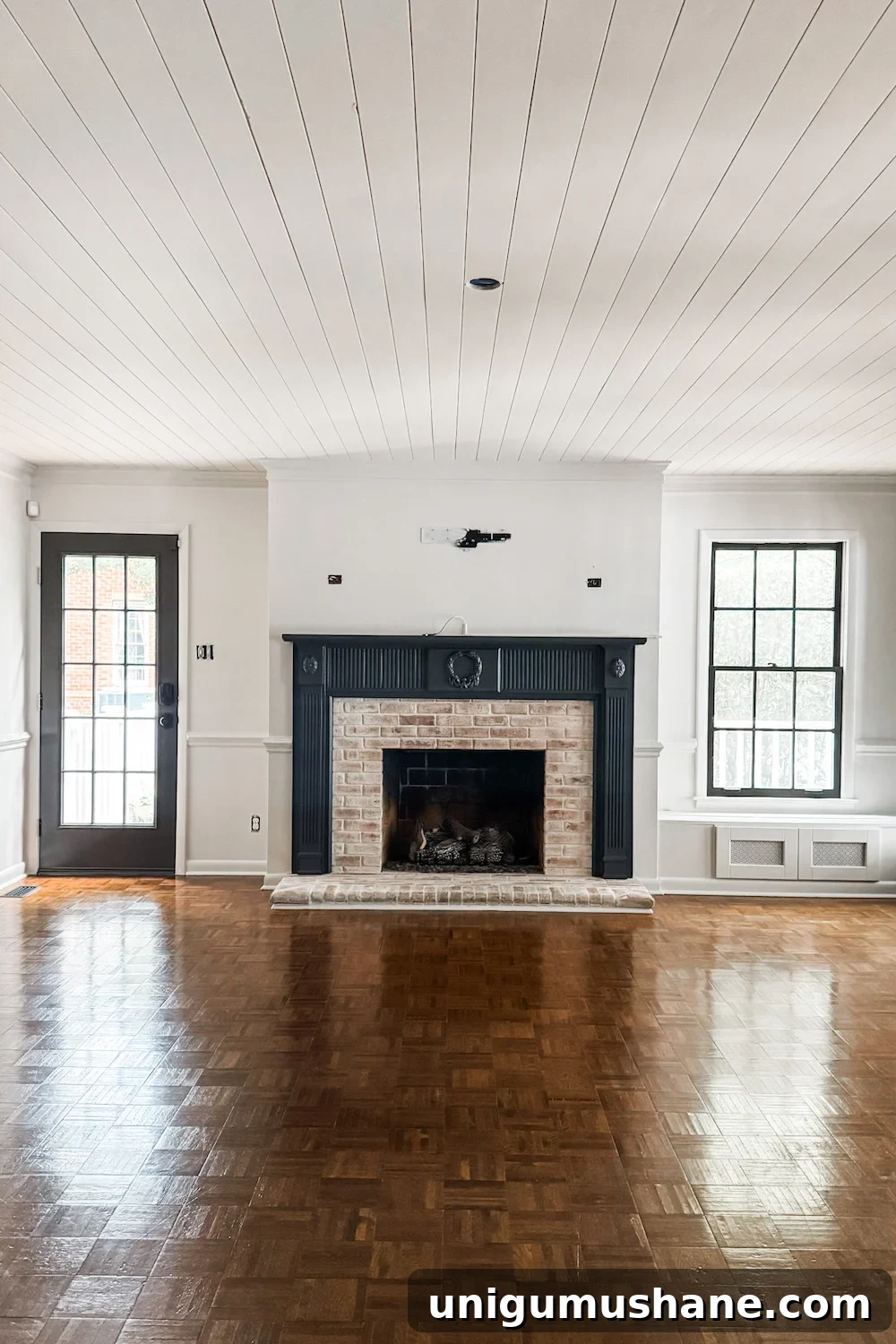
I’d been dreaming of a shiplap ceiling for years—not the rustic farmhouse style, but a more tailored finish where the crown molding still feels intentional and refined. Once we removed the old attic fan vents and non-working ceiling speakers, the ceiling upgrade moved from idea to reality. The end result exceeded my expectations: it adds texture, warmth, and architectural interest without overwhelming the room.
DIY Shiplap Ceiling Tutorial (With Crown Molding)
This is a weekend-friendly project if you have a cordless nailer and basic DIY confidence. Below is the step-by-step process we followed to install a shiplap ceiling and finish it with crown molding.
Supplies We Used
Quick list of materials and tools:
- Tongue-and-groove shiplap planks (pre-primed)
- Construction adhesive
- 2″ 16-gauge finish nails
- Cordless nailer
- Cordless drill
- Miter saw
- Coping saw (for crown corners)
- Crown molding
- Wood filler
- Caulk and caulking gun
- Drywall sander (optional; an orbital sander also works)
- Shop vac (optional to reduce dust)
- Primer
- Paint (we used Sherwin Williams Limewash)
- Drop cloths and painter’s tape
- Pencil, level, chalk line
1. Remove Old Trim and Molding
Start by carefully taking down the existing trim and crown molding. A clean, even edge along the wall makes it easier to install the first row of planks flush to the perimeter.
2. Measure Your Ceiling and Plan Layout
Measure length and width, then add about 10% for cuts and waste. Use a scrap plank to test spacing and layout so you avoid ending a run with a narrow sliver at the wall or fireplace—planning ensures balanced joints across the room.
3. Mark the Center Line
Find the ceiling center and snap a chalk line. Working outward from the center keeps the installation symmetrical and helps control how visible seams fall across the room.
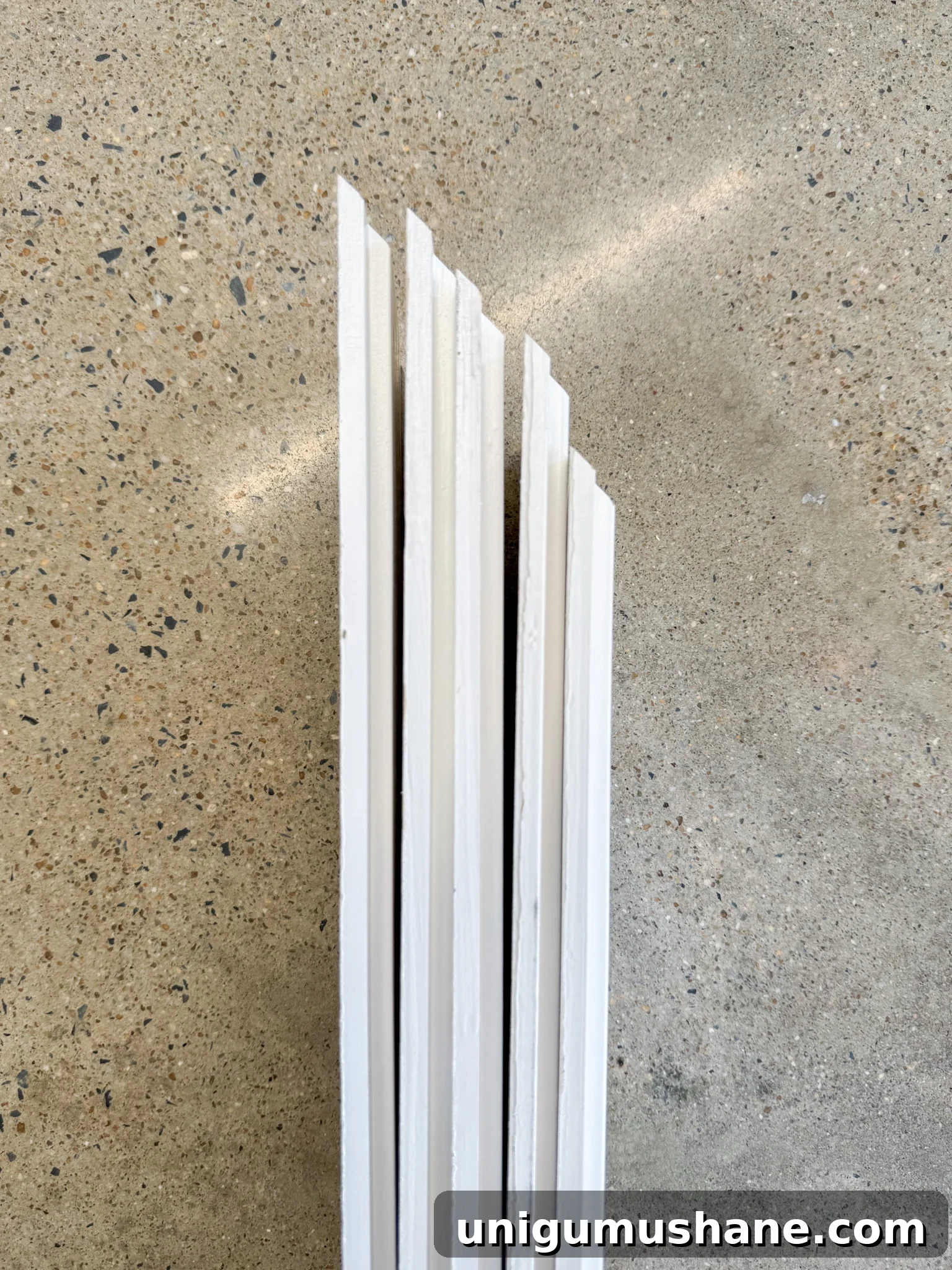
4. Bevel the First Plank
Cut one end of your first plank at a 45-degree angle on a miter saw to create a beveled edge. The bevel helps adjacent boards meet more seamlessly and reduces visible gaps.
5. Install the First Plank
Apply construction adhesive to the back of the plank and press it to the ceiling. Secure with 2″ 16-gauge finish nails using a cordless nailer, driving nails into ceiling joists when possible for added strength.
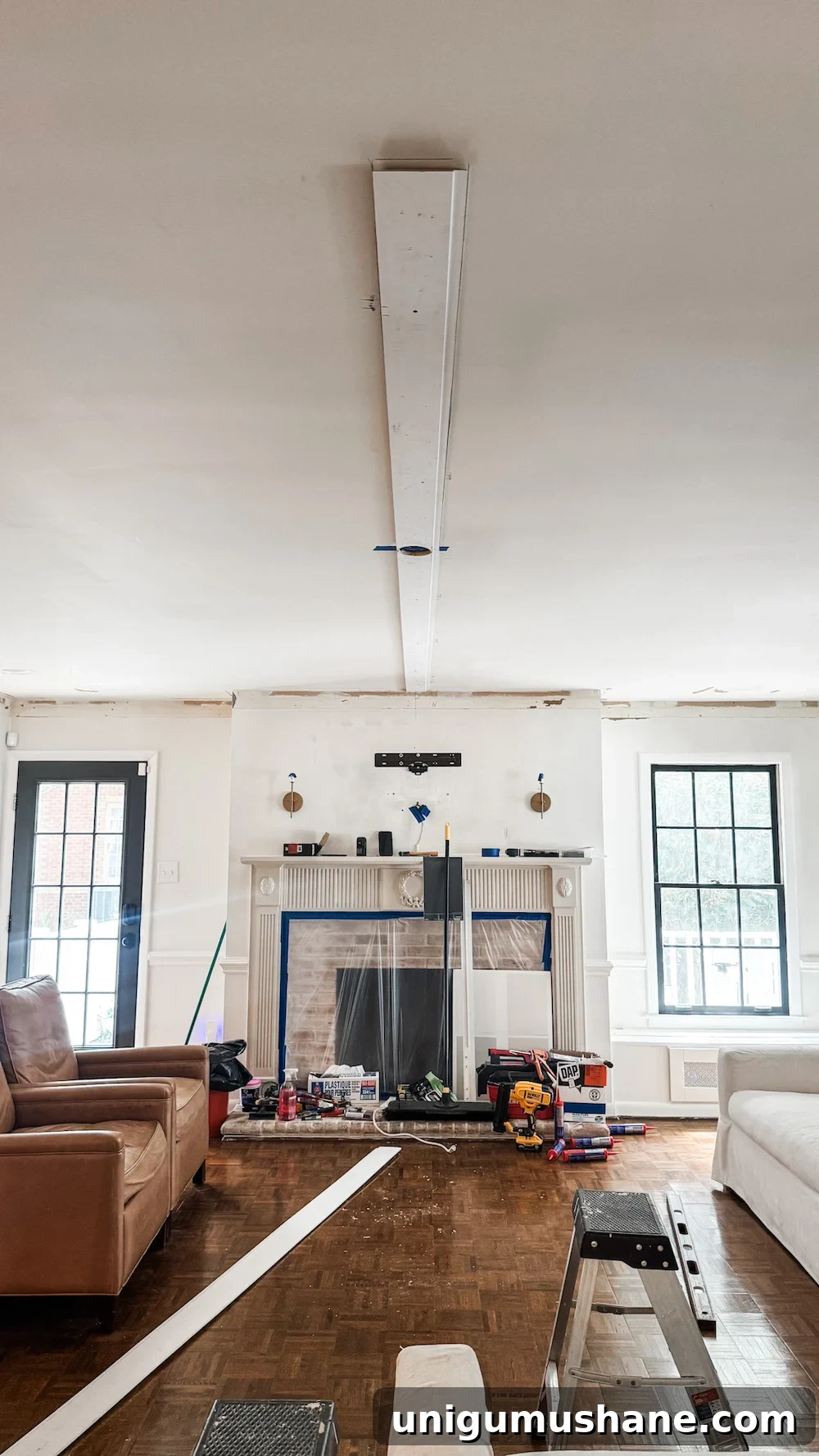
6. Continue Installing
Work outward from the center, engaging the tongue-and-groove joints. We applied adhesive every three to four boards and bevel-cut many end seams so the joins look intentional and refined.

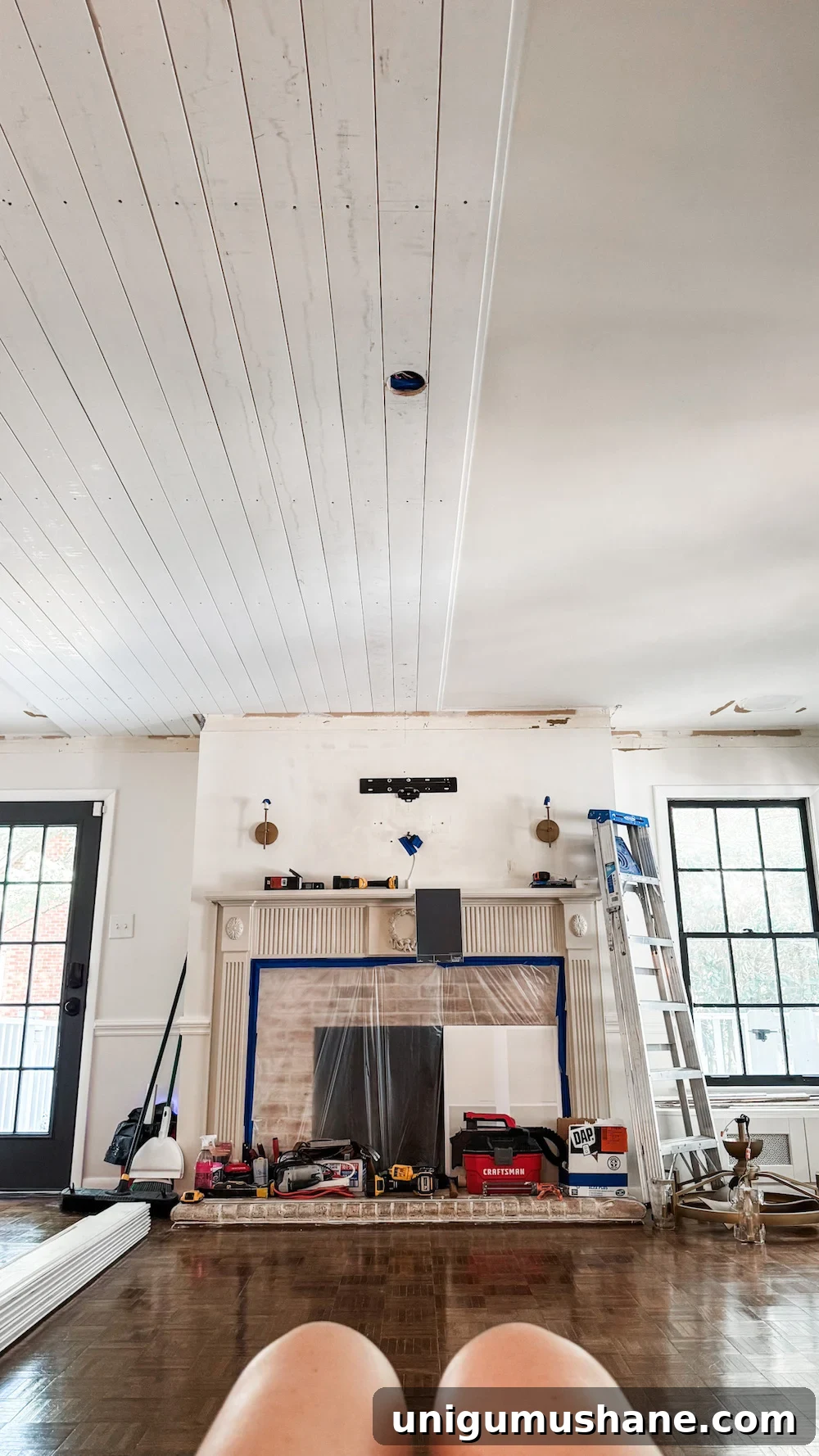
7. Fill the Ceiling
Keep installing and nailing boards until the entire ceiling is covered. Expect some ladder time and an arm workout—it’s labor-intensive but the payoff is worth it.
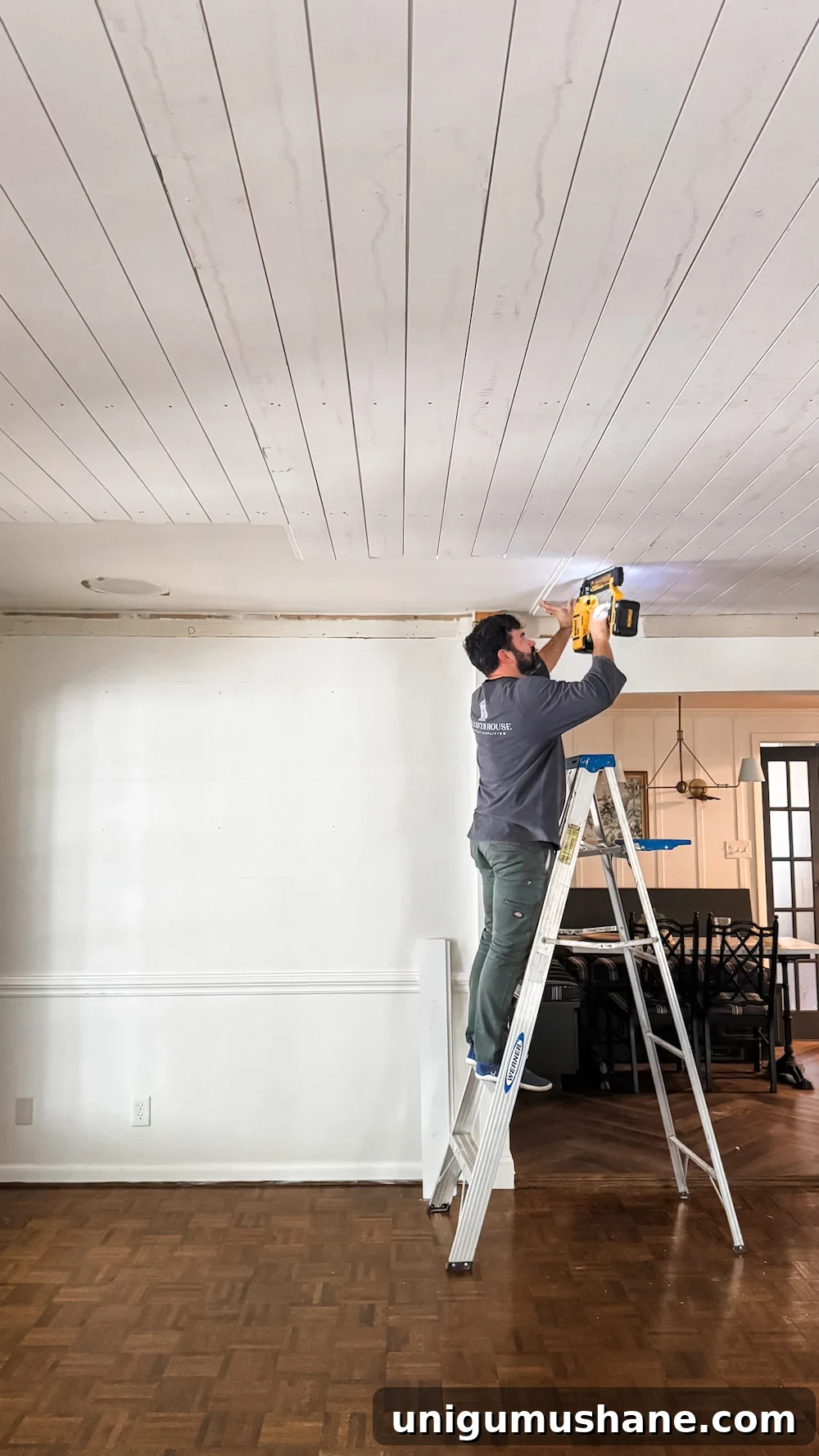

8. Add Crown Molding (Optional)
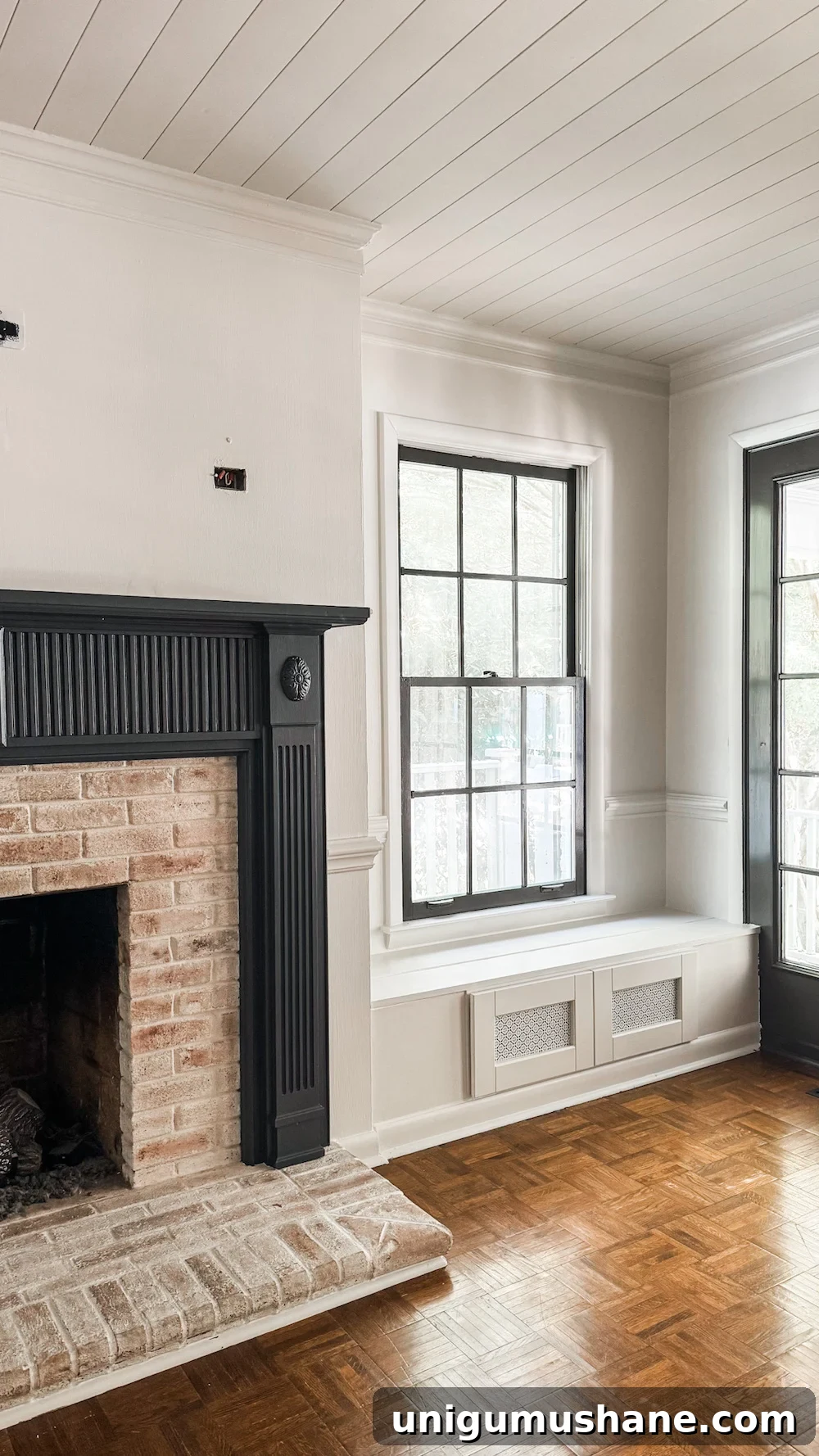
Reinstalling or adding new crown molding finishes the look. Use a coping saw to fit inside corners neatly and attach molding with finish nails. Properly fitted molding elevates the ceiling and ties the design together.
If you’re new to molding, treating the process like picture frame molding helps—measure carefully and make precise miter or coped cuts for the best results.
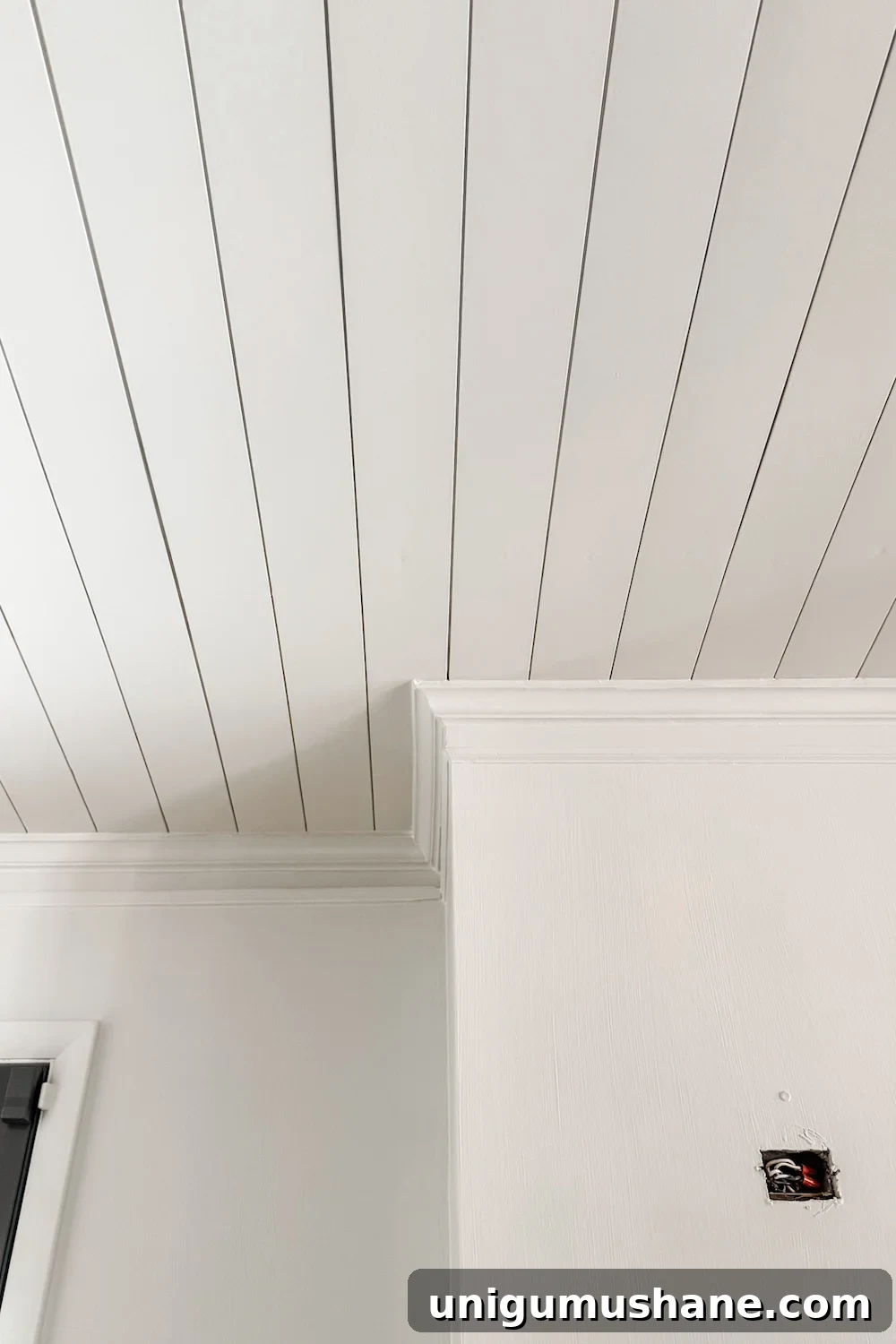
9. Fill, Caulk, and Dry
Cover nail holes and visible seams with wood filler. Caulk where crown meets wall and ceiling for a clean transition. Allow ample drying time before sanding or painting.
10. Sand Smooth
A drywall sander with a vacuum attachment speeds things up and minimizes dust, but an orbital sander will also get you smooth results. Sand until surfaces feel even and all filler and caulk lines are blended.

11. Prime and Paint
Clean up the dust, prime the ceiling, and paint. We used a creamy off-white (Sherwin Williams Limewash) to give the room a soft, warm glow. For contrast, the mantel was painted a deeper shade to anchor the space.
The Final Result
The new ceiling instantly became one of the room’s standout features. The texture, subtle paint tone, and crisp crown molding add character without overwhelming the space. Most importantly, our low 8-foot ceiling no longer feels cave-like—shiplap with a light finish visually opens and uplifts the room.
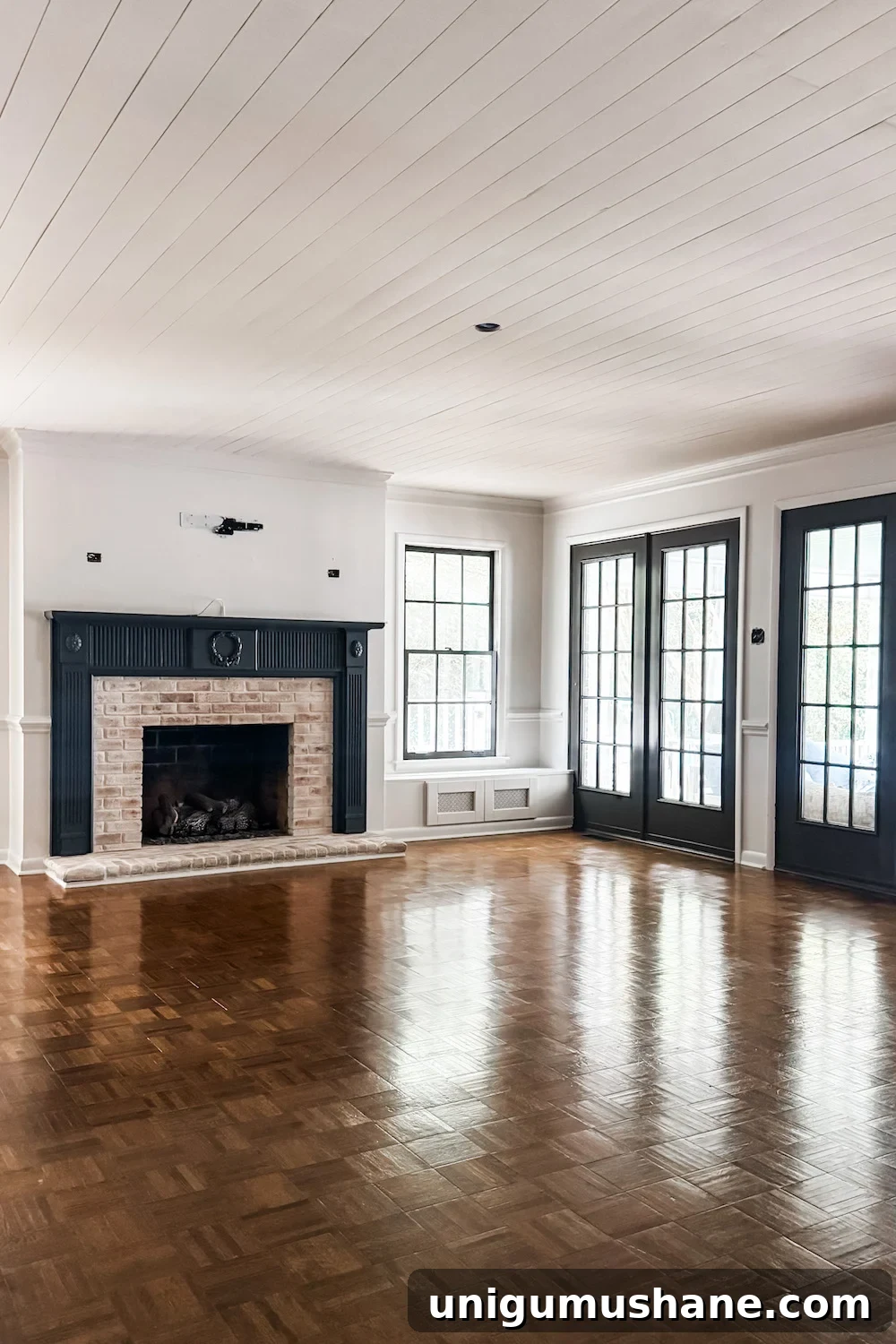
Next steps are installing the light fixture (a fandelier), moving furniture back in, and styling the room to match the new ceiling. If you’re considering covering popcorn ceilings, shiplap provides a beautiful, forgiving solution that hides texture and modernizes the space.
More Ideas for Your Ceilings
- How to hide an attic door in your ceiling
- 8 ways to cover a popcorn ceiling without removing it
- Best haint blue shades for porch ceilings