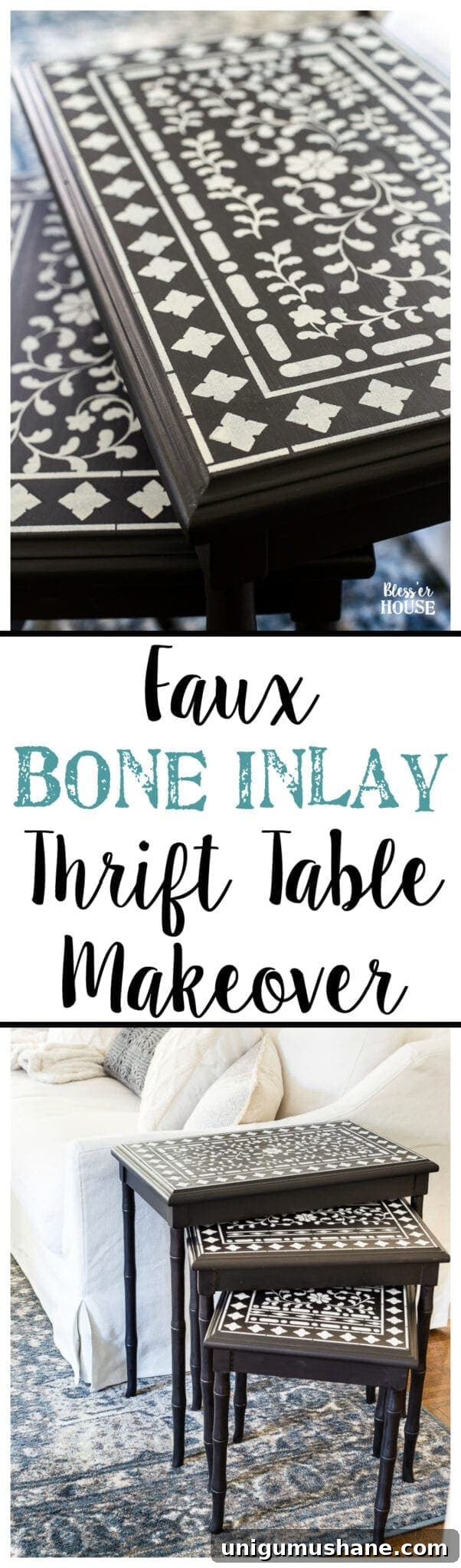
Faux Bone Inlay Nesting Tables Makeover: A Thrift Store DIY
Last November I hit the jackpot at a local thrift shop — the kind of haul that comes from holiday purges when people are clearing space for guests and decorations. If you like thrifting, remember this tip: the best finds often appear right before or right after major holidays.
I brought home a handful of pieces that day without a clear plan, only noticing their potential. Over time those finds became a Christmas village centerpiece, a repurposed coffee table turned ottoman, faux concrete magnolias, and most recently, a set of well-built but slightly dated nesting tables that I couldn’t resist.
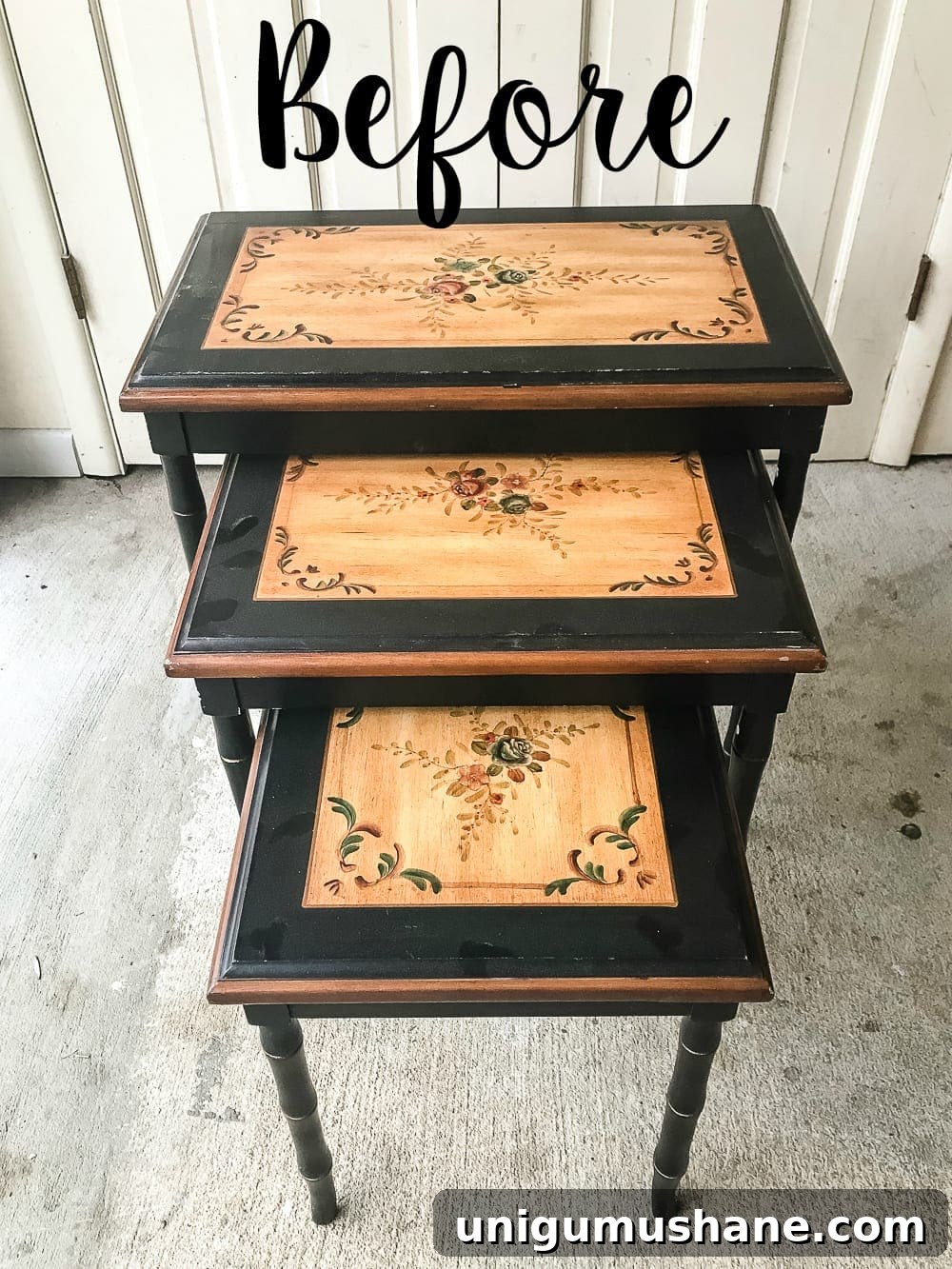
The tables were solid — no wobbly legs — and the set was only $20. Their original surface patterns weren’t my style, but with a fresh paint job and some stencil work they were begging for a makeover.
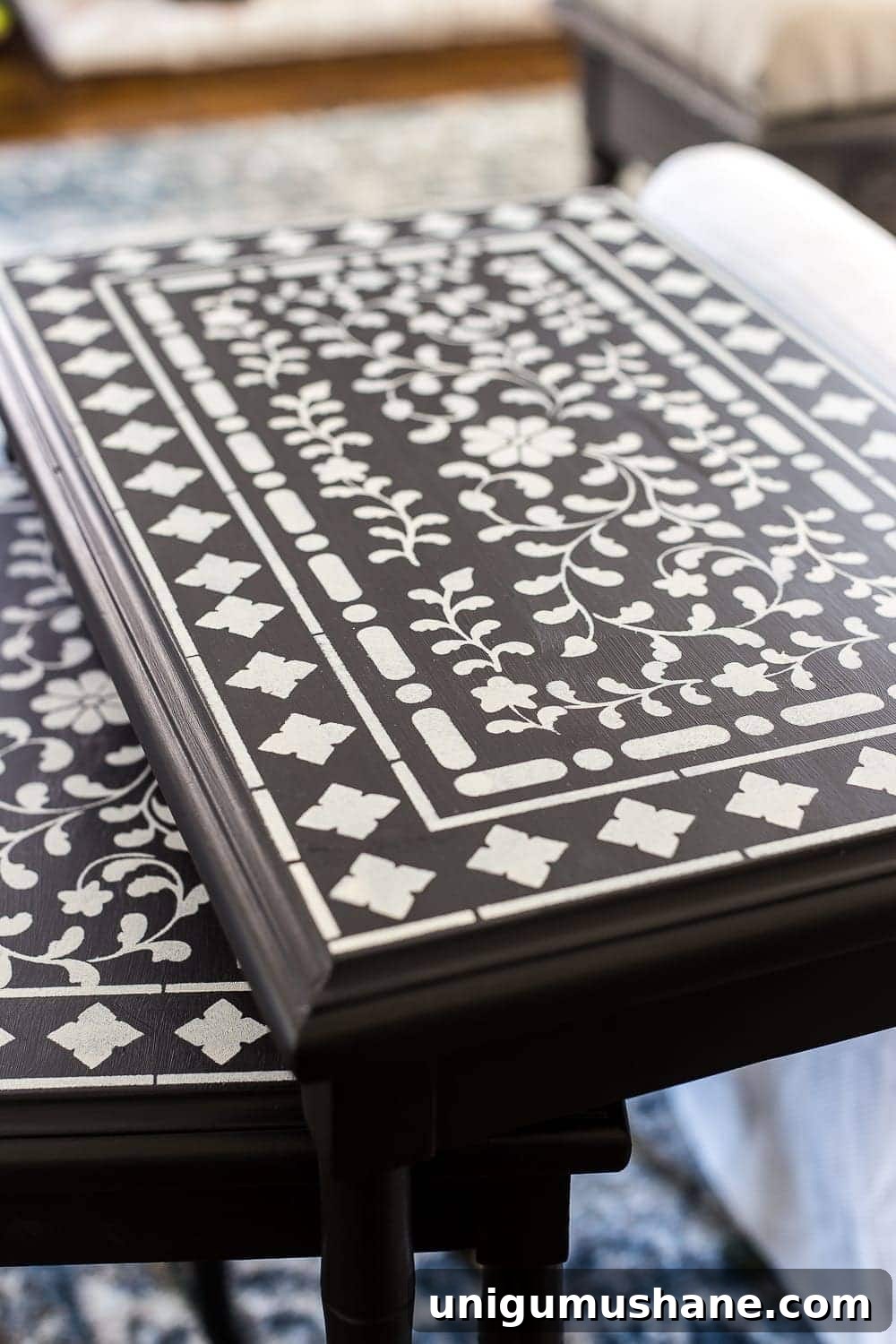
I had been admiring a pricey bone inlay dresser from Anthropologie and wondered if I could replicate the look on a budget. Instead of buying bone inlay, I opted for a painted faux version using stencils to recreate that elegant, handcrafted vibe.

Full disclosure: I’m not an artist — stick figures are my specialty — so this is a very approachable DIY. If I can do it, you can too.
Supplies Used:
- Stencil brush
- Indian inlay stencil set
- Black furniture paint (Coal Black)
- Off-white paint (Raw Silk) — a tester size works fine
- Paper towels
- Natural bristle brush for base coats
- Small artist brush for touch-ups
- Painters tape
- Matte polycrylic sealer
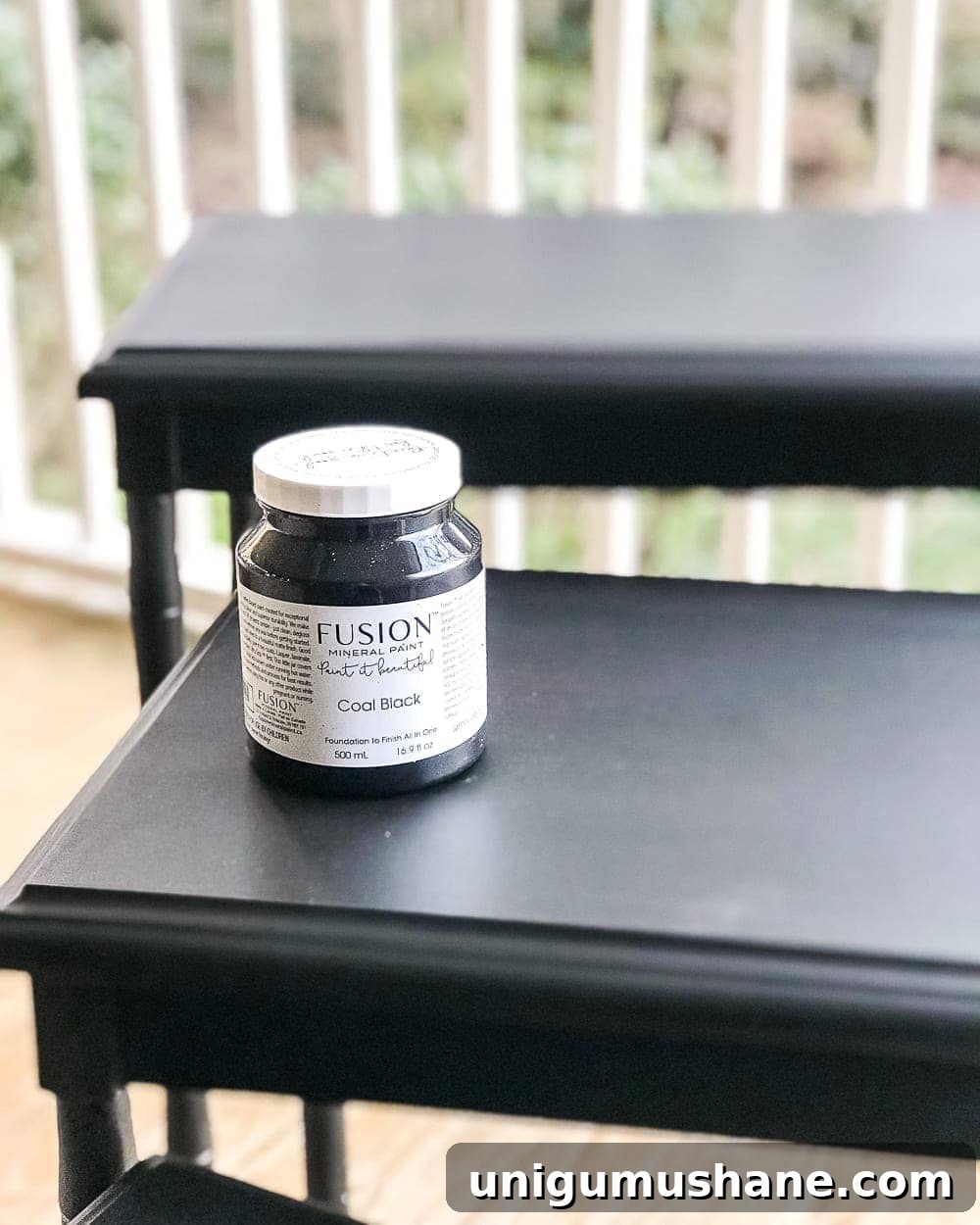
Step 1: I started by painting all of the tables with two coats of black furniture paint using a natural bristle brush. The goal was to completely cover the old design and create a crisp, dark background for the inlay look.
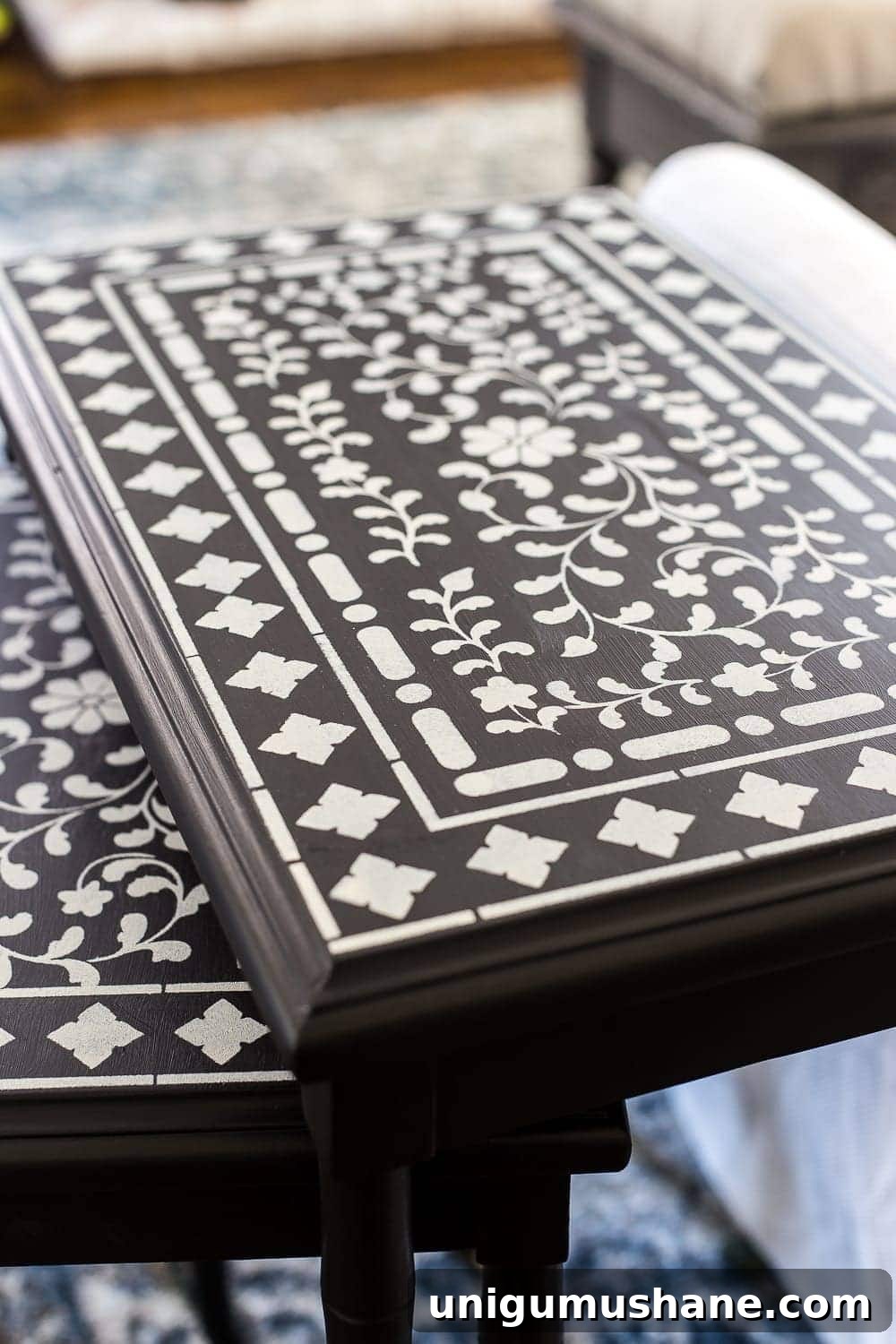
Step 2: After the black paint had fully dried, I used the off-white shade for the stenciled pattern. The stencil set includes several complementary designs, so I planned the layout to suit the size of each table top — geometric patterns for the outer borders and floral motifs for the centers.
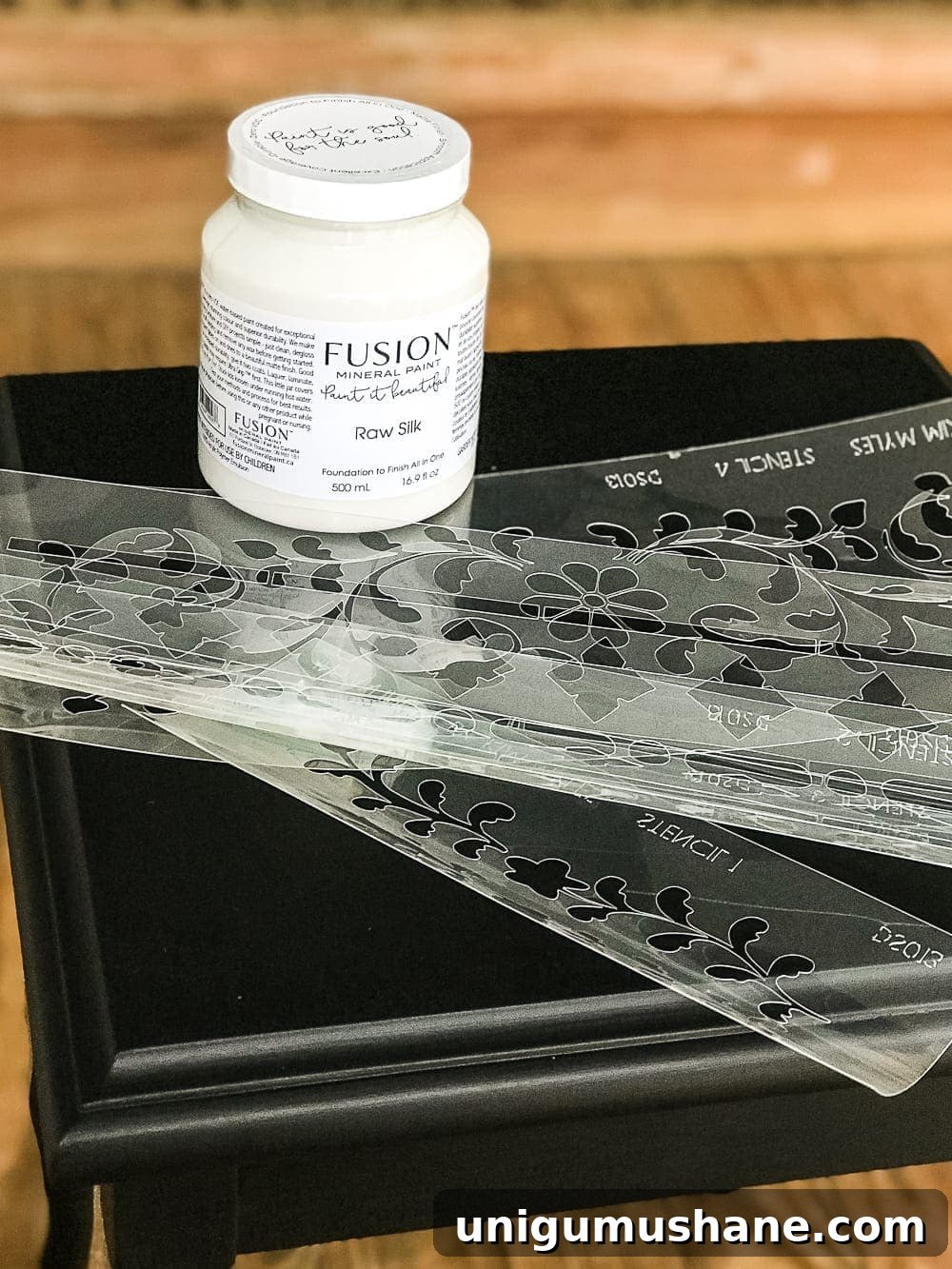
Step 3: Secure the stencil with painters tape, dip only the tip of the stencil brush into the off-white paint, then wipe most of the paint off onto a paper towel so the brush is barely damp. Apply the paint in a light, dabbing motion to avoid bleed-through and to keep edges crisp.
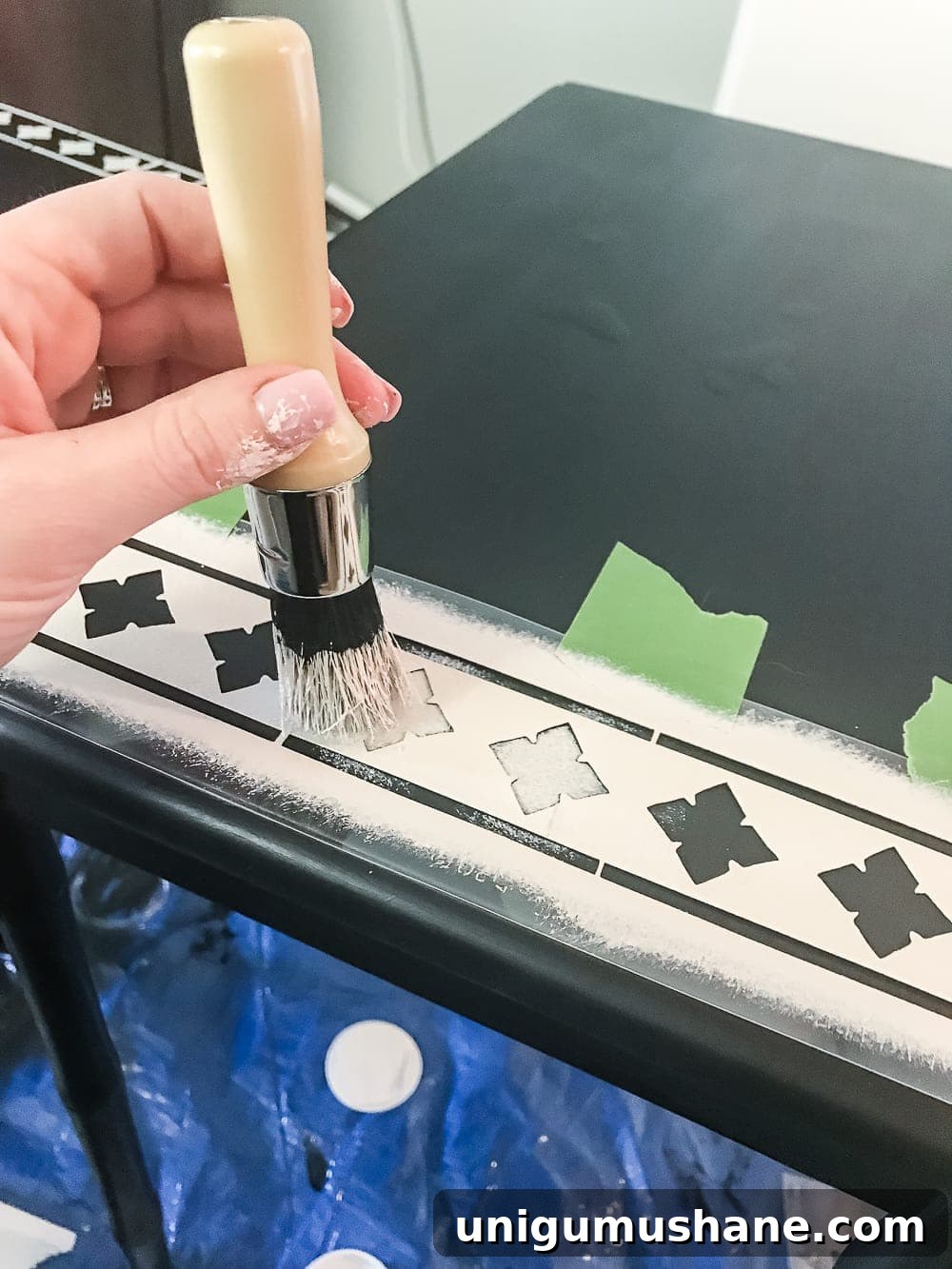
Step 4: As you work across the surface and begin overlapping patterns, pause and let painted sections dry for a few minutes before placing the next stencil. This prevents unwanted smudging and keeps the design clean.
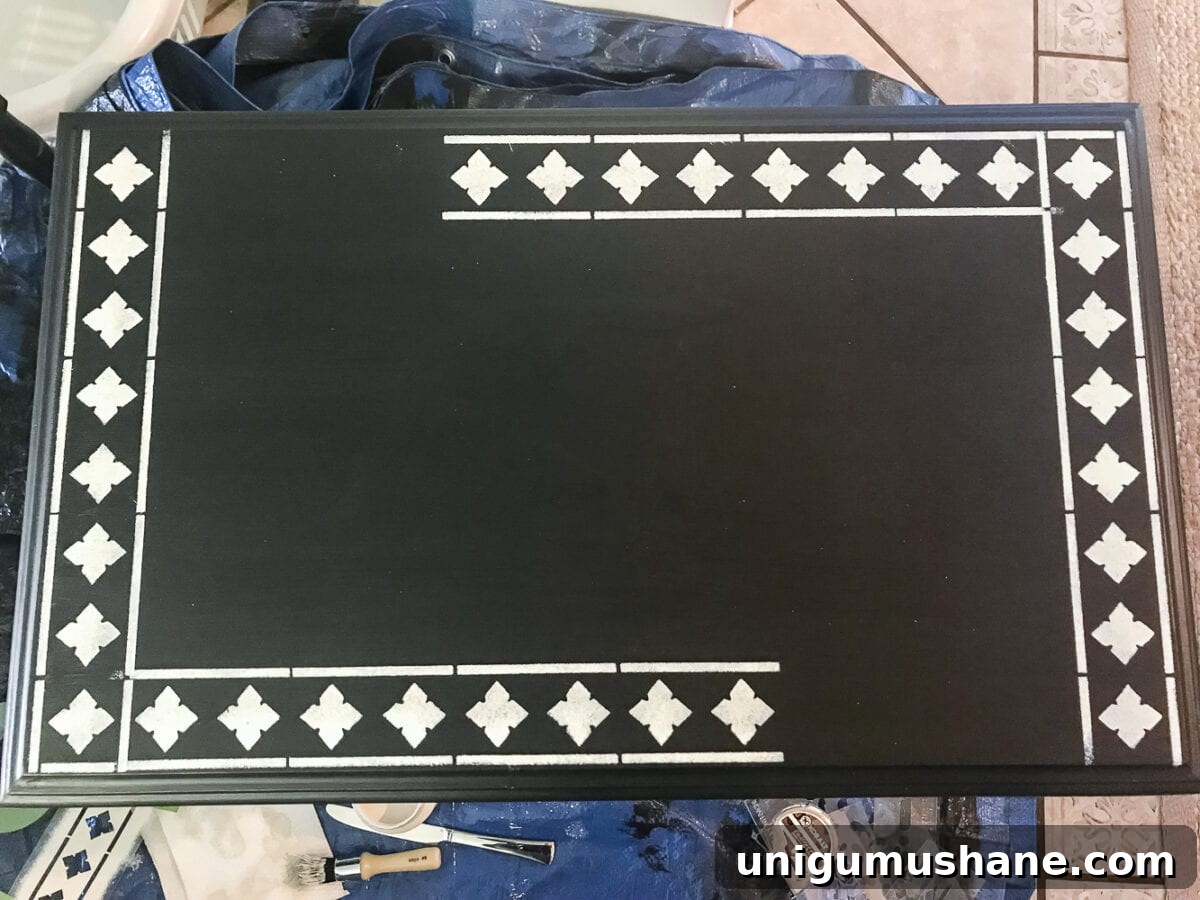
Step 5: If a stencil motif is too large for a certain area, use a strip of painters tape to create a clean endpoint. This lets you adapt larger patterns to smaller surfaces without losing the intended look.
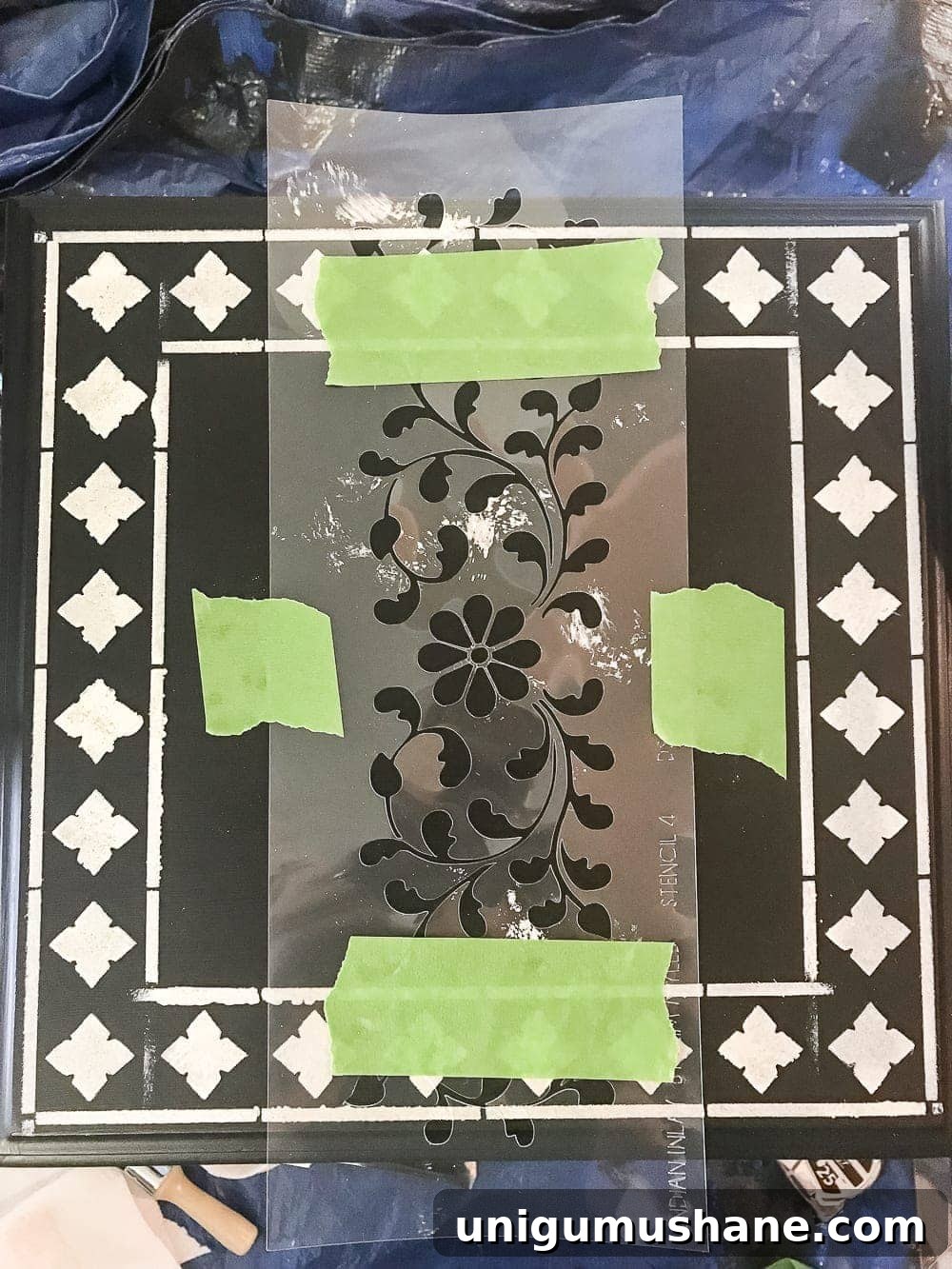
Step 6: Finish the stenciling and then use a small artist brush to touch up any minor bleed-through or smudges. These fine corrections make the difference between a good faux finish and a great one.
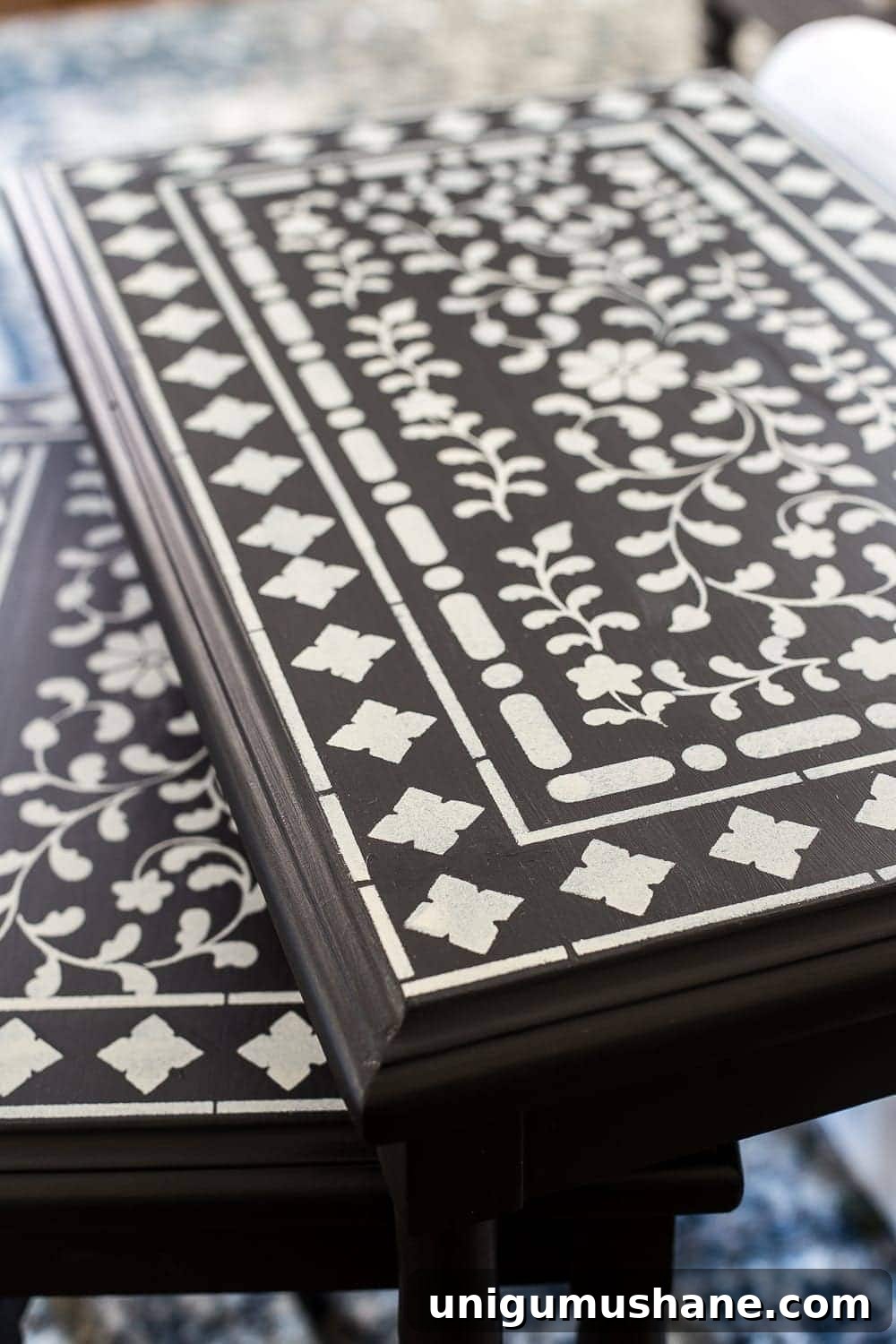
Step 7: Protect the painted finish by sealing the tabletops with a matte polycrylic. This adds durability for everyday use and keeps the faux inlay looking fresh.
And that’s it — a simple transformation that looks much pricier than the materials and time invested. The finished set looks elegant and pairs perfectly with a variety of decor styles.
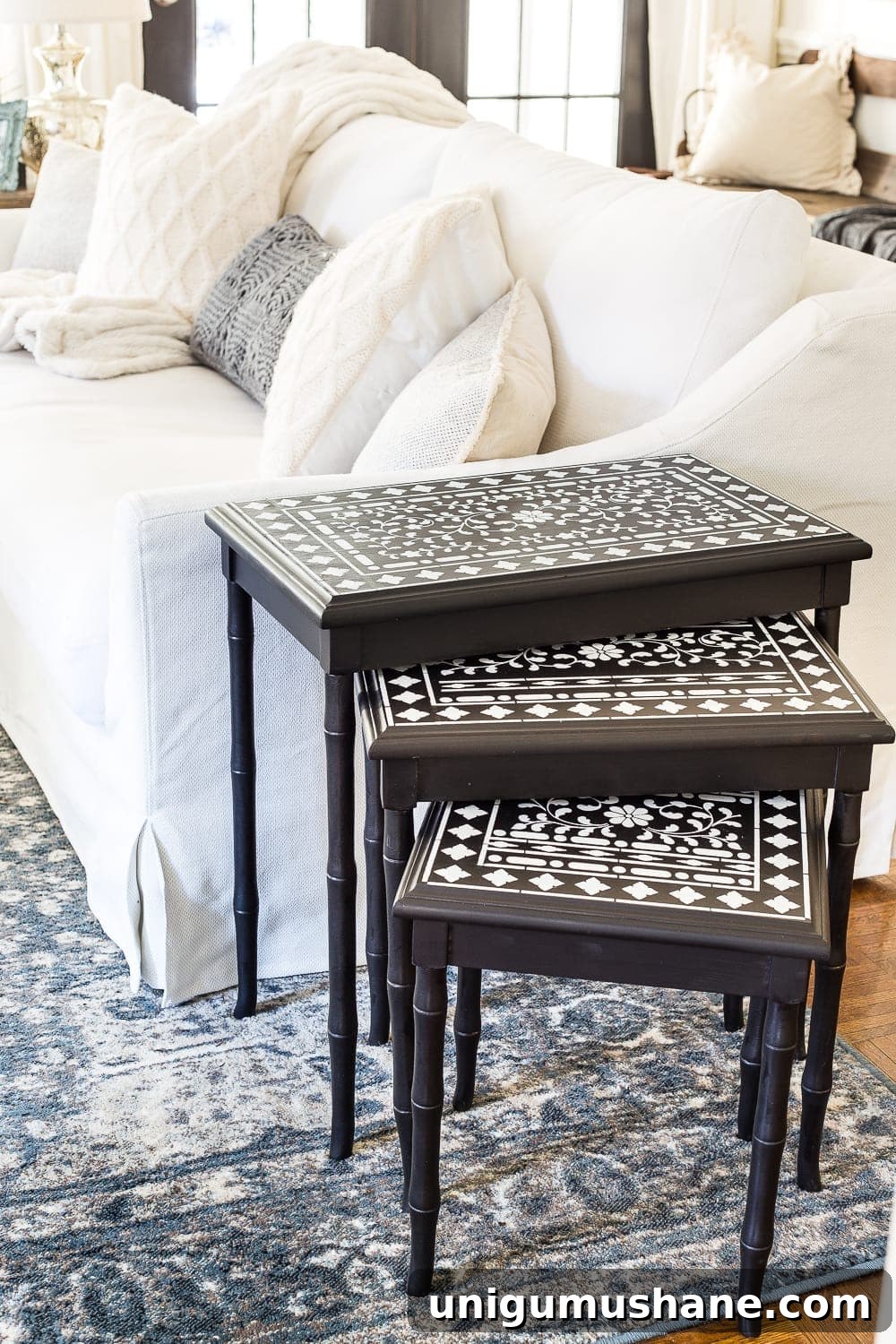
Up close, the paint passes for real bone inlay unless you’re inspecting it closely. The nesting tables are now incredibly useful — they fill the space beside accent chairs, tuck away neatly when not needed, and are perfect for small living rooms.
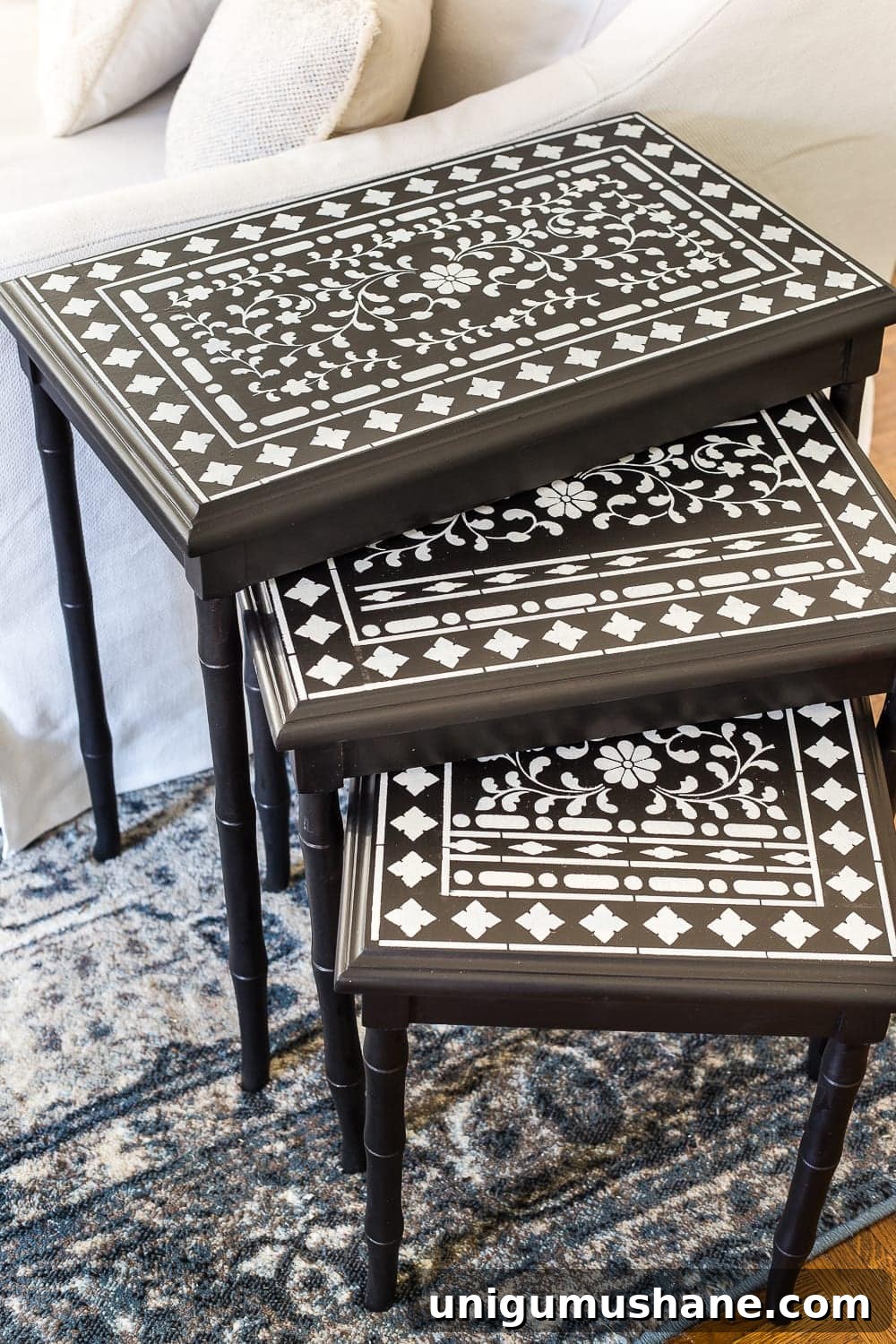
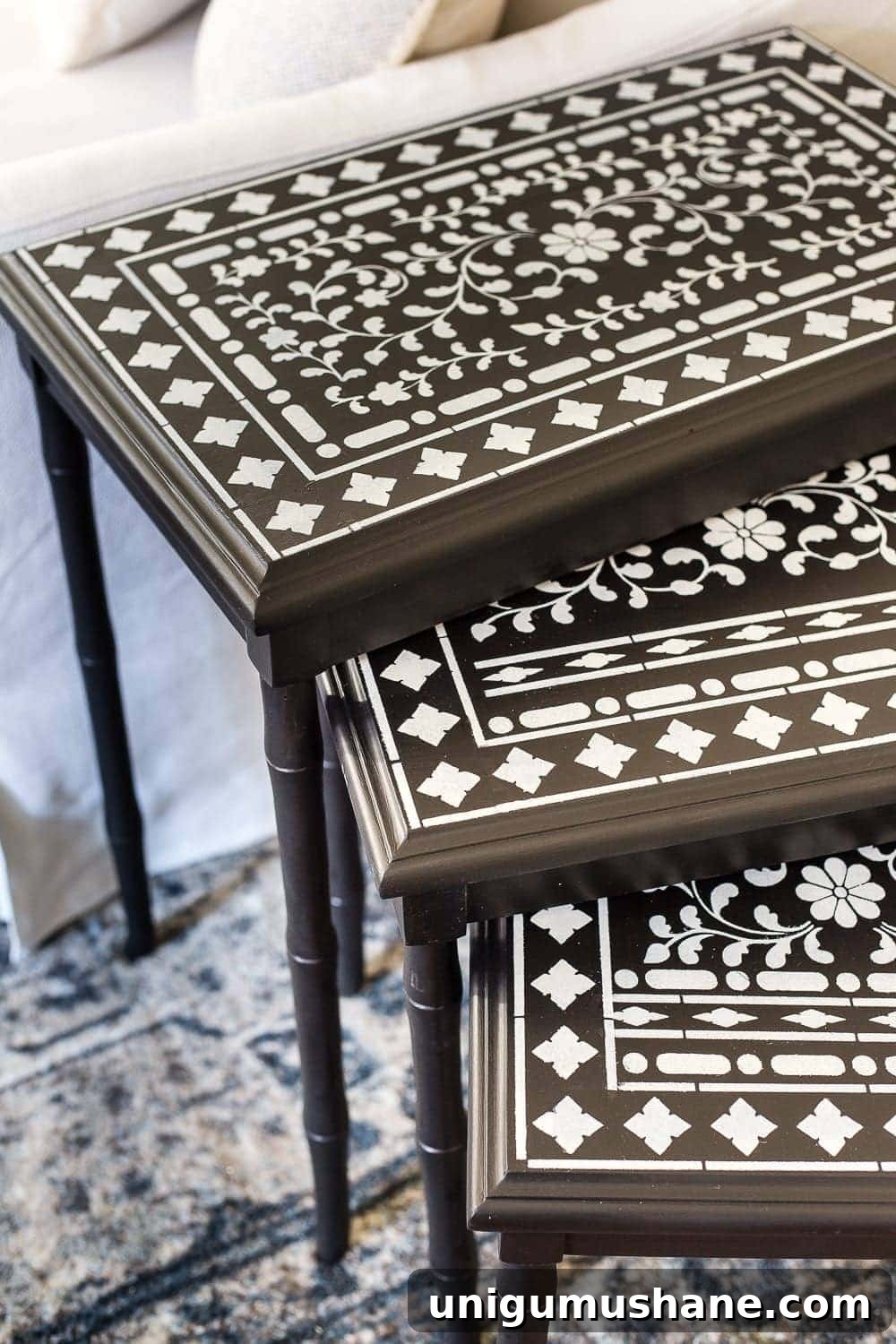
The total cost to create this look was a fraction of the high-end alternative, and the result feels custom and high-end. If you’ve done stenciling before, you know how satisfying the payoff can be — and if you haven’t, this project is a great place to start.
Have you tried a stencil project you’re proud of? I don’t stencil often, but this one definitely sparked the stenciling bug in me.
Before-and-afters from the Trash to Treasure crew (clockwise from top left):
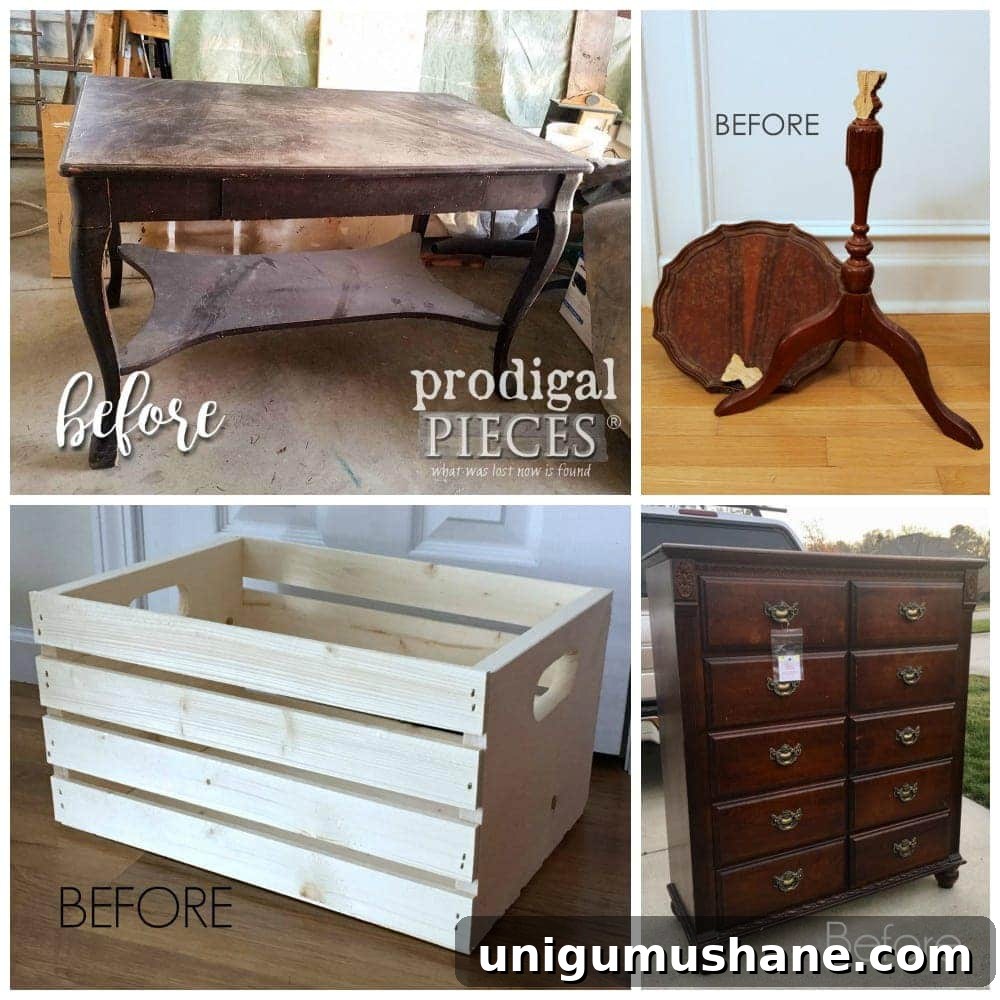
Clockwise from top left: Prodigal Pieces | Artsy Chicks Rule | Confessions of a Serial DIYer | Girl in the Garage