You know you have a great mom when she’ll help you hang wallpaper. That’s the takeaway from this post — and a reminder that home improvement projects are usually less intimidating than we imagine.
For years I’d heard the joke, “If you want to test your marriage, try hanging wallpaper together,” so I avoided the “w” word whenever possible. My husband and I can install built-ins and trim windows with ease, but wallpaper felt like a different beast. When Robert had a busy week at the office, my mom stepped in to teach me her tried-and-true wallpapering techniques.
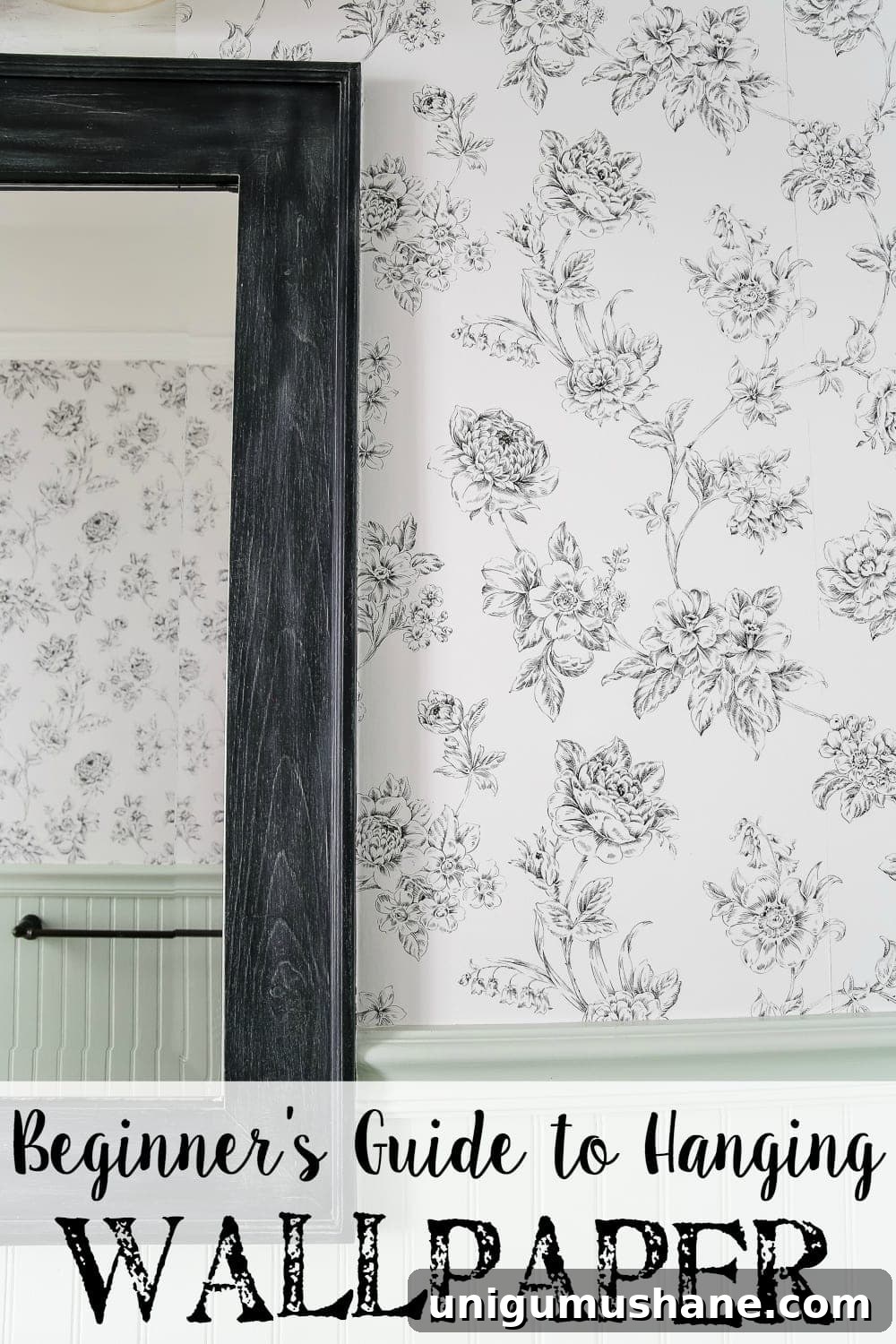
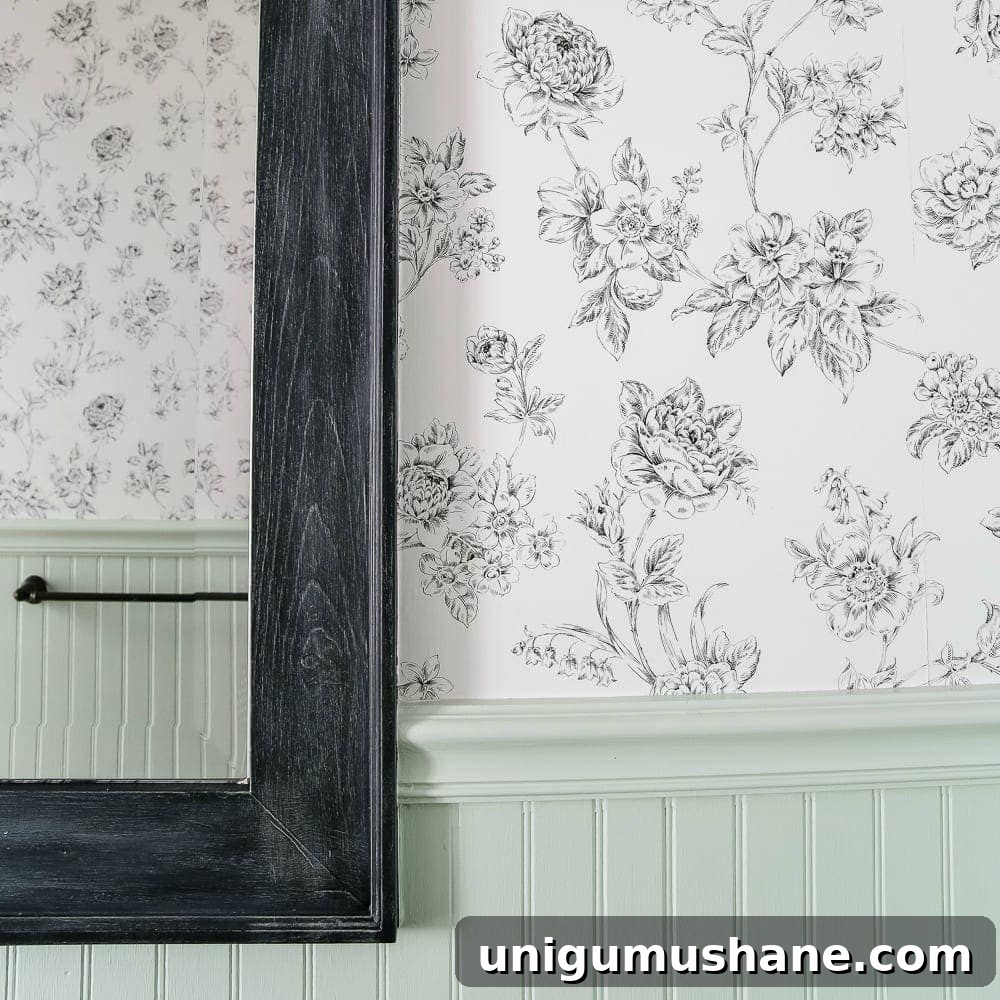
(Want to see the powder room reveal? Check the final after photos on the blog.)
It turned out to be surprisingly enjoyable — less like a stressful chore and more like tackling a large jigsaw puzzle together. It’s satisfying work, and I loved spending time with my mom while learning the ropes. If you’re new to wallpapering, here are the best tips I learned, presented as a practical, step-by-step beginner’s guide.
A Beginner’s Guide to Hanging Wallpaper
Supplies used (basic list):
- Wallpaper primer (size) or wall primer
- Wallpaper of your choice (pre-pasted or unpasted)
- Large trough or extra-large tray filled with water (for pre-pasted rolls)
- Plumb bob or laser level
- Pencil and tape measure
- Wallpaper paste and paste brush (if not pre-pasted)
- Scissors and a sharp utility knife with spare blades
- Large work table for cutting and pasting
- Paper hanging brush or plastic smoother and seam roller
- Metal straight edge and L-square (optional)
- Sponges and clean, damp rags
- Ladder and a helpful friend or family member
Follow these steps for a smooth wallpaper installation. This method works for both pre-pasted and unpasted wallpapers with only small variations.
1. Prepare the wall. Start with a clean, smooth surface. Patch nail holes with spackle, sand smooth, and remove any old wallpaper. If your wall was painted a dark color, prime it with white paint or a wallpaper primer first, especially if you’re using a light or white paper.
2. Apply wallpaper size (primer) to the wall the night before you hang paper. This gives you some slip to reposition panels, which is extremely helpful when matching patterns.
3. Choose a flat, unobstructed wall to start rather than a corner; corners aren’t always perfectly square. Use a plumb bob or laser level to draw a straight vertical starting line with a pencil. This line ensures your first panel is perfectly straight.
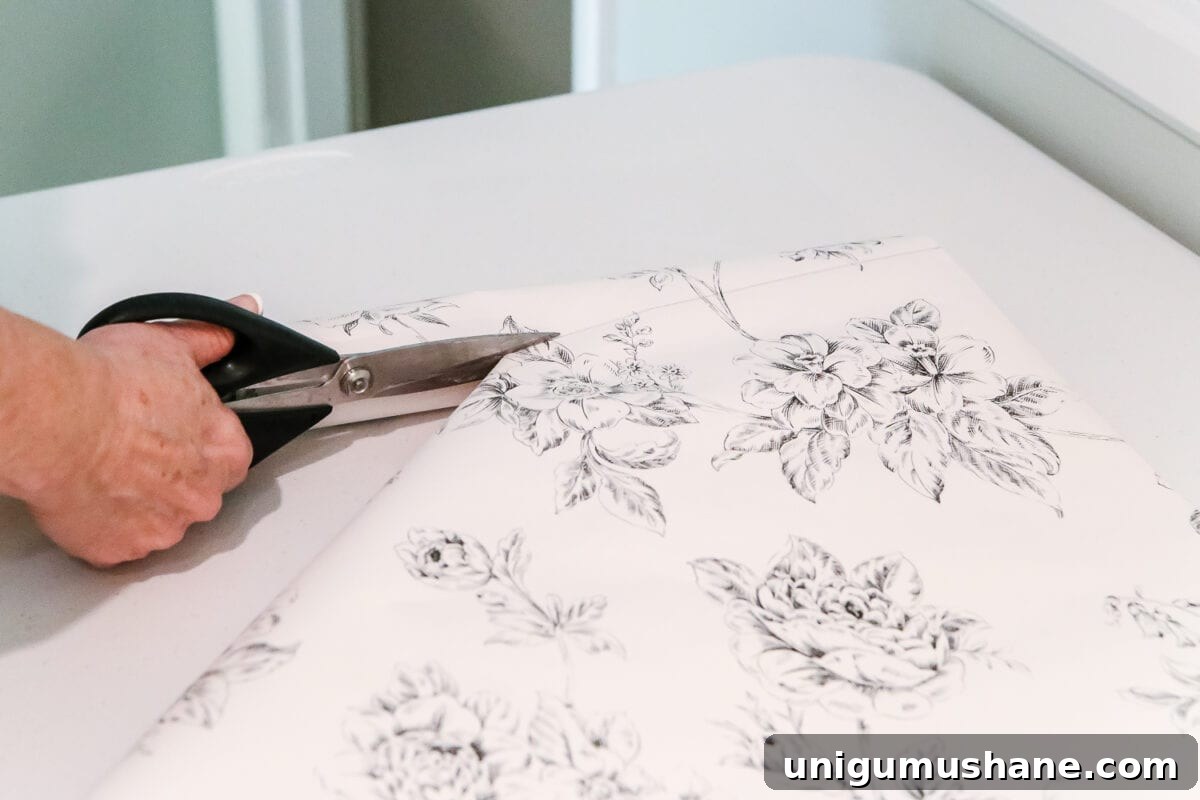
4. Measure the wall height and add about 4 inches to allow for overhang at the top and bottom. On your work table, unroll the paper and mark the top of the pattern where you want it to start, then use an L-square to draw a straight cut line.
5. Cut the panel along the line. If your paper is pre-pasted, roll it with the backing out, submerge it in water so the backing gets wet, and then unroll carefully. For unpasted paper, lay the roll backing-up and apply paste evenly with a brush.
6. Book the paper — loosely fold both ends onto the center without creasing — and let it sit for 2–3 minutes to allow the paste to activate. Wipe your table clean between panels to keep things tidy.
7. This is a two-person step. Unfold the booked panel and lift it to the top of the wall along your starting line. Align the edge to the pencil line and smooth the paper down with a hanging brush or plastic smoother, pressing out air pockets and excess paste.
8. Use a metal straight edge to tuck the paper into the top and bottom edges and trim the excess with a sharp utility knife. Keep a damp sponge handy to wipe away stray paste as you go.
9. For subsequent panels, match the pattern when cutting your lengths. Hang the next panel edge-to-edge (do not overlap) and use the wallpaper size to give you room to slide the paper until the pattern aligns perfectly. Once aligned, smooth and trim as before.
10. Handle corners and obstacles by cutting flaps at angles and trimming carefully; scissors followed by a utility knife give the neatest results. After the paper is hung, use a seam roller to press edges for a seamless look.
11. Keep checking earlier panels for air bubbles as the paste dries. Smooth them out with a brush or press them gently with a pin and flatten. Small adjustments as you work prevent larger problems later.
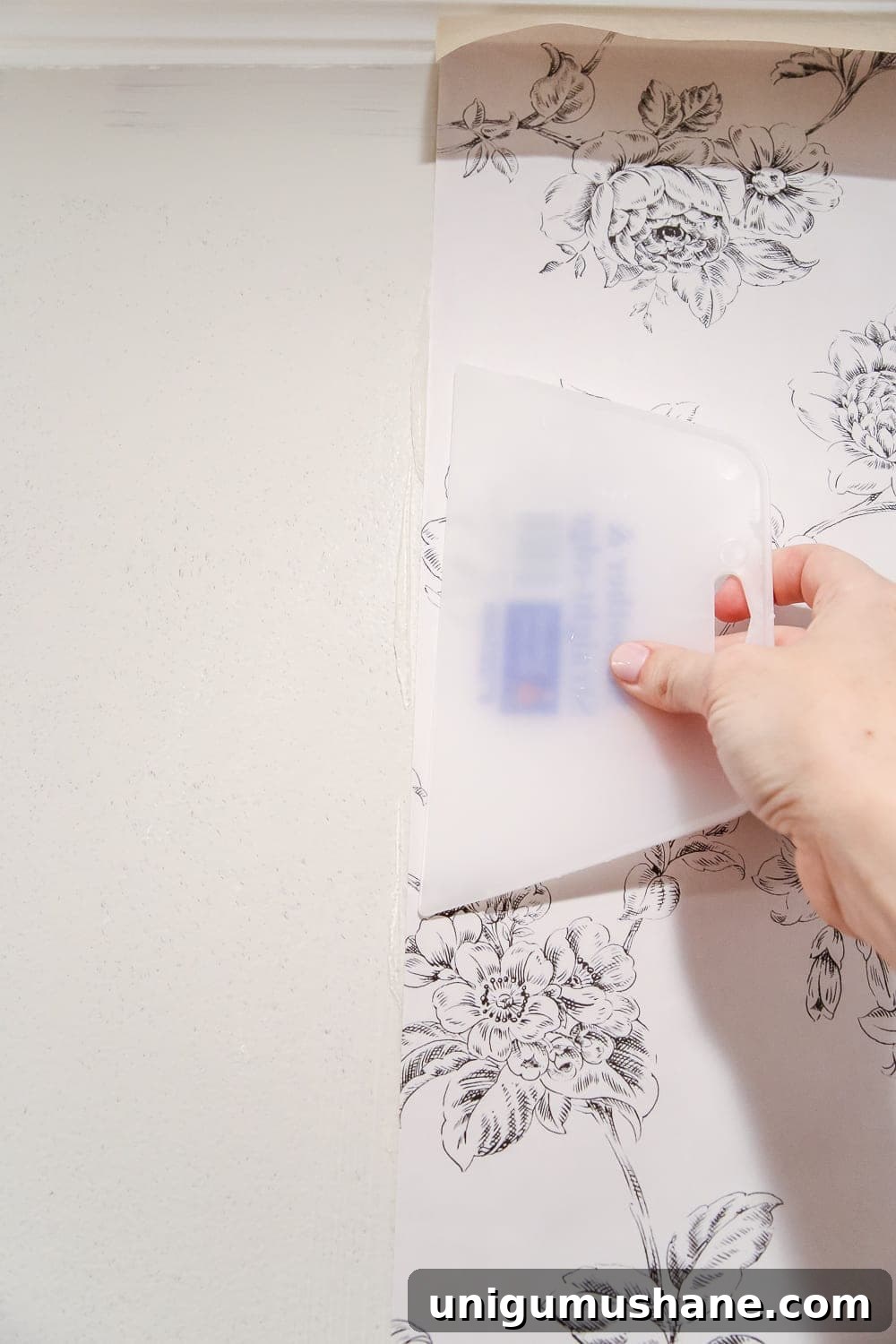
We spent nearly a full day on our powder room but the final result was worth it — clean lines, matched patterns, and a room that already feels transformed. Wallpapering is a patient process, but with the right preparation and a helper, it’s far less daunting than the rumor mill suggests.
Once the heavy work is done, you can focus on the finishing touches — new tile, hardware, and decor — to bring your vision together. I’m excited to add warm antique brass accents to complement the vintage-modern direction we’re aiming for.
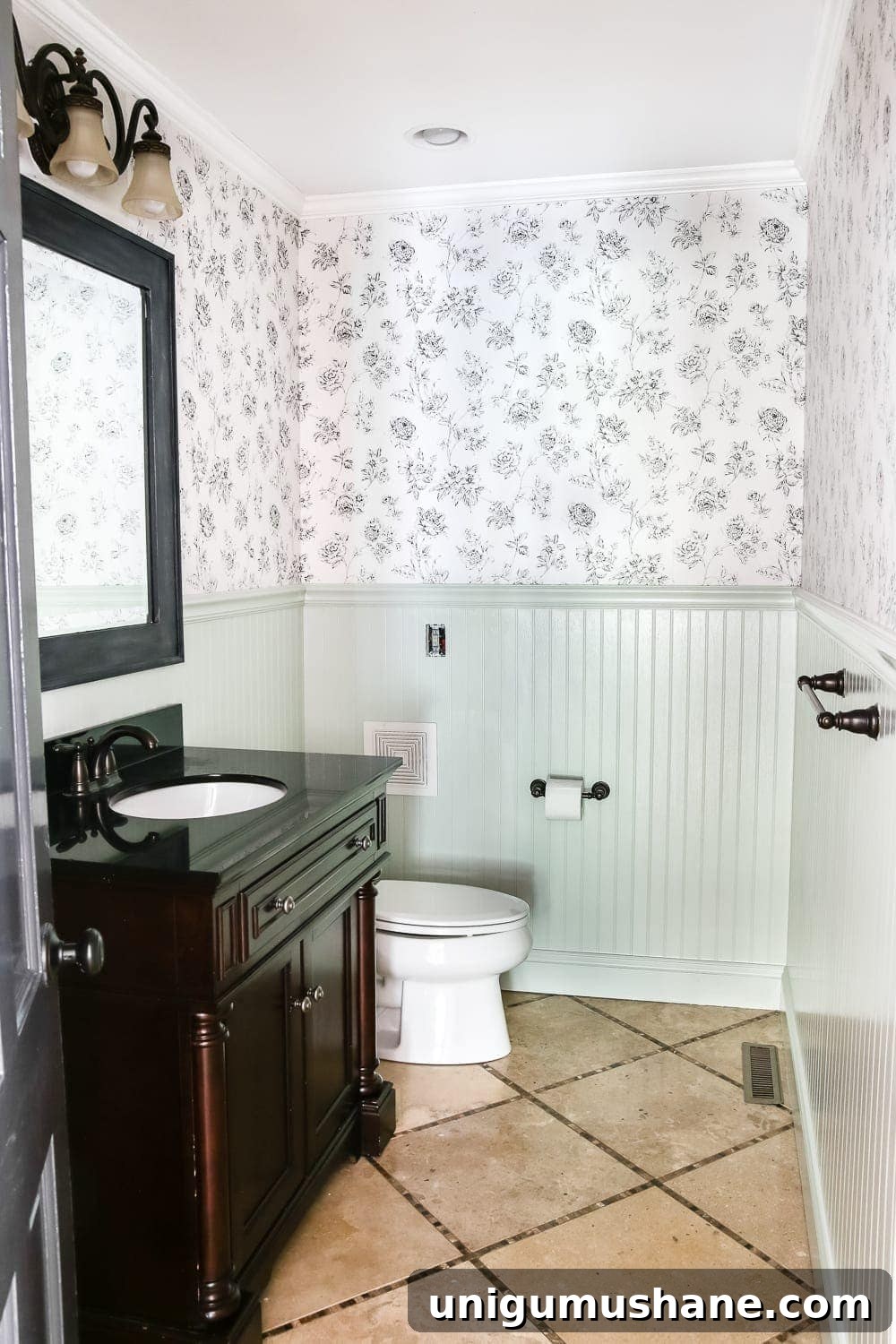
Have you wallpapered before? If you’re planning a project, consider practicing on a small wall first and make sure you have a long, sturdy work table and at least one helper. Good lighting also helps with pattern alignment. With patience and the right tools, hanging wallpaper is a rewarding DIY project that adds instant personality to any room.
Powder room makeover progress:
Paint bead board (Benjamin Moore Hollingsworth Green)Paint over orange wallPaint mirror frameHang wallpaper- Swap out light fixture
- Swap out towel bar / toilet-paper holder
Paint inside of doorPaint door trim and crown molding- Install new sink faucet
- Gray-wash vanity
Rip out tile floor- Install hexagon tile floor
- Decorate
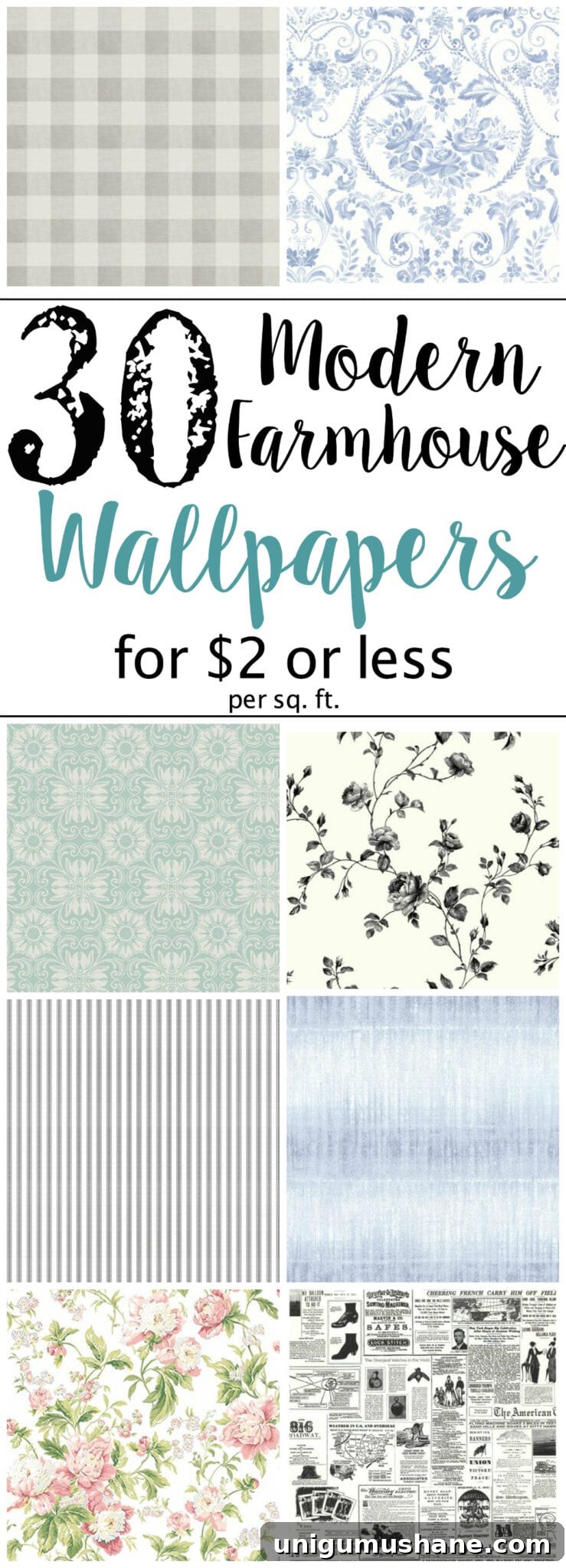
P.S. If you need inspiration, I compiled a list of budget-friendly modern farmhouse wallpaper designs that I love — great starting points when choosing your pattern.