
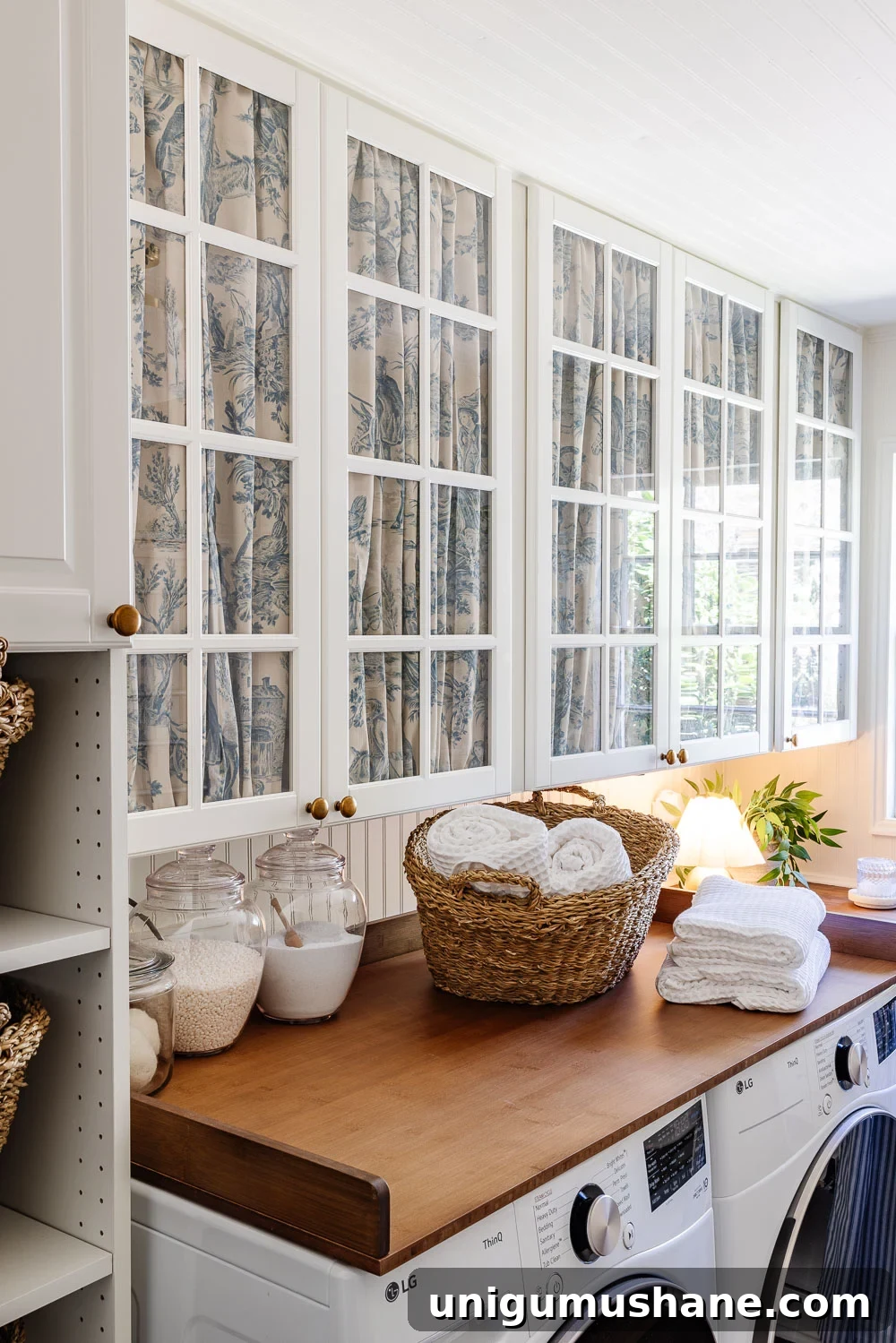
We’ve been steadily transforming our narrow laundry room, and I’m thrilled with how it’s coming together. After reworking the layout, installing beadboard on the walls, laying Stainmaster luxury vinyl plank flooring in Olympia Oak, and adding new IKEA cabinets, the space finally feels purposeful and inviting.
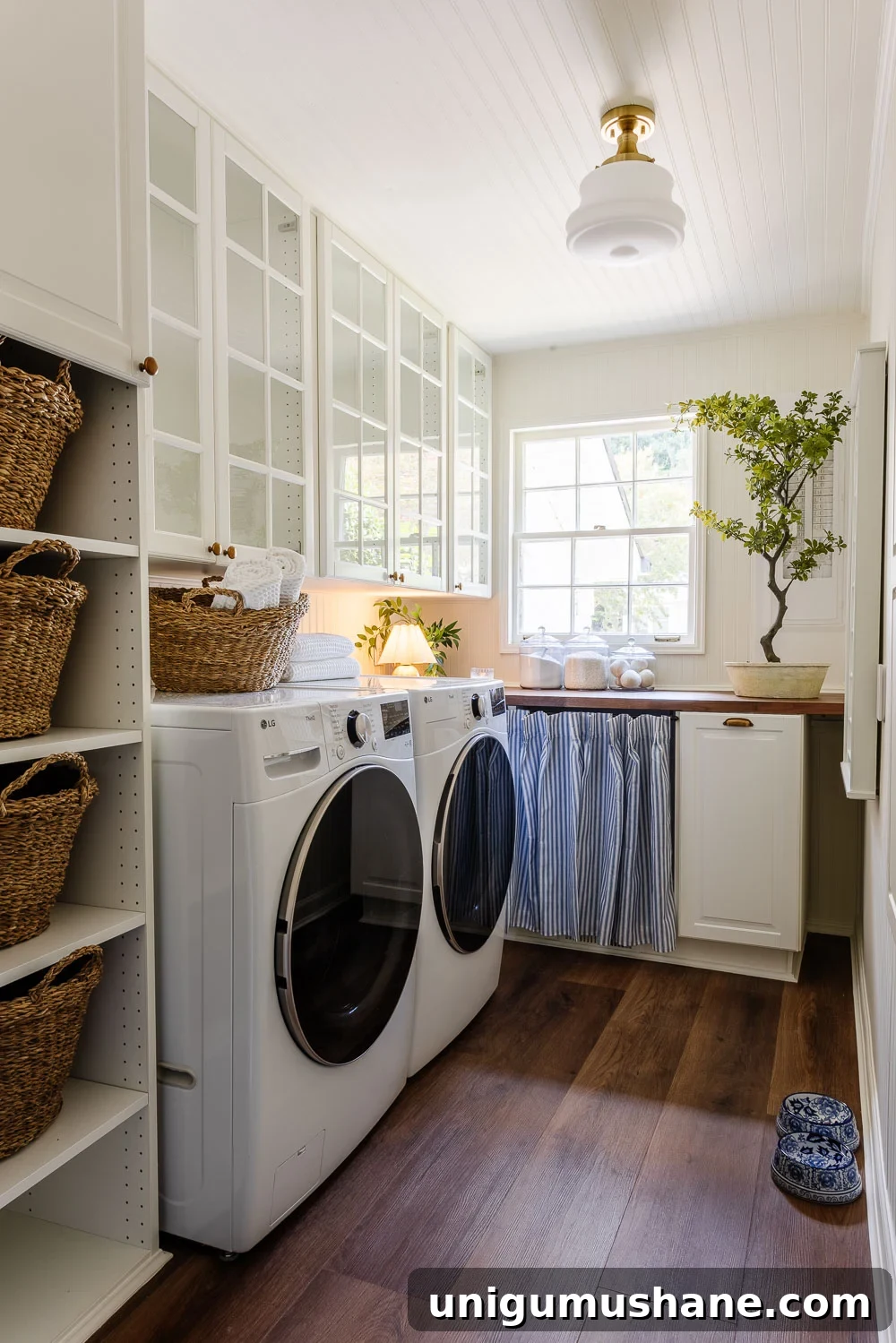
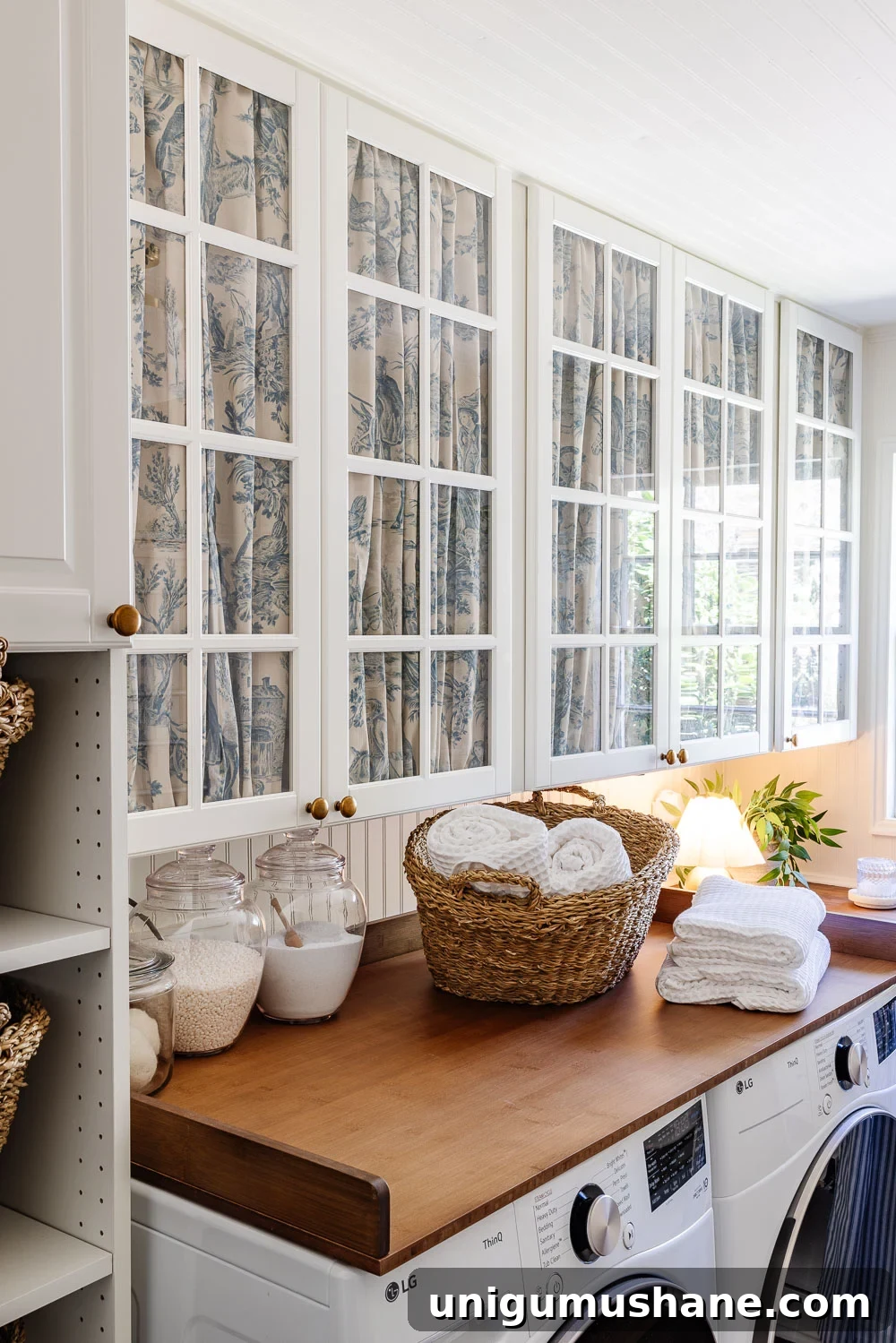
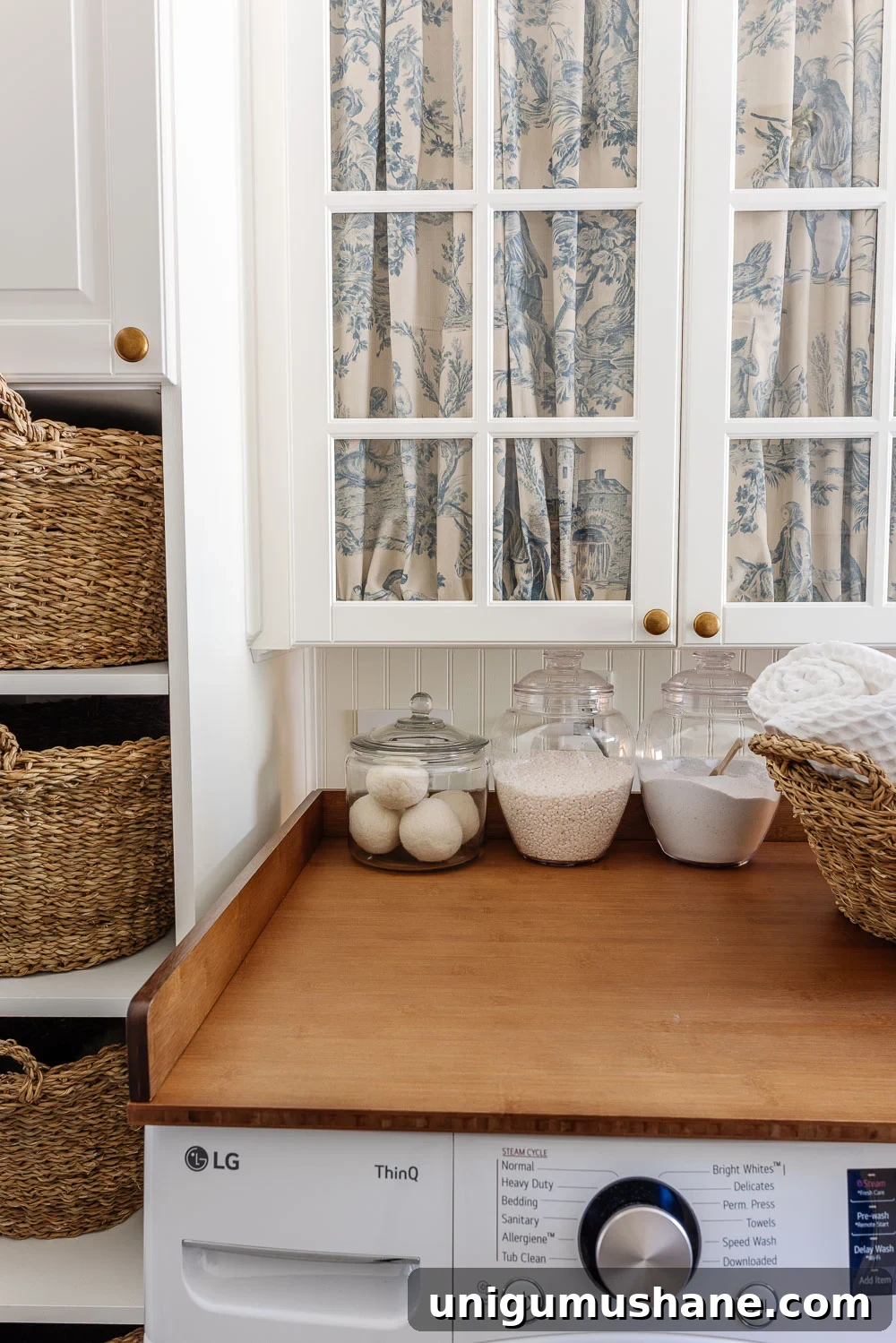
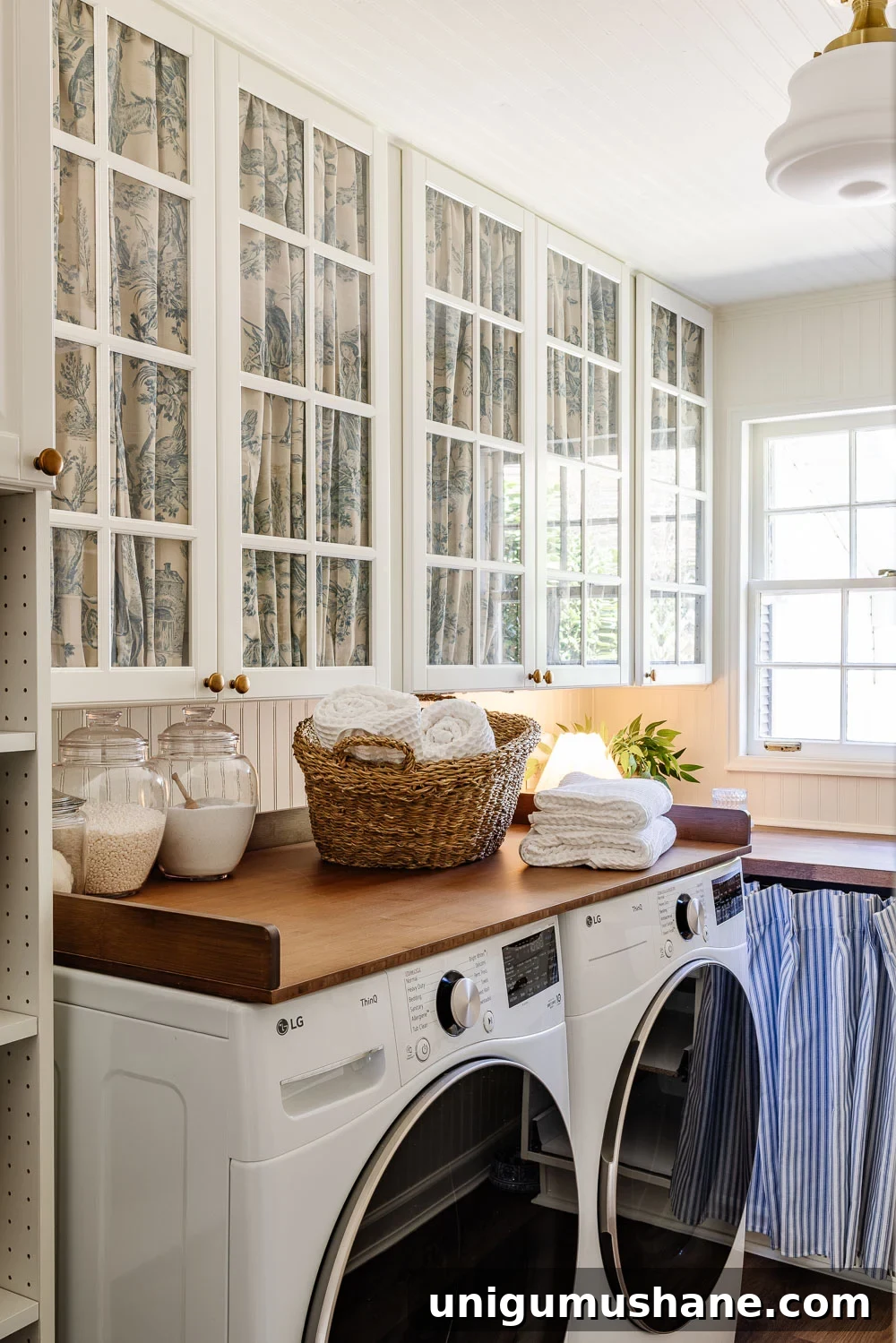
The glass-front upper cabinets were a must for me. They bring light and a sense of openness, but glass can expose clutter. My solution is a simple vintage-inspired trick: fabric panels behind the glass that hide mess while preserving the airy feel.
Why this works—and why you might love it
This no-sew fabric solution for glass cabinet doors is one of my favorite small updates because it’s practical, reversible, and stylish. Key benefits:
- Conceals clutter without sacrificing the lightness of glass-front cabinets.
- Allows easy fabric swaps when you want a new look.
- Adds pattern, color, and texture to an otherwise plain wall of cabinets.
- Simple to install, requires no glass removal, and is completely reversible.
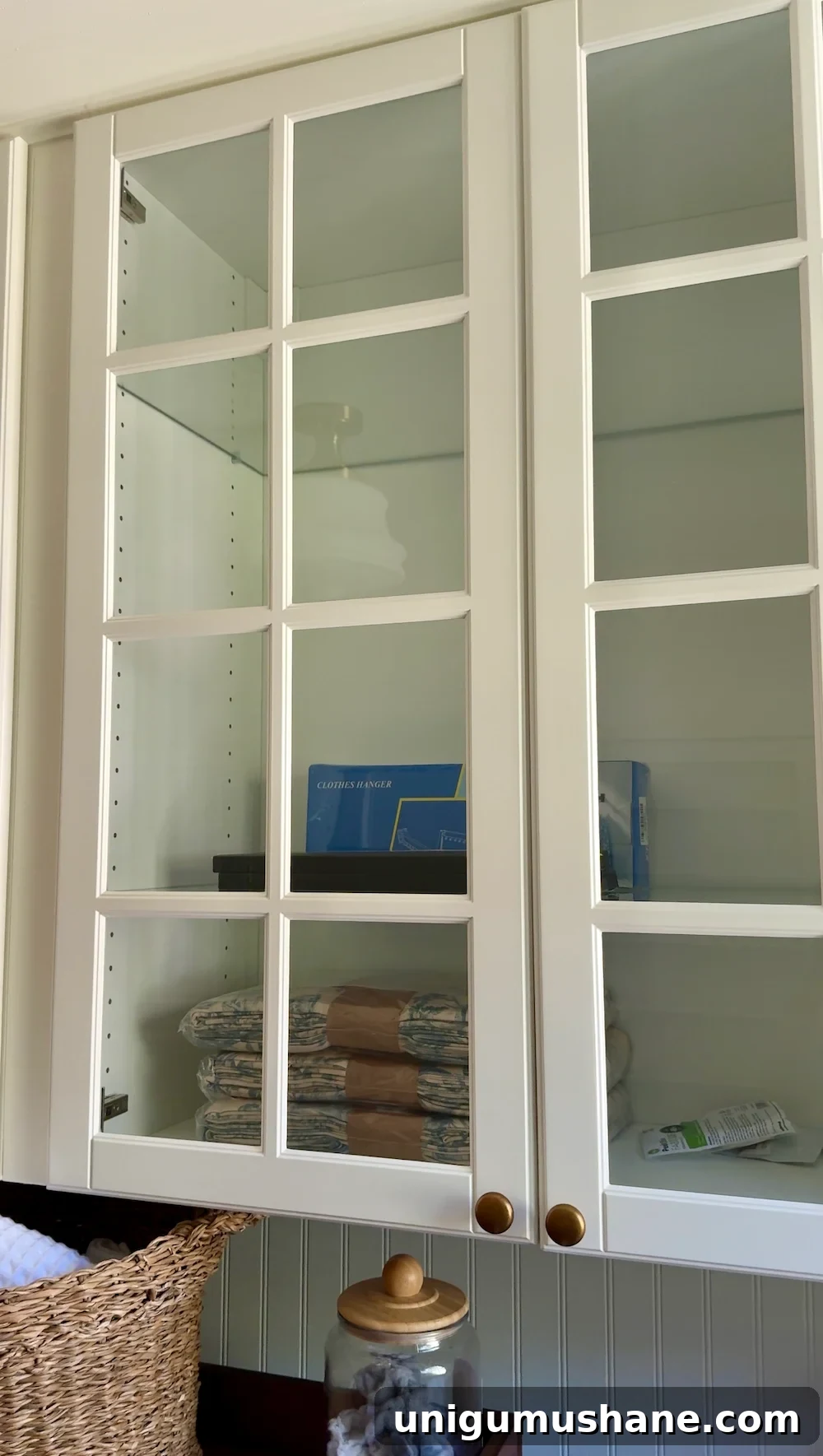
Materials you’ll need
The list below covers the basics; you may already have some items on hand. Choose a medium-weight woven fabric that offers coverage but still drapes.
- Medium-weight woven fabric (curtains or yardage that isn’t sheer)
- Measuring tape
- Washable fabric marker
- Fabric scissors or a rotary cutter
- Peel-and-stick fabric fuse tape (no-sew adhesive)
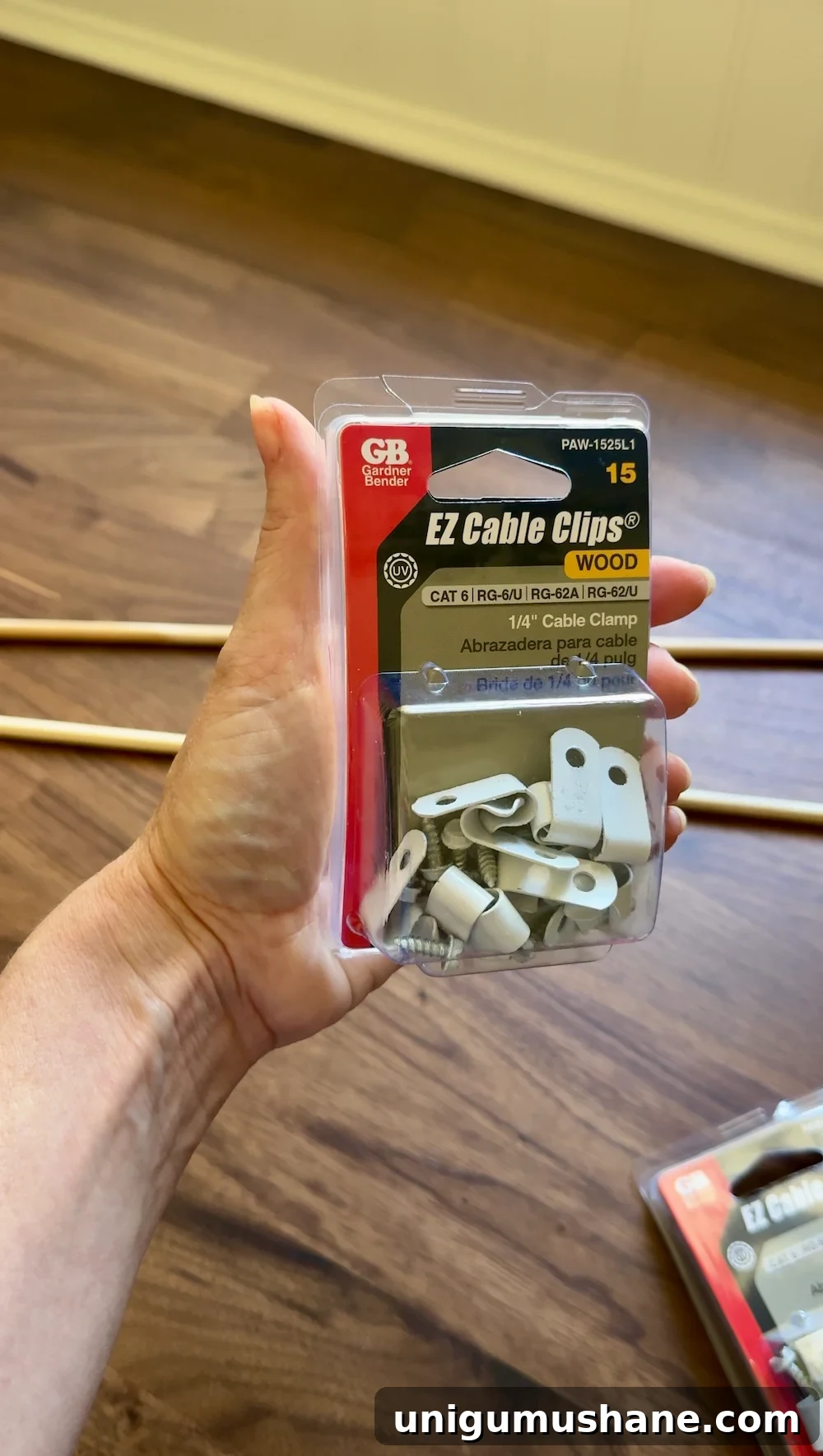
- Cable clips or small inside-frame clips
- 1/4″ wooden dowels (for top and bottom channels)
- Metal spoon or a flat tool to press seams
- Drill with a small bit (for pilot holes in wood frames only)
Step-by-step: Make glass + fabric cabinet panels
These instructions describe how we fitted fabric panels behind glass cabinet doors so they lie neatly inside the wooden frame. Steps are easy to follow and don’t require sewing.
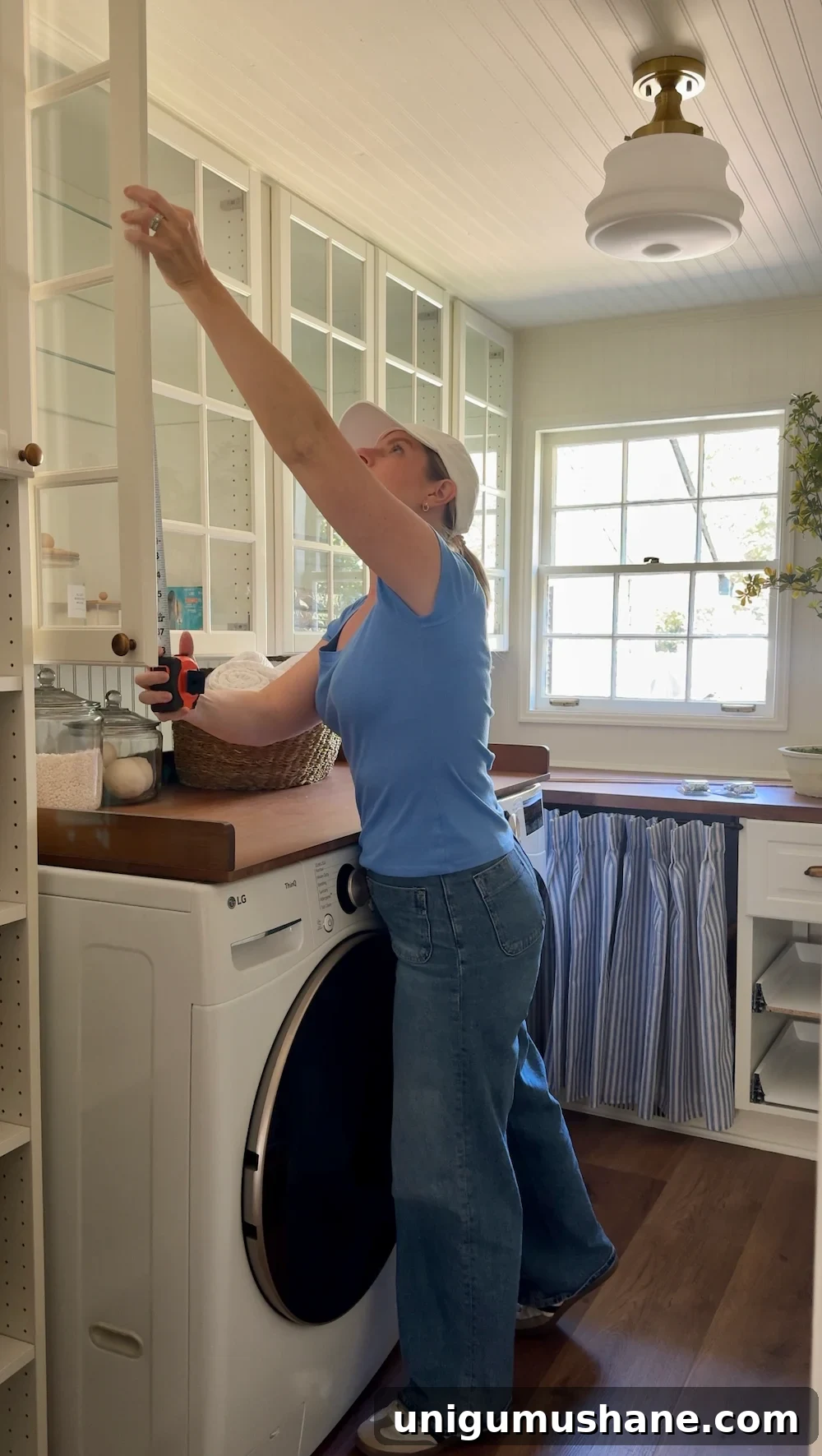
Step 1: Measure the glass opening
Measure the visible glass area. Add about 1½” on all four sides so the fabric and dowels hide behind the frame when the door is closed. For a soft gathered look, plan a fabric width 1.5–2× the finished width.
Example: a 16″ finished width equals a 24–32″ cut width.
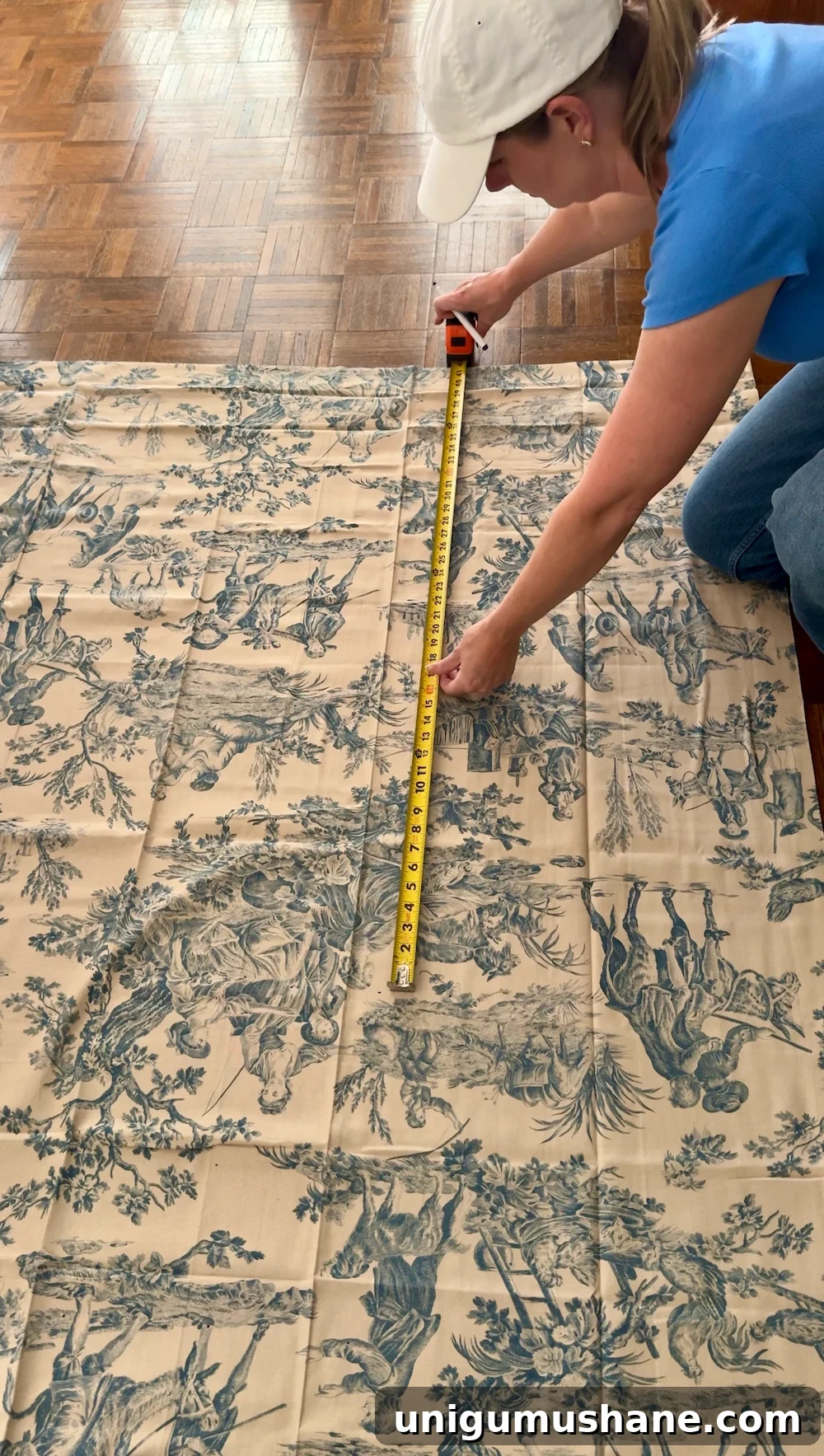
Step 2: Cut the fabric and allow extra for hems
Cut a single panel that covers the glass plus the added edges. Include extra for side hems and top/bottom dowel sleeves—about 1½” for each hem or channel.
Step 3: Hem the sides
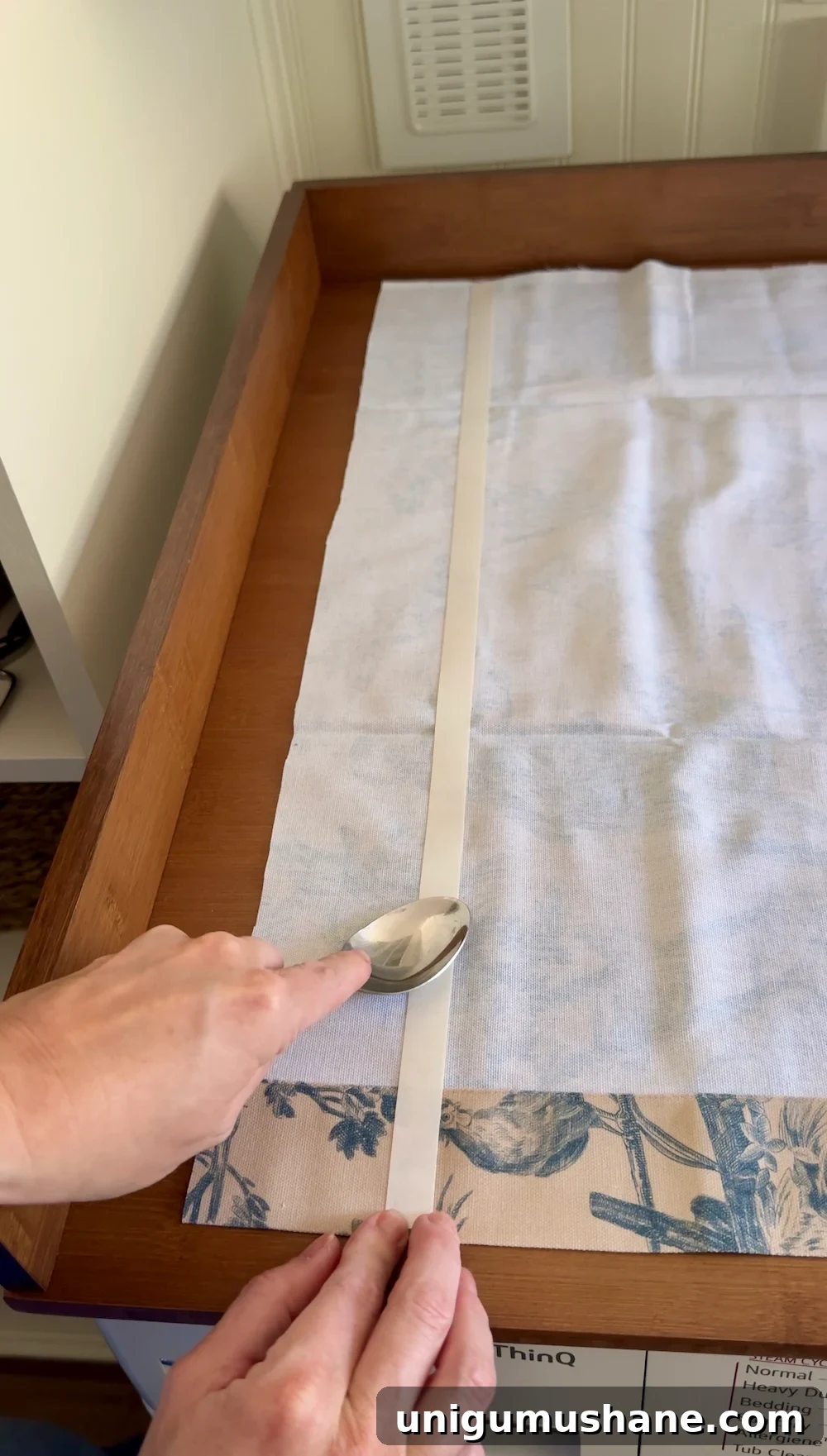
Fold under about ¾” on each long side and apply the fabric fuse tape according to the package directions. Use a metal spoon to press firmly so the adhesive bonds cleanly—this creates a neat finished edge without sewing.
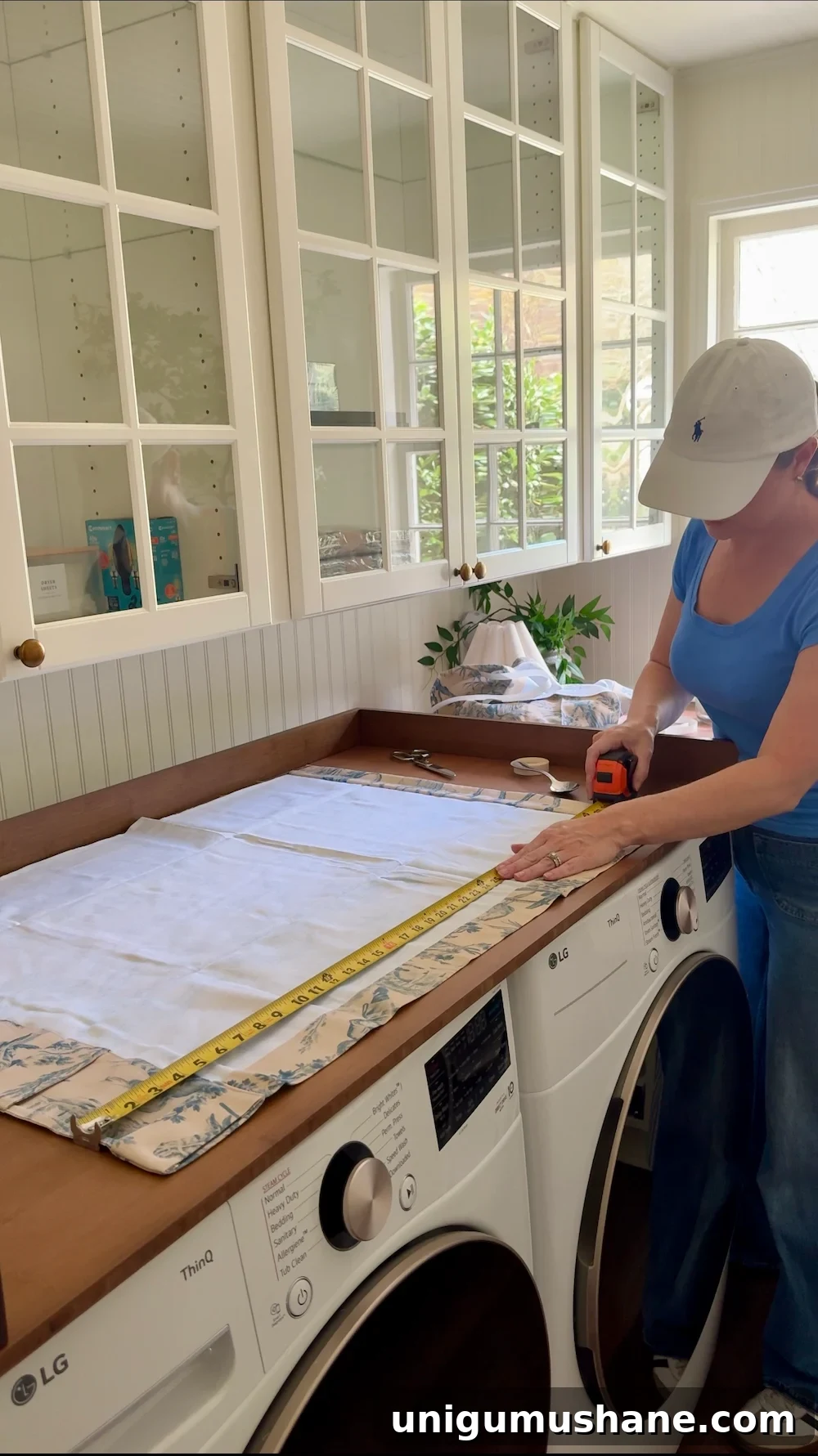
Step 4: Create dowel channels
To form sleeves for the dowels, fold the top and bottom edges: fold ½”, then fold again about 1″ to create a channel. Secure with fabric fuse tape. These channels let the dowels slide in and hold the panel taut inside the frame.
Step 5: Install cable clips in the door frame
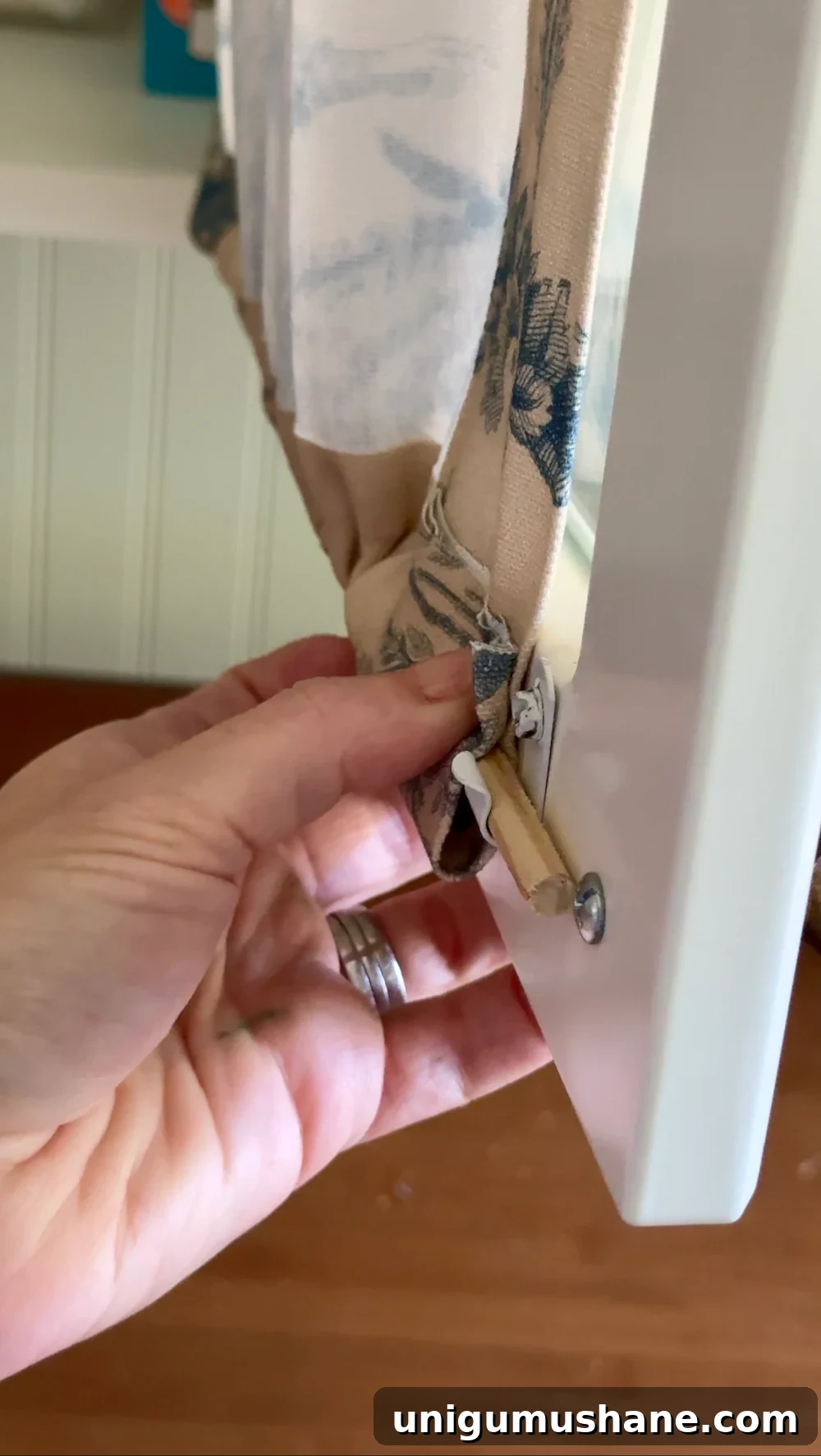
Open the cabinet and mark where the clips will sit—this should match the planned fabric overhang (for example, 1½” from the glass). Pre-drill tiny pilot holes in the wood frame and screw in the clips at the top and bottom inside the frame. If your frame won’t accept screws, a narrow tension rod is an alternative.
Step 6: Slide the panel into the frame
- Slide the top dowel (or folded top edge) into the channel behind the wood frame.
- Lower the panel so the sides and bottom align inside the frame.
- Insert the bottom dowel into the lower channel to secure the panel.
Step 7: Adjust and align
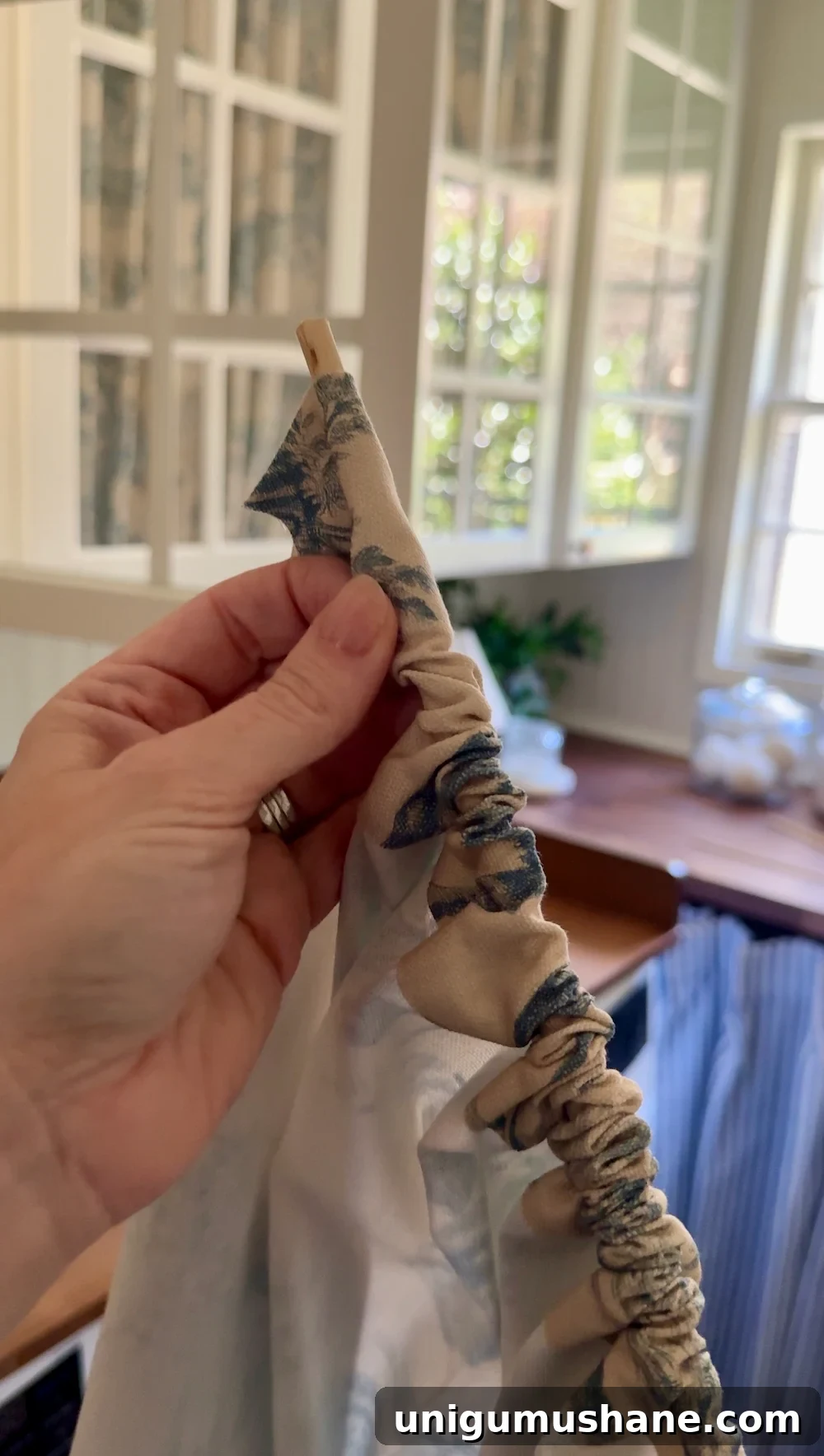
- Ensure the fabric edge isn’t pinched by the clips.
- Adjust tension, smooth out wrinkles, and confirm full coverage.
Step 8: Fine-tune and trim excess
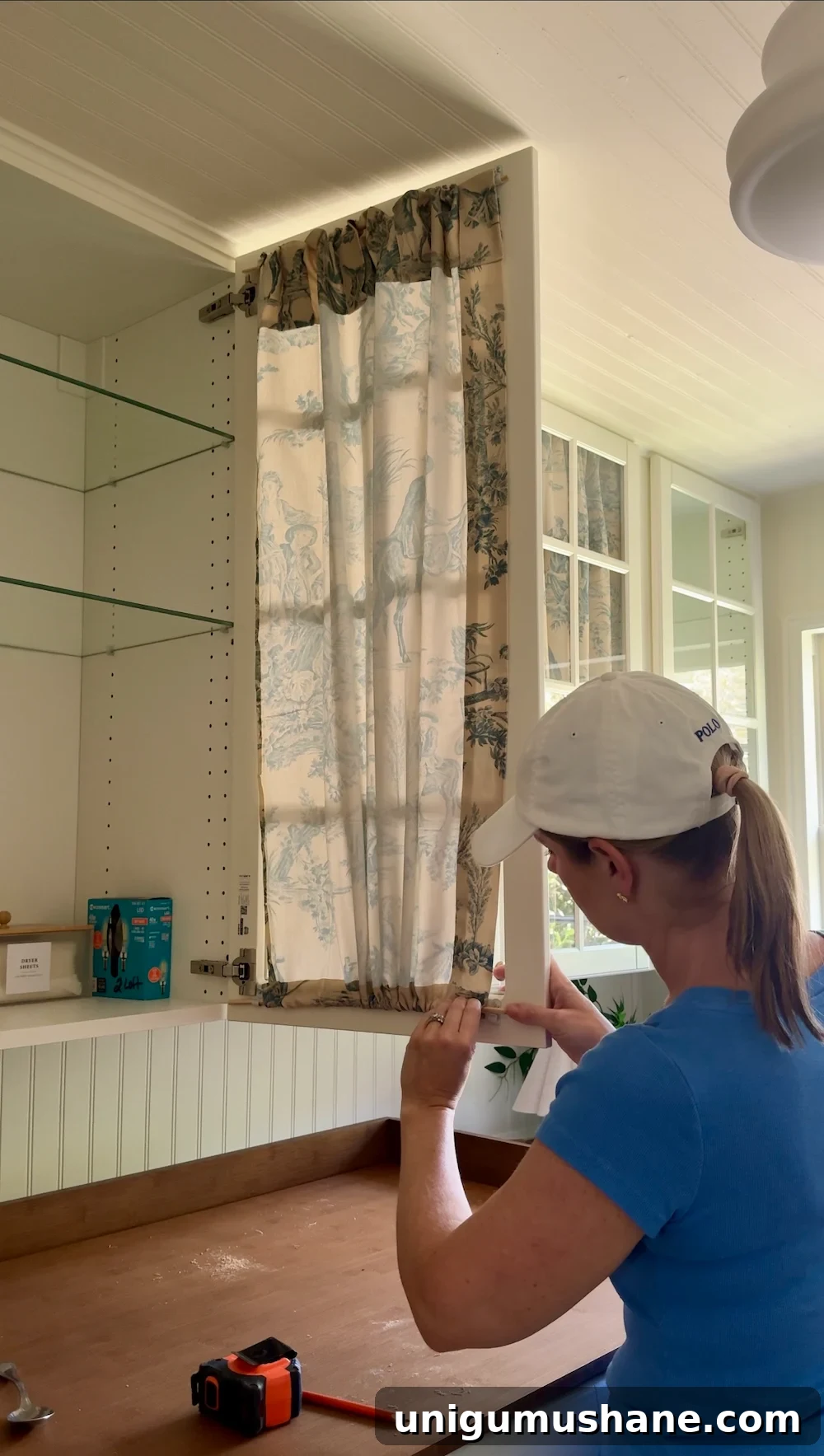
- Loosen the dowel or shift the panel slightly to remove small puckers.
- Trim any fabric that might peek out when the door is open.
- Close the door and inspect from different angles to ensure even tension and no sagging.
Step 9: Repeat for the remaining doors
Once you assemble the first panel, the rest go much faster. For a polished look, match pattern alignment and spacing across doors so the wall reads as one cohesive surface. Imperfections are fine—slight irregularities can add charm.
We also installed a removable countertop and clear jars for detergent to add function and visual tidiness. The added fabric panels now give the laundry wall personality and texture instead of feeling sterile.
Tips & troubleshooting
- Choose the right fabric: Medium-weight woven fabrics drape nicely; very heavy fabrics may be hard to slide into the frame.
- Handle clips carefully: Too-tight clips can dent fabric or damage the frame.
- Leave a small gap: About 1/8″ clearance helps prevent friction when doors open and close.
- Test before trimming: Live with the panel for a day or two to see how it behaves before final trimming.
- Alternative method: If dowels or rods won’t fit, small self-adhesive Velcro strips on the frame and fabric allow for an easy, reversible attachment with less tension control.
How it worked in our laundry room
After beadboard, new flooring, and white cabinets, the space felt overly crisp. The glass doors added interest, and the fabric panels gave us an “off switch” for clutter without losing the light. The first panel took about 20 minutes; the remaining panels were faster. Because the method is reversible, you can always return to clear glass later.
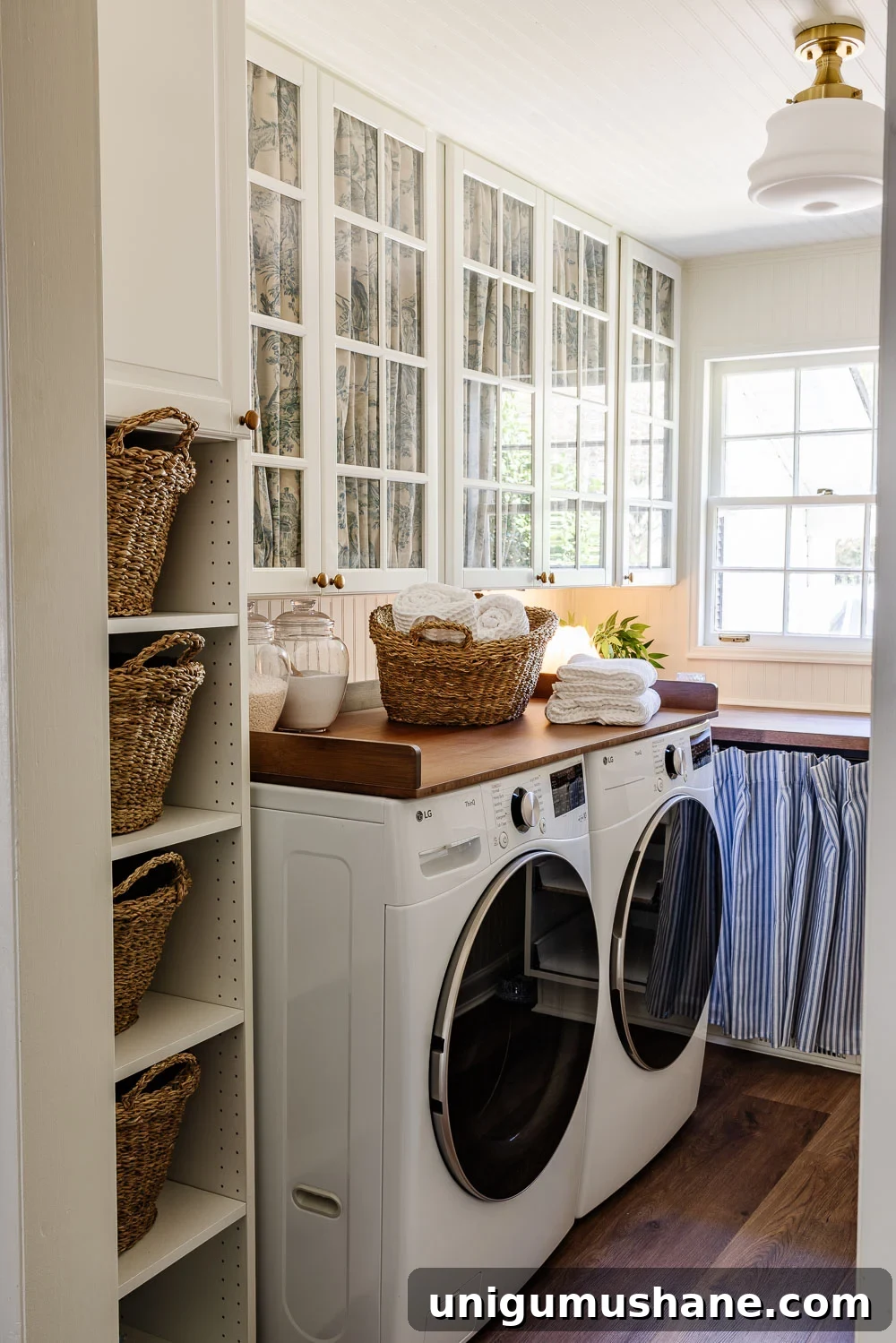
It’s reassuring to know that even when organization isn’t perfect, a simple fabric panel can gently mask the clutter and make the room feel finished.
If you try this technique, I’d love to hear which fabric you chose and how it turned out.
More DIY no-sew ideas
- Easy no-sew curtains with ribbon trim
- DIY tea towel café curtains