
This post is sponsored by Alexander James Tile Studio.
The pros and cons of marble tile vs. marble-effect tile — how to choose for your kitchen or bathroom remodel
Choosing between genuine marble tile and marble-effect porcelain is a common dilemma for kitchen and bathroom remodels. Both have strong advantages and trade-offs: marble offers authentic natural beauty and character, while porcelain delivers durability and low maintenance. To help you decide, I ordered a range of samples and spent time comparing how they look, feel, and perform in real situations.
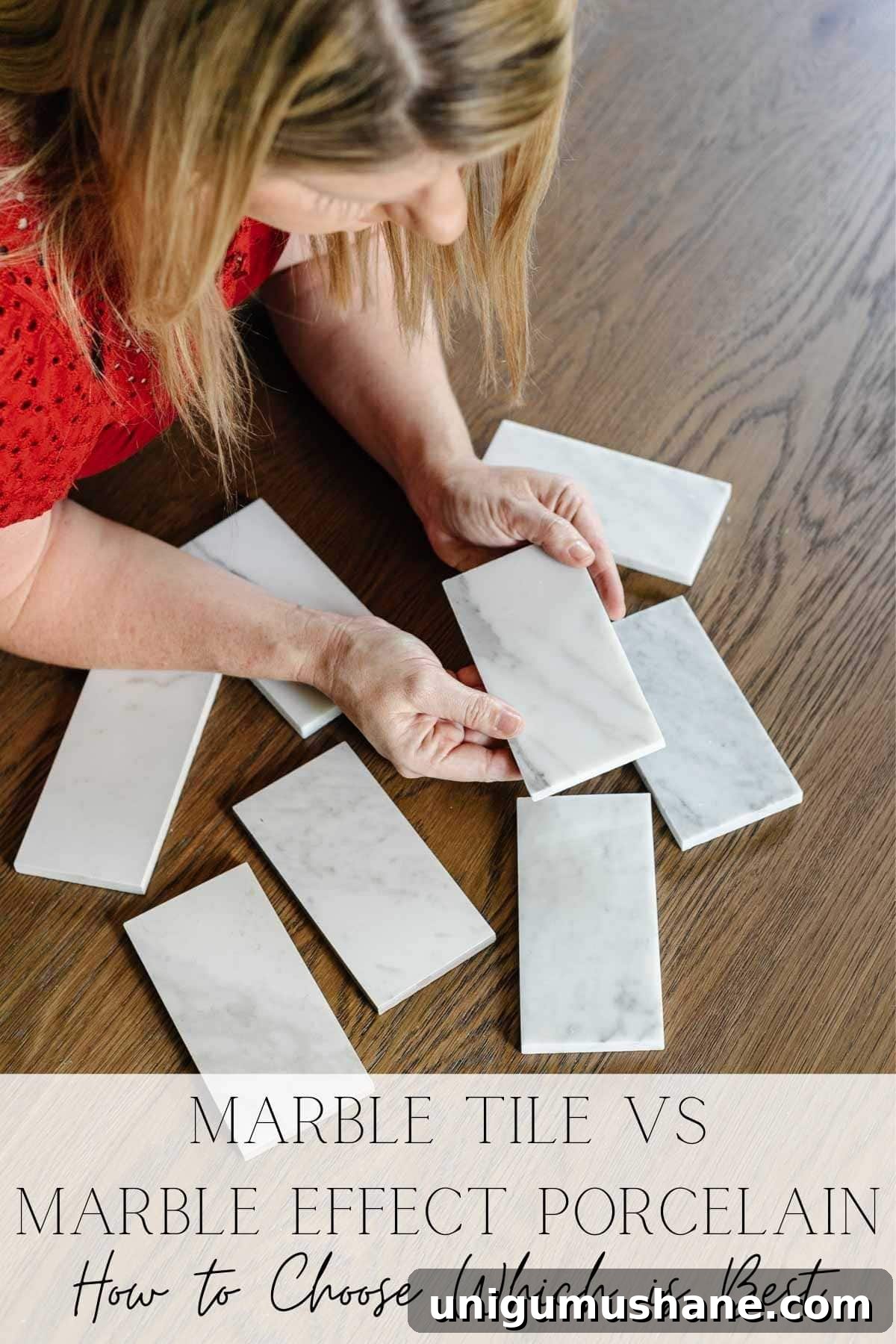
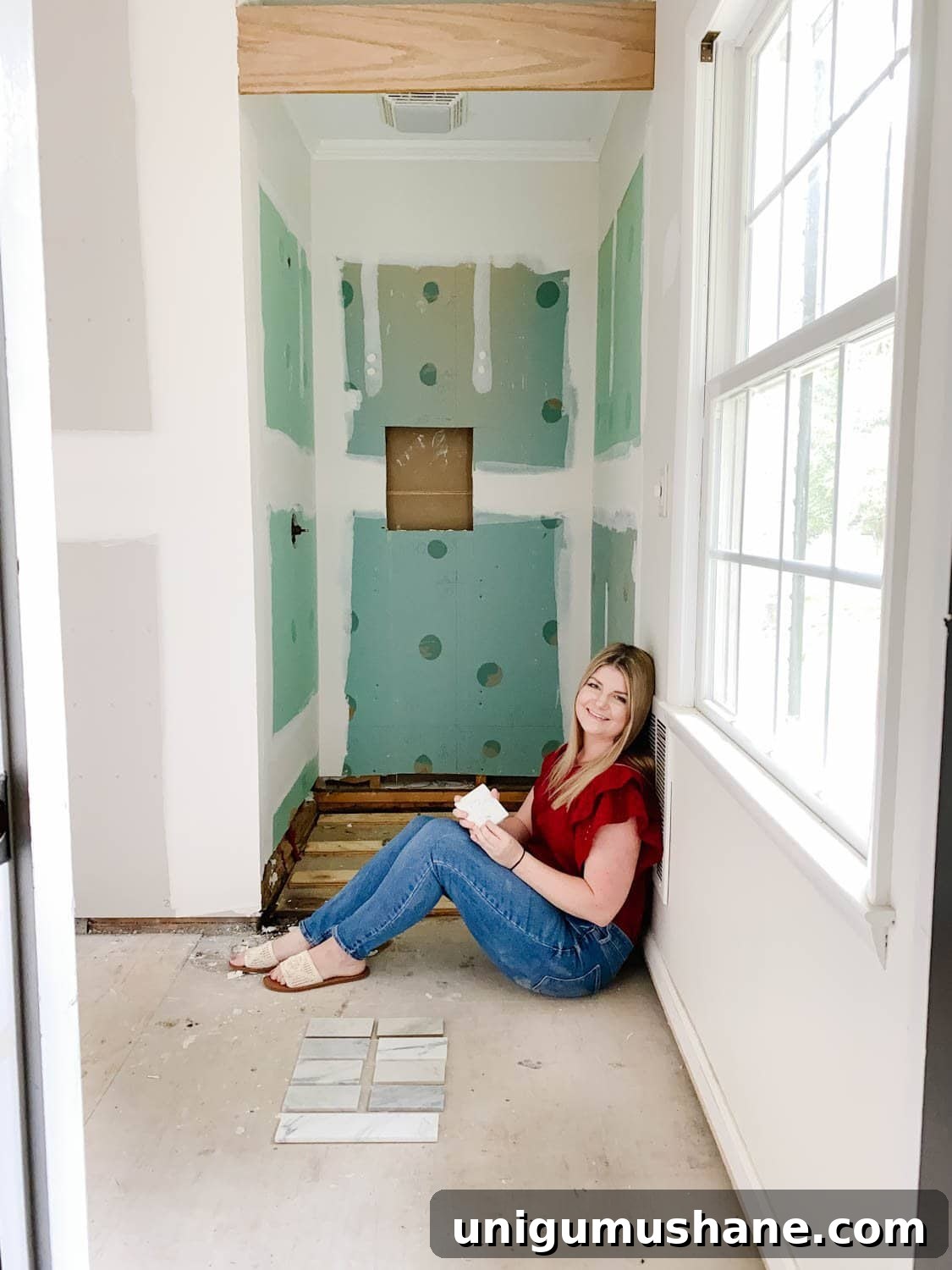
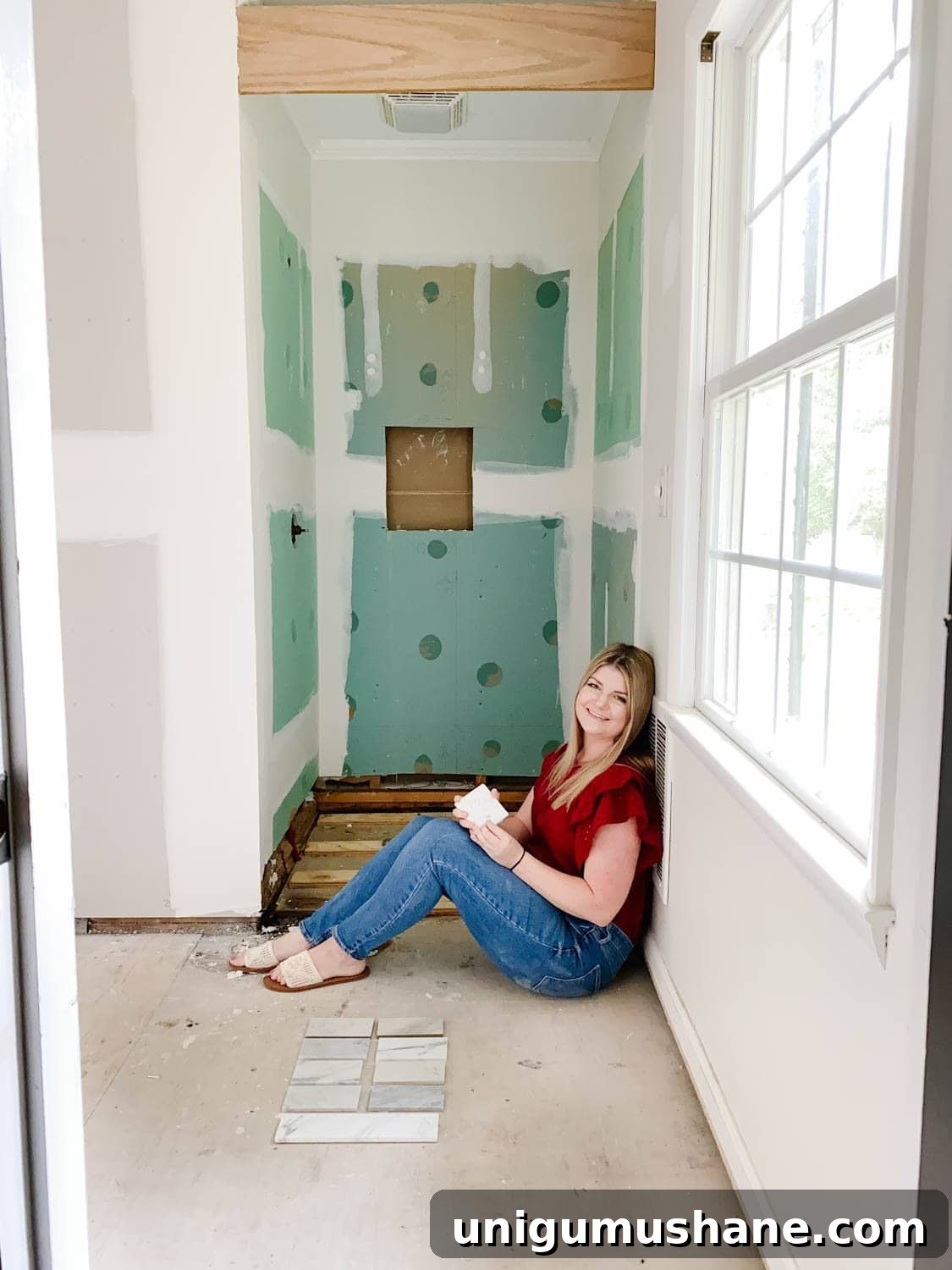
My partner and I are in the middle of a bathroom remodel and had to decide which direction to go. After sampling both real marble and several marble-look porcelains, I created a clear pros-and-cons comparison so you can weigh what matters most for your project: authenticity and resale value versus practicality and maintenance.
I ordered many samples from Alexander James to test the textures, finishes, and veining in person. Seeing the materials at different scales and finishes helped me understand how each option behaves under light and in a bathroom environment.
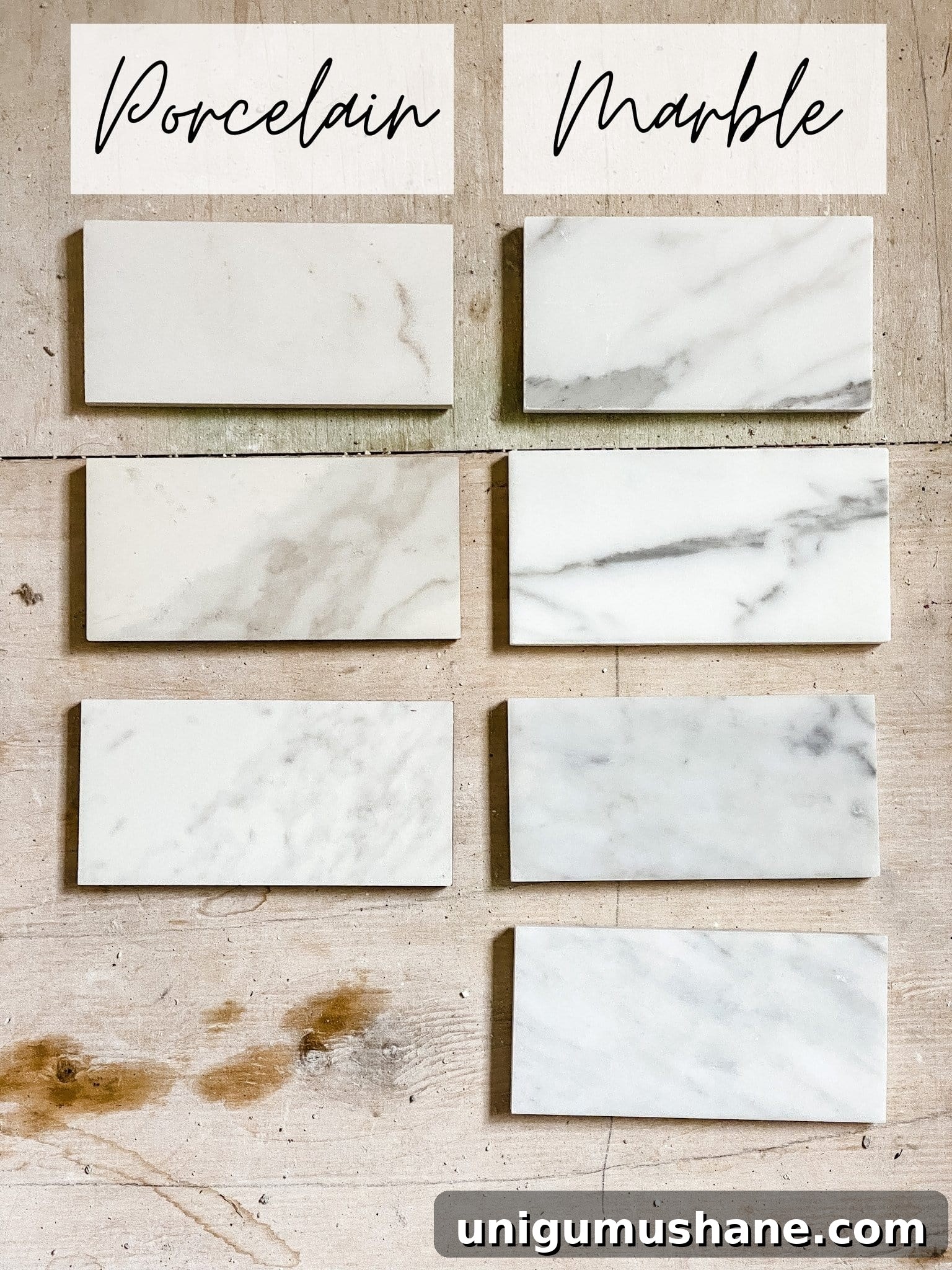
Semi-Polished Calacatta Porcelain | Matte Calacatta Porcelain | Polished Carrara Porcelain | Polished Calacatta Gold Bettogli | Honed Calacatta Marble | Polished Carrara Marble | Honed Carrara Marble
Marble tiles vs. marble-effect tiles: How to choose
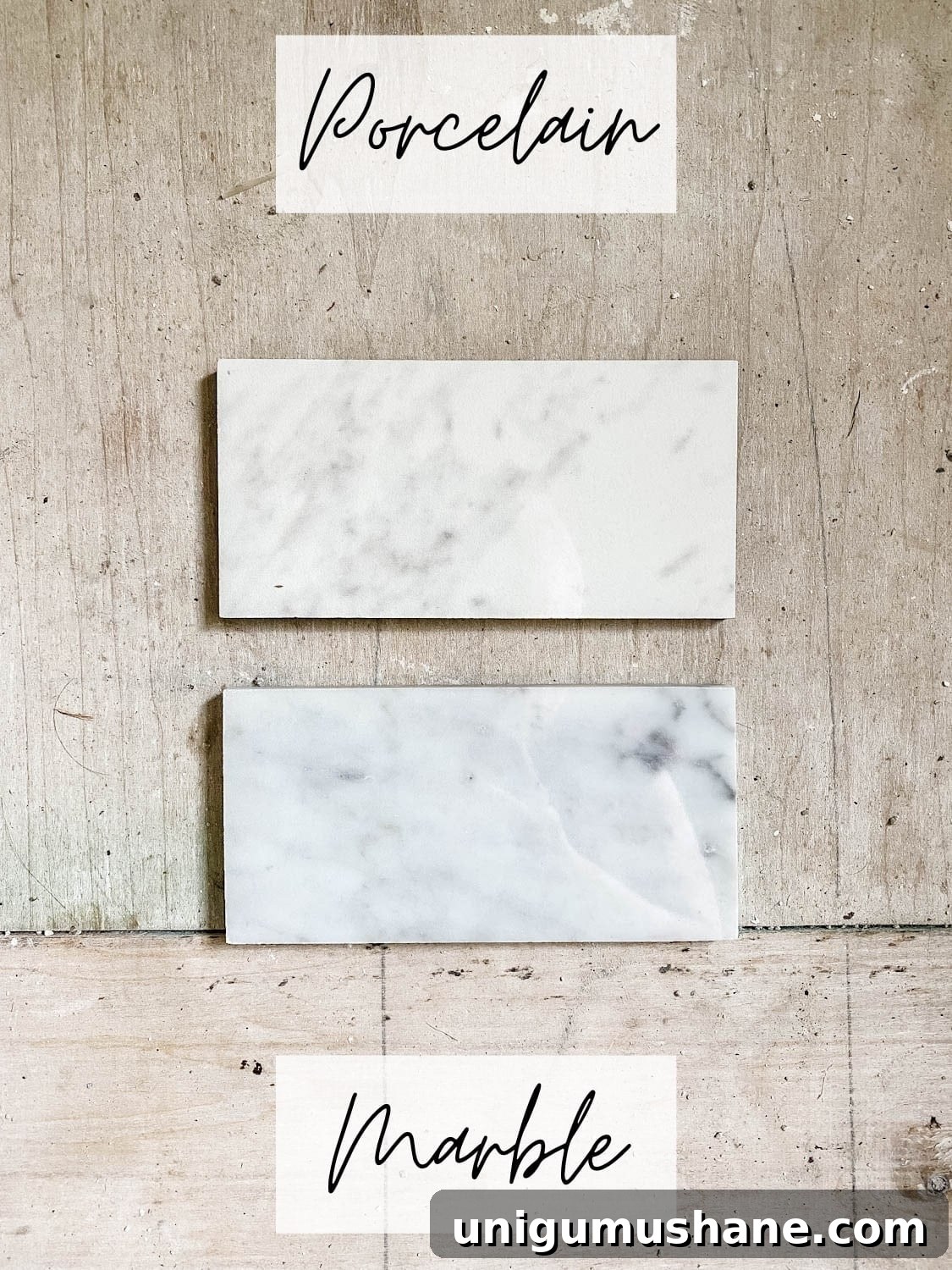
Marble tiles
Pros:
- Genuine, natural veining and unique variation—no two slabs are the same.
- Rich depth and character that can elevate a bathroom or kitchen design.
- More forgiving to impact in some cases—less prone to shattering under heavy impact than certain porcelains.
- Natural insulating qualities—stays cool in sun but can retain warmth in colder weather.
- Reflects light differently than porcelain, often adding a subtle glow.
- Can increase perceived luxury and resale value due to its timeless appeal.
Cons:
- Porous and prone to staining without proper sealing and care.
- Requires ongoing maintenance: sealing and careful cleaning to prevent etching and discoloration.
- Softer material—more likely to chip or scratch than porcelain.
- Matching existing marble can be difficult because of natural variation.
- Generally more expensive up front than porcelain alternatives.
Marble-look porcelain tile
Pros:
- Highly stain-resistant and non-porous—no sealing required.
- Low maintenance; cleans easily and tolerates regular cleaners and scrubbing.
- Durable and more scratch-resistant than many natural marbles.
- Often more affordable and easier to source consistently, so matching is simpler.
Cons:
- Veining is manufactured, which can look less natural when closely inspected.
- Tends to have less inherent variation and unique character than real marble.
- Some porcelains can be more brittle and more likely to crack or shatter if struck hard.
- Porcelain can feel colder underfoot, especially in winter, unless installed over radiant heat.
- Typically reflects less light than natural polished marble, though glossy finishes can increase reflection.
Polished marble vs. honed marble
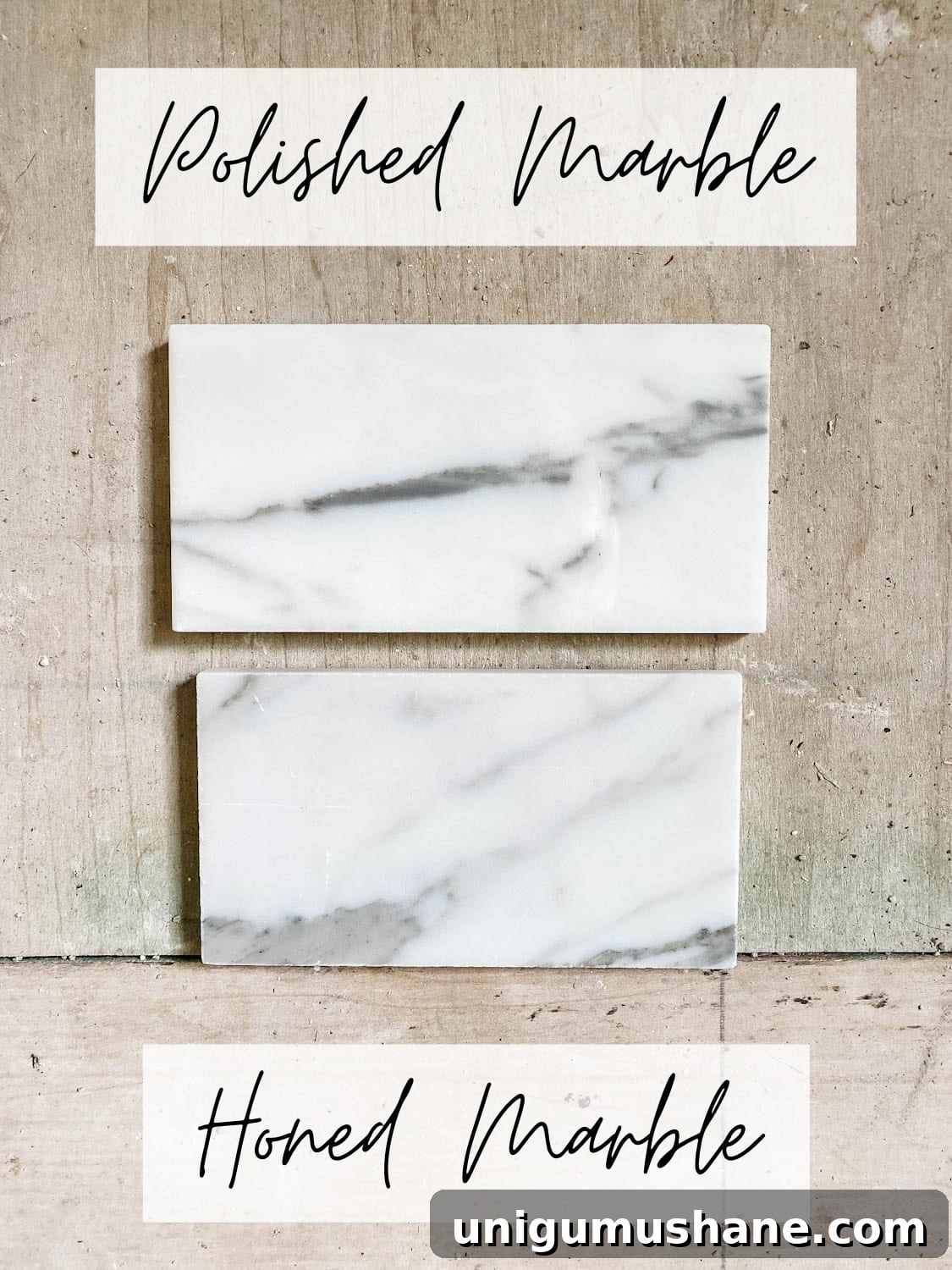
Polished marble tiles
Pros:
- Highly reflective—helps small rooms appear larger and brighter.
- Smoother surface that is typically easier to clean.
- Less likely to absorb stains than honed finishes when properly sealed.
Cons:
- Shows scratches, smudges, and water spots more readily than honed finishes.
- Can be slippery when wet, which is a consideration for floors and shower bases.
Honed marble tiles
Pros:
- Matte surface hides scratches and smudges better than polished marble.
- Often feels less slippery when wet, making it a good choice for floors and high-traffic areas.
- Offers a softer, more understated aesthetic.
Cons:
- Absorbs light less effectively, so it won’t visually enlarge a space as much as polished marble.
- May require more elbow grease when cleaning and can be more prone to staining if not sealed.
Warm-toned tile vs. cool-toned tile
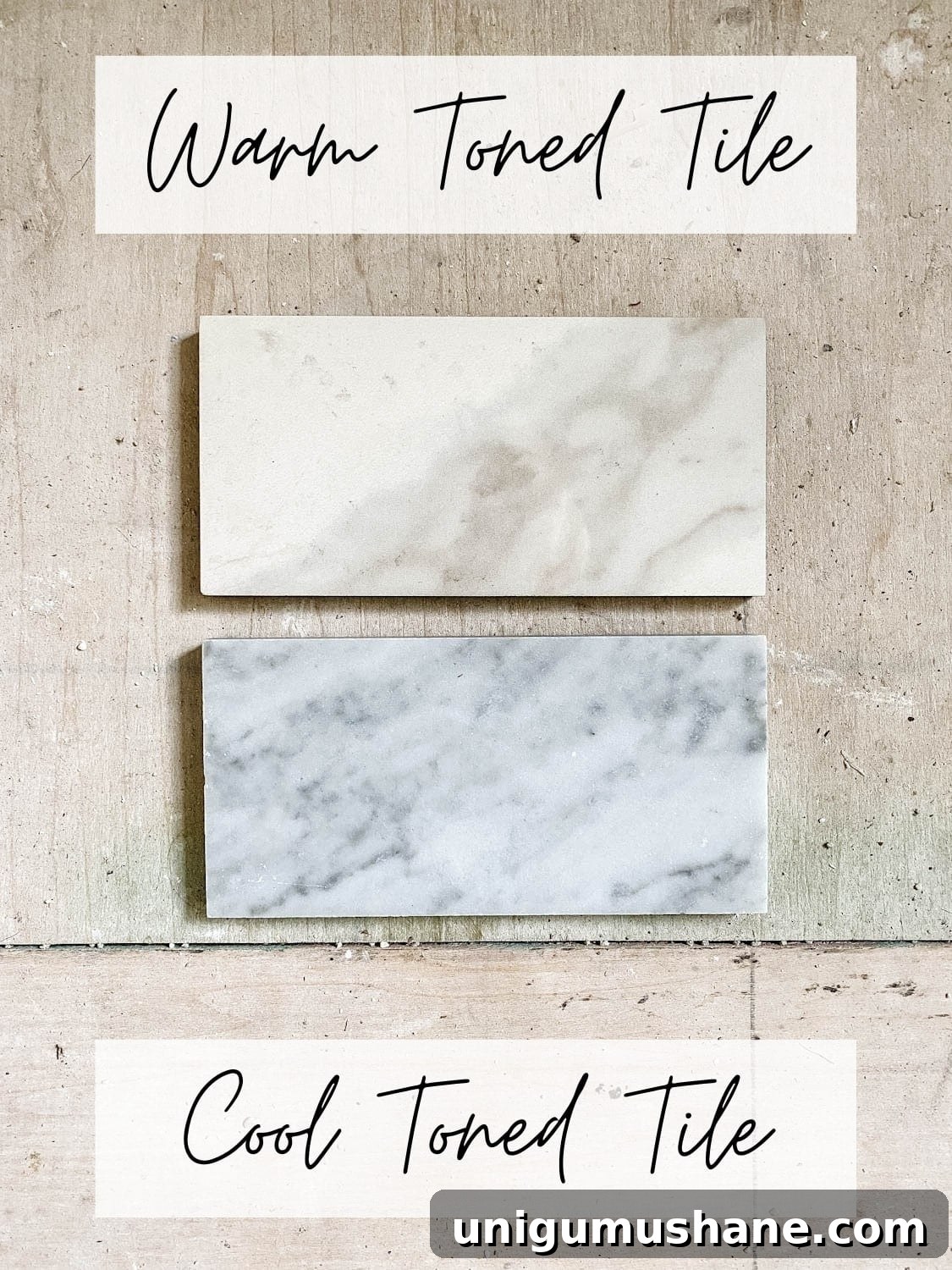
Warm-toned tile
- Makes large spaces feel cozier and more intimate.
- Creates a welcoming, comfortable atmosphere.
Cool-toned tile
- Helps small bathrooms feel more open and airy.
- Evokes a calm, refreshing vibe that suits spa-like designs.
Breaking down these points clarified what matters most for our remodel: look and longevity versus ease of care and cost. If you want authentic stone with unique veining and potential resale appeal and you don’t mind maintenance, real marble is a beautiful choice. If low upkeep, stain resistance, and cost-effectiveness are priorities, high-quality marble-look porcelain is an excellent alternative.
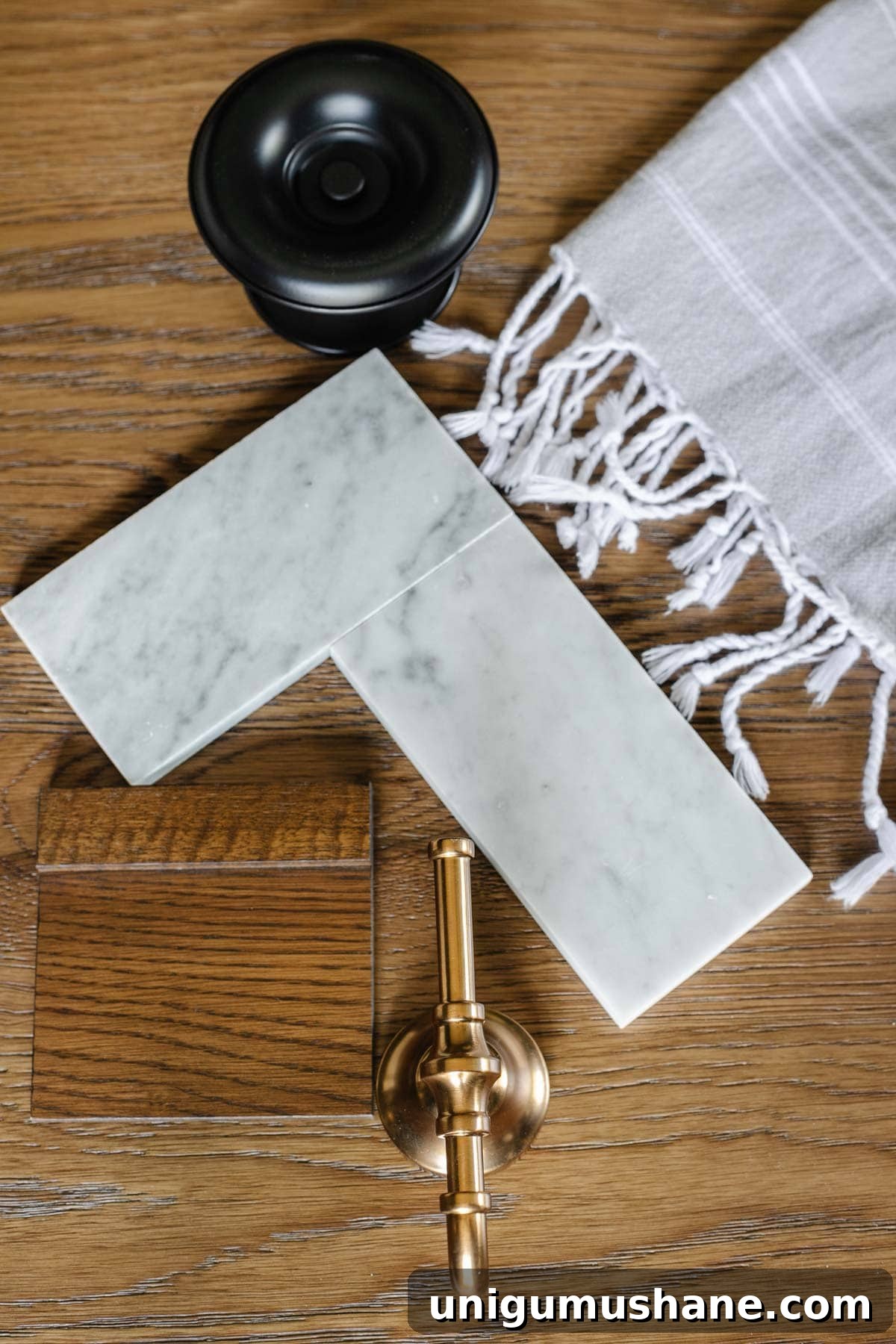
We’re narrowing down our final pick and hope to begin installation in the next few weeks. If you’re facing the same decision, consider samples in your space, weigh maintenance against aesthetics, and think about how sunlight and foot traffic will affect the material you choose.