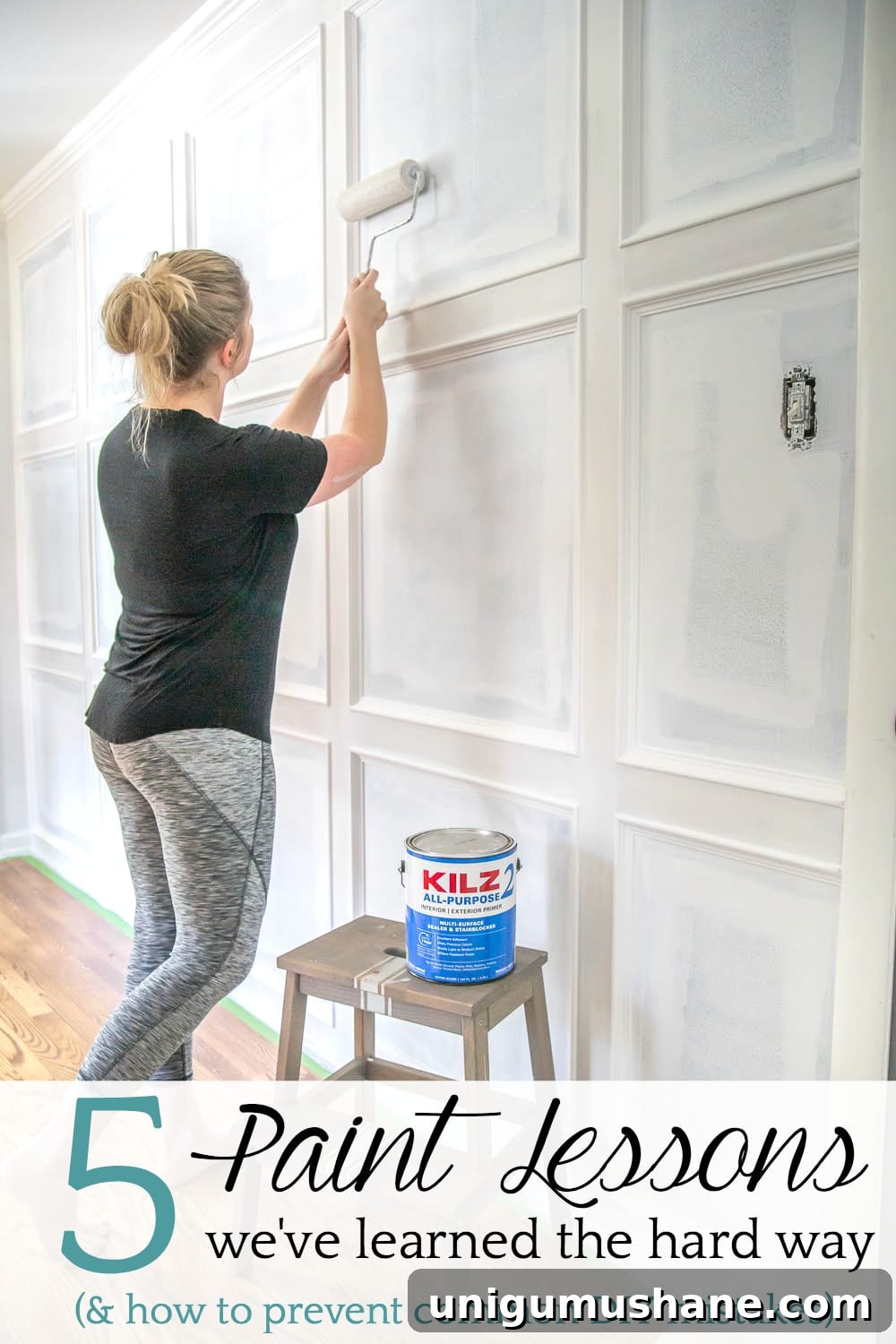
5 rules about primer and paint we wish we had known as beginner DIYers and how to create a paint finish on walls, doors, trim, and moldings that last.
Remember the “scary” paint plan I mentioned for our master bedroom refresh last week? We took a bold step and went with a dark, moody color—and after finishing the carpentry, the painting stage taught us a few lessons worth sharing.
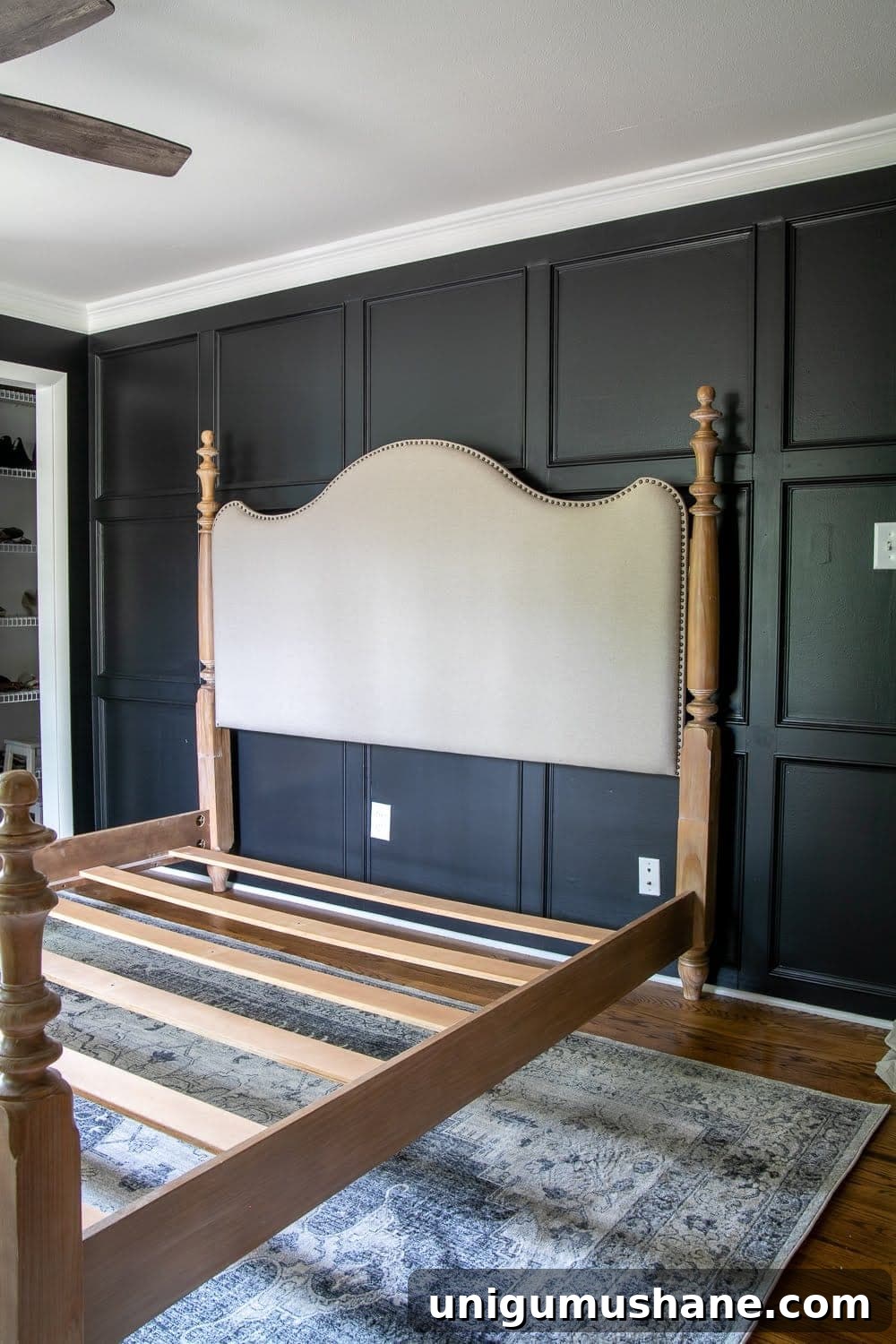
The room is now painted black and the result is dramatic in the best way. It’s one of those transformations that makes you double-take when you walk in, and it reinforced five key primer-and-paint rules every beginner DIYer should know.
Over the years we learned the hard way that skipping primer to get to the “fun part” of painting usually costs more time and gives inferior results. These five rules summarize what we now always do before painting walls, doors, cabinets, trim, and molding.
5 primer and paint rules every beginner should follow
- Always prime cabinets before painting. Cabinets, especially those with raw wood or heavily worn finishes, soak up paint. A proper primer seals the surface so your topcoat goes on evenly and stays durable.
- Always prime doors before painting. Doors see frequent contact and are prone to scuffs and wear. Priming helps the paint adhere better and improves long-term resistance to marks.
- Always prime wood trim and molding. Trim and molding can be porous or previously stained. Primer prevents the underlying surface from bleeding through and ensures smooth, even coverage.
- Use primer between different paint colors. When you’re painting over a strong or contrasting color—like sage green under a neutral gray—primer prevents the old color from tinting the new one so you get the true shade you expect.
- Don’t assume “paint-and-primer-in-one” replaces full priming for every job. While these products can work well on lightly colored or already-primed surfaces, they won’t always block heavy stains, deep color shifts, or very porous materials. Sometimes a dedicated primer is worth the extra step.
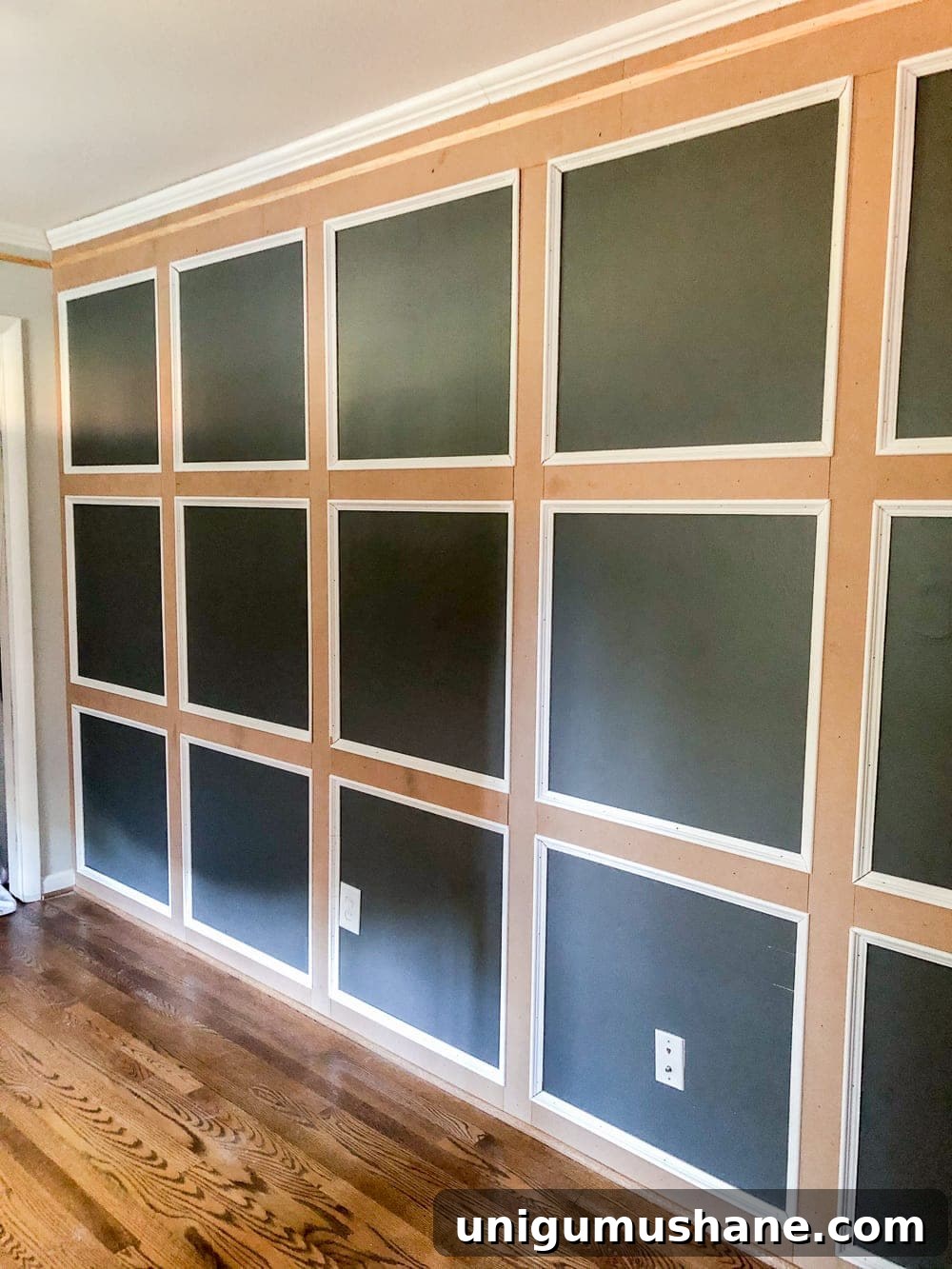
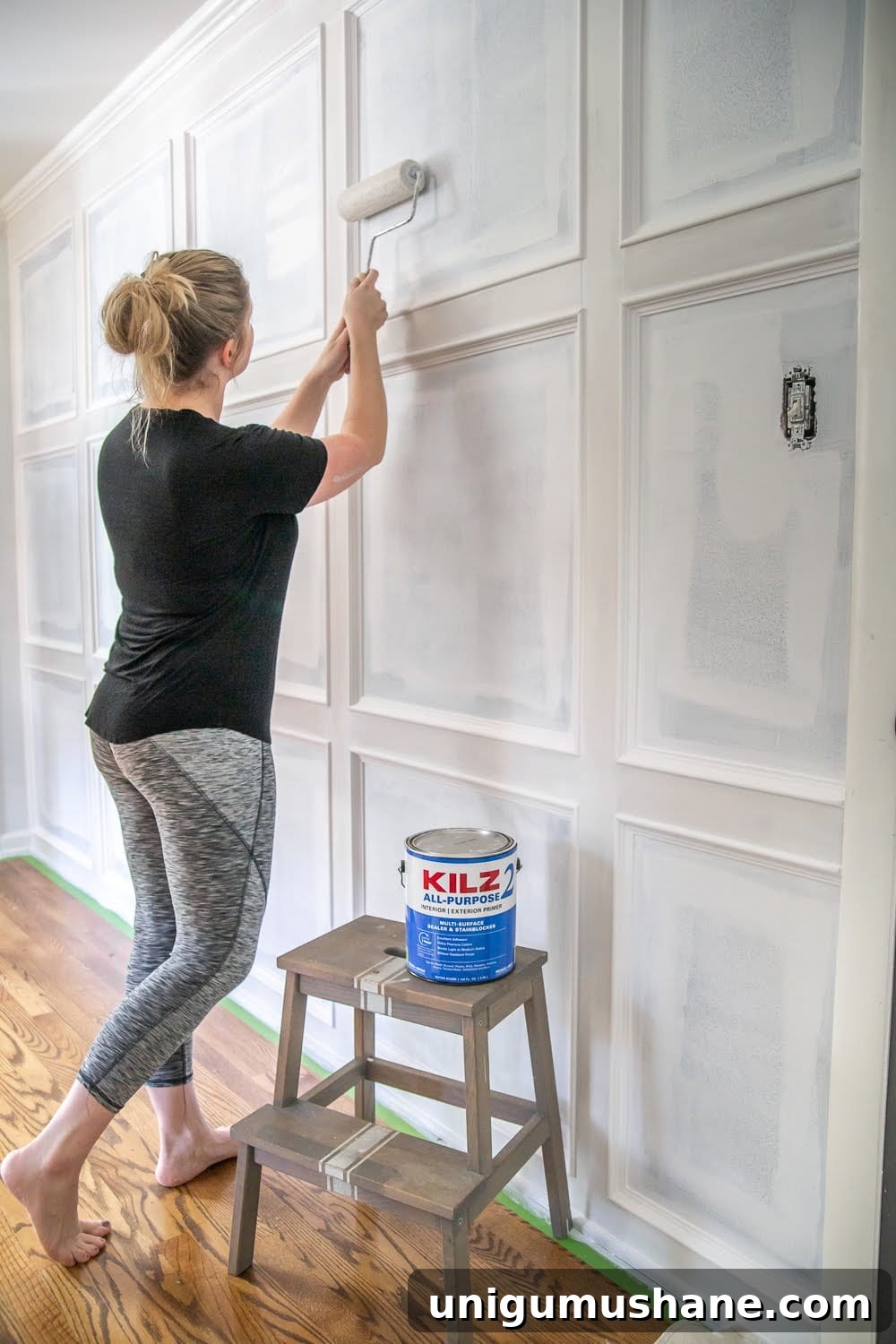
For our grid molding focal wall we brushed and rolled on a coat of KILZ 2® All-Purpose primer so the paint wouldn’t soak into the MDF. In our experience a “thirsty” surface demands more paint and more coats when you skip primer, so sealing it first saved time overall and made the finish much cleaner.
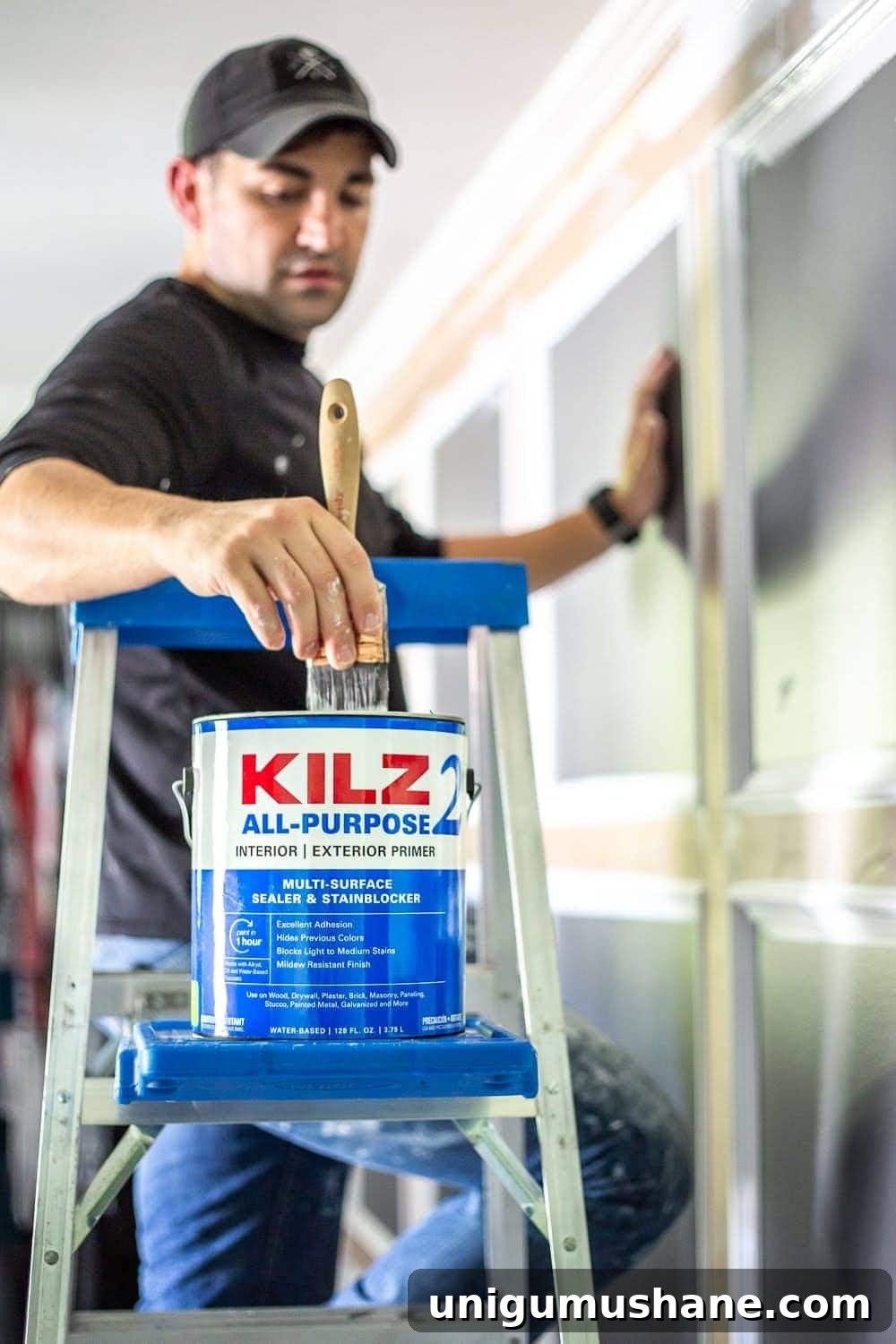
When we painted this bedroom previously, we used a neutral gray directly over the existing sage green without a true primer in between. Even though that paint claimed to be “paint and primer in one,” the result looked greenish on the walls because the underlying color bled through. This time we primed with KILZ 2® All-Purpose before applying KILZ Complete Coat® in the color Rebel. The primer blocked the old color and the topcoat showed its true shade—no weird undertones.
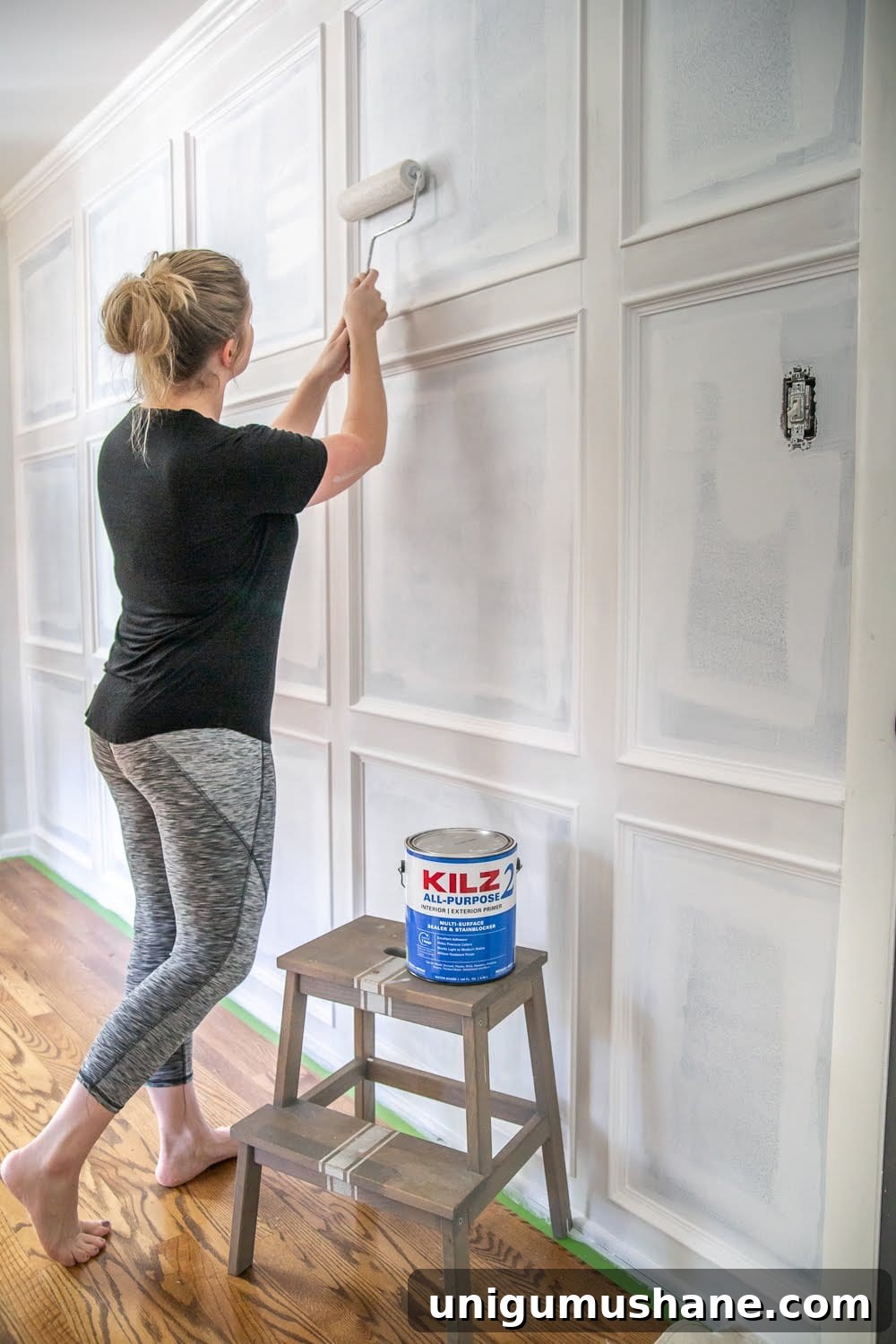
The finish we achieved is durable and scrubbable; the paint resists fading, staining, and peeling, so it should hold up for years. That durability matters when you’re choosing a permanent look—you want a finish that lasts and still looks fresh with normal wear.
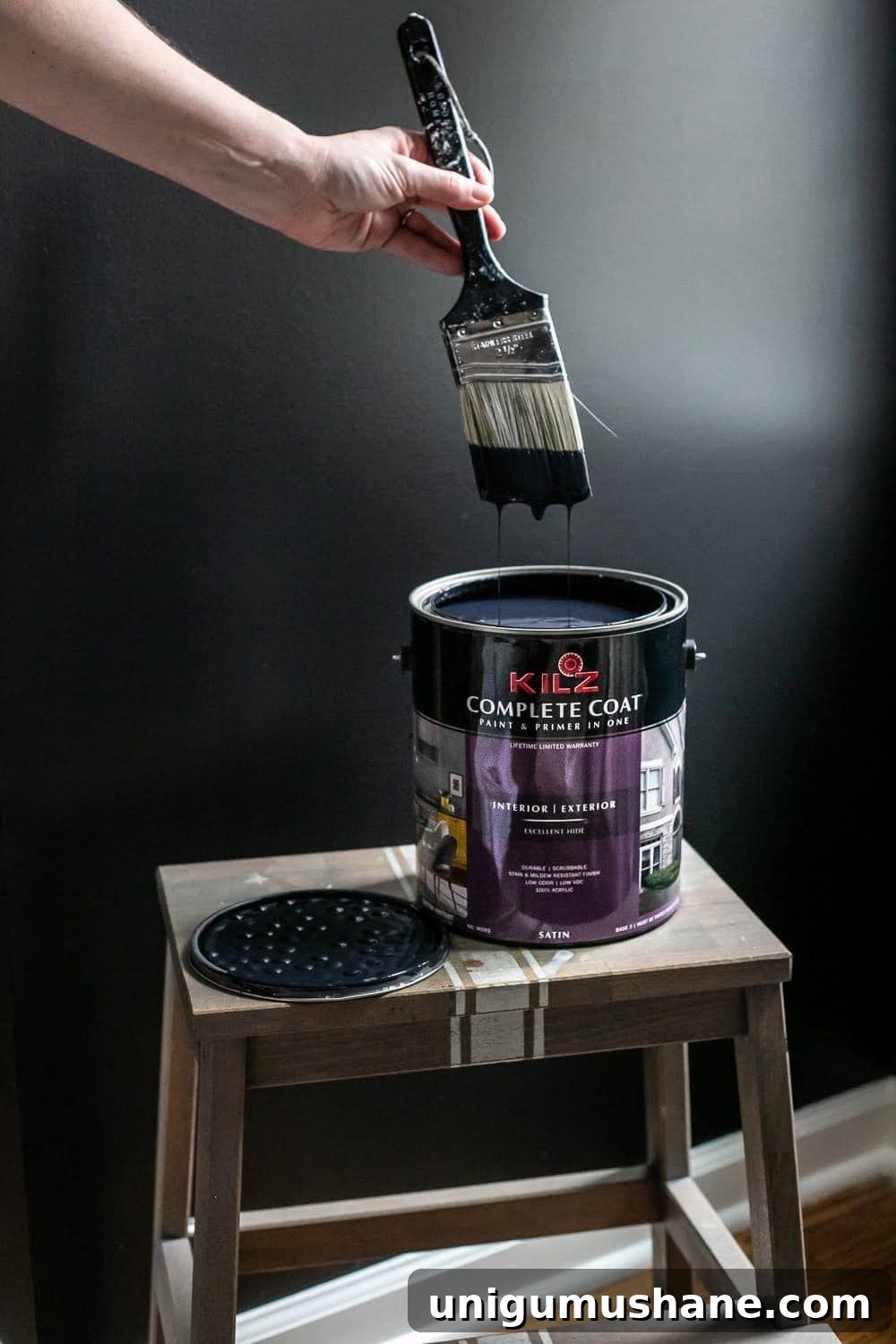
The room now has much more depth with the darker color. We still have a few finishing touches to complete the space, and we’re planning them with the same attention to prep and product choice.
What’s next for the master bedroom
- Install new closet doors, then prime and paint them
- Hang curtains and window shades
- Install a new ceiling fan and wall sconces
- Create DIY art and finish decor
- Style and accessorize the room
Adding lighter textiles like white bedding and curtains will help balance the dark walls and bring brightness back into the room. If the color feels intense at first, those elements will soften the effect while preserving the depth and drama we love.
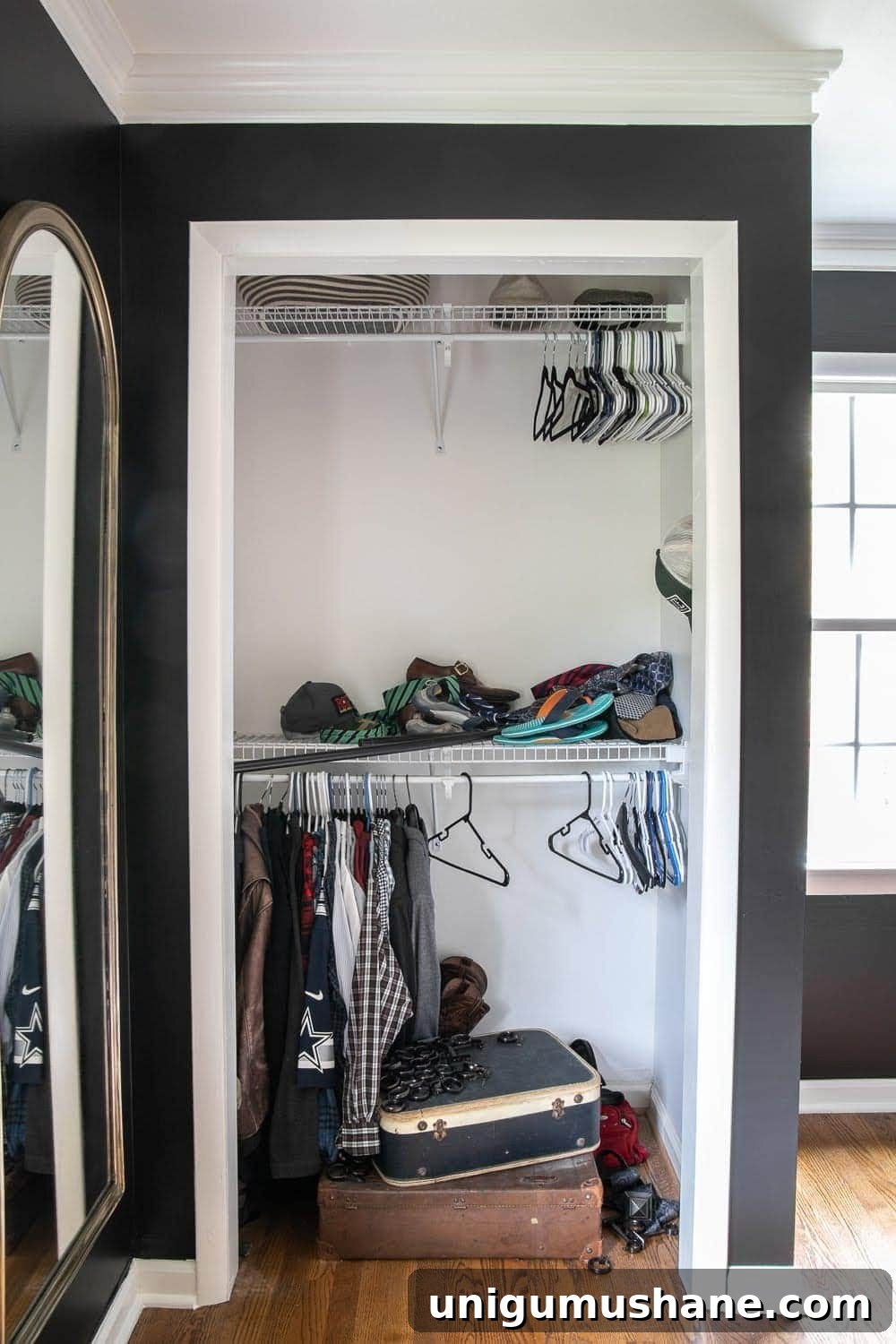
This makeover is one we expect to keep for years, so taking the time to prime correctly and choose a durable paint was worth every minute. If you’re planning a similar project, start with proper prep—clean, sand where needed, and prime appropriately—and you’ll get a true color and a longer-lasting finish.