
A step-by-step tutorial to install luxury vinyl plank (LVP) flooring quickly and easily, plus why it’s the best floor material for homes with kids and pets.
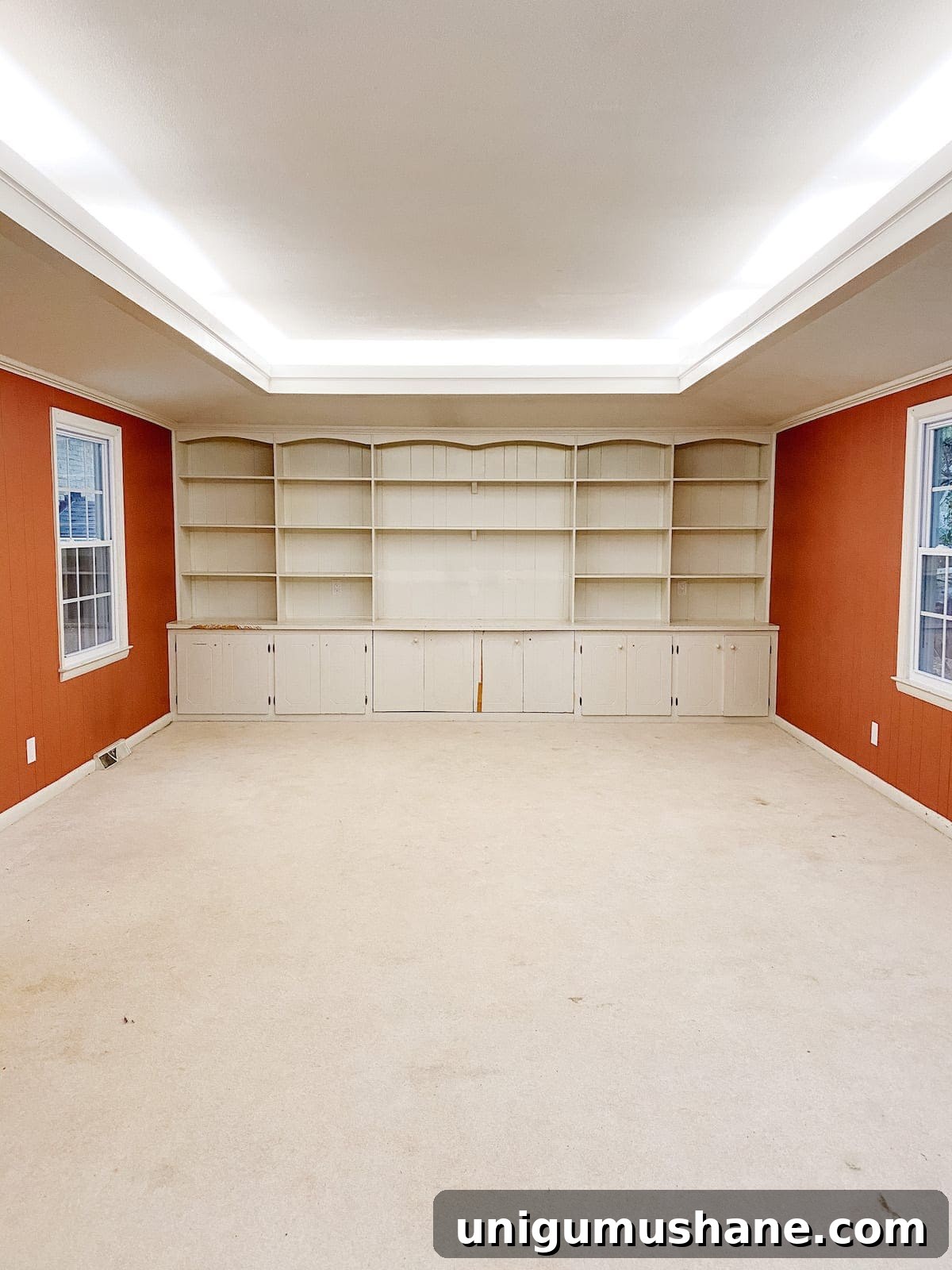
After removing old carpet, taking down shelves, and building a large wall of built-in cabinets, we finally reached the best part of the Carney project: the floors. Replacing worn carpet with durable, attractive flooring was a must for this busy family.
Why We Chose LVP Flooring
With nine energetic kids running around, durability was our top priority. We needed a floor that is waterproof, stain- and scratch-resistant, affordable, and easy to install. We also wanted something that looked like real wood and felt comfortable underfoot. ProCore luxury vinyl plank met all those requirements and was available locally at Lowe’s.
Although we had never installed luxury vinyl plank before, the process turned out to be straightforward. The planks float over most existing level flooring, and once we added a plywood subfloor to level the room, little extra prep was required. We also let the planks acclimate in the room for 48 hours to avoid issues with expansion and contraction.
Choosing the Best Color
Colors can look different on screens, so we recommend getting samples and viewing them in your room under your lighting. Lowe’s carries sample boards or you can order sample planks. We narrowed our choices to five shades and ultimately chose Meadow Oak for its classic medium-to-dark brown tone and hand-scraped texture that looks and feels like real wood. It harmonized well with the rest of the home without feeling too rustic or gray.
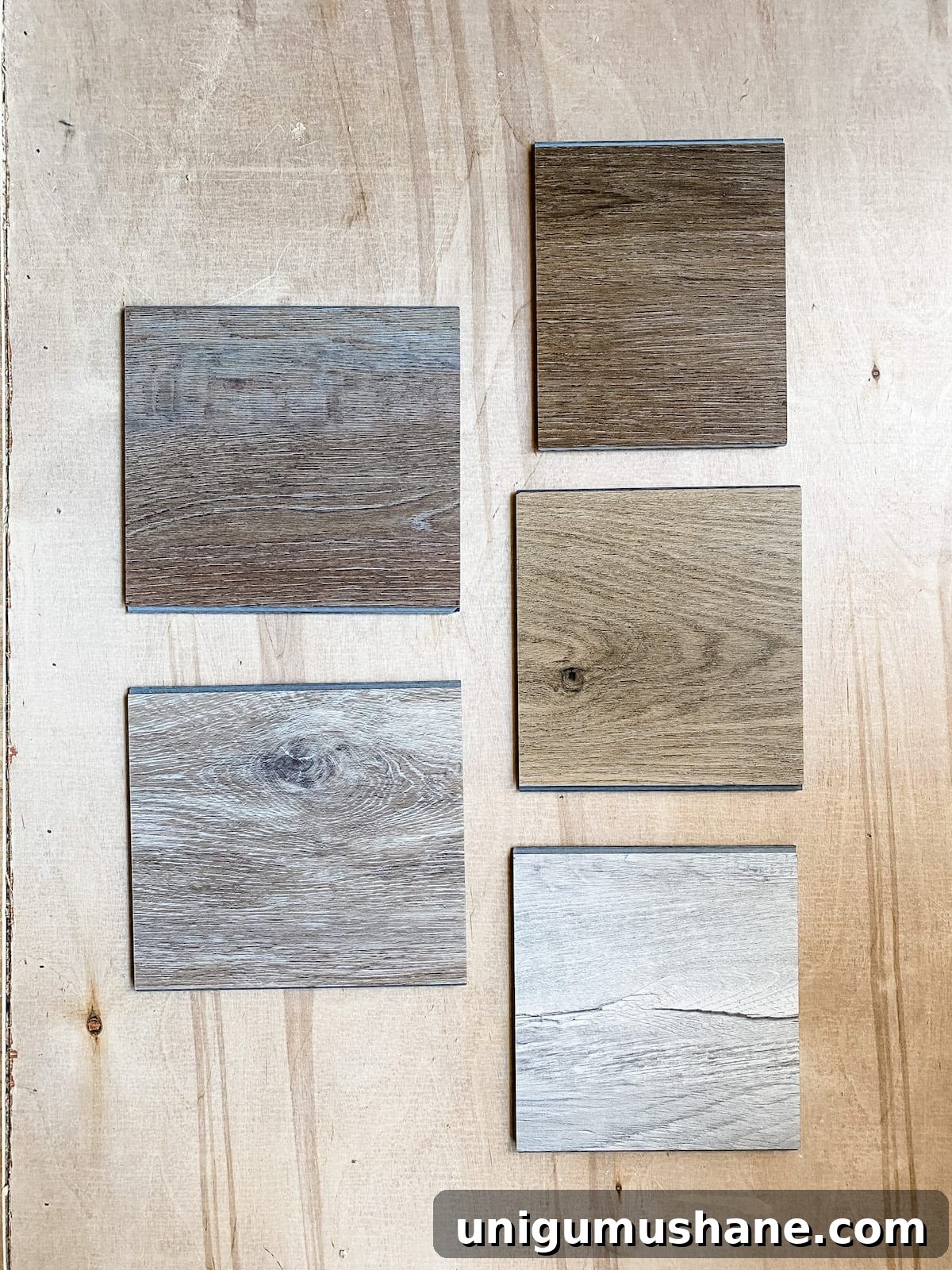
The hand-scraped texture gives real character, and the color works with many design styles from classic to modern.
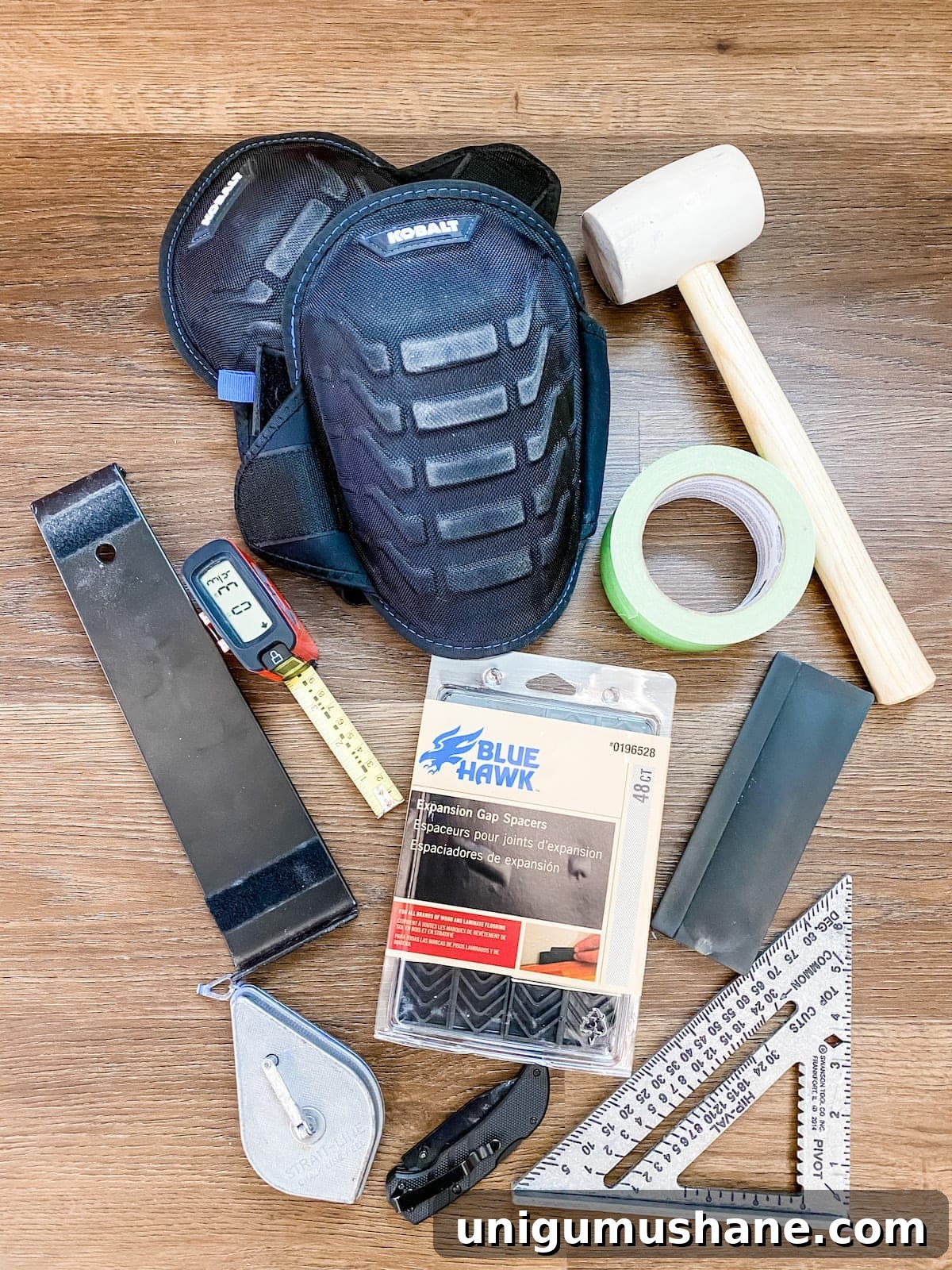
Tools and Supplies
- All-in-1 flooring kit
- Rubber mallet
- Knee pads
- Utility knife
- Speed square
- Extra spacers
- Chalk line
- Jigsaw (optional)
- Tape measure
- Contour gauge (optional)
- Oscillating multi-tool
- Painter’s tape
Prep and Planning
Preparation makes the installation much easier and ensures a professional-looking result.
1. Remove baseboards and any existing flooring if needed. You can save baseboards by scoring the caulk and prying them off carefully, or leave them in place and remove shoe molding instead.
2. Plan your layout. Install planks parallel to the longest wall for a balanced look. Begin your first row at a doorway so planks can slide under the jamb if necessary.
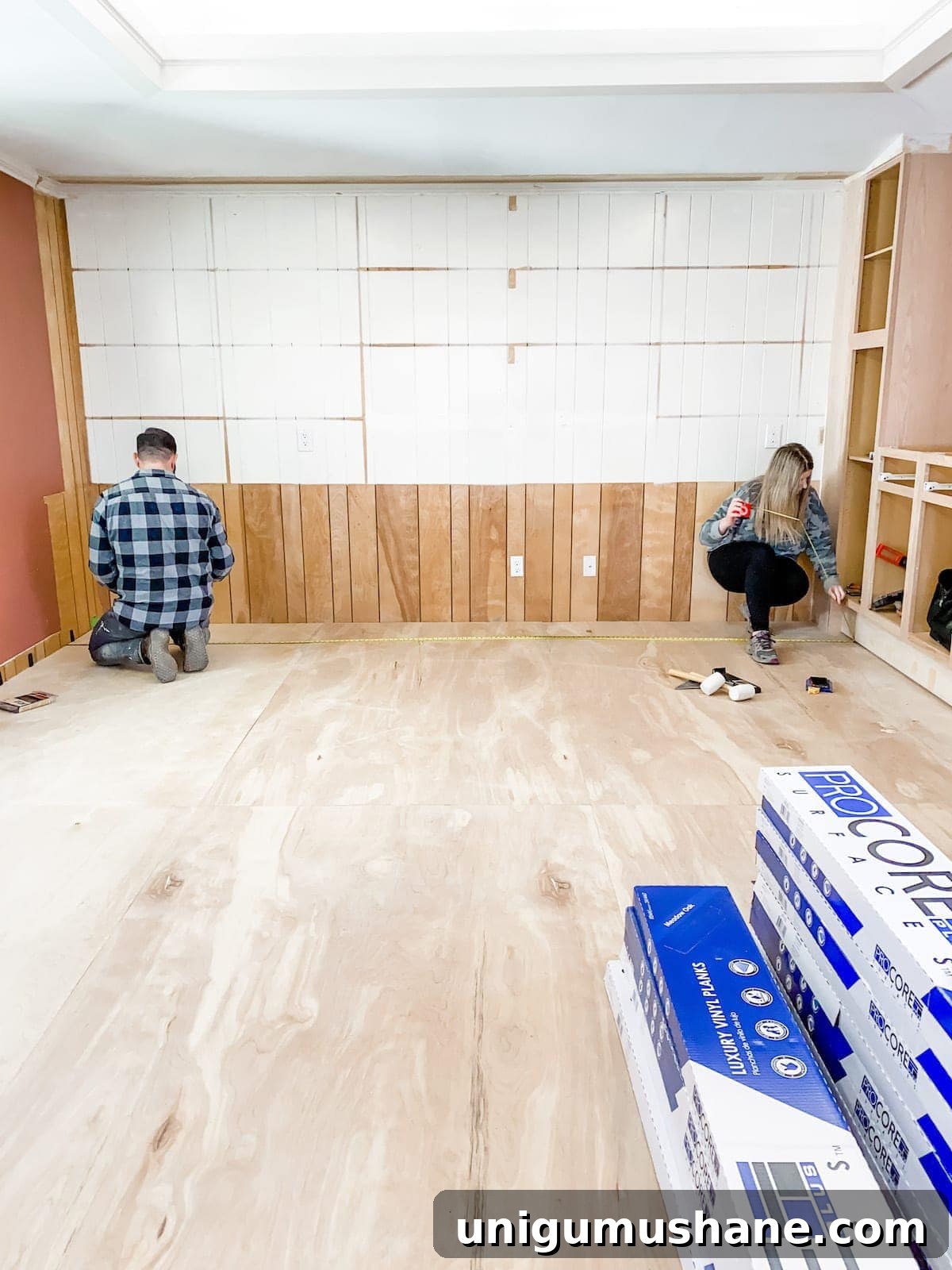
3. Measure the room and calculate how many planks you’ll need across the width. Measure plank width excluding the locking edge so you can avoid ending with a very narrow final row.
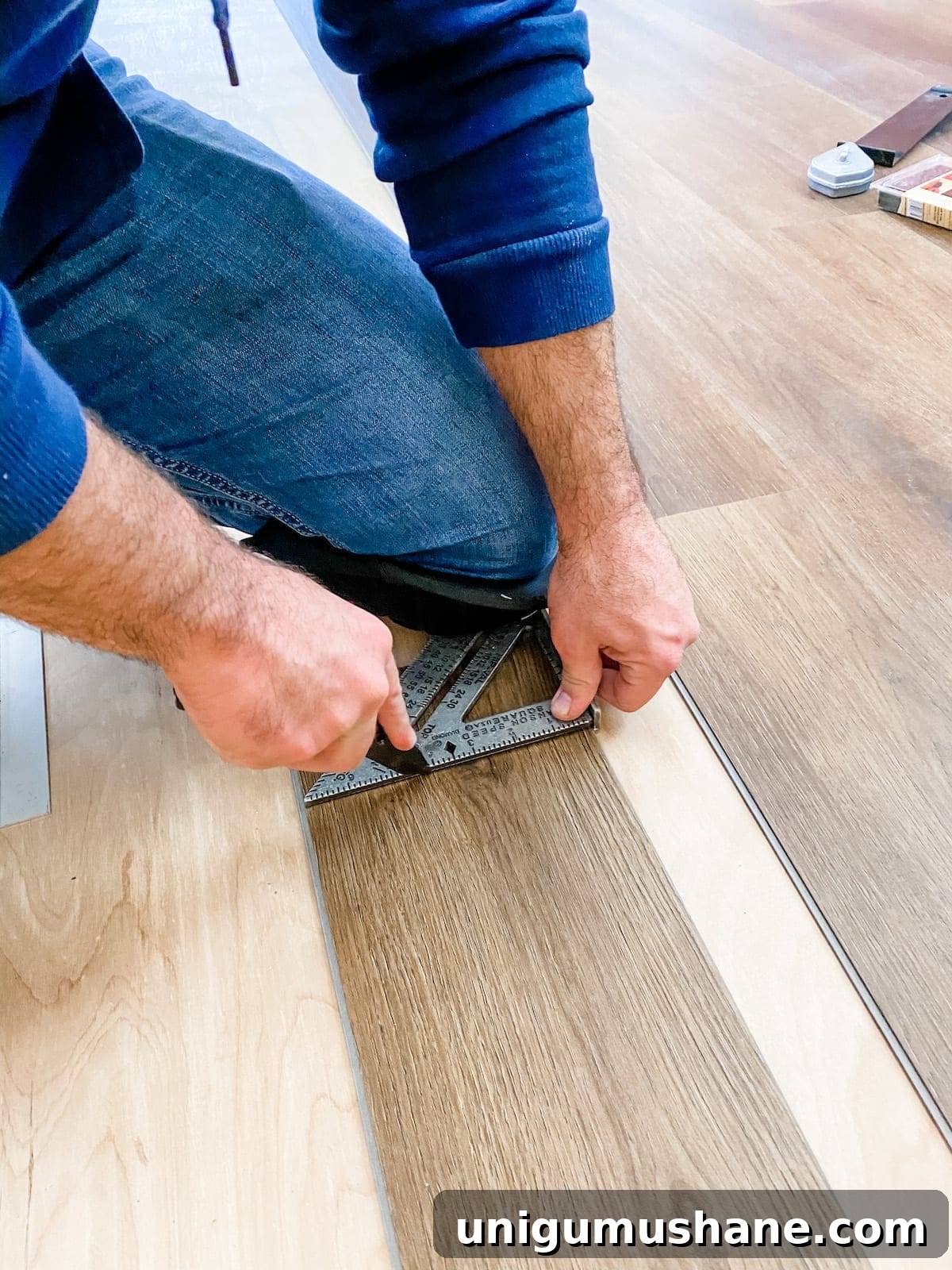
4. If needed, trim the starting row so the last row has a reasonable width. For example, we trimmed 2 inches off our first row to avoid a 1-inch final cut and ended up with a comfortable 3-inch cut instead.
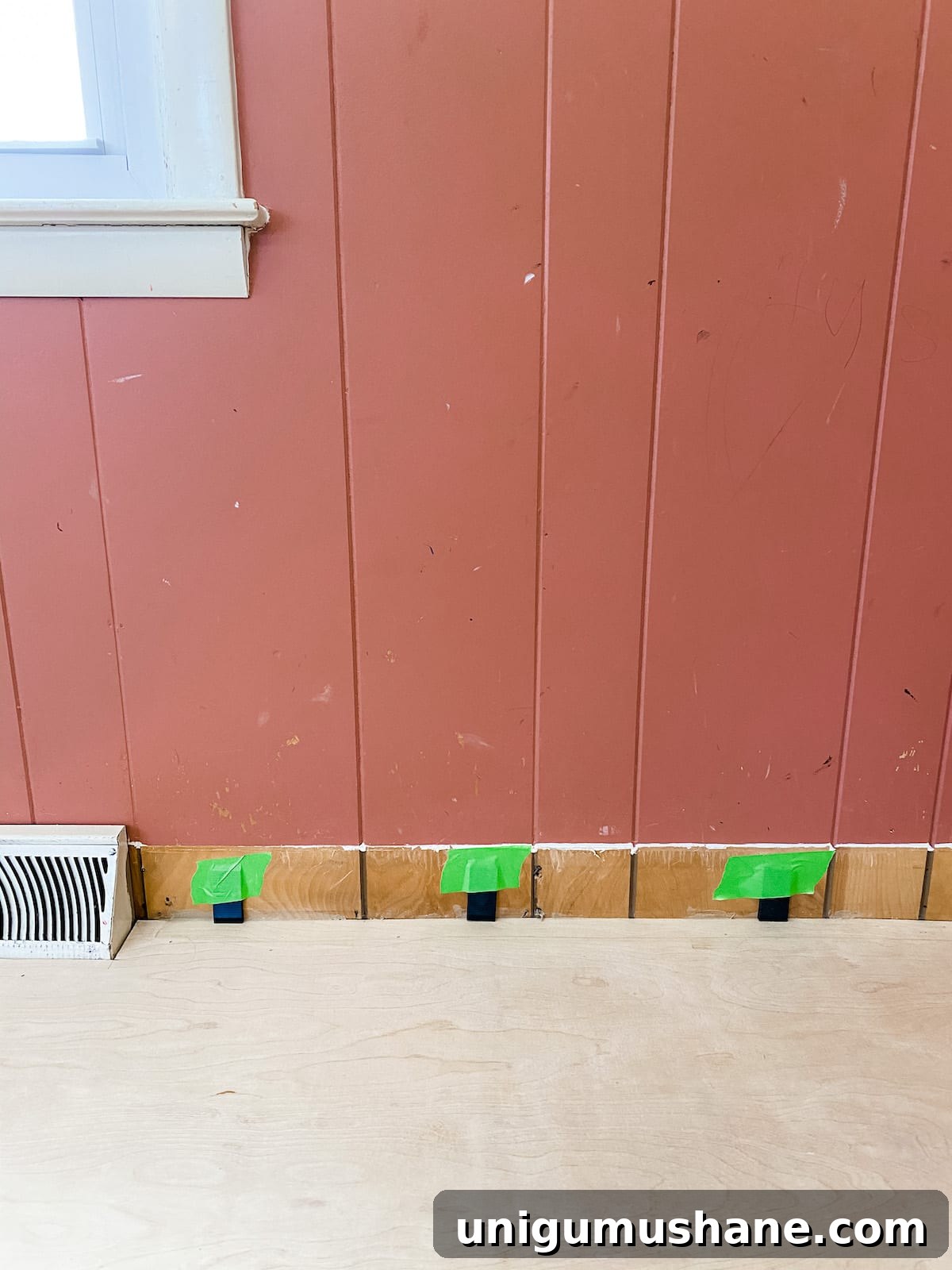
5. Place spacers around the room perimeter and secure them with painter’s tape to maintain the required expansion gap.
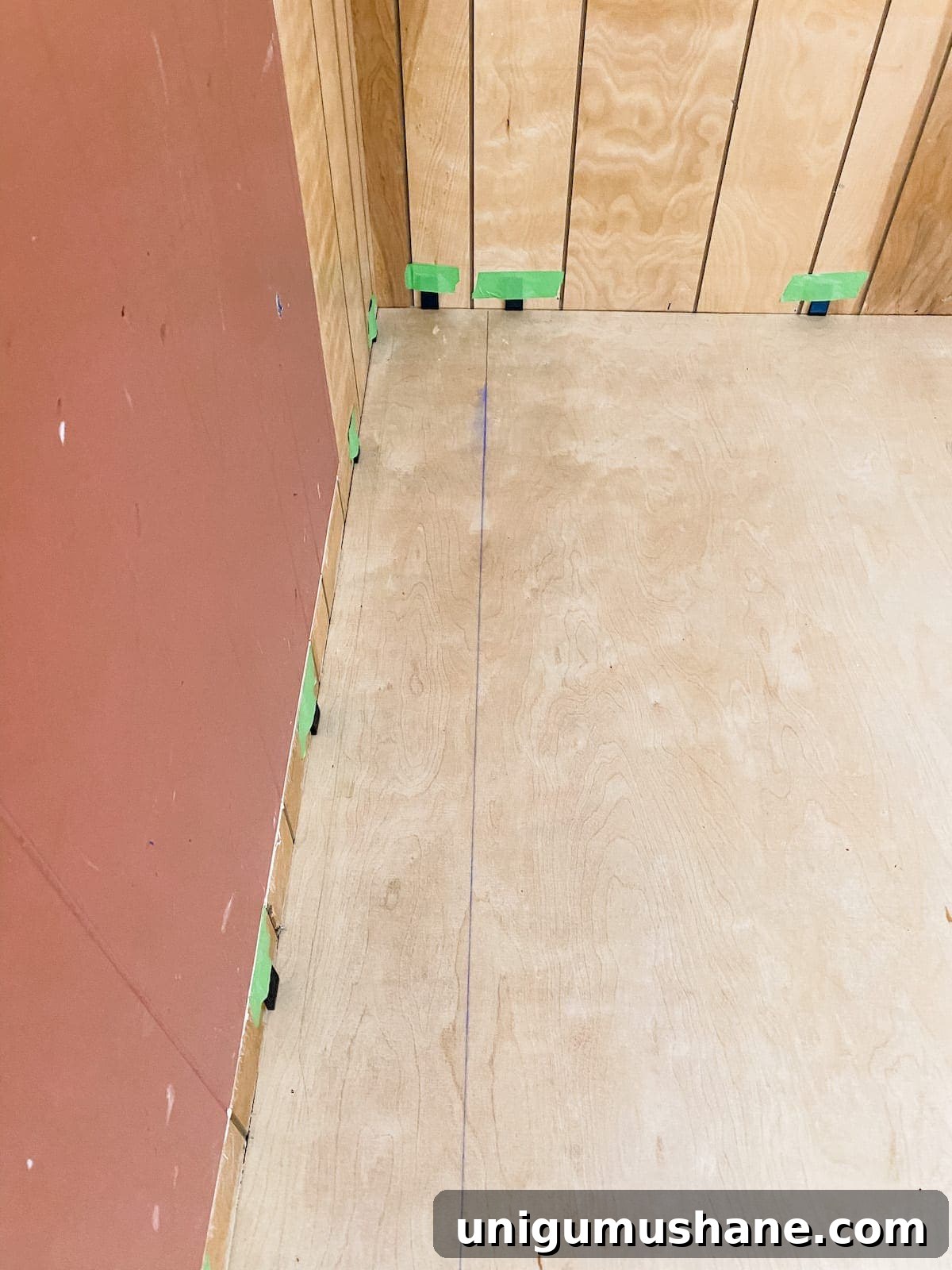
6. Use a chalk line to mark your starting row on the subfloor—walls are rarely perfectly straight, and this keeps the floor aligned.
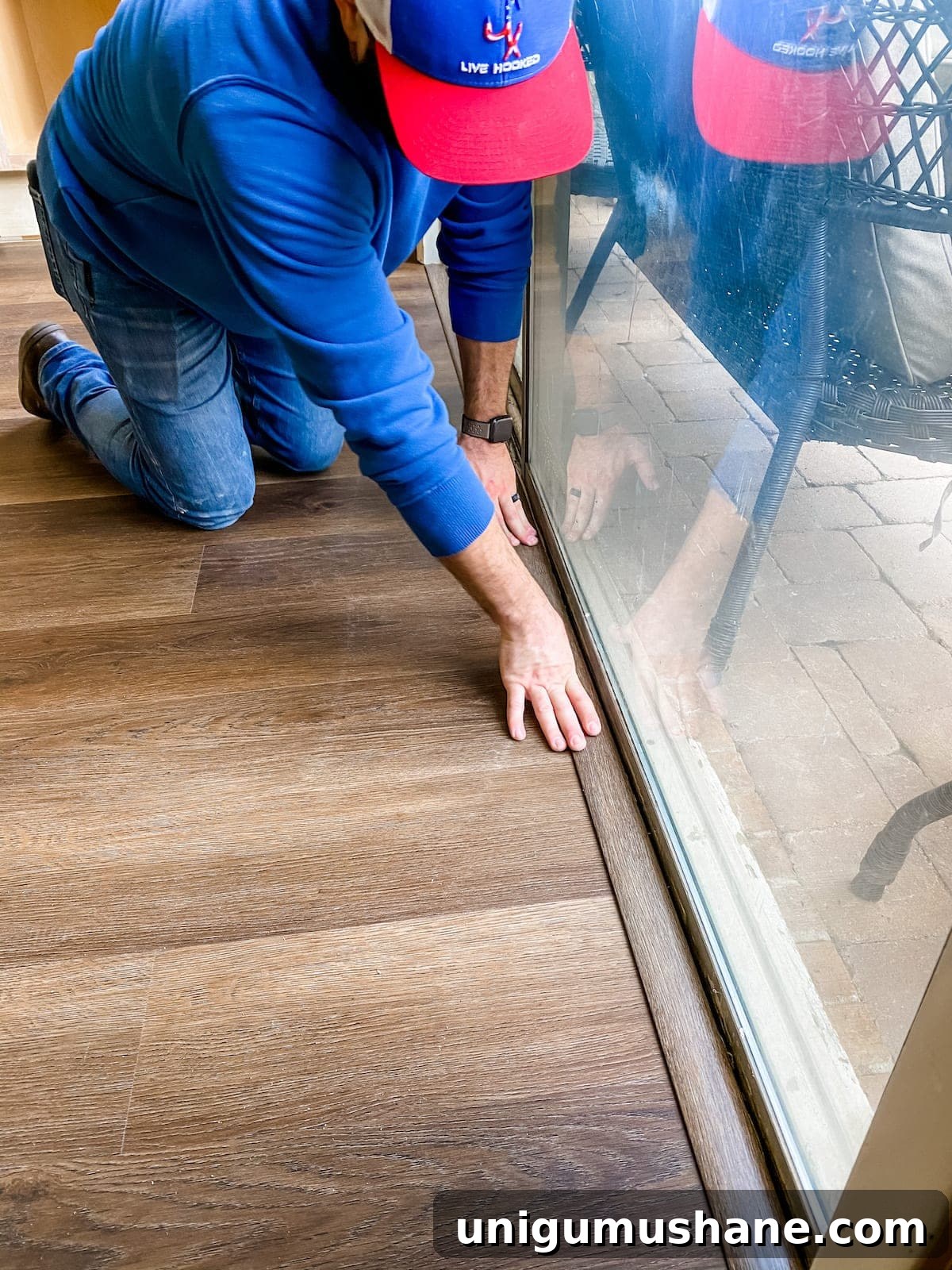
7. Install the metal piece for transition strips at doorways now so you can snap the vinyl threshold into place after the planks are down.
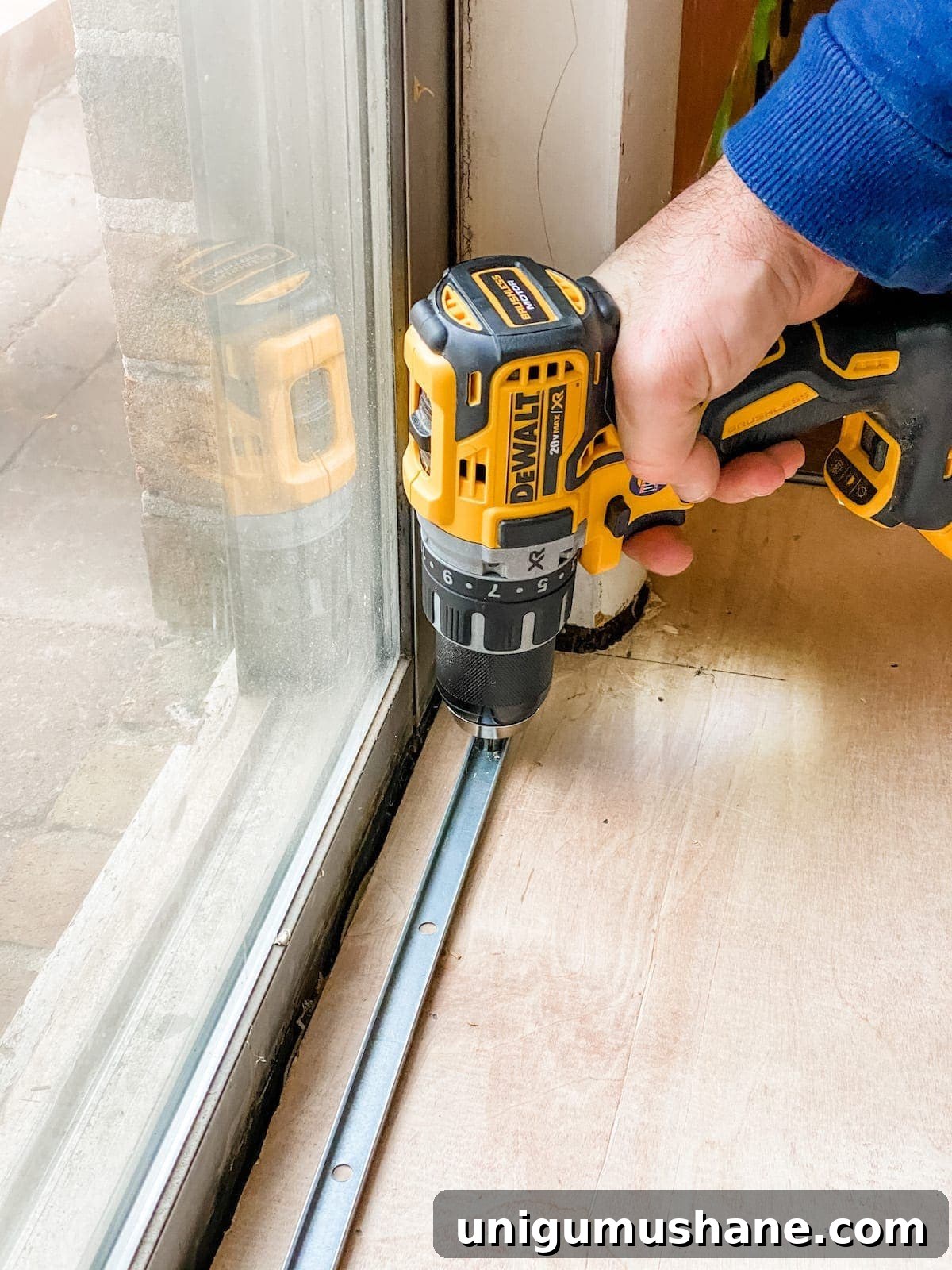
8. Undercut door jambs with an oscillating multi-tool so planks slide underneath cleanly. Use a utility or putty knife to clear debris from underneath jambs.
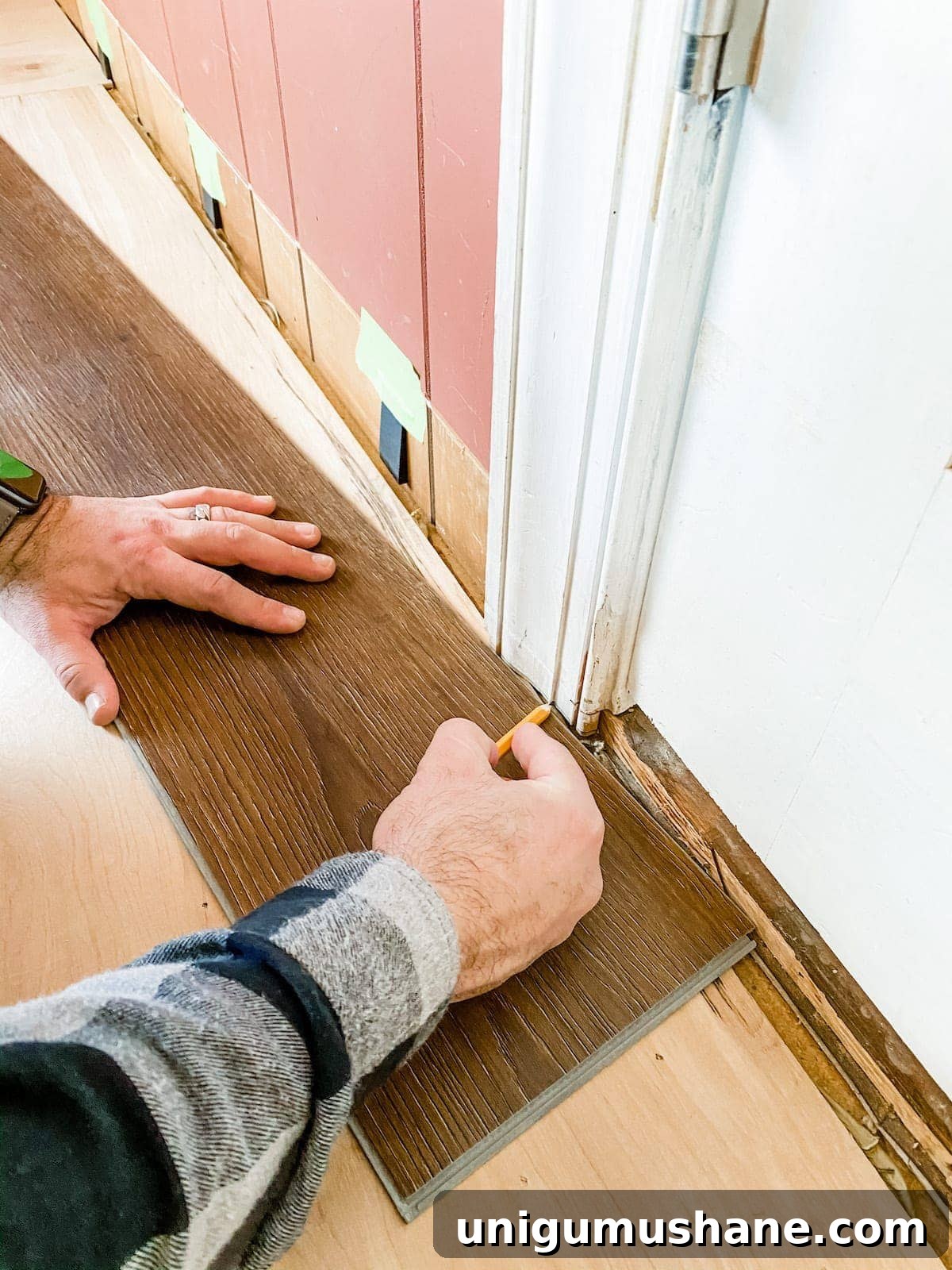
Clic Vinyl Floor Installation
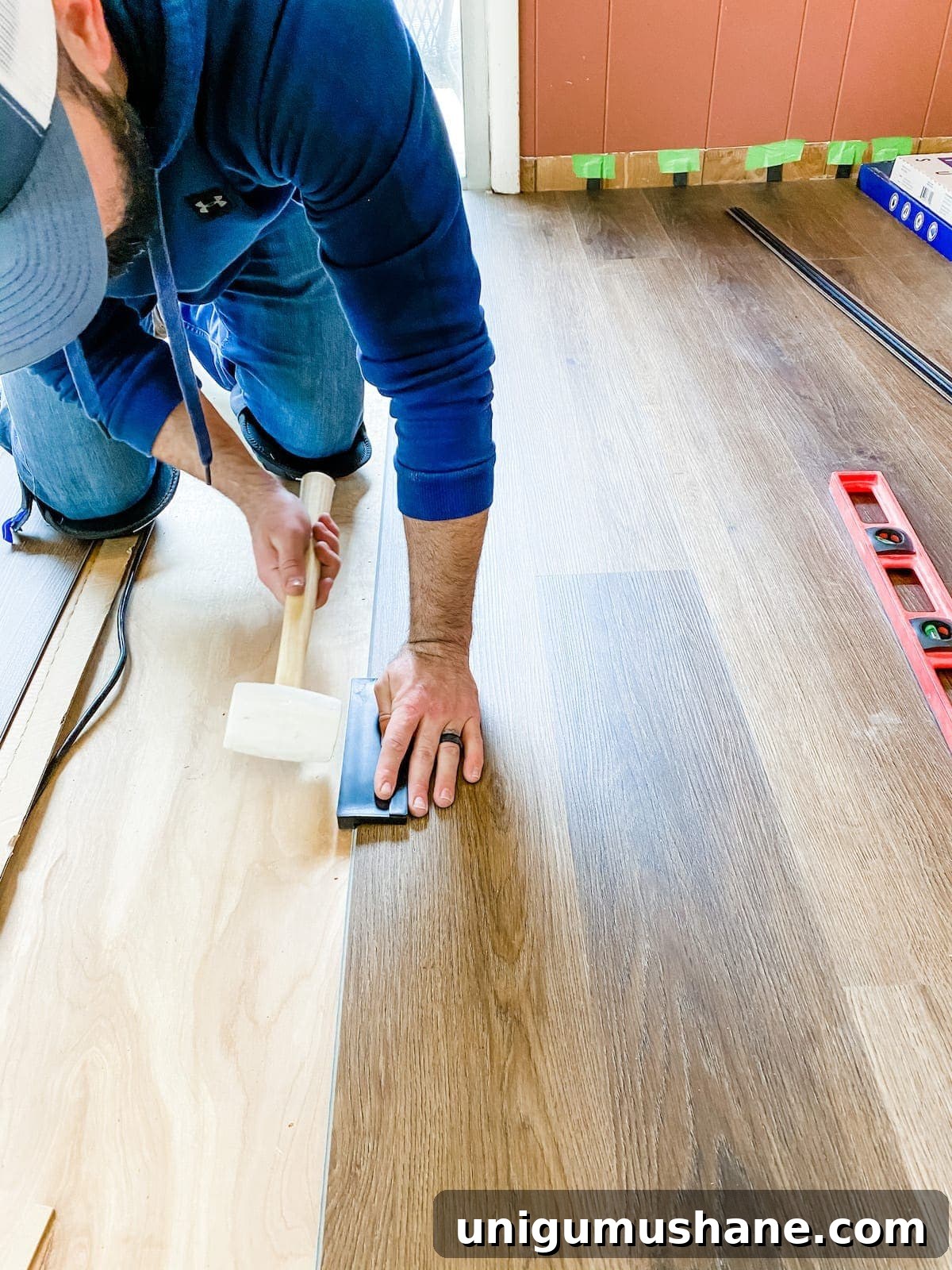
We trimmed the width of our first-row planks to follow the chalk line and adjusted each piece slightly because the starting wall wasn’t perfectly straight.
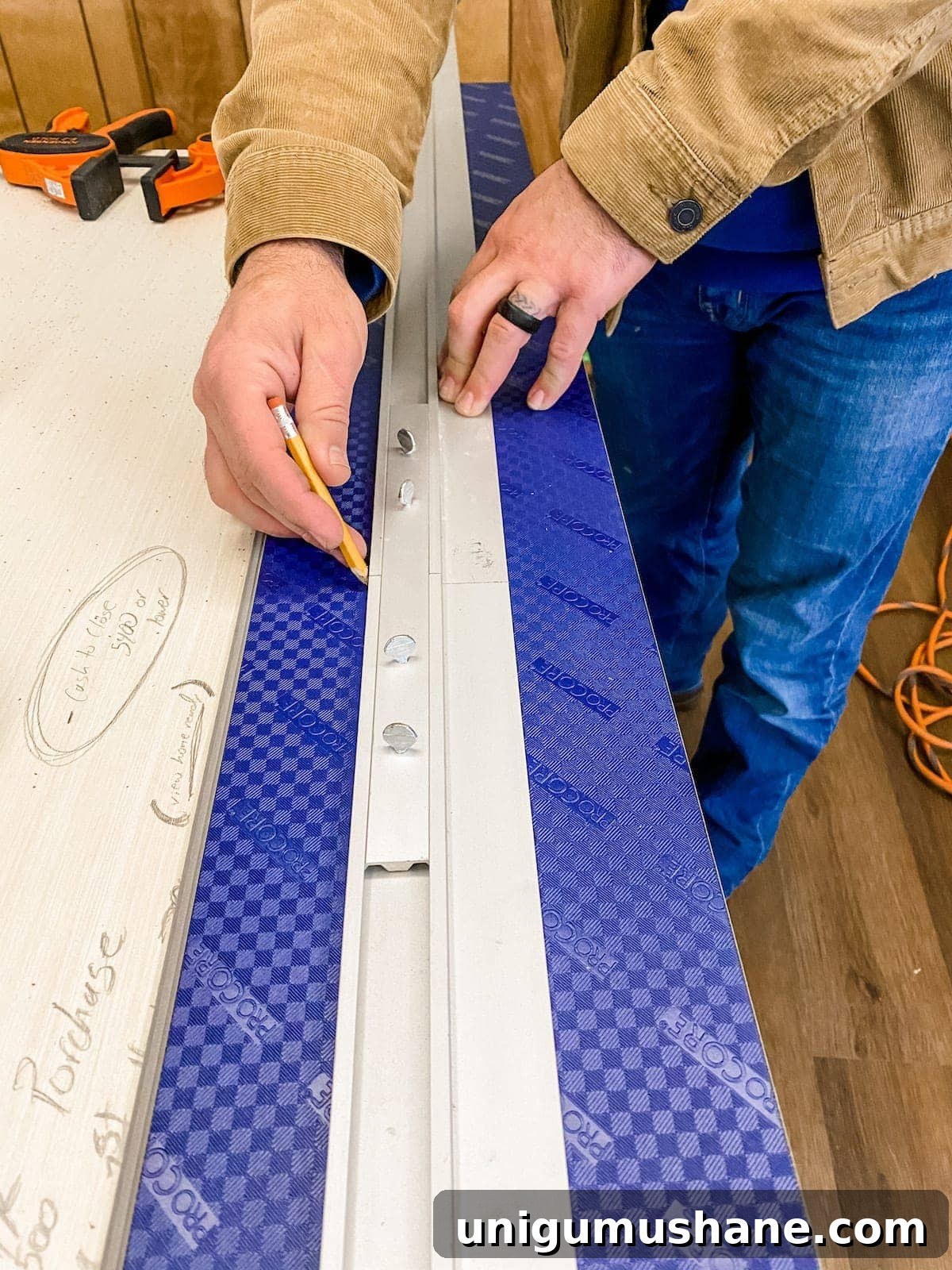
9. Cut planks by scoring several times with a utility knife along a straight edge, then snap the plank cleanly. For complex shapes or tricky cuts, use a jigsaw with a carbide blade and mark the cut first.
10. Start in the left corner of the room so the locking edge faces right on the first plank.
11. Lock each plank into the previous one until it clicks into place. Angle the long edge slightly to engage the joint, then press down.
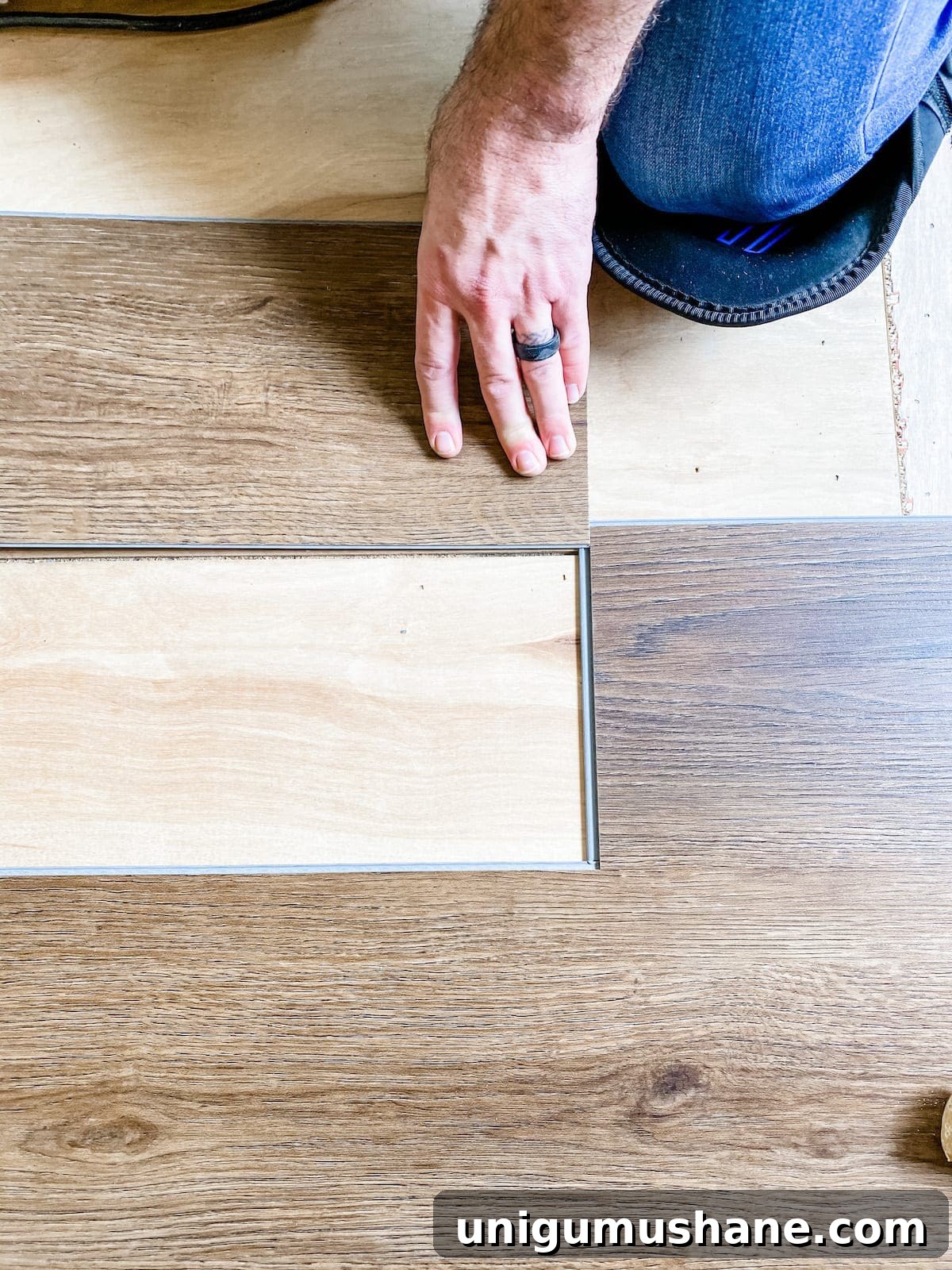
12. Use a tapping block and rubber mallet as needed to set the seams. Tap seams gently to lock them together without damaging the plank edges.
Maintaining a Natural-Looking Layout
To make the floor look natural, avoid repeating patterns. Keep plank ends staggered at least 8 inches apart and avoid having seams line up across adjacent rows. Open 4–5 boxes at a time and mix planks from different boxes. Lay out each row dry before snapping pieces in to prevent similar grain or color repeats.
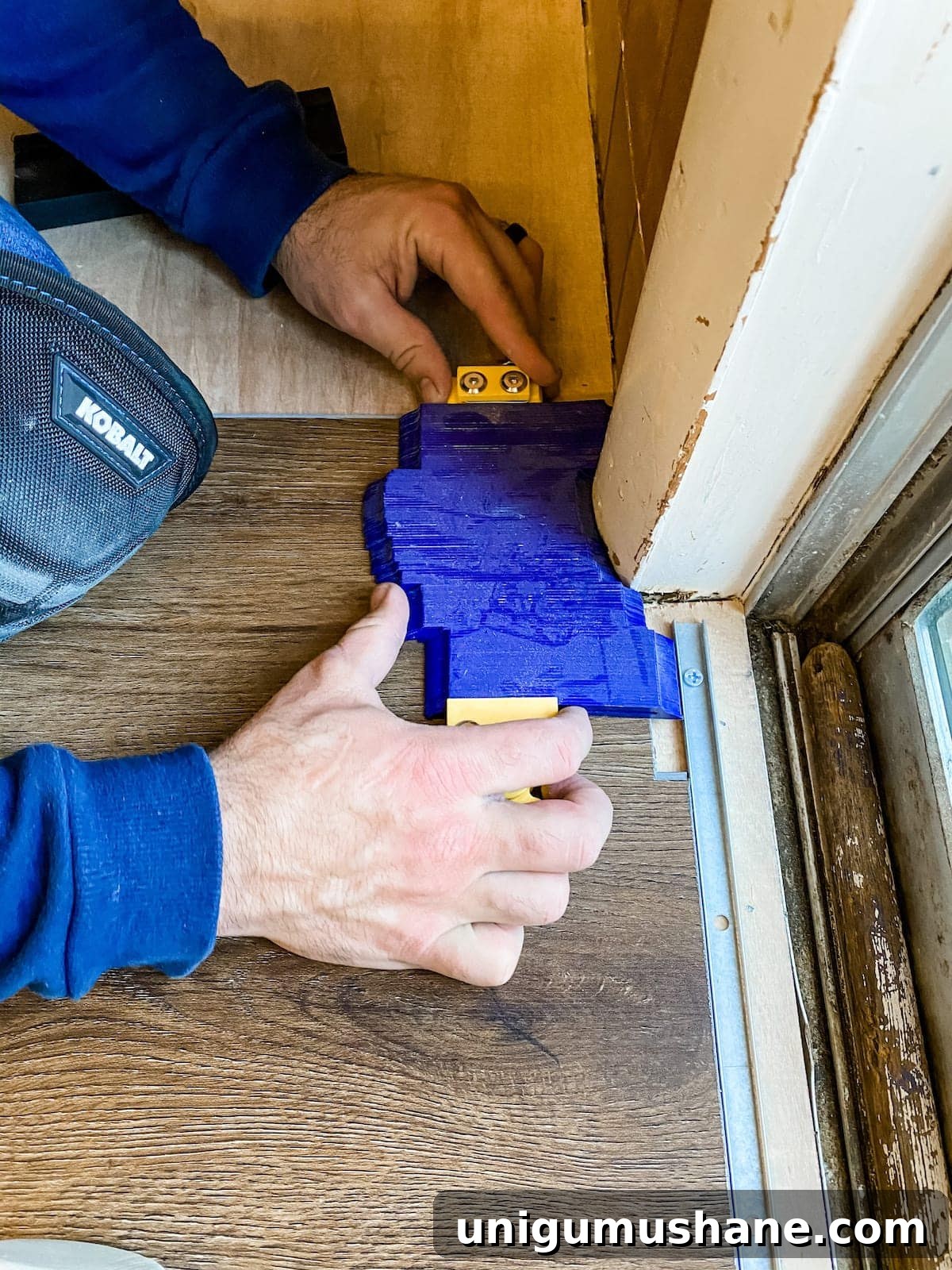
13. For obstacles and odd shapes, use a contour gauge to copy the profile, trace the shape onto the plank, and cut with a jigsaw—remember to leave room for the expansion gap.
14. After the entire floor is installed, snap the transition strip into the metal track at doorways to finish the threshold neatly.
Protecting and Finishing the Floor
To protect your new floor, use surface sliders when moving heavy furniture and felt pads under chair and table legs to prevent scratches. Avoid dragging sharp or abrasive items across the surface.
Reinstall baseboards or install shoe molding to cover the expansion gap around the room. Use a miter saw and coping saw to fit corners, caulk gaps, and fill nail holes for a seamless finish.
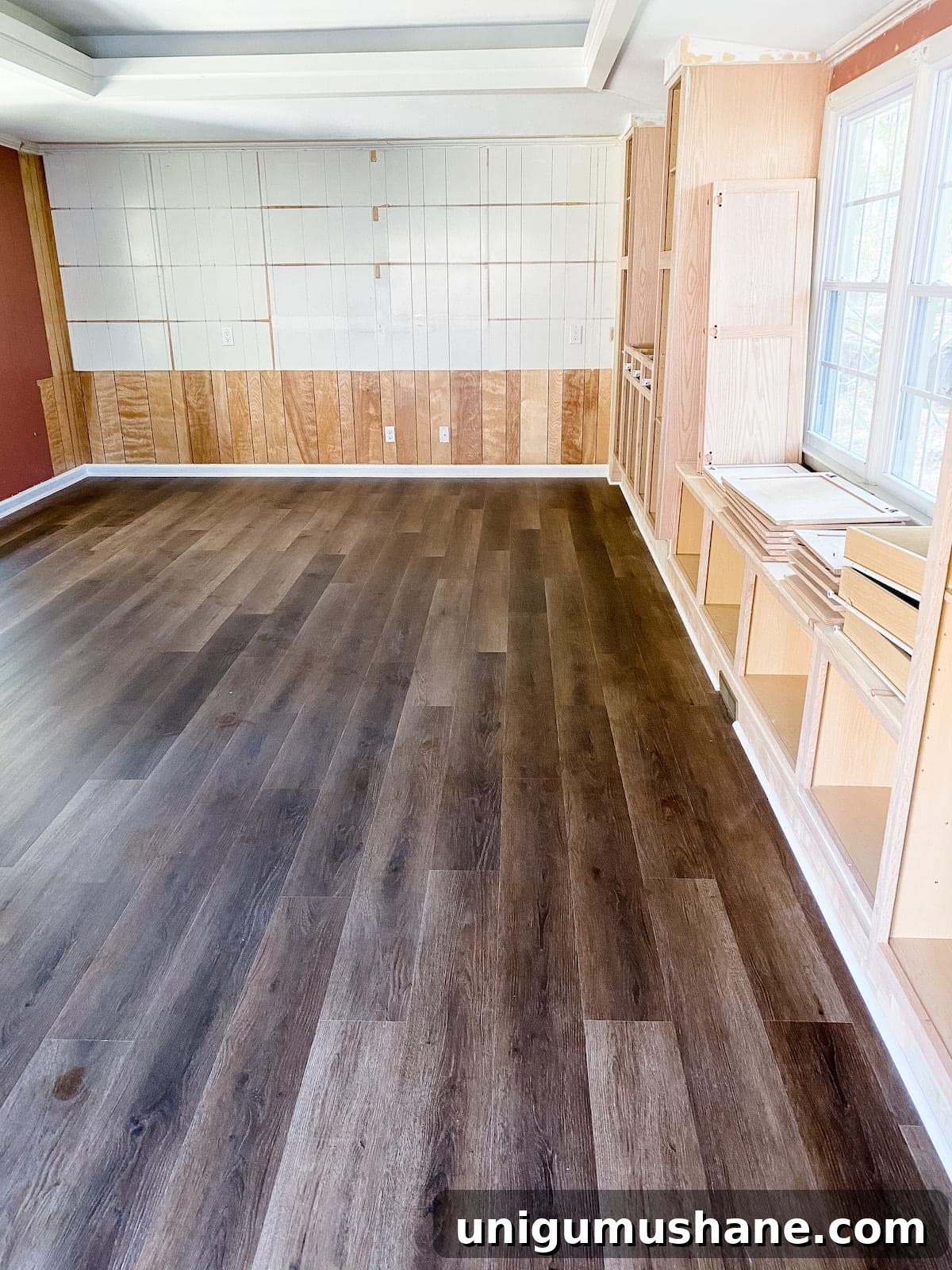
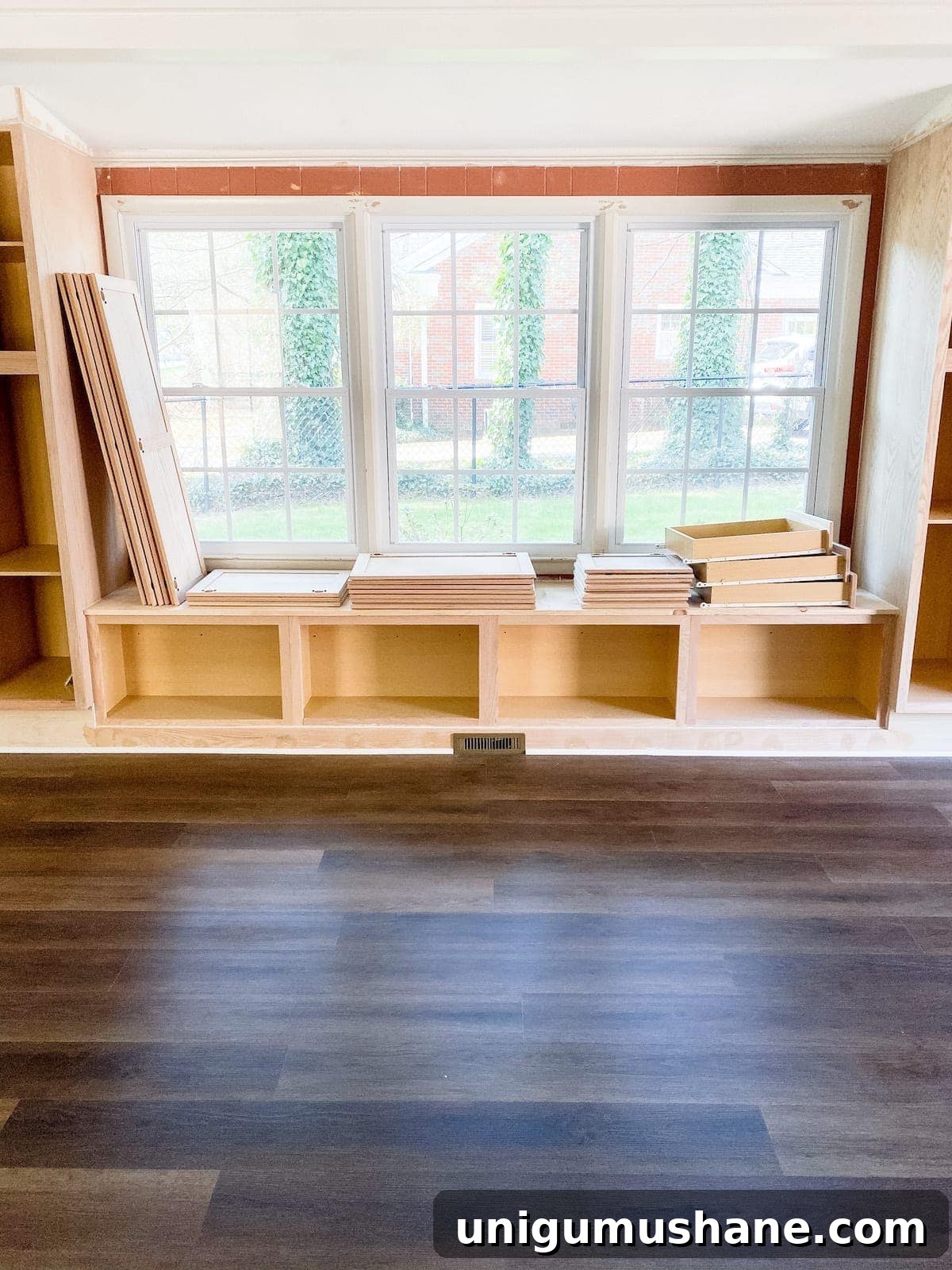
And that’s it—built-ins: done. Floors: done. Next up: paint, decor, and finishing the room so it truly feels finished and ready for daily life.
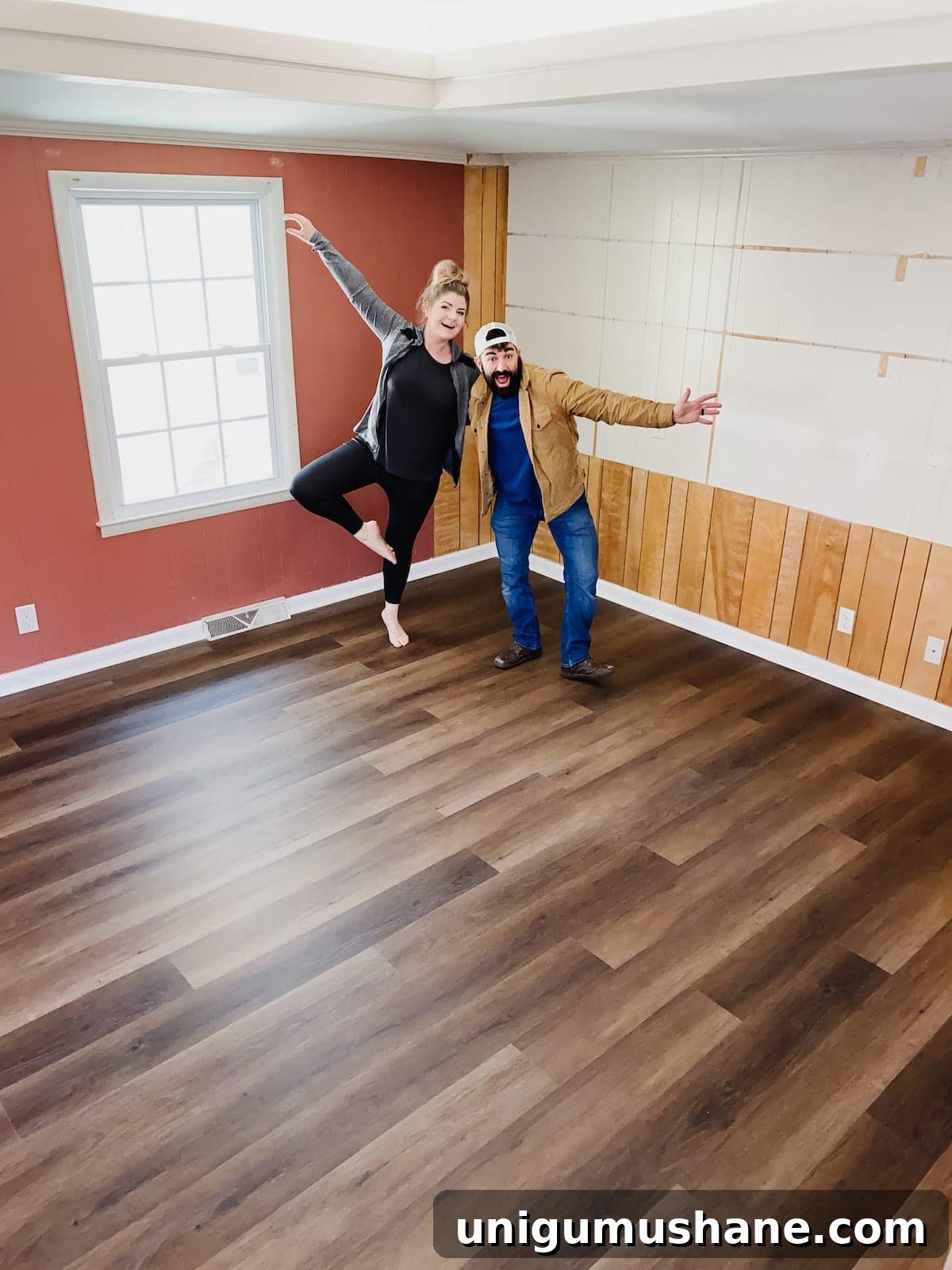
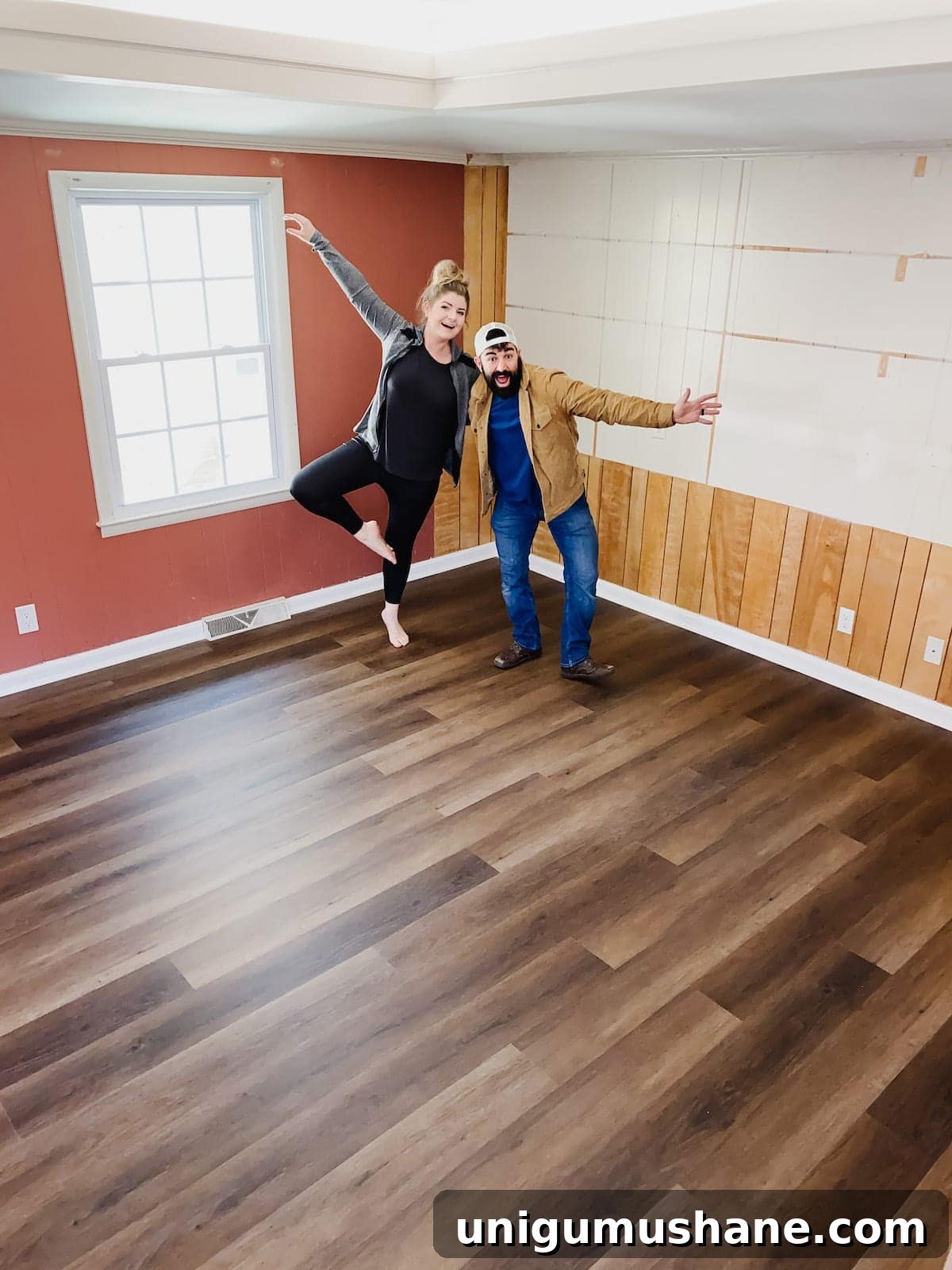
We celebrated this milestone with a little dancing—because installing a floor that holds up to kids, pets, and everyday life is worth a happy dance.
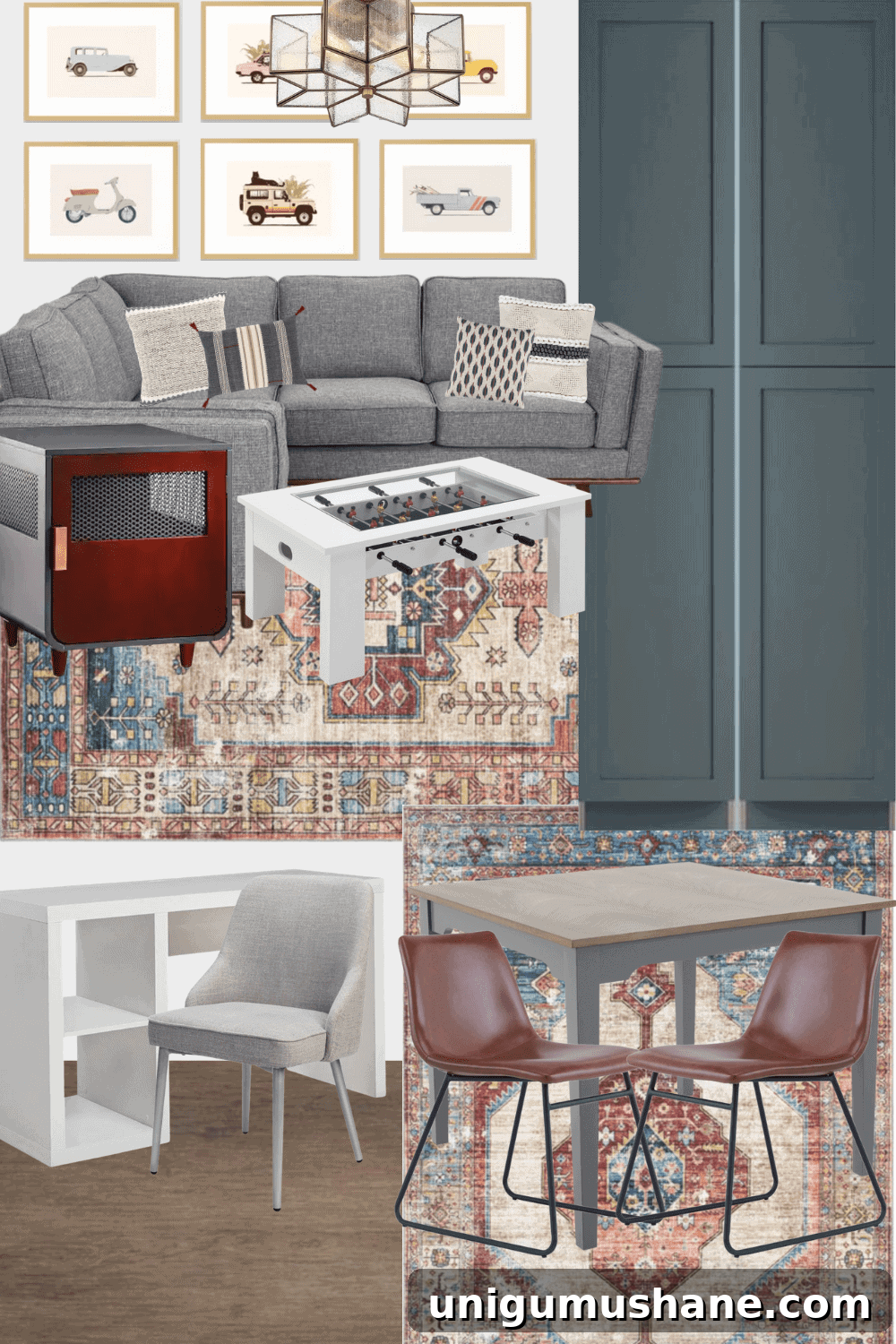
Imagine lighter walls, moody built-ins, and colorful kids’ art—this space is about to become warm, functional, and full of life.