
We had one of those small panic moments over the weekend — you know, the “Oh my gosh, what have we gotten ourselves into?” kind. It felt dramatic for a few minutes, but don’t worry: it ended happily.
We’re in the middle of a major project that I’m ridiculously excited about, and sometimes the first step in making something amazing is taking it apart. That meant tearing out a few things, including the baseboards, so we could rework the space.
Update: See our DIY Wood Beam Doorway here.
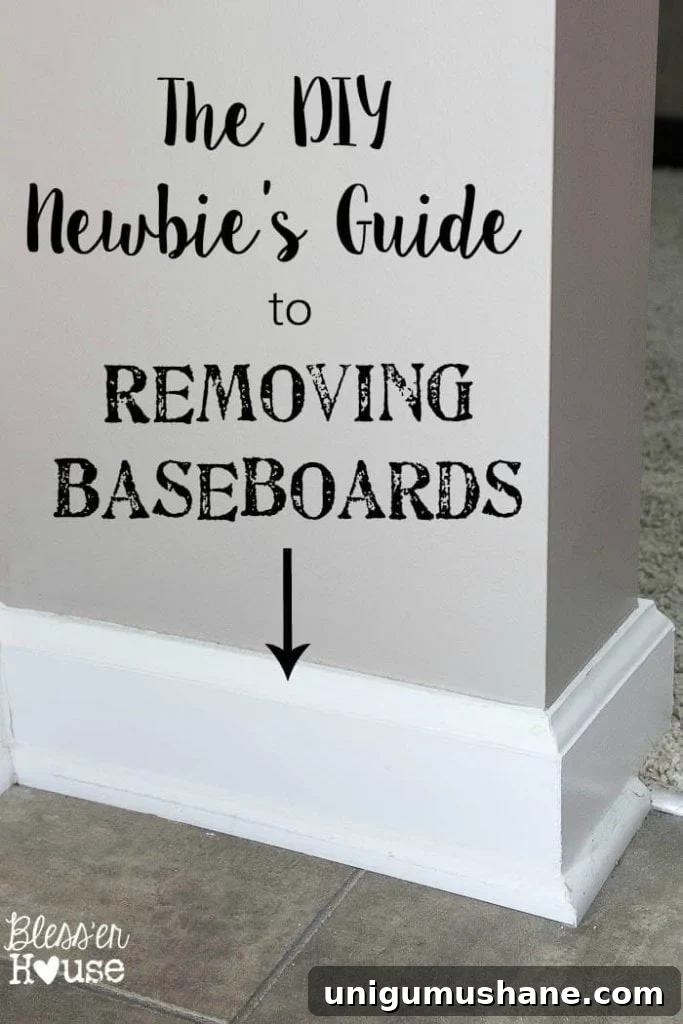
This isn’t a glamorous makeover post, but it’s the kind of practical walkthrough I wish I’d had when I started learning how to tackle home projects. Removing baseboards is one of those tasks that feels scary the first time, but it’s totally manageable with a little patience and the right technique.
Over the years, Robert’s dad has been an incredible resource for us. With decades of hands-on experience, he’s helped us avoid mistakes and saved time on projects big and small. He stepped in again to show us how to remove baseboards without damaging the drywall so we could reuse the trim later.
If you’ve never removed baseboards before, here’s what you’ll need:
- A razor knife or a box cutter with a fresh blade
- A small pry bar with tapered ends
- A hammer or mallet
- Patience and a careful approach
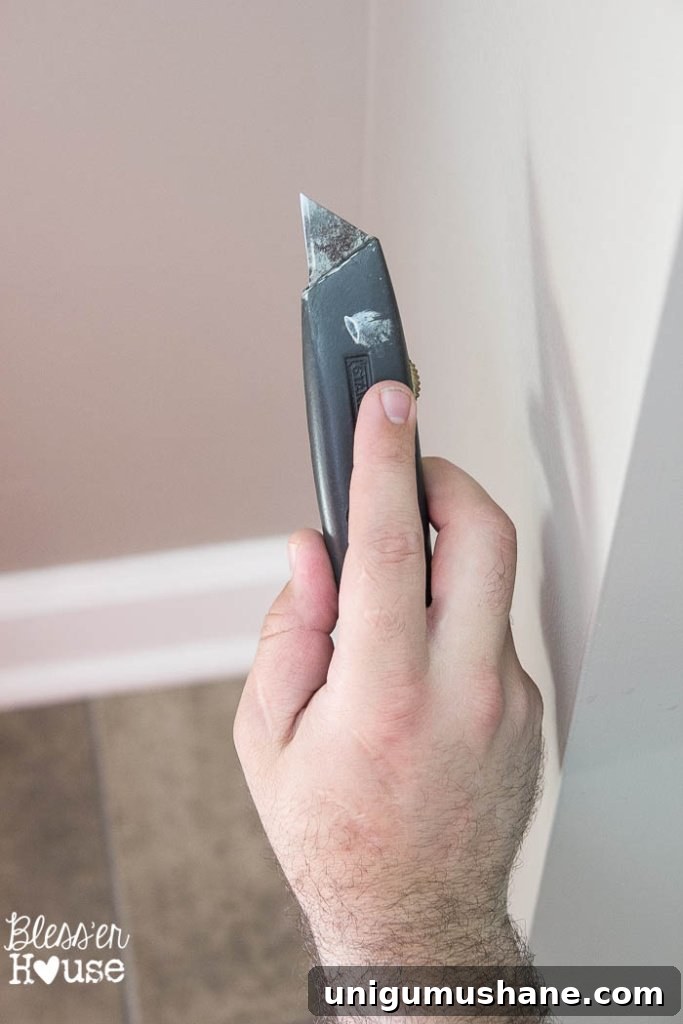
We were determined not to tear away paint or the paper surface of the drywall, so the first step was to cut through the caulk along the seams. Use a razor blade and run it along the top edge of the quarter round and the baseboard where it meets the wall. Cutting the caulk first prevents paint from peeling off with the trim.
We filed the pry bar’s ends to smooth any rough edges so the tool wouldn’t damage the trim we planned to reuse. Then Robert tapped the pry bar under the quarter round trim along the floor, working the tool gradually and gently prying the molding away from the baseboard. Take your time and move along the length of the trim rather than yanking at one spot — that minimizes cracking and breaking.
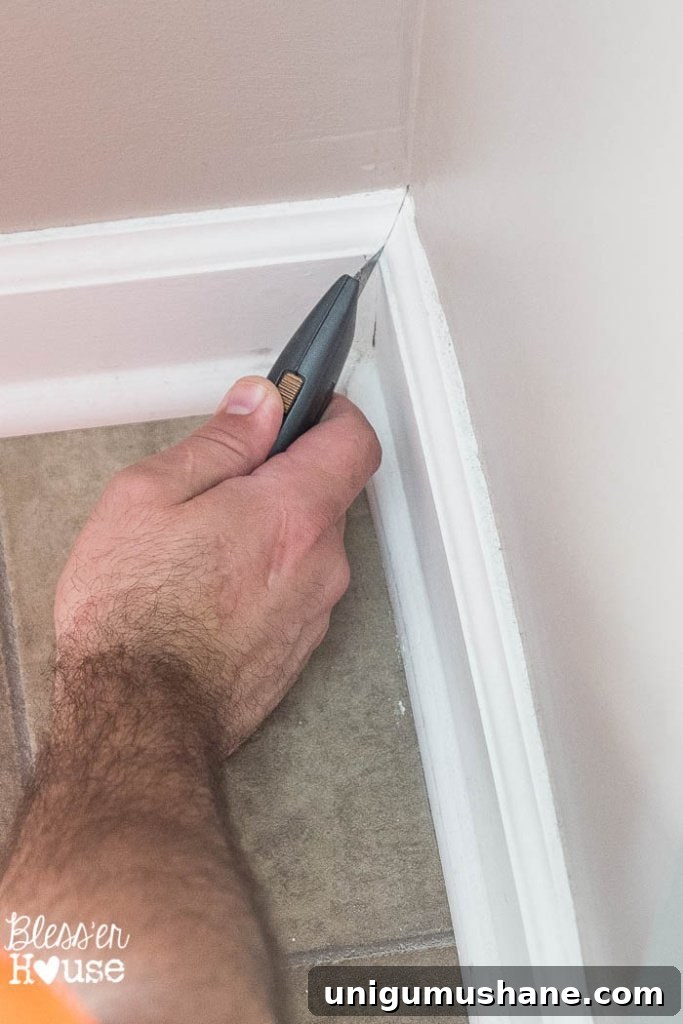
Once the quarter round was off, we used the razor again to score the caulk at the top edge of the baseboard where it met the wall. Then Robert worked the pry bar gently between the baseboard and the drywall in several places along the board, levering it outward a little bit at a time. Using the hammer to tap the pry bar deeper when needed made the process smoother and helped avoid sudden breaks in the trim.
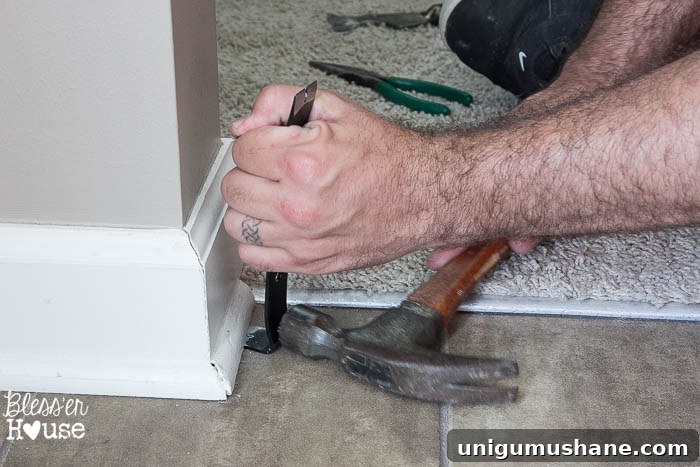
As the board started to give, he moved along, prying at multiple points to loosen the nails without pulling the drywall paper. If you don’t intend to reuse the trim, you can be less delicate, but if you want the boards intact for reinstallation or repurposing, this slow, steady method preserves them best.
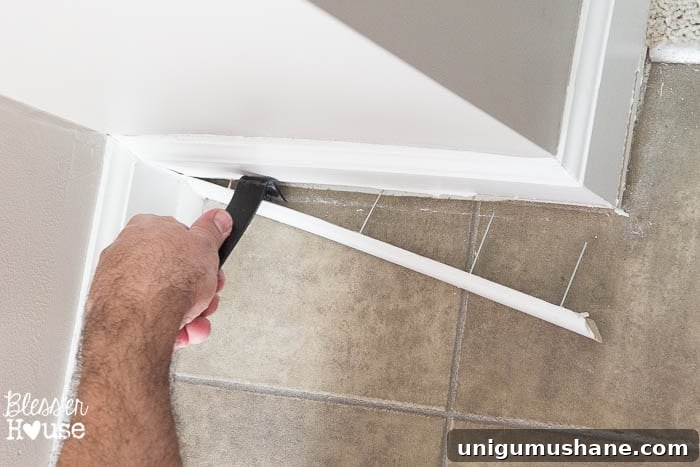
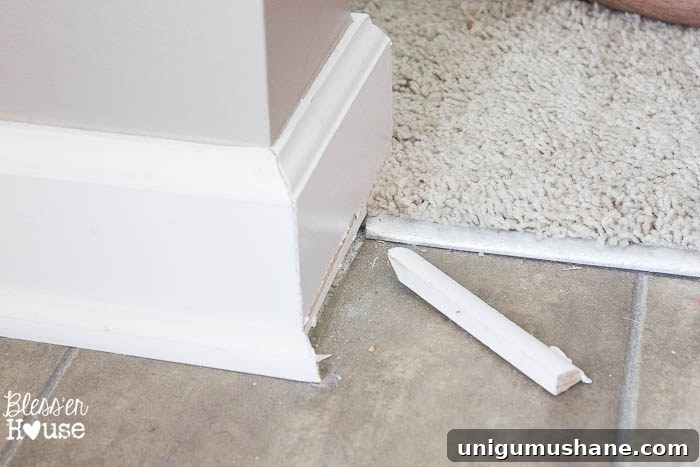
After the baseboard came off, we set the pieces aside and inspected the wall. Any small rough spots of torn drywall paper can be smoothed and patched before reattaching trim. If you plan to reuse the baseboards, label the pieces or keep them in sequence so reinstalling is straightforward.
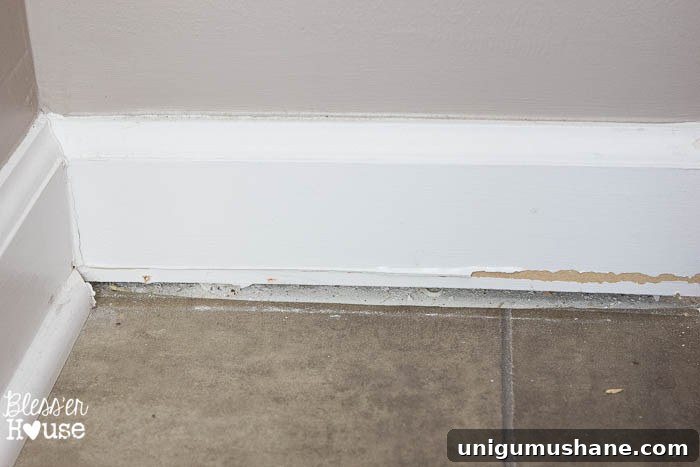
I admit it felt a little nerve-wracking to be prying apart our own walls for the first time — but once we got into the rhythm of it, it felt empowering. I’m dying to reveal the full scope of what we’re doing in the living room and kitchen, and this step was necessary to get us where we want to go.
If you’re planning similar changes, take your time, have the right tools, and don’t be afraid to ask someone with experience to walk you through the first few steps. Removing baseboards carefully will give you clean walls to work with and trim you can reuse for a polished finish.

Follow:
Facebook | Pinterest | Instagram | Twitter | Google+ | Bloglovin | Hometalk